Interviews are opportunities to demonstrate your expertise, and this guide is here to help you shine. Explore the essential Knowledge of laundry industry best practices interview questions that employers frequently ask, paired with strategies for crafting responses that set you apart from the competition.
Questions Asked in Knowledge of laundry industry best practices Interview
Q 1. What are the different types of laundry equipment used in commercial settings?
Commercial laundry operations utilize a variety of equipment, categorized broadly by function. The core machinery includes washers and extractors. Washers come in different sizes (from small, undercounter units to massive industrial machines) and types (front-loading, top-loading, tunnel washers). Extractors, also called centrifuges, remove excess water after washing, preparing the laundry for drying. Dryers are crucial, ranging from standard gas or electric models to high-capacity, energy-efficient heat pump dryers. Then there’s finishing equipment; this can include large-capacity ironers, folders, and specialized presses for specific items like shirts or linens. Finally, support equipment such as conveyors, sorting tables, and carts help optimize the workflow and handling of laundry items. Imagine a large hotel – they might use tunnel washers to process huge loads of towels and sheets efficiently, while a smaller laundromat would likely have smaller, stackable washers and dryers.
Q 2. Explain the process of laundry sorting and its importance.
Laundry sorting is paramount for efficient processing and maintaining fabric quality. It involves separating laundry into categories based on several factors: color (whites, lights, darks), fabric type (cotton, linen, synthetics, delicate items), and soil level (heavily soiled items need separate treatment). Proper sorting prevents color bleeding (imagine pink towels!), protects delicate fabrics from damage, and ensures effective cleaning. For example, mixing towels with delicate lace would result in damage to the latter. A well-defined sorting process significantly reduces the risk of errors, improves washing efficiency, and increases the overall lifespan of the laundry. We typically use color-coded bins or designated areas for each category to maintain a streamlined sorting process.
Q 3. Describe the various washing cycles and their applications.
Washing cycles vary considerably depending on the type of laundry and desired outcome. A heavy-duty cycle uses high water levels, longer wash times, and higher agitation for heavily soiled items like work uniforms or heavily stained fabrics. A delicates cycle uses gentler agitation, lower water temperatures, and shorter wash times to protect fragile fabrics. A permanent press cycle employs a cool-down rinse to minimize wrinkles, ideal for wrinkle-resistant clothing. Quick wash cycles are shorter cycles for lightly soiled items. Then there are specific cycles tailored for specific fabrics like wool or silk. The choice of cycle directly impacts the cleaning efficacy and preservation of the garments. Failing to select the appropriate cycle can result in fabric damage, inadequate cleaning, and customer dissatisfaction.
Q 4. How do you manage laundry chemicals safely and effectively?
Safe and effective chemical management is crucial in commercial laundries. This begins with proper storage in clearly labeled containers, away from heat and moisture, in a designated, well-ventilated area. We adhere strictly to the manufacturer’s instructions on dilution and usage. Personal protective equipment (PPE), such as gloves, goggles, and aprons, is mandatory when handling laundry chemicals. Regular staff training on safe handling procedures and emergency response is essential. Spent chemicals need proper disposal, in compliance with all local and environmental regulations. Regularly scheduled equipment maintenance ensures that chemical dispensing systems function correctly to prevent leaks or spills. For example, we might have a dedicated chemical room with a spill kit readily available and conduct regular training sessions to refresh our employees’ knowledge of safe chemical handling.
Q 5. What are the key indicators of laundry quality?
High-quality laundry services are judged by several key indicators. Cleanliness is fundamental; items should be free of visible stains and dirt. Smell is another key factor; laundry should smell fresh and clean, not musty or chemical-laden. Condition of the items after washing; fabrics should be undamaged, with minimal shrinkage or pilling. Overall appearance should reflect professional laundering. For example, a well-laundered shirt should be wrinkle-free and neatly pressed. Consistent monitoring of these indicators ensures we maintain high standards, leading to satisfied customers and a strong reputation.
Q 6. How do you address customer complaints regarding laundry services?
Addressing customer complaints is critical for maintaining customer loyalty. I always begin by actively listening to the customer’s concerns, without interruption. I empathize with their frustration, acknowledging their feedback. Once I understand the issue, I offer a sincere apology, even if the problem wasn’t directly our fault. I then thoroughly investigate the situation, looking into potential causes – was there a problem with the sorting, washing cycle, or perhaps a specific chemical interaction? I clearly explain my findings and offer a solution, which might involve re-laundering the item, providing a discount, or issuing a replacement. Following up with the customer to ensure their satisfaction is a crucial step. In this way, I can turn a negative experience into an opportunity to build stronger customer relationships.
Q 7. Explain your experience with laundry inventory management.
Effective laundry inventory management is crucial for efficiency and profitability. I have extensive experience using inventory management systems to track stock levels of detergents, softeners, and other chemicals. This includes setting up minimum and maximum stock levels, creating purchasing orders, and managing supplier relationships. We regularly conduct physical stock counts to reconcile with our system and identify discrepancies. Implementing a first-in, first-out (FIFO) system ensures that older chemicals are used before newer ones, preventing expiration. Accurate inventory control is essential for preventing stock-outs and minimizing waste, ultimately reducing operational costs. For instance, I’ve successfully implemented a system that reduced our chemical waste by 15% through precise inventory tracking and efficient usage.
Q 8. How do you maintain laundry equipment to optimize efficiency?
Maintaining laundry equipment is crucial for efficiency and longevity. It’s like regularly servicing your car – preventative maintenance is far cheaper than costly repairs. My approach involves a multi-pronged strategy focusing on:
- Regular Cleaning: Daily cleaning of lint traps, washing machine interiors, and dryer vents is paramount. Lint buildup significantly reduces efficiency and poses a fire hazard. I’d also schedule weekly deep cleans of all equipment, including exterior wiping and internal component checks.
- Scheduled Inspections: Monthly inspections are essential to identify potential problems early. This includes checking belts, bearings, hoses, and electrical connections for wear and tear. I use checklists and record all findings for tracking and preventative action.
- Preventative Maintenance: This involves adhering to manufacturer-recommended maintenance schedules for tasks like lubrication, belt replacement, and component adjustments. We would schedule these tasks based on usage and machine type; high-volume industrial washers would naturally require more frequent maintenance.
- Professional Servicing: Annual professional servicing by qualified technicians is vital for complex tasks requiring specialized knowledge and tools. This ensures thorough checks and potentially catches hidden issues before they become major problems. Think of it as a thorough annual health checkup for your equipment.
By consistently implementing this regimen, we minimize downtime, extend equipment lifespan, and reduce repair costs, ultimately optimizing efficiency and profitability.
Q 9. Describe your experience troubleshooting laundry equipment malfunctions.
Troubleshooting laundry equipment malfunctions requires a systematic approach. I start by carefully observing the problem, noting any unusual sounds, smells, or error codes displayed on the machine’s control panel. This initial observation is crucial for identifying the root cause.
My experience encompasses a wide range of issues, from simple problems like clogged lint traps (often the culprit!) to more complex mechanical or electrical faults. For example, if a washer isn’t draining properly, I might first check the drain hose for kinks or blockages. If the problem persists, I might investigate the drain pump for malfunctions. I’ve dealt with everything from faulty heating elements in dryers to problems with water inlet valves in washers.
I utilize diagnostic tools, including multimeters and pressure gauges, to systematically test components and pinpoint the malfunction. I find flowcharts and troubleshooting guides provided by manufacturers invaluable, often saving hours of searching for the problem. For major issues beyond my expertise, I don’t hesitate to contact qualified technicians to avoid further damage or safety risks.
Documentation is key. After resolving an issue, I meticulously document the problem, the troubleshooting steps taken, and the solution implemented. This helps prevent similar problems in the future and provides a valuable learning resource for the team.
Q 10. What are the common causes of laundry stains and how are they treated?
Understanding stain removal is key to effective laundry processing. Different stains require different treatments, and timing is crucial – the longer a stain sits, the harder it is to remove.
- Blood: Cold water is best; avoid hot water as it sets the stain. Use a gentle enzyme detergent and air dry.
- Grass: Pre-treat with a stain remover and wash in hot water (check fabric care labels!).
- Wine: Blot immediately with a clean cloth, then apply a mixture of white vinegar and water. Rinse thoroughly.
- Ink: Isopropyl alcohol or rubbing alcohol often works, but test on an inconspicuous area first to check for colorfastness.
- Oil-based stains (grease, makeup): Pre-treat with a dish soap or laundry stain remover, focusing on breaking down the oil before washing.
Effective stain removal requires a combination of understanding the stain’s source, proper pre-treatment, and using the appropriate washing temperature and detergent. It’s always important to check the garment’s care label before attempting any treatment.
Q 11. What safety protocols do you implement to protect workers in a laundry facility?
Safety is paramount in any laundry facility. My approach focuses on a multi-layered system of protocols and training:
- Personal Protective Equipment (PPE): Providing and enforcing the use of appropriate PPE, such as gloves, safety glasses, and hearing protection, is essential. This protects workers from chemical exposure, splashes, and loud machinery.
- Machine Safety: Regular inspections of equipment for potential hazards, ensuring all guards are in place, and proper lockout/tagout procedures for maintenance are crucial. I also train employees on safe operating procedures for all machinery.
- Chemical Handling: Safe storage and handling of detergents, bleaches, and other chemicals is strictly enforced, including proper labeling, ventilation, and emergency response procedures. Staff training on safe chemical handling practices is mandatory.
- Ergonomics: We implement ergonomic practices to prevent musculoskeletal injuries. This includes proper lifting techniques, the use of mechanical aids for heavy lifting, and adjustable work surfaces to ensure comfortable working postures.
- Emergency Procedures: Clear and well-rehearsed emergency procedures are in place for fire, chemical spills, and other potential hazards. Regular drills ensure staff preparedness.
A safe working environment is not just a legal requirement; it’s vital for employee morale, productivity, and reducing workplace accidents.
Q 12. How do you ensure compliance with all relevant health and safety regulations?
Ensuring compliance with health and safety regulations is a continuous process. My strategy involves:
- Staying Informed: Regularly reviewing and updating knowledge on all relevant local, state, and federal regulations related to laundry operations, including OSHA (Occupational Safety and Health Administration) guidelines.
- Record Keeping: Maintaining detailed records of all safety inspections, training sessions, chemical handling procedures, and incident reports. This ensures traceability and assists in audits.
- Training Programs: Implementing comprehensive training programs for all staff on safety protocols, chemical handling, and emergency procedures. Regular refresher courses keep knowledge current.
- Equipment Maintenance: Following strict maintenance schedules and promptly addressing any safety concerns identified during inspections. This minimizes the risk of equipment-related incidents.
- Regular Audits: Conducting internal audits to evaluate compliance and identify areas for improvement. This proactive approach minimizes risks and ensures our practices meet regulatory standards.
Compliance is not merely a checkbox exercise; it is a commitment to creating a safe and healthy working environment that protects both employees and the business.
Q 13. How do you calculate laundry costs and set appropriate pricing?
Accurately calculating laundry costs and setting appropriate pricing is essential for profitability. My approach involves a detailed cost analysis that considers:
- Direct Costs: These include the cost of water, electricity, detergents, and other consumables. We track these expenses meticulously using utility bills and purchase orders.
- Indirect Costs: These encompass labor costs (wages and benefits), equipment maintenance, rent, and administrative expenses. These are allocated based on usage and time.
- Depreciation: The depreciation of laundry equipment is factored in to account for the equipment’s decreasing value over time. We use a consistent depreciation method across all assets.
- Overhead: General overhead costs, such as insurance and administrative expenses, are proportionally distributed across all laundry services.
Once all costs are calculated, we determine a price per pound or per item based on market analysis and desired profit margins. We regularly review pricing to reflect changes in operating costs and market conditions. We might offer tiered pricing for volume discounts or specialized services.
Q 14. What strategies do you employ to improve laundry productivity?
Improving laundry productivity requires a multifaceted strategy focused on efficiency and process optimization. My approach involves:
- Workflow Optimization: Analyzing the current workflow to identify bottlenecks and inefficiencies. This often involves mapping the entire process, from receiving to folding and distribution, to find areas for improvement. Implementing lean principles can streamline operations.
- Equipment Upgrades: Investing in modern, high-capacity laundry equipment can significantly increase throughput and reduce processing time. This includes exploring energy-efficient models to lower operational costs.
- Staff Training: Training staff on efficient laundry techniques, proper sorting procedures, and effective machine operation maximizes individual output and reduces errors.
- Inventory Management: Efficiently managing inventory levels of detergents, supplies, and other consumables prevents shortages and ensures smooth operations. This might involve implementing a just-in-time inventory system.
- Technology Integration: Utilizing technology, such as laundry management software, can help track inventory, manage workloads, and monitor equipment performance. This can improve scheduling and resource allocation.
Continuous monitoring of key performance indicators (KPIs), such as pounds processed per hour and machine uptime, allows for continuous improvement and data-driven decision-making.
Q 15. Explain your understanding of different fabric types and their care requirements.
Understanding fabric types and their care requirements is fundamental to successful laundry operations. Different fabrics react differently to various washing and drying processes. Ignoring these differences can lead to damage, shrinkage, and discoloration.
- Natural Fibers: These include cotton, linen, wool, and silk. Cotton and linen are generally durable and can withstand higher temperatures, but linen can wrinkle easily. Wool and silk are delicate and require gentle handling, often hand-washing or specialized cycles. For example, a wool sweater should never be put in a hot dryer.
- Synthetic Fibers: These include polyester, nylon, acrylic, and rayon. They are generally more resistant to wrinkles and shrinking than natural fibers but can be damaged by high heat. Polyester, for instance, is often wrinkle-resistant, but excessive heat can melt its fibers.
- Blends: Many garments are made from blends of natural and synthetic fibers. Care instructions will usually specify the dominant fiber type and recommend a suitable cleaning approach. Always check the garment label for specific instructions as it gives the best guidance.
Proper care involves understanding the fiber content to select the appropriate water temperature, wash cycle (delicate, permanent press, etc.), and drying method. Failing to do so can result in significant damage and customer dissatisfaction. For instance, using hot water on a wool garment might cause it to felt, rendering it unusable.
Career Expert Tips:
- Ace those interviews! Prepare effectively by reviewing the Top 50 Most Common Interview Questions on ResumeGemini.
- Navigate your job search with confidence! Explore a wide range of Career Tips on ResumeGemini. Learn about common challenges and recommendations to overcome them.
- Craft the perfect resume! Master the Art of Resume Writing with ResumeGemini’s guide. Showcase your unique qualifications and achievements effectively.
- Don’t miss out on holiday savings! Build your dream resume with ResumeGemini’s ATS optimized templates.
Q 16. How do you manage a team of laundry workers effectively?
Managing a laundry team effectively requires a blend of leadership, organization, and communication skills. It’s about creating a safe, productive, and positive work environment.
- Clear Communication: I prioritize clear and consistent communication regarding tasks, expectations, and safety protocols. Daily briefings and regular feedback sessions are essential.
- Delegation and Training: I delegate tasks based on individual skills and experience, ensuring everyone feels valued and challenged. Ongoing training on new equipment, safety procedures, and best practices is crucial to maintaining high standards.
- Motivation and Teamwork: I foster a team spirit by recognizing accomplishments, addressing concerns promptly, and providing opportunities for professional development. Team-based competitions or incentives can increase productivity and morale.
- Safety First: A safe work environment is paramount. Regular safety inspections, training on proper equipment handling, and the use of personal protective equipment (PPE) are non-negotiable. I ensure adherence to all safety regulations and company policies.
For instance, in a previous role, I implemented a peer-to-peer training program where experienced workers mentored newer staff. This improved efficiency and reduced errors, leading to higher quality work and increased employee satisfaction.
Q 17. Describe your experience with implementing energy-saving measures in a laundry facility.
Implementing energy-saving measures is crucial for both environmental responsibility and cost reduction in laundry operations. My experience includes several key strategies:
- High-Efficiency Equipment: Upgrading to energy-efficient washers and dryers significantly reduces energy consumption. Look for Energy Star certified equipment. For example, replacing older top-load washers with high-efficiency front-load washers can save substantial energy.
- Optimized Wash Cycles: Using shorter, lower-temperature wash cycles whenever possible minimizes energy usage. Pre-treating stains rather than using excessively long wash cycles can also save energy.
- Water Heating Optimization: Using on-demand water heaters or optimizing existing boiler systems to only heat water as needed reduces energy waste.
- Improved Insulation: Ensuring proper insulation of laundry facilities minimizes energy loss through building walls and roofs. Regular maintenance of heating and cooling systems is also important.
- Load Optimization: Ensuring washers and dryers are fully loaded but not overloaded maximizes energy efficiency per unit of laundry processed.
In one facility, I spearheaded a project to replace older washers with high-efficiency models. This resulted in a 30% reduction in energy consumption within six months, leading to significant cost savings.
Q 18. How do you track and measure key performance indicators (KPIs) in laundry operations?
Tracking and measuring Key Performance Indicators (KPIs) is essential for efficient laundry operations. It allows for continuous improvement and informed decision-making. KPIs I typically track include:
- Production Volume: Pounds or pieces of laundry processed per hour or day. This indicates the overall productivity of the operation.
- Turnaround Time: The time taken from receiving laundry to its delivery. This reflects efficiency and customer satisfaction.
- Energy Consumption: Kilowatt-hours (kWh) per pound or piece of laundry processed. This helps track energy-saving initiatives.
- Water Consumption: Gallons of water per pound or piece of laundry. This measures the effectiveness of water-saving strategies.
- Defect Rate: The percentage of laundry items with damages or stains after processing. This indicates the quality of the service.
- Labor Costs: Cost per pound or piece of laundry processed. This helps to optimize staffing and labor productivity.
- Customer Satisfaction: Measured through surveys or feedback. This indicates customer happiness and overall service quality.
I utilize spreadsheets and laundry management software to collect and analyze this data. This data provides valuable insights into areas for improvement and helps to justify investments in new equipment or processes.
Q 19. What are the advantages and disadvantages of different laundry detergents?
Laundry detergents vary in their chemical composition, resulting in different advantages and disadvantages.
- Powder Detergents: Generally less expensive, readily available, and effective in removing heavy soil. However, they can leave residue and are not ideal for delicate fabrics.
- Liquid Detergents: Often gentler on fabrics, dissolve easily, and are suitable for various water temperatures. However, they can be more expensive than powder detergents and may not be as effective on heavy soil.
- Pods/Packets: Convenient to use and pre-measured, reducing the risk of overuse. However, they are usually more expensive and pose a safety risk if ingested by children.
- High-Efficiency (HE) Detergents: Formulated for high-efficiency washing machines, they produce less suds and are designed for optimal cleaning with less water usage.
The choice of detergent depends on factors such as fabric type, water hardness, soil level, and machine type. For example, I would use an HE detergent in a high-efficiency washer to avoid excessive sudsing and ensure efficient cleaning.
Q 20. Explain your experience with water conservation strategies in laundry operations.
Water conservation is crucial for sustainable laundry operations. My experience includes strategies like:
- High-Efficiency Washers: Using high-efficiency washers reduces water consumption per load. These machines use significantly less water than traditional top-load washers.
- Optimized Wash Cycles: Selecting appropriate wash cycles for different soil levels reduces unnecessary water usage. Pre-treating stains reduces the need for longer wash cycles.
- Water Recycling Systems: Implementing systems to reclaim and reuse water from laundry processes reduces overall water consumption. Graywater recycling for non-potable applications is becoming increasingly common.
- Leak Detection and Repair: Regularly inspecting and promptly repairing any water leaks in plumbing fixtures or equipment prevents water waste.
- Employee Training: Training employees to properly load machines, use efficient wash cycles, and monitor water usage promotes water conservation.
In one instance, we implemented a graywater recycling system to reuse water for toilet flushing and landscape irrigation. This significantly reduced our facility’s water footprint.
Q 21. How do you handle the disposal of laundry waste responsibly?
Responsible disposal of laundry waste is crucial for environmental protection and public health. This involves a multi-pronged approach:
- Proper Sorting: Separating different waste streams, such as recyclable materials (cardboard, plastic), general waste, and hazardous waste (e.g., cleaning chemicals). Clearly labeled bins help with proper sorting.
- Recycling and Composting: Recycling cardboard and plastic containers reduces landfill waste. Food scraps from employee areas can be composted.
- Hazardous Waste Management: Properly disposing of cleaning chemicals and other hazardous materials according to local regulations. This may involve contracting with a hazardous waste disposal company.
- Linens and Textile Recycling: Partnering with organizations that recycle or repurpose unusable linens and textiles reduces landfill waste and extends the lifecycle of materials. This can involve donating usable items or sending textiles to recycling facilities.
- Regular Maintenance: Regular maintenance of equipment prevents spills and leaks, reducing the risk of hazardous waste generation.
We must always adhere to local and national regulations for waste disposal. Failure to do so can lead to fines and environmental damage.
Q 22. What are the benefits of using automated laundry systems?
Automated laundry systems offer significant advantages over manual processes, primarily boosting efficiency and productivity. Think of it like this: a well-oiled machine versus a single person doing everything. Automation reduces labor costs, increases throughput, and minimizes human error.
- Increased Throughput: Automated washers and dryers can handle larger loads and complete cycles faster, leading to a significant increase in the number of items processed per hour.
- Reduced Labor Costs: Fewer staff are needed to operate the equipment, saving on wages and benefits.
- Improved Consistency: Automated systems maintain consistent wash and dry parameters, ensuring uniform results and reducing inconsistencies caused by human variability.
- Enhanced Safety: Automation minimizes the risk of workplace injuries associated with manual handling of heavy laundry items and chemicals.
- Data Tracking and Optimization: Many automated systems offer data logging capabilities, allowing for better monitoring of energy and water consumption, leading to cost savings and improved sustainability.
For example, in a large hotel laundry, an automated system could easily handle the laundry needs of hundreds of guests daily, something impossible to achieve efficiently with a purely manual system. The consistent quality of the processed laundry ensures guest satisfaction, and the data logging functionality helps the hotel track costs and optimize their laundry operations.
Q 23. Describe your experience with different types of laundry finishing equipment.
My experience encompasses a wide range of laundry finishing equipment, from basic to highly sophisticated. I’ve worked with various types of:
- Ironers: From smaller roll ironers ideal for smaller establishments to larger, high-speed flatwork ironers capable of handling large volumes of linen in commercial settings. I’m proficient in operating and maintaining both types, ensuring optimal performance and fabric care.
- Folding Machines: I’ve used various models, from simple sheet folders to sophisticated systems that automatically fold towels, napkins, and other items with precision. The choice of machine depends heavily on volume and the desired level of automation.
- Dry Cleaning Finishing Equipment: My experience also includes working with dry cleaning pressing machines, spot cleaning equipment, and garment steamers, ensuring that dry-cleaned items are returned to customers in perfect condition.
- Automated Sorting and Conveying Systems: I’m familiar with the latest in automated sorting and conveying systems that utilize barcode scanners or RFID technology to track and sort laundry items efficiently. These systems improve workflow and reduce the potential for mis-sorting.
Understanding the nuances of each type of equipment and its maintenance requirements is critical for ensuring optimal performance and minimizing downtime. For instance, knowing the proper temperature settings for different fabrics on an ironer is key to preventing damage.
Q 24. How do you ensure the hygiene and cleanliness of laundry equipment?
Maintaining the hygiene and cleanliness of laundry equipment is paramount to prevent cross-contamination, protect both staff and customers, and ensure the quality of the finished laundry. This involves a multi-pronged approach:
- Regular Cleaning: Daily cleaning of washers, dryers, ironers, and other equipment is essential. This includes removing lint, wiping down surfaces, and cleaning detergent dispensers.
- Chemical Sanitation: Periodic sanitation with approved disinfectants is crucial to eliminate bacteria and viruses. The frequency of sanitation depends on factors like the type of equipment and the nature of the laundry processed (e.g., healthcare laundry requires more frequent sanitation).
- Water Quality: Maintaining good water quality, including regular filtration and water softener maintenance, is key to preventing limescale buildup and extending the lifespan of the equipment.
- Preventative Maintenance: Regular preventative maintenance, including inspections and cleaning of internal components, is vital in identifying and addressing potential issues before they become major problems. This also contributes to hygiene.
- Staff Training: Thorough staff training on proper cleaning and sanitation procedures is crucial. Everyone involved should understand the importance of hygiene protocols and follow them diligently.
Imagine a situation where a washer isn’t properly cleaned. Bacteria can build up, leading to unpleasant odors and even health concerns. Regular sanitation prevents this, ensuring a clean and hygienic laundry process.
Q 25. Explain the importance of quality control in the laundry process.
Quality control is the backbone of a successful laundry operation. It ensures that the final product meets the highest standards of cleanliness, hygiene, and presentation. Think of it as the final checkpoint before the customer receives the laundry. A lack of proper quality control can lead to dissatisfied customers and damage to the laundry’s reputation.
- Pre-Sorting and Inspection: Careful pre-sorting of laundry items by fabric type, color, and level of soiling is critical. Initial inspection helps identify stains or damage that may require special attention.
- In-Process Monitoring: Monitoring the wash, dry, and finishing processes is essential to ensure that the equipment is operating correctly and that the laundry is being processed according to established procedures.
- Post-Processing Inspection: A final inspection of the finished laundry is crucial to check for any remaining stains, damage, or wrinkles. This ensures that only high-quality items are delivered.
- Documentation and Tracking: Maintaining records of quality control checks helps identify trends and areas for improvement. This data-driven approach is essential for continuous improvement.
- Customer Feedback: Gathering customer feedback and addressing concerns promptly is a vital part of the quality control process.
For instance, a systematic approach to stain removal ensures that all stains are addressed properly. If a particular stain proves resistant, specialized treatments can be applied. Consistent attention to detail ensures that the customer receives high-quality laundry services.
Q 26. How do you handle unexpected equipment breakdowns or maintenance issues?
Unexpected equipment breakdowns are inevitable in any laundry operation. Having a proactive approach is key to minimizing downtime and ensuring business continuity.
- Preventative Maintenance: Regular preventative maintenance significantly reduces the likelihood of unexpected breakdowns. This includes scheduled inspections, cleaning, and lubrication of equipment.
- Emergency Response Plan: Having a well-defined emergency response plan in place is crucial. This plan should outline procedures for dealing with different types of equipment failures, including contacting qualified technicians, securing the affected area, and informing relevant personnel.
- Service Contracts: Establishing service contracts with reputable maintenance providers ensures that repairs are carried out quickly and efficiently by qualified technicians.
- Spare Parts Inventory: Maintaining an inventory of commonly needed spare parts can reduce downtime by allowing for quicker repairs. Knowing which parts are most likely to fail can streamline maintenance.
- Backup Equipment: In large facilities, having backup equipment can minimize disruptions caused by breakdowns. This ensures that laundry operations can continue even with a temporary equipment failure.
For example, if a main washer breaks down, a well-defined emergency response plan will allow for swift action, minimizing disruption to the laundry schedule. A service contract will facilitate a timely repair, and having spare parts on hand can expedite the process even further.
Q 27. What are some common challenges faced in the laundry industry, and how have you addressed them?
The laundry industry faces several challenges, including:
- Labor Shortages: Finding and retaining skilled labor can be difficult, especially in certain regions. We’ve addressed this by offering competitive wages and benefits packages, providing comprehensive training, and fostering a positive work environment.
- Rising Energy and Water Costs: Energy and water are significant operating expenses. We’ve implemented energy-efficient equipment, optimized wash cycles, and implemented water-saving measures to mitigate this challenge.
- Competition: The laundry industry is competitive. We’ve addressed this by providing high-quality services, building strong customer relationships, and investing in new technologies to stay ahead of the curve.
- Maintaining Equipment: Repair and maintenance costs can be substantial. Our strategy involves preventative maintenance, service contracts, and effective parts management to minimize repair costs.
- Regulatory Compliance: Compliance with health and safety regulations is vital. We maintain meticulous records, undergo regular inspections, and train our staff on all relevant regulations.
For example, to address rising energy costs, we switched to high-efficiency washers and dryers. This led to a significant reduction in our energy consumption, while simultaneously improving wash quality and efficiency.
Q 28. Describe your experience with implementing and managing a laundry budget.
Managing a laundry budget requires a disciplined and strategic approach. It involves careful planning, monitoring, and analysis.
- Budgeting Software: Using specialized budgeting software helps in creating accurate and comprehensive budgets, tracking expenses, and forecasting future costs.
- Cost Analysis: Regular cost analysis, including the costs of water, energy, chemicals, labor, and maintenance, is essential. This allows for identification of areas where cost savings can be achieved.
- Pricing Strategy: Developing a pricing strategy that ensures profitability while remaining competitive is crucial. This includes considering operating costs, market conditions, and customer demand.
- Inventory Management: Effective inventory management prevents overstocking and minimizes waste. This includes accurate tracking of supplies and implementing just-in-time inventory practices.
- Negotiating with Suppliers: Negotiating favorable terms with suppliers for chemicals, equipment, and other essential supplies can lead to significant cost savings.
For example, by meticulously tracking energy consumption and identifying periods of peak use, we were able to optimize our laundry schedules to reduce our energy bill significantly. This illustrates how careful monitoring and analysis can lead to substantial cost savings and improved budget management.
Key Topics to Learn for Knowledge of Laundry Industry Best Practices Interview
- Laundry Equipment & Technology: Understanding various washing machines (front-load, top-load, industrial), dryers, pressing equipment, and finishing machinery. Knowing their operational principles, maintenance needs, and troubleshooting common issues is crucial.
- Laundry Chemistry & Detergents: Familiarity with different types of detergents, stain removers, bleaches, and softeners, and their appropriate use based on fabric type and stain composition. This includes understanding water chemistry and its impact on cleaning effectiveness.
- Fabric Care & Handling: Mastering proper sorting techniques, understanding fabric types and their specific care instructions (e.g., delicate cycles, temperature settings), and recognizing potential damage risks during processing. This also involves knowledge of proper folding and finishing techniques.
- Quality Control & Standards: Implementing and maintaining quality control procedures to ensure consistent cleanliness and minimal damage to garments. Understanding industry standards and best practices for hygiene and safety is essential.
- Workflow Optimization & Efficiency: Designing and managing efficient laundry processes, including optimizing workflow, minimizing turnaround time, and maximizing equipment utilization. This involves understanding inventory management and cost control.
- Safety & Hygiene Protocols: Thorough knowledge of all relevant safety regulations and hygiene practices to ensure a safe and healthy work environment. This includes proper handling of chemicals, waste disposal, and personal protective equipment (PPE).
- Environmental Sustainability: Understanding and implementing environmentally friendly practices, such as water conservation, energy efficiency, and the use of eco-friendly detergents.
- Customer Service & Communication: Effective communication with customers, addressing their concerns and ensuring satisfaction with the laundry services provided.
Next Steps
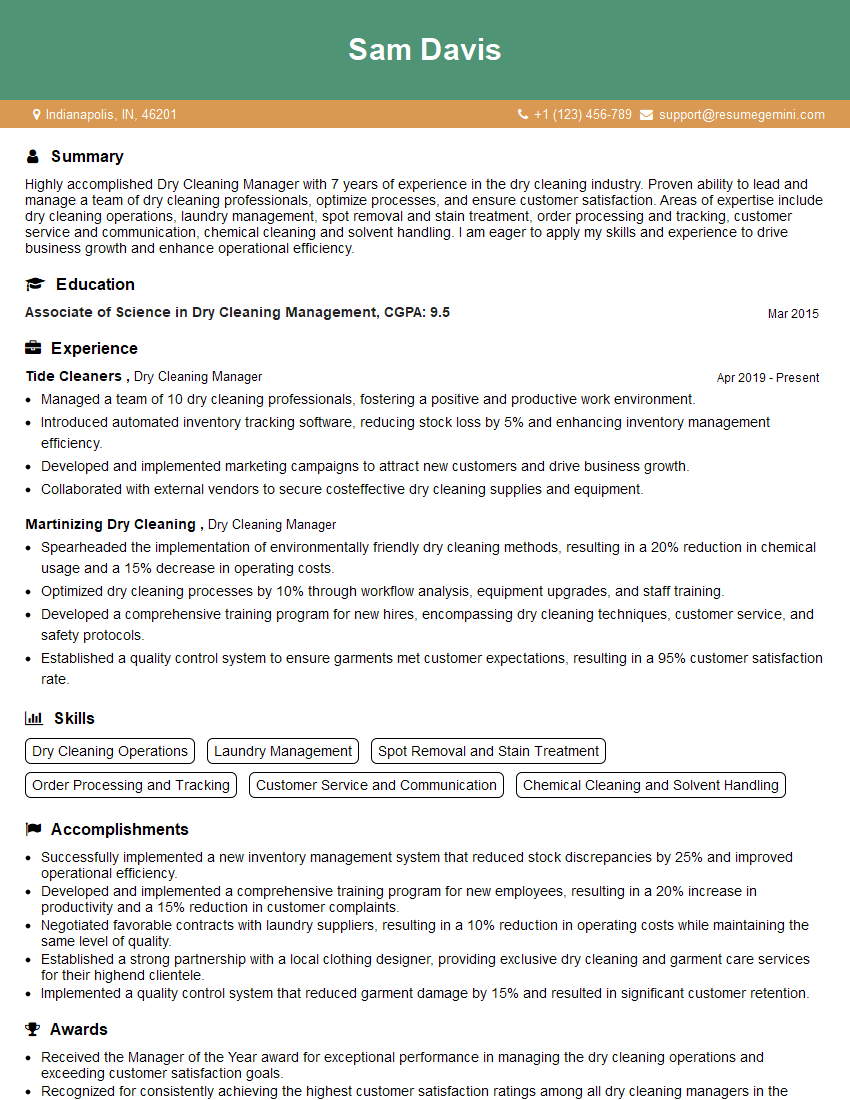
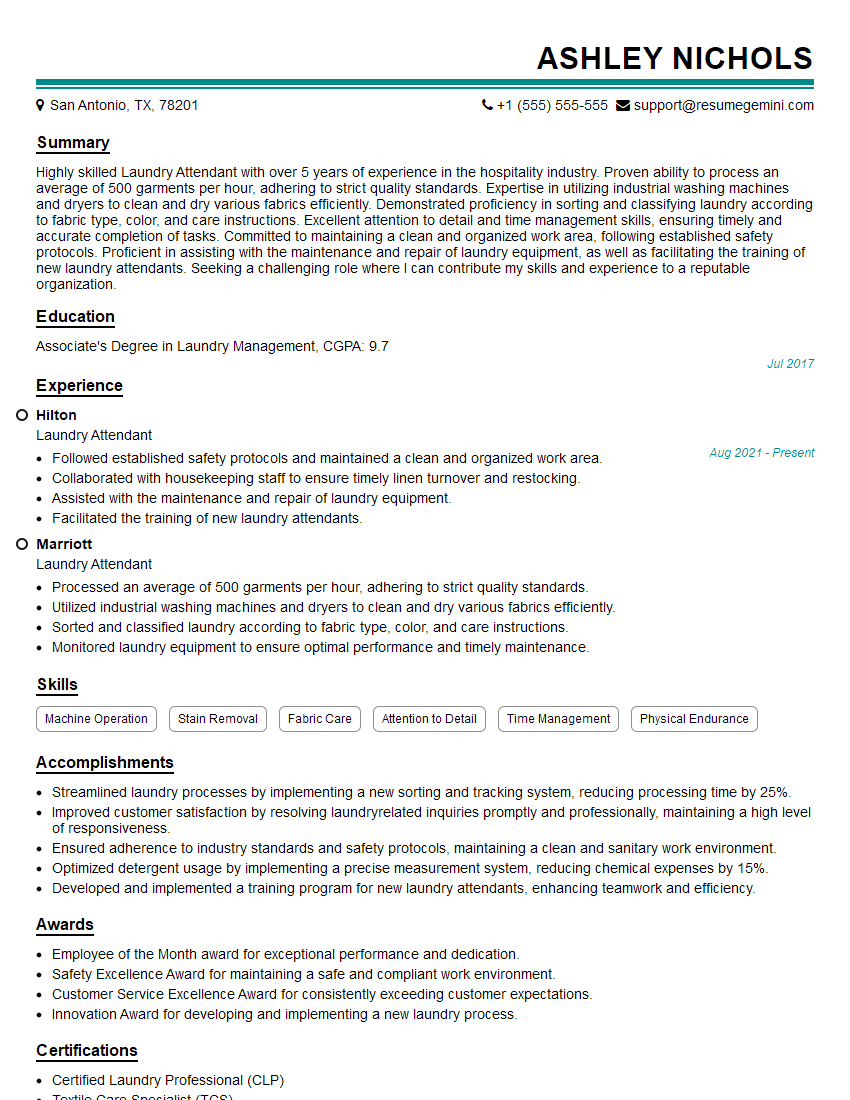
Mastering laundry industry best practices is vital for career advancement, opening doors to higher-level positions and increased earning potential. A strong resume is your key to unlocking these opportunities. Creating an ATS-friendly resume is crucial for getting your application noticed. To help you craft a compelling and effective resume, we recommend using ResumeGemini. ResumeGemini provides tools and resources to build a professional resume, and we offer examples of resumes tailored to the laundry industry best practices, to help guide you.


Explore more articles
Users Rating of Our Blogs
Share Your Experience
We value your feedback! Please rate our content and share your thoughts (optional).
What Readers Say About Our Blog
good