The right preparation can turn an interview into an opportunity to showcase your expertise. This guide to Knowledge of Marine Ecosystems interview questions is your ultimate resource, providing key insights and tips to help you ace your responses and stand out as a top candidate.
Questions Asked in Knowledge of Marine Ecosystems Interview
Q 1. Explain the concept of trophic levels within a marine ecosystem.
Trophic levels describe the feeding relationships within an ecosystem. Imagine a pyramid: each level represents a group of organisms that obtain energy in a similar way. At the base are the primary producers, like phytoplankton, which convert sunlight into energy through photosynthesis. These are consumed by primary consumers (herbivores), such as zooplankton. Then come secondary consumers (carnivores), which eat the primary consumers, and so on, up to apex predators at the top. Energy is transferred between levels, but a significant portion is lost as heat at each step, limiting the number of trophic levels in any ecosystem. For example, in a simple marine food web, phytoplankton (primary producer) are eaten by copepods (primary consumer), which are then consumed by small fish (secondary consumer), ultimately leading to larger fish or marine mammals (tertiary or higher-level consumers).
- Primary Producers: Phytoplankton, algae
- Primary Consumers: Zooplankton, herbivorous fish
- Secondary Consumers: Small carnivorous fish, squid
- Tertiary Consumers: Larger fish, marine mammals, seabirds
Q 2. Describe the process of eutrophication and its impact on marine life.
Eutrophication is the excessive enrichment of water bodies with nutrients, primarily nitrogen and phosphorus. This often results from agricultural runoff, sewage discharge, and industrial waste. The influx of nutrients leads to a massive increase in phytoplankton growth, creating algal blooms. These blooms can deplete oxygen levels in the water (hypoxia) as they decompose, leading to widespread death of marine life – a phenomenon known as a dead zone. Think of it like over-fertilizing a garden; initially, you get abundant growth, but eventually, the excess nutrients choke the system. The Chesapeake Bay is a well-known example, suffering from severe eutrophication and significant consequences for its shellfish and fish populations. This impacts the entire food web, affecting fishing industries and overall ecosystem health. Strategies to mitigate eutrophication include improved wastewater treatment, responsible agricultural practices (e.g., reducing fertilizer use), and the creation of buffer zones around water bodies.
Q 3. What are the key factors influencing primary productivity in the ocean?
Primary productivity, the rate at which primary producers create organic matter, is influenced by several key factors: light availability (depth and water clarity), nutrient concentration (nitrogen, phosphorus, iron), and water temperature. Sunlight is essential for photosynthesis, so productivity is highest in sunlit surface waters. Nutrients are crucial for phytoplankton growth; upwelling zones, where deep, nutrient-rich waters rise to the surface, are typically highly productive. Temperature affects the rate of metabolic processes; optimal temperatures vary depending on the species of phytoplankton. Other factors include grazing pressure (consumption by zooplankton) and water mixing which can influence nutrient availability. For example, the equatorial regions of the ocean receive ample sunlight but are often low in nutrients, whereas coastal upwelling zones can be highly productive due to abundant nutrients.
Q 4. Explain the role of phytoplankton in the marine food web.
Phytoplankton are the base of the marine food web, acting as the primary producers. They are microscopic, photosynthetic organisms that convert sunlight into energy, forming the foundation upon which most other marine life depends. Zooplankton, small animals, graze on phytoplankton, transferring energy to higher trophic levels. This energy flows through the food web as larger animals consume smaller ones. Essentially, almost all marine life, directly or indirectly, relies on phytoplankton for sustenance. A collapse in phytoplankton populations would have catastrophic consequences for the entire marine ecosystem, leading to widespread starvation and ecosystem disruption.
Q 5. Discuss the different types of marine habitats and their unique characteristics.
Marine habitats are incredibly diverse. Examples include:
- Coastal Zones: Highly productive areas including estuaries (where rivers meet the sea), mangroves (salt-tolerant trees), and salt marshes (coastal wetlands). They provide crucial nursery grounds for many species.
- Open Ocean: The vast expanse of the ocean, characterized by different zones based on depth and light penetration. It supports diverse pelagic (open water) species.
- Coral Reefs: Highly diverse and productive ecosystems built by coral polyps. They are particularly sensitive to environmental changes.
- Deep Sea: The dark, high-pressure environment of the deep ocean, supporting unique organisms adapted to extreme conditions. Hydrothermal vents, supporting chemosynthetic communities, are a notable example.
- Seagrass Beds: Submerged flowering plants that provide habitat, food, and protection for various marine organisms.
Q 6. Describe the impact of climate change on marine ecosystems.
Climate change is having profound and multifaceted impacts on marine ecosystems. Rising ocean temperatures are causing coral bleaching, disrupting species distributions, and altering the timing of biological events (like spawning). Ocean acidification, due to increased absorption of atmospheric carbon dioxide, is making it harder for marine organisms, particularly those with calcium carbonate shells or skeletons (like corals and shellfish), to build and maintain their structures. Sea level rise is inundating coastal habitats and increasing erosion. Changes in ocean currents and stratification are affecting nutrient distribution and productivity. These effects cascade through the entire food web, impacting fish populations, marine mammals, and other organisms. The consequences are already evident in many parts of the world, with declines in fish stocks, coral reef degradation, and changes in species distribution.
Q 7. What are the major threats to coral reefs?
Coral reefs face numerous threats, many exacerbated by human activities:
- Climate Change: Rising ocean temperatures and ocean acidification are major stressors, leading to coral bleaching and reduced coral growth.
- Pollution: Runoff from agriculture, sewage, and industrial discharge introduces harmful pollutants that damage coral and other reef organisms.
- Overfishing: Removing key species from the reef disrupts the delicate balance of the ecosystem.
- Destructive Fishing Practices: Methods like blast fishing and cyanide fishing cause direct damage to coral structures.
- Coastal Development: Construction and dredging along coastlines lead to increased sedimentation and habitat loss.
Q 8. Explain the concept of ocean acidification and its consequences.
Ocean acidification is the ongoing decrease in the pH of the Earth’s oceans, caused by the uptake of carbon dioxide (CO2) from the atmosphere. Think of it like adding acid to a glass of water – the overall acidity increases. This process has significant consequences for marine life.
When CO2 dissolves in seawater, it reacts with water molecules to form carbonic acid (H2CO3), which then dissociates into bicarbonate ions (HCO3–) and hydrogen ions (H+). The increase in H+ ions lowers the pH, making the ocean more acidic. This increased acidity impacts many marine organisms, particularly those with calcium carbonate shells or skeletons, like corals, shellfish, and plankton. These organisms struggle to build and maintain their shells and skeletons in more acidic water, leading to weakening and increased vulnerability to damage.
Consequences include reduced shell growth in shellfish, impacting fisheries and food security; coral bleaching and reef degradation, resulting in habitat loss for numerous species; altered ocean food webs, due to the decline of shell-forming organisms at the base of the food chain; and potential changes in ocean currents and climate patterns due to altered ocean chemistry.
Q 9. Describe the process of marine biofouling and its implications.
Marine biofouling refers to the accumulation of unwanted organisms on submerged surfaces, like ship hulls, offshore structures, and aquaculture equipment. Imagine a layer of barnacles, algae, and other organisms growing on the surface, causing friction and problems. This process involves the sequential settlement and growth of various organisms.
The initial phase typically involves the colonization of bacteria and diatoms, creating a biofilm. This biofilm provides a suitable surface for larger organisms like algae, barnacles, and mussels to attach. The accumulation of these organisms increases drag on vessels, reducing fuel efficiency and increasing operational costs for shipping industries. It also negatively impacts the performance of other submerged structures and can interfere with heat exchange processes in power plants or industrial systems.
Further implications include the introduction of invasive species, as biofouling organisms can be transported across vast distances on ship hulls; habitat alteration, as biofouling communities can change the structure of natural habitats; and economic losses, as biofouling necessitates costly cleaning and maintenance procedures.
Q 10. What are the different methods used to assess marine biodiversity?
Assessing marine biodiversity employs a range of methods, depending on the specific goals and resources available. It’s like taking a census of the ocean’s inhabitants.
- Visual surveys: Scuba diving, snorkeling, and remote operated vehicles (ROVs) are used to directly observe and identify organisms. This is a valuable but time-consuming approach that often requires expertise in species identification.
- Sampling techniques: Collecting water samples (plankton nets), sediment cores, or organisms using traps allow for quantitative analysis of species abundance and distribution. The type of sampling gear used depends on the target organism and habitat.
- Genetic analysis: Environmental DNA (eDNA) metabarcoding techniques are becoming increasingly important. Water samples are analyzed to detect the DNA of various organisms present, providing a comprehensive view of biodiversity even without physically observing them.
- Acoustic methods: Sonar and other acoustic technologies can be used to map the distribution and abundance of marine animals, particularly fish and other mobile organisms. Acoustic surveys are often employed in large-scale assessments of marine resources.
The choice of method(s) is determined by factors such as the scale of the study, the target taxa, available resources, and the desired level of detail. Often, a combination of techniques is used to obtain a holistic understanding of marine biodiversity.
Q 11. Explain the principles of sustainable fisheries management.
Sustainable fisheries management aims to maintain fish stocks at healthy levels while providing economic and social benefits for present and future generations. It’s like managing a bank account, ensuring you don’t overdraw and have enough for the future.
Key principles include:
- Stock assessment: Regularly monitoring fish populations to determine their size, reproductive capacity, and overall health.
- Setting catch limits: Establishing limits on the amount of fish that can be harvested to prevent overfishing.
- Gear restrictions: Regulating fishing gear to minimize bycatch (unintentional capture of non-target species).
- Marine protected areas (MPAs): Establishing areas where fishing is restricted or prohibited to allow fish stocks to recover and enhance biodiversity.
- Ecosystem-based management: Considering the interconnectedness of species and habitats when making management decisions.
- Collaboration: Engaging stakeholders including fishermen, scientists, and policymakers in the management process to ensure buy-in and effective implementation.
Effective sustainable fisheries management requires a holistic approach that considers ecological, economic, and social factors. Failure to implement these principles can lead to overfishing, stock collapse, and significant economic and social consequences.
Q 12. Discuss the role of marine protected areas in conservation.
Marine protected areas (MPAs) are designated ocean regions where human activities are restricted to varying degrees to conserve marine biodiversity and ecosystem services. Think of them as nature reserves for the ocean.
Their role in conservation is multifaceted:
- Habitat protection: MPAs safeguard crucial habitats like coral reefs, seagrass beds, and mangrove forests, providing refuge for numerous species.
- Species protection: They offer sanctuary for threatened, endangered, or commercially important species, allowing populations to recover.
- Biodiversity enhancement: MPAs can increase species richness and abundance within their boundaries, creating ‘spillover’ effects into surrounding areas.
- Ecosystem resilience: By protecting ecosystem integrity, MPAs help increase the resilience of marine ecosystems to environmental stressors such as climate change and pollution.
- Fisheries management: MPAs can serve as ‘seed banks’ for fish stocks, contributing to sustainable fisheries in adjacent areas.
Effective MPA management requires careful planning, monitoring, and enforcement to ensure that the protected areas achieve their conservation goals. The success of MPAs is highly dependent on effective governance and community involvement.
Q 13. What are the challenges in monitoring and managing marine pollution?
Monitoring and managing marine pollution present considerable challenges due to the vastness and complexity of the ocean environment. It’s like trying to clean up a huge, constantly shifting mess.
Challenges include:
- Scale and complexity: The sheer size of the ocean makes monitoring difficult, and pollutants can be transported long distances, making source identification challenging.
- Data limitations: Comprehensive data on pollution sources, levels, and impacts is often lacking, hindering effective management decisions.
- Transboundary pollution: Pollutants can cross national boundaries, requiring international cooperation for effective management.
- Monitoring technology: While technologies for monitoring marine pollution are advancing, they can be expensive and require specialized expertise.
- Enforcement difficulties: Enforcing pollution regulations in vast ocean areas is challenging, and illegal dumping remains a significant problem.
- Cumulative effects: Understanding the combined effects of multiple pollutants and stressors is crucial but complex.
Addressing these challenges requires improved monitoring technologies, international collaboration, effective enforcement mechanisms, and integrated approaches that consider the interconnectedness of marine ecosystems and human activities.
Q 14. Describe different techniques used for marine organism identification.
Identifying marine organisms requires a multi-faceted approach, using various techniques depending on the organism and the available resources. Think of it like using a detective’s toolbox.
- Morphological identification: This involves examining the physical characteristics of the organism, such as its shape, size, color, and other distinguishing features. This traditional method requires expert knowledge of taxonomic keys and extensive experience.
- Genetic analysis: DNA barcoding and other molecular techniques provide a powerful tool for species identification, particularly for cryptic species or those that are difficult to identify morphologically. This method is increasingly used, even with microscopic samples.
- Microscopic examination: For microscopic organisms (plankton), examination under a microscope is essential, often requiring specialized staining techniques to visualize key features.
- Image analysis: Digital image analysis is becoming increasingly important, particularly for automated identification of organisms in large datasets. Software is being developed to aid in recognizing specific features and patterns.
- Expert consultation: When in doubt, consulting with taxonomists and other marine organism experts is crucial for accurate species identification. Many national and international databases assist with identification.
The choice of technique often depends on the available resources, the level of accuracy required, and the specific identification needs. A combination of techniques is often employed to confirm identification and ensure accuracy.
Q 15. Explain the importance of marine sediment analysis in ecological studies.
Marine sediment analysis is crucial for understanding past, present, and future states of marine ecosystems. Sediments act as a historical record, preserving the remnants of organisms, pollutants, and environmental changes over time. By analyzing sediment cores, we can reconstruct long-term trends in biodiversity, pollution levels, and climate change impacts.
- Paleoecology: Analyzing fossilized pollen, diatoms (microscopic algae), and other microfossils in sediment cores reveals past ecosystem composition and changes in species abundance. For example, we can track the decline of a specific coral species over decades by analyzing its skeletal remains in sediment layers.
- Pollution History: Sediment layers can contain heavy metals, pesticides, and other pollutants, revealing the history of human impact on the ecosystem. The concentration of these pollutants in different layers can indicate periods of intense pollution and the effectiveness of subsequent mitigation efforts.
- Climate Change Impacts: Sediment analysis can reveal changes in water temperature, salinity, and nutrient levels over time. For instance, shifts in the types of foraminifera (single-celled organisms) found in sediment can reflect changes in ocean temperature.
In essence, sediment analysis offers a powerful lens into the long-term dynamics of marine ecosystems, providing valuable context for present-day observations and predictions for the future.
Career Expert Tips:
- Ace those interviews! Prepare effectively by reviewing the Top 50 Most Common Interview Questions on ResumeGemini.
- Navigate your job search with confidence! Explore a wide range of Career Tips on ResumeGemini. Learn about common challenges and recommendations to overcome them.
- Craft the perfect resume! Master the Art of Resume Writing with ResumeGemini’s guide. Showcase your unique qualifications and achievements effectively.
- Don’t miss out on holiday savings! Build your dream resume with ResumeGemini’s ATS optimized templates.
Q 16. How do you assess the health of a marine ecosystem?
Assessing the health of a marine ecosystem is a multifaceted process that requires considering various biological, chemical, and physical factors. It’s not a single metric but rather a holistic evaluation.
- Biological Indicators: We examine species diversity, abundance, and the overall trophic structure (food web). A healthy ecosystem usually boasts high biodiversity with a balanced representation of different trophic levels. For example, the presence of top predators like sharks or large fish indicates a functioning ecosystem.
- Chemical Indicators: We measure water quality parameters such as dissolved oxygen levels, nutrient concentrations (nitrogen and phosphorus), and the presence of pollutants (heavy metals, pesticides). Low dissolved oxygen can signal eutrophication (excess nutrients leading to algal blooms), while high pollutant concentrations indicate contamination.
- Physical Indicators: We assess factors such as water temperature, salinity, turbidity (cloudiness), and sediment characteristics. Changes in these parameters can reflect climate change impacts or habitat degradation. For example, increased sediment load can smother benthic (bottom-dwelling) organisms.
- Community Structure Analysis: Sophisticated statistical analyses are employed to assess relationships between species and environmental parameters, providing a more holistic understanding of ecosystem health.
By combining these indicators, we can develop a comprehensive picture of ecosystem health. For example, a decline in biodiversity coupled with increased nutrient levels and low dissolved oxygen would strongly suggest an unhealthy ecosystem experiencing eutrophication.
Q 17. Discuss the different types of marine pollution and their sources.
Marine pollution encompasses a wide range of contaminants that negatively impact marine ecosystems. These pollutants originate from various sources, both land-based and ocean-based.
- Plastic Pollution: This is a major global problem with plastics originating from land-based sources (waste mismanagement, industrial discharge), as well as fishing gear and shipping activities. Plastics can entangle marine animals, be ingested causing harm, and break down into microplastics which enter the food chain.
- Nutrient Pollution: Runoff from agricultural lands and sewage discharges introduce excess nitrogen and phosphorus into coastal waters. This fuels algal blooms, leading to oxygen depletion (hypoxia) and harming marine life, a process known as eutrophication.
- Chemical Pollution: Industrial discharge, agricultural runoff, and accidental spills introduce heavy metals (mercury, lead), pesticides, and other toxic chemicals. These substances can bioaccumulate in marine organisms and cause a variety of adverse effects.
- Noise Pollution: Shipping traffic, sonar, and seismic surveys generate underwater noise that disrupts marine animal communication, navigation, and reproduction.
- Thermal Pollution: Discharge of heated water from power plants can alter water temperature, affecting the survival and reproduction of temperature-sensitive species.
Addressing marine pollution requires a multi-pronged approach involving reducing pollution at its source (through better waste management, stricter regulations on industrial discharge), implementing cleanup strategies, and promoting sustainable practices.
Q 18. Explain the concept of marine bioaccumulation and biomagnification.
Bioaccumulation and biomagnification are two related processes describing how pollutants concentrate in marine organisms.
Bioaccumulation: This refers to the gradual accumulation of substances, such as pesticides or heavy metals, in an organism’s body over its lifetime. Organisms absorb these substances from their surrounding environment (water, food) at a rate faster than they can be excreted or metabolized. For example, a mussel filtering contaminated seawater will accumulate pollutants in its tissues.
Biomagnification: This refers to the increasing concentration of substances in organisms at higher trophic levels (levels in the food chain). Predators consume prey containing accumulated pollutants, and the pollutants become more concentrated in their tissues. For instance, a large predatory fish that eats many smaller fish containing mercury will have much higher mercury concentrations than the smaller fish.
The combined effect of bioaccumulation and biomagnification can result in dangerously high concentrations of pollutants in top predators, posing risks to both the organisms themselves and to humans who consume them (e.g., mercury in tuna).
Q 19. What are the impacts of invasive species on marine ecosystems?
Invasive species are non-native organisms that establish themselves in a new environment and cause ecological and/or economic harm. Their impacts on marine ecosystems can be devastating.
- Competition with native species: Invasive species can outcompete native species for resources (food, space, mates), leading to declines in native populations and even extinctions.
- Predation on native species: Invasive predators can decimate native prey populations, disrupting food webs and causing cascading effects throughout the ecosystem.
- Habitat alteration: Invasive species can alter habitats, making them less suitable for native organisms. For example, invasive algae can smother coral reefs.
- Disease transmission: Invasive species can introduce new diseases to native populations, which can cause widespread mortality.
- Hybridization: Invasive species can hybridize with native species, reducing the genetic integrity of native populations.
The introduction of invasive species often leads to a loss of biodiversity, reduced ecosystem stability, and can have significant economic consequences (e.g., damage to fisheries or aquaculture).
Examples include the Lionfish in the Caribbean, which has decimated native fish populations, and the Zebra Mussel in the Great Lakes, which has caused extensive damage to infrastructure.
Q 20. Describe different methods for restoring degraded marine habitats.
Restoring degraded marine habitats is a complex but essential undertaking. Methods vary depending on the specific habitat and the type of degradation.
- Habitat Creation/Enhancement: This involves creating new habitats or improving existing ones. Examples include constructing artificial reefs to provide habitat for fish, restoring seagrass beds through planting, or creating oyster reefs to filter water and provide habitat.
- Pollution Remediation: This focuses on removing or mitigating pollutants. Methods include dredging contaminated sediments, installing barriers to prevent pollution from reaching the marine environment, or using bioremediation techniques (using organisms to break down pollutants).
- Fisheries Management: Sustainable fisheries management practices, including catch limits and protected areas, can help restore depleted fish populations and allow the ecosystem to recover.
- Invasive Species Control: Controlling invasive species through physical removal, biological control, or chemical treatments is essential for restoring the balance of the ecosystem.
- Climate Change Adaptation: Addressing climate change through mitigation and adaptation strategies is crucial for protecting marine ecosystems from the effects of warming waters, ocean acidification, and sea-level rise.
Restoration projects often involve a combination of approaches and require careful planning and monitoring to ensure effectiveness. Success depends on understanding the underlying causes of degradation and selecting appropriate restoration techniques.
Q 21. How do you use GIS technology in marine ecosystem research?
Geographic Information Systems (GIS) technology plays a vital role in marine ecosystem research, enabling the visualization, analysis, and management of spatial data.
- Mapping Habitats: GIS is used to create detailed maps of marine habitats, such as seagrass beds, coral reefs, and mangrove forests, using data from satellite imagery, sonar, and underwater surveys. This provides a crucial baseline for monitoring changes over time.
- Species Distribution Modeling: GIS allows researchers to analyze the distribution of marine species and identify areas of high biodiversity or areas where species are vulnerable to environmental change. This information is critical for conservation planning.
- Pollution Monitoring: GIS can be used to map pollution sources and track the spread of pollutants in the marine environment. This helps identify areas needing remediation and assess the effectiveness of mitigation efforts.
- Climate Change Impact Assessment: GIS is used to model the potential impacts of climate change on marine ecosystems, such as sea-level rise and ocean acidification. This helps prioritize conservation efforts and develop adaptation strategies.
- Marine Protected Area (MPA) Design: GIS is essential for designing and managing MPAs, ensuring they effectively protect biodiversity and ecosystem services. It allows for the optimization of MPA boundaries based on ecological data and other factors.
Example: A researcher might use GIS software to overlay data on seagrass bed distribution, water quality, and fishing activity to identify areas where seagrass is particularly vulnerable and develop a management plan to protect it. This integration of various data layers provides a powerful tool for marine ecosystem research and management.
Q 22. Explain the principles of marine spatial planning.
Marine Spatial Planning (MSP) is a powerful tool for managing human activities in the ocean, ensuring their sustainability and minimizing conflict. Think of it as urban planning, but for the sea. It involves analyzing the ocean environment – its habitats, resources, and the pressures upon them – and then strategically allocating areas for different uses, such as fishing, energy production, or conservation. The fundamental principles include:
- Ecosystem-based management: MSP considers the interconnectedness of marine ecosystems and aims to maintain their health and resilience. This means avoiding actions that damage one area and negatively impacting others.
- Stakeholder engagement: Successful MSP requires input from all those affected by ocean use, including fishermen, conservationists, industry representatives, and coastal communities. Open communication and collaborative decision-making are crucial.
- Spatial prioritization: MSP identifies areas of high ecological value, critical habitats, or areas vulnerable to impacts, prioritizing their protection.
- Adaptive management: MSP is a dynamic process. Monitoring and evaluation are essential to identify the effectiveness of plans and adapt them over time, responding to new information and changing conditions.
- Transparency and accountability: The process and outcomes of MSP need to be transparent and accessible to the public to ensure accountability and build trust.
For example, an MSP plan might designate specific areas for offshore wind farms, while protecting adjacent seagrass beds crucial for fish nurseries. This avoids the conflict between renewable energy development and biodiversity conservation.
Q 23. Discuss the role of marine reserves in protecting biodiversity.
Marine reserves, also known as marine protected areas (MPAs), are designated areas where human activities are restricted or prohibited to allow ecosystems to recover and thrive. Their role in protecting biodiversity is multifaceted:
- Habitat preservation: Reserves safeguard critical habitats such as coral reefs, kelp forests, and seagrass meadows, providing refuge for diverse species.
- Species protection: They offer safe havens for threatened and endangered species, allowing populations to rebuild and genetic diversity to be maintained.
- Spillover effects: Reserves often act as ‘seed banks,’ with increased populations and biodiversity spilling over into adjacent areas, benefiting fisheries and the wider ecosystem.
- Resilience to climate change: Healthy, protected ecosystems are more resilient to the impacts of climate change, such as ocean warming and acidification.
- Scientific research: Reserves provide ideal locations for studying the natural dynamics of marine ecosystems and the effectiveness of conservation measures.
The success of marine reserves hinges on effective enforcement and management. For example, the Papahānaumokuākea Marine National Monument in Hawai’i, one of the world’s largest marine reserves, shows how comprehensive protection can lead to remarkable recovery of coral reefs and increased fish biomass.
Q 24. What are the ethical considerations in marine research?
Ethical considerations in marine research are paramount. We have a moral obligation to minimize any harm to marine life and ecosystems while conducting our work. Key considerations include:
- Animal welfare: Minimizing stress and pain to marine animals during capture, handling, and experimentation. This includes adherence to strict ethical guidelines and obtaining necessary permits.
- Environmental impact: Careful planning to minimize disturbance to habitats and the broader ecosystem. This involves assessing potential impacts beforehand and implementing mitigation measures.
- Data integrity and transparency: Ensuring data is collected rigorously and accurately, and findings are reported honestly and transparently, avoiding bias or manipulation.
- Indigenous knowledge and rights: Respecting the traditional knowledge and rights of Indigenous communities who have a deep connection to marine environments. This includes consultation and collaboration in research projects that affect their territories.
- Benefit sharing: Sharing the benefits of marine research, including its findings and applications, with the communities and nations that contribute to or are affected by the research.
For example, if researching a threatened species, researchers should prioritize non-invasive methods and minimize handling time to reduce stress. Similarly, involving local communities in the research design and ensuring they benefit from the outcomes is vital for ethical conduct.
Q 25. How do you interpret data from oceanographic surveys?
Interpreting data from oceanographic surveys involves a multi-step process combining statistical analysis, spatial visualization, and ecological understanding. The process typically begins with data cleaning and quality control, ensuring accuracy and reliability. Next, spatial data, such as bathymetry or species distribution, is visualized using Geographic Information Systems (GIS) software, allowing for identification of patterns and relationships.
Statistical analysis is critical to understand the significance of observed patterns. We might use techniques like regression analysis to investigate the relationship between environmental variables and species abundance, or ANOVA to compare differences in community structure between different locations. Finally, it is essential to interpret the statistical results in the context of existing ecological knowledge and hypotheses. For instance, a decline in coral cover in a specific area might be linked to rising ocean temperatures or increased pollution, based on both statistical evidence and knowledge of the ecosystem’s sensitivities.
Example: A regression analysis showing a strong positive correlation between sea surface temperature and coral bleaching events supports the hypothesis that rising temperatures are a major driver of coral reef decline.
Q 26. Describe the challenges of managing marine resources in a changing climate.
Managing marine resources in a changing climate presents enormous challenges. Climate change impacts, such as ocean warming, acidification, sea-level rise, and altered storm patterns, directly affect marine ecosystems and the resources they provide. These changes impact the distribution and abundance of species, alter habitat suitability, and increase the frequency and intensity of extreme weather events.
Effective management strategies need to be adaptive and consider the projected future impacts. This includes:
- Building resilience: Protecting and restoring marine habitats to enhance their ability to withstand climate change impacts.
- Managing fisheries sustainably: Implementing robust fisheries management plans that account for climate-driven changes in species distribution and abundance.
- Reducing pollution: Mitigating the combined stresses of climate change and pollution on marine ecosystems.
- Investing in research and monitoring: Continuously monitoring the impacts of climate change and adapting management strategies accordingly.
- International cooperation: Climate change is a global issue requiring coordinated action at an international level.
For example, managers might need to adjust fishing quotas to reflect shifts in fish populations due to changing ocean temperatures. They might also prioritize restoration efforts in vulnerable habitats to increase their resilience.
Q 27. What are the key indicators of a healthy coastal ecosystem?
A healthy coastal ecosystem is characterized by a complex interplay of physical, chemical, and biological factors. Key indicators include:
- High biodiversity: A wide range of species representing various trophic levels (producers, consumers, decomposers).
- Abundant seagrass beds and kelp forests: These habitats are crucial for supporting biodiversity and providing nursery grounds for many species.
- Healthy coral reefs (where applicable): High coral cover and diverse coral species indicate a healthy reef ecosystem.
- High water quality: Low levels of pollution (nutrients, toxins, plastics) are essential for maintaining healthy marine life.
- Stable populations of key species: Consistent populations of commercially important fish species and other indicator species.
- Effective nutrient cycling: Efficient transfer of energy and nutrients throughout the ecosystem.
- Resilience to disturbances: The ability of the ecosystem to recover from natural disturbances (storms, floods) and human impacts.
Monitoring these indicators over time provides insights into the health of a coastal ecosystem and helps identify areas requiring management intervention. For instance, a significant decline in seagrass cover might indicate increased nutrient pollution, requiring actions to reduce pollution sources.
Q 28. Explain the importance of scientific collaboration in marine ecosystem management.
Scientific collaboration is crucial for effective marine ecosystem management due to the complex and interconnected nature of marine environments. No single institution or researcher possesses all the necessary expertise or resources. Collaboration enhances:
- Data sharing and integration: Pooling data from different sources allows for a more comprehensive understanding of marine ecosystems and the effectiveness of management strategies.
- Expertise and capacity building: Bringing together scientists with different specializations (e.g., ecology, oceanography, economics) enhances the breadth and depth of research and management capabilities.
- Development of integrated management plans: Collaboration between scientists, managers, and stakeholders fosters the development of holistic management plans that consider multiple perspectives and incorporate scientific evidence.
- Improved communication and outreach: Collaborative efforts enhance communication of scientific findings to policymakers, stakeholders, and the public, promoting informed decision-making.
- International cooperation: Many marine ecosystems extend beyond national boundaries, requiring international collaboration to address transboundary issues and manage shared resources effectively.
For example, international collaborations are crucial for monitoring and managing large-scale issues like climate change impacts on ocean currents and biodiversity. Sharing research data across nations allows for a more comprehensive understanding of these global issues and supports the development of effective international conservation strategies.
Key Topics to Learn for Knowledge of Marine Ecosystems Interview
- Marine Biodiversity and Ecosystem Services: Understanding the diversity of marine life, their interactions, and the benefits they provide (e.g., fisheries, carbon sequestration, coastal protection). Consider practical applications like assessing the impact of pollution or climate change on these services.
- Oceanographic Processes: Mastering concepts like currents, tides, upwelling, and their influence on marine ecosystems. Think about how these processes affect species distribution, nutrient cycling, and primary productivity. Explore practical applications like modeling ocean currents or predicting harmful algal blooms.
- Marine Pollution and Conservation: Gain a comprehensive understanding of various pollution sources (e.g., plastics, chemicals, noise) and their ecological impacts. Explore conservation strategies and management techniques, including protected areas and sustainable fishing practices. Consider case studies showcasing successful conservation efforts or challenges in pollution mitigation.
- Climate Change Impacts on Marine Ecosystems: Analyze the effects of rising temperatures, ocean acidification, and sea-level rise on marine organisms and habitats. Explore the use of modeling and predictive tools to assess future impacts and inform adaptation strategies.
- Fisheries Management and Sustainable Practices: Understand the principles of fisheries management, including stock assessment, fishing regulations, and the impacts of overfishing. Explore sustainable aquaculture practices and their role in meeting global food security needs while minimizing environmental impact.
Next Steps
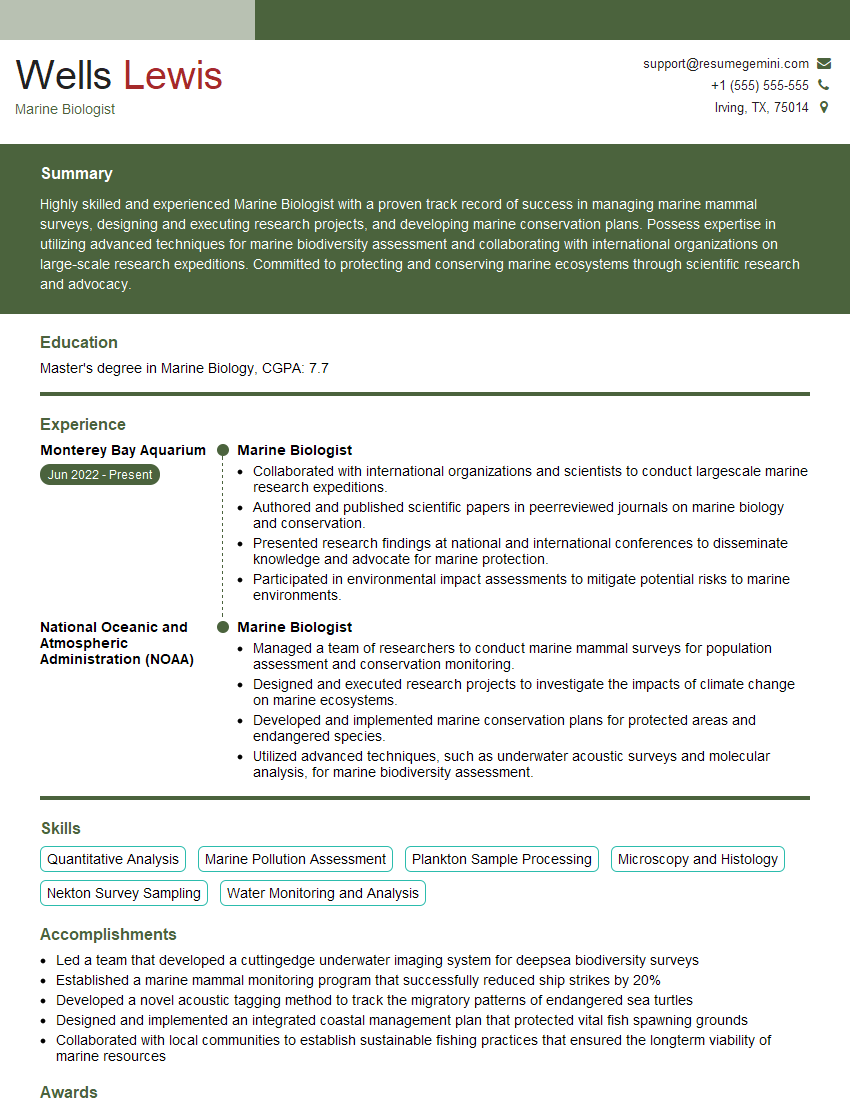
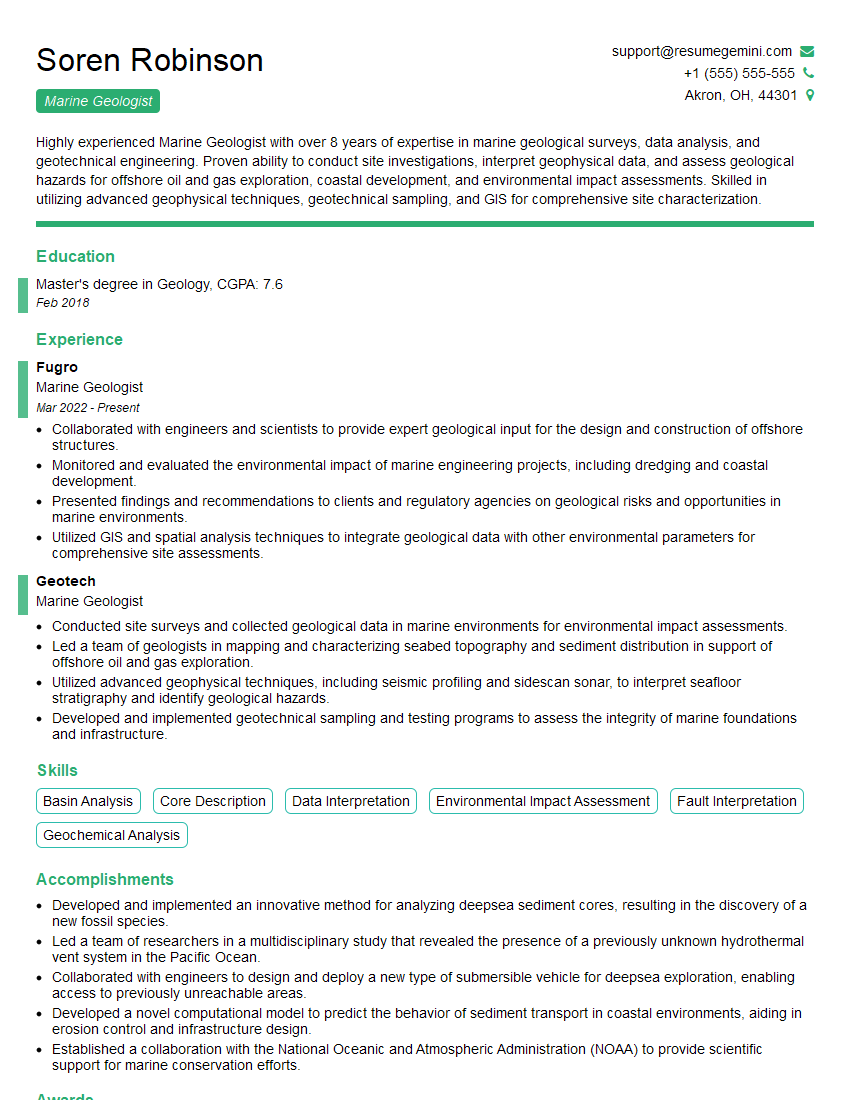
A strong understanding of marine ecosystems is crucial for career advancement in fields like marine biology, oceanography, environmental management, and fisheries science. To maximize your job prospects, crafting a compelling and ATS-friendly resume is essential. ResumeGemini is a trusted resource to help you build a professional resume that highlights your skills and experience effectively. We provide examples of resumes tailored to Knowledge of Marine Ecosystems to guide you in creating a standout application. Invest the time in perfecting your resume – it’s your first impression with potential employers.
Explore more articles
Users Rating of Our Blogs
Share Your Experience
We value your feedback! Please rate our content and share your thoughts (optional).
What Readers Say About Our Blog
Very informative content, great job.
good