Cracking a skill-specific interview, like one for Knowledge of Material Manufacturing Processes, requires understanding the nuances of the role. In this blog, we present the questions you’re most likely to encounter, along with insights into how to answer them effectively. Let’s ensure you’re ready to make a strong impression.
Questions Asked in Knowledge of Material Manufacturing Processes Interview
Q 1. Explain the differences between casting, forging, and machining.
Casting, forging, and machining are three fundamentally different manufacturing processes used to shape materials. They differ primarily in how the material is deformed and the final product’s characteristics.
Casting: This process involves pouring molten material (metal, plastic, etc.) into a mold of the desired shape. Once the material solidifies, the mold is removed, revealing the finished part. Think of making ice cubes – the water is the molten material, the ice cube tray is the mold, and the frozen cube is the cast part. Casting is excellent for creating complex shapes, but the resulting parts often require further machining for precise dimensions and surface finish.
Forging: Forging involves shaping metal using compressive forces, typically by hammering or pressing the heated metal into a die. This process significantly improves the material’s strength and grain structure, making forged parts very durable. Imagine a blacksmith shaping a horseshoe – the intense pressure and heat reshape the metal, creating a strong and resilient product. Forging is ideal for high-strength applications but can be more expensive and complex than casting.
Machining: Machining uses subtractive processes to remove material from a workpiece to achieve the desired shape and dimensions. Tools like lathes, mills, and drills cut, grind, or shape the material. Think of carving a wooden sculpture – you start with a block of wood and remove material to reveal the final form. Machining provides high precision and excellent surface finishes but can be time-consuming and generate waste material.
Q 2. Describe the process of injection molding.
Injection molding is a widely used manufacturing process for creating plastic parts. It’s a highly efficient method for mass production, particularly for complex shapes.
The process begins with molten plastic being injected under high pressure into a precisely engineered mold cavity. The mold is usually made of steel and is precisely machined to create the desired shape. Once the plastic cools and solidifies, the mold opens, and the finished part is ejected. The whole process is highly automated, resulting in high production rates and consistency.
Think of it like squeezing toothpaste out of a tube – the molten plastic is the toothpaste, the mold is the tube opening, and the solidified shape is the toothpaste on the brush. The precision of the mold ensures consistent product quality across millions of units.
Q 3. What are the advantages and disadvantages of extrusion?
Extrusion is a continuous manufacturing process where a material is pushed through a die to create a consistent cross-section. Think of making spaghetti – the dough is the material, and the die is the pasta maker’s hole that shapes the spaghetti.
- Advantages: High production rates, relatively low cost per unit, ability to create long continuous lengths of material (e.g., pipes, cables, profiles), and suitability for a wide range of materials (plastics, metals, polymers).
- Disadvantages: Limited complexity of cross-sectional shapes, potential for variations in dimensions and material properties along the extruded length, and the need for significant upfront investment in tooling and equipment.
Q 4. How does heat treatment affect the properties of metals?
Heat treatment alters a metal’s microstructure, significantly influencing its mechanical properties like strength, hardness, ductility, and toughness. This is achieved by carefully controlling heating and cooling cycles.
For instance, annealing involves heating the metal to a specific temperature, holding it there, and then slowly cooling it. This process relieves internal stresses and softens the metal, making it more ductile and easier to machine. Conversely, quenching involves rapidly cooling the metal (e.g., in water or oil) after heating, which can increase its hardness and strength but often reduces ductility. Tempering is a subsequent heat treatment applied after quenching to reduce brittleness and increase toughness. Different heat treatment processes are chosen depending on the desired final properties of the metal.
Q 5. Explain the concept of material selection for a specific application.
Material selection is a critical aspect of engineering design. It involves choosing the most suitable material for a specific application based on a variety of factors.
The process typically involves considering:
- Mechanical properties: Strength, hardness, ductility, toughness, elasticity, fatigue resistance.
- Physical properties: Density, thermal conductivity, electrical conductivity, melting point.
- Chemical properties: Corrosion resistance, reactivity with other materials.
- Cost: Material cost, manufacturing cost.
- Environmental considerations: Sustainability, recyclability, toxicity.
- Aesthetics: Appearance, color, texture.
For example, choosing a material for a car engine would require considering strength at high temperatures, corrosion resistance, and cost-effectiveness. In contrast, selecting a material for a medical implant demands biocompatibility, strength, and corrosion resistance.
Q 6. What are the common quality control methods used in manufacturing?
Quality control (QC) in manufacturing is crucial to ensure products meet specified standards. Various methods are employed throughout the manufacturing process.
- Inspection: Visual inspection, dimensional measurements, and testing of material properties using tools like calipers, micrometers, and tensile testing machines.
- Statistical Process Control (SPC): Using statistical methods to monitor and control variation in the manufacturing process. Control charts help identify trends and potential issues before they escalate.
- Non-destructive testing (NDT): Techniques like ultrasonic testing, radiographic testing, and magnetic particle inspection to detect flaws in materials without causing damage.
- Destructive testing: Testing to destruction to determine material properties like tensile strength and yield strength.
These methods, often used in combination, help identify and rectify defects, reducing waste and ensuring product quality and reliability.
Q 7. Describe different types of welding processes and their applications.
Welding is a fundamental joining process that fuses materials, typically metals, using heat or pressure. Several processes exist, each with specific applications.
- Shielded Metal Arc Welding (SMAW): Uses a consumable electrode coated with flux to protect the weld from atmospheric contamination. It’s versatile, portable, and relatively inexpensive, but weld quality can depend on operator skill.
- Gas Metal Arc Welding (GMAW): Also known as MIG welding, this process uses a continuous wire electrode and a shielding gas to protect the weld. It’s highly productive and produces good-quality welds but requires specialized equipment.
- Gas Tungsten Arc Welding (GTAW): Also known as TIG welding, this process uses a non-consumable tungsten electrode and a shielding gas. It produces high-quality welds with excellent control but is slower than GMAW and requires more operator skill.
- Resistance Welding: Uses electrical resistance to generate heat at the joint, fusing the materials together. Common methods include spot welding and seam welding. It is fast and efficient but suitable for joining relatively thin sheets of metal.
The choice of welding process depends on factors such as material thickness, joint design, required weld quality, and production volume. For example, SMAW might be used for on-site construction, while GMAW is common in automotive manufacturing.
Q 8. How do you ensure the safety of workers in a manufacturing environment?
Worker safety in manufacturing is paramount and requires a multi-faceted approach. It’s not just about complying with regulations; it’s about fostering a culture of safety where every employee feels empowered to identify and report hazards.
- Hazard Identification and Risk Assessment (HIRA): Regularly conduct thorough HIRA’s to identify potential dangers like machinery malfunctions, chemical exposure, or ergonomic issues. This involves analyzing the probability and severity of each hazard.
- Personal Protective Equipment (PPE): Providing and enforcing the use of appropriate PPE, such as safety glasses, hearing protection, gloves, and respirators, is critical. Training on proper PPE use is equally important.
- Machine Guarding and Lockout/Tagout (LOTO): Ensuring all machinery is properly guarded to prevent accidental contact and implementing strict LOTO procedures to prevent unexpected starts during maintenance or repair is essential.
- Emergency Response Plan: A well-defined emergency response plan, including fire safety procedures, evacuation routes, and first aid protocols, must be in place and regularly practiced. Training and drills are key.
- Training and Communication: Comprehensive training programs on safe work practices, hazard recognition, and emergency procedures are vital. Regular communication and feedback sessions to address concerns and ensure ongoing safety awareness are equally crucial.
- Continuous Improvement: Regularly review safety procedures and identify areas for improvement. This could involve implementing new safety technologies or updating training materials based on incident reports and near misses.
For example, in a metal fabrication shop, we implemented a color-coded system for identifying different hazard levels, along with regular safety meetings to discuss incidents and best practices. This led to a significant reduction in workplace accidents.
Q 9. Explain the concept of lean manufacturing.
Lean manufacturing is a systematic approach to optimizing manufacturing processes by eliminating waste and maximizing value for the customer. It’s about doing more with less, improving efficiency, and reducing costs without compromising quality.
The core principles of lean revolve around identifying and eliminating seven types of waste (often remembered by the acronym TIMWOOD):
- Transportation: Unnecessary movement of materials or products.
- Inventory: Excess inventory that ties up capital and space.
- Motion: Unnecessary movements of people or equipment.
- Waiting: Delays in the production process.
- Overproduction: Producing more than is needed.
- Over-processing: Performing unnecessary steps in the production process.
- Defects: Producing products with defects that require rework or scrap.
Lean methodologies, such as Kaizen (continuous improvement) and Just-in-Time (JIT) inventory management, are used to achieve these goals. JIT, for instance, aims to receive materials only when needed, minimizing storage costs and reducing the risk of obsolete inventory.
Imagine a car manufacturing plant. Lean principles would help optimize the flow of parts, reduce waiting times on the assembly line, and minimize excess inventory of car parts, resulting in faster production times and lower costs.
Q 10. What is Six Sigma and how is it applied in manufacturing?
Six Sigma is a data-driven methodology aimed at minimizing defects and variability in any process, including manufacturing. It strives to achieve near-perfection (3.4 defects per million opportunities) by focusing on statistical analysis and process improvement.
Six Sigma employs a structured approach using DMAIC (Define, Measure, Analyze, Improve, Control):
- Define: Clearly define the problem or process to be improved and set specific, measurable, achievable, relevant, and time-bound (SMART) goals.
- Measure: Collect data to quantify the current performance of the process and identify key metrics.
- Analyze: Analyze the collected data to identify the root causes of defects or variations.
- Improve: Develop and implement solutions to address the root causes and improve the process.
- Control: Monitor the improved process to ensure that the gains are sustained and prevent future deviations.
In a manufacturing context, Six Sigma might be used to reduce the number of defective parts produced on a particular assembly line. By carefully analyzing the process, identifying bottlenecks, and implementing process changes, the defect rate can be drastically reduced.
For instance, a company manufacturing circuit boards might use Six Sigma to analyze the causes of faulty solder joints. By identifying the root causes (e.g., inconsistent solder temperature, poor component placement), they can implement corrective actions and significantly improve product quality.
Q 11. Describe your experience with CAD/CAM software.
I have extensive experience with various CAD/CAM software packages, including SolidWorks, AutoCAD, and Mastercam. My expertise spans from 2D drafting to 3D modeling, design analysis, and CNC programming. I’m proficient in creating detailed part models, generating manufacturing drawings, and developing CNC toolpaths for various machining operations.
In my previous role, I used SolidWorks to design complex injection-molded plastic parts, performing simulations to verify structural integrity and manufacturability. I then used Mastercam to generate CNC milling programs for the production of prototypes. This integrated approach allowed for efficient design iteration and rapid prototyping.
I’m also comfortable working with other related software such as FEA (Finite Element Analysis) packages for stress and strain analysis, ensuring designs are robust and meet specific performance requirements. This comprehensive skillset allows me to streamline the design-to-manufacturing process.
Q 12. How do you troubleshoot manufacturing process problems?
Troubleshooting manufacturing process problems requires a systematic approach. My process generally involves:
- Identify the Problem: Clearly define the problem, quantifying it with data where possible (e.g., defect rate, downtime, yield).
- Gather Data: Collect relevant data from various sources: machine logs, quality control reports, operator feedback, etc. This helps pinpoint potential areas of concern.
- Analyze the Data: Use statistical tools (e.g., control charts, Pareto analysis) to identify the root causes of the problem. Look for patterns, anomalies, and correlations.
- Develop and Test Solutions: Based on the analysis, develop and implement potential solutions. This might involve adjusting machine parameters, improving operator training, or modifying the manufacturing process itself. Test the effectiveness of each solution using controlled experiments.
- Implement and Monitor: Once an effective solution is found, implement it consistently across the production process and monitor its performance over time. Regularly review the process to ensure the solution remains effective.
For instance, if we’re experiencing an increase in surface defects on a machined part, I would investigate factors like tool wear, improper cutting parameters, or material inconsistencies. By analyzing data from the CNC machine and quality control inspections, I can pinpoint the root cause and develop a solution, such as replacing the tool or adjusting the cutting speed.
Q 13. What are the common causes of defects in manufacturing?
Defects in manufacturing arise from a variety of sources, often stemming from a combination of factors. These can broadly be categorized as:
- Material Defects: Problems with the raw materials used, such as impurities, inconsistencies, or damage during storage or handling. This could lead to flaws in the final product.
- Process Defects: Errors in the manufacturing process itself, including incorrect machine settings, improper tooling, inconsistent operator technique, or inadequate process control. This could result in dimensional inaccuracies, surface defects, or functional failures.
- Design Defects: Flaws in the original product design that make it difficult or impossible to manufacture without defects. This could involve issues with material selection, part geometry, or assembly processes.
- Environmental Factors: External conditions such as temperature, humidity, or vibration can also affect the manufacturing process and contribute to defects.
- Human Error: Mistakes made by operators or technicians, such as incorrect setup, faulty measurements, or improper handling of materials.
For example, inconsistent pressure during a molding process might lead to dimensional inconsistencies in the final product. A poorly designed jig fixture can lead to misalignment, impacting functionality. A human error such as incorrect material selection can lead to the wrong material being used, leading to failure.
Q 14. Explain the importance of process optimization.
Process optimization is crucial for maximizing efficiency, minimizing costs, and improving product quality in manufacturing. It involves systematically identifying and eliminating waste, improving throughput, and enhancing overall process performance.
The benefits of process optimization are multifaceted:
- Reduced Costs: By improving efficiency and reducing waste, optimization can significantly lower manufacturing costs.
- Increased Productivity: Streamlining processes and eliminating bottlenecks lead to higher output and faster turnaround times.
- Improved Quality: Optimized processes result in fewer defects, reduced variability, and improved product consistency.
- Enhanced Competitiveness: Optimized manufacturing processes give companies a competitive edge in the market.
- Better Employee Morale: When processes are efficient and effective, employees experience less frustration and increased job satisfaction.
Consider a bakery. Optimizing the dough-mixing process through precise ingredient measurements, optimized mixing times, and automation would lead to more consistent dough quality, reduced waste, and improved efficiency. This translates to lower costs, higher output, and happier customers.
Q 15. How do you manage inventory in a manufacturing setting?
Inventory management in manufacturing is crucial for maintaining a smooth production flow while minimizing costs. It involves strategically planning and controlling the acquisition, storage, and use of raw materials, work-in-progress (WIP), and finished goods. Effective inventory management prevents stockouts that halt production and excessive inventory that ties up capital and increases storage costs.
My approach typically involves a combination of techniques:
- Demand Forecasting: Accurately predicting future demand using historical data, market trends, and sales forecasts allows for optimized ordering quantities.
- Material Requirements Planning (MRP): This system helps determine the precise quantities and timing of raw materials needed based on production schedules and bill of materials (BOMs). For example, if I’m manufacturing 1000 widgets and each widget requires 2 screws and 1 spring, MRP will calculate that I need 2000 screws and 1000 springs.
- Just-in-Time (JIT) Inventory: Minimizing inventory by receiving materials only when needed reduces storage costs and waste. However, this requires a highly reliable supply chain.
- Kanban Systems: A visual signaling system often used with JIT, Kanban uses cards or other visual cues to signal the need for more materials. This makes it easy to track inventory levels and order replacements as needed.
- Inventory Tracking Software: Utilizing software like ERP systems provides real-time visibility into inventory levels, allowing for proactive adjustments to prevent shortages or excesses.
In a previous role, implementing an MRP system reduced our inventory holding costs by 15% while simultaneously improving on-time delivery rates.
Career Expert Tips:
- Ace those interviews! Prepare effectively by reviewing the Top 50 Most Common Interview Questions on ResumeGemini.
- Navigate your job search with confidence! Explore a wide range of Career Tips on ResumeGemini. Learn about common challenges and recommendations to overcome them.
- Craft the perfect resume! Master the Art of Resume Writing with ResumeGemini’s guide. Showcase your unique qualifications and achievements effectively.
- Don’t miss out on holiday savings! Build your dream resume with ResumeGemini’s ATS optimized templates.
Q 16. What are the key performance indicators (KPIs) in manufacturing?
Key Performance Indicators (KPIs) in manufacturing are quantifiable metrics used to track and assess the efficiency and effectiveness of various processes. Choosing the right KPIs depends on the specific goals of the manufacturing operation, but some common and vital ones include:
- Overall Equipment Effectiveness (OEE): Measures the percentage of time equipment is producing good parts. A high OEE indicates efficient equipment utilization.
- Production Output: Measures the total number of units produced within a given time frame, showing overall production capacity and efficiency.
- Defect Rate: The percentage of defective products produced. Lower defect rates demonstrate improved quality control.
- Inventory Turnover Rate: Measures how quickly inventory is sold or used. A high rate suggests efficient inventory management.
- Lead Time: The time it takes to manufacture a product from order to delivery. Reducing lead time improves customer satisfaction.
- On-Time Delivery Rate: Percentage of orders delivered on or before the scheduled date, indicating supply chain reliability.
- Cost of Goods Sold (COGS): Tracks the direct costs associated with producing goods, offering insights into profitability.
For instance, tracking OEE helped us identify a specific machine consistently underperforming, leading to targeted maintenance and a 10% increase in OEE within three months.
Q 17. Describe your experience with different types of materials (e.g., metals, polymers, ceramics).
My experience encompasses a wide range of materials, including metals, polymers, and ceramics. Each material class presents unique challenges and opportunities in manufacturing.
- Metals: I’ve worked extensively with ferrous metals (steel, iron) and non-ferrous metals (aluminum, copper). My experience includes processes like casting, forging, machining, and welding. Understanding the metallurgical properties of metals is critical for selecting appropriate processing methods and achieving desired mechanical characteristics. For example, the choice between casting and forging significantly affects the final product’s strength and microstructure.
- Polymers: I’m familiar with various thermoplastics (e.g., ABS, polyethylene) and thermosets (e.g., epoxy resins). Manufacturing processes for polymers include injection molding, extrusion, and 3D printing. The processing parameters, such as temperature and pressure, are crucial to control the final product’s physical properties, like flexibility and strength. In one project, optimizing the injection molding parameters resulted in a 20% reduction in material waste.
- Ceramics: My experience with ceramics focuses on their unique properties, such as high temperature resistance and hardness. Processes include powder metallurgy and sintering. I’ve worked with ceramic composites for applications requiring high strength and durability. Understanding the sintering process, for instance, is essential to achieve the desired density and microstructure of the final ceramic component.
Understanding the limitations and advantages of each material is key to successful product design and manufacturing.
Q 18. Explain your understanding of different manufacturing processes (e.g., additive manufacturing, subtractive manufacturing).
Manufacturing processes can broadly be categorized into additive and subtractive manufacturing. Each approach has distinct advantages and disadvantages.
- Subtractive Manufacturing: This involves removing material from a larger block to create the desired shape. Examples include machining (milling, turning, drilling), grinding, and cutting. This is well-suited for high-precision parts with complex geometries, particularly in metals. The inherent waste in this method is a significant environmental concern. However, for high-volume production it is still very competitive.
- Additive Manufacturing (3D Printing): This builds objects layer by layer from a digital design. Technologies include fused deposition modeling (FDM), stereolithography (SLA), and selective laser melting (SLM). Additive manufacturing excels in prototyping, creating complex designs, and producing customized parts. However, it can be slower than subtractive methods for high-volume production, and material properties can sometimes be less predictable.
In my experience, selecting the appropriate process depends on factors like part complexity, material, required accuracy, production volume, and budget. Often, a hybrid approach combining additive and subtractive manufacturing is most effective. For instance, we utilized 3D printing for prototyping a complex part, then used machining to achieve the final surface finish and dimensional accuracy required for mass production.
Q 19. What are the environmental considerations in manufacturing processes?
Environmental considerations in manufacturing are paramount. Sustainable practices are increasingly crucial for reducing the environmental impact and ensuring long-term viability. Key considerations include:
- Waste Reduction: Minimizing waste generation through efficient processes, material selection, and recycling programs. For instance, adopting lean manufacturing principles can drastically reduce material waste.
- Energy Consumption: Optimizing energy use through energy-efficient equipment and processes. Using renewable energy sources is also becoming increasingly important.
- Water Usage: Reducing water consumption in manufacturing processes through efficient water management systems and recycling strategies.
- Emissions Control: Reducing air and water pollution through appropriate filtration systems and waste treatment methods. This includes managing volatile organic compounds (VOCs) emitted during certain processes.
- Sustainable Material Selection: Utilizing recycled materials, biodegradable materials, and materials with lower environmental impact. Life-cycle assessments of materials can help inform these choices.
In a previous project, we implemented a closed-loop water recycling system which resulted in a 40% reduction in water consumption and significant cost savings.
Q 20. How do you ensure compliance with industry regulations?
Ensuring compliance with industry regulations is a fundamental aspect of responsible manufacturing. This involves understanding and adhering to all relevant local, national, and international standards and regulations. My approach is multifaceted:
- Regular Audits: Conducting regular internal audits to ensure compliance with regulations and identify areas for improvement.
- Documentation: Maintaining thorough documentation of processes, materials, and quality control measures to demonstrate compliance.
- Employee Training: Providing comprehensive training to employees on relevant regulations and safety procedures.
- Continuous Improvement: Implementing a culture of continuous improvement to proactively identify and address potential compliance issues.
- Staying Updated: Regularly reviewing and updating knowledge of relevant regulations to stay abreast of changes and new requirements. This is vital in industries with rapidly evolving standards, such as those involving hazardous materials.
For example, we implemented a rigorous traceability system for our products that met the requirements of ISO 9001 and ensured we could quickly identify and address any potential quality issues.
Q 21. Describe your experience with statistical process control (SPC).
Statistical Process Control (SPC) is a crucial tool for monitoring and controlling manufacturing processes to ensure consistent quality and reduce variability. It involves using statistical methods to analyze process data and identify trends or patterns that indicate potential problems. My experience with SPC includes:
- Control Charts: Developing and interpreting control charts (e.g., X-bar and R charts, p-charts, c-charts) to monitor key process variables. These charts help to visually identify points outside of control limits, which may indicate special cause variation requiring investigation.
- Process Capability Analysis: Determining the capability of a process to meet specified requirements by analyzing process variability and comparing it to customer specifications. This helps determine whether a process is capable of consistently producing parts that meet the quality requirements.
- Root Cause Analysis: Using statistical methods and other tools to investigate the root causes of process variations identified through SPC. This often involves using tools such as Pareto charts, Fishbone diagrams, and 5 Whys.
In one project, implementing SPC reduced our defect rate by 12% by enabling early detection and correction of process deviations. The data-driven approach improved our understanding of the process and led to targeted improvements, rather than relying on intuition or reactive measures.
Q 22. Explain your understanding of failure analysis.
Failure analysis is a systematic investigation into why a component, product, or process failed to meet its intended function. It’s a crucial part of quality control and improvement in manufacturing. The process involves identifying the failure mode, determining the root cause, and recommending corrective actions to prevent future failures.
The analysis typically starts with a visual inspection, followed by more detailed examination using techniques like microscopy (optical, electron), chemical analysis (e.g., spectroscopy), mechanical testing (tensile, hardness), and non-destructive testing (NDT) methods such as X-ray or ultrasonic inspection. Each technique provides clues about the material’s properties and the nature of the failure. For example, finding cracks in a metal component might suggest fatigue failure, while unusual grain structure could point to processing issues during manufacturing.
A critical aspect is documenting every step of the process. This detailed documentation, along with comprehensive data analysis, helps to pinpoint the root cause effectively. The final report should clearly outline the failure mode, root cause, and preventive measures, which might include process parameter adjustments, material substitution, or redesigning the component.
Q 23. How do you handle pressure in a fast-paced manufacturing environment?
High-pressure environments in manufacturing are commonplace. My approach is a combination of effective time management, prioritization, and clear communication. I thrive under pressure by breaking down large tasks into smaller, manageable steps. I use tools like Gantt charts and Kanban boards to visualize progress and identify potential bottlenecks. Proactive communication with team members ensures everyone is aligned and aware of priorities. This includes daily stand-up meetings and regular progress reports. I also believe in delegating tasks appropriately to leverage the strengths of the team. I find that actively seeking clarity and not being afraid to ask for help are essential in handling unexpected pressures.
For instance, during a period of high demand, I was able to manage the pressure by prioritizing urgent tasks, delegating less critical tasks, and implementing overtime scheduling strategically to meet our deadlines without compromising quality. This required clear communication with management and the team regarding workload and potential challenges. The success of that period showed me the value of proactive planning and collaborative problem-solving under pressure.
Q 24. Describe your experience with project management in a manufacturing setting.
My project management experience in manufacturing spans several years and encompasses various project types, from improving production efficiency to implementing new technologies. I’m proficient in using various project management methodologies, including Agile and Waterfall, adapting my approach to suit each project’s specific requirements. I have successfully managed projects ranging from small-scale process optimization projects to large-scale equipment installations.
In one instance, I led a project to implement a new automated assembly line. My responsibilities included defining project scope, developing a detailed project plan with timelines and resource allocation, managing the budget, coordinating with vendors, and overseeing the installation and commissioning of the equipment. I utilized project management software to track progress, manage risks, and facilitate communication among team members. This project resulted in a 20% increase in production efficiency and a significant reduction in manufacturing costs.
My approach consistently emphasizes clear communication, meticulous planning, risk assessment, and proactive problem-solving throughout the project lifecycle. Post-project analysis is a key step in my approach, providing crucial data for future improvements.
Q 25. What are your strengths and weaknesses in a manufacturing environment?
My strengths include a strong analytical ability, excellent problem-solving skills, and a deep understanding of manufacturing processes. I’m also a highly effective communicator and team player, able to collaborate effectively with individuals from diverse backgrounds. I thrive in challenging environments and am adept at adapting to rapidly changing circumstances.
One area I am actively working on is delegating more effectively. While I enjoy being hands-on, I recognize the importance of empowering team members and building their capabilities. I’m improving my delegation skills by setting clear expectations, providing sufficient training and support, and trusting team members to complete their assignments independently. This is an ongoing process, but I’m already seeing positive results in terms of team morale and efficiency.
Q 26. How do you stay updated on new technologies and trends in manufacturing?
Staying updated on the latest technologies and trends in manufacturing requires a multi-faceted approach. I actively participate in industry conferences and workshops, which offer excellent networking opportunities and access to the latest advancements. I also subscribe to relevant industry publications and journals, such as Manufacturing Engineering and Advanced Materials & Processes, and regularly read industry news websites and blogs.
Furthermore, I actively engage in online learning platforms such as Coursera and edX to pursue specialized courses on topics like additive manufacturing, Industry 4.0 technologies, and advanced materials science. Maintaining a professional network through LinkedIn and other platforms allows me to stay abreast of industry changes and connect with thought leaders. I believe continuous learning is essential to remaining competitive in this dynamic field.
Q 27. Describe a time you had to solve a complex manufacturing problem.
During the production of a high-precision component, we experienced an unusually high defect rate. The initial inspection revealed surface imperfections and dimensional inaccuracies. After careful failure analysis, including microscopic examination and material testing, we determined the root cause to be a slight variation in the temperature profile during the heat treatment process. This led to inconsistencies in the material’s microstructure, resulting in the observed defects.
To solve this, we first implemented stricter temperature control measures during the heat treatment process by installing more sensitive sensors and refining the control algorithms. Secondly, we implemented a more rigorous quality control procedure at each stage of the manufacturing process. This included additional in-process inspection and increased operator training. By addressing both the root cause and implementing additional quality control measures, we significantly reduced the defect rate and improved product quality.
Q 28. What are your salary expectations?
My salary expectations are in line with my experience and qualifications, and are competitive within the industry. I am open to discussing a specific salary range after learning more about the responsibilities and benefits of this position.
Key Topics to Learn for Knowledge of Material Manufacturing Processes Interview
- Casting Processes: Understand different casting methods (sand casting, die casting, investment casting), their applications, advantages, and limitations. Be prepared to discuss material selection considerations for each process and potential defects.
- Forming Processes: Master concepts like forging (hot and cold), rolling, extrusion, and drawing. Focus on the mechanics of deformation, material properties influencing process selection, and quality control aspects.
- Machining Processes: Familiarize yourself with turning, milling, drilling, grinding, and other subtractive manufacturing techniques. Be able to discuss tool selection, cutting parameters, surface finish, and tolerance control.
- Joining Processes: Understand welding (different types and their suitability), brazing, soldering, and adhesive bonding. Discuss the principles of each process, material compatibility, and joint strength.
- Additive Manufacturing (3D Printing): Gain a basic understanding of various additive manufacturing techniques (e.g., FDM, SLA, SLS) and their applications in different industries. Be ready to discuss their advantages and limitations compared to traditional methods.
- Material Selection & Properties: Develop a strong understanding of how material properties (strength, ductility, hardness, etc.) influence the selection of manufacturing processes and the final product’s performance. Be prepared to discuss various material types (metals, polymers, composites) and their characteristics.
- Quality Control & Inspection: Understand common quality control techniques used in manufacturing, including dimensional inspection, non-destructive testing (NDT), and statistical process control (SPC). Be able to discuss the importance of quality control in ensuring product reliability and safety.
- Process Optimization & Problem-Solving: Develop your ability to identify and troubleshoot potential issues in manufacturing processes. Be prepared to discuss strategies for improving efficiency, reducing waste, and enhancing product quality.
Next Steps
Mastering knowledge of material manufacturing processes is crucial for career advancement in engineering, manufacturing, and related fields. A strong understanding of these processes demonstrates your technical expertise and problem-solving skills, opening doors to exciting opportunities and higher earning potential. To maximize your job prospects, create an ATS-friendly resume that highlights your skills and experience effectively. ResumeGemini is a trusted resource to help you build a professional and impactful resume. We provide examples of resumes tailored to professionals with expertise in Knowledge of Material Manufacturing Processes to help you craft the perfect application.

Operations Manager Resume Sample
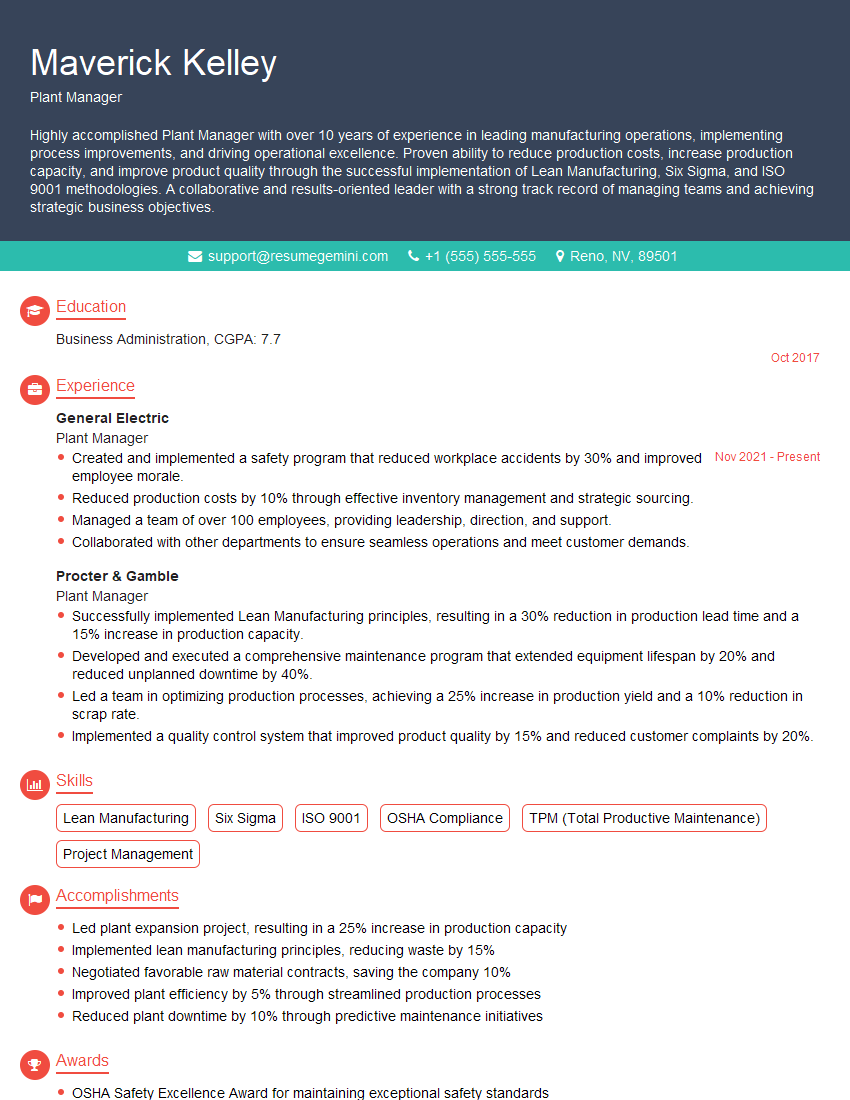
Plant Manager Resume Sample
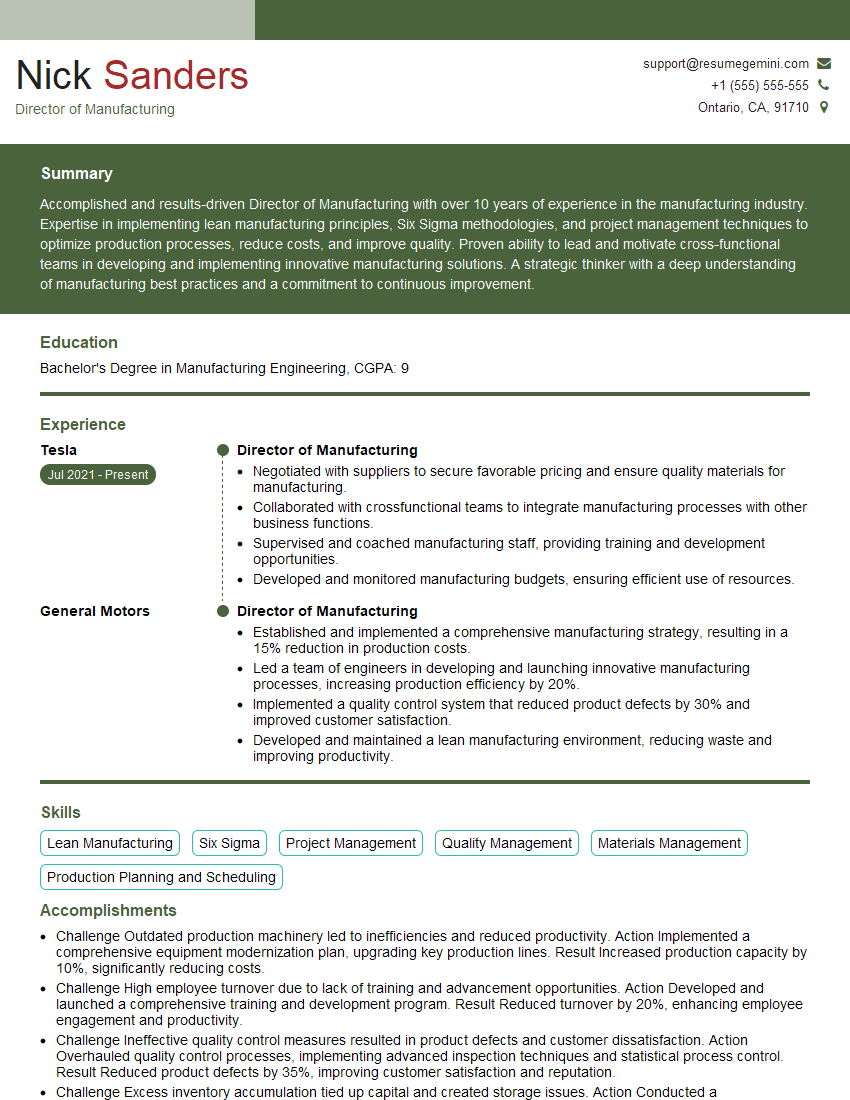
Director of Manufacturing Resume Sample
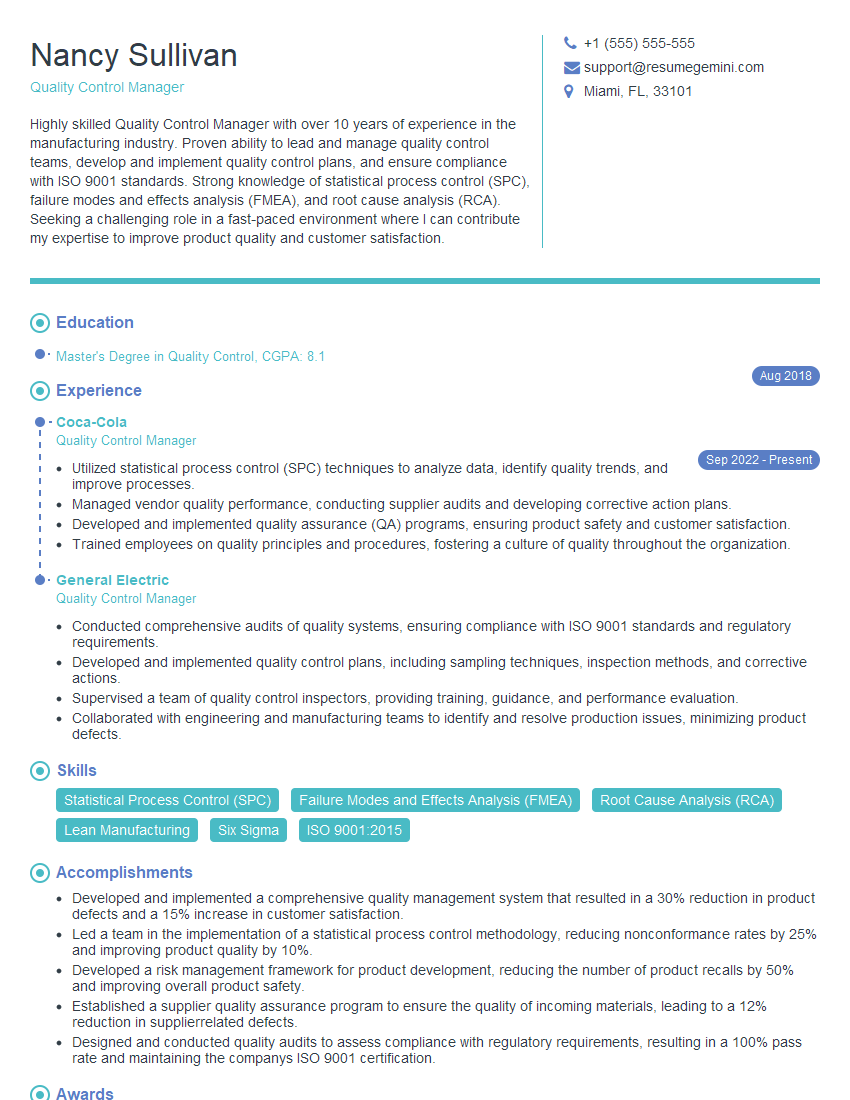
Quality Control Manager Resume Sample
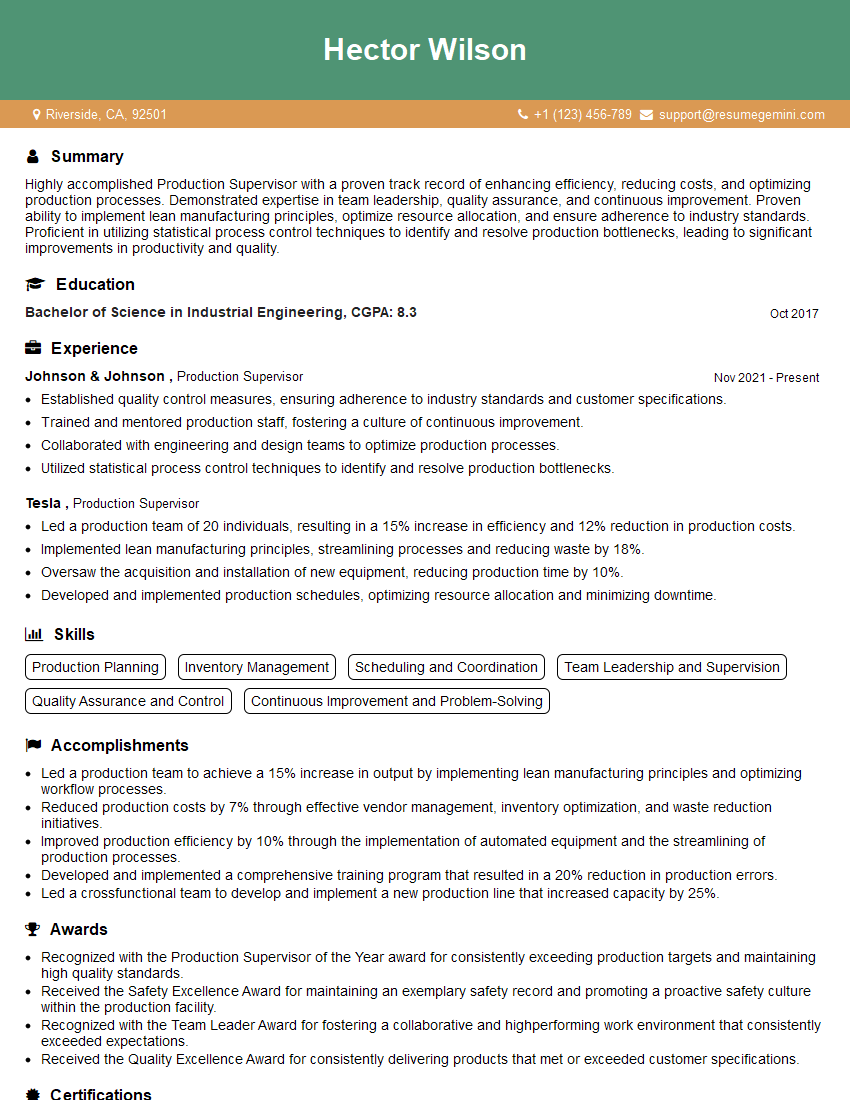
Production Supervisor Resume Sample
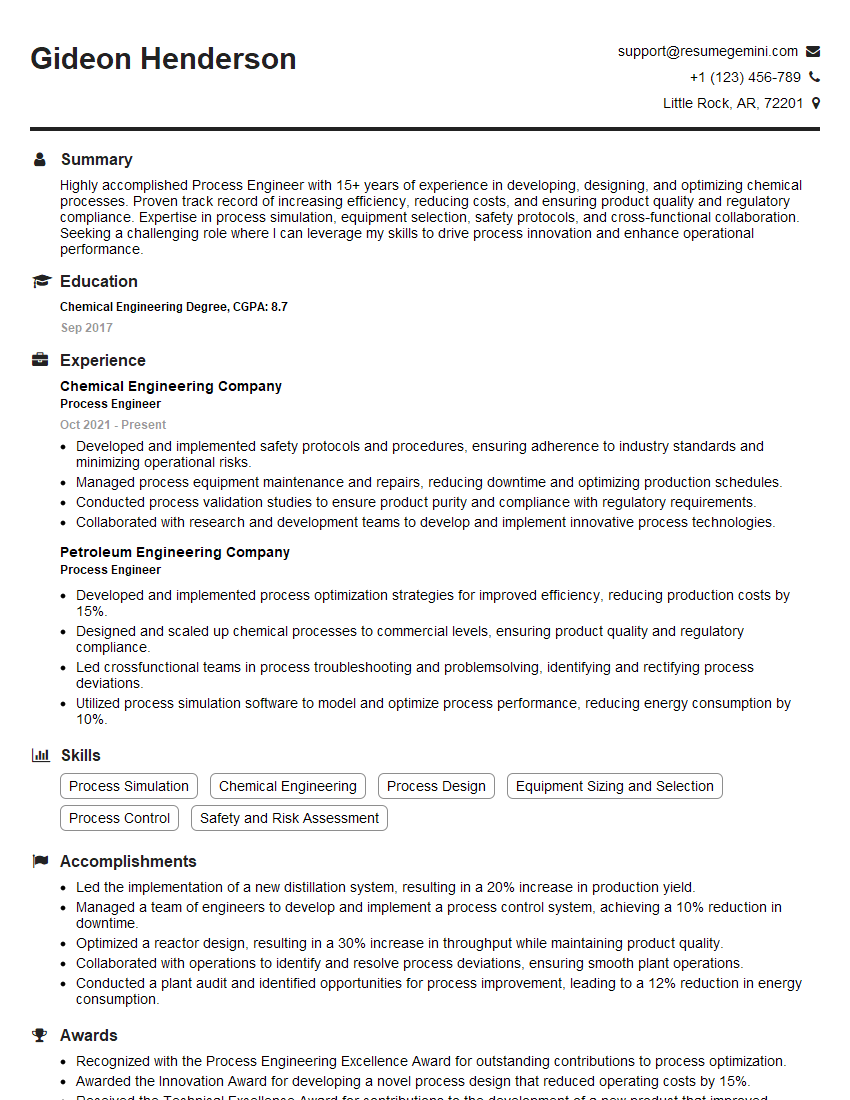
Process Engineer Resume Sample
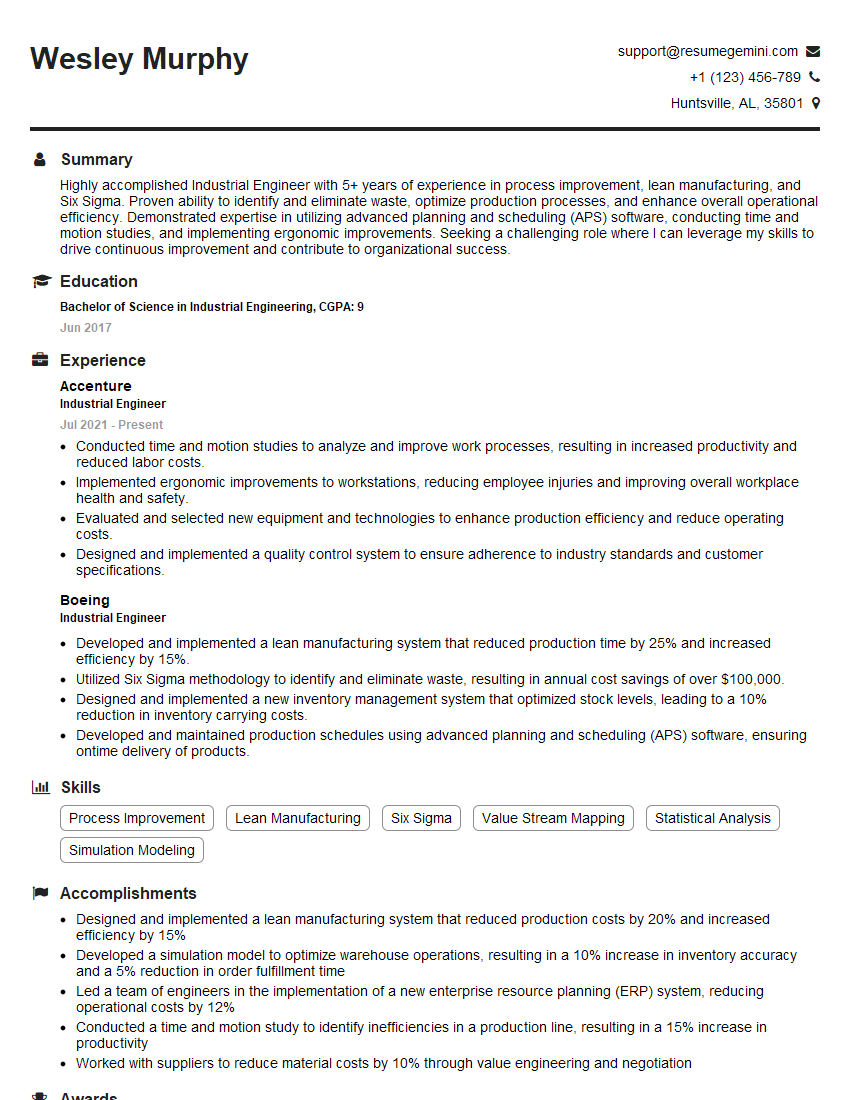
Industrial Engineer Resume Sample
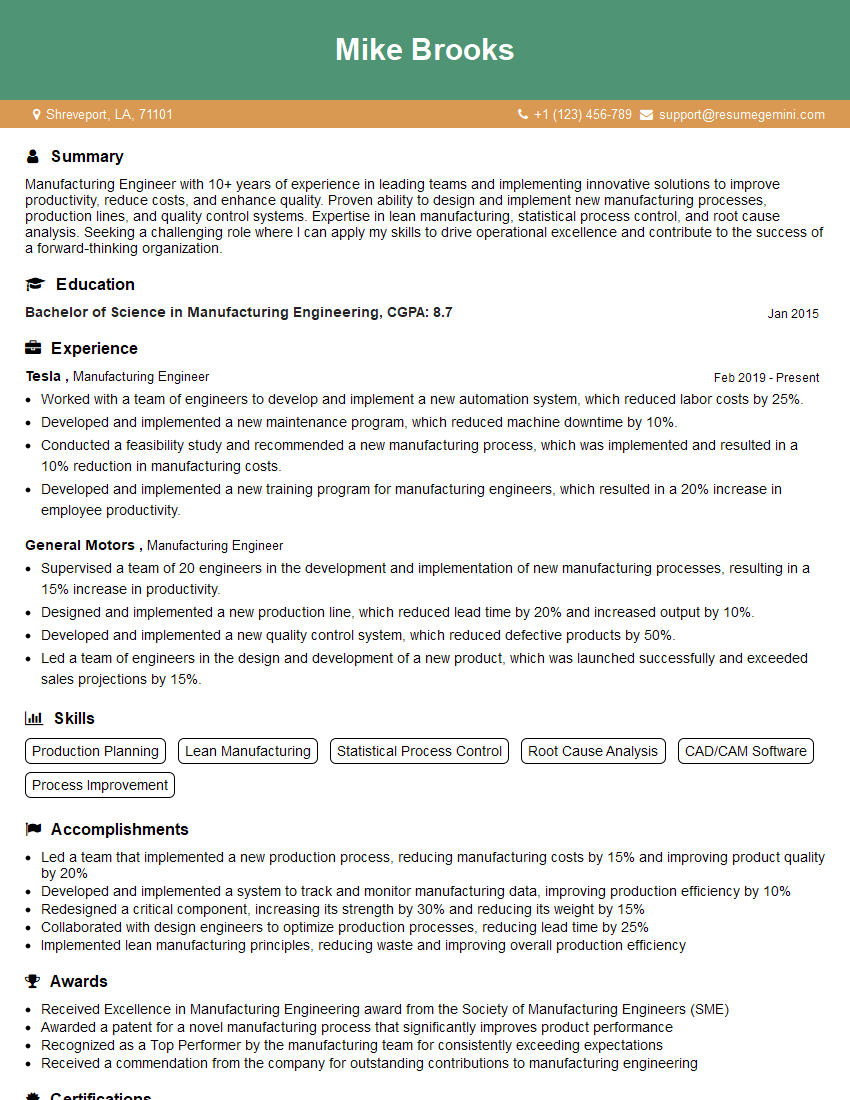
Manufacturing Engineer Resume Sample
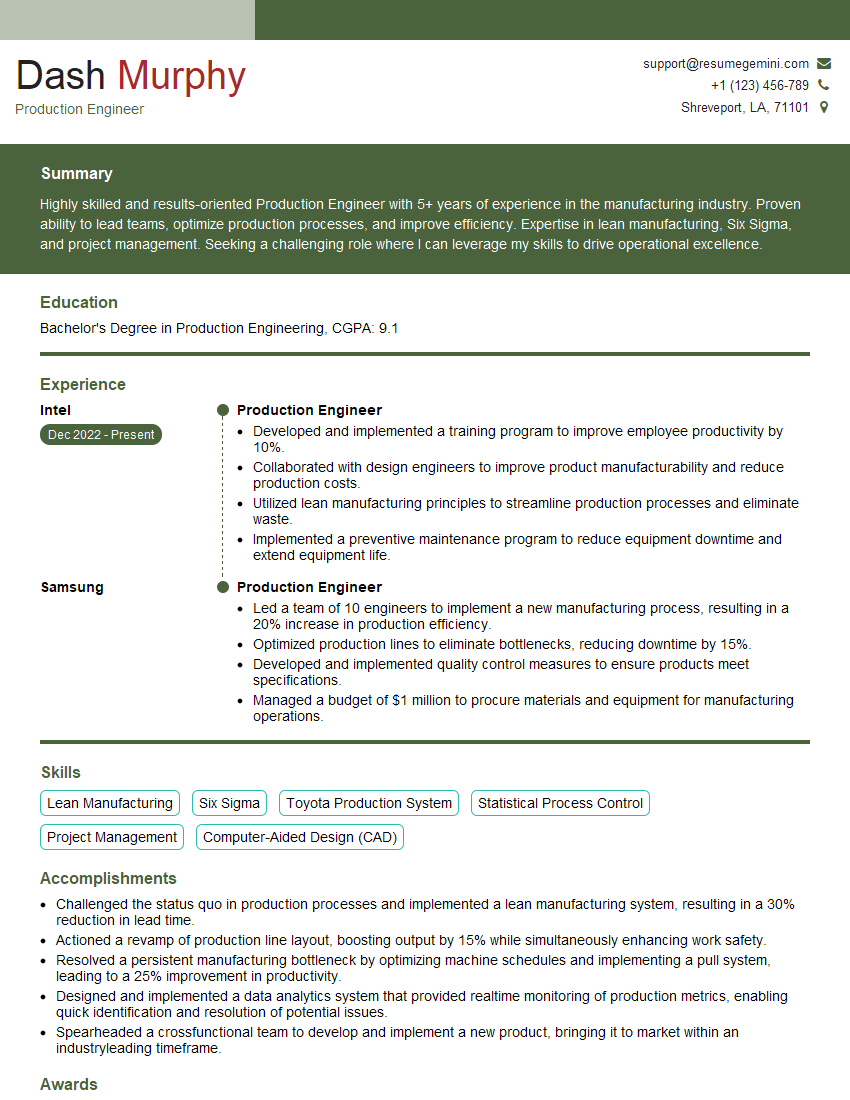
Production Engineer Resume Sample
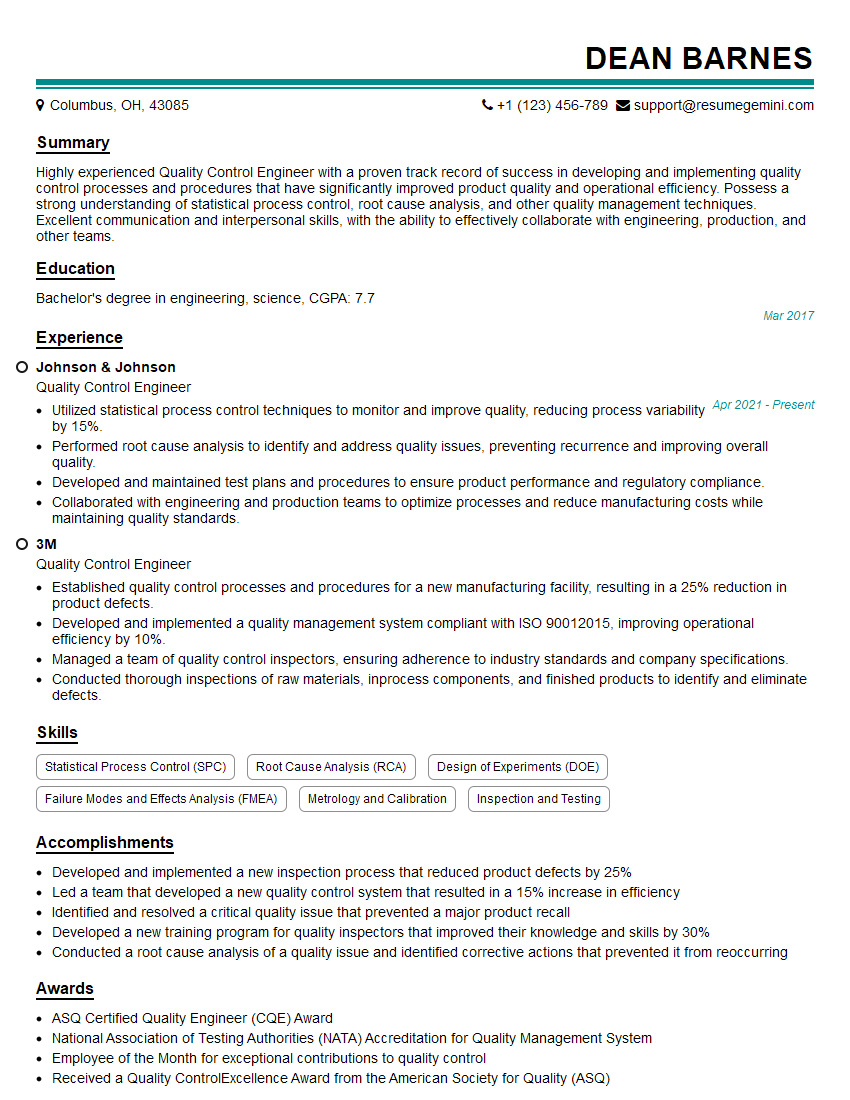
Quality Control Engineer Resume Sample
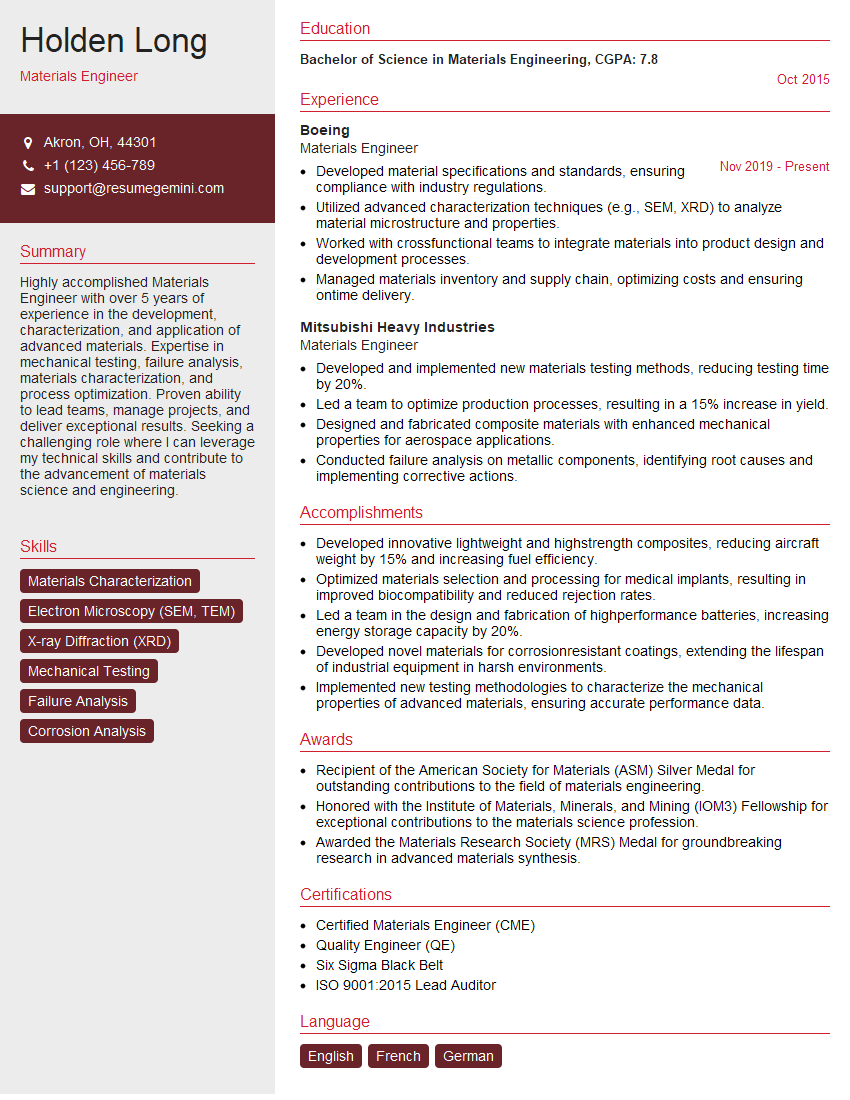
Materials Engineer Resume Sample

Metallurgist Resume Sample
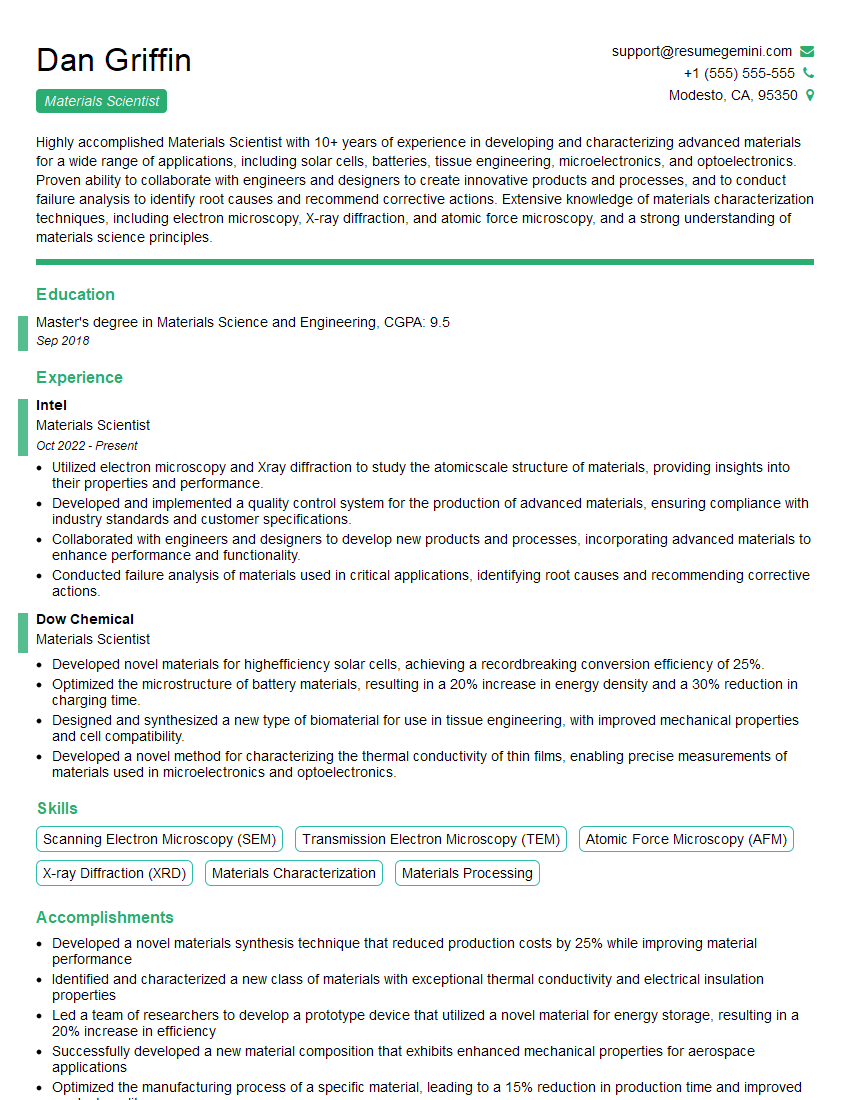
Materials Scientist Resume Sample
Explore more articles
Users Rating of Our Blogs
Share Your Experience
We value your feedback! Please rate our content and share your thoughts (optional).
What Readers Say About Our Blog
Very informative content, great job.
good