Unlock your full potential by mastering the most common Knowledge of Military Airspace Management interview questions. This blog offers a deep dive into the critical topics, ensuring you’re not only prepared to answer but to excel. With these insights, you’ll approach your interview with clarity and confidence.
Questions Asked in Knowledge of Military Airspace Management Interview
Q 1. Explain the concept of airspace classes and their restrictions.
Airspace classes categorize airspace based on the level of risk and the type of operations permitted. These classifications ensure safe separation between various types of aircraft and activities. Restrictions vary considerably depending on the class.
- Class A: Generally above 18,000 feet (FL180) in the US, requiring Instrument Flight Rules (IFR) and two-way radio communication with air traffic control. Think of it as the ‘superhighway’ of the sky – highly regulated and controlled.
- Class B: Surrounds major airports, requiring IFR and two-way radio communication, and usually extends from the surface to several thousand feet. This is a very busy area, similar to a major city’s downtown.
- Class C: Similar to Class B but with a less stringent level of control and a smaller area. Think of it as a smaller city with still significant traffic.
- Class D: Usually surrounds smaller airports with control towers operating during certain hours. IFR may be required depending on the airport and weather conditions.
- Class E: Extends from the surface to various altitudes, often starting where Class B, C, or D airspace ends. More freedom than the lower classes but IFR may still be required. Imagine a less busy regional road.
- Class G: Uncontrolled airspace below 1,200 feet above ground level (AGL). Visual Flight Rules (VFR) are typically followed. This is like driving on country roads – you have more freedom but need to be very aware of other traffic.
Restrictions within each class include things like speed limits, altitude restrictions, required flight plans, and communication protocols. Violating these restrictions can result in serious penalties.
Q 2. Describe the procedures for handling emergency situations within military airspace.
Emergency situations in military airspace require swift and coordinated action. The specific procedures depend on the nature of the emergency, but general principles include:
- Immediate notification: Pilots experiencing an emergency will immediately contact the appropriate air traffic control (ATC) or military authority using emergency frequencies (e.g., 121.5 MHz). This is critical to get immediate assistance and to alert other aircraft in the area.
- Emergency vectoring: ATC will provide emergency vectoring instructions to guide the aircraft to the nearest safe landing site, taking into account the emergency and the surrounding traffic. This could involve diverting traffic and creating emergency corridors.
- Emergency services coordination: ATC coordinates with emergency response teams (e.g., search and rescue, medical services) on the ground to ensure a swift and effective response. This includes ensuring ground crews and facilities are prepared for a potential emergency landing.
- Post-incident investigation: After the emergency is resolved, a thorough investigation will be undertaken to understand the cause of the emergency and to identify measures to prevent similar events in the future. The goal is to improve safety and training procedures.
For example, if a military aircraft experiences engine failure, the pilot will declare an emergency, ATC will provide guidance to the nearest suitable airfield, and emergency services will be alerted to prepare for a possible crash landing.
Q 3. What are the different types of military airspace and their purposes?
Military airspace exists for various reasons related to national security and training. Types include:
- Restricted Airspace (R): Area where flight is prohibited or restricted for reasons of national security or safety. Think of this like a highly secured government facility – no unauthorized access.
- Prohibited Airspace (P): Area where flight is completely prohibited. This is for areas considered particularly sensitive, like nuclear facilities.
- Warning Airspace (W): Area where extreme caution is advised due to hazards like weapons firing or aerial maneuvers. This is like a sign stating ‘caution: construction’. You can enter but need to be aware of possible dangers.
- Danger Airspace (D): Area where there is a hazard to air navigation, such as a missile launch range. Like the Warning area but even more dangerous, so even greater caution is required.
- Military Training Routes (MTRs): Designated routes for low-altitude, high-speed military flight training. These help standardize military activities and keep them away from population centers.
The purpose of each type directly relates to its restrictions. Restricted and prohibited areas prioritize national security, while warning and danger areas emphasize the safety of pilots. Military training routes help balance training needs with civilian air traffic.
Q 4. How do you coordinate airspace with civilian air traffic control?
Coordination between military and civilian air traffic control is crucial for safe and efficient airspace management. This involves:
- Airspace coordination agreements: Military and civilian authorities establish agreements defining the boundaries and use of airspace. This process involves negotiating shared areas to reduce conflict and maximize safety.
- NOTAMs (Notices to Airmen): Military operations impacting civilian airspace are announced via NOTAMs, providing essential information to civilian pilots and air traffic controllers. These are critical to communicate temporary restrictions or changes to the normal airspace operations.
- Direct communication: Military and civilian controllers maintain direct communication, often exchanging real-time information to ensure safe separation between military and civilian aircraft. This could involve direct phone calls or dedicated communication channels.
- Joint use airspace: Some airspace might be jointly used by both civilian and military aircraft. In these areas, clear protocols and coordination are necessary to avoid conflicts. This requires precise scheduling, effective communication, and standardized procedures to ensure safety.
Effective coordination prevents conflicts, promotes efficiency, and ensures safety for both military and civilian aircraft.
Q 5. Explain the role of radar in military airspace management.
Radar plays a vital role in military airspace management by providing real-time surveillance of aircraft within the airspace. This allows for:
- Aircraft identification: Radar systems identify aircraft by their transponder codes or other signals. This is essential for distinguishing friendly and unfriendly aircraft.
- Tracking aircraft movement: Radar precisely tracks aircraft location, altitude, and speed, providing valuable data for decision-making. This includes predicting potential conflicts or identifying aircraft deviating from their flight plans.
- Conflict detection and avoidance: The data from radar systems helps detect and resolve potential conflicts between aircraft, ensuring safe separation and preventing mid-air collisions. Sophisticated software can predict potential conflicts well in advance.
- Air defense integration: Radar data is integrated with air defense systems, providing crucial information for identifying threats and coordinating defensive actions. This is a crucial element of national security.
Various radar types, such as primary and secondary radar, along with advanced sensor fusion techniques, improve the accuracy and reliability of air surveillance in military airspace management. Without radar systems, effective airspace management would be extremely difficult, if not impossible.
Q 6. Describe the communication systems used in military airspace management.
Military airspace management relies on various communication systems to maintain situational awareness, coordinate operations, and issue instructions. These systems often involve:
- VHF/UHF radio: Widely used for two-way communication between aircraft and air traffic control, particularly for routine flight control and emergency situations. These systems are reliable and fairly simple.
- Data links: These provide high-speed data transmission, allowing for the exchange of detailed information, including flight plans, weather updates, and other crucial data. This makes operations much more efficient.
- Satellite communication: Satellite systems extend communication capabilities, facilitating contact with aircraft operating over vast distances, including areas with limited ground-based infrastructure. This enables communication with aircraft that are beyond the range of typical ground-based systems.
- Secure communication networks: Military systems often employ encrypted communication channels to protect sensitive information from unauthorized access. Encryption ensures the integrity and confidentiality of all communication, particularly in sensitive or hostile environments.
The choice of communication system depends on the specific operational needs, geographical location, and security requirements. Multiple systems are frequently used in conjunction to achieve maximum effectiveness.
Q 7. How do you manage airspace during conflict or wartime operations?
Managing airspace during conflict or wartime operations presents unique challenges. The focus shifts dramatically from routine air traffic management to ensuring the safety and effectiveness of military operations while minimizing civilian casualties.
- Establishment of temporary flight restrictions (TFRs): Large areas might be declared no-fly zones to protect military assets and civilians. This requires considerable planning and coordination.
- Prioritization of military flights: Military flights are given priority access to airspace, potentially restricting or delaying civilian traffic. Safety and the needs of the operation take precedence.
- Increased use of electronic warfare: Systems used to disrupt enemy communication and radar systems become more prevalent. This requires effective countermeasures and heightened situational awareness.
- Enhanced surveillance and intelligence gathering: Surveillance systems and intelligence gathering are critical for detecting threats and maintaining situational awareness. This might involve the deployment of various sensors and reconnaissance systems.
- Coordination with allied forces: During multinational operations, robust coordination with allied forces is essential for seamless airspace management. This ensures minimal conflict and maximum operational efficiency.
Airspace management during wartime demands meticulous planning, robust communication, and a high degree of coordination to ensure the safety of friendly forces, minimize civilian casualties, and maintain operational effectiveness. This is a complex task demanding advanced planning and flexibility to adapt to the changing circumstances on the ground.
Q 8. What are the challenges of integrating unmanned aerial vehicles (UAVs) into military airspace?
Integrating unmanned aerial vehicles (UAVs) into military airspace presents several significant challenges. The primary concern is ensuring the safety and security of both manned and unmanned aircraft. Unlike traditional manned aircraft, UAVs often operate autonomously or with limited human oversight, increasing the risk of unexpected maneuvers or system failures. This necessitates robust communication protocols and sophisticated collision avoidance systems.
- Lack of standardized communication protocols: Integrating various UAV systems from different manufacturers requires interoperability standards that are currently underdeveloped. This can lead to communication failures and increase the risk of accidents.
- Cybersecurity vulnerabilities: UAVs are susceptible to hacking and malicious control, which poses a serious threat to national security and operational safety. Securing these systems against cyberattacks is crucial.
- Detection and identification: Smaller UAVs can be difficult to detect using traditional radar systems, making them a potential threat to military operations. Developing better detection and identification technologies is crucial.
- Regulatory framework: The lack of a comprehensive and globally accepted regulatory framework for UAV operation in military airspace hinders their safe integration. This requires international collaboration and policy development.
- Air traffic management (ATM) integration: Integrating UAVs into existing ATM systems requires modifications and upgrades to handle the unique characteristics of UAV flight profiles and operational characteristics.
For example, imagine a scenario where a rogue UAV enters a restricted airspace unnoticed. This could lead to a collision with a manned aircraft, causing significant damage or loss of life. Therefore, robust detection, identification, and mitigation strategies are paramount.
Q 9. How do you ensure the safety and security of military aircraft within designated airspace?
Ensuring the safety and security of military aircraft within designated airspace involves a multi-layered approach. This includes strict adherence to established procedures, advanced technologies, and continuous training and monitoring.
- Airspace Control and Management: Implementing strict airspace classifications, restriction zones, and flight routes ensures separation and reduces potential conflicts. This involves sophisticated air traffic control systems and constant monitoring.
- Advanced technologies: This involves using radar systems, surveillance technologies, and advanced communication systems to track and monitor aircraft movements in real-time. This also incorporates collision avoidance systems like TCAS (Traffic Collision Avoidance System).
- Pilot Training and Certification: Rigorous training programs are essential to equip pilots with the skills and knowledge necessary to navigate complex airspace and handle emergency situations. Continuous proficiency checks are crucial.
- Security measures: This includes implementing protocols for identifying and responding to potential threats, such as unauthorized aircraft or hostile actions. This might involve employing fighter jets or other interception capabilities.
- Communication and coordination: Effective communication among air traffic controllers, pilots, and other stakeholders is vital to maintain situational awareness and respond to emergencies promptly. This involves both voice communication and data links.
For instance, during a large-scale military exercise, strict airspace management is crucial. Dedicated air traffic controllers monitor the airspace, issuing instructions and ensuring the safe separation of participating aircraft. Advanced radar systems provide real-time tracking, and communication protocols enable rapid response to any incident.
Q 10. Describe your experience with air traffic control systems.
My experience with air traffic control (ATC) systems spans over [Number] years, encompassing both operational and managerial roles within [mention specific organizations or units]. I’ve worked extensively with various ATC systems, including [mention specific systems e.g., radar systems, data-link systems, etc.]. My experience encompasses both ground-based and airborne ATC perspectives.
I’m proficient in interpreting radar data, managing airspace capacity, coordinating aircraft movements, and handling emergency situations. I’ve successfully managed complex scenarios involving numerous aircraft, including those with varying capabilities and operational needs. My experience also includes participation in the development and implementation of new ATC procedures and technologies.
Specifically, I’ve been involved in [mention specific project or accomplishment, for example, implementing a new automated system, streamlining a specific ATC procedure, or contributing to safety improvements].
Q 11. Explain your understanding of NOTAMs (Notice to Air Missions) and their importance.
NOTAMs, or Notices to Air Missions, are essential safety messages distributed to aircrew and air traffic control facilities concerning potential hazards or changes affecting flight operations. They provide critical information that pilots need to know before and during flight.
- Types of Information: NOTAMs cover a wide range of information, including runway closures, navigational aid outages, construction near airports, temporary flight restrictions (TFRs), and other potential hazards to flight safety.
- Dissemination: NOTAMs are disseminated through various channels, including online databases, radio broadcasts, and aviation publications. Pilots have a responsibility to check for relevant NOTAMs before each flight.
- Importance: NOTAMs are crucial for ensuring flight safety. By providing timely information about potential hazards, they allow pilots to make informed decisions, plan their flights accordingly, and avoid potentially dangerous situations.
For example, a NOTAM might alert pilots to a temporary closure of a runway due to maintenance. Without this information, a pilot might attempt to land on the closed runway, potentially causing an accident. NOTAMs are therefore an indispensable tool for safe and efficient air operations.
Q 12. How do you handle airspace conflicts or infringements?
Handling airspace conflicts or infringements requires a swift and decisive response, prioritizing safety and security. The approach depends on the nature and severity of the infringement.
- Initial Assessment: The first step is to accurately assess the situation, identifying the aircraft involved, the nature of the conflict, and the level of risk. This often involves reviewing radar data and communication logs.
- Communication and Coordination: Rapid and clear communication is essential. Controllers contact the involved aircraft, providing instructions to resolve the conflict and ensure separation. This might include altering flight paths or altitudes.
- Escalation Procedures: If the conflict cannot be resolved through communication, escalation procedures are followed. This could involve contacting higher authorities, deploying interceptor aircraft, or implementing emergency procedures.
- Post-Incident Investigation: After the immediate situation is resolved, a thorough investigation is conducted to determine the cause of the conflict and implement measures to prevent similar incidents in the future. This may involve analysis of flight data recorders and communication recordings.
For example, if a civilian aircraft inadvertently enters a restricted military airspace, air traffic controllers would immediately contact the aircraft and instruct it to vacate the area. If the aircraft fails to comply, more assertive measures, such as intercepting the aircraft, might be taken.
Q 13. Describe your experience with flight planning and coordination.
My experience with flight planning and coordination is extensive, covering diverse operational scenarios. I have a deep understanding of flight planning software, regulatory requirements, and airspace considerations. This involves coordinating with pilots, air traffic controllers, and other stakeholders to ensure safe and efficient flight operations.
My responsibilities have included developing flight plans that comply with regulatory requirements, considering weather conditions, and optimizing flight routes for efficiency. I’ve also coordinated with air traffic control to obtain clearances and manage potential conflicts. I am adept at using various flight planning tools and software to generate accurate and safe flight plans. Furthermore, I have experience in coordinating complex missions involving multiple aircraft.
I’ve successfully coordinated numerous complex flight operations, including those involving multiple aircraft, diverse terrain, and challenging weather conditions. For example, I was responsible for coordinating the flight plans for a large-scale military exercise involving [number] aircraft of various types, ensuring their safe and efficient transit through various airspace sectors.
Q 14. What are your strategies for maintaining situational awareness in a dynamic airspace environment?
Maintaining situational awareness in a dynamic airspace environment is crucial for safe and efficient operations. This involves employing various techniques and technologies.
- Radar and Surveillance Systems: Real-time monitoring of aircraft positions using radar systems and other surveillance technologies is essential. This provides a comprehensive picture of the airspace environment.
- Communication Systems: Maintaining clear and effective communication with air traffic controllers, pilots, and other stakeholders is critical. This allows for rapid information exchange and coordinated response to changing conditions.
- Data Fusion: Integrating data from multiple sources, such as radar, weather reports, and NOTAMs, is vital for building a holistic understanding of the airspace environment.
- Advanced Displays and Interfaces: Using advanced displays and interfaces can significantly improve situational awareness by providing a user-friendly representation of complex data. This includes features like synthetic vision systems.
- Contingency Planning: Developing contingency plans for various scenarios, such as unexpected weather changes or aircraft malfunctions, is crucial to maintain safety and efficiency.
Imagine a sudden thunderstorm developing within a busy airspace sector. By integrating data from weather radars and communication from pilots, air traffic controllers can quickly issue instructions to reroute aircraft to avoid the storm, ensuring the safety of all aircraft involved. Continuous monitoring and proactive decision-making are key to maintaining situational awareness.
Q 15. How do you prioritize multiple tasks and aircraft requests in a high-pressure situation?
Prioritizing tasks and aircraft requests in a high-pressure military airspace environment requires a systematic approach. Think of it like air traffic control, but with added layers of complexity involving military operations, potentially sensitive missions, and various levels of urgency. We use a combination of established procedures and real-time assessment.
- Urgency and Mission Criticality: Emergency situations (e.g., medical evacuations, intercepting hostile aircraft) always take precedence. We assign priority levels based on the mission’s importance and the potential consequences of delay.
- Safety: Maintaining safe separation between aircraft is paramount. We utilize conflict detection and resolution tools to avoid collisions, even under pressure. This often involves vectoring aircraft to different altitudes or flight paths.
- Resource Allocation: We consider the availability of air controllers, radar coverage, and other resources. This ensures efficient use of personnel and equipment and minimizes delays.
- Communication: Clear and concise communication with pilots and other agencies is crucial. We use standardized phraseology and protocols to avoid misunderstandings in a fast-paced environment. For example, we might issue specific instructions, such as “maintain your altitude,” or “proceed to holding pattern Alpha.”
- Decision Matrix: In complex scenarios, a decision matrix can help to systematically evaluate different factors and choose the optimal course of action. The matrix might factor in urgency, risk, resource availability, and mission objectives.
For instance, during a large-scale exercise, we might temporarily delay a routine training flight to accommodate the urgent need for a search and rescue operation. The decision is not arbitrary but based on a clear prioritization process, always ensuring safety remains paramount.
Career Expert Tips:
- Ace those interviews! Prepare effectively by reviewing the Top 50 Most Common Interview Questions on ResumeGemini.
- Navigate your job search with confidence! Explore a wide range of Career Tips on ResumeGemini. Learn about common challenges and recommendations to overcome them.
- Craft the perfect resume! Master the Art of Resume Writing with ResumeGemini’s guide. Showcase your unique qualifications and achievements effectively.
- Don’t miss out on holiday savings! Build your dream resume with ResumeGemini’s ATS optimized templates.
Q 16. Explain your knowledge of airspace deconfliction procedures.
Airspace deconfliction is the process of resolving potential conflicts between aircraft using different procedures to ensure safe separation. It’s like managing a complex dance floor where each aircraft is a dancer, and we’re the choreographers ensuring nobody bumps into anyone. Our procedures are based on international standards and adapt to the specific airspace and mission requirements.
- Coordination: We work closely with other agencies (civilian air traffic control, other military units) to share information and coordinate aircraft movements. This involves using various communication tools and data sharing systems.
- Conflict Alert Systems: Automated systems provide alerts when aircraft approach unsafe distances. These systems are often integrated with radar and flight tracking systems to give us real-time awareness of potential conflicts.
- Vectoring and Routing: We issue instructions to pilots to alter their flight paths or altitudes to maintain separation. This could involve changing heading, speed, or altitude to ensure sufficient distance between aircraft.
- Holding Patterns: If necessary, aircraft can be directed to holding patterns – pre-defined flight paths that allow aircraft to safely wait their turn before proceeding. This is commonly used to manage aircraft flow, especially during periods of high traffic or during arrival and departure phases at airports.
- Emergency Procedures: In case of an immediate conflict, we have emergency procedures that prioritize safety, often including emergency maneuvers that both parties would be informed of. We often hold briefings and simulations on these emergency procedures to be prepared for any instance that may occur.
For example, if two aircraft are on a collision course, we might vector one aircraft to climb to a higher altitude while the other descends, ensuring they pass each other safely. These procedures are constantly refined and improved based on analysis of past incidents and technological advancements.
Q 17. Describe your experience with different types of navigation systems used in military aviation.
Military aviation utilizes a range of sophisticated navigation systems, each with its strengths and limitations. The choice of system depends on the mission, aircraft type, and geographic location. These systems often work in conjunction with each other for redundancy and accuracy.
- Global Navigation Satellite Systems (GNSS): GPS is the most common GNSS used, but we also utilize other constellations like GLONASS and Galileo for redundancy and improved accuracy. This provides precise positioning data crucial for navigation and targeting.
- Inertial Navigation Systems (INS): INS are self-contained systems that provide navigation data based on measuring acceleration and rotation. These are critical for navigation in areas with poor or absent GNSS coverage. They are typically used in conjunction with GNSS to provide improved accuracy.
- Tactical Air Navigation (TACAN): TACAN provides short-range navigation signals for military aircraft, particularly useful for low-level flight operations. It aids in precise navigation across shorter distances.
- Very High Frequency Omnidirectional Range (VOR): Though used less frequently in modern military aircraft compared to GNSS, VOR provides ground-based navigation signals, offering another layer of navigational data in areas with GNSS issues.
- Instrument Landing Systems (ILS): ILS is essential for precision approaches to airports, especially in low-visibility conditions. It enables safe landing in challenging weather.
A pilot might rely on GPS for long-range navigation, switch to TACAN for low-level flight near a target, and finally use ILS for landing. The seamless integration and understanding of these systems’ capabilities are crucial for effective military flight operations.
Q 18. How do weather conditions affect military airspace management?
Weather conditions significantly impact military airspace management. Adverse weather can restrict operations, increase risks, and necessitate changes to flight plans. This can range from slight adjustments to complete mission groundings.
- Visibility: Low visibility (fog, clouds, rain) restricts operations, especially for low-level flights. This requires stricter separation standards and necessitates the use of instruments for navigation and landing.
- Wind: Strong winds affect aircraft performance, requiring adjustments to flight paths and speeds. Crosswinds during landing can pose a significant challenge.
- Precipitation: Rain, snow, and ice can reduce visibility and affect aircraft performance, potentially causing delays or cancellations.
- Turbulence: Turbulence, often associated with thunderstorms or jet streams, can make flying unsafe and cause significant deviations from planned flight paths.
- Thunderstorms: These pose a major hazard to aircraft, due to severe turbulence, lightning strikes, and hail. Airspace may need to be closed in the vicinity of thunderstorms, leading to rerouting.
For example, during a training exercise, a sudden thunderstorm might force us to reroute aircraft, temporarily halt operations, or even ground aircraft until the weather improves. Accurate and timely weather forecasts are crucial for safe and effective airspace management.
Q 19. What are the legal and regulatory frameworks governing military airspace?
Military airspace management is governed by a complex interplay of national and international laws and regulations. It’s a carefully constructed framework ensuring safety, sovereignty, and the efficient use of airspace.
- International Civil Aviation Organization (ICAO): ICAO sets international standards and recommended practices for air navigation. Many of its regulations are incorporated into national legislation.
- National Airspace Laws: Each country has its own national laws and regulations governing airspace usage. These define different airspace classes (e.g., controlled airspace, restricted airspace, prohibited airspace), specifying rules and restrictions.
- Military Aviation Regulations: In addition to national airspace laws, military forces have their own regulations concerning flight operations, training, and safety. These often include specialized instructions for specific military exercises or operations.
- Treaty Obligations: International treaties and agreements can also impact military airspace, particularly concerning airspace sovereignty and the conduct of military operations over international waters.
- Air Traffic Control Regulations: Specific regulations govern air traffic control procedures, ensuring safe and orderly aircraft movement within military and civilian airspace.
Understanding this intricate web of regulations is critical to ensure compliance and maintain the safety and security of military airspace. Failure to comply can result in severe legal consequences and endanger lives.
Q 20. Explain your understanding of air defense systems and their role in airspace protection.
Air defense systems are crucial for protecting military airspace and assets from unauthorized intrusions and hostile actions. They are a layered defense, involving various technologies and procedures.
- Radars: Radars are the eyes of the air defense system, detecting aircraft and other objects within a specified range. Different types of radars are used for long-range surveillance, short-range tracking, and identification.
- Interceptors: Fighter jets are the primary means of intercepting hostile or unidentified aircraft. They are equipped with advanced sensors, weapons, and communication systems.
- Air Defense Command and Control Centers: These centers are responsible for coordinating the various components of the air defense system, ensuring seamless integration and effective response to threats.
- Surface-to-Air Missiles (SAMs): SAMs provide a crucial layer of defense against airborne threats. They range from short-range systems suitable for point defense to long-range systems capable of engaging targets at considerable distances.
- Electronic Warfare Systems: Electronic warfare (EW) systems are employed to jam enemy radar and communications, hinder their targeting capabilities, and protect friendly forces from detection.
The effectiveness of an air defense system depends on its ability to detect, identify, track, and engage threats quickly and decisively. It is an integrated system with several interconnected layers, designed to provide multiple means of defense.
Q 21. How do you assess and mitigate risks associated with military airspace operations?
Risk assessment and mitigation in military airspace operations are continuous processes, involving identifying potential hazards, analyzing their likelihood and severity, and implementing measures to reduce their impact. This requires constant vigilance and proactive measures.
- Hazard Identification: We identify potential hazards through regular safety reviews, analyzing historical data on incidents, and incorporating lessons learned from past exercises and operations. This process can also involve using specialized software and data analysis techniques.
- Risk Assessment: Once hazards are identified, we assess the likelihood and severity of their occurrence. This involves considering factors like weather conditions, aircraft capabilities, pilot experience, and the complexity of the mission.
- Risk Mitigation: Based on the risk assessment, we develop and implement mitigation strategies. These can include changes to flight plans, additional training for pilots, improved communication protocols, and enhancements to the air defense system.
- Contingency Planning: We develop contingency plans for various scenarios, such as equipment failures, adverse weather conditions, or unexpected threats. This ensures we have a clear course of action if things go wrong.
- Continuous Monitoring: We continuously monitor airspace operations for any signs of developing risks or emerging threats, allowing us to make timely adjustments to mitigation strategies.
For example, if we identify a high risk of bird strikes at a particular airfield, we might implement measures such as increased bird control patrols, adjusting flight paths to avoid areas with high bird activity, or requiring aircraft to perform bird avoidance maneuvers. This continuous cycle of assessment and mitigation helps to maintain a safe and secure operating environment.
Q 22. Describe your experience with airspace control software or systems.
My experience with airspace control software encompasses a wide range of systems, from legacy radar-based platforms to modern, integrated systems incorporating Automatic Dependent Surveillance-Broadcast (ADS-B) data. I’ve worked extensively with systems like the FAA’s En Route Automation Modernization (ERAM) system (while acknowledging its primarily civilian focus, the principles are transferable), and various military-specific command and control systems. These systems facilitate real-time tracking of aircraft, conflict detection, and airspace management through various functionalities.
For example, I’ve used systems that integrate flight plans, weather data, and real-time aircraft positions to optimize flight routes and minimize conflicts. These often include sophisticated algorithms for predicting aircraft trajectories and identifying potential hazards. Furthermore, I am proficient in using systems that manage temporary flight restrictions (TFRs) and other airspace limitations, ensuring the safe and efficient operation of military and civilian aircraft.
My expertise also extends to the technical aspects of these systems; I understand the underlying database structures, communication protocols, and data integration processes. This allows me to troubleshoot issues, make system improvements, and interpret system generated reports to inform decision making.
Q 23. How do you utilize meteorological data for effective airspace management?
Meteorological data is absolutely critical for effective airspace management. We use it to predict and mitigate risks associated with adverse weather conditions. This involves integrating various data sources, such as surface weather observations, upper-air soundings, satellite imagery, and numerical weather prediction (NWP) models.
For instance, we use this data to identify areas with low cloud ceilings, reduced visibility, turbulence, icing, or thunderstorms. Based on these predictions, we can implement airspace restrictions, route aircraft around hazardous areas, or delay flights to improve safety. We often use specialized software that overlays weather data directly onto airspace maps, providing a clear visual representation of potential risks. Think of it like a weather map for pilots, but on a much more granular and sophisticated scale, dynamically adapting to the real-time situation.
A practical example would be adjusting flight routes during a severe thunderstorm. Based on the forecast, we might reroute flights to avoid the storm, potentially increasing flight time but vastly improving safety. Conversely, in periods of good weather, the same tools allow for optimal routing, which can save fuel and minimize delays.
Q 24. What are the key performance indicators for efficient military airspace management?
Key performance indicators (KPIs) for efficient military airspace management are multifaceted and focus on safety, efficiency, and operational effectiveness. These include:
- Safety: Number of near-miss incidents, accident rate, compliance with airspace restrictions, and timely response to emergencies.
- Efficiency: Average flight times, fuel consumption, airspace utilization rate, number of flight delays, and the number of conflicts resolved.
- Operational Effectiveness: Mission success rate, timely execution of training missions, readiness of airspace for different mission profiles (e.g., high-speed, low-altitude operations), and effective integration with civilian airspace.
These KPIs are regularly monitored and analyzed to identify areas for improvement. The data is used to adjust airspace procedures, optimize training schedules, and improve communication protocols, ultimately contributing to a safer and more efficient airspace management system. Regular audits and reporting ensure accountability and transparent demonstration of adherence to KPIs.
Q 25. Explain your knowledge of different types of military aircraft and their airspace requirements.
My knowledge of different military aircraft and their airspace requirements is extensive. This includes understanding the performance characteristics, operational limitations, and specific airspace needs of various aircraft types, from fighters and bombers to helicopters and transport aircraft.
For example, fighter jets typically require larger separation distances and specialized airspace for high-speed maneuvers and weapons training. Helicopters, on the other hand, may require low-altitude airspace with considerations for terrain avoidance and obstacle clearance. Transport aircraft need designated approach and departure routes to maintain efficient flow of traffic. Each aircraft type necessitates consideration for its operational ceiling, speed, and maneuverability when designating airspace.
This knowledge informs the creation of tailored airspace management plans that accommodate the diverse needs of each aircraft type while ensuring safety and operational efficiency. It also involves understanding the different types of airspace classifications (e.g., restricted areas, warning areas, danger areas) and how they apply to different types of military operations.
Q 26. Describe your experience with international airspace agreements and collaborations.
My experience with international airspace agreements and collaborations is substantial. I’ve participated in several international meetings and discussions related to airspace coordination, conflict resolution, and the harmonization of procedures with neighbouring countries. This involves understanding international air law, particularly the Chicago Convention and associated annexes, and applying these principles to the management of airspace used by allied forces or bordering countries.
For example, I’ve been involved in establishing procedures for coordinating military flights with civilian air traffic control systems in international airspace. This requires meticulous planning and communication to minimize the risk of conflicts and ensure safe operations. We use standardized communication protocols and data exchange formats to maintain effective and unambiguous dialogue.
Collaboration also extends to joint military exercises where airspace coordination between multiple nations is crucial for mission success. This requires careful coordination of airspace use, deconfliction of flight plans, and a deep understanding of each nation’s unique airspace management practices.
Q 27. How do you adapt your strategies to different operational environments and airspace complexities?
Adapting strategies to different operational environments and airspace complexities involves a flexible and systematic approach. It’s about understanding the unique challenges of each environment and implementing suitable countermeasures.
For example, operating in mountainous terrain necessitates different strategies compared to operating over open water. In mountainous terrain, the added complexity includes consideration for higher terrain elevation and increased risk of collisions with mountainous features. We may incorporate terrain-following radar and stricter separation minima into our planning. Over open water, different risks may emerge, such as loss of communication and search and rescue needs; these are accounted for by contingency plans and enhanced communication infrastructure.
Furthermore, the level of airspace complexity varies considerably. A highly congested airspace near a major airport demands more rigorous coordination and stricter separation standards than a sparsely populated area. We use a combination of tools and strategies, including dynamic airspace allocation, risk assessment models, and contingency planning, to effectively adapt to these diverse environments and complexities. This is done while always maintaining adherence to safety standards and efficient airspace utilization.
Key Topics to Learn for Knowledge of Military Airspace Management Interview
- Military Airspace Classifications: Understand the different classes of airspace (e.g., Restricted, Prohibited, Warning, Danger) and their implications for flight operations. Be prepared to discuss the regulations and procedures associated with each.
- Airspace Control and Coordination: Explain the roles and responsibilities of various agencies involved in managing military airspace, such as air traffic control, air defense, and operational units. Discuss how these agencies coordinate to ensure safe and efficient airspace usage.
- Flight Planning and Routeing within Military Airspace: Describe the process of planning and executing flights within controlled military airspace, including obtaining necessary clearances and adhering to established procedures. Discuss potential challenges and how they are mitigated.
- Air Traffic Control Procedures (ATC): Detail your understanding of common ATC procedures, communication protocols, and emergency response procedures specifically within the context of military airspace.
- Safety Regulations and Risk Management: Explain the importance of safety regulations in military airspace management and how risk assessment is conducted to mitigate potential hazards. Be ready to discuss examples of risk mitigation strategies.
- Technological Aspects of Airspace Management: Discuss your familiarity with technologies used in modern military airspace management, such as radar systems, communication networks, and flight tracking software. Be prepared to discuss their capabilities and limitations.
- Conflict Resolution and De-confliction Procedures: Explain the processes involved in resolving airspace conflicts and de-conflicting aircraft to prevent collisions or other incidents.
- Emergency Procedures and Contingency Planning: Describe the procedures for handling emergencies within military airspace, such as aircraft emergencies or airspace incursions. Be prepared to discuss contingency planning for various scenarios.
Next Steps
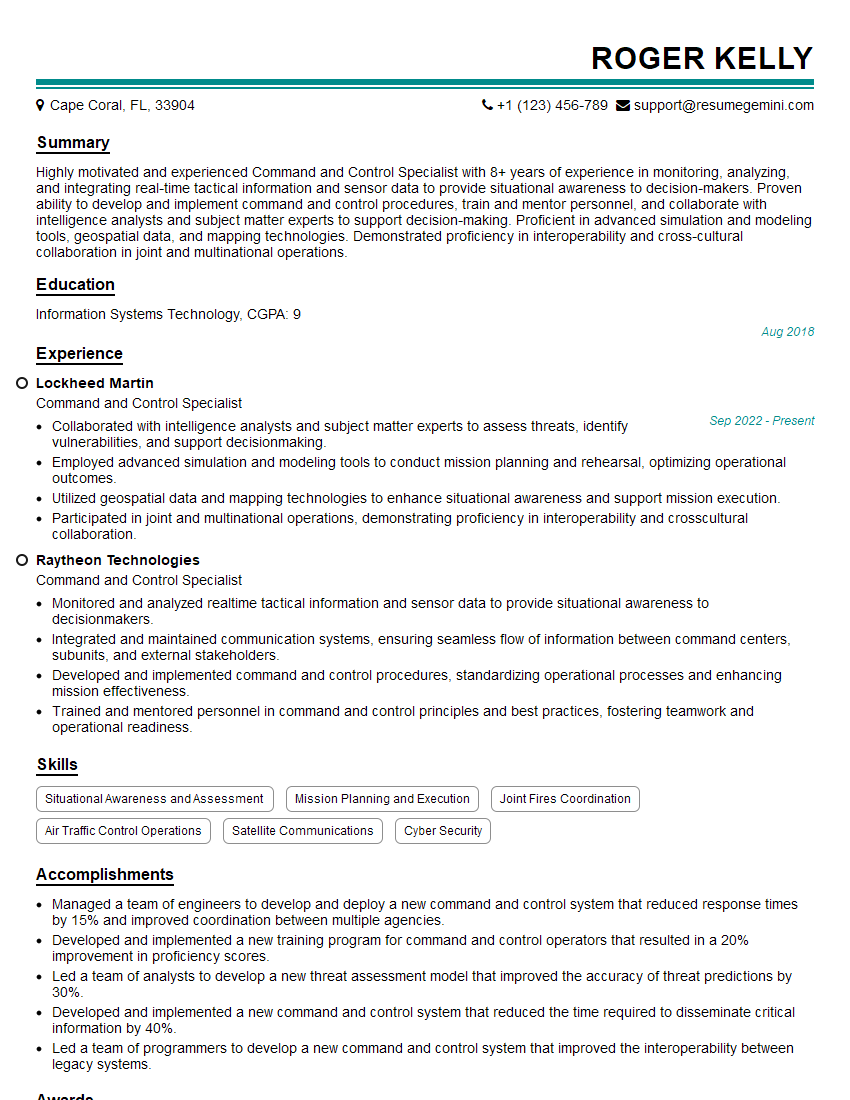
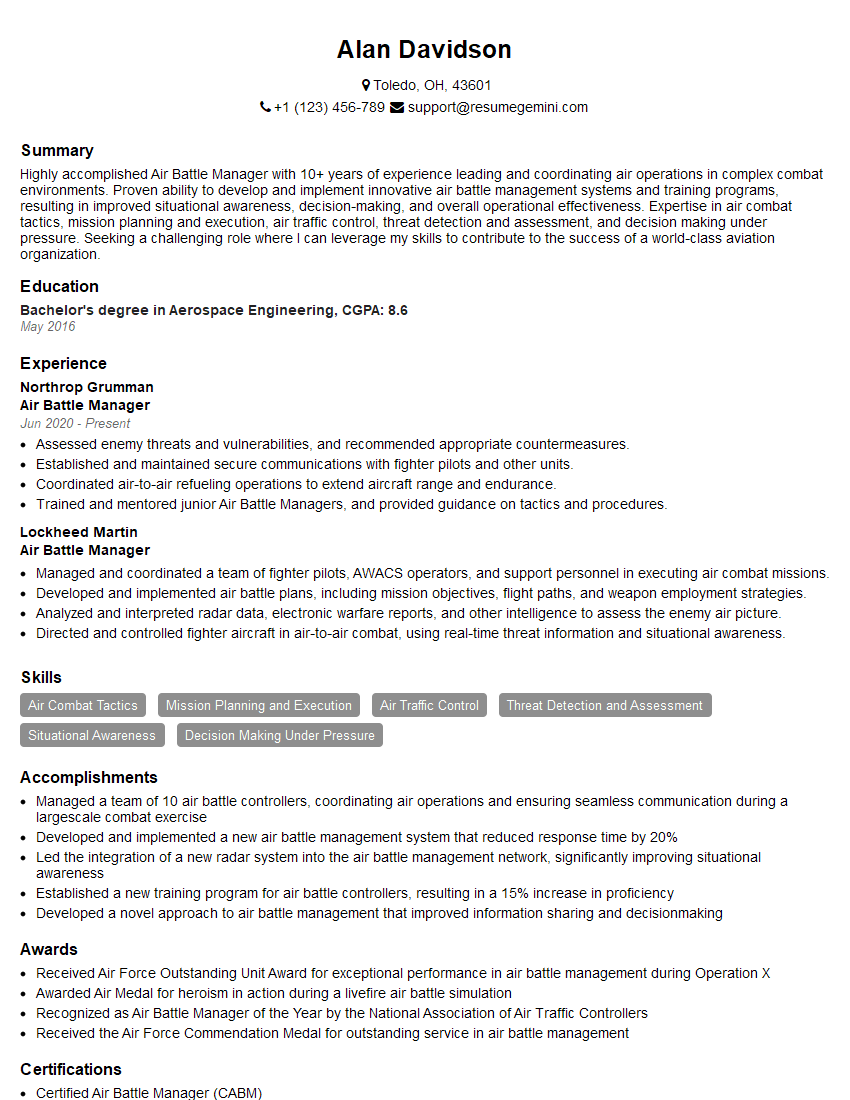
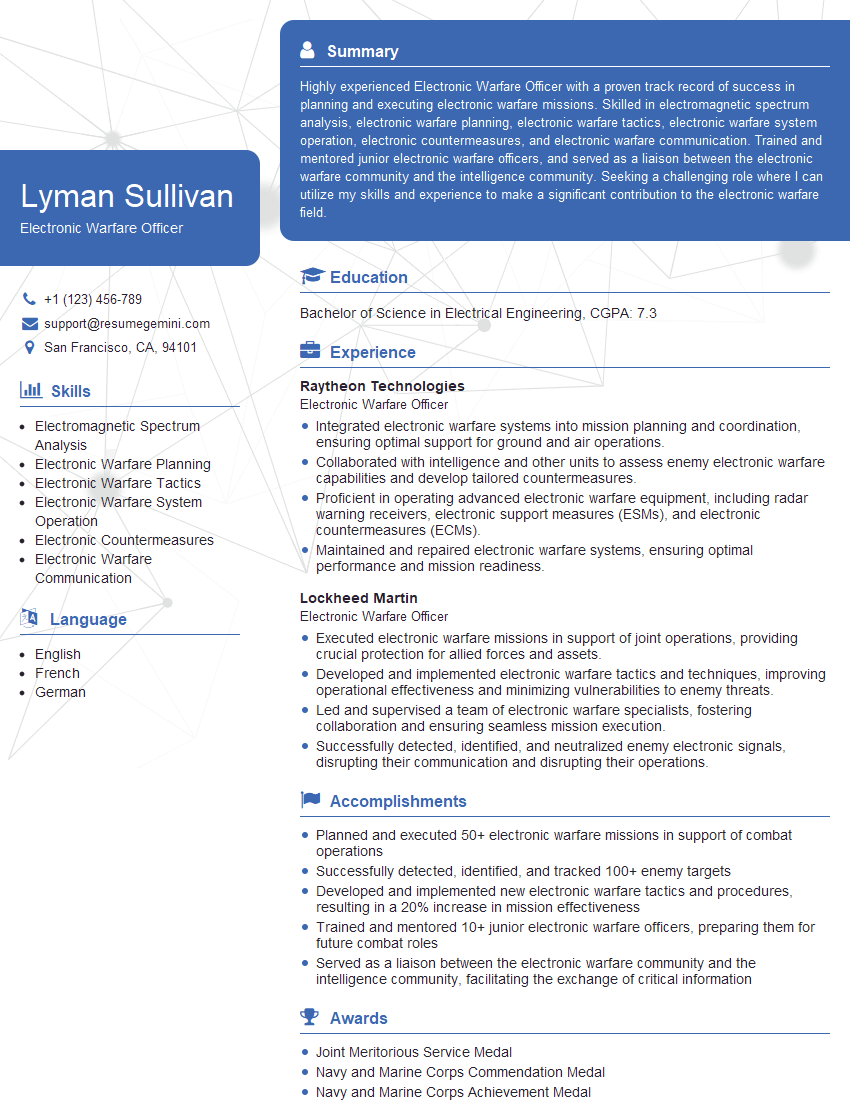
Mastering Knowledge of Military Airspace Management is crucial for career advancement in aviation and defense. A strong understanding of these concepts demonstrates a commitment to safety and operational efficiency, making you a highly valuable candidate. To significantly boost your job prospects, create an ATS-friendly resume that highlights your skills and experience effectively. ResumeGemini is a trusted resource to help you build a professional, impactful resume that stands out. We provide examples of resumes tailored to Knowledge of Military Airspace Management to guide you in showcasing your unique qualifications.
Explore more articles
Users Rating of Our Blogs
Share Your Experience
We value your feedback! Please rate our content and share your thoughts (optional).
What Readers Say About Our Blog
Very informative content, great job.
good