Cracking a skill-specific interview, like one for Knowledge of Packaging and Labeling, requires understanding the nuances of the role. In this blog, we present the questions you’re most likely to encounter, along with insights into how to answer them effectively. Let’s ensure you’re ready to make a strong impression.
Questions Asked in Knowledge of Packaging and Labeling Interview
Q 1. Explain the different types of packaging materials and their respective applications.
Packaging materials are chosen based on the product’s needs and the desired shelf life. The wrong material can lead to damage, spoilage, or even safety hazards. Let’s explore some common types:
- Paper and Cardboard: Lightweight, recyclable, and cost-effective, ideal for boxes, cartons, and inserts. Think cereal boxes or shoe boxes. Variations include corrugated cardboard (excellent for cushioning) and coated paperboard (for enhanced print quality and protection).
- Plastics: Offer excellent barrier properties against moisture, oxygen, and other contaminants. Types include PET (polyethylene terephthalate) for bottles, HDPE (high-density polyethylene) for milk jugs, and PVC (polyvinyl chloride) for blister packs. However, their environmental impact is a major concern.
- Glass: Provides excellent barrier properties and is inert, making it suitable for food and beverages. It’s also recyclable but fragile and heavy.
- Metal: Aluminum and steel cans offer excellent barrier properties and strength. They are widely recyclable but can be more expensive and heavier than other options.
- Wood: Offers a natural, aesthetically pleasing option, often used for wine crates or specialized packaging. It’s sustainable when sourced responsibly, but it’s not always the best choice for moisture-sensitive products.
The selection depends heavily on the product’s characteristics. A fragile item needs more cushioning, a perishable item needs a strong barrier, and a luxury item might need an elegant presentation. Each material has its strengths and weaknesses, and the best choice involves a careful trade-off.
Q 2. Describe the process of designing a package for a new product.
Designing a package is a multi-stage process involving market research, material selection, structural design, and regulatory compliance. Let’s break it down:
- Understanding the Product: What are its dimensions, weight, fragility, and special handling needs? Does it require temperature control or protection from light?
- Defining the Target Audience: Who is the intended consumer? What are their preferences and expectations? This influences aesthetics and functionality.
- Material Selection: Based on product characteristics and budget constraints, select the most suitable material. Consider environmental impact.
- Structural Design: Create a design that protects the product during transport and storage. Consider ease of opening, dispensing, and reclosing. CAD software plays a crucial role here.
- Graphics and Branding: Develop appealing graphics that align with the brand identity. This includes text, images, and colors.
- Prototyping and Testing: Create prototypes and test their effectiveness in real-world conditions. This validates the design’s ability to protect the product and its usability.
- Regulatory Compliance: Ensure the package meets all relevant regulations (FDA, GMP, etc.).
Each step is critical for success. A poorly designed package can lead to product damage, reduced sales, and legal issues.
Q 3. What are the key considerations for selecting appropriate packaging materials?
Selecting the right packaging material involves a careful balancing act. Key considerations include:
- Product Protection: The material must safeguard the product from damage during transport and storage. This includes physical damage, moisture, oxygen, light, and temperature fluctuations.
- Cost-Effectiveness: The material cost should be balanced against the product’s value and the desired level of protection. Expensive materials aren’t always necessary.
- Environmental Impact: Consider the material’s recyclability, biodegradability, and overall environmental footprint. Sustainable options are increasingly important.
- Shelf Life: The material should extend the product’s shelf life by preventing spoilage or degradation.
- Consumer Appeal: The packaging should be aesthetically pleasing and functional, enhancing the product’s appeal to the target audience.
- Regulatory Compliance: The material must meet all relevant food safety and other regulations.
- Distribution and Logistics: Consider how the package will be handled during shipping, warehousing, and retail display. The material needs to withstand these processes.
Think of a pharmaceutical product requiring a tamper-evident seal and child-resistant packaging compared to a simple, everyday item. The needs vary vastly.
Q 4. How do you ensure packaging meets regulatory requirements (e.g., FDA, GMP)?
Ensuring regulatory compliance is paramount. Failure to do so can lead to product recalls, fines, and damage to brand reputation. Here’s how:
- Understanding Relevant Regulations: Thoroughly research and understand all applicable regulations, including FDA (Food and Drug Administration) regulations for food and drug products, GMP (Good Manufacturing Practices) guidelines for manufacturing processes, and other relevant country-specific standards.
- Material Certification: Use packaging materials that have been certified as safe for the intended product and comply with all relevant regulations. Documentation is key.
- Labeling Accuracy: Ensure that all labeling information, including ingredients, nutritional facts, warnings, and other necessary information, is accurate, complete, and clearly displayed in compliance with regulations.
- Testing and Validation: Conduct thorough testing to verify that the packaging meets all performance and safety requirements. This might include shelf-life studies or simulations of transportation conditions.
- Maintaining Records: Keep detailed records of all materials used, testing results, and any changes made to the packaging design or materials. This is vital for audits and traceability.
- Regular Audits: Undergo regular internal and external audits to verify ongoing compliance with regulations.
Consider the complexities involved when shipping internationally, as regulations vary significantly across different countries.
Q 5. What are the different types of labeling and their purposes?
Labels communicate essential information about a product. Types include:
- Primary Labels: Directly attached to the product, providing key information like ingredients, nutritional facts (for food), warnings, and usage instructions.
- Secondary Labels: Attached to the packaging, offering additional information such as storage instructions, batch numbers, or recycling information.
- Shipping Labels: Used for logistics, including addresses, tracking numbers, and handling instructions.
- Promotional Labels: Used to highlight special offers, discounts, or new product features.
- Instructional Labels: Provide guidance on how to use or assemble the product.
- Warning Labels: Highlight potential hazards or risks associated with the product.
Each label type serves a specific purpose. A well-designed label is clear, concise, and easy to understand, supporting consumer safety and satisfaction.
Q 6. Explain the importance of barcodes and RFID in packaging and labeling.
Barcodes and RFID tags are critical for efficient supply chain management and inventory control.
- Barcodes: One-dimensional barcodes (like UPC or EAN) store product information that can be read by scanners at checkout points. They enable quick and accurate data capture, improving inventory management, and facilitating efficient point-of-sale transactions.
- RFID (Radio-Frequency Identification): RFID tags are small electronic devices that use radio waves to transmit data. They can store much more information than barcodes and can be read from a distance, even without direct line-of-sight. This enables automated tracking and identification of products throughout the supply chain, improving traceability, reducing inventory errors, and combating counterfeiting.
Imagine a warehouse using RFID to track pallets of goods in real time. This minimizes manual checks and speeds up the entire process. Combining both technologies is common for enhanced tracking and data capture.
Q 7. How do you manage packaging waste and promote sustainability?
Packaging waste is a significant environmental concern. Sustainable practices are crucial. Here are some strategies:
- Material Selection: Prioritize recyclable, biodegradable, or compostable materials. Consider using recycled content in packaging whenever possible.
- Packaging Optimization: Reduce the amount of packaging material used by optimizing package design. Minimizing size and using lightweight materials are key.
- Reusable Packaging: Explore opportunities to use reusable packaging solutions, such as returnable containers or refillable packaging.
- Recycling Programs: Implement clear and accessible recycling programs to facilitate proper disposal of packaging waste.
- Waste Reduction Initiatives: Collaborate with partners in the supply chain to minimize packaging waste throughout the entire product lifecycle.
- Sustainable Sourcing: Source packaging materials from responsible suppliers who follow sustainable practices.
- Consumer Education: Educate consumers about proper recycling methods and the importance of reducing packaging waste.
Consider the growing trend of ‘zero-waste’ initiatives, where companies are working to eliminate packaging altogether, or use minimal, compostable packaging.
Q 8. Describe your experience with different packaging testing methods.
Packaging testing is crucial to ensure product safety, quality, and shelf life. My experience encompasses a wide range of methods, categorized broadly into physical, environmental, and performance tests.
- Physical Tests: These assess the structural integrity of the packaging. Examples include compression testing (measuring the force required to crush the package), drop testing (simulating real-world drops from various heights), and puncture resistance tests. I’ve used these extensively to optimize packaging designs for different product weights and transportation methods. For instance, we redesigned a corrugated box for a fragile electronic device after drop tests revealed weaknesses. We increased the board thickness and added internal dividers to significantly improve the package’s impact resistance.
- Environmental Tests: These evaluate the packaging’s ability to withstand environmental conditions. Common examples are climate chamber testing (evaluating performance under various temperatures and humidity levels), water resistance testing (assessing its ability to protect contents from moisture), and UV exposure testing (determining its resistance to sunlight degradation). In one project, we found a significant improvement in the shelf life of a food product by switching to a modified atmosphere packaging (MAP) solution that was tested rigorously in a climate chamber for six months, ensuring prolonged freshness.
- Performance Tests: These focus on functionality. Examples include seal strength testing (for flexible packaging), barrier properties testing (measuring permeability to gases and moisture), and leak testing. During a project involving pharmaceutical packaging, we implemented rigorous seal strength tests to meet strict regulatory standards and prevent leakage, ensuring product sterility and efficacy.
My experience with these methods has enabled me to develop robust packaging designs that meet client requirements and regulatory standards.
Q 9. How do you handle packaging design changes during production?
Handling packaging design changes during production requires a structured and proactive approach to minimize disruption and costs. The key is effective communication and collaboration.
- Impact Assessment: First, we conduct a thorough impact assessment to understand the scope of the changes. This involves identifying affected components, production lines, and downstream processes.
- Change Management Process: We then initiate a formal change management process, documenting all changes, obtaining necessary approvals, and communicating updates to all stakeholders. This may involve updating technical drawings, specifications, and production schedules.
- Pilot Runs: Before implementing changes across the whole production line, we conduct pilot runs to evaluate their effectiveness and identify potential issues. This allows us to adjust the process and prevent larger-scale problems.
- Inventory Management: Careful inventory management is essential. We’ll work to minimize waste by using up existing materials before fully transitioning to the new packaging. This often involves a phased implementation plan.
- Training and Communication: Production line operators need adequate training on the new procedures and packaging materials. Clear and consistent communication is critical to ensure a smooth transition.
For example, when we needed to switch to a more sustainable material for a client, we implemented a phased approach, running smaller batches with the new material alongside the old, allowing for training and gradual integration.
Q 10. Explain your experience with packaging automation and technology.
My experience with packaging automation and technology is extensive. I’ve worked with various automated packaging systems, including robotic palletizers, automated case packers, and high-speed filling machines. I’m proficient in understanding the technical aspects of these systems and integrating them into the overall production process.
- System Selection: I’m adept at selecting the right automation technologies for specific production needs, considering factors like production volume, product characteristics, and budget constraints. This involves evaluating various vendor offerings and selecting systems that maximize efficiency and minimize downtime.
- Integration: The effective integration of automation systems requires careful planning and execution. This involves coordinating with automation engineers, production teams, and IT departments to ensure seamless data flow and communication between different systems. I’ve been involved in projects where we implemented MES (Manufacturing Execution Systems) to track and monitor production parameters in real-time, significantly enhancing efficiency and data collection.
- Troubleshooting and Maintenance: Automation systems require regular maintenance and troubleshooting. I’m skilled in identifying and resolving issues quickly to minimize production interruptions. This involves understanding PLC (Programmable Logic Controller) programming and other industrial automation software, which allows me to diagnose and fix problems effectively.
- Data Analytics: Automation systems generate vast amounts of data, providing valuable insights into production performance and efficiency. I’m familiar with using this data to identify areas for improvement and optimize production processes. For instance, analyzing data from high-speed filling machines has allowed us to fine-tune parameters, resulting in reduced waste and improved product consistency.
Q 11. How do you ensure the accuracy and legibility of product labels?
Ensuring accurate and legible product labels is paramount for legal compliance, brand integrity, and consumer safety. My approach involves a multi-faceted strategy.
- Label Design and Artwork: We follow strict guidelines during label design to ensure all necessary information (ingredients, nutritional facts, warnings, etc.) is clearly displayed and meets all relevant regulations. We use high-resolution artwork and ensure proper font sizes and contrast for optimal readability.
- Printing and Verification: We work with printing facilities that have rigorous quality control procedures. Before mass production, we conduct thorough proofreading and verification of labels to catch any errors. We also employ techniques like barcode verification to ensure accurate scanning and traceability.
- Material Selection: The label material itself impacts legibility. We choose materials that provide good adhesion, durability, and print quality. The material should also be compatible with the product and storage conditions.
- Regulatory Compliance: Staying updated on all relevant labeling regulations is critical. This involves understanding varying standards across different regions and ensuring that the labels comply with all requirements, including legal language, warnings, and symbols.
- Quality Control: Regular quality control checks throughout the labeling process are essential to ensure consistent quality and catch any inconsistencies.
For example, in the food industry, we frequently conduct colorimetric analysis of printed labels to verify color accuracy against the approved artwork. A deviation in color can sometimes indicate issues in the printing process, leading to prompt corrective action.
Q 12. Describe your experience with supply chain management related to packaging.
My experience in supply chain management related to packaging involves managing the flow of materials, from sourcing raw materials to delivering finished goods.
- Supplier Relationship Management: I build and maintain strong relationships with packaging suppliers, ensuring timely delivery of quality materials at competitive prices. This involves negotiating contracts, managing supplier performance, and identifying potential risks in the supply chain.
- Inventory Management: Effective inventory management is critical to minimize storage costs and prevent stockouts. This involves forecasting demand, optimizing inventory levels, and implementing efficient inventory tracking systems. I’ve worked with ERP systems to streamline this process.
- Logistics and Transportation: I coordinate the transportation of packaging materials and finished goods, selecting appropriate modes of transportation and optimizing delivery routes to minimize costs and delivery times. I’ve also utilized route optimization software and worked with 3PL providers.
- Sustainability: Increasingly, sustainability is a key consideration. I integrate sustainable practices throughout the packaging supply chain, such as selecting eco-friendly materials and reducing waste. This also involves exploring and implementing circular economy models for packaging.
- Risk Management: Identifying and mitigating potential supply chain risks, such as disruptions due to natural disasters or geopolitical events, is a vital aspect of my work. This involves developing contingency plans and establishing alternative sourcing strategies.
For example, during a period of raw material shortages, I proactively identified and secured alternative suppliers, ensuring uninterrupted production and preventing any delay in product launches.
Q 13. What are the key challenges in global packaging compliance?
Global packaging compliance presents significant challenges due to the diverse and often conflicting regulations across different countries and regions.
- Varying Regulations: Each country or region has its own set of packaging regulations regarding material composition, labeling requirements, waste management, and recyclability. These regulations can be complex and vary significantly.
- Language Barriers: Ensuring accurate translation of labeling information is critical for effective communication and legal compliance. This requires careful selection of translation services and validation of translated materials.
- Harmonization Efforts: While there are efforts to harmonize global packaging regulations, significant discrepancies remain. Navigating these inconsistencies requires careful planning and expertise.
- Import/Export Regulations: Navigating import and export regulations for packaging materials and finished goods adds complexity. Understanding customs regulations and documentation requirements is crucial.
- Sustainability Standards: Growing emphasis on sustainability introduces further challenges. Meeting varying national and regional standards for recycled content, compostability, and recyclability requires careful planning and material selection.
For example, a product launched in Europe might require different labeling and material composition compared to its US counterpart, demanding a tailored approach for each market.
Q 14. How do you balance cost-effectiveness with packaging quality and performance?
Balancing cost-effectiveness with packaging quality and performance requires a strategic approach that considers the entire lifecycle cost of the packaging.
- Material Selection: Choosing appropriate materials is crucial. While using premium materials might improve performance, it can increase costs. The choice needs to align with product requirements and budget constraints. This often involves cost-benefit analysis of different material options.
- Design Optimization: Efficient design can reduce material usage and improve manufacturing efficiency, leading to cost savings without compromising quality. This can involve using advanced simulation techniques to optimize designs.
- Manufacturing Processes: Optimizing manufacturing processes can significantly reduce costs. This involves streamlining operations, reducing waste, and improving efficiency through automation or lean manufacturing principles.
- Supply Chain Optimization: Efficient supply chain management reduces costs by minimizing transportation distances, reducing inventory holding costs, and negotiating favorable terms with suppliers.
- Lifecycle Assessment: Considering the full lifecycle costs of the packaging, from material sourcing to end-of-life management, enables better decision-making. This involves understanding the environmental impact of different materials and packaging options.
For instance, we might select a slightly less expensive material if it offers comparable performance and significantly reduces manufacturing costs. We’d then optimize the design to minimize material usage without affecting product protection.
Q 15. Explain your knowledge of different printing techniques for labels.
Label printing involves various techniques, each offering unique advantages and catering to different needs and budgets. Let’s explore some key methods:
- Flexography: This is a widely used technique, especially for high-volume production. It uses flexible, engraved printing plates and is excellent for printing on flexible substrates like films and paper. Think of the labels on many food products – often printed using flexography for its cost-effectiveness and speed.
- Offset Lithography: A popular choice for high-quality, detailed prints, offset lithography uses an indirect printing method. Ink is transferred from a plate to a rubber blanket, then to the substrate. This results in sharp, vibrant images and is frequently used for labels requiring fine detail, like those on luxury products.
- Digital Printing: This method provides great flexibility, allowing for short runs and personalized labels. It’s ideal for smaller batches or customized designs, making it perfect for niche markets or promotional campaigns. Think of personalized address labels or custom-designed product labels for small businesses.
- Screen Printing: Excellent for thicker inks and specialty effects, screen printing uses stencils to apply ink to the substrate. It’s great for producing textured or raised effects but is generally less efficient for high-volume production than other methods.
- Gravure Printing: This method is used for extremely high-volume production runs, particularly for labels on products like packaging films. It utilizes etched cylinders to transfer ink, yielding consistent and high-quality results but demanding a high initial investment.
The choice of printing technique depends heavily on factors such as volume, budget, desired quality, and the substrate being used. Often, a combination of techniques might be employed for optimal results.
Career Expert Tips:
- Ace those interviews! Prepare effectively by reviewing the Top 50 Most Common Interview Questions on ResumeGemini.
- Navigate your job search with confidence! Explore a wide range of Career Tips on ResumeGemini. Learn about common challenges and recommendations to overcome them.
- Craft the perfect resume! Master the Art of Resume Writing with ResumeGemini’s guide. Showcase your unique qualifications and achievements effectively.
- Don’t miss out on holiday savings! Build your dream resume with ResumeGemini’s ATS optimized templates.
Q 16. What are your strategies for improving packaging efficiency?
Improving packaging efficiency requires a holistic approach, focusing on both the design and the production process. My strategies encompass:
- Optimized Design: Minimizing material usage through smart design is crucial. This includes exploring lightweight materials, optimizing label size and placement, and using efficient pack configurations to maximize space utilization in shipping containers. Think about how cereal boxes have evolved – minimizing wasted space has become a prime objective.
- Automation and Technology: Implementing automated packaging machinery, like robotic palletizers and automated case packers, significantly boosts productivity and reduces labor costs. This leads to faster processing times and reduced errors.
- Lean Manufacturing Principles: Applying lean methodologies helps identify and eliminate waste in the packaging process. This involves analyzing every step of the process to identify bottlenecks and inefficiencies, streamlining workflows, and minimizing material handling.
- Supplier Collaboration: Close collaboration with packaging material suppliers can provide insights into innovative materials and efficient packaging solutions. Open communication and knowledge sharing are key to discovering cost-effective alternatives.
- Data Analysis: Tracking key performance indicators (KPIs) like packaging speed, material usage, and waste levels provides data-driven insights for continuous improvement. Identifying trends allows for proactive adjustments to optimize the overall process.
By implementing these strategies, businesses can achieve substantial savings in both materials and labor, leading to a more sustainable and profitable operation.
Q 17. How do you address issues related to damaged or defective packaging?
Addressing damaged or defective packaging requires a multi-pronged approach that focuses on prevention, detection, and corrective action. My strategy would involve:
- Root Cause Analysis: Thoroughly investigating the cause of the damage is essential. This might involve examining the packaging design, materials, handling procedures, and transportation conditions. A detailed analysis reveals the root of the problem, preventing recurrence.
- Improved Packaging Design: Strengthening the packaging design by using more durable materials, adding protective inserts, or optimizing the structural integrity can significantly reduce damage. For example, using more robust corrugated cardboard or adding cushioning can protect fragile items.
- Enhanced Handling Procedures: Implementing proper handling procedures throughout the supply chain, from manufacturing to transportation, can greatly reduce damage. Training employees on proper handling techniques is crucial, as is ensuring the use of appropriate materials handling equipment.
- Improved Transportation Practices: Working with transportation providers to ensure safe and efficient transport is vital. This includes using proper packaging for the mode of transport, appropriate labeling, and monitoring conditions to prevent damage during transit.
- Quality Control Measures: Implementing robust quality control checks at various stages of the packaging process ensures that defective packaging is identified and removed before it reaches the customer. Regular inspections and testing are crucial.
Addressing damaged packaging is not simply about replacing the damaged goods; it’s about identifying the underlying causes and implementing preventative measures to avoid future occurrences. This approach ensures product integrity and customer satisfaction.
Q 18. Describe your experience with different packaging machinery.
My experience encompasses a range of packaging machinery, including:
- Form-Fill-Seal Machines: These automated machines create, fill, and seal pouches or bags, significantly improving efficiency and hygiene, especially in the food industry. I have experience optimizing their settings for different product types and maximizing output.
- Cartoners and Case Packers: I’m proficient in operating and troubleshooting cartoning and case packing machinery, which automatically inserts products into cartons and packs them into cases, improving speed and reducing labor costs. Understanding the various configurations and adjustments is crucial for efficient operation.
- Pallet Wrappers and Stretch Wrapping Machines: These machines secure pallets with stretch film, protecting the goods during transport. I’m familiar with different types of film and wrapping patterns, ensuring optimal protection and efficient pallet wrapping.
- Labeling Machines: I have extensive experience with various labeling machines, including those applying pressure-sensitive labels, wrap-around labels, and shrink sleeves. Proper calibration and maintenance are vital for accurate and consistent labeling.
- Bottle Filling and Capping Machines: In applications involving liquids, I have experience with automated bottle filling and capping machinery, ensuring accurate filling levels and secure caps. Hygiene and sanitation protocols are critical when working with these machines.
My understanding extends beyond basic operation; I am skilled in performing preventative maintenance, troubleshooting malfunctions, and optimizing the settings of these machines to enhance efficiency and output.
Q 19. How do you ensure that packaging protects the product during transport and storage?
Ensuring product protection during transport and storage relies on a comprehensive approach that considers various factors:
- Material Selection: Choosing appropriate packaging materials based on the product’s fragility, environmental conditions, and storage duration is critical. Factors like moisture resistance, cushioning properties, and barrier properties need careful consideration.
- Design Optimization: The packaging design itself plays a vital role in protecting the product. This includes using sufficient cushioning materials, optimizing the structure to withstand impacts, and ensuring the appropriate barrier against environmental factors like moisture, oxygen, or light.
- Proper Handling and Storage: Establishing clear handling procedures throughout the supply chain and implementing suitable storage conditions in warehouses (temperature control, humidity control, stacking methods) are crucial.
- Environmental Monitoring: Monitoring temperature and humidity during transport and storage helps prevent damage caused by environmental fluctuations. Data loggers are frequently used to track these conditions.
- Testing and Validation: Conducting drop tests, vibration tests, and other relevant tests ensures that the packaging design effectively protects the product from the stresses experienced during transportation and storage. This provides empirical evidence of the packaging’s protective capabilities.
A well-designed packaging system, coupled with appropriate handling and storage practices, safeguards the product’s integrity, ensuring it reaches its destination in perfect condition.
Q 20. What are the key factors to consider when selecting a packaging supplier?
Selecting a reliable packaging supplier requires careful evaluation of several key factors:
- Quality and Reliability: The supplier’s reputation for consistently delivering high-quality materials and meeting deadlines is paramount. Checking references and past performance is essential.
- Capacity and Flexibility: The supplier should have sufficient capacity to meet current and future demand, along with the flexibility to adapt to changing requirements. A scalable supplier is less likely to bottleneck your operations.
- Cost-Effectiveness: Balancing cost with quality is vital. While seeking competitive pricing is important, simply selecting the cheapest option can compromise quality and reliability.
- Innovation and Technology: A forward-thinking supplier will stay abreast of industry trends and offer innovative packaging solutions. This translates into access to improved materials, more efficient designs, and sustainable options.
- Sustainability: Environmental responsibility is increasingly important. Choosing a supplier committed to sustainable practices, utilizing recycled materials, and minimizing waste, aligns your business with responsible environmental initiatives.
- Location and Logistics: Proximity to your manufacturing facility can reduce transportation costs and lead times. Evaluate the supplier’s logistics capabilities and their efficiency in delivering materials.
A thorough due diligence process helps ensure that you choose a packaging supplier that aligns with your business goals and ensures the quality and consistency of your product packaging.
Q 21. Explain your understanding of packaging lifecycle assessment.
Packaging lifecycle assessment (LCA) is a comprehensive analysis of the environmental impacts associated with a product’s packaging, from raw material extraction to disposal. It considers various stages:
- Raw Material Acquisition: This includes the environmental impacts of extracting and processing raw materials, such as paper pulp, plastic resins, or metals.
- Manufacturing: Evaluating the energy consumption, water usage, and emissions associated with the manufacturing process of the packaging material itself.
- Distribution and Transportation: Assessing the emissions from transporting raw materials and finished packaging to the manufacturing facility and ultimately to the consumer.
- Packaging Use: Considering the environmental impact of the packaging during its intended use, such as the product’s shelf life and the potential for packaging waste.
- End-of-Life Management: Analyzing the environmental implications of end-of-life scenarios, including recycling, composting, incineration, or landfill disposal of the packaging waste. This stage is increasingly crucial with a focus on waste reduction and circular economy principles.
By conducting an LCA, businesses can identify opportunities to reduce the environmental footprint of their packaging, optimizing material selection, manufacturing processes, and end-of-life management strategies to create more sustainable packaging solutions. It’s an invaluable tool for informed decision-making and building a more environmentally responsible supply chain.
Q 22. How do you stay up-to-date on packaging trends and innovations?
Staying current in the dynamic world of packaging requires a multi-pronged approach. I regularly attend industry conferences like Pack Expo and FachPack, networking with peers and learning about the latest innovations firsthand. Trade publications like Packaging World and Packaging Digest are essential for keeping abreast of trends and technological advancements. I also actively participate in online communities and forums, engaging in discussions and sharing insights with other professionals. Finally, I subscribe to relevant industry newsletters and follow key influencers and companies on social media platforms like LinkedIn to stay informed on emerging materials, sustainable practices, and design innovations. For example, recently I learned about a new type of biodegradable packaging made from seaweed, a truly exciting development in sustainable packaging.
Q 23. Describe your experience with packaging software and design tools.
My experience with packaging software and design tools is extensive. I’m proficient in Adobe Creative Suite (Illustrator, Photoshop, and InDesign) for creating and refining packaging designs. I’m also adept at using 3D modeling software like SolidWorks to visualize designs and ensure functionality. For structural design and prototyping, I utilize software such as ArtiosCAD and PackEdge. My experience extends to using various project management tools, such as Asana and Monday.com, for efficient workflow and collaboration within design teams. For example, during a recent project involving a complex folding carton, I used ArtiosCAD to create a precise die-line, minimizing waste and ensuring accurate production. This resulted in a cost saving and a more efficient production process.
Q 24. How would you approach a situation where a packaging design fails to meet expectations?
When a packaging design falls short, a systematic approach is crucial. First, I’d conduct a thorough analysis to identify the root cause of the failure. This involves reviewing the initial design brief, analyzing consumer feedback (if available), and assessing production data to pinpoint the areas requiring improvement. For example, if the design is failing to protect the product, the materials or construction might need revision. If the design is unappealing, the aesthetics need reworking. Next, I’d convene a meeting with the relevant stakeholders – designers, manufacturers, and marketers – to brainstorm solutions. We’d prioritize solutions based on factors like cost, time constraints, and impact on the product’s shelf-life. Finally, we’d implement the chosen solutions, test them rigorously, and closely monitor the performance of the revised packaging. Using agile methodology, we may implement iterative changes, testing after each improvement. A successful solution is not just visually appealing, but also structurally sound and economically viable.
Q 25. How do you integrate packaging design with marketing and branding strategies?
Packaging design is intrinsically linked to marketing and branding. It’s not merely a container; it’s a critical component of the overall brand experience. I ensure that the packaging design aligns seamlessly with the brand’s identity, values, and target audience. This includes carefully selecting colors, fonts, and imagery that resonate with the brand’s message and positioning. For example, a luxury skincare brand would require elegant packaging, while a children’s toy brand needs vibrant and playful packaging. I collaborate closely with marketing teams to ensure that the packaging reinforces marketing campaigns and enhances product recognition. This collaborative approach ensures that the packaging strengthens the brand’s overall communication strategy.
Q 26. Explain your experience with different types of closures and seals.
My experience encompasses a wide range of closures and seals, including screw caps, snap-on lids, crimped closures, zipper seals, heat seals, induction seals, and tamper-evident seals. I understand the specific applications and advantages of each type. For example, screw caps are cost-effective and widely used for many products, while induction seals offer enhanced tamper evidence and protection from contamination. The selection of the appropriate closure depends on factors like the product’s nature (liquid, solid, powder), its shelf life requirements, and the desired level of tamper evidence. I also have experience with child-resistant closures, ensuring compliance with safety regulations. Selecting the right closure is crucial for both product preservation and consumer safety.
Q 27. What are your strategies for preventing counterfeiting of products through packaging?
Counterfeiting is a significant threat. My strategies to mitigate this involve incorporating various anti-counterfeiting measures into the packaging design. These include using unique serial numbers, holograms, microprinting, special inks that are difficult to replicate, and RFID tags. I also advocate for the use of tamper-evident seals that clearly indicate if the packaging has been compromised. Furthermore, collaboration with law enforcement and participation in industry initiatives to combat counterfeiting are crucial. Educating consumers about how to identify genuine products is another important aspect. The combination of sophisticated packaging technology and consumer awareness plays a vital role in protecting the brand and safeguarding consumers.
Q 28. How would you manage a project involving a significant change in packaging design?
Managing a significant packaging design change requires a structured and phased approach. First, I’d conduct a comprehensive risk assessment to identify potential challenges. Then, I’d establish a clear project timeline with well-defined milestones and responsibilities. Next, I’d assemble a cross-functional team including designers, engineers, manufacturers, and marketing representatives. This collaborative approach ensures that all perspectives are considered and that everyone is aligned on the project goals. Effective communication is crucial throughout the project, and regular progress updates are essential. Thorough testing and quality control measures are implemented at each stage to minimize errors. Finally, a robust post-launch monitoring system allows for quick response and adjustments if necessary. A change management plan helps to ensure a smooth transition for all stakeholders.
Key Topics to Learn for Knowledge of Packaging and Labeling Interview
- Packaging Materials: Understanding the properties and suitability of various materials (e.g., paperboard, plastics, metals, glass) for different products and applications. Consider factors like cost, environmental impact, and barrier properties.
- Packaging Design Principles: Explore concepts like structural integrity, protection from damage and spoilage, ease of handling, and appealing aesthetics. Be prepared to discuss how design choices impact functionality and consumer perception.
- Labeling Regulations and Compliance: Demonstrate your knowledge of relevant legal and regulatory requirements (e.g., FDA, GMP) for labeling accuracy, ingredient lists, nutritional information, and warning statements. Discuss practical experience with ensuring compliance.
- Supply Chain Considerations: Discuss the integration of packaging and labeling within the broader supply chain. This includes sourcing materials, manufacturing processes, distribution, and storage. Highlight your understanding of efficiency and cost optimization within the supply chain.
- Sustainability and Environmental Impact: Showcase your awareness of environmentally friendly packaging solutions, recycling initiatives, and reducing waste. Be able to discuss sustainable packaging choices and their trade-offs.
- Cost Analysis and Optimization: Explain how you’d approach evaluating the cost-effectiveness of different packaging and labeling options. This might include considering material costs, production costs, and transportation costs.
- Quality Control and Assurance: Describe your experience with implementing quality control measures throughout the packaging and labeling process to ensure consistent product quality and brand integrity.
Next Steps
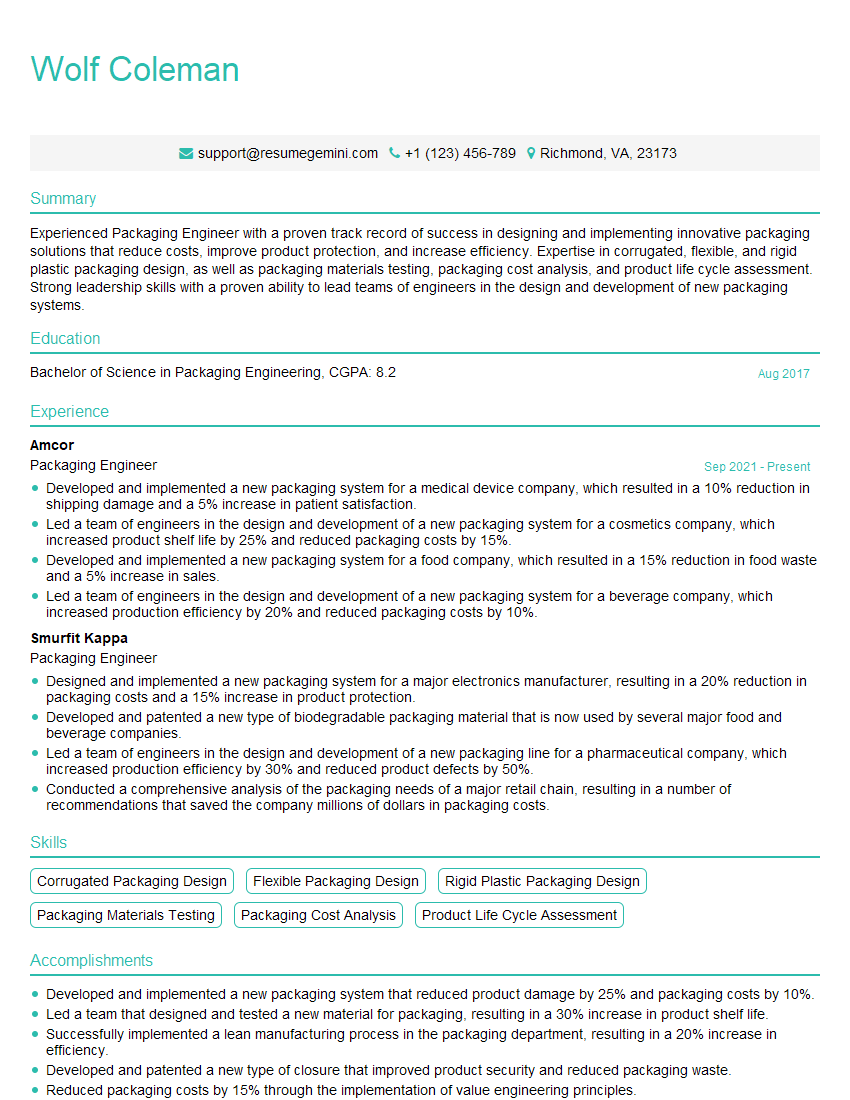
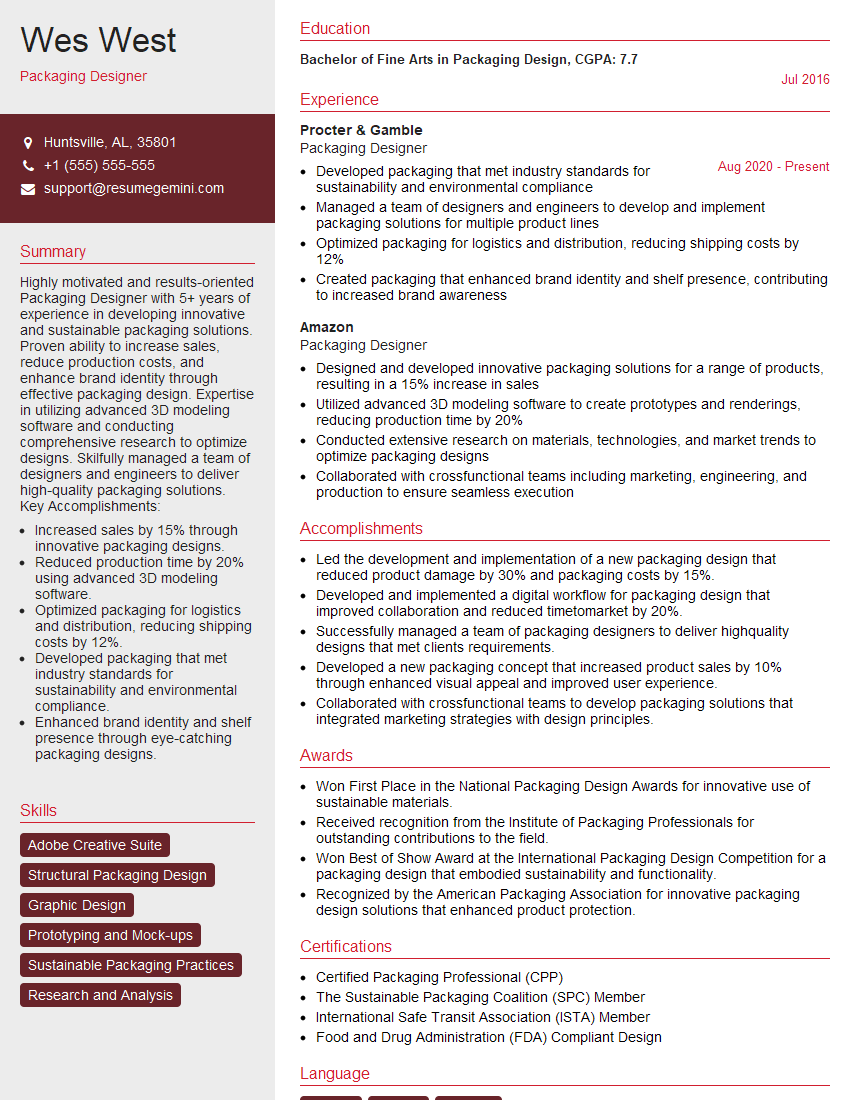
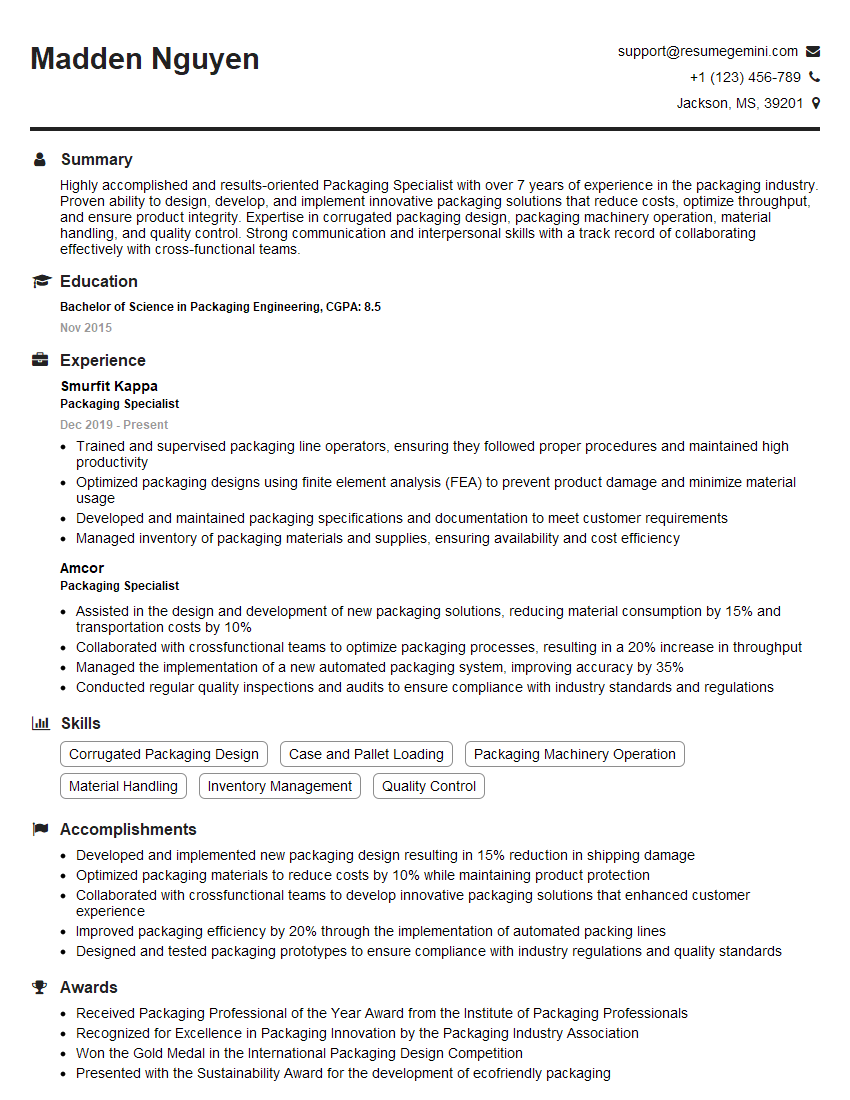
Mastering Knowledge of Packaging and Labeling is crucial for career advancement in numerous industries. A strong understanding of these concepts demonstrates your ability to contribute significantly to product development, manufacturing, and marketing. To stand out from the competition, invest in creating an ATS-friendly resume that highlights your relevant skills and experience. ResumeGemini is a trusted resource that can help you build a professional and impactful resume tailored to your unique qualifications. Examples of resumes specifically tailored for positions requiring knowledge of Packaging and Labeling are available to help you get started. Take this opportunity to showcase your expertise and secure your dream role!
Explore more articles
Users Rating of Our Blogs
Share Your Experience
We value your feedback! Please rate our content and share your thoughts (optional).
What Readers Say About Our Blog
Very informative content, great job.
good