Are you ready to stand out in your next interview? Understanding and preparing for Knowledge of platemaking standards and specifications interview questions is a game-changer. In this blog, we’ve compiled key questions and expert advice to help you showcase your skills with confidence and precision. Let’s get started on your journey to acing the interview.
Questions Asked in Knowledge of platemaking standards and specifications Interview
Q 1. Explain the difference between offset and flexographic platemaking.
Offset and flexographic platemaking are both crucial processes in the printing industry, but they differ significantly in their techniques and applications. Offset lithography, the basis of offset printing, uses a flat printing plate with an oil-based ink that repels water. The image area accepts ink, while the non-image area repels it. This is transferred to a rubber blanket and then to the substrate. Flexography, on the other hand, is a relief printing process. The image is raised on the plate, and ink is applied directly to the raised areas. Think of it like a rubber stamp, but much more sophisticated.
In short: Offset uses a planographic (flat) plate and indirect ink transfer, while flexography uses a relief (raised) plate and direct ink transfer.
Practical Differences: Offset is known for its high print quality and fine detail reproduction, making it ideal for high-resolution images and text. Flexography excels in printing on flexible substrates like plastic films and packaging, thanks to its ability to handle thicker inks and various materials. A newspaper might use offset, while a cereal box likely uses flexography.
Q 2. What are the key quality control checks for a completed printing plate?
Quality control for a completed printing plate is crucial for ensuring consistent and high-quality prints. The checks typically involve visual inspection and, often, a sophisticated measuring system. Here are key checks:
- Visual Inspection: Checking for any defects such as scratches, pinholes, or debris on the plate surface. This helps identify issues that could lead to inconsistencies in the print.
- Dimensional Accuracy: Measuring the dimensions of the plate to ensure they precisely match the required specifications. Inaccurate dimensions can lead to misregistration during printing.
- Image Quality Assessment: Examining the image quality of the plate using a densitometer or spectrophotometer to check for proper dot gain, ink density, and color accuracy. This ensures the printed output matches the design.
- Plate Thickness: Measuring the thickness of the plate to ensure it conforms to the printing press’s requirements. Incorrect thickness can lead to printing problems.
- Cleanliness: Checking the plate for any residual chemicals or processing materials that might affect the print quality. A clean plate is vital for consistent performance.
Failing to perform these checks thoroughly can result in wasted materials, costly reprints, and a compromised brand image.
Q 3. Describe the process of creating a digital printing plate using CTP technology.
Computer-to-plate (CTP) technology revolutionized platemaking, offering speed, precision, and reduced waste compared to traditional methods. The process typically involves these steps:
- Prepress Preparation: The printing file is prepared and processed using specialized software to ensure correct color separation, trapping, and image resolution.
- Image Setting: The processed image data is sent to the CTP device, which uses a high-resolution laser to expose the plate’s photosensitive material. This ‘burns’ the image onto the plate.
- Plate Development: After exposure, the plate goes through a development process where the exposed areas are chemically treated to become either ink-receptive (offset) or ink-repellent (depending on the plate type). Unexposed areas are removed.
- Post-Processing: The plate is cleaned, inspected for defects, and sometimes treated with a protective coating to improve durability and ink transfer.
- Mounting: Finally, the plate is mounted onto the printing press cylinder and is ready for use.
CTP’s speed and precision significantly improve the workflow, reducing lead times and manual intervention while improving print quality and consistency.
Q 4. What are the common causes of plate defects and how can they be prevented?
Plate defects can stem from various sources throughout the platemaking process. Some common causes include:
- Improper Plate Exposure: Incorrect exposure time or laser intensity can result in under- or over-exposed areas, leading to weak or blocked images.
- Chemical Issues: Using improper chemicals or failing to maintain the correct chemical concentrations can cause image degradation, pinholes, or uneven ink transfer.
- Mechanical Damage: Scratches, dents, or other physical damage during handling or processing can compromise the plate’s integrity.
- Plate Material Defects: Faulty plate material itself may contain imperfections that result in printing problems.
- Improper Cleaning: Inadequate cleaning can leave residues on the plate that interfere with ink transfer.
Prevention Strategies: Prevention focuses on meticulous attention to detail throughout the workflow. This includes using high-quality materials, following manufacturers’ instructions, employing proper cleaning procedures, carefully handling plates, and regularly calibrating equipment. A robust quality control system with regular inspections can catch potential issues early.
Q 5. Explain the importance of maintaining accurate color profiles in platemaking.
Maintaining accurate color profiles in platemaking is paramount for consistent and predictable color reproduction. A color profile acts as a translator, defining the relationship between the digital color values and the actual color produced on the printed substrate. Without accurate color profiles, the printed colors will likely differ significantly from the design, leading to inconsistencies and potentially costly reprints.
Importance: Consistent color reproduction is vital for brand identity and product quality. Accurate color profiles ensure that a logo appears the same across various printed materials and that colors in packaging are true to the design. Accurate profiles ensure the end product meets client expectations.
Implementation: The process involves profiling the entire workflow—from the monitor, the RIP (Raster Image Processor), and the CTP device to the printing press and the paper. Regular calibration and updates of these profiles maintain accuracy and account for changes in equipment or materials.
Q 6. What are the different types of printing plates available and their respective applications?
The printing industry offers various plate types, each suited for specific applications:
- Offset Plates: These are commonly used in offset lithography. They can be made of aluminum, polymer, or other materials and are available in different surface treatments (e.g., positive-working or negative-working). Their applications range from newspapers and magazines to brochures and posters.
- Flexographic Plates: Used in flexographic printing, these plates are generally made of photopolymer and offer excellent durability for printing on flexible substrates like plastic films, packaging materials, and corrugated board.
- Gravure Plates: These are etched plates used in gravure printing, offering high-volume printing of high-quality images. They are commonly used for packaging, magazines, and other applications requiring very fine detail and consistent color.
- Screen Printing Plates/Screens: These are used in screen printing, a technique where ink is forced through a mesh screen onto a substrate. They can be made from various materials.
The choice of plate depends on the printing process, substrate, required quality, and print volume. Each plate type provides a unique set of capabilities and limitations.
Q 7. How do you ensure proper plate registration during the printing process?
Accurate plate registration is critical for aligning different color plates or image elements correctly during the printing process. Misregistration results in blurry, misaligned images, a major quality defect. Several techniques ensure proper registration:
- Precise Plate Mounting: Using precise mounting systems with registration pins or marks helps accurately position plates on the printing press cylinders.
- Registration Marks: Including registration marks (crosshair or other patterns) on the plates and the printing material allows for adjustments and helps align plates precisely during setup.
- Image Control Software: Advanced image processing software can help manage and adjust registration throughout the workflow, helping to prevent errors.
- Regular Calibration: Regular calibration and maintenance of printing equipment and alignment systems is crucial. Consistent maintenance prevents drift or misalignment.
- Experienced Press Operators: Skilled and experienced press operators are key in monitoring and adjusting plate registration during the printing process.
Proper registration ensures that multi-color images align perfectly, avoiding blurry edges and color shifts. It’s a critical aspect of professional printing.
Q 8. What are the safety precautions necessary when handling printing plates and chemicals?
Handling printing plates and chemicals requires meticulous safety protocols to prevent accidents and health hazards. Think of it like working in a chemistry lab – precision and caution are paramount.
- Personal Protective Equipment (PPE): Always wear gloves (nitrile is preferred for chemical resistance), safety glasses, and a lab coat to protect your skin and eyes from chemicals and plate debris. In some cases, a respirator may be necessary, especially when dealing with solvents or VOCs (Volatile Organic Compounds).
- Chemical Handling: Follow the manufacturer’s instructions precisely for mixing and handling chemicals. Ensure adequate ventilation to minimize exposure to fumes. Never mix chemicals haphazardly – unexpected reactions can be dangerous. Properly label all containers.
- Plate Handling: Plates, especially those with sharp edges or burrs, can cause cuts. Handle them carefully, using appropriate tools when necessary, and dispose of damaged plates according to safety guidelines. Never stack plates carelessly, as this can cause warping or breakage.
- Waste Disposal: Dispose of used chemicals and cleaning solutions responsibly. Follow local and national regulations for hazardous waste disposal to prevent environmental pollution. Many chemicals require specialized containers and disposal methods.
- Emergency Procedures: Familiarize yourself with emergency procedures, including the location of eyewash stations, safety showers, and fire extinguishers. Know how to report accidents and injuries promptly.
For instance, during a recent project involving a large-format plate, a small cut on my hand occurred from a sharp edge, highlighting the necessity of always being attentive to safety.
Q 9. Describe your experience with different plate materials (e.g., aluminum, polyester).
My experience encompasses a broad range of plate materials, each with its strengths and weaknesses. Selecting the right material depends heavily on the printing application and desired print quality.
- Aluminum Plates: These are the workhorse of the industry, offering a good balance of cost-effectiveness, durability, and image quality. I’ve worked extensively with various thicknesses and surface treatments (e.g., anodized, grained) to achieve optimal results for different printing processes, like offset lithography. Thinner plates are easier to handle but can be more prone to bending, while thicker plates offer greater stability but might present issues with plate clamping on certain presses.
- Polyester Plates: These are a more recent development, often used in flexographic printing and other applications where flexibility is required. They are lighter and thinner than aluminum, but usually more expensive. I’ve found them particularly useful for printing on flexible substrates like packaging films. Their durability and ability to withstand repeated flexing are key advantages.
In one project, we switched from aluminum to a specialized polyester plate for printing on a corrugated cardboard substrate because the aluminum plates kept tearing due to the press’s heavy impression. The switch to polyester significantly reduced this problem and improved overall print quality.
Q 10. Explain the role of image setters in platemaking.
Image setters are the heart of modern platemaking, responsible for creating the precise image on the printing plate. Think of them as high-precision printers that create a digital representation of the artwork onto a photosensitive plate.
The process generally involves exposing the plate to a high-intensity light source, often a laser, according to the digital data. This light changes the chemical properties of the plate material, creating the image areas that will accept ink during printing. The quality of the image setter directly impacts the quality of the final print. Resolution, light source stability, and the accuracy of the exposure system are critical factors.
Different image setters exist, from those using thermal imaging to violet laser, each possessing unique characteristics suitable for different types of plates and printing techniques. For example, thermal image setters work well with thermal plates, whereas violet laser image setters are commonly used with computer-to-plate (CTP) systems for offset lithography.
Q 11. How do you troubleshoot issues related to plate density and dot gain?
Troubleshooting plate density and dot gain requires a systematic approach, often involving checking multiple factors.
- Plate Density: Low density can result from insufficient exposure during image setting, improper processing, or plate material issues. High density might stem from overexposure, incorrect processing, or plate contamination. Measurement tools like densitometers are used to quantify plate density, allowing for adjustments to exposure parameters or chemical processing times.
- Dot Gain: This refers to the increase in dot size during printing, resulting in a muddy or less sharp image. Dot gain is influenced by the plate material, ink, paper, and printing pressure. Reducing dot gain might involve adjusting the printing pressure, changing the ink viscosity, or selecting a different type of plate with a lower tendency towards dot gain.
For example, if the print is too light (low density), I’d first check the exposure settings on the image setter and then examine the plate processing steps, looking for deviations from the standard procedure. If dot gain is excessive, I’d systematically adjust printing parameters like the ink-water balance and printing pressure, monitoring the results at each step.
Q 12. What is the significance of plate thickness in relation to printing quality?
Plate thickness plays a crucial, albeit often overlooked, role in printing quality and press performance. Thicker plates offer greater stability and resist bending during the printing process, particularly important for large-format prints and high-speed presses. This rigidity ensures consistent ink transfer and prevents image distortion.
However, thicker plates require more clamping pressure on the printing press, which might negatively impact other aspects of the printing process. Thinner plates are more flexible, which can be an advantage for certain applications but can lead to image instability, especially under high pressure. The optimal thickness is thus a trade-off between stability and press compatibility.
For instance, thinner plates might be preferred when printing on substrates with uneven surfaces, while thicker plates are mandatory for high-speed web offset printing to maintain print quality.
Q 13. What are the various platemaking processes you are familiar with?
I’m proficient in several platemaking processes, each suitable for different printing applications and budgets.
- Computer-to-Plate (CTP): This is a digital workflow where the image is directly written onto the plate using an image setter, eliminating the need for film. It’s highly efficient and produces high-quality results, commonly used in offset lithography.
- Computer-to-Film (CtF): While less prevalent now, CtF involves creating a film negative or positive from a digital file, which is then used to expose the printing plate. This method is often more affordable than CTP but less efficient.
- Direct-to-Plate (DTP): This refers to a streamlined process in which the plate is directly exposed in the printing press without a separate image setting step. This method is typically used in smaller-scale operations for quick turnaround times.
- Flexographic Platemaking: This involves techniques specific to flexographic printing, using specialized plates and processing methods often tailored for the flexibility required by this printing technique.
The choice of process depends on factors like budget, print volume, required turnaround time, and the printing press’s capabilities.
Q 14. How do you manage plate inventory and storage?
Efficient plate inventory and storage are vital for smooth production and cost control. Think of it as managing a critical component inventory in a manufacturing plant.
- Organized Storage: Plates should be stored in a cool, dry, and dark environment to prevent degradation. Clearly labeled shelving or racks ensure easy identification and retrieval. Plates should be stored vertically to prevent warping. The storage area should be climate-controlled to maintain optimal humidity and temperature.
- Inventory Management System: I utilize a database system that tracks plate specifications (material, size, job ID), usage, and remaining stock levels. This allows for accurate forecasting of plate needs and prevents unnecessary waste.
- First-In, First-Out (FIFO): Plates are managed using FIFO, ensuring that older plates are used first to minimize storage time and prevent material degradation.
- Regular Auditing: Periodic audits are conducted to assess plate inventory levels, identify expired plates, and ensure compliance with storage requirements.
- Waste Reduction Strategies: We continuously work on improving plate usage and minimizing waste through better job planning and the adoption of more sustainable plate materials.
In a recent project with a tight deadline, having a well-organized inventory and efficient tracking system proved invaluable, preventing delays and ensuring we had the necessary plates ready when needed.
Q 15. Describe your experience with different platemaking software and RIP systems.
My experience with platemaking software and RIP (Raster Image Processor) systems spans several years and various platforms. I’m proficient in industry-leading software like Creo Platemaking software, Kodak Prinergy, and Agfa Apogee. These systems are crucial for image processing, color management, and plate creation. I’ve worked extensively with different RIPs, understanding their strengths and weaknesses in handling various file formats and outputting optimal data for different plate types (e.g., thermal, CtP). For example, I’ve used Prinergy’s advanced screening options to optimize image reproduction for specific substrates and achieve desired dot gain control. In one project, I successfully troubleshooted a RIP issue causing banding in the final print by meticulously adjusting the screening parameters within the software. My knowledge extends beyond basic operation; I can optimize settings for speed, quality, and minimizing plate waste.
Furthermore, I’m comfortable working with different output devices, ensuring seamless integration between software, RIP, and platemaking equipment.
Career Expert Tips:
- Ace those interviews! Prepare effectively by reviewing the Top 50 Most Common Interview Questions on ResumeGemini.
- Navigate your job search with confidence! Explore a wide range of Career Tips on ResumeGemini. Learn about common challenges and recommendations to overcome them.
- Craft the perfect resume! Master the Art of Resume Writing with ResumeGemini’s guide. Showcase your unique qualifications and achievements effectively.
- Don’t miss out on holiday savings! Build your dream resume with ResumeGemini’s ATS optimized templates.
Q 16. How do you calibrate and maintain platemaking equipment?
Calibrating and maintaining platemaking equipment is paramount for consistent print quality and operational efficiency. This involves regular checks and adjustments across different components. For instance, in thermal platesetters, laser power calibration is essential; a deviation can lead to uneven exposure and poor image reproduction. I use standardized test targets and software tools to check laser intensity and uniformity, adjusting settings as needed. Daily checks also include verifying the vacuum system’s performance to ensure consistent plate-to-drum contact. I’m meticulous about cleaning the optics to prevent dust accumulation, which can affect image sharpness. For other plate types like violet or UV platesetters, the process involves similar steps, with additional components requiring attention such as the developer and processor units, where consistent chemical levels are critical for optimal plate development. Preventative maintenance involves meticulously following manufacturer guidelines and keeping detailed logs of all calibration and maintenance procedures to ensure traceability and operational efficiency.
Q 17. What are the environmental considerations related to platemaking?
Environmental considerations in platemaking are increasingly important. We must minimize waste and the use of harmful chemicals. This starts with selecting eco-friendly plates and processing chemicals. Many manufacturers now offer plates with reduced chemical usage or biodegradable components. Proper waste management practices are crucial – separating chemicals, recycling metal plates whenever possible, and ensuring proper disposal of hazardous materials according to all local and national regulations. Furthermore, reducing energy consumption through optimized equipment operation and implementing energy-saving measures within the platemaking area is a significant environmental concern I address proactively. For example, I’ve helped implement a system for capturing and reusing processing chemicals, reducing overall chemical usage and waste. Moreover, I actively participate in training colleagues about environmentally responsible practices.
Q 18. Explain your understanding of different screen rulings and their impact on print quality.
Screen ruling, expressed in lines per inch (lpi), refers to the frequency of dots used to create the image on the printing plate. Different rulings impact print quality significantly. A higher lpi generally provides finer detail and smoother transitions (e.g., 175 lpi), suitable for high-resolution images and fine details. However, higher rulings may require more ink, potentially leading to dot gain and increased drying time. Lower rulings (e.g., 85 lpi) provide coarser detail and are often used for applications where fine detail is less crucial, such as large solid areas of color or coarse textures, offering faster printing speeds and less ink consumption. The optimal ruling depends on several factors, including the printing press capabilities, paper type, and the image itself. For example, a glossy paper can handle a higher lpi with better results than a rough stock. I choose the screen ruling based on the job specifications and client requirements, considering the overall balance between image quality, print speed, and ink cost.
Q 19. How do you handle plate stripping and mounting?
Plate stripping and mounting involve carefully removing the exposed printing plate from its carrier and precisely attaching it to a printing cylinder. Precise alignment is crucial to ensure accurate registration. I utilize specialized tools for this, including a plate stripper and mounting tools. The process demands attention to detail to avoid damaging the plate or causing misregistration, which would lead to flawed prints. For example, I carefully inspect the plate for any defects before mounting and use alignment pins and pressure to ensure the plate is securely and accurately attached to the cylinder. Furthermore, I always check the cylinder’s diameter and the plate size to confirm compatibility before proceeding. The process also involves proper handling techniques to prevent scratches or other damage during the transfer.
Q 20. Describe the process of cleaning and preparing printing plates for reuse.
Cleaning and preparing plates for reuse, while possible for some types, is not always economical or recommended, depending on the plate type and the cleaning method’s impact on plate quality. For reusable plates, it usually involves a multi-step process, starting with washing away residual ink and cleaning solutions, using specialized cleaning agents and brushes. Then, a thorough inspection for scratches or other damage is essential, since reused plates may show degradation in quality over time. If the plate is deemed reusable, a final inspection is done to confirm its suitability before returning it to the inventory. For some plate types, a specialized cleaning machine may be used to automate parts of this process. The decision to reuse a plate is always weighed against the cost of replacement versus the potential risk of decreased quality.
Q 21. How do you interpret and adhere to plate specifications provided by clients?
Interpreting and adhering to client-provided plate specifications is essential. This usually includes details about the desired screen ruling, color profile, dot gain targets, and the type of plate required. I meticulously review these specifications to ensure clarity and identify any potential issues. For example, a mismatch between the specified plate type and the printing press capabilities may need to be addressed early on. In instances of unclear or conflicting specifications, I actively communicate with the client to clarify requirements, ensuring we’re on the same page before beginning the platemaking process. My goal is to create plates that accurately reflect the client’s vision and meet their quality standards, avoiding costly mistakes and revisions later on.
Q 22. What experience do you have with different types of plate exposure units?
My experience encompasses a wide range of plate exposure units, from traditional vacuum frame exposures to computer-to-plate (CTP) systems. I’ve worked extensively with both UV and thermal CTP imagers, including those from leading manufacturers like Heidelberg, Kodak, and Agfa. This includes troubleshooting malfunctions, optimizing exposure settings for different plate types and substrates, and maintaining the units to ensure consistent and high-quality plate production. For example, I’ve successfully resolved an issue on a Heidelberg Suprasetter where inconsistent exposure was traced to a faulty vacuum pump, resulting in significant improvements in plate quality and production efficiency. I also have experience with various types of exposure lamps and their maintenance, understanding the importance of consistent light output for even plate exposure.
- Vacuum Frame Exposures: These are more traditional and require manual handling of plates and films. I’m familiar with optimizing exposure times and maintaining even pressure across the plate surface for consistent results.
- Thermal CTP: I’ve worked with various thermal CTP systems, understanding the nuances of laser power, resolution, and plate type compatibility. This includes understanding the impact of laser power adjustments on plate exposure.
- UV CTP: My experience with UV CTP includes working with various laser types, such as violet lasers, optimizing exposure parameters, and maintaining the imaging head.
Q 23. Explain your understanding of different plate types such as thermal, UV, and violet.
Understanding plate types is crucial for optimal print quality. Each type has unique properties dictating its exposure method and resulting image characteristics.
- Thermal Plates: These plates use heat from a laser to create the image. They’re known for their relatively high resolution and consistent results but may be more sensitive to environmental conditions. A practical example is the use of thermal plates for high-quality, fine-detail work like packaging or high-end brochures. The heat from the laser melts a photosensitive layer, allowing ink to adhere only to exposed areas.
- UV Plates: These plates use ultraviolet light to expose the image. They generally offer good image stability and are widely used due to their versatility and relatively lower cost compared to thermal plates. UV plates are often favored for high-volume commercial printing jobs. The UV light hardens a photosensitive layer, creating the printing image.
- Violet Plates: A variation of UV plates, violet plates use a violet laser instead of a traditional UV light source. Violet laser exposure leads to greater precision and fine-line details and can often produce cleaner images with less dot gain. These are typically chosen for applications needing sharp details and clean image reproduction. The violet laser technology allows for more precise and consistent exposure.
Q 24. How familiar are you with color correction and image enhancement for platemaking?
Color correction and image enhancement are essential steps in platemaking. I’m proficient in using various software packages, such as Adobe Photoshop, to adjust color profiles, compensate for dot gain, and optimize images for specific printing processes. This includes understanding color spaces (CMYK, RGB), color management profiles (ICC), and the impact of various image enhancement techniques on the final print. For instance, I’ve routinely corrected color casts caused by the scanner or digital camera, improving consistency and accuracy of the printed product. In addition, I understand techniques like sharpening, noise reduction, and contrast adjustments to create optimum plate image files.
I regularly use techniques like:
- Gamut Mapping: Ensuring all colors are within the printer’s color capabilities.
- Dot Gain Compensation: Adjusting for the spreading of ink during printing to maintain accurate color and sharpness.
- Image Sharpening and Noise Reduction: Optimizing the image for clear and crisp output.
Q 25. What are the different types of platemaking press-ready files that you can work with?
I’m experienced in working with various press-ready file formats, including PDF/X-1a, PDF/X-4, and TIFF. Understanding the specifications and requirements of each is critical to ensuring compatibility with the platemaking workflow. PDF/X-1a is commonly used for high-fidelity color reproduction, PDF/X-4 offers greater flexibility in embedding fonts and other metadata, and TIFF provides a reliable raster image format. I am comfortable assessing the quality and suitability of incoming files for platemaking and correcting any issues that may impact print quality such as incorrect color profiles or missing fonts.
I also ensure all files meet the following criteria before proceeding:
- Color Space: Correct CMYK color profile.
- Resolution: Sufficient resolution for the intended print process.
- Fonts: All fonts are embedded or outlined.
- Bleed and Margins: Proper bleed and margin settings are present.
Q 26. Describe your experience with quality control checks before mounting plates onto cylinders.
Quality control is paramount before mounting plates. My process involves a multi-step verification procedure. This includes visually inspecting the plate for defects, such as scratches, pinholes, or inconsistencies in the image. I will also measure the plate thickness and ensure it conforms to the specifications for its intended use. Then, the plate is checked for proper registration using a registration target or other appropriate testing methods. Failure to properly QC plates at this stage could lead to significant problems during printing, including misregistration, ink density inconsistencies and overall reduced image quality.
A specific example involves identifying a small scratch on a plate during visual inspection. This scratch, if unnoticed, would have resulted in a significant defect in the print run. By catching it during QC, the plate was replaced and further problems were avoided.
Q 27. What are the implications of incorrect plate exposure times on print quality?
Incorrect plate exposure times directly impact print quality. Under-exposure leads to weak ink adhesion and light prints with poor color saturation. Over-exposure, on the other hand, can result in a thickened image area with issues like dot gain and increased ink consumption. Both scenarios lead to significant color variations and inconsistencies across the printed piece.
The consequences can range from subtle variations in color to complete image failure. In a commercial setting, this could lead to wasted materials, customer dissatisfaction, and financial losses. To avoid these issues, strict adherence to the manufacturer’s specifications and routine calibration and testing of the exposure unit is critical.
Q 28. How do you manage waste and disposal of chemicals and plates in an environmentally friendly manner?
Environmental responsibility is a key consideration in platemaking. We utilize a multi-pronged approach for managing waste. This includes the proper segregation and disposal of spent processing chemicals, plates, and other associated materials, in accordance with all local, regional and national environmental regulations. Used plates are carefully segregated and sent to recycling facilities. Spent processing chemicals are neutralised and disposed of via licensed waste contractors. We also strive to minimize chemical usage through optimized processes and regular equipment maintenance to reduce waste generation in the first place.
Furthermore, we regularly monitor our processes for areas of potential improvement in terms of chemical usage and waste reduction. This includes adopting new techniques and technologies to improve efficiency and reduce environmental impact. We actively participate in industry initiatives and training programs to stay up-to-date on best practices and regulations regarding responsible chemical and plate waste management.
Key Topics to Learn for Knowledge of Platemaking Standards and Specifications Interview
- Plate Types and Materials: Understanding the properties and applications of different plate materials (e.g., aluminum, polymer, etc.) and their suitability for various printing processes.
- Image Resolution and Screening: Knowing how resolution affects print quality and the principles of halftone screening, including line screen frequency and angles.
- Color Management and Profiles: Grasping the importance of color space conversion, profile creation, and color consistency across different stages of platemaking.
- Platemaking Processes: Familiarity with various platemaking techniques (e.g., Computer-to-Plate (CTP), direct-to-plate) and their respective advantages and limitations.
- Quality Control and Inspection: Understanding the methods and standards used to inspect plates for defects, ensuring consistent print quality, and troubleshooting common issues.
- Prepress Workflow and Software: Practical experience with prepress software and the overall workflow involved in platemaking, including file preparation and imposition.
- Plate Finishing and Handling: Knowledge of proper plate handling procedures, including storage, cleaning, and maintenance, to maximize plate lifespan and efficiency.
- Industry Standards and Best Practices: Familiarity with relevant industry standards and best practices to ensure compliance and optimize the platemaking process.
- Troubleshooting and Problem Solving: Ability to diagnose and resolve common platemaking problems, such as dot gain, moiré patterns, and registration issues.
- Safety Regulations and Procedures: Understanding and adhering to safety regulations and procedures related to handling chemicals and equipment used in platemaking.
Next Steps
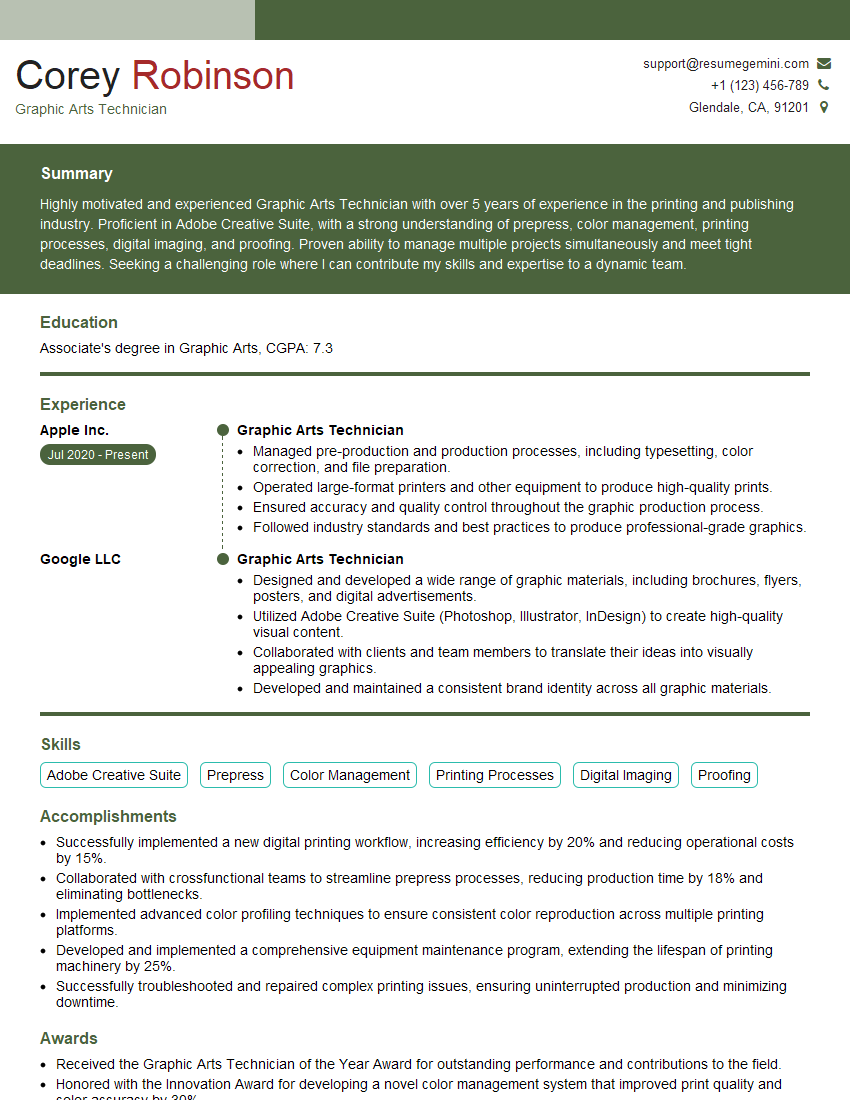
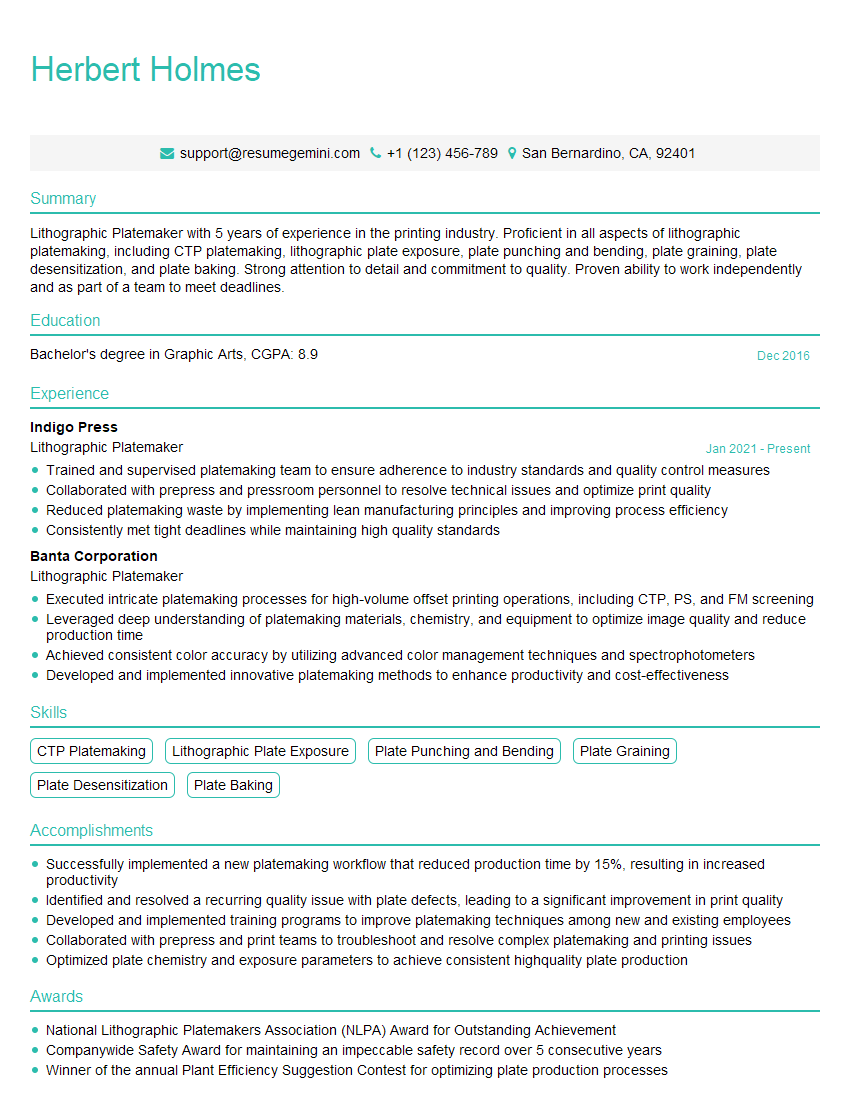
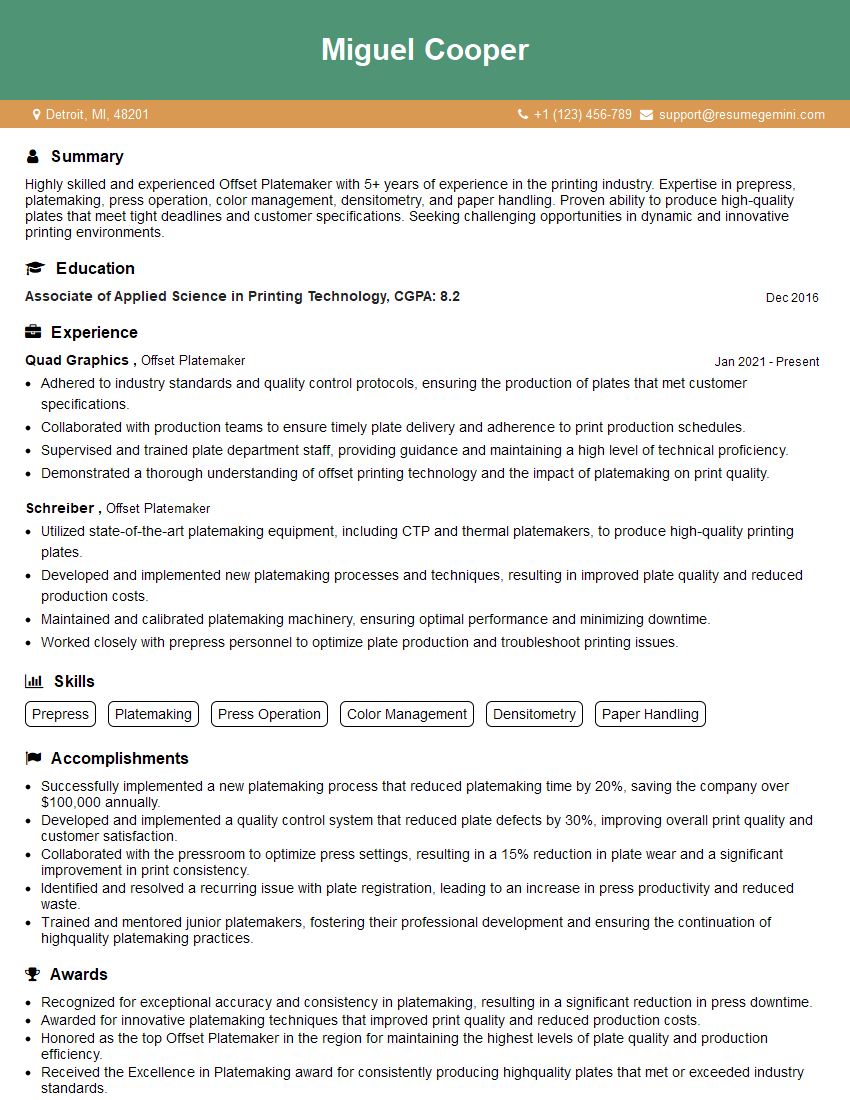
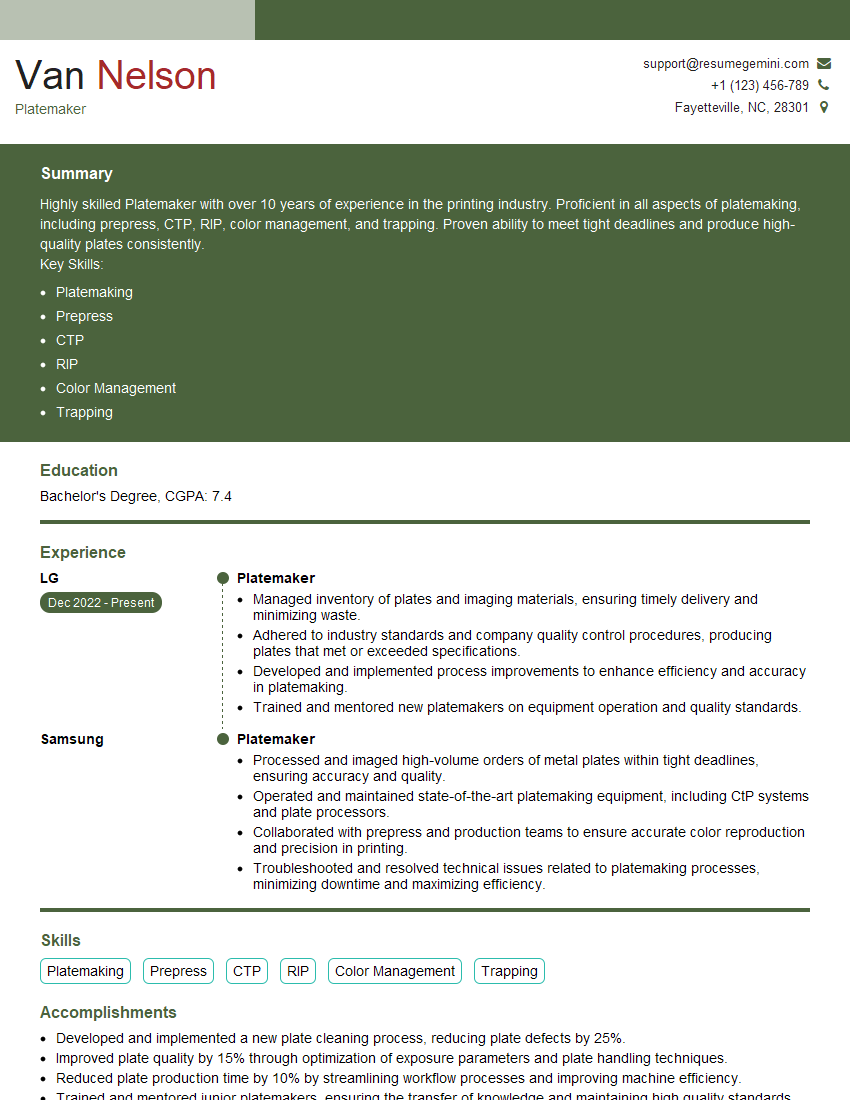
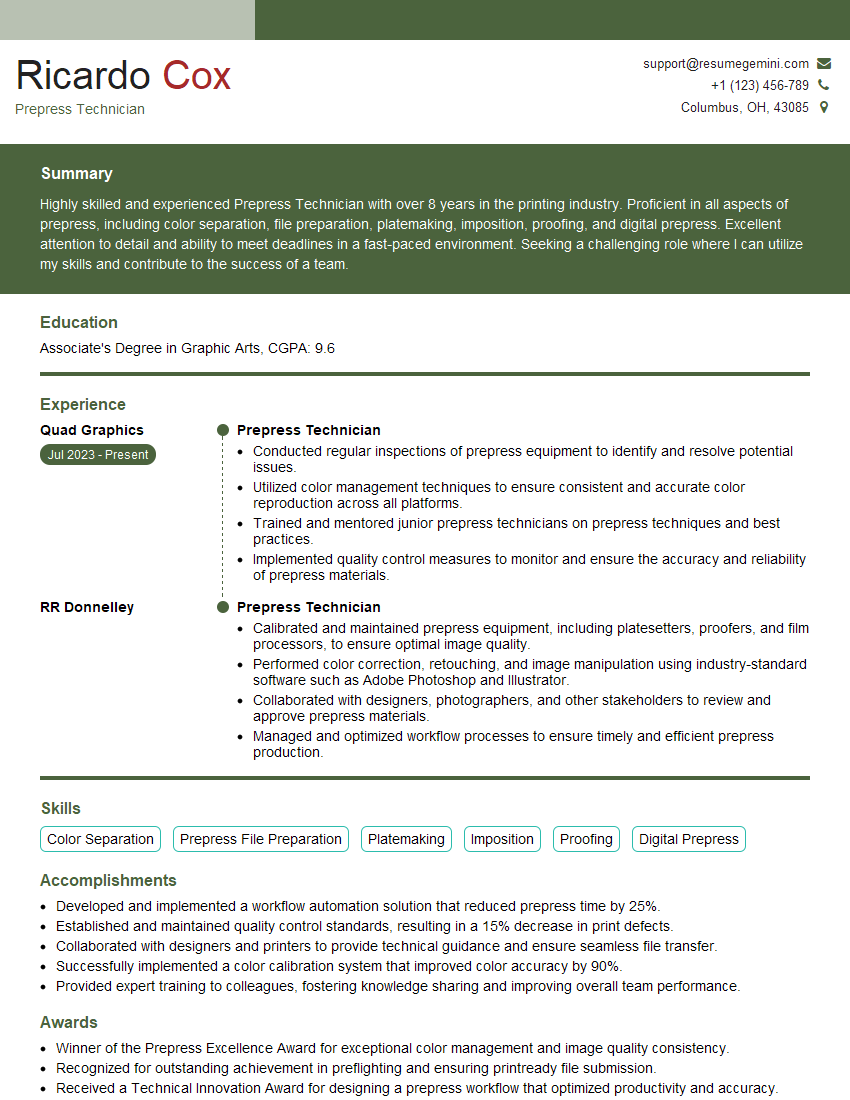
Mastering knowledge of platemaking standards and specifications is crucial for career advancement in the printing industry. A strong understanding of these concepts demonstrates technical expertise and problem-solving skills, making you a valuable asset to any printing company. To maximize your job prospects, creating a professional, ATS-friendly resume is essential. ResumeGemini is a trusted resource to help you build a compelling resume that highlights your skills and experience effectively. Examples of resumes tailored to showcasing expertise in platemaking standards and specifications are available to help guide your resume creation. Invest the time in crafting a strong resume – it’s your first impression with potential employers.



Explore more articles
Users Rating of Our Blogs
Share Your Experience
We value your feedback! Please rate our content and share your thoughts (optional).
What Readers Say About Our Blog
Very informative content, great job.
good