The right preparation can turn an interview into an opportunity to showcase your expertise. This guide to Knowledge of Print Finishing interview questions is your ultimate resource, providing key insights and tips to help you ace your responses and stand out as a top candidate.
Questions Asked in Knowledge of Print Finishing Interview
Q 1. Explain the difference between perfect binding and saddle stitching.
Perfect binding and saddle stitching are both popular bookbinding methods, but they differ significantly in their construction and suitability for different types of publications.
Perfect Binding: Imagine a paperback novel. Its pages are glued together at the spine, creating a smooth, flat edge. This is perfect binding. The pages are gathered, the spine is prepared (often roughened for better adhesive grip), and a strong adhesive is applied before the cover is wrapped around the glued block. This method is ideal for books with a higher page count (typically 64 pages or more) because it allows for a large number of pages to be bound together securely. Think of textbooks, novels, or softcover journals.
Saddle Stitching: This is a simpler method, often used for magazines, brochures, or booklets with a lower page count (typically up to 64 pages). Think of a folded leaflet. Pages are folded in half or multiple times, and then wire staples are used to fasten the folded pages together through the spine. It’s quick, cost-effective, and suitable for documents that don’t require a thick, robust binding. The spine will have visible staples.
In essence, perfect binding offers a cleaner, more professional look for thicker books, while saddle stitching is faster, cheaper, and more appropriate for thinner publications.
Q 2. Describe the process of die-cutting.
Die-cutting is a process that uses a sharp, custom-shaped steel rule die to cut intricate shapes, designs, or patterns from a sheet of material. It’s like using a giant, incredibly precise cookie cutter. The die is mounted on a press, and the material (paper, cardboard, plastic, etc.) is fed through. The press forces the die down, cleanly cutting the material along the die’s shape. This is commonly used to create custom shapes for packaging, business cards, invitations, promotional materials, and more.
The process involves several steps:
- Die Creation: A steel rule die is created based on the desired shape or design.
- Material Preparation: The material is accurately positioned on the press bed.
- Die-Cutting: The press operates, precisely cutting the material.
- Quality Check: The cut pieces are inspected for accuracy and quality.
Think of creating custom-shaped stickers or labels; die-cutting is the perfect technique for achieving those intricate shapes.
Q 3. What are the common types of laminating films and their applications?
Laminating films add protection and enhance the appearance of printed materials. Common types include:
- Gloss Laminate: Provides a shiny, high-gloss finish. It’s great for eye-catching brochures, promotional materials, or anything where a vibrant, luxurious look is desired.
- Matte Laminate: Offers a smooth, non-reflective finish. This is a more subtle, elegant choice, often preferred for business cards or documents where readability is paramount.
- Soft-Touch Laminate: Provides a velvety, soft feel to the printed material. It adds a luxurious tactile experience, making it popular for high-end packaging or invitation cards.
The choice of laminate depends entirely on the application and desired aesthetic. Gloss laminate is visually striking, but can create glare; matte laminate is more understated; and soft-touch adds a premium sensory element.
Q 4. How do you ensure the quality of folded materials?
Ensuring the quality of folded materials involves meticulous attention to detail at each stage of the process. Key aspects include:
- Proper Paper Selection: Choosing the right paper weight and type is crucial for preventing cracking or tearing during folding. Heavier papers handle folding better.
- Accurate Scoring: Pre-creasing (scoring) the paper along the fold lines helps prevent cracking and ensures crisp, clean folds. This is particularly important for heavier stocks.
- Correct Folding Techniques: Using appropriate folding machines and settings is vital to avoid misalignments or damage. This ensures consistent fold quality across all items.
- Regular Maintenance: Keeping folding equipment clean and well-maintained prevents jams and inconsistencies.
- Quality Control Checks: Regularly inspecting folded materials for defects such as misfolds, creases, or damage ensures high quality.
Think of a beautifully printed brochure; incorrect folding can ruin the overall impression. Consistent quality control ensures a professional outcome.
Q 5. What are the different types of folding techniques?
Several folding techniques exist, each suitable for different applications:
- Half Fold: The simplest fold, where a sheet is folded in half.
- Letter Fold: A sheet is folded in thirds, often used for letters or inserts.
- Roll Fold: A series of parallel folds, often used for maps or leaflets.
- Gate Fold: A panel fold creating a gate-like effect. Ideal for creating a visually appealing and informative piece.
- Parallel Fold: Multiple folds running parallel to each other, perfect for creating leaflets and booklets.
The choice of folding technique depends on the desired final format, the number of pages, and the intended use of the printed material.
Q 6. What are the safety precautions when operating a guillotine cutter?
Guillotine cutters are powerful and efficient but pose significant safety risks. Essential safety precautions include:
- Never operate the machine without proper training.
- Always use appropriate safety guards.
- Keep hands and fingers clear of the cutting blade at all times.
- Use a push stick to feed materials, especially when cutting smaller pieces.
- Ensure the machine is properly maintained and regularly inspected.
- Never attempt to clear jams while the machine is operating.
- Wear appropriate safety clothing including gloves and safety glasses.
- Follow the manufacturer’s safety guidelines explicitly.
A guillotine cutter is a valuable tool, but carelessness can lead to serious injury. Strict adherence to safety protocols is non-negotiable.
Q 7. Explain the process of three-hole drilling.
Three-hole drilling is a common method for preparing documents for binding in a binder or folder. A specialized machine, often called a three-hole punch, is used to create three evenly spaced holes along the spine of the document. These holes allow for insertion of the document into a three-ring binder. The process typically involves:
- Document Alignment: The documents are accurately positioned against a guide to ensure consistent hole placement.
- Punching: The machine’s punches create three holes simultaneously.
- Waste Removal: Punched-out material is collected in a waste tray.
- Quality Control: The punched documents are checked for properly placed holes and any damage.
This simple process ensures neat and secure binding for numerous documents, from office paperwork to school assignments.
Q 8. How do you troubleshoot common issues with a binding machine?
Troubleshooting a binding machine involves a systematic approach. First, identify the specific problem – are pages misaligned, is the binding glue malfunctioning, or is there a mechanical jam? Let’s consider some common issues:
- Misaligned Pages: This often points to incorrect paper feeding or a problem with the machine’s internal guides. Check for obstructions, ensure proper paper alignment before binding, and verify the guide settings are correct for the document size. Sometimes, simply recalibrating the machine can solve this.
- Glue Issues: If the glue isn’t adhering properly, check the glue reservoir level and quality. Old or improperly mixed glue is a frequent culprit. Make sure the glue temperature is correct; it’s often temperature-sensitive and needs to be within a specific range for optimal performance. Clean any clogged nozzles or rollers.
- Mechanical Jams: Listen for unusual noises. A jam might indicate a problem with the rollers, gears, or other moving parts. Turn off the machine, carefully inspect the mechanism, and remove any obstructions. If you can’t identify the problem, consult the machine’s manual or contact a service technician.
Remember safety first! Always disconnect the machine from the power source before attempting any repairs or maintenance.
Q 9. What are the different types of binding methods?
The world of binding offers various methods, each suited to different needs and document types. Here are some key examples:
- Perfect Binding: This is the common method for softcover books and magazines. The pages are glued together along the spine’s edge, then the cover is wrapped around. Think of your average paperback novel.
- Saddle Stitch Binding: This involves folding pages in half and securing them with wire staples along the spine. It’s ideal for brochures, booklets, and smaller publications. The staple placement is crucial for secure binding and aesthetic appeal.
- Spiral Binding (Coil Binding): A plastic or metal coil is inserted through punched holes along the spine. This allows for easy page turning and lay-flat functionality. It’s commonly used for reports, calendars, and notebooks.
- Wire-O Binding: Similar to spiral binding, but uses double-loop wire for a more professional look and feel, often preferred for high-end documents and presentations.
- Case Binding: This robust method is used for hardback books. The sewn sections are glued together, and a cover board is attached for durability and protection. It requires specialized equipment.
Q 10. Describe the process of embossing and debossing.
Embossing and debossing are techniques used to create raised or indented designs on paper or other materials. Both processes use a die with the desired design pressed into the material under high pressure.
Embossing creates a raised impression, adding texture and depth. Imagine the raised lettering on a high-quality invitation. The die is typically made of metal and is heated during the process to soften the material for a crisp impression.
Debossing, conversely, produces an indented design. Think of the subtly indented text on a credit card. This process leaves a recessed area, creating a more subtle but still impactful effect. The die used in debossing is often made of metal or other durable material.
Both techniques require precision and specialized equipment to ensure consistent results and avoid damaging the material. The pressure and temperature are carefully controlled to achieve the desired depth and quality of the impression.
Q 11. What is the importance of quality control in print finishing?
Quality control in print finishing is paramount. It ensures that the final product meets the client’s specifications and expectations, maintaining the brand’s image and reputation. Without it, inconsistencies in color, binding, or other aspects could lead to costly reprints, dissatisfied clients, and damage to your company’s credibility.
A robust QC process includes:
- Visual Inspection: Checking for misaligned pages, uneven cuts, color discrepancies, and any damage to the printed material.
- Measurement Checks: Verifying dimensions, margins, and bleed areas to meet the specifications.
- Binding Integrity: Ensuring the binding method is secure and durable.
- Color Consistency: Using colorimeters or spectrophotometers to verify that the colors match the design specifications.
- Spot-Checking: Randomly selecting samples from a batch to verify consistent quality throughout.
Implementing a formal QC system with checklists and documentation provides a clear process for identifying and addressing issues promptly, minimizing waste and maximizing client satisfaction.
Q 12. How do you handle color consistency issues in finishing?
Maintaining color consistency is critical. Inconsistent color can significantly affect the overall quality and aesthetic appeal of the final product. Issues can arise from various sources: variations in ink, paper inconsistencies, or problems with the printing or finishing equipment.
Here’s how to address color inconsistencies:
- Color Calibration: Regular calibration of printing and finishing equipment is essential to ensure accuracy. Using standardized color profiles helps ensure consistent color reproduction across different batches and printing runs.
- Ink Management: Maintaining proper ink levels, using fresh ink, and regular cleaning of ink cartridges or systems can prevent color variations.
- Paper Selection: Choosing paper with consistent absorbency and surface characteristics is important for uniform ink absorption and color reproduction.
- Proofing: Using color-accurate proofing methods to review samples before proceeding with large-scale production enables early detection and correction of any color problems.
- Spectrophotometer: Measuring color using a spectrophotometer gives precise numerical data allowing for adjustments and accurate color matching between different print runs.
By meticulously managing these aspects, color consistency can be maintained, leading to a high-quality finished product.
Q 13. What experience do you have with different types of finishing equipment?
Throughout my career, I’ve gained extensive experience with a wide range of finishing equipment, including:
- Various Binding Machines: From small-scale saddle stitch machines to large-format perfect binders and case binding equipment. I’m proficient in operating and maintaining these machines and troubleshooting common issues.
- Cutting and Trimming Machines: I have experience with guillotines, paper cutters, and three-knife trimmers, ensuring accurate and clean cuts for different paper sizes and weights.
- Folding Machines: I’m familiar with various folding configurations, including letter folds, parallel folds, and more complex fold patterns, optimizing throughput and minimizing errors.
- Die-Cutting Machines: Experience with die-cutting for creating unique shapes and intricate designs.
- Embossing and Debossing Equipment: Skilled in using embossing and debossing presses to create high-quality raised or indented designs.
My hands-on experience extends to setting up, operating, maintaining, and troubleshooting these machines, resulting in optimal efficiency and high-quality output. I am also knowledgeable about the safety procedures associated with each piece of equipment.
Q 14. How familiar are you with automated finishing systems?
I’m very familiar with automated finishing systems. These systems offer significant advantages in terms of efficiency, speed, and consistency compared to manual processes. My knowledge covers both the operational aspects and the integration with other pre-press and print processes.
Specifically, I understand how automated systems integrate:
- Automated Paper Handling: This includes features like automated feeders, stackers, and conveyors, streamlining workflows and reducing manual labor.
- In-line Finishing: The integration of different finishing steps in a single workflow minimizes handling and maximizes speed. For example, a system could combine cutting, folding, and binding in a seamless process.
- Computerized Controls: Modern automated systems rely on computerized controls for programming settings, monitoring performance, and detecting malfunctions. This results in precision and consistency.
- Job Management Software: Integration with job management software enables scheduling, tracking, and reporting on the production process.
Understanding these automated systems allows for efficient production planning, optimized resource utilization, and increased throughput, all contributing to a cost-effective and highly productive print finishing operation. I am also comfortable working with different software and hardware platforms related to these systems.
Q 15. What is your understanding of different paper types and their suitability for different finishing techniques?
Understanding paper types and their suitability for different finishing techniques is crucial for achieving high-quality results. Different papers possess varying characteristics like weight, thickness, texture, and fiber content, which impact how they react to various finishing processes.
- Coated Papers: These are ideal for high-resolution printing and techniques like embossing or UV coating because their smooth surface ensures even ink distribution and a clean finish. However, they can be less absorbent and may not be suitable for techniques like die-cutting that require more flexibility.
- Uncoated Papers: These offer a natural texture and are often preferred for letterpress, foil stamping, or engraving. Their porous nature allows for excellent ink absorption, enhancing the look of these techniques, but they may not be suitable for processes requiring precise registration like perfect binding.
- Specialty Papers: This broad category includes handmade paper, recycled paper, and textured papers. Each type dictates which finishing methods are appropriate. For instance, delicate handmade paper might only tolerate gentle processes to avoid tearing, while recycled paper’s texture might affect the precision of die-cutting.
For example, attempting to emboss a very thin, delicate paper could result in tearing. Conversely, using a heavy, uncoated paper for a high-speed inkjet finishing process could cause jamming.
Career Expert Tips:
- Ace those interviews! Prepare effectively by reviewing the Top 50 Most Common Interview Questions on ResumeGemini.
- Navigate your job search with confidence! Explore a wide range of Career Tips on ResumeGemini. Learn about common challenges and recommendations to overcome them.
- Craft the perfect resume! Master the Art of Resume Writing with ResumeGemini’s guide. Showcase your unique qualifications and achievements effectively.
- Don’t miss out on holiday savings! Build your dream resume with ResumeGemini’s ATS optimized templates.
Q 16. Describe your experience with troubleshooting and maintaining print finishing equipment.
Troubleshooting and maintaining print finishing equipment requires a combination of technical skills, preventative maintenance, and problem-solving abilities. My experience involves regular inspections, cleaning, and lubrication of machines to prevent breakdowns. I’m proficient in identifying and resolving common issues, such as paper jams, misfeeds, and calibration problems.
For instance, I once encountered a recurring paper jam in a folding machine. After systematically checking the rollers, sensors, and paper path, I discovered a small piece of debris lodged in a crucial mechanism. Removing the debris resolved the issue. My experience also includes working with vendors for parts replacement and conducting scheduled maintenance checks according to manufacturer guidelines. I believe proactive maintenance significantly reduces downtime and increases the longevity of the equipment.
Q 17. How do you manage deadlines and prioritize tasks in a fast-paced print finishing environment?
Managing deadlines and prioritizing tasks in a fast-paced environment relies on effective planning and organization. I use project management tools and techniques, like creating detailed schedules and utilizing Kanban boards to visualize workflow and track progress.
Prioritization is key. I assess jobs based on their deadlines, complexity, and client importance. Urgent jobs always take precedence, and I communicate proactively with clients regarding potential delays, offering alternative solutions when possible. Efficient workflow management, combined with a collaborative approach with my team, ensures timely completion of all projects.
For example, during peak seasons, I might delegate tasks strategically, ensuring that team members are utilized optimally. This approach maximizes output while maintaining quality.
Q 18. How do you ensure accurate quantities and quality during the finishing process?
Ensuring accurate quantities and quality during finishing is paramount. This begins with meticulous pre-press checks to verify the correct number of sheets and their quality. Throughout the process, I employ various quality control measures. For instance, I regularly inspect output from each finishing stage, using tools like calipers for precise measurements and visual inspections to check for defects like miscuts, misfolds, or imperfections in coatings.
Counting systems, both manual and automated, are implemented to ensure the correct quantity is produced. Any discrepancies are investigated immediately to pinpoint the cause and prevent recurrence. Detailed documentation of each step is vital for traceability and accountability, allowing us to identify and correct errors efficiently.
Q 19. Explain your experience with different finishing materials (e.g., adhesives, coatings).
Experience with various finishing materials is essential for achieving the desired aesthetic and functionality. I’m familiar with a wide range of adhesives, from hot melt glues for perfect binding to water-based adhesives for less heat-sensitive applications. Understanding adhesive properties, such as drying time and tack, is vital for preventing issues like misalignment or poor adhesion.
My experience extends to different coatings, including UV coatings for protection and gloss, aqueous coatings for a matte finish, and laminates for durability. Selecting the appropriate coating depends on factors such as substrate, desired finish, and budget. I also understand the importance of proper application techniques to prevent unevenness or bubbling. For example, I understand that certain coatings are more suitable for certain paper types and printing methods, ensuring optimum results.
Q 20. What is your experience with pre-flighting and quality checking of print jobs before finishing?
Preflighting and quality checking are crucial steps before finishing begins. I use preflight software to identify potential problems such as color discrepancies, low-resolution images, or missing fonts before they become costly errors during the finishing process. This helps catch issues early on, saving both time and resources.
My quality checks include verifying color accuracy against proofs, checking for correct bleed and trim marks, and ensuring proper imposition. Any discrepancies are immediately communicated to the pre-press team to rectify before the job proceeds to finishing. This rigorous approach minimizes waste and ensures consistent, high-quality output.
Q 21. How do you calculate finishing costs for a project?
Calculating finishing costs requires a detailed understanding of various factors. The cost includes materials (e.g., adhesives, coatings, boards), labor (time spent on each finishing operation), machine usage (operational costs, depreciation), and any additional services like hand-finishing or specialized processes.
I typically develop a cost breakdown based on the specific finishing requirements of a project. This involves estimating material consumption, labor hours, and machine run time. Overhead costs are also factored in to arrive at a comprehensive cost estimate. This meticulous approach ensures accurate pricing, allowing for competitive bidding and profitable project management.
Q 22. How do you handle customer complaints related to print finishing?
Handling customer complaints regarding print finishing starts with active listening and empathy. I first aim to understand the specific issue—is it a quality problem like misaligned images or incorrect folding, a timing issue, or something else? Once I understand the complaint, I meticulously investigate the source. This might involve examining the original print file, checking the finishing process parameters (e.g., die-cutting pressure, folding settings), and reviewing the quality control checkpoints at each stage.
For example, if a client complains about inconsistent binding, I’d trace the process back to the bindery, checking the glue application, the pressure settings of the binding machine, and the type of glue used. Based on my findings, I’d offer a solution – this could involve redoing the finishing process entirely, offering a partial discount, or exploring alternative solutions if the initial approach wasn’t feasible. Finally, I maintain open communication throughout the resolution process, keeping the client informed every step of the way and ensuring they are satisfied with the outcome. Proactive communication helps build trust and prevent future misunderstandings.
Q 23. How do you stay updated with the latest trends and technologies in print finishing?
Staying current in print finishing requires a multifaceted approach. I regularly attend industry trade shows like drupa and Graph Expo to see demonstrations of new machinery and technologies firsthand. These events offer valuable networking opportunities too, allowing me to connect with other professionals and learn about their experiences. I also subscribe to leading print industry publications and online resources, such as industry magazines and websites. These provide insights into new techniques, software updates, and emerging trends. Additionally, I participate in webinars and online courses offered by equipment manufacturers and industry associations to deepen my knowledge of specific techniques. Finally, I actively seek out opportunities for hands-on training with new equipment and software to build practical skills. Think of it like a chef constantly trying new recipes and techniques to enhance their culinary skills – staying up-to-date is crucial for staying competitive and delivering the highest quality work.
Q 24. Describe your experience with different software used in print finishing workflow.
My experience encompasses a range of software used in print finishing workflows. I’m proficient in prepress software like Adobe Acrobat Pro for PDF manipulation and proofing. This allows for accurate imposition and color management before the print finishing stage. For workflow management, I have extensive experience with MIS (Management Information Systems) software, which allows for efficient job tracking, cost calculation, and scheduling. Specific examples include PrintSmith and Thar. I also utilize software specific to particular finishing equipment. For example, I’m familiar with the control software for high-speed folder-gluers, perfect binders, and die-cutting machines. These applications allow for precise parameter adjustments to optimize production efficiency and output quality. This software integration ensures seamless transition from pre-press to finishing and facilitates efficient job execution and data analysis for continuous improvement.
Q 25. Explain the importance of proper material handling in print finishing.
Proper material handling is paramount in print finishing for several reasons. First, it directly impacts the quality of the final product. Improper handling can lead to scratches, creases, or even damage to the printed material, especially with delicate substrates like coated papers or specialty stocks. This can lead to costly reprints and dissatisfied customers. Secondly, efficient material handling minimizes production downtime. A well-organized workflow with clear storage and transport procedures ensures smooth movement of materials through the different finishing stages, preventing bottlenecks and delays. Thirdly, it’s crucial for safety. Correct lifting techniques and the use of appropriate handling equipment, such as pallet jacks or conveyor systems, prevent workplace accidents and protect employees from injuries. Think of it as a relay race – a smooth handover between different stages is key to a successful finish. Failing to do so can lead to delays, damage, and a poor final product.
Q 26. How do you manage waste and ensure environmental responsibility in print finishing?
Environmental responsibility is a core principle in our print finishing operations. We implement several strategies to minimize waste. We use digital cutting and creasing tools to reduce material waste, as these techniques allow precise cutting and folding minimizing the need for excess paper. We also optimize our finishing processes to reduce paper usage, and we employ methods such as utilizing scrap for internal testing. We prioritize the use of recycled materials whenever possible, selecting environmentally friendly substrates and inks. Moreover, we implement a rigorous recycling program for paper scraps, cardboard, and other materials. Finally, we choose finishing equipment and consumables with minimal environmental impact, considering energy efficiency and reduced emissions in our purchasing decisions. These actions help reduce our environmental footprint and contribute to sustainable printing practices. It is not only an ethical responsibility, but also an increasingly crucial aspect of brand image and customer expectation.
Q 27. Describe a situation where you had to solve a complex problem in print finishing. What was the problem, your approach, and outcome?
One challenging situation involved a large-scale project with intricate die-cutting and embossing. We faced a critical delay because the custom-made die unexpectedly broke during production, impacting a significant portion of the job. My approach involved immediate action: First, I assessed the damage and the remaining quantity. Second, I coordinated with the die manufacturer to expedite a replacement die and simultaneously evaluated potential alternatives—perhaps modifying existing tools or sourcing a similar die from a different supplier. Third, we prioritized the most time-sensitive elements, carefully re-sequencing the production to minimize the impact of the delay. Fourth, I maintained transparent communication with the client, keeping them informed of the situation and the implemented mitigation strategies. Fifth, I conducted a thorough post-mortem analysis to identify the root cause of the die failure and implement preventive measures to avoid similar incidents in the future. The outcome was a successful delivery of the project, albeit slightly delayed, and reinforced our ability to handle unforeseen challenges effectively and maintain client trust.
Q 28. What is your understanding of job costing and efficiency in the print finishing process?
Job costing and efficiency are intrinsically linked in print finishing. Accurate job costing requires detailed tracking of all materials, labor, and machine time involved in each finishing process. This information helps determine the cost per unit and facilitates fair pricing. To ensure efficiency, we analyze production data to identify bottlenecks and optimize workflows. For example, if a particular finishing step consistently takes longer than projected, we investigate the reasons—is it equipment malfunction, inefficient material handling, or operator training issues? By using data-driven insights, we adjust processes, invest in improved machinery, or provide targeted training to enhance speed and reduce waste. Ultimately, combining precise job costing with efficiency improvements leads to better profitability and improved client satisfaction. A streamlined and cost-effective process translates to reduced operational costs and increased customer satisfaction.
Key Topics to Learn for Your Knowledge of Print Finishing Interview
- Pre-press Processes: Understanding file preparation, color management (CMYK, spot colors), proofing methods, and their impact on the final product. Consider practical applications like troubleshooting color discrepancies or managing large print files.
- Finishing Techniques: Become familiar with various finishing options like die-cutting, embossing/debossing, laminating (gloss, matte, UV), folding (various types), binding (perfect, saddle-stitch, wire-o), and their suitability for different print projects. Explore problem-solving scenarios such as addressing finishing-related defects.
- Paper and Substrate Knowledge: Develop a strong understanding of different paper types (coated, uncoated, specialty papers), their properties (weight, texture, finish), and how these choices influence the final print quality and finishing options. Think about how to advise clients on appropriate paper selection.
- Print Quality Control: Mastering the ability to identify and rectify print defects, understanding color consistency, and ensuring adherence to quality standards. Practice describing quality control procedures and troubleshooting common issues.
- Equipment and Technology: Familiarize yourself with common print finishing equipment (e.g., die-cutters, folders, binding machines, laminators) and their functionalities. Be ready to discuss the advantages and limitations of different technologies.
- Sustainability and Environmental Considerations: Understand environmentally friendly printing practices and finishing options, including the use of recycled materials and reducing waste. Consider the ethical and sustainable implications in your responses.
Next Steps
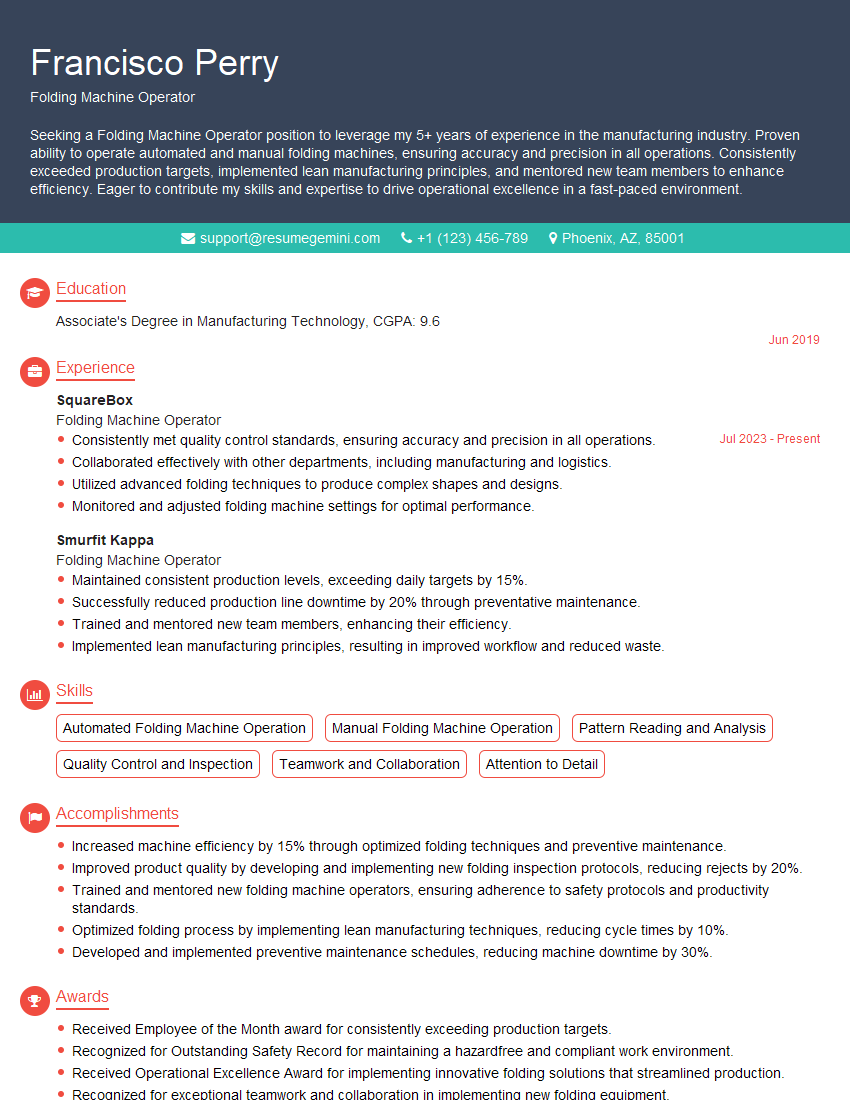
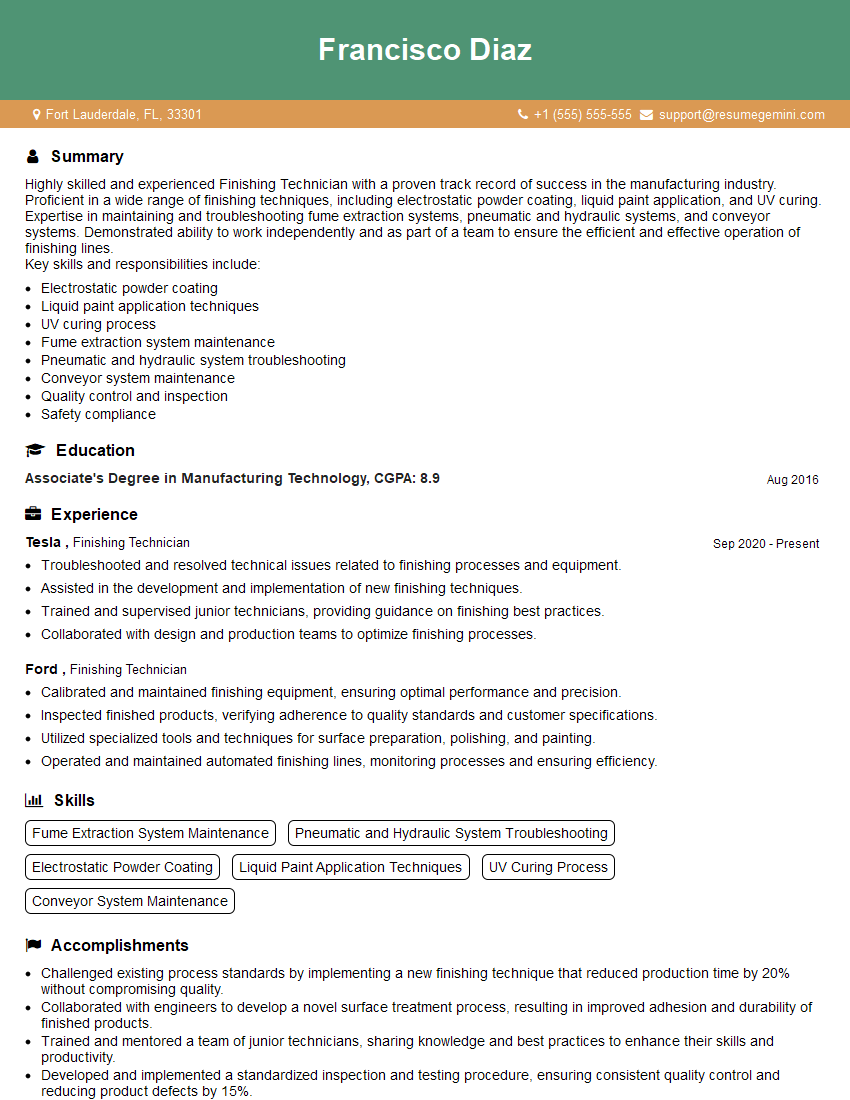
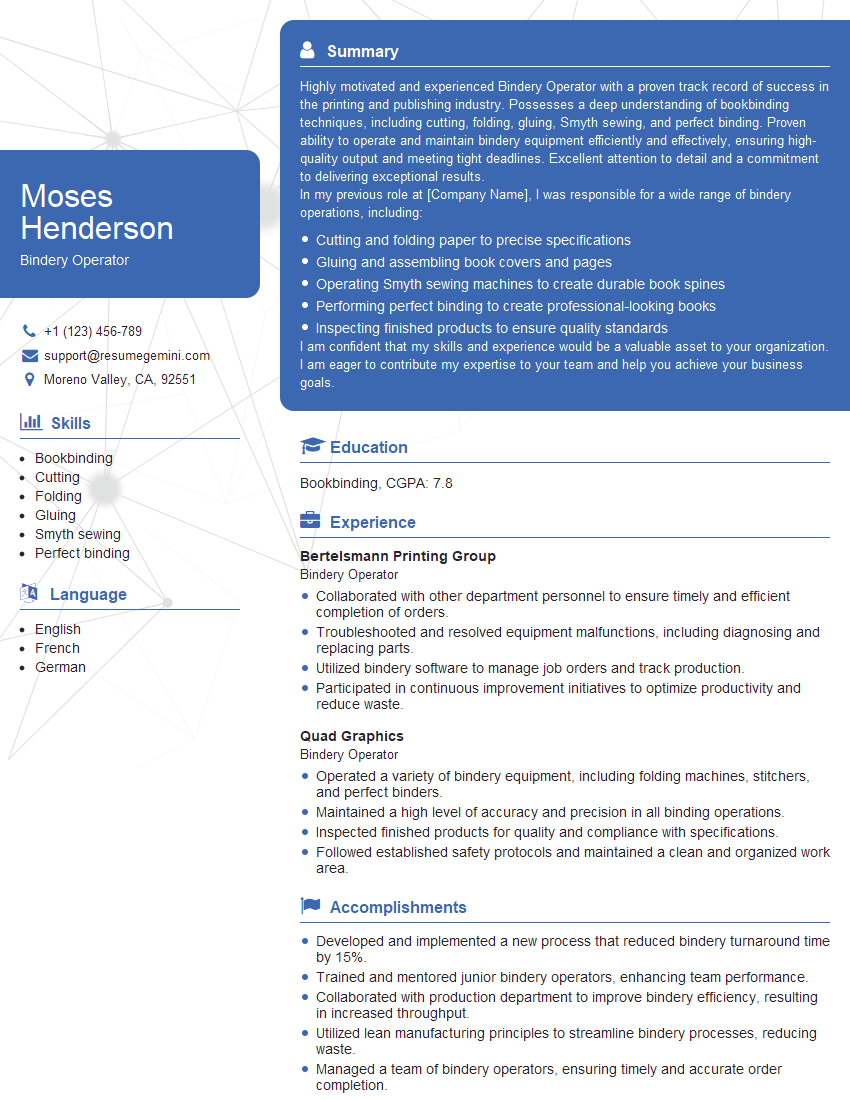
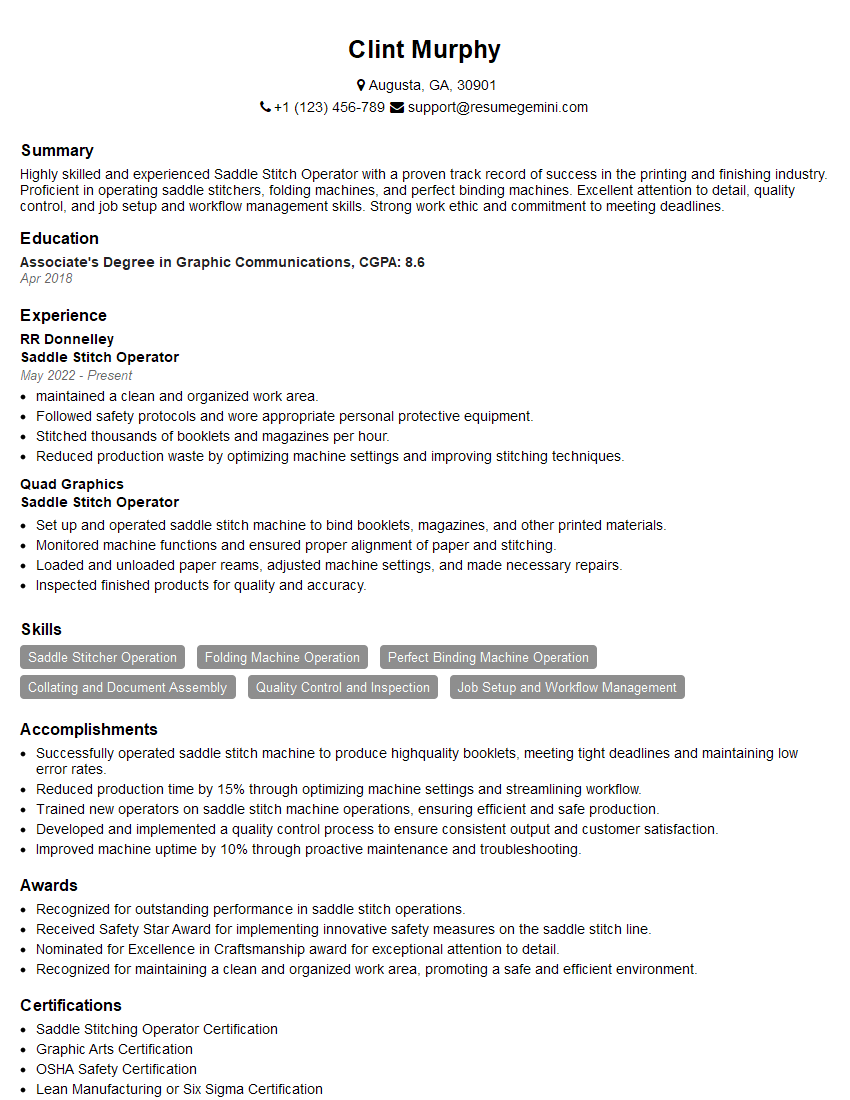
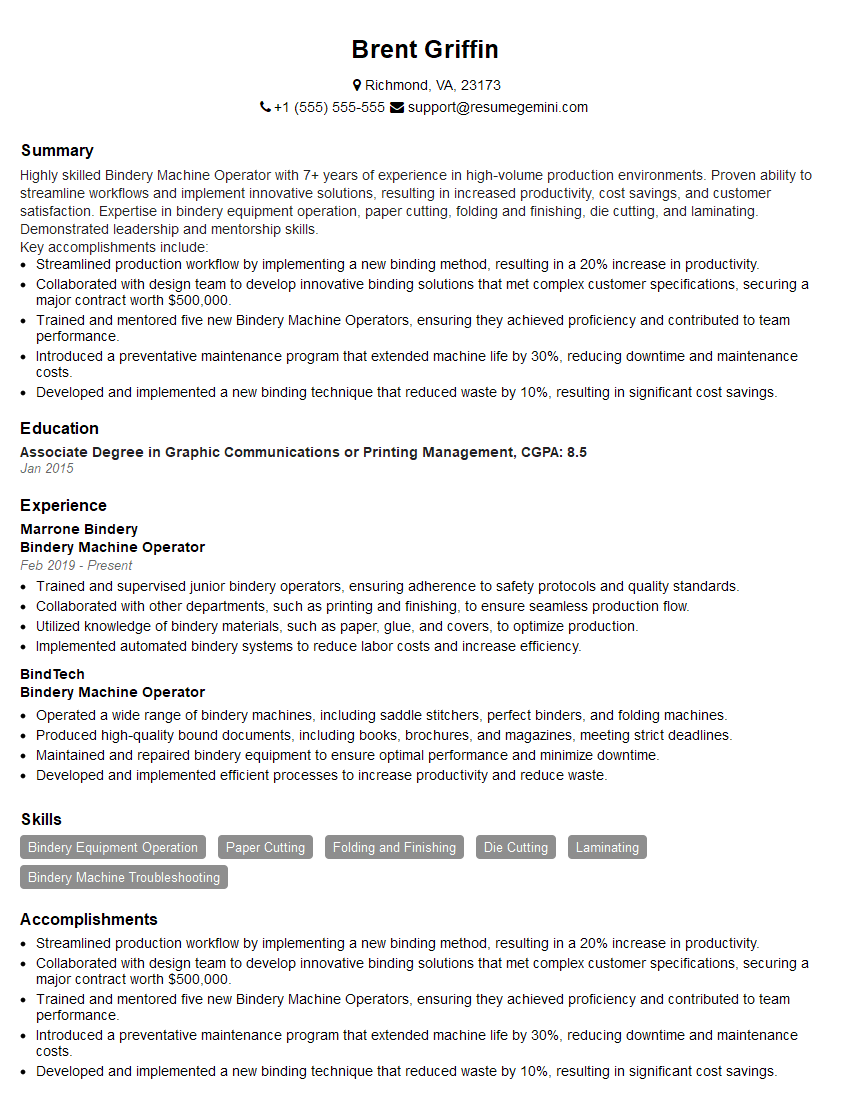
Mastering the knowledge of print finishing significantly enhances your career prospects, opening doors to specialized roles and higher earning potential. A strong understanding of these processes showcases your technical expertise and problem-solving skills, making you a valuable asset to any print-related organization. To maximize your job search success, crafting an ATS-friendly resume is crucial. ResumeGemini can be a powerful tool in building a professional and impactful resume that highlights your skills and experience effectively. We offer examples of resumes tailored to Knowledge of Print Finishing to help you get started. Take the next step towards your dream job today!


Explore more articles
Users Rating of Our Blogs
Share Your Experience
We value your feedback! Please rate our content and share your thoughts (optional).
What Readers Say About Our Blog
Very informative content, great job.
good