Every successful interview starts with knowing what to expect. In this blog, we’ll take you through the top Knowledge of printing software and applications interview questions, breaking them down with expert tips to help you deliver impactful answers. Step into your next interview fully prepared and ready to succeed.
Questions Asked in Knowledge of printing software and applications Interview
Q 1. Describe your experience with Adobe Acrobat Professional for print production.
Adobe Acrobat Professional is an indispensable tool in my print production workflow. I leverage its capabilities extensively for pre-flighting documents, ensuring they’re print-ready. This involves checking for font embedding issues, color space consistency, and the presence of any problematic elements that might cause problems during printing. I frequently use its features for creating PDFs/X-1a compliant files, crucial for reliable color reproduction across different print devices. Beyond pre-flighting, Acrobat Pro allows for precise imposition, which is critical for efficiently arranging multiple pages onto a single sheet for offset printing. For example, I’ve used it to create sophisticated imposition schemes for brochures and booklets, optimizing the use of paper and minimizing waste. Furthermore, I utilize its tools for adding bleed and trim marks, essential for accurate cutting and finishing during the print process. The ability to create accessible PDFs is also important, ensuring documents are usable by a broader audience.
Q 2. Explain the difference between CMYK and RGB color modes in printing.
RGB (Red, Green, Blue) and CMYK (Cyan, Magenta, Yellow, Key/Black) are two fundamental color models used in different stages of the printing process. RGB is an additive color model primarily used for digital displays like screens. Think of mixing light: when you combine red, green, and blue light, you get white. CMYK, on the other hand, is a subtractive color model used for printing. It describes how inks subtract light from white paper to create colors. The key difference lies in their application: RGB is ideal for screen viewing, while CMYK is necessary for accurate color reproduction in print. A color that looks vibrant on your screen (RGB) may appear dull when printed using an RGB profile because printers work with inks (CMYK), and direct RGB to CMYK conversion can lead to significant color shifts. Therefore, converting your design files to CMYK before sending them to print is critical for achieving the desired results. Imagine trying to paint a picture using only light – you wouldn’t be able to replicate the depth and nuances achieved with pigments (inks).
Q 3. What is a color profile, and why is it important in print?
A color profile is essentially a set of data that describes how a specific device (e.g., monitor, printer, scanner) interprets and reproduces colors. It acts as a translator between the color data in your file and how that color will appear on the output device. Think of it as a recipe for a specific printer, telling it exactly how to mix inks to achieve the intended colors. In printing, color profiles are crucial because different printers and inks reproduce colors differently. Without a consistent profile, the same color in your design could appear drastically different on different printing presses or even between different print runs on the same press. Using the correct color profile ensures that your printed output closely matches your digital design. For example, using a specific ICC profile for a high-end offset press will yield significantly more accurate results than using a generic profile or no profile at all. Accurate color reproduction is paramount for maintaining brand consistency and delivering a high-quality final product.
Q 4. How do you troubleshoot a color mismatch in a print job?
Troubleshooting color mismatches in print jobs is a systematic process. First, I’d verify that the document was saved in the correct CMYK color profile, consistent with the printer’s profile. This often involves checking the color management settings within the design software. Second, I’d review the print settings on the RIP (Raster Image Processor) software, making sure the chosen profile matches the printer and the document’s profile. Sometimes, small color differences can occur due to slight variations in the ink or paper used during the printing process. To identify the root cause, I would compare a test print using a known good profile against the problematic print. Next, I’d inspect the document itself for any unexpectedly embedded color profiles or color spaces that might be conflicting. If none of these actions resolve the issue, I would then consider potential issues with the printer itself—calibrations, ink levels, or even hardware malfunctions. Color mismatches can be very subtle and require detailed comparisons, using tools that measure color accurately (spectrophotometer) if necessary. Documentation and communication with the printing press are also vital to isolate the source of the problem and achieve a satisfactory solution.
Q 5. Describe your experience with RIP software (e.g., Fiery, Harlequin).
I have extensive experience with RIP software, primarily Fiery and Harlequin. RIP software is essential for translating digital files into instructions that a printer can understand. With Fiery, I’ve worked extensively with its color management tools to optimize color accuracy and consistency across different print runs. Fiery’s job management features are also valuable for streamlining high-volume print jobs. I’ve used its features for automating complex workflows and optimizing printer settings for various substrates (paper types). With Harlequin, I’ve particularly appreciated its versatility and cross-platform compatibility. It’s capable of handling a wide range of file formats and printer types. Both Fiery and Harlequin provide features for color correction, allowing adjustments to be made to compensate for differences between the digital representation and the printed output. Furthermore, I am familiar with their advanced features that allow for sophisticated color adjustments and managing large, complex jobs effectively. The ability to handle high-resolution files efficiently is a crucial aspect of my work, and these RIPs excel at this.
Q 6. What is your experience with different printing processes (offset, digital, screen)?
My experience encompasses various printing processes, including offset, digital, and screen printing. Offset printing remains the workhorse for high-volume, high-quality projects, offering superior color accuracy and consistent results. I’m comfortable with the pre-press requirements for offset, including proper file preparation (PDF/X-1a), imposition, and color proofing. Digital printing is ideal for short-run projects and personalized materials, offering flexibility and quick turnaround times. I’m proficient in preparing files for digital presses, considering their specific resolution and color capabilities. Screen printing, a subtractive process using stencils, offers a unique aesthetic and is suitable for projects requiring unique textures and effects on various substrates like textiles or promotional items. I understand the process of creating and preparing artwork specifically for screen printing, taking into account the limitations and possibilities of the method.
Q 7. How do you handle large print files and ensure efficient workflow?
Handling large print files and ensuring efficient workflow requires a multi-pronged approach. First, I optimize files before sending them to print. This often involves reducing file size without compromising image quality, such as by using lossy compression techniques (JPEG 2000 for images) where appropriate and reducing resolution if it doesn’t impact the visual quality. Second, I utilize efficient file transfer methods, employing server-based solutions with high bandwidth for transferring files quickly, and reliable archive solutions such as cloud storage or dedicated network drives. Third, I leverage the job management features within RIP software to automate tasks, schedule print jobs effectively, and track progress, reducing manual intervention. Fourth, I use a robust preflighting system to check for any issues in the large print files before the final print, mitigating potential problems and saving time and resources. For very large files, I might consider using tiled printing techniques where the image is broken into smaller sections that are printed and assembled later. Collaboration and clear communication with the printing press are also crucial aspects of managing large print files smoothly and efficiently.
Q 8. Explain your experience with print finishing techniques (binding, cutting, laminating).
Print finishing techniques significantly impact the final product’s look and feel. My experience encompasses three key areas: binding, cutting, and laminating.
- Binding: I’m proficient in various binding methods, including perfect binding (for books and magazines), saddle stitch (for brochures and booklets), wire-O binding (for calendars and notebooks), and case binding (for high-end books). Choosing the right binding depends on the project’s requirements – page count, budget, and desired aesthetic. For example, a high-page-count book might necessitate perfect binding for durability, while a smaller brochure might be suitable for saddle stitch.
- Cutting: Precise cutting is crucial for a professional finish. I’ve worked with guillotine cutters for large-format materials and smaller, more precise cutters for intricate shapes. Accuracy is paramount here; even slight misalignments can ruin the final product. I always double-check dimensions and ensure the cutter is properly calibrated.
- Laminating: Laminating protects printed materials from damage and enhances their visual appeal. I’m experienced with both gloss and matte lamination, understanding that gloss provides a shiny, vibrant finish, while matte offers a more subdued, professional look. The choice depends on the project’s specific needs and the desired visual impact.
My experience extends beyond just the technical aspects; I also understand the importance of managing these processes efficiently and minimizing waste to control costs.
Q 9. What software do you use for print design and layout?
My print design and layout expertise spans several industry-standard software applications. I’m highly proficient in Adobe Creative Suite, specifically:
- Adobe InDesign: This is my primary tool for complex layouts, particularly for multi-page documents such as brochures, magazines, and books. Its powerful features for text and image manipulation, along with its excellent pre-flight capabilities, make it indispensable.
- Adobe Photoshop: I use Photoshop extensively for image retouching, manipulation, and creating high-resolution graphics for print. I understand the nuances of color profiles and resolution requirements for optimal print quality.
- Adobe Illustrator: This is my go-to for creating vector graphics – logos, illustrations, and intricate designs that need to be scaled without losing quality. Its precision is invaluable for creating sharp, clean artwork.
Beyond the Adobe Suite, I have experience with other design software as needed, showcasing my adaptability and willingness to learn new tools to meet project demands.
Q 10. How do you ensure print quality control throughout the production process?
Print quality control is a continuous process, starting from the design phase and extending through to final delivery. My approach involves several key steps:
- Proofing: I always generate soft proofs (digital proofs) and, when necessary, hard proofs (physical prints) to check for color accuracy, image sharpness, and text clarity. Soft proofing utilizes software that simulates the printing process, and hard proofing provides a tangible representation of the final product.
- Color Management: I meticulously manage color profiles throughout the process, ensuring consistency between the design file and the printed output. This includes using ICC profiles to accurately represent colors across different devices.
- Pre-flight Checks: Before sending files to the printer, I conduct thorough pre-flight checks using software built into applications like InDesign and dedicated pre-flight tools. This identifies and resolves potential issues such as missing fonts, low-resolution images, and color space inconsistencies.
- On-Press Checks: When possible, I participate in the press check to visually inspect the first few sheets printed. This allows for immediate corrections of any unexpected issues.
Proactive quality control minimizes costly reprints and ensures client satisfaction. It’s a crucial aspect of my workflow.
Q 11. Explain your understanding of imposition and its importance in printing.
Imposition is the process of arranging pages of a document so that they print correctly when folded and bound. It’s crucial for efficient printing because it ensures pages are arranged in the proper sequence to create the intended booklet or publication.
Imagine a 16-page brochure. You wouldn’t print the pages 1-16 in a single line. Imposition software allows you to arrange the pages on the sheet so that when the sheet is printed, folded, and trimmed, the pages appear in the correct order. For example, a common imposition for a 16-page booklet might place pages 1 and 16 on one side of a sheet, pages 2 and 15 on the other side, and so on. Without proper imposition, the printed product would be unusable.
The importance of imposition lies in:
- Efficiency: Minimizing paper waste and reducing the number of sheets required.
- Accuracy: Guaranteeing pages are printed in the correct order and orientation.
- Cost-effectiveness: Optimizing the printing process leads to significant cost savings.
I’m proficient in using imposition software within my design applications, and understand how to create efficient and accurate imposition schemes for various print formats.
Q 12. Describe your experience with managing print jobs using a MIS (Management Information System).
A Management Information System (MIS) is crucial for managing the complexities of print jobs. My experience includes utilizing MIS software to:
- Track Jobs: From initial client contact to final delivery, an MIS allows for tracking the progress of every print job, including deadlines, approvals, and production status.
- Manage Client Information: An MIS securely stores client details, project specifications, and communication history, ensuring efficient project management and repeat business.
- Generate Reports: Comprehensive reporting capabilities provide insights into production efficiency, cost analysis, and client performance. This data is invaluable for improving business processes.
- Estimate Costs: MIS software integrates costing models for accurate job estimations, enabling precise pricing and resource allocation.
My experience with MIS systems enhances my organizational and management skills, ensuring smooth workflow and timely project completion. I’m adaptable to various MIS platforms and can quickly learn new systems as required.
Q 13. How do you handle client revisions in a print project?
Handling client revisions efficiently and effectively is essential for maintaining positive client relationships. My approach involves:
- Clear Communication: Establishing clear communication channels with clients from the outset ensures that revisions are understood and addressed promptly. I might use project management tools or email chains to document the changes requested.
- Version Control: I meticulously track all revisions, saving each version with a clear identifier (e.g., ‘Revision 1,’ ‘Revision 2’). This ensures easy access to previous versions if necessary. If using InDesign, I leverage its version history functionality.
- Time Management: I accurately estimate the time needed for each revision and communicate this to the client. This prevents delays and unrealistic expectations.
- Proofing Revisions: Before finalizing any revisions, I ensure that they are thoroughly proofread and meet the client’s expectations. I provide updated proofs to the client for final approval.
I understand that client revisions are a normal part of the design process and handle them professionally and efficiently to achieve client satisfaction without impacting project timelines significantly.
Q 14. What is your experience with variable data printing?
Variable data printing (VDP) is a powerful technique that allows for personalized printed materials. Instead of printing the same information on every piece, VDP uses databases to customize each piece with unique data. My experience with VDP includes:
- Data Integration: I’m skilled in integrating data from various sources – spreadsheets, databases, and CRM systems – into print design software. This ensures accurate and consistent data merging into the design templates.
- Template Design: I create design templates that accommodate variable data fields, allowing for dynamic updates within the design. This involves strategically positioning placeholders for personalized information.
- Proofing and Testing: Before mass production, I thoroughly test the VDP process to confirm that data is correctly merging and the personalized output is accurate. This prevents errors in large-scale print runs.
- Software Proficiency: I’m proficient in using software solutions specifically designed for VDP, such as those integrated with print management systems or those offered by some printing companies. These applications streamline data management and printing processes.
VDP is valuable for personalized marketing materials, direct mail campaigns, and customized documents, boosting engagement and effectiveness. My experience allows me to deliver high-quality, personalized print projects efficiently.
Q 15. Explain your knowledge of different paper types and their applications.
Understanding paper types is crucial for achieving the desired print result. Different papers offer varying weights, finishes, and properties, each suited for specific applications.
- Coated Papers: These papers have a smooth, glossy or matte coating, ideal for high-quality images and vibrant colors. They’re commonly used for magazines, brochures, and high-end marketing materials. Think of the glossy finish on a fashion magazine – that’s a coated paper.
- Uncoated Papers: These papers lack a coating, resulting in a more natural, absorbent surface. They are often used for stationery, letterheads, business cards, and applications where a more textured feel is desired. Think of the feel of a high-quality notecard – that’s likely uncoated.
- Specialty Papers: This broad category includes papers with unique textures, colors, or properties. Examples include recycled paper (environmentally friendly), textured papers (adding tactile interest), and metallic papers (for a luxurious feel). Think of the unique texture of a wedding invitation – often a specialty paper.
- Cardstock: Thicker than standard paper, cardstock is used for business cards, postcards, and other applications requiring durability and sturdiness. It’s what gives a business card its weight and feel.
Choosing the right paper is a critical decision that impacts the final product’s quality and perceived value.
Career Expert Tips:
- Ace those interviews! Prepare effectively by reviewing the Top 50 Most Common Interview Questions on ResumeGemini.
- Navigate your job search with confidence! Explore a wide range of Career Tips on ResumeGemini. Learn about common challenges and recommendations to overcome them.
- Craft the perfect resume! Master the Art of Resume Writing with ResumeGemini’s guide. Showcase your unique qualifications and achievements effectively.
- Don’t miss out on holiday savings! Build your dream resume with ResumeGemini’s ATS optimized templates.
Q 16. How do you calculate the cost of a print job?
Calculating the cost of a print job involves several factors. It’s not just about the price of ink and paper; it’s a comprehensive calculation.
- Material Costs: This includes the cost of paper, ink, and any other consumables used, like plates for offset printing.
- Labor Costs: This accounts for the time spent on pre-press (design, file preparation, proofing), printing, and post-press (finishing, binding).
- Equipment Costs: This considers the depreciation and maintenance costs of printing equipment.
- Overhead Costs: This includes rent, utilities, and other business expenses.
- Profit Margin: A crucial element, this ensures profitability and sustains the business.
A simplified formula might look like this: Total Cost = (Material Costs + Labor Costs + Equipment Costs + Overhead Costs) / (Number of Prints) + Profit Margin
For example, if material costs are $10, labor is $20, equipment is $5 (depreciation), overhead is $5, and you’re printing 100 items with a 20% profit margin, the calculation would be: ($10 + $20 + $5 + $5) / 100 + (($10 + $20 + $5 + $5) * 0.20) = $0.40 + $0.80 = $1.20 per print. However, this is a simplified example; real-world calculations are often more complex.
Q 17. Describe your experience with print workflow automation.
My experience with print workflow automation includes implementing and managing systems designed to streamline the entire printing process, from job submission to final delivery. This often involves using software such as:
- MIS (Management Information Systems): These systems track jobs, manage client information, and automate billing.
- Workflow Automation Software: Tools that automate tasks like file preflighting, color management, and job scheduling, reducing manual intervention and human error.
- JDF (Job Definition Format): A standardized language for communication between different software and hardware components in the print workflow. This ensures seamless data transfer between prepress, press, and postpress stages.
In a past role, I implemented a JDF-based workflow that reduced job turnaround times by 30% and significantly improved the accuracy of color reproduction. This involved integrating different software systems and training staff on the new automated workflow. The result was a much more efficient and error-free production process.
Q 18. What are some common print-related issues and how do you resolve them?
Troubleshooting print-related issues is a common part of the job. Common issues and solutions include:
- Color Mismatch: This can result from incorrect color profiles, improper calibration, or problems with the printing device. Troubleshooting involves checking color profiles, calibrating the device, and comparing output against a color proof.
- Image Quality Problems (Blurriness, Pixelation): This often stems from low-resolution images or improper file preparation. The solution is to use high-resolution images and properly prepare files for printing, paying attention to image scaling.
- Paper Jams: These are frequent and often caused by incorrectly loaded paper or damaged equipment. Troubleshooting involves checking the paper path, clearing the jam, and checking for any mechanical problems.
- Ink or Toner Issues: Low ink/toner levels or faulty cartridges are common culprits. The solution is to replace cartridges and ensure sufficient ink/toner levels.
A systematic approach, involving careful observation, testing, and knowledge of the printing process, is crucial for effective troubleshooting. Often, simply understanding the workflow and process allows a more thorough diagnosis of what is causing the issue.
Q 19. How familiar are you with Pantone color matching?
I am very familiar with Pantone color matching. Pantone Matching System (PMS) is an industry standard for color reproduction, ensuring consistency across different printing methods and materials.
It utilizes a standardized color library where each color is assigned a unique Pantone number. This allows designers and printers to specify exact colors, ensuring that the printed output matches the design intent. For instance, a designer might specify Pantone 185 C for a specific shade of blue, ensuring consistent color reproduction regardless of printer or printing method.
Experience includes specifying and managing Pantone colors in various projects. This involves working closely with designers and printers to ensure accurate color reproduction, using Pantone color books or software for reference. Understanding color management and proofing are key components to accurately matching colors.
Q 20. How do you handle unexpected delays or problems during a print production run?
Handling unexpected delays or problems during a print production run requires a proactive and organized approach. My strategy involves:
- Immediate Assessment: Quickly identify the nature and scope of the problem.
- Communication: Immediately inform the client about the delay and provide a realistic revised timeline.
- Problem-Solving: Work efficiently to resolve the issue. This could involve adjusting the workflow, finding alternative solutions, or bringing in additional resources.
- Documentation: Keep meticulous records of the issue, solution, and any changes made to the production schedule.
- Risk Mitigation: Once the issue is resolved, review the process to identify potential improvements and prevent similar occurrences in the future.
In one instance, a critical equipment malfunction caused a significant delay. Through quick communication with the client, arranging for emergency repair, and implementing a temporary solution, we were able to minimize the impact and complete the job with minimal disruption.
Q 21. What is your experience with preflighting print files?
Preflighting print files is a crucial step in ensuring a smooth and efficient print production. It involves checking the files for potential problems before they go to press. This process helps avoid costly mistakes and delays.
My experience encompasses using preflighting software to check for issues such as:
- Missing Fonts: Ensuring all fonts are embedded.
- Image Resolution: Verifying image resolutions are adequate for the intended print size.
- Color Spaces: Confirming appropriate color spaces (CMYK for print) are used.
- Overprints: Checking for unintended overprints.
- Bleeds and Margins: Ensuring correct bleeds and margins are set.
I’ve used various preflighting tools and workflows, including automated systems integrated into our workflow, and have a strong understanding of how to interpret preflight reports. This allows me to anticipate and address potential issues before they impact the final product and the production schedule.
Q 22. What software have you used for managing and tracking print orders?
Throughout my career, I’ve utilized a variety of software for managing and tracking print orders, adapting my approach based on the project’s scale and complexity. For smaller projects, simple spreadsheet software like Microsoft Excel or Google Sheets sufficed. I used these to meticulously track client details, order specifications (quantity, dimensions, paper type, etc.), deadlines, and costs. This allowed for straightforward order management and simple progress monitoring. For larger-scale projects or when working with multiple clients simultaneously, I’ve relied on dedicated print management systems (PMS). These systems often integrate with prepress software and provide robust features like automated workflows, real-time progress tracking, inventory management, and detailed reporting. One example is a PMS I used at my previous company called PrintSmart, which enabled us to streamline the entire printing process from order placement to delivery, drastically reducing errors and improving efficiency. The software generated automated reports detailing costs, production timelines, and inventory levels, providing invaluable data-driven insights for better business decisions.
Q 23. Explain your understanding of digital asset management in relation to print.
Digital asset management (DAM) in print is crucial for organizing, storing, and retrieving digital files used in the printing process. Think of it as a central hub for all your artwork, images, logos, and fonts. A well-organized DAM system prevents chaos and ensures that everyone involved in the project, from designers to printers, has access to the correct, up-to-date versions. This is especially important for large projects with numerous revisions and stakeholders. Without a DAM, you risk using outdated files, leading to costly errors and delays. In practice, this might involve using a cloud-based system like Adobe Creative Cloud Assets or a dedicated DAM software to store and categorize all project files, ensuring version control and easy retrieval. Metadata tagging (adding keywords like ‘client name,’ ‘project date,’ ‘file type’) is also essential for efficient search and retrieval. For example, I once worked on a project with over 100 different images, and our DAM system allowed us to quickly locate specific assets based on these tags, significantly speeding up the production process.
Q 24. Describe your experience with proofreading and quality checking printed materials.
Proofreading and quality checking are paramount in ensuring the final printed product meets the client’s expectations and maintains high quality. My approach involves a multi-stage process. First, I meticulously review the digital files – checking for typos, grammatical errors, and inconsistencies in fonts, images, and layout. Next, after receiving a proof print, I perform a thorough visual inspection, checking for color accuracy, sharpness, registration (alignment of colors), and any print defects. I use specialized tools like colorimeters to ensure accurate color reproduction. For complex designs, I often involve a second pair of eyes in this process to catch any errors I might have missed. Finally, I document all the corrections, providing clear instructions to the printer for any necessary adjustments before the final print run. One time, I caught a crucial error in a brochure’s headline during the proofreading stage, avoiding a significant and embarrassing mistake. This highlights the importance of meticulous attention to detail in the proofreading phase.
Q 25. How do you ensure color consistency across different print runs?
Maintaining color consistency across different print runs is essential for brand identity and visual appeal. This involves a combination of careful pre-press preparation and precise printing techniques. We typically use a standardized color profile (like ICC profiles) that accurately represents the colors used in the design, ensuring the same color output regardless of the printing device. In addition, color management software is employed to convert the digital files to the specified color profile. During the printing process, regular color calibration and monitoring are critical using tools such as spectrophotometers which measure the color values and adjust the printing press accordingly. Furthermore, selecting a high-quality paper stock and maintaining consistent printing conditions (ink density, humidity, temperature) are also essential factors contributing to accurate color reproduction. We use color control strips (test prints) throughout the print run for ongoing monitoring and correction. This meticulous approach helps ensure each print run looks exactly as intended.
Q 26. Explain your experience with different types of printing presses.
My experience encompasses various types of printing presses, each with its own strengths and limitations. I’m proficient with offset printing, the most common method for large-scale projects, offering excellent print quality and cost-effectiveness for high volumes. I also have experience with digital printing, which is ideal for short-run projects and personalized printing, offering high flexibility and quick turnaround times. Furthermore, I’m familiar with flexographic printing commonly used for packaging and labels, and screen printing, known for its versatility in printing on different materials and creating unique textures. My understanding extends to the specifics of each press, including their operating procedures, maintenance requirements, and the types of materials they can handle. For example, understanding the difference in setup and capabilities between a sheet-fed offset press and a web offset press is crucial for optimizing production efficiency and cost-effectiveness based on the print job requirements.
Q 27. What is your experience with die-cutting or embossing?
I have extensive experience with both die-cutting and embossing, two finishing techniques that add significant value and visual appeal to printed materials. Die-cutting uses a precisely shaped metal die to cut intricate shapes or patterns from the printed material, creating unique forms. Embossing, on the other hand, uses pressure to create raised or indented designs, adding texture and a tactile element. I understand the design considerations for both processes, including creating appropriate die-lines for die-cutting and designing patterns that are suitable for embossing. I’ve worked with various types of dies and embossing plates, understanding the materials and techniques to achieve the desired results. In a recent project, we used die-cutting to create custom-shaped invitations and embossing to add a sophisticated texture to the cardstock. The combination of these techniques significantly enhanced the overall presentation and elevated the client’s brand image.
Q 28. How familiar are you with environmental considerations in print production?
Environmental considerations are increasingly important in print production. I’m familiar with sustainable printing practices that minimize the environmental impact throughout the printing process. This includes using recycled paper and environmentally friendly inks, selecting printing processes with lower energy consumption, and optimizing waste management. I’m also familiar with certifications like FSC (Forest Stewardship Council) which ensures responsible forest management. We frequently use vegetable-based inks and minimize paper waste by optimizing our layouts and employing efficient cutting techniques. Furthermore, we partner with printers that prioritize environmental sustainability and have implemented robust recycling programs. Choosing suppliers and printers committed to eco-friendly practices is crucial, ensuring that the entire production process is as environmentally responsible as possible. This commitment to sustainable practices not only helps protect the environment but also strengthens our brand image and appeals to environmentally conscious clients.
Key Topics to Learn for Knowledge of Printing Software and Applications Interview
- Pre-press Preparation: Understanding file formats (PDF, TIFF, JPEG, etc.), color profiles (CMYK, RGB), image resolution, and bleed settings. Practical application: Troubleshooting file issues that prevent successful printing.
- RIP Software & Workflow: Familiarity with Raster Image Processors (RIPs) and their role in converting digital files for printing. Practical application: Optimizing print settings for different substrates and print technologies.
- Printing Technologies: Knowledge of various printing methods (offset, digital, large format, screen printing etc.), their capabilities, limitations, and applications. Practical application: Recommending the most appropriate printing method for a given project based on factors like budget, quantity, and quality requirements.
- Color Management: Understanding color spaces, profiles, and calibration processes to ensure color accuracy across different devices and stages of production. Practical application: Diagnosing and resolving color discrepancies between screen and print output.
- Finishing & Binding: Knowledge of various post-press finishing techniques such as cutting, folding, binding, laminating etc. Practical application: Specifying appropriate finishing options based on project requirements.
- Software Proficiency: Demonstrated experience with industry-standard software like Adobe Acrobat, InDesign, Illustrator, or specialized RIP software. Practical application: Explain your experience using these tools in a real-world project scenario.
- Troubleshooting & Problem Solving: Ability to identify and resolve common printing issues such as color mismatches, registration errors, and paper jams. Practical application: Describe how you have approached and solved a challenging print-related problem in the past.
Next Steps
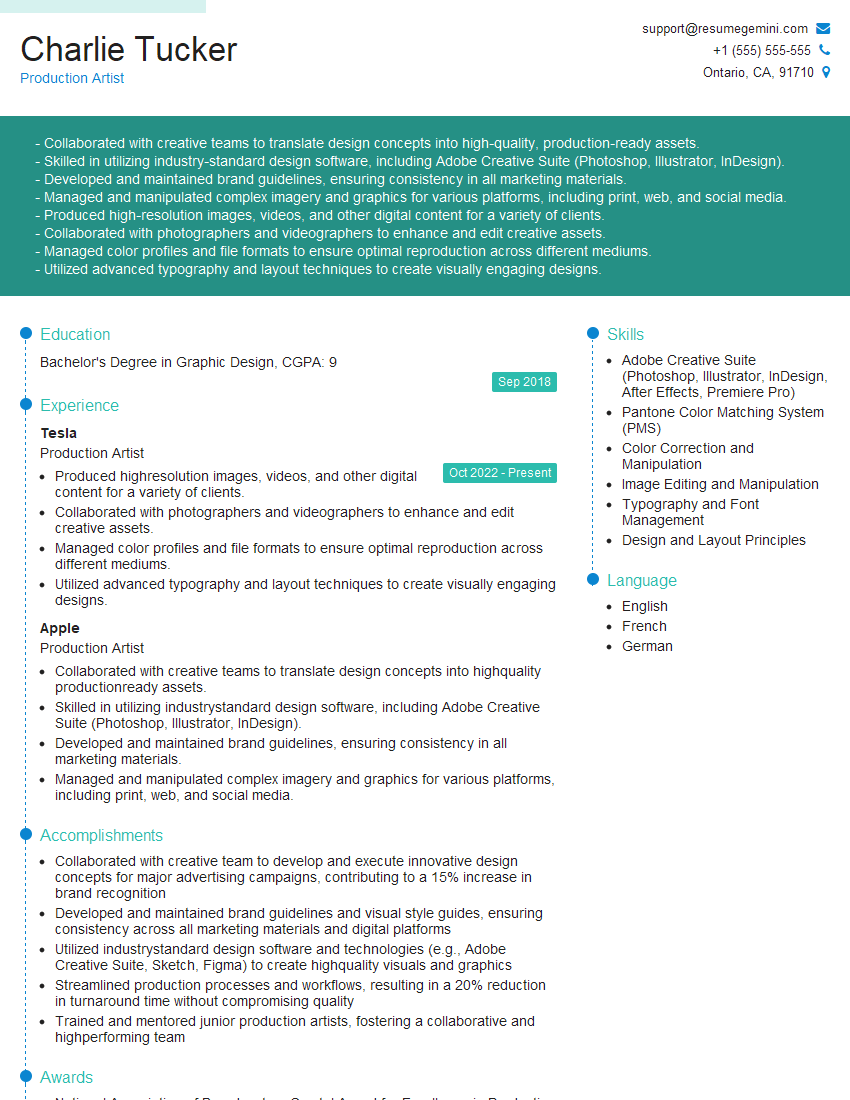
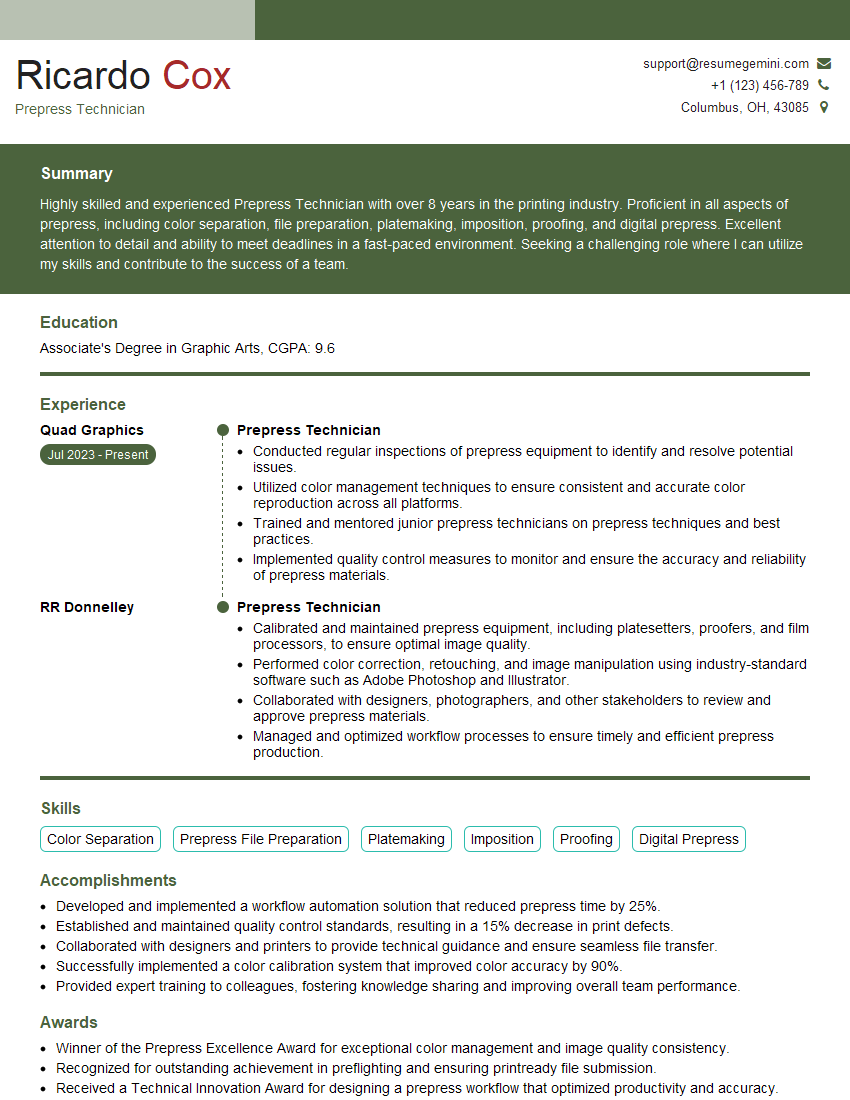
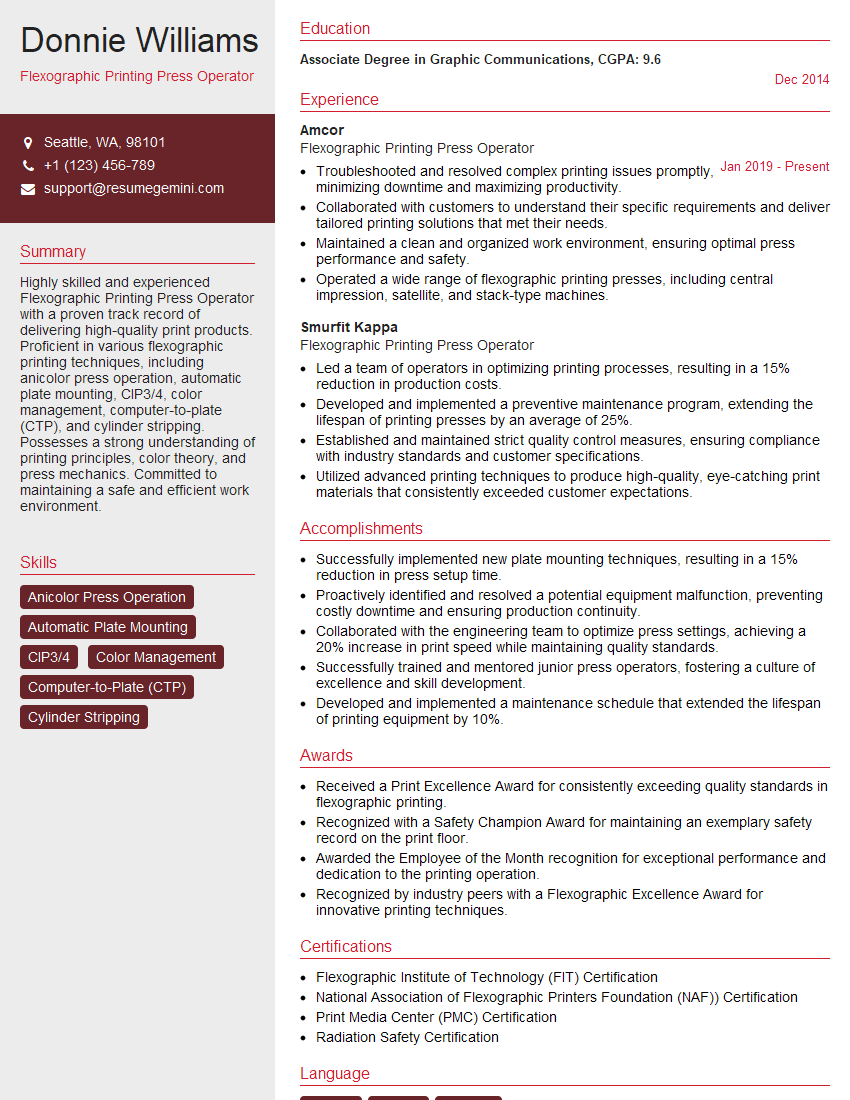
Mastering knowledge of printing software and applications is crucial for career advancement in the graphic arts and printing industries. A strong understanding of these concepts positions you for roles with greater responsibility and higher earning potential. To maximize your job prospects, focus on creating an ATS-friendly resume that highlights your skills and experience effectively. ResumeGemini is a trusted resource to help you build a professional and impactful resume. We provide examples of resumes tailored to highlight expertise in Knowledge of printing software and applications, giving you a head start in your job search.

Explore more articles
Users Rating of Our Blogs
Share Your Experience
We value your feedback! Please rate our content and share your thoughts (optional).
What Readers Say About Our Blog
Very informative content, great job.
good