The thought of an interview can be nerve-wracking, but the right preparation can make all the difference. Explore this comprehensive guide to Knowledge of Quality Standards interview questions and gain the confidence you need to showcase your abilities and secure the role.
Questions Asked in Knowledge of Quality Standards Interview
Q 1. Explain your understanding of ISO 9001.
ISO 9001 is the internationally recognized standard for Quality Management Systems (QMS). It’s not a specific set of procedures but rather a framework that helps organizations consistently meet customer and regulatory requirements. Think of it as a roadmap for building a robust quality system. It focuses on continuous improvement, customer satisfaction, and proactively preventing defects. The standard outlines requirements for documenting processes, controlling documents and records, managing resources, and regularly monitoring the effectiveness of the QMS.
In practical terms, a company certified to ISO 9001 demonstrates to its customers and stakeholders a commitment to quality and consistent performance. It ensures that processes are well-defined, monitored, and improved upon, minimizing errors and improving efficiency. For example, a manufacturing company might use ISO 9001 to standardize its production process, ensuring consistent product quality and reducing waste. A software company might use it to manage its development lifecycle, improving software reliability and reducing bugs.
Q 2. Describe your experience with different quality management systems (QMS).
Throughout my career, I’ve worked extensively with several QMS, including ISO 9001 (as discussed above), ISO 13485 (specifically for medical devices), and Six Sigma methodologies. Each system has its strengths. ISO 9001 provides a broad framework applicable to most industries, while ISO 13485 adds stringent requirements for safety and regulatory compliance within the medical device sector. Six Sigma, on the other hand, is a data-driven approach focused on minimizing variation and defects.
In one project, I implemented ISO 9001 in a small manufacturing company. This involved documenting all processes, training employees, conducting internal audits, and managing corrective and preventive actions. In another, I supported a medical device company’s transition to ISO 13485, which required a meticulous focus on risk management and regulatory documentation. My experience encompasses both implementing and auditing these systems, ensuring their effective operation and leading to improved product quality and operational efficiency.
Q 3. How would you conduct a root cause analysis for a quality defect?
Conducting a root cause analysis (RCA) is crucial for preventing future quality defects. I typically use the ‘5 Whys’ technique, a simple yet effective method. This involves repeatedly asking ‘why’ to progressively drill down to the root cause of the defect.
For example, let’s say a customer received a damaged product.
- Why was the product damaged? Because it was dropped during shipping.
- Why was it dropped? Because the packaging was insufficient.
- Why was the packaging insufficient? Because the supplier changed the packaging material without notifying us.
- Why did the supplier change the material? Because it was cheaper.
- Why wasn’t a proper assessment done on the impact of the cheaper material? Because cost-cutting was prioritized over quality control.
This process reveals the root cause: inadequate quality control during the supplier selection and change management process. Addressing this root cause, rather than just the immediate symptom (damaged product), prevents similar issues in the future. Other RCA techniques I employ include Fishbone Diagrams (Ishikawa diagrams) and Fault Tree Analysis, depending on the complexity of the situation.
Q 4. What are the key performance indicators (KPIs) you would track in a quality management role?
The KPIs I track are designed to provide a comprehensive view of quality performance. They include:
- Defect Rate: The percentage of defective products or services compared to the total output. A decrease indicates improved quality.
- Customer Complaints: The number of complaints received, categorized by type. This helps identify recurring problems.
- Customer Satisfaction (CSAT): Measured through surveys, feedback forms, and other channels. A high CSAT score reflects successful quality management.
- Process Yield: The percentage of good products or services produced relative to the total input. This measures process efficiency.
- Cost of Quality (COQ): The total cost associated with preventing, detecting, and correcting defects. Lowering COQ is a primary goal.
- Time to Resolution: The time taken to resolve customer issues or quality defects. Faster resolution enhances customer satisfaction.
These KPIs are regularly monitored using dashboards and reports, which allow for timely identification of issues and adjustment of strategies.
Q 5. Explain your experience with statistical process control (SPC).
Statistical Process Control (SPC) is a powerful tool for monitoring and controlling processes. It involves using statistical methods to analyze data from a process and identify variations that might indicate a problem. Control charts are a key element of SPC. These charts visually represent process data over time, showing the mean, upper control limits (UCL), and lower control limits (LCL). Points outside these limits signal a potential problem requiring investigation.
For example, I used SPC in a manufacturing setting to monitor the weight of a product. By plotting the weight of each product on a control chart, we could quickly identify when the process was going out of control (e.g., weights consistently outside the UCL/LCL). This allowed for proactive intervention, preventing production of non-conforming products and avoiding costly rework or scrap.
Understanding and applying SPC requires a solid foundation in statistical methods, and the selection of appropriate control charts depends on the type of data being analyzed (e.g., X-bar and R charts for continuous data, p-charts for attribute data).
Q 6. How do you handle conflicts with other departments regarding quality issues?
Conflicts regarding quality issues often arise due to differing priorities or perspectives. My approach is collaborative and focuses on finding mutually beneficial solutions. I start by actively listening to all parties involved, understanding their concerns, and identifying the common goals. I then facilitate a discussion, emphasizing data and facts to objectively analyze the situation.
For instance, if engineering prioritizes functionality over design, leading to potential quality issues, I would present data showing the long-term cost of fixing quality problems after product release. This data-driven approach helps shift perspectives and leads to collaborative problem-solving. I utilize techniques like conflict resolution models to ensure respectful dialogue and a constructive outcome. The goal is always to find a solution that addresses quality concerns while respecting the needs of all involved departments.
Q 7. Describe your experience with internal audits and corrective actions.
Internal audits are a critical component of a robust QMS. They assess the effectiveness of the system against the relevant standards (e.g., ISO 9001). I have extensive experience planning, conducting, and reporting on internal audits. This involves reviewing documentation, observing processes, and interviewing personnel. The goal is not to find fault but to identify areas for improvement.
Following an audit, corrective actions are implemented to address any identified non-conformances. This includes developing and implementing solutions, verifying their effectiveness, and documenting the entire process. For example, if an audit revealed a deficiency in the calibration of measurement equipment, a corrective action plan would be developed to address this deficiency (e.g., implementing a new calibration schedule and training personnel on the new procedure). The effectiveness of this corrective action would then be verified through subsequent audits or monitoring. A robust corrective action system ensures continuous improvement and prevents recurrence of identified issues.
Q 8. How familiar are you with different quality tools, such as Pareto charts, fishbone diagrams, and control charts?
I’m highly proficient in using various quality tools. These tools are essential for identifying, analyzing, and solving quality issues. Let’s look at some key examples:
Pareto Charts: These charts help prioritize problems by showing which issues contribute most significantly to overall defects. Imagine a manufacturing plant experiencing high scrap rates. A Pareto chart might reveal that 80% of the scrap is caused by just 20% of the identified issues, such as faulty materials or operator error. This allows us to focus improvement efforts where they’ll have the greatest impact.
Fishbone Diagrams (Ishikawa Diagrams): These are used for brainstorming the potential root causes of a problem. Think of it as a visual way to map out all possible factors that could contribute to a defect. We categorize these causes into categories like materials, methods, manpower, machinery, measurement, and environment. This comprehensive approach helps avoid overlooking potential causes.
Control Charts: These are statistical tools used to monitor a process over time and identify when it’s operating outside of acceptable limits. For example, in a bottling plant, we might use a control chart to monitor the fill level of bottles. The chart helps us quickly identify if the filling process is drifting from the target, allowing for timely adjustments to prevent producing underfilled or overfilled bottles.
My experience includes using these tools extensively in various projects, from optimizing manufacturing processes to improving customer service efficiency. I understand how to interpret the data generated by these tools and translate that information into effective solutions.
Q 9. What is your experience with risk assessment and management in quality control?
Risk assessment and management are crucial for proactive quality control. It’s not enough to just react to problems; we must anticipate and mitigate them before they occur. My approach involves a structured process:
Identify Potential Risks: This involves brainstorming potential problems that could affect product quality, using tools like Failure Mode and Effects Analysis (FMEA) to systematically evaluate the likelihood and severity of these risks.
Analyze and Prioritize Risks: We assess the probability and impact of each risk, allowing us to prioritize those that pose the greatest threat to quality. This might involve creating a risk matrix that visually represents the risks based on severity and likelihood.
Develop Mitigation Strategies: For each prioritized risk, we develop and implement strategies to reduce or eliminate the risk. This might involve process improvements, better training for personnel, or investing in new equipment.
Monitor and Review: Regularly monitor the effectiveness of our mitigation strategies. Are they working as expected? Are new risks emerging? Regular review ensures continuous improvement and adaptation.
For example, in a software development project, a risk assessment might identify potential vulnerabilities in the code. Mitigation strategies could include rigorous code reviews, penetration testing, and the implementation of security protocols.
Q 10. How do you ensure quality standards are implemented and maintained throughout the entire product lifecycle?
Ensuring consistent quality across the entire product lifecycle requires a robust quality management system. This involves integrating quality considerations into every stage, from concept to disposal:
Design and Development: Quality must be built in, not inspected in. This involves using robust design methods, thorough testing, and rigorous validation processes.
Production and Manufacturing: Implementing strict quality controls throughout the manufacturing process, including regular inspections, audits, and corrective actions as needed.
Distribution and Logistics: Ensuring proper handling, storage, and transportation to maintain product quality and prevent damage during shipment.
Customer Service and Feedback: Collecting and analyzing customer feedback to identify areas for improvement and proactively address any quality-related issues.
This integrated approach is key to creating a culture of quality that permeates the entire organization. Regular audits and management reviews provide checks and balances ensuring adherence to standards.
Q 11. Describe your experience with implementing continuous improvement initiatives.
I have extensive experience implementing continuous improvement initiatives using methodologies like Lean and Six Sigma. My approach focuses on data-driven decision-making and a collaborative team environment:
Identify Improvement Opportunities: Use data analysis, customer feedback, and process observations to pinpoint areas for improvement.
Define Goals and Metrics: Clearly define the goals of the improvement initiative and establish measurable metrics to track progress.
Implement Changes: Based on data analysis, we develop and implement changes to the process. This may involve process re-engineering, implementing new technologies, or improving employee training.
Monitor and Evaluate: Continuously monitor the results and make adjustments as needed to optimize the process and achieve the desired outcomes. This involves reviewing data regularly and adjusting the plan based on results.
For example, I led a project to reduce cycle time in a manufacturing process using Lean principles. By eliminating waste and streamlining workflows, we reduced cycle time by 25%, resulting in significant cost savings and increased customer satisfaction.
Q 12. How do you prioritize multiple quality projects and deadlines?
Prioritizing multiple quality projects requires a systematic approach. I typically use a combination of techniques:
Risk Assessment: Prioritize projects based on their potential impact and risk. Projects with high-impact risks receive higher priority.
Urgency and Importance Matrix: Categorize projects based on their urgency and importance. Urgent and important projects get top priority.
Resource Availability: Consider the resources (personnel, budget, time) available for each project.
Dependency Analysis: Identify any dependencies between projects and schedule them accordingly.
This balanced approach ensures that we focus on the most critical projects while also managing resource allocation effectively.
Q 13. How do you communicate quality issues and progress updates to stakeholders?
Clear and effective communication is crucial for successful quality management. My communication strategy involves:
Regular Updates: Provide stakeholders with regular progress updates, highlighting key achievements, challenges, and proposed solutions.
Visual Aids: Use charts, graphs, and other visuals to make complex information easy to understand.
Formal Reporting: Provide formal reports that document findings, recommendations, and actions taken.
Open Communication: Maintain open communication channels to encourage feedback and address concerns promptly.
This ensures that all stakeholders are informed, engaged, and aligned with our quality objectives. For example, I regularly use dashboards and progress reports to keep senior management informed about ongoing quality initiatives.
Q 14. Describe your experience with different quality standards beyond ISO 9001 (e.g., ISO 14001, IATF 16949).
While ISO 9001 provides a foundational framework for quality management, my experience extends to other standards, enhancing my ability to tailor approaches to different industries and contexts:
ISO 14001 (Environmental Management): This standard focuses on minimizing environmental impact. I’ve worked on projects implementing ISO 14001, integrating environmental considerations into manufacturing processes and supply chains. This involves reducing waste, conserving energy, and mitigating environmental risks.
IATF 16949 (Automotive Quality Management): This standard addresses the specific quality requirements of the automotive industry. My experience includes working with automotive suppliers implementing IATF 16949, which often involves rigorous process controls, stringent defect prevention measures, and robust traceability systems.
Understanding these different standards allows me to create robust and effective quality management systems tailored to the specific needs of an organization and its industry.
Q 15. How do you ensure accurate and reliable data collection for quality monitoring?
Ensuring accurate and reliable data collection for quality monitoring is paramount. It involves a multi-faceted approach focusing on the entire process, from planning to analysis. Think of it like building a house – a shaky foundation leads to a weak structure. Similarly, flawed data collection leads to inaccurate conclusions and ineffective quality improvements.
- Define Clear Objectives: Before collecting any data, precisely define what you aim to measure. What quality parameters are critical? For example, if monitoring manufacturing defects, clearly specify the types of defects you’ll track (e.g., scratches, cracks, misalignment).
- Choose Appropriate Methods: Select data collection methods suited to your objectives and resources. Options range from simple checklists and visual inspections to sophisticated automated data capture systems. For instance, a small workshop might use manual checklists, whereas a large manufacturing plant might utilize sensors and automated data logging.
- Validation and Verification: Regularly validate your data collection instruments and methods to ensure accuracy and consistency. This includes calibrating equipment and verifying the consistency of manual data collection methods among different operators. Imagine using a scale that isn’t calibrated – your weight measurements would be inaccurate.
- Data Integrity: Implement robust systems to ensure data integrity, including clear documentation procedures, data entry checks, and audit trails. This prevents accidental or intentional data manipulation. Imagine a spreadsheet with formulas incorrectly entered—the entire analysis becomes unreliable.
- Training and Expertise: Ensure that personnel involved in data collection are properly trained and understand the importance of accuracy and consistency. Consistent training minimizes errors due to misunderstanding or lack of proficiency.
- Statistical Analysis: Use appropriate statistical methods to analyze the collected data and draw meaningful conclusions. Understanding variability and controlling for it is essential. This moves beyond just counting defects to understanding trends and potential root causes.
Career Expert Tips:
- Ace those interviews! Prepare effectively by reviewing the Top 50 Most Common Interview Questions on ResumeGemini.
- Navigate your job search with confidence! Explore a wide range of Career Tips on ResumeGemini. Learn about common challenges and recommendations to overcome them.
- Craft the perfect resume! Master the Art of Resume Writing with ResumeGemini’s guide. Showcase your unique qualifications and achievements effectively.
- Don’t miss out on holiday savings! Build your dream resume with ResumeGemini’s ATS optimized templates.
Q 16. Describe a time you had to identify and fix a serious quality problem.
In my previous role, we experienced a significant increase in customer returns due to a faulty component in our flagship product. This was a serious quality problem, impacting customer satisfaction and our company’s reputation. Our initial investigation focused on identifying the root cause. We utilized several methods, including:
- Failure analysis: We meticulously examined the returned products, identifying the common failure point – a specific solder joint on the circuit board.
- Process mapping: We carefully reviewed the manufacturing process, identifying potential areas of weakness, like inconsistent soldering temperature settings.
- Data analysis: We analyzed production data to identify specific batches where the failure rate was higher.
The root cause analysis revealed inconsistencies in the soldering process due to equipment malfunction and insufficient operator training. The solution involved: (1) Replacing the malfunctioning equipment, (2) Implementing a new quality control checkpoint to verify solder joint quality, and (3) providing enhanced training to our operators on proper soldering techniques. We also implemented a process for better preventive maintenance. We saw a significant drop in customer returns within two months. This experience underscored the importance of proactive quality monitoring and the value of a thorough root cause analysis.
Q 17. How do you manage supplier quality and ensure compliance with standards?
Managing supplier quality is crucial for ensuring the overall quality of your products or services. Think of it as a chain – the weakest link determines the strength of the entire chain. A poor-performing supplier can directly impact your quality, reputation, and bottom line.
- Supplier Selection: Thorough supplier selection is critical. This involves evaluating potential suppliers based on factors like quality certifications (ISO 9001, for example), track record, capacity, and financial stability.
- Supplier Audits: Regular audits of supplier facilities and processes are necessary to ensure they consistently meet your quality standards. This can involve on-site visits or remote audits, examining their quality management systems, production processes, and quality control mechanisms.
- Quality Agreements: Formalize quality requirements through well-defined contracts and service level agreements. These should outline acceptable quality levels, inspection procedures, and corrective action processes.
- Incoming Inspection: Implementing robust incoming inspection procedures to verify the quality of materials and components received from suppliers is key to preventing defective materials from entering your production process.
- Continuous Improvement: Foster a collaborative relationship with your suppliers to drive continuous improvement. This involves sharing data, providing feedback, and jointly working to address quality issues.
Q 18. How do you ensure that quality management systems are effective and efficient?
Effective and efficient quality management systems (QMS) are the backbone of any organization striving for quality excellence. Think of a QMS as the operating system of a quality-focused organization. It’s a framework that organizes and streamlines all quality-related activities.
- Process Mapping: Start by mapping your key processes to identify potential bottlenecks and areas for improvement. This helps visualize the workflow and pinpoint inefficiencies.
- Document Control: Establish a robust document control system to ensure that all quality-related documents are current, accessible, and properly managed.
- Regular Audits: Conduct internal audits to verify that the QMS is functioning as intended and identify any gaps or areas for improvement. This is like a health check for your system.
- Corrective Actions: Implement a systematic approach to identify and address any non-conformances or quality issues that arise. This involves investigating the root cause and implementing corrective actions to prevent recurrence.
- Continuous Improvement (Kaizen): Embrace a culture of continuous improvement by regularly reviewing and updating the QMS based on feedback, data analysis, and best practices.
- Employee Involvement: Engage employees at all levels in the QMS to foster a shared commitment to quality. Their insights and feedback are invaluable.
Q 19. How do you measure the effectiveness of quality control measures?
Measuring the effectiveness of quality control measures is essential for demonstrating ROI and identifying areas for improvement. This requires a data-driven approach, focusing on key metrics.
- Defect Rate: Track the number of defects per unit produced or service delivered. A decreasing defect rate indicates improving quality control.
- Customer Satisfaction: Measure customer satisfaction through surveys, feedback forms, and reviews. High customer satisfaction correlates with effective quality control.
- Process Capability: Evaluate the capability of your processes to meet quality specifications using statistical process control (SPC) techniques. This determines if your process is consistently producing products within the specified tolerances.
- Cost of Quality: Analyze the costs associated with preventing defects (prevention costs), detecting defects (appraisal costs), and correcting defects (internal and external failure costs). A reduction in the overall cost of quality reflects effective quality control.
- Cycle Time: Monitor the time it takes to complete a process or produce a product. Reduced cycle time often signifies efficiency improvements in quality control processes.
By monitoring these metrics over time, you can assess the effectiveness of your quality control measures and identify areas requiring improvement. It’s not just about measuring, but using the insights to make changes and drive continuous improvement.
Q 20. Describe your experience with quality training and development programs.
I have extensive experience in developing and delivering quality training programs. I believe that training is a cornerstone of any effective quality management system. It’s not just about teaching procedures, but about fostering a culture of quality.
- Needs Assessment: I start by conducting a thorough needs assessment to identify specific training gaps and tailor programs to meet those needs. This ensures the training is relevant and effective.
- Program Design: I design training programs using various methodologies, including interactive workshops, online modules, and on-the-job training. The approach depends on the audience and the subject matter.
- Content Development: I create engaging and informative training materials that are easy to understand and apply. This includes presentations, handouts, case studies, and practical exercises.
- Delivery and Facilitation: I deliver training sessions using effective facilitation techniques that encourage participation and knowledge retention. This involves active learning methods, group discussions, and Q&A sessions.
- Evaluation and Feedback: I incorporate evaluation mechanisms, such as pre- and post-tests, to assess the effectiveness of the training and gather feedback for improvement.
For example, I recently developed a training program on root cause analysis for a manufacturing team, resulting in a significant reduction in the recurrence of quality problems. This success reinforces the power of targeted quality training.
Q 21. What is your experience with developing and implementing quality plans?
Developing and implementing quality plans is a critical aspect of ensuring product or service quality. A quality plan serves as a roadmap for achieving quality objectives. It should be a dynamic document that adapts as needs change.
- Project Scope and Objectives: Begin by clearly defining the scope and objectives of the project or process. What are you trying to achieve? What are the key quality characteristics?
- Risk Assessment: Conduct a thorough risk assessment to identify potential quality risks and develop mitigation strategies. This involves identifying potential problems before they occur.
- Process Definition: Clearly define all the processes involved, outlining the sequence of activities, responsibilities, and quality checks at each stage.
- Resource Allocation: Identify and allocate the necessary resources, including personnel, equipment, and materials.
- Quality Metrics: Define key quality metrics that will be used to monitor progress and evaluate the effectiveness of the plan. What will you track and how will you measure success?
- Review and Update: Regularly review and update the quality plan to reflect changes in project requirements or identify areas for improvement. This ensures the plan remains relevant and effective throughout the project lifecycle.
I’ve successfully developed and implemented quality plans in various projects, from software development to manufacturing, always tailoring the approach to meet the specific needs and context.
Q 22. How do you ensure the accuracy and reliability of inspection and testing processes?
Ensuring the accuracy and reliability of inspection and testing processes is paramount to maintaining quality. It’s a multi-faceted approach that begins with meticulous planning and extends to continuous improvement.
- Standardized Procedures: We start by establishing clear, documented procedures for every inspection and test. These procedures detail the steps, equipment to be used, acceptance criteria, and the responsible personnel. This minimizes variation and ensures consistency.
- Calibration and Validation: All measuring and testing equipment must be regularly calibrated and validated against traceable standards. This guarantees the accuracy of our measurements and prevents faulty results due to equipment malfunction. For instance, if we’re testing the weight of a product, our scales need to be calibrated regularly against a certified weight.
- Operator Training: Thorough training for inspection and testing personnel is crucial. They need to understand the procedures, the equipment, and the potential sources of error. Regular competency assessments ensure they maintain their skills and knowledge.
- Statistical Process Control (SPC): We use SPC techniques like control charts to monitor the inspection and testing processes themselves. These charts help us identify trends, variation, and potential problems before they escalate. For example, if a control chart shows an increasing number of out-of-specification results, we know we need to investigate the root cause.
- Audits and Reviews: Regular internal audits are conducted to verify compliance with procedures and standards. These audits identify gaps and areas for improvement in the inspection and testing process itself.
By combining these elements, we create a robust system for ensuring accurate and reliable inspection and testing, leading to consistently high-quality products and services.
Q 23. What is your approach to problem-solving in a quality control setting?
My approach to problem-solving in a quality control setting is systematic and data-driven. I utilize a structured methodology, often resembling the DMAIC (Define, Measure, Analyze, Improve, Control) framework widely used in Six Sigma.
- Define: Clearly define the problem, its impact, and the desired outcome. For example, if we’re seeing an increase in customer complaints about a specific product defect, we need to precisely define what the defect is, how often it occurs, and the impact on customer satisfaction.
- Measure: Gather data to quantify the problem. This involves collecting relevant data, such as defect rates, customer feedback, and process parameters. Data collection methods could include process audits, surveys, and data analysis from production lines.
- Analyze: Analyze the collected data to identify the root cause(s) of the problem. Tools like Pareto charts, fishbone diagrams, and root cause analysis techniques are valuable here. This step helps us understand *why* the problem is occurring.
- Improve: Develop and implement solutions to address the root cause. This may involve process improvements, equipment upgrades, operator training, or changes in materials. The solution should be tested and validated before widespread implementation.
- Control: Monitor the implemented solution to ensure it is effective and sustainable. Regular monitoring and adjustments help to prevent the problem from recurring.
This structured approach ensures a thorough investigation, leading to effective and lasting solutions. It also facilitates continuous improvement by documenting the entire process and its outcomes.
Q 24. Explain your understanding of different types of audits (internal, external, etc.)
Audits are crucial for evaluating the effectiveness of a quality management system. Different types of audits serve different purposes.
- Internal Audits: These are conducted by personnel within the organization to assess compliance with internal policies, procedures, and standards. They provide a proactive mechanism for identifying weaknesses and areas for improvement before external audits. They are essential for continuous improvement.
- External Audits: These are conducted by independent third-party auditors to verify compliance with external standards, such as ISO 9001 or industry-specific regulations. These audits provide an objective assessment of the organization’s quality management system and often lead to certification.
- First-Party Audits: These are essentially internal audits, conducted by the organization itself to assess its own conformance to requirements.
- Second-Party Audits: These are performed by a customer or other interested party (like a supplier) to assess the quality management system of a supplier or contractor. This ensures that suppliers meet their contractual obligations.
- Third-Party Audits: These are conducted by independent certification bodies to verify compliance with standards, leading to certification. They are unbiased and provide an objective assessment.
Each type of audit plays a vital role in ensuring a robust quality system. A comprehensive audit program utilizes a combination of these approaches to gain a holistic view of quality performance.
Q 25. How do you use data analysis to identify trends and improve quality?
Data analysis is the backbone of continuous improvement in quality. We use various statistical tools and techniques to identify trends and enhance quality.
- Defect Tracking: We meticulously track defects, recording their type, location, frequency, and root causes. This data helps us identify recurring problems and areas needing attention.
- Control Charts: As mentioned earlier, these charts visually represent process variation and help us identify shifts or trends indicating potential problems. We might use X-bar and R charts to monitor process means and ranges.
- Pareto Charts: These charts help prioritize problems by showing the most significant contributors to overall defects. This allows us to focus our improvement efforts on the areas with the greatest impact.
- Regression Analysis: This statistical method helps us identify relationships between variables. For example, we could use regression analysis to determine if there’s a correlation between temperature fluctuations and product defects.
- Data Mining and Predictive Analytics: For large datasets, we may employ data mining and predictive analytics to uncover hidden patterns and predict future quality issues. This allows for proactive problem-solving.
By using a combination of these data analysis methods, we can gain valuable insights into our processes, identify areas for improvement, and ultimately enhance product quality and reduce waste.
Q 26. Describe your experience with implementing and maintaining a quality management system.
I have extensive experience in implementing and maintaining quality management systems (QMS), primarily based on ISO 9001 standards. The process typically involves these key steps:
- Gap Analysis: We start by performing a gap analysis to assess the current state of the organization’s QMS against the requirements of the chosen standard (e.g., ISO 9001). This identifies areas needing improvement or implementation.
- Documentation: Developing and implementing comprehensive documentation, including quality manuals, procedures, work instructions, and forms, is critical. This ensures consistency and clarity in processes.
- Training: Training all relevant personnel on the new QMS is essential. This includes understanding the documentation, their roles and responsibilities, and the importance of quality.
- Implementation: The new QMS is implemented in a phased approach, allowing for adjustments and improvements along the way. Regular monitoring is key to ensure effective implementation.
- Internal Audits: Regular internal audits are conducted to ensure compliance with the established QMS. This serves as a mechanism for continuous improvement and early problem detection.
- Management Review: Periodic management reviews ensure the QMS remains relevant and effective. They involve reviewing performance data, identifying areas for improvement, and making necessary adjustments.
Maintaining the QMS involves continuous monitoring, updating documentation, addressing non-conformances, and striving for continual improvement. My experience has shown that a well-implemented and maintained QMS not only improves quality but also enhances efficiency and customer satisfaction.
Q 27. How do you balance quality requirements with production costs and deadlines?
Balancing quality requirements with production costs and deadlines is a constant challenge, requiring a strategic approach. It’s not about compromising quality, but rather optimizing the process to achieve the best possible outcome within the constraints.
- Value Engineering: We use value engineering to identify ways to improve quality while reducing costs. This might involve exploring alternative materials, simplifying processes, or improving efficiency without compromising quality.
- Prioritization: We prioritize quality characteristics based on their importance to the customer and the potential impact on product performance. Critical quality characteristics receive more attention and resources.
- Process Optimization: We continuously optimize our processes to minimize waste, reduce cycle times, and improve efficiency. Lean manufacturing principles and Six Sigma methodologies are invaluable here.
- Proactive Problem Solving: By proactively identifying and addressing potential problems through data analysis and process monitoring, we can prevent delays and cost overruns associated with rework or scrap.
- Realistic Planning: Accurate planning and realistic scheduling are crucial to avoiding conflicts between quality, cost, and time. This requires a collaborative approach involving all stakeholders.
Ultimately, balancing these factors requires a holistic approach that considers all aspects of the product lifecycle. Investing in quality upfront often reduces costs and delays in the long run, leading to a more sustainable and profitable operation.
Key Topics to Learn for Knowledge of Quality Standards Interview
- Quality Management Systems (QMS): Understand the principles and frameworks of ISO 9001, including documentation, internal audits, and continuous improvement. Explore practical applications in different industries.
- Statistical Process Control (SPC): Learn about control charts, process capability analysis, and how to use data to monitor and improve quality. Be prepared to discuss real-world examples of using SPC to solve quality problems.
- Six Sigma methodologies: Familiarize yourself with DMAIC (Define, Measure, Analyze, Improve, Control) and DMADV (Define, Measure, Analyze, Design, Verify) and their application in process optimization and defect reduction. Consider how these relate to Lean principles.
- Root Cause Analysis (RCA): Master techniques like the 5 Whys, Fishbone diagrams, and Pareto analysis to effectively identify and address the underlying causes of quality issues. Practice applying these techniques to hypothetical scenarios.
- Quality Auditing and Inspection: Understand different audit types (internal, external), inspection methods, and the importance of objective evidence. Be ready to discuss your experience with documenting findings and corrective actions.
- Quality Metrics and KPIs: Learn how to select, track, and interpret relevant key performance indicators (KPIs) to measure quality performance and identify areas for improvement. Prepare examples of how you’ve used data to drive quality enhancements.
- Regulatory Compliance: Depending on the industry, familiarize yourself with relevant regulations and standards (e.g., FDA, GMP, etc.) and how they impact quality management practices.
Next Steps
Mastering Knowledge of Quality Standards is crucial for career advancement in many fields. A strong understanding of these principles demonstrates your commitment to excellence and your ability to contribute to a high-performing organization. To maximize your job prospects, invest time in creating an ATS-friendly resume that highlights your skills and experience effectively. ResumeGemini is a trusted resource for building professional resumes that stand out. They provide examples of resumes tailored to Knowledge of Quality Standards to help you craft a compelling application. Take the next step towards your dream job today!
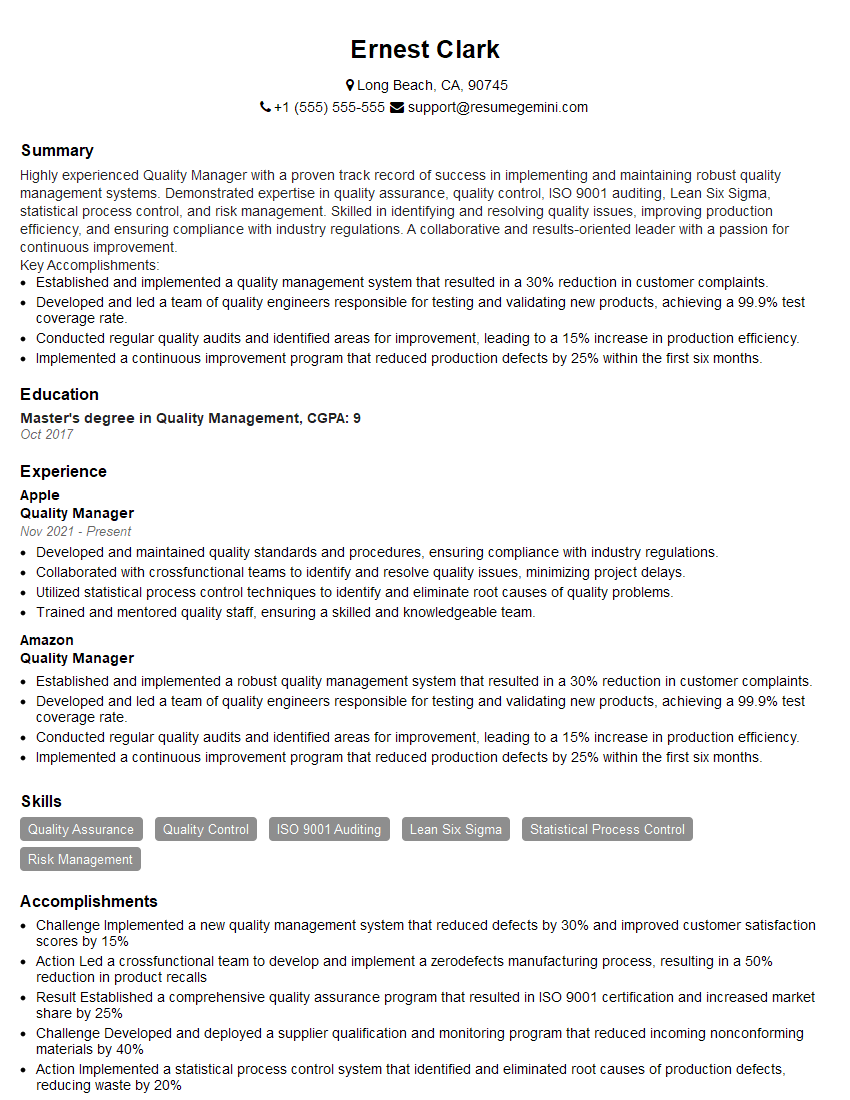
Quality Manager Resume Sample

Quality Assurance Coordinator Resume Sample
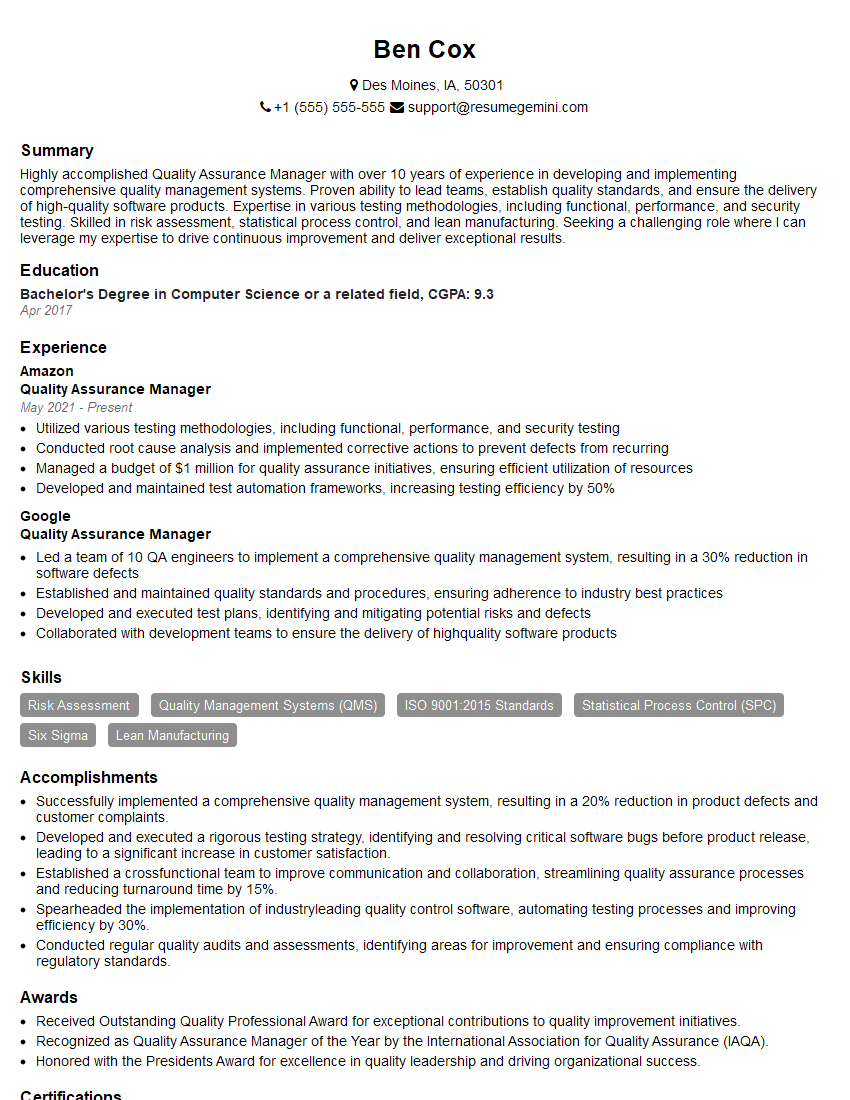
Quality Assurance Manager Resume Sample
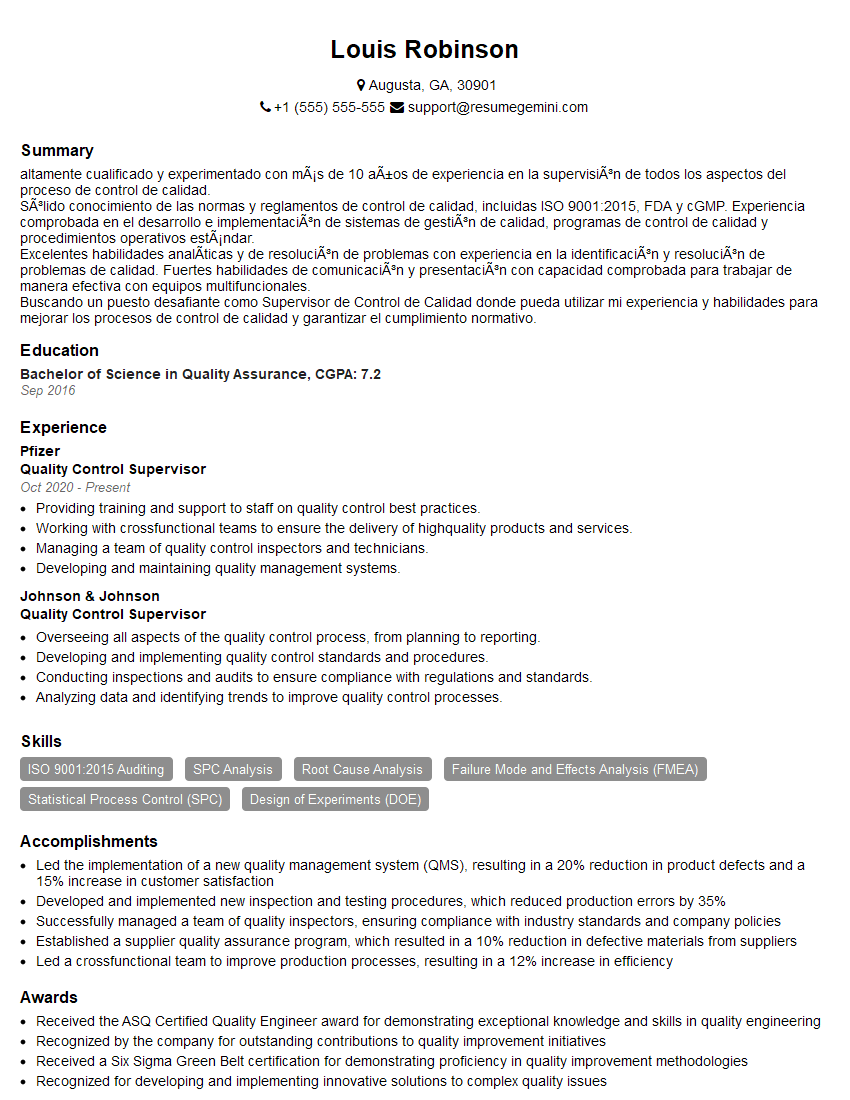
Quality Control Supervisor Resume Sample
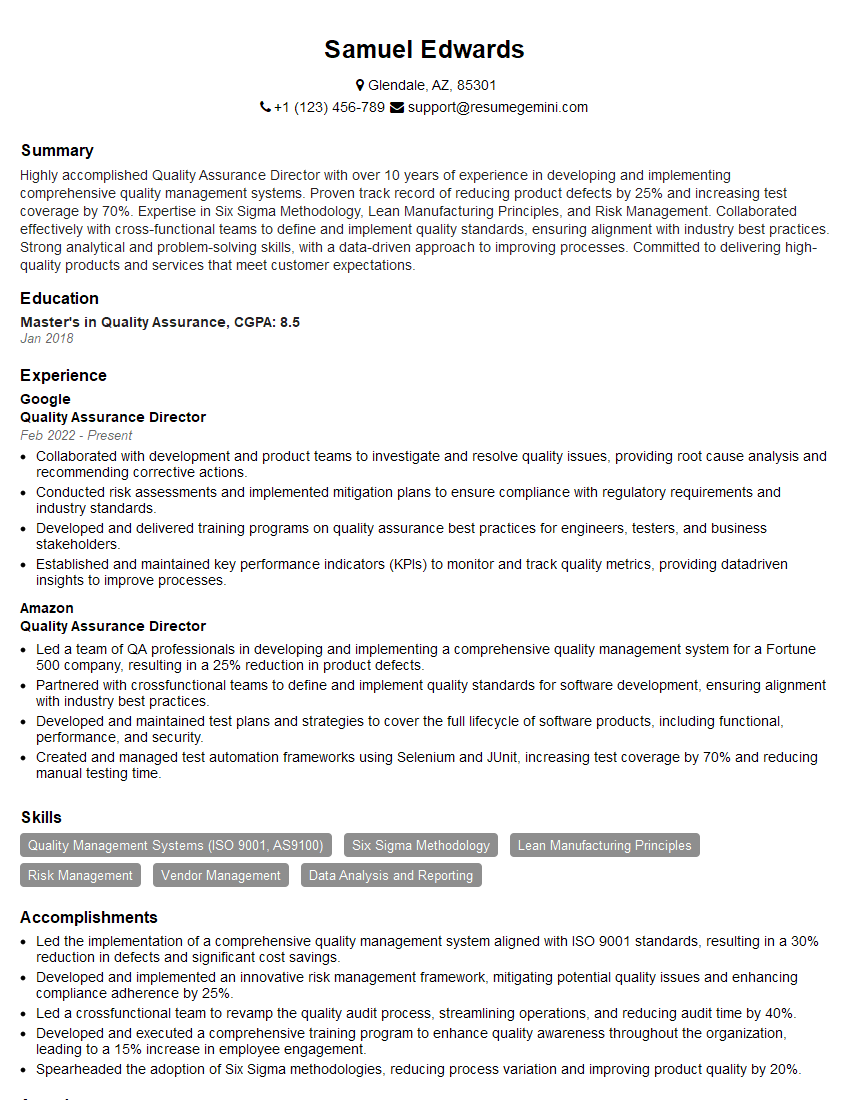
Quality Assurance Director Resume Sample
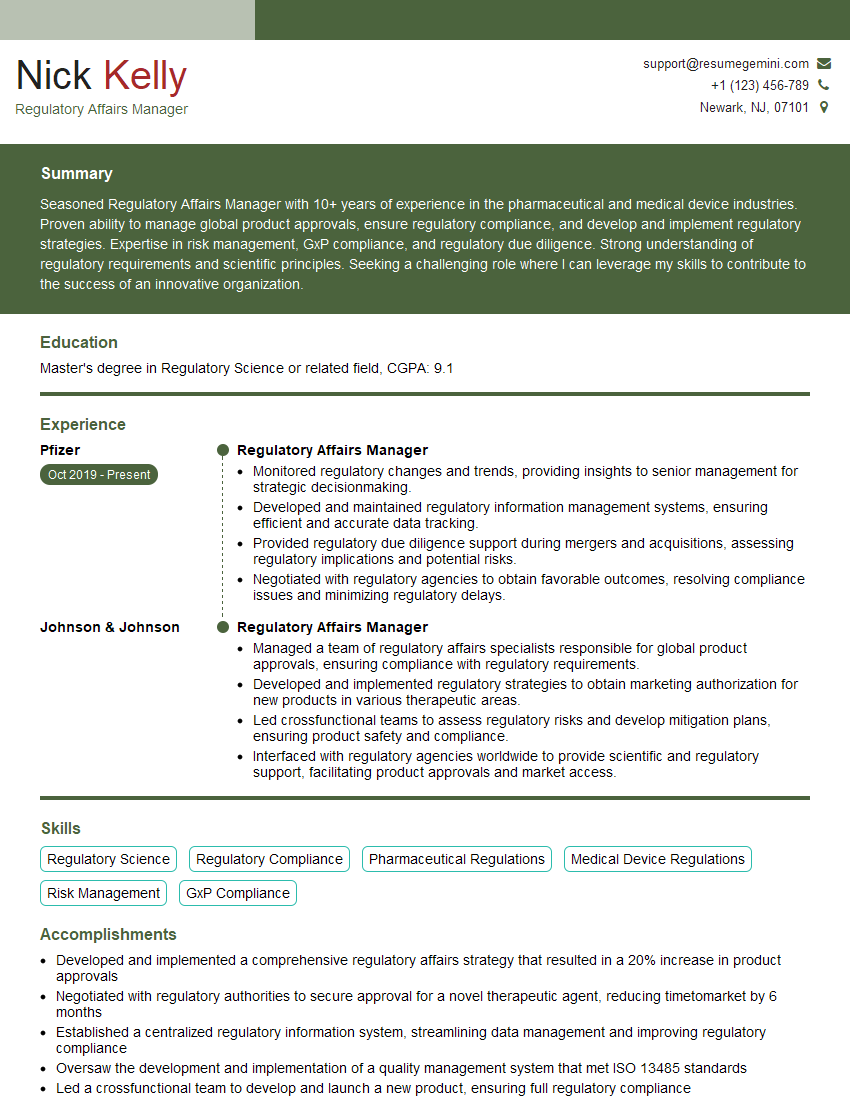
Regulatory Affairs Manager Resume Sample
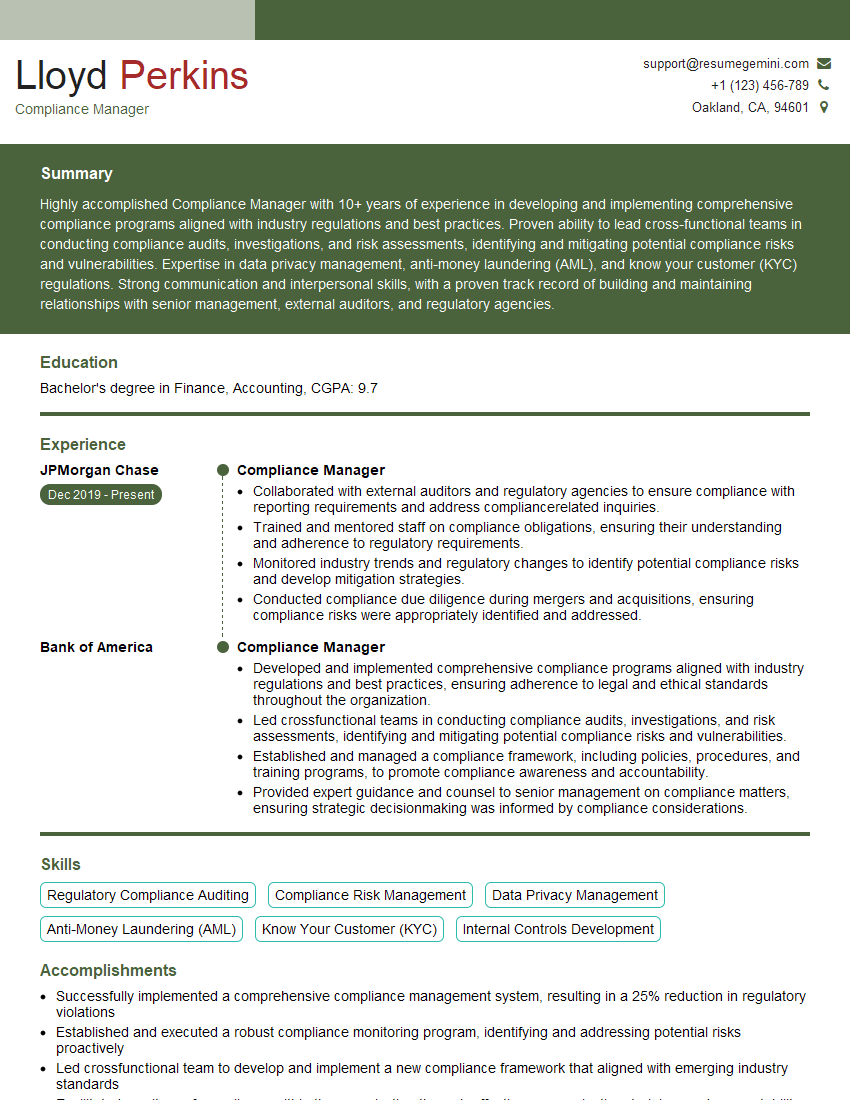
Compliance Manager Resume Sample
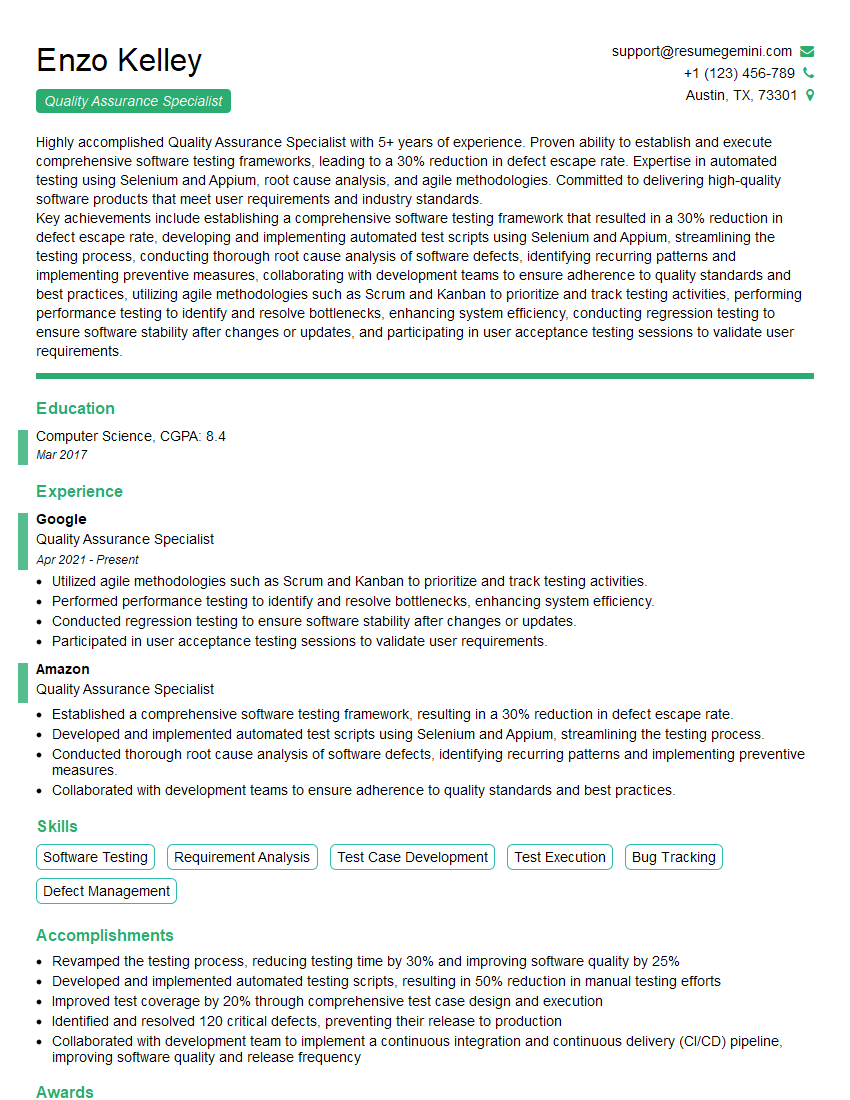
Quality Assurance Specialist Resume Sample
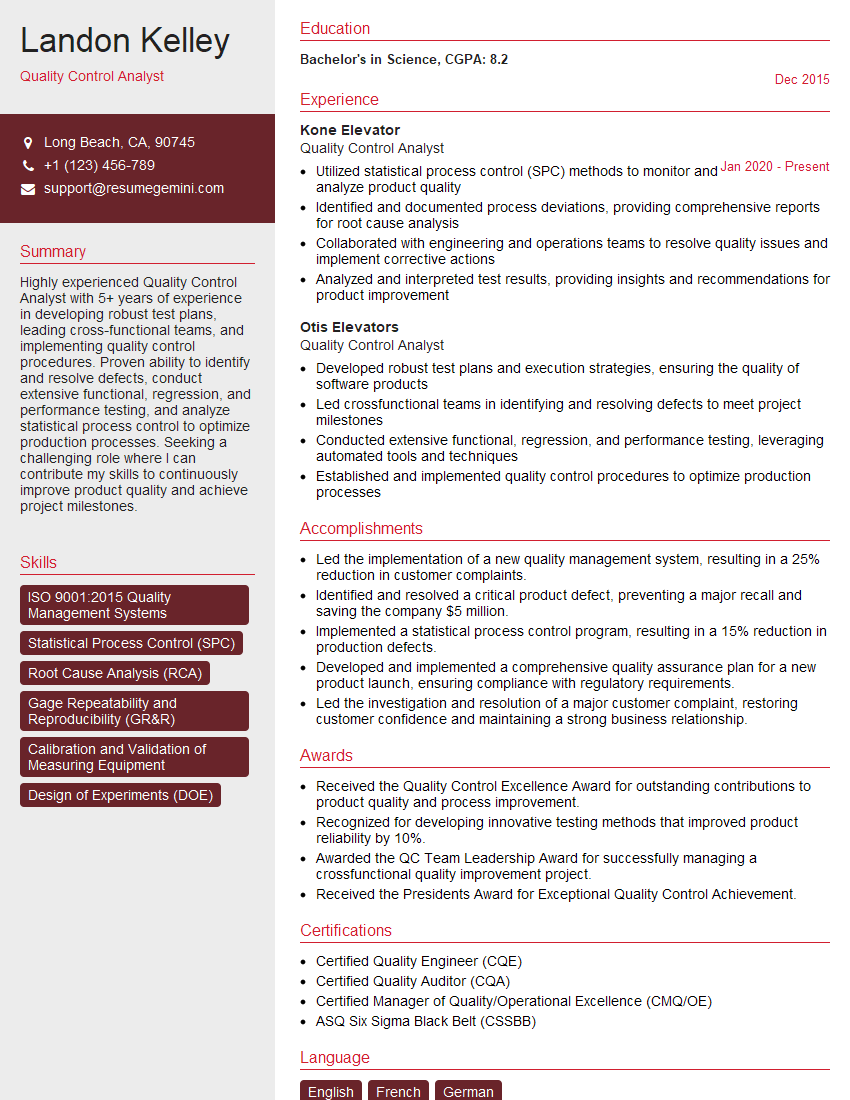
Quality Control Analyst Resume Sample
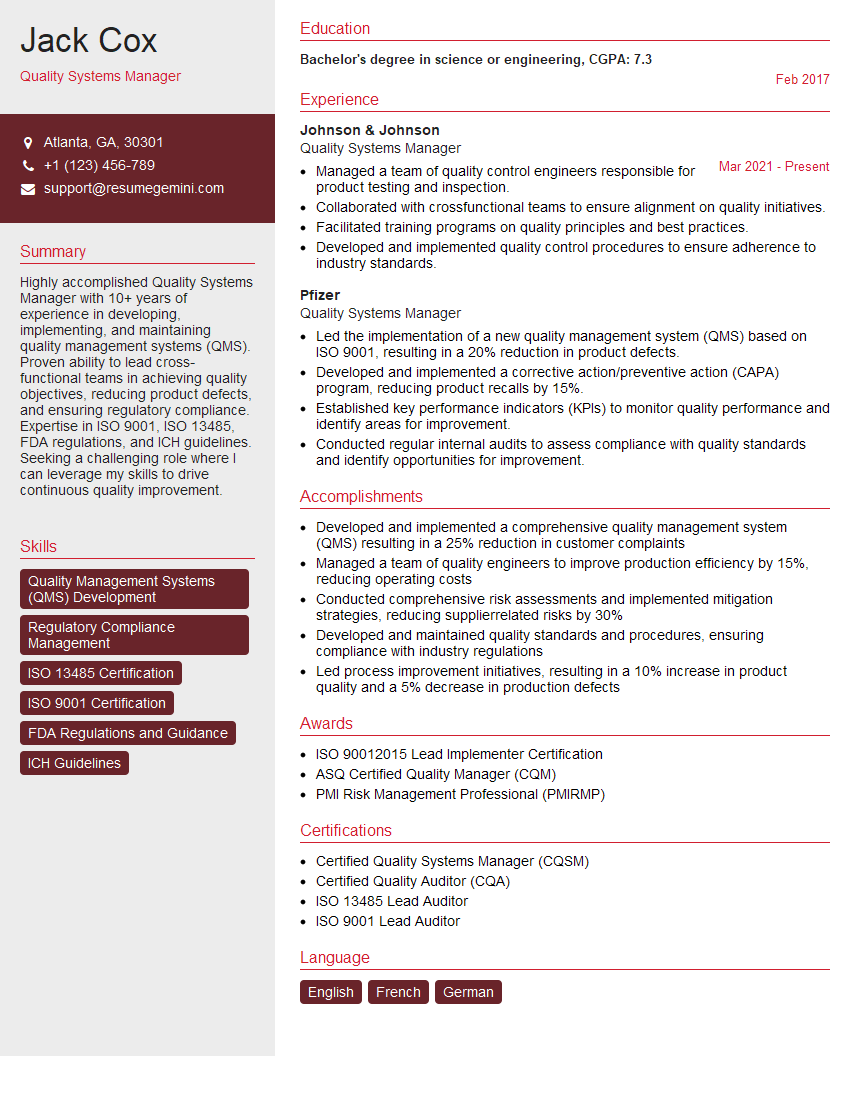
Quality Systems Manager Resume Sample
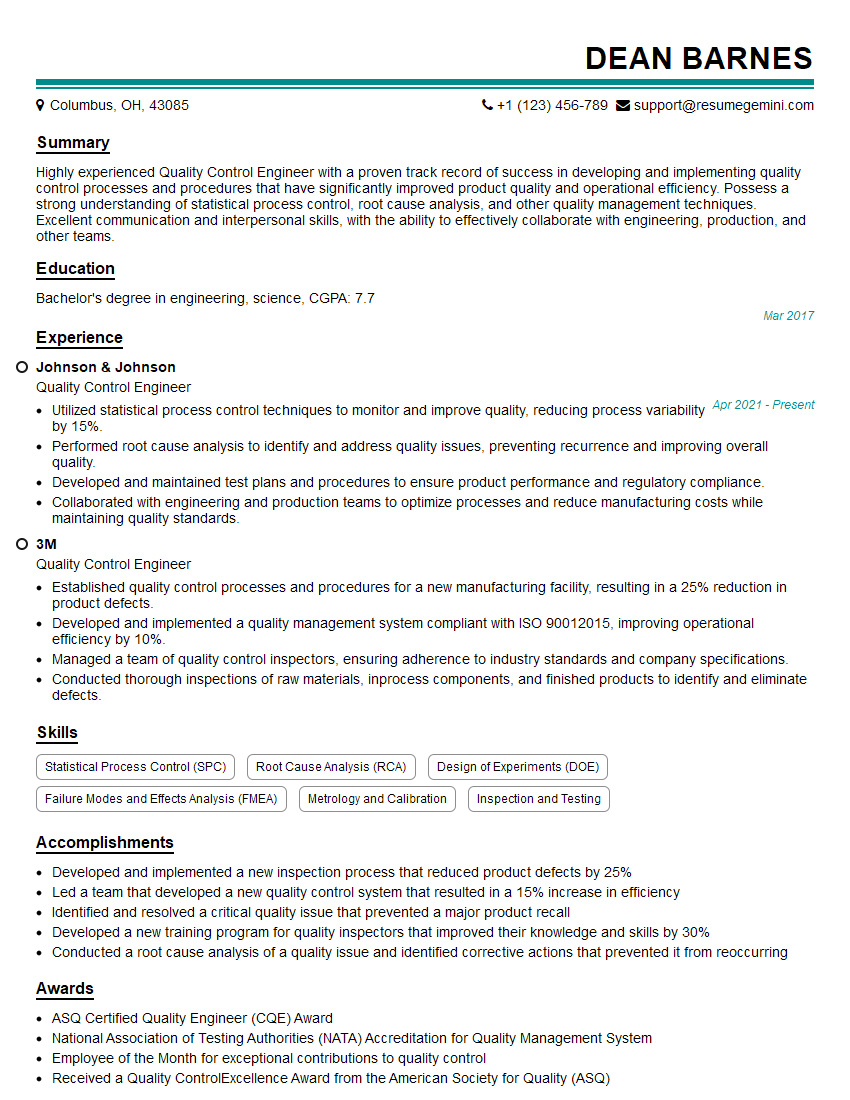
Quality Control Engineer Resume Sample
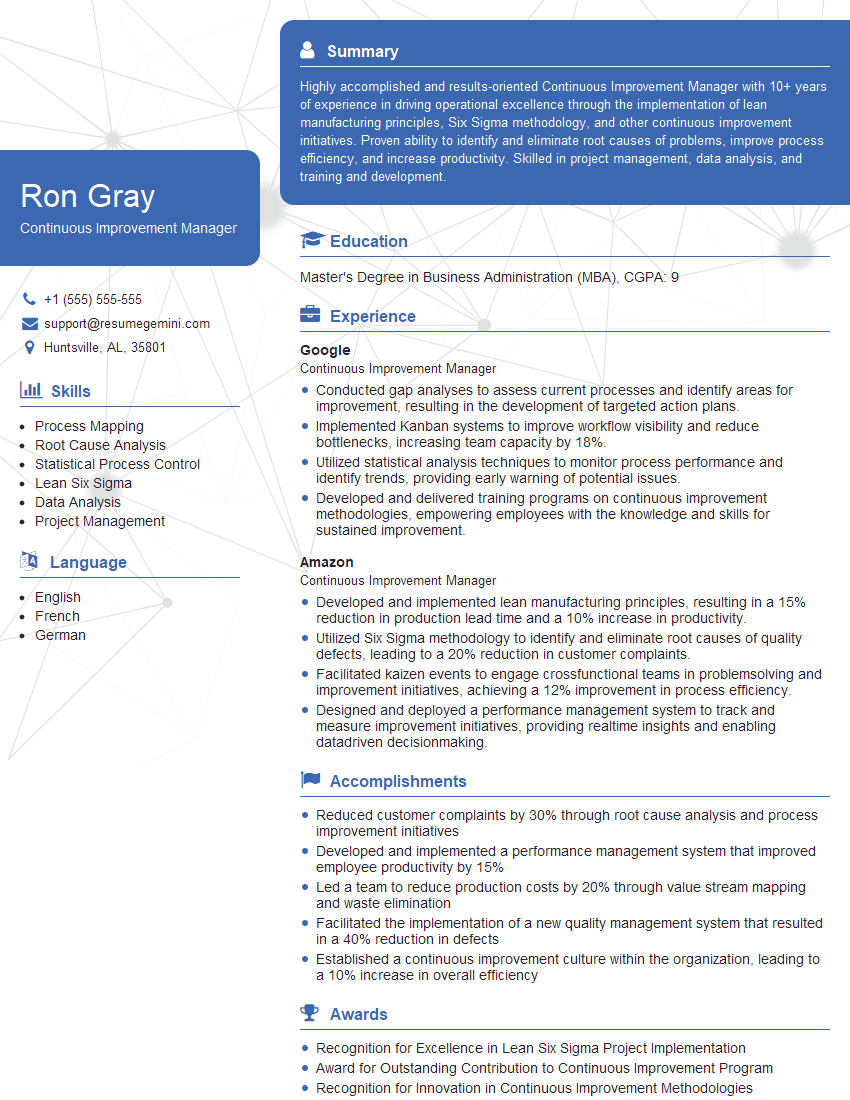
Continuous Improvement Manager Resume Sample
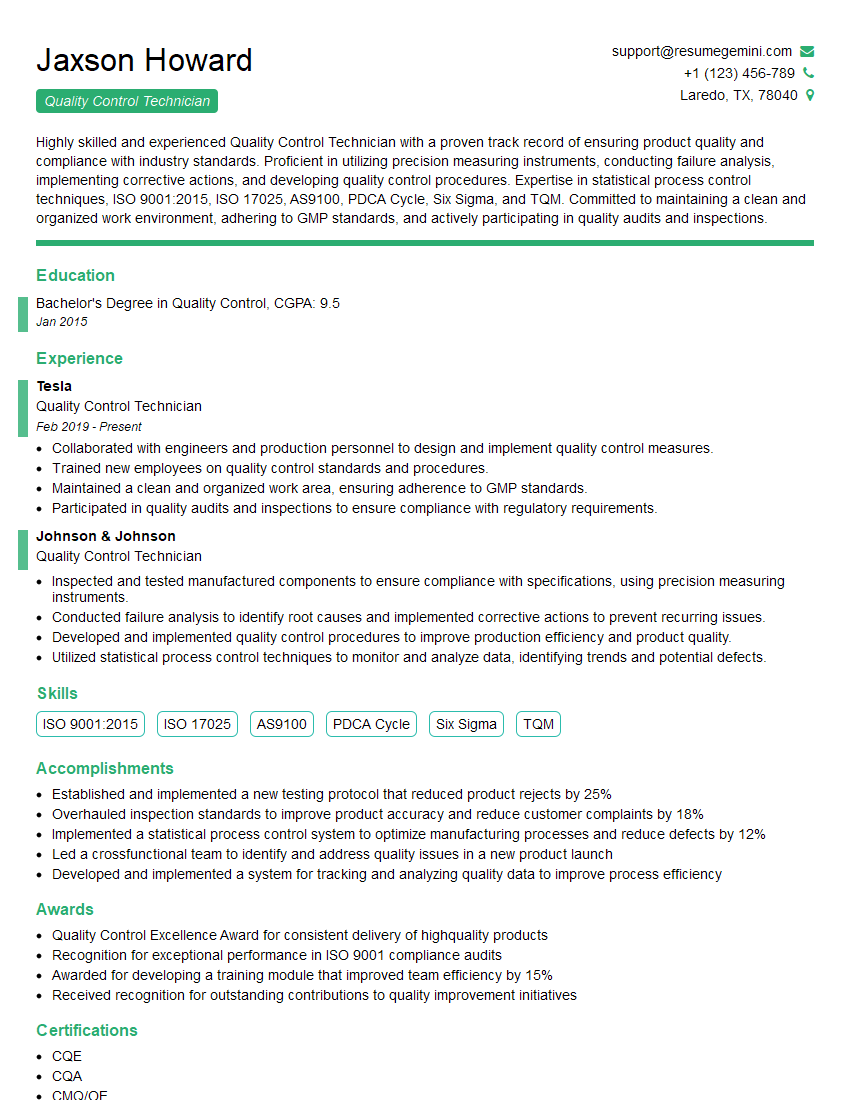
Quality Control Technician Resume Sample
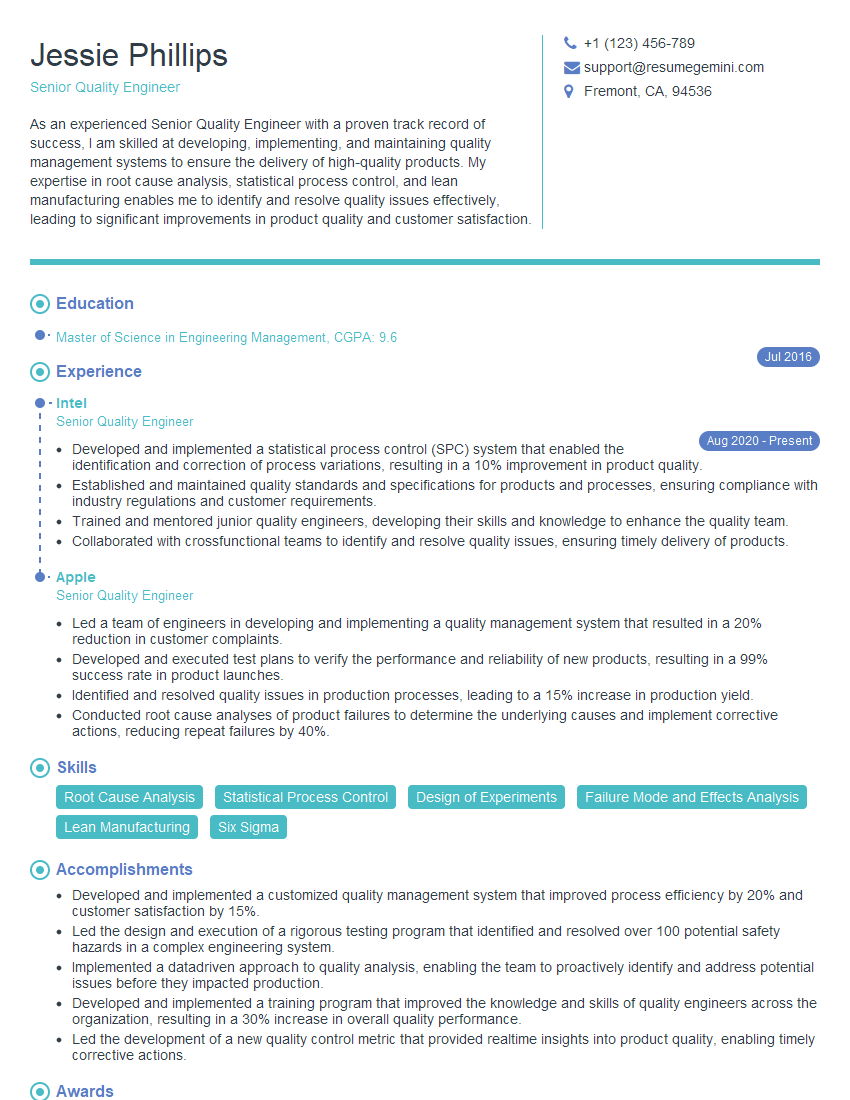
Senior Quality Engineer Resume Sample
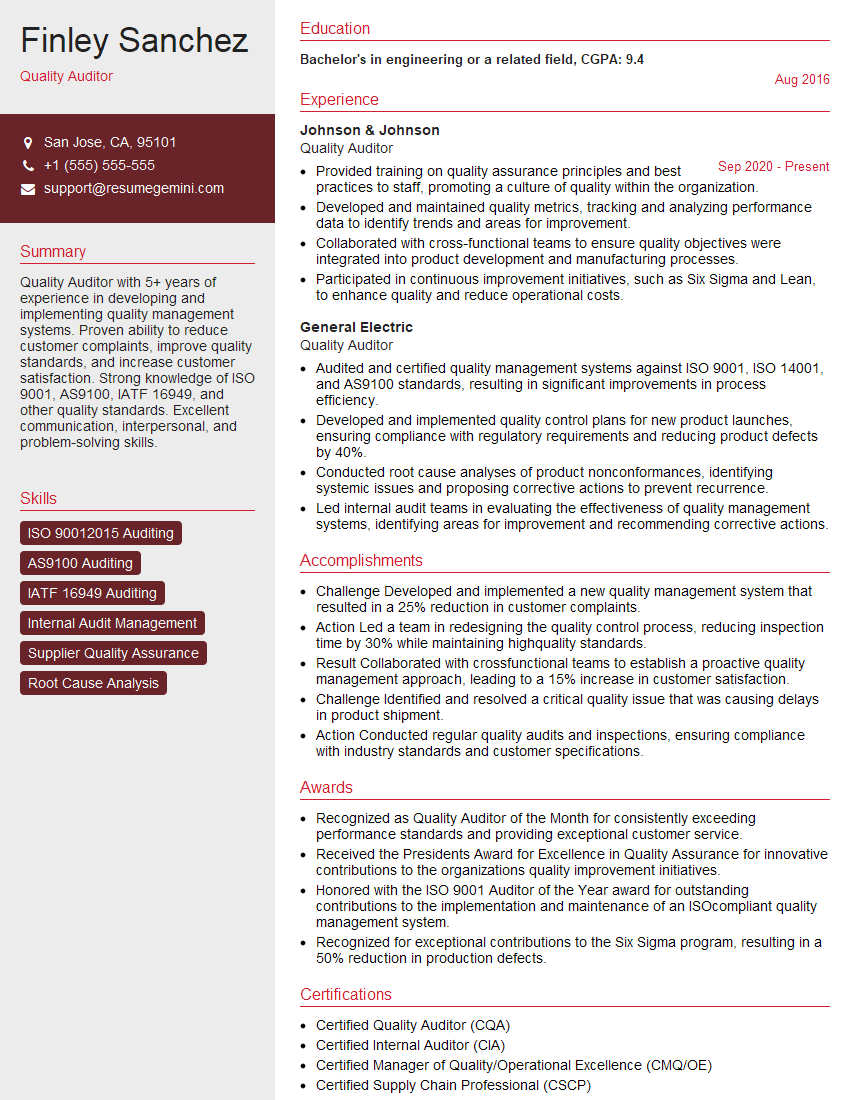
Quality Auditor Resume Sample
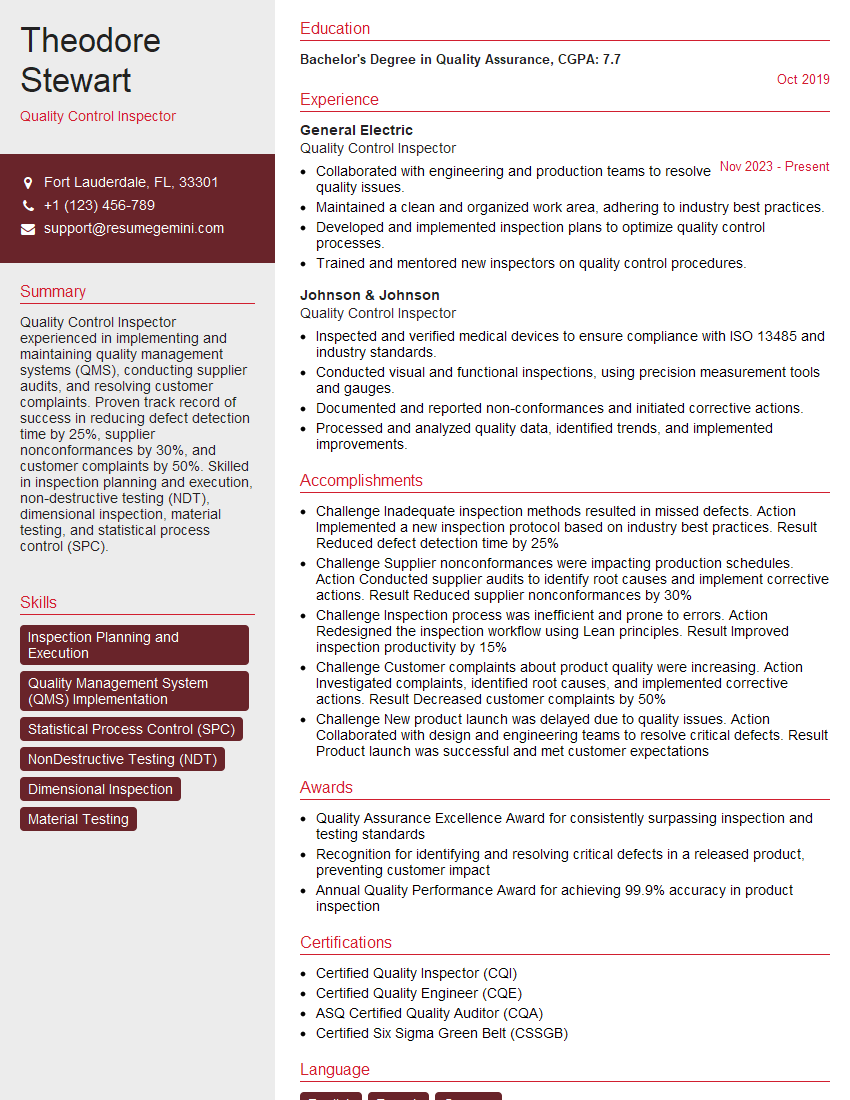
Quality Control Inspector Resume Sample
- Quality Manager
- Quality Assurance Coordinator
- Quality Assurance Manager
- Quality Control Supervisor
- Quality Assurance Director
- Regulatory Affairs Manager
- Compliance Manager
- Quality Assurance Specialist
- Quality Control Analyst
- Quality Systems Manager
- Quality Control Engineer
- Continuous Improvement Manager
- Quality Control Technician
- Senior Quality Engineer
- Quality Auditor
- Quality Control Inspector
Explore more articles
Users Rating of Our Blogs
Share Your Experience
We value your feedback! Please rate our content and share your thoughts (optional).
What Readers Say About Our Blog
Very informative content, great job.
good