The right preparation can turn an interview into an opportunity to showcase your expertise. This guide to Knowledge of solar industry standards and codes interview questions is your ultimate resource, providing key insights and tips to help you ace your responses and stand out as a top candidate.
Questions Asked in Knowledge of solar industry standards and codes Interview
Q 1. What are the key differences between NEC 2017 and NEC 2020 regarding solar installations?
The National Electrical Code (NEC) is regularly updated to reflect advancements in technology and safety. Comparing the 2017 and 2020 editions regarding solar installations reveals key changes primarily focused on enhancing safety and clarifying installation practices. For example, NEC 2020 introduced more stringent requirements for rapid shutdown systems, aimed at improving firefighter safety during emergencies. This involved clearer definitions and more specific installation guidelines compared to the 2017 edition, which had less detailed requirements. Another significant difference lies in the handling of arc flash hazards. NEC 2020 provides more comprehensive guidance on arc flash risk assessment and mitigation, requiring a more detailed approach to ensuring worker safety. Furthermore, the 2020 edition incorporated updates related to inverter sizing and interconnection requirements, reflecting technological progress and improving system efficiency and reliability. These improvements primarily focus on ensuring the safety of both the installers and the public and ensuring the long-term stability of the grid.
- Rapid Shutdown: NEC 2020 provides more detailed requirements for rapid shutdown systems, improving firefighter safety.
- Arc Flash Hazard Mitigation: NEC 2020 offers more comprehensive guidance on arc flash risk assessment and mitigation, emphasizing worker safety.
- Inverter Sizing and Interconnection: Updates in NEC 2020 reflect advancements in inverter technology and improve system efficiency.
Q 2. Explain the importance of UL 1703 in the solar industry.
UL 1703 is a crucial safety standard in the solar industry. It establishes the testing requirements for photovoltaic (PV) modules, ensuring they meet specific safety, performance, and reliability criteria. Think of it as the gold standard for module certification. Before a PV module can be legally sold and installed in the United States, it must pass rigorous testing to obtain a UL 1703 listing. This certification reassures installers, homeowners, and utility companies that the modules meet minimum safety requirements. The testing covers aspects like fire resistance, mechanical strength, and performance under various environmental conditions. This ensures the longevity and safe operation of the PV system, protecting against potential hazards like fire or electrical shock. Without UL 1703 compliance, insurance companies might refuse coverage, and installers would be liable for potential damages or injuries. Ultimately, UL 1703 protects the public and increases confidence in the industry by ensuring consistently high safety and performance standards.
Q 3. Describe the process for obtaining permits for a solar PV system installation.
Obtaining permits for solar PV system installation is a crucial step in ensuring compliance with local building codes and regulations. The process typically involves several key stages. First, you need to submit a detailed application including the project plans, specifications, and calculations to the relevant authority. This usually includes the local building department or a similar agency. The application needs to show that the system meets all local building codes and zoning regulations. Second, you’ll need to conduct inspections. These might include electrical inspections, structural inspections (especially for rooftop installations) and fire inspections. Finally, once the inspections are complete and all requirements are met, the permitting authority will issue the necessary permits allowing you to start the installation. The specific steps and requirements may vary depending on your location, so it’s important to check with your local authority for specific guidelines. It’s highly recommended to work with a qualified solar installer who’s familiar with the local permitting processes to ensure a smooth and compliant installation.
- Application Submission: Detailed plans and specifications are submitted to the local authority.
- Inspections: Electrical, structural, and fire inspections are conducted to ensure compliance.
- Permit Issuance: Permits are issued once inspections are completed and requirements are met.
Q 4. How do you ensure compliance with building codes during a solar project?
Ensuring compliance with building codes throughout a solar project requires a proactive and systematic approach. It starts with thorough planning and design, ensuring the system adheres to all relevant codes, such as those concerning roof load, electrical safety, and fire protection. This often includes using certified components and complying with the relevant sections of the National Electrical Code (NEC) and local building codes. Regular communication with the building inspector is essential. Early engagement helps anticipate potential challenges and avoid costly delays. During the installation process, maintaining accurate documentation is vital, including the installation plan, testing procedures, and all necessary certifications for equipment and installers. This documentation becomes crucial during inspections and helps demonstrate compliance with local codes. Post-installation, final inspections must be passed successfully before the system can be turned on. Working closely with a qualified professional greatly increases the chances of a smooth process and successful compliance with building codes. Any non-compliance can lead to delays and potential penalties.
Q 5. What are the common grounding requirements for solar PV systems?
Grounding is a critical safety aspect of any solar PV system. Its primary purpose is to provide a path for fault currents to safely flow to the earth, preventing electrical shock hazards and protecting equipment. Common grounding requirements include connecting the system’s metallic components, such as the array racking, conduit, and the grounding electrode system (GES) to the earth. The GES is typically a ground rod driven into the earth. This creates a low-impedance path for fault currents. The specific grounding requirements are outlined in the NEC, and local codes may add further specifications. Proper grounding ensures that in case of a fault, the current will be safely diverted to the earth rather than creating a shock hazard for anyone touching the system. The system must have a continuous path to the ground to protect against potential electric shock hazards.
Q 6. Explain the significance of arc flash hazard mitigation in solar installations.
Arc flash hazards are a significant concern in solar installations. An arc flash occurs when a high-voltage electrical arc suddenly jumps between two conductors. This can create intense heat, light, and pressure, posing serious risks to installers and anyone nearby. Mitigation involves several crucial strategies. First, risk assessment is paramount; identifying potential arc flash hazards is crucial. Next, proper personal protective equipment (PPE) is essential, such as arc flash suits, gloves, and face shields. Moreover, safe work practices are essential, including lockout/tagout procedures, which ensure that electrical equipment is de-energized before working on it. Finally, proper system design and installation can significantly reduce the risk. Using appropriately sized conductors and protective devices, such as fuses and circuit breakers, is key. Ignoring arc flash mitigation can result in severe burns, injuries, or even fatalities for workers. Therefore, it’s paramount that the risk is assessed and properly managed throughout the project.
Q 7. Describe the safety precautions you would take when working on a rooftop solar array.
Working on a rooftop solar array necessitates a rigorous safety protocol. Before starting any work, a thorough risk assessment is vital, considering factors like weather conditions, roof structure, and potential fall hazards. Fall protection is absolutely non-negotiable; harnesses, lifelines, and appropriate anchor points must be used at all times. The use of proper insulated tools designed for working on energized equipment is also crucial. Furthermore, ensuring that the electrical system is properly de-energized using proper lockout/tagout procedures, before undertaking any maintenance or repair is mandatory. Teamwork is vital; multiple individuals should be present, ideally with one person acting as a spotter, ensuring the safety of the crew. Regular communication and adherence to established safety procedures is key to mitigating risk. In the event of an emergency, a clear emergency response plan needs to be in place. Ignoring these safety precautions can lead to serious injuries or fatalities. Prioritizing safety is paramount when working at heights and with potentially hazardous electrical equipment.
Q 8. What are the requirements for overcurrent protection in solar PV systems?
Overcurrent protection in solar PV systems is crucial for safety and preventing equipment damage. It involves using devices like fuses, circuit breakers, and other protective devices to interrupt the flow of current when it exceeds safe limits. This prevents overheating, fires, and damage to the inverters, wiring, and other components.
Requirements vary depending on the system’s size and location, often guided by standards like NEC (National Electrical Code) in the US or IEC standards internationally. Generally, the system will need overcurrent protection at the array level (protecting individual strings of panels), combiner box level, and the inverter level. String fuses protect individual strings from overcurrent caused by shading or faults. Circuit breakers in the combiner box provide additional protection, often with higher ampacity than string fuses. Finally, the inverter itself contains its own overcurrent protection.
For example, a large rooftop system might utilize fuses rated for 15 amps per string, a combiner box with 100-amp circuit breakers, and an inverter with built-in overcurrent protection. The specific ratings would depend on the system’s design calculations and the applicable codes.
Q 9. How do you ensure proper labeling and signage for solar equipment?
Proper labeling and signage are essential for safety and compliance. All solar equipment must be clearly labeled with manufacturer’s information, voltage ratings, current ratings, and other relevant safety information. This helps installers, inspectors, and maintenance personnel easily identify equipment and understand its capabilities and limitations.
Signage is particularly important for warning about potential hazards. Warning signs should be placed near equipment containing high voltages, indicating the presence of electricity and the risk of electrical shock. These signs should be clearly visible, durable, and meet relevant standards. Furthermore, disconnect switches should be clearly labeled, indicating their purpose and the specific circuits they control. For example, a warning sign might read: ‘WARNING: HIGH VOLTAGE – DANGER’ with appropriate pictograms. Additionally, each disconnect switch should be labeled clearly: ‘PV Array Disconnect – Circuit 1’ etc. Regulatory bodies, like OSHA, specify requirements for signage, and following these guidelines is crucial for maintaining safety.
Q 10. Explain the process for conducting a visual inspection of a solar PV system.
A visual inspection of a solar PV system is a critical part of routine maintenance and troubleshooting. It involves a systematic examination of all components to identify any potential problems. The inspection should be performed in safe conditions, ensuring that all power is switched off before beginning the inspection.
- Start with the array: Inspect each panel for visible damage (cracks, discoloration, hotspots), loose connections, debris buildup, and signs of shading.
- Check wiring: Examine all wiring connections for damage, corrosion, loose connections, and proper routing. Look for signs of overheating (burn marks or discoloration).
- Inspect the combiner box: Check the circuit breakers for proper operation, look for signs of overheating, and ensure all connections are secure.
- Examine the inverter: Look for any signs of overheating, damage, or unusual sounds. Check the display for any error messages.
- Grounding and bonding: Verify that grounding and bonding conductors are intact and properly connected.
Document all findings, including photos or videos, and use a checklist to ensure thoroughness. This visual inspection helps prevent major failures and ensures the system’s longevity. It’s analogous to a doctor performing a physical examination – a preventative measure to catch issues early.
Q 11. What are the key requirements of the IEC 61730 standard?
IEC 61730 is a crucial international standard for the safety of photovoltaic (PV) modules. It defines the requirements for the design, manufacture, testing, and performance of PV modules to ensure they operate safely and reliably. Key requirements include:
- Protection against electric shock: Modules must be designed to prevent dangerous electric shocks under normal and fault conditions.
- Insulation requirements: Specifies minimum insulation levels to prevent electrical breakdown.
- Fire safety: Defines requirements to minimize the risk of fire, including testing procedures to evaluate flammability and fire propagation.
- Mechanical strength: Specifies requirements for withstanding mechanical stresses such as wind, snow, and hail.
- Environmental protection: Defines requirements to ensure the modules can withstand various environmental conditions.
Compliance with IEC 61730 is essential for ensuring the safety and reliability of PV modules, and it is commonly referenced in many national and regional standards and regulations. Think of it as the gold standard for ensuring a solar panel’s safety and longevity.
Q 12. Describe the steps involved in commissioning a solar PV system.
Commissioning a solar PV system is a critical process that verifies its proper installation and operation. It involves a series of tests and checks to ensure the system meets design specifications and safety standards. It’s like a final quality check before handing over the keys to a new car.
- Visual inspection: A thorough visual inspection of all components and wiring.
- Wiring verification: Ensuring correct polarity, proper grounding, and secure connections.
- Insulation resistance testing: Checking for proper insulation between conductors and ground.
- Grounding resistance testing: Ensuring the grounding system meets the required resistance levels.
- Operational testing: Verifying that the system is functioning as expected, including measuring voltages, currents, and power output.
- Performance testing: Assessing the system’s performance against expected output and identifying potential issues that may affect long-term performance.
- Documentation: Producing a comprehensive report detailing the commissioning process, including test results, observations, and recommendations.
The commissioning process ensures a safe and efficient system, maximizing energy production and minimizing risks.
Q 13. What is your understanding of Rapid Shutdown requirements for solar systems?
Rapid Shutdown requirements are safety features designed to quickly de-energize solar PV arrays in case of a fire or emergency, thereby reducing the risk of injury to firefighters and first responders. This is important because high-voltage DC current can be particularly dangerous.
These requirements typically involve installing specific rapid shutdown devices that can quickly reduce the voltage of the solar array upon activation, usually triggered by a fire alarm system or a dedicated shutdown device. Different jurisdictions have varying requirements for the types of devices used and how they should be integrated into the system. For instance, some jurisdictions might mandate specific communication protocols or require that rapid shutdown is integrated with the fire alarm system. The implementation varies based on the local codes and regulations.
Implementing rapid shutdown improves firefighter safety significantly by reducing the risk of electrocution during emergencies.
Q 14. How do you handle discrepancies between different standards or codes?
Handling discrepancies between different standards or codes requires a careful and systematic approach. It’s a common situation, as projects may span different jurisdictions or involve equipment certified to different standards.
The first step is to fully identify and document all applicable standards and codes. Then, determine which standard is the most stringent and relevant to the project. If the codes are in conflict, prioritize the standard that provides the highest level of safety. This usually involves careful review of the relevant requirements to understand the underlying rationale. Often, it’s possible to find a solution that complies with all standards; however, if that isn’t possible, a thorough documentation of the conflicts and the rationale for the chosen approach is critical for liability and audit purposes. Consulting with regulatory authorities or qualified experts can help resolve complex conflicts. This proactive approach is vital to compliance and risk mitigation in the solar industry.
Q 15. Describe different types of solar inverters and their safety considerations.
Solar inverters are crucial components in a photovoltaic (PV) system, converting the DC (direct current) electricity generated by solar panels into AC (alternating current) electricity usable in homes and businesses. There are several types, each with its own safety considerations:
- String Inverters: These are the most common and simplest type. They connect multiple solar panels in series (a string) and convert the combined DC power to AC. Safety concerns include high DC voltage on the input side, requiring careful handling and adherence to lockout/tagout procedures during maintenance. Overheating can also be a problem if not properly ventilated.
- Microinverters: These small inverters are attached to individual solar panels, converting DC to AC at the panel level. This reduces string losses and improves system performance. Safety concerns are generally lower due to the lower DC voltage at each panel, but proper grounding and connection are still critical.
- Power Optimizers: These devices sit between the panels and the inverter, maximizing energy output from each panel by adjusting for shading and other factors. While they don’t directly convert DC to AC, they improve the overall efficiency and safety by reducing voltage stress on the string inverter.
- Central Inverters: Used in large-scale solar farms, these handle high power outputs from numerous strings. They pose higher safety risks due to their high voltage and power capacity, requiring specialized safety protocols and trained personnel for installation and maintenance.
Regardless of the type, all inverters should be installed according to manufacturer specifications and relevant codes (like NEC and IEC standards). Proper grounding, overcurrent protection (circuit breakers and fuses), and disconnect switches are essential safety features.
Career Expert Tips:
- Ace those interviews! Prepare effectively by reviewing the Top 50 Most Common Interview Questions on ResumeGemini.
- Navigate your job search with confidence! Explore a wide range of Career Tips on ResumeGemini. Learn about common challenges and recommendations to overcome them.
- Craft the perfect resume! Master the Art of Resume Writing with ResumeGemini’s guide. Showcase your unique qualifications and achievements effectively.
- Don’t miss out on holiday savings! Build your dream resume with ResumeGemini’s ATS optimized templates.
Q 16. What are the requirements for the installation of PV modules on different roof types?
Installing PV modules on different roof types requires careful consideration of structural integrity, wind loads, and weather conditions. Here’s a breakdown:
- Asphalt Shingle Roofs: These are common but require careful penetration to avoid leaks. Approved flashing kits are essential, ensuring watertight seals around the mounting hardware. Proper assessment of the roof’s age and condition is crucial. We might need to reinforce the roof structure for heavier systems.
- Tile Roofs: These roofs require specialized mounting systems that minimize damage to the tiles. Cutting tiles precisely and ensuring proper re-attachment is critical. We might need to use tile-specific mounting hardware and potentially consult with a roofing expert.
- Metal Roofs: These are generally easier to work with, offering good mounting points. However, corrosion prevention is important, selecting hardware compatible with the metal type. Proper grounding is paramount due to metal’s conductive nature.
- Flat Roofs: These require ballast systems (weighted blocks) or penetration mounting systems depending on the roof membrane and wind conditions. Proper drainage is critical to avoid water accumulation.
In all cases, a thorough roof assessment is necessary before installation. Local building codes and permitting requirements must be followed rigorously. Wind load calculations are crucial, ensuring the system can withstand extreme weather events. Using qualified and experienced installers is paramount to ensuring a safe and effective installation.
Q 17. How do you address issues related to shading and its impact on system performance?
Shading significantly impacts solar PV system performance, reducing energy output. The solution depends on the type and extent of shading.
- Partial Shading: Individual panels or strings in partial shade can experience significant power loss due to the ‘bypass diodes’ in series strings. Microinverters or power optimizers are effective solutions here, maximizing output from unshaded panels.
- Permanent Shading: This requires a more comprehensive approach. Careful site assessment before installation is key to identify potential shading problems from trees, buildings, or other structures. Optimizing panel orientation and layout can minimize the impact. In some cases, re-routing or removing the shading source may be the most effective strategy.
- Intermittent Shading: Shading from moving objects like clouds is difficult to fully mitigate, but microinverters or power optimizers can minimize the effects.
Sophisticated PV system design software can model the impact of shading on system performance, helping in the design phase. Monitoring the system’s performance post-installation helps identify and address any shading-related issues.
Q 18. Explain the importance of system grounding and bonding in solar installations.
System grounding and bonding are critical for safety in solar installations. Grounding protects against electrical shocks and equipment damage by providing a low-resistance path for fault currents to earth. Bonding ensures that all conductive parts of the system are electrically connected, preventing voltage differences that could cause dangerous arcing.
Proper grounding involves connecting the metallic parts of the array, racking system, inverter, and the building’s grounding system. This typically involves grounding rods driven into the earth and connecting wires to the system’s metal components. NEC (National Electrical Code) and other standards specify grounding requirements based on system size and location.
Bonding connects metallic parts of the system to equalize their electrical potential. This minimizes the risk of voltage buildup and potential shocks. Bonding wires are used to connect different metal components within the system. Improper grounding and bonding can result in severe electric shocks, equipment damage, and even fires. Regular inspections and maintenance are vital to ensure the integrity of the grounding and bonding system.
Q 19. How do you handle non-compliance issues during a solar project?
Non-compliance issues during a solar project are addressed using a systematic approach prioritizing safety and regulatory compliance:
- Identification: Thorough inspections and regular quality control checks are vital to catch non-compliance early. This may involve reviewing permits, drawings, and conducting site inspections.
- Documentation: Clearly document all non-compliance issues with photographs, measurements, and descriptions.
- Root Cause Analysis: Determine the root cause of the non-compliance. Was it a design flaw, an installation error, or a lack of understanding of the relevant codes?
- Corrective Actions: Develop a plan to correct the non-compliance, ensuring it meets all applicable standards and codes. This might involve rework, material replacement, or process changes.
- Verification: Once corrective actions are taken, verify the work meets the required standards. Another inspection and testing is necessary to ensure the system is safe and compliant.
- Reporting: Report any significant non-compliance issues to relevant authorities, including the inspection authority, and ensure all documentation is updated accordingly.
Preventing non-compliance is far more efficient than correcting it. Training, proper planning, and a commitment to quality control are essential throughout the project lifecycle. Working closely with the inspection authority and maintaining open communication can greatly minimize potential problems.
Q 20. Describe your experience with different solar mounting systems.
My experience encompasses a wide range of solar mounting systems, catering to diverse roof types and project needs:
- Rail Mounting Systems: These are common for pitched roofs, using rails attached to the roof structure to support the solar panels. I have experience with various rail types, including aluminum and steel, and selecting appropriate components to suit the roof type and panel specifications.
- Ground Mounting Systems: These systems are used for ground-mounted solar arrays. I’m proficient in different ground mount designs, including those using concrete foundations, driven piles, and ground screws. I’ve dealt with various ground conditions, optimizing the system’s stability and ensuring proper grounding.
- Rooftop Mounting Systems for Flat Roofs: This involves ballast systems (weighted blocks) and penetration mounting systems for flat roofs. My experience covers selecting the appropriate system based on the roof membrane type, wind loads, and building codes.
- Customized Mounting Systems: For unique architectural designs or challenging conditions, customized mounting solutions are often necessary. I have experience designing and implementing bespoke mounting systems to meet specific site requirements.
In each case, I meticulously evaluate the structural integrity of the mounting system, ensuring it can withstand extreme weather conditions and meet all relevant building codes and safety standards. Proper design and installation are key to long-term system performance and safety.
Q 21. What are the common failure modes of solar PV components?
Solar PV components can fail in several ways, and understanding these failure modes is crucial for effective system maintenance and troubleshooting:
- Solar Panel Failures: These include cell cracking, delamination (separation of layers), hot spots (localized overheating due to shading or cell defects), and PID (Potential Induced Degradation).
- Inverter Failures: Common inverter failures include overheating, power electronic component failures (like IGBTs or capacitors), and communication errors.
- Mounting System Failures: Corrosion, fatigue (due to wind and thermal cycling), and improper installation can lead to structural failure of mounting hardware.
- Wiring and Cabling Failures: These include corrosion, insulation breakdown, and poor connections.
- Disconnection Issues: Loose connections, corroded terminals, and improper installation of disconnects can lead to system failures or safety hazards.
Regular visual inspections, infrared thermography, and performance monitoring are vital to identify potential failure modes early. Prompt maintenance and repair are crucial to minimize downtime and ensure the safety and efficiency of the solar PV system. Understanding the potential failure points and implementing preventative measures can dramatically increase the lifespan of a solar system.
Q 22. What is your experience with solar energy storage systems and relevant safety standards?
My experience with solar energy storage systems encompasses design, installation, commissioning, and troubleshooting of various battery technologies, including lithium-ion and lead-acid. I’m deeply familiar with relevant safety standards such as UL 9540A (for stationary storage batteries) and NFPA 855 (for the safe handling of these systems). For instance, I’ve worked on projects where ensuring proper ventilation, thermal management, and isolation were crucial for mitigating fire hazards. A key aspect of my work involves understanding and implementing the necessary safety protocols to prevent overcharging, over-discharging, and thermal runaway, ensuring system longevity and user safety. I’ve also conducted numerous safety audits to identify and rectify potential hazards in existing installations.
My experience extends to working with different battery management systems (BMS) and integrating them seamlessly with inverters and solar PV arrays. A recent project involved optimizing a large-scale energy storage system for a commercial building, focusing on maximizing efficiency and ensuring compliance with all applicable safety regulations. This included meticulous attention to grounding, bonding, and overcurrent protection to prevent electrical hazards.
Q 23. How do you perform a site assessment for a solar PV installation?
A thorough site assessment for a solar PV installation is crucial for project success. It’s a multi-step process starting with a detailed review of the property’s characteristics. This includes analyzing the roof structure, its orientation and angle, available shading from trees or buildings, and the overall structural integrity to support the weight of the system. I utilize specialized software and tools to model sunlight exposure throughout the year to estimate energy production accurately.
Next, I assess the electrical system, confirming the panel’s capacity and the existing service to handle the added load. This involves verifying the size and condition of the service entrance and the available electrical paths. I meticulously check for any potential safety concerns, like proximity to trees or overhead lines. Finally, I review local building codes and permitting requirements, ensuring the design complies with all regulations. This assessment culminates in a comprehensive report, guiding the design and installation phases, maximizing system efficiency while guaranteeing safety and compliance.
Q 24. Explain your knowledge of solar array grounding practices according to local codes.
Solar array grounding is paramount for safety, protecting against electrical hazards and lightning strikes. Local codes, often referencing the National Electrical Code (NEC), mandate specific grounding practices. Typically, a grounding electrode system is required, which may involve connecting the array to a ground rod, a metallic water pipe, or other suitable grounding electrode. The NEC dictates bonding requirements to create a low-impedance path for fault currents.
I’ve encountered various situations where understanding local variations in code was critical. For example, in some areas, ground rods must meet specific resistance requirements, mandating additional rods or specialized grounding materials. Furthermore, different codes may dictate different methods of bonding array components such as racking, and combiner boxes, to the grounding electrode system. My approach always involves meticulous documentation of grounding paths, resistance testing, and compliance verification to ensure the safety of the installation and meet local requirements. Failure to correctly ground a system can lead to electric shock hazards, equipment damage, and even fire.
Q 25. How would you interpret and apply relevant sections of the NEC for a specific solar design?
Interpreting and applying relevant sections of the NEC (National Electrical Code) is a cornerstone of my work. For a specific solar design, I begin by identifying the applicable articles, such as Article 690 (Solar Photovoltaic Systems). This involves carefully studying the requirements for system grounding, overcurrent protection, and wiring methods. I then cross-reference these requirements with local amendments or additions to the NEC to account for regional variations.
For example, NEC 690.8 requires the use of listed and labeled components for solar installations, something I ensure is always followed. If the design involves a complex system with multiple inverters and arrays, I delve into the specifics of parallel and series configurations to ensure compliance with NEC 690.7 (Overcurrent Protection). I also carefully review the grounding and bonding requirements outlined in Article 250, ensuring a safe electrical path. A detailed design drawing, which incorporates all NEC requirements, forms an essential part of my deliverables. This meticulous attention to code ensures both safety and compliance.
Q 26. What is your experience with solar performance testing and reporting?
Solar performance testing and reporting are vital for assessing system health and efficiency. My experience involves using various tools and techniques to evaluate the performance of solar PV systems. This includes using I-V curve tracers to identify module-level issues, such as shading or faulty cells. I also utilize data loggers and monitoring systems to gather long-term performance data, analyzing energy production and identifying potential degradation or operational problems.
I’m proficient in generating comprehensive reports that detail system performance metrics, such as energy yield, capacity factor, and performance ratios. These reports help clients understand the system’s efficiency and identify areas for improvement or potential maintenance issues. For example, a recent project highlighted a subtle shading issue that was impacting the performance of a small section of the array. By using detailed performance data, we were able to pinpoint the issue and implement corrective actions, optimizing the overall energy production.
Q 27. How do you ensure compliance with local and national fire codes for solar projects?
Ensuring compliance with local and national fire codes for solar projects is a critical part of my responsibility. This involves a multifaceted approach, starting with the selection of fire-rated components, such as fire-resistant PV modules and wiring. I carefully review the relevant sections of the International Fire Code (IFC) and NFPA standards, especially those addressing rooftop penetrations and the safe integration of the PV system into the building’s overall fire protection system.
A key aspect of this process is proper installation practices. For instance, ensuring that all wiring is correctly routed, avoiding penetration through fire-rated barriers wherever possible or using fire-rated seals when necessary, is extremely important. I’m meticulous in following the manufacturer’s instructions for installation and ensuring that all components are correctly installed. Post-installation inspections verify that all fire safety measures are in place and fully functional. This process mitigates fire risks and ensures the safety of the building occupants and the surrounding environment.
Q 28. Describe your understanding of microinverter and string inverter technologies and their implications for compliance.
Microinverters and string inverters represent two distinct approaches to solar energy conversion. Microinverters process the energy from individual solar modules, while string inverters handle energy from a series of modules connected in a string. Understanding these technologies is essential for compliance, as they impact system design and safety considerations.
Microinverters offer module-level monitoring, allowing for more precise fault detection and isolation, reducing the impact of a single faulty module on the overall system performance. However, they generally cost more than string inverters. String inverters, while cost-effective, require more careful consideration of shading, since a single shaded module can impact the performance of the entire string. Both technologies require careful consideration regarding overcurrent protection and grounding, as defined in the NEC. Selecting the appropriate technology depends on several factors, including budget, system size, desired level of monitoring, and site-specific characteristics. My approach involves a thorough analysis of these factors to recommend the best solution while ensuring full compliance with all safety standards and codes.
Key Topics to Learn for Knowledge of Solar Industry Standards and Codes Interview
- National Electrical Code (NEC) Articles for Photovoltaics: Understand the specific NEC articles pertaining to solar installations, including grounding, overcurrent protection, and interconnection requirements. This includes practical application in system design and troubleshooting.
- UL Standards: Familiarize yourself with Underwriters Laboratories (UL) standards for solar panels, inverters, and other components. Know how these standards ensure safety and performance.
- IEEE Standards: Explore relevant IEEE standards related to solar energy systems, focusing on performance testing, grid integration, and safety procedures. Consider practical implications for system optimization and maintenance.
- IEC Standards: Understand the role of International Electrotechnical Commission (IEC) standards in global solar projects. Consider how these standards affect international collaborations and component compatibility.
- Building Codes and Permits: Learn about local and regional building codes related to solar installations. Understand the permitting process and the implications of non-compliance.
- Safety Regulations and Best Practices: Master safety protocols for working with solar equipment, including lockout/tagout procedures and proper handling of high-voltage systems. This encompasses both theoretical understanding and practical application in the field.
- Solar Panel Mounting and Racking Systems: Understand the various mounting systems available and the relevant standards ensuring structural integrity and wind load resistance. This includes problem-solving approaches to site-specific challenges.
- Grid Interconnection Requirements: Familiarize yourself with the requirements for connecting solar systems to the utility grid, including compliance with interconnection agreements and procedures for metering and monitoring.
Next Steps
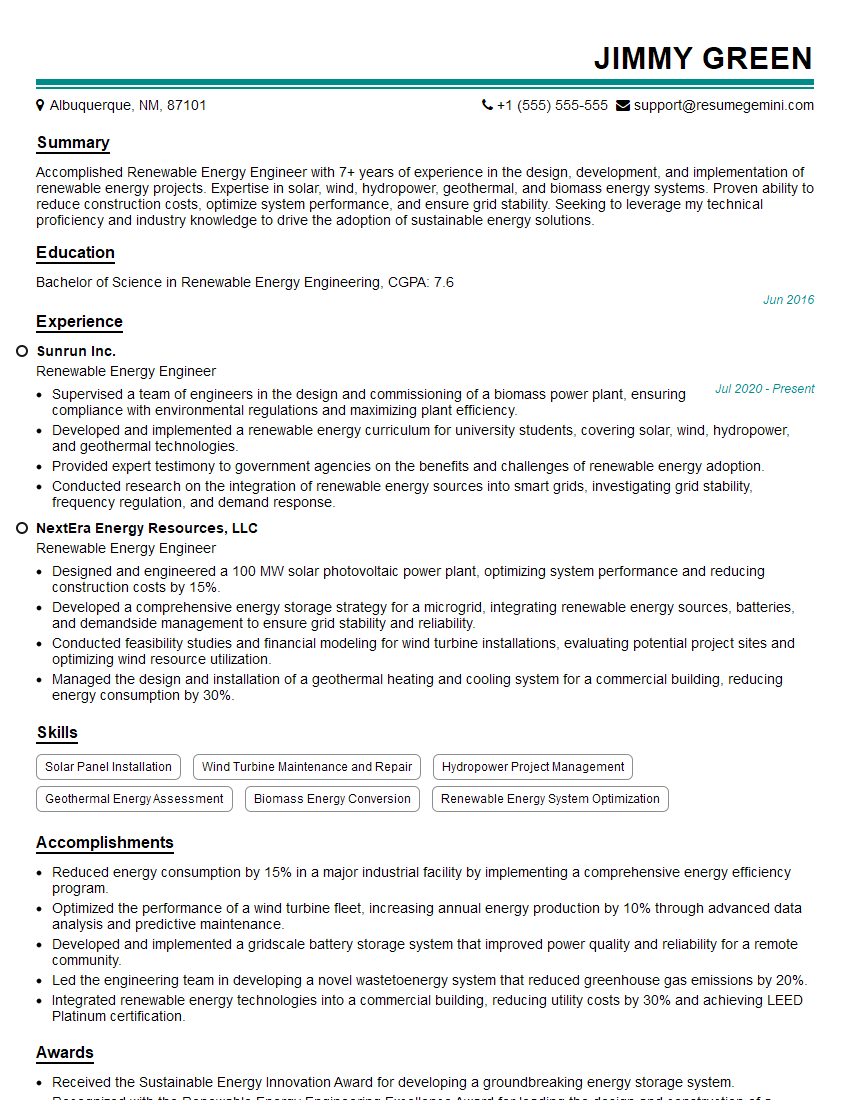
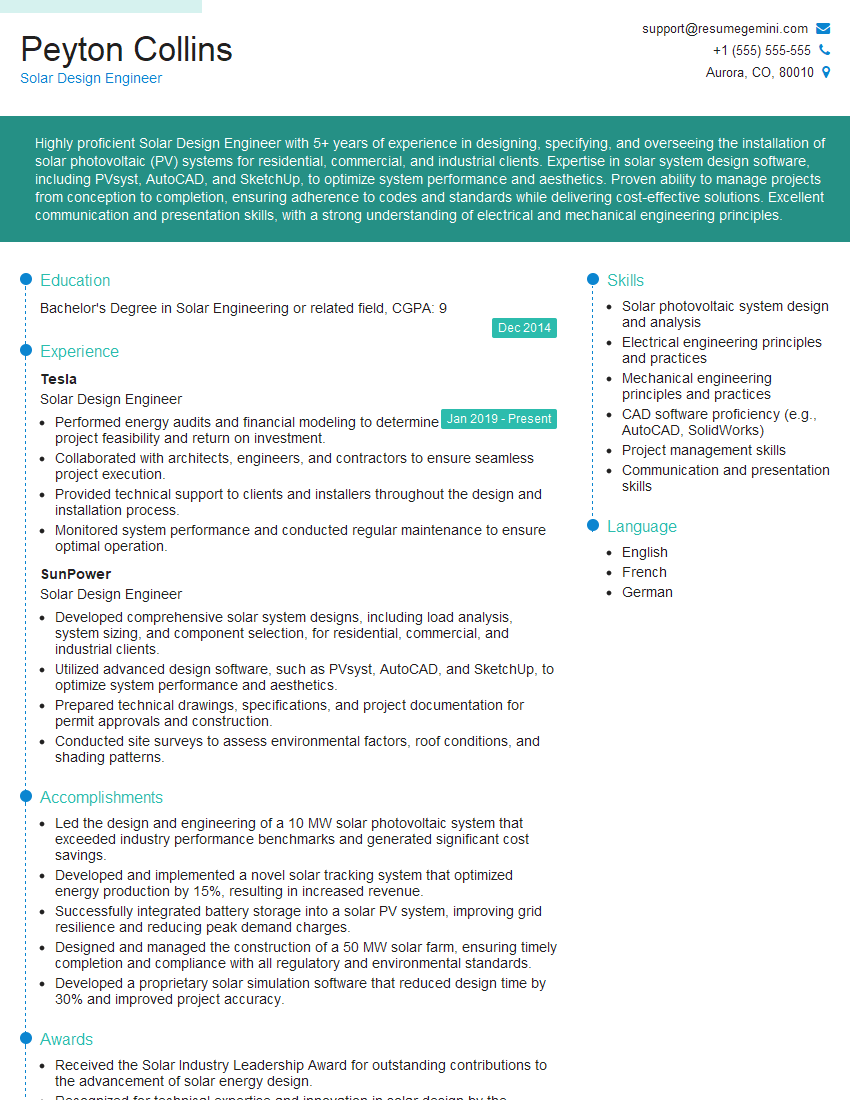
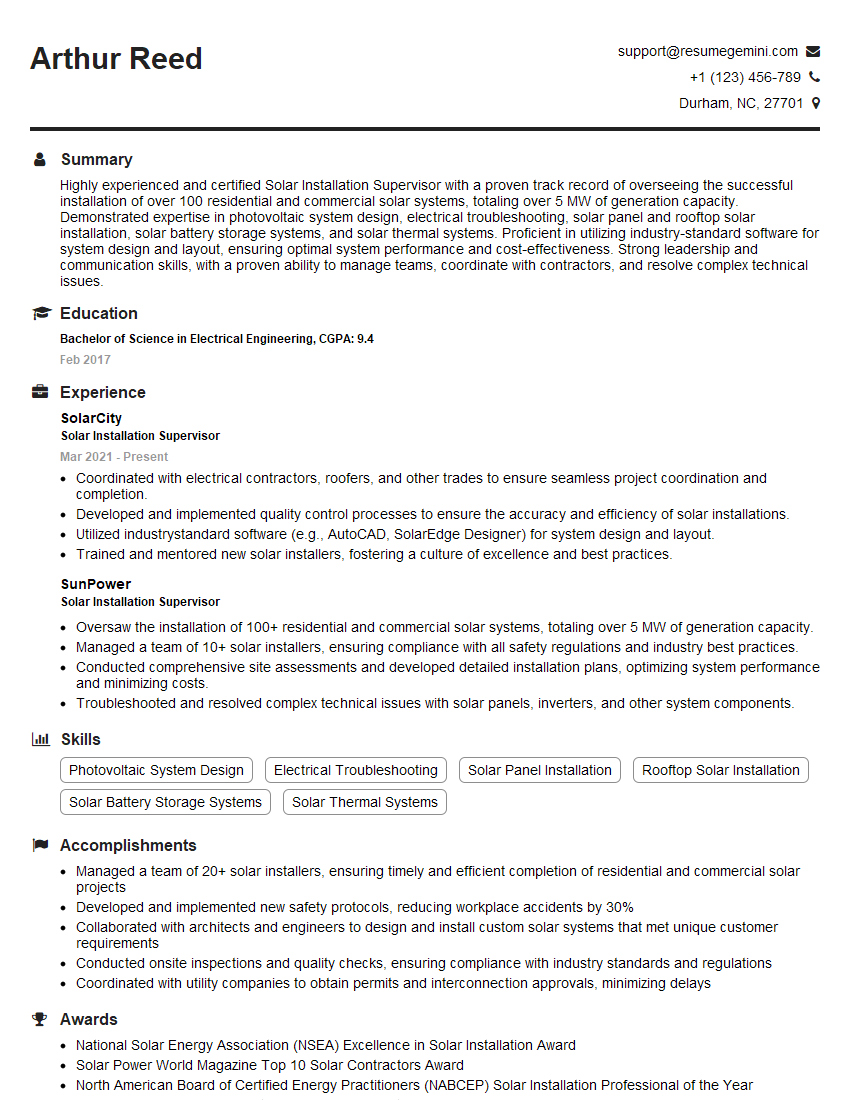
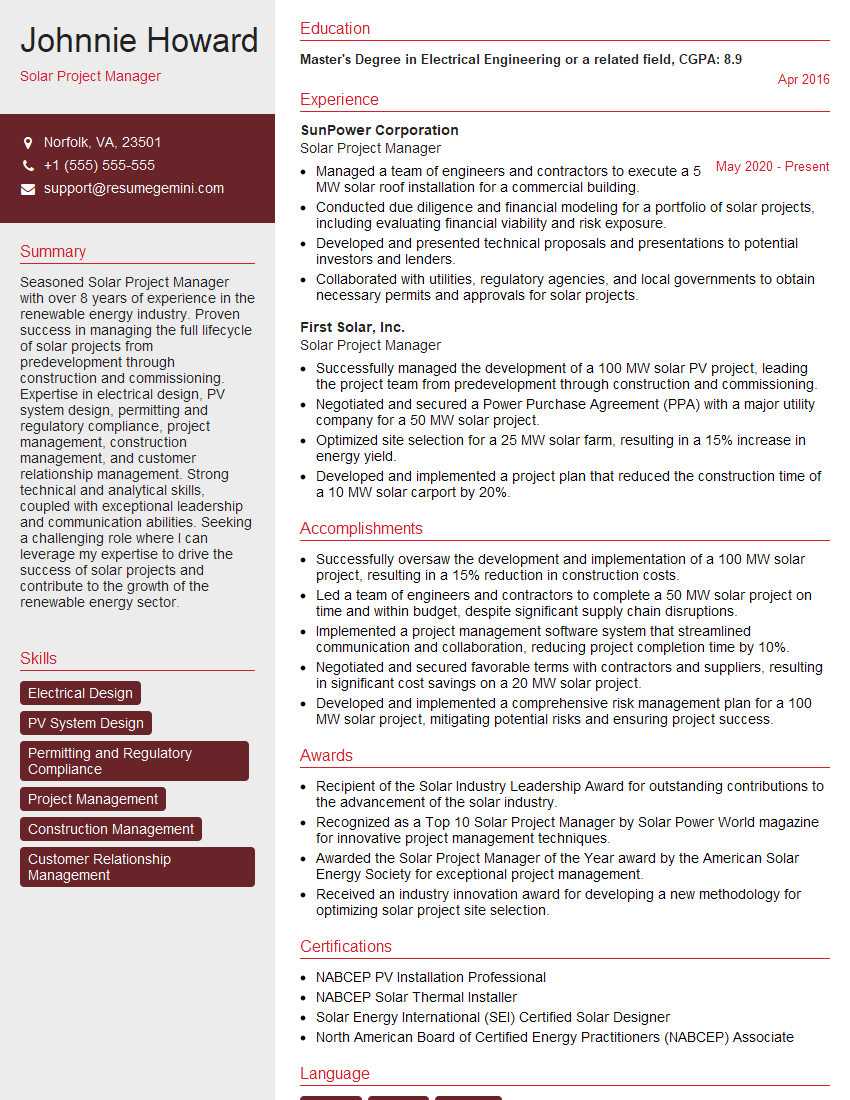
Mastering solar industry standards and codes is crucial for advancing your career in this rapidly growing field. A strong understanding of these regulations demonstrates your commitment to safety, quality, and compliance – highly valued attributes by employers. To significantly improve your job prospects, create an ATS-friendly resume that highlights your expertise. ResumeGemini is a trusted resource for building professional, impactful resumes. We offer examples of resumes tailored to showcasing expertise in Knowledge of solar industry standards and codes to help you present your qualifications effectively.

Explore more articles
Users Rating of Our Blogs
Share Your Experience
We value your feedback! Please rate our content and share your thoughts (optional).
What Readers Say About Our Blog
Very informative content, great job.
good