Every successful interview starts with knowing what to expect. In this blog, we’ll take you through the top Knowledge of variousproofing methods (contract press, digital, inkjet, etc.) interview questions, breaking them down with expert tips to help you deliver impactful answers. Step into your next interview fully prepared and ready to succeed.
Questions Asked in Knowledge of variousproofing methods (contract press, digital, inkjet, etc.) Interview
Q 1. Explain the differences between contract, digital, and inkjet proofing methods.
The three proofing methods – contract, digital, and inkjet – offer different levels of accuracy, cost, and speed. Think of them as representing a spectrum of proofing sophistication.
- Contract Proofing: This is the most traditional method, involving a physical printed proof produced on a high-quality press, often mimicking the final print process as closely as possible. This might be a small run of the final material or a specialized proofing press. It provides a very good visual representation of the final product and allows for tactile evaluation of the paper and ink.
- Digital Proofing: This utilizes a high-resolution digital file viewed on a calibrated monitor. It’s faster and cheaper than contract proofing, but its accuracy relies heavily on the calibration of the monitor and the soft proofing profile.
- Inkjet Proofing: This method uses an inkjet printer with specialized inks and papers designed to accurately simulate the color and texture of the final print. It bridges the gap between contract and digital proofing, offering a physical proof with improved color accuracy compared to standard inkjet, but usually at a higher cost than digital proofing.
Essentially, contract proofing is the most accurate but slowest and most expensive; digital is the fastest and cheapest but least accurate; inkjet sits in the middle, balancing accuracy, speed, and cost.
Q 2. What are the advantages and disadvantages of contract proofing?
Contract proofing, while offering the highest level of accuracy, has its own set of advantages and disadvantages.
- Advantages:
- High Accuracy: It provides the most reliable representation of the final printed piece, as it uses a similar process and materials.
- Tactile Feedback: You can physically examine the paper, ink, and overall texture.
- Client Approval: Clients often find it easier to evaluate a physical proof.
- Disadvantages:
- High Cost: Setting up the press and running even a small print run can be expensive.
- Time-Consuming: It’s a relatively slow process, creating delays in the project timeline.
- Wasteful: It produces physical waste, particularly if multiple proofs are needed.
- Logistical Challenges: Shipping and handling of physical proofs can be complex, especially internationally.
For example, a high-end packaging company might choose contract proofing for a luxury brand, despite the cost, to ensure perfection in the final product. However, for a large volume print job where cost is paramount, contract proofing might not be feasible.
Q 3. Describe the process of digital proofing, including software and hardware involved.
Digital proofing leverages software and hardware to create a virtual representation of the printed piece.
Process:
- File Preparation: The design file is prepared in a suitable format (e.g., PDF/X-1a).
- Software Selection: Specialized software such as Adobe Acrobat Pro, Color management software (e.g., X-Rite i1Profiler), and dedicated proofing applications are used.
- Monitor Calibration: The monitor is calibrated using a colorimeter or spectrophotometer to ensure accurate color representation. This is crucial; an uncalibrated monitor can lead to significant color shifts.
- Soft Proofing: The software simulates the color appearance on the target printing device by applying color profiles. This creates a digital preview that closely matches the final print output.
- Review and Approval: The digital proof is reviewed and approved by the client and stakeholders.
Software and Hardware:
- Software: Adobe Acrobat Pro, dedicated color management software (e.g., X-Rite i1Match), and potentially dedicated proofing software are used.
- Hardware: A high-resolution calibrated monitor equipped with a colorimeter is essential for accuracy. A spectrophotometer might be used for a more precise calibration.
For instance, a marketing agency designing website banners would likely use digital proofing for rapid client approvals and cost-effectiveness.
Q 4. How does inkjet proofing differ from other methods in terms of color accuracy?
Inkjet proofing distinguishes itself from other methods in its ability to produce a physical proof that closely mimics the final printed output, bridging the gap between the visual assessment of digital proofing and the tactile experience of contract proofing.
Color Accuracy: High-end inkjet proofing systems use specialized inks and papers formulated to achieve accurate color reproduction. These inks have a wider gamut (range of reproducible colors) than standard inkjet inks. While still not as precise as contract proofing, the improved color accuracy makes them significantly better than standard inkjet printing for proofing purposes. However, the color gamut and accuracy are still dependent on the printer and media used.
In contrast, digital proofing relies entirely on the screen’s accuracy, while contract proofing might not exactly match the intended process (depending on the method used). Inkjet proofing offers a physical representation which allows for an evaluation of the inks’ behavior on the particular substrate.
Q 5. What are the key considerations when choosing a proofing method for a specific project?
Choosing the right proofing method involves a careful assessment of several factors:
- Budget: Contract proofing is the most expensive, followed by inkjet, then digital.
- Time Constraints: Digital proofing is the fastest; contract proofing is the slowest.
- Accuracy Requirements: Contract proofing provides the highest accuracy; digital proofing the lowest.
- Project Complexity: Complex projects requiring precise color matching might necessitate contract or high-end inkjet proofing.
- Client Preferences: Some clients prefer a physical proof, while others are comfortable with digital approvals.
- Print Process: The proofing method should ideally simulate the final print process as closely as possible.
For instance, a short-run, high-end magazine might justify the cost of contract proofing for superior color accuracy. Conversely, an email marketing campaign might only need digital proofing for quick client feedback.
Q 6. How do you ensure color consistency across different proofing methods?
Maintaining color consistency across different proofing methods requires meticulous color management throughout the entire workflow.
- Color Profiles: Accurate ICC (International Color Consortium) profiles are crucial. These profiles describe the color characteristics of each device (monitor, printer, press) involved.
- Calibration and Profiling: Regular calibration and profiling of all devices are essential to ensure consistency.
- Standardized Workflow: A standardized workflow ensures all steps use consistent settings and profiles.
- Proofing Standards: Adhering to industry standards, such as ISO standards for color management, helps maintain accuracy.
- Reference Standards: Using reference color charts, like Pantone guides, helps ensure visual consistency.
For example, a company printing marketing materials might use a spectrophotometer to create ICC profiles for its monitors and printers, ensuring accurate color reproduction across digital and inkjet proofs.
Q 7. Explain the role of color profiles in proofing.
Color profiles are the cornerstone of accurate color reproduction across different devices and proofing methods. They act as translators between devices, ensuring that the colors intended by the designer appear accurately on the screen, the inkjet proof, and the final print.
An ICC profile is a mathematical description of a device’s color characteristics. It maps the device’s color space to a standardized color space, such as CIELAB. This allows for conversion between different color spaces, ensuring consistent color representation. Without proper color profiles, the same color might appear vastly different on a monitor, an inkjet proof, and the final print, leading to discrepancies and costly reprints.
For example, an ICC profile for a specific inkjet printer will describe how that printer reproduces colors, allowing the digital proofing software to accurately simulate the output of that printer. Similarly, the monitor profile enables the software to compensate for the monitor’s inherent color deviations.
Q 8. Describe your experience with different types of proofing substrates.
My experience with proofing substrates is extensive, encompassing a wide range of materials tailored to different printing processes. For example, in offset printing, I frequently work with coated and uncoated papers, varying in weight and finish (gloss, matte, etc.). These substrates influence color reproduction and ink absorption, requiring careful consideration during proofing. For digital printing, I’ve used various inkjet papers and synthetic substrates like polypropylene and PVC, each impacting the vibrancy and durability of the final product. With flexographic printing, the substrate can be anything from corrugated board to plastic films, demanding a specific proofing process and material to accurately mimic the final print. I also have experience with contract proofing, where the choice of substrate is dictated by the client’s specifications and the final print application, requiring me to be adaptable and knowledgeable across a wide spectrum of materials.
Understanding the substrate’s impact on color and texture is crucial. For instance, a matte paper will absorb ink differently than a glossy one, resulting in variation in color density and appearance. Choosing the right proofing substrate allows for accurate color prediction and avoids unpleasant surprises during the final print run.
Q 9. How do you handle discrepancies between proofs and final prints?
Discrepancies between proofs and final prints are unfortunately common and necessitate a systematic approach to identification and resolution. My first step is to carefully analyze the differences, noting the specific color variations, tonal inconsistencies, or image distortions. This often involves comparing the proof with the press sheet under controlled lighting conditions using a spectrophotometer to obtain objective color measurements. Then I investigate the potential causes, focusing on factors like:
- Substrate differences: Minor variations in paper or substrate properties can influence color reproduction.
- Ink variations: Differences in ink formulations or print settings between the proof and the press.
- Calibration issues: Miscalibration of proofing devices or the printing press itself.
- Environmental factors: Temperature and humidity can impact ink drying and color appearance.
Once the cause is determined, corrective actions are implemented. This could involve adjusting press settings, recalibrating devices, or even re-proofing with a modified substrate or ink profile. Documentation of each step is crucial for preventing future discrepancies. A robust communication channel with the print production team is also essential for a smooth resolution process.
Q 10. What are some common proofing errors and how do you avoid them?
Common proofing errors often stem from a lack of attention to detail or inadequate understanding of the printing process. Some prevalent mistakes include:
- Incorrect color profiles: Using an incompatible color profile leads to significant color shifts between proof and print.
- Poor calibration: Uncalibrated devices produce inaccurate color representation.
- Ignoring substrate impact: Failure to consider how the substrate influences color reproduction.
- Insufficient lighting: Viewing proofs under inconsistent or unsuitable lighting conditions.
- Ignoring dot gain: Not accounting for dot gain (increase in dot size during printing) can lead to significant color discrepancies.
Preventing these errors involves a proactive approach. This includes ensuring proper device calibration, using correct color profiles matched to the specific printing process and substrate, using standardized lighting conditions, and employing a thorough proofing workflow that incorporates quality checks at each stage. Regular maintenance of equipment and thorough training for all personnel involved are also vital.
Q 11. Explain your understanding of color gamut and its relevance to proofing.
Color gamut refers to the range of colors that a particular device or printing process can reproduce. Understanding color gamut is crucial in proofing because it dictates the limitations of what can be accurately represented on a proof and subsequently on a final print. Different devices have different gamuts; for instance, the color gamut of a digital proofing system will be different from that of an offset printing press. A color that falls outside the gamut of the printing press cannot be accurately reproduced, potentially leading to significant color discrepancies.
In proofing, we use software to simulate the gamut of the target printing process. This often involves employing specific ICC profiles to translate colors from the digital proof to the printing press’s capabilities. We also use software to identify potential out-of-gamut colors, allowing for adjustments to the design to ensure the final print remains as faithful to the design intent as possible, within the limitations of the printing process’s gamut.
Q 12. How do you manage proofing workflows for large-scale projects?
Managing proofing workflows for large-scale projects demands meticulous planning and efficient organization. I typically begin with a detailed project plan that outlines proofing requirements, timelines, and responsibilities. This includes clearly defining proofing methods, defining the chosen substrates, and establishing communication protocols with all stakeholders.
We often employ a version control system to track changes and approvals, ensuring everyone works with the most current version of the design. Automation tools are leveraged wherever possible to streamline the process, from automated color profile assignments to the creation of digital proofs. A standardized workflow, incorporating regular quality checks and approvals at each stage, ensures consistency and minimizes errors. Finally, clear documentation of each step is critical for auditing and future reference.
Q 13. What software are you proficient in for digital proofing?
My proficiency in digital proofing software is extensive. I’m highly experienced with industry-standard software such as X-Rite i1Profiler for color management, and Esko Color Engine for color conversion and proofing. I also possess expertise in Adobe Acrobat Pro for creating and reviewing PDF proofs, as well as specialized proofing software provided by various printing equipment manufacturers. My expertise extends to using these tools to create different types of digital proofs, including soft proofs, hard proofs (using inkjet printers), and contract proofs. I’m adept at utilizing the features of these software packages to create accurate representations of the final printed output, addressing issues like color management, gamut mapping, and dot gain compensation.
Q 14. Describe your experience with proofing for different printing processes (e.g., offset, flexography).
My experience spans across various printing processes, and my proofing approach adapts accordingly. Offset printing, with its high-volume capabilities and intricate color management demands, requires meticulous attention to detail and often utilizes contract proofing or high-end inkjet proofing systems to accurately represent the final print. Flexography, known for its use on flexible substrates and its unique dot gain characteristics, requires specialized proofing techniques and substrates, often using specialized flexographic proofing systems that simulate the printing press’s characteristics. In both instances, understanding the intricacies of each process, including dot gain, ink trapping, and substrate interactions, is paramount to creating an accurate and reliable proof.
For example, I’ve worked on projects involving extensive use of Pantone colors in offset printing, requiring precise matching of Pantone inks to the proof to ensure color consistency. Similarly, I’ve addressed projects with complex halftone screens and color separations in flexography, where careful proofing was critical to accurately predicting the final printed result. My experience enables me to navigate the complexities of different printing processes and deliver accurate proofs, irrespective of the chosen technique.
Q 15. How do you assess the quality of a proof?
Assessing proof quality involves a meticulous comparison against the digital design file and a thorough evaluation across several key aspects. It’s like comparing a blueprint to the actual building under construction—every detail matters.
Color Accuracy: I use a calibrated monitor and spectrophotometer to ensure colors match the design precisely. I look for any metamerism (colors appearing different under various light sources).
Image Sharpness and Resolution: I check for blurriness, pixelation, or any loss of detail, particularly in areas of high resolution or fine text.
Text Integrity: Fonts, kerning (spacing between letters), and leading (spacing between lines) are critically examined for accuracy and consistency. Any missing or broken text is a major concern.
Registration: In multi-color printing, I ensure perfect alignment of colors. Misregistration results in blurry or misaligned images.
Paper and Ink Quality: The type and quality of paper and inks significantly influence the final outcome. I carefully assess if they match the specifications. For example, I verify that the ink’s density and color saturation are correct.
Overall Impression: Finally, I step back and consider the overall visual impact. Does the proof convey the desired message and aesthetic? Does it meet the client’s expectations?
Career Expert Tips:
- Ace those interviews! Prepare effectively by reviewing the Top 50 Most Common Interview Questions on ResumeGemini.
- Navigate your job search with confidence! Explore a wide range of Career Tips on ResumeGemini. Learn about common challenges and recommendations to overcome them.
- Craft the perfect resume! Master the Art of Resume Writing with ResumeGemini’s guide. Showcase your unique qualifications and achievements effectively.
- Don’t miss out on holiday savings! Build your dream resume with ResumeGemini’s ATS optimized templates.
Q 16. What are your preferred methods for communicating proofing issues?
Effective communication is key when addressing proofing issues. I prioritize clarity and precision, using a multi-pronged approach.
Detailed annotations on the proof itself: I use software tools to mark specific areas needing correction with clear descriptions of the problem. A simple visual marker is often insufficient; detailed textual annotations are crucial.
Organized email reports: I compile a summary of the issues identified, referencing the annotations on the proof with clear instructions and preferred resolutions for each problem. Including images further enhances clarity.
Client meetings (when necessary): For complex or critical issues, a direct conversation allows for real-time clarification, addressing concerns and facilitating faster resolution. I find this to be especially helpful when dealing with subjective aspects of design.
Version control: Tracking changes through different iterations of the proof allows for seamless review and eliminates confusion about the latest adjustments.
Q 17. Describe a time you had to troubleshoot a proofing problem.
During a project involving a high-volume, four-color print job of brochures, we encountered a significant color shift in the final proof compared to the client-approved digital version. The blues were noticeably lighter and less saturated than expected.
My troubleshooting process involved:
Color profile verification: First, I checked that the correct color profile was used throughout the entire workflow, from design to proofing. A simple oversight in the profile selection could explain the color mismatch.
Ink density evaluation: We then tested the ink density on the press to ensure it aligned with the required specifications. Variations in ink density directly influence color output.
Substrate analysis: I examined the paper stock for any unusual characteristics that might have influenced ink absorption. For instance, a change in paper type can cause a shift in color appearance.
Press calibration: The press itself was meticulously calibrated to ensure proper color registration and ink delivery.
Software settings: We checked the software settings used for outputting the print file. Any settings affecting color management could have contributed to the problem.
After methodical investigation, we discovered a miscalibration in the printing press. Once recalibrated, the subsequent proofs accurately reflected the approved digital version. The experience reinforced the importance of thorough pre-press checks and the need for precise color management at every stage.
Q 18. How do you stay updated on the latest advancements in proofing technology?
Staying current in this dynamic field demands continuous learning. My strategies include:
Industry publications and online resources: I regularly read trade magazines, online journals and attend webinars, focusing on advancements in printing technology, color management, and proofing software.
Vendor relationships: Maintaining strong relationships with equipment and software vendors provides access to the latest updates and training opportunities. They offer insights into emerging technologies and best practices.
Industry conferences and trade shows: Attending industry events allows direct interaction with leading experts and the chance to explore innovative products and techniques firsthand. It’s a great platform to see new developments and understand the industry trends.
Professional development courses: I actively seek out workshops and courses to enhance my expertise in specific areas such as color management or specific proofing software.
Q 19. What is your experience with soft proofing?
Soft proofing, using digital simulations to preview the printed output, is a valuable tool, but it’s not a replacement for hard proofing. Think of it as a preliminary sketch versus the final painting.
My experience with soft proofing includes utilizing industry-standard software such as Adobe Acrobat Pro with color profiles to accurately simulate the print output based on the printer and substrate selected. This helps to catch many potential errors early in the process and helps save time and resources. However, I always rely on hard proofing for final color and quality verification, as soft proofing relies on simulations that may not always perfectly capture the nuances of the final print. For instance, subtle texture differences in the paper are difficult to accurately represent in a soft proof.
Q 20. How do you handle client feedback on proofs?
Handling client feedback on proofs is a crucial aspect of my role. It requires patience, empathy, and clear communication. My process involves:
Active listening and clarification: I ensure I fully understand the client’s concerns, asking clarifying questions to avoid misinterpretations.
Objective assessment: I carefully evaluate the feedback, separating subjective preferences from objective issues like color accuracy or registration problems.
Technical explanation: When addressing technical issues, I provide clear explanations of the cause and possible solutions, avoiding technical jargon whenever possible.
Collaboration and problem-solving: We collaboratively explore solutions, balancing the client’s vision with practical constraints and technical feasibility.
Revised proofs and revisions tracking: I generate revised proofs, clearly documenting the changes made in response to feedback. We maintain a detailed log of all revisions.
Q 21. Explain the importance of proofing in pre-press production.
Proofing plays a vital role in pre-press production. It acts as a crucial checkpoint before the final print run, reducing costly errors and rework. It is like performing a final inspection of a car before delivery to a customer to avoid potential issues.
Error detection: Proofs identify potential problems such as color inaccuracies, misaligned images (misregistration), missing text, font issues, and low-resolution images, preventing these errors from reaching the final printed product.
Client approval: Proofing provides the client with a final opportunity to review the design and approve it before mass production begins, minimizing changes and costly reprints.
Cost reduction: By catching errors early, proofing avoids the significant expense of reprinting large quantities of materials. The small cost of proofing is far outweighed by the potential savings on reprint costs.
Quality assurance: A meticulous proofing process ensures the final printed material meets the highest quality standards, enhancing the brand’s reputation and projecting a professional image.
Q 22. How do you balance speed and accuracy in the proofing process?
Balancing speed and accuracy in proofing is a delicate act, much like a tightrope walk. You need both to ensure client satisfaction and avoid costly reprints. We achieve this through a multi-pronged approach.
- Workflow Optimization: We use automated systems for tasks like file pre-flighting and color management, speeding up the process without sacrificing quality. This includes implementing standardized procedures and using digital asset management systems for efficient file handling.
- Technology Integration: Investing in high-speed, high-resolution proofing devices, like the latest generation inkjet or digital proofers, allows for quicker turnaround times without compromising color accuracy. For example, using a spectrophotometer for accurate color measurement is crucial.
- Experienced Personnel: Our team undergoes rigorous training to quickly identify potential issues like color discrepancies or missing elements, minimizing rework and delays. Regular calibration checks and quality control measures are integral to this process.
- Multiple Proofing Stages: We employ a tiered proofing system – soft proof, contract proof, and potentially a press proof – allowing for catches at different stages, preventing major problems from reaching the final print. Early detection means faster fixes.
For instance, a recent project involved a complex packaging design with intricate color gradients. Through our optimized workflow, we produced accurate soft proofs in less than 24 hours, allowing the client to provide feedback promptly and avoiding costly delays.
Q 23. What are some cost-saving measures you can implement in proofing?
Cost-saving in proofing is key. It’s about smart choices, not cutting corners. We achieve this by:
- Soft Proofing First: Soft proofing is significantly cheaper than creating physical proofs. We leverage this extensively for initial reviews, catching obvious errors early. This saves on paper, ink, and shipping.
- Targeted Proofing: We don’t create full-scale proofs for every revision. Instead, we focus on specific areas needing review, creating smaller, more targeted proofs. For example, if only the logo needs adjustment, we’ll proof just that element.
- Efficient Ink and Paper Selection: We use cost-effective but high-quality inks and papers appropriate for the proofing method and project requirements. There’s no need for expensive art paper if a simple contract proof will suffice.
- Proofing Software & Automation: Investment in smart software streamlines the proofing workflow. Automation reduces manual intervention, saving time and minimizing errors, thus reducing the need for reprints.
- Reusable Proofing Materials: For certain types of contract proofing, we explore the use of sustainable and reusable materials wherever possible.
By prioritizing soft proofing and using targeted approaches, we recently reduced proofing costs on a large-scale print project by over 30%, demonstrating the value of a strategic approach.
Q 24. How do you ensure the security of digital proofs?
Digital proof security is paramount. We employ several measures to protect sensitive client data:
- Secure File Transfer Protocols (SFTP): All digital proofs are transferred via encrypted SFTP servers, ensuring confidentiality during transmission.
- Password Protection and Access Control: Proofs are password-protected, and access is limited to authorized personnel only. We utilize role-based access control within our systems.
- Watermarking: Important proofs are often watermarked with client names and project details to deter unauthorized use or distribution.
- Regular Security Audits: We conduct regular security audits to identify vulnerabilities and implement necessary updates to our systems and software.
- Data Encryption: Digital proofs are stored on encrypted hard drives and servers, adding an extra layer of protection against unauthorized access.
In the event of a data breach, we have a comprehensive incident response plan in place to mitigate potential damage and ensure compliance with data protection regulations.
Q 25. Describe your experience with different types of proofing inks.
My experience encompasses a wide range of proofing inks, each with its strengths and weaknesses:
- Process Inks (CMYK): These are the most common, used in offset and inkjet proofing. The accuracy depends heavily on the calibration of the proofing system and the type of paper used. Variations in ink formulation between different manufacturers can also affect color consistency.
- Spot Colors: These are Pantone-matched inks that provide very accurate color representation for specific brand colors. They are critical for branding consistency but can be more expensive than process inks.
- Digital Inks: Used in digital proofing, they offer greater flexibility and allow for on-demand proofing. The color gamut can be broader than CMYK, leading to better color reproduction of certain colors.
- Eco-friendly Inks: Growing emphasis on environmental responsibility has led to the use of inks with lower environmental impact, such as vegetable-based inks. Performance and color accuracy can vary among different formulations.
I’ve worked with various ink types, from traditional CMYK to specialized inks for packaging substrates. Understanding the properties of each ink type is crucial for selecting the appropriate one for a particular project and achieving the best possible results.
Q 26. What is your understanding of the impact of substrate on proofing results?
Substrate has a profound influence on proofing results. The same ink will appear differently on various surfaces due to differences in absorbency, texture, and brightness. This is a critical aspect I consider in every proofing project.
- Paper Type: Coated, uncoated, matte, or glossy papers all impact ink absorption and color appearance. A proof on coated stock will look different than the final print on uncoated stock.
- Paper Weight: Thicker papers can show more vibrant colors due to less show-through from the other side. The weight affects ink absorption, and color density.
- Surface Texture: Textured papers can alter color perception, adding visual interest but sometimes affecting the sharpness of details. It influences ink spread and drying.
- Brightness: The brightness of the paper affects the perceived color. A brighter substrate will make colors appear lighter, while a darker one will make them appear richer.
For example, proofing a packaging design on a thick, coated board is crucial to accurately simulate the final print. We often source matching substrate samples for accurate proofing to avoid surprises at press time.
Q 27. How do you ensure the environmental sustainability of your proofing practices?
Environmental sustainability is a high priority. We aim for eco-friendly proofing practices:
- Reduced Paper Consumption: By utilizing soft proofing extensively and only printing physical proofs when absolutely necessary, we minimize paper waste. We also use recycled paper where appropriate.
- Eco-Friendly Inks: We prefer inks with low VOC (volatile organic compound) content, plant-based inks, and soy-based inks to reduce our environmental footprint.
- Energy-Efficient Equipment: We use energy-efficient proofing devices and monitor our energy consumption to minimize our carbon emissions.
- Waste Management: We have a comprehensive waste management program to recycle inks, papers, and other materials responsibly.
- Digital Workflow: Our primarily digital workflow reduces the need for physical transportation and minimizes packaging and shipping materials.
We regularly review and update our practices to ensure we remain at the forefront of sustainable proofing techniques. These efforts contribute to a smaller environmental impact and align with our commitment to responsible business practices.
Q 28. What are the legal and contractual considerations related to proofing?
Legal and contractual considerations in proofing are essential. These elements protect both the client and the printing company.
- Proof Approval: A clearly defined and signed proof approval process is crucial. This document establishes the client’s acceptance of the proof as a representation of the final print, limiting liability for discrepancies within acceptable tolerances.
- Copyright and Intellectual Property: Clear ownership of the artwork and the proof needs to be established. This involves proper documentation and agreements to avoid any disputes regarding intellectual property rights.
- Liability Clause: Contracts should specify the extent of liability for discrepancies between the proof and the final print. This often includes specifying acceptable tolerances for color variations and other print-related inconsistencies.
- Dispute Resolution: The contract should outline a process for resolving disputes, including mediation or arbitration, if necessary.
- Confidentiality: A confidentiality clause is essential to protect client artwork and data during the proofing and printing process.
We use standardized contracts that clearly define these aspects, minimizing legal risks and ensuring transparency throughout the process. This protects both parties and fosters a positive working relationship.
Key Topics to Learn for Knowledge of Various Proofing Methods (Contract Press, Digital, Inkjet, etc.) Interview
- Understanding Different Proofing Methods: Compare and contrast contract, digital, and inkjet proofing techniques, highlighting their strengths and weaknesses for various applications (e.g., high-volume print vs. short-run projects).
- Color Management and Profiles: Explain the importance of color profiles (ICC profiles) in ensuring color accuracy across different proofing methods and the final print output. Discuss color space conversions and potential challenges.
- Proofing Standards and Specifications: Familiarize yourself with industry standards and best practices for proofing, including ISO standards and relevant guidelines for different printing processes.
- Software and Technology: Gain practical experience with proofing software and hardware. Understand the functionalities and limitations of various proofing solutions, including soft proofing and hard proofing techniques.
- Substrate Considerations: Discuss how the choice of printing substrate (paper, cardstock, etc.) impacts proofing accuracy and the selection of appropriate proofing methods.
- Troubleshooting and Problem-Solving: Be prepared to discuss common proofing challenges, such as color mismatches, banding, and other print defects. Explain how you would identify and resolve these issues.
- Ink and Media Selection: Understand the relationship between ink type, media type, and the chosen proofing method. Discuss how this impacts the final print quality and color accuracy.
- Workflow and Process Optimization: Explain how you integrate proofing into the overall print production workflow, ensuring efficient and accurate results. Discuss how proofing contributes to reducing errors and waste.
Next Steps
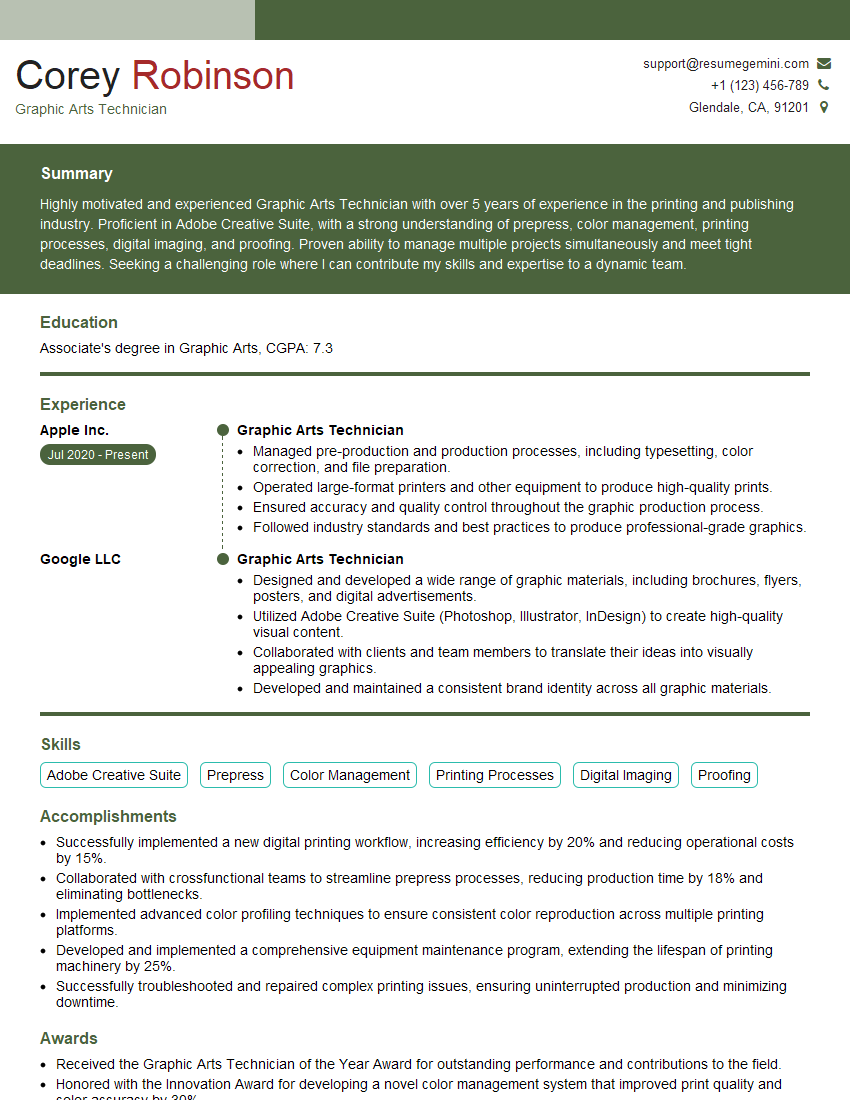
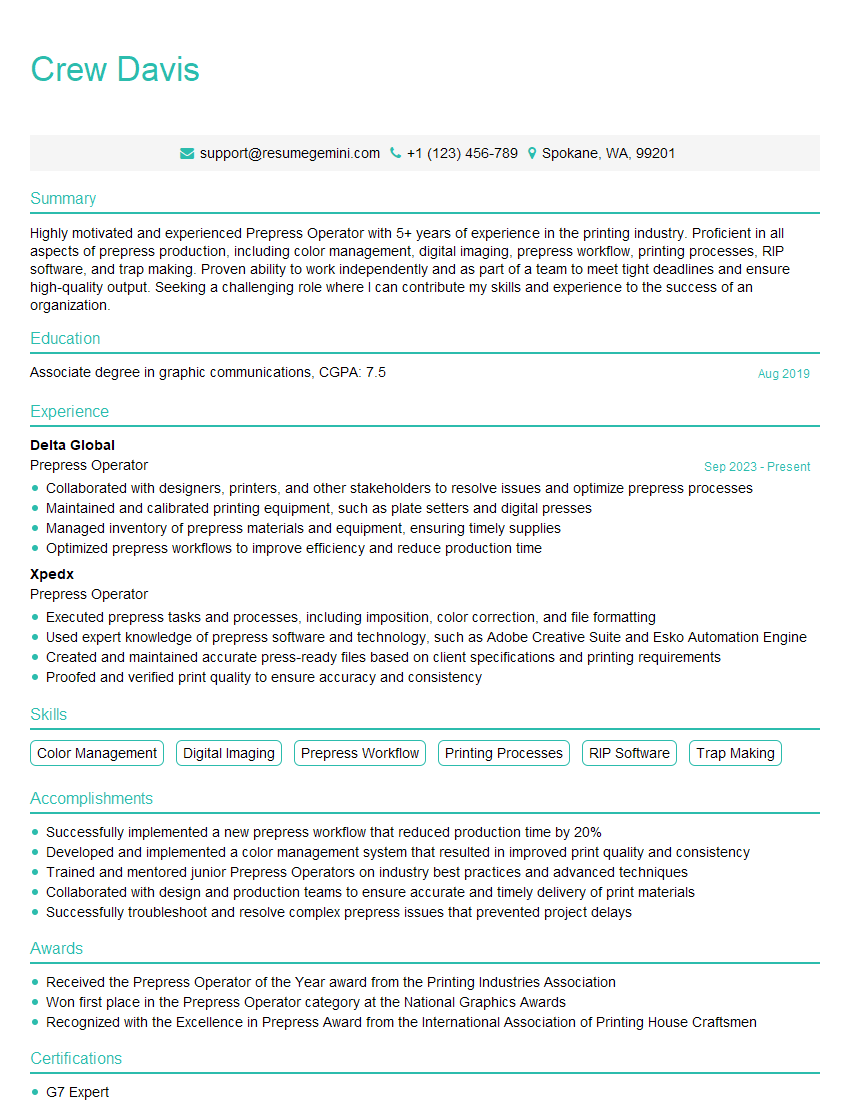
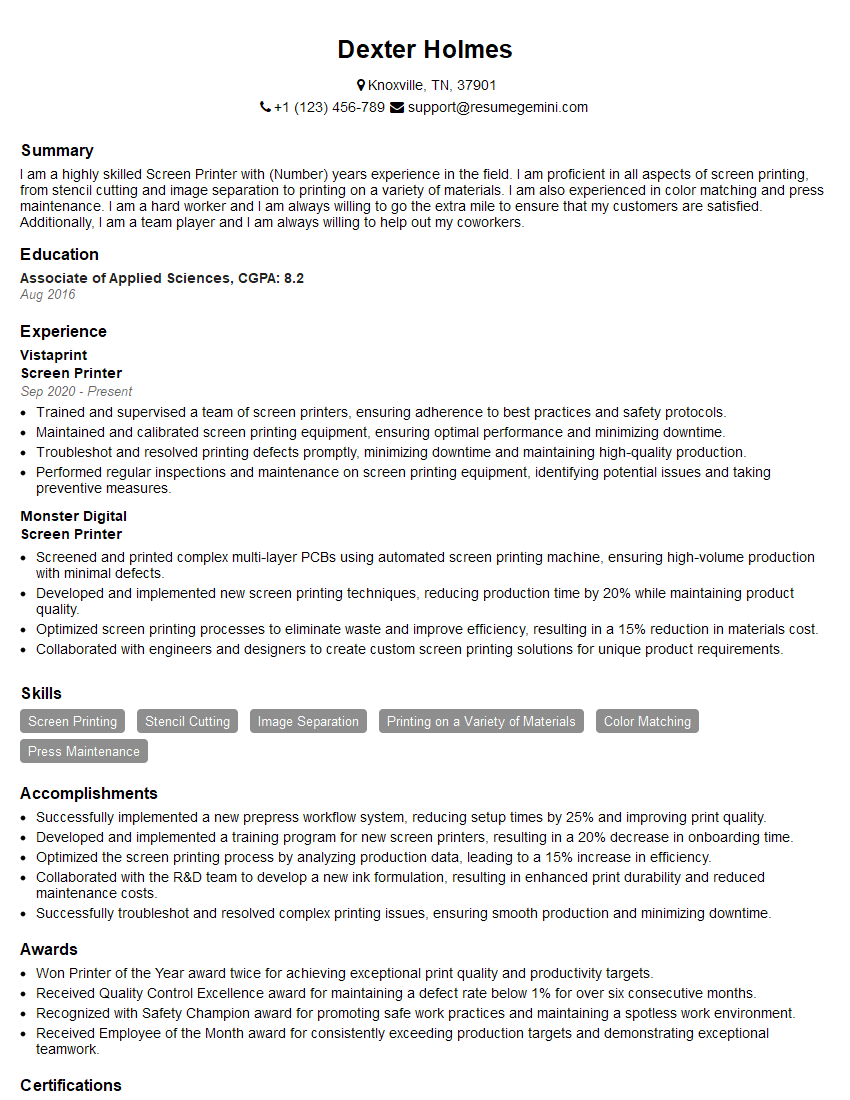
Mastering knowledge of various proofing methods is crucial for career advancement in the printing and graphic arts industries. A strong understanding of these techniques demonstrates expertise and efficiency, leading to increased responsibility and higher earning potential. To significantly boost your job prospects, create an ATS-friendly resume that highlights your skills and experience effectively. ResumeGemini is a trusted resource that can help you build a professional and impactful resume tailored to your specific skills, such as your expertise in proofing methods. Examples of resumes tailored to showcasing proficiency in Knowledge of various proofing methods (contract press, digital, inkjet, etc.) are available to guide your resume creation process.




Explore more articles
Users Rating of Our Blogs
Share Your Experience
We value your feedback! Please rate our content and share your thoughts (optional).
What Readers Say About Our Blog
Very informative content, great job.
good