Are you ready to stand out in your next interview? Understanding and preparing for Knowledge of Wallpaper Sizing and Installation interview questions is a game-changer. In this blog, we’ve compiled key questions and expert advice to help you showcase your skills with confidence and precision. Let’s get started on your journey to acing the interview.
Questions Asked in Knowledge of Wallpaper Sizing and Installation Interview
Q 1. Explain the process of calculating the required amount of wallpaper for a room.
Accurately calculating wallpaper needs prevents costly mistakes. It’s not simply about the wall’s area; pattern repeat, waste, and extra strips for matching are crucial.
First, measure the height and width of each wall you’ll be papering. Add them together for the total wall perimeter. Then, measure the height of your wallpaper rolls. Note the pattern repeat (the distance the pattern takes to repeat itself vertically). Some patterns are only a few inches; others are several feet.
Example: Let’s say a room has walls totaling 40 feet in perimeter and your wallpaper rolls are 27 feet tall with a 12-inch (1-foot) repeat. Divide the perimeter (40 feet) by the width of a single roll (usually 20.5 inches, or roughly 1.7 feet) to get the approximate number of strips needed. This would be roughly 23 strips. Account for at least a 10% waste factor for trimming and matching. Since the pattern repeats every foot, each strip uses a full length. Therefore, you will need approximately 23 rolls * 27 feet/roll = 621 feet. Since you need 23 strips and have to take into account the pattern repeat, you should plan to purchase at least 25 rolls to ensure enough material for pattern matching.
Always round up to the nearest whole roll. It’s better to have extra than to fall short mid-project.
Q 2. How do you account for pattern matching when sizing wallpaper?
Pattern matching is a crucial aspect of professional wallpaper hanging. It elevates the project from simple coverage to a polished aesthetic. Failure to match patterns results in an amateurish look.
Before you start, carefully study the wallpaper’s pattern repeat. This is the distance the pattern takes to repeat itself. Measure and mark this on the first strip. Subsequent strips must precisely align with this mark to maintain the pattern’s continuity. This requires careful measuring and cutting of each strip.
Example: If your pattern repeats every 24 inches, you’ll need to cut each strip such that the pattern aligns perfectly with the preceding strip, ensuring a seamless visual flow across the entire wall. This will involve cutting the wallpaper at the appropriate point and waste from the initial cuts. You may need to waste more material to achieve the pattern match than you’d need without pattern matching.
For complex patterns, consider creating a mock-up on a spare piece of wallpaper to practice the cutting and matching before applying it to the wall.
Q 3. What are the different types of wallpaper paste and when would you use each?
Wallpaper pastes vary in type and application, each suited to different wallpaper materials and installation needs. Selecting the right paste is vital for achieving a smooth, secure installation that avoids damage.
- Pre-mixed Pastes: Ready-to-use, convenient for smaller projects and beginners. They typically offer good adhesion for lighter wallpapers. However, they don’t have the flexibility of the other types, so if you are covering a large area, this might not be the most efficient choice.
- Powder Pastes: Mixed with water, offering flexibility in adjusting the consistency for various wallpaper types. They provide stronger adhesion, making them suitable for heavier wallpapers and textured surfaces.
- Ready-mixed Heavy-Duty Paste: Best for heavier, textured, or vinyl wallpapers, guaranteeing robust adhesion and preventing slippage.
When to use each: Pre-mixed is ideal for quick, smaller jobs with lightweight wallpapers. Powder pastes are versatile and suitable for most projects. Heavy-duty paste is necessary for demanding wallpapers.
Q 4. Describe the steps involved in preparing a wall for wallpaper installation.
Wall preparation is paramount; it ensures a flawless wallpaper installation. A poorly prepared wall compromises the result, no matter the quality of the wallpaper or paste used.
Steps:
- Clean the Wall: Remove all loose paint, dirt, dust, cobwebs etc. A thorough cleaning using sugar soap is ideal. Allow to dry completely.
- Repair Damages: Fill any holes, cracks, or imperfections with spackle or plaster. Sand smooth once dry.
- Prime the Wall (If Needed): If the wall is porous, heavily textured, or previously painted with a glossy finish, priming creates an even surface for better adhesion. A special primer is designed for wallpaper use.
- Seal the Wall (If Needed): If the wall is heavily textured, sealing helps to prevent the texture from showing through the wallpaper.
- Check for Straightness: Use a level to check for unevenness. You may need to skim coat areas if needed.
Proper preparation translates to a more professional, lasting result. Neglecting this step invites problems later.
Q 5. How do you handle difficult wall surfaces, such as textured walls or uneven surfaces?
Textured walls and uneven surfaces can present challenges, but with the right approach, they can be successfully papered. The key lies in creating a smooth base for the wallpaper to adhere to.
For textured walls: A lining paper is applied first. This acts as a barrier, smoothing the surface and providing a uniform foundation for the wallpaper. Choose a lining paper designed to handle texture.
For uneven surfaces: Minor imperfections can be addressed with spackle and sanding. Significant unevenness requires more extensive repairs, possibly including skimming the wall with plaster and sanding until a smooth finish is achieved. In extreme cases, a professional plasterer’s expertise may be required.
Choosing a thicker and more durable wallpaper might also work, especially for uneven surfaces. It will help mask minor imperfections better. But if the imperfections are too great, the use of lining paper will be mandatory to produce a good quality finish.
Q 6. What tools and materials are essential for professional wallpaper installation?
Professional wallpaper installation demands the right tools for efficiency and precision. The tools will depend on the job; however, these are some essential items for most projects.
- Measuring Tape: Accurate measurements are crucial.
- Level: Ensures straight hanging.
- Utility Knife/Sharp Blade: For precise cutting.
- Seam Roller: To secure seams and remove air bubbles.
- Smoothing Brush or Sponge: To work out air bubbles and wrinkles.
- Paste Brush or Roller: For applying paste evenly.
- Mixing Tray: For mixing wallpaper paste (if using powder paste).
- Drop Cloths: To protect flooring and furniture.
- Stepladder: Safe access to higher areas.
- Pencil: For marking wall measurements.
- Measuring Square or T-Square: Assists with accurate cutting.
- Putty Knife: For removing excess paste.
- Primer: For preparation of walls (if needed).
- Lining Paper: For smoothing uneven or textured walls (if needed).
Having the appropriate tools readily available makes the wallpaper installation a smoother, more efficient, and more professional job.
Q 7. Explain the proper technique for cutting and applying wallpaper.
Precise cutting and application are key to a professional finish. Careful attention to detail yields impressive results.
- Cutting: Measure the wall height accurately, adding an extra few inches to the top and bottom for trimming. Use a sharp blade to make clean cuts. For pattern matching, align the pattern carefully and cut the strips appropriately.
- Applying Paste: Follow the manufacturer’s instructions for applying paste to the back of the wallpaper (or wall, depending on the type of paste you are using). Even paste application is crucial to prevent bubbles and ensure adhesion.
- Applying to the Wall: Start at a corner or a reference point. Using a smoothing brush or sponge, work from the center to the edges, removing any air bubbles or wrinkles. Overlapping strips slightly helps to hide seams. Trim excess paper with a sharp blade.
- Seaming: Use a seam roller to press the seams firmly and ensure secure adhesion.
- Cleaning: Immediately remove excess paste with a damp cloth before it dries.
Practice makes perfect. If this is your first time, start with a less visible area for practice. A methodical approach ensures a clean, professional finish.
Q 8. How do you ensure proper alignment and matching of wallpaper patterns?
Ensuring proper alignment and matching of wallpaper patterns is crucial for a professional finish. It starts with careful pre-planning. Before even applying paste, I meticulously measure the wall and calculate the number of rolls needed, accounting for pattern repeats. Most patterns have a ‘match’ – the vertical distance the pattern needs to align from one strip to the next. This is usually indicated on the wallpaper’s label. I then lay out several strips on the floor, ensuring the pattern matches perfectly at the seams before applying them to the wall. This ‘dry run’ helps visualize the pattern flow and catch any mismatches early.
For complex patterns, I might use a plumb line to mark a vertical reference point on the wall, ensuring that each strip starts at the same vertical position. This precision minimizes errors and guarantees a seamless look across the entire wall. Imagine trying to put together a large jigsaw puzzle; the same precision and attention to detail is required here. Finally, I carefully align each strip by overlapping the previous one, adjusting for the pattern repeat until it is perfectly matched.
Q 9. What are some common problems encountered during wallpaper installation, and how do you address them?
Common wallpaper installation problems include uneven walls, poorly matched patterns (as discussed above), air bubbles, and tears. Uneven walls require careful preparation; I often use a lightweight filler to smooth out minor imperfections before hanging wallpaper. Air bubbles are usually caused by insufficient smoothing or paste application. My solution? I use a smoothing tool and a seam roller to work the air out, starting from the centre and moving outwards to prevent tearing the delicate paper. Tears are more challenging and require careful patching, often using a small piece of matching wallpaper, and blending the edges carefully using a seam roller to minimize the visibility. If a large section is damaged, replacing the entire strip is the preferred approach.
Another issue is wallpaper not adhering properly to the wall. This can be due to several factors, including improper surface preparation (dirty, dusty walls don’t adhere well) or using the wrong type of paste for the specific wallpaper. I always ensure that the surface is clean, dry, and properly primed before application. Choosing the right adhesive is equally crucial. I always consult the wallpaper’s instructions for the recommended adhesive and application method.
Q 10. How do you handle seams to ensure a smooth, invisible finish?
Handling seams to create an invisible finish is an art. First, the strips must be perfectly aligned, as mentioned earlier. Then, I use a seam roller to firmly press the edges together, removing any air bubbles. The key is not to press too hard, as this could damage the paper. I work from the centre of the seam outwards, ensuring a smooth, even pressure. The right type of adhesive plays a significant role; a high-quality, quick-drying adhesive minimises the risk of visible seams. For particularly challenging patterns or heavier wallpapers, I might use a special seam sealer designed for the purpose, creating an almost perfectly invisible bond. Think of it like finely stitching together two pieces of fabric – the result should be smooth and unnoticeable.
Q 11. Describe your experience with different types of wallpaper (vinyl, non-woven, etc.)
I have extensive experience with various wallpaper types. Vinyl wallpapers are durable, washable, and easy to clean, making them ideal for high-traffic areas. However, they can be more challenging to install due to their thickness. Non-woven wallpapers are easier to work with because the paste is applied directly to the wall, not the wallpaper itself, preventing warping. They are also easier to remove. I’ve also worked with grasscloth, which provides a natural, textured look but requires extra care during installation because of its delicate fibres. The choice of wallpaper depends on the client’s needs, budget, and the characteristics of the space. Each type presents its own set of challenges and advantages that I address with experience and appropriate techniques.
Q 12. What safety precautions do you take when using wallpaper paste and other materials?
Safety is paramount. When working with wallpaper paste, I always wear gloves to protect my hands from irritation. The paste is usually water-based, but some formulations can still cause skin sensitivity. I also work in well-ventilated areas to minimize exposure to any volatile compounds. If I’m using a solvent-based adhesive (which is less common now with the wide availability of eco-friendly options), I ensure that the room is adequately ventilated and I use a respirator to avoid inhalation. Sharps like utility knives and scissors are handled with care and put away safely when not in use. Eye protection is also a must, especially when working with sharp tools or potentially messy materials.
Q 13. How do you clean up after a wallpaper installation project?
Cleaning up after wallpaper installation is a vital part of the process. I start by removing all excess paste and debris from the floor and walls using a damp sponge or cloth. For any stubborn paste spots, a non-abrasive cleaner is usually sufficient. All tools are carefully cleaned and stored away for future use. I use a shop vac to remove loose particles and any remaining paste residue on the floor. Any leftover wallpaper scraps are properly disposed of, ensuring that all materials are handled responsibly and environmentally sound practices are followed. A final walkthrough ensures that the area is spotless before leaving the jobsite.
Q 14. What is your experience with removing old wallpaper?
Removing old wallpaper is a physically demanding task. The process starts with assessing the type of wallpaper; some types are easier to remove than others. Often, the first step involves scoring the wallpaper to help it separate from the wall. I use a scoring tool for this purpose, being careful not to damage the underlying wall. Then, I apply a wallpaper remover solution, following the manufacturer’s instructions. After allowing sufficient time for the solution to penetrate, I use a scraper to gently peel the wallpaper away. For stubborn wallpaper, a steamer may be necessary. It’s crucial to be patient and avoid aggressive scraping that might damage the wall. After removing the wallpaper, I use a damp sponge to clean the walls and ensure all residue is removed. This leaves a clean and prepared surface for the new wallpaper to be applied.
Q 15. How do you determine the best wallpaper for a specific room or application?
Choosing the right wallpaper hinges on understanding the room’s function, its existing décor, and the desired aesthetic. It’s a holistic process.
- Room Function: A high-traffic area like a hallway needs durable, washable wallpaper, perhaps vinyl. A bedroom might lend itself to a more delicate, textured paper.
- Existing Décor: Consider the existing color palette, furniture style, and overall vibe. A bold geometric print might clash with Victorian-style furniture, while a subtle floral pattern could complement it beautifully.
- Desired Aesthetic: What feeling are you aiming for? Modern, rustic, elegant? The wallpaper should enhance, not detract from, the overall design scheme. For instance, a minimalist space might call for a plain, textured wallpaper, while a playful children’s room could benefit from a fun, cartoonish design.
For example, I recently helped a client choose a durable, wipeable vinyl wallpaper for their kitchen, as it’s a high-traffic area prone to spills. For their living room, we opted for a more luxurious, textured grasscloth wallpaper to add a touch of elegance.
Career Expert Tips:
- Ace those interviews! Prepare effectively by reviewing the Top 50 Most Common Interview Questions on ResumeGemini.
- Navigate your job search with confidence! Explore a wide range of Career Tips on ResumeGemini. Learn about common challenges and recommendations to overcome them.
- Craft the perfect resume! Master the Art of Resume Writing with ResumeGemini’s guide. Showcase your unique qualifications and achievements effectively.
- Don’t miss out on holiday savings! Build your dream resume with ResumeGemini’s ATS optimized templates.
Q 16. How do you manage your time effectively during a wallpaper installation project?
Effective time management in wallpaper installation is crucial for meeting deadlines and staying within budget. My process involves meticulous planning and execution.
- Detailed Pre-Installation Planning: I always start with precise measurements, accounting for window and door openings. This minimizes waste and ensures accurate material ordering. I also create a detailed schedule, allotting specific times for each step – prepping the walls, hanging the paper, and cleaning up.
- Efficient Work Practices: I use tools and techniques that optimize speed and precision, such as a plumb bob for straight lines and a seam roller for perfect joins. I prioritize tasks to maximize efficiency, ensuring a smooth workflow.
- Contingency Planning: Unexpected delays can happen. I build buffer time into my schedule to accommodate potential problems, such as wall repairs or unexpected material issues. This prevents project delays.
For instance, on a recent large project, I scheduled the wall preparation for the first day, the wallpaper hanging for the second, and the final touches and cleaning for the third. This allowed for a flexible schedule should something come up.
Q 17. Explain your process for handling customer requests or changes during the installation.
Handling customer requests and changes during installation requires open communication and a flexible approach. I prioritize maintaining a positive working relationship.
- Open Communication: I encourage clients to communicate any changes or concerns promptly. This allows us to address them efficiently and minimize disruption.
- Assessment and Feasibility: I assess the feasibility of any change request, considering its impact on the timeline and budget. I’ll discuss alternatives if the initial request isn’t practical.
- Transparency and Documentation: I keep clients informed about any potential delays or cost implications associated with changes. All agreed-upon changes are documented.
For example, a client once requested a change in pattern placement midway through the project. We discussed the implications, and I adjusted the schedule accordingly, ensuring the change was implemented without compromising quality.
Q 18. Describe your experience working with different types of wall coverings.
My experience encompasses a wide range of wall coverings, each demanding specific techniques and considerations.
- Vinyl: Durable and easy to clean, vinyl wallpaper is ideal for high-traffic areas. It’s relatively straightforward to install, though matching patterns can be challenging.
- Non-Woven: This material is easy to handle and paste, reducing the risk of tears and making it a popular choice for DIY enthusiasts.
- Grasscloth: This natural fiber wallpaper adds a luxurious touch but requires careful handling due to its delicate nature. It’s more challenging to install than vinyl or non-woven.
- Fabric-backed Vinyl: This offers a great balance between durability and style. It’s a popular choice for those who want the look of fabric with the cleanability of vinyl.
Each type presents its own set of challenges. For instance, grasscloth needs careful matching of patterns and needs a very smooth surface for installation.
Q 19. What is your approach to problem-solving when unexpected issues arise during installation?
Unexpected issues, such as damaged walls or mismatched wallpaper rolls, are inevitable. My approach involves a systematic problem-solving process.
- Assessment: I first identify the exact nature of the problem and its potential impact on the project.
- Problem Solving: I explore multiple solutions, weighing their practicality, cost, and time implications.
- Client Communication: I keep the client informed of the issue and the proposed solutions, seeking their approval before proceeding.
- Implementation: I implement the chosen solution, carefully documenting the steps taken.
For example, if I encounter a wall imperfection, I might need to repair it before proceeding with wallpaper installation. I’d discuss this with the client and outline how it affects the project timeline and cost.
Q 20. How do you ensure the quality of your work meets or exceeds customer expectations?
Ensuring quality work that surpasses customer expectations is my top priority. This is achieved through attention to detail and commitment to professionalism.
- Meticulous Preparation: Proper wall preparation is paramount. This includes cleaning, repairing imperfections, and priming the walls for optimal adhesion.
- Precise Cutting and Installation: I use precise measuring techniques and employ seam rollers to ensure seamless joins.
- Thorough Clean-up: I always leave the work area clean and tidy, leaving a polished final result.
- Post-Installation Inspection: I conduct a final inspection with the client, addressing any minor concerns and ensuring complete satisfaction.
Client feedback is invaluable. I always welcome comments and suggestions to continuously improve my services and maintain a high standard of quality.
Q 21. Describe your experience with measuring and cutting wallpaper accurately.
Accurate measuring and cutting are foundational to a professional wallpaper installation. I employ several techniques to ensure precision.
- Precise Measurements: I use a measuring tape and level to obtain exact wall dimensions, accounting for door and window openings. I double-check these measurements to prevent errors.
- Pattern Matching: For patterned wallpapers, careful pattern matching is essential. I plan the layout beforehand, ensuring a visually appealing and consistent design.
- Sharp Tools: I use a sharp utility knife or rotary cutter for clean, precise cuts. This prevents ragged edges and ensures a professional finish.
- Use of Templates: For complex patterns or difficult areas, I create templates to ensure accurate cutting and placement.
For example, when working with a large-scale wallpaper design, I create a full-scale mock-up on paper before cutting to visualize the pattern and ensure accurate placement. I’ve found this minimizes waste and potential problems.
Q 22. How do you handle different types of corners when applying wallpaper?
Handling corners during wallpaper installation is crucial for a seamless finish. There are several techniques depending on the type of corner:
- Inside Corners: For inside corners (where two walls meet and form a concave angle), I carefully miter the edges of the wallpaper. This involves cutting both pieces of wallpaper at a 45-degree angle, creating a clean, precise joint. It’s like perfectly joining two pieces of a puzzle. I always ensure a slight overlap to avoid gaps.
- Outside Corners: Outside corners (convex angles) are handled differently. I typically butt the edges of the wallpaper together, ensuring a neat alignment. Applying a small amount of paste to the edges helps secure the joint and prevent peeling. Often, a slight overlap is visually preferable to a gap.
- Seamless Corners (Specific Wallpaper Types): Some wallpaper types, particularly those made from wider rolls, allow for seamless corners. This means the design continues uninterrupted around the corner. This simplifies the process considerably and is a desirable feature for large rooms.
Accurate cutting and precise alignment are key to achieving a professional look. I always use a sharp utility knife and a metal straight edge for clean cuts and consistent results. The type of corner informs my preparation and technique – careful consideration always results in the best outcome for the customer.
Q 23. How do you deal with difficult areas like outlets and switch plates?
Outlets and switch plates present minor challenges that are easily overcome with careful planning. I always switch off the power supply at the breaker box before commencing work. Then, I follow a methodical approach:
- Precise Cutting: I carefully measure and cut around the plates, leaving enough clearance for the plates to sit flush against the wall once reinstalled.
- Using Utility Knives: A sharp utility knife is essential for clean cuts around these areas.
- Scoring Techniques: To avoid ripping or tearing the wallpaper, I sometimes score the back of the paper where the plate will go. This allows the paper to bend without damaging the pattern.
- Reinstallation: After the wallpaper is completely dry, I carefully re-attach the outlet and switch plates, ensuring a seamless integration with the newly installed wallpaper.
This process ensures both functionality and a flawless aesthetic result, maintaining the integrity of both the electricals and the wallpaper.
Q 24. What is your experience with working from blueprints or design plans?
I have extensive experience working from blueprints and design plans. This is crucial for large-scale projects or when dealing with complex designs and room layouts. I find understanding the plans allows me to accurately calculate the amount of wallpaper needed, plan the installation sequence, and account for obstacles such as windows, doors, and architectural features.
For example, I recently worked on a project where the blueprint detailed a unique wallpaper pattern that needed to be carefully aligned across multiple walls and even onto a curved feature wall. The plan provided exact measurements and specifications that enabled me to accurately pre-cut and install the wallpaper, resulting in a visually stunning and accurately-executed design. My ability to interpret and utilize these plans allows me to deliver precise and professional results for every project.
Q 25. How do you prepare a quote for a wallpaper installation project?
Creating a precise quote is critical. My process involves several steps:
- Site Visit and Measurement: I conduct a thorough site visit to accurately measure the walls to be covered. I consider window and door placements and any other features that might affect the amount of wallpaper required.
- Wallpaper Selection and Cost: The price of the wallpaper itself is a major factor, as is the pattern match and pattern repeat, which can influence waste.
- Labor Costs: This is calculated based on the total square footage, the complexity of the design, and any special requirements, such as ceiling application.
- Materials: This includes the cost of paste, primer (if needed), seam sealer, and other tools and materials.
- Contingency: I always add a small contingency to account for unforeseen circumstances.
I present a detailed breakdown of these costs to the client, ensuring complete transparency and ensuring there are no surprises.
Q 26. Explain your process for handling customer complaints or concerns.
Handling customer complaints is a vital part of my profession. I approach each situation with empathy and professionalism. My process includes:
- Active Listening: I listen carefully to the customer’s concerns, allowing them to fully express their dissatisfaction without interruption.
- Understanding the Issue: I clarify the nature of the problem, ensuring I understand the specific details and the client’s expectations.
- Problem Solving: I work collaboratively with the customer to find a mutually acceptable solution. This could involve repair, replacement, or a partial refund, depending on the nature of the problem.
- Communication: I keep the client informed throughout the process, ensuring they are aware of the steps being taken to resolve the issue.
- Documentation: I maintain detailed records of all communication and actions taken, ensuring that the issue is addressed appropriately and completely.
My goal is to ensure customer satisfaction and to resolve any issues promptly and efficiently, maintaining a positive working relationship.
Q 27. What is your understanding of different wallpaper materials and their properties?
Understanding wallpaper materials and their properties is key to successful installation. Different materials have unique characteristics affecting application and longevity:
- Vinyl: Durable, washable, and easy to clean. Ideal for high-traffic areas and kitchens. Can sometimes be more challenging to install if not carefully handled.
- Non-Woven: Easier to install as it doesn’t require soaking and is less prone to shrinking or stretching. Offers a good balance of durability and ease of handling.
- Fabric: Offers a luxurious look and feel but generally requires more care and often professional cleaning.
- Grasscloth: Natural fibers offer texture and warmth but are more delicate and prone to damage during installation. Needs careful handling and often specialized paste.
- Metallic: Offers a striking visual effect but is sensitive to sunlight and moisture and may require extra handling care.
I always advise clients on the appropriate choice of wallpaper based on location, usage, and desired aesthetic, ensuring the best possible result for their specific needs.
Q 28. Describe a challenging wallpaper installation project you completed and how you overcame the challenges.
One challenging project involved installing a hand-painted silk wallpaper in a grand Victorian home with high ceilings and intricate molding. The delicate nature of the silk presented a significant risk of tearing during installation, and the complex molding required meticulous cutting and positioning to ensure a seamless transition.
To overcome these challenges, I took extra precautions, employing gentle handling techniques, using a specialized paste designed for delicate materials, and using additional lighting to ensure visibility in difficult areas. The entire process demanded patience, precision, and attention to detail. The end result was a stunning transformation of the space that fully showcased the beauty of the wallpaper, making the challenge well worth the effort.
Key Topics to Learn for Knowledge of Wallpaper Sizing and Installation Interview
- Understanding Wallpaper Types: Differentiate between various wallpaper materials (vinyl, non-woven, fabric, etc.) and their specific installation requirements. Consider factors like washability, durability, and pattern matching.
- Accurate Measurement and Calculation: Master the techniques for precisely measuring wall dimensions, accounting for windows, doors, and other obstacles. Practice calculating the required amount of wallpaper rolls to avoid shortages or excessive waste.
- Pattern Matching and Hanging Techniques: Explain different pattern matching methods (straight match, drop match, half-drop match) and demonstrate your understanding of the practical application of each. Detail your experience with various hanging techniques, including the use of paste, pre-pasted wallpaper, and different tools.
- Surface Preparation and Primer Application: Discuss the importance of proper surface preparation, including cleaning, repairing imperfections, and applying primer when necessary. Explain how different wall types (plaster, drywall, etc.) influence preparation methods.
- Seam Alignment and Finishing: Describe your process for achieving seamless transitions between wallpaper strips. Explain your techniques for trimming excess wallpaper and creating clean, professional-looking edges.
- Troubleshooting Common Issues: Discuss potential problems encountered during wallpaper installation (e.g., bubbling, peeling, mismatched patterns) and explain your problem-solving strategies for addressing these issues effectively. Consider different adhesive types and their influence on problem avoidance.
- Safety Procedures and Best Practices: Detail the safety precautions you take during wallpaper installation (e.g., using ladders safely, protecting floors and furniture). Highlight your adherence to industry best practices and environmental considerations (e.g., proper disposal of materials).
Next Steps
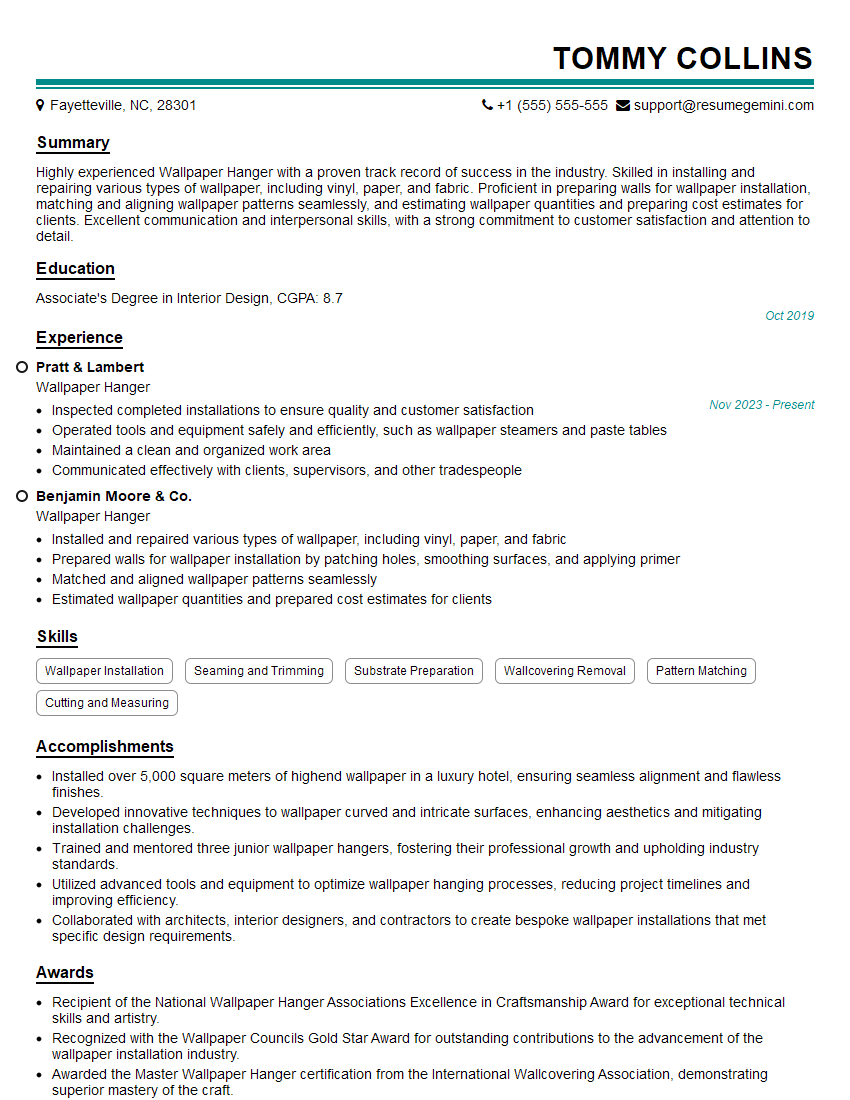
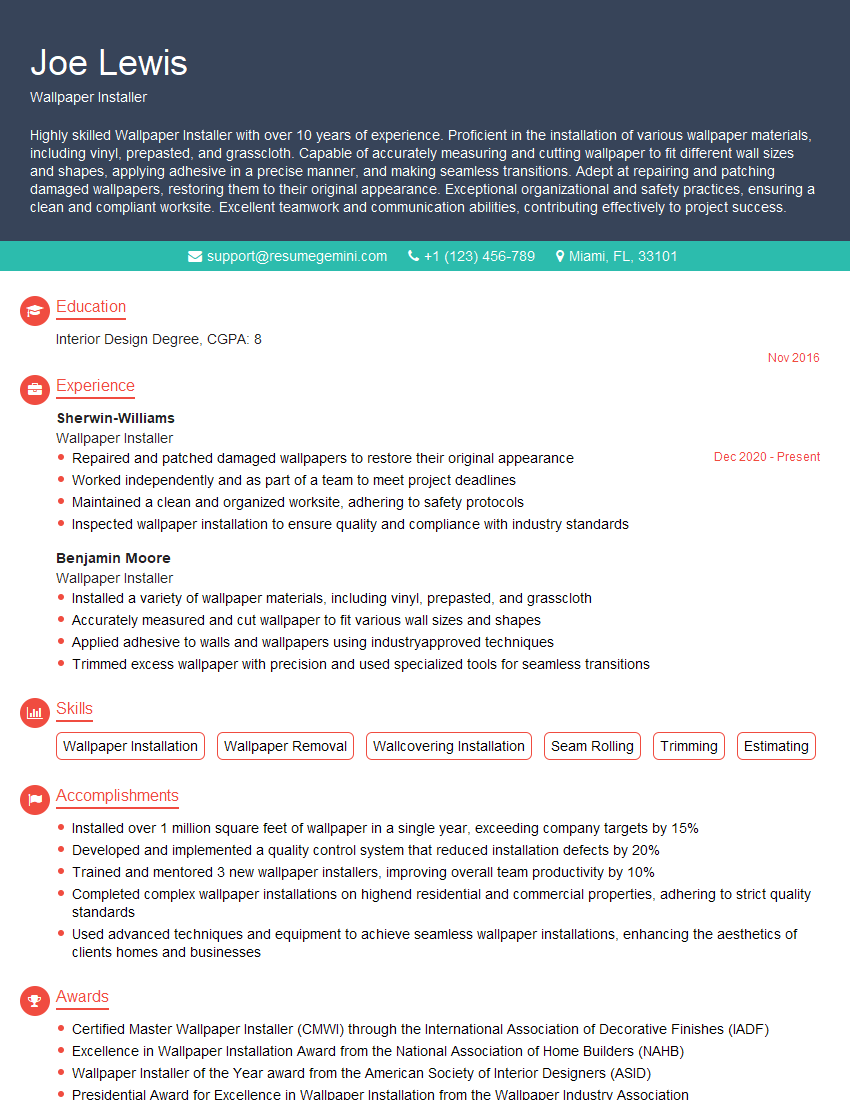
Mastering the knowledge of wallpaper sizing and installation is crucial for career advancement in the interior design and home improvement industries. A strong understanding of these techniques showcases your skills and professionalism, making you a highly desirable candidate. To further enhance your job prospects, create an ATS-friendly resume that highlights your abilities. ResumeGemini is a trusted resource that can help you build a professional and effective resume. We provide examples of resumes tailored to Knowledge of Wallpaper Sizing and Installation to guide you in this process, ensuring your qualifications are presented in the best possible light.
Explore more articles
Users Rating of Our Blogs
Share Your Experience
We value your feedback! Please rate our content and share your thoughts (optional).
What Readers Say About Our Blog
Very informative content, great job.
good