The right preparation can turn an interview into an opportunity to showcase your expertise. This guide to Knowledge of warehouse operations interview questions is your ultimate resource, providing key insights and tips to help you ace your responses and stand out as a top candidate.
Questions Asked in Knowledge of warehouse operations Interview
Q 1. Describe your experience with Warehouse Management Systems (WMS).
My experience with Warehouse Management Systems (WMS) spans over eight years, encompassing implementation, configuration, and day-to-day operational management. I’ve worked with various WMS platforms, including NetSuite WMS, Fishbowl Inventory, and Blue Yonder. My expertise goes beyond basic data entry; I’m proficient in optimizing system settings for improved efficiency, integrating WMS with ERP systems for seamless data flow, and generating reports for performance analysis. For example, at my previous role, I implemented a new WMS which reduced order fulfillment time by 15% and improved inventory accuracy by 8% within the first six months. This involved customizing workflows, defining optimal put-away strategies, and training warehouse personnel on the new system.
I understand the importance of choosing the right WMS based on the specific needs of a warehouse. Factors like warehouse size, order volume, product types, and integration requirements are key considerations. My approach is always to assess these factors, selecting the system that best aligns with the business goals and ensuring that the chosen system supports scalability and future growth.
Q 2. Explain the process of receiving and putting away inventory.
Receiving and putting away inventory is a crucial process that directly impacts inventory accuracy and warehouse efficiency. It begins with the verification of incoming shipments against purchase orders. This involves checking the quantity, quality, and condition of goods. Any discrepancies are immediately documented and reported. Then, the goods are scanned using handheld scanners linked to the WMS. The system then directs the appropriate location for storage, based on factors like product type, demand, and shelf life. This location assignment often utilizes slotting optimization algorithms within the WMS, maximizing space utilization and minimizing travel time for order picking.
For example, imagine receiving a pallet of widgets. The receiving clerk scans the pallet label, verifying it against the purchase order. The WMS assigns a specific location in the warehouse based on its pre-defined rules and then generates a task for a forklift operator to move the pallet to that location. Once in place, the location is updated in the system. This entire process is tracked in real-time by the WMS, providing complete visibility into inventory movement.
Q 3. How do you manage inventory discrepancies?
Managing inventory discrepancies requires a multi-pronged approach combining proactive measures and reactive solutions. Discrepancies can arise during receiving, put-away, picking, or shipping. My approach begins with identifying the root cause. Is it due to human error, system glitches, or damage during transit? I use a combination of techniques to address these issues.
- Regular Cycle Counting: Performing frequent cycle counts helps identify small discrepancies early, preventing them from escalating.
- Physical Verification: Thorough checks of physical inventory against system records are critical.
- WMS Audits: Regularly auditing the WMS configuration and processes helps to identify and resolve system-related issues.
- Root Cause Analysis: Investigating the cause of each discrepancy is crucial to implementing preventative measures.
- Staff Training: Well-trained staff are less likely to make errors. Ongoing training on proper scanning procedures and inventory management best practices is important.
For instance, if a cycle count reveals a discrepancy, we investigate the transaction history within the WMS to identify where the error occurred. This allows us to take corrective action and prevent similar errors in the future. The resolution process is always documented, including corrective actions taken and any necessary system adjustments.
Q 4. What are your strategies for optimizing warehouse layout and space utilization?
Optimizing warehouse layout and space utilization is key to efficiency and profitability. My strategies involve a combination of analytical techniques and practical implementation.
- Slotting Optimization: This involves strategically assigning locations to products based on factors such as demand, frequency of access, and product dimensions. This minimizes travel time for order picking and maximizes storage space.
- Cross-Docking: For high-volume operations, cross-docking can significantly reduce storage time and costs by directly transferring goods from incoming shipments to outgoing shipments.
- Vertical Space Utilization: Maximizing vertical space using high-bay racking and mezzanine floors increases storage capacity without expanding the footprint of the warehouse.
- Lean Principles: Implementing lean methodologies to eliminate waste in all aspects of warehouse operations, such as unnecessary movement and excess inventory.
- Data-Driven Decisions: Using data analytics to identify areas for improvement in warehouse layout and workflow optimization. This includes analyzing pick paths, travel distances, and storage utilization.
A real-world example would be implementing a new slotting optimization strategy that reduced pick times by 20% by placing frequently picked items in more accessible locations.
Q 5. Describe your experience with cycle counting and inventory control.
Cycle counting and inventory control are intrinsically linked. Cycle counting is a process of regularly counting a subset of inventory items instead of a full inventory count. This approach provides a more frequent and accurate snapshot of inventory levels compared to traditional annual stocktakes. Inventory control, on the other hand, is the process of managing and optimizing the inventory levels within the warehouse. My approach is to combine these two to maintain accurate records and minimize inventory discrepancies.
I typically implement a cycle counting program based on the ABC analysis, prioritizing items with higher value or turnover. This allows us to focus our efforts on the most critical inventory items. The data collected during cycle counting is then compared to the WMS data, and any discrepancies are investigated and resolved. The results of cycle counts are used to continually refine inventory control strategies and adjust safety stock levels.
For example, a high-value item might be counted weekly, while lower-value items might be counted monthly. The results are analyzed to identify trends and areas for improvement in inventory management.
Q 6. How do you handle order fulfillment and shipping processes?
Order fulfillment and shipping are critical last-mile processes. I utilize the WMS to streamline these operations. The process begins with order receipt; the WMS generates pick lists, directing warehouse staff to the locations of the items needed. The picked items are then scanned and verified, ensuring accuracy. Once picked, orders are packed and labeled according to carrier requirements. The WMS interfaces with the shipping system to generate shipping labels and track shipments. Real-time tracking is crucial, providing visibility into order status and shipment progress.
Efficient order fulfillment requires optimized picking strategies, such as zone picking or batch picking, depending on order volume and product characteristics. The integration of the WMS with the Transportation Management System (TMS) further enhances efficiency, automating shipping processes and optimizing carrier selection.
For instance, if an order is placed, the WMS generates a pick list optimized for the specific picker’s zone. Upon completion, the system automatically generates shipping labels and updates the order status, notifying the customer of the shipment progress.
Q 7. Explain your experience with different types of warehouse equipment (e.g., forklifts, conveyor systems).
My experience with warehouse equipment includes extensive use of forklifts (both sit-down and stand-up), conveyor systems (including sortation systems), automated guided vehicles (AGVs), and warehouse management software integration with these systems. I’m familiar with safety protocols and maintenance procedures for all equipment. I understand the importance of selecting the appropriate equipment based on the warehouse’s layout, order volume, and product characteristics.
I’ve been involved in the selection, implementation, and optimization of material handling equipment. For example, at one company, we implemented a new conveyor system to automate the sorting and routing of packages, leading to a significant reduction in labor costs and order fulfillment time. I also have experience troubleshooting equipment malfunctions, ensuring minimal downtime and maintaining productivity. Safe and efficient equipment operation is paramount; regular maintenance and operator training are critical components of my approach to warehouse operations.
Q 8. How do you ensure warehouse safety and compliance with regulations?
Warehouse safety and regulatory compliance are paramount. My approach is multifaceted, focusing on proactive prevention and reactive mitigation. It begins with a thorough understanding of OSHA regulations (or equivalent in your region) and industry best practices.
- Regular Safety Audits: I implement a schedule of regular safety audits, both planned and impromptu, to identify and rectify potential hazards. This includes checking for things like proper equipment maintenance (forklifts, racking systems), clear walkways, proper lighting, and appropriate use of personal protective equipment (PPE).
- Training and Education: Comprehensive safety training is crucial. New hires receive mandatory safety training, and ongoing refresher courses are provided to all employees. This covers topics like forklift operation, proper lifting techniques, hazard identification, and emergency procedures.
- Incident Reporting and Investigation: A robust incident reporting system is in place. All accidents or near misses are thoroughly investigated to pinpoint root causes and implement corrective actions. This ensures similar incidents are prevented in the future.
- Emergency Preparedness: We have detailed emergency plans, including evacuation procedures, fire safety protocols, and first-aid response, which are regularly practiced and reviewed. Employees are trained in their roles during emergencies.
- Compliance Documentation: Maintaining meticulous records of safety training, inspections, incident reports, and regulatory compliance is essential. This not only ensures we meet legal obligations but also allows for continuous improvement.
For instance, in a previous role, we implemented a new system for reporting near misses, leading to a 20% reduction in actual incidents within six months. This proves the value of proactive safety measures.
Q 9. What metrics do you use to measure warehouse performance?
Measuring warehouse performance requires a balanced scorecard approach, looking at efficiency, accuracy, and cost-effectiveness. Key metrics I use include:
- Order Fulfillment Rate: The percentage of orders processed and shipped accurately and on time. A high rate indicates efficient operations.
- Inventory Accuracy: The percentage of inventory records that accurately reflect the physical inventory. This minimizes stockouts and overstocking.
- Picking Accuracy: The percentage of orders picked correctly. High accuracy reduces errors and returns.
- Shipping Accuracy: The percentage of shipments delivered to the correct location without damage. This reflects the effectiveness of the packing and shipping process.
- Storage Density: The amount of inventory stored per unit of warehouse space. Maximizing storage density improves space utilization.
- Order Cycle Time: The time it takes to process an order from receipt to shipment. Reducing order cycle time boosts efficiency.
- Inventory Turnover Rate: The rate at which inventory is sold and replenished. A higher turnover suggests efficient inventory management.
- Labor Productivity: The amount of work completed per employee, often measured in units picked or shipped per hour. This helps assess workforce efficiency.
- Warehouse Operating Costs: Tracking costs per unit stored or processed. Cost reduction is always a priority.
These metrics are regularly monitored and analyzed to identify areas for improvement. For example, a dip in picking accuracy might indicate a need for additional training or process adjustments.
Q 10. Describe your experience with picking and packing procedures.
Picking and packing procedures are critical for accurate and efficient order fulfillment. My experience encompasses various methods, including batch picking, zone picking, and wave picking.
- Picking Strategies: The selection of the optimal picking strategy depends on factors such as order volume, product variety, and warehouse layout. Batch picking, for instance, is suitable for high-volume orders with similar products, while zone picking is efficient in large warehouses with designated picking zones.
- Technology Integration: I’m experienced in using Warehouse Management Systems (WMS) and RF scanners to guide pickers and ensure accuracy. The WMS provides optimized picking routes and real-time tracking of inventory and order status.
- Packing Procedures: Efficient packing minimizes damage and optimizes space during shipping. This includes using appropriate packaging materials, optimizing box sizes, and securing items to prevent movement during transit. We also utilize barcode scanning for accurate packaging and labelling.
- Quality Control: A thorough quality control check is implemented at the end of the picking and packing process to ensure accuracy and prevent errors before shipment.
In a previous role, I implemented a new zone picking system, reducing picking time by 15% and improving accuracy significantly. This involved a careful analysis of product placement and optimizing picker routes based on data from the WMS.
Q 11. How do you handle damaged or lost goods?
Handling damaged or lost goods requires a systematic approach to minimize losses and maintain inventory accuracy.
- Damage Assessment: Thorough documentation of the damage, including photos and descriptions, is essential. This information is crucial for claims with carriers or suppliers.
- Inventory Adjustment: The affected inventory is adjusted in the WMS to reflect the losses or damage. This keeps inventory records accurate.
- Root Cause Analysis: An investigation into the root cause of the damage or loss is undertaken to identify and implement preventative measures.
- Return/Disposal: Damaged goods may be returned to the supplier, repaired, or disposed of according to company policy. There are often procedures for salvaging reusable materials.
- Claims Process: Claims are filed with carriers or suppliers as appropriate. The claims process is carefully documented for tracking.
For example, we implemented a new packaging protocol after a series of incidents involving damaged goods. The new protocol included stronger packaging and improved handling instructions, which resulted in a significant decrease in damage rates.
Q 12. Explain your experience with returns processing.
Returns processing is a crucial element of warehouse operations. Efficient handling of returns minimizes disruption and improves customer satisfaction.
- Return Authorization Process: A clear and efficient return authorization process ensures that all returns are documented and tracked.
- Inspection and Grading: Returned items are inspected to determine their condition and whether they are eligible for restocking or disposal.
- Data Entry and Update: The return is recorded in the WMS to update inventory levels and account for the return.
- Restocking: Restocked items are carefully inspected and repackaged if necessary before being returned to inventory.
- Disposal: Items deemed unsuitable for restocking are disposed of according to company policy. This might include recycling or donation.
- Refund Processing: Coordination with the accounting department to ensure customers receive timely refunds.
In one instance, I streamlined our returns process by implementing an online return portal. This reduced processing time by 30% and improved customer satisfaction by providing a more convenient return experience.
Q 13. How do you manage and motivate a warehouse team?
Managing and motivating a warehouse team requires a blend of leadership skills and effective communication.
- Clear Expectations and Goals: Setting clear expectations, goals, and performance metrics is essential. Regular communication ensures everyone is on the same page.
- Recognition and Rewards: Recognizing and rewarding individual and team accomplishments is crucial for boosting morale and motivation.
- Training and Development: Providing training and development opportunities helps employees improve their skills and advance their careers. This demonstrates a commitment to employee growth.
- Open Communication: Creating an environment where employees feel comfortable sharing their ideas and concerns is vital. Regular team meetings are crucial for open communication.
- Fair and Consistent Treatment: Maintaining fairness and consistency in all aspects of team management creates a positive and productive work environment.
- Conflict Resolution: Addressing conflicts promptly and fairly is necessary to maintain a harmonious work environment. This may involve mediation or formal disciplinary measures.
For example, I once implemented a peer-recognition program where team members could nominate each other for outstanding contributions. This initiative significantly boosted team morale and created a more collaborative environment.
Q 14. What is your experience with RF scanning and mobile warehouse technology?
I have extensive experience with RF scanning and other mobile warehouse technologies. These technologies are indispensable for modern warehouse efficiency.
- RF Scanning for Picking and Receiving: I’ve used RF scanners extensively for tasks such as picking, receiving, and putaway. RF scanners improve accuracy, reduce errors, and accelerate the picking process.
- WMS Integration: My experience includes working with various WMS that integrate with RF scanners, providing real-time inventory updates and optimized picking routes.
- Mobile Data Terminals (MDTs): I am proficient in using MDTs for tasks such as order processing, inventory management, and location tracking. MDTs provide easy access to critical data, increasing efficiency.
- Voice-Directed Picking: I’m familiar with voice-directed picking systems. These systems reduce reliance on paper documents and further improve picking efficiency.
- Data Analysis and Reporting: Mobile technology provides valuable data that can be used to analyze performance and improve processes. This includes data on picking times, error rates, and inventory turnover.
In one project, I spearheaded the implementation of a voice-directed picking system, resulting in a 25% increase in picking efficiency and a significant reduction in picking errors. This illustrates how well-integrated mobile technology can improve the warehouse operations.
Q 15. How do you troubleshoot warehouse equipment malfunctions?
Troubleshooting warehouse equipment malfunctions requires a systematic approach. My first step is always safety – ensuring the area is secured and the equipment is powered down if necessary. Then, I follow a process of observation, investigation, and resolution.
- Observation: I carefully examine the malfunctioning equipment, noting any visible damage, unusual sounds, or error codes displayed on the machine. This initial observation helps me narrow down the potential causes.
- Investigation: Based on my observations, I consult the equipment’s manual, looking for troubleshooting guides or common issues. If the manual doesn’t provide a solution, I’ll check the equipment’s log files for error messages or performance data that might pinpoint the problem. If the issue is electrical, I will check power supply and connections. If mechanical, I’ll assess moving parts for wear and tear.
- Resolution: If the problem is minor (e.g., a loose connection), I’ll attempt a simple repair. For more complex issues, I’ll contact the equipment manufacturer or a qualified technician for assistance. I meticulously document the entire process, including the problem, the steps taken to diagnose it, and the final solution, ensuring future incidents can be resolved more efficiently.
For example, I once encountered a malfunctioning forklift where the hydraulic system failed. After safety checks, I examined the hydraulic fluid level and found it critically low. Topping up the fluid resolved the issue. In another instance, a conveyor belt stopped due to a jammed sensor, which I was able to quickly clean and restore.
Career Expert Tips:
- Ace those interviews! Prepare effectively by reviewing the Top 50 Most Common Interview Questions on ResumeGemini.
- Navigate your job search with confidence! Explore a wide range of Career Tips on ResumeGemini. Learn about common challenges and recommendations to overcome them.
- Craft the perfect resume! Master the Art of Resume Writing with ResumeGemini’s guide. Showcase your unique qualifications and achievements effectively.
- Don’t miss out on holiday savings! Build your dream resume with ResumeGemini’s ATS optimized templates.
Q 16. Describe your experience with cross-docking procedures.
Cross-docking is a highly efficient warehouse process that minimizes storage time by transferring goods directly from receiving to shipping docks. My experience with cross-docking involves managing inbound and outbound shipments, ensuring seamless coordination between receiving, sorting, and shipping teams.
This requires careful planning and precise execution. We utilize a sophisticated Warehouse Management System (WMS) to track incoming shipments and their destined locations. The WMS assigns each product a specific shipping dock based on pre-determined routes and customer orders. Teams are trained to quickly identify and sort goods according to their designated docks. Accurate and timely communication is critical, as delays at any stage can impact the efficiency of the entire process.
In my previous role, we successfully implemented a cross-docking system for a large retail client, resulting in a 20% reduction in processing time and a significant decrease in storage costs. This success involved close collaboration with the client to optimize the process, ensuring clear product identification and efficient communication throughout the entire supply chain.
Q 17. How do you handle peak season demands in a warehouse?
Handling peak season demands necessitates proactive planning and resource allocation. My strategy involves a multi-pronged approach:
- Forecasting and Planning: Accurately predicting demand is crucial. We utilize historical data, market trends, and sales forecasts to anticipate volume increases and adjust staffing and resource allocation accordingly.
- Staffing and Training: We often supplement our existing workforce with temporary employees during peak seasons. These temporary staff members receive comprehensive training on safety protocols, warehouse procedures, and order fulfillment processes.
- Inventory Management: Strategic inventory management is crucial. We increase stock levels of high-demand products well in advance, and we work closely with suppliers to ensure timely deliveries.
- Process Optimization: We streamline existing processes to enhance efficiency. This might involve optimizing picking routes, adjusting shelving layouts, or implementing automated solutions where feasible.
- Communication and Collaboration: Effective communication is essential throughout the entire organization. We hold regular meetings to coordinate efforts, address challenges, and share updates.
For example, during the holiday season, we proactively increased staffing by 30%, implemented a more efficient picking system, and ensured sufficient stock of popular gift items. This approach allowed us to seamlessly meet the increased demand and avoid significant delays.
Q 18. What are your methods for improving warehouse efficiency?
Improving warehouse efficiency is an ongoing process that requires continuous monitoring and improvement. My methods focus on several key areas:
- Lean Principles: Implementing lean methodologies, such as eliminating waste (muda), improving workflow, and reducing inventory, is paramount. This includes optimizing space utilization, minimizing unnecessary movement, and streamlining processes.
- Technology Integration: Utilizing technology like WMS, RFID tracking, and automated guided vehicles (AGVs) can significantly boost efficiency. These tools improve inventory accuracy, speed up order fulfillment, and reduce human error.
- Process Mapping and Analysis: Regularly reviewing and analyzing warehouse processes helps identify bottlenecks and areas for improvement. Process mapping allows us to visualize the flow of goods and pinpoint inefficiencies.
- Employee Empowerment and Training: Investing in employee training and empowerment is vital. Trained and motivated employees are more efficient and less prone to errors. Kaizen (continuous improvement) initiatives, where employees suggest improvements, are incredibly valuable.
- Data Analysis and KPI Tracking: Tracking key performance indicators (KPIs) such as order fulfillment rate, picking accuracy, and inventory turnover provides valuable insights into warehouse performance. This data-driven approach allows us to identify areas needing improvement and measure the success of implemented changes.
For instance, in a previous role, we implemented a new WMS, resulting in a 15% reduction in order fulfillment time and a 10% improvement in picking accuracy.
Q 19. How do you ensure accuracy in order picking and packing?
Ensuring accuracy in order picking and packing is critical for customer satisfaction and operational efficiency. My approach involves a combination of robust processes and technological solutions:
- Barcode Scanning and RFID Technology: Utilizing barcode scanners or RFID readers at each stage of the picking and packing process dramatically reduces errors. This real-time verification helps prevent incorrect items from being picked or packed.
- Double-Checking and Verification: Implementing a double-checking system, where a second person verifies the accuracy of the picked items before packing, adds an extra layer of quality control.
- Pick-to-Light Systems: These systems use lights to guide pickers to the correct items, reducing the risk of errors and speeding up the process.
- Proper Training and Procedures: Thorough training for picking and packing staff is essential. Clear procedures, standardized packaging techniques, and regular performance reviews help maintain accuracy.
- Quality Control Checks: Implementing random quality control checks throughout the picking and packing process helps identify any emerging issues and allows for timely corrective actions.
For example, implementing a barcode scanning system reduced picking errors by 25% in our previous warehouse. We also instituted a rigorous training program, resulting in a significant improvement in overall order accuracy.
Q 20. What is your experience with different inventory management techniques (FIFO, LIFO)?
FIFO (First-In, First-Out) and LIFO (Last-In, First-Out) are two common inventory management techniques. My experience encompasses applying both methods depending on the specific needs of the products and the business requirements.
FIFO: This method prioritizes the oldest inventory items for sale or use first. It’s ideal for perishable goods (e.g., food products) or items with limited shelf life. Using FIFO minimizes waste from spoilage and ensures that the freshest products are always shipped first. This improves inventory turnover and reduces the risk of obsolescence.
LIFO: LIFO prioritizes the newest inventory items for sale or use first. It’s often preferred for non-perishable items with stable value. While LIFO can sometimes lead to higher reported profits (due to lower cost of goods sold during periods of rising prices), it’s crucial to accurately track and manage inventory to avoid potential discrepancies and reporting challenges.
In my experience, I’ve utilized FIFO for perishable goods in a food distribution warehouse and LIFO for durable goods in a manufacturing facility. The selection of the method is always driven by a thorough cost-benefit analysis considering product characteristics and business objectives. In some scenarios, a combination of both methods might be optimal to address different inventory needs within the same warehouse.
Q 21. Explain your experience with warehouse layout design and optimization.
Warehouse layout design and optimization are critical for operational efficiency and cost reduction. My experience includes designing layouts that maximize space utilization, minimize travel distances, and improve workflow. This involves understanding the specific needs of the business, considering the types of goods stored, and anticipating future growth.
The design process starts with a thorough analysis of the current warehouse operations, including receiving, storage, picking, packing, and shipping processes. This data forms the basis for designing an efficient flow of goods. I’ll consider various layout configurations (e.g., U-shaped, I-shaped, L-shaped) based on the specific requirements, and will often use software to simulate different layouts and assess their efficiency.
Key considerations include:
- Traffic flow and aisle width: Optimizing the flow of forklifts and other equipment to avoid bottlenecks.
- Storage methods: Selecting appropriate storage solutions (e.g., racking systems, shelving units) based on product characteristics.
- Picking strategies: Implementing efficient picking methods (e.g., batch picking, zone picking) to reduce travel time.
- Ergonomics: Designing the layout to minimize physical strain on workers.
- Safety considerations: Ensuring a safe working environment by incorporating safety features in the design.
For example, I redesigned a warehouse layout for a client that resulted in a 10% reduction in travel time for order pickers and a 5% increase in storage capacity. The new layout integrated improved traffic flow, optimized racking systems, and clear signage, creating a safer and more efficient working environment.
Q 22. How do you manage relationships with vendors and transportation providers?
Managing relationships with vendors and transportation providers is crucial for efficient warehouse operations. It’s about building trust, fostering collaboration, and ensuring reliable service. I approach this through a multi-faceted strategy focusing on clear communication, performance monitoring, and proactive relationship management.
- Clear Communication: I utilize regular meetings, both in person and virtual, to discuss upcoming needs, potential challenges, and performance metrics. Open communication channels—email, instant messaging, and dedicated project management software—are essential for swift issue resolution.
- Performance Monitoring: I establish Key Performance Indicators (KPIs) for both vendors and carriers, tracking on-time delivery rates, order accuracy, and damage rates. Regular performance reviews help identify areas for improvement and facilitate constructive feedback. For example, if a carrier consistently misses delivery deadlines, we collaboratively analyze the root cause, whether it’s logistical issues or unforeseen circumstances, and implement corrective measures, potentially exploring alternative routes or scheduling adjustments.
- Proactive Relationship Management: I believe in building strong, long-term relationships based on mutual respect and understanding. This involves proactively addressing concerns, celebrating successes, and fostering a collaborative spirit. Regularly reviewing contracts and exploring opportunities for cost optimization while maintaining service levels are also key elements. For instance, negotiating volume discounts with reliable vendors can significantly impact our bottom line.
Q 23. What is your experience with implementing new warehouse technologies?
I have extensive experience implementing new warehouse technologies, focusing on solutions that enhance efficiency, accuracy, and visibility across the supply chain. My experience spans various technologies, from Warehouse Management Systems (WMS) to Radio Frequency Identification (RFID) and automated guided vehicles (AGVs).
- WMS Implementation: I’ve led the implementation of several WMS projects, including system selection, configuration, data migration, user training, and post-implementation support. A recent project involved migrating from a legacy system to a cloud-based WMS, resulting in a 20% improvement in order fulfillment speed and a 15% reduction in picking errors. This involved meticulous planning, phased rollouts to minimize disruption, and comprehensive training for warehouse staff.
- RFID Technology: I’ve integrated RFID technology to improve inventory accuracy and track goods throughout the warehouse. This involved installing RFID readers, configuring the system to integrate with the WMS, and implementing procedures to ensure accurate data capture. The result was a significant reduction in stock discrepancies and improved inventory control.
- AGV Integration: I’ve been involved in the integration of AGVs into warehouse operations, automating tasks such as material handling and transportation. This required careful planning of warehouse layout, AGV programming, and safety protocols to ensure seamless integration with existing processes and to avoid potential hazards.
My approach always prioritizes careful planning, thorough testing, and robust change management to ensure a smooth transition and maximize the return on investment.
Q 24. How do you handle employee training and development in a warehouse setting?
Employee training and development are critical to a successful warehouse operation. I employ a multi-layered approach that combines on-the-job training, formal courses, and continuous learning opportunities.
- On-the-Job Training: New employees undergo a structured onboarding process, including shadowing experienced workers, hands-on training with equipment, and familiarization with warehouse procedures. This is complemented by regular feedback and coaching to ensure proficiency in their assigned roles.
- Formal Courses: We offer formal training courses covering topics such as safety procedures, equipment operation, inventory management techniques, and the use of warehouse management systems. These courses can be conducted internally or through external providers.
- Continuous Learning: We encourage continuous learning through online resources, workshops, and cross-training opportunities. This ensures that employees stay updated on best practices and develop their skills, leading to increased efficiency and job satisfaction. We also encourage participation in industry certifications to enhance professional development.
Regular performance reviews are incorporated into the system to identify skill gaps and tailor training accordingly. I also make use of mentorship programs to facilitate knowledge transfer between experienced and newer employees.
Q 25. Describe a time you had to resolve a significant warehouse operational problem.
During a peak season, we experienced a significant backlog due to an unexpected surge in orders combined with a temporary shortage of staff. To resolve this, I implemented a multi-pronged approach.
- Prioritization: We prioritized orders based on delivery deadlines and customer importance. This involved using our WMS to identify and flag urgent orders.
- Temporary Staffing: We quickly hired temporary staff, providing them with expedited training focused on essential tasks. This helped augment our workforce and address the immediate staffing shortage.
- Process Optimization: We streamlined our picking and packing processes, identifying and eliminating bottlenecks. This involved analyzing workflow data and making adjustments to improve efficiency.
- Communication: We maintained transparent communication with our customers, keeping them informed of potential delays and offering proactive solutions.
Through this combination of strategies, we managed to clear the backlog within a week, minimizing disruption and maintaining customer satisfaction. This experience highlighted the importance of contingency planning and the ability to adapt quickly to unexpected challenges.
Q 26. How do you prioritize tasks and manage competing deadlines in a warehouse environment?
Prioritizing tasks and managing competing deadlines in a warehouse requires a structured approach. I utilize several techniques to ensure tasks are completed efficiently and on time.
- Prioritization Matrix: I use a prioritization matrix, such as an Eisenhower Matrix (Urgent/Important), to categorize tasks based on urgency and importance. This helps focus efforts on the most critical tasks first.
- Project Management Software: We utilize project management software to track tasks, deadlines, and progress. This allows for better visibility and coordination among team members.
- Daily Stand-up Meetings: Short daily stand-up meetings facilitate communication, identify potential roadblocks, and allow for quick adjustments to the daily schedule.
- Resource Allocation: Efficient allocation of personnel and equipment is vital. We continuously monitor resource utilization and adjust assignments as needed to optimize workflow.
By combining these methods, we ensure that tasks are handled systematically, deadlines are met, and resources are used effectively, preventing bottlenecks and maintaining a smooth operational flow.
Q 27. What is your experience with using data analytics to improve warehouse operations?
Data analytics plays a vital role in improving warehouse operations. I leverage data from various sources—WMS, inventory tracking systems, and transportation management systems—to gain insights and make data-driven decisions.
- Inventory Optimization: We analyze inventory data to identify slow-moving items, optimize stock levels, and reduce storage costs. This analysis allows us to improve forecasting accuracy and reduce waste associated with excess inventory.
- Process Improvement: We use data to identify bottlenecks and inefficiencies in our warehouse processes. This involves analyzing data such as picking times, travel distances, and error rates. By pinpointing problem areas, we can develop and implement targeted improvement strategies.
- Performance Monitoring: We track KPIs such as order fulfillment rates, on-time delivery rates, and inventory accuracy. This data provides valuable insights into overall warehouse performance and allows us to identify areas for improvement.
By using data-driven approaches, we can make informed decisions, optimize resource allocation, and significantly enhance operational efficiency. This analytical approach allows us to not just react to problems but to proactively prevent them.
Q 28. How do you stay up-to-date on best practices in warehouse management and logistics?
Staying up-to-date on best practices in warehouse management and logistics is crucial for maintaining a competitive edge. I employ several strategies to ensure I remain informed.
- Industry Publications and Journals: I regularly read industry publications and journals such as Modern Materials Handling and Supply Chain Digest to stay abreast of emerging trends and technologies.
- Industry Conferences and Webinars: Attending industry conferences and webinars provides valuable opportunities to network with peers and learn from experts. This allows me to hear firsthand about innovative solutions and successful implementations.
- Professional Organizations: Membership in professional organizations like the Council of Supply Chain Management Professionals (CSCMP) provides access to resources, networking opportunities, and educational programs.
- Online Courses and Certifications: I actively participate in online courses and pursue relevant certifications to expand my knowledge and keep my skills sharp.
By consistently seeking new information and engaging with the industry community, I ensure that my warehouse operations reflect the latest best practices and remain highly efficient and effective.
Key Topics to Learn for a Warehouse Operations Interview
- Warehouse Management Systems (WMS): Understanding different WMS functionalities, including inventory management, order fulfillment, and reporting. Practical application: Describe your experience using a specific WMS and how you optimized processes within it.
- Inventory Control: Mastering inventory tracking methods (FIFO, LIFO, etc.), cycle counting procedures, and minimizing stock discrepancies. Practical application: Explain a time you identified and resolved an inventory discrepancy, highlighting your problem-solving skills.
- Order Fulfillment Processes: Deep understanding of picking, packing, and shipping procedures, including order accuracy and efficiency strategies. Practical application: Describe your experience optimizing a picking process to improve speed and accuracy.
- Warehouse Layout and Design: Knowledge of effective warehouse layouts for maximizing space utilization and workflow efficiency. Practical application: Discuss how you would optimize a warehouse layout to improve throughput.
- Safety Regulations and Procedures: Familiarity with OSHA regulations and warehouse safety best practices, including forklift operation and hazard identification. Practical application: Detail your experience implementing or improving safety protocols in a warehouse environment.
- Logistics and Supply Chain Concepts: Understanding the broader context of warehouse operations within the overall supply chain. Practical application: Discuss how warehouse efficiency impacts overall supply chain performance.
- Technology in Warehouse Operations: Familiarity with automated systems like automated guided vehicles (AGVs), conveyor systems, and RFID technology. Practical application: Describe your experience working with or learning about warehouse automation technologies.
Next Steps
Mastering warehouse operations knowledge is crucial for career advancement in logistics and supply chain management, opening doors to higher-paying roles and increased responsibilities. To maximize your job prospects, creating a strong, ATS-friendly resume is vital. ResumeGemini is a trusted resource to help you build a professional and impactful resume that showcases your skills and experience effectively. We provide examples of resumes tailored to warehouse operations roles to guide you in crafting your own compelling application.
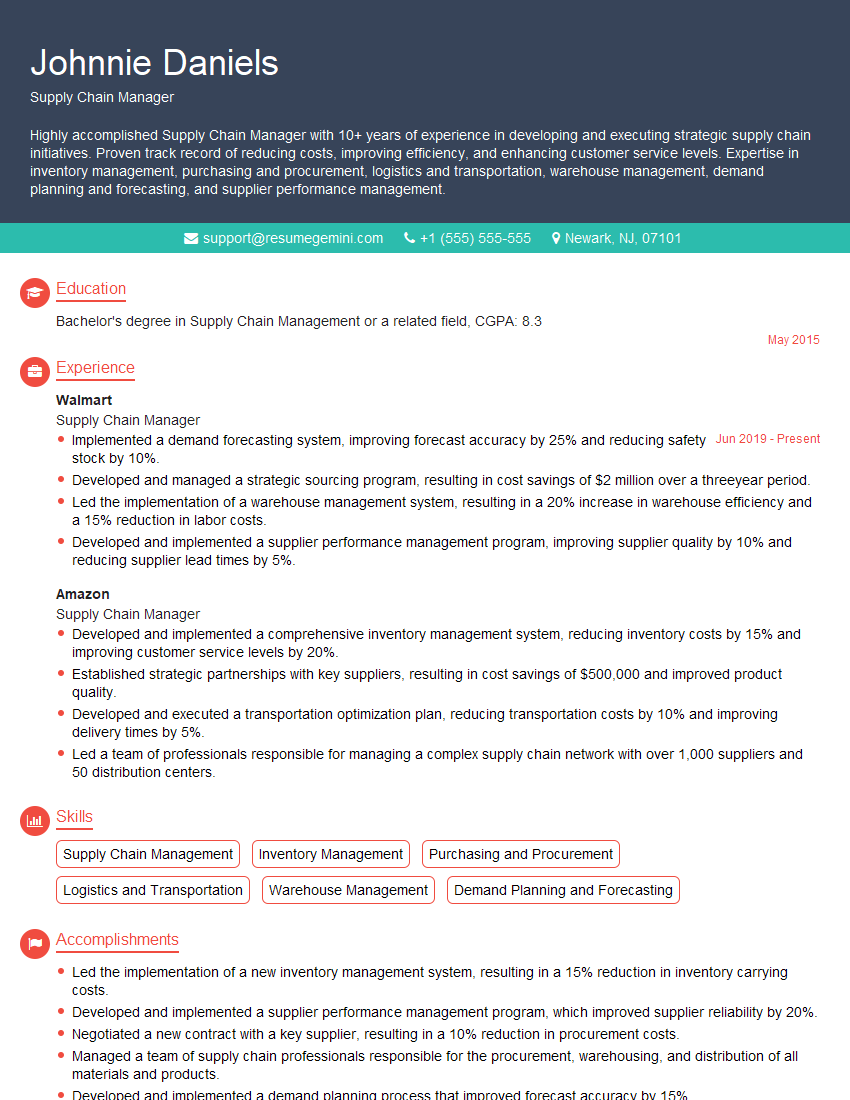
Supply Chain Manager Resume Sample
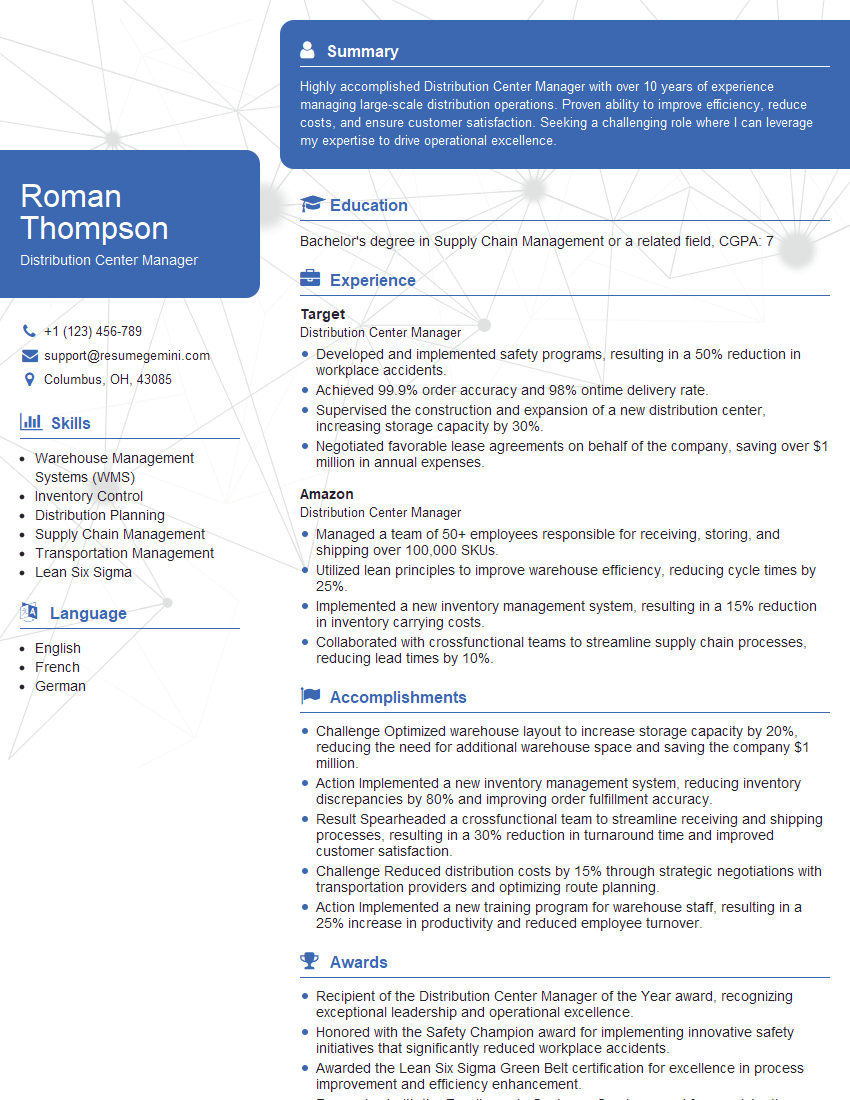
Distribution Center Manager Resume Sample
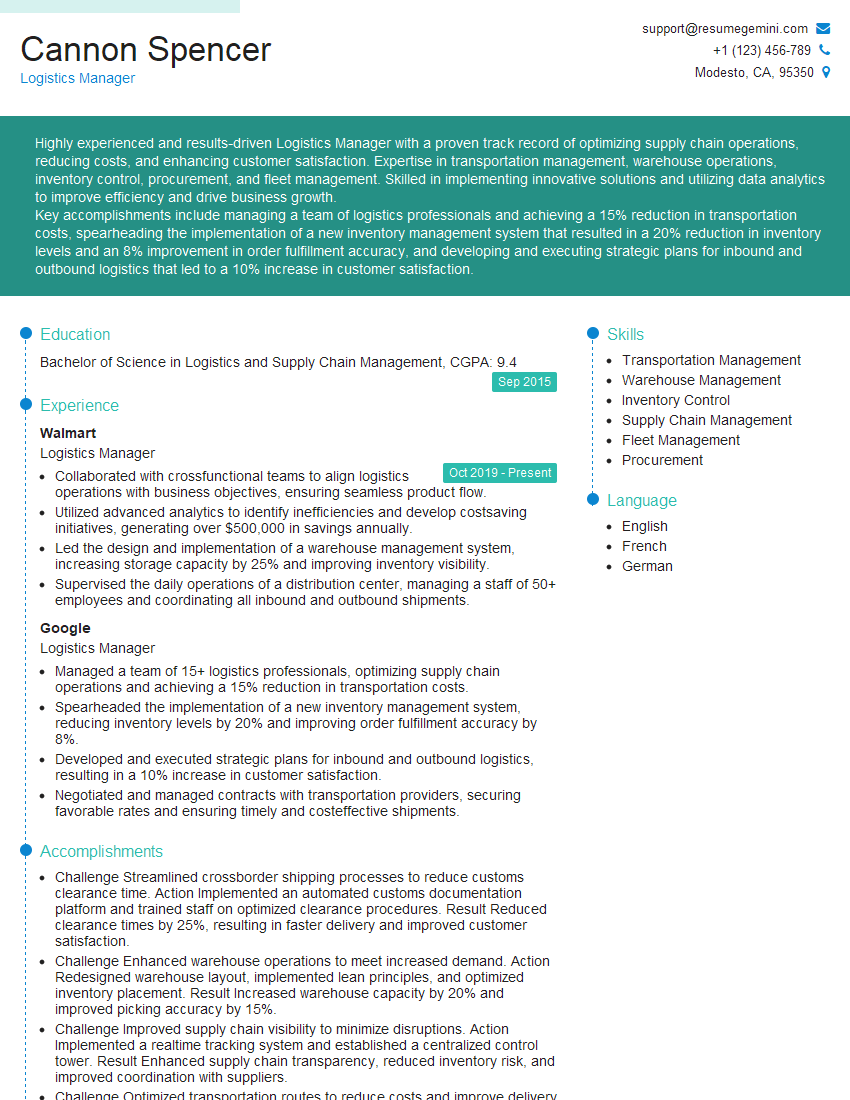
Logistics Manager Resume Sample
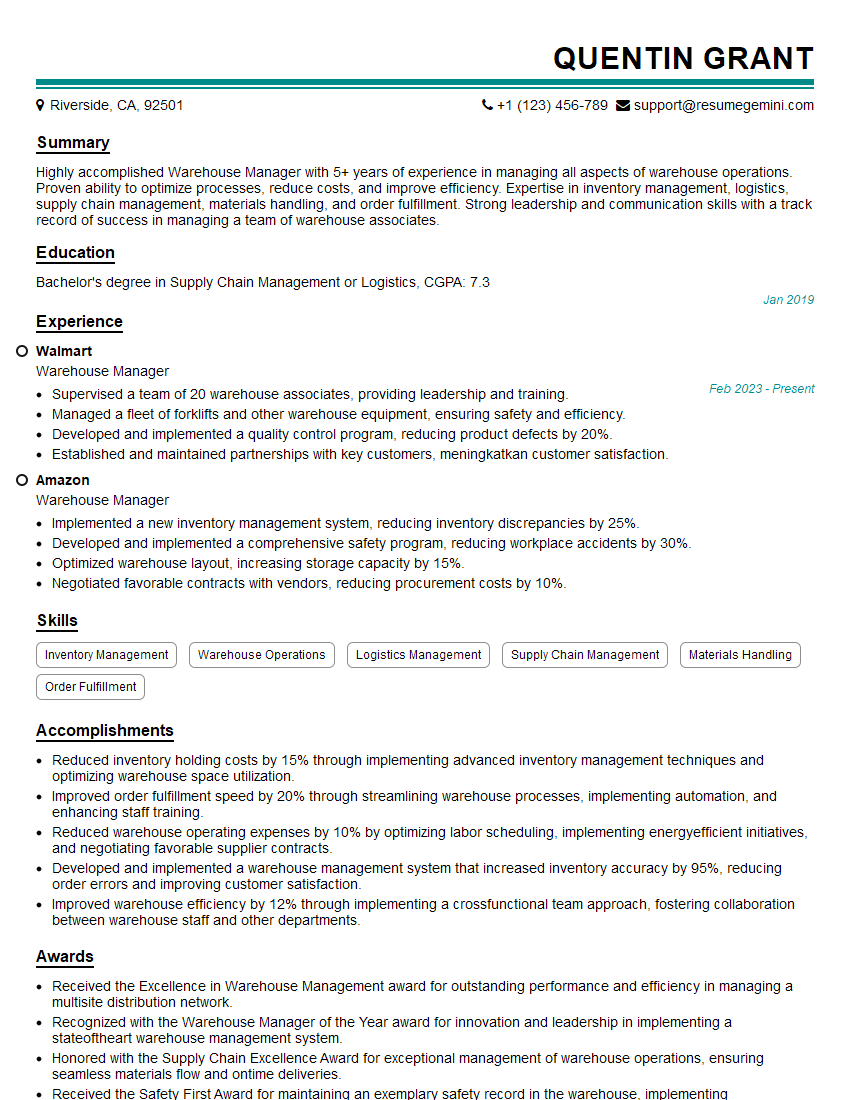
Warehouse Manager Resume Sample
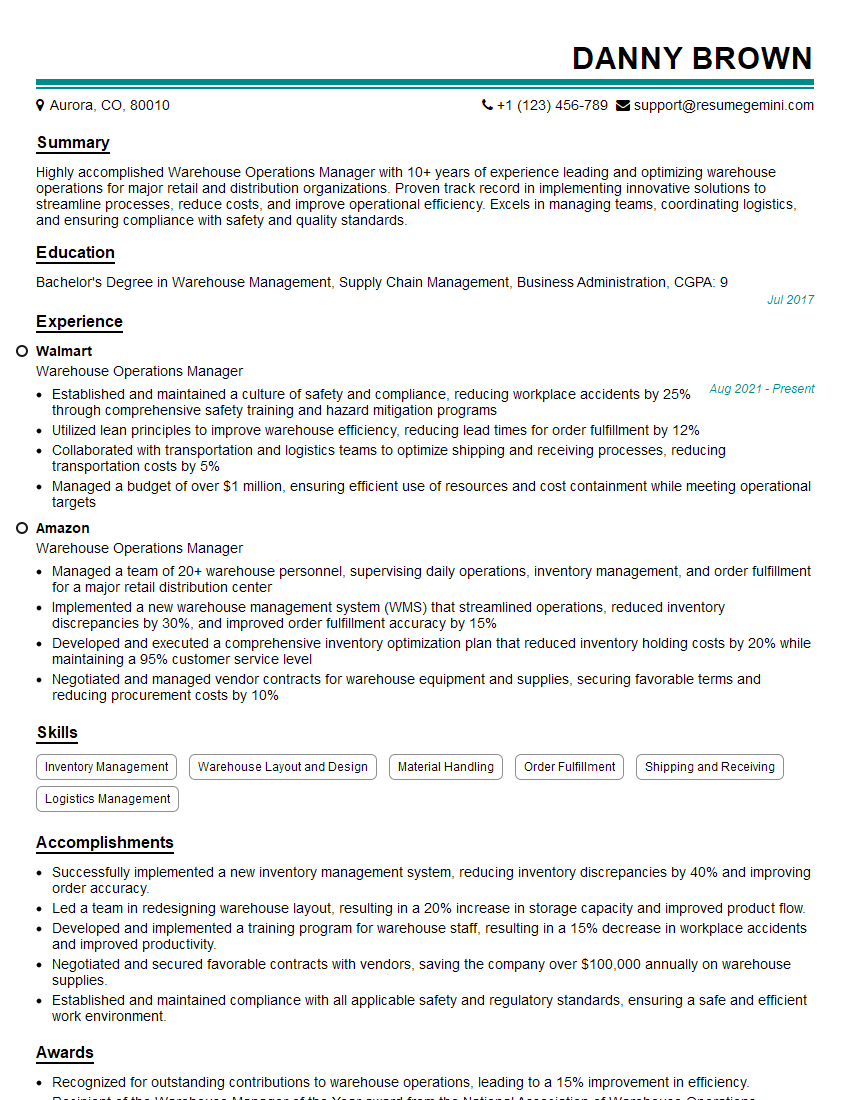
Warehouse Operations Manager Resume Sample
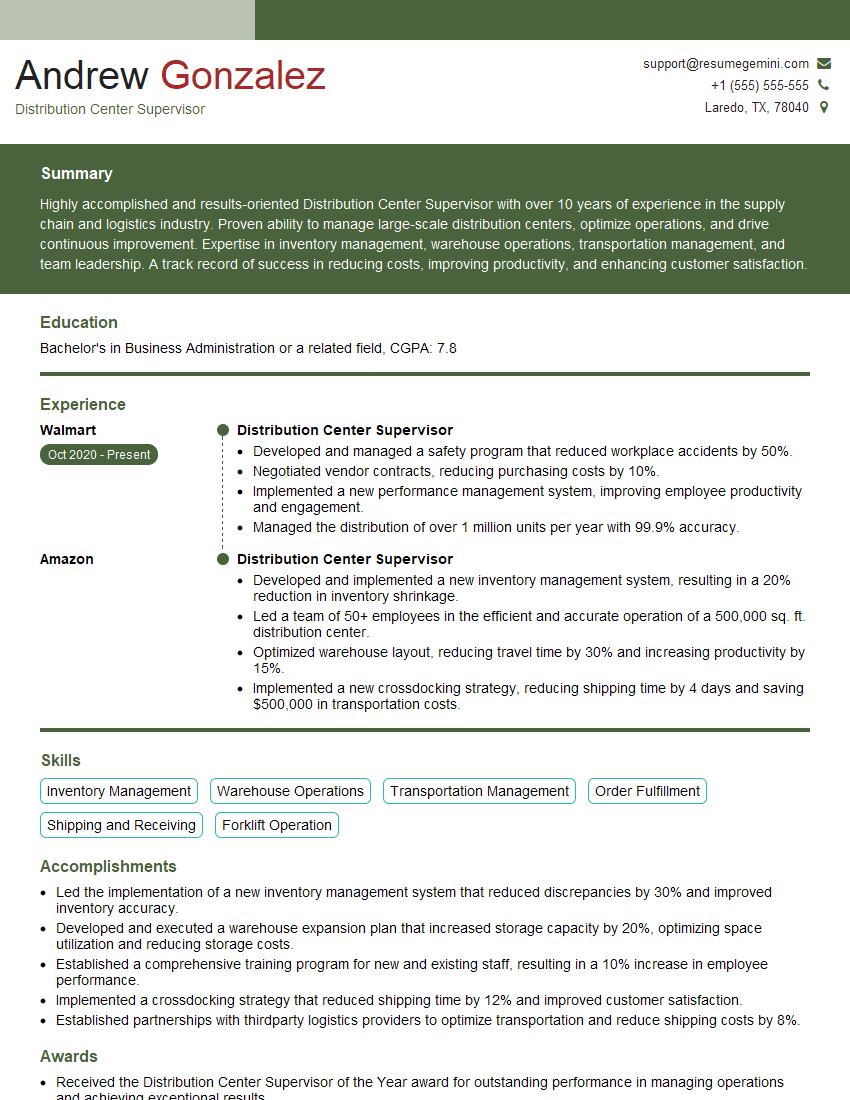
Distribution Center Supervisor Resume Sample
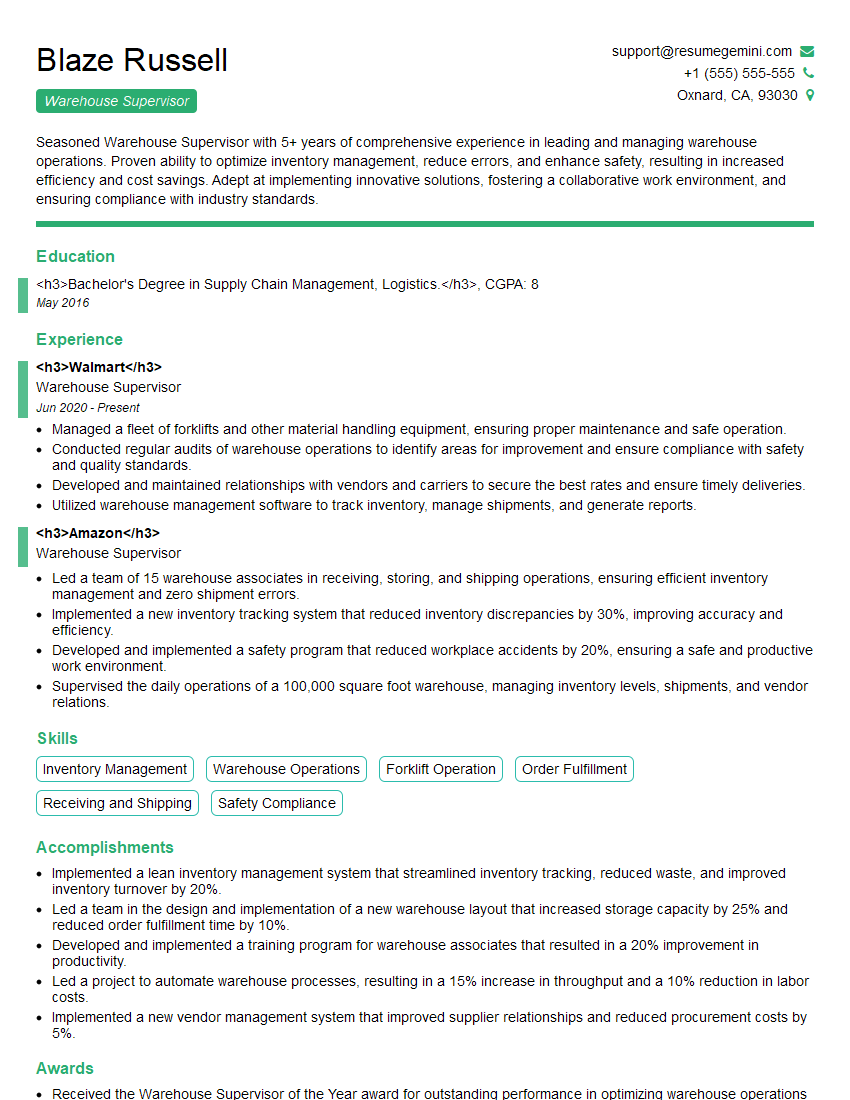
Warehouse Supervisor Resume Sample
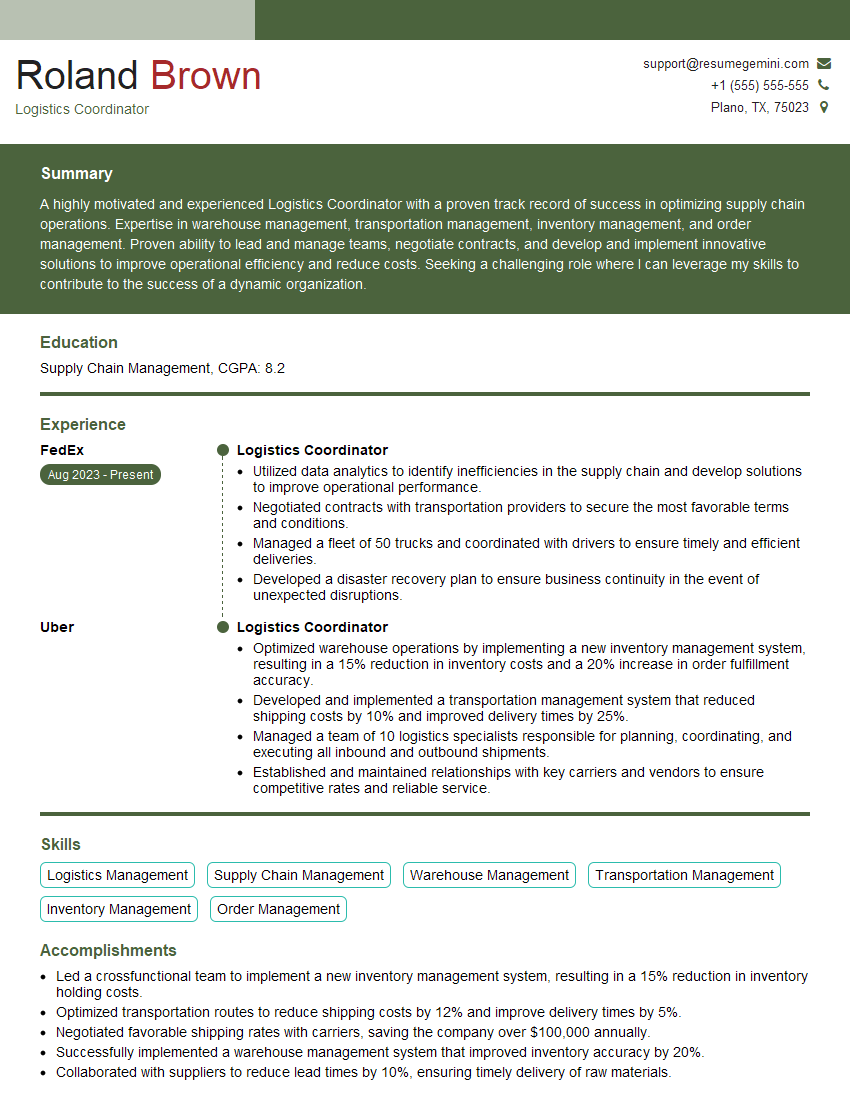
Logistics Coordinator Resume Sample
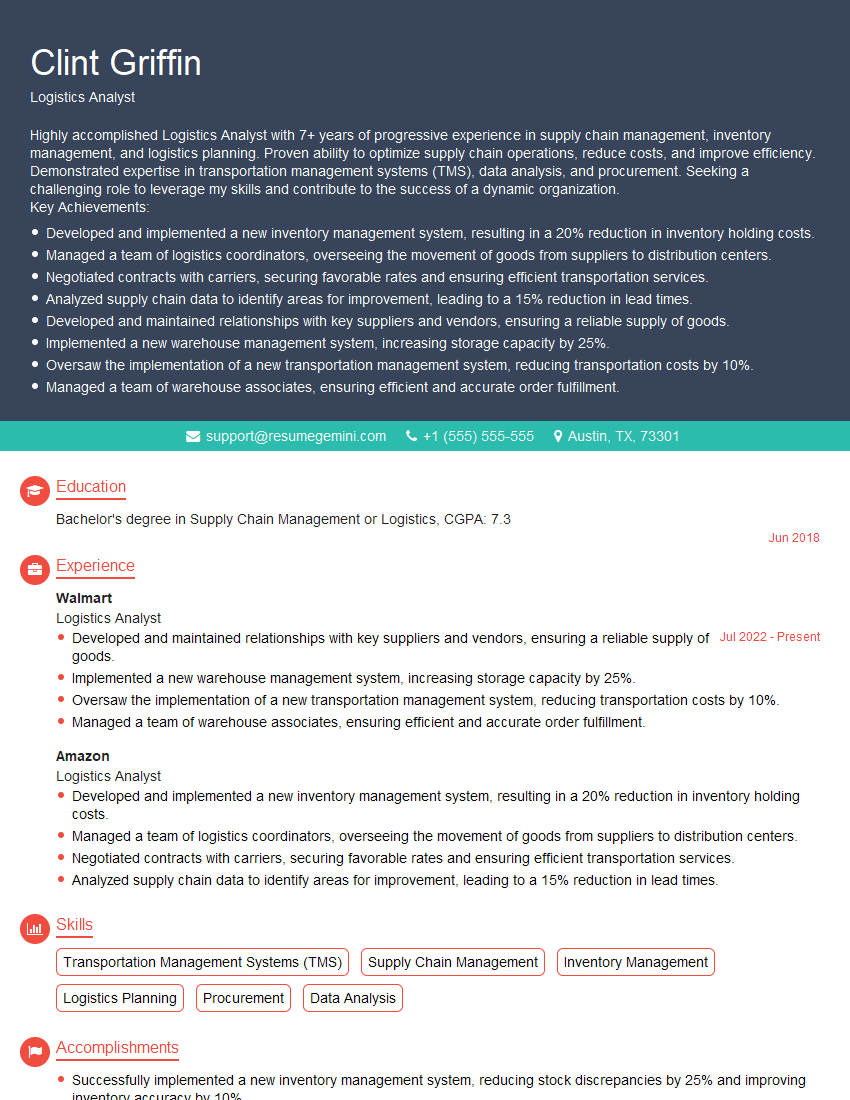
Logistics Analyst Resume Sample
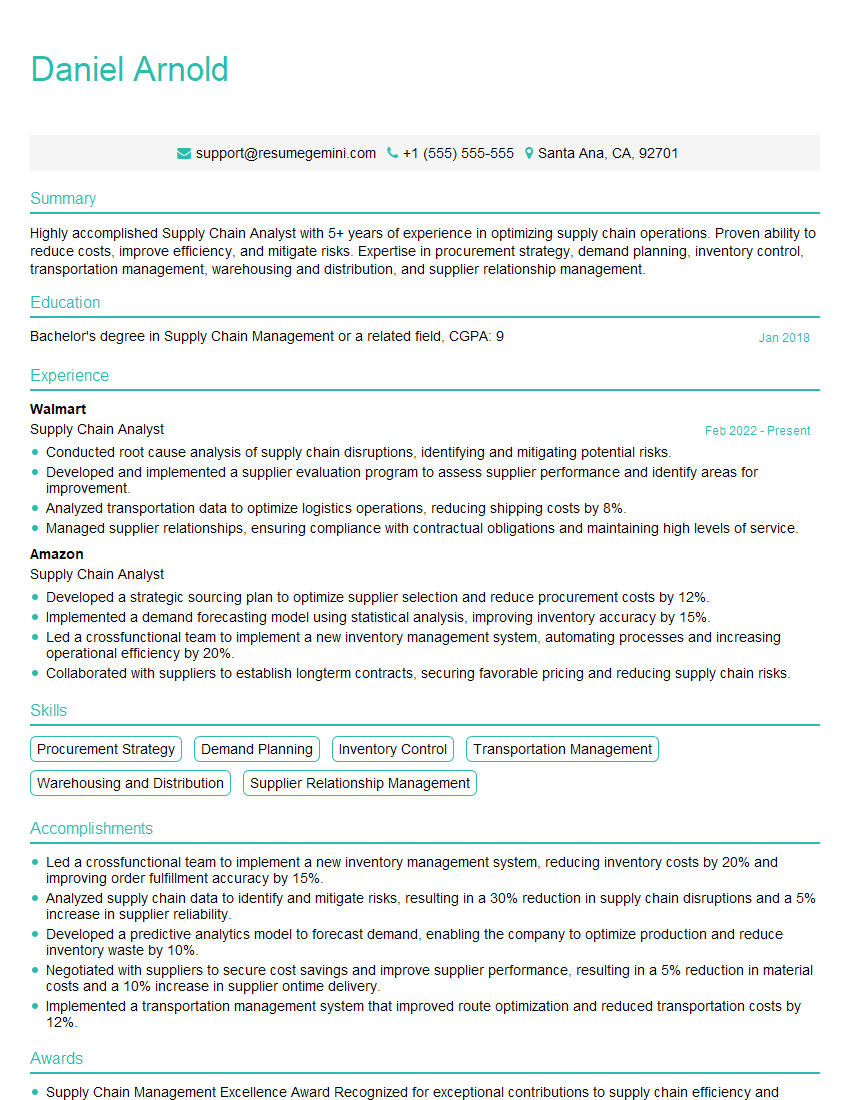
Supply Chain Analyst Resume Sample
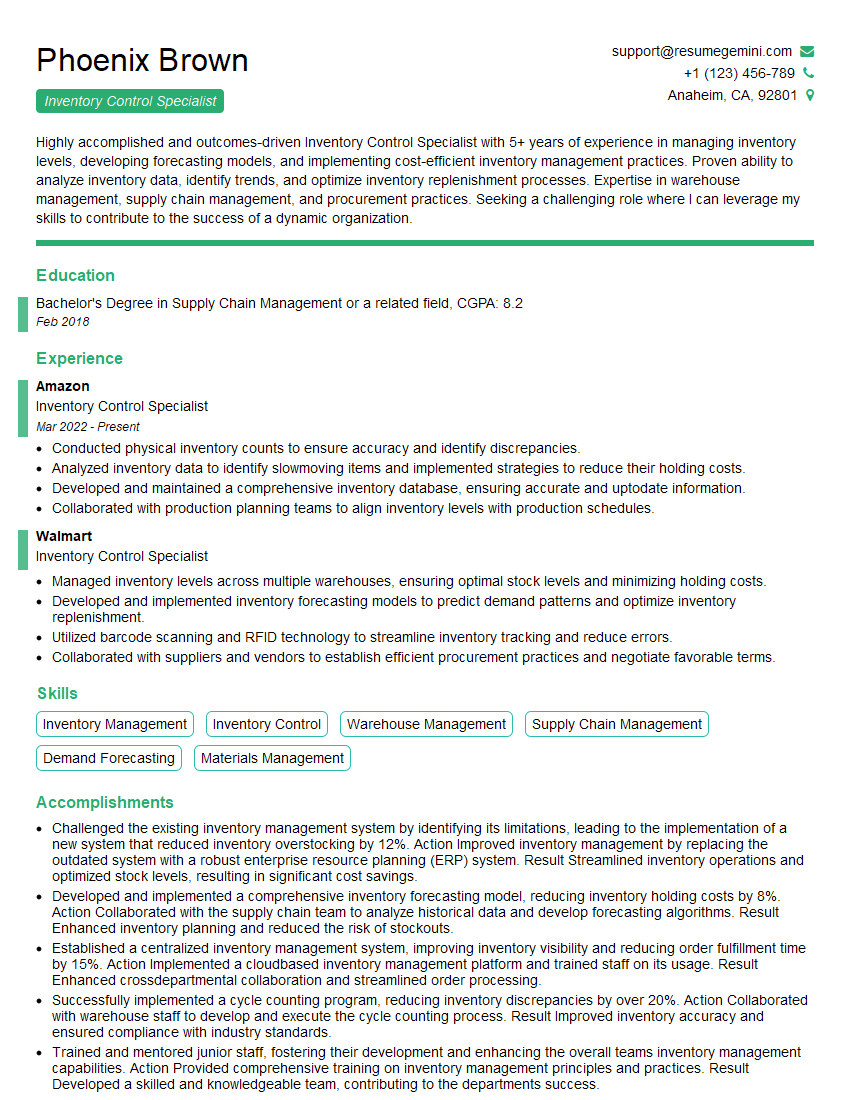
Inventory Control Specialist Resume Sample
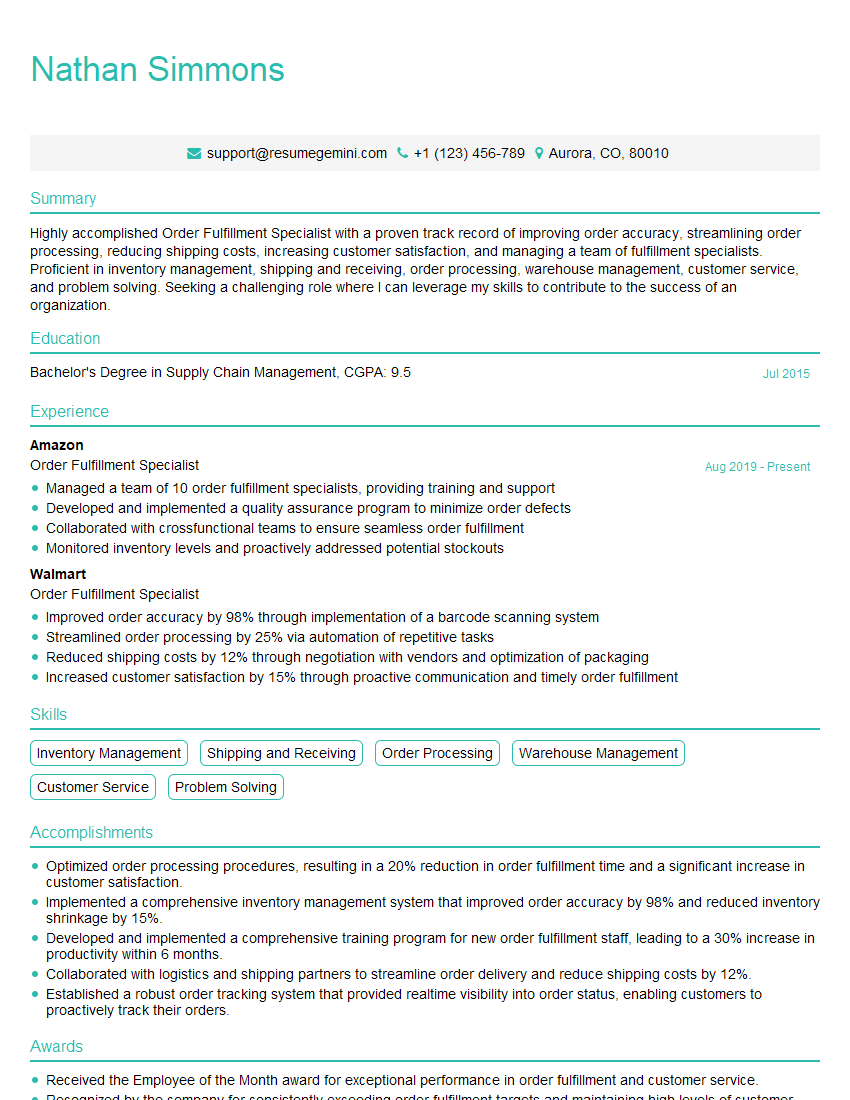
Order Fulfillment Specialist Resume Sample
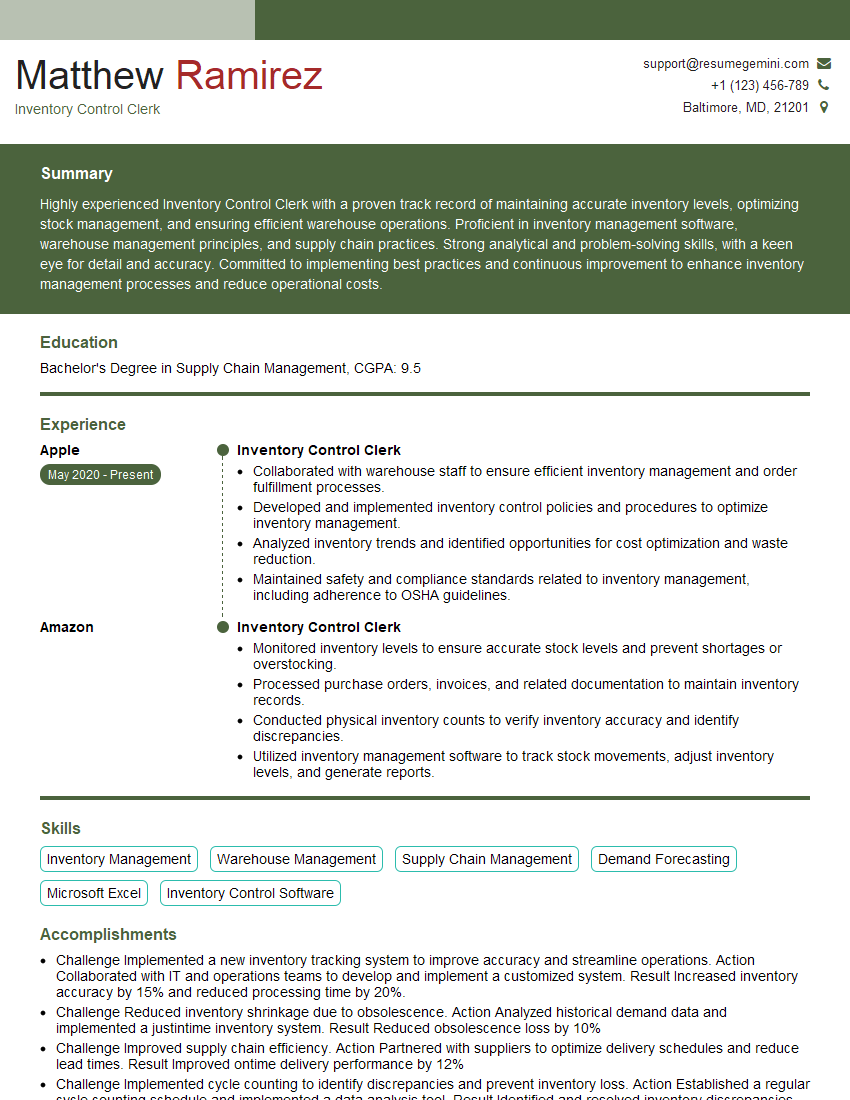
Inventory Control Clerk Resume Sample
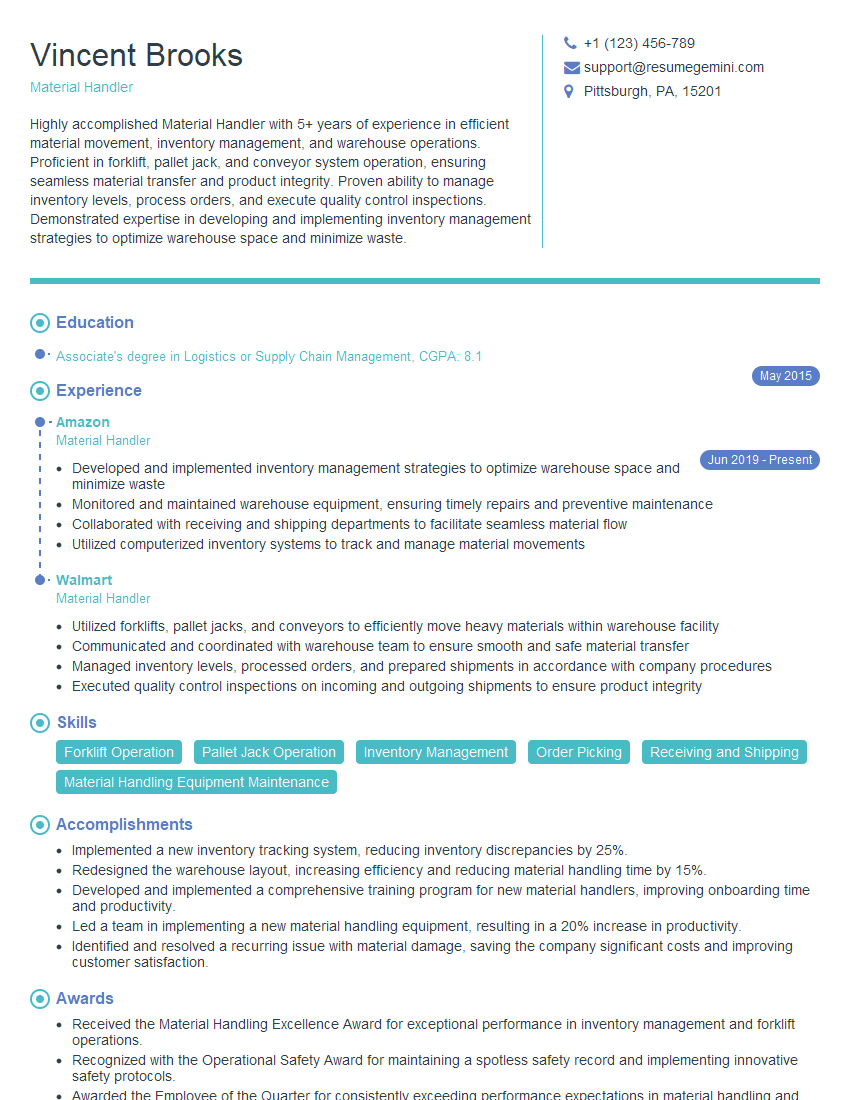
Material Handler Resume Sample
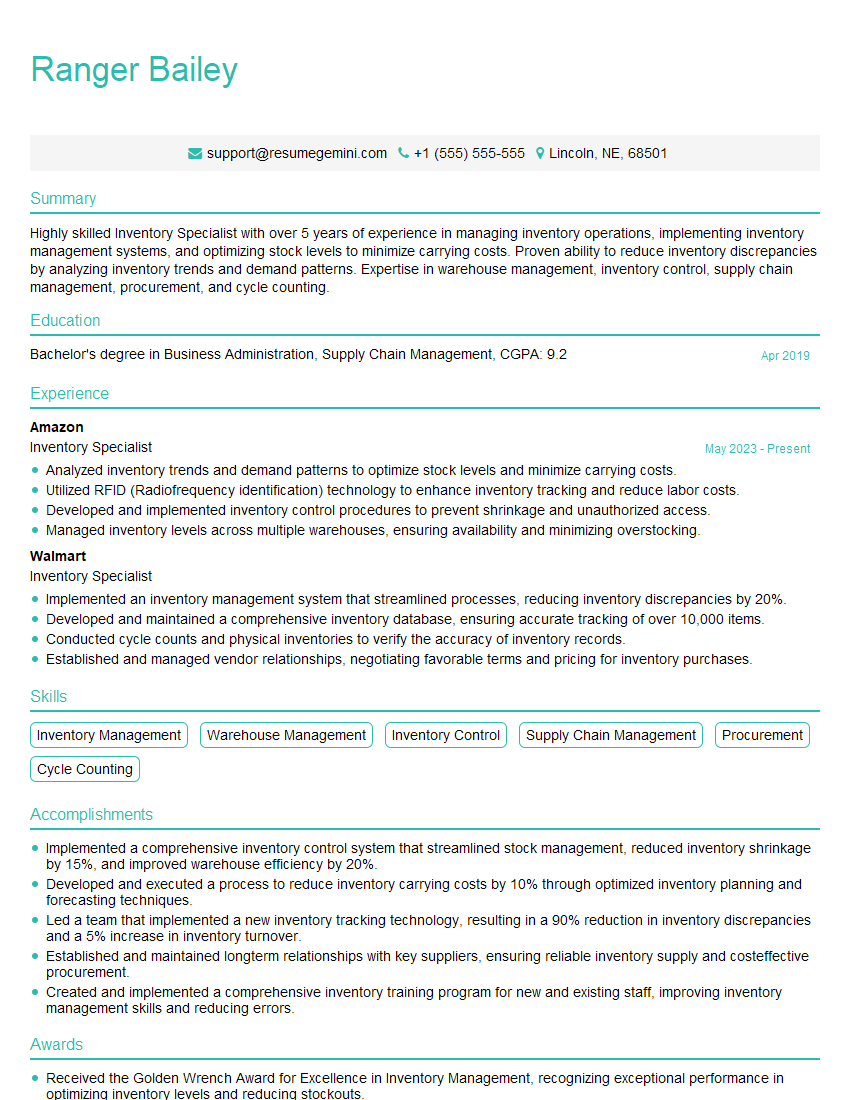
Inventory Specialist Resume Sample
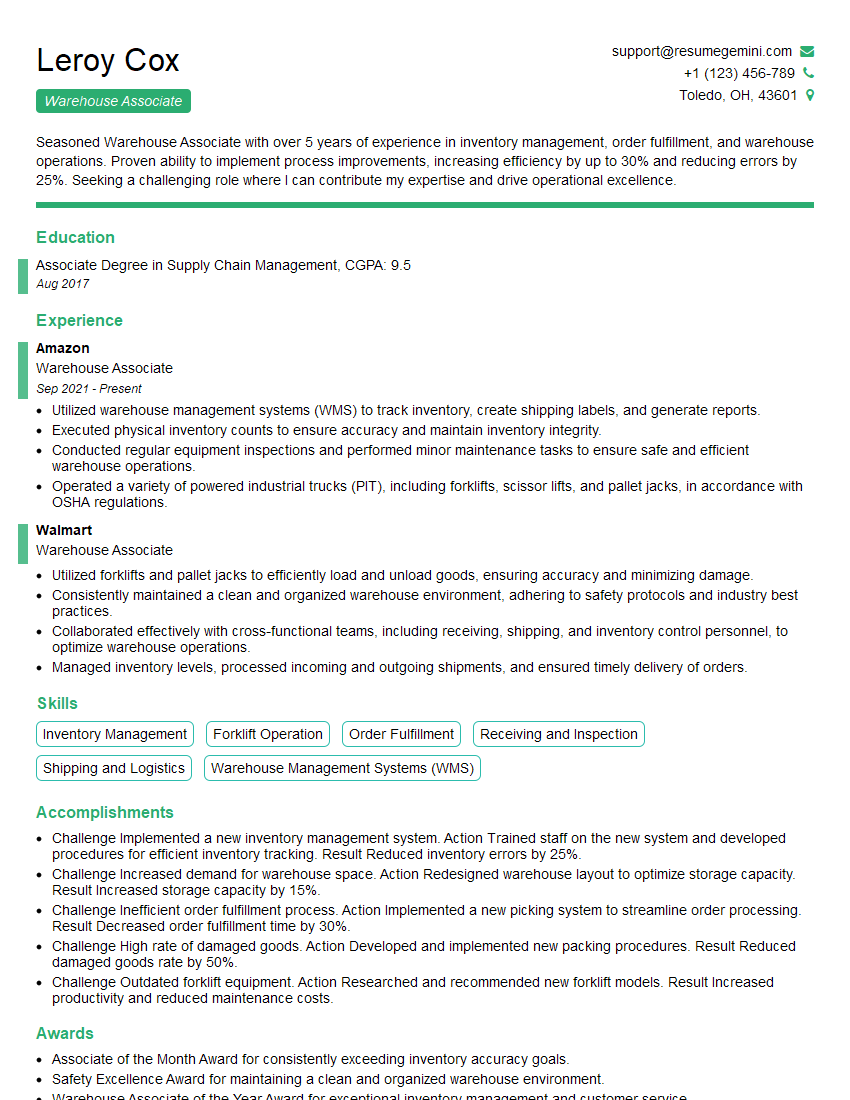
Warehouse Associate Resume Sample
- Supply Chain Manager
- Distribution Center Manager
- Logistics Manager
- Warehouse Manager
- Warehouse Operations Manager
- Distribution Center Supervisor
- Warehouse Supervisor
- Logistics Coordinator
- Logistics Analyst
- Supply Chain Analyst
- Inventory Control Specialist
- Order Fulfillment Specialist
- Inventory Control Clerk
- Material Handler
- Inventory Specialist
- Warehouse Associate
Explore more articles
Users Rating of Our Blogs
Share Your Experience
We value your feedback! Please rate our content and share your thoughts (optional).
What Readers Say About Our Blog
Very informative content, great job.
good