Preparation is the key to success in any interview. In this post, we’ll explore crucial KnowledgeOfElectricalSystems interview questions and equip you with strategies to craft impactful answers. Whether you’re a beginner or a pro, these tips will elevate your preparation.
Questions Asked in KnowledgeOfElectricalSystems Interview
Q 1. Explain Ohm’s Law and its applications.
Ohm’s Law describes the relationship between voltage, current, and resistance in an electrical circuit. It states that the current (I) flowing through a conductor is directly proportional to the voltage (V) applied across it and inversely proportional to its resistance (R). This relationship is mathematically represented as: V = IR
Applications: Ohm’s Law is fundamental to electrical engineering and has countless applications. For example, it’s used to:
- Design circuits: Calculating resistor values needed to limit current flow to specific components.
- Troubleshooting circuits: Determining the source of a problem by measuring voltage and current at various points.
- Power calculations: Determining the power dissipated by a resistor (
P = I²R = V²/R = VI). - Predicting circuit behavior: Analyzing how changes in voltage or resistance affect current flow.
Example: If a 12V battery is connected to a 6Ω resistor, the current flowing through the resistor will be I = V/R = 12V / 6Ω = 2A.
Q 2. What are the different types of electrical circuits?
Electrical circuits are broadly classified into two main types: series and parallel circuits, with combinations of both also commonly used.
- Series Circuit: In a series circuit, components are connected end-to-end, forming a single path for current flow. The current is the same through all components, while the total voltage is the sum of the individual voltage drops across each component. If one component fails, the entire circuit is broken.
- Parallel Circuit: In a parallel circuit, components are connected across each other, providing multiple paths for current flow. The voltage across each component is the same, while the total current is the sum of the currents through each branch. If one component fails, the others continue to function.
- Combination Circuits: Many real-world circuits are a combination of series and parallel connections, requiring a more complex analysis to understand their behavior.
Imagine a simple Christmas light string. Older strings were series circuits; one bulb out meant they all went out. Modern strings often use parallel circuits, allowing some bulbs to remain lit even if one burns out.
Q 3. Describe Kirchhoff’s Voltage and Current Laws.
Kirchhoff’s laws are fundamental principles used to analyze complex electrical circuits. They provide a systematic way to solve for unknown voltages and currents.
- Kirchhoff’s Voltage Law (KVL): The sum of the voltage drops around any closed loop in a circuit is equal to zero. This reflects the conservation of energy – the energy gained by the source must equal the energy lost in the components. Think of it like a roller coaster: the energy gained climbing the hill is equal to the energy lost going down.
- Kirchhoff’s Current Law (KCL): The sum of the currents entering a junction (node) in a circuit is equal to the sum of the currents leaving that junction. This reflects the conservation of charge – charge cannot be created or destroyed, only transferred. It’s like a water pipe junction: the total water flowing into the junction equals the total water flowing out.
Example: KVL and KCL are frequently used together to solve for unknown voltages and currents in complex circuits using techniques like nodal or mesh analysis.
Q 4. How do you calculate the power in an electrical circuit?
Electrical power (P) is the rate at which energy is consumed or generated in a circuit. It’s measured in watts (W). There are three main formulas for calculating power, all derived from Ohm’s Law:
P = VI(Power = Voltage x Current)P = I²R(Power = Current² x Resistance)P = V²/R(Power = Voltage² / Resistance)
The choice of formula depends on the known quantities. For instance, if you know the voltage and current, the first formula is the most convenient. If you know the current and resistance, the second formula is better.
Example: A 100W light bulb operating at 120V has a current of I = P/V = 100W / 120V ≈ 0.83A, and its resistance is R = V²/P = (120V)² / 100W = 144Ω.
Q 5. Explain the difference between AC and DC current.
The key difference between AC (Alternating Current) and DC (Direct Current) lies in the direction of electron flow.
- DC Current: Electrons flow in one direction only. Batteries and solar cells are common sources of DC current. The voltage remains relatively constant over time.
- AC Current: Electrons periodically change direction, flowing back and forth. This is achieved by periodically reversing the polarity of the voltage source. Household power outlets typically provide AC current. The voltage varies sinusoidally over time.
Analogy: Imagine a river (DC) flowing steadily in one direction versus a sea wave (AC) that moves back and forth. AC is more efficient for long-distance transmission due to its ability to be easily transformed to higher voltages using transformers, reducing power loss.
Q 6. What are the safety precautions when working with electricity?
Working with electricity can be dangerous. Safety precautions are paramount and should always be followed. Here are some key safety measures:
- Never work on energized circuits without proper training and safety equipment.
- Always use appropriate personal protective equipment (PPE), including insulated gloves, safety glasses, and footwear.
- Ensure the circuit is de-energized before working on it. Use a reliable voltage tester to verify that the circuit is indeed off.
- Follow all lockout/tagout procedures to prevent accidental re-energization.
- Be aware of potential hazards such as exposed wires, wet conditions, and confined spaces.
- Never touch electrical equipment with wet hands or while standing in water.
- If an electrical shock occurs, immediately call for medical assistance.
Safety is not just a suggestion; it’s a necessity.
Q 7. What is grounding and why is it important?
Grounding is the process of connecting an electrical circuit or equipment to the earth. This provides a low-resistance path for fault currents to flow to the ground, minimizing the risk of electric shock and equipment damage.
Importance:
- Safety: If a fault occurs in an appliance, the current flows through the ground wire, preventing a dangerous voltage from appearing on the metal casing. Without grounding, the casing would become energized, posing a shock hazard.
- Equipment Protection: Grounding helps protect electronic equipment from voltage surges and other electrical disturbances.
- Noise Reduction: Grounding minimizes electromagnetic interference (EMI) by providing a common reference point for electrical signals, leading to improved system performance.
Example: The third prong on many electrical plugs is the ground wire, connecting the metal casing of appliances to earth. This is a critical safety feature.
Q 8. Explain the function of a transformer.
A transformer is a crucial passive electrical device that alters the voltage of an alternating current (AC) power supply. It does this without changing the frequency. Think of it like a gear system for electricity – it changes the ‘speed’ (voltage) while maintaining the ‘rotations per minute’ (frequency).
It works based on the principle of electromagnetic induction. A changing magnetic field in a primary coil induces a voltage in a secondary coil. The ratio of the number of turns in the primary coil to the number of turns in the secondary coil determines the voltage transformation. A step-up transformer increases voltage (more turns in the secondary), while a step-down transformer decreases it (fewer turns in the secondary).
Example: Power is often generated at high voltages for efficient long-distance transmission. Step-down transformers then reduce this voltage to safer levels (120V or 240V) for household use. Conversely, step-up transformers boost voltage in power plants for transmission across vast distances.
Q 9. Describe different types of motors and their applications.
Motors are electromechanical devices that convert electrical energy into mechanical energy. There are numerous types, but some of the most common are:
- DC Motors: These operate on direct current and are categorized further into brushed and brushless types. Brushed DC motors are simpler, but less efficient and require regular maintenance. Brushless DC motors are more efficient, durable, and quieter. Applications range from small toys and appliances to industrial automation.
- AC Motors: These operate on alternating current and are more widely used due to the widespread availability of AC power. Subtypes include:
- Induction Motors: The most common type, they are robust and require minimal maintenance. These are found in numerous applications, from fans and pumps to industrial machinery.
- Synchronous Motors: These motors run at a constant speed synchronized with the frequency of the AC supply. They are often used in applications requiring precise speed control, such as clocks and timers.
- Stepper Motors: These motors rotate in precise increments, making them ideal for applications requiring accurate positioning, like robotics and 3D printers.
Example: A washing machine uses an AC induction motor to spin the drum, a robotic arm uses stepper motors for precise movements, and a ceiling fan employs an AC induction motor for its rotation.
Q 10. How do you troubleshoot an electrical fault?
Troubleshooting electrical faults requires a systematic approach to ensure safety and efficient problem resolution. The process generally follows these steps:
- Safety First: Always de-energize the circuit before starting any troubleshooting. Use appropriate safety equipment, including insulated tools and personal protective equipment (PPE).
- Identify the Problem: Observe the symptoms: Is there a complete power outage, flickering lights, a tripped breaker, or a blown fuse? Document your findings.
- Isolate the Faulty Section: Use a multimeter to check voltage and continuity. Trace the circuit to pinpoint the location of the fault. Check connections, wires, switches, outlets, and appliances.
- Test Components: Use the multimeter to test individual components such as switches, outlets, and circuit breakers for proper functionality.
- Repair or Replace: Once the faulty component is identified, repair or replace it as needed. Ensure all connections are secure.
- Verification: After making repairs, test the circuit to ensure the problem is resolved and the system is operating safely.
Example: If a light fixture doesn’t work, you’d first check the breaker. If it’s on, you’d check the bulb, then the wiring to the fixture, and finally the switch to ensure it’s functioning correctly.
Q 11. What are the common types of electrical wiring?
Common types of electrical wiring vary based on application and safety standards. Some include:
- Copper Wiring: The most commonly used type due to its high conductivity and ductility. Available in various gauges depending on the current-carrying capacity.
- Aluminum Wiring: Used less frequently due to its higher resistance and susceptibility to oxidation, though it is lighter and less expensive than copper. Requires special connectors and installation techniques.
- Conduit Wiring: Wires run within metal or plastic pipes, offering improved protection and safety, especially in harsh environments.
- Romex (NM-B): A type of non-metallic sheathed cable commonly used in residential wiring. It is relatively easy to install, but requires additional protection in certain situations.
- BX (AC): Armored cable with a flexible metal sheath offering good protection for wiring in various applications.
The choice of wiring depends on factors like voltage, amperage, and environmental conditions. Proper wiring is critical for safety and compliance with building codes.
Q 12. Explain the concept of impedance.
Impedance is the total opposition to the flow of current in an AC circuit. Unlike resistance, which only considers the opposition from resistors, impedance also accounts for the opposition caused by inductors and capacitors. It is a complex quantity that includes both magnitude and phase.
Impedance (Z) is measured in ohms (Ω) and can be calculated using the formula: Z = √(R² + (XL - XC)²) where R is resistance, XL is inductive reactance, and XC is capacitive reactance. Inductive reactance (XL) increases with frequency, while capacitive reactance (XC) decreases with frequency.
Example: In a circuit with a resistor, an inductor, and a capacitor, the total impedance will determine the current flow. If XL and XC are equal, they cancel each other out, resulting in a lower impedance, leading to increased current flow compared to a circuit with only resistance.
Q 13. Describe different types of relays and their functions.
Relays are electromechanical switches that use a small control current to switch a larger current. They act as an interface between a control circuit and a power circuit. Different types include:
- Electromechanical Relays: These use an electromagnet to mechanically operate contacts, switching the larger current. They’re reliable and relatively inexpensive but can be slower than other types.
- Solid-State Relays (SSRs): These use semiconductor devices instead of mechanical contacts. They are faster, more reliable, and have a longer lifespan than electromechanical relays, but they can be more sensitive to voltage spikes.
- Thermal Relays: These use a bimetallic strip that bends and opens or closes contacts depending on temperature. They’re often used for overload protection.
- Overcurrent Relays: These protect circuits from excessive current by detecting overloads or short circuits and tripping the circuit breaker.
Example: An electromechanical relay might be used in a motor control system to start and stop a motor. A solid-state relay might be used in a temperature control system, while an overcurrent relay protects electrical equipment from damage due to overcurrent.
Q 14. What is a PLC and how does it work?
A Programmable Logic Controller (PLC) is a digital computer used for automation of electromechanical processes such as control systems for machinery on factory assembly lines. It’s designed to withstand harsh industrial environments and provide reliable control.
A PLC works by executing a program stored in its memory. This program is typically written using ladder logic, a graphical programming language, although other languages can also be used. The PLC continuously monitors inputs from sensors and switches and makes decisions based on its program, then actuates outputs to control actuators like motors, valves, and lights.
How it works: Inputs (sensors) are read, the program is executed, and outputs (actuators) are controlled based on program logic. This cycle repeats continuously, allowing for real-time control of industrial processes. PLCs have various communication capabilities to interact with other systems and devices.
Example: In a manufacturing plant, a PLC might control a conveyor belt system, monitoring sensors for jams and adjusting the speed based on the number of products on the line. It might also control robotic arms and packaging machines.
Q 15. Explain the principles of SCADA systems.
SCADA, or Supervisory Control and Data Acquisition, systems are the nervous system of large-scale industrial operations, monitoring and controlling processes remotely. Think of it as a sophisticated, centralized dashboard giving operators oversight of geographically dispersed equipment. It works by collecting data from various field devices like sensors and actuators through communication networks (often involving RTUs – Remote Terminal Units – and PLCs – Programmable Logic Controllers), processing this data, and allowing operators to intervene and adjust settings as needed.
- Data Acquisition: Sensors throughout the system measure variables like temperature, pressure, flow, and voltage. This data is transmitted to the SCADA master station.
- Data Transmission: Various communication protocols, including Ethernet, Modbus, and Profibus, are used to transmit data over long distances, often using fiber optics for reliability and speed.
- Data Processing: The SCADA master station gathers and processes the collected data, displaying it on human-machine interfaces (HMIs) in a user-friendly format such as graphs, charts, and alarm indicators.
- Supervisory Control: Operators use the HMI to remotely control the field devices. For example, they can open or close valves, start or stop pumps, and adjust setpoints to optimize the process.
- Data Logging and Reporting: SCADA systems automatically log vast amounts of data, providing valuable insights into system performance and facilitating troubleshooting and predictive maintenance.
Example: A power utility uses SCADA to monitor and control its entire power grid, reacting in real-time to voltage fluctuations, adjusting power flow, and identifying potential outages before they impact consumers.
Career Expert Tips:
- Ace those interviews! Prepare effectively by reviewing the Top 50 Most Common Interview Questions on ResumeGemini.
- Navigate your job search with confidence! Explore a wide range of Career Tips on ResumeGemini. Learn about common challenges and recommendations to overcome them.
- Craft the perfect resume! Master the Art of Resume Writing with ResumeGemini’s guide. Showcase your unique qualifications and achievements effectively.
- Don’t miss out on holiday savings! Build your dream resume with ResumeGemini’s ATS optimized templates.
Q 16. What are the different types of power generation?
Power generation utilizes various methods to convert energy sources into electricity. These can be broadly classified into:
- Fossil Fuels: Coal, natural gas, and oil are burned to heat water, creating steam that drives turbines connected to generators. This is a mature technology but faces environmental concerns.
- Nuclear Power: Nuclear fission generates heat, similarly driving steam turbines. It offers high power density but necessitates careful management of nuclear waste.
- Hydropower: The kinetic energy of moving water spins turbines, creating electricity. This is a renewable source but dependent on geographical location and can impact river ecosystems.
- Renewable Energy Sources:
- Solar Power: Photovoltaic (PV) cells convert sunlight directly into electricity, while concentrated solar power systems use mirrors to focus sunlight to heat a working fluid, driving a turbine.
- Wind Power: Wind turbines convert wind’s kinetic energy into electricity. This is becoming increasingly cost-competitive.
- Geothermal Power: Heat from the Earth’s interior is used to generate steam, driving turbines. This is a reliable baseload power source but geographically limited.
- Biomass Power: Organic matter is burned to generate electricity, offering a way to utilize agricultural waste and other biomass resources.
Each method has its advantages and disadvantages concerning cost, environmental impact, and reliability, influencing the energy mix of a country or region.
Q 17. Describe the components of a power distribution system.
A power distribution system delivers electricity from generation sources to end-users. It consists of several key components:
- Substations: These are crucial switching and transforming centers. High-voltage electricity from generating stations is stepped down to lower voltages suitable for transmission and distribution.
- Transmission Lines: High-voltage lines transmit electricity over long distances, typically using overhead conductors supported by tall towers. These lines minimize energy loss during transmission.
- Distribution Substations: These further reduce voltage to levels appropriate for local distribution networks.
- Distribution Lines: Lower-voltage lines distribute electricity to homes, businesses, and industries, often using underground cables in urban areas and overhead lines in rural areas.
- Transformers: These essential devices increase or decrease voltage levels according to the requirements of each part of the system.
- Protection Devices: Fuses, circuit breakers, and relays protect the system from faults and overloads, preventing damage and ensuring safety.
- Meters and Monitoring Equipment: These measure electricity consumption and monitor the overall health of the distribution system.
The design of a distribution system depends on various factors, such as population density, load demands, and geographical constraints.
Q 18. What are the challenges in renewable energy integration?
Integrating renewable energy sources (RES) into existing power grids presents several significant challenges:
- Intermittency: Solar and wind power are intermittent, meaning their output fluctuates depending on weather conditions. This necessitates sophisticated forecasting and grid management strategies.
- Variability: The unpredictable nature of RES output requires flexible and responsive grid infrastructure. Energy storage solutions, such as batteries or pumped hydro, can help mitigate this variability.
- Grid Stability: The integration of large amounts of RES can impact grid stability, potentially leading to frequency fluctuations and voltage instability. Advanced control systems and grid modernization are crucial to address this.
- Transmission Infrastructure: Existing transmission infrastructure may not be adequately equipped to handle the geographically dispersed nature of some RES, requiring upgrades and expansions.
- Cost: The initial investment costs of RES technologies can be high, although costs are decreasing rapidly. This needs to be balanced against the long-term benefits and environmental considerations.
Addressing these challenges requires a holistic approach involving technological advancements, smart grid technologies, and effective policy frameworks.
Q 19. Explain the concept of power factor correction.
Power factor correction improves the efficiency of electrical systems by reducing the reactive power component. In AC circuits, reactive power is power that flows back and forth without doing any useful work. A low power factor indicates a significant portion of the current is reactive, leading to increased energy losses and higher electricity bills.
Power factor (PF) is the cosine of the angle between voltage and current. A PF of 1 indicates purely resistive load, while a PF less than 1 indicates a reactive load (inductive or capacitive). Power factor correction involves adding devices, typically capacitors, to compensate for the reactive power, bringing the PF closer to 1.
Example: An industrial plant with many induction motors (highly inductive loads) will likely have a low power factor. Installing capacitor banks will help to improve the PF, reducing electricity costs and improving the efficiency of the overall system.
Q 20. What is the difference between a fuse and a circuit breaker?
Both fuses and circuit breakers protect electrical circuits from overcurrents, but they operate differently:
- Fuse: A fuse is a simple, one-time protective device. It contains a thin wire that melts and breaks the circuit when excessive current flows, preventing damage to equipment and reducing the risk of fire. Once a fuse blows, it needs to be replaced.
- Circuit Breaker: A circuit breaker is a more sophisticated, reusable device. It uses an electromagnetic mechanism or a thermal element to detect overcurrents. When an overcurrent is detected, the circuit breaker automatically interrupts the current flow. Once the fault is cleared, the breaker can be reset and reused. They often include features like overload protection and short-circuit protection.
In essence, a fuse is a sacrificial device, while a circuit breaker is a reusable switching device with built-in protection.
Q 21. How do you design a safe and efficient electrical system?
Designing a safe and efficient electrical system involves a multi-faceted approach:
- Careful Planning and Design: Begin with a thorough load calculation to determine the required capacity of the system. Consider future expansion needs and ensure compliance with all relevant safety codes and standards.
- Appropriate Wiring and Cabling: Use conductors of the correct size and type for the anticipated current and voltage levels. Ensure proper insulation and grounding to prevent electrical shocks and fires.
- Protection Devices: Install suitable circuit breakers and fuses to protect against overcurrents, short circuits, and ground faults. Consider arc-flash mitigation strategies for higher voltage systems.
- Grounding and Bonding: Implement a comprehensive grounding system to ensure safety and prevent electrical shocks. Bond metallic enclosures and equipment to the grounding system.
- Overload Protection: Ensure that the system has appropriate overload protection to prevent equipment damage and fires due to excessive current.
- Regular Maintenance and Inspections: Regular inspections and maintenance are crucial for identifying potential problems and ensuring the system’s continued safety and efficiency. This includes checking wiring, connections, and protective devices.
- Safety Training: Provide adequate safety training to all personnel who may work on or around the electrical system.
Following these guidelines ensures a system that is not only efficient but also protects people and equipment from electrical hazards.
Q 22. Describe your experience with electrical CAD software.
Throughout my career, I’ve extensively used several Electrical CAD software packages, including AutoCAD Electrical, EPLAN Electric P8, and Siemens TIA Portal. My proficiency extends beyond basic schematic capture and wiring diagrams. I’m adept at creating comprehensive project documentation, managing component libraries, generating reports, and utilizing advanced features like PLC programming within the CAD environment (specifically using TIA Portal’s integrated capabilities). For instance, in a recent project involving a complex industrial automation system, I used AutoCAD Electrical to design the control panel layouts, generate wiring diagrams, and create detailed bill of materials, significantly reducing design time and improving accuracy. My experience also includes using EPLAN to manage large-scale projects with multiple disciplines involved, leveraging its collaborative features and robust database management.
Q 23. What is your experience with electrical testing equipment?
My experience with electrical testing equipment is broad, encompassing both low-voltage and high-voltage applications. I’m proficient in using multimeters, oscilloscopes, clamp meters, insulation resistance testers, and power quality analyzers. I’m also familiar with specialized equipment such as motor testers and circuit breakers testers. For example, during commissioning of a new substation, I utilized a high-voltage insulation resistance tester to ensure the integrity of the transformer windings before energizing the system. Similarly, I have regularly employed oscilloscopes to troubleshoot transient voltage issues in industrial control systems, pinpointing the source of the problem and implementing effective solutions. Safety is paramount; I always adhere to strict safety protocols and use appropriate personal protective equipment (PPE) when handling electrical testing equipment.
Q 24. Explain your understanding of electrical codes and standards.
I have a strong understanding of various electrical codes and standards, including the National Electrical Code (NEC), IEC standards, and local building codes. My knowledge extends to safety regulations, grounding techniques, wiring methods, and equipment installation requirements. I understand the importance of code compliance to ensure safety and prevent electrical hazards. For example, I’ve successfully navigated the complexities of NEC Article 725 for data communication cabling in a high-rise building project, ensuring all installations met the stringent requirements for fire safety and signal integrity. I also regularly consult the relevant standards to ensure designs comply with local and international regulations, adapting my approach based on the specific project location and its unique regulatory landscape. Staying current with code updates is a priority, as changes are often made to reflect advancements in technology and improvements in safety practices.
Q 25. How do you handle conflicting priorities in a project?
Handling conflicting priorities is a common challenge in project management. My approach involves a structured process. First, I prioritize tasks based on their urgency and importance, often using a matrix to visually represent the dependencies. Second, I clearly communicate the constraints and trade-offs to all stakeholders, fostering transparency and collaborative decision-making. Finally, I meticulously track progress, making adjustments as needed to keep the project on track. For instance, in a previous project, we faced delays in component delivery, affecting the schedule. Through clear communication and collaborative adjustments, we prioritized critical path tasks, re-sequenced others, and ultimately delivered the project successfully, albeit with minor adjustments to the initial scope.
Q 26. Describe a time you had to troubleshoot a complex electrical problem.
In one project, a critical piece of machinery stopped functioning due to an intermittent fault. Initial investigations revealed no obvious problems. Using a systematic troubleshooting approach, I started by isolating the affected circuit and carefully examining each component using a multimeter and oscilloscope. I found that the problem wasn’t a single point failure, but rather high-frequency noise affecting a sensitive control circuit. By carefully tracing the signal paths and utilizing the oscilloscope to visualize the noise, I identified the source as a faulty power supply. Replacing the power supply completely resolved the issue, highlighting the importance of methodical troubleshooting and using the right testing equipment to diagnose complex electrical problems effectively. This experience reinforced my appreciation for a systematic and detail-oriented approach to fault finding.
Q 27. How do you stay updated with the latest advancements in electrical technology?
Staying abreast of the latest advancements in electrical technology is crucial. I achieve this through several avenues. I regularly attend industry conferences and workshops, subscribe to relevant professional journals and online publications such as IEEE Spectrum, and actively participate in online forums and professional networking groups. I also pursue continuous professional development through online courses and certifications. Furthermore, I make it a point to review manufacturer’s datasheets for new components and explore emerging technologies like smart grids and renewable energy integration, ensuring my knowledge base is current and relevant to evolving industry trends.
Q 28. What are your salary expectations?
My salary expectations are commensurate with my experience and skills, and are in line with the industry standard for a senior electrical engineer with my qualifications and proven track record. I am open to discussing this further and aligning my expectations with the specifics of the role and the company’s compensation structure.
Key Topics to Learn for KnowledgeOfElectricalSystems Interview
- Fundamentals of Electricity: Understanding Ohm’s Law, Kirchhoff’s Laws, and basic circuit analysis techniques is crucial. Be prepared to explain these concepts clearly and apply them to practical scenarios.
- AC/DC Circuits: Master the differences between AC and DC systems, including their respective advantages and disadvantages. Practice analyzing both types of circuits and solving problems related to power, voltage, and current.
- Electrical Machines: Develop a strong understanding of the principles behind various electrical machines like transformers, generators, and motors. Be ready to discuss their operation, characteristics, and applications.
- Power Systems: Familiarize yourself with power generation, transmission, and distribution. Understand concepts like power factor correction, fault analysis, and protection systems.
- Control Systems: Gain a basic understanding of feedback control systems and their applications in electrical systems. This includes understanding concepts like PID control and system stability.
- Instrumentation and Measurement: Learn about various methods and instruments used for measuring electrical quantities like voltage, current, power, and resistance. Understand the importance of accuracy and calibration.
- Electrical Safety: Demonstrate knowledge of safety regulations and practices related to working with electrical systems. This includes understanding hazard identification and mitigation strategies.
- Problem-Solving & Troubleshooting: Practice diagnosing faults in electrical circuits and systems. Be prepared to explain your problem-solving approach and the steps you would take to identify and resolve issues.
Next Steps
Mastering KnowledgeOfElectricalSystems is essential for career advancement in various electrical engineering fields, opening doors to exciting opportunities and higher earning potential. A well-crafted resume is your key to unlocking these prospects. An ATS-friendly resume increases your chances of getting noticed by recruiters and securing interviews. We highly recommend using ResumeGemini to build a professional and impactful resume that highlights your skills and experience effectively. ResumeGemini provides examples of resumes tailored to the KnowledgeOfElectricalSystems field, ensuring your application stands out from the competition.
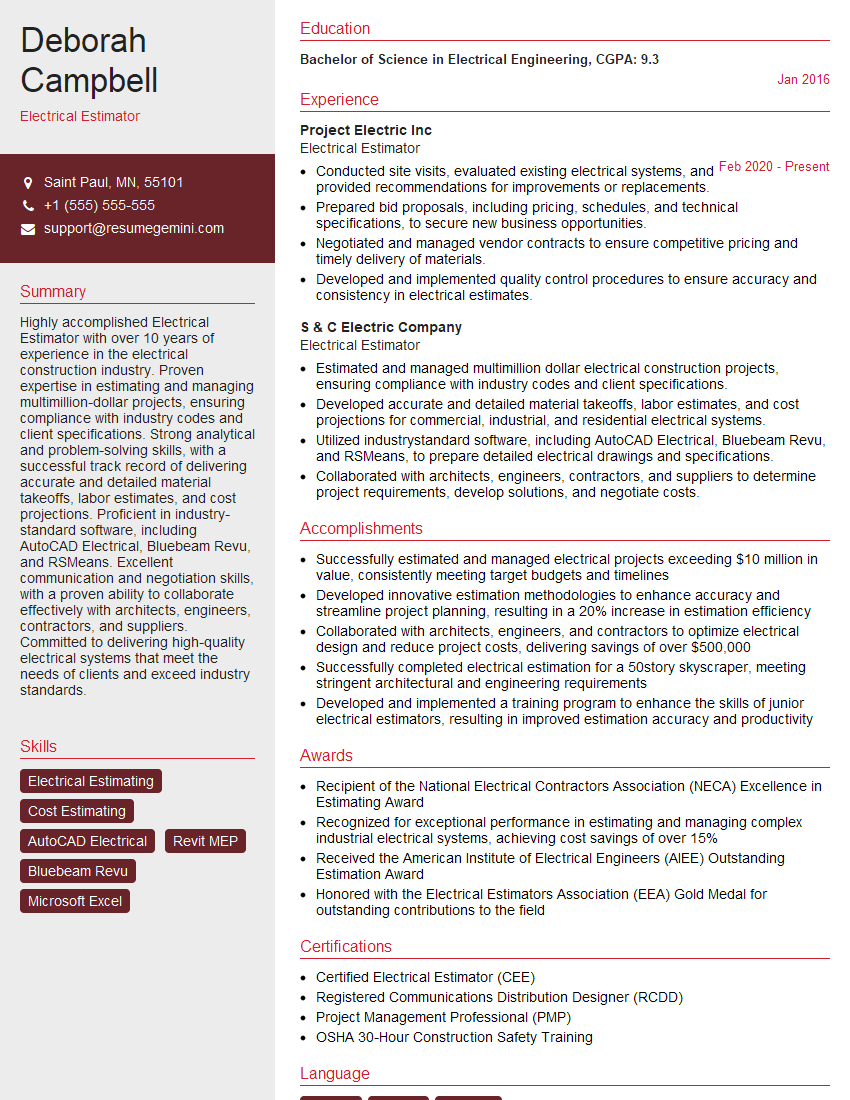
Electrical Estimator Resume Sample
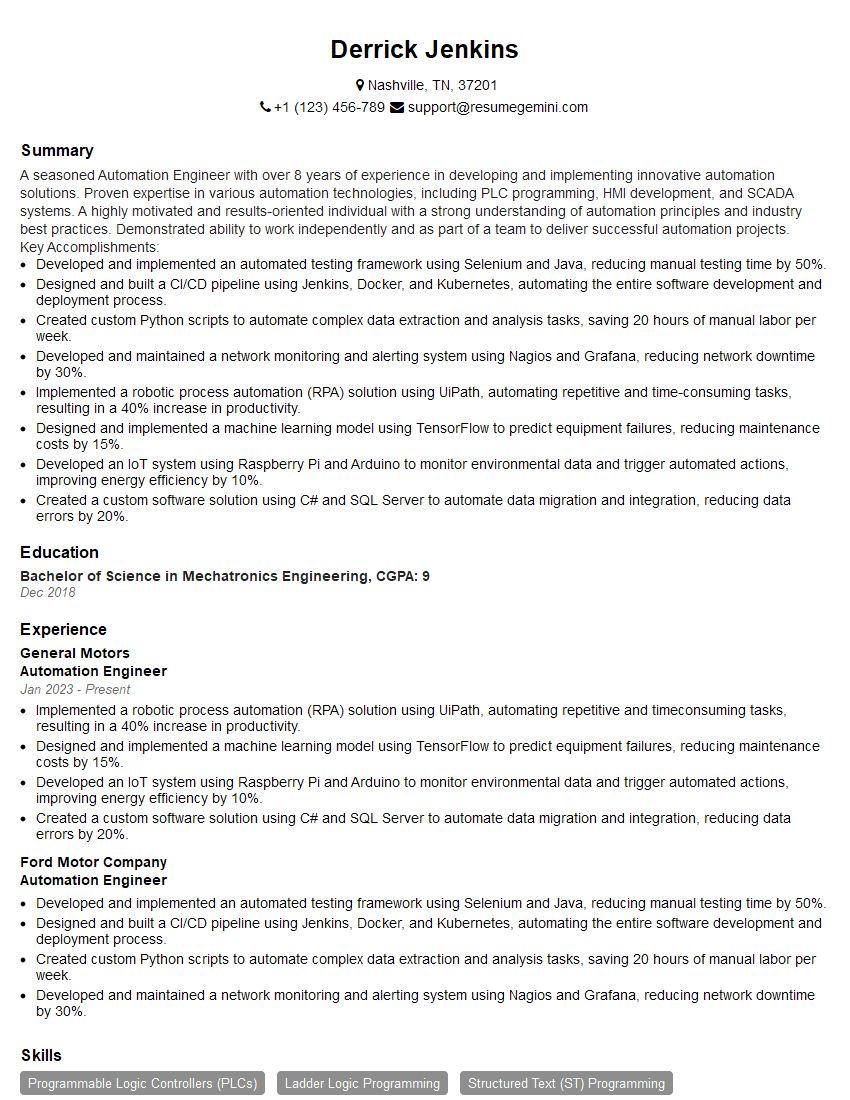
Automation Engineer Resume Sample
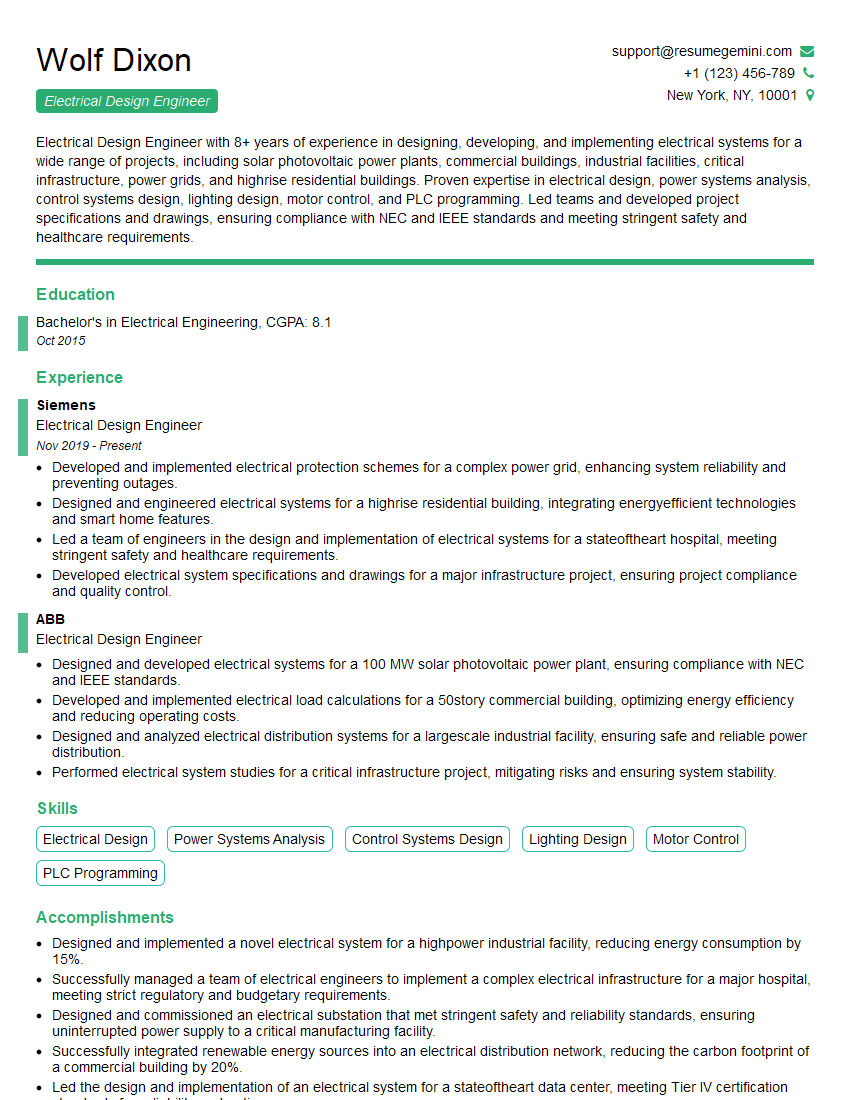
Electrical Design Engineer Resume Sample
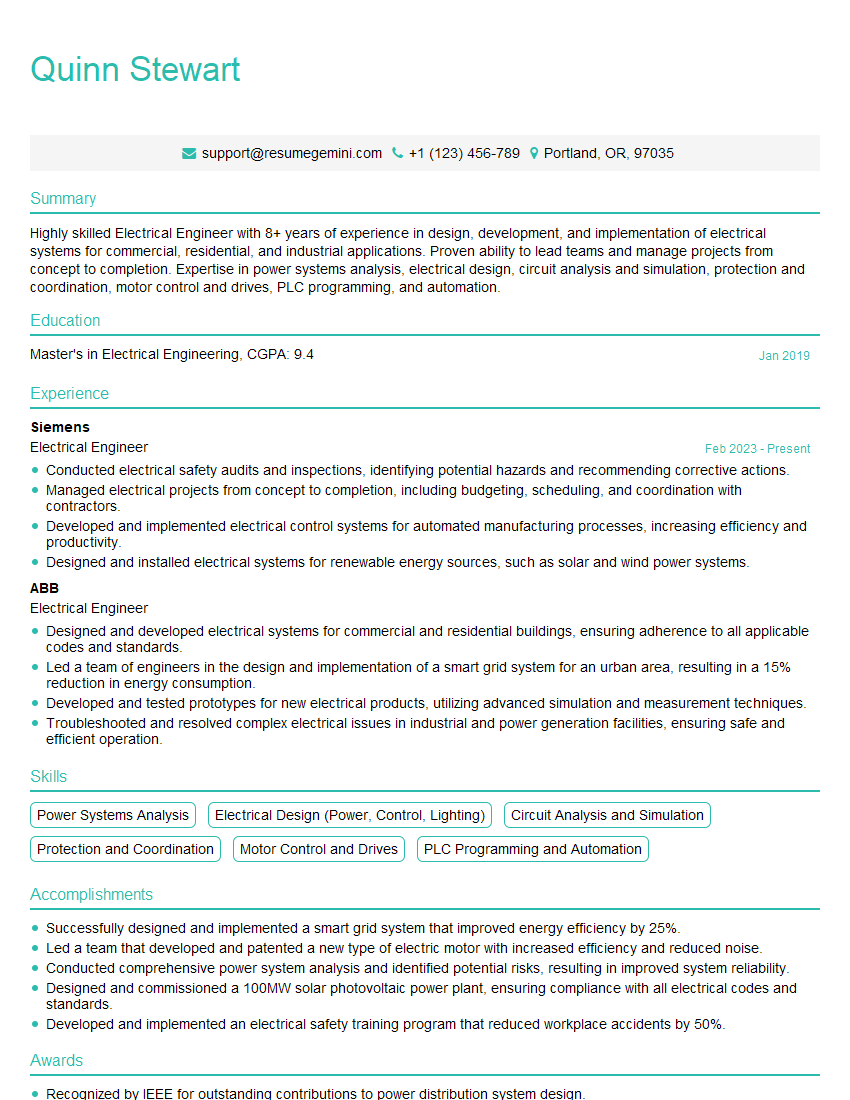
Electrical Engineer Resume Sample
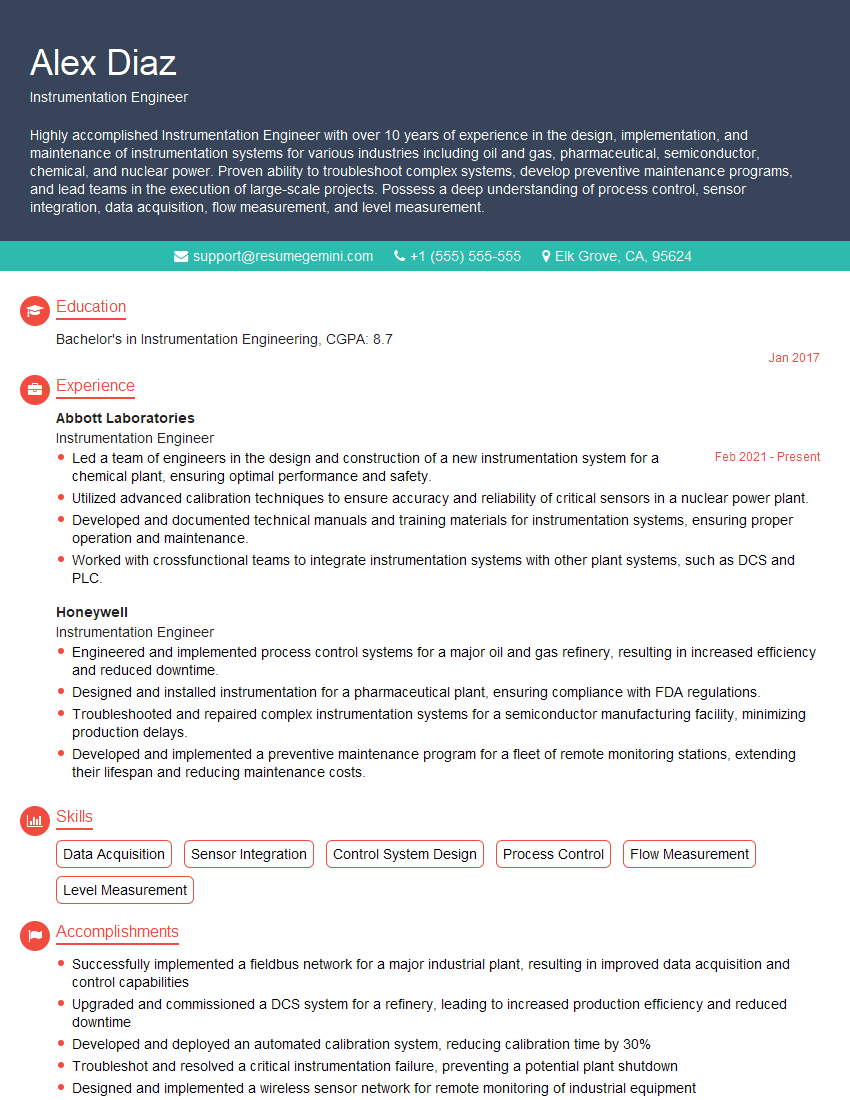
Instrumentation Engineer Resume Sample
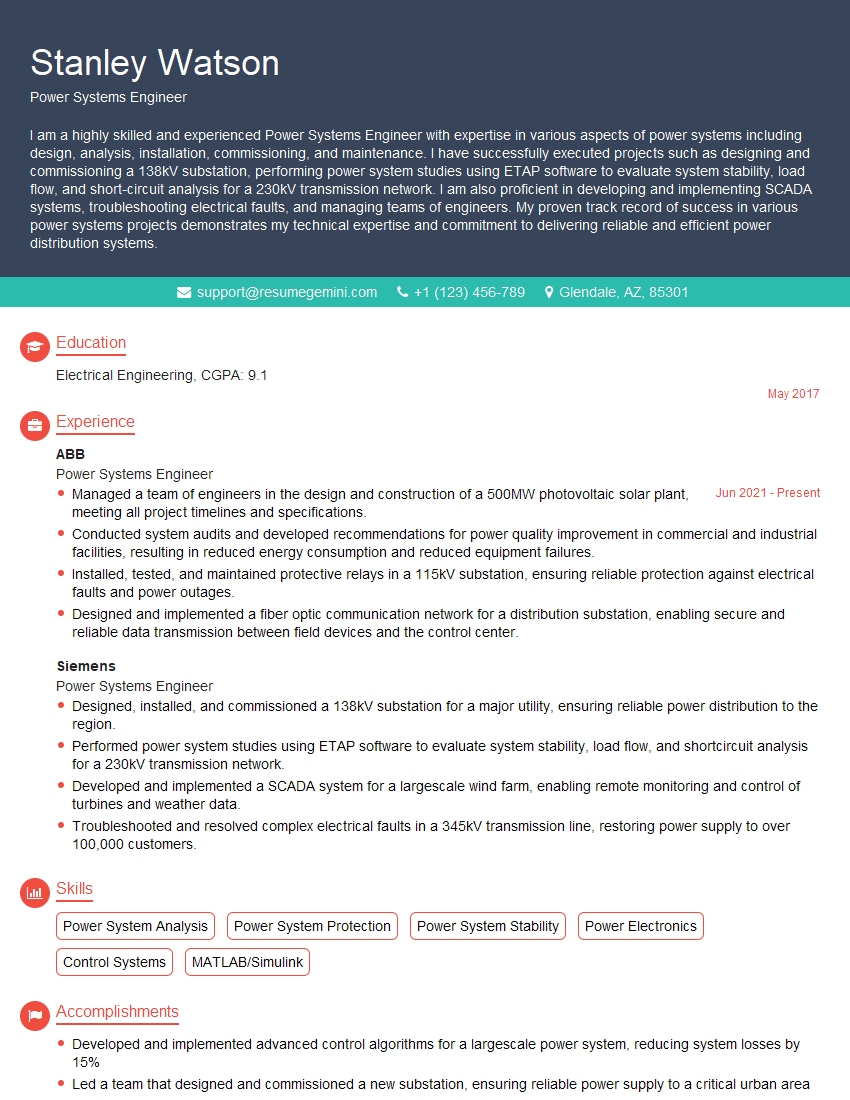
Power Systems Engineer Resume Sample
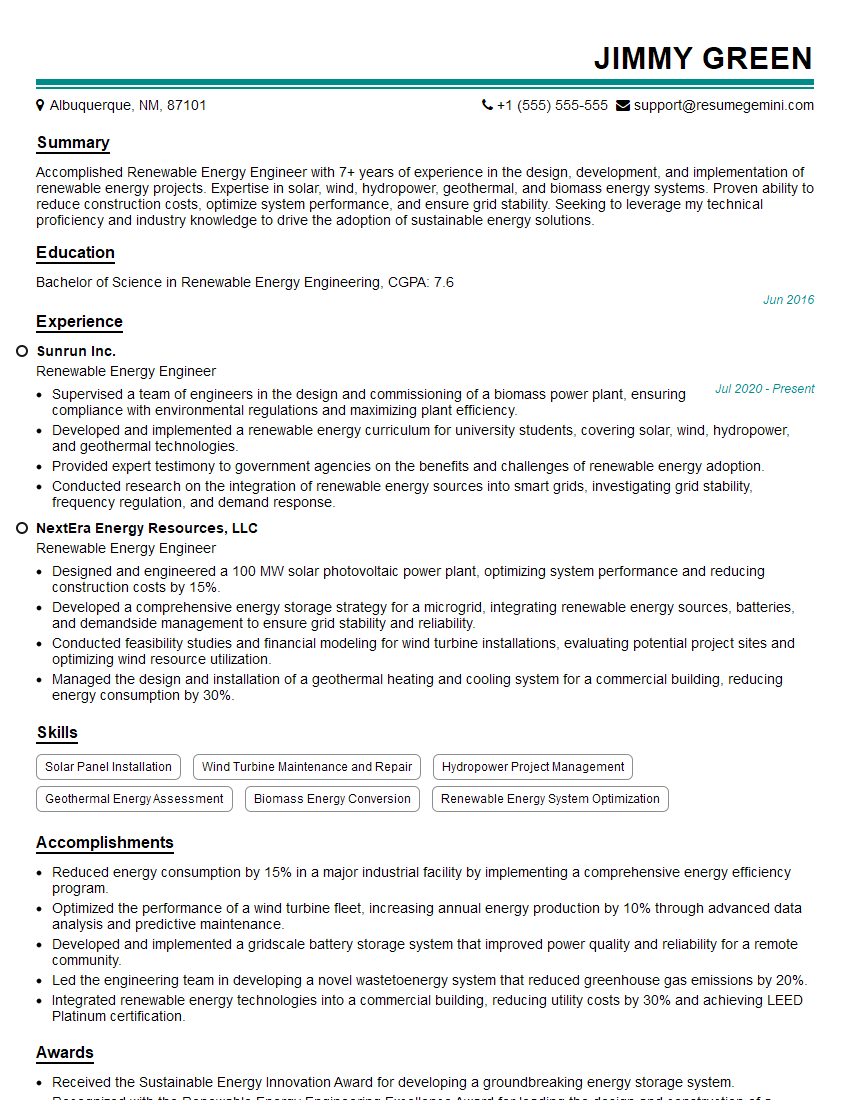
Renewable Energy Engineer Resume Sample
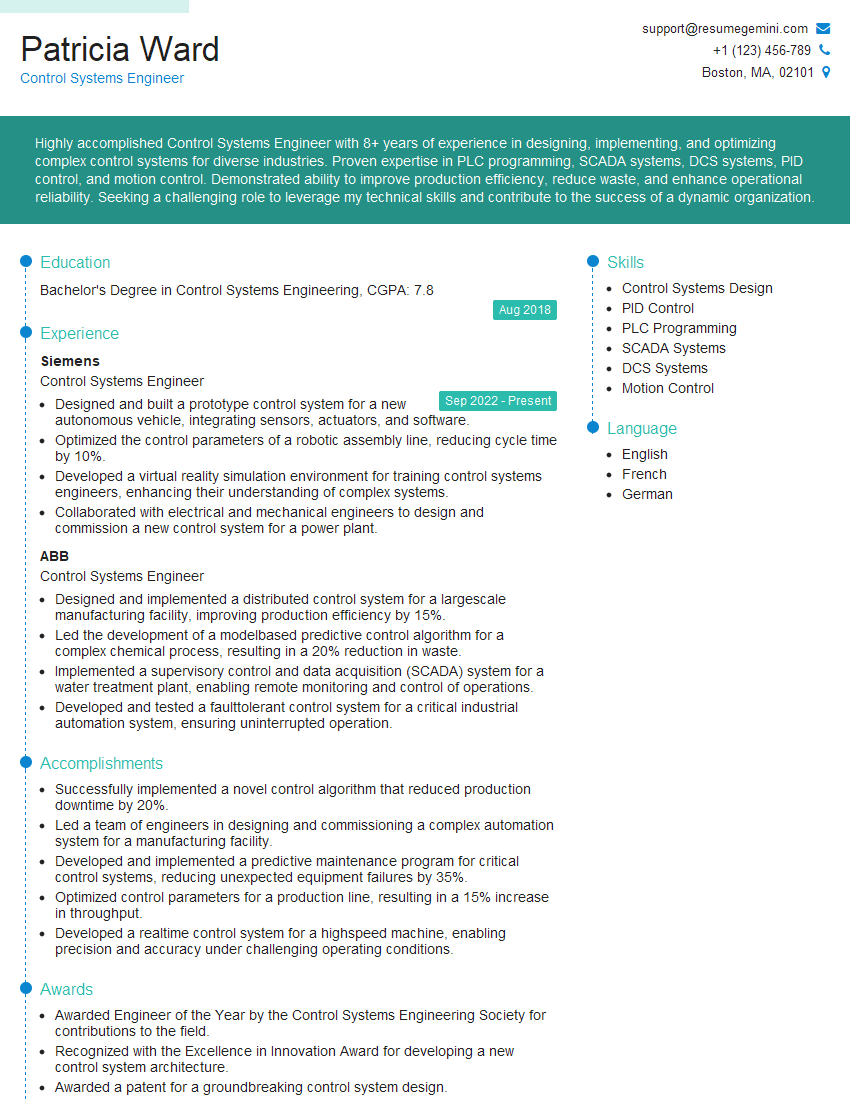
Control Systems Engineer Resume Sample
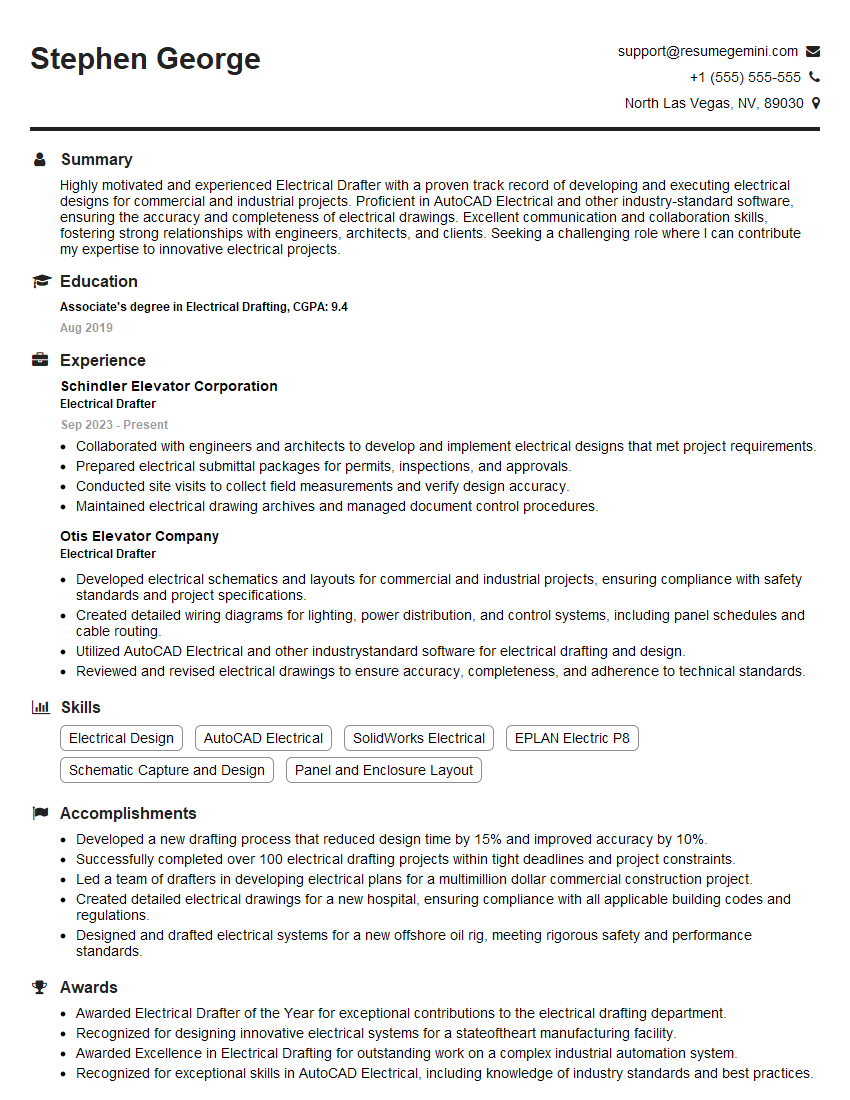
Electrical Drafter Resume Sample
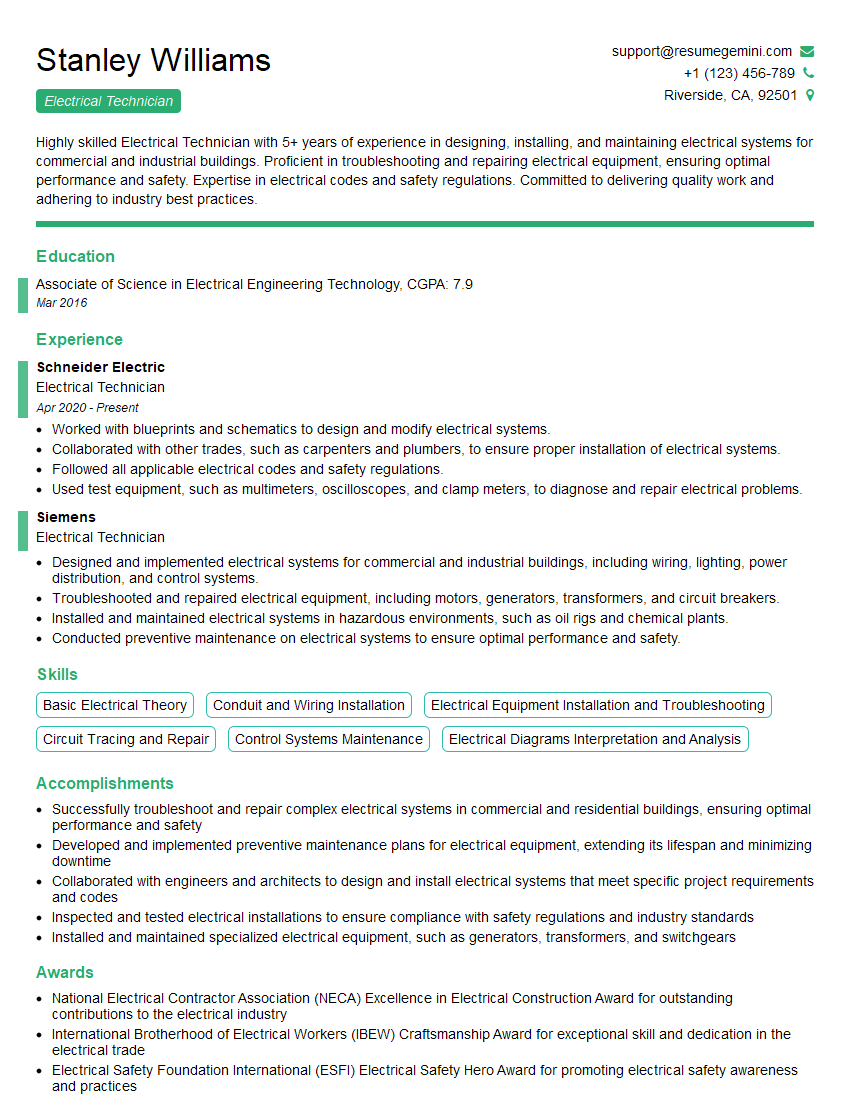
Electrical Technician Resume Sample
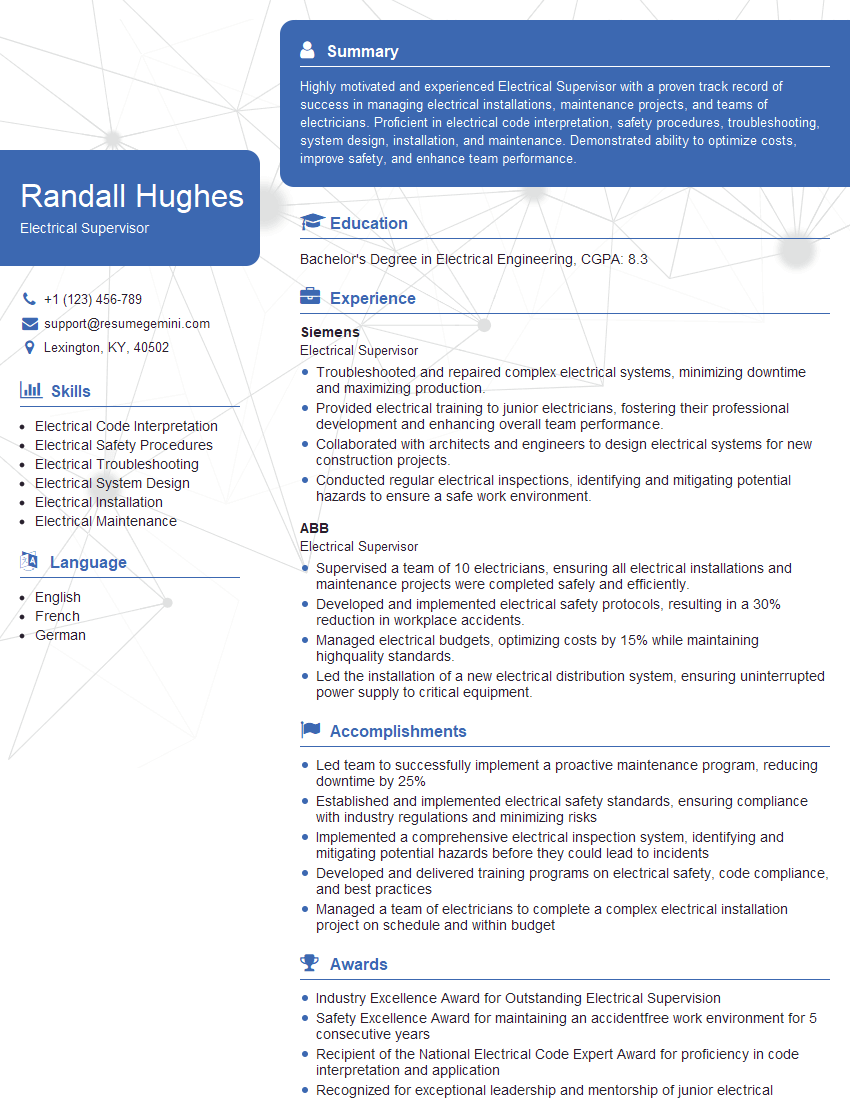
Electrical Supervisor Resume Sample
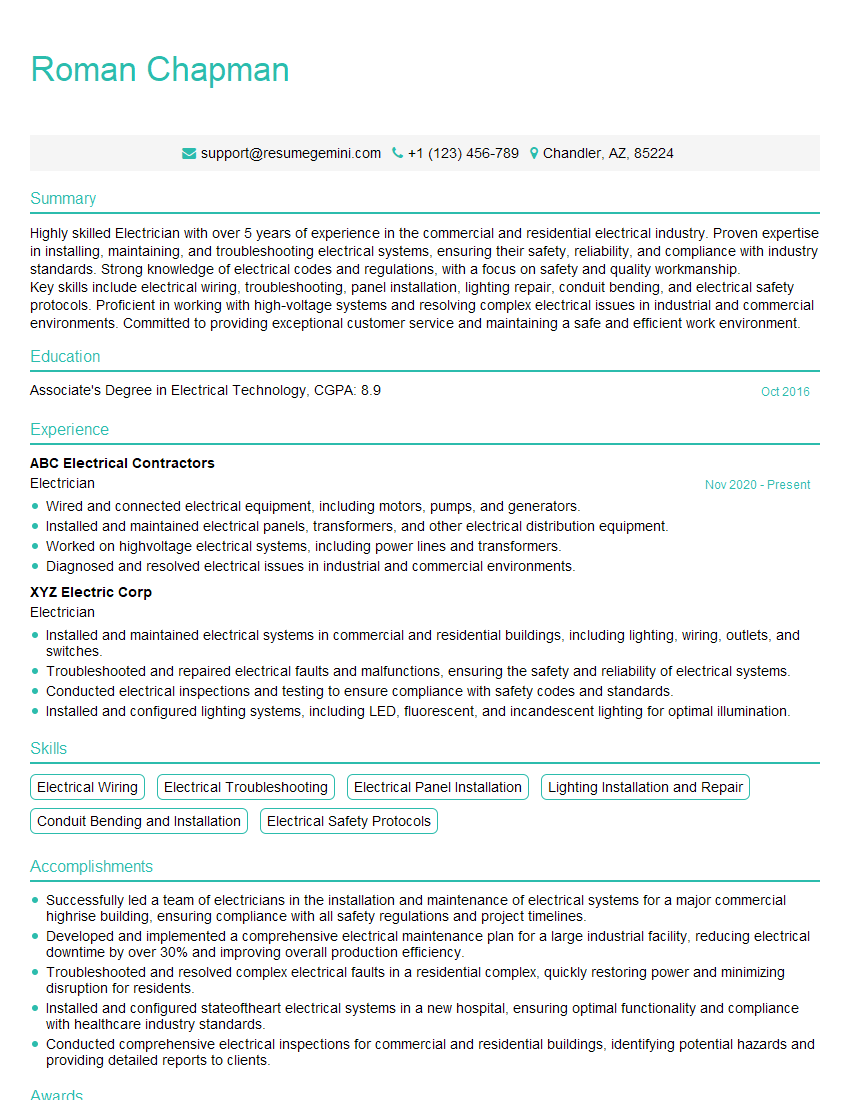
Electrician Resume Sample

Maintenance Electrician Resume Sample
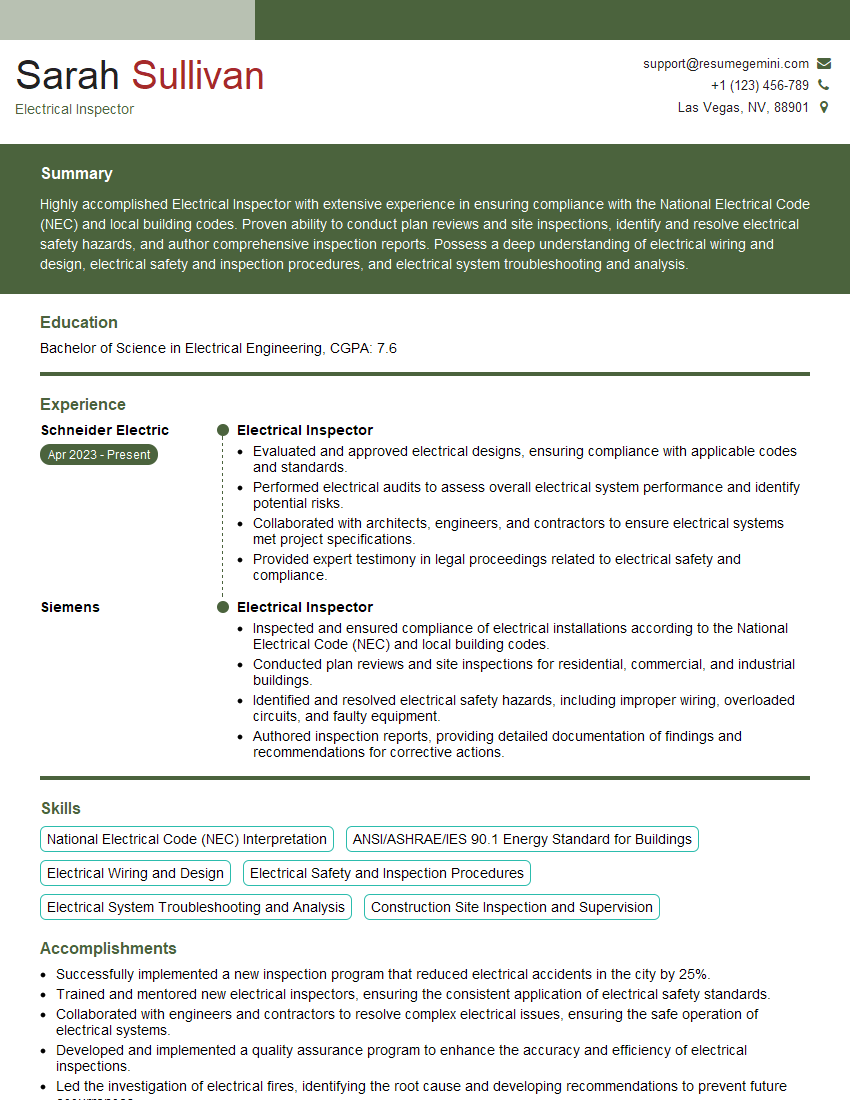
Electrical Inspector Resume Sample
- Electrical Estimator
- Automation Engineer
- Electrical Design Engineer
- Electrical Engineer
- Instrumentation Engineer
- Power Systems Engineer
- Renewable Energy Engineer
- Control Systems Engineer
- Electrical Drafter
- Electrical Technician
- Electrical Supervisor
- Electrician
- Maintenance Electrician
- Electrical Inspector
Explore more articles
Users Rating of Our Blogs
Share Your Experience
We value your feedback! Please rate our content and share your thoughts (optional).
What Readers Say About Our Blog
Very informative content, great job.
good