Preparation is the key to success in any interview. In this post, we’ll explore crucial KnowledgeOfForestryPractices interview questions and equip you with strategies to craft impactful answers. Whether you’re a beginner or a pro, these tips will elevate your preparation.
Questions Asked in KnowledgeOfForestryPractices Interview
Q 1. Explain the principles of sustainable forest management.
Sustainable forest management (SFM) is about balancing the environmental, social, and economic needs of forests for present and future generations. It’s not just about logging; it’s about ensuring forests remain healthy, productive, and resilient. Think of it like managing a bank account – you want to withdraw (harvest timber) but ensure there’s enough left for future withdrawals (future timber harvests) and to maintain the overall health of the account (forest ecosystem).
- Maintaining Biodiversity: SFM prioritizes preserving a variety of tree species, ages, and structures to support a wide range of plants and animals. This includes protecting endangered species and their habitats.
- Protecting Soil and Water Resources: Sustainable practices minimize soil erosion, prevent water pollution, and maintain healthy water cycles. This often involves careful planning of logging roads and harvesting techniques.
- Climate Change Mitigation: Forests are vital carbon sinks. SFM helps maintain and even enhance their carbon sequestration capacity, contributing to climate change mitigation efforts. This includes avoiding deforestation and promoting forest growth.
- Economic Viability: SFM aims for long-term economic benefits by ensuring the forest remains productive over time. This requires careful planning of harvesting cycles and considering the value of non-timber forest products.
- Social Equity: Sustainable management also considers the needs and rights of local communities who depend on forests for their livelihoods. This involves participatory management approaches and ensuring equitable benefits from forest resources.
For example, a sustainably managed forest might employ selective logging, removing only mature trees, leaving younger trees to grow and ensuring the forest’s overall structure remains intact. This contrasts sharply with clear-cutting, which removes all trees in an area, significantly impacting biodiversity and ecosystem services.
Q 2. Describe different forest harvesting methods and their environmental impacts.
Forest harvesting methods vary greatly, impacting the environment differently. The choice of method depends on factors like forest type, terrain, timber value, and environmental considerations.
- Clearcutting: This involves removing all trees from an area. It’s efficient but leads to significant habitat loss, soil erosion, and altered water cycles. It can be appropriate in some situations, such as establishing even-aged stands of fast-growing species, but requires careful planning to mitigate environmental impacts.
- Seed-Tree Method: A few mature trees are left behind to provide seeds for regeneration. This is less disruptive than clearcutting but still results in some habitat loss.
- Shelterwood Method: Several harvests are conducted, leaving progressively fewer trees until final removal. This provides shelter for regeneration and reduces the impact on the understory.
- Selection Cutting: Individual trees or small groups of trees are harvested selectively, leaving the overall forest structure largely intact. This minimizes environmental impact but is less efficient and requires more skilled labor.
The environmental impact of each method can be assessed by considering factors such as the amount of habitat disruption, soil erosion, water quality changes, carbon emissions from logging operations, and effects on biodiversity. For instance, clearcutting can lead to increased runoff and erosion, potentially harming downstream water quality. Selection cutting, on the other hand, typically has a much smaller impact on these aspects.
Q 3. What are the key factors influencing forest growth and health?
Forest growth and health are influenced by a complex interplay of factors. Think of it like growing a garden – you need the right conditions for healthy plants.
- Climate: Temperature, precipitation, sunlight, and wind all play crucial roles. For example, drought can severely stress trees, making them more vulnerable to pests and diseases.
- Soil: Soil type, nutrient content, drainage, and depth significantly impact tree growth. Nutrient-poor soils may limit growth, while poorly drained soils can lead to root rot.
- Competition: Trees compete for resources like sunlight, water, and nutrients. Densely populated stands may have suppressed growth. This can be managed through thinning.
- Pests and Diseases: Insects, diseases, and other organisms can severely damage or kill trees, impacting overall forest health. Monitoring and management are essential.
- Fire: While fire can be destructive, it’s also a natural process that plays a role in some ecosystems. However, human-caused fires can be devastating.
For example, a forest in a dry climate might struggle with growth during drought, while a forest with nutrient-rich soils could experience robust tree growth. Understanding these factors is critical for effective forest management.
Q 4. How do you assess forest health and identify potential threats?
Assessing forest health involves a multi-faceted approach. It’s like giving a forest a thorough physical exam.
- Visual Assessment: This involves observing trees for signs of stress, damage, or disease. Look for things like crown dieback, discolored needles or leaves, insect infestations, and unusual growth patterns.
- Sampling and Measurements: Taking measurements of tree height, diameter, and growth rates provides data on overall forest health and productivity. Soil samples can assess nutrient levels and other soil properties.
- Remote Sensing: Aerial photography, satellite imagery, and LiDAR (Light Detection and Ranging) can be used to assess large areas quickly and efficiently, identifying areas of concern.
- Insect and Disease Surveys: Regular surveys can help detect pest and disease outbreaks early, allowing for timely intervention.
- Monitoring Water Quality: Assessing water quality in streams and rivers can indicate potential problems caused by forest management practices.
By combining these methods, foresters can build a comprehensive understanding of forest health and identify potential threats, allowing for proactive management strategies. For instance, early detection of an insect infestation can prevent widespread damage and minimize the need for extensive treatments.
Q 5. Explain the role of silviculture in forest management.
Silviculture is the art and science of controlling the establishment, growth, composition, health, and quality of forests. Think of it as the forest’s healthcare plan.
It involves a wide range of techniques to achieve specific forest management objectives, including:
- Site Preparation: Preparing the land for planting or natural regeneration, such as removing competing vegetation or improving soil conditions.
- Species Selection: Choosing the right tree species for the site based on climate, soil, and management objectives. This involves understanding which trees thrive in specific conditions.
- Planting and Seeding: Establishing new forests through planting seedlings or broadcasting seeds.
- Thinning: Reducing tree density to improve the growth and quality of remaining trees.
- Pruning: Removing lower branches to improve timber quality.
- Prescribed Burning: Using controlled fires to reduce fuel loads, improve habitat, and stimulate regeneration in fire-adapted ecosystems.
For example, silvicultural practices might involve thinning a dense stand of young trees to reduce competition and improve the growth of the remaining trees. This ensures that a higher-quality timber crop is produced in the future.
Q 6. Describe different methods of reforestation and afforestation.
Reforestation and afforestation are both crucial for restoring forests, but they differ in their approach.
- Reforestation: Reforestation is the process of replanting trees in an area where a forest previously existed. This can be necessary after a natural disaster, such as a fire or storm, or due to previous logging. It aims to restore the forest to its former state.
- Afforestation: Afforestation is the process of establishing forests on lands that have not been forested for a considerable period. This can involve planting trees on barren land, abandoned agricultural fields, or other non-forested areas. It focuses on creating new forests where none previously existed.
Methods for both include:
- Planting seedlings: This involves planting young trees that have been grown in nurseries. This offers a high success rate but can be labor-intensive.
- Direct seeding: This involves sowing seeds directly into the ground. It’s less labor-intensive but the success rate can be lower due to seed predation or unfavorable conditions.
- Natural regeneration: This involves letting trees regenerate naturally from existing seed sources or root suckers. It’s the most cost-effective method but may require careful management to ensure successful regeneration.
The choice of method depends on factors such as the site conditions, the availability of seedlings or seeds, and the desired species composition. For example, reforestation after a wildfire might involve planting seedlings, whereas afforestation on an abandoned farm field could use a combination of planting and direct seeding.
Q 7. What are the common forest pests and diseases in your region, and how are they managed?
(Note: The specific pests and diseases will vary greatly depending on the region. The following is a general example. A real-world answer would need to be tailored to a specific geographic area.)
In many temperate regions, common forest pests include various bark beetles, such as the mountain pine beetle (Dendroctonus ponderosae), and defoliating insects like gypsy moths (Lymantria dispar). Common diseases include various root rots (e.g., Armillaria root rot) and fungal leaf diseases.
Management strategies include:
- Monitoring: Regularly surveying forests to detect outbreaks early.
- Sanitation harvesting: Removing infested trees to prevent the spread of pests and diseases.
- Biological control: Introducing natural predators or parasites to control pest populations.
- Chemical control: Using insecticides or fungicides, but this should be a last resort due to potential environmental impacts.
- Silvicultural practices: Managing forest density and species composition to reduce susceptibility to pests and diseases.
- Genetic resistance: Developing and planting tree species with genetic resistance to common pests and diseases.
For example, in areas affected by mountain pine beetle outbreaks, management may involve removing infested trees to prevent the spread of the beetle and using pheromone traps to monitor populations. Integrated pest management (IPM), which combines multiple strategies, is often the most effective approach.
Q 8. How do you use GIS in forest management and planning?
Geographic Information Systems (GIS) are indispensable tools in modern forest management and planning. They allow us to visualize, analyze, and manage spatial data related to forests, providing a comprehensive understanding of the landscape.
For example, we use GIS to map forest cover types, identify areas suitable for timber harvesting, plan road networks for efficient logging, and assess the risk of forest fires. We can overlay different data layers – such as elevation, soil type, and species distribution – to identify optimal locations for reforestation or to understand the impact of climate change on specific forest areas. GIS also helps in monitoring forest health over time, tracking changes in vegetation density, and identifying areas needing immediate attention.
Imagine planning a selective logging operation. Using GIS, we can precisely delineate the areas to be harvested, minimizing damage to surrounding ecosystems. We can also optimize the placement of logging roads, reducing environmental impact and improving operational efficiency. This detailed planning ensures that harvesting activities are sustainable and responsible.
Q 9. What are the regulations governing forest harvesting and land use in your area?
Forest harvesting and land use regulations vary significantly by region and are usually complex. In my area (Note: Replace with your specific area and relevant regulations), key regulations typically cover sustainable forest management practices, including:
- Harvesting permits and quotas: Limits on the volume of timber that can be harvested annually, ensuring that forest resources are not depleted faster than they can regenerate.
- Clear-cutting restrictions: Often, clear-cutting is limited or prohibited in certain areas to protect biodiversity and prevent soil erosion. Selective logging is preferred, removing only mature trees and leaving a diverse understory.
- Reforestation requirements: After harvesting, landowners are usually required to replant trees to maintain forest cover and ensure future timber production.
- Riparian buffer zones: Areas along waterways are protected to minimize pollution and preserve aquatic ecosystems. No logging is allowed within these zones.
- Environmental impact assessments: Large-scale forest projects usually require an environmental impact assessment to evaluate potential consequences and propose mitigation strategies.
These regulations are implemented and enforced by government agencies (Note: Replace with relevant agencies) and aim to balance economic interests with environmental protection.
Q 10. Explain the principles of forest fire prevention and suppression.
Forest fire prevention and suppression are critical for protecting lives, property, and forest ecosystems. The principles revolve around a combination of preparedness, prevention, and rapid response.
Prevention focuses on minimizing the factors that ignite fires. This includes:
- Public education: Educating the public about fire safety and responsible behavior in forests.
- Controlled burns: Prescribed burns remove accumulated underbrush, reducing the fuel load and making forests less susceptible to large, uncontrollable wildfires.
- Fuel management: Regular thinning of forests to reduce the density of flammable vegetation.
- Early detection systems: Using lookout towers, aerial patrols, and remote sensing technologies to detect fires quickly.
Suppression involves rapid action to contain and extinguish fires once they start. This requires:
- Well-trained fire crews: Equipped with appropriate tools and technology.
- Firebreaks: Creating barriers to stop the spread of fire.
- Aerial support: Using aircraft to drop water or fire retardants.
- Communication and coordination: Effective communication between fire crews and other stakeholders.
A successful strategy integrates both prevention and suppression, creating a layered approach to minimize fire risk and maximize response efficiency.
Q 11. Describe the different types of forest ecosystems and their characteristics.
Forest ecosystems are incredibly diverse, varying significantly based on climate, geography, and species composition. Some major types include:
- Temperate Deciduous Forests: Characterized by trees that shed their leaves annually, like oak, maple, and beech. These forests experience distinct seasons and moderate rainfall.
- Boreal Forests (Taiga): Found in high northern latitudes, dominated by coniferous trees like spruce, fir, and pine. These forests experience long, cold winters and short, cool summers.
- Tropical Rainforests: Located near the equator, with high rainfall, high temperatures, and incredible biodiversity. They support a vast array of plant and animal species.
- Mediterranean Forests: Found in regions with hot, dry summers and mild, wet winters. These forests are adapted to drought and often contain drought-resistant shrubs and trees.
Each type has unique characteristics, including specific plant and animal communities, soil types, and nutrient cycles. Understanding these differences is crucial for effective forest management.
For instance, logging techniques suitable for a boreal forest might be devastating to a tropical rainforest due to the vastly different soil structures and recovery rates.
Q 12. How do you calculate timber volume and assess forest inventory?
Calculating timber volume and assessing forest inventory involves a combination of field measurements and data analysis. Methods include:
- Sampling techniques: Instead of measuring every tree, we use statistical sampling to estimate the total volume. This involves selecting a representative sample of trees and extrapolating the data to the entire forest.
- Tree diameter and height measurements: We use instruments like diameter tapes and hypsometers to measure the diameter at breast height (DBH) and the height of trees.
- Volume equations: These equations, often species-specific, relate DBH and height to timber volume. They are based on extensive data from felled trees.
- Remote sensing: Aerial photography or LiDAR (Light Detection and Ranging) can provide detailed information on forest structure and density, improving the accuracy of volume estimates.
Example: Let’s say we measure 50 trees in a sample plot. We use a volume equation (e.g., Volume = a + b*DBH^2*H where a and b are constants and H is height) to calculate the volume of each tree in the sample. We then sum the volumes and extrapolate this to the total area of the forest to estimate the total timber volume.
Forest inventory data provides a snapshot of the forest’s condition, including species composition, tree density, and timber volume. This information is critical for sustainable forest management planning and decision-making.
Q 13. What are the environmental impacts of deforestation and how can they be mitigated?
Deforestation has profound environmental impacts, including:
- Loss of biodiversity: Forests are home to a vast array of plant and animal species. Deforestation destroys habitats, leading to extinction and population declines.
- Climate change: Trees absorb carbon dioxide from the atmosphere. Deforestation releases this stored carbon, contributing to global warming.
- Soil erosion: Tree roots help stabilize the soil. Deforestation increases soil erosion, leading to loss of topsoil and decreased soil fertility.
- Water cycle disruption: Forests play a vital role in the water cycle, regulating rainfall and reducing flooding. Deforestation can disrupt this cycle.
- Increased greenhouse gases: Decomposition of organic matter in cleared forests releases carbon dioxide and methane, further contributing to climate change.
Mitigation strategies include:
- Sustainable forest management: Harvesting trees at a rate that allows forests to regenerate naturally.
- Reforestation and afforestation: Planting trees in deforested areas and creating new forests.
- Protected areas: Establishing protected areas to conserve biodiversity and forest ecosystems.
- Combating illegal logging: Strengthening regulations and enforcement to prevent illegal logging.
- Promoting sustainable alternatives: Encouraging the use of sustainable materials and technologies to reduce reliance on timber.
Implementing these measures requires international cooperation, community involvement, and robust policy frameworks.
Q 14. Explain the role of biodiversity in forest ecosystems.
Biodiversity, the variety of life at all levels, is crucial for the health and resilience of forest ecosystems. It enhances:
- Ecosystem stability: A diverse forest is better able to withstand disturbances such as disease outbreaks, pests, and climate change. Different species have different tolerances and responses to stressors, increasing the overall resilience of the system.
- Nutrient cycling: Different organisms play diverse roles in nutrient cycling, from decomposition to nutrient uptake. High biodiversity ensures efficient nutrient cycling, promoting healthy soil and plant growth.
- Productivity: A diverse forest tends to have higher productivity than a monoculture. This is because different species utilize resources in different ways, maximizing the use of available resources.
- Pest and disease resistance: A diverse forest is less vulnerable to outbreaks of pests and diseases. A monoculture is highly susceptible to widespread damage if a pest or disease affects the single dominant species.
- Ecosystem services: Biodiversity underpins many essential ecosystem services, including clean water, carbon sequestration, and pollination.
Think of it like an insurance policy: a diverse forest has a wider range of species contributing to its overall function, making it more stable and less likely to collapse in the face of environmental challenges.
Q 15. How do you develop a forest management plan?
Developing a forest management plan is a multifaceted process that requires a thorough understanding of the forest’s ecological, social, and economic context. It’s essentially a roadmap for sustainable forest management over a specified period, typically 10-20 years. The process involves several key steps:
- Inventory and Assessment: This initial phase involves a detailed assessment of the forest’s resources, including tree species, age classes, density, volume, and overall health. We use techniques like aerial surveys, ground sampling, and Geographic Information Systems (GIS) to create a comprehensive inventory. For example, I once used LiDAR data to create a highly accurate 3D model of a forest, allowing for precise volume estimations.
- Setting Objectives and Goals: Based on the inventory, we define clear, measurable, achievable, relevant, and time-bound (SMART) objectives. These might include timber production targets, biodiversity conservation goals, carbon sequestration targets, or recreation opportunities. A client might prioritize timber yield, while another might focus on preserving endangered species habitat.
- Developing Management Strategies: This involves choosing appropriate silvicultural systems (e.g., clear-cutting, shelterwood, selection cutting) based on the objectives, site conditions, and species present. We consider factors like soil type, slope, and water resources. For instance, in steep terrain, we’d favor selection cutting to minimize erosion risks.
- Implementation Planning: This phase details the operational aspects of the plan, including harvesting schedules, road construction and maintenance, reforestation activities, and monitoring protocols. A detailed budget and timeline are crucial here.
- Monitoring and Evaluation: Ongoing monitoring is critical to track progress towards objectives and adapt the plan as needed. We regularly assess forest health, growth rates, and the overall effectiveness of management actions. This may involve periodic inventories, growth monitoring plots, and data analysis using GIS.
The final plan is a comprehensive document that guides all forest operations and ensures the long-term sustainability of the forest resource.
Career Expert Tips:
- Ace those interviews! Prepare effectively by reviewing the Top 50 Most Common Interview Questions on ResumeGemini.
- Navigate your job search with confidence! Explore a wide range of Career Tips on ResumeGemini. Learn about common challenges and recommendations to overcome them.
- Craft the perfect resume! Master the Art of Resume Writing with ResumeGemini’s guide. Showcase your unique qualifications and achievements effectively.
- Don’t miss out on holiday savings! Build your dream resume with ResumeGemini’s ATS optimized templates.
Q 16. Describe your experience with forest road construction and maintenance.
My experience with forest road construction and maintenance is extensive. I’ve been involved in all aspects, from initial planning and design to construction oversight and long-term maintenance. Effective forest road design and construction are crucial for efficient logging operations, fire protection, and access for recreation. Key considerations include:
- Minimizing Environmental Impact: We use techniques like water bar construction, ditching, and erosion control blankets to mitigate soil erosion and sedimentation in waterways. Proper drainage design is critical to prevent road failure and protect water quality. In one project, we employed innovative erosion control measures which reduced sediment runoff by 70% compared to traditional methods.
- Road Location and Design: Careful planning is essential to minimize the environmental footprint and ensure efficient transportation of timber. Factors such as slope, soil type, and proximity to water bodies are carefully considered. We often use GIS software to model potential road locations and evaluate their impact on wildlife habitat.
- Construction and Maintenance: I’ve overseen various construction projects, using different materials and techniques depending on site conditions and budget. Regular maintenance, including grading, culvert cleaning, and drainage repairs, is crucial to ensure long-term road stability and access. Regular inspections and preventative maintenance are essential to avoid costly repairs down the line.
Proper forest road management is critical for both economic viability and environmental protection; neglecting maintenance can lead to road failures, costly repairs, and environmental damage. My experience ensures that projects are completed efficiently and sustainably.
Q 17. What are the economic aspects of forest management?
The economic aspects of forest management are complex and multifaceted, involving both costs and revenues. A sustainable forest management plan needs to balance short-term economic returns with long-term ecological sustainability.
- Revenue Generation: Primary sources include timber sales, non-timber forest products (NTFPs) like mushrooms or maple syrup, and carbon credits. The value of timber depends on factors such as species, quality, and market demand. The sale of NTFPs can provide additional income streams while promoting biodiversity conservation.
- Cost Management: Significant costs are associated with forest operations, including planting, thinning, harvesting, road construction and maintenance, fire protection, and monitoring. Labor costs are a significant factor. Efficient operational planning and effective technology use can help to mitigate costs.
- Investment and Returns: Forest management involves long-term investments, with returns often realized decades later. Discounted cash flow analysis is frequently used to evaluate the economic viability of different management strategies. It’s important to consider the time value of money when making long-term investment decisions.
- Economic Valuation of Ecosystem Services: The economic benefits of forests extend beyond timber production to include ecosystem services such as carbon sequestration, water purification, and recreation. Quantifying these services can provide a more comprehensive understanding of the economic value of forests.
Effective economic planning considers all these aspects to ensure profitable and sustainable management.
Q 18. What is your experience with forest certification schemes (e.g., FSC, PEFC)?
I have significant experience with forest certification schemes, particularly the Forest Stewardship Council (FSC) and the Programme for the Endorsement of Forest Certification (PEFC). These schemes provide third-party verification that forests are managed sustainably, meeting specific environmental, social, and economic criteria.
- FSC Certification: I’ve worked with several forest owners and managers to obtain FSC certification, guiding them through the process of developing sustainable forest management plans and complying with the relevant standards. FSC certification provides market access to environmentally conscious buyers and enhances the value of certified timber products.
- PEFC Certification: Similar to FSC, PEFC certification validates sustainable forest management practices. I’m familiar with the PEFC standards and have assisted in the certification process for several forest holdings. The choice between FSC and PEFC often depends on regional standards and market demands.
- Benefits of Certification: Certification enhances brand reputation, increases market access, improves environmental performance, and strengthens stakeholder engagement. It’s a valuable tool for promoting sustainable forest management practices and ensuring responsible forest use.
My knowledge encompasses all aspects of certification, from initial assessment and plan development to final certification audits. I understand the importance of continuous improvement and ongoing monitoring to maintain certification.
Q 19. How do you manage risks associated with forest operations?
Managing risks associated with forest operations requires a proactive and comprehensive approach. We identify potential hazards, assess their likelihood and severity, and implement mitigation strategies. Key risks include:
- Operational Risks: These include accidents involving machinery, injuries to workers, and damage to property. We mitigate these risks through rigorous safety training, regular equipment inspections, and the implementation of safe work practices. For example, we use pre-harvest planning to assess faller hazards and minimize risks of tree falls.
- Environmental Risks: These include soil erosion, water pollution, and damage to wildlife habitats. We minimize environmental risks through careful planning, the use of best management practices, and environmental monitoring. The selection of appropriate silvicultural systems is key here.
- Economic Risks: These include fluctuations in timber prices, changes in market demand, and increased operating costs. We mitigate economic risks through careful financial planning, diversification of revenue streams, and risk-sharing agreements. We also conduct regular market research to forecast trends and adapt our strategies accordingly.
- Natural Disaster Risks: Forest operations are vulnerable to natural disasters such as fire, windstorms, and insect outbreaks. We develop contingency plans to prepare for these events, incorporating early detection systems and rapid response procedures. For instance, having established fire breaks and access roads reduces the spread of wildfire damage.
A robust risk management framework is fundamental for safe, sustainable, and profitable forest management.
Q 20. Describe your experience with forest monitoring and data analysis.
Forest monitoring and data analysis are crucial for assessing forest health, evaluating management effectiveness, and informing future decision-making. My experience involves:
- Data Collection: We use a variety of methods to collect data, including ground-based measurements, remote sensing (aerial photography, LiDAR), and GIS. This data may include tree measurements, forest health assessments, soil characteristics, and wildlife observations. For example, I use GIS to map forest health using satellite imagery.
- Data Analysis: We use statistical and spatial analysis techniques to interpret the collected data, assess trends, and evaluate the impact of management practices. This can be done using R, Python or specialized forestry software. Statistical modeling allows us to analyze growth patterns, predict future yields, and model the spread of disease.
- Reporting and Communication: We synthesize our findings into clear and concise reports for stakeholders, including landowners, government agencies, and certification bodies. Effective communication is essential for transparency and ensuring that findings are acted upon.
- Adaptive Management: Data analysis informs adaptive management strategies, allowing us to adjust our practices in response to changes in forest conditions or management objectives. Continuous monitoring allows for timely interventions and improved outcomes.
Data-driven decision-making is key for effective forest management, leading to improved outcomes and better resource stewardship.
Q 21. Explain the principles of forest hydrology and water management.
Forest hydrology and water management are critical for maintaining forest health and ensuring the sustainable provision of water resources. The principles involve understanding the complex interactions between forests and water:
- Water Cycle Interception: Forest canopies intercept rainfall, reducing surface runoff and erosion. This interception allows for greater water infiltration into the soil, which replenishes groundwater supplies. This helps maintain healthy soil moisture for tree growth.
- Evapotranspiration: Forests release water vapor into the atmosphere through transpiration (from plants) and evaporation (from soil and water surfaces). This process affects regional climate and humidity levels.
- Infiltration and Groundwater Recharge: Forest soils often have high infiltration rates, allowing rainwater to penetrate deeply and recharge groundwater aquifers. Healthy soils are crucial for water retention. Poor forest management can reduce infiltration and lead to increased runoff.
- Streamflow Regulation: Forests play a significant role in regulating streamflow by slowing down runoff and reducing peak flows during storms. This helps to prevent flooding and maintains consistent water supplies during dry periods. Proper management avoids negative impacts on river systems.
- Water Quality Protection: Forests act as natural filters, removing pollutants and sediments from water. Protecting forest areas surrounding water bodies is vital for maintaining water quality.
Effective forest water management requires considering these interactions and implementing practices that protect water resources and maintain forest health. This might include buffer zones along waterways, minimizing road construction in sensitive areas, and implementing sustainable harvesting techniques.
Q 22. How do you integrate social and economic considerations into forest management decisions?
Integrating social and economic considerations into forest management is crucial for ensuring sustainable and equitable practices. It’s not just about trees; it’s about the people and communities who depend on forests. This involves a participatory approach, bringing together stakeholders—local communities, industry representatives, government agencies, and environmental groups—to collaboratively develop management plans.
- Economic aspects involve analyzing the economic value of forest products (timber, non-timber forest products), assessing job creation and income generation opportunities related to forestry, and evaluating the costs and benefits of different management strategies. For example, considering the economic impact on local sawmills when deciding on harvesting practices.
- Social aspects focus on understanding the cultural significance of forests, addressing concerns about access to forest resources, mitigating potential negative impacts on livelihoods, and ensuring equitable distribution of benefits. For instance, engaging with indigenous communities to understand their traditional forest practices and ensuring their rights are respected during management planning.
- Examples of integration include using cost-benefit analysis that incorporates social factors like community well-being alongside economic factors like timber yield. Participatory mapping techniques can identify areas important for both economic activity and cultural preservation.
Ultimately, successful integration requires open communication, transparency, and a commitment to finding management solutions that balance ecological, social, and economic goals. A well-designed participatory process ensures that the final management plan reflects the needs and concerns of all relevant stakeholders.
Q 23. What is your experience with forest soil science and nutrient management?
My experience in forest soil science and nutrient management is extensive. I’ve worked on projects involving soil surveys, nutrient cycling assessments, and the development of site-specific fertilization strategies. Understanding soil properties—texture, structure, organic matter content, pH—is fundamental to effective forest management.
For instance, I’ve been involved in evaluating the impact of different silvicultural practices (like clear-cutting versus selective harvesting) on soil health. We used soil sampling techniques to measure key indicators like organic carbon and nutrient levels before and after harvesting. This data helped us develop sustainable harvesting guidelines that minimize soil erosion and nutrient loss.
In nutrient management, I’ve worked on projects using techniques like:
- Foliar analysis to assess nutrient deficiencies in trees.
- Soil testing to determine nutrient availability.
- Fertilization strategies tailored to specific site conditions and tree species to improve growth and health. This includes considering the impact on water quality.
My work highlights the importance of a holistic approach, where soil health is integrated into broader forest management plans to ensure long-term productivity and sustainability.
Q 24. Describe different methods for assessing forest carbon sequestration.
Assessing forest carbon sequestration involves measuring the amount of atmospheric carbon dioxide (CO2) that forests absorb and store. Several methods exist, each with its strengths and weaknesses:
- Inventory-based approaches: These methods rely on field measurements of tree biomass (measuring tree diameter, height, and wood density) to estimate carbon stored in trees. This is complemented by assessments of carbon in the soil and understory vegetation. This approach is accurate for specific areas but can be labor-intensive and expensive for large areas.
- Remote sensing: Techniques like LiDAR (Light Detection and Ranging) and satellite imagery provide spatially extensive data on forest structure and biomass, which can be used to estimate carbon storage. These methods are cost-effective for large-scale assessments, but their accuracy can be affected by factors like cloud cover and canopy complexity.
- Eddy covariance: This method uses specialized towers to measure the exchange of CO2 between the forest and the atmosphere. It provides direct measurements of net ecosystem exchange (NEE) – the difference between photosynthesis (carbon uptake) and respiration (carbon release). This approach is highly accurate but requires expensive infrastructure and is only applicable to specific sites.
- Modeling approaches: These methods use mathematical models that incorporate data from field measurements, remote sensing, and other sources to estimate carbon stocks and fluxes at different spatial and temporal scales. They allow for extrapolation to larger areas and scenario analysis but are dependent on the accuracy of the underlying data and model assumptions.
The choice of method depends on factors like the scale of the assessment, the required accuracy, and available resources. Often, a combination of methods is used to gain a more comprehensive understanding of forest carbon sequestration.
Q 25. How do you communicate complex forestry information to non-technical audiences?
Communicating complex forestry information to non-technical audiences requires simplifying the message without sacrificing accuracy. I use several strategies:
- Analogies and metaphors: Explaining complex concepts using relatable examples, such as comparing carbon sequestration to a bank account where trees deposit carbon. Using everyday language avoids technical jargon.
- Visual aids: Incorporating graphs, charts, maps, and photographs makes the information easier to understand and more engaging. A picture is often worth a thousand words.
- Storytelling: Using narratives to connect with the audience on an emotional level; highlighting the human side of forestry can be very effective.
- Interactive presentations: Engaging the audience with questions, discussions, and hands-on activities makes the learning experience more interactive and memorable.
- Tailoring the message: Adapting the language and level of detail to the specific audience – a presentation to schoolchildren would differ significantly from one to policymakers.
For example, when explaining forest management practices, I’d avoid terms like ‘silviculture’ and instead focus on the practical outcomes like ‘improving the health and resilience of forests’ or ‘ensuring a sustainable supply of wood products’. By using clear, concise language and focusing on the benefits of sustainable forest management, I can make the information accessible and relevant to a broad audience.
Q 26. Explain your experience with forest wildlife management and habitat conservation.
My experience in forest wildlife management and habitat conservation includes extensive fieldwork, data analysis, and the development of habitat restoration plans. I’ve worked on projects involving:
- Habitat assessment and mapping: Identifying crucial habitats for endangered or threatened species using field surveys, remote sensing, and GIS analysis.
- Wildlife population monitoring: Employing techniques like camera trapping, scat analysis, and aerial surveys to track population trends and assess the effectiveness of conservation measures.
- Habitat restoration and management: Designing and implementing projects to restore degraded habitats, such as creating wildlife corridors, managing forest understory, and controlling invasive species. For example, I worked on a project to restore riparian habitats along a river to benefit salmon populations.
- Collaboration with stakeholders: Working with landowners, government agencies, and conservation organizations to develop and implement habitat conservation plans. Building consensus and communication is vital to ensuring successful conservation efforts.
A successful habitat conservation strategy requires a thorough understanding of species ecology and habitat requirements, coupled with effective communication and collaboration amongst stakeholders. I’ve always prioritized a science-based approach, ensuring that management actions are grounded in sound ecological principles.
Q 27. What are the emerging trends and challenges in the forestry industry?
The forestry industry faces both exciting opportunities and significant challenges. Emerging trends include:
- Climate change adaptation and mitigation: Forests play a crucial role in mitigating climate change through carbon sequestration and adaptation through resilient species selection and forest management techniques. Understanding and addressing the impacts of climate change on forest ecosystems is paramount.
- Growing demand for forest products: The increasing global population and consumption patterns are driving demand for wood products, requiring sustainable forest management to balance supply and demand.
- Technological advancements: Remote sensing, GIS, and precision forestry technologies are revolutionizing forest management, enabling more efficient and effective monitoring, planning, and harvesting.
- Increased focus on biodiversity conservation: There’s a growing awareness of the importance of biodiversity for forest health and ecosystem services, leading to integrated management strategies that consider the needs of diverse species.
Challenges include:
- Deforestation and forest degradation: Addressing the drivers of deforestation, such as agriculture, logging, and infrastructure development, is crucial for forest conservation. Implementing effective forest protection measures is essential.
- Pest and disease outbreaks: Climate change and globalization are increasing the risk of forest pest and disease outbreaks, requiring proactive management strategies to minimize impacts.
- Forest fires: Climate change is increasing the frequency and intensity of forest fires, requiring improved prevention and suppression efforts.
- Balancing competing demands for forest resources: Finding ways to balance the needs for timber production, biodiversity conservation, and ecosystem services requires careful planning and stakeholder engagement.
Addressing these trends and challenges requires a multi-faceted approach, incorporating technological advancements, sustainable management practices, and effective policy interventions.
Q 28. Describe your experience with using specific forestry software or tools.
I have extensive experience using various forestry software and tools, including:
- GIS software (ArcGIS, QGIS): For spatial analysis of forest data, habitat mapping, and planning forest management activities. I routinely use this to create maps of forest cover, identify suitable areas for reforestation, and track changes in forest cover over time.
Example: Using ArcGIS to overlay forest inventory data with elevation data to identify suitable sites for planting specific tree species. - Forest inventory software (e.g., Forest Analyzer): For collecting, analyzing, and reporting data from forest inventories. This software aids in estimating timber volume, biomass, and carbon stocks.
- Remote sensing software (e.g., ENVI): For processing and analyzing satellite and aerial imagery to monitor forest health, assess biomass, and detect changes in forest cover.
- Forest growth and yield models (e.g., FVS): Predicting future forest growth and yield under different management scenarios. These models are crucial for long-term forest planning.
Proficiency in these tools is essential for effective forest management, allowing for efficient data analysis, visualization, and informed decision-making. I’m also comfortable learning and adapting to new software and technologies as they emerge.
Key Topics to Learn for KnowledgeOfForestryPractices Interview
- Forest Ecology and Silviculture: Understanding forest ecosystems, tree species identification, silvicultural systems (e.g., clearcutting, selection cutting), and their environmental impacts.
- Forest Management Planning: Developing and implementing sustainable forest management plans, including inventory techniques, growth modeling, and harvest scheduling. Practical application: Analyzing a given forest stand and proposing a suitable management plan considering economic, ecological, and social factors.
- Forest Mensuration and Inventory: Accurate measurement of trees and forests using various techniques (e.g., diameter at breast height, height measurement, volume estimation). Practical application: Calculating timber volume and biomass from field data.
- Forest Protection and Health: Identifying and managing forest pests and diseases, wildfire prevention and suppression strategies, and the impact of climate change on forest ecosystems.
- Sustainable Forestry and Certification: Understanding sustainable forestry principles, forest certification schemes (e.g., FSC), and their role in responsible forest management. Practical application: Evaluating the sustainability of a given forestry operation.
- Forest Economics and Policy: Understanding the economic aspects of forestry, including timber valuation, cost-benefit analysis, and relevant forestry policies and regulations.
- GIS and Remote Sensing in Forestry: Utilizing Geographic Information Systems (GIS) and remote sensing technologies for forest inventory, monitoring, and planning. Practical application: Analyzing satellite imagery to assess forest health or deforestation.
- Forest Harvesting and Transportation: Understanding various harvesting methods, their environmental impacts, and efficient timber transportation techniques.
Next Steps
Mastering KnowledgeOfForestryPractices is crucial for career advancement in this dynamic field. A strong understanding of these principles demonstrates your commitment to sustainable practices and your ability to contribute effectively to forest conservation and management. To significantly enhance your job prospects, creating an ATS-friendly resume is paramount. ResumeGemini is a trusted resource to help you build a professional and impactful resume that highlights your skills and experience effectively. Examples of resumes tailored to showcasing expertise in KnowledgeOfForestryPractices are available to guide you. Invest time in crafting a compelling resume – it’s your first impression and a key to unlocking exciting career opportunities.
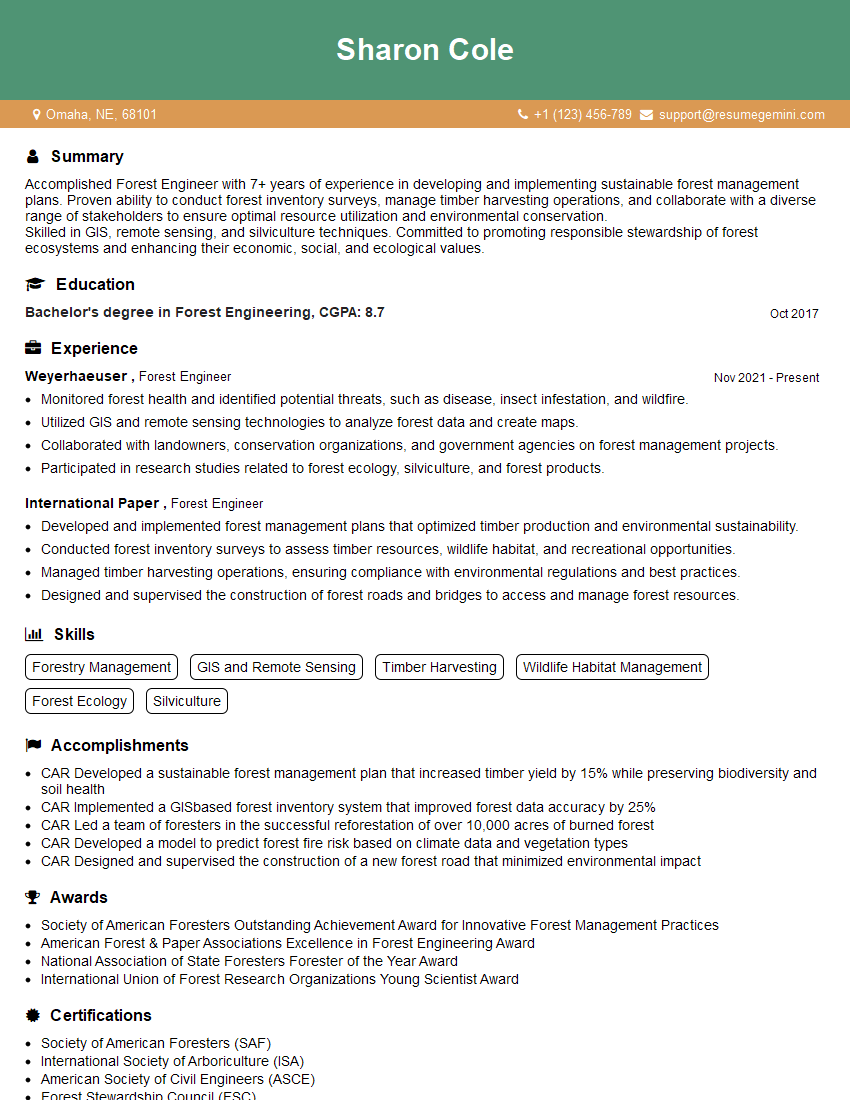
Forest Engineer Resume Sample

Arborist Resume Sample
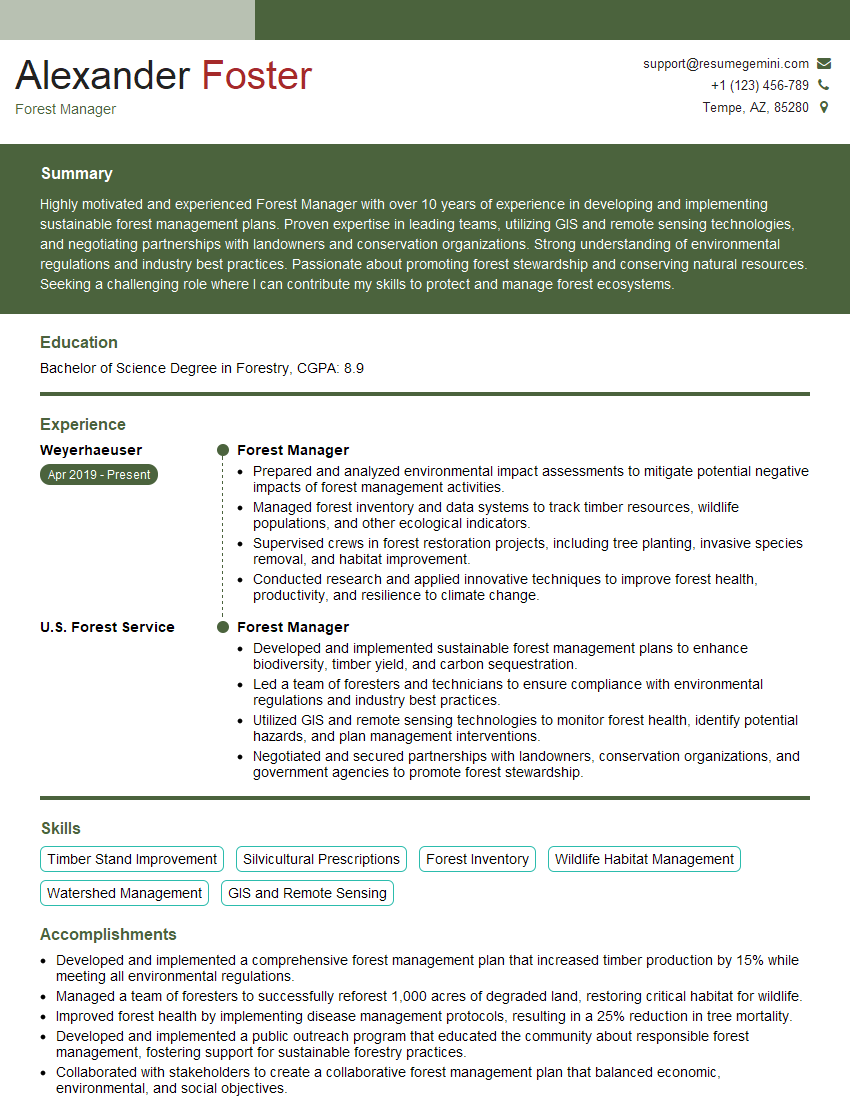
Forest Manager Resume Sample
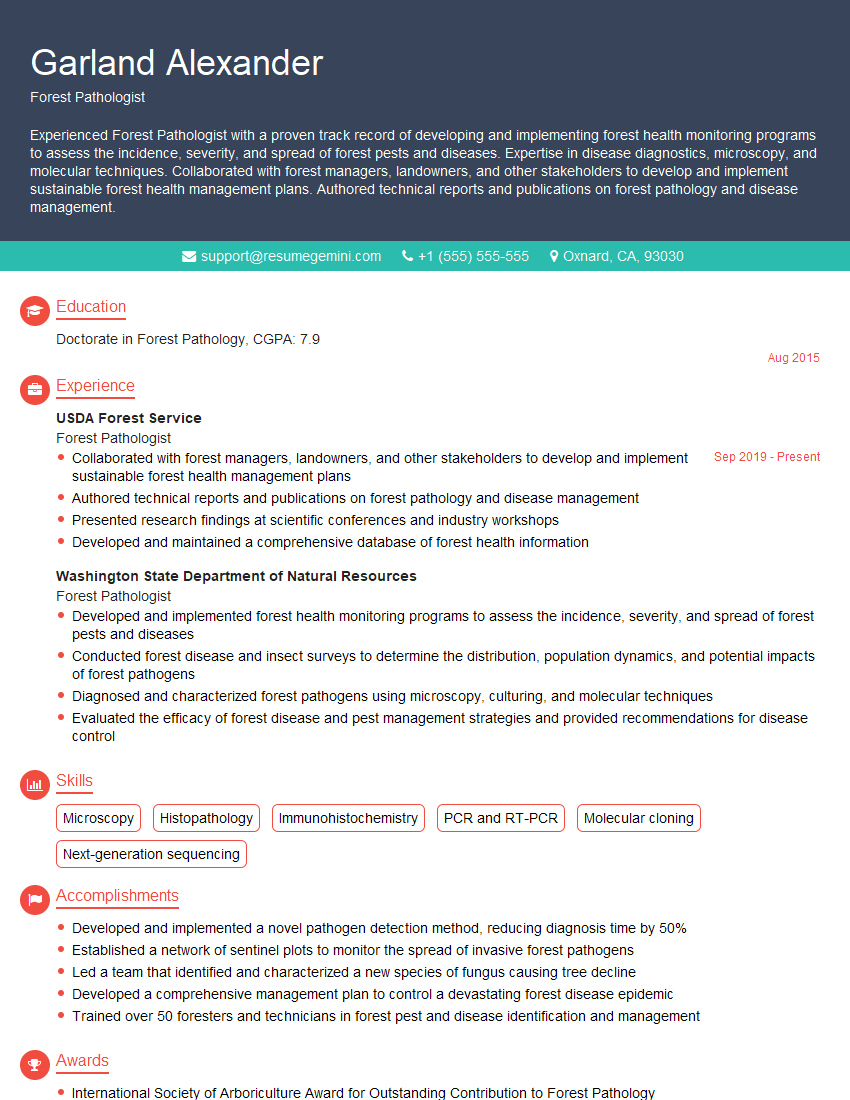
Forest Pathologist Resume Sample

Forestry Technician Resume Sample
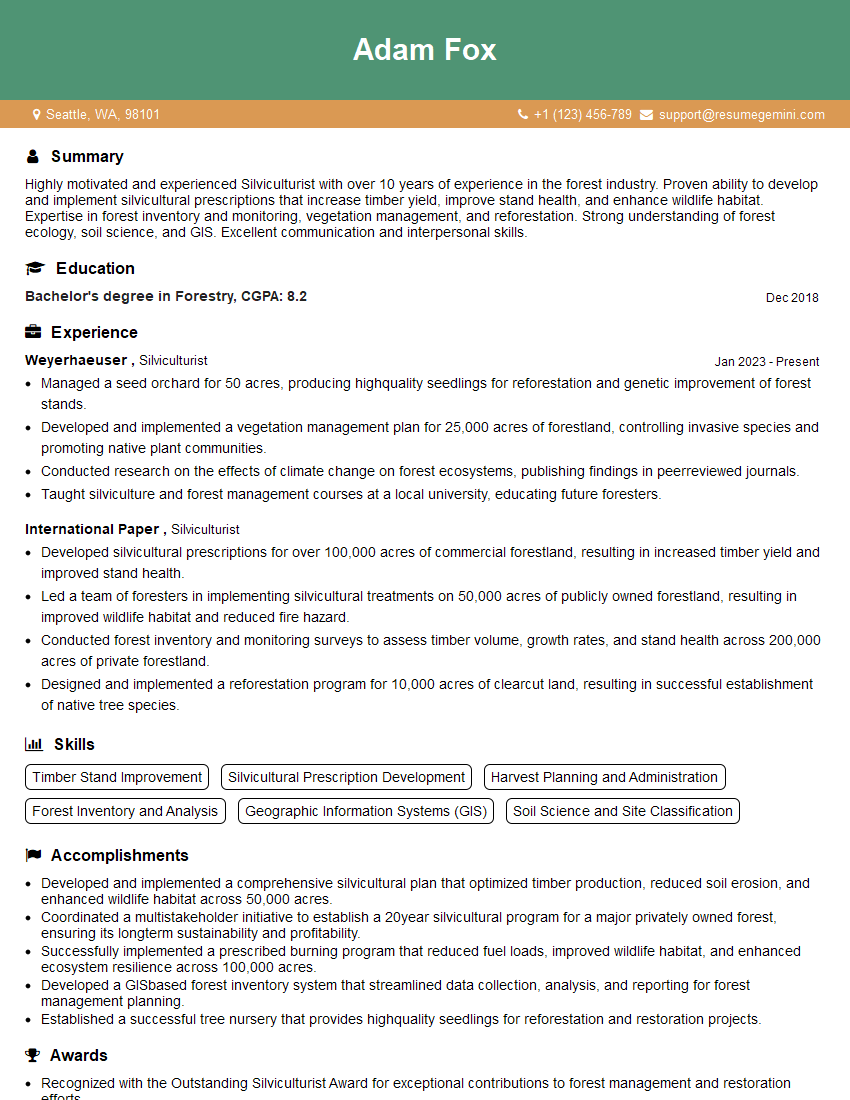
Silviculturist Resume Sample
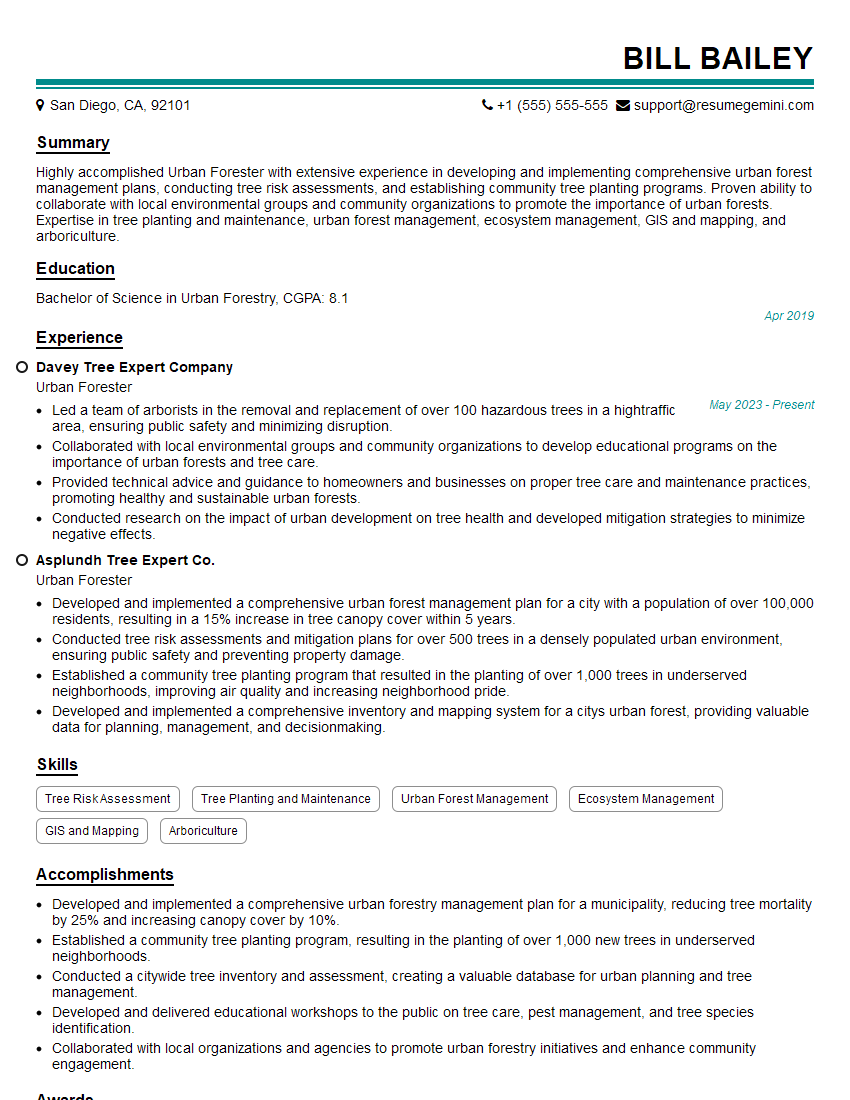
Urban Forester Resume Sample
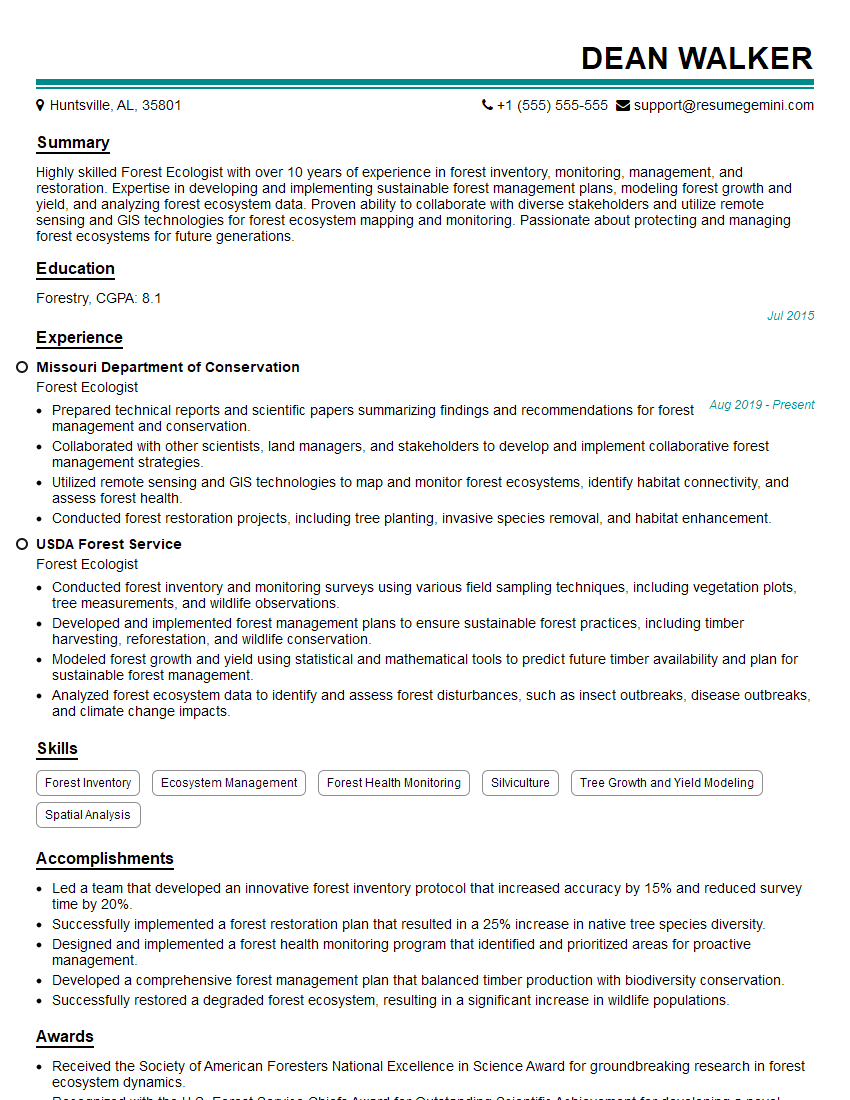
Forest Ecologist Resume Sample

Forest Firefighter Resume Sample

Logging Supervisor Resume Sample
Explore more articles
Users Rating of Our Blogs
Share Your Experience
We value your feedback! Please rate our content and share your thoughts (optional).
What Readers Say About Our Blog
Attention music lovers!
Wow, All the best Sax Summer music !!!
Spotify: https://open.spotify.com/artist/6ShcdIT7rPVVaFEpgZQbUk
Apple Music: https://music.apple.com/fr/artist/jimmy-sax-black/1530501936
YouTube: https://music.youtube.com/browse/VLOLAK5uy_noClmC7abM6YpZsnySxRqt3LoalPf88No
Other Platforms and Free Downloads : https://fanlink.tv/jimmysaxblack
on google : https://www.google.com/search?q=22+AND+22+AND+22
on ChatGPT : https://chat.openai.com?q=who20jlJimmy20Black20Sax20Producer
Get back into the groove with Jimmy sax Black
Best regards,
Jimmy sax Black
www.jimmysaxblack.com
Hi I am a troller at The aquatic interview center and I suddenly went so fast in Roblox and it was gone when I reset.
Hi,
Business owners spend hours every week worrying about their website—or avoiding it because it feels overwhelming.
We’d like to take that off your plate:
$69/month. Everything handled.
Our team will:
Design a custom website—or completely overhaul your current one
Take care of hosting as an option
Handle edits and improvements—up to 60 minutes of work included every month
No setup fees, no annual commitments. Just a site that makes a strong first impression.
Find out if it’s right for you:
https://websolutionsgenius.com/awardwinningwebsites
Hello,
we currently offer a complimentary backlink and URL indexing test for search engine optimization professionals.
You can get complimentary indexing credits to test how link discovery works in practice.
No credit card is required and there is no recurring fee.
You can find details here:
https://wikipedia-backlinks.com/indexing/
Regards
NICE RESPONSE TO Q & A
hi
The aim of this message is regarding an unclaimed deposit of a deceased nationale that bears the same name as you. You are not relate to him as there are millions of people answering the names across around the world. But i will use my position to influence the release of the deposit to you for our mutual benefit.
Respond for full details and how to claim the deposit. This is 100% risk free. Send hello to my email id: lukachachibaialuka@gmail.com
Luka Chachibaialuka
Hey interviewgemini.com, just wanted to follow up on my last email.
We just launched Call the Monster, an parenting app that lets you summon friendly ‘monsters’ kids actually listen to.
We’re also running a giveaway for everyone who downloads the app. Since it’s brand new, there aren’t many users yet, which means you’ve got a much better chance of winning some great prizes.
You can check it out here: https://bit.ly/callamonsterapp
Or follow us on Instagram: https://www.instagram.com/callamonsterapp
Thanks,
Ryan
CEO – Call the Monster App
Hey interviewgemini.com, I saw your website and love your approach.
I just want this to look like spam email, but want to share something important to you. We just launched Call the Monster, a parenting app that lets you summon friendly ‘monsters’ kids actually listen to.
Parents are loving it for calming chaos before bedtime. Thought you might want to try it: https://bit.ly/callamonsterapp or just follow our fun monster lore on Instagram: https://www.instagram.com/callamonsterapp
Thanks,
Ryan
CEO – Call A Monster APP
To the interviewgemini.com Owner.
Dear interviewgemini.com Webmaster!
Hi interviewgemini.com Webmaster!
Dear interviewgemini.com Webmaster!
excellent
Hello,
We found issues with your domain’s email setup that may be sending your messages to spam or blocking them completely. InboxShield Mini shows you how to fix it in minutes — no tech skills required.
Scan your domain now for details: https://inboxshield-mini.com/
— Adam @ InboxShield Mini
support@inboxshield-mini.com
Reply STOP to unsubscribe
Hi, are you owner of interviewgemini.com? What if I told you I could help you find extra time in your schedule, reconnect with leads you didn’t even realize you missed, and bring in more “I want to work with you” conversations, without increasing your ad spend or hiring a full-time employee?
All with a flexible, budget-friendly service that could easily pay for itself. Sounds good?
Would it be nice to jump on a quick 10-minute call so I can show you exactly how we make this work?
Best,
Hapei
Marketing Director
Hey, I know you’re the owner of interviewgemini.com. I’ll be quick.
Fundraising for your business is tough and time-consuming. We make it easier by guaranteeing two private investor meetings each month, for six months. No demos, no pitch events – just direct introductions to active investors matched to your startup.
If youR17;re raising, this could help you build real momentum. Want me to send more info?
Hi, I represent an SEO company that specialises in getting you AI citations and higher rankings on Google. I’d like to offer you a 100% free SEO audit for your website. Would you be interested?
Hi, I represent an SEO company that specialises in getting you AI citations and higher rankings on Google. I’d like to offer you a 100% free SEO audit for your website. Would you be interested?