Interviews are opportunities to demonstrate your expertise, and this guide is here to help you shine. Explore the essential Label Inspection and Quality Control interview questions that employers frequently ask, paired with strategies for crafting responses that set you apart from the competition.
Questions Asked in Label Inspection and Quality Control Interview
Q 1. Describe your experience with various label inspection methods (visual, automated, etc.).
Label inspection methods have evolved significantly, ranging from traditional visual checks to sophisticated automated systems. My experience encompasses both. Visual inspection, the most basic method, involves manually examining each label for defects. This is effective for smaller batches or when subtle defects require human judgment. However, it’s time-consuming and prone to human error. Automated methods, on the other hand, utilize technologies like machine vision systems. These systems employ cameras, lighting, and sophisticated algorithms to analyze labels at high speeds and with much greater accuracy than a human inspector. They can identify defects like misprints, incorrect barcodes, and missing information that might be missed by the human eye. I’ve worked extensively with both methods, often combining them for optimal results. For example, I might use a vision system for high-volume initial screening, followed by manual inspection for any labels flagged by the machine or for special quality checks.
- Visual Inspection: Think of it like carefully proofreading a document. You’re looking for inconsistencies, errors, and anything that deviates from the expected standard.
- Automated Inspection (Machine Vision): This is akin to using a spell-checker and grammar tool. It quickly identifies and flags potential issues, but might need human oversight to confirm interpretation.
Q 2. What are the common types of label defects you have encountered?
Over the years, I’ve encountered a wide variety of label defects. These can be broadly categorized into printing flaws, adhesive issues, and content errors.
- Printing Defects: This includes blurry text, smudged ink, color inconsistencies, incorrect font sizes, missing or incomplete information, and misaligned print.
- Adhesive Problems: These range from insufficient adhesion (labels peeling off easily) to excessive adhesive (causing residue or sticking to other items), wrinkles or air bubbles within the adhesive, and incorrect adhesive placement.
- Content Errors: This might involve incorrect barcodes, missing lot numbers, incorrect product information, or misspellings. Even minor differences in a barcode can render a product unreadable by scanners and impact inventory management or supply chain operations.
One memorable case involved a batch of labels with a slight color shift which, while seemingly minor, created confusion with product identification leading to a potential recall situation. This highlighted the importance of even seemingly minor detail detection in label quality control.
Q 3. Explain your experience using label inspection equipment (e.g., vision systems, microscopes).
My experience with label inspection equipment is extensive. I’m proficient in operating various vision systems, from basic line scan cameras to high-resolution systems with advanced image processing capabilities. I’m also experienced in using microscopes for detailed analysis of subtle defects, especially when dealing with very small print or complex label designs. Vision systems usually employ software with features like pattern matching, defect detection algorithms, and reporting tools. I’m familiar with programming parameters to optimize inspections for specific label characteristics, improving the speed and accuracy of defect identification. Microscopes, on the other hand, provide magnified views for detailed examination of print quality, adhesive integrity, or other microscopic imperfections. Combining both provides a comprehensive inspection workflow.
For example, I’ve utilized a Cognex vision system in high-speed production lines to detect misaligned text or barcodes, and simultaneously used a stereoscopic microscope to examine labels for minute tears or wrinkles.
Q 4. How do you handle discrepancies found during label inspection?
Handling discrepancies discovered during inspection involves a systematic approach. First, I meticulously document the specific nature and location of the defect(s), including the quantity affected. Then, depending on the severity, a decision is made on the course of action. Minor defects might be acceptable within specified tolerances and noted on the inspection report. However, significant defects that compromise product safety or information accuracy require immediate action. This could involve stopping the production line, quarantining the affected labels, notifying the appropriate personnel, and investigating the root cause of the defect. Corrective and preventive actions are implemented to prevent recurrence. This often involves updating inspection parameters or adjusting the production process.
A critical step is detailed documentation of all actions taken. This information informs continuous improvement efforts and ensures compliance with quality standards.
Q 5. What quality control standards (e.g., ISO, GMP) are you familiar with?
My work adheres to several recognized quality control standards. I am thoroughly familiar with ISO 9001, which provides a framework for quality management systems, ensuring consistent product quality. Furthermore, my experience encompasses Good Manufacturing Practices (GMP) standards, particularly relevant in industries with strict regulations on product safety and traceability (like pharmaceuticals or food). These standards often dictate specific requirements for documentation, error handling, and data traceability, which are critical for accurate and reliable label inspection. Understanding and applying these standards ensures consistent high-quality output and regulatory compliance.
Q 6. Describe your experience with documenting and reporting inspection findings.
Documentation and reporting are fundamental aspects of label inspection. For each inspection, I maintain detailed records, including the date and time, batch number, the type and quantity of defects found, images or videos of significant discrepancies, and the corrective actions taken. This information is compiled into comprehensive reports that are easily accessible and understandable for all stakeholders. The reports typically include statistical summaries, such as defect rates and percentages, which help track trends over time. These reports are crucial for identifying recurring issues and implementing effective preventative measures. The reporting format and detail level adapt to the specific client’s requirements and regulatory needs. For instance, some clients may require specific reporting software or a particular format for data exchange.
Q 7. How do you ensure the accuracy and consistency of your label inspections?
Ensuring accuracy and consistency is paramount in label inspection. This is achieved through a combination of techniques. First, rigorous calibration and maintenance of inspection equipment are essential. Regular checks on vision systems ensure accurate image capture and data analysis. Likewise, regular calibration and maintenance are crucial for microscopes. Second, the use of standardized operating procedures (SOPs) guarantees consistent inspection methods across all inspectors, minimizing variability. These SOPs detail steps to follow, including lighting conditions, label handling techniques, and defect classification criteria. Third, regular internal audits and inter-inspector comparisons assess accuracy and consistency. This involves independent inspections of the same label samples to compare results and identify discrepancies. Finally, ongoing training and competency assessments ensure inspectors maintain skills and understanding of latest techniques and quality standards. This multi-faceted approach enhances the reliability and repeatability of inspection results.
Q 8. Explain your understanding of statistical process control (SPC) in a labeling context.
Statistical Process Control (SPC) in labeling ensures consistent quality by monitoring key label characteristics over time. We use control charts, like X-bar and R charts, to track parameters such as print clarity, registration accuracy (how well the print aligns with the label), and adhesive strength. By plotting data points, we can identify trends and variations, detecting potential problems before they lead to significant defects. For example, if the average print clarity consistently falls below a predetermined acceptable level, it signals a need for intervention, perhaps a cleaning of the print head or replacement of a worn ribbon. The key is to establish baseline control limits based on historical data and react when data points fall outside those limits, indicating a process shift. This proactive approach minimizes waste, rework, and customer complaints.
Q 9. How do you prioritize different types of label defects?
Prioritizing label defects involves a risk-based approach, considering the severity and frequency of the issue. We use a defect classification system, often categorized by severity (critical, major, minor).
- Critical defects, like illegible barcodes or missing crucial information, halt production immediately. These directly impact product traceability and safety, representing the highest priority.
- Major defects, such as significant color variations or misaligned print elements, affect product aesthetics and brand image. They require investigation and corrective action but may not necessitate immediate production stoppage.
- Minor defects are usually cosmetic imperfections (e.g., minor scratches) that do not compromise functionality or safety and are addressed after resolving higher priority issues.
Frequency also plays a role. Even a minor defect that occurs frequently might be elevated in priority because it indicates a systematic problem that needs to be addressed before it escalates.
Q 10. Describe your experience with root cause analysis of label defects.
Root cause analysis (RCA) for label defects uses structured methods like the 5 Whys or fishbone diagrams. For example, if we find frequent label misalignment, the 5 Whys might go like this:
- Why are the labels misaligned? Because the print head is not properly calibrated.
- Why is the print head not calibrated? Because the calibration procedure wasn’t followed correctly.
- Why wasn’t the procedure followed? Because the operator lacked proper training.
- Why was there insufficient training? Because the training program was outdated.
- Why was the training program outdated? Because it wasn’t regularly reviewed and updated.
The fishbone diagram helps visually organize potential causes (materials, machinery, methods, manpower, environment, measurement) to find the root of the problem systematically. Once the root cause is identified, appropriate corrective and preventive actions can be implemented to eliminate the defect permanently.
Q 11. How do you collaborate with other departments to resolve labeling issues?
Collaboration is crucial. For labeling issues, I work closely with the production team to understand the process flow and identify potential points of failure. With the engineering team, we investigate machine malfunctions or design flaws. I liaise with the procurement team to ensure the quality of label materials (e.g., ribbons, adhesives). Finally, I work with the marketing team to understand label design and its potential impact on printability and label inspection challenges. Regular meetings and clear communication channels ensure quick resolution of issues.
Q 12. What is your experience with different labeling technologies (e.g., thermal transfer, inkjet)?
I have extensive experience with thermal transfer and inkjet labeling technologies. Thermal transfer printing uses heat to transfer ink from a ribbon onto the label, ideal for high-volume, high-quality printing on various materials. Inkjet printing uses ink sprayed onto the label, suitable for variable data printing and smaller print runs. Understanding the strengths and weaknesses of each is key. For instance, thermal transfer offers better durability and image quality for some applications, while inkjet excels in flexibility and customization. My experience includes troubleshooting print head clogs in inkjet systems, optimizing ribbon tension for thermal transfer, and selecting appropriate label materials compatible with each technology.
Q 13. How do you manage your workload and meet deadlines in a fast-paced environment?
Managing workload in a fast-paced environment involves efficient prioritization and time management techniques. I utilize project management tools to track tasks and deadlines, employing agile methodologies to adapt to changing priorities. Effective communication with stakeholders keeps everyone informed and prevents unnecessary delays. I proactively identify potential bottlenecks and address them before they become critical issues. Delegation of tasks, when appropriate, and efficient use of technology optimize my workflow. Breaking down large tasks into smaller, manageable steps also helps to maintain focus and achieve progress.
Q 14. Explain your proficiency in using label inspection software or databases.
I’m proficient in using various label inspection software and databases. My experience includes using automated vision systems for inspecting labels at high speeds, detecting defects that would be impossible for manual inspection. I’m familiar with database systems used to store and analyze inspection data, allowing for trend analysis and identification of recurring problems. This data-driven approach allows for preventative maintenance and process improvements. I’m also capable of extracting relevant data for generating reports on label quality metrics and compliance.
Q 15. Describe your experience with implementing and maintaining quality control procedures.
Implementing and maintaining robust quality control (QC) procedures for label inspection is crucial for ensuring product quality and brand consistency. My experience spans several years and involves developing and deploying QC plans that encompass every stage of the label production process, from raw material inspection to final product verification. This includes defining acceptance criteria, developing inspection checklists, and implementing statistical process control (SPC) techniques to monitor key process parameters.
- Developing acceptance criteria: I define clear, measurable specifications for each label attribute, including dimensions, color accuracy, print quality, and adhesive strength. These are often based on industry standards, client specifications, and internal quality targets. For example, I might specify a maximum deviation of 0.2mm in label dimensions or a minimum adhesive strength of 10N/cm.
- Inspection checklists: I create detailed checklists for inspectors to follow, ensuring consistent and thorough inspections. These checklists cover visual checks, measurements using calibrated equipment, and potentially specialized tests such as peel adhesion or scratch resistance. These checklists are regularly reviewed and updated as needed.
- SPC Implementation: We leverage control charts to monitor key variables and identify trends or potential issues early on. This proactive approach minimizes the risk of widespread defects and ensures that process adjustments are made timely.
- Corrective and Preventive Actions (CAPA): A robust CAPA system is in place to address any identified defects, prevent their recurrence, and continuously improve our processes. This includes root cause analysis and implementing corrective actions to eliminate the root cause.
For instance, in a previous role, I implemented an SPC system for a label printing line that reduced defect rates by 15% within six months by identifying and addressing a recurring issue with ink consistency.
Career Expert Tips:
- Ace those interviews! Prepare effectively by reviewing the Top 50 Most Common Interview Questions on ResumeGemini.
- Navigate your job search with confidence! Explore a wide range of Career Tips on ResumeGemini. Learn about common challenges and recommendations to overcome them.
- Craft the perfect resume! Master the Art of Resume Writing with ResumeGemini’s guide. Showcase your unique qualifications and achievements effectively.
- Don’t miss out on holiday savings! Build your dream resume with ResumeGemini’s ATS optimized templates.
Q 16. How do you ensure that label inspections comply with regulatory requirements?
Ensuring label inspections comply with regulatory requirements is paramount. My approach involves a deep understanding of relevant regulations, such as FDA guidelines for food and pharmaceutical labeling, GHS (Globally Harmonized System) regulations for hazardous materials, and other country-specific regulations. Compliance is not just about meeting the minimum requirements; it’s about proactively identifying potential risks and implementing preventative measures.
- Regulatory research: I actively research and stay updated on relevant regulations, often using databases and industry publications. This ensures that our inspection procedures always align with the latest legal requirements.
- Documentation and traceability: We maintain meticulous records of all inspections, including dates, inspector names, and any identified defects. This complete audit trail ensures traceability and facilitates rapid response to any regulatory inquiries.
- Calibration and validation: We use calibrated equipment for measurements and regularly validate our inspection methods to ensure accuracy and reliability. This ensures consistency and minimizes risks of errors in the process.
- Label approval processes: Before mass production, I ensure that all labels undergo rigorous testing and approval according to the relevant regulations. This includes validating the printing quality against the artwork approved by the client and performing tests for regulatory compliance like adhesive strength or material compatibility.
For example, when working with pharmaceutical labels, I ensure compliance with FDA guidelines, including requirements related to tamper evidence and specific ink formulations.
Q 17. What are your strategies for preventing label defects from occurring?
Preventing label defects is significantly more efficient and cost-effective than fixing them later. My strategies focus on proactively identifying and mitigating potential sources of defects throughout the entire process.
- Process optimization: This involves continuous improvement initiatives focused on streamlining the label production process to minimize the chances of errors. This includes improving machine settings, optimizing workflows, and implementing preventive maintenance schedules.
- Raw material inspection: We thoroughly inspect all incoming raw materials, including labels, inks, and adhesives, to ensure that they meet our quality standards. This includes visual checks and potentially specialized tests to assess properties like viscosity or adhesion.
- Operator training: Well-trained operators are key to preventing defects. This includes providing comprehensive training on proper machine operation, quality control procedures, and defect identification techniques.
- Regular equipment maintenance: Regular preventative maintenance on printing and finishing equipment is crucial for minimizing downtime and preventing defects caused by machine malfunction. This can include cleaning, lubrication, and parts replacement as needed.
- Design review: Thorough review of the label design itself can identify potential problems before they occur in production. For example, a design with fine details might require specific printing techniques or higher-resolution printing to avoid distortion.
For instance, by implementing a preventative maintenance program, we reduced machine downtime and consequently minimized the occurrence of printing defects by 12% in one project.
Q 18. How do you stay up-to-date with the latest industry standards and technologies?
Staying current with the latest industry standards and technologies is essential in label inspection and quality control. My approach involves a multi-faceted strategy:
- Industry publications and conferences: I regularly read trade publications and attend industry conferences to learn about the latest advancements in printing technology, materials, and quality control techniques. This allows me to introduce best practices and improve our approach.
- Professional networking: I actively participate in professional networks and communities to share knowledge and learn from other experts in the field. Attending these events provides insight into new technologies and standards being implemented.
- Vendor collaborations: I maintain close relationships with equipment suppliers and material providers to receive updates on new technologies and product developments. This ensures we use cutting-edge technology, improving our efficiency and accuracy.
- Online resources and training: I utilize online resources, webinars, and training courses to keep abreast of changes in regulations, standards, and technologies. This allows constant updating and improving of knowledge.
Recently, I completed a training course on advanced color management techniques and integrated them into our QC processes, resulting in improved color consistency and fewer color-related defects.
Q 19. Describe your experience with different types of label materials and their properties.
Experience with diverse label materials is crucial for effective quality control. My expertise encompasses various materials, each with unique properties impacting the inspection process.
- Paper labels: These are common and come in various weights, finishes (gloss, matte), and coatings (water-resistant, etc.). Inspections focus on print quality, dimensional accuracy, and surface finish.
- Film labels: These include materials like polypropylene, polyethylene terephthalate (PET), and vinyl. Inspections consider clarity, gloss, and resistance to tears or punctures. Specific tests such as peel adhesion and scratch resistance might be necessary.
- Fabric labels: These are often used in clothing and require inspections focusing on weave tightness, color consistency, and label durability.
- Metalized labels: These add visual appeal and often require inspections for uniform metallization and potential imperfections like scratches or discoloration.
- Specialty labels: This category encompasses materials like holographic labels, security labels, or those with unique finishes that require customized inspection procedures.
Understanding these material properties allows me to select appropriate inspection techniques and equipment, ensuring the accuracy and efficiency of the process. For instance, when dealing with heat-sensitive labels, I implement specific storage and handling procedures to avoid premature material degradation.
Q 20. How do you handle situations where there is a conflict between production speed and quality?
Balancing production speed and quality is a constant challenge in label production. My approach involves finding a sustainable equilibrium where quality is not compromised at the expense of speed.
- Process optimization: Streamlining the production process, reducing bottlenecks, and improving efficiency are key. This might involve implementing automation, upgrading equipment, or optimizing workflows.
- Data-driven decision making: Using real-time data to monitor production metrics helps identify areas for improvement and potential sources of defects. This allows proactive interventions and preventive actions.
- Operator training and empowerment: Empowering operators to make timely decisions regarding quality often contributes to a significant increase in overall output.
- Preventive maintenance: This minimizes costly downtime and ensures that equipment is operating at peak efficiency. Preventive measures help in preventing loss of quality and time.
- Prioritization: In certain cases, a targeted approach is useful, focusing resources on inspecting high-risk areas or critical label attributes. This can be determined by using data-driven analysis and assessing the risk associated with potential defects.
For example, in one case, by implementing a new automated inspection system, we increased production speed by 20% while maintaining or improving the quality levels.
Q 21. What is your approach to training new team members on label inspection procedures?
Training new team members on label inspection procedures is crucial for maintaining consistent quality. My approach is systematic and thorough.
- On-the-job training: New team members initially work alongside experienced inspectors to learn through observation and hands-on experience. This approach facilitates knowledge transfer.
- Structured training materials: This includes written manuals, checklists, and training videos covering all aspects of label inspection procedures. This provides a comprehensive and consistent understanding of standards.
- Hands-on practice: Trainees participate in practical exercises to develop their skills in defect identification and measurement techniques. This is a crucial step in developing their competence.
- Regular assessments: Ongoing assessments are conducted to evaluate their understanding of procedures and their ability to identify defects. Regular checks ensure quality of work and compliance with standards.
- Continuing education: Opportunities for ongoing training and development are provided to keep them updated with industry changes and advancements in inspection technologies. This fosters continuous learning and development.
This structured approach ensures that all inspectors are thoroughly trained and competent, maintaining consistent quality across all production runs.
Q 22. How do you measure the effectiveness of your label inspection processes?
Measuring the effectiveness of label inspection processes requires a multi-faceted approach. We don’t just look at the number of defects found; we analyze the entire process for efficiency and accuracy. Key metrics include:
- Defect Rate: This is the percentage of defective labels identified. A lower defect rate indicates a more effective process. For example, a defect rate of less than 0.5% would be considered excellent in many industries.
- Inspection Time: We track the time taken to inspect a batch of labels. Improvements in speed without sacrificing accuracy demonstrate process optimization. We might use techniques like time studies to analyze where bottlenecks are.
- First Pass Yield: This measures the percentage of labels that pass inspection on the first attempt. A high first pass yield suggests a robust process upstream, reducing rework and waste. A yield above 98% is usually a strong indicator of a successful process.
- Cost per Inspection: Calculating the cost of inspection per label helps determine the overall efficiency. This involves considering labor costs, equipment costs, and material waste. Reducing this cost without impacting quality is a key objective.
- Customer Complaints: Post-market feedback is crucial. A low number of customer complaints related to label issues shows the process is successfully preventing defective labels from reaching consumers.
By regularly monitoring these metrics and analyzing trends, we can identify areas for improvement and make data-driven decisions to enhance the overall effectiveness of the label inspection process.
Q 23. Describe a time you had to make a difficult decision regarding product quality.
In my previous role, we were nearing a major product launch with a new line of organic baby food. A significant portion of the labels for one flavor contained a minor but potentially serious error – the ‘best by’ date was printed incorrectly, off by several months. The initial reaction was to just reprint the affected labels, but this would have resulted in significant delays and cost overruns, jeopardizing the launch.
My decision was to implement a tiered approach: we immediately stopped distribution of the affected batch and recalled any already shipped to retailers. Simultaneously, we prioritized the reprint of the labels, streamlining the production process to mitigate the delay as much as possible. We also proactively notified our customers and retailers about the recall. It was stressful but transparent communication and swift action minimized the negative impact on the brand’s reputation and ensured customer safety. Ultimately, the launch was only slightly delayed, but most importantly, we maintained our commitment to quality and consumer trust.
Q 24. How do you deal with pressure and tight deadlines in a label inspection role?
Pressure and tight deadlines are commonplace in label inspection. My approach involves a combination of planning, prioritization, and efficient execution. I use several strategies:
- Prioritization Matrix: I use a matrix to prioritize tasks based on urgency and importance. This ensures that critical inspections are completed first.
- Teamwork and Delegation: If possible, I delegate tasks effectively, ensuring every team member understands their responsibilities. Collaboration is key to meeting deadlines.
- Automation and Technology: Implementing automated inspection systems, where feasible, significantly increases speed and reduces human error.
- Process Optimization: I constantly look for ways to streamline the inspection process, eliminating unnecessary steps. This could include optimizing workflows or improving equipment utilization.
- Communication: Open communication with all stakeholders – management, production teams, etc. – helps manage expectations and prevents misunderstandings. It’s crucial to be proactive in reporting potential delays or challenges.
Ultimately, maintaining a calm and methodical approach, combined with effective team management and the appropriate use of technology, allows me to navigate high-pressure situations successfully.
Q 25. Explain your understanding of color accuracy and its importance in label inspection.
Color accuracy is paramount in label inspection, ensuring the printed colors match the approved design precisely. Inaccurate colors can lead to brand inconsistency, misinterpretations, and even legal issues, particularly in regulated industries like pharmaceuticals or food.
We use several methods to maintain color accuracy:
- Spectrophotometry: This involves using a spectrophotometer to measure the precise color values (e.g., L*a*b* values) of the printed labels and comparing them against the approved digital design or color standards. This provides objective, numerical data.
- Color Management Systems (CMS): CMS software helps manage the entire color workflow, from design to printing, ensuring consistency. It takes into account the characteristics of different printing processes and devices.
- Color Standards and Pantone Matching System (PMS): Using industry-standard color guides (like PMS) ensures everyone is working with the same color references. This avoids subjective interpretations of color.
- Visual Inspection: While not as precise as spectrophotometry, experienced inspectors can detect gross color discrepancies with their eyes. This serves as a preliminary check before more precise measurements.
Any deviation from the approved color specifications requires investigation and corrective action to prevent further inconsistencies and to uphold the brand’s image and product integrity.
Q 26. Describe your experience with barcode and other symbology verification.
My experience with barcode and symbology verification is extensive. I’ve worked with various barcode types (EAN, UPC, Code 128, QR codes, etc.) and understand the importance of accurate and reliable verification for traceability and efficiency. This involves several key aspects:
- Barcode Scanners: Using high-quality barcode scanners, both handheld and integrated into automated systems, ensures accurate reading of codes.
- Barcode Verification Software: This software analyzes barcode quality parameters such as contrast, edge definition, and symbol placement, checking compliance with ISO/IEC standards. It provides a numerical grade, indicating the quality and readability of each barcode.
- Error Correction: Many symbologies incorporate error correction capabilities. The software identifies and potentially corrects minor errors, but significant flaws still require rejection.
- Data Validation: Beyond just the barcode’s structural integrity, we validate the data encoded in the barcode to confirm that it matches the expected information (e.g., product ID, lot number).
- Different Symbologies: I’m proficient in working with a range of symbologies, selecting the appropriate verification methods and parameters based on the specific type of code being used.
Accurate barcode verification prevents costly issues such as misidentification of products, tracking problems, and inaccurate inventory management. A robust verification system is fundamental to supply chain efficiency and consumer safety.
Q 27. How would you approach a situation where a significant batch of labels is found to be defective?
Discovering a significant batch of defective labels is a serious situation that requires a structured response. My approach would be:
- Immediate Containment: Immediately stop the distribution and further use of the affected labels to prevent them from reaching the market.
- Root Cause Analysis: Conduct a thorough investigation to identify the underlying cause of the defect. This might involve examining the printing process, materials, or equipment involved.
- Severity Assessment: Determine the severity of the defect. Does it pose a safety hazard? Will it cause significant brand damage or financial loss?
- Corrective Action Plan: Develop a plan to correct the root cause and prevent future occurrences. This might involve equipment maintenance, operator retraining, or changes to the production process.
- Corrective Action Implementation: Implement the corrective action plan. This may involve the recall and destruction of the defective labels.
- Communication: Communicate the situation to relevant stakeholders (management, customers, retailers) and provide regular updates on the progress of the investigation and corrective actions.
- Documentation: Maintain detailed documentation of the entire process, including the defect identification, root cause analysis, corrective actions, and their effectiveness.
Effective communication and a systematic approach are crucial to minimize the impact of such events and maintain a culture of quality.
Q 28. What steps would you take to improve the efficiency of the label inspection process?
Improving the efficiency of the label inspection process requires a holistic approach. My strategies would include:
- Automation: Implementing automated inspection systems, such as vision systems with AI, can significantly speed up the process and reduce human error. These systems can perform several checks simultaneously, including color accuracy, barcode verification, and print quality.
- Process Optimization: Analyzing the current workflow to identify and eliminate bottlenecks, redundant steps, or unnecessary delays. Lean methodologies like Value Stream Mapping can be beneficial here.
- Improved Training: Investing in comprehensive training for inspection personnel enhances their skills and consistency. Regular calibration and testing of their abilities are crucial.
- Better Equipment: Utilizing advanced inspection equipment, such as high-resolution cameras and sophisticated barcode scanners, improves accuracy and efficiency.
- Data Analysis: Tracking key metrics (as discussed in question 1) to identify areas for improvement. Data analytics can help pinpoint trends and recurring problems, guiding focused process optimization efforts.
- Ergonomic Improvements: Ensuring the workspace is ergonomically designed to reduce operator fatigue and improve comfort. This can lead to better focus and efficiency.
By strategically combining these approaches, a significant increase in efficiency can be achieved without compromising the quality of the inspection.
Key Topics to Learn for Label Inspection and Quality Control Interview
- Understanding Label Regulations and Standards: Familiarize yourself with relevant industry regulations (e.g., FDA, GMP) and common labeling standards. Consider the implications of non-compliance.
- Visual Inspection Techniques: Master the art of visual inspection, including identifying defects like misprints, incorrect information, damaged labels, and inconsistencies in color or placement. Practice describing these defects clearly and concisely.
- Quality Control Procedures and Documentation: Learn about different quality control methodologies (e.g., statistical process control, Six Sigma). Understand the importance of accurate and thorough documentation, including record-keeping and reporting of defects.
- Labeling Equipment and Technology: Gain familiarity with various labeling machines and technologies used in the industry. Understanding their operation and potential points of failure is crucial.
- Problem-Solving and Root Cause Analysis: Develop your ability to identify the root cause of recurring label defects and propose effective solutions. Practice using problem-solving frameworks like the 5 Whys.
- Data Analysis and Reporting: Learn to analyze data related to label defects, identify trends, and create reports to communicate findings to relevant stakeholders. This might involve using spreadsheets or specialized software.
- Hygiene and Safety Procedures: Understand and demonstrate knowledge of relevant health and safety regulations and best practices within a production environment.
Next Steps
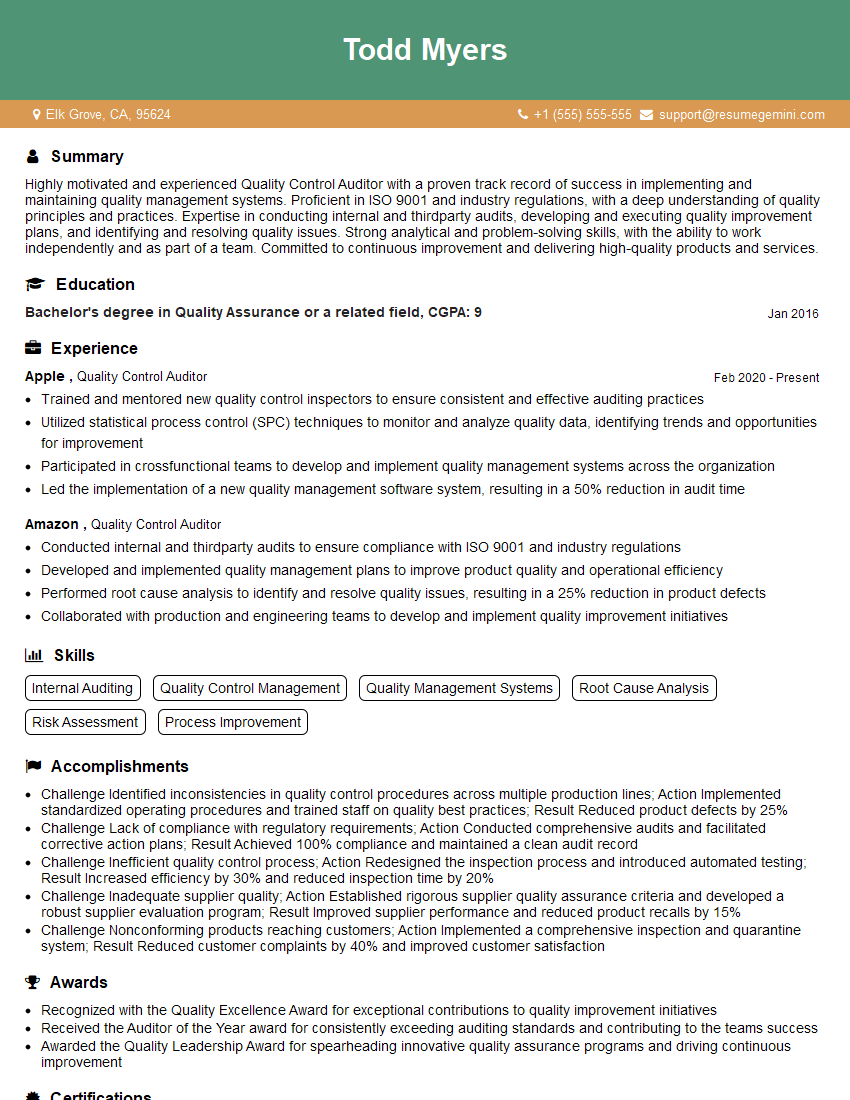
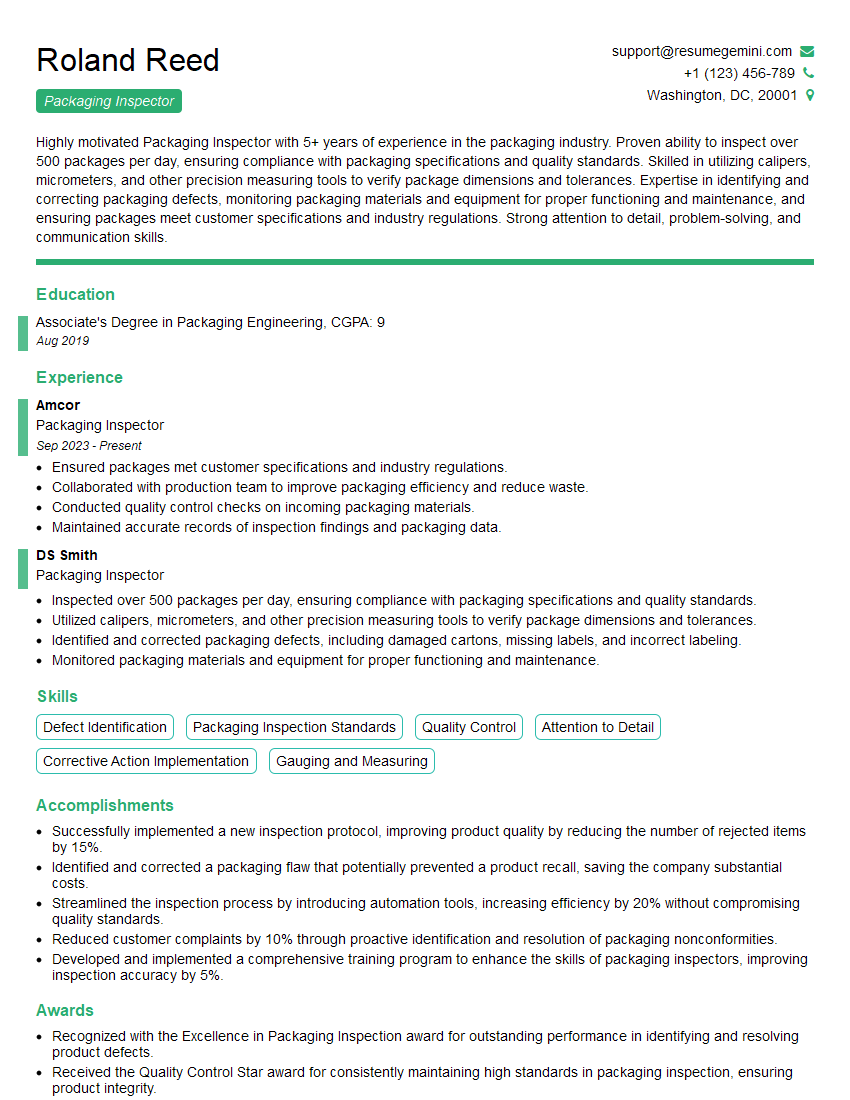
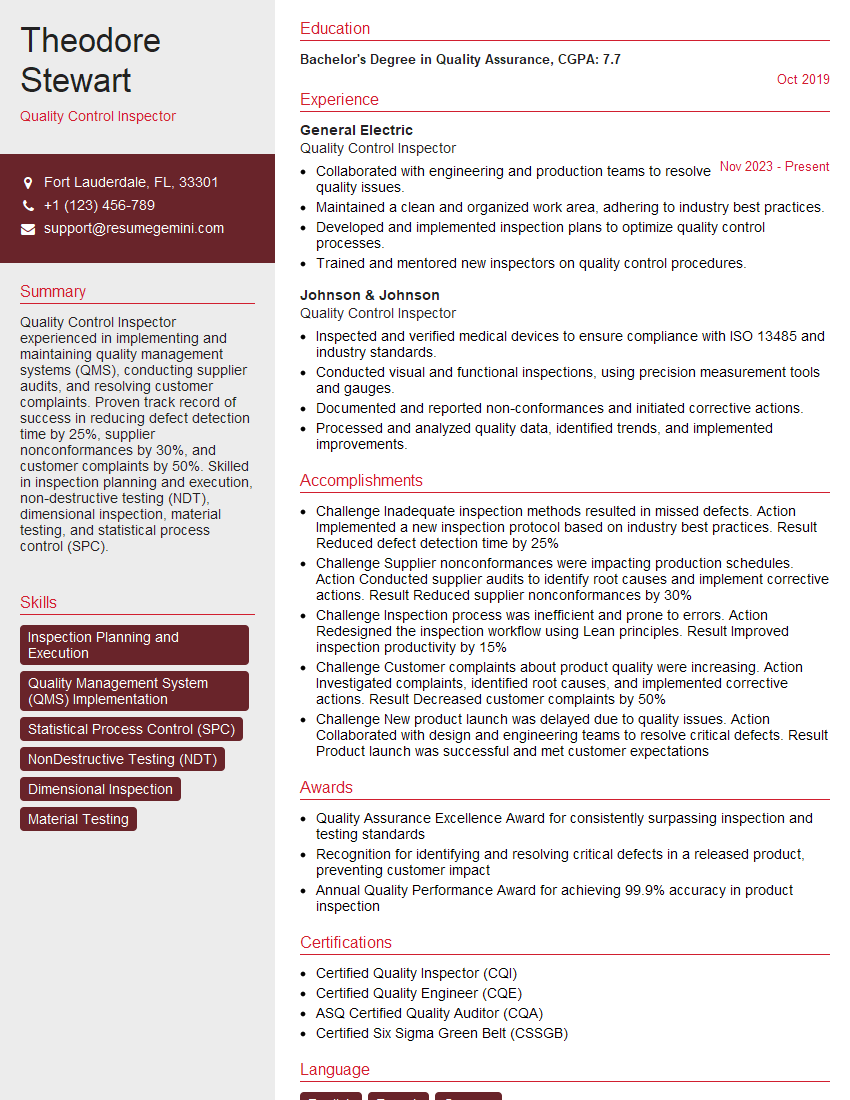
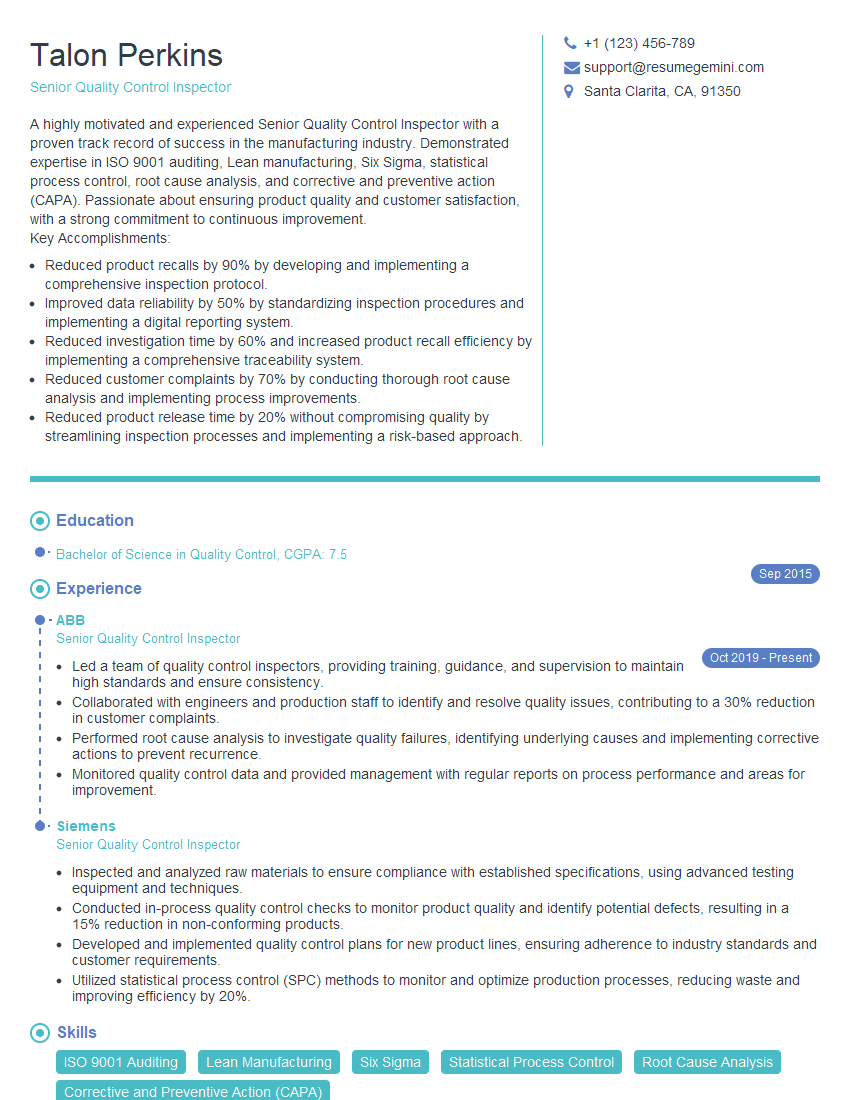
Mastering Label Inspection and Quality Control opens doors to rewarding careers in manufacturing, pharmaceuticals, and food processing, offering opportunities for growth into supervisory and management roles. A strong resume is your key to unlocking these opportunities. To significantly increase your chances of getting noticed by Applicant Tracking Systems (ATS), build an ATS-friendly resume. ResumeGemini can help you create a professional and impactful resume tailored to highlight your skills and experience in Label Inspection and Quality Control. Examples of resumes specifically designed for this field are available through ResumeGemini to guide you.



Explore more articles
Users Rating of Our Blogs
Share Your Experience
We value your feedback! Please rate our content and share your thoughts (optional).
What Readers Say About Our Blog
Very informative content, great job.
good