The thought of an interview can be nerve-wracking, but the right preparation can make all the difference. Explore this comprehensive guide to Ladder and Tree Climbing interview questions and gain the confidence you need to showcase your abilities and secure the role.
Questions Asked in Ladder and Tree Climbing Interview
Q 1. Describe your experience with different types of climbing equipment.
My experience with climbing equipment is extensive, encompassing both ladder and tree climbing gear. With ladders, I’m proficient with various types, from extension ladders and stepladders to scaffold towers and rolling ladders, understanding their weight capacities, stability features, and appropriate applications. For tree climbing, my expertise includes ropes (static and dynamic), harnesses (full-body and saddle), ascenders (Petzl Ascenders, etc.), descenders (such as the Petzl ID), carabiners (various locking mechanisms), and specialized rigging equipment like pulleys and snatch blocks. I’m familiar with inspecting this gear for wear and tear, ensuring proper maintenance and replacement when necessary. For example, I meticulously check ropes for fraying or damage before each climb, and I regularly inspect carabiners for gate closure integrity. This thorough approach ensures safety and prevents equipment failure during operations.
Q 2. Explain the importance of pre-climb inspections.
Pre-climb inspections are paramount for safety. They’re not just a formality; they’re a critical risk mitigation strategy. A thorough inspection involves checking the equipment (as mentioned above), but it also extends to the work environment itself. For ladders, this includes assessing the ground for stability, ensuring the ladder is properly placed and secured (no slipping, appropriate angle), and checking for overhead obstructions. For tree climbing, pre-climb inspections encompass a detailed assessment of the tree’s health (looking for decay, disease, or structural weakness), the surrounding area (considering branches, power lines, obstacles, and weather conditions), and the potential fall zone. I document my findings, making any necessary adjustments or abandoning the climb altogether if safety cannot be guaranteed. Imagine attempting to climb a ladder that’s leaning against a crumbling wall – a pre-climb inspection would immediately identify this critical hazard.
Q 3. What are the different types of ladders and their appropriate uses?
Different ladders serve distinct purposes. Extension ladders are ideal for reaching significant heights, but require secure footing and proper setup. Stepladders offer stability for shorter tasks, but their reach is limited. Scaffold towers provide a larger, more stable platform for extended work, particularly when multiple people are involved. Rolling ladders are convenient for mobility but should be used with caution, ensuring the brakes are engaged on uneven surfaces. The choice depends heavily on the task at hand; for example, changing a lightbulb might only need a stepladder, whereas exterior building work might necessitate an extension ladder or even a scaffold tower. Improper ladder selection can lead to accidents; choosing the right type for the job is crucial.
Q 4. How do you assess risk when climbing a tree?
Assessing risk in tree climbing involves a multi-faceted approach. I begin by visually inspecting the tree, checking for decay, broken branches, deadwood, and the overall structural integrity. I assess the surrounding environment: are there power lines, obstacles that could cause me to fall, or other hazards? I consider the weather conditions; high winds or rain can significantly increase risk. I factor in my own physical and mental condition; am I properly rested and focused? The tree’s species also matters, as some species are naturally more brittle or prone to breakage than others. The planned climbing technique also influences risk assessment. I use a systematic risk assessment framework, systematically documenting the hazards, likelihood, and potential consequences, and employing appropriate mitigation strategies. For instance, using a proper climbing system and employing a second person for belaying reduces the likelihood of a fall.
Q 5. Detail your experience with various pruning techniques.
My pruning techniques are diverse and tailored to the specific tree and the desired outcome. I utilize thinning cuts to remove branches selectively, maintaining the tree’s natural shape and structure. Reducing cuts shorten branches to a lateral branch or bud, promoting branch strength and preventing unwanted growth. Crown cleaning involves removing dead, diseased, or crossing branches. Crown reduction, though used cautiously and rarely, is sometimes employed to reduce the overall size of the crown. I always follow the three-cut method for larger branches to prevent bark tearing or branch failure. These methods, when applied correctly, improve tree health, safety, and aesthetics. The approach is always dictated by the species and the tree’s condition; a delicate flowering cherry would require a more refined approach than a tough oak.
Q 6. What safety procedures do you follow when using a chainsaw?
Chainsaw safety is paramount. Before starting, I always ensure the chainsaw is properly maintained, with a sharp chain, correctly adjusted tension, and functional safety features. I wear appropriate personal protective equipment (PPE), including chaps, gloves, eye protection, hearing protection, and a hard helmet. I clear the work area of obstacles and ensure a safe escape route. I use a firm, balanced stance, keeping a safe distance from the cutting area. I never reach over or around the cutting chain. I regularly check the chain’s tension and lubrication during operation. When fueling, I turn off the chainsaw and move it to a well-ventilated area away from any potential ignition sources. I prioritize the ‘3-cut method’ to manage larger limbs. These are critical steps to prevent kickback and minimize the risk of serious injury.
Q 7. Describe your knowledge of different tree species and their climbing characteristics.
My knowledge of tree species and their climbing characteristics is crucial. For example, I know that brittle species like some pines require extra caution due to their tendency to break easily. Oak trees, while strong, can have hidden decay or insect infestations affecting their structural integrity. Elms, particularly older specimens, may have weak branches. I understand that different species exhibit varying levels of flexibility and limb strength, influencing my approach. This knowledge allows me to tailor my techniques and equipment accordingly, ensuring a safe and efficient climb. In addition, I am familiar with identifying trees affected by diseases which might affect the safety of a climb.
Q 8. How do you handle unexpected situations while climbing?
Handling unexpected situations while climbing is paramount to safety. My approach involves a combination of pre-planning, meticulous assessment, and quick, decisive action. Before any climb, I conduct a thorough risk assessment, considering factors like weather, tree condition, and potential hazards. This allows me to anticipate potential problems and develop contingency plans.
During a climb, if I encounter an unexpected obstacle – like a broken branch or unstable section of the tree – I immediately stop and reassess the situation. I might need to adjust my climbing technique, change my route, or even descend and re-evaluate the approach. Communication is also crucial. If working with a team, I would immediately inform my partner of the situation and discuss the best course of action. For example, during a recent climb, I encountered a hidden cavity in the tree trunk. I immediately secured myself to a stronger point and cautiously explored the area before proceeding, ensuring my safety and the integrity of my anchor points. The key is to never panic, maintain composure, and prioritize safety above all else.
Q 9. Explain your experience with rope and harness systems.
My experience with rope and harness systems is extensive. I’m proficient in various climbing techniques, including single-rope technique (SRT), double-rope technique (DRT), and even more specialized methods. I’m intimately familiar with the different types of ropes—static, dynamic, and kernmantle—and understand their respective strengths and weaknesses. I know how to properly inspect ropes for wear and tear, recognizing signs of damage like fraying, cuts, or heat damage. Harness selection is equally important, and I’m trained to choose the right harness for the specific task, ensuring it fits properly and provides adequate protection. I regularly inspect my harness for any defects as well. Proper knot tying is fundamental; I’m proficient in various knots like the figure eight, bowline, and clove hitch, understanding their applications and limitations.
Beyond the equipment itself, I have extensive experience in setting up and managing complex rope systems, including building anchors, establishing proper redundancy, and understanding the mechanical advantage of different systems. I can confidently explain the importance of correct rope management and the dangers of neglecting proper equipment maintenance and use.
Q 10. How do you ensure the safety of yourself and others during a climb?
Ensuring the safety of myself and others is my top priority. This begins with meticulous pre-climb planning, including thorough tree assessment, weather checks, and equipment inspection. While climbing, I use a three-point contact system at all times—maintaining three points of contact with the tree while moving. I always use a safety harness and employ appropriate climbing techniques like proper rope management and secure anchor points. When working with a team, clear communication is vital. We establish a system of hand signals or verbal cues to coordinate our movements and ensure everyone’s safety. I would also brief the team on potential hazards and the emergency procedures in case of accidents.
Beyond personal safety, I’m very mindful of the potential risks to others. For example, if I’m working near power lines, I take extra precautions and coordinate with the utility company. I also establish clear boundaries to keep onlookers a safe distance from the work area. Regular training and continuing education are crucial for staying up-to-date on the latest safety protocols and best practices.
Q 11. What are the signs of a potentially dangerous tree?
Identifying a potentially dangerous tree requires a keen eye and thorough assessment. Several signs indicate a tree may be unstable or hazardous. These include:
- Visible decay or rot: Look for cavities, fungal growth, or soft, discolored wood. These indicate internal weakness.
- Leaning or tilting: An unusually leaning tree may be unstable, especially if the lean is recent or accompanied by other signs of stress.
- Cracks or splits in the trunk or major branches. These weaken the tree’s structure, making it more susceptible to failure.
- Dead or dying branches: Large dead branches are a significant hazard, especially if they are loose and could fall.
- Recent storm damage: Broken branches, uprooted trees, or signs of recent wind damage can indicate overall tree instability.
- Insect infestation: Heavy insect infestations weaken the wood and can make it more vulnerable to breakage.
- Unusual growth patterns: An abnormally shaped or distorted tree can be indicative of underlying problems.
It’s important to note that even a tree without these obvious signs might still pose a risk. Experienced arborists use advanced techniques, including using instruments to assess the tree’s internal structure, to determine its overall health and stability.
Q 12. Describe your experience with different types of ascenders and descenders.
My experience encompasses a variety of ascenders and descenders, each with its own applications and advantages. I’m skilled in using both mechanical ascenders like the Petzl Ascender and Figure 8 ascenders, and cam-style ascenders like the Petzl Tibloc. I understand the differences in their operation, their strengths and weaknesses, and the situations in which they are most appropriate. For example, the Petzl Ascender is suitable for general climbing, while the Tibloc is better suited for self-belaying or emergency situations.
Similarly, I’m proficient with various descenders, including the ATC, the Petzl Reverso, and the figure 8 descender. Again, the choice of descender depends on the specific task. The ATC is versatile and widely used, while the Reverso is suitable for rappelling with multiple ropes. Proper technique is crucial with each device, and I understand how to use them safely and efficiently. Regular maintenance and inspection of all ascenders and descenders are also a part of my standard operating procedure.
Q 13. What is your experience with aerial lifts and bucket trucks?
I have experience working with aerial lifts and bucket trucks, but primarily as a supplementary tool rather than the primary means of accessing the tree. I understand their capabilities and limitations and recognize that they’re not always the best or safest option for every job. While they offer efficient access for certain tasks, they are not suitable for every situation and might present challenges in navigating complex tree structures or reaching smaller branches.
When using aerial lifts, I prioritize safety measures, including proper pre-operational checks, secure positioning, and adherence to all safety regulations. I understand the importance of using the equipment correctly and respecting its weight limitations to avoid accidents. I can often combine the use of aerial lifts to get me close to a tree, followed by traditional tree climbing techniques to reach specific branches or locations unreachable by the bucket.
Q 14. How do you maintain your climbing equipment?
Maintaining climbing equipment is crucial for safety and longevity. My equipment maintenance routine involves regular inspections after each use and more thorough checks at least every three months or as needed depending on frequency of use. This includes checking ropes for fraying, cuts, or heat damage; harnesses for wear and tear, stitching integrity, and proper buckle function; carabiners for bends or gates that don’t close smoothly; and ascenders and descenders for any signs of wear, damage, or corrosion.
I keep detailed records of all equipment inspections and replace any damaged items immediately. Ropes are retired according to their manufacturer’s recommendations, often after a certain number of uses or years. I store my equipment in a dry, cool place away from direct sunlight and extreme temperatures to prolong its lifespan. Regular cleaning is also essential to prevent the build-up of dirt and debris that can compromise equipment performance and safety.
Q 15. Explain your understanding of fall protection and arrest systems.
Fall protection and arrest systems are crucial for preventing injuries in tree climbing and ladder work. They’re designed to minimize the impact of a fall, preventing serious injury or death. A complete system typically involves several components working together.
- Anchor Points: These are strong, reliable points where the climber can attach their lifeline. In tree work, this could be a sturdy branch, a specialized rigging point in the tree, or a purpose-built anchor on a structure. In ladder work, it’s the top of the ladder secured properly to a stable structure.
- Lifelines: These are strong ropes or webbing that connect the climber to the anchor point. They absorb the shock of a fall and prevent a significant drop.
- Harness: A properly fitted harness distributes the forces of a fall across the body, protecting vital organs. It also has attachment points for the lifeline.
- Fall Arresters: These devices are crucial for stopping a fall. They can be self-retracting lifelines (SRLs), shock-absorbing lanyards, or other devices designed to control the impact of a fall. They work by engaging when slack in the lifeline occurs, slowing the fall to a safe stop.
For example, while pruning a high branch, I’d establish a strong anchor point, attach my lifeline via a fall arrester to my harness, and carefully move through the work area, always ensuring my lifeline remains taut. On a ladder, I would use a ladder safety device that prevents me from sliding off, and a separate secondary system like a rope and harness to provide additional protection if a ladder accident occurs. The choice of system depends on the specific job and environment but safety is always the priority.
Career Expert Tips:
- Ace those interviews! Prepare effectively by reviewing the Top 50 Most Common Interview Questions on ResumeGemini.
- Navigate your job search with confidence! Explore a wide range of Career Tips on ResumeGemini. Learn about common challenges and recommendations to overcome them.
- Craft the perfect resume! Master the Art of Resume Writing with ResumeGemini’s guide. Showcase your unique qualifications and achievements effectively.
- Don’t miss out on holiday savings! Build your dream resume with ResumeGemini’s ATS optimized templates.
Q 16. What are the legal requirements for tree work in your area?
Legal requirements for tree work vary by location, but generally involve adherence to OSHA (Occupational Safety and Health Administration) guidelines or equivalent local regulations. These typically cover aspects such as:
- Licensing and Certification: Many areas require arborists and tree workers to hold specific licenses or certifications demonstrating competency in safe work practices.
- Fall Protection: Strict adherence to fall protection standards, including the proper use of harnesses, lifelines, and fall arresters, is mandatory. Employers are responsible for providing appropriate safety equipment and training.
- Equipment Maintenance: Regular inspection and maintenance of all climbing and safety equipment is crucial, with records often required.
- Emergency Response: Having a plan for emergency situations, including first aid and communication procedures, is essential. This includes having a first aid kit, a method of communicating with emergency services, and trained personnel.
- Site Safety: Assessment and control of hazards on the work site such as powerlines, buried utilities and unstable ground are key, alongside providing public safety notifications if necessary.
It’s vital to stay updated on all local regulations and best practices to ensure compliance and maintain a safe working environment. I regularly attend professional development courses to ensure my knowledge is current.
Q 17. Describe a time you had to make a quick decision while climbing.
During a storm cleanup, I was removing a large, partially decayed branch from an oak tree. As I was working, a section of the branch unexpectedly broke off and began to swing dangerously close to a nearby power line. My initial plan was to lower the branch in sections using ropes, but that was no longer a safe option.
I immediately reassessed the situation and decided to quickly cut the branch into smaller, more manageable pieces, ensuring each cut minimized the risk of the branch making contact with the power line. I used a rapid controlled cut method, keeping a close eye on the branch and my positioning relative to the power line. Then I slowly lowered the smaller pieces to the ground. The quick thinking and decision-making, based on experience and training, prevented a potentially hazardous situation.
Q 18. How do you communicate effectively with your ground crew?
Clear and concise communication with my ground crew is paramount for safety and efficiency. I use a combination of methods:
- Hand Signals: Established hand signals are used for communication when verbal communication is difficult or impossible due to noise or distance. These signals are critical for directing branch placement and alerting the crew to potential hazards.
- Radio Communication: Two-way radios are invaluable for maintaining constant contact, especially in larger jobs or complex situations. This allows for immediate responses to changing conditions.
- Pre-Job Briefings: Before starting any job, I conduct a thorough briefing with the ground crew, explaining the plan, potential hazards, and communication protocols. This ensures everyone is on the same page and understands their roles.
- Verbal Confirmation: Always confirm instructions and acknowledge responses. A simple “Copy that” or “Understood” ensures clarity and avoids misunderstandings.
Open communication fosters trust and prevents accidents. I encourage my ground crew to speak up if they see anything concerning or have any questions, without fear of reprisal.
Q 19. Explain your knowledge of first aid and emergency procedures.
I possess a current and up-to-date certification in Wilderness First Aid and CPR. My knowledge extends beyond basic first aid and includes:
- Assessment and Treatment of Injuries: I’m proficient in assessing various injuries, including cuts, lacerations, sprains, fractures, and head injuries. I know how to provide appropriate first aid treatment and stabilize the injured person.
- Emergency Procedures: I’m trained in calling for emergency medical services, using emergency equipment, and providing support until professional medical help arrives. This includes knowledge of when to use a tourniquet or other critical life saving measures.
- Environmental Hazards: My training includes awareness of potential environmental hazards, such as exposure to poisons, allergic reactions, and hypothermia or heatstroke, and how to mitigate these risks.
- Rescue Techniques: I have experience with basic rescue techniques, including how to safely lower an injured climber from a tree or ladder.
Regular refresher courses are part of my professional development, ensuring my skills and knowledge are always current and effective. This is vital for the safety of both myself and my crew.
Q 20. How do you deal with difficult clients or challenging work situations?
Dealing with difficult clients or challenging work situations requires patience, clear communication, and a professional approach. I aim to:
- Active Listening: I carefully listen to the client’s concerns, addressing their questions and clarifying any misunderstandings.
- Professionalism: I maintain a calm and respectful demeanor, even in stressful situations. A professional approach de-escalates tension and encourages productive dialogue.
- Problem-Solving: I work collaboratively with the client to identify solutions that meet their needs while adhering to safety standards and best practices. Sometimes, compromises need to be made, and flexibility is key.
- Realistic Expectations: Setting realistic expectations upfront regarding timelines, costs, and the scope of work minimizes misunderstandings and prevents later disputes.
- Documentation: Thoroughly documenting all discussions, agreements, and changes prevents misunderstandings and protects both the client and myself.
For example, if a client insists on a work method I deem unsafe, I would explain my safety concerns, providing evidence-based reasons and possible alternative solutions. The goal is to find a solution that satisfies both safety and the client’s requirements.
Q 21. What is your experience with using climbing spurs?
Climbing spurs, while once widely used, are generally considered less safe than modern climbing systems for most tree work applications. My experience with climbing spurs is primarily historical and for specific, limited situations. I understand their mechanics and inherent risks.
They consist of sharp metal points attached to the climber’s boots, allowing them to ascend trees by hooking into the bark. However, they can easily cause significant bark damage and pose a substantial risk of injury if the spur slips or the climber loses their balance. They can also lead to significant damage and poor tree health in the long term.
Modern tree climbing techniques using ropes, harnesses, and saddles offer a much safer and more efficient approach, with significantly less risk of injury and tree damage. My primary method is rope climbing and I only consider using spurs in very rare circumstances where it is absolutely necessary and safer than alternatives, with very careful risk assessment and appropriate safety measures in place.
Q 22. How do you identify and mitigate hazards related to electricity during tree work?
Identifying and mitigating electrical hazards during tree work is paramount for safety. Before any work commences, a thorough assessment of the area is crucial. This includes identifying all overhead and underground power lines, even those that might seem distant. We use sophisticated equipment like voltage detectors and line locators to ensure accuracy. Distance isn’t enough; we need to understand the potential for branches to swing into contact with lines during the removal process, even with a strong wind.
Mitigation involves several strategies. The most common is maintaining a safe distance – usually a minimum of 10 feet, but this varies depending on voltage and local regulations. If working near power lines is unavoidable, we’ll contact the utility company to de-energize them, a process that requires thorough planning and coordination. Alternatively, we might use specialized techniques like insulated climbing gear and tools, but only when absolutely necessary and with rigorous safety protocols.
For example, during a recent job near a high-voltage transmission line, we coordinated with the power company for a temporary power outage. This ensured the safety of the crew and avoided potential catastrophic consequences. The added time was worth the peace of mind.
Q 23. Describe your knowledge of different rigging techniques.
Rigging is the art of using ropes and other equipment to safely control the movement of tree parts. It’s a critical skill in tree work, as it allows us to lower large branches and sections of trees without endangering ourselves or property. I’m proficient in various rigging techniques, including:
- Single-rope technique: This involves using a single rope to lower a limb, often employing a mechanical advantage system like a pulley to reduce the strain on the climber.
- Double-rope technique: Provides redundancy and increased control, particularly useful for heavier limbs. This uses two ropes for safety and greater pulling power.
- Three-point rigging: Offers even greater stability and control, especially crucial when lowering large sections of a tree. This method uses three attachment points to prevent unwanted movement.
- Advanced techniques like using strops, shackles, and different types of knots: These specialized pieces of equipment, along with specific knots, ensure the security of the rigging system. Different knots are employed depending on the load, the material, and the task.
The choice of rigging technique depends on several factors: the size and weight of the section being lowered, the terrain, the presence of obstacles, and the prevailing wind conditions. Safety is paramount; thorough planning and double-checking each step are essential.
Q 24. What are the common causes of tree-related accidents and how can they be prevented?
Tree-related accidents often stem from a combination of factors, most commonly:
- Inadequate planning: Failure to assess the tree’s condition, surrounding environment, and potential hazards before commencing work.
- Improper use of equipment: Malfunctioning or incorrectly used equipment like chainsaws, ropes, or climbing gear can lead to serious injury.
- Failure to follow safety procedures: Neglecting proper safety protocols, such as using a harness and helmet, can have dire consequences.
- Adverse weather conditions: High winds, rain, or ice significantly increase the risk of accidents.
- Lack of experience or training: Underqualified personnel undertaking complex tasks often lead to mishaps.
Prevention involves thorough risk assessment, proper training and certification, adherence to safety regulations, regular equipment maintenance and inspection, and careful planning for each job, including contingency plans for unforeseen circumstances. For instance, daily safety briefings before work are essential to reinforce safe working practices and discuss potential hazards.
Q 25. How do you handle inclement weather while climbing?
Inclement weather presents significant challenges for tree climbers. My approach prioritizes safety and avoiding unnecessary risk. If conditions are unsafe, such as during a thunderstorm, high winds, or heavy snow, work is postponed. There’s no job worth risking life or limb.
If conditions are moderately challenging – light rain or wind – we take additional precautions. This might include using additional safety lines, employing a slower and more methodical climbing approach, and adjusting our rigging techniques to account for the wind. We also use waterproof gear and check equipment regularly for any signs of damage or wear. Communication within the team is enhanced in these conditions to ensure everyone is aware of any changes in the environment or the tree’s movement.
For example, a recent job involved removing a large oak during a period of intermittent light rain. We slowed our work pace, double-checked our equipment, and maintained constant communication throughout the operation. Safety always comes first, even if it means extending the job duration.
Q 26. Describe your experience with working at heights.
I have extensive experience working at heights, spanning over [Number] years. My experience includes various scenarios, from routine pruning in smaller trees to complex removals of large and hazardous trees. I hold certifications in [List Certifications], demonstrating my proficiency in safe work practices and the use of appropriate equipment. I’ve worked on a wide range of projects in diverse settings, including residential properties, commercial developments, and conservation areas.
My experience encompasses not only climbing techniques but also a detailed understanding of fall protection systems, including the proper selection, inspection, and usage of harnesses, lanyards, and other safety equipment. I am meticulous about regular equipment checks to prevent any potential failures that could result in falls.
I would be happy to provide details on specific projects, illustrating my experience with diverse height and safety challenges.
Q 27. What is your experience with using various cutting tools?
Proficiency with various cutting tools is fundamental to tree work. My experience encompasses the safe and efficient use of chainsaws (various sizes and models), hand saws (bow saws, pruning saws), pole saws, and loppers. I’m adept at selecting the appropriate tool for a given task, considering factors such as the size of the branch, wood type, and the desired cut.
Regular maintenance and sharpening of these tools are critical to both efficiency and safety. A dull tool requires more force, increasing the risk of accidents. I meticulously maintain my tools, ensuring they are sharp, clean, and in optimal working order before each job. Furthermore, I am knowledgeable about the appropriate safety measures to employ when using each tool – using the right personal protective equipment, such as safety glasses, hearing protection, and chainsaw chaps, is vital to prevent injuries.
Q 28. How do you plan and execute a complex tree removal project?
Planning and executing a complex tree removal project involves a multi-step process. It starts with a thorough site assessment, which includes:
- Tree evaluation: Assessing the tree’s species, size, health, and structural integrity.
- Site analysis: Identifying potential hazards such as overhead power lines, underground utilities, nearby structures, and the surrounding terrain.
- Risk assessment: Evaluating the potential risks and developing a mitigation plan.
Based on this assessment, a detailed plan is created, outlining the methodology, equipment requirements, safety protocols, and a timeline. This plan involves detailed drawings (sometimes using software) to visualize the removal process, taking into account the tree’s structure and potential fall zone. The plan is then communicated clearly to the entire team.
The execution phase involves careful adherence to the plan, with constant monitoring and adjustments as needed. This may include using specialized techniques such as sectional dismantling to manage larger trees or dealing with tricky situations such as leaning trees or obstacles. Finally, a thorough site cleanup follows to ensure the area is safe and tidy.
For instance, during a recent project involving a large oak near a house, our detailed plan incorporated protective measures to safeguard the house throughout the removal. The plan included careful rigging and direction control of branches and sections to prevent damage. Post-removal cleanup involved the efficient removal and disposal of all debris.
Key Topics to Learn for Ladder and Tree Climbing Interview
- Ladder Safety and Regulations: Understanding OSHA regulations, proper ladder selection for different tasks, and safe setup and usage procedures.
- Practical Application: Demonstrate knowledge of inspecting ladders for damage, performing risk assessments before climbing, and explaining appropriate fall protection techniques.
- Tree Climbing Techniques: Different climbing methods (e.g., rope climbing, SRT, DdRT), understanding knot tying and their applications in tree work, and safe descent procedures.
- Practical Application: Describe scenarios where you’d choose specific climbing techniques, explain how you’d assess tree health and stability before climbing, and detail your experience with various climbing gear.
- Equipment Maintenance and Inspection: Regular inspection and maintenance of ladders, ropes, harnesses, and other climbing equipment; identifying signs of wear and tear and understanding replacement schedules.
- Practical Application: Explain your process for inspecting equipment before each use, describe how you’d handle a malfunctioning piece of equipment, and detail your experience with equipment repair or replacement.
- Emergency Procedures and First Aid: Knowledge of emergency response protocols in case of accidents or injuries, basic first aid skills, and communication procedures in emergency situations.
- Practical Application: Describe your actions in a simulated emergency scenario (e.g., a fall, equipment failure), and explain your understanding of rescue techniques and first aid procedures relevant to tree climbing.
- Environmental Awareness: Understanding the impact of tree climbing on the environment, safe and responsible tree care practices, and minimizing environmental damage.
- Practical Application: Explain how you’d minimize damage to surrounding trees and vegetation during a climbing operation, and discuss sustainable practices in tree care.
Next Steps
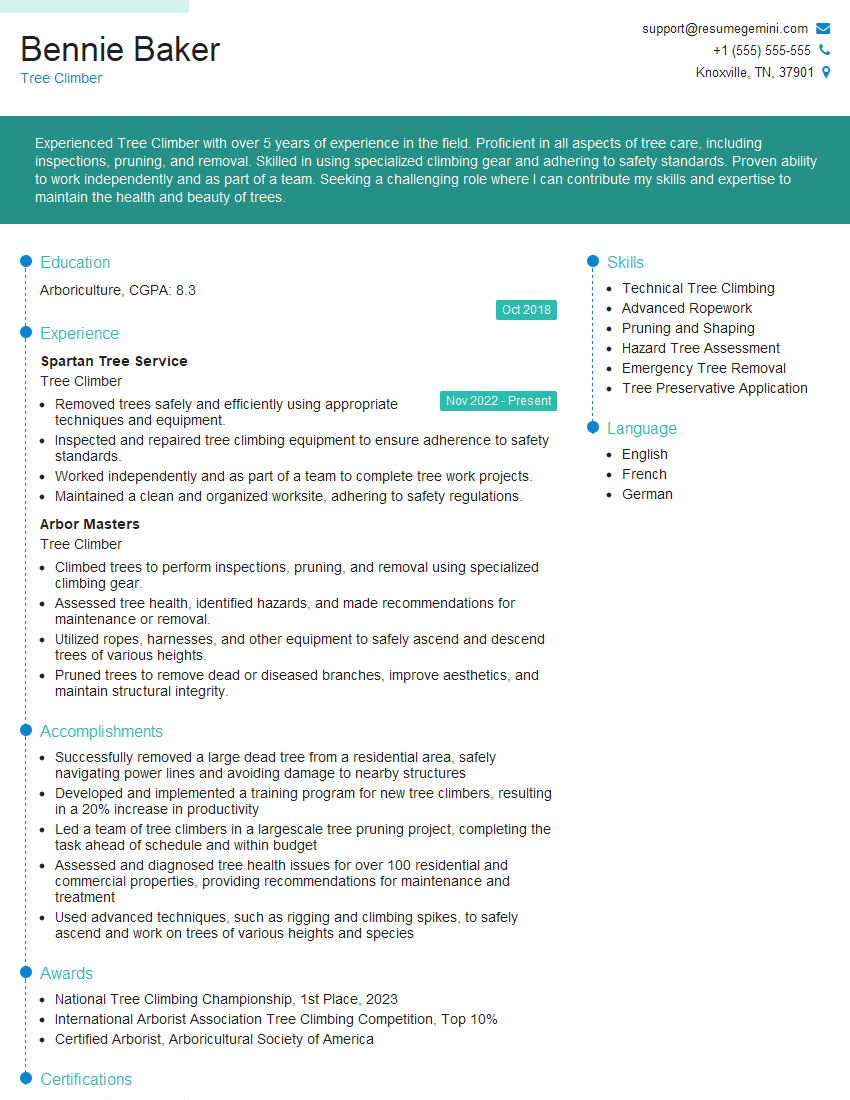
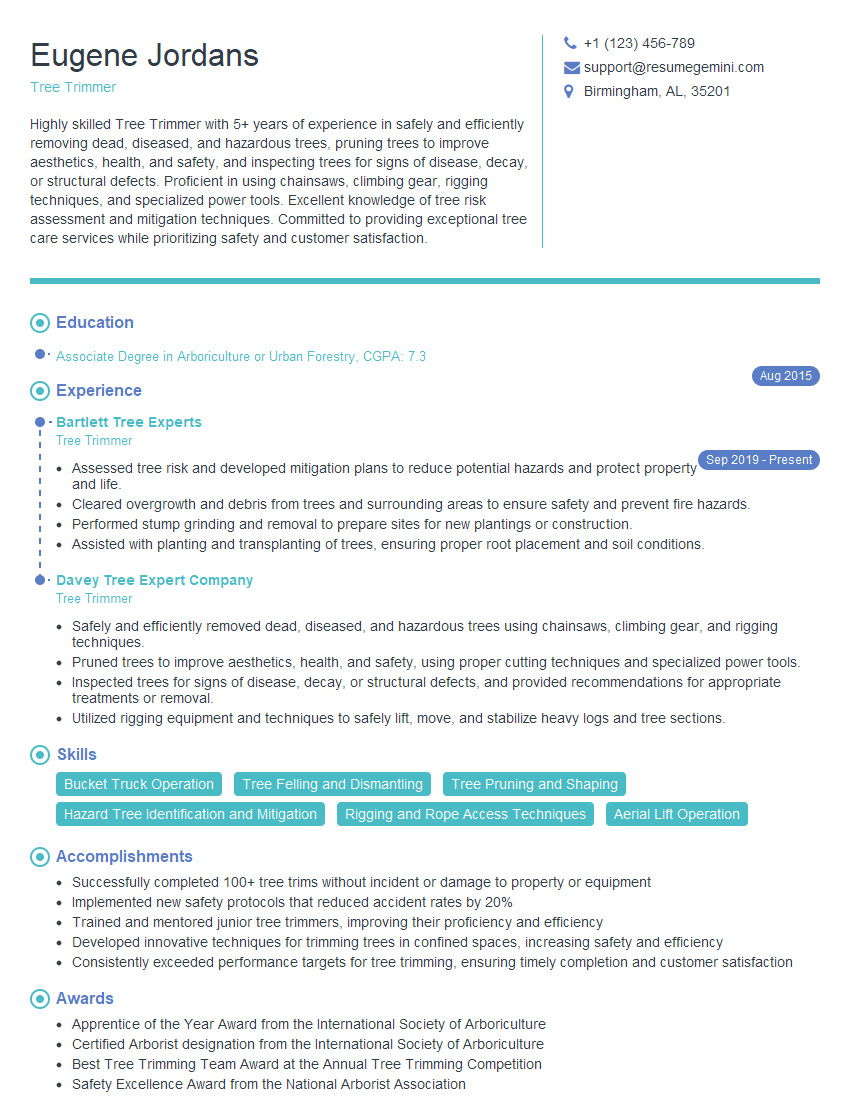
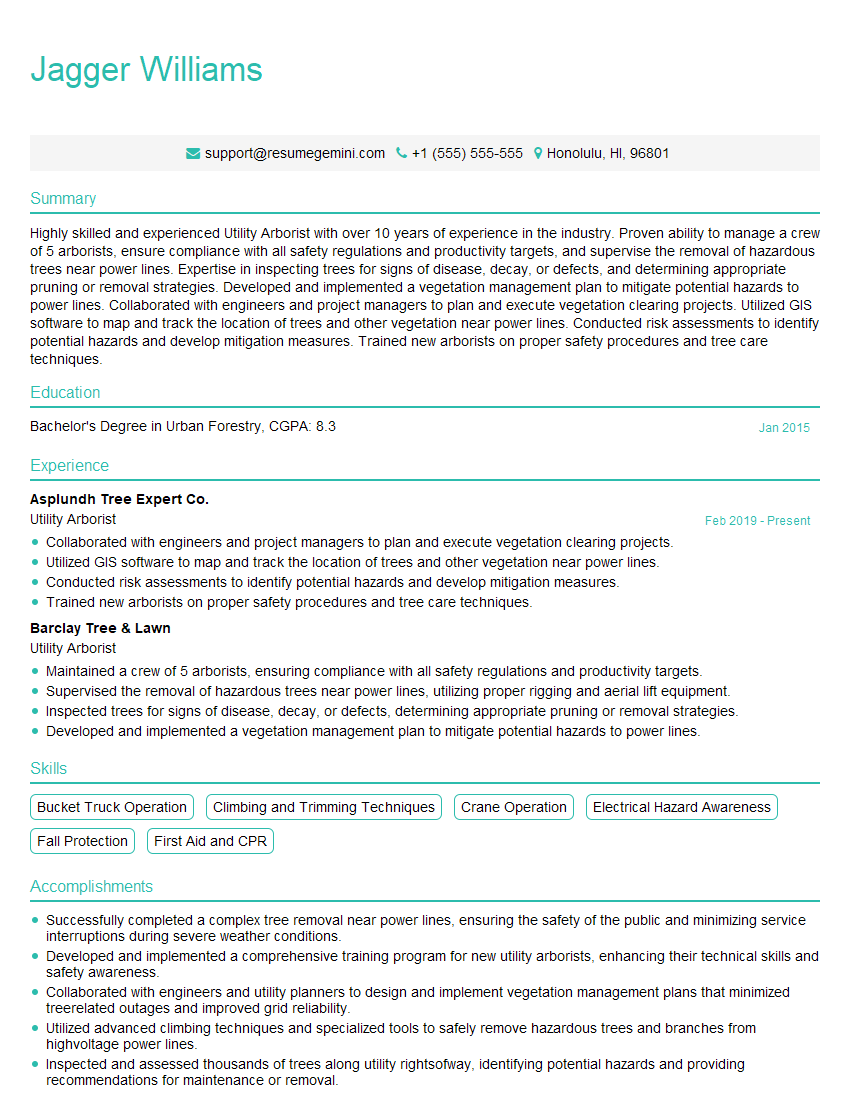
Mastering ladder and tree climbing techniques opens doors to exciting career opportunities, offering a blend of physical challenge and technical expertise. To stand out, create an ATS-friendly resume that showcases your skills and experience effectively. ResumeGemini is a trusted resource to help you build a professional resume that highlights your qualifications. Examples of resumes tailored to Ladder and Tree Climbing are available to help guide you.


Explore more articles
Users Rating of Our Blogs
Share Your Experience
We value your feedback! Please rate our content and share your thoughts (optional).
What Readers Say About Our Blog
Very informative content, great job.
good