Preparation is the key to success in any interview. In this post, we’ll explore crucial Laminate Repair and Maintenance interview questions and equip you with strategies to craft impactful answers. Whether you’re a beginner or a pro, these tips will elevate your preparation.
Questions Asked in Laminate Repair and Maintenance Interview
Q 1. Describe the different types of laminate flooring.
Laminate flooring comes in a variety of types, primarily differentiated by their wear layer thickness, core material, and overall aesthetic. The wear layer, the top protective surface, dictates durability. Thicker wear layers mean greater resistance to scratches and dents. The core material impacts stability and moisture resistance. Let’s explore some key types:
- High-pressure laminate (HPL): This is the most common and durable type. It features a dense core and a thick wear layer, making it ideal for high-traffic areas. Think busy family homes or commercial spaces.
- Direct-pressure laminate (DPL): Less dense than HPL, DPL offers a balance of durability and cost-effectiveness. It’s a suitable option for areas with moderate foot traffic.
- Moisture-resistant laminate: Specifically designed with enhanced water-resistance, this type is suitable for bathrooms and kitchens, although complete water submersion should still be avoided.
- Laminate with attached underlayment: This simplifies installation by integrating a cushioning layer into the plank, reducing noise and improving comfort.
- Different aesthetics: Beyond durability, laminate mimics various materials like wood, stone, and tile, offering a wide range of styles to complement any décor.
Choosing the right type depends on your needs and budget. Consider the level of traffic, potential moisture exposure, and the overall desired look when making your selection.
Q 2. Explain the process of installing laminate flooring.
Installing laminate flooring is a DIY-friendly project, but precision is key for a professional finish. The process typically involves these steps:
- Acclimation: Allow the laminate planks to acclimate to the room’s temperature and humidity for a few days before installation. This prevents expansion or contraction later.
- Subfloor Preparation: Ensure the subfloor is clean, dry, level, and free of debris. Any unevenness needs to be addressed. We’ll talk more about subfloor preparation in a later answer.
- Underlayment Installation (if needed): If you’re not using laminate with attached underlayment, install a suitable underlayment for added cushioning, moisture protection, and sound insulation.
- Laying the First Row: Begin in the corner of the room, ensuring planks are tightly fitted together. Use spacers to maintain consistent expansion gaps along walls.
- Continuing the Installation: Stagger the joints between rows to create a more stable and visually appealing floor. Click-lock systems simplify the process by allowing planks to interlock.
- Cutting Planks: You’ll likely need to cut planks to fit around doorways, corners, and other obstacles. A circular saw with a fine-toothed blade is recommended.
- Baseboard Installation: Once the floor is laid, install baseboards to conceal the edges and create a finished look.
Remember to follow the manufacturer’s instructions carefully for specific details. A well-installed laminate floor can look fantastic and last for many years.
Q 3. How do you identify and repair common laminate flooring damages (e.g., scratches, dents, water damage)?
Identifying and repairing laminate floor damage depends on the type and severity of the damage. Here’s a breakdown:
- Scratches: Minor scratches can often be buffed out with a laminate floor repair kit containing a wax stick or marker that matches the floor’s color. For deeper scratches, a more involved repair might be needed, potentially requiring plank replacement.
- Dents: Small dents can sometimes be lifted using a heat gun and a putty knife to gently reshape the affected area. However, severe dents usually require plank replacement.
- Water Damage: This is the most serious type of damage. Immediate action is crucial. Remove any standing water, dry the area thoroughly, and assess the extent of the damage. Minor water damage might just require drying, but extensive damage may need plank replacement or even subfloor repair. If mold develops, professional remediation may be necessary.
Before attempting any repair, always check the manufacturer’s recommendations, as they may provide specific instructions or limit certain repair methods. For extensive damage, it’s often best to consult a professional flooring contractor.
Q 4. What tools and materials are essential for laminate flooring repair?
The tools and materials needed for laminate floor repair vary depending on the type and extent of damage. However, a basic toolkit should include:
- Laminate floor repair kit: This typically contains color-matched wax sticks, fillers, or markers for minor scratches.
- Putty knife: Useful for lifting dents and applying fillers.
- Heat gun (optional): For carefully lifting dents.
- Circular saw (with fine-toothed blade): For cutting planks to size.
- Measuring tape and pencil: For accurate measurements.
- Safety glasses and gloves: Essential for personal protection.
- Pull bar or pry bar: For carefully removing damaged planks.
- Replacement planks (if needed): Always keep a few spare planks in case of accidental damage or extensive repairs.
Remember that safety should always be your top priority. Use appropriate safety gear when working with tools and chemicals.
Q 5. How do you prepare the subfloor before installing laminate flooring?
Preparing the subfloor is crucial for a successful laminate floor installation. A properly prepared subfloor ensures a stable, level surface, preventing issues like squeaking, buckling, or premature wear and tear.
- Cleanliness: Remove any dirt, debris, dust, or old adhesive. A thorough sweep and vacuuming is a must.
- Levelness: Assess the levelness of the subfloor. Significant unevenness must be addressed using self-levelling compound or other methods to create a smooth, flat surface. Minor imperfections can often be tolerated. Use a straight edge and level to check for deviations.
- Moisture Content: Check the moisture content of the subfloor, especially if it’s concrete. Excessive moisture can cause problems with the laminate. A moisture meter is helpful for this step. Ensure the moisture content falls within the manufacturer’s specifications.
- Damage Repair: Repair any damaged areas of the subfloor before installing the laminate. This might involve patching holes or filling cracks.
Investing time in subfloor preparation saves time and money in the long run. A poorly prepared subfloor can lead to costly problems down the road.
Q 6. Explain the importance of proper acclimation of laminate flooring.
Proper acclimation of laminate flooring is essential to prevent problems after installation. Laminate flooring is made of wood fiber and reacts to changes in humidity and temperature. Without proper acclimation, the planks may expand or contract excessively, leading to gaps, buckling, or cupping.
Acclimation involves storing the laminate planks in the room where they will be installed for several days, ideally at least 48 hours, but often longer depending on the manufacturer’s recommendations and the environmental conditions. The planks need to adjust to the room’s temperature and humidity before installation, allowing them to stabilize and minimize the risk of future problems. During acclimation, keep the room at a normal temperature and humidity, avoiding extreme conditions.
Skipping acclimation is a common mistake that can lead to costly repairs or a completely ruined installation. It’s a critical step that shouldn’t be rushed.
Q 7. Describe different methods for repairing gaps between laminate planks.
Gaps between laminate planks are usually a result of improper installation, expansion and contraction due to humidity changes, or damage. The best approach depends on the gap’s size and cause.
- Small Gaps: For small gaps, you may be able to use a wood filler that matches your floor’s color. Apply the filler, let it dry, and then sand it smooth. If the gap is really minimal, sometimes the filler isn’t needed and the gap will become less noticeable over time.
- Larger Gaps: Larger gaps usually require more intervention. In some cases, if the locking mechanism hasn’t been damaged, you might be able to carefully tap the planks back together. If this doesn’t work, or if the planks are damaged, plank replacement is often the best solution. You’ll have to remove the damaged plank(s) and replace them with new ones, carefully following the manufacturer’s installation instructions.
Prevention is key. Proper acclimation and careful installation are the best ways to avoid gaps in the first place. If gaps appear after installation, addressing them promptly minimizes the risk of further damage.
Q 8. How do you handle damaged laminate planks near thresholds or doorways?
Damaged laminate planks near thresholds or doorways are a common problem, often caused by high traffic or heavy objects. The key is to assess the damage. Minor scratches or surface damage can often be repaired with a laminate floor repair kit, which typically includes color-matched filler and wax sticks. For more significant damage, like a chipped or broken plank, replacement is usually necessary. This involves carefully removing the damaged plank(s) using a pry bar or utility knife, ensuring you don’t damage adjacent planks. Then, measure the area accurately and cut a new replacement plank to size, using a sharp utility knife and straight edge. Finally, install the new plank using the appropriate adhesive, following the manufacturer’s instructions. Remember to use a transition strip if necessary, especially at doorways, to prevent further damage from shifting or uneven surfaces.
Example: Imagine a high-traffic doorway leading to a kitchen. Over time, the laminate planks right at the threshold might get scratched or even become loose. In this scenario, you’d prioritize replacing the damaged planks to ensure safety and prevent further damage.
Q 9. What are the safety precautions you take during laminate flooring installation and repair?
Safety is paramount during laminate flooring installation and repair. Always wear appropriate personal protective equipment (PPE), including safety glasses to protect your eyes from flying debris, work gloves to prevent cuts and splinters, and a dust mask to minimize inhalation of particles. Use sharp tools like utility knives and saws with caution, ensuring your cutting surface is stable and secure. Keep the work area well-lit and clear of obstructions to prevent tripping or falling. For large projects, consider using knee pads to reduce fatigue and strain. Proper ventilation is also crucial, especially when using adhesives, as some can release volatile organic compounds (VOCs). Finally, always follow the manufacturer’s safety guidelines provided with any products you are using.
Example: Before cutting a laminate plank, I always ensure I’m using a stable work surface, I have proper eye protection on, and the area is well-lit to prevent accidents. Proper ventilation also helps ensure I don’t get lightheaded while working.
Q 10. How do you clean and maintain laminate flooring to prolong its lifespan?
Proper cleaning and maintenance are vital to prolonging the lifespan of laminate flooring. Regular sweeping or vacuuming is essential to remove loose dirt, dust, and debris that can scratch the surface. For spills, clean them up immediately with a damp mop and a mild detergent. Avoid using excessive water, which can seep into the seams and cause damage. Harsh chemicals, abrasive cleaners, and steam cleaners should be avoided as they can damage the laminate surface. It is best to follow the manufacturer’s recommended cleaning products and procedures. Periodically, use a laminate-specific floor cleaner to remove build-up and maintain the shine. Protecting your floor from scratches is also crucial; using felt pads under furniture and avoiding dragging heavy objects across the surface will help maintain the laminate’s integrity.
Example: I’ve seen laminate floors last for many years with regular sweeping and spot cleaning, avoiding harsh chemicals and protecting the surface from scratches. The difference between a well-maintained floor and one neglected is dramatic.
Q 11. Explain the differences between laminate and other flooring types (e.g., hardwood, vinyl).
Laminate, hardwood, and vinyl flooring all have distinct characteristics. Laminate is a composite material with a photographic layer printed on a core of fiberboard, topped with a protective wear layer. It’s relatively inexpensive, easy to install, and durable, but it’s not as water-resistant as vinyl and doesn’t have the same natural beauty or potential for refinishing as hardwood. Hardwood is a natural product, valued for its beauty, durability, and potential for refinishing. However, it’s more expensive, requires more maintenance, and is susceptible to scratches and water damage. Vinyl is water-resistant, relatively inexpensive, and comes in a wide variety of styles and colors, but it may not be as durable as laminate or hardwood over the long term.
Example: If budget is a primary concern, laminate might be preferred. If a high-end look and feel are needed, hardwood is an excellent choice despite the higher cost. In a high-moisture area like a bathroom, vinyl’s water resistance is advantageous.
Q 12. What are the common causes of laminate flooring issues?
Several factors can contribute to laminate flooring issues. Excessive moisture is a common culprit, leading to warping, swelling, or delamination. Improper installation, such as inadequate subfloor preparation or incorrect use of adhesives, can also cause problems. Scratches and dents are common from high-traffic areas or dropped objects. Exposure to direct sunlight can cause fading or discoloration. Lastly, improper cleaning techniques using harsh chemicals can damage the surface finish.
Example: A common problem is moisture seeping under the laminate due to a leak, causing the planks to buckle. This is a clear indication of a water damage issue needing immediate attention.
Q 13. How do you diagnose and troubleshoot problems with laminate flooring installation?
Troubleshooting laminate flooring installation problems involves a systematic approach. First, carefully inspect the subfloor for unevenness or imperfections. A poorly leveled subfloor is a common cause of issues. Next, check the adhesive used for proper application and compatibility with the laminate. Examine the planks for signs of damage or improper installation, such as gaps, loose planks, or uneven seams. Assess the moisture level of both the subfloor and the ambient air, as excessive moisture can cause significant problems. By systematically investigating these areas, you can pinpoint the root cause and implement the appropriate solution, whether it’s subfloor repair, adhesive reapplication, or plank replacement.
Example: If planks are cupping (bowing upwards), this often indicates moisture problems. If planks are loose, it may signal a problem with the adhesive or subfloor preparation.
Q 14. Describe your experience with various adhesive types used in laminate flooring.
My experience encompasses a variety of adhesives used in laminate flooring, ranging from moisture-cured urethane adhesives to pressure-sensitive adhesives. Moisture-cured urethane adhesives offer excellent bonding strength and durability but require longer drying times. They are best for areas with high traffic. Pressure-sensitive adhesives, often used with click-lock systems, offer a quicker installation process but may not be as strong or long-lasting as moisture-cured options. The choice of adhesive depends on factors like the type of laminate, subfloor conditions, and the desired level of durability. It’s crucial to always follow the manufacturer’s instructions for each specific adhesive, paying close attention to application techniques and drying times. Improper adhesive use can lead to issues such as loose planks or delamination.
Example: In high-moisture environments, I’d generally avoid pressure-sensitive adhesives and opt for a moisture-cured urethane adhesive to ensure a strong, long-lasting bond and prevent issues down the road.
Q 15. How do you manage a project involving laminate flooring repair or installation?
Managing a laminate flooring project, whether repair or installation, requires a systematic approach. It starts with a thorough site survey to assess the area, understand the client’s needs, and identify any potential challenges like uneven subfloors or existing moisture issues. I then create a detailed project plan, including material estimations, a timeline, and a budget. This plan is crucial for keeping the project on track and within budget. Communication with the client is paramount throughout the entire process, from initial consultations to final walkthroughs. For instance, on a recent large-scale installation, I discovered the subfloor needed leveling before installation, which I communicated to the client immediately, adjusting the timeline and cost accordingly. We avoided costly problems later by addressing this early on. This proactive approach ensures client satisfaction and a successful project outcome.
- Detailed Site Survey: Measurements, subfloor assessment, moisture checks.
- Comprehensive Project Plan: Timeline, budget, material list, and potential challenges.
- Open Communication: Regular updates to the client, addressing any concerns promptly.
Career Expert Tips:
- Ace those interviews! Prepare effectively by reviewing the Top 50 Most Common Interview Questions on ResumeGemini.
- Navigate your job search with confidence! Explore a wide range of Career Tips on ResumeGemini. Learn about common challenges and recommendations to overcome them.
- Craft the perfect resume! Master the Art of Resume Writing with ResumeGemini’s guide. Showcase your unique qualifications and achievements effectively.
- Don’t miss out on holiday savings! Build your dream resume with ResumeGemini’s ATS optimized templates.
Q 16. How do you handle customer complaints or concerns related to laminate flooring?
Handling customer complaints requires empathy, professionalism, and a problem-solving mindset. I begin by actively listening to the client’s concerns, asking clarifying questions to fully understand the issue. I then visually inspect the flooring to determine the root cause of the problem. This could be anything from manufacturing defects to improper installation or damage from external factors. Once the cause is identified, I propose a solution, which may involve repair, replacement, or even a referral to the manufacturer if the issue is covered under warranty. For example, if a client reports bubbling, I’d check for moisture underneath, ruling out faulty installation before considering manufacturer issues. Transparent communication is crucial; I clearly explain the proposed solution, the timeframe, and any associated costs. A satisfied client is the ultimate goal, and I strive for a resolution that restores their confidence in both the product and my service.
Q 17. Describe your experience with different types of underlayment.
My experience encompasses various underlayment types, each offering unique benefits and drawbacks. I’ve worked extensively with foam underlayments, both standard and enhanced varieties. Foam provides cushioning, sound insulation, and moisture resistance (to varying degrees). I also have experience with cork underlayments, which offer excellent sound dampening properties and a natural feel. However, cork can be more susceptible to moisture. Finally, I’ve utilized underlayments incorporating integrated moisture barriers, a crucial aspect for areas prone to humidity. The choice of underlayment depends on factors such as the subfloor condition, the desired level of comfort, and the overall project budget. Selecting the right underlayment significantly impacts the longevity and performance of the laminate flooring.
- Foam Underlayment: Cost-effective, provides cushioning and some sound insulation.
- Cork Underlayment: Superior sound insulation, natural feel, but can be sensitive to moisture.
- Moisture Barrier Underlayment: Essential for damp subfloors or high-humidity environments.
Q 18. What are the best practices for cutting and trimming laminate planks?
Precise cutting and trimming are critical for a professional-looking laminate floor. I always use a sharp utility knife, ensuring a clean cut to avoid chipping or damaging the laminate planks. A scoring method is employed first, which involves lightly scoring the laminate along the cutting line, then snapping the plank along the score. For intricate cuts or curves, I use a jigsaw with a fine-tooth blade, guiding it slowly and carefully to maintain accuracy. A quality measuring tape and a sharp pencil are also essential for accurate marking. I always pre-measure twice to ensure accuracy and avoid unnecessary waste. Improper cutting techniques are a common source of errors, leading to misaligned planks or visible gaps, so precision is key.
- Sharp Utility Knife: For straight cuts and snapping planks.
- Jigsaw with Fine-Tooth Blade: For curved or intricate cuts.
- Accurate Measuring and Marking: Essential for precise cuts and minimizing waste.
Q 19. How do you deal with moisture problems affecting laminate flooring?
Moisture is the arch-nemesis of laminate flooring. If moisture is detected, the immediate priority is to identify the source. This might involve checking for leaks in plumbing, condensation in crawl spaces, or excessive humidity in the room. Once the source is located and addressed, the affected laminate planks must be assessed. If only slightly affected by surface moisture, sometimes careful drying and re-acclimatization can work. However, severely warped or damaged planks typically need replacement. Before replacing, I ensure the subfloor is completely dry to prevent recurrence of the problem. Proper ventilation and moisture barriers in the subfloor are critical for long-term protection against moisture damage. Preventing moisture problems in the first place through proper environmental control is much better than trying to repair the damage later.
Q 20. Explain your understanding of laminate flooring warranties and manufacturer guidelines.
Understanding laminate flooring warranties and manufacturer guidelines is crucial. Warranties typically cover manufacturing defects but usually exclude damage caused by improper installation, moisture issues, or normal wear and tear. Manufacturer guidelines often include specifications regarding subfloor preparation, acclimatization time for the planks, and recommended installation methods. I always review the warranty and manufacturer’s guidelines carefully before starting any project. If a problem arises that might be covered under warranty, I meticulously document the issue with photographs and detailed notes, ensuring compliance with all reporting requirements. This detailed documentation is essential in supporting any warranty claims. This proactive approach helps avoid disputes and ensures that clients receive the appropriate support.
Q 21. Describe your experience with repairing laminate flooring in high-traffic areas.
Repairing laminate flooring in high-traffic areas requires selecting durable materials and employing robust installation techniques. High-quality, thicker laminate planks better resist wear and tear in these areas. During installation, I focus on ensuring secure locking mechanisms between planks and use appropriate adhesive where needed, especially in high-stress areas. For repairs, it’s critical to match the existing laminate as closely as possible in color and texture. I often keep samples of previously installed laminate to assist with future repairs. Even with careful installation and high-quality materials, some wear is expected in high-traffic areas; in these instances, periodic maintenance, such as spot cleaning and addressing minor scratches promptly, goes a long way in extending the lifespan of the flooring.
Q 22. How do you ensure the safety of yourself and others during laminate flooring work?
Safety is paramount in laminate flooring work. It begins with proper personal protective equipment (PPE). This includes safety glasses to protect your eyes from flying debris, a dust mask to prevent inhaling fine particles, and work gloves to protect your hands from splinters and sharp edges. Closed-toe shoes are essential to prevent foot injuries. Furthermore, the work area needs to be properly prepared. This means clearing the area of any obstacles, ensuring adequate lighting, and using caution when working with power tools. Before starting any cutting or demolition, always disconnect any electrical circuits in the vicinity to prevent electrical shock. If working at heights, proper scaffolding or ladders should be used, and always follow the manufacturer’s instructions for all tools and materials. Finally, be mindful of others around the work area and communicate potential hazards effectively.
For example, when using a circular saw, always use a blade guard and maintain a firm grip to prevent kickback. If demolishing old flooring, start by carefully removing the baseboards to avoid damaging them. A systematic approach minimizes risks and ensures a safe working environment.
Q 23. What are the different methods for removing old laminate flooring?
Removing old laminate flooring involves several methods, each with its own pros and cons. The most common is the pry bar method. This involves inserting a pry bar under the edge of a plank and carefully levering it up. This method is best for smaller areas or when removing individual planks. However, it can be labor-intensive and can damage the underlying subfloor if not done carefully.
Another method is using a flooring removal tool. These tools are designed to lift and separate the planks quickly and efficiently, making them ideal for larger areas. However, these tools can also damage the subfloor if misused.
In some cases, the laminate may be glued down, requiring more aggressive methods like using a floor scraper or even a reciprocating saw with a demolition blade. However, this should only be undertaken with caution, as it increases the risk of damaging the subfloor.
The best method depends on factors such as the size of the area, the type of adhesive used (if any), and the condition of the subfloor. Always assess the situation before selecting a removal method.
Q 24. Explain your experience with specialized laminate repair techniques.
My experience encompasses various specialized laminate repair techniques, including plank replacement, gap filling, and scratch repair. For example, replacing damaged planks requires precise measurement and cutting to ensure a seamless fit. This involves selecting a matching plank (if possible) and carefully cutting it to size using a sharp utility knife or circular saw. Proper adhesive application is crucial for a secure bond.
Gap filling often involves using wood filler or laminate-specific fillers to seamlessly close gaps between planks. This requires careful application and smoothing to create an even surface. I often use a putty knife and sandpaper to achieve a smooth, professional finish.
Scratch repair typically involves using specialized laminate repair kits or touch-up pens. This may involve cleaning the scratch, applying a color-matching filler, and then sanding and polishing to restore the original finish. The effectiveness depends on the severity of the scratch and the color match of the repair product.
Q 25. How do you estimate the time and materials needed for a laminate flooring project?
Estimating time and materials requires a detailed assessment of the project. This begins with accurately measuring the area to be covered. Next, I determine the type of laminate flooring being used, factoring in potential waste (usually 5-10%). The number of planks needed is calculated based on the area and plank dimensions. Then I consider the required underlayment and any additional materials such as adhesives, moldings, and transition strips.
Time estimation depends on factors such as the project size, complexity (e.g., removal of old flooring), and the experience level of the team. A detailed breakdown including subtasks such as demolition, subfloor preparation, installation, and finishing provides an accurate estimate. For instance, a small area might take a day, whereas a larger project might span several days.
I always build a buffer into the time and material estimations to account for unforeseen circumstances or delays. Providing a detailed and transparent estimate builds trust with clients.
Q 26. What is your experience with using different types of tools, such as saws, nail guns, and adhesives?
My experience encompasses a wide range of tools used in laminate flooring, each chosen based on the specific task. Circular saws are used for precise cutting of planks, ensuring clean edges and minimizing waste. Jigsaw or hand saws are useful in cutting around obstacles and fitting planks in tight spaces. A nail gun, if needed for subfloor preparation, must be used cautiously and precisely to avoid damaging the subfloor or causing injuries. Different types of adhesives are used depending on the type of laminate and subfloor, ensuring a strong and lasting bond. I’m proficient in using utility knives for trimming, scrapers for removing old adhesive residue, and various hand tools like hammers, measuring tapes, and levels to achieve precise measurements and secure installation. Safety is always prioritized, ensuring that all tools are used according to manufacturer’s guidelines and proper PPE is used.
Q 27. Describe a situation where you had to troubleshoot a difficult laminate flooring problem. What was your solution?
I once encountered a situation where a section of laminate flooring had significant bowing, even after careful subfloor preparation. The cause was a subtle but significant moisture issue beneath the subfloor. The initial solution of simply replacing the affected planks proved ineffective, as the bowing returned. This led to a more thorough investigation of the moisture content of the subfloor using a moisture meter. It revealed elevated moisture levels in a specific area. To address this, we had to remove the affected planks and the surrounding area, allowing the subfloor to dry completely. We used a dehumidifier to accelerate the drying process. Once fully dry, we installed a moisture barrier and then replaced the laminate flooring. This resolved the problem, and the flooring remained stable and level.
Q 28. How do you stay updated on the latest techniques and products in laminate flooring?
Staying updated in this dynamic field involves continuous learning. I regularly attend industry trade shows and workshops to learn about new products and techniques. I also subscribe to relevant industry magazines and online publications, keeping me abreast of the latest advancements in materials, tools, and installation methods. Networking with other professionals through industry associations and online forums allows me to share knowledge and stay informed about current best practices. Manufacturer websites are another valuable resource, offering detailed product specifications and installation guides. Continuously learning and adapting to new developments ensures that my work remains top-quality and efficient.
Key Topics to Learn for Laminate Repair and Maintenance Interview
- Understanding Laminate Types and Properties: Familiarize yourself with different laminate materials (e.g., high-pressure laminate, low-pressure laminate), their strengths, weaknesses, and appropriate applications. Consider the impact of factors like moisture and temperature.
- Damage Assessment and Repair Techniques: Learn to identify various types of laminate damage (scratches, chips, delamination, water damage). Understand different repair methods, including filling, sanding, patching, and refinishing. Practice describing your approach to diagnosing the cause of damage.
- Surface Preparation and Finishing: Master the techniques for proper surface preparation before repair, including cleaning, sanding, and priming. Understand the use of various finishing techniques to achieve a seamless and durable repair.
- Tool and Equipment Knowledge: Become familiar with the tools and equipment commonly used in laminate repair and maintenance, such as routers, sanders, heat guns, and specialized adhesives. Be prepared to discuss safety procedures associated with their use.
- Maintenance and Prevention Strategies: Learn about preventative maintenance techniques to extend the lifespan of laminate surfaces. Discuss cleaning methods and protective coatings. Understand how to advise clients on proper care to minimize future damage.
- Color Matching and Repair Aesthetics: Develop your skills in color matching to ensure seamless repairs. Understand the importance of achieving a high-quality, aesthetically pleasing finish.
- Troubleshooting and Problem Solving: Be prepared to discuss common problems encountered during laminate repair and maintenance, and how you approach troubleshooting and finding effective solutions.
Next Steps
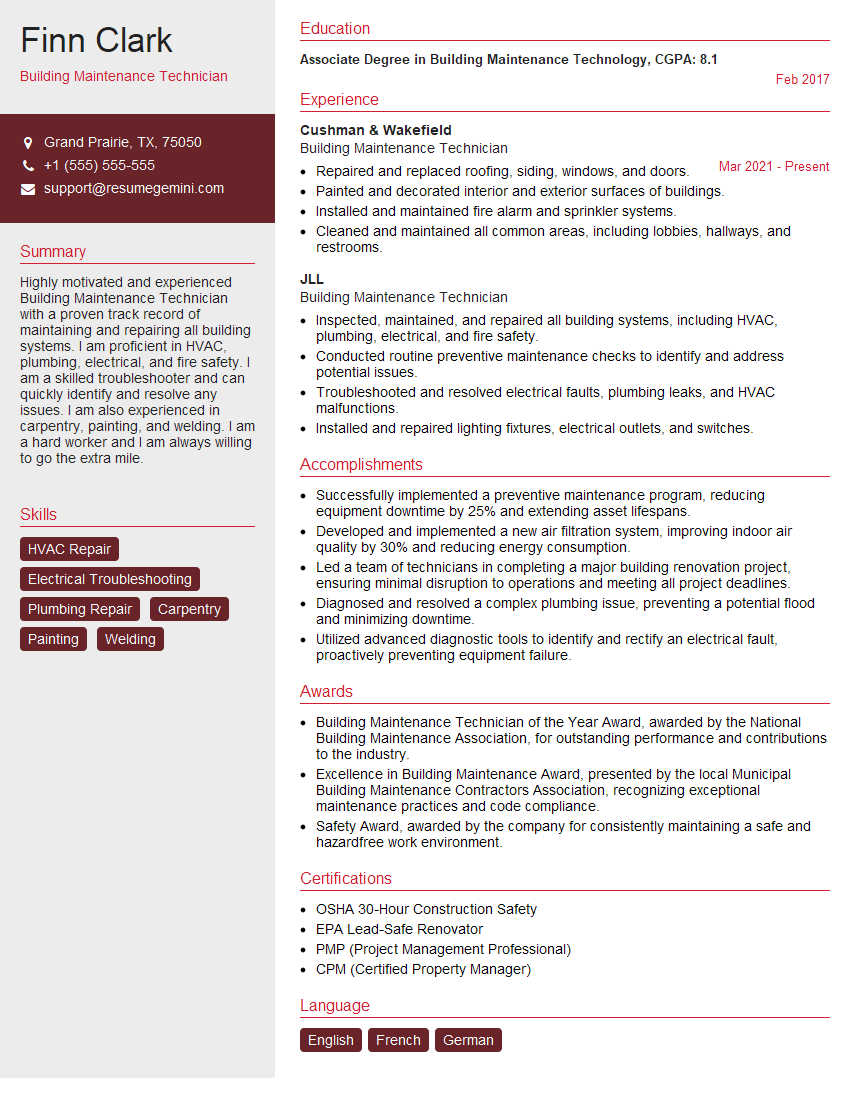
Mastering Laminate Repair and Maintenance opens doors to a rewarding career with excellent growth potential. Proficiency in these skills demonstrates a valuable combination of technical expertise and attention to detail, making you a highly sought-after candidate. To maximize your job prospects, creating a strong, ATS-friendly resume is crucial. ResumeGemini is a trusted resource that can help you build a professional resume that highlights your skills and experience effectively. Examples of resumes tailored to Laminate Repair and Maintenance are available to guide you in crafting the perfect application.
Explore more articles
Users Rating of Our Blogs
Share Your Experience
We value your feedback! Please rate our content and share your thoughts (optional).
What Readers Say About Our Blog
Very informative content, great job.
good