Unlock your full potential by mastering the most common Land Acquisition and Sales interview questions. This blog offers a deep dive into the critical topics, ensuring you’re not only prepared to answer but to excel. With these insights, you’ll approach your interview with clarity and confidence.
Questions Asked in Land Acquisition and Sales Interview
Q 1. Describe your experience in negotiating land acquisition deals.
Negotiating land acquisition deals requires a multifaceted approach combining strong analytical skills, persuasive communication, and a deep understanding of the market. My experience involves not just securing the best price but also navigating complex legal and environmental considerations to ensure a smooth and successful transaction.
For instance, in one project involving the acquisition of a large parcel for a commercial development, I initially faced resistance from the landowner regarding the offered price. Through meticulous market research demonstrating comparable sales and highlighting the long-term value proposition of the development, I successfully negotiated a mutually agreeable price, securing the land within the project’s budget and timeline.
Another crucial aspect is understanding the landowner’s motivations. Are they primarily driven by financial gain, or are there emotional attachments to the property? Tailoring the negotiation strategy to address these motivations is critical to achieving a successful outcome. I’ve found that building rapport and demonstrating respect for their concerns often leads to more productive conversations and favorable terms.
Q 2. Explain your process for identifying and evaluating potential land acquisition opportunities.
Identifying and evaluating potential land acquisition opportunities is a systematic process. It begins with clearly defining the project requirements – size, location, zoning, environmental considerations, and budget. I then utilize a multi-pronged approach:
- Market Research: Analyzing market trends, comparable sales data, and future development plans to identify areas with high potential.
- Networking: Building relationships with real estate agents, landowners, and local government officials to uncover off-market opportunities.
- Public Records Search: Examining property records for ownership information, zoning restrictions, and potential encumbrances.
- Site Visits: Conducting thorough site inspections to assess the land’s physical condition, accessibility, and suitability for the intended use.
- Financial Analysis: Evaluating the potential return on investment, considering acquisition costs, development expenses, and projected revenue.
For example, in a recent project, my market research identified an up-and-coming area with significant infrastructure improvements planned. By networking within the community, we uncovered a privately held parcel ideally suited for our client’s needs, leading to a preemptive acquisition at a favorable price.
Q 3. How do you perform due diligence on a land parcel?
Due diligence is critical to mitigating risks associated with land acquisition. A comprehensive due diligence process includes:
- Title Search: Verifying ownership, identifying any liens, easements, or encumbrances that could affect the property’s use.
- Survey: Confirming the property’s boundaries and ensuring they align with legal descriptions.
- Environmental Assessment: Identifying potential environmental hazards, such as contamination or wetlands, that may impact development or sale.
- Zoning and Land Use Review: Ensuring the property’s zoning allows for the intended development.
- Regulatory Compliance Review: Checking for compliance with all relevant local, state, and federal regulations.
- Infrastructure Assessment: Evaluating the availability of utilities such as water, sewer, electricity, and access roads.
Imagine acquiring land only to discover later that it’s contaminated or subject to restrictive zoning. Due diligence prevents such costly surprises by uncovering potential problems early on.
Q 4. What are the key legal and regulatory considerations in land acquisition?
Land acquisition involves numerous legal and regulatory considerations. These vary widely by jurisdiction but commonly include:
- Property Law: Understanding deeds, titles, easements, and other legal instruments governing land ownership.
- Environmental Regulations: Compliance with environmental protection laws, such as the Clean Water Act and CERCLA (Superfund).
- Zoning and Land Use Regulations: Adherence to local zoning ordinances and land use plans.
- Tax Laws: Understanding property taxes, transfer taxes, and other relevant tax implications.
- Contract Law: Negotiating and executing legally sound purchase agreements.
- Right-of-Way Acquisition: Securing necessary access rights if the property lacks direct access to public roads.
Ignoring these aspects can lead to costly legal battles, project delays, and even project failure. Engaging experienced legal counsel is paramount throughout the acquisition process.
Q 5. How do you handle difficult negotiations with landowners?
Handling difficult negotiations requires patience, empathy, and a strategic approach. I prioritize building trust and understanding the landowner’s perspective. This often involves active listening, acknowledging their concerns, and demonstrating a willingness to find a mutually beneficial solution.
If a stalemate arises, I employ a variety of techniques:
- Mediation: Engaging a neutral third party to facilitate communication and help find common ground.
- Alternative Proposals: Offering creative solutions that address the landowner’s concerns, such as phased payments or other incentives.
- Understanding Underlying Motivations: Sometimes, the landowner’s objections stem from fear of the unknown or concerns about the future. Addressing these underlying issues can unlock progress.
In one challenging negotiation, I found that the landowner’s primary concern wasn’t the price but rather the potential impact on their family’s legacy. By addressing these concerns through creative solutions and demonstrating respect for their family’s history, I was able to secure a positive outcome for both parties.
Q 6. What strategies do you use to close land sales effectively?
Effective land sales require a well-structured approach focusing on clear communication, efficient documentation, and a streamlined closing process.
- Marketing: Effectively marketing the property to potential buyers through targeted advertising and networking.
- Negotiation: Skillfully negotiating the terms of the sale, including price, closing date, and contingencies.
- Due Diligence: Providing potential buyers with all necessary information to facilitate their own due diligence.
- Contract Preparation: Preparing a comprehensive and legally sound purchase agreement.
- Closing Coordination: Managing the closing process to ensure a smooth and timely transfer of ownership.
One key strategy is to proactively address potential issues before they become major obstacles. Clear communication and open dialogue with the buyer throughout the process can avoid misunderstandings and facilitate a smoother closing.
Q 7. How do you determine fair market value for land?
Determining fair market value for land is a complex process that considers numerous factors. A common approach is to use a combination of valuation methods:
- Sales Comparison Approach: Analyzing recent sales of comparable properties in the same area, adjusting for differences in size, location, and features.
- Income Approach: Estimating the potential income generated from the land, such as rental income or development profits, and discounting it to present value.
- Cost Approach: Estimating the cost to replace or reproduce the land and any existing improvements, less depreciation.
The chosen method(s) depend on the land’s characteristics and intended use. Ideally, a professional appraiser should be engaged to provide an independent valuation, especially for significant acquisitions or sales. This ensures an objective and defensible assessment of fair market value.
Q 8. Explain your understanding of eminent domain.
Eminent domain is the power of a government to take private property for public use, even if the owner doesn’t want to sell it. This is typically done under the Fifth Amendment of the US Constitution, which requires that the government provide ‘just compensation’ to the landowner. This isn’t a simple process, though. It involves a complex legal procedure, including appraisals, negotiations, and potentially court proceedings if the landowner and government cannot agree on a fair price. Think of a highway needing to be built through a farmer’s field – the government might utilize eminent domain to acquire that land, paying the farmer a fair market value as determined by independent appraisers.
The crucial elements are ‘public use’ and ‘just compensation’. ‘Public use’ can encompass a wide range of projects, from building schools and hospitals to expanding infrastructure like roads and utilities. ‘Just compensation’ is determined through appraisals and considers the fair market value of the land, as well as any potential damages or losses incurred by the owner due to the acquisition. Disputes over what constitutes ‘just compensation’ are a common source of litigation in eminent domain cases.
Q 9. Describe your experience with environmental assessments in land acquisition.
Environmental assessments are crucial in land acquisition, especially for larger projects. My experience involves conducting and overseeing Phase I, II, and sometimes Phase III environmental site assessments. These assessments identify potential environmental hazards or contamination on a property, such as asbestos, lead paint, or hazardous waste. This is vital to avoid future liabilities and comply with environmental regulations. I have worked on projects where Phase I assessments revealed potential contamination, leading us to commission more in-depth Phase II investigations. In one instance, a Phase II assessment uncovered historic petroleum contamination on a site slated for a residential development. This necessitated remediation efforts, which significantly impacted the project timeline and budget, but ultimately prevented potential environmental damage and legal issues. I worked closely with environmental consultants to design and implement the remediation plan, ensuring compliance with all relevant regulations.
These assessments are often incorporated into the due diligence process, allowing us to make informed decisions about the purchase and to accurately assess risk associated with land purchase. We often incorporate contingency clauses in the purchase agreement relating to potential environmental liabilities.
Q 10. How do you manage risk in land acquisition and sales transactions?
Managing risk in land acquisition and sales involves a multi-faceted approach. It begins with thorough due diligence. This includes title searches to identify any encumbrances (liens, easements, etc.), environmental assessments as mentioned, and detailed surveys to confirm property boundaries. We also conduct market analysis to ensure we’re offering or paying a fair price, factoring in factors like comparable sales, zoning regulations, and potential future development opportunities. Risk mitigation strategies might include obtaining environmental insurance or including contingency clauses in contracts to protect against unforeseen issues, such as unexpected title problems or environmental liabilities. In addition, a strong negotiation strategy plays a vital role in risk management, ensuring all parties understand their obligations and the transaction terms are clearly defined. Thorough legal review of all documents is also crucial.
Diversification of investments and a conservative approach to valuation are also critical aspects of managing risk. We utilize scenario planning to consider various potential outcomes and develop contingency plans to manage those risks.
Q 11. What software or tools do you use for land analysis and valuation?
I utilize a range of software and tools for land analysis and valuation. For Geographic Information Systems (GIS) analysis and mapping, I’m proficient in ArcGIS. This helps me visualize property boundaries, analyze proximity to infrastructure and amenities, and assess topographical features. For financial modeling and valuation, I use Excel extensively, along with specialized real estate valuation software like ARGUS Enterprise. This allows me to perform detailed discounted cash flow analyses, create pro forma financial statements, and run sensitivity analyses to understand the impact of various market conditions on project value. Online databases like CoStar and LoopNet are invaluable for market research, providing comparable sales data, property details, and market trends. Finally, I regularly utilize various mapping and surveying software to analyze and manage property boundaries and infrastructure information.
Q 12. How do you build and maintain relationships with landowners and stakeholders?
Building and maintaining strong relationships with landowners and stakeholders is paramount in land acquisition. This starts with open and honest communication. I ensure that landowners understand the process, are kept informed throughout, and have their questions answered promptly. I strive to create a collaborative environment, focusing on mutual respect and understanding. I try to establish trust by being transparent and fair in my negotiations. This often involves listening carefully to their concerns and addressing their needs in a timely manner. Regular follow-up, even after a transaction closes, helps to build lasting relationships. In some cases, I have even connected landowners with community resources or other assistance they may require.
For larger-scale projects involving multiple stakeholders, such as community groups or government agencies, I employ a proactive engagement strategy. This involves regular meetings, presentations, and public forums to keep everyone informed and address any concerns proactively.
Q 13. Describe a challenging land acquisition project and how you overcame obstacles.
One challenging project involved acquiring a large parcel of land for a new hospital complex. The land was split amongst multiple owners, some of whom were reluctant to sell. We faced significant hurdles in negotiating with these individual owners, who had varying motivations and expectations. Some were emotionally attached to the property, while others were primarily concerned with maximizing their financial gain. We addressed these challenges through a multi-pronged approach. First, we spent considerable time building relationships with the landowners, understanding their concerns and addressing their questions thoroughly. We also engaged local community leaders to help facilitate communication and build consensus. Additionally, we employed a flexible negotiation strategy, offering a variety of options to accommodate the individual needs of each landowner. This included exploring options like partial acquisitions or easements instead of outright purchases where appropriate. Finally, we worked closely with legal counsel to ensure compliance with all regulations and to mitigate any potential legal risks. Through perseverance, clear communication, and a flexible approach, we successfully acquired the necessary land, allowing the hospital project to proceed as planned.
Q 14. How do you handle title issues or encumbrances during acquisition?
Title issues and encumbrances are common in land acquisition, and addressing them efficiently is crucial. My approach starts with a thorough title search conducted by a reputable title company. This identifies any liens, easements, mortgages, or other claims against the property. Once identified, we assess the nature and severity of each issue. Minor encumbrances may be easily resolved through negotiation or release agreements. For more complex issues, we might engage legal counsel specializing in real estate law. For example, if an easement impacts the planned use of the property, we might need to negotiate with the easement holder or explore alternative development plans. In cases of significant title defects, the transaction may be renegotiated or even terminated, depending on the nature and severity of the defect. We always factor in sufficient time to handle title issues within the overall timeline of the acquisition project to avoid delays.
A crucial part of mitigating title risks is incorporating appropriate clauses into the purchase contract, such as title insurance, to protect against unforeseen complications.
Q 15. What is your experience with different types of land (e.g., commercial, residential, agricultural)?
My experience spans across diverse land types, including commercial, residential, and agricultural properties. I’ve been involved in projects ranging from acquiring large tracts of agricultural land for development into residential communities to negotiating the purchase of smaller commercial plots for retail spaces. Each type presents unique challenges and opportunities. For example, agricultural land requires a deep understanding of soil quality, water rights, and farming practices, while commercial land demands a keen eye for location, zoning, and market demand. Residential land necessitates an awareness of building codes, infrastructure availability, and community preferences. My expertise lies in recognizing the nuances of each type and adapting my approach accordingly.
- Commercial Land: Negotiated the purchase of a 5-acre plot for a new shopping center, successfully navigating complex zoning regulations and environmental assessments.
- Residential Land: Led the acquisition of a 200-acre parcel for a master-planned community, overseeing the subdivision and infrastructure development.
- Agricultural Land: Successfully brokered the sale of a 1000-acre farm, taking into account factors like crop yield, water rights, and existing agricultural infrastructure.
Career Expert Tips:
- Ace those interviews! Prepare effectively by reviewing the Top 50 Most Common Interview Questions on ResumeGemini.
- Navigate your job search with confidence! Explore a wide range of Career Tips on ResumeGemini. Learn about common challenges and recommendations to overcome them.
- Craft the perfect resume! Master the Art of Resume Writing with ResumeGemini’s guide. Showcase your unique qualifications and achievements effectively.
- Don’t miss out on holiday savings! Build your dream resume with ResumeGemini’s ATS optimized templates.
Q 16. How do you determine the appropriate acquisition or sales price for a particular parcel?
Determining the appropriate acquisition or sales price is a multifaceted process that involves a detailed analysis of various factors. It’s not simply about the land’s size; it’s about its potential. My approach utilizes a combination of market analysis, comparable sales data (comps), and property-specific characteristics. I’ll consider the location, zoning, access to utilities, environmental conditions, and prevailing market trends. The final price is often a negotiation, reflecting the balance between a buyer’s willingness to pay and a seller’s asking price.
For example, a waterfront property with stunning views will command a significantly higher price per square foot than a similar-sized parcel located inland. Similarly, land zoned for high-density residential development will be more valuable than land zoned for agricultural use. I also use sophisticated valuation models, factoring in elements like capitalization rates (for commercial properties) and Discounted Cash Flow analysis (for future development potential) to arrive at a justifiable price. A critical aspect is the thorough due diligence performed to identify potential liabilities or opportunities affecting value that might not be immediately apparent.
Q 17. Explain your understanding of zoning regulations and their impact on land value.
Zoning regulations significantly impact land value. They dictate how a property can be used – residential, commercial, industrial, etc. – and limit building height, density, and lot size. Understanding these regulations is crucial for both buyers and sellers. A parcel zoned for high-density residential development will have higher value than a similar-sized lot zoned for single-family homes only. Conversely, a property with outdated or restrictive zoning may be undervalued until rezoning is obtained, which is a process that often adds time and cost.
For example, a developer might purchase a property with the intent of seeking a zoning change to allow for increased density. This requires navigating local government processes and often engaging in community discussions to demonstrate the benefits of the proposed change. Successfully obtaining a rezoning can significantly increase the property’s value, making the upfront risk worthwhile. Conversely, a buyer unaware of zoning restrictions could be severely disappointed and incur substantial losses if their intended use is prohibited. Therefore, a thorough understanding of the zoning regulations is critical and informs my pricing strategy and client advice.
Q 18. How do you manage a large portfolio of land acquisition or sales projects?
Managing a large portfolio of land acquisition and sales projects demands a highly organized and efficient approach. I rely on a combination of project management software, detailed spreadsheets, and a strong team. We utilize a phased approach, breaking down each project into manageable tasks with assigned timelines and responsibilities. Regular progress meetings, thorough documentation, and risk assessments are essential to ensure we stay on track and within budget.
Key elements of our portfolio management include:
- Centralized Database: All project details, including financial information, timelines, and communication logs, are stored in a centralized database for easy access and reporting.
- Risk Management: We proactively identify and assess potential risks associated with each project, developing mitigation strategies to minimize their impact.
- Financial Tracking: We meticulously track all financial aspects of each project, from acquisition costs to closing expenses, providing accurate and timely financial reports to stakeholders.
- Team Collaboration: Regular team meetings foster open communication, enabling efficient problem-solving and knowledge sharing.
Q 19. Describe your experience with land appraisal reports.
Land appraisal reports are essential for determining the fair market value of a property. I have extensive experience reviewing and interpreting these reports, understanding their methodologies and limitations. A well-prepared appraisal report will provide a detailed analysis of the subject property, including its physical characteristics, location, and comparable sales data. I look for reports that employ appropriate valuation methods, such as the sales comparison approach, income approach, or cost approach, depending on the property type and its intended use.
My experience extends to identifying potential biases or inconsistencies in an appraisal report and, if necessary, challenging findings when they don’t align with market realities. I consider the appraiser’s qualifications and reputation, as well as the date of the report – a recent appraisal is critical as market conditions fluctuate constantly. A thorough understanding of appraisal reports helps ensure that acquisition and sales prices are fair and justifiable.
Q 20. What is your approach to marketing and selling land parcels?
Marketing and selling land parcels require a strategic approach tailored to the target audience and property type. My strategies often involve a combination of online and offline marketing techniques. This might include creating professional property brochures and listings on relevant real estate websites, as well as networking within the industry and directly contacting potential buyers.
For larger tracts of land suitable for development, I might target developers and investment firms, while smaller parcels for residential use might be marketed to individual homebuyers through local real estate agents and community outreach. High-quality photography and virtual tours are indispensable for showcasing the property’s features and surroundings. In addition, a well-defined marketing message highlighting the unique selling points of the land is vital for attracting potential buyers and negotiating a favorable price. I track the effectiveness of each marketing strategy to optimize future campaigns.
Q 21. How do you handle competing offers or bids in a land sale?
Handling competing offers or bids in a land sale requires a calm, strategic approach. My first step is to carefully evaluate each offer, considering not only the price but also the buyer’s financial capabilities, proposed closing date, and any contingencies. Negotiation skills are paramount. If the offers are close, I may reach out to the top bidders, possibly eliciting a higher offer or clarifying the terms to make a particular bid more appealing.
Transparency is key. I keep all parties informed of the process, maintaining professionalism and fairness throughout. Sometimes, counter-offers are necessary to maximize the seller’s return. Ultimately, the decision to accept a particular offer depends on a variety of factors, including the seller’s objectives and risk tolerance. My role is to guide the seller through the process, ensuring they make the best decision based on their individual circumstances and market conditions. This often involves a careful balancing act that requires deep knowledge of the market and strong negotiation skills.
Q 22. What is your understanding of different land ownership structures?
Land ownership structures vary significantly depending on the jurisdiction and the specific circumstances. Understanding these structures is crucial for successful land acquisition and sales. Common types include:
- Fee Simple Ownership: This represents the most complete form of ownership, granting the owner exclusive rights to possess, use, and dispose of the land. Think of it as owning the land outright, with complete control, subject only to government regulations (like zoning).
- Leasehold Ownership: This involves leasing land from a landowner for a specific period. The lessee has the right to use and occupy the land but does not own it. Imagine renting an apartment; you have rights to use the space but not the building itself. Leasehold terms vary considerably, influencing the value and potential for development.
- Joint Tenancy: Multiple individuals own the property together with the right of survivorship. If one owner dies, their share automatically passes to the surviving owners. This simplifies estate planning.
- Tenancy in Common: Similar to joint tenancy, but without the right of survivorship. Each owner’s share can be willed independently. This offers more flexibility in inheritance planning.
- Condominiums and Cooperative Ownership: These involve ownership of a specific unit within a larger development. Condominiums grant individual ownership of the unit, while cooperatives grant a share in the overall building. These structures usually involve shared common areas and responsibilities.
Understanding the nuances of each structure is critical when negotiating deals, assessing risks, and ensuring legal compliance. For example, a leasehold property may have restrictions on development, while a fee simple property offers greater flexibility.
Q 23. How do you prioritize projects and manage competing deadlines?
Prioritizing projects and managing competing deadlines requires a strategic and organized approach. I utilize a project management framework that combines several key techniques:
- Prioritization Matrix: I use a matrix to rank projects based on urgency and importance. This helps me focus on high-impact tasks first.
- Gantt Charts: Visual representations of project timelines, outlining tasks, dependencies, and deadlines. This allows me to identify potential bottlenecks and adjust schedules accordingly.
- Regular Monitoring and Reporting: I maintain consistent communication with stakeholders, providing regular updates on progress. This ensures everyone is on the same page and allows for early identification of problems.
- Agile Methodology: In fast-paced environments, I employ Agile principles, embracing iterative development and flexibility to adapt to changing priorities and information.
For example, if I have a critical acquisition deadline looming and a less urgent sales project, I would allocate my resources to ensure the acquisition is successful first. Utilizing Gantt charts, I would visualize the tasks needed for both projects, clearly identifying their dependencies and potential conflicts. This helps me to delegate tasks effectively, ensuring smooth workflow and deadlines are met. Regular meetings and communication with my team helps me stay informed and react quickly to any changes.
Q 24. Explain your experience with environmental regulations and permitting processes.
Environmental regulations and permitting are paramount in land acquisition and sales. My experience includes navigating complex processes such as:
- Environmental Site Assessments (ESAs): I’m familiar with conducting or overseeing ESAs to identify potential environmental contamination. This is crucial for evaluating risks and determining remediation costs.
- NEPA Compliance (National Environmental Policy Act): I understand the requirements for complying with NEPA, especially for larger projects involving federal funding or impacting federal lands.
- Clean Water Act (CWA): I am knowledgeable about the CWA’s stipulations regarding wetlands, waterways, and discharge permits. This is particularly important for projects near water bodies.
- Endangered Species Act (ESA): I understand how the ESA impacts land development and acquisition, requiring careful consideration of potential impacts on endangered or threatened species.
- Permitting Processes: I have experience obtaining various permits, such as building permits, zoning permits, and environmental permits from local, state, and federal agencies. This includes navigating the bureaucratic processes and fulfilling all the required documentation.
For instance, in one project, we discovered potential asbestos contamination during an ESA. This required a halt to the process until a remediation plan was developed and approved, adding significant time and cost to the project. This highlights the importance of thorough due diligence and adherence to environmental regulations.
Q 25. Describe your experience in working with different stakeholders in land projects (e.g. contractors, lawyers, engineers).
Successful land projects depend heavily on collaboration with various stakeholders. My experience includes working effectively with:
- Contractors: I establish clear contracts outlining scopes of work, timelines, and payment schedules. Regular communication and site visits are key to ensuring projects are completed on time and within budget. Clear communication and conflict resolution skills are essential here.
- Lawyers: I work closely with lawyers to ensure legal compliance, negotiate contracts, and handle due diligence processes. This includes reviewing and understanding legal documents and providing relevant information to facilitate the legal aspects of a transaction.
- Engineers: I collaborate with engineers on feasibility studies, site surveys, and design reviews. Their expertise ensures projects are structurally sound and environmentally responsible.
- Appraisers: I utilize appraisers to obtain independent valuations of properties, which are essential for negotiation and accurate pricing. This ensures we have objective data for decision-making.
- Government Agencies: I am adept at liaising with relevant government agencies to secure necessary permits and approvals. Understanding their processes and requirements is vital.
In one project, a dispute arose between the contractor and the engineer. My role in facilitating open communication and finding a mutually acceptable solution was key to maintaining the project schedule and preventing cost overruns. Effective communication and conflict resolution were critical to the success of this endeavor.
Q 26. How do you stay up-to-date on market trends and land values?
Staying current on market trends and land values is critical for success in this field. I utilize several strategies:
- Market Research Reports: I regularly review reports from reputable sources such as commercial real estate firms, government agencies, and industry publications. This provides broad market overviews and trends.
- Property Databases: I utilize online property databases and multiple listing services (MLS) to track sales data, assess comparable properties, and analyze market activity. This allows for detailed analysis of specific areas and property types.
- Networking and Industry Events: I actively participate in industry events and networking opportunities to learn from peers, gain insights into new developments, and stay connected with market leaders. This allows for personal connection with current market influencers and obtaining relevant insider information.
- Local Expertise: I cultivate relationships with local real estate agents and brokers to gather on-the-ground insights into market trends and specific property values. Local knowledge is irreplaceable in land transactions.
For example, tracking sales data for comparable properties in a specific area allows me to make informed decisions about offer pricing. Understanding market trends, like increased demand for properties near transit hubs, allows me to strategically target acquisition and sales opportunities.
Q 27. What are your salary expectations for this position?
My salary expectations are commensurate with my experience and the responsibilities of this position. I am open to discussing a competitive compensation package that reflects my contributions and aligns with the market rate for professionals with my skill set and qualifications. I am confident that my skills and expertise will significantly contribute to your company’s success and I am willing to discuss a specific salary range after a thorough understanding of the position’s requirements and responsibilities.
Q 28. What are your career goals within the land acquisition and sales field?
My career goals within the land acquisition and sales field involve continued growth and advancement. I aim to develop expertise in increasingly complex projects, potentially specializing in a niche area such as sustainable development or infrastructure projects. I aspire to take on leadership roles, mentoring junior professionals and contributing to a dynamic and successful team. Ultimately, I envision myself as a highly respected and influential figure within the industry, known for my expertise, integrity, and collaborative approach.
Key Topics to Learn for Land Acquisition and Sales Interview
- Market Analysis & Valuation: Understanding market trends, comparable property sales, and applying various valuation methods (e.g., income approach, sales comparison approach) to determine fair market value.
- Negotiation & Deal Structuring: Mastering negotiation tactics, understanding legal and financial aspects of land deals, and structuring agreements that benefit all parties involved. Practical application: Role-playing negotiation scenarios to practice assertive yet collaborative communication.
- Due Diligence & Risk Assessment: Conducting thorough title searches, environmental assessments, and zoning compliance checks to identify and mitigate potential risks associated with land acquisitions. Practical application: Analyzing hypothetical case studies to identify potential risks and propose mitigation strategies.
- Land Acquisition Strategies: Developing and implementing effective strategies for identifying, acquiring, and securing land parcels, considering factors like budget, timeline, and regulatory compliance.
- Sales Techniques & Client Management: Applying effective sales techniques to market land properties, building strong relationships with clients, and addressing their concerns and objections professionally. Practical application: Developing sales pitches and presentations tailored to different client profiles.
- Legal and Regulatory Compliance: Understanding relevant laws and regulations pertaining to land acquisition and sales, including zoning, environmental protection, and property rights. Practical application: Researching and summarizing key regulations in your target market.
- Financial Modeling & Analysis: Creating financial models to project returns on investment, analyze profitability, and assess the financial viability of land acquisition and sales projects.
Next Steps
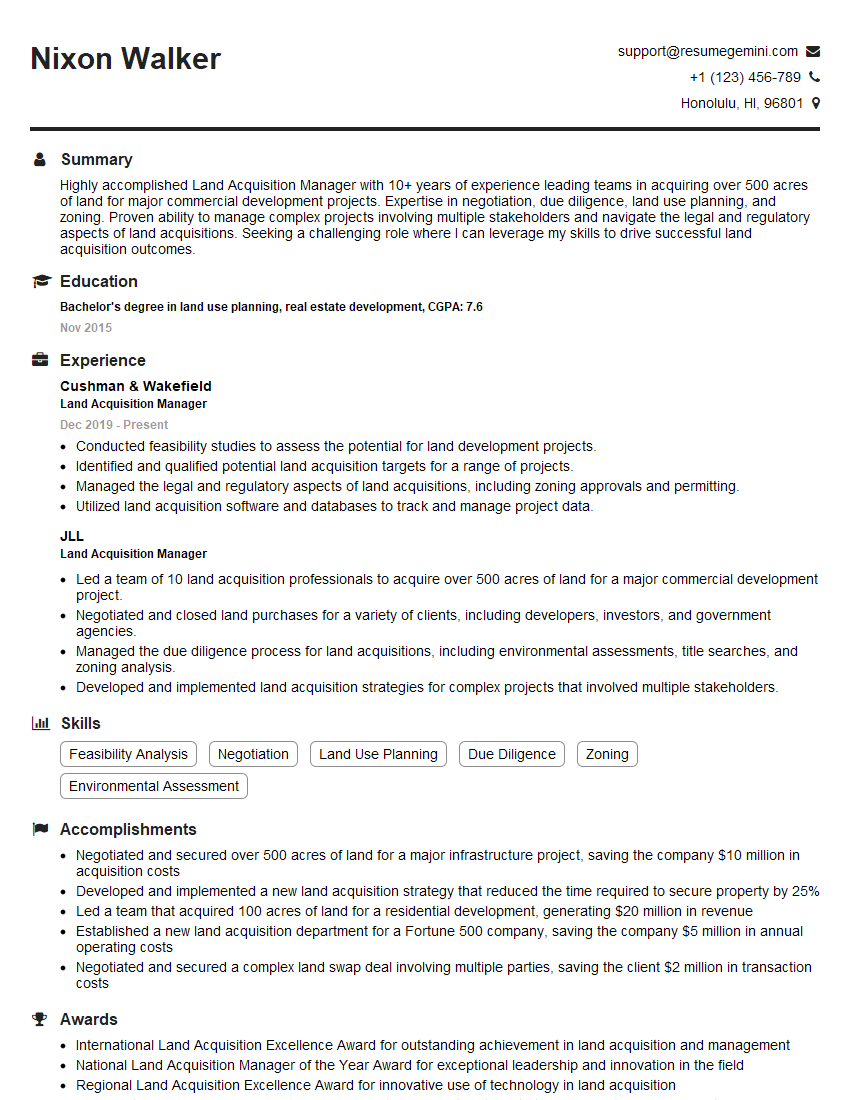
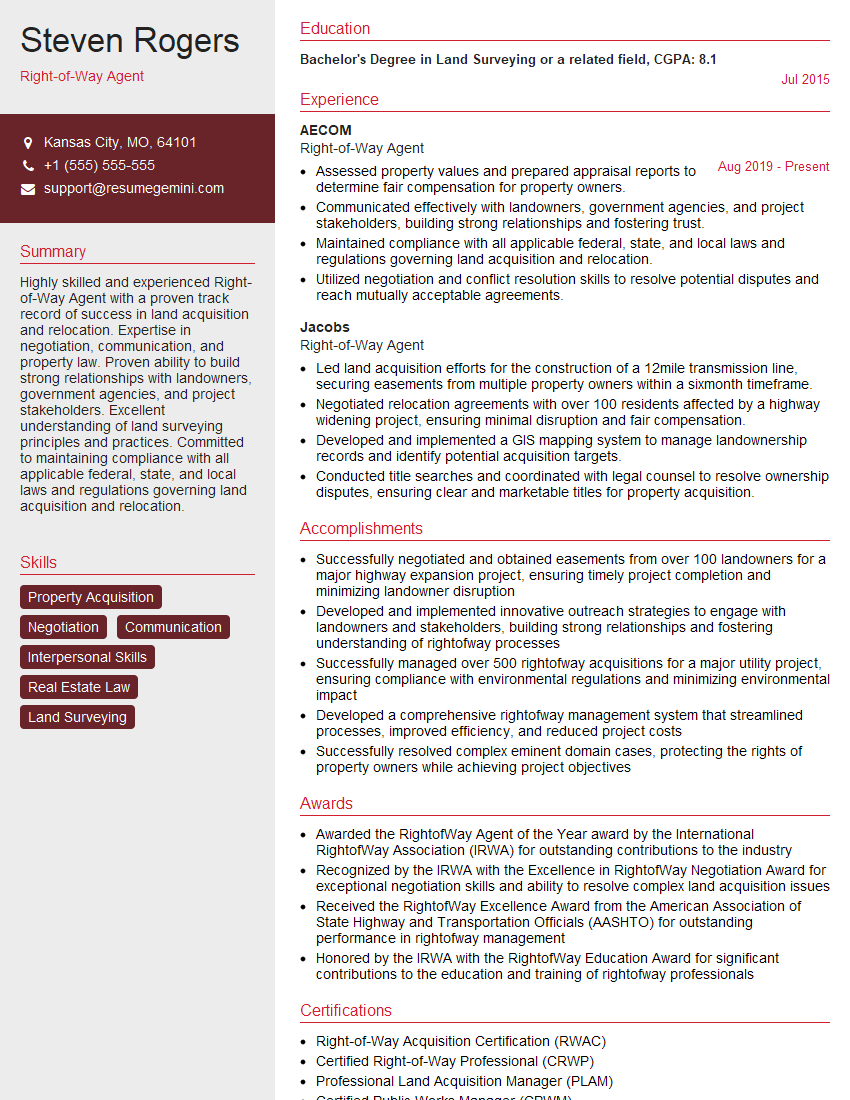
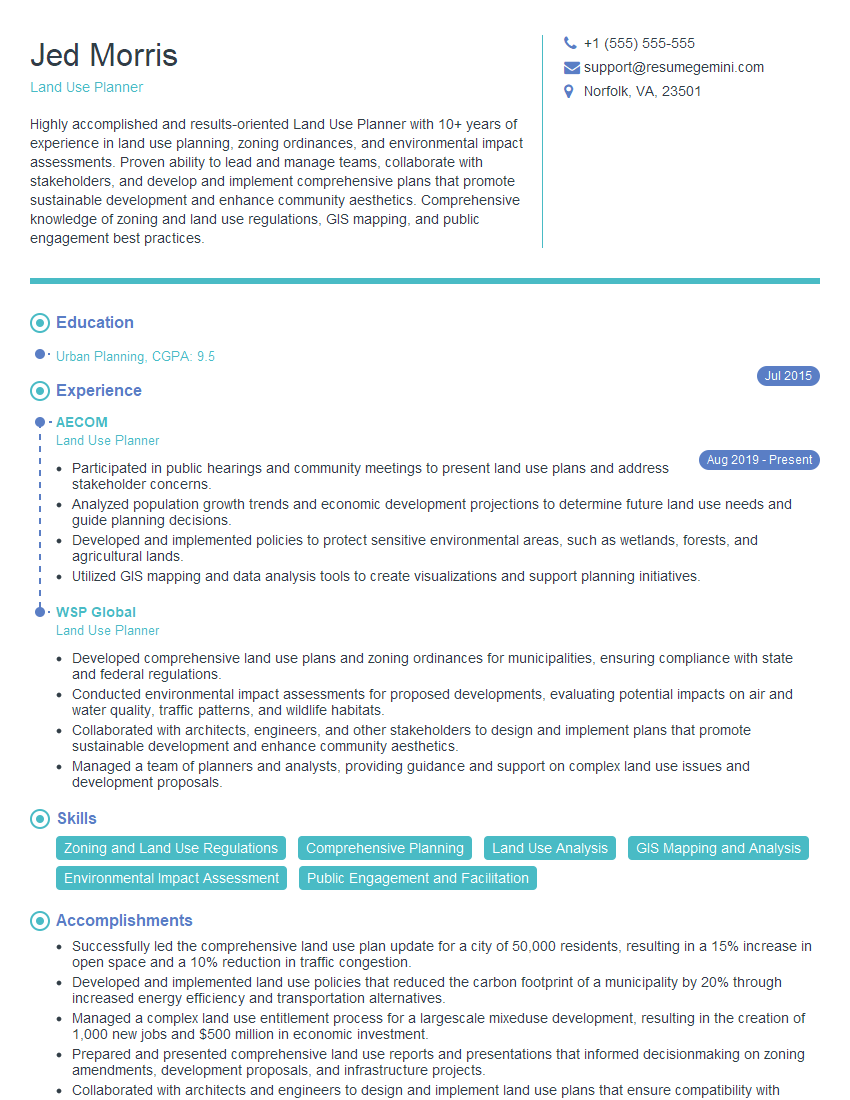
Mastering Land Acquisition and Sales opens doors to exciting career opportunities with significant earning potential and professional growth. To maximize your chances of landing your dream role, creating a compelling and ATS-friendly resume is crucial. ResumeGemini is a trusted resource that can help you build a professional resume tailored to showcase your skills and experience effectively. Examples of resumes specifically designed for Land Acquisition and Sales professionals are available, providing you with a template to highlight your unique qualifications and make a strong first impression on potential employers.
Explore more articles
Users Rating of Our Blogs
Share Your Experience
We value your feedback! Please rate our content and share your thoughts (optional).
What Readers Say About Our Blog
Very informative content, great job.
good