Interviews are opportunities to demonstrate your expertise, and this guide is here to help you shine. Explore the essential Laser Welding and Cladding interview questions that employers frequently ask, paired with strategies for crafting responses that set you apart from the competition.
Questions Asked in Laser Welding and Cladding Interview
Q 1. Explain the principles of laser welding.
Laser welding leverages the intense heat generated by a focused laser beam to melt and fuse two or more materials together. Think of it like using a highly precise, incredibly powerful magnifying glass to focus sunlight onto a point, generating enough heat to melt metal. The key is the concentrated energy density of the laser, allowing for deep penetration and highly controlled welds.
The process typically involves directing a laser beam onto the joint between the materials. The absorbed energy melts the base material and any filler material, creating a molten pool. Upon cooling, this molten pool solidifies, forming a strong weld joint. The precision of the laser allows for incredibly fine control, creating welds with minimal heat-affected zones (HAZ).
Q 2. What are the different types of laser welding processes?
Several laser welding processes exist, categorized primarily by the way the laser interacts with the material and the type of laser used.
- Keyhole Welding: This is a deep penetration process where the laser beam creates a deep, narrow cavity (the keyhole) in the material. Molten material flows around the keyhole, creating a weld. It’s ideal for thick materials.
- Conduction Welding: In this process, the laser beam heats the surface of the material, and the heat conducts into the material, melting it and causing fusion. This is suitable for thinner materials and requires less laser power than keyhole welding.
- Hybrid Welding: Combines laser welding with other techniques like arc welding or electron beam welding to benefit from the advantages of each process, often for complex or large-scale projects.
- Laser Beam Welding (LBW): This is a general term encompassing many variations, and often specifies the type of laser utilized (e.g., CO2 laser beam welding, Nd:YAG laser beam welding). The laser type impacts the wavelength and power characteristics, influencing the weld process.
The choice of process depends heavily on material properties, required weld depth, and desired weld quality.
Q 3. Describe the advantages and disadvantages of laser welding compared to other welding methods.
Laser welding boasts several advantages over traditional welding methods like arc welding or resistance welding. However, it also comes with some drawbacks.
- Advantages: High precision, narrow heat-affected zone (HAZ), minimal distortion, high speed, automated capabilities, ability to weld dissimilar metals.
- Disadvantages: High initial investment costs for equipment, potential for porosity or cracking if parameters are not carefully controlled, requires skilled operators, the process may be sensitive to surface reflectivity.
For instance, in the automotive industry, laser welding is preferred for creating high-strength, lightweight car bodies due to its precision and speed. However, the high initial investment might not be suitable for small-scale operations.
Q 4. What are the key parameters that influence laser weld quality?
Several key parameters significantly influence laser weld quality. Precise control is crucial for consistent results.
- Laser Power: Determines the amount of heat input.
- Beam Focus Diameter: Impacts the energy density and penetration depth.
- Welding Speed: Affects the cooling rate and weld bead geometry.
- Assist Gas: Shields the weld from atmospheric contamination and helps control the molten pool.
- Material Properties: Thermal conductivity, reflectivity, and melting point of the materials being welded greatly influence the process.
- Joint Design and Preparation: Accurate joint fit-up is crucial for achieving high-quality welds.
Imagine trying to melt chocolate with a magnifying glass. The amount of sunlight (power), the concentration of the sunlight (focus), and the speed you move the magnifying glass (speed) all determine how well the chocolate melts and forms a uniform shape. Similarly, these laser parameters impact the quality of the weld.
Q 5. How do you control penetration depth in laser welding?
Penetration depth control in laser welding is achieved by manipulating various process parameters. It’s a delicate balancing act.
- Laser Power: Increasing power generally leads to deeper penetration.
- Beam Focus: A tighter focus leads to higher energy density and deeper penetration.
- Welding Speed: Slower speeds allow for more heat input, increasing penetration.
- Assist Gas Flow Rate and Type: Affects the shape and stability of the keyhole, thus controlling penetration.
- Material Properties: The material’s thermal conductivity and absorptivity directly affect the achievable penetration depth.
A practical example is in aerospace manufacturing where controlling penetration depth is vital for joining thin sheets of titanium. Here, precise control of laser power and welding speed are crucial to prevent burn-through and maintain structural integrity.
Q 6. Explain the concept of laser cladding.
Laser cladding is an additive manufacturing process where a laser beam melts a powder material and deposits it onto a substrate material. It’s akin to using a highly precise 3D printer that melts and fuses metal powder layer by layer. This creates a new layer of material with specific properties on the substrate, enhancing its characteristics.
The process involves feeding a powder material (e.g., metal alloy powder) into a laser beam’s path. The laser melts the powder, causing it to fuse with the substrate, creating a uniform cladding layer. The properties of the cladding layer can differ considerably from the substrate, allowing for the alteration of surface properties such as hardness, wear resistance, or corrosion resistance.
Q 7. What are the applications of laser cladding?
Laser cladding finds broad applications in various industries because of its ability to enhance the properties of existing components without significantly changing their geometry.
- Wear Resistance Enhancement: Cladding with hard materials like tungsten carbide extends the life of tools and components in high-wear applications (e.g., engine components, mining equipment).
- Corrosion Protection: Cladding with corrosion-resistant materials like stainless steel protects against environmental degradation (e.g., pipelines, offshore structures).
- Surface Modification: Cladding can improve surface finish, texture, or electrical conductivity.
- Repair and Restoration: Damaged components can be repaired and restored to their original condition by cladding.
- Tool Manufacturing: Creating cutting tools or dies with specific surface properties for enhanced performance.
For example, in the oil and gas industry, laser cladding is used to enhance the corrosion resistance of pipelines transporting corrosive fluids. This ensures the longevity of the pipelines and minimizes the risks of leaks and environmental damage.
Q 8. What materials are commonly used in laser cladding?
Laser cladding involves depositing a layer of a specific material onto a substrate. The choice of cladding material depends heavily on the desired properties of the final component. Common materials include:
- Hardfacing alloys: These are typically used to increase wear resistance, such as Stellite (cobalt-based alloys) or tungsten carbide-based materials. Imagine needing a component that endures extreme friction, like a valve in a high-pressure pipeline; hardfacing alloys are ideal.
- Corrosion-resistant alloys: Materials like stainless steel or nickel-based alloys are used to enhance corrosion resistance in harsh environments. For example, a pump exposed to seawater would benefit greatly from a corrosion-resistant cladding.
- High-temperature alloys: These alloys, such as Inconel or Hastelloy, are employed when high-temperature strength and oxidation resistance are critical, such as in turbine blades.
- Ceramics and cermets: These materials are increasingly used for special applications requiring extreme hardness or wear resistance. For instance, ceramic cladding might be used in cutting tools to enhance their lifetime.
The selection always depends on the specific application and the properties needed in the final product.
Q 9. How does laser cladding improve material properties?
Laser cladding significantly improves material properties by adding a surface layer with superior characteristics compared to the substrate. These improvements include:
- Increased wear resistance: The added layer can significantly enhance the durability of the part, extending its lifespan under abrasive conditions.
- Enhanced corrosion resistance: A protective layer of a corrosion-resistant material prevents the base material from degrading in corrosive environments.
- Improved high-temperature performance: Cladding with high-temperature alloys provides superior oxidation resistance and strength at elevated temperatures.
- Increased hardness and strength: Hardfacing alloys substantially improve surface hardness and compressive strength, resisting deformation and wear.
- Tailored surface properties: Laser cladding allows for precise control over the surface finish, providing the required roughness or smoothness depending on the application.
For instance, cladding a steel component with a wear-resistant alloy can extend its service life by a factor of ten, reducing maintenance and replacement costs.
Q 10. Describe the different types of laser cladding processes.
Several laser cladding processes exist, differing mainly in how the powder is fed and the way the laser beam interacts with the material:
- Pre-placed powder cladding: Powder is pre-placed on the substrate before laser irradiation. This method is simple but can be less efficient for complex geometries.
- In-flight powder cladding (axial or tangential): Powder is fed directly into the laser beam’s path as it melts and fuses with the substrate. This provides better control and efficiency.
- Wire-fed cladding: Instead of powder, a continuous wire of the cladding material is fed into the laser beam. This is preferred for certain materials that are difficult to handle as powder.
- Dual-beam cladding: Uses two laser beams; one for preheating the substrate and the other for melting and fusing the cladding material. This improves process control and efficiency.
The choice of process depends on factors such as the geometry of the component, the material properties, and the required deposition rate and quality.
Q 11. What are the challenges associated with laser cladding?
Laser cladding, despite its advantages, faces several challenges:
- Porosity: Incomplete melting and consolidation of the powder or wire can lead to porosity, weakening the cladding layer. Careful control of laser parameters and powder flow is crucial to minimize this.
- Residual stresses: The rapid heating and cooling during laser cladding can induce significant residual stresses in the clad layer and the substrate, potentially leading to cracking or warping. Proper process optimization and post-processing treatments are necessary.
- Spatter and lack of fusion: Uncontrolled ejection of molten material (spatter) can create surface defects. Poor adhesion between the cladding and the substrate (lack of fusion) is a serious concern. Precise control of laser parameters and shielding gas is vital.
- High cost: Laser cladding equipment and materials can be expensive, limiting its accessibility in certain applications.
- Complexity of process control: Precise control of laser power, scanning speed, powder flow rate, and shielding gas are critical for optimal results. Sophisticated process monitoring and control systems are needed.
Overcoming these challenges requires careful selection of process parameters, material choices, and post-processing techniques.
Q 12. How do you select the appropriate laser wavelength for a specific application?
Laser wavelength selection is critical for efficient laser cladding. The optimal wavelength depends on the material’s absorption characteristics. Generally:
- Near-infrared (NIR) lasers (e.g., 1.06 µm Nd:YAG): These lasers are commonly used for cladding many metals due to their good absorption in many metals.
- Green lasers (e.g., 532 nm): These are advantageous for materials with lower absorption at NIR wavelengths, offering improved control and reduced heat input.
- Ultraviolet (UV) lasers (e.g., 355 nm): UV lasers can improve processing precision and reduce heat-affected zones, making them suitable for delicate applications.
The selection process involves considering the material’s absorption coefficient at different wavelengths, the desired depth of penetration, and the required heat input. Simulation and experimentation are often necessary to determine the best wavelength for a specific application. Consider a titanium alloy: it might require a different wavelength for optimal absorption compared to a nickel-based superalloy.
Q 13. Explain the role of shielding gas in laser welding.
In laser welding, the shielding gas plays a crucial role in protecting the weld pool from atmospheric contamination. The gas forms a blanket around the molten metal, preventing oxidation and porosity. The choice of shielding gas depends on the materials being welded:
- Argon (Ar): A very common choice, inert and effective at preventing oxidation in most metals. It’s often used with high-strength, low-alloy steels.
- Helium (He): Offers deeper penetration due to its higher thermal conductivity compared to Argon. However, it is more expensive.
- Argon-Helium mixtures: Combining Argon and Helium allows for a balance between penetration and cost.
- Carbon dioxide (CO2): Not usually used for high-quality welds in metals but can be used for some specific applications or material combinations.
Imagine welding aluminum; an incorrect shielding gas could lead to immediate oxidation, weakening the weld and resulting in failure. The right gas is essential for the weld’s strength and integrity.
Q 14. What are the common defects found in laser welds?
Laser welds can suffer from several defects, impacting their mechanical properties and longevity:
- Porosity: Small holes or voids within the weld, often caused by trapped gases or incomplete melting.
- Cracks: Fractures that can form during solidification due to high residual stresses or contamination.
- Incomplete penetration: The weld does not fully penetrate the joint, leading to a weaker connection.
- Lack of fusion: The weld does not properly fuse with the base material, creating a weak interface.
- Undercuts: Erosion of the base material at the edges of the weld, weakening the joint.
- Spatter: Ejection of molten metal from the weld pool, leaving surface imperfections.
Detecting these defects often requires non-destructive testing methods like radiography, ultrasonic inspection, or visual inspection. Understanding the causes of these defects and the process parameters that contribute to them is crucial to minimizing them and achieving high-quality welds.
Q 15. How do you prevent porosity in laser welds?
Porosity in laser welds, those pesky little holes, is a common enemy of high-quality welds. It weakens the joint and compromises its integrity. Preventing it requires a multi-pronged approach focusing on controlling the weld process parameters and the material itself.
- Proper Joint Preparation: A clean joint is paramount. Think of it like baking a cake – you wouldn’t start with dirty ingredients! Surface contaminants, oxides, and grease must be meticulously removed through processes like cleaning, degreasing, and possibly even mechanical surface treatment.
- Optimized Laser Parameters: This is where the art and science of laser welding truly shine. Parameters like laser power, pulse duration, spot size, and travel speed need careful fine-tuning for the specific material and joint design. Too much power can lead to spatter and porosity, while too little will result in incomplete fusion. Think of it like cooking with a precisely controlled flame – too much heat burns the food, too little leaves it raw.
- Shielding Gas: An inert shielding gas, typically Argon or Helium, is crucial. It prevents oxidation and keeps atmospheric contaminants from interfering with the weld pool, helping to produce a cleaner, denser weld. This is like creating a protective bubble around the weld pool.
- Material Properties: The inherent properties of the base materials, including their cleanliness and chemical composition, influence porosity. Impurities in the materials can create gas pockets during the welding process.
- Preheating (Sometimes): For certain materials or thick sections, preheating can help reduce thermal stresses and improve weld penetration, minimizing the chances of porosity.
In my experience, a systematic approach involving meticulous joint preparation, careful parameter optimization through iterative testing, and the use of a suitable shielding gas is the key to consistently achieving porosity-free laser welds. I’ve seen firsthand how neglecting even one of these steps can dramatically affect the weld quality.
Career Expert Tips:
- Ace those interviews! Prepare effectively by reviewing the Top 50 Most Common Interview Questions on ResumeGemini.
- Navigate your job search with confidence! Explore a wide range of Career Tips on ResumeGemini. Learn about common challenges and recommendations to overcome them.
- Craft the perfect resume! Master the Art of Resume Writing with ResumeGemini’s guide. Showcase your unique qualifications and achievements effectively.
- Don’t miss out on holiday savings! Build your dream resume with ResumeGemini’s ATS optimized templates.
Q 16. How do you measure the weld quality?
Measuring weld quality is crucial to ensure the weld meets the required specifications. A variety of methods are employed, often in combination, to provide a comprehensive assessment.
- Visual Inspection: This is the first step, checking for obvious defects like cracks, porosity, lack of fusion, or spatter. Magnification may be necessary.
- Mechanical Testing: Tensile testing provides information about the strength of the weld, while bend testing evaluates ductility. Hardness testing assesses the weld’s resistance to indentation.
- Non-Destructive Testing (NDT): Methods like radiographic testing (RT) or ultrasonic testing (UT) provide internal views of the weld, revealing hidden flaws like porosity or cracks that are undetectable through visual inspection. Liquid penetrant testing (LPT) is used to detect surface cracks.
- Microstructural Analysis: Metallographic examination, where the weld is cross-sectioned, polished, and etched to reveal the microstructure, allows for the evaluation of grain size, heat-affected zone, and the presence of any micro-cracks or inclusions. This involves microscopic examination.
The choice of specific testing methods depends on the application’s requirements and criticality. For instance, a simple butt weld in a low-stress application might only require visual inspection and mechanical testing, while a high-pressure vessel weld necessitates more rigorous NDT techniques.
Q 17. Describe your experience with laser welding equipment.
My experience with laser welding equipment spans a wide range of systems, from small, benchtop units to large-scale, robotic systems. I’m proficient in operating and maintaining various types of laser sources, including fiber, CO2, and Nd:YAG lasers, and have expertise in the associated process control systems and software.
I’ve worked extensively with both pulsed and continuous-wave lasers, adjusting parameters like power, frequency, pulse duration, and beam focus to achieve optimal welding results for various materials and thicknesses. I’m familiar with different beam delivery systems, including articulated arms and fiber optic cables. My experience also includes integrating laser welding into automated manufacturing lines, optimizing throughput and consistency.
One particular project involved integrating a high-power fiber laser system into a production line for welding stainless steel components. This required careful consideration of safety protocols, process parameter optimization, and integration with existing automation infrastructure. The successful implementation resulted in a significant increase in production efficiency and a reduction in defect rates.
Q 18. What safety precautions are necessary when working with lasers?
Laser safety is paramount. Lasers emit high-energy beams that can cause serious eye and skin injuries. Therefore, comprehensive safety precautions are essential.
- Eye Protection: Appropriate laser safety eyewear must always be worn, tailored to the specific laser wavelength and power. This is non-negotiable.
- Enclosure and Beam Path: Wherever possible, the laser beam should be enclosed within a protective housing to minimize exposure risk. If this is not feasible, adequate safety screens or barriers should be implemented.
- Warning Signs and Procedures: Clear warning signs indicating the presence of laser radiation must be posted, and standardized operating procedures must be established and followed.
- Regular Maintenance and Inspection: Regular maintenance and inspections of the laser system are critical to ensure its safe operation and to prevent malfunction.
- Training and Competency: All personnel working with lasers must undergo comprehensive training on safety procedures and emergency protocols.
- Emergency Shut-off: Easy-to-access emergency shut-off switches must be readily available.
In my experience, complacency is the biggest enemy of laser safety. Strict adherence to safety protocols, thorough training, and regular safety reviews are essential to maintain a safe work environment.
Q 19. How do you troubleshoot problems in laser welding?
Troubleshooting laser welding problems requires a systematic and logical approach. I often use a structured process to identify and resolve issues.
- Identify the Problem: Begin by clearly defining the problem. What is the specific issue? Is it porosity, lack of penetration, excessive spatter, or something else?
- Gather Information: Collect relevant information, such as the laser parameters (power, speed, pulse duration), joint design, shielding gas type and flow rate, and material properties.
- Check Basic Parameters: First, check the most fundamental parameters such as laser power output, gas flow, and focusing optics. Many issues stem from incorrect settings in these areas.
- Visual Inspection: Inspect the weld visually for any obvious defects. Use magnification as needed.
- Process Parameter Adjustment: Based on the observations, systematically adjust the laser parameters. Keep a detailed log of changes and their results.
- Material Analysis (If Needed): If the problem persists, consider analyzing the materials for potential impurities or contamination.
- Consult Documentation: Refer to the laser system’s documentation and relevant technical manuals.
For example, if I observe excessive spatter, I’d start by lowering the laser power and/or adjusting the focus. If the problem is lack of penetration, I might increase the power or reduce the speed. Each problem requires a unique approach based on my experience and understanding of the process physics.
Q 20. Explain your experience with different laser types (e.g., CO2, fiber, Nd:YAG).
I have extensive experience with various laser types, each with its own strengths and weaknesses:
- CO2 Lasers: These were prevalent in the past for larger-scale welding applications. They’re generally cost-effective but less efficient than fiber lasers and require more maintenance.
- Fiber Lasers: These are currently the most widely used laser type for welding, offering high efficiency, excellent beam quality, and compact size. I’ve worked extensively with these, particularly on high-speed, high-precision applications.
- Nd:YAG Lasers: These lasers are versatile and suitable for a range of applications, though less efficient than fiber lasers. I’ve used them for applications demanding high pulse energy.
The choice of laser type depends heavily on the specific application. For example, fiber lasers are ideal for high-volume automotive production lines, while Nd:YAG lasers might be preferred for specialized applications demanding flexible beam delivery.
Q 21. What is your experience with different joint configurations?
My experience encompasses a wide variety of joint configurations, including:
- Butt Joints: These are commonly used for joining two pieces of material end-to-end.
- Lap Joints: These involve overlapping two pieces of material, suitable for situations where access to only one side of the joint is possible.
- T-Joints: One material is joined perpendicularly to another.
- Corner Joints: Two pieces of material meet at a corner.
- Edge Joints: Edges of two materials are joined.
The joint design significantly influences the weld parameters and the overall weld quality. For instance, a butt joint might require a higher laser power to achieve sufficient penetration compared to a lap joint. Careful consideration of the joint design is crucial in optimizing the welding process and achieving desirable results. The choice of joint configuration is often dictated by both structural considerations and ease of assembly.
Q 22. What is your experience with automated laser welding systems?
My experience with automated laser welding systems spans over eight years, encompassing various applications from automotive manufacturing to aerospace components. I’ve worked extensively with robotic systems integrating both continuous wave (CW) and pulsed lasers, focusing on precise control and high-throughput operations. This includes programming and troubleshooting Kuka and ABB robots integrated with different laser sources (e.g., fiber, YAG) and sensor systems for seam tracking and process monitoring. I’m proficient in setting up and optimizing laser parameters like power, speed, and focal position to achieve desired weld penetration and bead geometry for different materials and thicknesses. For instance, in one project, I automated the welding of thin-walled aluminum sheets using a vision-guided system, improving productivity by 40% and reducing scrap rates significantly.
Q 23. Describe your experience with quality control procedures in laser welding.
Quality control in laser welding is paramount. My approach involves a multi-layered strategy starting with meticulous process parameter control and real-time monitoring using sensors like pyrometers and cameras to ensure consistent weld quality. Post-weld inspection includes visual examination for defects like porosity, lack of fusion, and undercutting. Destructive testing, such as tensile testing, hardness testing, and macro/micrographic analysis, is routinely employed to verify mechanical properties and metallurgical integrity. We also employ statistical process control (SPC) to track key process parameters and identify potential deviations from established norms. For example, we developed a control chart for monitoring weld penetration based on real-time pyrometer readings, allowing for immediate adjustments to laser parameters and preventing defective welds.
Q 24. How do you interpret and analyze weld metallurgical testing results?
Interpreting metallurgical testing results requires a thorough understanding of material science and welding metallurgy. I analyze microstructures to identify potential issues such as grain size, heat-affected zone (HAZ) characteristics, and the presence of intermetallic phases. For instance, identifying a coarse grain structure in the HAZ might indicate excessive heat input, leading to reduced ductility. Tensile test data provides insights into the weld’s ultimate tensile strength, yield strength, and elongation, revealing its overall mechanical integrity. Hardness testing helps assess the susceptibility to cracking and wear. By correlating these results with process parameters and visual inspection, I can pinpoint the root cause of any weld defects and recommend corrective actions. For example, a low tensile strength coupled with high hardness might suggest the need for optimizing the laser power or shielding gas composition.
Q 25. What software are you familiar with for laser welding process simulation and optimization?
I am proficient in several software packages for laser welding simulation and optimization. My experience includes using ANSYS and COMSOL Multiphysics for Finite Element Analysis (FEA) to predict thermal cycles, residual stresses, and weld distortion. This allows for proactive optimization of the welding process, minimizing defects and improving part quality. I also have hands-on experience with proprietary software packages from laser manufacturers, enabling precise control over laser parameters and automated process monitoring. For example, I used ANSYS to simulate the welding of a complex aerospace component, predicting residual stresses and optimizing the weld sequence to minimize distortion, resulting in a significant reduction in post-weld machining requirements.
Q 26. Describe a challenging laser welding project you have worked on and how you overcame the challenges.
One challenging project involved laser welding dissimilar materials – titanium and aluminum – for an aerospace application. The main challenge was achieving a sound weld with minimal intermetallic formation and cracking due to their vastly different melting points and thermal properties. We overcame this by employing a pre-weld surface treatment on the titanium to improve its wettability with aluminum. Furthermore, we carefully optimized the laser parameters, using a pulsed laser with a specific pulse duration and frequency to control heat input and prevent excessive melting. We employed real-time process monitoring with adaptive control to adjust the laser parameters based on sensor feedback, ensuring consistent weld quality. This involved developing a custom algorithm for process control, successfully producing strong and reliable welds that met the stringent aerospace standards.
Q 27. Explain your understanding of laser safety regulations and standards.
Laser safety is a top priority. I’m intimately familiar with ANSI Z136.1, IEC 60825, and other relevant laser safety standards and regulations. My understanding extends to classifying laser systems based on their power and wavelength, implementing appropriate safety measures like interlocks, warning signs, and personal protective equipment (PPE), such as laser safety eyewear, to mitigate potential hazards. I’m trained in performing laser safety audits and risk assessments, ensuring compliance with all applicable regulations. For example, I’ve been responsible for developing and implementing comprehensive laser safety programs in various manufacturing settings, ensuring a safe work environment for all personnel.
Q 28. What are your career goals in the field of laser welding and cladding?
My career goals are centered around advancing the state-of-the-art in laser welding and cladding through research and development. I aim to contribute to the development of novel laser-based processes for joining difficult-to-weld materials and exploring advanced process control strategies using artificial intelligence and machine learning. Ultimately, I aspire to take on a leadership role in a research-intensive organization, mentoring younger engineers and leading innovative projects that push the boundaries of this exciting field.
Key Topics to Learn for Laser Welding and Cladding Interview
- Laser Fundamentals: Understanding laser beam characteristics (wavelength, power, mode), beam delivery systems, and laser safety protocols.
- Welding Processes: Deep dive into different laser welding techniques (e.g., keyhole welding, conduction welding) and their applications in various industries (automotive, aerospace, medical).
- Cladding Processes: Exploring different cladding methods (e.g., powder cladding, wire cladding) and their suitability for different materials and applications (corrosion resistance, wear resistance).
- Material Science: Knowledge of material properties and their influence on weld/clad quality (heat affected zone, metallurgical changes). Understanding different material interactions and selection criteria.
- Process Parameters: Mastering the control and optimization of laser parameters (power, speed, focal position) for achieving desired weld/clad characteristics (penetration depth, bead geometry, microstructure).
- Quality Control and Inspection: Familiarization with Non-Destructive Testing (NDT) methods (e.g., visual inspection, radiography, ultrasonic testing) to evaluate weld/clad integrity.
- Troubleshooting and Problem Solving: Developing the ability to diagnose common welding/cladding defects (porosity, cracks, lack of fusion) and implement corrective actions.
- Automation and Robotics: Understanding the integration of laser welding and cladding processes with automated systems and robotic manipulators for enhanced efficiency and precision.
- Safety Regulations and Compliance: Familiarity with relevant safety standards and regulations pertaining to laser operation and material handling.
Next Steps
Mastering Laser Welding and Cladding opens doors to exciting career opportunities in advanced manufacturing, offering high demand and excellent growth potential. A strong resume is crucial for showcasing your skills and experience to prospective employers. Crafting an ATS-friendly resume is key to maximizing your chances of getting noticed by recruiters. We highly recommend using ResumeGemini to build a professional and impactful resume that highlights your expertise in this field. ResumeGemini provides examples of resumes tailored to Laser Welding and Cladding to help you craft the perfect application.

Production Supervisor Resume Sample

Project Engineer Resume Sample
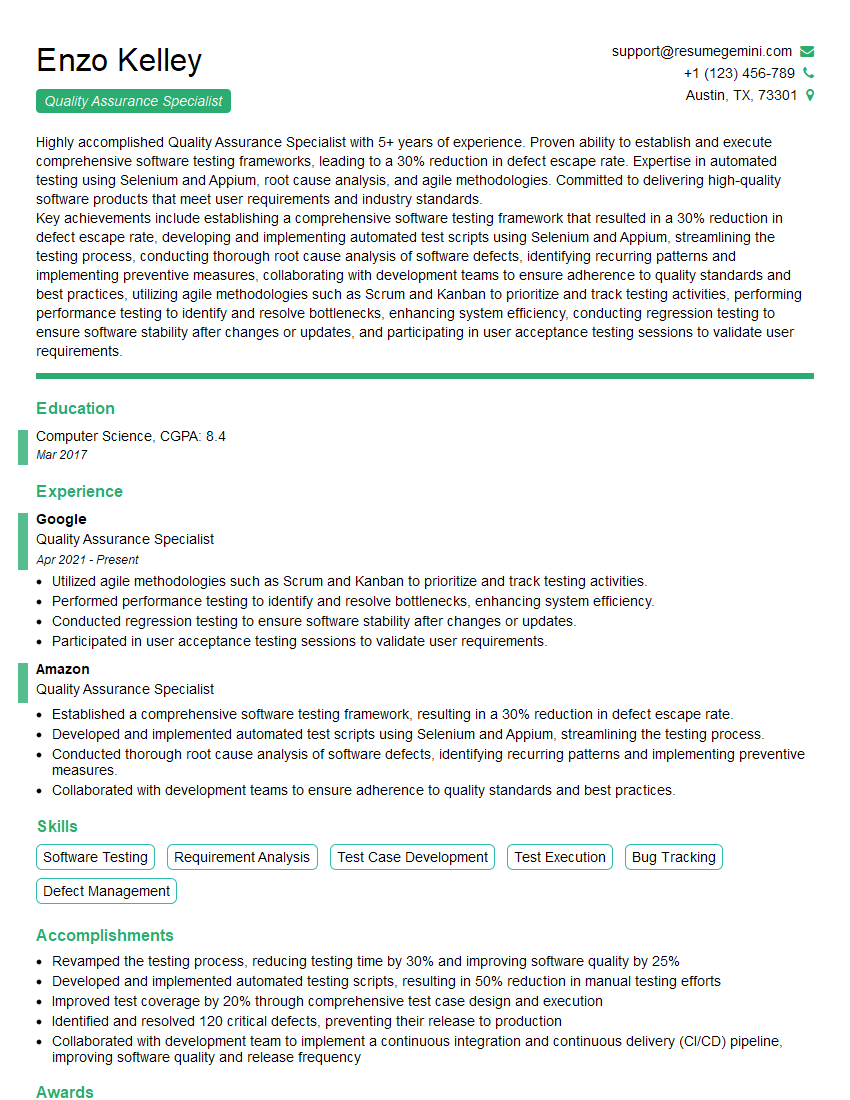
Quality Assurance Specialist Resume Sample
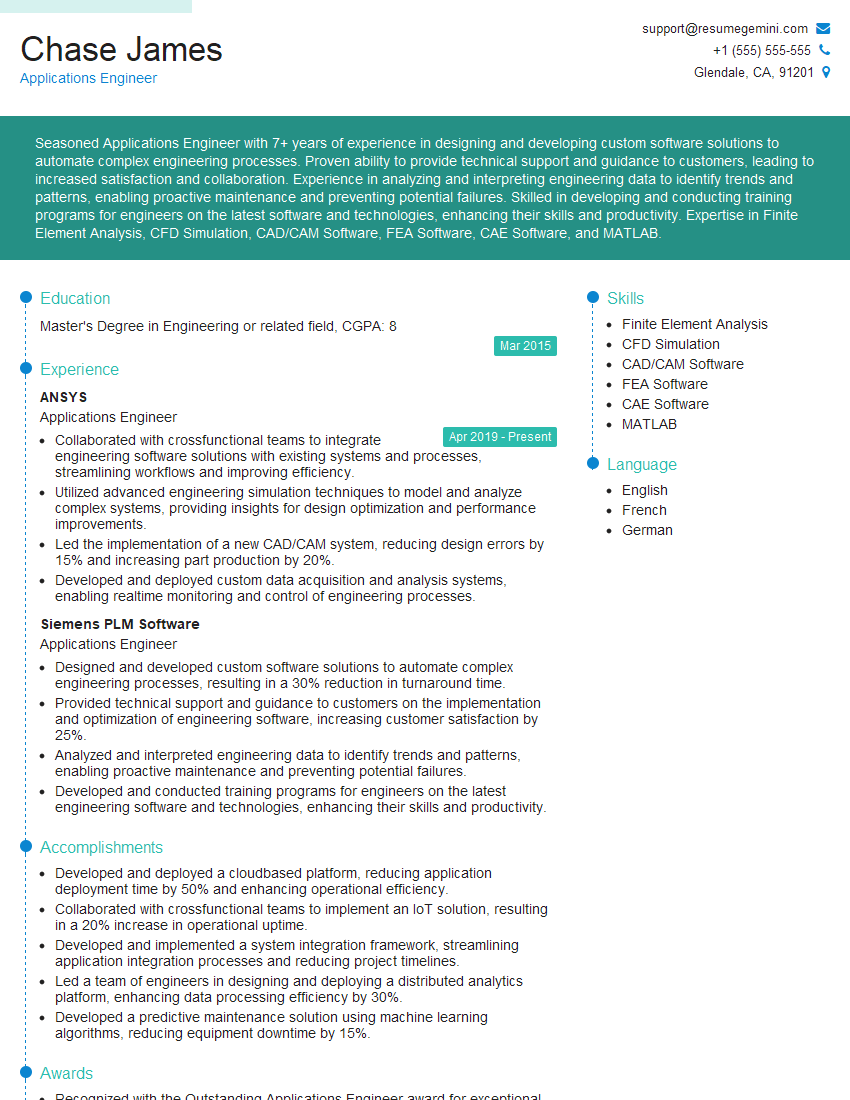
Applications Engineer Resume Sample
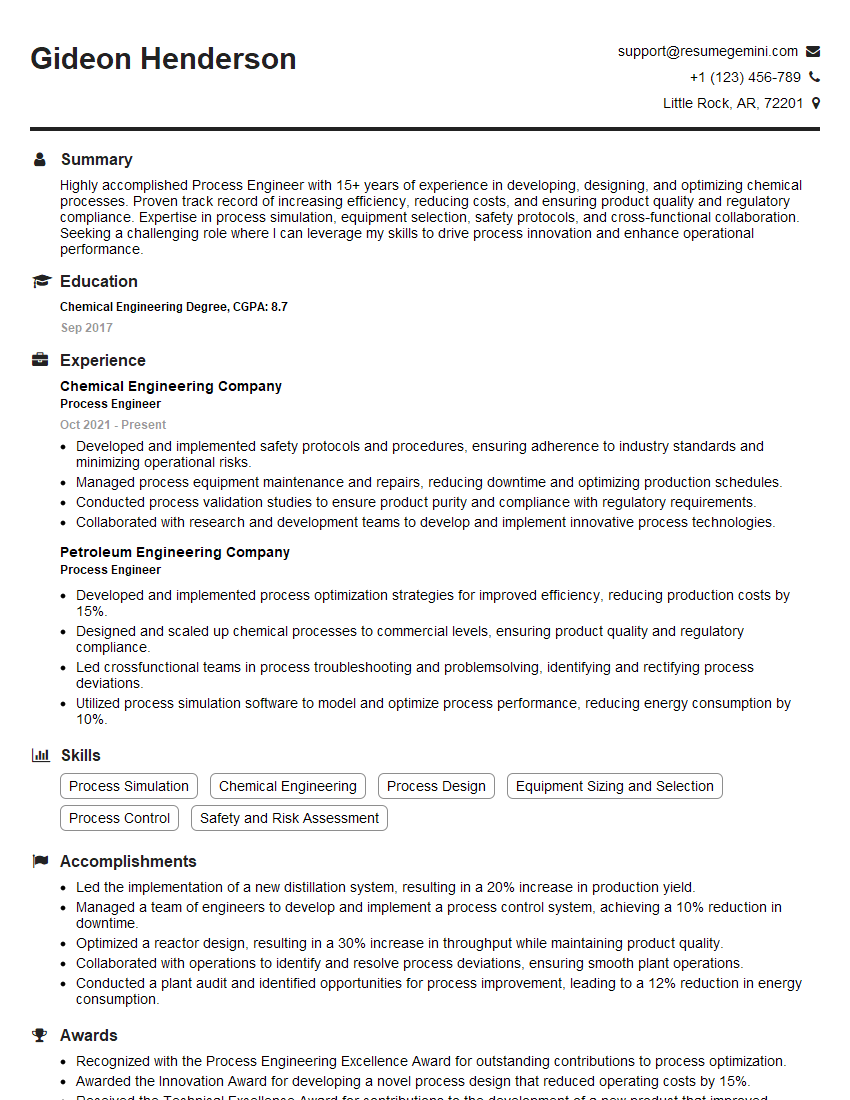
Process Engineer Resume Sample
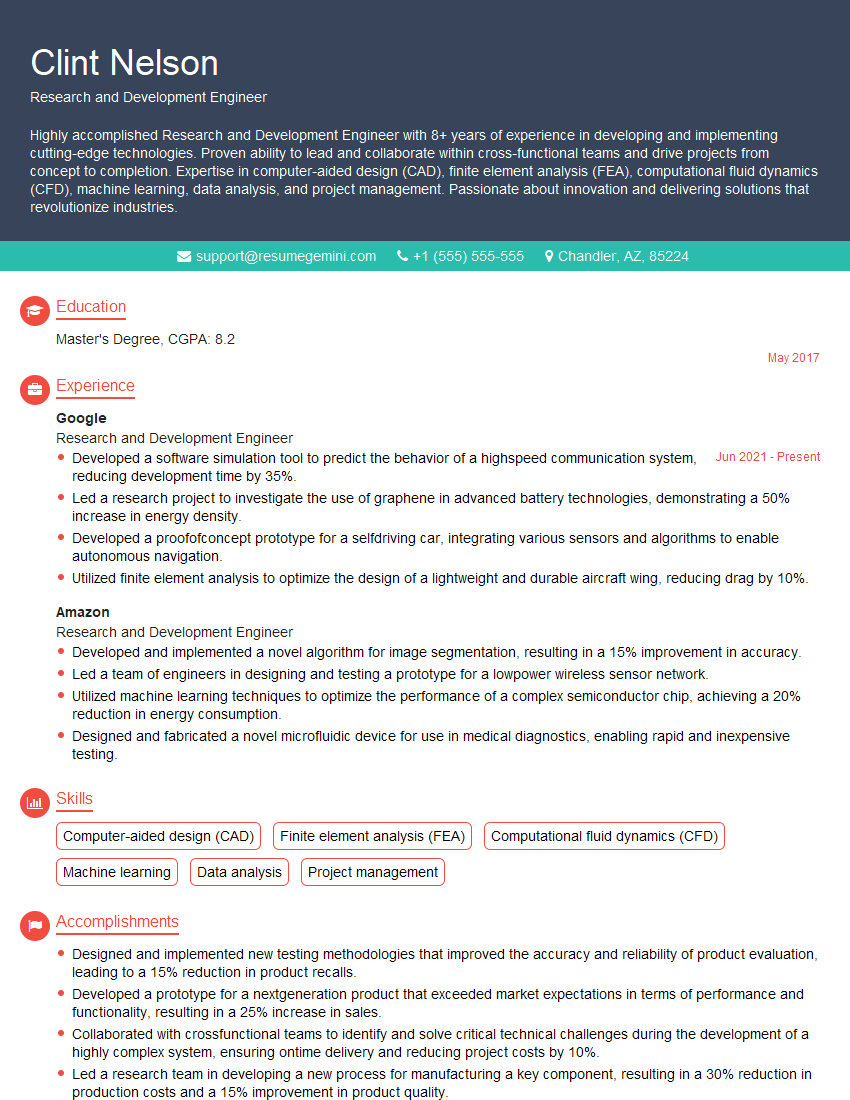
Research and Development Engineer Resume Sample
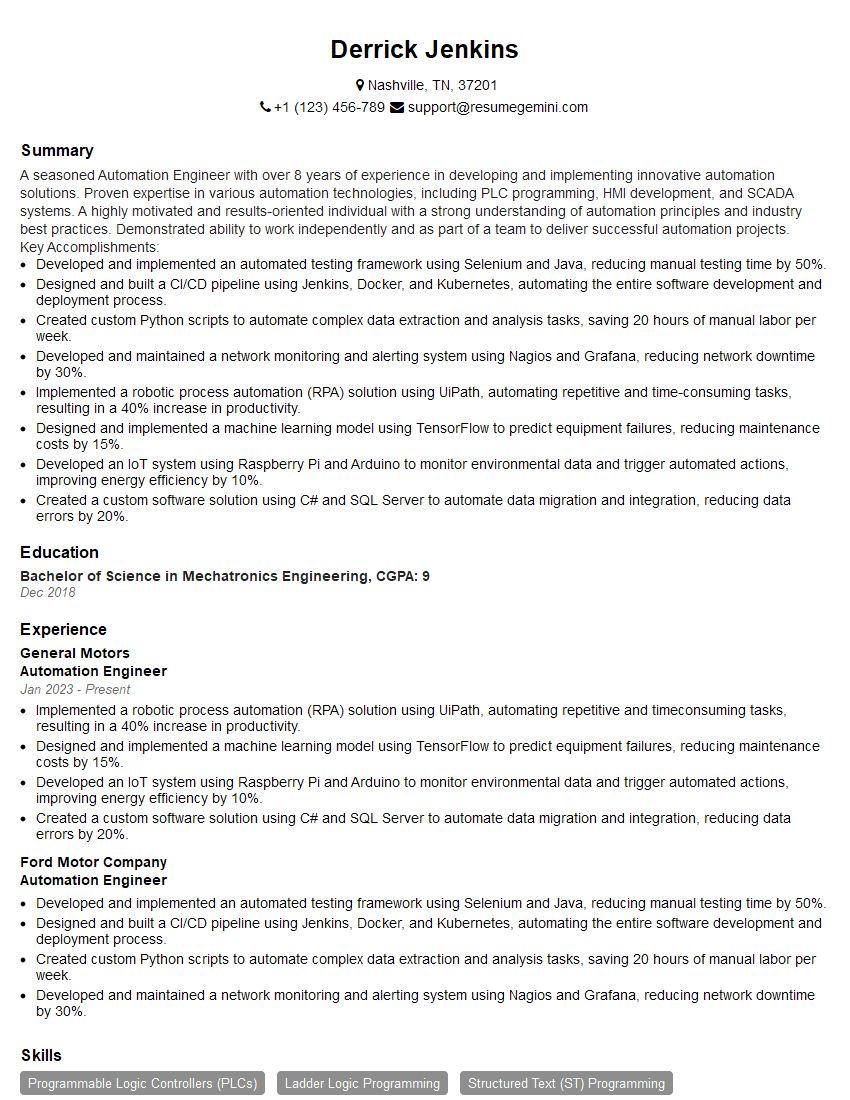
Automation Engineer Resume Sample
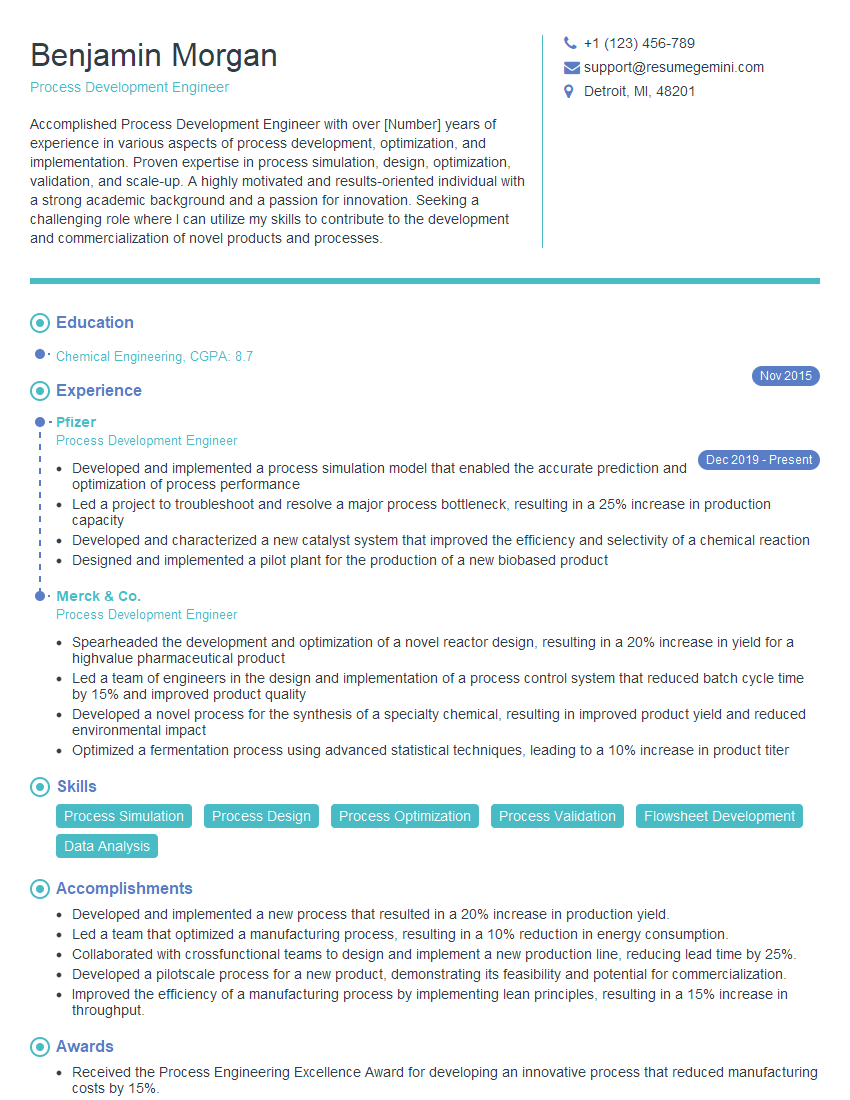
Process Development Engineer Resume Sample
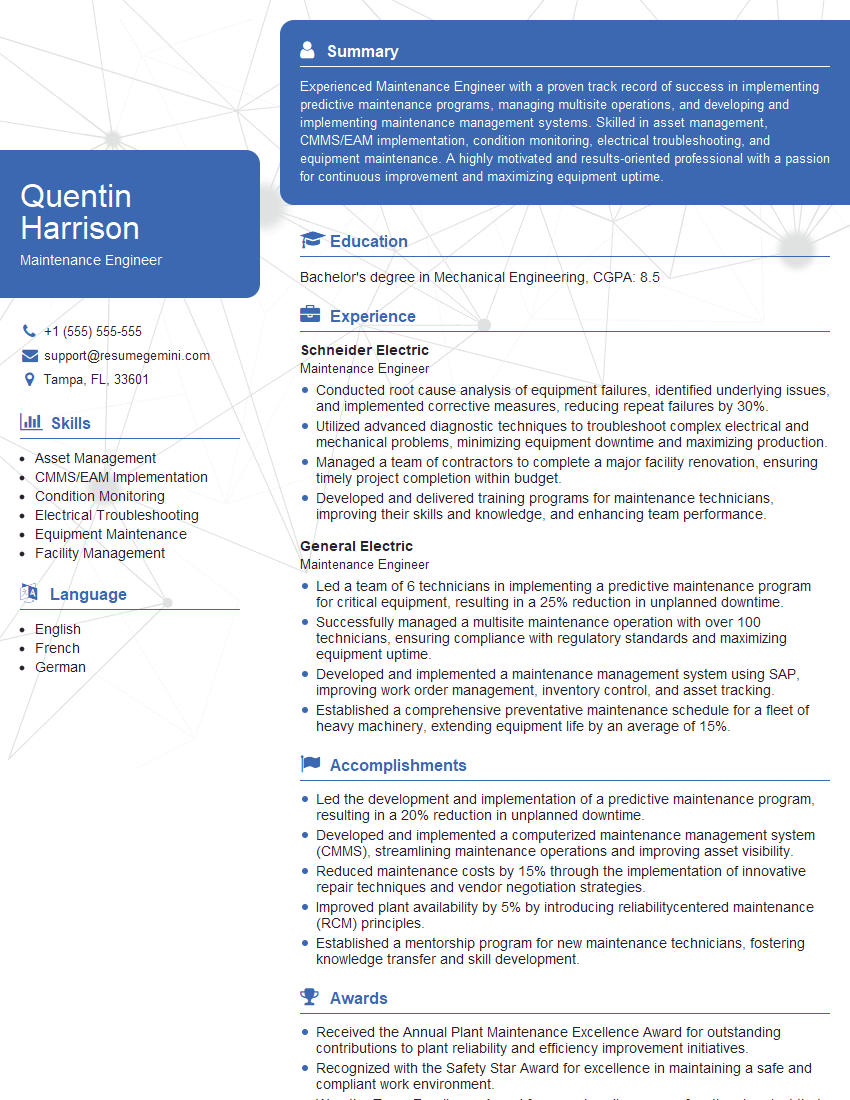
Maintenance Engineer Resume Sample
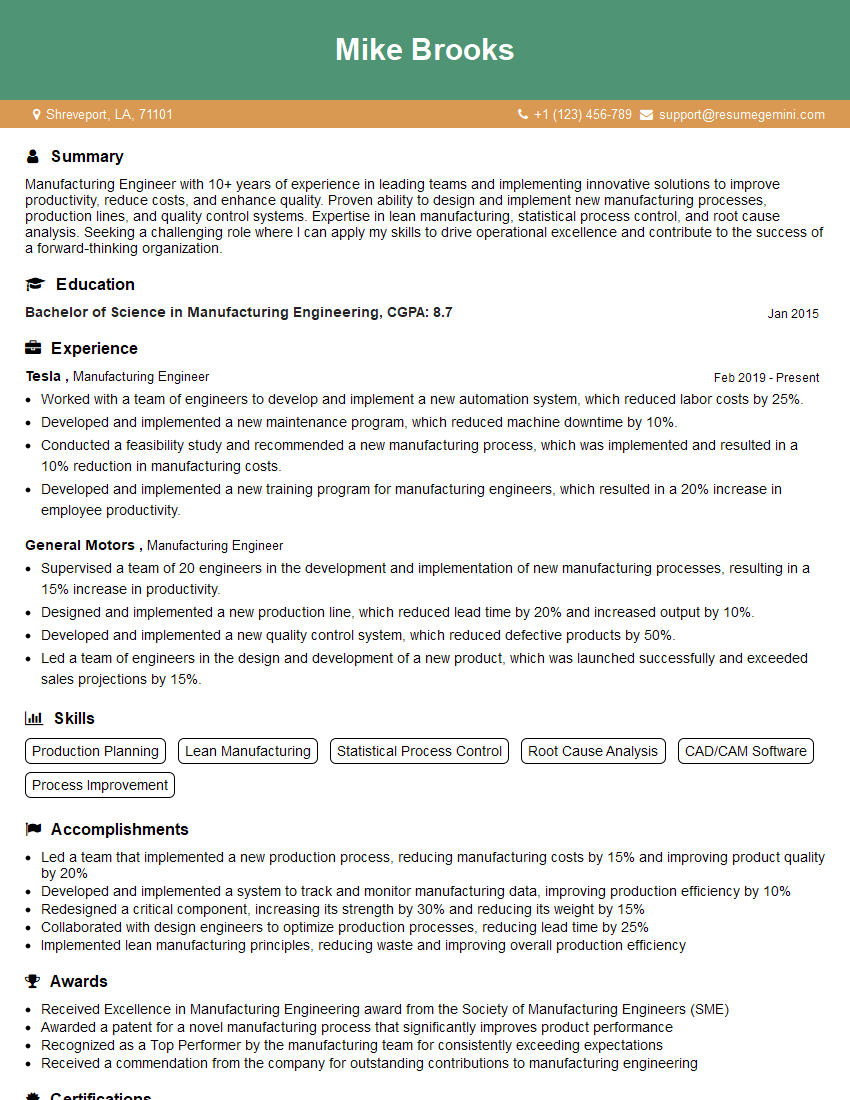
Manufacturing Engineer Resume Sample
Quality Control Engineer Resume Sample
Materials Engineer Resume Sample
Metallurgical Engineer Resume Sample

Welding Engineer Resume Sample
Laser Systems Engineer Resume Sample
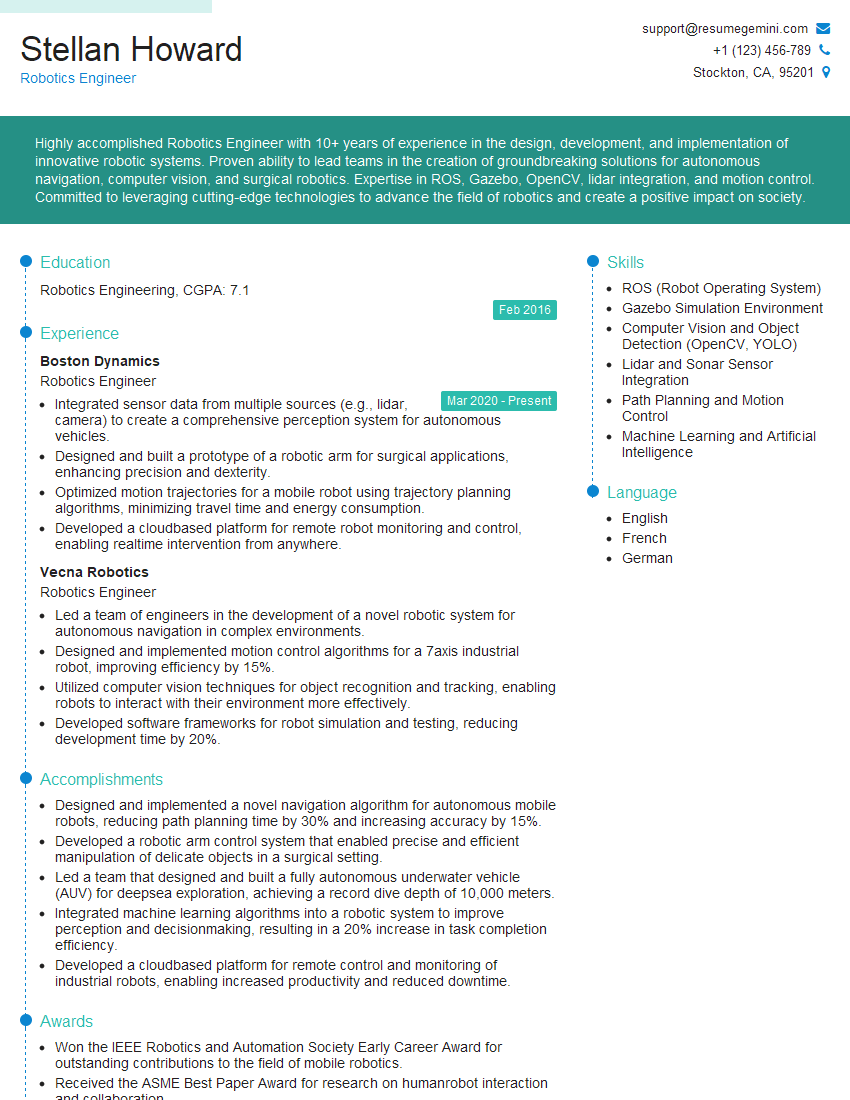
Robotics Engineer Resume Sample
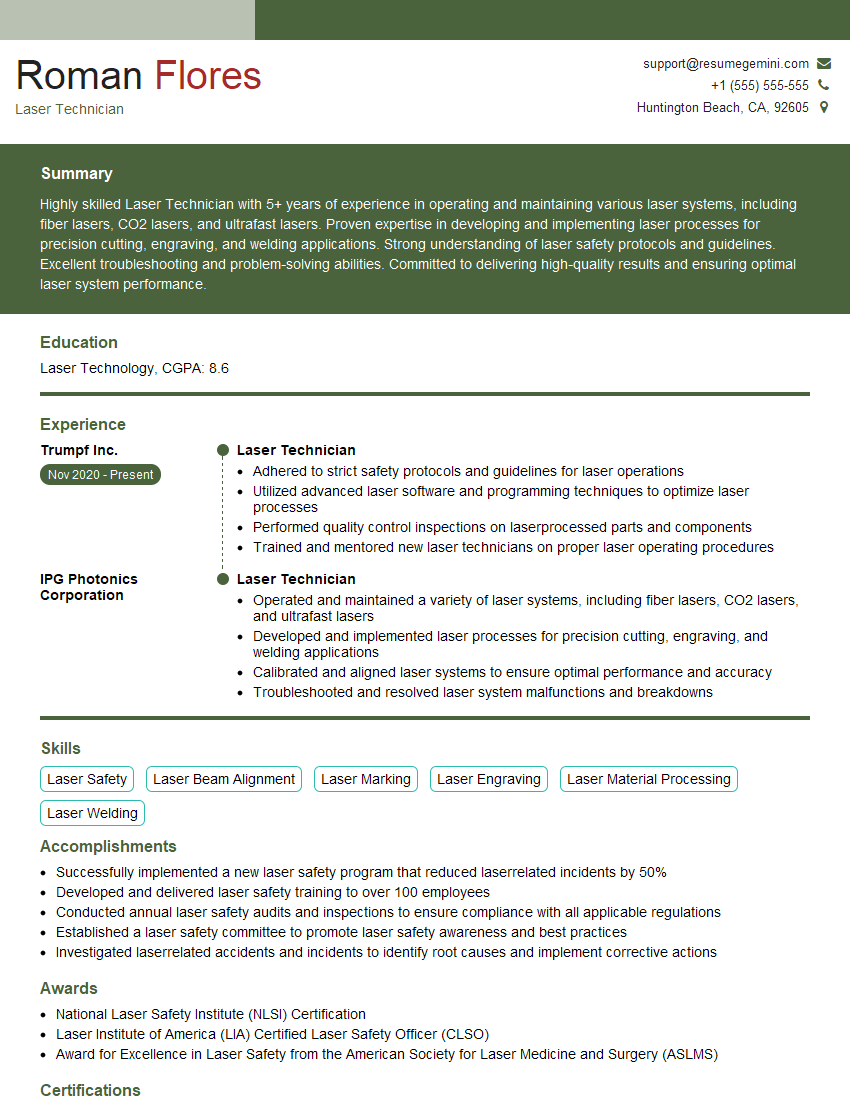
Laser Technician Resume Sample

Welding Technician Resume Sample
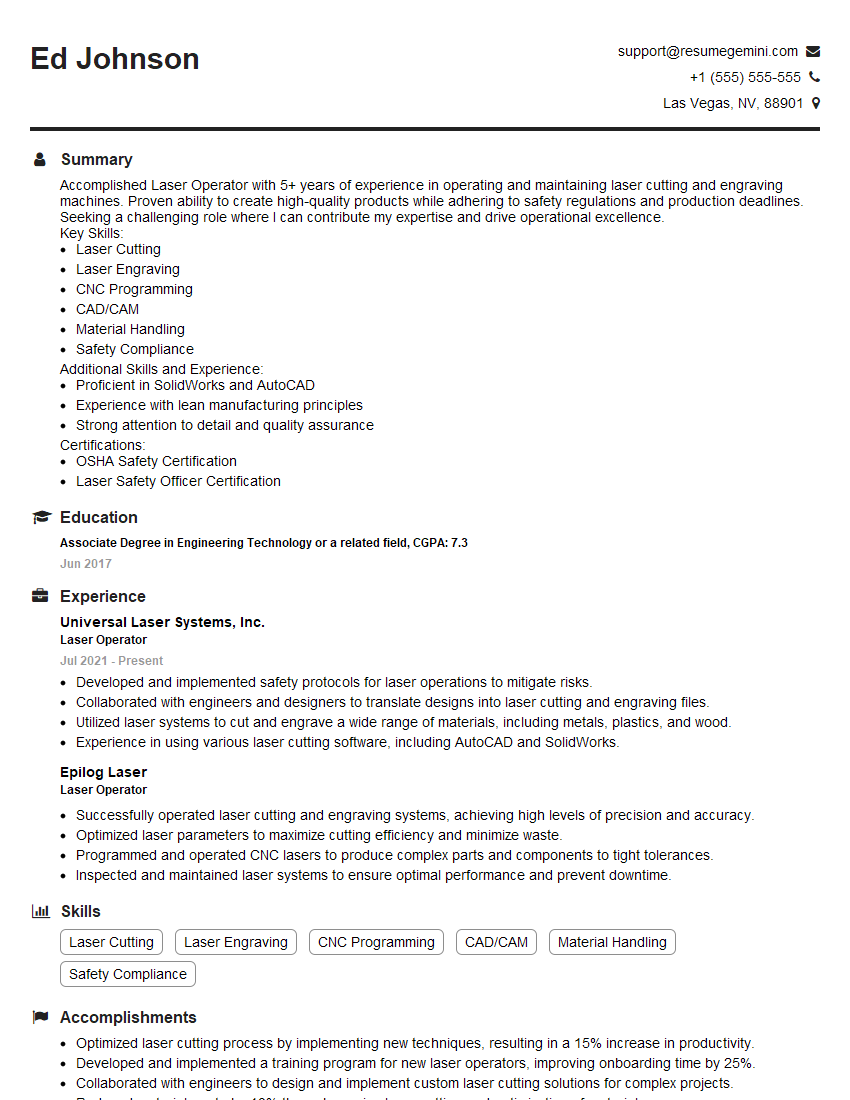
Laser Operator Resume Sample
- Production Supervisor
- Project Engineer
- Quality Assurance Specialist
- Applications Engineer
- Process Engineer
- Research and Development Engineer
- Automation Engineer
- Process Development Engineer
- Maintenance Engineer
- Manufacturing Engineer
- Quality Control Engineer
- Materials Engineer
- Metallurgical Engineer
- Welding Engineer
- Laser Systems Engineer
- Robotics Engineer
- Laser Technician
- Welding Technician
- Laser Operator
Explore more articles
Users Rating of Our Blogs
Share Your Experience
We value your feedback! Please rate our content and share your thoughts (optional).
What Readers Say About Our Blog
Very informative content, great job.
good