Interviews are more than just a Q&A session—they’re a chance to prove your worth. This blog dives into essential Lawn Care interview questions and expert tips to help you align your answers with what hiring managers are looking for. Start preparing to shine!
Questions Asked in Lawn Care Interview
Q 1. Describe your experience with different types of lawn grasses.
My experience encompasses a wide range of lawn grasses, from cool-season varieties thriving in cooler climates to warm-season grasses best suited for hotter temperatures. Cool-season grasses like Kentucky bluegrass, fine fescue, and ryegrass are known for their resilience in colder months and lush green appearance. I’ve worked extensively with establishing and maintaining these, understanding their specific needs for fertilization, mowing height, and watering. On the other hand, warm-season grasses such as Bermuda grass, Zoysia grass, and St. Augustine grass prefer warmer temperatures and sun exposure. My experience includes managing their dormancy periods, dealing with their unique pest and disease susceptibility, and optimizing their growth through appropriate fertilization and mowing schedules. I also have experience with grass blends, which combine the strengths of different species to create a more resilient and aesthetically pleasing lawn. For instance, a blend of fescues can provide better shade tolerance than a monoculture of just one type. Understanding the nuances of each type, from their growth habits to their maintenance requirements, is critical for achieving a healthy, vibrant lawn.
Q 2. What are the common lawn diseases and how do you treat them?
Common lawn diseases are a constant challenge, and early identification is key to effective treatment. For example, fungal diseases like brown patch, dollar spot, and rust can severely damage a lawn. Brown patch, recognizable by its brown, circular patches, often thrives in warm, humid conditions. Dollar spot presents as small, straw-colored spots, while rust manifests as reddish-orange pustules on the leaf blades. Treatment often involves fungicides, but cultural practices like proper watering (avoiding overhead watering), aeration to improve air circulation, and choosing disease-resistant grass varieties are equally important preventative measures. Another common issue is weed invasion, which isn’t technically a disease but acts like one. These are best addressed through pre-emergent herbicides to prevent them in the first place or post-emergent herbicides targeting specific weeds, always ensuring proper application to avoid damaging the desirable lawn grass.
Q 3. Explain your knowledge of fertilizer application techniques.
Fertilizer application is a precise science. I utilize soil testing to determine the specific nutrient needs of the lawn before applying any fertilizer. This avoids over-fertilization, which can damage the grass and harm the environment. The test reveals deficiencies in nitrogen (N), phosphorus (P), and potassium (K), represented by the NPK numbers on fertilizer bags. For example, a 20-10-10 fertilizer means 20% nitrogen, 10% phosphorus, and 10% potassium. The application method depends on the lawn’s size and the type of fertilizer used. Granular fertilizers are spread using a spreader, ensuring even distribution. Liquid fertilizers are applied using a sprayer, typically requiring a more focused approach. Timing is crucial, aligning applications with the grass’s growing season. Over-fertilizing can lead to excessive growth, increased weed pressure, and water pollution, while under-fertilizing results in thin, weak grass. Therefore, a carefully planned fertilization program, guided by soil tests and knowledge of the specific grass type, is essential for optimal lawn health.
Q 4. How do you identify and control common lawn pests?
Identifying and controlling common lawn pests requires keen observation and a multi-pronged approach. Grubs, for example, are larvae of beetles that feed on grass roots, leading to brown patches and easily lifted turf. Chinch bugs suck sap from grass blades, creating areas of yellowing and browning. Ants can also be a nuisance, disrupting the lawn’s aesthetics and sometimes indicating other pest problems. Integrated pest management (IPM) is my preferred strategy. This involves using the least-toxic methods first, starting with cultural controls like proper watering and fertilization to promote a healthy lawn that is naturally more pest-resistant. If necessary, I’ll then use targeted pesticides, selecting those that are least harmful to beneficial insects and the environment. Careful monitoring and regular inspection are crucial for early detection and prompt control, preventing widespread damage. Sometimes, a simple adjustment to lawn care practices can make a huge difference. For example, a well-aerated lawn might deter grubs from taking root.
Q 5. Describe your experience with lawn mowing techniques and equipment.
Mowing is more than just cutting grass; it’s an essential practice for lawn health. I use a variety of mowing techniques and equipment depending on the lawn’s size, type of grass, and desired look. For larger areas, riding mowers offer efficiency, while smaller areas are best handled with walk-behind mowers. Proper mowing height is crucial; cutting too short stresses the grass, making it vulnerable to diseases and weeds. The ‘one-third rule’ is a good guideline—never remove more than one-third of the grass blade’s height in a single mowing. Sharp mower blades are essential for a clean cut, preventing ragged edges that can invite disease. Regular blade sharpening and maintenance are key to preserving equipment’s longevity and ensuring a healthy lawn. I also use different mowing patterns, like alternating the direction of mowing, to prevent soil compaction and ensure even growth. This kind of attention to detail makes a significant difference in achieving a well-maintained lawn.
Q 6. What are the best practices for watering a lawn?
Watering effectively is about providing the right amount of water at the right time. Deep, infrequent watering is far superior to shallow, frequent watering. Shallow watering encourages shallow root growth, making the grass more susceptible to drought and heat stress. Deep watering encourages deeper root development, creating a more drought-tolerant and resilient lawn. The best time to water is early morning, allowing the grass to dry before nightfall, reducing the risk of fungal diseases. Avoid overhead watering, which can lead to fungal problems and water waste. Using a sprinkler system or soaker hoses ensures water reaches the roots efficiently. The frequency of watering depends on factors such as climate, soil type, and grass type. I always monitor the lawn’s condition, adjusting watering schedules based on weather patterns and grass appearance. Regular checking, especially during dry spells, will help you develop a consistent watering strategy that keeps your lawn healthy and lush.
Q 7. How do you manage weeds in a lawn?
Weed management requires a comprehensive strategy combining preventative and reactive measures. Pre-emergent herbicides applied before weed seeds germinate are highly effective in controlling annual weeds. Post-emergent herbicides are used to control weeds that have already sprouted. Selective herbicides target specific weeds while sparing the desirable lawn grass. Non-chemical methods are also valuable. Regular mowing prevents weeds from going to seed, reducing their spread. Proper fertilization and watering ensure a thick, healthy lawn that naturally crowds out weeds. Hand-pulling or hoeing are effective for small infestations, particularly for larger, established weeds. Mulching can suppress weed growth by blocking sunlight. A multi-faceted approach, choosing the right tools and techniques depending on the type and extent of the weed infestation, ensures long-term weed control. Regular monitoring allows for early detection, preventing them from taking over.
Q 8. Explain your knowledge of soil testing and its importance.
Soil testing is fundamental to successful lawn care. It’s like getting a blood test for your lawn – it reveals the underlying health and nutritional needs. A soil test analyzes the pH level, nutrient content (nitrogen, phosphorus, potassium, etc.), and organic matter. Understanding these factors is crucial because they directly impact grass health, growth, and resilience to disease and pests.
For instance, a soil test might reveal a low pH (too acidic), leading to nutrient deficiencies and poor growth. In this case, we’d amend the soil with lime to raise the pH. Conversely, if the soil is too alkaline (high pH), we might add sulfur to lower it. Nutrient deficiencies, such as low nitrogen, show up as yellowing or stunted growth, and we’d address these with targeted fertilizer applications based on the test results. A comprehensive soil test allows for a precise, effective, and environmentally responsible approach to fertilization, avoiding unnecessary chemical use and promoting a healthier, more vibrant lawn.
Q 9. Describe your experience with aeration and overseeding.
Aeration and overseeding are a dynamic duo for lawn rejuvenation, especially in compacted or thinning lawns. Think of aeration as giving your lawn a breath of fresh air – it relieves soil compaction, allowing water, air, and nutrients to reach the roots more easily. We use core aerators that remove small plugs of soil, creating channels for improved gas exchange. Overseeding, on the other hand, involves planting new grass seed into the existing lawn to thicken it up and fill in bare patches. It’s like adding new life to your lawn’s infrastructure.
The timing is key; we typically aerate in the fall or early spring when soil temperatures are moderate and grass is actively growing. After aeration, we overseed with a high-quality grass seed blend chosen to match the existing lawn type and climate. We then lightly rake the seed into the holes created by the aerator, and keep the soil moist to encourage germination. This process significantly improves lawn density, improves the overall health of the lawn and reduces weed growth.
Q 10. How do you handle challenging lawn situations, such as shade or drought conditions?
Challenging lawn situations require tailored solutions. For shady areas, I select shade-tolerant grass species like fine fescues, which thrive in lower light conditions. Proper fertilization is also critical, as less sunlight means slower growth and reduced nutrient uptake; we use slow-release fertilizers to avoid nutrient burn. For drought conditions, we focus on deep, infrequent watering to encourage deep root growth. We might also use drought-tolerant grass varieties and employ mulching techniques to retain soil moisture. In severe drought, I’ll advise clients on responsible water conservation measures.
For example, a client with a heavily shaded front yard might need a complete lawn renovation. This includes removing the existing, struggling grass, preparing the soil, and installing a shade-tolerant grass seed mix, followed by a customized fertilization program. A client experiencing persistent drought issues might benefit from installing a smart irrigation system with soil moisture sensors for efficient water usage. Each situation requires a detailed assessment and a plan designed to meet the specific challenges and the client’s needs.
Q 11. What safety precautions do you follow when using lawn care equipment?
Safety is paramount. When using lawn care equipment, I always prioritize safety. This starts with proper training and understanding the equipment’s operation. I wear appropriate personal protective equipment (PPE), including safety glasses, hearing protection, gloves, and sturdy footwear. Before using power equipment, I inspect it for any damage or loose parts. I also ensure the area is clear of obstructions and bystanders, especially children and pets.
Specific safety measures include using the equipment according to the manufacturer’s instructions, never refueling equipment while it’s running, and maintaining a safe distance from moving blades. After completing the tasks, I always switch off equipment, and allow it to cool completely before storage. Regular maintenance of the equipment also helps prevent accidents and ensures optimal performance. I keep a first-aid kit readily accessible as well.
Q 12. What is your experience with irrigation systems?
I have extensive experience with irrigation systems, including design, installation, and maintenance. I’m familiar with various types of systems, from simple sprinkler systems to sophisticated smart irrigation systems with soil moisture sensors and weather-based controllers. I understand the principles of proper water distribution, pressure regulation, and efficient water usage.
My experience includes troubleshooting problems, such as leaky pipes, malfunctioning sprinkler heads, and low water pressure. I can assess the existing system, identify areas for improvement, and recommend upgrades to optimize water efficiency and lawn health. For example, I might recommend replacing inefficient spray heads with rotary heads for more even water distribution, or installing a rain sensor to prevent unnecessary watering during rainfall. I’m proficient in installing drip irrigation systems for flower beds or other sensitive areas.
Q 13. How do you plan and schedule lawn care tasks?
Lawn care tasks are planned and scheduled according to the season and the specific needs of the lawn. It’s a cyclical process that takes into account weather patterns, grass type, and client preferences. We use a calendar system to schedule mowing, fertilizing, aeration, overseeding, weed control, and pest management.
A typical spring schedule might involve pre-emergent weed control, fertilization, and aeration. Summer focuses on mowing, watering, and addressing any weed or pest issues. Fall is ideal for overseeding and fertilization to prepare the lawn for winter. Winter involves cleanup and minimal maintenance. I customize each plan according to the individual needs of each lawn, considering factors like soil type, sun exposure, and the client’s budget and expectations. This proactive approach ensures a healthy and vibrant lawn throughout the year.
Q 14. Describe your experience with using various landscaping tools.
My experience encompasses a wide range of landscaping tools, including mowers (rotary, reel, robotic), string trimmers, edgers, blowers, aerators, spreaders, and various hand tools like shovels, rakes, and cultivators. I’m proficient in the safe and effective use of all of these. I understand the specific applications and maintenance requirements for each tool.
For example, I know that a reel mower provides a cleaner cut on finer grasses, while a rotary mower is better suited for thicker, coarser grasses. I’m also familiar with different types of spreaders, knowing that a broadcast spreader is ideal for applying fertilizer over a large area, while a drop spreader is better for precise application near sensitive areas. My expertise in using these tools ensures that every task is performed efficiently and with attention to detail.
Q 15. How do you communicate with clients about lawn care needs?
Effective communication is the cornerstone of any successful lawn care business. I believe in a multi-pronged approach, starting with a thorough initial consultation. This involves a detailed walk-through of the property, assessing the lawn’s health, identifying problem areas like weeds, bare patches, or disease, and discussing the client’s goals and expectations. I then tailor my recommendations, explaining the process clearly and answering any questions they may have in simple, non-technical terms. For example, if they’re concerned about fertilizer use, I’ll explain the benefits of slow-release options and how they minimize environmental impact.
Beyond the initial consultation, I maintain regular communication throughout the service period. This includes providing updates on progress, explaining any unforeseen issues that might arise (like a sudden insect infestation), and proactively suggesting solutions. I utilize email, text messaging, and even occasional phone calls to ensure clients feel informed and connected. For larger projects, I might even schedule follow-up meetings to review progress and address any concerns.
Finally, I always encourage open feedback. This helps build trust and allows for adjustments based on the client’s evolving needs or preferences. A satisfied client is a returning client, and clear communication is paramount to achieving that.
Career Expert Tips:
- Ace those interviews! Prepare effectively by reviewing the Top 50 Most Common Interview Questions on ResumeGemini.
- Navigate your job search with confidence! Explore a wide range of Career Tips on ResumeGemini. Learn about common challenges and recommendations to overcome them.
- Craft the perfect resume! Master the Art of Resume Writing with ResumeGemini’s guide. Showcase your unique qualifications and achievements effectively.
- Don’t miss out on holiday savings! Build your dream resume with ResumeGemini’s ATS optimized templates.
Q 16. What is your experience with organic lawn care practices?
I have extensive experience with organic lawn care practices, encompassing everything from soil testing and amendment to natural pest and weed control. My approach centers around building a healthy soil ecosystem, which is the foundation for a thriving lawn. This involves using compost, cover crops, and other organic matter to improve soil structure, fertility, and water retention. I prioritize the use of natural fertilizers like composted manure and seaweed extracts, avoiding synthetic chemicals whenever possible.
For weed control, I implement strategies like hand-weeding, mulching, and the introduction of beneficial microbes and fungi that compete with weeds for resources. For pest management, I rely on integrated pest management (IPM) techniques, which involve monitoring pest populations, using natural predators (like ladybugs for aphids), and employing organic pesticides only when absolutely necessary and as a last resort. For example, I’ve successfully utilized neem oil to combat certain fungal diseases and insect infestations in numerous client lawns. Documenting my methods ensures consistency and allows for continuous improvement based on observed outcomes.
Q 17. Describe your problem-solving skills related to lawn care issues.
Problem-solving is integral to lawn care. I approach issues systematically, following a structured process. First, I accurately diagnose the problem. This often requires thorough investigation, which may include soil testing, visual inspection for pests and diseases, and reviewing past treatments to identify any patterns.
Once I’ve identified the root cause, I develop a tailored solution. This might involve adjusting mowing practices, amending the soil, applying specific organic treatments, or implementing pest control measures. I always document the problem, my diagnosis, and the solution I implemented, allowing me to learn from past experiences and adapt my approach accordingly.
For instance, if a client is experiencing yellowing grass, I wouldn’t jump to conclusions. I’d investigate potential causes – nutrient deficiencies, disease, insect damage, watering issues, or even compacted soil. Based on my findings, I’d recommend the appropriate corrective action, which may be as simple as adjusting the watering schedule or as complex as aerating the soil and applying specific nutrients.
Q 18. How do you manage a team of lawn care professionals?
Managing a team effectively involves clear communication, delegation, and fostering a positive work environment. I lead by example, ensuring that all team members understand the importance of quality workmanship and client satisfaction. I provide clear instructions and expectations for each job, utilizing regular team meetings to discuss progress, address any challenges, and share best practices.
I delegate tasks based on each team member’s skills and experience, promoting a sense of ownership and responsibility. Furthermore, I empower my team by providing opportunities for professional development and skill enhancement. Open communication channels encourage feedback and collaboration, creating a supportive environment where everyone feels valued and respected. Teamwork, in my experience, is vital for efficient and effective lawn care.
Q 19. How do you maintain accurate records of lawn care activities?
Maintaining accurate records is crucial for accountability, efficiency, and client satisfaction. I utilize a combination of digital and physical record-keeping methods. For each client, I maintain a detailed file that includes the property’s address, service history (dates of visits, services performed, products used, and notes on observations), soil test results, and client communication records.
I use project management software to schedule jobs, track progress, and assign tasks. This ensures everything is well-organized and easy to access. All work is documented with photographs which can aid in future diagnosis and evaluation. This detailed system enables efficient service planning, accurate billing, and effective problem-solving for recurring issues. It also provides valuable data for analyzing trends and making improvements to our operations.
Q 20. What is your experience with estimating costs for lawn care projects?
Accurate cost estimation is essential for fair pricing and successful project management. I develop estimates based on several factors: the size of the lawn, the type of grass, the desired level of service (e.g., basic mowing versus comprehensive lawn care), the required materials, and the labor hours involved.
Before providing an estimate, I conduct a thorough site assessment to identify any specific challenges or potential complexities that might impact the cost. For instance, a sloped lawn may require specialized equipment and extra labor, increasing the overall cost. I present the estimate clearly and transparently, detailing all costs involved (labor, materials, equipment, etc.), with different service packages outlined for easier client selection. Maintaining detailed cost records allows me to improve my accuracy over time and better understand profitability.
Q 21. What are your strengths and weaknesses related to lawn care?
My strengths lie in my deep understanding of lawn care principles, my ability to diagnose and solve problems effectively, and my commitment to client communication. I am a detail-oriented and dedicated professional, consistently striving for excellence in my work. I am also adept at managing teams and resources efficiently.
One area I’m continually working on is expanding my knowledge of the latest advancements in sustainable lawn care technologies. While I am proficient in many aspects of organic lawn care, the field is always evolving, and I’m committed to continuous learning and professional development to stay ahead of the curve and better serve my clients. This includes regularly attending industry conferences and workshops, and actively seeking knowledge from relevant publications and experts. This continuous improvement is a vital part of my professional approach.
Q 22. How do you stay updated on the latest lawn care techniques and technologies?
Staying current in lawn care requires a multi-pronged approach. It’s a constantly evolving field with new techniques, products, and technologies emerging regularly. I actively engage in several strategies to ensure I remain at the forefront of the industry.
Professional Organizations: I’m a member of the Professional Grounds Management Society (PGMS) and regularly attend their conferences and webinars. These events offer invaluable insights into the latest research, best practices, and innovative solutions from leading experts in the field. For instance, I recently learned about a new type of slow-release fertilizer at a PGMS conference that significantly reduces runoff and environmental impact.
Industry Publications: I subscribe to several leading lawn care magazines and journals, such as Turf & Landscape Magazine and Grounds Management. These publications provide in-depth articles on new techniques, product reviews, and case studies that illustrate successful implementations of new technologies. This helps me to evaluate and selectively adopt beneficial innovations.
Online Resources & Continuing Education: I regularly browse reputable online resources, such as university extension websites and industry-specific forums. Many universities offer online courses and workshops focusing on sustainable lawn care practices and pest management. Participating in these keeps my knowledge fresh and relevant.
Manufacturer Training: I participate in training programs offered by manufacturers of lawn care equipment and products. This gives me hands-on experience with new tools and provides an understanding of the latest technological advancements in the field. For example, I recently completed a training session on using robotic mowers, which allows me to offer a more efficient and eco-friendly mowing service to my clients.
Q 23. Describe a time you had to deal with a difficult customer.
I once had a client who was extremely insistent on using a specific type of fertilizer, despite my explaining that it wasn’t suitable for their lawn type and could even cause damage. They had seen an advertisement and were convinced it was the best product. Instead of arguing, I took a different approach. I understood their concern – they wanted the best for their lawn. I carefully explained the science behind why their chosen fertilizer wouldn’t work and presented alternative options, using soil test results to illustrate my point.
I showed them examples of successful applications of similar fertilizers on other lawns. I even offered a small-scale test patch to demonstrate the difference. By being patient, empathetic, and providing them with evidence-based reasoning, I ultimately gained their trust. They appreciated my professional approach and were happy to go with my recommendation. The key was listening to their concerns and addressing them with factual information, rather than just dismissing their preferences.
Q 24. How do you adapt your lawn care approach to different seasons?
Seasonal adaptation is crucial for optimal lawn health. My approach changes dramatically throughout the year to address the specific challenges each season presents.
Spring: This is the time for lawn awakening. I focus on aeration to improve soil drainage, overseeding to thicken the turf, and fertilization to stimulate growth. Weed control is also a priority in spring.
Summer: Summer brings heat stress and potential drought. My focus shifts to regular watering (deep and infrequent), mowing at a higher height to shade the roots, and careful monitoring for pests and diseases. I might also apply a summer fertilizer that promotes stress tolerance.
Autumn: Fall is about preparing the lawn for winter dormancy. I apply a fall fertilizer rich in potassium and phosphorus to build hardiness. Leaf removal becomes a priority to prevent smothering the grass. I also might perform any necessary repairs or renovations.
Winter: While the lawn is dormant, my work involves snow removal (if requested) and planning for the upcoming growing season. I might perform soil testing to assess nutrient levels and determine fertilizer needs for the spring.
Q 25. What are the environmental considerations in lawn care?
Environmental considerations are paramount in modern lawn care. My practices are designed to minimize the ecological footprint and promote sustainability. This involves several key aspects:
Reduced Pesticide Use: I prioritize integrated pest management (IPM) strategies, focusing on preventative measures like proper fertilization and watering, and using pesticides only when absolutely necessary and selecting the least toxic options. I always follow label instructions meticulously.
Water Conservation: I encourage efficient irrigation techniques, such as using drip irrigation or soaker hoses instead of sprinklers, and adjusting watering schedules based on weather conditions and soil moisture levels. I educate clients on the importance of deep, infrequent watering.
Sustainable Fertilization: I utilize slow-release fertilizers to minimize nutrient runoff and promote healthy soil microbiology. I conduct soil tests to tailor fertilizer applications to the specific needs of the lawn, avoiding over-fertilization. Organic fertilizers are frequently incorporated.
Reduced Carbon Footprint: I’m increasingly using electric or battery-powered equipment to reduce emissions and noise pollution. I also try to minimize travel distances to reduce fuel consumption.
Q 26. How do you handle unexpected problems or emergencies on a job site?
Unexpected problems are part of the job. My approach involves a systematic process:
Assessment: I first thoroughly assess the nature and extent of the problem. Is it a pest infestation, equipment malfunction, or a sudden weather event? Photography is essential for documentation.
Prioritization: I prioritize based on the urgency and potential impact. A serious pest infestation requires immediate action, while a minor equipment issue can wait.
Problem Solving: I draw on my experience and knowledge to devise a solution. If needed, I consult with experts or suppliers. This might involve contacting a pest control specialist or a repair technician. Safety is always my top priority.
Communication: I promptly inform the client about the situation, the proposed solution, and any potential impact on the project timeline or cost. Transparency and communication are vital.
Documentation: I document the incident, the resolution, and any lessons learned. This helps prevent similar problems in the future.
Q 27. What is your experience with different types of landscaping equipment?
My experience encompasses a wide range of landscaping equipment, both manually operated and power-driven. This includes:
Mowers: I’m proficient with various types of mowers, including rotary, reel, and robotic mowers. I understand their maintenance and operational nuances and select the appropriate type based on the lawn’s size, type, and specific needs.
Trimmers & Edgers: I’m skilled in using string trimmers, gas-powered and electric, for precise edging and trimming around obstacles. I also use edgers to create neat borders.
Blowers: I utilize both backpack and handheld blowers for efficient leaf and debris removal.
Aeration & Overseeding Equipment: I have experience operating core aerators, slit seeders, and other specialized equipment for soil improvement and turf renovation.
Sprayers: I’m adept at using various types of sprayers for applying fertilizers, herbicides, and pesticides, ensuring safe and effective application.
Regular maintenance and safety procedures are always followed for all equipment.
Q 28. Explain your understanding of sustainable lawn care practices.
Sustainable lawn care is more than just a trend; it’s a responsible approach to lawn management. It prioritizes environmental protection and long-term lawn health without compromising aesthetics. My understanding encompasses:
Integrated Pest Management (IPM): Minimizing pesticide use by implementing preventative measures and using pesticides only as a last resort. This includes encouraging beneficial insects and using natural pest control methods.
Water Wise Practices: Implementing efficient irrigation systems and strategies that minimize water waste, such as deep, infrequent watering, and utilizing soil moisture sensors.
Soil Health Focus: Improving soil health through aeration, organic matter addition (like compost), and avoiding practices that compact the soil. Healthy soil is the foundation of a healthy lawn.
Responsible Fertilization: Using slow-release fertilizers, conducting soil tests to avoid over-fertilizing, and considering organic fertilizer options to reduce nutrient runoff and improve soil health.
Biodiversity Promotion: Incorporating native plant species, creating habitat for pollinators, and avoiding monoculture practices to support biodiversity.
Sustainable practices not only benefit the environment but also lead to a healthier, more resilient lawn in the long run, reducing the need for excessive inputs and maintenance.
Key Topics to Learn for Your Lawn Care Interview
- Grass Types & Their Needs: Understanding different grass varieties (e.g., fescue, Bermuda, zoysia), their growth habits, and specific fertilization and watering requirements is crucial. This shows your ability to tailor your approach to various lawn situations.
- Mowing Techniques & Equipment: Learn about proper mowing heights, blade sharpness, mulching vs. bagging, and the operation and maintenance of various mowing equipment (push mowers, riding mowers). Be prepared to discuss safety procedures and efficient mowing strategies.
- Fertilization & Soil Health: Discuss the importance of soil testing, understanding NPK ratios, and selecting appropriate fertilizers based on grass type and soil conditions. Explain the benefits of organic vs. synthetic fertilizers and how to avoid common fertilization mistakes.
- Weed & Pest Control: Demonstrate knowledge of common lawn weeds and pests, and safe and effective control methods (both chemical and organic). Be prepared to discuss integrated pest management (IPM) strategies and environmentally friendly practices.
- Irrigation & Water Management: Explain the principles of efficient irrigation, including proper sprinkler placement, watering schedules, and water conservation techniques. Discuss the impact of overwatering and underwatering on lawn health.
- Lawn Aeration & Overseeding: Describe the benefits of aeration and overseeding for improving lawn density and health. Explain the techniques involved and the appropriate timing for these practices.
- Troubleshooting Common Lawn Problems: Be ready to discuss diagnosing and addressing common lawn issues such as brown patches, disease, insect infestations, and compaction. Showcase your problem-solving skills and ability to provide effective solutions.
- Safety Procedures & Equipment Maintenance: Highlight your understanding of safe operating procedures for all lawn care equipment and your knowledge of routine maintenance to ensure optimal performance and longevity.
Next Steps
Mastering these lawn care fundamentals will significantly boost your chances of landing your dream job. A strong understanding of these concepts demonstrates your competence and commitment to providing high-quality lawn care services. To further enhance your job prospects, creating a professional, ATS-friendly resume is vital. ResumeGemini is a trusted resource that can help you build a compelling resume that highlights your skills and experience effectively. Examples of resumes tailored specifically for the lawn care industry are available to guide you. Take the next step towards your career success today!

Landscape Designer Resume Sample

Arborist Resume Sample

Golf Course Superintendent Resume Sample

Lawn Service Manager Resume Sample

Turf Manager Resume Sample

Groundskeeper Resume Sample

Irrigation Technician Resume Sample
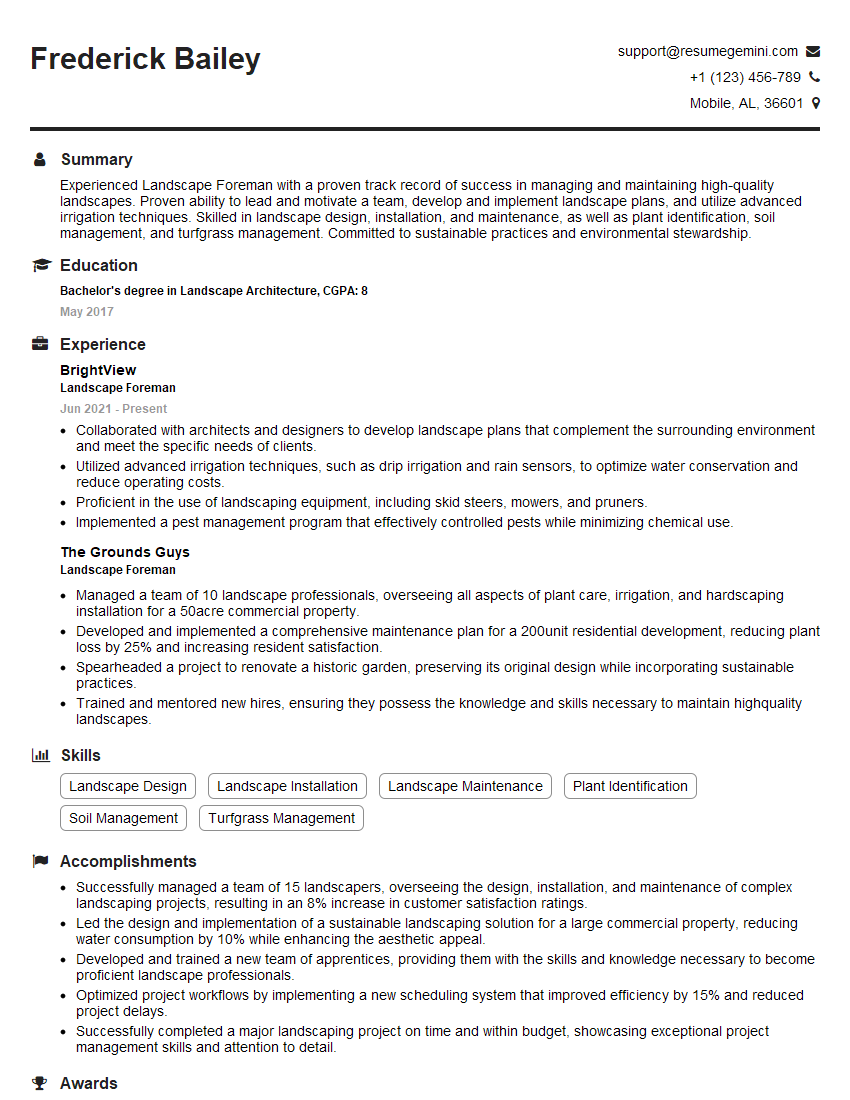
Landscape Foreman Resume Sample
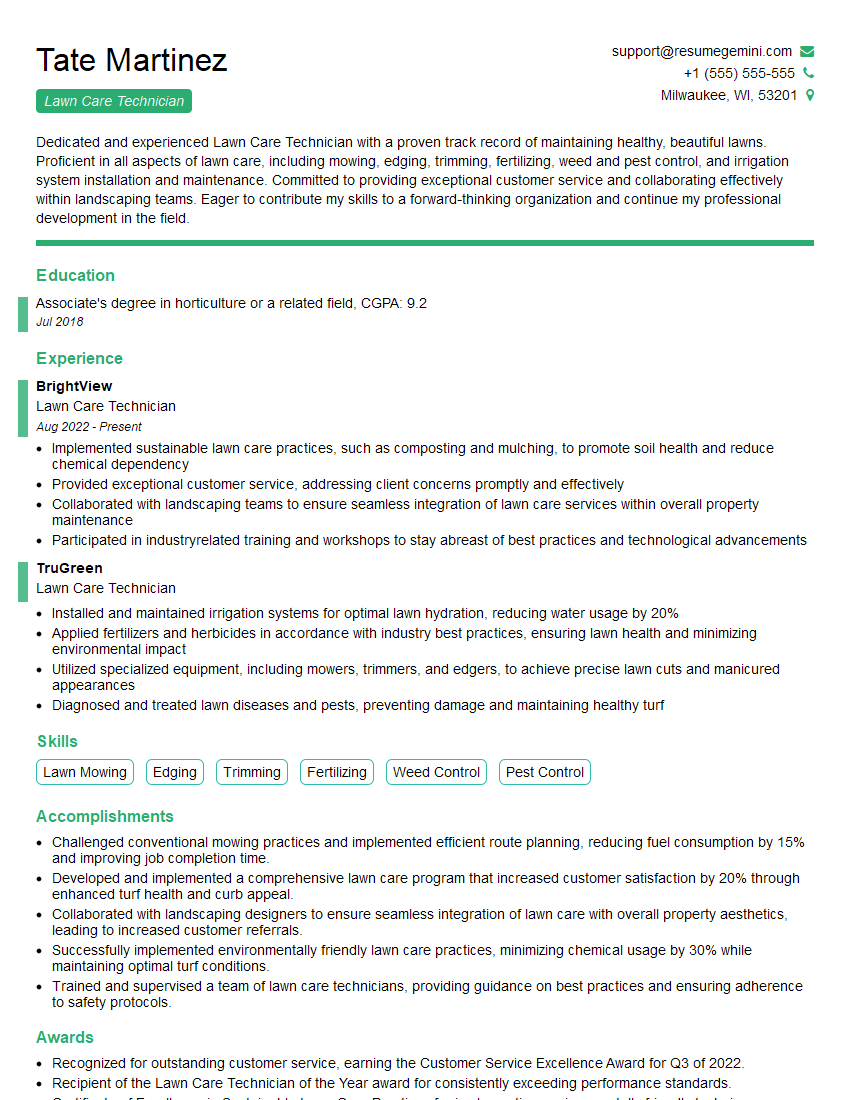
Lawn Care Technician Resume Sample
Explore more articles
Users Rating of Our Blogs
Share Your Experience
We value your feedback! Please rate our content and share your thoughts (optional).
What Readers Say About Our Blog
Very informative content, great job.
good