The right preparation can turn an interview into an opportunity to showcase your expertise. This guide to Leadership and Management in Solar Energy Industry interview questions is your ultimate resource, providing key insights and tips to help you ace your responses and stand out as a top candidate.
Questions Asked in Leadership and Management in Solar Energy Industry Interview
Q 1. Describe your experience managing solar energy projects from inception to completion.
Managing a solar energy project from inception to completion involves a multi-stage process requiring meticulous planning and execution. It starts with identifying suitable sites, conducting thorough feasibility studies, including environmental impact assessments, and securing necessary permits and financing. Next, detailed engineering design is crucial, focusing on system optimization for maximum energy yield. This involves selecting the right equipment, considering factors like panel type, inverter efficiency, and mounting structures. Procurement follows, requiring careful vendor selection, contract negotiation, and quality control. Construction involves managing the on-site team, ensuring adherence to safety regulations, and timely completion. Finally, commissioning includes thorough testing, performance monitoring, and handover to the client. Throughout, strong project management, including detailed scheduling and risk assessment, is critical for success.
For example, in a recent 5MW ground-mount project, we meticulously mapped the site’s topography and shading patterns using GIS software to optimize panel placement. This resulted in a 3% increase in energy yield compared to the initial design. Effective communication with the subcontractors and our internal team prevented costly delays, ensuring the project was completed on time and within budget.
Q 2. Explain your approach to risk management in solar energy projects.
Risk management in solar energy projects is paramount due to inherent uncertainties. My approach is proactive and systematic, involving identification, analysis, and mitigation of potential risks. This begins with a comprehensive risk register, identifying potential problems such as permitting delays, equipment failures, weather-related disruptions, and financing issues. Each risk is assessed based on its likelihood and potential impact. Mitigation strategies, such as contingency planning, insurance, and robust quality control, are then developed and implemented. Regular monitoring and reporting allow for timely adjustments to the risk mitigation plan.
For instance, in a previous project, we anticipated potential supply chain disruptions and proactively secured key components early, avoiding delays when a global shortage of inverters occurred. Our risk register identified this and the mitigation strategy was successful in protecting our project timeline.
Q 3. How do you manage budgets and resources effectively in a solar energy context?
Effective budget and resource management in solar energy is essential for project profitability. I utilize a combination of techniques, including detailed budgeting, robust cost tracking, and efficient resource allocation. The budgeting process involves breaking down project costs into various components, such as land acquisition, equipment, labor, permits, and insurance. Regular cost tracking against the budget helps identify variances early on, allowing for proactive corrective actions. Resource allocation focuses on optimizing the utilization of personnel, equipment, and materials, avoiding wastage and delays. Software tools like project management platforms play a vital role in this process.
In one project, we utilized a value engineering exercise to identify cost-effective alternatives for certain components without compromising quality. This allowed us to stay within budget and deliver the project successfully.
Q 4. How do you motivate and lead a team in a fast-paced solar energy environment?
Motivating and leading a team in the fast-paced solar energy industry requires a collaborative and empowering approach. I foster a positive and supportive work environment that values open communication, teamwork, and continuous improvement. Clear goals and expectations are communicated, along with regular feedback and recognition for individual and team accomplishments. Empowering team members through delegation and providing opportunities for professional development fosters ownership and engagement. I also emphasize the importance of work-life balance, understanding the demanding nature of the industry.
For example, I organized team-building activities to enhance collaboration and boost morale. I also implemented a system of regular one-on-one meetings to provide support and address individual concerns. This approach has resulted in improved team cohesion and project success rates.
Q 5. Describe your experience with solar energy regulatory compliance.
Solar energy projects are subject to numerous regulations at various levels, including federal, state, and local. My experience includes navigating interconnection procedures with utilities, complying with building codes and safety standards (like NEC and OSHA), and adhering to environmental regulations. I ensure that all projects are designed and constructed to meet or exceed these standards, working closely with regulatory bodies to obtain all necessary permits and approvals. This involves thorough documentation, regular inspections, and maintaining comprehensive records. Staying updated on changes in regulations is critical for compliance.
In a recent project, we proactively engaged with the local authorities during the permitting phase, resolving potential issues early and avoiding delays. This proactive approach ensured a smooth regulatory process.
Q 6. How do you handle conflicts within your team?
Conflict resolution within a team is handled through a combination of proactive measures and reactive strategies. Proactive measures include fostering open communication, establishing clear team norms, and promoting respect and trust among team members. When conflicts arise, I encourage open dialogue in a neutral setting, focusing on understanding each perspective and finding common ground. Mediation may be necessary to facilitate resolution. The goal is to find mutually acceptable solutions, addressing the root cause of the conflict rather than simply managing the symptoms.
In one case, a disagreement arose between two team members regarding project scheduling. By facilitating open discussion, we identified the underlying concerns and collaboratively developed a revised schedule that addressed both parties’ needs. The conflict was resolved without negatively impacting the project.
Q 7. Explain your strategy for optimizing solar energy plant performance.
Optimizing solar energy plant performance requires a multi-faceted approach. It starts with design optimization, which includes accurate site assessment, appropriate panel and inverter selection, and efficient system layout. Regular performance monitoring using Supervisory Control and Data Acquisition (SCADA) systems is crucial. This allows for early detection of issues such as panel shading, soiling, or inverter malfunctions. Preventive maintenance, including regular cleaning, inspections, and repairs, significantly extends the lifespan and efficiency of the system. Advanced techniques, such as predictive maintenance using data analytics, can further enhance performance by anticipating and addressing potential problems before they impact production. Finally, utilizing advanced techniques like power optimizer optimization can maximize energy harvest from individual panels.
For example, in one plant, using SCADA data to identify performance anomalies, we discovered that a section of panels was experiencing significant shading. By implementing targeted corrective actions (e.g., trimming nearby trees), we improved energy yield by 2%.
Q 8. How do you ensure the safety of your team and equipment on solar energy projects?
Safety is paramount in the solar energy industry. My approach is multifaceted, starting with rigorous safety training for all team members. This includes comprehensive instruction on fall protection, electrical safety, handling of hazardous materials, and emergency response procedures. We use a tiered system, with initial training followed by regular refresher courses and on-site safety briefings before every project.
Secondly, we employ a robust risk assessment process for each project. This involves identifying potential hazards, evaluating their risks, and implementing control measures. For example, on rooftop installations, we use detailed site surveys to pinpoint potential fall hazards and employ appropriate fall protection systems, like guardrails, harnesses, and safety nets. For electrical safety, we utilize lockout/tagout procedures to ensure equipment is de-energized before any work commences. We also mandate the use of personal protective equipment (PPE) at all times, including hard hats, safety glasses, gloves, and high-visibility clothing.
Finally, regular safety audits and inspections are conducted to ensure compliance with our safety protocols and to identify any areas for improvement. We utilize incident reporting systems to track near misses and accidents, analyze root causes, and implement corrective actions to prevent future occurrences. Our goal is not just compliance, but a culture of proactive safety where every team member feels empowered to raise concerns and stop work if they identify a safety risk.
Q 9. What are your strategies for attracting and retaining top talent in the solar industry?
Attracting and retaining top talent in the solar industry requires a strategic approach that focuses on both compensation and culture. We offer competitive salaries and benefits packages, recognizing the high demand for skilled workers in this rapidly growing field. Beyond compensation, we emphasize career development opportunities, providing training and mentorship programs to help employees enhance their skills and advance their careers. This includes opportunities for specialized training in emerging technologies like energy storage and smart grids.
Furthermore, we foster a positive and inclusive work environment. This involves creating a collaborative team dynamic, providing regular feedback and recognition, and promoting work-life balance. We also prioritize employee wellbeing through initiatives like health and wellness programs. We actively seek out diverse candidates, recognizing that diverse perspectives lead to innovation and problem-solving.
To retain top talent, we focus on ongoing professional development and advancement opportunities. For instance, we offer tuition reimbursement for relevant courses, industry conferences, and professional certifications. We also actively solicit feedback through regular employee surveys and one-on-one meetings to understand our employee’s needs and address any concerns promptly. This ensures our employees feel valued, heard, and invested in their long-term careers with our company.
Q 10. How do you measure and track the success of solar energy projects?
Measuring the success of solar energy projects involves a multi-faceted approach, encompassing technical performance, financial outcomes, and environmental impact. Key performance indicators (KPIs) are crucial for tracking progress and identifying areas for improvement.
Technical Performance: We track metrics such as energy production (kWh), system efficiency, and uptime. We use sophisticated monitoring systems to collect real-time data on energy generation and identify any performance issues. These systems allow us to remotely troubleshoot and optimize system performance, ensuring maximum energy output.
Financial Outcomes: We monitor the project’s return on investment (ROI), levelized cost of energy (LCOE), and internal rate of return (IRR). These metrics help evaluate the project’s financial viability and compare its performance against projections.
Environmental Impact: We measure the project’s carbon emissions reduction, contributing to sustainability goals. We also consider other environmental aspects, like land use and habitat impact. We regularly report on these metrics to demonstrate the positive environmental contributions of our projects.
By regularly monitoring and analyzing these KPIs, we can ensure projects are meeting expectations, identify potential problems early, and make data-driven adjustments to enhance performance and profitability.
Q 11. Describe your experience with solar energy technology and innovation.
My experience spans several generations of solar technology. I’ve worked with everything from traditional crystalline silicon panels to the latest advancements in thin-film and perovskite technologies. I’ve witnessed firsthand the dramatic decrease in the cost of solar energy and the significant improvements in efficiency. This includes working on projects incorporating microinverters and power optimizers for enhanced system performance, and exploring the integration of battery storage for grid resilience and improved energy management.
I have been involved in projects utilizing various mounting systems, ranging from ground-mounted arrays to rooftop installations and building-integrated photovoltaics (BIPV). I am familiar with the complexities of interconnection with the electric grid and the regulatory requirements associated with grid-tied systems. Furthermore, I’ve been actively involved in evaluating and implementing innovative solutions to enhance efficiency, reduce costs, and improve the overall reliability of solar energy projects. This has involved staying abreast of the latest technological advancements through industry conferences, research publications, and collaboration with technology providers.
Q 12. How do you manage stakeholder relationships in solar energy projects?
Managing stakeholder relationships in solar energy projects requires strong communication and collaboration skills. Stakeholders can include landowners, utility companies, regulatory bodies, investors, and local communities. My approach emphasizes transparency, open communication, and proactive engagement.
We begin by clearly defining roles and responsibilities for each stakeholder. This includes establishing clear communication channels and regular updates on project progress. We actively solicit feedback from stakeholders throughout the project lifecycle, holding regular meetings and providing opportunities for input. We address concerns promptly and transparently, ensuring all stakeholders feel heard and valued.
When dealing with potential conflicts, we employ collaborative problem-solving techniques. We strive to find mutually beneficial solutions that address the interests of all stakeholders. Building trust and strong relationships is key to navigating any challenges. This is particularly crucial when navigating potential regulatory hurdles or community concerns.
Q 13. How do you handle unexpected challenges or setbacks in solar energy projects?
Unexpected challenges are inevitable in solar energy projects. My experience has taught me the importance of proactive risk management and a flexible, adaptable approach. When facing setbacks, my first step is to thoroughly assess the situation. This involves identifying the root cause of the problem and determining the scope and impact of the challenge.
Next, I assemble a team to develop a comprehensive solution. This team includes individuals with expertise in the specific area affected by the challenge. We brainstorm potential solutions, evaluating their feasibility, cost, and time implications. We prioritize solutions that mitigate risk and minimize project delays. Transparent communication with stakeholders is critical during this phase, keeping them informed of the challenge and the proposed solutions.
For example, if we encounter unforeseen site conditions during construction (e.g., unexpected soil conditions), we would immediately assess the impact, revise plans as needed, and communicate the changes to the stakeholders. We may need to adjust timelines or budgets, but a proactive and well-communicated response minimizes disruptions and maintains project momentum.
Q 14. Explain your experience with solar energy sales and business development.
My experience in solar energy sales and business development encompasses all aspects of the sales cycle, from initial client contact to project completion and ongoing relationship management. I’ve worked extensively on securing new business opportunities, including developing comprehensive proposals and presentations, negotiating contracts, and managing the entire sales process.
My approach focuses on building strong relationships with potential clients by understanding their energy needs and demonstrating the value proposition of solar energy solutions. This includes providing detailed cost-benefit analyses, showcasing the environmental and financial benefits, and addressing any concerns or questions clients may have. I use data-driven insights to create tailored proposals, showcasing the specific advantages for each client.
I am also adept at leveraging various marketing and sales strategies, including online marketing, networking, and industry events, to expand our client base. I am familiar with navigating the regulatory landscape and securing necessary permits and approvals for solar projects. Ultimately, my success in sales and business development is built on a foundation of strong client relationships, technical expertise, and a commitment to exceeding client expectations.
Q 15. Describe your experience with solar energy financing and investment.
My experience in solar energy financing and investment spans over a decade, encompassing various project stages from initial feasibility studies to securing funding and project completion. I’ve worked with a range of financing models, including:
- Debt financing: Securing loans from banks and other financial institutions, requiring detailed financial projections and risk assessments. For example, I successfully negotiated a $10 million loan for a 50MW solar farm, leveraging a strong project proposal and a robust power purchase agreement (PPA).
- Equity financing: Attracting investors through private placements or public offerings, requiring a comprehensive business plan showcasing strong returns and mitigation of risks. I’ve been instrumental in securing equity investments for several smaller-scale projects by demonstrating the long-term viability and potential for attractive returns.
- Government incentives and subsidies: Navigating complex regulatory landscapes and leveraging tax credits, grants, and other incentives to reduce project costs and improve investor returns. I’ve successfully secured significant government funding for projects meeting specific environmental and social criteria.
- Green bonds and other sustainable finance instruments: Exploring innovative financing mechanisms to attract environmentally conscious investors. I’ve actively researched and pursued opportunities to incorporate green bonds into financing strategies for large-scale projects.
My expertise lies in meticulously assessing project risks, building strong investor relationships, and structuring financing arrangements that are both financially sound and environmentally responsible.
Career Expert Tips:
- Ace those interviews! Prepare effectively by reviewing the Top 50 Most Common Interview Questions on ResumeGemini.
- Navigate your job search with confidence! Explore a wide range of Career Tips on ResumeGemini. Learn about common challenges and recommendations to overcome them.
- Craft the perfect resume! Master the Art of Resume Writing with ResumeGemini’s guide. Showcase your unique qualifications and achievements effectively.
- Don’t miss out on holiday savings! Build your dream resume with ResumeGemini’s ATS optimized templates.
Q 16. How do you stay updated on the latest advancements in solar energy technology?
Staying abreast of the rapid advancements in solar energy technology is crucial. My approach involves a multi-pronged strategy:
- Industry publications and journals: I regularly read leading publications such as Solar Energy, Renewable Energy, and IEEE Journal of Photovoltaics to stay informed about groundbreaking research and technological breakthroughs.
- Conferences and workshops: Active participation in industry events such as Intersolar and the IEEE PVSC allows me to network with experts, attend presentations on cutting-edge technologies, and learn about practical applications.
- Online resources and databases: I utilize online platforms like the National Renewable Energy Laboratory (NREL) website and databases such as Scopus and Web of Science to access research papers, technical reports, and market analyses.
- Industry networks and collaborations: Engaging with industry associations and professional organizations like the Solar Energy Industries Association (SEIA) helps me tap into collective knowledge and collaborate with peers on emerging technologies.
This multifaceted approach ensures I am constantly aware of advancements in areas such as Perovskite solar cells, advanced tracking systems, and improved energy storage solutions.
Q 17. How do you ensure the quality and efficiency of solar energy installations?
Quality and efficiency in solar energy installations are paramount. I ensure this through a rigorous quality control process, which involves:
- Detailed design and planning: Utilizing advanced software for system design optimization, considering factors like shading, orientation, and energy consumption patterns to maximize efficiency.
- Stringent component selection: Specifying high-quality, certified components from reputable manufacturers to ensure performance and longevity. This often involves meticulous testing and validation of components before installation.
- Thorough installation practices: Adherence to best practices and industry standards (e.g., NEC and IEC) to guarantee safe and efficient installation procedures, minimizing potential risks and maximizing energy output. Our team undergoes regular training on updated safety protocols and installation techniques.
- Comprehensive testing and commissioning: Conducting thorough testing of the installed system to verify functionality and performance, including power output, voltage, and current measurements. This process ensures that systems are optimized for maximum energy production before handover.
- Regular monitoring and performance analysis: Employing remote monitoring systems to track system performance, identify potential issues early on, and optimize operation. We use data analytics to predict maintenance needs and proactively address potential problems.
This multi-layered approach ensures consistent high-quality installations that deliver on their promised performance, minimizing operational issues and ensuring client satisfaction.
Q 18. What is your experience with different types of solar energy technologies (PV, CSP, etc.)?
My experience encompasses various solar energy technologies. While I have extensive experience with Photovoltaic (PV) systems – both crystalline silicon and thin-film – I also possess working knowledge of Concentrated Solar Power (CSP) technologies.
- PV Systems: I’ve managed numerous projects involving the design, installation, and maintenance of grid-tied and off-grid PV systems, from residential installations to large-scale utility-scale solar farms. My expertise covers various PV technologies, including monocrystalline, polycrystalline, and thin-film solutions, and their applications in different scenarios.
- CSP Systems: I have consulted on several CSP projects, understanding the principles of parabolic trough, power tower, and linear Fresnel reflector systems. My knowledge extends to the integration of thermal energy storage for continuous power generation and the associated challenges in this technology, such as high initial investment costs and land requirements.
Understanding the strengths and limitations of each technology is vital to selecting the optimal solution for a specific project. My experience allows me to assess feasibility, optimize performance, and mitigate risks associated with diverse solar technologies.
Q 19. Describe your experience with solar energy maintenance and repair.
Effective maintenance and repair are crucial for maximizing the lifespan and performance of solar energy systems. My experience includes establishing and implementing comprehensive maintenance programs, including:
- Preventive Maintenance: Developing schedules for routine inspections, cleaning, and minor repairs to prevent major issues and extend the system’s lifespan. This involves regular checks of inverters, modules, and wiring, using both visual inspection and advanced diagnostic tools.
- Corrective Maintenance: Addressing malfunctions and conducting necessary repairs, which might involve replacing faulty modules, inverters, or other components. Our team is trained to troubleshoot various issues and perform repairs efficiently and safely.
- Performance Monitoring and Optimization: Using monitoring data to identify and rectify performance issues, optimizing system settings, and maximizing energy production. This includes addressing shading issues, correcting wiring faults, and optimizing inverter settings.
- Developing Maintenance Procedures: Creating comprehensive documented procedures for maintenance tasks, ensuring consistency and standardization across various projects. This involves using standardized reporting templates and maintenance logs to track all activities and ensure transparency.
A well-defined maintenance program is key to minimizing downtime, maximizing energy production, and extending the operational life of solar energy systems, leading to cost savings and increased investor returns.
Q 20. How do you manage the environmental impact of solar energy projects?
Managing the environmental impact of solar energy projects is a top priority. My approach involves a holistic strategy that considers the entire lifecycle of a project:
- Minimizing land use impact: Optimizing project design to minimize land disturbance and habitat fragmentation. This might involve selecting sites with minimal ecological sensitivity or integrating solar farms with agricultural activities.
- Protecting biodiversity: Implementing measures to protect local flora and fauna, including habitat restoration and wildlife corridors. Environmental impact assessments (EIAs) are conducted meticulously to ensure compliance with environmental regulations.
- Waste management: Implementing responsible waste management procedures during construction and decommissioning, ensuring proper recycling and disposal of materials. We prioritize the use of recycled materials whenever possible.
- Water usage: Minimizing water consumption during operations, particularly in arid regions. This often involves implementing dust mitigation strategies and employing dry cleaning methods for solar panels.
- Community engagement: Engaging local communities and stakeholders in project planning and decision-making, addressing their concerns and fostering a positive relationship. Transparency and open communication are crucial elements in this process.
By incorporating sustainable practices throughout the project lifecycle, we strive to maximize the environmental benefits of solar energy while minimizing negative impacts.
Q 21. Explain your experience with utilizing data analytics in solar energy management.
Data analytics plays a crucial role in optimizing the performance and profitability of solar energy projects. My experience includes leveraging data-driven insights to:
- Performance monitoring and forecasting: Utilizing data from monitoring systems to track system performance, identify anomalies, predict maintenance needs, and forecast energy production. For example, I used machine learning algorithms to predict energy yield with an accuracy of over 95%, leading to improved operational efficiency.
- Predictive maintenance: Analyzing performance data to identify patterns and predict potential equipment failures, allowing for proactive maintenance and reducing downtime. This proactive approach minimizes unexpected system failures and reduces operational costs.
- Financial optimization: Analyzing financial data, including energy production, operating costs, and market prices, to optimize project financials and maximize returns on investment. This involves sophisticated modeling and sensitivity analysis to guide effective decision-making.
- Risk management: Identifying and mitigating operational risks by analyzing historical data and forecasting potential issues. For example, we used data analytics to predict and avoid potential grid instability issues during peak production hours, avoiding costly operational disruptions.
By leveraging advanced analytics, we enhance operational efficiency, optimize financial performance, and minimize risks associated with solar energy projects, ultimately leading to improved sustainability and profitability.
Q 22. How do you leverage technology to improve efficiency in solar energy operations?
Leveraging technology for efficiency in solar energy operations is crucial for maximizing output and minimizing costs. This involves a multi-pronged approach encompassing several key areas.
Monitoring and Data Analytics: We utilize sophisticated monitoring systems, often involving IoT (Internet of Things) devices, to collect real-time data on panel performance, inverter efficiency, and weather conditions. This data is then analyzed using advanced algorithms and machine learning to identify potential issues and optimize energy production. For instance, we might detect a drop in output from a specific section of the solar farm, prompting an investigation into shading or equipment malfunction. This proactive approach is far more efficient than relying solely on reactive maintenance.
Predictive Maintenance: By analyzing historical data and patterns, we can predict potential equipment failures and schedule maintenance proactively, minimizing downtime. Imagine predicting a faulty inverter before it causes a significant power outage – that’s the power of predictive maintenance. We utilize software that analyzes sensor data, identifying anomalies that suggest impending failures, allowing for scheduled repairs during off-peak hours.
Drone Technology: Drones equipped with thermal and high-resolution cameras allow for rapid and efficient inspection of large solar arrays. They can identify issues such as shading from vegetation, damaged panels, or hotspots much faster than manual inspections, significantly reducing inspection time and improving operational efficiency. For example, a drone could quickly identify a section of panels affected by bird droppings, enabling swift cleaning and restoration of energy output.
Automation: Automating tasks like cleaning, tracking and adjusting panel angles (for tracking systems), and managing energy storage systems can significantly improve efficiency. We utilize robotic cleaning systems in larger projects, maximizing energy generation by ensuring panels are always clean and optimized for sunlight capture.
Q 23. Describe your experience with developing and implementing solar energy training programs.
Developing and implementing effective solar energy training programs is paramount to the success of any project. My approach is built on a foundation of practical application and continuous improvement.
Needs Assessment: I begin by conducting a thorough needs assessment to identify the specific knowledge and skills gaps within the team. This might involve surveys, interviews, and observation of current practices.
Curriculum Development: Based on the assessment, I develop a comprehensive training curriculum that includes both theoretical knowledge (e.g., solar physics, system design, safety regulations) and hands-on practical training (e.g., panel installation, troubleshooting, maintenance). The curriculum utilizes a blended learning approach, incorporating online modules, classroom sessions, and on-the-job training.
Training Delivery: Training is delivered by experienced instructors, often incorporating interactive elements like simulations and case studies to ensure engagement and knowledge retention. For instance, we might simulate a faulty inverter scenario and have trainees troubleshoot the problem using diagnostic tools.
Assessment and Evaluation: A robust assessment system is essential to gauge the effectiveness of the training. This might include written exams, practical demonstrations, and on-the-job evaluations.
Continuous Improvement: I continually evaluate the effectiveness of the training programs, incorporating feedback from trainees and supervisors to enhance future iterations. This ensures the training remains relevant and addresses evolving industry standards.
For example, in one project, we developed a specialized training program for technicians on the operation and maintenance of a specific inverter model. This minimized downtime and improved repair times due to their increased familiarity and expertise.
Q 24. How do you ensure compliance with safety regulations in solar energy projects?
Ensuring compliance with safety regulations is non-negotiable in the solar energy industry. My approach emphasizes proactive measures and rigorous oversight.
Risk Assessment: Before any project commences, we conduct a thorough risk assessment to identify potential hazards associated with the work, including electrical hazards, working at heights, and exposure to the elements. This assessment guides the development of a comprehensive safety plan.
Safety Training: All personnel receive comprehensive safety training tailored to the specific hazards identified in the risk assessment. This includes both classroom instruction and hands-on practical training. We use interactive simulations and real-world examples to reinforce safety procedures.
Permitting and Inspections: We meticulously obtain all necessary permits and ensure compliance with all relevant local, state, and federal regulations. Regular inspections are carried out to monitor compliance with safety standards and identify any potential hazards.
Personal Protective Equipment (PPE): Appropriate PPE is provided and its use enforced at all times. This includes hard hats, safety glasses, gloves, and fall protection equipment where necessary.
Emergency Response Plan: A detailed emergency response plan is developed and regularly reviewed. This outlines procedures for dealing with various emergencies, including electrical shocks, falls, and fires.
Incident Reporting and Investigation: A robust system for reporting and investigating incidents is in place. Thorough investigations are conducted to determine the root cause of incidents and implement corrective actions to prevent recurrence.
By prioritizing safety at every stage of the project, from planning to completion, we ensure compliance with regulations and minimize the risk of accidents.
Q 25. Explain your approach to building a strong safety culture within your team.
Building a strong safety culture is not just about complying with regulations; it’s about fostering a mindset where safety is everyone’s responsibility. My approach focuses on several key elements:
Leadership Commitment: Safety starts at the top. I lead by example, actively participating in safety meetings, inspections, and training. My commitment to safety is clearly communicated to the entire team.
Open Communication: I encourage open communication and feedback regarding safety concerns. A culture of trust ensures that team members feel comfortable reporting near misses or potential hazards without fear of retribution.
Employee Empowerment: I empower employees to stop work if they identify a safety hazard. Their concerns are valued, and immediate action is taken to address them. This demonstrates that their safety is paramount.
Recognition and Reward: Safe work practices are recognized and rewarded. This reinforces positive behaviors and fosters a culture of safety excellence.
Regular Safety Meetings: Regular safety meetings are conducted to discuss safety issues, review incidents, and share best practices. This ensures that safety remains a top priority.
Continuous Improvement: We regularly review our safety procedures and identify areas for improvement. Safety is not a static concept; it’s a continuous process of learning and refinement.
For instance, in one project, we implemented a peer-to-peer safety observation program where team members could reward colleagues for exemplary safety practices. This significantly improved safety awareness and participation.
Q 26. How do you utilize predictive maintenance to minimize downtime in solar energy plants?
Predictive maintenance is essential for minimizing downtime in solar energy plants. It involves leveraging data and analytics to anticipate equipment failures and schedule maintenance proactively.
Data Acquisition: We collect data from various sources, including inverters, sensors, weather stations, and performance monitoring systems. This data provides insights into the health and performance of different components of the solar plant.
Data Analysis: Advanced analytics techniques, including machine learning algorithms, are used to analyze the collected data and identify patterns that suggest potential failures. For example, a slight increase in inverter temperature could indicate an impending failure, allowing for preventative maintenance.
Predictive Modeling: Predictive models are developed to forecast potential failures based on the analyzed data. This enables proactive scheduling of maintenance, minimizing downtime and preventing costly repairs.
Maintenance Scheduling: Based on the predictive model, maintenance tasks are scheduled proactively. This allows for efficient allocation of resources and avoids unplanned downtime.
Real-time Monitoring: Real-time monitoring of key performance indicators (KPIs) allows for rapid identification and response to unexpected issues. This ensures that problems are addressed swiftly, limiting any potential impact on energy production.
For example, we successfully predicted and prevented a major inverter failure in a large solar plant using predictive maintenance. This saved the company significant costs and prevented a major disruption in energy production.
Q 27. Describe your experience with managing supply chain challenges in the solar industry.
Managing supply chain challenges in the solar industry requires a proactive and flexible approach. The industry is characterized by fluctuating demand, global sourcing of components, and potential disruptions caused by geopolitical events or natural disasters.
Diversification of Suppliers: We diversify our supplier base to mitigate the risk of disruptions from a single source. This ensures that we have alternative suppliers available in case of unforeseen circumstances.
Strategic Inventory Management: We employ sophisticated inventory management techniques to optimize stock levels and avoid shortages or excess inventory. This involves careful forecasting and analysis of demand patterns.
Strong Supplier Relationships: We cultivate strong relationships with our key suppliers, fostering open communication and collaboration. This allows us to anticipate and address potential supply chain challenges proactively.
Risk Assessment and Mitigation: We regularly conduct risk assessments to identify potential supply chain disruptions and develop mitigation strategies. This might involve securing alternative sources of supply or establishing buffer stocks.
Real-time Tracking and Monitoring: We track the movement of goods in real-time using technology such as GPS and RFID. This allows us to monitor shipments and quickly identify any potential delays or disruptions.
For example, during a period of global semiconductor shortages, we proactively secured alternative components from different suppliers, avoiding significant delays in our project timelines.
Q 28. How do you foster collaboration and communication within a diverse team in a solar energy setting?
Fostering collaboration and communication within a diverse team is essential for success in the solar energy industry. My approach emphasizes inclusivity, open communication, and mutual respect.
Clear Communication Channels: We establish clear communication channels and protocols to ensure effective information flow across the team. This might involve regular team meetings, project management software, and instant messaging platforms.
Inclusive Team Culture: We foster an inclusive team culture where everyone feels valued and respected, regardless of their background or experience. This encourages open communication and collaboration.
Conflict Resolution: We establish a clear process for resolving conflicts in a constructive and respectful manner. This might involve mediation or facilitated discussions.
Cross-functional Collaboration: We encourage cross-functional collaboration between different teams, such as engineering, construction, and operations. This improves coordination and ensures that everyone is working towards common goals.
Regular Team-building Activities: We organize regular team-building activities to foster camaraderie and enhance collaboration. This helps break down barriers and creates a more cohesive team.
Mentorship and Training: We provide opportunities for mentorship and training to enhance the skills and knowledge of all team members. This ensures that everyone has the support they need to succeed.
For instance, in one project with a diverse team, we implemented a daily ‘stand-up’ meeting with a rotating facilitator. This ensured everyone had a voice, improving communication and collaboration significantly.
Key Topics to Learn for Leadership and Management in Solar Energy Industry Interview
- Project Management in Solar Installations: Understanding project lifecycles, resource allocation, risk management, and successful project delivery within budget and timeline constraints. Practical application includes outlining your experience managing complex solar projects, highlighting successful strategies and problem-solving approaches.
- Team Leadership and Motivation: Building high-performing teams, fostering collaboration, delegating effectively, providing constructive feedback, and motivating individuals towards shared goals. Practical application includes describing your experience in motivating teams to exceed expectations, addressing conflicts, and fostering a positive team environment.
- Financial Management in Solar: Budgeting, forecasting, cost control, return on investment (ROI) analysis, and understanding various solar financing models. Practical application could include demonstrating your ability to analyze financial data, make informed decisions based on cost-benefit analyses, and manage project budgets effectively.
- Regulatory Compliance and Safety: Knowledge of relevant safety regulations, permitting processes, and environmental compliance requirements within the solar energy sector. Practical application involves showcasing your understanding of industry standards and your ability to ensure compliance in your past roles.
- Sales and Business Development: Understanding solar sales processes, identifying potential clients, developing proposals, and negotiating contracts. Practical application could involve describing your successes in identifying and securing new business, or highlighting your ability to effectively communicate the value proposition of solar energy solutions to potential customers.
- Emerging Technologies and Industry Trends: Demonstrating awareness of advancements in solar technology (e.g., battery storage, smart grids), industry trends, and their impact on leadership and management strategies. Practical application involves showcasing your ability to adapt to change and embrace innovative solutions within the solar industry.
Next Steps
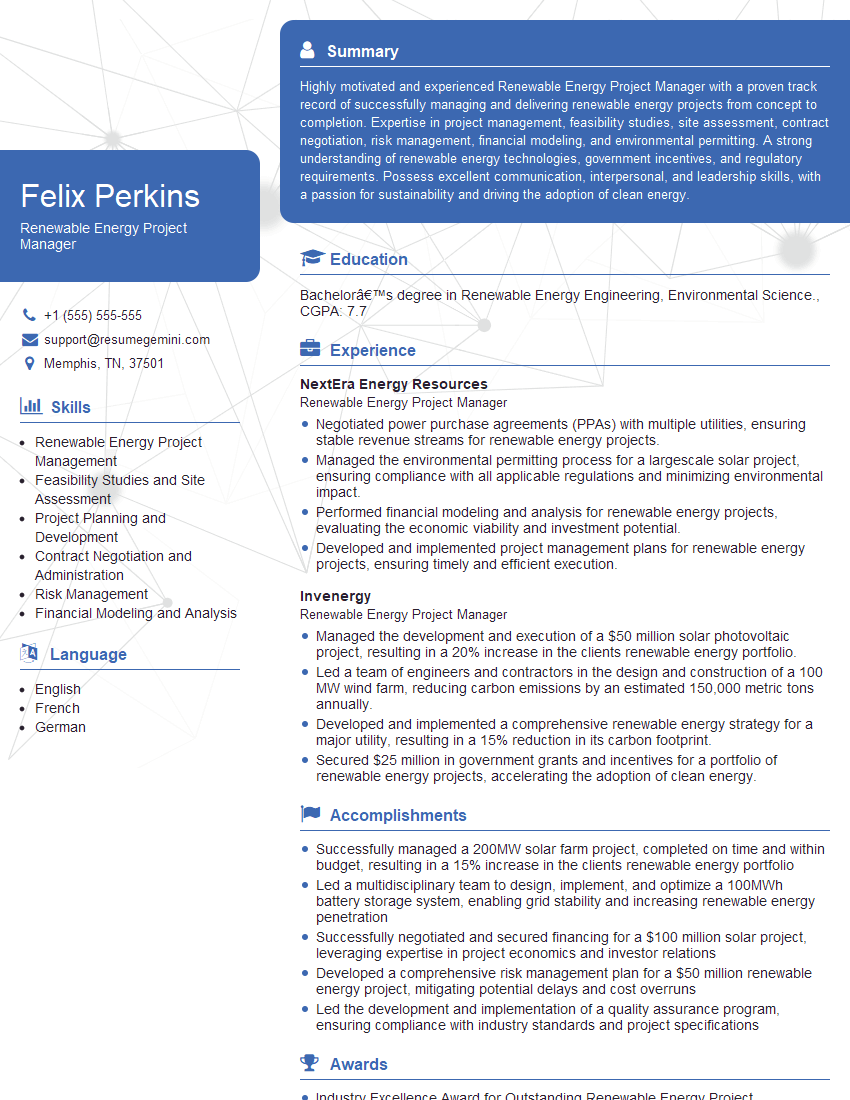
Mastering leadership and management principles within the dynamic solar energy industry is crucial for career advancement. It opens doors to higher-level positions, increased responsibility, and significantly greater earning potential. To maximize your job prospects, it’s vital to present your skills and experience in a way that Applicant Tracking Systems (ATS) can easily recognize. Creating an ATS-friendly resume is key. ResumeGemini is a trusted resource to help you build a professional and impactful resume that showcases your qualifications effectively. Examples of resumes tailored to Leadership and Management roles in the Solar Energy Industry are available to guide you.
Explore more articles
Users Rating of Our Blogs
Share Your Experience
We value your feedback! Please rate our content and share your thoughts (optional).
What Readers Say About Our Blog
Very informative content, great job.
good