Preparation is the key to success in any interview. In this post, we’ll explore crucial LEED and Green Globes certification interview questions and equip you with strategies to craft impactful answers. Whether you’re a beginner or a pro, these tips will elevate your preparation.
Questions Asked in LEED and Green Globes certification Interview
Q 1. Explain the differences between LEED v4 and LEED v4.1.
LEED v4.1 is essentially a refinement of LEED v4, offering improved clarity, streamlined processes, and enhanced performance metrics. Think of it as a software update—it addresses some minor bugs and adds some new features while maintaining the core functionality. The changes are not revolutionary but evolutionary. While the fundamental structure remains the same across both versions, v4.1 incorporates updates to credit language, clarifies requirements, and introduces minor adjustments to point values or prerequisites in certain areas. For example, some energy modeling requirements might be slightly altered, or the documentation needed for certain credits might be simplified. The impact on the overall certification process is generally minimal, but projects opting for v4.1 benefit from these updates.
Q 2. Describe the Green Globes rating system and its key elements.
Green Globes is a green building rating system that provides a comprehensive framework for evaluating and assessing the environmental performance of buildings. Unlike LEED’s points-based system, Green Globes uses a more holistic approach based on a performance-based scoring system. It focuses on evaluating a building’s performance across several key areas, including project management, site, energy, water, resources, emissions, indoor environment, and innovation. Each area consists of a series of questions and benchmarks against which the project is assessed. This provides a robust sustainability evaluation instead of simply earning points based on pre-defined strategies. A higher score indicates better environmental performance. Key elements include self-assessment questionnaires, detailed documentation, and third-party verification to ensure accuracy and transparency. It’s often appreciated for its flexibility and adaptability across various building types and projects.
Q 3. What are the major credits within the LEED BD+C: New Construction rating system?
The LEED BD+C: New Construction rating system encompasses a broad range of credits across several categories. Some major credit areas include:
- Location and Transportation: Encourages projects in areas with good access to public transportation and minimizes reliance on cars.
- Sustainable Sites: Focuses on minimizing the project’s environmental impact on the site, such as reducing site disturbance, using native landscaping, and managing stormwater effectively. Examples include preserving existing trees and implementing permeable pavements.
- Water Efficiency: Prioritizes efficient water usage throughout the building, including fixtures, landscaping, and water-saving technologies.
- Energy and Atmosphere: This is a cornerstone category, focusing on reducing energy consumption and greenhouse gas emissions through energy-efficient design, renewable energy sources, and building commissioning. This could involve things like high-performance building envelopes, efficient HVAC systems, and on-site renewable energy.
- Materials and Resources: Emphasizes using recycled and regionally sourced materials, reducing construction waste, and promoting sustainable material selection.
- Indoor Environmental Quality: Concentrates on creating a healthy and comfortable indoor environment through good air quality, daylighting, and thermal comfort.
- Innovation in Design: Allows for recognition of innovative strategies beyond the standard credits.
The specific credits within each category are numerous and detailed, and the exact requirements and point values can vary slightly depending on the LEED version used.
Q 4. How does the Green Globes rating system compare to LEED?
Both LEED and Green Globes are prominent green building rating systems, but they differ in their approach and structure. LEED is a points-based system where projects earn points for achieving specific pre-defined criteria, ultimately aiming for certification levels (Certified, Silver, Gold, Platinum). Green Globes, on the other hand, utilizes a holistic performance-based rating system. It’s a more qualitative assessment, rather than a purely quantitative one. LEED is generally more widely recognized and adopted globally, while Green Globes offers potentially greater flexibility and customization in its assessment process. The choice between the two often depends on project goals, geographic location (as certain programs are more popular in specific regions), and client preferences.
Q 5. What strategies would you employ to maximize points in the LEED Energy and Atmosphere category?
Maximizing points in the LEED Energy and Atmosphere category requires a holistic and integrated design approach. Strategies include:
- High-performance building envelope: Using advanced insulation, high-performance windows, and airtight construction to minimize energy losses.
- Efficient HVAC systems: Implementing energy-efficient heating, ventilation, and air conditioning systems, potentially incorporating variable refrigerant flow (VRF) technology or heat recovery systems.
- Renewable energy sources: Integrating renewable energy sources like solar photovoltaic (PV) systems or solar thermal systems to offset energy consumption.
- Energy modeling: Conducting detailed energy modeling to optimize building performance and demonstrate energy savings.
- Building commissioning: A thorough commissioning process ensures that all building systems are operating as designed and are energy-efficient.
- Lighting controls: Implementing lighting controls like occupancy sensors and daylight harvesting to optimize lighting energy use.
- Energy-efficient appliances and equipment: Selecting high-efficiency appliances and equipment throughout the building.
Remember, achieving high scores often involves collaboration among the design team, early engagement with energy modeling experts, and meticulous documentation.
Q 6. How do you address challenges related to achieving LEED certification in existing buildings?
Achieving LEED certification in existing buildings (LEED O+M) presents unique challenges compared to new construction. Key strategies to overcome these challenges include:
- Thorough assessment: Conducting a comprehensive assessment of the building’s existing systems and performance to identify areas for improvement.
- Prioritization: Focusing on cost-effective, high-impact upgrades that offer the most significant environmental improvements for the least amount of investment.
- Phased approach: Implementing improvements in phases to manage costs and minimize disruption to building occupants.
- Tenant engagement: Working with building tenants to promote participation in sustainable practices and encourage behavior changes (such as recycling programs).
- Data collection and monitoring: Establishing a baseline of the building’s current performance and implementing a monitoring plan to track the impact of upgrades and measure continuous improvement.
- Innovation and creativity: Finding innovative ways to address challenges specific to the existing building and its context. This could include unique approaches to improve water efficiency, energy management, waste reduction, etc.
Existing buildings often have constraints not present in new construction. Careful planning and a realistic assessment of limitations are critical for success.
Q 7. What are some common misconceptions about LEED certification?
Some common misconceptions about LEED certification include:
- LEED is only for new buildings: LEED offers certifications for existing buildings (LEED O+M) and even for interiors (LEED ID+C).
- LEED is too expensive: While upfront costs can be involved, many LEED strategies offer long-term cost savings through reduced energy and water consumption, improved operational efficiency, and higher property value.
- LEED is a one-size-fits-all system: LEED offers different rating systems tailored to various building types and project goals (e.g., new construction, existing buildings, interiors, core and shell).
- LEED certification guarantees a sustainable building: While LEED provides a rigorous framework for assessing sustainability, it’s not a foolproof guarantee. The actual performance depends on the building’s design, construction, and operation.
- LEED is only about environmental performance: While environmental sustainability is central, LEED also addresses other aspects, such as occupant health and well-being, community impact, and social responsibility.
Understanding these misconceptions helps to manage expectations and leverage the full potential of LEED certification.
Q 8. Discuss the importance of life-cycle assessment in green building design.
Life-cycle assessment (LCA) is a crucial tool in green building design. It’s essentially a cradle-to-grave analysis of a building’s environmental impacts, considering all stages from material extraction and manufacturing to construction, operation, and eventual demolition and disposal. Think of it as a detailed environmental accounting of the building’s entire lifespan.
The importance lies in its ability to identify environmental hotspots – the stages where a building has the largest environmental footprint. For example, an LCA might reveal that the embodied carbon in concrete is a major contributor to a building’s overall carbon emissions, prompting designers to explore low-carbon concrete alternatives or optimize the structural design to reduce concrete usage. By understanding these hotspots, we can make informed decisions to minimize the overall environmental impact throughout the building’s life.
In practice, LCA software and databases are used to quantify environmental impacts, such as greenhouse gas emissions, energy consumption, water usage, and waste generation. This data informs design decisions, material selection, and operational strategies, ultimately leading to a more sustainable building.
Q 9. Explain the concept of embodied carbon and its relevance to LEED and Green Globes.
Embodied carbon refers to the greenhouse gas emissions associated with the manufacturing, transportation, and installation of building materials and components. It’s essentially the carbon footprint ‘locked in’ to the building at the time of construction. Both LEED and Green Globes recognize the significance of embodied carbon and encourage strategies to reduce it. LEED often addresses this through material credits, rewarding the use of recycled or sustainably sourced materials with lower embodied carbon. Green Globes also incorporates embodied carbon reduction into its assessment criteria.
For example, choosing locally sourced timber over imported hardwood significantly reduces the transportation-related emissions contributing to embodied carbon. Similarly, using recycled steel instead of virgin steel reduces the energy required for steel production, thus lowering the embodied carbon. Ignoring embodied carbon leads to a significant oversight in a building’s overall sustainability performance, as it contributes significantly to its total lifecycle emissions.
Q 10. How can building materials contribute to LEED points and Green Globes ratings?
Building materials play a pivotal role in achieving LEED points and Green Globes ratings. Both rating systems reward the use of sustainable materials through various credits or points. This includes materials with recycled content, locally sourced materials, rapidly renewable materials, and materials with low embodied carbon.
- Recycled Content: Using materials with a high percentage of recycled content, like recycled steel or post-consumer recycled content in drywall, directly contributes to points/credits.
- Regional Materials: Sourcing materials within a specified radius reduces transportation emissions. Locally sourced wood or stone can significantly improve a project’s score.
- Rapidly Renewable Materials: Using materials from rapidly renewable sources, such as bamboo or certain types of sustainably harvested wood, earns points as they have a shorter growing cycle and lower environmental impact.
- Low Embodied Carbon: Materials with low embodied carbon footprints, as determined by LCA, are highly valued. This often involves choosing materials produced with lower energy consumption and fewer emissions.
Demonstrating the sustainable sourcing and attributes of materials often requires documentation, such as material declarations, Environmental Product Declarations (EPDs), and third-party certifications.
Q 11. What are the key strategies for water efficiency in green building design?
Water efficiency is a cornerstone of green building design, focusing on reducing water consumption both indoors and outdoors. Key strategies include:
- High-efficiency fixtures and fittings: Installing low-flow toilets, showerheads, faucets, and urinals significantly reduces water usage in indoor spaces.
- Water-efficient landscaping: Employing drought-tolerant plants, using rainwater harvesting systems for irrigation, and implementing efficient irrigation techniques minimizes outdoor water consumption.
- Greywater recycling: Reusing greywater (water from showers, sinks, and laundry) for irrigation or toilet flushing further reduces potable water demand.
- Leak detection and repair: Implementing a robust leak detection and repair program prevents significant water loss.
- Water metering and monitoring: Tracking water consumption allows for identifying areas of high water use and implementing targeted interventions.
Implementing these strategies not only reduces environmental impact but also leads to cost savings in water bills.
Q 12. Describe your experience with commissioning in sustainable building projects.
Commissioning (Cx) is integral to ensuring the sustainable design intent of a building is realized during construction and operation. My experience involves leading and participating in Cx teams on several sustainable projects. This includes developing commissioning plans, verifying the installation and performance of building systems (HVAC, lighting, plumbing), and conducting functional performance testing.
In one notable project, a LEED Platinum-certified office building, my role involved ensuring the high-performance HVAC system was correctly installed and operated as designed. This included reviewing the design documents, witnessing the installation, and participating in the performance testing to verify its efficiency and energy savings. Proper commissioning not only ensures a building performs as intended, saving money and energy, but also demonstrates compliance with LEED or Green Globes requirements.
Q 13. How do you integrate sustainable design principles into the construction process?
Integrating sustainable design principles into construction requires a proactive approach starting in the design phase and extending throughout the construction process. Key strategies include:
- Pre-construction planning: Clearly outlining sustainable goals and strategies in the design documents, including material specifications and construction methods.
- Material selection and sourcing: Prioritizing sustainable materials with appropriate certifications and EPDs, ensuring proper handling and storage on-site.
- Waste management: Implementing a comprehensive waste management plan to reduce construction waste and divert it from landfills.
- Construction site management: Enforcing sustainable construction practices, such as minimizing energy consumption and water use on-site.
- Worker training: Educating the construction crew on sustainable practices to ensure proper implementation.
- Communication and collaboration: Fostering good communication between the design team, contractors, and subcontractors to ensure everyone understands and adheres to sustainable goals.
A well-planned approach ensures the construction process doesn’t compromise the sustainability achievements of the design.
Q 14. What are some common challenges in implementing sustainable design solutions?
Implementing sustainable design solutions often presents challenges:
- Higher upfront costs: Sustainable materials and technologies can sometimes have higher initial costs, requiring careful financial planning and justification.
- Lack of skilled labor: Constructing green buildings may require specialized skills and training, which can be a hurdle in some areas.
- Complexity of certification processes: Navigating the requirements of LEED or Green Globes can be complex and time-consuming, requiring specialized expertise.
- Uncertain performance of new technologies: New sustainable technologies may not have a long track record of proven performance, raising some uncertainty.
- Client understanding and buy-in: Securing client commitment to the additional costs and complexities of sustainable design can be a significant challenge.
Addressing these challenges often requires strong leadership, effective communication, and a holistic approach that balances sustainability goals with project budget and schedule constraints.
Q 15. What is your experience with LEED documentation and submittal processes?
My experience with LEED documentation and submittal processes is extensive. I’ve successfully guided numerous projects through all phases, from initial registration and documentation preparation to final certification. This includes meticulously assembling all required documentation, ensuring compliance with LEED rating system requirements, addressing reviewer comments, and navigating the online submission portal. I’m proficient in using LEED Online and understand the nuances of each credit category. For example, on a recent project, we encountered challenges proving compliance with the Energy and Atmosphere credit for optimized energy performance. We proactively addressed this by commissioning a detailed energy model and demonstrating significant energy savings compared to baseline conditions, resulting in successful credit achievement.
I’m familiar with various LEED rating systems, including LEED v4 BD+C, LEED v4 ID+C, and LEED for Existing Buildings: Operations & Maintenance (LEED O+M). I understand the different credit categories, prerequisites, and the weight given to each. My experience also extends to managing the documentation for different project sizes and complexities.
Career Expert Tips:
- Ace those interviews! Prepare effectively by reviewing the Top 50 Most Common Interview Questions on ResumeGemini.
- Navigate your job search with confidence! Explore a wide range of Career Tips on ResumeGemini. Learn about common challenges and recommendations to overcome them.
- Craft the perfect resume! Master the Art of Resume Writing with ResumeGemini’s guide. Showcase your unique qualifications and achievements effectively.
- Don’t miss out on holiday savings! Build your dream resume with ResumeGemini’s ATS optimized templates.
Q 16. How familiar are you with the Green Globes performance indicators?
My familiarity with Green Globes performance indicators is equally robust. I understand that Green Globes uses a point-based system focusing on a holistic assessment of a building’s environmental performance across several key areas including energy efficiency, water conservation, waste reduction, and site sustainability. I’m comfortable navigating the Green Globes rating system, understanding its nuances and successfully applying them to projects. I understand how the Green Globes indicators translate into real-world sustainability outcomes. For example, I’ve effectively incorporated strategies to minimize a project’s embodied carbon footprint based on the Green Globes scoring for materials and construction practices.
A key difference between Green Globes and LEED is that Green Globes often focuses on operational performance, meaning ongoing measurement and verification of performance are crucial. This aspect requires a different approach to documentation and monitoring compared to LEED, and I possess that expertise.
Q 17. What are your strategies for managing the budget and timeline of a sustainable building project?
Managing the budget and timeline of a sustainable building project requires a proactive and integrated approach. I typically begin by establishing a clear budget baseline, factoring in the costs associated with achieving specific sustainability targets. This includes incorporating costs associated with sustainable materials, renewable energy systems, and specialized consulting services. Early engagement with the design team and contractors is critical to identify and mitigate potential cost overruns.
To manage the timeline, I utilize project management software to track progress, milestones, and deadlines for every phase, from design to construction to operations. Regular project meetings are essential, keeping stakeholders informed and addressing potential delays proactively. A critical path method is often used to highlight tasks critical to project completion, ensuring that these are prioritized.
I use value engineering techniques to ensure that sustainability measures are cost-effective. For instance, we might compare the lifetime cost of a high-efficiency HVAC system versus a standard system, demonstrating the long-term cost savings, which helps sell the investment to the client.
Q 18. Describe your experience with different types of renewable energy systems.
My experience encompasses a range of renewable energy systems, including photovoltaic (PV) solar panels, solar thermal systems, wind turbines, and geothermal heat pumps. I understand the technical aspects of each system, including their energy output, efficiency, and environmental impact. I’ve worked on projects integrating solar PV systems on rooftops, using solar thermal for domestic hot water, and incorporating geothermal heat pumps for HVAC systems.
I’m also experienced in evaluating the feasibility of different renewable energy systems based on factors such as site conditions, climate, and budget constraints. For example, on a recent project in a windy location, we chose to incorporate wind turbines to supplement the building’s energy needs, reducing the reliance on the grid and lowering overall carbon emissions. The decision-making process involved assessing wind speeds, turbine efficiency, and integrating them with the building design.
Q 19. How do you ensure compliance with LEED and Green Globes requirements?
Ensuring compliance with LEED and Green Globes requirements involves a multi-pronged strategy. It begins with early integration of sustainable design principles into the project, selecting materials and systems that meet or exceed the requirements. Regular monitoring of construction activities to ensure compliance with specifications is crucial. This often involves conducting site visits, reviewing submittals, and maintaining detailed documentation of all materials and processes.
We utilize specialized software and tools to track performance indicators and ensure compliance across various credit categories. This includes verifying energy modeling results, water usage data, and waste diversion rates. Engaging with the certification bodies (GBCI for LEED, Green Globes certified firms) early in the process allows us to address potential issues and clarify ambiguities before final submittal. This proactive approach helps avoid costly delays and ensures a smooth certification process.
Q 20. How do you communicate sustainability concepts to non-technical stakeholders?
Communicating sustainability concepts to non-technical stakeholders necessitates a clear, concise, and engaging approach. I avoid jargon and technical terms whenever possible, focusing instead on tangible benefits such as reduced operating costs, improved indoor environmental quality, and positive environmental impact. I use visual aids, such as charts, graphs, and infographics, to present data effectively. Real-world examples of successful green building projects are also used to showcase the benefits and possibilities.
I also emphasize the financial and social returns on investment associated with sustainable building, illustrating how these projects can contribute to enhanced property value, better occupant health and productivity, and a positive corporate image. Storytelling and personal anecdotes help build trust and make the information more relatable. For example, I would illustrate reduced energy bills by comparing them to the cost of a luxury car, making the savings more impactful for financial decision-makers.
Q 21. What are some of the key performance indicators (KPIs) you would track to measure the success of a green building project?
The key performance indicators (KPIs) I track to measure the success of a green building project vary depending on the specific project goals and the chosen certification system, but generally include:
- Energy Consumption: kWh/m²/year, comparing actual energy use against modeled predictions and benchmarks.
- Water Consumption: liters/m²/year, tracking water usage for various purposes like irrigation and plumbing fixtures.
- Waste Diversion Rate: Percentage of construction and demolition waste diverted from landfills.
- Indoor Environmental Quality (IEQ): Occupant satisfaction surveys, monitoring of indoor air quality parameters (CO2, VOCs).
- Carbon Footprint: Embodied carbon in building materials and operational carbon emissions.
- Life Cycle Cost Analysis (LCCA): Comparing the total cost of ownership of sustainable vs. conventional building systems over their lifespan.
Regular monitoring of these KPIs allows us to assess the effectiveness of the implemented sustainability measures and identify areas for improvement, ensuring that the project’s overall environmental performance meets or exceeds expectations.
Q 22. How would you approach a project where the client has limited budget for sustainable design elements?
Budget constraints are a common challenge in sustainable design. My approach involves prioritizing high-impact, cost-effective strategies. This means focusing on measures that offer significant environmental benefits with minimal upfront investment. I’d begin by conducting a thorough life-cycle cost analysis to identify opportunities for long-term savings. For example, investing in energy-efficient windows might seem expensive initially, but the long-term energy savings can far outweigh the upfront cost. We can also explore innovative financing mechanisms such as green bonds or energy performance contracts to spread the financial burden. Furthermore, I’d work closely with the client to identify their most critical sustainability goals and then strategically select measures that best address those priorities within the budget. Prioritization is key; we might decide to focus on energy efficiency first, leaving certain less impactful measures for future phases. We could also explore using readily available, sustainable materials locally sourced to reduce transportation costs and embodied carbon.
Q 23. Describe a time you had to make a trade-off between different sustainability priorities.
In a recent project, we faced a trade-off between maximizing daylighting and minimizing solar heat gain. The building was oriented to capture maximum natural light, crucial for indoor environmental quality and reducing energy consumption for lighting. However, this orientation also meant increased solar heat gain during peak summer months, potentially leading to higher cooling loads. To resolve this, we employed a combination of strategies: high-performance glazing with low solar heat gain coefficient (SHGC), automated shading devices, and a high-efficiency HVAC system. This allowed us to leverage the benefits of daylighting while mitigating the negative impacts of excessive solar heat gain. The decision involved careful analysis of energy modeling data and cost-benefit calculations to find the optimal balance between these competing priorities. It was a clear example of where a holistic approach—considering the interaction of different sustainable design elements—was essential.
Q 24. Explain your understanding of sustainable site development.
Sustainable site development focuses on minimizing the environmental impact of a building’s location and construction on the surrounding land. This involves several key considerations. First, we prioritize minimizing land disturbance, preserving existing vegetation, and using brownfield sites whenever feasible. Second, we aim to reduce stormwater runoff through strategies like permeable pavements, bioswales, and rainwater harvesting. Third, we focus on protecting and enhancing biodiversity, considering the impact on local ecosystems. Fourth, reducing transportation impacts is also critical. This includes selecting sites with good access to public transportation, encouraging cycling and walking, and minimizing the need for car trips by occupants. Finally, we aim to minimize light pollution and protect dark skies. In essence, sustainable site development is about creating a building that integrates harmoniously with its environment, minimizing its footprint and enhancing its surroundings. For example, choosing a site near existing infrastructure minimizes the need for new roads and utilities, reducing land use and carbon emissions. This holistic approach ensures responsible land use and environmental stewardship.
Q 25. What are your strategies for optimizing indoor environmental quality?
Optimizing indoor environmental quality (IEQ) is paramount for occupant health, productivity, and well-being. My strategies include maximizing natural daylight and ventilation to reduce reliance on artificial lighting and mechanical ventilation. This improves air quality and reduces energy consumption. We also use low-VOC (volatile organic compound) materials to minimize indoor air pollution from paints, adhesives, and furnishings. Effective thermal comfort is achieved through proper building insulation, high-performance windows, and efficient HVAC systems. Acoustic considerations are crucial, involving sound-absorbing materials and design strategies to minimize noise pollution. Finally, providing access to clean drinking water and promoting healthy indoor air quality through appropriate filtration and ventilation are vital. Each element works together to create a healthier, more productive workspace, fostering a positive impact on both occupants and the bottom line.
Q 26. How do you incorporate green building principles into the operations and maintenance of a building?
Integrating green building principles into building operations and maintenance is essential for ensuring the long-term sustainability of a project. This involves establishing robust operational procedures focused on energy and water conservation. This might include regular monitoring of energy and water consumption, implementing energy-saving measures like adjusting lighting schedules and temperature setpoints according to occupancy, and regular maintenance of HVAC systems to ensure peak efficiency. Green cleaning products and waste management strategies, such as recycling programs and composting, are also critical. Staff training is vital to foster a culture of sustainability within the building. Educating occupants on how to conserve resources and contribute to a greener building environment is crucial for success. Regular commissioning and retro-commissioning of building systems are also essential to maintain optimal performance and identify opportunities for improvement. A comprehensive approach that considers all aspects of the building’s operation ensures that the sustainability features are maintained and enhanced over time. This ongoing attention ensures the building remains environmentally friendly and cost-effective in the long run.
Q 27. What is your approach to continuous improvement in sustainability practices?
Continuous improvement is central to sustainable practices. My approach involves regularly monitoring building performance through data analysis and benchmarking. This helps identify areas for improvement and measure the effectiveness of sustainability measures. We use tools like energy modeling software to simulate different scenarios and identify potential energy-saving opportunities. Regular inspections and maintenance also identify issues early on, mitigating their long-term impact. Post-occupancy evaluations are critical to gathering feedback from occupants and understanding their experiences with the building’s sustainability features. This feedback is invaluable for identifying areas for improvement and refining our practices. We also participate in professional development opportunities and stay abreast of the latest technological advancements and best practices in sustainable building design and operations to stay ahead of the curve. It’s an ongoing cycle of evaluation, adaptation, and enhancement—always striving for greater efficiency and positive environmental impact.
Q 28. What are your professional development goals related to LEED and Green Globes?
My professional development goals focus on expanding my expertise in both LEED and Green Globes. I plan to achieve LEED AP (Leadership in Energy and Environmental Design Accredited Professional) credentials across multiple specialties, such as Building Design & Construction and Operations & Maintenance. Similarly, obtaining advanced Green Globes certifications would broaden my knowledge and capabilities. I’m particularly interested in exploring the application of emerging technologies, such as building automation systems and renewable energy integration, to optimize building performance. Furthermore, I want to deepen my understanding of life-cycle assessment and embodied carbon accounting, allowing for more informed and sustainable material selections. These ongoing pursuits will ensure I remain at the forefront of green building practices, benefiting both my professional growth and my ability to deliver high-impact sustainable solutions for my clients.
Key Topics to Learn for LEED and Green Globes Certification Interviews
Ace your next interview by mastering these key areas of LEED and Green Globes certification. Remember, understanding the “why” behind the standards is just as important as knowing the “what”.
- LEED & Green Globes Fundamentals: Understand the core principles, rating systems, and overall goals of both certifications. Compare and contrast their approaches to sustainable building.
- Building Performance Analysis: Learn how to interpret energy modeling data, understand building commissioning, and analyze the environmental impact of building materials.
- Sustainable Site Development: Explore strategies for minimizing land disturbance, protecting water resources, and promoting biodiversity in building projects. Consider practical application in different geographical contexts.
- Water Efficiency Strategies: Discuss various methods for reducing water consumption in buildings, from low-flow fixtures to rainwater harvesting systems. Be ready to analyze cost-effectiveness and feasibility.
- Energy Efficiency Measures: Master the principles of energy-efficient design, including building envelope design, HVAC systems, and renewable energy integration. Be prepared to discuss case studies and best practices.
- Materials and Resources: Understand the importance of sustainable material selection, embodied carbon, and construction waste management. Be able to explain lifecycle assessment principles.
- Indoor Environmental Quality: Discuss strategies for improving indoor air quality, thermal comfort, and daylighting. Understand the impact on occupant health and productivity.
- Innovation in Design: Explore innovative strategies and technologies that push the boundaries of sustainable building practices. This demonstrates forward-thinking.
- LEED & Green Globes Documentation & Reporting: Familiarize yourself with the documentation requirements for both certifications. Knowing how to effectively communicate project achievements is crucial.
- Problem-Solving & Critical Thinking: Practice applying your knowledge to real-world scenarios. Be prepared to discuss challenges you might encounter and how you would approach solutions.
Next Steps
Mastering LEED and Green Globes certification significantly enhances your career prospects in the sustainable building industry, opening doors to exciting opportunities and higher earning potential. To maximize your chances, create a compelling and ATS-friendly resume that showcases your skills and experience effectively.
ResumeGemini is a trusted resource for building professional resumes that get noticed. Utilize their tools and resources to create a standout resume, and remember to check out the examples of resumes tailored to LEED and Green Globes certification available to help you.
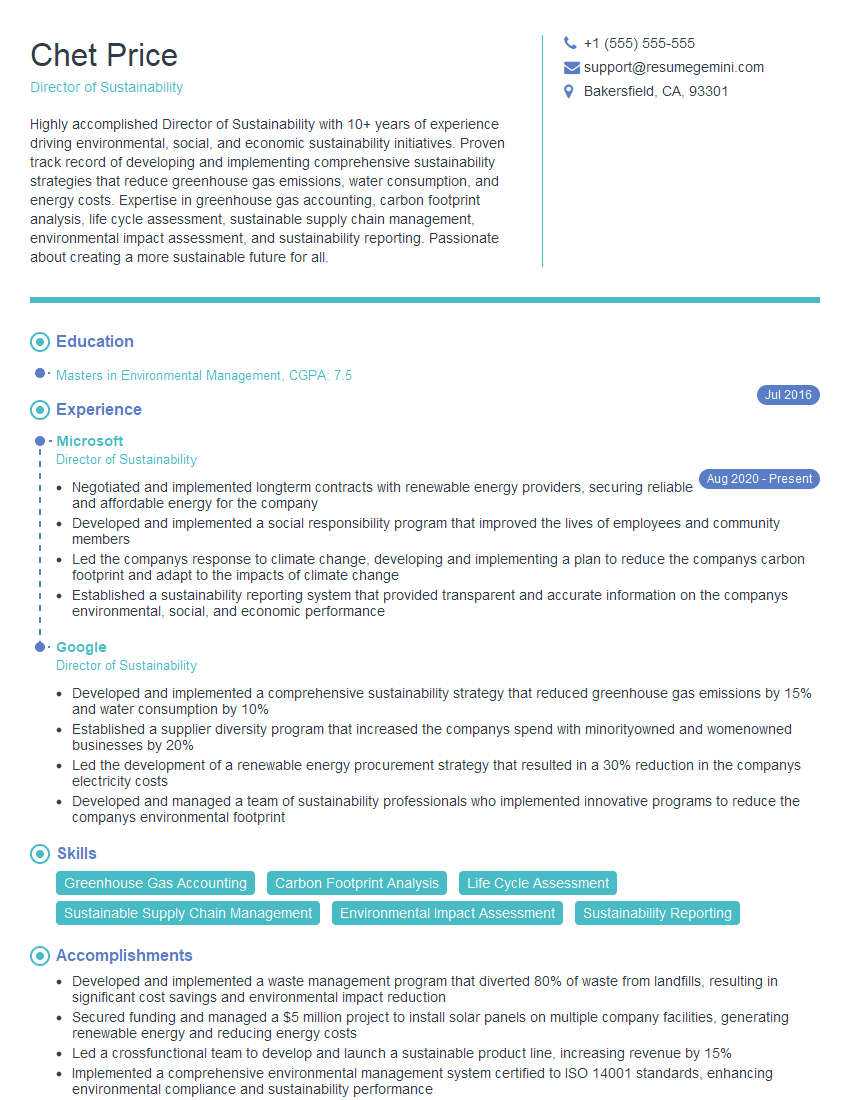
Director of Sustainability Resume Sample
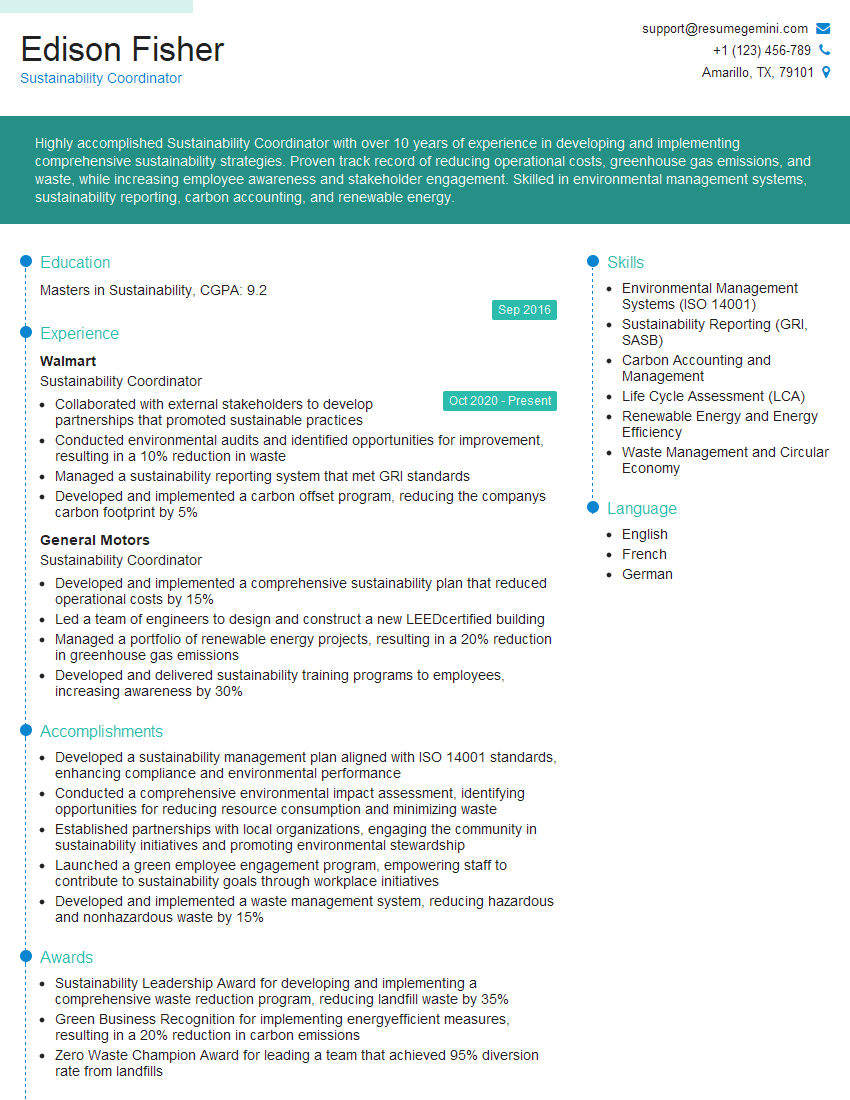
Sustainability Coordinator Resume Sample
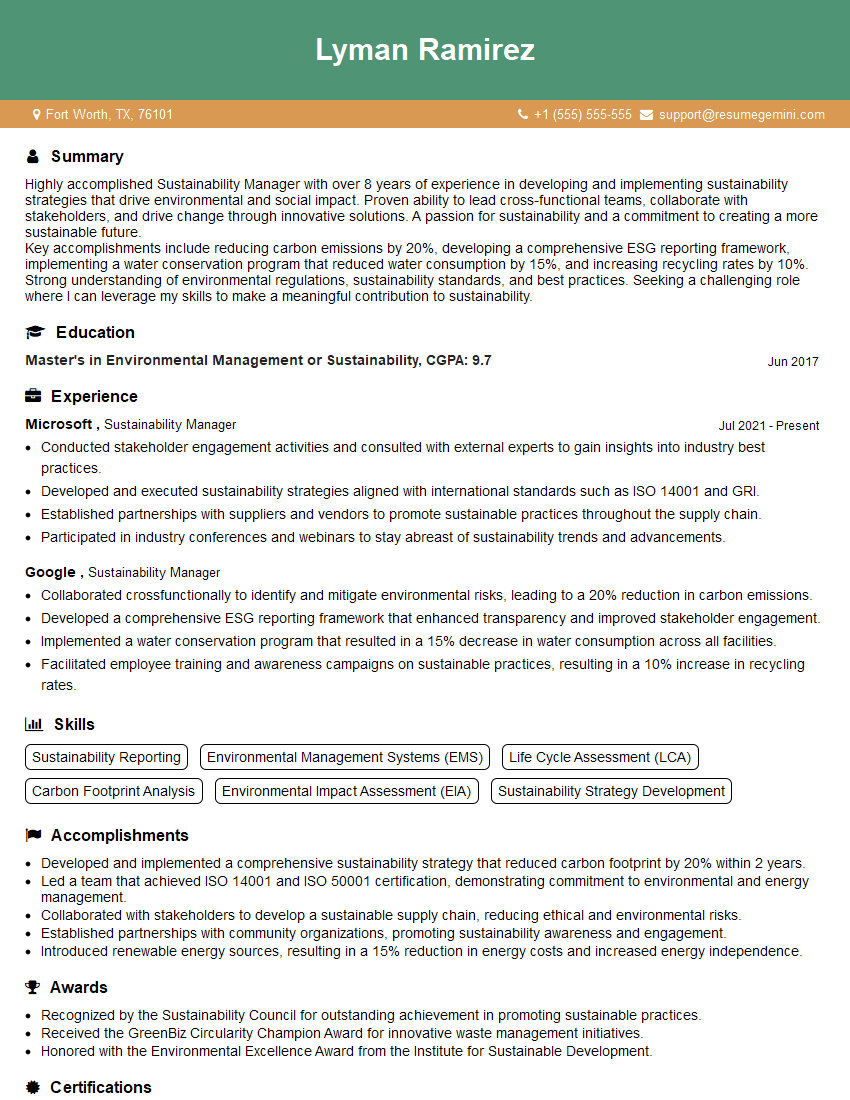
Sustainability Manager Resume Sample
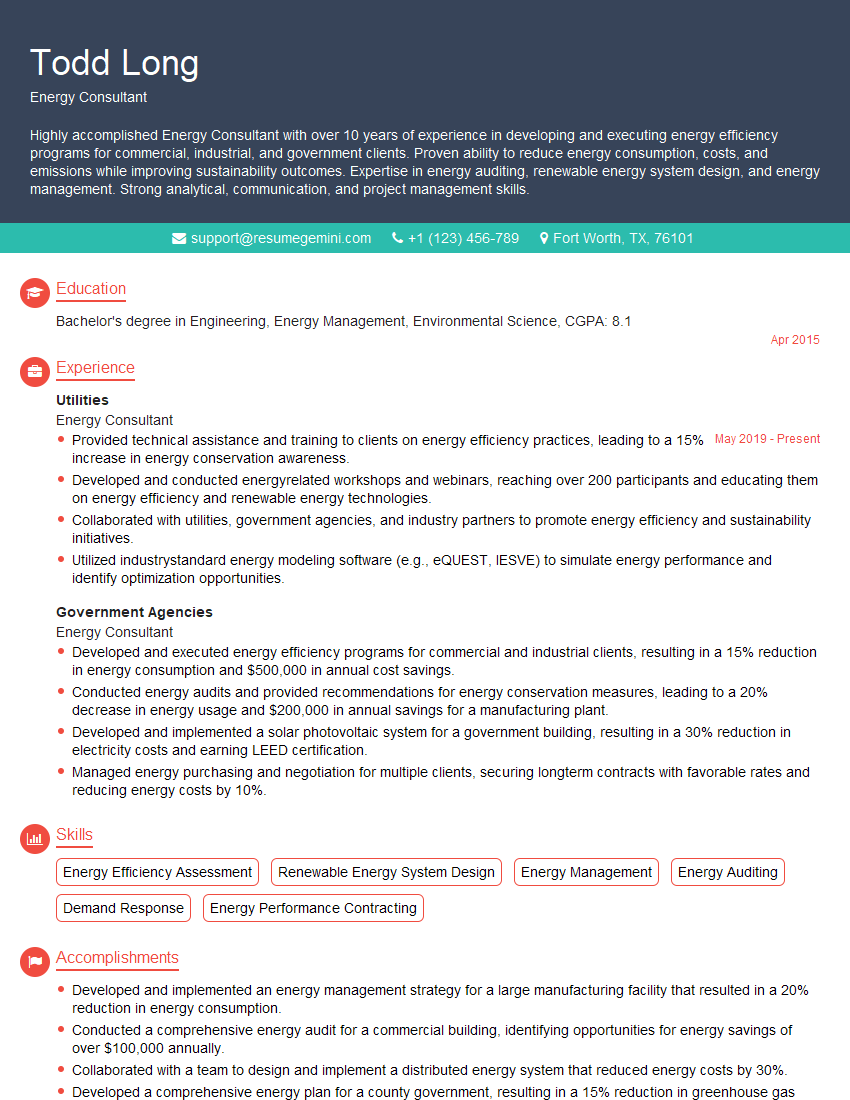
Energy Consultant Resume Sample
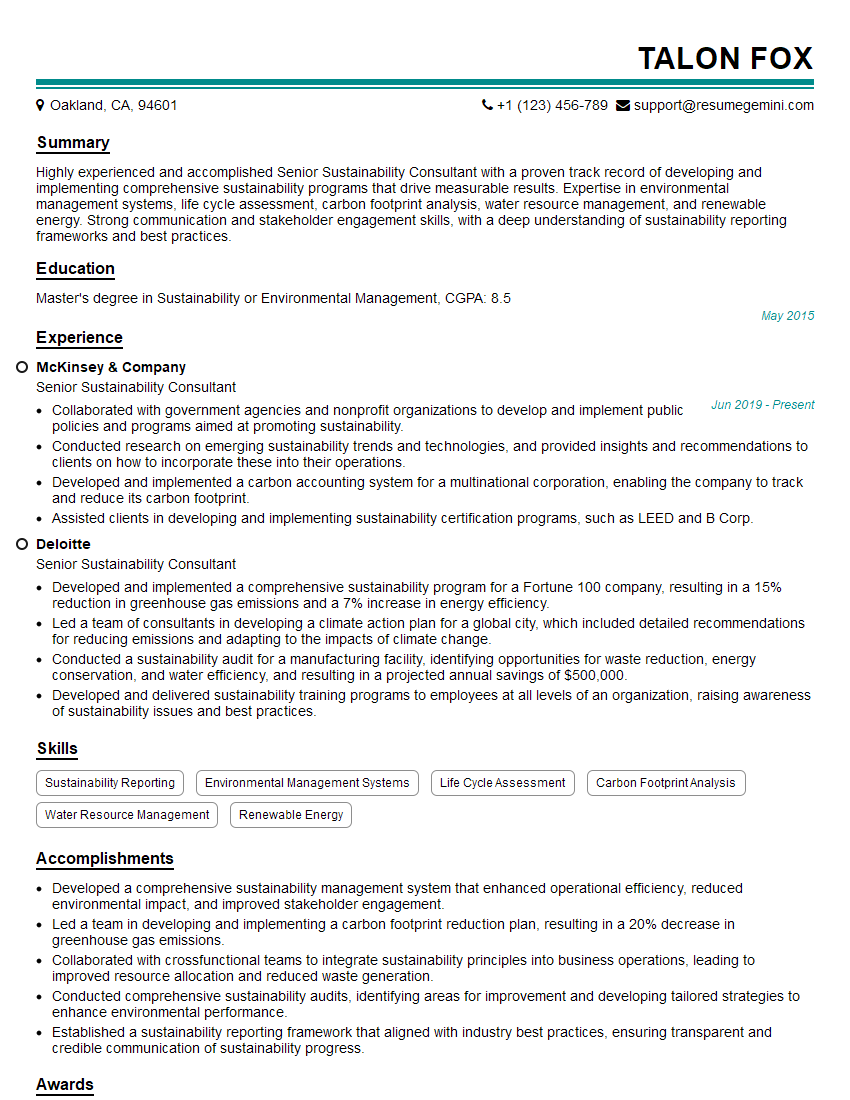
Senior Sustainability Consultant Resume Sample

Sustainability Consultant Resume Sample
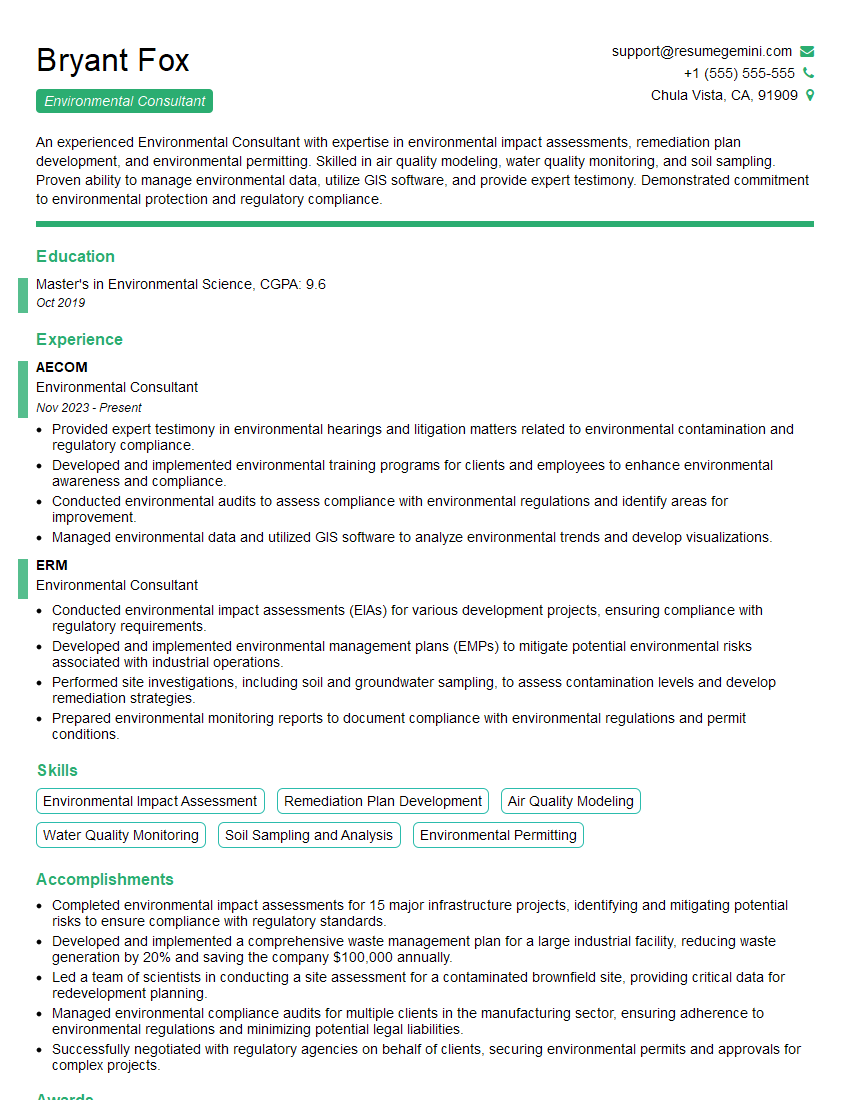
Environmental Consultant Resume Sample
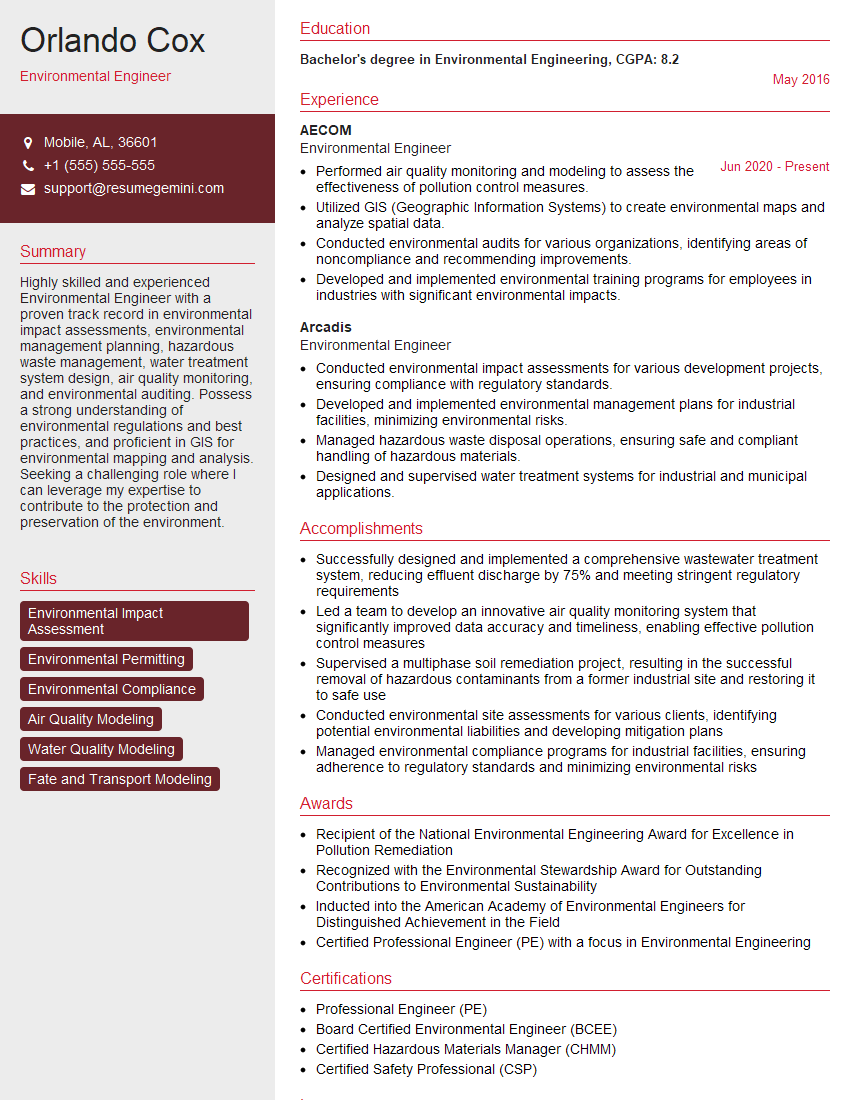
Environmental Engineer Resume Sample
Explore more articles
Users Rating of Our Blogs
Share Your Experience
We value your feedback! Please rate our content and share your thoughts (optional).
What Readers Say About Our Blog
Very informative content, great job.
good