Cracking a skill-specific interview, like one for Legal Compliance and Privacy, requires understanding the nuances of the role. In this blog, we present the questions you’re most likely to encounter, along with insights into how to answer them effectively. Let’s ensure you’re ready to make a strong impression.
Questions Asked in Legal Compliance and Privacy Interview
Q 1. Explain the difference between GDPR and CCPA.
The General Data Protection Regulation (GDPR) and the California Consumer Privacy Act (CCPA) are both landmark privacy laws, but they differ significantly in scope and application. GDPR, enacted by the European Union, has a much broader reach, applying to any organization processing the personal data of EU residents, regardless of the organization’s location. CCPA, on the other hand, is a California state law focusing on the personal information of California residents. This means a company based outside the EU might still be subject to GDPR if it handles data of EU citizens, while only California-based businesses and those doing business in California are directly impacted by CCPA.
- Geographic Scope: GDPR is extraterritorial (applies globally to organizations processing EU data); CCPA is limited to California.
- Data Subject Rights: Both grant data subjects significant rights, including access, correction, deletion (‘right to be forgotten’), and data portability. However, GDPR’s rights are generally broader and more strictly enforced.
- Data Categories: GDPR is more comprehensive in defining ‘personal data,’ while CCPA focuses more narrowly on ‘personal information’ as defined by the law.
- Enforcement and Penalties: GDPR has significantly steeper fines for non-compliance than CCPA.
Think of it like this: GDPR is a large international airport with strict security for everyone entering and exiting. CCPA is a state-level airport with specific regulations for passengers within that state.
Q 2. Describe your experience with conducting risk assessments related to data privacy.
My experience in conducting data privacy risk assessments involves a structured approach using established frameworks like NIST Cybersecurity Framework or ISO 27005. I begin by identifying all personal data processed, its sensitivity, and its location (where it’s stored, processed, and transmitted). Next, I assess potential threats and vulnerabilities, considering factors such as unauthorized access, accidental disclosure, data breaches, and loss. This is often done through interviews with stakeholders, reviewing existing policies and procedures, and vulnerability scans.
After identifying risks, I analyze their likelihood and potential impact, prioritizing them based on severity. This allows me to develop appropriate mitigation strategies, including technical controls (like encryption and access controls), administrative controls (like policies and training), and physical controls (like securing data centers). I then document the entire assessment process, including findings, recommendations, and a risk treatment plan, ensuring regular reviews and updates to reflect evolving threats and changes in the business.
For example, in a recent assessment for a healthcare provider, we identified a significant risk related to the storage of patient medical records on outdated systems with insufficient access controls. Our recommendations involved migrating the data to a more secure cloud platform with robust access management and encryption. We also developed a comprehensive employee training program on data security best practices.
Q 3. How would you handle a data breach incident?
Handling a data breach requires a swift, methodical response. My approach follows a well-defined incident response plan, which I would adapt to the specific circumstances of the breach. The first step is always to contain the breach, preventing further data exfiltration. This might involve isolating affected systems, shutting down vulnerable services, and blocking malicious actors.
Simultaneously, I would initiate a thorough investigation to determine the scope and nature of the breach, including what data was compromised, how it happened, and who was affected. This involves forensic analysis of systems and logs. We need to identify the root cause to prevent future occurrences. Once the investigation is complete, we’ll notify affected individuals and relevant authorities (like the FTC or state attorney general) as required by law, often within stipulated timeframes.
Finally, we would implement remedial actions to address the vulnerabilities that led to the breach and improve our overall security posture. This might involve patching systems, strengthening access controls, and enhancing employee training. We would also review and update our incident response plan based on lessons learned from the event.
Transparency and communication are paramount. We would keep affected individuals informed throughout the process and offer credit monitoring or other appropriate remediation services.
Q 4. What is your understanding of HIPAA regulations?
The Health Insurance Portability and Accountability Act (HIPAA) is a US federal law designed to protect the privacy and security of Protected Health Information (PHI). PHI includes any individually identifiable health information held or transmitted by covered entities (healthcare providers, health plans, and healthcare clearinghouses) or their business associates. HIPAA establishes standards for the privacy, security, and breach notification of PHI.
Key components of HIPAA include:
- Privacy Rule: Defines how PHI can be used and disclosed.
- Security Rule: Sets standards for safeguarding electronic PHI (ePHI).
- Breach Notification Rule: Requires covered entities to provide timely notification in case of a breach of unsecured PHI.
Understanding HIPAA is crucial for any organization handling health information. Non-compliance can lead to significant financial penalties and reputational damage. For example, a failure to properly secure patient records could result in both legal action and loss of patient trust.
Q 5. Explain the concept of data minimization.
Data minimization is a privacy principle that emphasizes collecting, using, and retaining only the minimum amount of personal data necessary for a specified, explicit, and legitimate purpose. This means avoiding the collection of unnecessary information and deleting data when it is no longer needed. It’s a proactive approach to reducing privacy risks.
Think of it like this: Instead of collecting a user’s entire address, if you only need their zip code for delivery purposes, you only collect the zip code. This limits the potential for misuse or accidental disclosure of more sensitive information. Data minimization reduces the potential impact of a data breach because there’s less data at risk. It also simplifies data management and lowers compliance costs.
Implementing data minimization requires careful consideration of data processing activities and a clear definition of what data is truly necessary. It necessitates regular reviews of data retention policies to ensure data is only kept for as long as it is needed.
Q 6. How do you ensure compliance with evolving regulations?
Staying current with evolving regulations requires a multi-pronged strategy. First, I subscribe to relevant legal updates and newsletters from reputable sources. I also actively monitor government websites and regulatory agencies for changes in legislation and guidance. Second, I participate in professional development activities, attending conferences and webinars to stay informed about emerging trends and best practices. This includes joining professional organizations focused on legal compliance and privacy.
Third, I build strong relationships with legal counsel specializing in privacy and data protection. Their expertise helps to interpret complex regulations and ensure compliance. Finally, I implement robust monitoring and auditing procedures to identify potential compliance gaps and address them proactively. This might involve regularly reviewing our data processing activities, security controls, and documentation to ensure alignment with current regulations.
Regular internal training programs for staff on the updated regulations are essential, too.
Q 7. Describe your experience with implementing and maintaining a compliance program.
My experience implementing and maintaining compliance programs involves designing and implementing comprehensive frameworks that align with relevant laws and standards (GDPR, CCPA, HIPAA, etc.). This starts with a thorough risk assessment, as discussed earlier. Based on the risk assessment, I develop policies and procedures covering data collection, storage, processing, and security. These policies are documented clearly and communicated to all relevant stakeholders.
I then establish processes for data subject requests (access, correction, deletion), ensuring that these requests are handled efficiently and securely. I regularly monitor and audit our systems and processes to ensure continued compliance. This includes conducting periodic risk assessments, vulnerability scans, penetration testing, and internal audits. The program must be regularly updated to reflect changes in regulations, technology, and business needs.
For instance, in a previous role, I implemented a data governance program including a data inventory, a data classification scheme, and a data retention policy. This program involved developing and documenting standard operating procedures for data handling and establishing a centralized data governance committee to oversee the entire compliance effort. The result was not only regulatory compliance but enhanced data security and improved operational efficiency.
Q 8. What are the key elements of a successful data privacy policy?
A successful data privacy policy is the cornerstone of any organization’s responsible data handling practices. It’s more than just a legal document; it’s a commitment to transparency and user trust. Key elements include:
- Clear and Concise Language: Avoid legal jargon. Explain data collection practices in plain language anyone can understand.
- Specific Data Collection Practices: Clearly state what data is collected (e.g., name, email, IP address), why it’s collected (e.g., to process orders, provide customer support), and how it’s used.
- Data Retention Policy: Specify how long data is stored and the process for data deletion. Comply with legal requirements regarding data retention periods.
- Data Security Measures: Describe the security measures implemented to protect data from unauthorized access, use, or disclosure (e.g., encryption, access controls, regular security audits).
- Data Subject Rights: Clearly outline data subject rights, such as the right to access, correct, delete, or restrict processing of their personal data (as per GDPR, CCPA, etc.).
- Third-Party Data Sharing: If data is shared with third parties, clearly identify them and explain the purpose of the sharing. Ensure compliance with relevant regulations regarding data transfers.
- Contact Information: Provide a clear and accessible way for users to contact the organization with questions or concerns regarding their data.
- Regular Updates: The policy should be reviewed and updated regularly to reflect changes in practices, technologies, or regulations.
For example, a company collecting customer email addresses for newsletters should clearly state this in the policy, explain how they use the email addresses (sending newsletters, promotional offers), and provide an easy unsubscribe option. Failure to do so can lead to legal issues and damage to reputation.
Q 9. Explain your understanding of consent in the context of data processing.
Consent, in the context of data processing, is the freely given, specific, informed, and unambiguous indication of the data subject’s wishes by which he or she, by a statement or by a clear affirmative action, signifies agreement to the processing of personal data relating to him or her. It’s a crucial element under regulations like GDPR and CCPA. Key aspects of valid consent include:
- Freely Given: Consent cannot be coerced or pressured. It must be voluntary.
- Specific: Consent must be given for specific purposes. Broad consent for multiple unrelated purposes is invalid.
- Informed: The data subject must be fully informed about the data processing activities, including the purpose, type of data, and recipients.
- Unambiguous: Consent must be clear and easily demonstrable. A simple checkbox is often insufficient; a clear affirmative action is required (e.g., clicking a button labeled ‘I agree’).
- Easy Withdrawal: The data subject must have an equally easy way to withdraw their consent as they had to provide it.
For example, a website requiring users to sign up for an account with consent to receive marketing emails needs to clearly state this in the signup form, separate from other terms and conditions, and provide an easy method for users to opt out at any time. Pre-checked boxes for consent are generally considered invalid in many jurisdictions.
Q 10. How would you manage a conflict between business objectives and compliance requirements?
Conflicts between business objectives and compliance requirements are a common challenge. The solution isn’t about choosing one over the other; it’s about finding a compliant way to achieve business goals. My approach involves:
- Identifying the Conflict: Clearly define the specific business objective and the specific compliance requirement that it appears to conflict with.
- Risk Assessment: Evaluate the potential legal, reputational, and financial risks associated with failing to meet the compliance requirement.
- Exploring Alternative Solutions: Brainstorm alternative approaches to achieve the business objective while remaining compliant. This might involve adjusting the business objective, implementing different technologies, or seeking legal counsel.
- Prioritizing Compliance: Ultimately, compliance should always take precedence. Non-compliance can lead to severe penalties.
- Documentation: Maintain detailed records of the conflict, the risk assessment, the solutions considered, and the chosen approach. This documentation is crucial for demonstrating due diligence.
For example, if a company wants to use customer data for targeted advertising, but faces restrictions under GDPR, they could find alternative compliant strategies like anonymizing the data or obtaining explicit consent for personalized ads. The key is finding a balance, not a compromise.
Q 11. Describe your experience with data subject access requests.
Data Subject Access Requests (DSARs) are a fundamental right under many privacy regulations (like GDPR and CCPA). My experience includes developing and implementing processes to efficiently and securely handle these requests. This involves:
- Establishing a clear process: This includes how requests are submitted, verified, processed, and responded to, along with timeframes for responses.
- Developing internal training: Ensuring all relevant personnel understand the requirements and processes for handling DSARs.
- Implementing a secure system: This system ensures that only authorized personnel can access the requested data and that the data is protected during transmission and storage.
- Responding within legal timelines: Meeting the required response times under the relevant regulations to avoid penalties.
- Maintaining accurate records: Documenting all DSARs received, the steps taken to fulfill the requests, and any challenges encountered.
In a real-world scenario, I helped a client implement a DSAR portal to streamline the process. This involved creating an online form, automating parts of the verification and retrieval process, and using secure document transfer methods. This reduced processing times significantly while ensuring compliance.
Q 12. What are your strategies for staying updated on changes in privacy regulations?
Staying updated on privacy regulations is crucial. My strategies include:
- Subscribing to newsletters and alerts: Following reputable sources such as legal publications, regulatory bodies (e.g., the ICO in the UK, the FTC in the US), and privacy advocacy groups.
- Attending industry conferences and webinars: These events often feature expert speakers discussing the latest developments in privacy law and best practices.
- Networking with peers and experts: Engaging with other professionals in the field can provide valuable insights and updates.
- Using legal research databases: Accessing up-to-date legal information through specialized databases such as LexisNexis or Westlaw.
- Monitoring relevant case law: Keeping track of significant court rulings related to privacy and data protection.
By combining these methods, I maintain a comprehensive understanding of changes and adapt our compliance strategies accordingly. Staying informed isn’t just a best practice; it’s a necessity.
Q 13. How do you ensure data security and confidentiality?
Ensuring data security and confidentiality is paramount. My approach is multi-layered and includes:
- Data Minimization: Collecting only the data that is absolutely necessary for the specified purpose.
- Access Control: Implementing strict access control measures to limit access to sensitive data to only authorized personnel.
- Encryption: Using encryption both in transit and at rest to protect data from unauthorized access.
- Regular Security Audits: Conducting regular security audits and penetration testing to identify and address vulnerabilities.
- Employee Training: Educating employees about data security best practices and the importance of protecting sensitive information.
- Incident Response Plan: Developing and regularly testing an incident response plan to handle data breaches and other security incidents.
- Data Loss Prevention (DLP) Tools: Utilizing DLP tools to monitor and prevent sensitive data from leaving the organization’s control.
For instance, implementing multi-factor authentication (MFA) is a simple yet highly effective measure to enhance access control. Regular security awareness training reminds employees of security protocols and their responsibilities in protecting data.
Q 14. Explain your understanding of cross-border data transfers.
Cross-border data transfers involve moving personal data across international borders. This is governed by various regulations, with the most prominent being the GDPR in the EU. Key considerations include:
- Adequacy Decisions: Determining whether the recipient country provides an adequate level of data protection. The EU publishes adequacy decisions for certain countries.
- Appropriate Safeguards: If the recipient country doesn’t have an adequacy decision, organizations must implement appropriate safeguards to protect the data, such as Standard Contractual Clauses (SCCs) or Binding Corporate Rules (BCRs).
- Data Transfer Impact Assessments: Conducting Data Transfer Impact Assessments (DPIAs) to assess the risks associated with transferring data to a third country and implementing appropriate measures to mitigate those risks.
- Consent: In some cases, obtaining explicit consent from data subjects for the transfer may be required.
- Compliance with local laws: Understanding and adhering to the data protection laws in both the sending and receiving countries.
For example, a company transferring data from the EU to the US might use SCCs approved by the European Commission to ensure adequate protection. Understanding the nuances of international data protection laws is critical for navigating these complex transfers.
Q 15. How familiar are you with ISO 27001?
ISO 27001 is an internationally recognized standard for establishing, implementing, maintaining, and continually improving an Information Security Management System (ISMS). It provides a framework for managing risks related to information security. I’m very familiar with it, having used it extensively in previous roles to conduct ISMS audits, develop and implement security policies, and train staff on security best practices. My understanding extends beyond simply the requirements of the standard; I understand the underlying principles and can adapt them to various organizational contexts.
For instance, in my previous role at [Previous Company Name], we implemented ISO 27001, which led to a significant reduction in security incidents and an improvement in our overall security posture. This involved conducting risk assessments, defining security controls, developing policies and procedures, and performing regular audits to ensure compliance.
Career Expert Tips:
- Ace those interviews! Prepare effectively by reviewing the Top 50 Most Common Interview Questions on ResumeGemini.
- Navigate your job search with confidence! Explore a wide range of Career Tips on ResumeGemini. Learn about common challenges and recommendations to overcome them.
- Craft the perfect resume! Master the Art of Resume Writing with ResumeGemini’s guide. Showcase your unique qualifications and achievements effectively.
- Don’t miss out on holiday savings! Build your dream resume with ResumeGemini’s ATS optimized templates.
Q 16. Describe your experience with conducting compliance audits.
I have extensive experience conducting compliance audits, encompassing various regulations like GDPR, CCPA, HIPAA, and industry-specific standards like ISO 27001 and SOC 2. My approach is methodical and risk-based. I start by understanding the specific regulations and standards applicable to the organization, then conduct a thorough review of relevant documentation, policies, procedures, and systems. I use a combination of interviews, document reviews, and testing to assess compliance.
For example, in one audit, I discovered a critical vulnerability in a client’s access control system that violated their GDPR obligations. My detailed audit report not only highlighted the non-compliance but also provided specific recommendations for remediation, including implementing multi-factor authentication and improving data encryption practices. This led to a significant improvement in their security posture and helped prevent potential data breaches.
Q 17. How would you communicate complex compliance issues to non-technical stakeholders?
Communicating complex compliance issues to non-technical stakeholders requires a clear and concise approach, avoiding technical jargon. I use analogies and real-world examples to illustrate complex concepts. For instance, explaining data encryption might involve comparing it to locking a valuable item in a safe.
I also tailor my communication style to the audience. If speaking to senior management, I’ll focus on the business impact of non-compliance, such as potential fines or reputational damage. If speaking to employees, I’ll focus on the practical steps they need to take to comply with the policies. Visual aids, like flowcharts or infographics, are extremely helpful in simplifying complex information.
Q 18. What is your experience with using data loss prevention (DLP) tools?
I have significant experience using various Data Loss Prevention (DLP) tools, including [mention specific tools e.g., McAfee DLP, Symantec DLP, Forcepoint]. My expertise encompasses deploying, configuring, and managing these tools to prevent sensitive data from leaving the organization’s control. This includes configuring policies to monitor and block sensitive data from being transmitted via email, USB drives, cloud services, and other channels.
In a previous role, we implemented a DLP solution to prevent the unauthorized transfer of customer Personally Identifiable Information (PII). The tool successfully identified and blocked multiple attempts to transfer sensitive data, demonstrating its effectiveness in protecting our organization and our customers.
Q 19. Explain your understanding of data mapping and inventory.
Data mapping and inventory is a crucial first step in any compliance program. Data mapping involves identifying all personal data the organization holds, its location, the purpose for processing it, and who has access. A data inventory provides a comprehensive list of all the organization’s data assets, including their type, location, and sensitivity. This is essential for risk assessment and compliance with regulations like GDPR and CCPA.
Think of it as taking a detailed inventory of your belongings. You wouldn’t insure your house without knowing what’s inside, right? Similarly, you can’t effectively protect your data without knowing what you have and where it’s located.
Q 20. How would you handle a situation where an employee violates company’s compliance policies?
Handling employee violations of compliance policies requires a consistent and fair approach. First, I’d investigate the incident thoroughly, gathering all the relevant facts. This would involve interviewing the employee and relevant witnesses, and reviewing any relevant documentation or logs. Then, based on the severity of the violation and the employee’s history, I’d apply the appropriate disciplinary action, as outlined in the company’s policies. This could range from a verbal warning to termination.
Throughout the process, it’s crucial to ensure fairness and transparency. The employee should be given the opportunity to explain their actions, and the disciplinary action should be consistent with the company’s policies and procedures. It is also important to document the entire process meticulously.
Q 21. What is your experience with vendor risk management?
Vendor risk management is critical for organizations, especially given the increasing reliance on third-party vendors. My experience includes developing and implementing vendor risk management programs, assessing vendor risks, and negotiating contracts that incorporate appropriate security and compliance requirements. This involves evaluating vendors’ security controls, reviewing their compliance certifications, and conducting regular security audits or assessments.
For example, I have developed and implemented a vendor risk management framework that includes a standardized vendor questionnaire, a risk assessment methodology, and a remediation tracking system. This framework helped my previous employer reduce its third-party risk significantly.
Q 22. Explain your understanding of the concept of ‘right to be forgotten’.
The “right to be forgotten,” also known as the right to erasure, is a data subject’s right to have their personal data erased from a data controller’s systems under certain circumstances. It’s not an absolute right; it’s contingent on factors like the reason for data processing, the public interest, and the potential harm to the individual if the data remains. Think of it like cleaning up an old, potentially damaging photo of yourself that’s been inappropriately shared online. You have the right to request its removal.
The right is enshrined in various data protection regulations, most notably the GDPR (General Data Protection Regulation) in Europe. It applies when data is no longer necessary for the purpose it was collected, consent is withdrawn, or the data processing is unlawful. However, exceptions exist, such as when the data is necessary for compliance with a legal obligation or for exercising freedom of expression.
For example, if someone’s address was mistakenly published online by a company, they could invoke their right to be forgotten and request its removal. The company would then be obligated to remove the address unless there’s a legitimate reason to keep it (like a legal requirement).
Q 23. Describe your experience with internal investigations related to compliance violations.
I’ve been involved in several internal investigations stemming from compliance violations, ranging from data breaches to violations of anti-bribery policies. My approach is methodical and always prioritizes preserving the integrity of the investigation. I typically follow these steps:
- Secure the scene: Immediately contain the situation, preventing further data compromise or potential evidence destruction.
- Gather evidence: This involves collecting relevant documents, emails, logs, and conducting interviews with involved parties, always ensuring adherence to legal and ethical considerations.
- Analyze the evidence: This stage involves carefully reviewing the gathered information to identify patterns, establish timelines, and understand the root causes of the violation.
- Report findings: This includes producing a detailed report outlining the investigation’s scope, methodology, findings, and recommended corrective actions.
- Implement corrective actions: Working with relevant teams to implement the necessary fixes to prevent future violations, such as enhancing security measures or revising internal policies.
In one case, we uncovered a violation of our data retention policy. Through a thorough investigation, we identified the responsible parties, implemented stricter controls on data storage, and provided enhanced training to prevent similar occurrences. The process was documented meticulously, protecting the organization and affected individuals.
Q 24. How do you ensure the effectiveness of your compliance training programs?
The effectiveness of compliance training hinges on engagement and reinforcement, not just on initial delivery. I ensure effectiveness through a multi-faceted approach:
- Needs Assessment: Begin by identifying specific compliance needs based on roles, responsibilities, and potential risks. Generic training won’t cut it.
- Interactive Modules: Use engaging formats, such as gamification, interactive scenarios, and real-world case studies, to improve knowledge retention and comprehension.
- Regular Refresher Courses: Compliance landscape changes constantly. Regular updates and refresher courses are vital to maintain current knowledge and address emerging risks.
- Testing and Evaluation: Implement regular assessments, quizzes, and simulations to evaluate understanding and identify knowledge gaps.
- Feedback Mechanisms: Provide opportunities for feedback, allowing employees to express concerns and suggest improvements to the training programs.
- Tracking and Reporting: Monitor completion rates, assessment scores, and overall program effectiveness to make data-driven improvements.
For instance, instead of a lengthy lecture on data privacy, we use interactive modules where employees tackle simulated data breach scenarios, learning by actively responding to the challenges they face. This keeps them engaged and helps them retain more information.
Q 25. What metrics do you use to measure compliance program success?
Measuring compliance program success requires a balanced approach using both quantitative and qualitative metrics. Here are some key indicators:
- Number of Compliance Violations: A reduction in reported violations demonstrates program effectiveness.
- Employee Knowledge Scores: Assessment results reflect the level of employee understanding and preparedness.
- Number of Training Completions: Track the percentage of employees completing required training.
- Time to Remediation: Measuring the time taken to address compliance issues highlights responsiveness.
- Employee Feedback: Gauging employee perceptions on the usefulness and engagement level of training provides valuable insights.
- Audit Findings: External audits provide an objective assessment of compliance posture.
- Cost of Non-Compliance: Tracking financial losses due to compliance failures underscores the program’s value.
By tracking these metrics, we can identify areas for improvement and demonstrate the tangible value of our compliance program to stakeholders.
Q 26. How would you implement a new privacy-enhancing technology into an existing system?
Implementing a new privacy-enhancing technology (PET) requires a phased approach to minimize disruption and ensure successful integration:
- Assessment: Conduct a thorough assessment of the existing system to identify integration points and potential challenges.
- Proof of Concept: Develop a proof of concept to validate the technology’s functionality and compatibility with existing infrastructure.
- Pilot Implementation: Implement the PET on a small scale, initially focusing on a non-critical subset of data, to test and refine integration processes.
- Testing and Validation: Rigorously test the PET to ensure it performs as expected, upholds privacy standards, and does not introduce new vulnerabilities.
- Phased Rollout: Gradually deploy the PET across the entire system, closely monitoring performance and addressing any unforeseen issues.
- Monitoring and Evaluation: Continuously monitor the effectiveness of the PET and conduct regular evaluations to assess its ongoing impact on privacy and system performance.
Imagine integrating differential privacy into a customer database. We would begin by testing it on a small sample of customer records, validating its accuracy and its ability to protect individual privacy before rolling it out fully.
Q 27. Explain your understanding of the role of a Data Protection Officer (DPO).
A Data Protection Officer (DPO) is responsible for overseeing an organization’s compliance with data protection laws and regulations. They act as an internal expert on privacy matters, advising on legal compliance and ensuring the organization’s data processing activities are lawful, fair, and transparent.
Key responsibilities include:
- Monitoring compliance: Regularly assessing the organization’s data protection practices and identifying areas for improvement.
- Advising on data protection: Providing guidance to staff and management on data protection matters.
- Cooperating with supervisory authorities: Acting as a point of contact for data protection authorities.
- Raising awareness: Educating employees on data protection principles and best practices.
- Conducting privacy impact assessments (PIAs): Evaluating the potential privacy risks associated with new projects or data processing activities.
Essentially, the DPO is the organization’s internal guardian of privacy, ensuring the ethical and legal handling of personal data.
Q 28. Describe your experience working with privacy impact assessments (PIAs).
I have extensive experience conducting and overseeing Privacy Impact Assessments (PIAs). A PIA is a systematic process for identifying and assessing the privacy risks associated with a new project or data processing activity. It’s crucial for proactively mitigating potential privacy violations and ensuring compliance with data protection regulations.
My approach typically includes:
- Identifying the project and its data processing activities: Clearly defining the scope of the project and identifying all personal data being processed.
- Assessing the risks: Evaluating the potential impacts on individual privacy, including the likelihood and severity of different risks.
- Identifying mitigating measures: Developing strategies and controls to mitigate the identified privacy risks.
- Documenting the findings: Creating a comprehensive report outlining the assessment’s findings, recommendations, and mitigation strategies.
- Monitoring and review: Regularly reviewing the effectiveness of the implemented mitigating measures and making necessary adjustments.
For example, before launching a new mobile application that collects user location data, a thorough PIA would identify potential risks, such as unauthorized access or disclosure of location data, and recommend implementing appropriate security measures, such as encryption and access controls.
Key Topics to Learn for Legal Compliance and Privacy Interview
- Data Privacy Regulations: Understanding GDPR, CCPA, HIPAA, and other relevant regulations; their core principles and practical implications for data handling and security.
- Risk Assessment and Mitigation: Conducting thorough privacy risk assessments, identifying vulnerabilities, and implementing effective mitigation strategies to minimize legal and reputational risks.
- Data Security and Breach Response: Implementing robust data security measures, developing incident response plans, and managing data breaches in compliance with legal requirements.
- Contractual Compliance: Reviewing and negotiating contracts to ensure compliance with privacy regulations and internal policies; understanding data processing agreements (DPAs).
- Privacy by Design: Integrating privacy considerations into the design and development lifecycle of products and services; proactively addressing privacy risks from the outset.
- Employee Training and Awareness: Developing and delivering training programs to educate employees on data privacy policies, procedures, and legal obligations.
- Investigations and Audits: Understanding the process of conducting internal investigations and privacy audits to ensure ongoing compliance.
- International Data Transfers: Navigating the complexities of transferring data across borders and complying with relevant transfer mechanisms.
- Emerging Trends in Privacy and Compliance: Staying current on evolving legal landscapes, technological advancements, and best practices in data privacy and security.
Next Steps
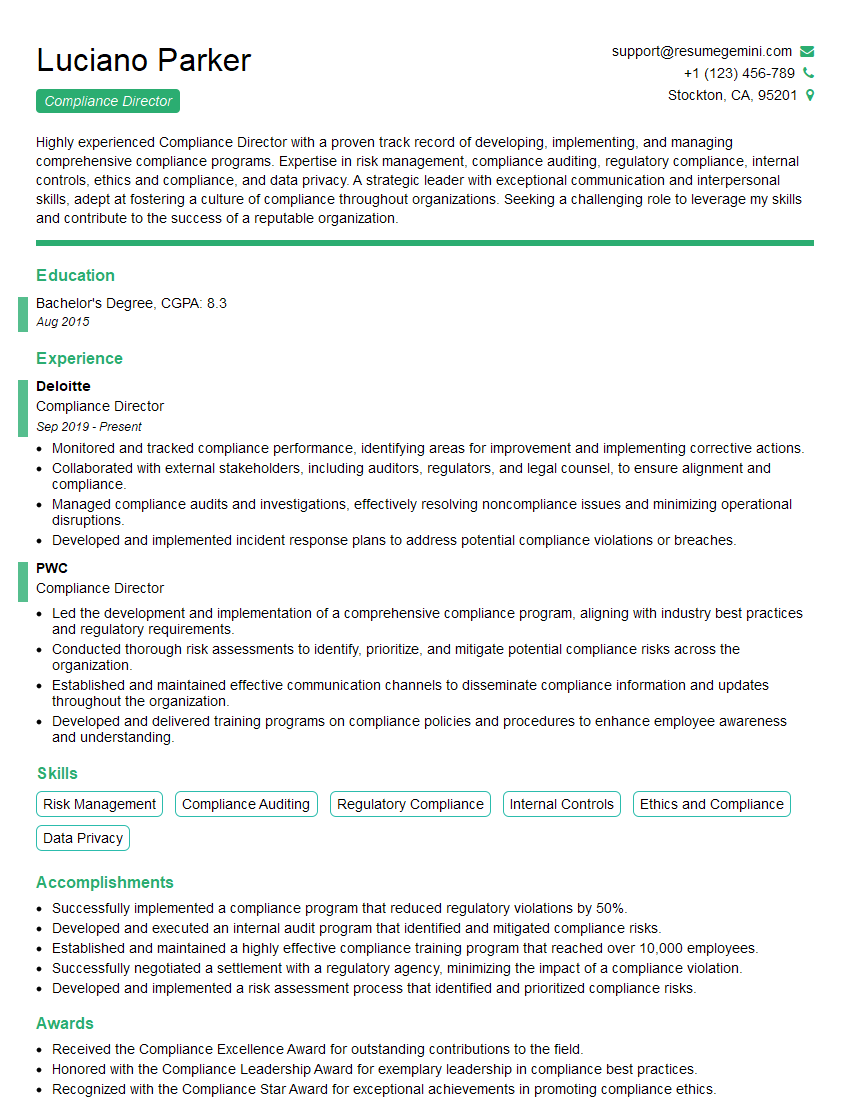
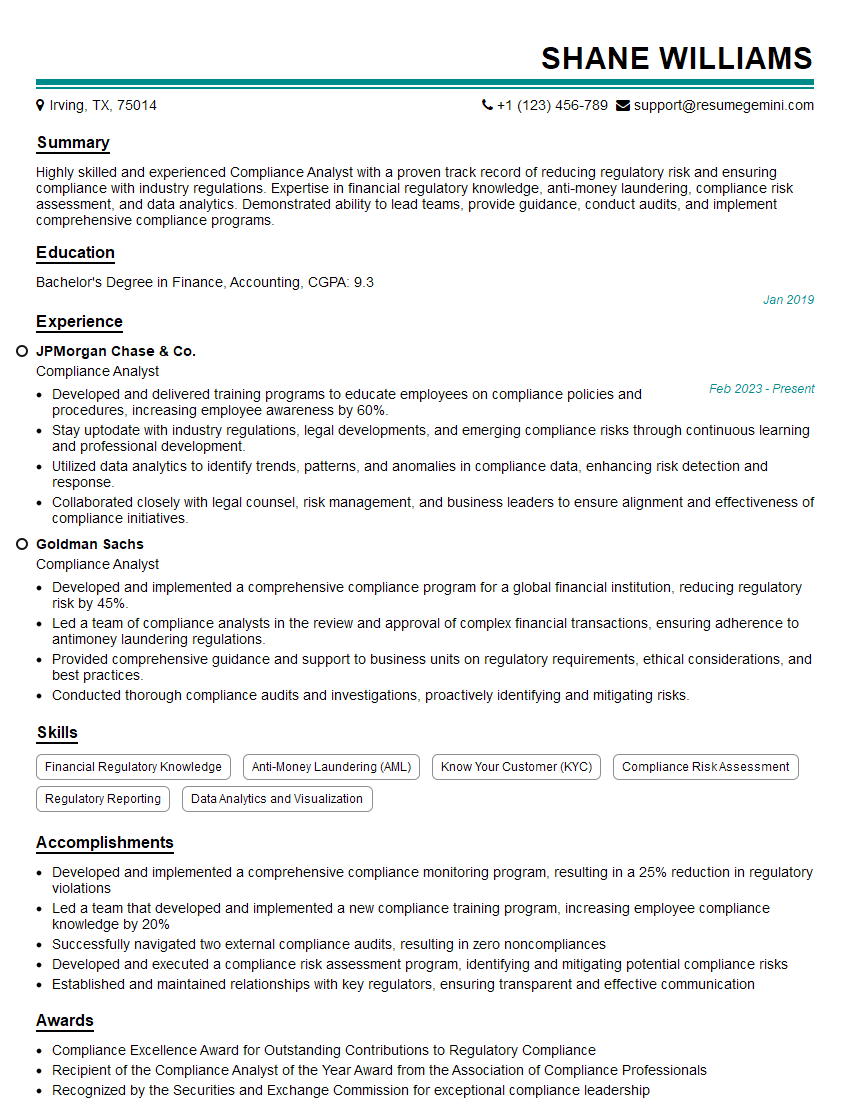
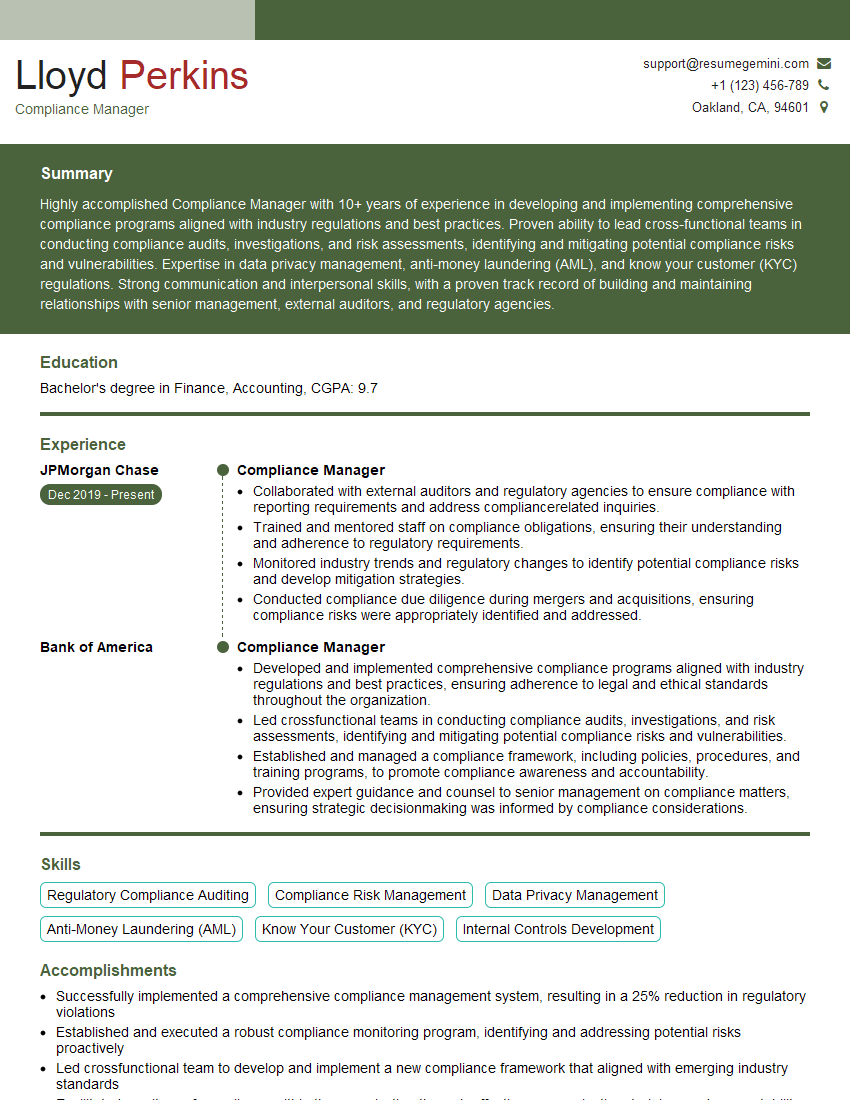
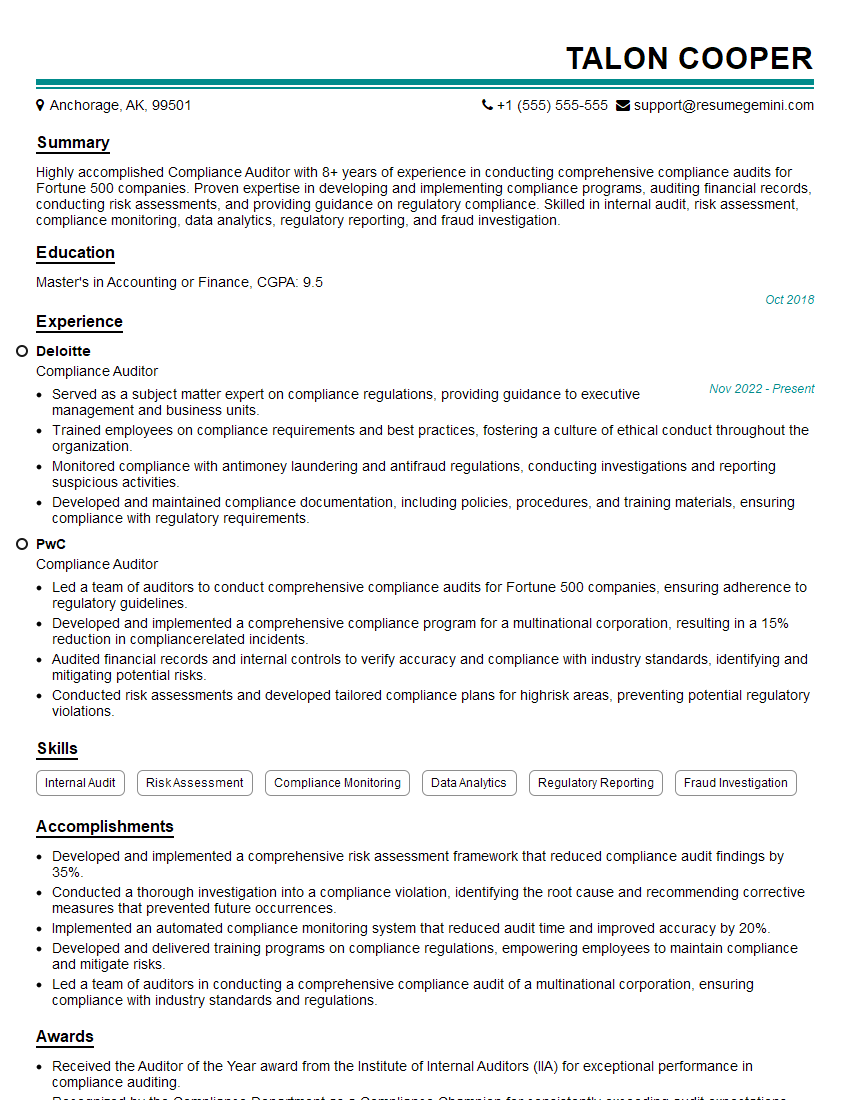
Mastering Legal Compliance and Privacy is crucial for career advancement in today’s data-driven world. It demonstrates a commitment to ethical practices and risk mitigation, qualities highly valued by employers. To significantly increase your job prospects, creating a strong, ATS-friendly resume is essential. ResumeGemini is a trusted resource that can help you build a professional and compelling resume tailored to showcase your skills and experience in this field. Examples of resumes specifically designed for Legal Compliance and Privacy professionals are available – use them as inspiration to craft your own winning application!
Explore more articles
Users Rating of Our Blogs
Share Your Experience
We value your feedback! Please rate our content and share your thoughts (optional).
What Readers Say About Our Blog
Very informative content, great job.
good