Unlock your full potential by mastering the most common Legionella Sampling and Control interview questions. This blog offers a deep dive into the critical topics, ensuring you’re not only prepared to answer but to excel. With these insights, you’ll approach your interview with clarity and confidence.
Questions Asked in Legionella Sampling and Control Interview
Q 1. Describe the process of taking a Legionella sample from a hot water system.
Sampling a hot water system for Legionella requires meticulous technique to ensure accurate results. First, you must select sampling points strategically – these are typically stagnation points where water sits for extended periods, providing ideal conditions for bacterial growth. These points might include outlets at the end of long pipe runs or rarely used taps. Before sampling, the tap should be flushed thoroughly – this is crucial to remove any surface bacteria and obtain a representative sample from the bulk water within the system. The duration of the flush will depend on factors such as pipe diameter and length; a general guideline is to flush for at least two minutes, or until the water temperature stabilizes. After flushing, you’ll use a sterile sample bottle, often with a specific type of preservative added to prevent the bacteria from multiplying before analysis. The bottle should be filled completely, avoiding air bubbles. Finally, the sample is carefully labelled with the location, date, time, and any relevant information before being sent to a laboratory for analysis.
Imagine it like taking a blood sample – you wouldn’t just prick the finger and take the first drop; careful preparation and technique are essential. The same applies to Legionella sampling. Any contamination during sampling could lead to inaccurate, and potentially dangerous, results.
Q 2. What are the legal responsibilities related to Legionella control in your jurisdiction?
Legal responsibilities related to Legionella control vary depending on jurisdiction, but generally speaking, the duty of care rests with the responsible person or organisation that owns or manages the premises. This involves assessing the risk of Legionella growth in the water systems under their control, implementing and maintaining a preventative and control scheme, and monitoring the water system regularly. This might involve regular inspections, temperature monitoring, and, of course, sampling. Failure to comply can lead to significant penalties, including fines, prosecution, and even imprisonment in severe cases. In many places, there are specific regulations and guidance documents outlining the required procedures. It’s crucial to stay updated on these legal requirements and seek expert advice when needed.
Think of it as similar to health and safety regulations in a workplace – not only is it ethically right to protect employees, it’s also a legal obligation to implement measures to prevent harm.
Q 3. Explain the difference between a pre-flush and a post-flush sample.
The distinction between pre-flush and post-flush samples lies in the timing of the sample relative to the flushing procedure. A pre-flush sample is taken *before* flushing a tap, providing a snapshot of water that has been stagnant and potentially harboring Legionella. This sample represents the worst-case scenario. A post-flush sample is taken *after* flushing a tap, offering an indication of the effectiveness of the flushing procedure in removing Legionella from the system. By comparing pre- and post-flush samples, you can assess the efficacy of your water management procedures and identify areas needing improvement.
Imagine cleaning a sink – you’d clean it before using it again; The pre-flush sample represents before, the post-flush sample represents after the clean. Comparing the two tells you if your cleaning was effective.
Q 4. What are the key indicators of potential Legionella growth in a water system?
Several key indicators point to potential Legionella growth in a water system. These include:
- Stagnant water: Water that sits for extended periods, especially at temperatures between 20°C and 45°C (68°F and 113°F), is a breeding ground for Legionella.
- Low water temperatures: While Legionella thrives in warmer water, consistently low temperatures can also create biofilms and conditions that could lead to growth.
- Biofilms: These sticky layers of microorganisms provide a protective haven for Legionella and can be a significant source of contamination.
- High levels of sediment and scale: These provide surfaces for biofilm formation, fostering bacterial growth.
- Ineffective disinfection: If the system’s disinfection process is inadequate, Legionella can flourish.
- Water system design issues: Dead legs in piping systems, poorly designed water heaters, and areas of low flow can cause stagnation.
Identifying these factors allows for proactive intervention and mitigation of risks.
Q 5. How do you interpret Legionella test results?
Interpreting Legionella test results requires expertise. The results typically express the number of Legionella bacteria per milliliter (CFU/mL) of water. Zero CFU/mL indicates no detectable Legionella. A positive result, however, requires careful assessment. The specific threshold for action varies, depending on regulations, the type of water system, and the risk profile. For instance, a low count might be acceptable in a low-risk environment, whereas the same count in a high-risk environment (e.g., hospital) might require immediate remedial action. Other factors like the species of Legionella detected and the overall system’s condition will also influence the interpretation. Consulting with a water hygiene specialist is crucial to ensure appropriate actions are taken.
Think of it like a blood test – a slightly elevated value might be normal for some, whereas a much higher value might require immediate medical attention. Context is critical in interpreting the results.
Q 6. What are the different types of water systems requiring Legionella monitoring?
Many types of water systems require Legionella monitoring. High-risk systems, which warrant the most stringent monitoring, include those in healthcare facilities (hospitals, care homes), hotels, and other buildings with vulnerable populations. Other systems requiring monitoring include:
- Hot and cold water systems in larger buildings.
- Cooling towers and evaporative condensers.
- Spa pools and hot tubs.
- Industrial water systems.
The frequency of monitoring depends on the risk assessment for each individual system.
Q 7. Describe the methods used to control Legionella growth in water systems.
Controlling Legionella growth involves a multi-faceted approach encompassing several methods:
- Temperature control: Maintaining hot water temperatures above 50°C (122°F) at the outlet and cold water temperatures below 20°C (68°F) inhibits bacterial growth.
- Chemical disinfection: Using biocides such as chlorine or other approved chemicals to eliminate Legionella in the system. This should be done according to strict guidelines to ensure safety and efficacy.
- Regular flushing: Frequent flushing of the system removes stagnant water and helps prevent biofilm formation.
- Water treatment: Employing technologies such as UV disinfection or filtration to remove or inactivate Legionella.
- System design and maintenance: Correct design and maintenance of water systems – including minimizing dead legs and ensuring proper pipework and water heater configuration – is essential. Regular maintenance and inspection are crucial.
- Risk assessment and management: This crucial step identifies potential hazards and develops an effective control program tailored to the specific system.
Effective Legionella control requires a comprehensive approach addressing all these factors.
Q 8. What are the limitations of using only temperature monitoring as a Legionella control strategy?
Relying solely on temperature monitoring for Legionella control is insufficient because it provides only a snapshot of the water system’s status at a specific point in time. While maintaining water temperatures above 50°C (122°F) in hot water systems and below 20°C (68°F) in cold water systems can significantly inhibit Legionella growth, this method overlooks several critical factors.
- Stagnant Water: Even if the bulk water temperature is adequate, stagnant water in dead legs or infrequently used outlets can harbor Legionella. Temperature monitoring doesn’t detect these areas of potential risk.
- Inconsistent Temperatures: Temperature fluctuations can create ideal conditions for Legionella growth. A system that generally maintains correct temperatures but experiences brief periods of temperature drops can still be problematic, and such fluctuations aren’t fully captured by simple monitoring.
- Biofilm: Legionella thrives within biofilms, complex communities of microorganisms that can insulate bacteria from temperature changes. Temperature monitoring won’t reveal the presence of these biofilms, which are significant breeding grounds for Legionella.
- Other Factors: Other factors impacting Legionella growth, such as nutrient availability and water chemistry, are entirely ignored by temperature monitoring alone.
Imagine a hospital with a hot water system. The main tank might consistently show the right temperature, yet a rarely used shower head could harbor stagnant, lukewarm water – a perfect breeding ground for Legionella. Temperature monitoring wouldn’t highlight this specific risk.
Q 9. Explain the importance of water system design in mitigating Legionella risk.
Water system design plays a crucial role in preventing Legionella growth. A well-designed system minimizes the risk by reducing stagnant water, promoting efficient water circulation, and simplifying maintenance and cleaning. Key elements include:
- Minimizing Dead Legs: These are sections of pipe with slow or no flow, creating ideal conditions for Legionella. Designs should avoid unnecessary branching and long pipe runs without regular flow.
- Promoting Water Circulation: Regular flushing of the system helps to remove stagnant water and prevent biofilm formation. This can be achieved through efficient pump designs and appropriate pipe sizing.
- Using Materials Resistant to Biofilm: Certain materials are less prone to biofilm formation. Careful selection of pipe materials and fittings can contribute to better Legionella control.
- Simple System Configuration: A simpler system with fewer components is easier to monitor and maintain, reducing the chances of hidden stagnant areas or issues.
- Temperature Control Strategies: Efficient heating and cooling systems ensure that the water is maintained at appropriate temperatures throughout the system. This might include thermostatic mixing valves and appropriate pipe insulation.
For instance, a newly constructed hotel should incorporate a looped hot water system to eliminate dead legs, thereby preventing the accumulation of stagnant, potentially contaminated water. This is a far more effective strategy than simply relying on post-construction monitoring.
Q 10. Outline the steps involved in conducting a Legionella risk assessment.
A Legionella risk assessment is a systematic process to identify potential hazards and determine the likelihood of Legionnaires’ disease occurring. It involves these key steps:
- Identify Water Systems: List all water systems in the building, including hot and cold water systems, showers, cooling towers, and humidifiers.
- Identify Vulnerable Groups: Determine if there are individuals at higher risk of contracting Legionnaires’ disease, such as the elderly, immunocompromised, or those with chronic respiratory conditions. Hospitals, care homes, and hotels would require special attention here.
- Assess Water System Characteristics: Evaluate factors like water temperature, water quality, pipe material, design features (dead legs), and maintenance practices. This often includes visual inspection and review of maintenance logs.
- Evaluate Risk Factors: Combine the information from steps 1-3 to assess the overall risk. Consider the likelihood of Legionella growth, the potential exposure of vulnerable individuals, and the severity of potential consequences.
- Develop a Control Scheme: Based on the risk assessment, create a plan to mitigate hazards. This plan should outline specific preventative and control measures.
- Implement and Monitor: Implement the control scheme and regularly monitor its effectiveness. The plan should be updated as needed.
Imagine assessing a large office building. The risk assessment might reveal high-risk areas due to stagnant water in rarely used restrooms. The control scheme would then focus on improved flushing procedures for these areas, perhaps including automated flushing systems.
Q 11. What is the role of a Responsible Person in relation to Legionella control?
The Responsible Person (RP) is legally responsible for ensuring compliance with Legionella control regulations. Their role is multifaceted and crucial:
- Developing and Implementing a Control Scheme: The RP oversees the creation and execution of a comprehensive Legionella control scheme, based on the risk assessment.
- Monitoring and Maintaining the System: Regular monitoring of water systems, temperature checks, and other preventative measures fall under the RP’s responsibility.
- Record Keeping: Detailed records of all actions taken, including testing results, maintenance procedures, and risk assessments, must be maintained by the RP.
- Training Staff: Ensuring that all relevant staff understand the risks associated with Legionella and their role in control measures is essential.
- Compliance with Regulations: The RP is responsible for ensuring compliance with all relevant legislation, including timely reporting of incidents.
In a hospital setting, the RP might be a facilities manager or a designated health and safety officer, responsible for coordinating all Legionella control activities and ensuring that the entire team is aware of their roles and responsibilities.
Q 12. Describe different disinfection methods used for Legionella control.
Several disinfection methods are employed for Legionella control, each with its strengths and limitations:
- Thermal Disinfection: Heating water to high temperatures (above 70°C for a sufficient duration) effectively kills Legionella. This is commonly achieved through the use of appropriately sized and installed hot water systems.
- Chemical Disinfection: Using chemicals like chlorine or chlorine dioxide can also inactivate Legionella. However, careful control of chemical concentration is essential to avoid harming users or damaging pipework. Regular monitoring of chemical levels is crucial.
- Shock Chlorination: This involves a high-concentration chlorine treatment to rapidly disinfect a water system. It’s typically used as a reactive measure following a Legionella outbreak or after significant system work.
- Ultraviolet (UV) Disinfection: UV light can inactivate Legionella, but it is generally more effective when used in conjunction with other methods.
Choosing the appropriate method depends on several factors, including the type of water system, the level of contamination, and the presence of vulnerable individuals. For example, a small office might use chemical disinfection, while a large hospital might combine thermal and chemical methods for comprehensive control.
Q 13. How often should Legionella testing be conducted?
The frequency of Legionella testing depends on several factors, including the risk assessment findings, the type of water system, and the presence of vulnerable groups. There isn’t a one-size-fits-all answer, but general guidance can be offered:
- High-Risk Systems: Systems with a high risk of Legionella growth, such as those in hospitals or care homes, may require testing every 3-6 months, or more frequently, based on risk assessments.
- Low-Risk Systems: Lower-risk systems might require less frequent testing, perhaps annually or bi-annually.
- Post-Treatment Testing: Testing is typically done after any remedial actions or disinfection procedures to verify their effectiveness.
- Following Outbreaks: In the case of confirmed Legionnaires’ disease, frequent and extensive testing will be required to fully understand the extent of the problem and the effectiveness of remedial measures.
Regular monitoring beyond testing, such as temperature checks, is also crucial and should be conducted much more frequently. The testing frequency should be explicitly outlined in the control scheme, and it may evolve as the building’s needs change.
Q 14. What are the signs and symptoms of Legionnaires’ disease?
Legionnaires’ disease, a severe form of pneumonia, presents with a range of symptoms that may vary in severity:
- Flu-like Symptoms: Initial symptoms can resemble the flu, including fever, chills, muscle aches, and headaches.
- Cough: A persistent cough is common, often producing phlegm.
- Shortness of Breath: Difficulty breathing is a significant symptom, potentially requiring medical attention.
- Chest Pain: Pain in the chest, often worsened by deep breaths or coughing, may occur.
- Gastrointestinal Symptoms: Some individuals may also experience diarrhea, nausea, or vomiting.
- Neurological Symptoms: In more severe cases, neurological symptoms such as confusion or disorientation may develop.
It is important to note that these symptoms can be similar to other respiratory illnesses. If you suspect Legionnaires’ disease, particularly if you have recently been in an environment with potential Legionella contamination, seek immediate medical attention. Early diagnosis and treatment are essential.
Q 15. What is the difference between Legionnaires’ disease and Pontiac fever?
Legionnaires’ disease and Pontiac fever are both caused by Legionella bacteria, but they present very differently. Think of it like this: they’re both from the same family, but one is a mild cold, and the other is a serious pneumonia.
Legionnaires’ disease is a severe form of pneumonia. It’s a lung infection that can be fatal, especially in vulnerable populations like the elderly or immunocompromised. Symptoms include high fever, cough, shortness of breath, and muscle aches. It requires antibiotic treatment.
Pontiac fever, on the other hand, is a much milder illness. It’s characterized by flu-like symptoms such as muscle aches, headache, and fever, but it doesn’t typically involve pneumonia and usually resolves without antibiotic treatment. It’s like a 24-48 hour flu, whereas Legionnaires’ disease can last for weeks.
The key difference lies in the severity of the lung infection. Legionnaires’ disease directly affects the lungs, while Pontiac fever is a more systemic, less severe illness.
Career Expert Tips:
- Ace those interviews! Prepare effectively by reviewing the Top 50 Most Common Interview Questions on ResumeGemini.
- Navigate your job search with confidence! Explore a wide range of Career Tips on ResumeGemini. Learn about common challenges and recommendations to overcome them.
- Craft the perfect resume! Master the Art of Resume Writing with ResumeGemini’s guide. Showcase your unique qualifications and achievements effectively.
- Don’t miss out on holiday savings! Build your dream resume with ResumeGemini’s ATS optimized templates.
Q 16. What is the significance of heterotrophic plate counts (HPCs) in Legionella risk assessment?
Heterotrophic Plate Counts (HPCs) measure the total number of bacteria in a water sample that can grow on a standard nutrient agar. While they don’t directly detect Legionella, they’re incredibly important for risk assessment because they indicate the overall microbial burden of the water system. High HPCs suggest a favorable environment for Legionella to grow and thrive.
Think of it like this: HPCs are like a general health check-up for your water system. A high HPC reading suggests that something might be wrong – poor water quality, biofilm formation, or inadequate disinfection – all of which create ideal conditions for Legionella to proliferate. It acts as an early warning signal.
A consistently high HPC, therefore, flags the need for further investigation, including specific Legionella testing. It’s a cost-effective way to identify systems at high risk, allowing for preventative measures to be taken before an outbreak occurs.
Q 17. Explain the importance of maintaining accurate records of Legionella sampling and control measures.
Maintaining accurate records of Legionella sampling and control measures is crucial for several reasons: legal compliance, risk management, and demonstrating due diligence. Imagine this scenario: a Legionella outbreak occurs. Having meticulously documented records will protect your organization from liability, proving that all necessary precautions were taken.
- Legal Compliance: Health and safety regulations often mandate detailed record-keeping regarding Legionella control. Failure to comply can result in significant penalties.
- Risk Management: Records allow for trend analysis, helping identify recurring issues and potential weaknesses in the control scheme. This enables proactive adjustments to minimize future risks.
- Demonstrating Due Diligence: Comprehensive records are essential to demonstrate that a responsible approach to Legionella control has been adopted. This is crucial for insurance purposes and in the event of litigation.
These records should include dates of sampling, locations sampled, test results, remedial actions taken, and the names of those responsible. Using a dedicated software or database is highly recommended to ensure accuracy and easy retrieval of data.
Q 18. Describe the appropriate personal protective equipment (PPE) when performing Legionella sampling.
Appropriate Personal Protective Equipment (PPE) when performing Legionella sampling is crucial for the safety of the personnel involved. The specific PPE will depend on the sampling method and the location, but generally includes:
- Gloves: Nitrile gloves are recommended, as they offer good protection against bacteria and chemicals.
- Eye protection: Safety glasses or goggles are necessary to protect against splashes of water or other potentially harmful substances.
- Lab coat or overall: This protects clothing from contamination.
- Respiratory protection: In cases of high risk or if working in confined spaces with potential aerosol generation, a suitable respirator may be required. This would be determined through a risk assessment.
- Footwear: Closed-toe shoes are essential to protect against slips and spills.
Remember, the goal is to minimize risk of exposure and prevent contamination. A proper risk assessment before sampling helps determine the appropriate level of PPE needed.
Q 19. How do you manage a situation where Legionella is detected in a water system?
Detecting Legionella in a water system is a serious event that requires a swift and decisive response. It’s not a ‘one-size-fits-all’ situation; the approach depends on several factors, including the level of contamination, the type of water system, and the vulnerability of building occupants.
A multi-step approach is usually necessary:
- Immediate action: Isolate the affected area of the water system to prevent further spread. This might involve turning off showers or temporarily shutting down a section of the piping system.
- Investigate the source: Identify potential sources of contamination – biofilms, stagnant water, inadequately maintained equipment, etc. This involves a thorough inspection and additional testing.
- Implement remedial actions: This could involve hyperchlorination, flushing, or other water treatment methods to eradicate Legionella. The choice of method will be tailored to the specific contamination and the water system.
- Monitor and retest: After treatment, rigorous monitoring is crucial to verify the effectiveness of the remediation efforts. Regular sampling and testing should continue until Legionella is no longer detected.
- Review and refine: Following the incident, a thorough review of the Legionella control scheme should be undertaken to identify weaknesses and implement improvements to prevent future outbreaks. This might involve changing operational practices or upgrading equipment.
Throughout this process, communication with relevant authorities, building occupants, and healthcare providers is critical.
Q 20. What are the key elements of a Legionella control scheme?
A comprehensive Legionella control scheme is essential for preventing outbreaks. It’s a proactive, systematic approach that involves several key elements:
- Risk assessment: Identifying areas and systems at risk of Legionella growth, based on factors such as water temperature, stagnation, and the presence of vulnerable populations.
- Sampling and testing: A regular sampling schedule according to the risk assessment, using appropriate methods to identify Legionella and HPCs.
- Water treatment: Employing various water treatment methods like thermal disinfection (heating water to a specific temperature), chemical disinfection (using biocides), and filtration to control microbial growth.
- Preventative maintenance: Regularly inspecting and maintaining water systems, including cleaning, flushing, and disinfection of equipment and components to prevent biofilm formation and stagnant water.
- Record-keeping: Maintaining detailed records of all sampling, testing, and maintenance activities, as discussed previously.
- Training and competency: Ensuring that those responsible for Legionella control are properly trained and competent to carry out their tasks.
- Emergency response plan: Having a clear plan in place for responding to a confirmed Legionella outbreak.
The effectiveness of a Legionella control scheme depends heavily on a proactive, well-documented, and continuously reviewed approach.
Q 21. Explain the principles of water treatment to control Legionella.
Water treatment is a crucial element in controlling Legionella. The goal is to create an environment that is unfavorable for bacterial growth.
Several methods are used:
- Thermal disinfection: Heating water to a temperature that kills Legionella (typically above 60°C for a specified time) is highly effective. This can involve raising the temperature of hot water systems or using heat exchangers.
- Chemical disinfection: Using biocides such as chlorine or other approved chemicals to kill Legionella and other bacteria. Careful monitoring and control of chemical levels are crucial to ensure effectiveness and safety.
- Filtration: Installing filters to remove Legionella and other bacteria. Different types of filters exist, and the choice depends on the specific needs of the water system.
- Ultraviolet (UV) disinfection: Using UV light to kill bacteria, including Legionella. UV disinfection is effective but may require careful consideration of the water quality and flow rate.
Often, a combination of these methods is employed for optimal control. The specific treatment strategy should be determined based on a comprehensive risk assessment and should always comply with relevant regulations.
Q 22. What are the different types of water heaters and their impact on Legionella growth?
Different water heaters have varying impacts on Legionella growth, primarily due to temperature and stagnation. Ideal hot water temperatures for preventing Legionella growth are above 50°C (122°F). Let’s look at some common types:
- Electric Storage Water Heaters: These are prone to temperature fluctuations and stagnation in the lower sections, creating ideal conditions for Legionella if temperatures drop below 50°C. Regular maintenance, including temperature checks and flushing, is critical.
- Gas Storage Water Heaters: Similar to electric ones, they can suffer from temperature inconsistencies and stagnation if not properly maintained. Thermostat accuracy and regular servicing are vital.
- Instantaneous (Tankless) Water Heaters: Generally considered safer because water is heated on demand, minimizing stagnation. However, failure to reach sufficient temperatures during periods of low demand can still allow for Legionella growth. Regular temperature monitoring is still recommended.
- Heat Pump Water Heaters: These are energy-efficient but can be slower to heat water, potentially increasing the risk of Legionella if not properly sized and maintained. They require careful monitoring of water temperature.
Think of it like this: a consistently hot shower is less likely to harbor bacteria than one that starts cold and fluctuates in temperature. Similarly, a well-maintained water heater, consistently delivering hot water above 50°C, minimizes Legionella risk.
Q 23. How do you prioritize different areas of a water system for sampling?
Prioritizing sampling areas involves a risk assessment focusing on areas with potential for Legionella growth and exposure. We prioritize based on several factors:
- Stagnant water areas: Dead legs (pipes with little or no flow), infrequently used outlets (showers in rarely-used rooms), and areas with low flow rates are high priorities. These are like quiet corners where bacteria can thrive unnoticed.
- Temperature Monitoring Data: Areas consistently showing temperatures between 25°C and 50°C are critical. This is the ‘danger zone’ for Legionella growth.
- High-risk locations: Outlets used by vulnerable populations (e.g., healthcare facilities, elderly care homes) are always a top priority. We want to safeguard the most vulnerable first.
- System complexity: Complex systems with multiple loops, branches, and potential for cross-contamination require strategic sampling to map potential problem areas.
- Previous positive results: If a previous sample tested positive for Legionella, that area becomes the highest priority for further investigation and remediation.
A methodical approach, combining risk assessment with available data, is essential for efficient and effective sampling.
Q 24. Describe your experience with using different sampling devices.
I’ve extensive experience with various sampling devices, each with its strengths and weaknesses. Examples include:
- Sterile sampling bottles: Simple, widely used, suitable for general water samples. They’re like basic test tubes for water.
- R2A Agar plates: Useful for detecting culturable Legionella; you’re essentially providing a buffet for any bacteria present, allowing for identification of specific strains later.
- Membrane filtration systems: Allow for larger volume sampling and higher sensitivity, useful for low concentrations of Legionella. Think of it as a fine-mesh filter trapping the bacteria before analysis.
- Passive sampling devices: These devices are left in place for a longer period of time to provide a more integrated measure of bacteria load over time. Like a long-term monitoring station.
The choice of device depends on the sampling objective, water source, and the available analytical capabilities. Proper aseptic technique is paramount in every instance to ensure sample integrity.
Q 25. What are the challenges in controlling Legionella in complex water systems?
Controlling Legionella in complex water systems presents numerous challenges:
- System heterogeneity: Variations in pipe materials, age, and water flow can create numerous microenvironments conducive to Legionella growth.
- Stagnation zones: Identifying and managing dead legs and low-flow areas within a large system is time-consuming and can be difficult.
- Biofilm formation: Legionella often resides within biofilms (complex bacterial communities), making eradication challenging. These are like bacterial cities, well-protected.
- Temperature control: Maintaining consistent temperatures above 50°C throughout a vast network can be costly and requires complex controls.
- Monitoring and maintenance: Regular sampling and testing are crucial for early detection, but it’s a logistical challenge in large systems.
It’s like trying to maintain a perfectly clean and heated labyrinthine network of pipes—a continuous challenge requiring proactive management and a thorough understanding of the system’s intricacies.
Q 26. How do you ensure compliance with relevant regulations and guidelines?
Ensuring compliance involves a multi-faceted approach:
- Regular monitoring: We implement a detailed sampling plan in accordance with ACOP L8 (or equivalent regional guidelines), establishing a baseline and tracking changes over time.
- Documented procedures: All procedures—sampling, analysis, remedial action—are meticulously documented to provide a clear audit trail.
- Staff training: Training ensures that all personnel involved in water management and sampling are fully aware of their roles and responsibilities and are properly trained on best practices.
- Risk assessment: Regular risk assessments help identify potential problem areas and vulnerabilities requiring attention.
- Proactive maintenance: A comprehensive preventative maintenance program, including regular flushing and temperature checks, is critical in preventing problems from occurring.
Compliance is not a one-time event; it’s an ongoing process demanding vigilance and proactive engagement.
Q 27. Explain your understanding of the ACOP L8 document (or equivalent in your region).
ACOP L8 (Approved Code of Practice L8) in the UK (or equivalent guidelines in other regions) provides guidance on the control of Legionella bacteria in water systems. It establishes a framework for risk assessment, water management, and monitoring procedures. Key aspects include:
- Risk assessment: A thorough assessment to identify potential risks based on factors like water system design, occupancy, and vulnerable populations.
- Water system management: Guidance on how to design, operate, and maintain water systems to minimize Legionella risks. This involves things like correct temperature control and regular maintenance procedures.
- Sampling and testing: Specific requirements for monitoring water quality and detecting the presence of Legionella. It outlines what to do and how often to check.
- Remedial action: Guidance on what actions to take if Legionella is detected, which could range from cleaning and disinfection to system modifications.
Essentially, ACOP L8 provides a roadmap for minimizing the risk of Legionella outbreaks. Following it diligently helps protect building occupants and ensures compliance with relevant regulations.
Q 28. Describe a situation where you had to troubleshoot a Legionella-related issue.
In one instance, we investigated a recurring Legionella positive sample from a specific shower head in a large healthcare facility. Initial investigations found temperature fluctuations. We implemented a multi-pronged approach:
- Thorough inspection: We examined the piping to the shower head, identifying a dead leg contributing to stagnation. This was like finding a hidden pocket in a complex system.
- Temperature logging: Continuous monitoring revealed intermittent drops in temperature in that section of the plumbing system.
- System flushing: We performed a thorough flush of the dead leg to remove accumulated sediments and biofilms.
- Re-piping: Ultimately, we replaced the section of pipe causing the stagnation, eliminating the dead leg and ensuring optimal flow.
- Retesting: After the remediation, regular monitoring confirmed that the Legionella issue was resolved.
This case highlighted the importance of systematic investigation and the necessity of addressing underlying systemic issues rather than solely focusing on symptomatic treatment.
Key Topics to Learn for Legionella Sampling and Control Interview
- Legionella Pneumophila and its Characteristics: Understanding the bacteria’s lifecycle, growth conditions, and virulence factors is crucial for effective control strategies.
- Risk Assessment and Management: Learn to identify high-risk environments, assess potential sources of contamination, and implement appropriate preventative measures. This includes understanding water safety plans and their practical application.
- Sampling Techniques and Procedures: Master various sampling methods (e.g., cold water, hot water, and biofilms) and understand the importance of proper sample collection, handling, and transportation to ensure accurate results.
- Laboratory Analysis and Interpretation: Familiarize yourself with common analytical techniques used to detect and quantify Legionella bacteria, and learn to interpret laboratory reports effectively to inform control measures.
- Control Measures and Technologies: Understand the application of different control methods, such as thermal disinfection, chemical treatment (including the limitations and risks associated with each), and water management strategies (e.g., flushing, filtration). Discuss the practical application of these and the advantages and disadvantages of each.
- Legislation and Compliance: Be aware of relevant health and safety regulations, guidelines, and best practices related to Legionella control. Understand your responsibilities regarding reporting and compliance.
- Problem-Solving and Troubleshooting: Practice identifying and resolving common issues related to Legionella control, such as persistent contamination or ineffective treatment strategies. Be prepared to discuss case studies and demonstrate your analytical skills.
Next Steps
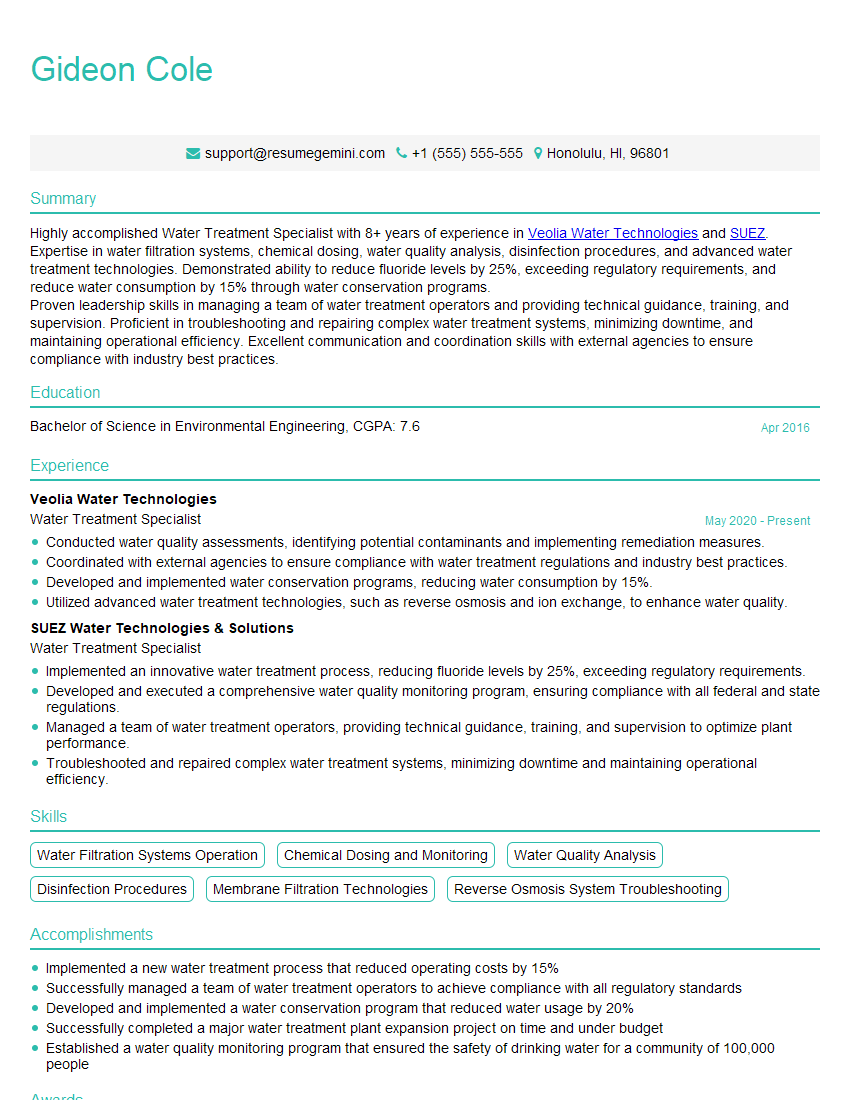
Mastering Legionella Sampling and Control opens doors to rewarding careers in environmental health, water management, and building safety. Proficiency in this area demonstrates a commitment to public health and a valuable skillset highly sought after by employers. To maximize your job prospects, create a compelling and ATS-friendly resume that showcases your expertise. ResumeGemini is a trusted resource to help you build a professional and effective resume, highlighting your skills and experience in Legionella Sampling and Control. Examples of resumes tailored to this field are available to help you get started.
Explore more articles
Users Rating of Our Blogs
Share Your Experience
We value your feedback! Please rate our content and share your thoughts (optional).
What Readers Say About Our Blog
Very informative content, great job.
good