The right preparation can turn an interview into an opportunity to showcase your expertise. This guide to Liaison Coordination interview questions is your ultimate resource, providing key insights and tips to help you ace your responses and stand out as a top candidate.
Questions Asked in Liaison Coordination Interview
Q 1. Describe your experience in managing multiple stakeholders with conflicting priorities.
Managing stakeholders with conflicting priorities requires a delicate balance of diplomacy, effective communication, and strategic prioritization. It’s like orchestrating a complex symphony where each instrument (stakeholder) has its own unique melody (priority) and they don’t always harmonize perfectly. My approach begins with understanding each stakeholder’s individual needs and concerns. I facilitate open communication channels where everyone feels heard and understood. I then work to identify common ground and areas of agreement, even if the specific priorities differ. For instance, in a project involving engineering, marketing, and sales, conflicting priorities might arise regarding the product launch timeline versus feature inclusion. I would facilitate a meeting where each department presents their needs, and we would collaboratively create a prioritized list based on project goals and potential risk mitigation, leading to a compromise that allows for a successful launch while incorporating essential features.
This often involves creating a shared vision or objective that transcends individual departmental goals. Once a common goal is established, it becomes easier to navigate conflicting priorities by aligning individual contributions towards that overarching aim. Finally, I utilize clear and concise documentation of decisions and agreements to ensure accountability and transparency throughout the process.
Q 2. How do you prioritize competing demands in a liaison coordination role?
Prioritizing competing demands is a critical skill in liaison coordination. I employ a multi-faceted approach that incorporates several key elements. First, I assess the urgency and importance of each demand, using a matrix that categorizes tasks based on their impact and time sensitivity. This helps to visualize the relative importance of different requests. Secondly, I actively seek clarification and additional information from stakeholders. Often, a seemingly urgent demand may have underlying complexities that can be addressed strategically to lower the immediate pressure. Thirdly, I proactively manage stakeholder expectations by clearly communicating timelines and potential limitations. It’s crucial to be transparent about capacity constraints and avoid over-promising. Finally, I regularly review and adjust priorities based on changing circumstances. The situation is dynamic, and flexibility is key. For example, an unexpected crisis might require a rapid shift in priorities to address immediate needs. This requires nimble decision-making and frequent communication.
Q 3. Explain your approach to conflict resolution in inter-departmental communication.
My approach to conflict resolution in inter-departmental communication emphasizes collaboration and mutual understanding. I avoid taking sides and instead focus on identifying the root cause of the conflict. This often involves active listening to each party’s perspective and facilitating open dialogue. I might use techniques like reframing to help the parties see the issue from different angles and identifying common interests to find compromises. For example, if the marketing and sales teams are disagreeing about a campaign strategy, I would facilitate a meeting where both teams present their views and identify the underlying concerns. Through collaborative discussions, we could find a compromise that incorporates the best elements of both strategies while addressing their concerns.
If the conflict persists, I might utilize mediation techniques to guide the parties toward a mutually acceptable solution. In more complex situations, a structured problem-solving approach, such as root cause analysis or a decision tree, can provide a framework for a more objective resolution. Throughout the process, maintaining a neutral stance, emphasizing respect, and documenting the agreements are vital for a successful outcome.
Q 4. How do you ensure clear and consistent communication across multiple channels?
Ensuring clear and consistent communication across multiple channels requires a strategic approach that includes selecting appropriate communication tools and establishing clear protocols. I use a combination of methods, including regular meetings, email updates, shared online platforms (like project management software), and instant messaging for quick queries. However, the key to effective communication lies not just in the channels used but in the consistency and clarity of the message. I ensure that all communication aligns with the overall project goals and is consistently formatted and delivered. For example, I might use templates for regular project updates to ensure consistency in information provided to different stakeholders.
Moreover, I proactively solicit feedback to verify understanding and identify potential misunderstandings. This might involve brief questionnaires, informal check-ins, or formal feedback sessions. Using a central communication hub, such as a shared drive or project management software, helps keep everyone informed and easily accessible to relevant information. This minimizes confusion and ensures everyone is ‘on the same page’.
Q 5. Describe a time you successfully negotiated a complex agreement between different parties.
In a previous role, I successfully negotiated a complex agreement between the engineering, procurement, and construction (EPC) contractor and a major client concerning project delays and cost overruns. The client threatened to terminate the contract, while the contractor claimed force majeure due to unforeseen circumstances. The situation was highly tense, with strong emotions and conflicting interpretations of the contract. My approach involved actively listening to each party’s concerns, identifying areas of common ground, and reframing the problem to focus on finding a mutually acceptable solution, rather than assigning blame. I facilitated a series of meetings, creating a safe and collaborative space for both parties to express their views without interruption.
By meticulously analyzing the contract and relevant documentation, I identified clauses that could be leveraged for a compromise. We eventually agreed on a revised timeline and a cost-sharing arrangement that balanced the contractor’s financial losses with the client’s project delays. This involved a series of concessions from both sides, demonstrating effective negotiation skills and a keen ability to bridge seemingly insurmountable differences. The outcome was a win-win scenario that preserved the business relationship and prevented costly legal battles.
Q 6. What methods do you use to track progress and report on key metrics in liaison activities?
Tracking progress and reporting on key metrics in liaison activities is crucial for effective management and accountability. I employ several methods to ensure this. First, I utilize project management software to track tasks, deadlines, and milestones. This software provides dashboards and reports that visually represent project progress and potential risks. Secondly, I establish clear key performance indicators (KPIs) that align with project objectives. These KPIs are regularly monitored and reported on to stakeholders. For example, this might include metrics like the number of meetings held, stakeholder satisfaction ratings, the number of issues resolved, or the percentage of project milestones achieved.
Thirdly, I create regular progress reports that summarize key achievements, outstanding issues, and projected timelines. These reports are tailored to the specific needs and interests of each stakeholder group, ensuring relevant and digestible information. Lastly, I maintain meticulous documentation of all communications, decisions, and agreements to provide a clear audit trail. This ensures accountability and facilitates future reference. This combination of quantitative data and qualitative insights provides a comprehensive overview of the liaison activities’ effectiveness.
Q 7. How do you adapt your communication style to different audiences and stakeholders?
Adapting my communication style to different audiences and stakeholders is paramount for effective liaison coordination. I tailor my approach based on the individual’s role, communication preferences, and the context of the communication. For example, a technical discussion with engineers might involve more detailed explanations and specific jargon, while a conversation with senior management would require a more concise and high-level summary. I actively listen to understand each stakeholder’s communication preferences and adjust accordingly. This might involve choosing different channels (e.g., email for formal updates, instant messaging for quick questions) and using different communication styles (e.g., formal for senior management, informal for team members).
Furthermore, I strive to establish rapport with each stakeholder by understanding their needs and concerns. I also consider the cultural context and communication norms when interacting with stakeholders from diverse backgrounds. This sensitivity ensures clear and respectful communication, fostering trust and collaboration. Ultimately, my goal is to ensure that information is communicated clearly, concisely, and in a manner that is easily understood and appreciated by the intended recipient.
Q 8. Describe your experience using collaboration tools to facilitate communication and coordination.
Effective liaison coordination relies heavily on seamless communication. My experience encompasses utilizing a range of collaboration tools to foster this. For instance, in a recent project involving multiple government agencies and private contractors, we leveraged Microsoft Teams for real-time communication, sharing documents, and conducting virtual meetings. This platform allowed for efficient file sharing, threaded conversations to avoid email clutter, and integrated video conferencing for quick problem-solving. We also utilized project management software like Asana to track progress, assign tasks, and monitor deadlines, ensuring everyone remained informed and accountable. Furthermore, we established a dedicated SharePoint site to centralize all project documentation, readily accessible to all stakeholders. This multi-platform approach ensured transparency and facilitated a collaborative environment leading to improved efficiency and successful project delivery.
In another instance, working on an international development project, we utilized a combination of video conferencing tools (Zoom), secure file-sharing platforms (Box), and a dedicated project communication portal to overcome geographical barriers and language differences. This required careful consideration of time zones and clear communication protocols to ensure everyone remained informed and engaged.
Q 9. How do you build and maintain strong working relationships with diverse stakeholders?
Building and maintaining strong relationships with diverse stakeholders is crucial in liaison coordination. My approach focuses on active listening, empathy, and consistent, transparent communication. I begin by understanding each stakeholder’s perspective, their needs, and their concerns. This often involves informal one-on-one conversations to build rapport and trust. For example, before launching a large-scale community engagement initiative, I spent several weeks meeting individually with community leaders to understand their priorities and concerns, addressing any potential objections proactively.
Maintaining these relationships requires consistent effort. I regularly provide updates, actively solicit feedback, and proactively address any issues that arise. This demonstrates respect for their time and expertise, fostering a sense of partnership. I also focus on recognizing and celebrating successes, both big and small, to reinforce positive relationships and shared goals. Regular check-ins, even informal ones, are essential to keeping lines of communication open and to ensure that everyone feels heard and valued.
Q 10. How do you identify and mitigate potential communication breakdowns?
Identifying and mitigating communication breakdowns requires a proactive and multi-faceted approach. I begin by anticipating potential challenges. This often involves carefully analyzing the project scope, identifying key stakeholders, and assessing their communication preferences and potential barriers (language, technology access, etc.).
Proactive measures include establishing clear communication protocols, including designated communication channels, reporting frequencies, and escalation procedures. For example, we might establish a daily stand-up meeting for quick updates and problem-solving, weekly progress reports for senior management, and a clear escalation path for urgent issues. Regular feedback mechanisms, such as surveys or informal check-ins, help identify and address potential problems early on. If a breakdown does occur, I immediately address the issue, acknowledging the problem, determining the root cause, and implementing corrective actions to prevent recurrence. This might involve additional training, improved communication tools, or revised communication protocols. Documentation of these processes and outcomes is essential for continuous improvement.
Q 11. Explain your experience in developing and implementing communication plans.
Developing and implementing communication plans requires a structured approach. I start by defining clear objectives: what information needs to be communicated, to whom, when, and how. Then, I identify the target audiences and tailor the communication strategy accordingly, recognizing diverse communication styles and preferences. This may involve creating different versions of the same message, adapting the language, or using various media (written reports, presentations, infographics, etc.).
The plan outlines communication channels, timelines, and responsibilities. For example, a plan might detail weekly email updates, monthly newsletters, quarterly town hall meetings, and ad-hoc reports as needed. It also specifies who is responsible for creating and distributing the communication materials. Regular monitoring and evaluation are crucial. We track metrics like audience engagement, feedback received, and the impact of communication on achieving project goals. This allows us to adapt the plan as needed, ensuring its effectiveness throughout the project lifecycle. For example, if feedback suggests low engagement with email updates, we might switch to a different format like short video messages.
Q 12. Describe your experience in preparing and delivering presentations to diverse audiences.
Presenting to diverse audiences requires adaptability and careful planning. I begin by understanding the audience’s background, knowledge level, and interests. This allows me to tailor the content and delivery style accordingly. For example, a presentation to a technical audience might involve detailed technical information and jargon, while a presentation to a non-technical audience would require simpler language and visuals.
Effective presentations are clear, concise, and engaging. I use visuals like charts and graphs to illustrate key points, and I incorporate storytelling techniques to make the information more relatable. I also practice the presentation beforehand to ensure a smooth and confident delivery. I actively engage the audience through Q&A sessions and encourage participation. For presentations involving sensitive or confidential information, I take extra precautions, such as using secure presentation materials and limiting access to only authorized personnel.
Q 13. How do you measure the effectiveness of your liaison coordination efforts?
Measuring the effectiveness of liaison coordination efforts involves tracking key performance indicators (KPIs) and gathering feedback. KPIs might include the timeliness and accuracy of information dissemination, stakeholder satisfaction levels (measured through surveys or feedback sessions), project milestones achieved, and cost-effectiveness of communication activities. Regular monitoring of these metrics provides insights into the efficiency and impact of liaison coordination efforts.
Gathering feedback from stakeholders is equally crucial. This might involve conducting post-project evaluations, soliciting feedback through surveys or focus groups, and actively listening to stakeholder concerns. This provides valuable data on what worked well, what could be improved, and areas needing further attention. By analyzing these KPIs and stakeholder feedback, I can identify areas for improvement and make data-driven adjustments to future liaison coordination strategies, ensuring continuous improvement and greater effectiveness.
Q 14. How do you handle sensitive or confidential information in a liaison role?
Handling sensitive or confidential information is paramount in a liaison role. My approach follows strict protocols for data security and privacy. This includes using secure communication channels (encrypted emails, secure file-sharing platforms), restricting access to information on a need-to-know basis, and adhering to all relevant data protection regulations and organizational policies. For example, I would never share confidential information via unencrypted email or with unauthorized personnel.
Maintaining a detailed audit trail of all information accessed and shared is also essential. This helps ensure accountability and allows for easy tracking in case of any security breaches. I am meticulous about properly securing and disposing of physical documents containing sensitive information, following organizational guidelines for secure shredding or incineration. Continuously updating my knowledge on data protection regulations and best practices ensures that I remain compliant and protect sensitive information from unauthorized access or disclosure.
Q 15. Describe your experience working in a fast-paced, high-pressure environment.
Fast-paced, high-pressure environments are the norm in liaison coordination, especially during project launches or crises. My experience in these situations revolves around prioritizing tasks, making swift decisions, and maintaining clear communication. For instance, during a recent product launch, we faced unexpected delays in manufacturing. This triggered a cascade of issues affecting marketing, sales, and customer service. I immediately convened a cross-functional team, implemented a revised communication plan to keep stakeholders informed, and coordinated efforts to mitigate the impact on the launch timeline. This involved constant juggling of multiple tasks, but my ability to remain calm under pressure and focus on the most critical aspects ensured we minimized the damage and successfully launched the product with only minimal delays.
I thrive in this type of environment because I am adept at prioritizing, delegating efficiently, and making data-driven decisions, even when faced with incomplete information. I’ve learned to anticipate potential roadblocks, develop contingency plans, and adapt quickly to unexpected changes.
Career Expert Tips:
- Ace those interviews! Prepare effectively by reviewing the Top 50 Most Common Interview Questions on ResumeGemini.
- Navigate your job search with confidence! Explore a wide range of Career Tips on ResumeGemini. Learn about common challenges and recommendations to overcome them.
- Craft the perfect resume! Master the Art of Resume Writing with ResumeGemini’s guide. Showcase your unique qualifications and achievements effectively.
- Don’t miss out on holiday savings! Build your dream resume with ResumeGemini’s ATS optimized templates.
Q 16. How do you stay organized and manage your workload effectively in a liaison role?
Organization and workload management are crucial in liaison coordination. My approach centers around a combination of proactive planning and robust tools. I begin with a detailed project plan, breaking down large tasks into smaller, manageable steps. I use project management software, which I’ll discuss further in the next question, to track progress, deadlines, and assigned responsibilities. Furthermore, I schedule dedicated time for planning, prioritization, and communication. This proactive approach allows me to anticipate bottlenecks and adjust my workload accordingly. For example, I use a Kanban board to visualize the workflow, identify potential delays, and proactively re-allocate resources when needed.
Regular reviews of my to-do list and prioritizing based on urgency and impact ensures I focus on the most critical aspects of my role. Effective communication with stakeholders throughout the process also reduces unexpected surprises and helps to maintain a shared understanding of priorities.
Q 17. What software or tools are you proficient in using for communication and coordination?
I’m proficient in a variety of software and tools designed for communication and coordination. My go-to tools include project management software like Asana and Trello for task management, collaboration, and progress tracking. I utilize Microsoft Teams and Slack for instant messaging and file sharing, fostering seamless communication across teams and organizations. For more formal communication and documentation, I rely on Microsoft Office Suite (Word, Excel, PowerPoint) and email. I also have experience using collaboration platforms such as SharePoint for centralized document storage and version control. Finally, video conferencing platforms like Zoom and Google Meet are essential for maintaining real-time collaboration with distributed stakeholders.
My proficiency extends beyond basic usage; I understand how to leverage these tools to optimize workflows, automate tasks, and generate reports for effective stakeholder communication. For example, I use Asana’s automation features to automatically assign tasks based on criteria, ensuring tasks are distributed effectively and deadlines are met.
Q 18. How do you proactively identify and address potential issues before they escalate?
Proactive issue identification is a cornerstone of my approach. I achieve this through regular communication, attentive listening, and meticulous monitoring. I maintain open communication channels with all stakeholders, encouraging them to share concerns or potential problems early. I actively listen for subtle cues that might indicate underlying issues. Furthermore, I regularly review project documentation, progress reports, and communication logs to identify potential risks or deviations from the plan. This proactive approach, coupled with risk assessment techniques and scenario planning, allows me to anticipate and mitigate problems before they escalate. For example, if I notice a consistent delay in a certain stage of the process, I’ll initiate discussions with the relevant team to understand the root cause and implement solutions proactively, rather than waiting for the problem to escalate.
Regular progress reviews and early warning systems are crucial parts of this process, ensuring early identification of potential problems, thus allowing for timely intervention and preventing major disruptions.
Q 19. Describe your experience with crisis communication and management.
Crisis communication and management are critical skills for a liaison coordinator. My experience in handling crises focuses on rapid response, clear communication, and decisive action. In a past situation involving a product recall, I immediately activated our crisis communication plan, establishing a central communication hub for disseminating information and coordinating responses across all departments. This involved working closely with legal, PR, and customer service to develop consistent messaging and ensure timely communication with affected customers. I prioritized accurate and transparent communication, keeping all stakeholders informed at every stage of the crisis.
My approach is built on a structured framework: establishing a command center, defining clear communication protocols, and utilizing all available communication channels to provide timely updates. Post-crisis, I lead debrief sessions to analyze what worked well, what could be improved, and to refine our crisis response protocols for future events.
Q 20. How do you build consensus among stakeholders with diverse perspectives?
Building consensus among diverse stakeholders requires active listening, empathy, and a collaborative approach. I begin by actively soliciting input from all parties involved. This involves creating a safe space for open discussion and respectful debate, ensuring that everyone feels heard and valued. I facilitate discussions by identifying common ground and highlighting areas of agreement. When disagreements arise, I work to understand the underlying concerns and explore alternative solutions that address everyone’s interests. I might use techniques like brainstorming, mediation, and compromise to reach a mutually acceptable solution. For example, when coordinating a project involving multiple departments with conflicting priorities, I facilitated a series of workshops where each department presented their needs and constraints, ultimately leading to a collaborative solution that satisfied everyone’s key requirements.
Documenting all agreements and decisions ensures transparency and accountability. This process transforms disagreements into collaborative problem-solving opportunities, leading to stronger relationships and more effective outcomes.
Q 21. What is your approach to managing expectations among stakeholders?
Managing stakeholder expectations is a crucial part of liaison coordination. My approach is built on clear, consistent, and proactive communication. This begins with setting realistic expectations from the outset, ensuring that everyone understands the project timeline, deliverables, and potential challenges. I utilize regular progress updates through various communication channels, keeping stakeholders informed of milestones achieved and challenges encountered. Transparent communication about both successes and setbacks builds trust and credibility. When necessary, I proactively manage any deviation from the plan by promptly communicating changes and explaining their rationale. I focus on being responsive to stakeholder queries, providing timely and accurate information. For instance, if a project delay is unavoidable, I communicate this clearly to all stakeholders, explaining the reasons for the delay, and outlining the revised timeline and mitigation strategies. This approach helps build trust and manage potential disappointment.
Regular check-ins with key stakeholders to address concerns and refine expectations are crucial for maintaining a positive and productive relationship, even in the face of unexpected changes.
Q 22. Explain your experience in navigating bureaucratic processes and regulations.
Navigating bureaucratic processes requires a systematic and persistent approach. It’s not just about understanding the rules; it’s about anticipating potential roadblocks and proactively addressing them. My experience involves meticulously reviewing regulations, identifying key stakeholders, and building strong working relationships with them. I often employ a process mapping technique to visualize the entire flow, identifying bottlenecks and areas for improvement. For example, in a recent project involving international collaborations, I identified a conflicting regulation between two countries regarding data sharing. By proactively engaging with both regulatory bodies, I was able to negotiate a mutually agreeable solution, avoiding significant delays.
This involved compiling all relevant documentation, presenting a clear and concise case for a streamlined process, and demonstrating a willingness to compromise. Think of it like navigating a maze – you need a map (understanding the regulations), the right tools (strong communication and relationship-building skills), and a strategic plan to find the quickest and most efficient route.
Q 23. How do you ensure accuracy and consistency in information sharing across multiple parties?
Ensuring accuracy and consistency in information sharing across multiple parties necessitates a robust communication strategy coupled with meticulous record-keeping. I utilize a centralized information management system, regularly updating it with verified information and ensuring all stakeholders have access. This often involves creating standardized templates for reporting and communication, using clear and concise language, and establishing regular check-in meetings. Furthermore, I implement a system of verification and validation – cross-checking information from multiple sources before disseminating it. This might involve using a checksum or hash value to confirm data integrity.
For example, during a large-scale emergency response effort, I implemented a daily information sharing protocol using a collaborative platform. This ensured everyone had access to the latest data, minimizing miscommunication and ensuring everyone worked with the same understanding of the situation.
Q 24. Describe your experience with change management and its impact on liaison coordination.
Change management is integral to effective liaison coordination. Changes in policy, procedures, or even personnel can significantly impact information flow and collaboration. My experience involves actively participating in the change management process, ensuring that liaison activities are seamlessly integrated into any transition. This involves assessing the impact of changes on existing liaison structures, communicating changes effectively to all stakeholders, and providing training and support as needed. I often use change management frameworks like ADKAR (Awareness, Desire, Knowledge, Ability, Reinforcement) to guide the process.
For example, when our organization transitioned to a new data management system, I proactively engaged with stakeholders to explain the benefits of the new system, provided training sessions, and addressed their concerns. This ensured a smooth transition with minimal disruption to liaison activities.
Q 25. How do you handle situations where communication is hampered by language barriers or cultural differences?
Language and cultural barriers present significant challenges in liaison coordination. My approach involves proactively addressing these challenges through several strategies. This includes utilizing professional translation services for critical documents, employing interpreters during meetings, and using clear and simple language in all communications. Moreover, I emphasize cultural sensitivity by being mindful of communication styles and customs. I invest time in understanding the cultural nuances of each stakeholder group, ensuring that my communication is respectful and effective.
During an international project, I encountered challenges due to language differences. To overcome this, I engaged a certified translator for official correspondence and used a video conferencing tool with real-time translation capabilities during meetings. Furthermore, I took the time to learn basic phrases in the languages of the stakeholders, demonstrating respect and fostering trust.
Q 26. How do you utilize data analysis to inform your liaison coordination strategies?
Data analysis plays a crucial role in informing my liaison coordination strategies. By analyzing communication patterns, response times, and the effectiveness of various communication channels, I can identify areas for improvement and optimize my approach. I use data visualization tools to create dashboards that showcase key performance indicators (KPIs), allowing for efficient monitoring and tracking of progress. For example, by analyzing the frequency of communication breakdowns and identifying the root cause, I can implement corrective measures to improve communication flow and enhance efficiency.
Specifically, I might use tools to track response times to requests, identify recurring issues or bottlenecks, and determine which communication channels are most effective. This data-driven approach allows for continuous improvement and ensures my liaison efforts are aligned with organizational objectives.
Q 27. Describe a time you had to adapt your approach due to unforeseen circumstances.
During a large-scale project involving multiple government agencies, a sudden change in leadership within one agency threatened to derail the entire project. This necessitated a swift adaptation of my strategy. I immediately reached out to the new leadership team, reintroduced myself and the project, and proactively addressed potential concerns. Rather than sticking to a rigid plan, I adapted my communication style, tailoring it to the preferences and priorities of the new leadership. This involved increased transparency and frequent updates, demonstrating my commitment to collaboration and ensuring a smooth transition. The result was a successful continuation of the project, demonstrating adaptability and quick thinking under pressure.
Q 28. How do you ensure the confidentiality and security of sensitive information shared in liaison activities?
Confidentiality and security of sensitive information are paramount in liaison activities. I adhere to strict protocols to ensure the protection of sensitive data. This involves using secure communication channels, employing encryption where necessary, and strictly limiting access to information based on the principle of ‘need to know.’ Furthermore, I ensure that all stakeholders are aware of and comply with relevant data protection regulations and policies. Regular security audits and training sessions reinforce these measures. The use of secure file-sharing platforms and password management systems are also crucial elements of this security framework.
For example, when sharing sensitive information with external partners, I utilize secure file transfer protocols (SFTP) and encrypt all sensitive documents. This provides an extra layer of protection, ensuring that only authorized individuals can access the information. Moreover, I always obtain appropriate authorizations and document all data sharing activities according to the organization’s policies and guidelines.
Key Topics to Learn for Liaison Coordination Interview
- Communication Strategies: Mastering effective communication techniques, both written and verbal, across diverse teams and stakeholders. Practical application: Developing clear, concise reports and presentations that effectively convey complex information.
- Conflict Resolution & Negotiation: Understanding conflict management principles and applying negotiation skills to resolve disagreements and facilitate collaboration. Practical application: Mediating disputes between different departments or organizations involved in a joint project.
- Stakeholder Management: Identifying key stakeholders, understanding their needs and expectations, and proactively managing relationships to ensure project success. Practical application: Building and maintaining strong working relationships with internal and external teams.
- Information Management & Analysis: Gathering, analyzing, and disseminating relevant information efficiently and accurately. Practical application: Creating insightful reports and presentations based on data analysis to inform decision-making.
- Project Management Fundamentals: Understanding project timelines, resource allocation, and risk management within a liaison coordination context. Practical application: Contributing to the successful completion of projects through effective coordination and communication.
- Technological Proficiency: Familiarity with relevant software and technologies used for communication and information sharing (e.g., project management software, collaboration platforms). Practical application: Utilizing technology to streamline communication and information flow.
- Ethical Considerations: Understanding and applying ethical principles in all aspects of liaison coordination, particularly regarding confidentiality and data privacy. Practical application: Maintaining the integrity of information and ensuring compliance with relevant regulations.
Next Steps
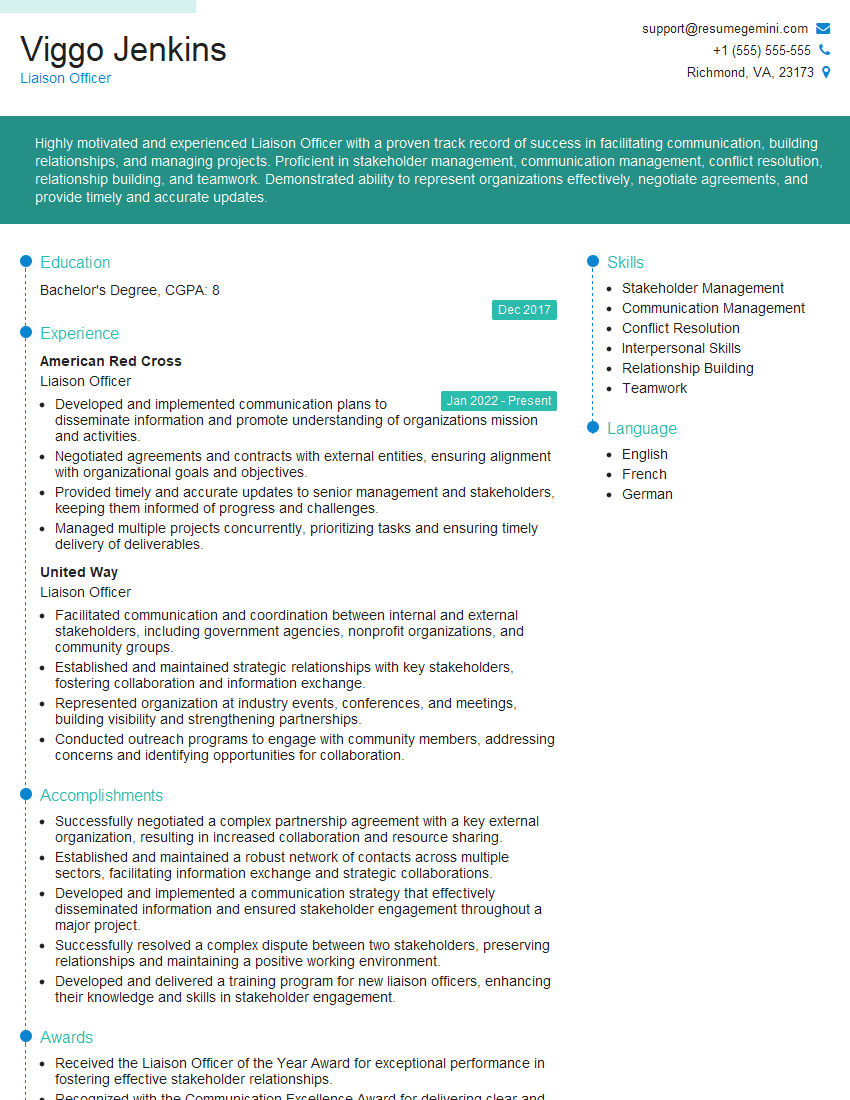
Mastering Liaison Coordination opens doors to exciting career opportunities, offering a rewarding path in project management, strategic partnerships, and organizational leadership. To maximize your job prospects, invest time in crafting an ATS-friendly resume that highlights your relevant skills and experience. ResumeGemini is a trusted resource that can help you build a compelling and effective resume. They offer examples of resumes tailored to Liaison Coordination to guide you through the process, helping you present your qualifications in the best possible light and land your dream role.
Explore more articles
Users Rating of Our Blogs
Share Your Experience
We value your feedback! Please rate our content and share your thoughts (optional).
What Readers Say About Our Blog
Very informative content, great job.
good