Unlock your full potential by mastering the most common Lighting and Display Design interview questions. This blog offers a deep dive into the critical topics, ensuring you’re not only prepared to answer but to excel. With these insights, you’ll approach your interview with clarity and confidence.
Questions Asked in Lighting and Display Design Interview
Q 1. Explain the difference between ambient, accent, and task lighting.
Lighting design utilizes three key types of illumination: ambient, accent, and task lighting. Think of it like a three-legged stool – you need all three for a truly effective and balanced lighting scheme.
- Ambient Lighting: This provides overall illumination, setting the mood and general brightness of a space. Imagine the soft glow of a ceiling fixture in a living room, or the even wash of light from recessed downlights in an office. Its purpose isn’t focused illumination, but rather a general brightness level.
- Accent Lighting: This is used to highlight specific features or objects, adding drama and visual interest. Picture a spotlight on a piece of art in a gallery, or track lighting highlighting merchandise in a retail store. It draws the eye to particular points of interest.
- Task Lighting: This provides focused light for specific activities, such as reading or cooking. Think of a desk lamp, a pendant light over a kitchen island, or under-cabinet lighting in a kitchen. It ensures adequate light for precise tasks.
For example, in a restaurant, ambient lighting might be provided by recessed downlights, accent lighting by spotlights on artwork or decorative elements, and task lighting by pendants above dining tables.
Q 2. Describe your experience with various lighting control systems (e.g., DMX, DALI).
I have extensive experience with various lighting control systems, including DMX and DALI. DMX (Digital Multiplex) is a widely used protocol for controlling stage and architectural lighting, offering precise control over individual fixtures and allowing for complex, dynamic lighting schemes. I’ve used DMX in theatrical productions and large-scale installations, creating everything from subtle fades to dramatic chases. For example, I designed a DMX-controlled lighting system for a museum exhibit, allowing for dynamic color changes synchronized with the audio-visual presentation.
DALI (Digital Addressable Lighting Interface) is a digital protocol predominantly used for commercial and industrial lighting applications. It provides excellent control, addressing each fixture individually, and offers greater energy efficiency compared to traditional systems. My experience includes implementing DALI in office environments, allowing for customized lighting scenes based on occupancy and time of day, leading to substantial energy savings.
In many projects, I’ve integrated these systems with building management systems (BMS) for automated control and remote monitoring, further enhancing efficiency and user experience. The choice between DMX and DALI often depends on the project’s scale and specific requirements, with DMX offering greater flexibility for dynamic effects and DALI prioritizing energy efficiency and control in larger, more complex installations.
Q 3. What are the key considerations for designing lighting in a retail space?
Retail space lighting design requires a careful balance of aesthetics and functionality to attract customers and enhance sales. Key considerations include:
- Highlighting Merchandise: Strategic use of accent lighting is crucial to showcase products in their best light, emphasizing texture, color, and shape. This often involves a combination of spotlights, track lighting, and shelf lighting.
- Creating a Pleasant Ambiance: Ambient lighting sets the overall mood. Warm, inviting lighting can encourage browsing and create a welcoming atmosphere. Different lighting levels can be used in different areas to create zones and guide customers’ flow.
- Energy Efficiency: Retail spaces often have extensive lighting, so energy efficiency is a major concern. LED lighting is the most common choice due to its energy savings and long lifespan. Motion sensors and occupancy sensors help reduce energy waste.
- Branding and Atmosphere: Lighting can significantly impact a brand’s image. A luxury store might use sophisticated, warm lighting, while a modern, trendy store might opt for cooler, more contemporary lighting.
- Safety and Code Compliance: Meeting local building codes and ensuring adequate illumination for safety are paramount. Emergency lighting and appropriate illumination levels in areas like stairwells are vital.
For example, I worked on a retail project where we used a combination of warm-white LEDs for ambient lighting, creating a cozy atmosphere, and cool-white LEDs for accent lighting, highlighting key products.
Q 4. How do you balance aesthetics and functionality in lighting design?
Balancing aesthetics and functionality is the core of successful lighting design. It’s not about choosing one over the other; it’s about finding the perfect synergy between the two.
My approach involves a thorough understanding of the space’s purpose and the client’s aesthetic preferences. I start with a functional lighting plan, ensuring adequate illumination for all tasks. Then, I layer in aesthetic elements – such as the type of fixture, material, and color temperature – to achieve the desired mood and visual impact. This iterative process often involves exploring different lighting schemes and technologies to find the optimal solution.
For example, in a residential project, we might use sleek, minimalist pendant lights for task lighting over a kitchen island while incorporating decorative wall sconces to add warmth and visual interest. The functionality of the lighting is met while simultaneously enhancing the room’s aesthetic appeal.
Q 5. Explain your understanding of color temperature and its impact on design.
Color temperature is measured in Kelvin (K) and refers to the apparent color of a light source. Lower Kelvin values indicate warmer colors (yellowish or reddish), while higher values indicate cooler colors (bluish or whitish).
- Warm White (2700K-3000K): Creates a cozy, inviting atmosphere, often used in residential settings, restaurants, and retail spaces aiming for a welcoming feel.
- Neutral White (3500K-4100K): Offers a balanced, versatile light, suitable for offices, kitchens, and areas requiring good color rendition.
- Cool White (4100K-6500K): Provides a bright, crisp light, often used in industrial settings or where a more modern, clean aesthetic is desired.
The choice of color temperature significantly impacts the mood and ambiance of a space. Warm white evokes feelings of comfort and relaxation, while cool white can feel more energizing or sterile. Understanding this impact allows designers to select the appropriate color temperature to meet the design goals. For instance, a museum might use neutral white to ensure accurate color rendition of artwork, while a spa might opt for warm white to create a relaxing atmosphere.
Q 6. Discuss your experience with different types of light sources (LED, fluorescent, incandescent).
I have extensive experience with various light sources, each with its own advantages and disadvantages:
- LED (Light Emitting Diode): Highly energy-efficient, long-lasting, and available in a wide range of color temperatures and color rendering indices (CRI). They are now the dominant light source in many applications, due to their versatility and sustainability.
- Fluorescent: Previously a popular choice due to energy efficiency, but they are gradually being replaced by LEDs due to longer lifespans, better color rendering, and instant-on capability of LEDs. Fluorescent lamps also contain mercury, posing environmental concerns during disposal.
- Incandescent: Produce a warm, inviting light, but are highly inefficient and short-lived. They are mostly being phased out due to energy regulations and their lack of sustainability.
The selection of the light source depends on the project’s specific requirements, balancing energy efficiency, cost, lifespan, color rendering, and the desired aesthetic. For example, in a historic building, we might opt for LED bulbs mimicking the warm light of incandescent lamps to maintain the building’s character, while in a modern office, high-efficiency LEDs would be the preferable choice.
Q 7. How do you approach designing lighting for energy efficiency?
Designing for energy efficiency is a crucial aspect of modern lighting design. My approach involves a multi-pronged strategy:
- Selecting Energy-Efficient Light Sources: LEDs are the most energy-efficient option available, significantly reducing electricity consumption compared to incandescent and traditional fluorescent lamps.
- Utilizing Intelligent Lighting Controls: Implementing systems like DALI or BMS allows for automated control of lighting based on occupancy, daylight harvesting, and time of day. This minimizes energy waste by ensuring lights are only on when and where needed.
- Optimizing Lighting Design: Careful planning of light placement and fixture selection minimizes light spill and maximizes efficiency. For example, using directional fixtures to illuminate specific areas rather than relying on widespread ambient lighting improves energy efficiency.
- Daylight Harvesting: Maximizing natural light reduces the reliance on artificial lighting. This might involve strategic window placement, light shelves, and automated blinds that adjust to optimize daylight use.
By incorporating these strategies, we can create sustainable and energy-efficient lighting solutions that minimize environmental impact and reduce operating costs for our clients. For instance, in a recent office renovation, we implemented a daylight harvesting system that reduced energy consumption by 30%.
Q 8. Describe your process for creating a lighting design plan.
Creating a lighting design plan is a meticulous process that balances aesthetics, functionality, and technical feasibility. It begins with a thorough understanding of the space and its purpose.
- Client Consultation: I start by meeting with the client to understand their vision, needs, and budget. This includes discussions about the desired ambiance, functionality of the space, and any specific design preferences.
- Site Analysis: A detailed site survey is crucial. This involves assessing the architectural features, existing infrastructure (electrical systems, etc.), and natural light sources. I take precise measurements and photograph the space from various angles.
- Design Concept Development: Based on the client’s needs and the site analysis, I develop a preliminary design concept. This includes selecting appropriate lighting fixtures, determining their placement and orientation, and specifying the type and color temperature of light sources. I often create mood boards and 3D renderings to visualize the final effect.
- Lighting Calculations and Simulations: I use specialized software (discussed in the next question) to perform lighting calculations and simulations. This ensures the design meets illumination levels (lux levels) and avoids glare or undesirable shadows. I also consider energy efficiency and compliance with relevant building codes.
- Documentation and Presentation: The final step involves creating comprehensive design documentation, including lighting plans, specifications, and schedules. This package clearly outlines the type, quantity, and location of each fixture, along with wiring diagrams and other relevant details. A final presentation is given to the client, allowing for review and adjustments before implementation.
For instance, designing a restaurant requires a different approach than designing a museum. A restaurant needs warm, inviting lighting to enhance the dining experience, while a museum needs precise lighting to showcase artwork without causing damage.
Q 9. What software programs are you proficient in for lighting and display design?
I’m proficient in several software programs essential for lighting and display design. My expertise spans both lighting simulation and display design.
- Dialux evo: This is a powerful lighting design software widely used in the industry. I use it for accurate lighting calculations, creating 3D models, and generating detailed lighting plans and simulations. It helps predict the illumination levels and assess the impact of different lighting fixtures.
- Relux: Another robust lighting design software that allows for detailed simulations, energy analysis, and compliance checking. It’s especially useful for complex projects.
- AgX: A strong option for visual merchandising and display design. It provides capabilities for 3D modeling, lighting simulation within the display context, and material specification.
- Adobe Photoshop and Illustrator: These are invaluable for creating visual representations of designs, mood boards, and marketing materials.
- Autodesk Revit: For larger-scale projects involving building information modeling (BIM), Revit allows for seamless integration of lighting designs with the overall architectural model.
Q 10. How do you handle conflicting design requirements from clients?
Handling conflicting design requirements is a common challenge. My approach focuses on collaboration and finding creative solutions.
- Open Communication: I encourage open communication with the client, actively listening to their concerns and explaining the technical limitations or potential design trade-offs.
- Prioritization: I work with the client to prioritize their requirements. Often, some requirements are more critical than others. A clear understanding of priorities helps navigate conflicts.
- Compromise and Negotiation: I explore alternative solutions that address as many client needs as possible. This might involve suggesting compromises or negotiating on certain aspects of the design.
- Data-Driven Decisions: When possible, I use data and simulations to support my recommendations, demonstrating the technical feasibility and potential impact of different design choices.
- Documentation: Thorough documentation of all discussions and decisions helps maintain transparency and avoid misunderstandings.
For example, a client might want both maximum brightness and minimal energy consumption—a seemingly contradictory request. I would explain the trade-offs involved and suggest energy-efficient LED fixtures with high lumen output as a compromise.
Q 11. Explain your understanding of light spill and how to minimize it.
Light spill refers to the unwanted spread of light beyond the intended area. It can cause glare, reduce contrast, and waste energy.
- Shielding and Baffling: Using properly designed light fixtures with shields or baffles helps direct the light where needed and minimizes spill.
- Precise Fixture Selection: Choosing fixtures with narrow beam angles can reduce light spill, particularly for accent lighting.
- Strategic Placement: Careful placement of fixtures can minimize unwanted light. For example, recessed lighting can be strategically positioned to avoid light spill into adjacent areas.
- Wall Washing Techniques: Instead of directly illuminating a surface, wall washing uses light to evenly spread across a wall, reducing harsh highlights and spill.
- Light-Absorbing Materials: Dark-colored walls and ceilings can absorb stray light and reduce spill.
Imagine a retail display. Light spill onto nearby walls or shelves can distract from the intended focal point. Using properly shielded spotlights with precisely aimed beams can prevent this.
Q 12. Describe your experience with different display technologies (e.g., LCD, LED, OLED).
My experience encompasses various display technologies, each with its strengths and weaknesses.
- LCD (Liquid Crystal Display): A mature technology known for its affordability and wide availability. However, LCDs generally have lower contrast ratios and viewing angles compared to other technologies.
- LED (Light Emitting Diode): LED displays offer excellent energy efficiency, long lifespan, and vibrant colors. They are widely used in various applications, from large outdoor billboards to small indoor screens. Mini-LED technology is pushing the boundaries of contrast and brightness further.
- OLED (Organic Light Emitting Diode): OLED displays boast superior contrast ratios, deeper blacks, and wider viewing angles than LCDs. They are often preferred for high-end applications where image quality is paramount, but they can be more expensive.
- MicroLED: Emerging as a next-generation display technology, MicroLED offers even higher brightness, contrast, and energy efficiency than OLED. It’s currently more expensive but holds immense potential.
The choice of display technology depends on factors like budget, required image quality, size, and intended use. For instance, an outdoor advertising display would prioritize brightness and durability (LED), while a high-end home theater setup might favor OLED for exceptional image quality.
Q 13. How do you ensure the readability and visibility of displays in various lighting conditions?
Ensuring readability and visibility in various lighting conditions requires careful consideration of several factors.
- Contrast Ratio: The difference in brightness between the display’s content and its background is crucial. High contrast makes the display easier to read, even in bright ambient light.
- Brightness and Luminance: Sufficient brightness is essential for visibility, especially in sunny conditions. The luminance of the display should be adjusted to match the ambient light levels.
- Color Temperature: The color temperature of the display should be chosen carefully. A cooler color temperature (higher Kelvin value) can improve readability in bright environments.
- Anti-Glare Coatings: Applying anti-glare coatings to the display screen reduces reflections and improves readability in direct sunlight.
- Local Dimming: For LCD and LED displays, local dimming technology can improve contrast by controlling the brightness of different zones on the screen, reducing glare in bright surroundings.
For example, a digital signage display in a brightly lit shopping mall needs to be significantly brighter than a display in a dimly lit office.
Q 14. What are the key considerations for designing displays for accessibility?
Designing accessible displays involves ensuring they are usable by people with disabilities. Key considerations include:
- Sufficient Contrast: Adequate contrast between text and background is essential for users with visual impairments. WCAG (Web Content Accessibility Guidelines) provide specific contrast ratio recommendations.
- Font Size and Style: Using clear, legible fonts in a suitable size improves readability for users with visual impairments or dyslexia.
- Colorblind-Friendly Palettes: Selecting color palettes that are easily distinguishable by people with color blindness is crucial. Tools and guidelines are available to check color combinations for colorblind-friendliness.
- Alternative Text for Images: Providing alternative text (alt text) for images allows screen readers to convey the image content to visually impaired users.
- Keyboard Navigation: Ensuring the display’s interactive elements are accessible via keyboard navigation is essential for users with motor impairments.
- Captioning and Transcripts: Providing captions for videos and transcripts for audio content ensures accessibility for deaf or hard-of-hearing users.
For example, a public information display should use high contrast colors and large, clear fonts to ensure everyone can easily read the information, regardless of their visual abilities.
Q 15. How do you integrate lighting and display design to create a cohesive experience?
Integrating lighting and display design isn’t about simply placing a screen next to a light; it’s about creating a harmonious whole that enhances the user experience. It’s like composing a symphony – each instrument (light, display, and other elements) plays a crucial role in creating a unified and impactful piece.
This integration starts with understanding the purpose of the space and the desired mood. For instance, in a museum, the lighting should subtly highlight the artwork, while the display screens could provide additional information without being distracting. In a retail environment, bright, dynamic lighting can draw attention to displays showcasing products, while more subdued lighting in seating areas might encourage relaxation and shopping.
The process involves:
- Careful color temperature coordination: The color temperature of the lighting (measured in Kelvin) should complement the color palette of the displays. Warm lighting (2700K-3000K) might work well with earthy tones on displays, while cooler lighting (5000K-6500K) could suit a modern, tech-focused aesthetic.
- Light level management: The brightness of the ambient lighting should be balanced with the display’s brightness. Too much ambient light will wash out the display, while too little might create an uncomfortable environment. We might use light diffusers or baffles to control the light spill onto the screen.
- Strategic placement: The positioning of lights relative to displays is crucial. Avoid placing lights directly behind displays, which can cause glare. Instead, consider side or top lighting to create depth and visual interest.
- Consideration of ambient light: Designing for natural light sources is just as important. We would consider window placement and use light-blocking materials if needed to ensure optimal display visibility.
Ultimately, effective integration requires iterative design and testing. We might create mockups and simulations to ensure the combined effect achieves the desired outcome.
Career Expert Tips:
- Ace those interviews! Prepare effectively by reviewing the Top 50 Most Common Interview Questions on ResumeGemini.
- Navigate your job search with confidence! Explore a wide range of Career Tips on ResumeGemini. Learn about common challenges and recommendations to overcome them.
- Craft the perfect resume! Master the Art of Resume Writing with ResumeGemini’s guide. Showcase your unique qualifications and achievements effectively.
- Don’t miss out on holiday savings! Build your dream resume with ResumeGemini’s ATS optimized templates.
Q 16. Describe your experience with creating 3D models and visualizations for lighting and display projects.
My experience with 3D modeling and visualization for lighting and display projects spans over [Number] years, utilizing software such as [List Software, e.g., Autodesk Revit, Dialux evo, Enscape, Lumion]. I’m proficient in creating detailed models of spaces, including architectural elements, lighting fixtures (with accurate photometric data), and display units. I use these models to simulate various lighting scenarios and assess the impact of different display configurations on the overall ambiance.
For example, in a recent project designing a digital signage system for a shopping mall, I created a detailed 3D model of the atrium. This model incorporated realistic materials and textures for the walls, floor, and ceiling, along with accurate representations of the proposed LED screens and ambient lighting fixtures. Using rendering software, I produced high-quality visualizations showing how the lighting and display would interact in different times of day and under varying ambient conditions. This allowed the client to visualize the final product before construction, enabling crucial design adjustments and minimizing potential issues.
Beyond static renders, I also create interactive walkthroughs and animations to show the dynamic aspects of lighting and display changes throughout the day or based on different events or scenarios. This allows for a more comprehensive understanding of the design and its impact.
Q 17. Explain your understanding of colorimetry and color rendering index (CRI).
Colorimetry is the science and technology of measuring, representing, and interpreting colors. Think of it as the ‘language’ of color. It allows us to quantify and compare colors objectively, using standardized systems like CIE 1931 XYZ color space. This is crucial in lighting and display design, as it ensures consistent and accurate color reproduction across different devices and environments.
The Color Rendering Index (CRI) is a quantitative measure of how faithfully a light source renders the colors of objects compared to a reference source (typically daylight). A higher CRI indicates better color rendition. A CRI of 80 or higher is generally considered good for most applications, while a CRI above 90 is excellent for color-critical tasks like art galleries or product displays.
For example, using a light source with a low CRI to illuminate artwork would result in muted and inaccurate colors, diminishing the aesthetic experience. On the other hand, selecting displays with high color gamut and a light source with a high CRI ensures vibrant and accurate color reproduction, leading to a better visual experience. Understanding colorimetry and CRI allows me to specify appropriate light sources and displays to meet the specific color requirements of each project. This is a crucial aspect of making informed decisions when selecting products and creating specifications.
Q 18. How do you manage project timelines and budgets in lighting and display design?
Managing project timelines and budgets effectively requires a structured approach. I use project management methodologies like Agile or Waterfall, tailoring the approach to the project’s complexity and client requirements. This involves:
- Detailed Scope Definition: Clearly defining the project’s deliverables, including specific lighting and display elements, to establish a realistic timeframe and budget.
- Work Breakdown Structure (WBS): Breaking down the project into smaller, manageable tasks, assigning responsibilities, and establishing deadlines for each.
- Resource Allocation: Identifying and securing the necessary resources, including personnel, materials, and software, to ensure smooth project execution.
- Regular Progress Tracking: Employing project management software and conducting regular meetings to monitor progress against the timeline and budget, identifying and addressing any potential delays or cost overruns early on.
- Risk Management: Identifying potential risks and developing contingency plans to minimize their impact on the project’s success.
- Client Communication: Maintaining open and transparent communication with the client throughout the project lifecycle, providing regular updates on progress and addressing any concerns or requests.
For example, I might use a Gantt chart to visualize the project timeline and assign tasks, ensuring that procurement of lighting and display components aligns with the overall project schedule. This kind of planning allows for effective resource management, preventing unnecessary delays and cost escalations.
Q 19. Discuss your experience with different types of display enclosures and mounting systems.
My experience encompasses a wide range of display enclosures and mounting systems, selected based on factors like the display size and type, the environment (indoor/outdoor), and aesthetic considerations. This includes:
- Indoor Enclosures: I’ve worked with various enclosure types for indoor displays, from sleek, minimalist designs for high-end retail spaces to robust, protective enclosures for industrial settings.
- Outdoor Enclosures: For outdoor deployments, I’ve specified enclosures with weatherproofing (IP ratings), anti-vandal features, and appropriate thermal management solutions to protect the displays from harsh environmental conditions. The selection often involves careful consideration of the sun’s impact on screen visibility.
- Mounting Systems: The choice of mounting system depends on the display’s weight, size, and location. Options include wall mounts, ceiling mounts, floor stands, and custom-designed mounting solutions for specific applications. For example, in an installation with limited space, I might design a custom mounting bracket to maximize space utilization.
- Material Considerations: The materials used for enclosures and mounting systems are selected based on durability, aesthetics, and environmental impact. Aluminum is often preferred for its strength-to-weight ratio, while steel might be used in demanding environments. Sustainable materials are also a growing consideration.
In one project involving large format LED displays in a stadium, we used robust outdoor-rated enclosures with specialized mounting systems designed to withstand high winds and seismic activity.
Q 20. How do you ensure the safety and compliance of lighting and display installations?
Ensuring safety and compliance is paramount. My approach involves adherence to relevant safety standards and building codes throughout the design and installation process. This includes:
- Electrical Safety: Compliance with electrical codes (e.g., NEC in the US) ensuring proper grounding, wiring, and protection against electrical hazards. This includes using certified low-voltage power supplies for LED lighting and displays.
- Fire Safety: Selection of fire-resistant materials for enclosures and cabling. Implementing appropriate fire suppression systems where necessary.
- Mechanical Safety: Ensuring that mounting systems are securely installed and capable of supporting the weight of the displays and lighting fixtures. Using appropriate anchoring mechanisms to prevent falls.
- Accessibility: Design and placement considering accessibility guidelines for people with disabilities, for example proper lighting levels for those with visual impairments.
- EMI/RFI Shielding: In cases with sensitive equipment, proper shielding is implemented to prevent electromagnetic interference.
- Documentation: Maintaining comprehensive documentation of the design, installation, and testing procedures to demonstrate compliance and facilitate future maintenance.
For instance, in a hospital setting, we would use medical-grade lighting and comply with strict regulations regarding disinfection and hygiene.
Q 21. Describe your experience with troubleshooting lighting and display system malfunctions.
Troubleshooting lighting and display malfunctions requires a systematic and analytical approach. My process generally involves:
- Identifying the problem: Precisely defining the nature of the malfunction. Is it a complete outage, intermittent flicker, color distortion, or something else?
- Gathering information: Collecting relevant data, such as error messages, operational logs, and visual observations. Talking to users to pinpoint the onset of the problem and any related circumstances.
- Visual Inspection: Thoroughly inspecting the wiring, connectors, and components for any signs of damage or loose connections.
- Testing: Using appropriate test equipment (multimeters, signal analyzers) to check voltage, current, and signal integrity.
- Software Diagnostics: Utilizing diagnostic tools provided by the display and lighting manufacturers to identify software-related issues.
- Component Replacement: Replacing faulty components, if identified.
- System Re-calibration: Recalibrating the system after repairs or adjustments to ensure optimal performance.
For example, if a section of LED display is showing incorrect colors, I might first check the data cables and connectors, then move on to testing the LED modules themselves. If the issue is software-related, I would leverage the display’s diagnostic tools and potentially update the firmware.
Often, the root cause isn’t immediately obvious. A systematic approach, combined with experience in interpreting various error codes and symptoms, is critical for efficient and effective troubleshooting.
Q 22. What are some common challenges faced in lighting and display design, and how have you overcome them?
Common challenges in lighting and display design often revolve around balancing aesthetics, functionality, and budget. For example, achieving the desired ambiance in a space while adhering to energy efficiency standards can be tricky. Another challenge is managing client expectations, as their vision might not always align with technical feasibility or budget constraints.
- Challenge: Meeting stringent energy codes while maintaining design integrity.
- Solution: I’ve overcome this by utilizing energy-efficient LED lighting solutions and incorporating smart lighting controls, such as automated dimming and occupancy sensors, to reduce energy consumption without compromising the desired lighting effect. For instance, in a recent museum project, we implemented a system that dynamically adjusted lighting levels based on the time of day and occupancy, resulting in a 40% reduction in energy usage.
- Challenge: Integrating displays into existing architectural structures without causing damage or disrupting functionality.
- Solution: This requires careful planning and coordination with architects and engineers. We often employ non-invasive installation techniques, such as surface mounting or using custom-fabricated enclosures, to minimize disruption. In one instance, we successfully integrated a large video wall into a historic building by working closely with structural engineers to determine load-bearing capabilities and design a support structure that met both aesthetic and safety standards.
Q 23. How do you stay up-to-date with the latest trends and technologies in lighting and display design?
Staying current in this rapidly evolving field requires a multi-pronged approach. I actively participate in industry conferences, such as Lightfair International, and subscribe to leading industry publications like LD+A (Lighting Design & Application). Regularly attending webinars and online courses on new technologies keeps my skill set sharp. Furthermore, I actively engage with online communities and professional networking sites like LinkedIn to learn about best practices and collaborate with peers.
Beyond formal learning, I actively seek out new products and technologies from manufacturers and regularly test them in real-world applications to assess their performance and suitability for various design projects. This hands-on approach allows me to stay ahead of the curve and offer my clients the latest innovations.
Q 24. Explain your experience with designing for different architectural styles and contexts.
My experience spans a wide range of architectural styles and contexts, from modern minimalist designs to historic renovations. Each style presents unique challenges and opportunities regarding lighting and display integration. For instance, a modern space might call for sleek, linear fixtures and strategically placed accent lighting, while a historic building might require more subtle, ambient lighting to complement its existing features.
- Modern Architecture: In a recent project involving a contemporary office building, I incorporated a system of dynamic LED lighting to create various moods and enhance productivity. The lighting scheme was seamlessly integrated with the building’s automation system to ensure optimum energy efficiency.
- Historic Architecture: When working on the renovation of a Victorian-era theater, I focused on preserving the building’s historical character while incorporating modern display technology. This involved a careful selection of fixtures that complemented the existing architecture and the use of low-profile LED displays to minimize visual intrusion.
- Retail Spaces: In retail environments, I’ve leveraged lighting to highlight merchandise and create a visually engaging shopping experience. This often involves using a combination of general, accent, and task lighting to draw attention to key areas and create a welcoming atmosphere.
Q 25. How do you incorporate sustainable practices into your lighting and display designs?
Sustainability is a core principle in my design philosophy. I strive to minimize the environmental impact of my projects through several strategies.
- Energy-Efficient Technologies: I prioritize the use of LED lighting, which significantly reduces energy consumption compared to traditional incandescent or fluorescent bulbs. I also specify fixtures with high color rendering indices (CRI) to ensure optimal light quality while using minimal energy.
- Smart Lighting Controls: Incorporating smart controls, such as occupancy sensors and daylight harvesting systems, allows for precise lighting management, further reducing energy consumption. This can involve programming systems to dim or turn off lights when a room is unoccupied or when sufficient daylight is available.
- Sustainable Materials: I favor the use of recycled or recyclable materials in fixture selection whenever possible. I also consider the lifecycle cost of the lighting systems and advocate for long-lasting, durable products to minimize waste.
- Responsible Disposal: I work closely with clients and contractors to ensure that end-of-life fixtures and components are disposed of responsibly, following appropriate recycling guidelines.
For example, in a recent hospitality project, we incorporated a rainwater harvesting system to irrigate the landscaping, reducing the need for municipal water and promoting biodiversity.
Q 26. Describe your experience working with various stakeholders (e.g., architects, engineers, clients).
Effective collaboration is crucial in lighting and display design. I’ve successfully worked with architects, engineers, contractors, and clients on numerous projects, fostering a collaborative and transparent environment. This involves actively listening to their needs and concerns, providing clear and concise communication, and seeking consensus through open dialogue.
My approach is to establish clear communication channels early in the project lifecycle, facilitating regular meetings and detailed documentation to ensure everyone is on the same page. I also proactively address potential conflicts or challenges, offering creative solutions that meet the needs of all stakeholders. For instance, during a recent museum project, I facilitated workshops with the curators, engineers, and lighting technicians to resolve potential display conflicts and ensure the displays met both conservation and visual needs.
Q 27. How do you measure the success of a lighting and display design project?
Measuring the success of a lighting and display design project goes beyond just aesthetics. I employ a multi-faceted approach:
- Client Satisfaction: A successful project consistently meets or exceeds the client’s expectations regarding functionality, aesthetics, and budget. Post-project surveys and feedback sessions are crucial for gauging satisfaction.
- Energy Efficiency: I measure energy consumption against pre-project projections, seeking to demonstrate the efficiency of the design and its contribution to sustainability goals.
- User Experience: Feedback from users is essential. For example, in a retail setting, sales data can reflect the effectiveness of the lighting in influencing purchasing behavior. In a museum, visitor surveys can assess the impact on the viewing experience.
- Technical Performance: The lighting system’s operational performance is assessed through regular maintenance checks and performance monitoring, ensuring it meets the technical specifications.
Ultimately, a successful project seamlessly integrates lighting and displays into the space, enhances the overall user experience, meets budgetary constraints, and adheres to sustainability principles.
Q 28. What are your career aspirations in lighting and display design?
My career aspirations involve pushing the boundaries of lighting and display technology, while contributing to sustainable and innovative design solutions. I aim to take on increasingly challenging projects that demand creativity, problem-solving, and collaboration. I am also interested in exploring emerging technologies, such as immersive environments and interactive displays, and incorporating them into my designs. My long-term goal is to establish myself as a leading figure in the field, mentoring young professionals and contributing to advancements in sustainable lighting and display technologies.
Key Topics to Learn for Lighting and Display Design Interview
- Color Theory and Color Science: Understanding color models (RGB, CMYK), color temperature, color rendering index (CRI), and their impact on visual perception and mood creation.
- Lighting Technologies: Familiarity with various lighting sources (LED, fluorescent, incandescent), their characteristics, applications, and limitations. This includes understanding energy efficiency and sustainability considerations.
- Illumination Design Principles: Mastering concepts like ambient, accent, and task lighting; understanding light levels (lux), uniformity, and glare control. Practical application includes designing lighting schemes for different environments (retail, residential, office).
- Display Technologies: Knowledge of different display types (LCD, OLED, LED, microLED), their strengths and weaknesses, resolution, contrast ratio, and color gamut. Consider practical applications like choosing appropriate displays for various applications (smartphones, TVs, billboards).
- Human Factors and Ergonomics: Understanding the impact of lighting and display design on human visual comfort, productivity, and well-being. This includes knowledge of visual fatigue, glare, and circadian rhythm.
- Software and Tools: Proficiency in relevant design software (e.g., Dialux, Revit, Adobe Photoshop, After Effects) for creating lighting simulations and visualizations.
- Sustainability and Energy Efficiency: Understanding energy-efficient lighting practices, sustainable material choices, and the environmental impact of lighting and display technologies.
- Problem-Solving and Design Thinking: Demonstrate your ability to approach design challenges creatively, considering factors like budget, functionality, aesthetics, and technical feasibility.
Next Steps
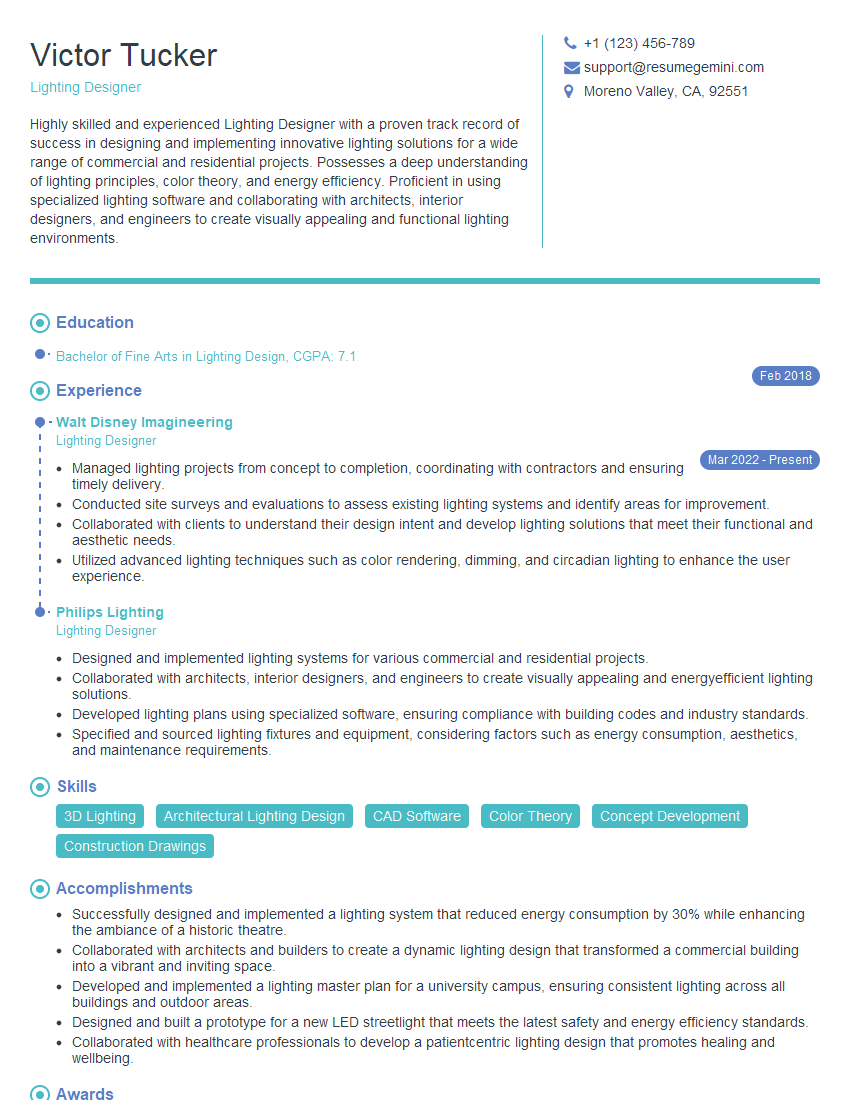
Mastering Lighting and Display Design opens doors to exciting and rewarding careers in a dynamic field. Your expertise in creating visually appealing and functional spaces will be highly sought after. To maximize your job prospects, creating a strong, ATS-friendly resume is crucial. ResumeGemini is a trusted resource that can help you build a professional and impactful resume tailored to the specific requirements of Lighting and Display Design roles. Examples of resumes tailored to this field are available, showcasing the best practices for showcasing your skills and experience effectively. Invest the time to craft a compelling resume – it’s your first impression and a key to unlocking your career potential.
Explore more articles
Users Rating of Our Blogs
Share Your Experience
We value your feedback! Please rate our content and share your thoughts (optional).
What Readers Say About Our Blog
Very informative content, great job.
good