Cracking a skill-specific interview, like one for Lighting for Film and Television Production, requires understanding the nuances of the role. In this blog, we present the questions you’re most likely to encounter, along with insights into how to answer them effectively. Let’s ensure you’re ready to make a strong impression.
Questions Asked in Lighting for Film and Television Production Interview
Q 1. Explain the difference between hard and soft light.
The difference between hard and soft light lies primarily in the size of the light source relative to the subject. Think of it like this: a tiny, bright light source like the sun high in the sky creates hard light. It casts strong, defined shadows with sharp edges. A larger light source, like an overcast sky or a softbox, produces soft light, resulting in softer, less defined shadows and a gentler, more diffused illumination.
Hard light is excellent for creating drama, highlighting texture, and defining form. Think of a film noir scene with harsh spotlights emphasizing a character’s face and creating stark shadows. Soft light is often preferred for portraits or scenes requiring a more flattering and less harsh look, creating a more even and subtle illumination.
The size of the light source isn’t the only factor; its distance from the subject also plays a significant role. A small light source far away will produce harder light than a larger source closer to the subject.
Q 2. Describe three lighting techniques for creating mood and atmosphere.
Three lighting techniques for creating mood and atmosphere are:
- Chiaroscuro: This technique uses strong contrasts between light and shadow to create drama and suspense. Think of classic film noir, where a single spotlight illuminates the protagonist’s face while the background is shrouded in darkness. This emphasizes the subject and creates a mysterious atmosphere.
- High-key lighting: This style uses bright, even illumination with few shadows. It tends to produce a cheerful, upbeat, and optimistic mood. Think of a brightly lit daytime scene in a romantic comedy. Almost no shadows exist, creating a bright, airy feel.
- Low-key lighting: This is the opposite of high-key; it features mostly shadows with just a few key areas highlighted. This technique evokes mystery, fear, or drama. Think of a horror film where only the killer’s silhouette is visible in the dark.
Q 3. What are the advantages and disadvantages of using natural light?
Natural light offers several advantages, most notably its inherent beauty and often soft quality. It’s free, readily available during the day (depending on weather), and can create stunning and realistic scenes. However, natural light is also unpredictable and uncontrollable. It’s constantly changing throughout the day due to cloud cover, the sun’s position, and the time of day. This inconsistency can make it challenging to maintain a consistent look throughout a shoot, and reliance on it can be limiting if filming indoors or at night.
Therefore, while the beautiful and free nature of natural light makes it desirable, its unpredictability can hinder production. A skilled cinematographer can leverage this to their advantage, but it always needs careful planning and flexibility.
Q 4. How do you choose the right lighting equipment for a specific scene?
Choosing the right lighting equipment depends entirely on the specific scene’s requirements. Several key factors influence this choice:
- Mood and atmosphere: Do you need hard light for drama or soft light for a more delicate feel? This dictates your choice between Fresnels (hard light), softboxes (soft light), or other modifiers.
- Scale of the scene: A large-scale exterior scene might require powerful HMI lights or LED panels, while a smaller, intimate scene might only need a few smaller lights.
- Budget and available time: Higher-end equipment offers more precise control but comes at a cost. Time constraints might necessitate faster setups with simpler equipment.
- Color temperature: Ensure your lights match or can be adjusted to complement the scene’s color palette. Daylight-balanced lights (around 5600K) are commonly used for outdoor scenes, while tungsten-balanced lights (around 3200K) are frequently used for indoor scenes.
For example, a romantic dinner scene might use softboxes and practical lamps to create a warm, intimate ambiance, whereas an action sequence could use powerful Fresnels and LED panels to provide intense and directional lighting.
Q 5. Explain the function of a light meter.
A light meter is a crucial tool for measuring the intensity of light. It helps determine the proper exposure settings for your camera to ensure that your images aren’t overexposed (too bright) or underexposed (too dark). There are several types of light meters, including incident light meters (measure light falling onto the subject) and reflected light meters (measure light reflecting off the subject). Both provide valuable information.
Incident light meters are generally preferred for accurate exposure because they directly measure the light’s intensity falling onto the subject, giving a more consistent reading independent of the subject’s reflectivity. Reflected light meters measure the light reflecting off the subject, making their reading susceptible to the subject’s reflective properties.
By using a light meter, you can consistently achieve properly exposed images, crucial for maintaining consistency throughout filming and ensuring the desired aesthetic for each shot.
Q 6. How do you achieve proper color balance in your lighting setup?
Achieving proper color balance is crucial for a believable and aesthetically pleasing result. The most common approach involves using lights with consistent color temperatures and employing color correction gels to match different light sources.
For instance, if you’re mixing tungsten (around 3200K) and daylight-balanced (around 5600K) light sources, you can use color correction gels, like CTO (color temperature orange) gels on the daylight lights to warm them to match the tungsten, or CTB (color temperature blue) gels on the tungsten lights to cool them and match the daylight. Using a color meter provides accurate measurements to ensure the correct gel selection.
White balancing your camera is also critical. This adjusts the camera sensor’s sensitivity to different colors, ensuring that white objects appear white in the final image. White balancing should be done for each lighting setup to maintain consistent color temperature.
Q 7. What are the key considerations for lighting a night exterior scene?
Lighting a night exterior scene presents unique challenges. The key considerations include:
- Light sources: You’ll likely use a mix of practical lights (streetlights, building lights), and artificial lights. Powerful lights like HMI’s, or arrays of LED fixtures are often used to illuminate the scene adequately.
- Ambient light: Manage and control existing ambient light (moonlight, starlight) to avoid unwanted color casts or excessive brightness that can wash out your key light and create a flat image.
- Safety and power: Outdoor shoots require careful attention to safety, especially when dealing with high-powered lighting and potential hazards. Power needs must be addressed, often necessitating generators.
- Weather: Outdoor shoots are vulnerable to unexpected weather changes. Contingency plans are necessary.
- Spill light: Carefully control spill light from your fixtures to prevent over-illumination in areas not intended to be bright. This can affect your mood and ambiance, requiring careful planning of fixture placement and potentially the use of flags and other light modifiers.
Careful planning, robust equipment, and a keen awareness of the environment are essential for successful night exterior lighting.
Q 8. How do you manage lighting challenges on location?
Managing lighting challenges on location requires a proactive and adaptable approach. It’s less about having all the answers beforehand and more about problem-solving creatively within the constraints of the environment. My strategy centers around thorough pre-production planning, which includes a detailed location scout to assess the available light, power sources, and potential obstacles. This involves considering both natural light (sunlight, ambient light) and its impact on the scene.
For example, on a recent shoot in a historic building, we had limited power outlets. Instead of relying solely on heavy-duty generators, we opted for a mix of LED lighting fixtures that consumed less power, supplemented by strategically placed reflectors to bounce available daylight. This saved us money on power rental and also kept the noise levels down, which was important given the location’s delicate acoustics.
Furthermore, unexpected issues invariably arise. Perhaps the sun is unexpectedly clouded over, or a building obstructs the desired sunlight. This requires on-the-spot adjustments using tools like diffusion (to soften harsh light), flags (to block unwanted light), and bounce boards (to redirect light). Flexibility and a toolbox of solutions are crucial.
Q 9. Explain your experience with different lighting instruments (e.g., Fresnels, LEDs, HMI).
My experience spans a wide range of lighting instruments, each with its strengths and weaknesses. Fresnels, with their adjustable beam angle and intensity, are excellent for creating sharp, focused light, perfect for highlighting key actors or objects. I’ve frequently used them for dramatic backlighting or creating strong accents. However, they generate considerable heat, so careful placement and safety protocols are essential.
LEDs are my go-to for many situations. Their energy efficiency, reduced heat output, and color-temperature adjustability are invaluable. They are also remarkably versatile, available in a vast array of sizes, from small panels for fill light to large panels for key light. I use LED panels frequently for interviews and smaller productions where power is limited.
HMIs (Hydrargyrum Medium-arc Iodide) offer a daylight-balanced light that’s incredibly bright and consistent. They are ideal for large-scale productions or when you need intense illumination to overcome harsh sunlight. However, their power consumption is significant, requiring careful power management and potentially heavy-duty generators on location. Their high intensity also necessitates strict safety measures.
Q 10. Describe your process for creating a lighting plot.
Creating a lighting plot is a methodical process that starts long before setting foot on location. It begins with careful study of the script and the director’s vision. What is the mood, the tone, and the desired aesthetic? This informs the overall lighting design. I then translate this vision into a technical plan, typically using lighting design software. This software allows me to visualize the placement of each instrument, specifying the type of light, color temperature, and intensity.
Next, I account for practical considerations: power availability, access points, rigging options, and potential obstacles on the set. I always aim for a balanced and efficient design. For example, a well-planned plot will utilize existing light sources where possible, minimizing the number of additional fixtures required. The plot also includes details such as gel colors (to modify the light’s color), diffusion materials (to soften harsh light), and flag positions (to control spill). The final plot serves as a blueprint for the gaffer and crew during the setup.
Once on set, the lighting plot is a guide rather than a rigid prescription. The actual execution may require adjustments based on unforeseen circumstances – a change in weather, unexpected reflections, or changes in the director’s vision. That’s why collaboration and flexibility are paramount.
Q 11. How do you collaborate with the Director of Photography (DP)?
My collaboration with the DP is fundamental to the success of any project. It’s a constant dialogue, starting from pre-production when we discuss the overall visual style, the desired look for each scene, and how lighting can enhance the storytelling. We review the script together, discussing key moments and how to highlight them through lighting. This frequently involves referencing storyboards and mood boards to ensure that our interpretations align.
On set, we work closely, adjusting the lighting in real-time as needed. The DP is ultimately responsible for the overall look of the film, and I am responsible for the technical execution. However, my role extends beyond merely following instructions; I offer technical insights and suggest alternative solutions, frequently improving on the initial plan based on the on-location realities. This collaborative process ensures a seamless integration of artistic vision and technical expertise.
Q 12. How do you troubleshoot lighting issues on set?
Troubleshooting lighting issues on set requires a systematic approach. It starts with identifying the problem. Is the light too bright, too dim, the wrong color, or casting unwanted shadows? Then, I isolate the source of the problem. Is it a faulty fixture, incorrect gel placement, an issue with power supply, or perhaps unexpected environmental factors like reflections or stray light?
My approach is to first check the basic things: cables, power sources, dimmer controls, and the fixture itself. Then, I’ll consider adjustments to the light’s position, focusing, or diffusion. If the issue persists, I’ll consult with the gaffer and electricians to rule out any technical faults. We might need to replace a faulty bulb or adjust the power distribution. Sometimes, the solution involves creatively using existing tools to resolve the unexpected challenges, such as using a flag to block unwanted light reflection or repositioning reflectors to add fill light.
Documentation is key; during the troubleshooting process, I maintain detailed notes on the steps taken and changes implemented to ensure that we have a record of the solutions applied, especially important for future reference.
Q 13. What safety precautions do you follow when working with lighting equipment?
Safety is paramount when working with lighting equipment. I rigorously enforce safety protocols on every set. This begins with regular equipment checks, ensuring all cables are properly insulated and secured, and fixtures are firmly mounted. I also ensure that all personnel understand and adhere to safe operating procedures. This includes maintaining a safe distance from hot lights, avoiding contact with live wires, and using appropriate safety gear such as gloves and eye protection.
When working with heavy equipment like HMIs, additional safety measures are crucial. We use proper rigging techniques, ensuring that the lights are securely supported to prevent accidents. Furthermore, clear communication is essential – designating a safety officer and implementing a system for alerting crew members of potential hazards. Before any lighting setup, I conduct a thorough risk assessment, identifying potential hazards and outlining preventative measures. Regular safety briefings are also critical to remind the team of crucial safety guidelines.
Q 14. What is your experience with lighting for different camera formats (e.g., film, digital)?
My experience encompasses lighting for both film and digital camera formats. While the fundamental principles of lighting remain consistent, the nuances differ. Film is more sensitive to light, requiring more careful consideration of exposure and contrast. It’s also more forgiving of subtle variations in light levels. Digital sensors, on the other hand, have a wider dynamic range but can be more susceptible to highlights and blown-out areas.
When working with film, I often prioritize a more controlled and deliberate lighting approach, employing techniques like diffusion to enhance the smoothness and richness of the image. Digital cinematography allows for greater flexibility in post-production color grading, giving us more latitude in adjusting the light’s look and feel. This means we may be more willing to experiment with higher contrast ratios during the shoot, knowing we can fine-tune the image later. Regardless of the format, my approach is always to create a beautiful and compelling visual story through thoughtful and technically proficient lighting designs.
Q 15. Explain your understanding of color temperature and its effect on lighting.
Color temperature, measured in Kelvin (K), refers to the warmth or coolness of a light source. Lower Kelvin values (e.g., 2700K) represent warmer, more orange-hued light, like a candle or incandescent bulb. Higher Kelvin values (e.g., 5600K) represent cooler, bluer light, similar to daylight. This dramatically affects the mood and feel of a scene.
For instance, a warm color temperature (around 3200K) might be used for a romantic dinner scene, creating a cozy and intimate atmosphere. Conversely, a cool color temperature (around 5600K) might be used for a tense courtroom scene, conveying a sense of sterility or unease. Inconsistent color temperatures can create jarring visual effects, so careful attention to matching different light sources is crucial. We often use color correction gels to adjust the color temperature of lights to maintain consistency throughout a scene.
Consider a scene shot partly indoors with tungsten lights (around 3200K) and partly outdoors in daylight (around 5600K). Without color correction (CTB or CTO gels), the indoor scenes would appear significantly warmer than the outdoor scenes, resulting in a visually disharmonious final product. Careful color temperature matching is essential for a professional and visually consistent final result.
Career Expert Tips:
- Ace those interviews! Prepare effectively by reviewing the Top 50 Most Common Interview Questions on ResumeGemini.
- Navigate your job search with confidence! Explore a wide range of Career Tips on ResumeGemini. Learn about common challenges and recommendations to overcome them.
- Craft the perfect resume! Master the Art of Resume Writing with ResumeGemini’s guide. Showcase your unique qualifications and achievements effectively.
- Don’t miss out on holiday savings! Build your dream resume with ResumeGemini’s ATS optimized templates.
Q 16. How do you deal with power limitations on location?
Power limitations on location are a frequent challenge. My approach is multifaceted, beginning with meticulous pre-production planning. This involves carefully assessing the available power sources, calculating the power draw of all equipment, and developing a lighting plan that maximizes efficiency and minimizes power consumption. This often involves choosing energy-efficient LED fixtures over traditional tungsten or HMI lights.
If the location’s power is insufficient, we explore several solutions. These include using generators, which add noise and logistical complexities, but provide crucial power. We also prioritize battery-powered lighting solutions, especially for smaller, supplemental lights. Finally, creative camera work and careful scene design can sometimes mitigate the need for extensive lighting setups.
For example, on a recent shoot in a remote location, we faced severe power restrictions. We opted for a combination of high-efficiency LED panels, carefully placed to maximize light output, and a generator for the key lights. The supporting lighting was predominantly battery-powered. This allowed us to achieve the desired lighting aesthetic without exceeding the location’s power capacity or compromising the shoot’s schedule.
Q 17. How do you work with different lighting styles and aesthetics?
Adapting to different lighting styles requires versatility and a strong understanding of visual storytelling. For example, a naturalistic style prioritizes mimicking natural light sources to create a realistic and believable atmosphere. This involves careful placement of key, fill, and backlight sources to simulate sunlight or ambient light. A high-contrast style, however, may use dramatic chiaroscuro to evoke a specific mood or create intense visual impact. This might involve using strong backlighting and deep shadows to create a sense of mystery or tension.
I regularly work with various styles, from the subtle lighting of a period drama to the vibrant and stylized aesthetics of a music video. This involves collaborating closely with the director and cinematographer to translate their vision into a concrete lighting plan. Mood boards, reference images, and extensive discussions during pre-production help refine the aesthetic, ensuring a cohesive and consistent lighting design that enhances the narrative.
For instance, a project might require a gritty, realistic look using practical lights and minimal diffusion, contrasting with a subsequent scene requiring a more stylized, glamorous approach using colored gels and strategically placed soft light sources. The flexibility to adapt my approach depending on the creative vision is crucial to my success in this field.
Q 18. Describe your experience with lighting control systems.
I’m highly proficient with various lighting control systems, from basic dimmer boards to sophisticated DMX-controlled systems. DMX (Digital Multiplex) allows for precise and individual control of multiple lighting fixtures from a central console. This is essential for large-scale productions where many lights need coordinated adjustments. I have extensive experience with various DMX consoles and software packages, allowing me to program and execute complex lighting cues efficiently.
Beyond DMX, I am familiar with wireless control systems, which offer greater flexibility in challenging locations. These systems allow for remote adjustments and reduce the need for extensive cabling. My experience also extends to LED lighting control, which often utilizes protocols like Art-Net or sACN for large-scale control and intricate effects. I am proficient in using these systems for dynamic lighting adjustments, such as color changes, intensity shifts, and automated chases.
On a recent project, we used a sophisticated DMX system to control over 100 lighting fixtures simultaneously, enabling us to execute complex lighting sequences smoothly. The flexibility of the system allowed us to quickly adapt to changes in the schedule and director’s vision, ensuring a high-quality final product.
Q 19. What is your experience with virtual production lighting?
My experience with virtual production lighting is growing rapidly as the technology evolves. I understand that virtual production integrates real-world sets and actors with computer-generated environments (CGEs) in real time. Lighting plays a crucial role in seamlessly blending these two elements. This requires a nuanced understanding of how real-world lighting interacts with the virtual environment, maintaining consistent color temperatures, intensity levels, and shadow patterns.
This often involves working with LED panels that can be dynamically controlled to match the virtual environment’s lighting conditions. Careful calibration and synchronization are critical. We need to precisely match the virtual light sources to their physical counterparts to avoid inconsistencies that could break the illusion of reality. This requires close collaboration with the virtual production team (including programmers, VFX artists, and virtual set designers).
For example, on a recent virtual production, we used an LED volume with cameras tracking the real-world actors. My role involved carefully adjusting the LED panels’ color and intensity to match the lighting in the virtual environment, thereby creating a seamless integration between the real and virtual worlds. The success of such projects heavily relies on this interplay of real and virtual lighting.
Q 20. How do you manage the lighting budget effectively?
Effective lighting budget management starts in pre-production. This involves a detailed lighting plan that specifies the required fixtures, accessories, and crew, allowing for accurate cost estimation. It’s important to prioritize essential lighting elements and explore cost-effective alternatives wherever possible. This may involve renting equipment rather than buying, choosing energy-efficient LEDs over power-hungry traditional fixtures, and utilizing existing location light sources.
Negotiating with rental houses and suppliers, comparing prices, and seeking bulk discounts can also significantly impact costs. Careful planning and scheduling can minimize overtime costs and equipment rental periods. Thorough communication within the team ensures that everyone understands the budgetary constraints and works collaboratively to find creative solutions within those limits.
In one instance, we were tasked with achieving a high-end look on a tight budget. By carefully pre-planning, negotiating favorable rental rates, and strategically utilizing readily available practical lights within the location, we successfully delivered the desired visuals without exceeding the allocated funds. Efficient and creative problem-solving is vital in managing lighting budgets effectively.
Q 21. How familiar are you with lighting safety regulations?
I am thoroughly familiar with lighting safety regulations and prioritize safety on every production. My knowledge includes adherence to local electrical codes, safe handling procedures for various light sources (including high-intensity discharge lamps and LEDs), and proper rigging techniques for avoiding equipment malfunctions and injuries.
I understand the importance of regular equipment inspections, using appropriate safety gear (such as gloves and safety glasses), and ensuring that all lighting equipment is correctly grounded and wired. I am also aware of the specific safety guidelines surrounding the use of generators, lighting stands, and other rigging equipment. I am always mindful of potential hazards on set, including tripping hazards caused by cables and the risk of burns from hot lighting equipment.
Before every shoot, I conduct thorough risk assessments, ensuring that all crew members are adequately briefed on safety protocols and potential hazards. On-set, I constantly monitor the safety of equipment and personnel, ensuring that all procedures are followed meticulously. Adherence to these safety regulations is not just a legal obligation; it’s fundamental to ensuring a safe and productive working environment for everyone.
Q 22. Describe your experience with different types of lighting modifiers (e.g., softboxes, umbrellas, barn doors).
Lighting modifiers are essential for shaping and controlling light on set. My experience encompasses a wide range, from the ubiquitous softbox and umbrella to more specialized tools like barn doors and grids.
- Softboxes: These create a soft, diffused light, ideal for portraits and intimate scenes. The size of the softbox directly impacts the softness; larger softboxes produce softer light. I’ve used them extensively for interviews and close-ups, creating flattering and even illumination.
- Umbrellas: Simpler and often more affordable than softboxes, umbrellas offer a faster setup but generally produce slightly less diffused light. Shoot-through umbrellas bounce light back onto the subject, while reflective umbrellas directly reflect light for a more directed, yet still relatively soft, effect. I often use these when speed is crucial, such as on location shoots.
- Barn Doors: These are attached directly to lighting instruments and provide precise control by allowing you to shape the light beam using four adjustable flaps. They’re invaluable for preventing spill light and creating strong, controlled shadows. I use barn doors extensively when highlighting specific areas or creating dramatic chiaroscuro effects.
- Other Modifiers: Beyond these, I’m also experienced with grids (which further control light spread), diffusion filters (which soften light even more), and various other gels and filters to change the color temperature and quality of light.
Choosing the right modifier is crucial and depends on the desired effect, budget, and time constraints. For instance, a large softbox is perfect for a soft, even look, but may be impractical in tight spaces. Conversely, a small reflector might be ideal for a quick fill light but not for large-scale illumination.
Q 23. Explain your understanding of three-point lighting.
Three-point lighting is a fundamental lighting technique that utilizes three light sources to illuminate a subject effectively. It’s a versatile and widely used method, forming the basis for many more complex lighting setups.
- Key Light: This is the main light source, providing the primary illumination of the subject. It’s typically placed at a 45-degree angle to the subject and slightly elevated. Think of it as the sun’s primary light source on a partly cloudy day.
- Fill Light: Placed opposite the key light, usually at a lower intensity, the fill light softens the shadows created by the key light. It fills in the dark areas, preventing harsh contrasts. Imagine this as a soft, reflective cloud filling some of the shadows.
- Back Light: Positioned behind the subject, this light separates the subject from the background, adds depth, and creates a rim light or halo effect. It adds dimension and prevents the subject from appearing flat against the background. Think of this as the glow of a slightly backlit object.
Mastering three-point lighting provides a strong foundation for any lighting design. It ensures even illumination while providing control over shadows and depth. I often use variations of three-point lighting as a starting point and then adjust based on the specific requirements of the scene.
Q 24. How do you create depth and dimension in your lighting?
Creating depth and dimension in lighting involves manipulating light and shadow to give the scene a three-dimensional feel. This goes beyond the basic three-point setup. Here’s how I approach it:
- Strategic Shadowing: Carefully placed shadows are crucial. Avoid flat, even lighting. Use strategically placed flags, cutters, or gobos to create shadows that enhance the forms and textures of the subject.
- Light Intensity Variation: Varying the intensity of different light sources is key. A brighter key light with a softer fill light creates more depth than two equally bright lights. This creates a natural hierarchy in the image.
- Background Lighting: Don’t neglect the background. Using background lighting (with rim lighting or even backlight) allows your subject to separate visually from the background, enhancing the three-dimensional sense. A darker background behind a brighter subject creates immediate depth.
- High-key vs. Low-key Lighting: Employing high-key lighting (bright and airy) or low-key lighting (dark and moody) will strongly influence the perceived depth. Low-key typically utilizes strong contrasts to create depth.
For example, in a dramatic scene, I might use strong backlighting to silhouette the subject against a bright background, creating a significant sense of depth and mystery. In contrast, a lighter, brighter setup might be appropriate for a more upbeat, open scene.
Q 25. How do you achieve specific lighting effects (e.g., backlight, rim light, fill light)?
Achieving specific lighting effects relies on understanding the interplay of light sources and modifiers. Let’s break down some key effects:
- Backlight: Positioned behind the subject, this light separates it from the background, creating a halo or rim effect. It adds depth and dimension. I often use a diffusion filter on the backlight to soften its edge and prevent harsh shadows.
- Rim Light: A specific type of backlight, rim light delicately outlines the subject, accentuating its form. It’s typically less intense than a full backlight. I might use a smaller light source or a grid to achieve a more focused rim.
- Fill Light: As discussed earlier, this softens shadows created by the key light. I adjust the intensity of the fill light to achieve the desired balance between highlight and shadow. Using a softbox as a fill light produces very gentle, diffused light.
The positioning and intensity of these lights are critical. For example, a strong backlight might create a dramatic silhouette, whereas a soft fill light maintains subtle details in the shadows. I always experiment and adjust until I achieve the exact mood and look I desire for the scene.
Q 26. What software are you proficient in for lighting design or pre-visualization?
For lighting design and pre-visualization, I’m proficient in several software packages:
- LightSpace: An excellent tool for creating photorealistic renders and simulations of lighting setups.
- Cinema 4D with Octane Render: I utilize this powerful combination to create complex 3D environments and render highly realistic lighting.
- Vectorworks Spotlight: This software aids in stage lighting design and is particularly helpful for larger-scale productions.
Proficiency in these programs allows me to create detailed lighting plans, experiment with different setups virtually, and share these designs with the rest of the team. This greatly reduces issues on set and enhances the overall efficiency of the production.
Q 27. Describe a challenging lighting situation you encountered and how you overcame it.
One challenging situation involved lighting a nighttime exterior scene with very limited natural light. We were shooting a dramatic scene in a dimly lit alleyway, and our primary concern was maintaining a realistic, moody atmosphere while ensuring the actors were properly lit and visible.
The initial problem was the lack of ambient light. We couldn’t simply use existing streetlights. Relying only on our lighting equipment would have resulted in an unnatural, over-lit look. Our solution involved a multi-pronged approach:
- Practical Light Sources: We incorporated existing practical lights within the alleyway (streetlamps, flickering neon signs) to establish a believable base level of ambient light.
- Strategic Placement of Key and Fill Lights: To achieve even illumination without over-lighting, we carefully positioned our key lights to focus on the actors while using strategically placed fill lights to avoid washing out the scene.
- Color Temperature Matching: We used color correction gels on our lights to precisely match the color temperature of the existing ambient light sources, ensuring consistency and realism.
- Smoke and Fog: We strategically used haze and smoke to scatter and diffuse our lighting, creating a more immersive and moody atmosphere.
By combining existing practical light sources with carefully calibrated artificial lighting and atmospheric effects, we successfully created a realistic and visually stunning nighttime scene, exceeding expectations despite the initial challenges.
Key Topics to Learn for Lighting for Film and Television Production Interview
- Three-Point Lighting: Understanding the key light, fill light, and backlight, and how to adjust them for different moods and scenes. Practical application: Setting up a three-point lighting system for a simple interview scenario, considering the subject’s skin tone and background.
- Color Temperature and White Balance: Mastering the concepts of Kelvin (K) and how to achieve accurate color representation across various lighting sources. Practical application: Troubleshooting color casts in a scene shot with mixed lighting (e.g., tungsten and daylight).
- Lighting Instruments and Modifiers: Familiarity with various lighting fixtures (e.g., Fresnels, LEDs, Softboxes) and modifiers (e.g., barn doors, gels, diffusers) and their applications in shaping light. Practical application: Selecting the appropriate lighting instrument and modifiers for a specific scene, considering budget and time constraints.
- Lighting Design and Storytelling: Understanding how lighting contributes to mood, atmosphere, and narrative. Practical application: Describing how you would use lighting to create a specific mood (e.g., suspense, romance, action) in a given scene.
- Practical Lighting Techniques: High-key vs. low-key lighting, rim lighting, backlighting, and other techniques to achieve specific visual effects. Practical application: Analyzing existing lighting setups in films and explaining the choices made by the cinematographer.
- Safety Regulations and Best Practices: Understanding safety protocols related to electrical equipment, handling lighting instruments, and working on set. Practical application: Describing your approach to ensuring a safe working environment during a lighting setup.
- Problem-Solving and Adaptability: Discussing how to troubleshoot common lighting issues on set (e.g., power failures, equipment malfunctions) and adapt to unexpected challenges. Practical application: Presenting a scenario and explaining your problem-solving process for resolving a lighting issue within a given time constraint.
Next Steps
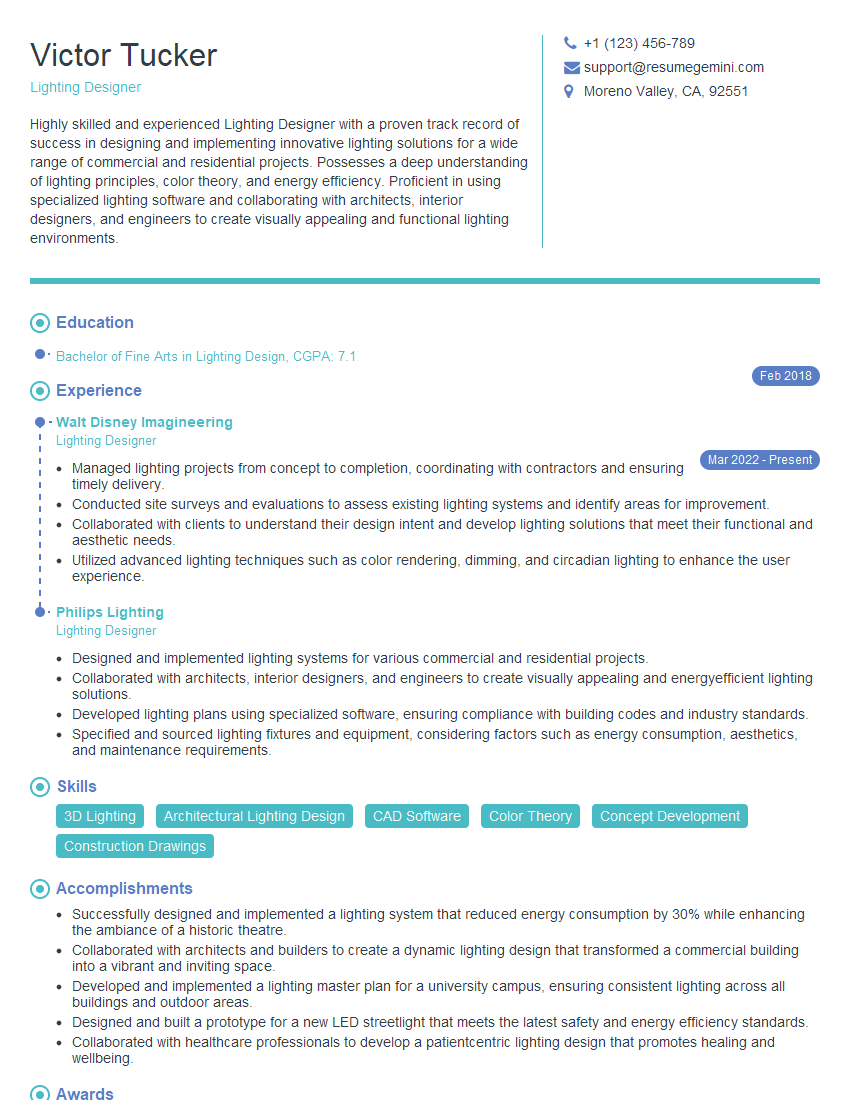
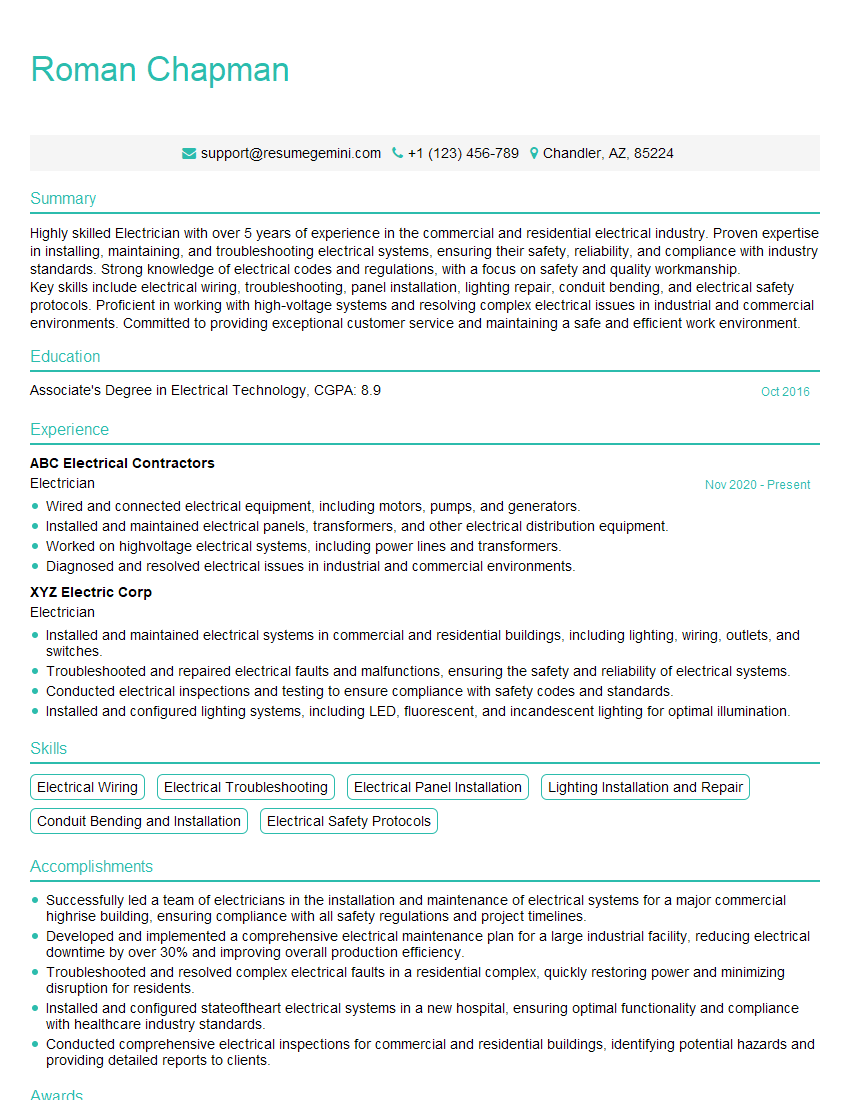
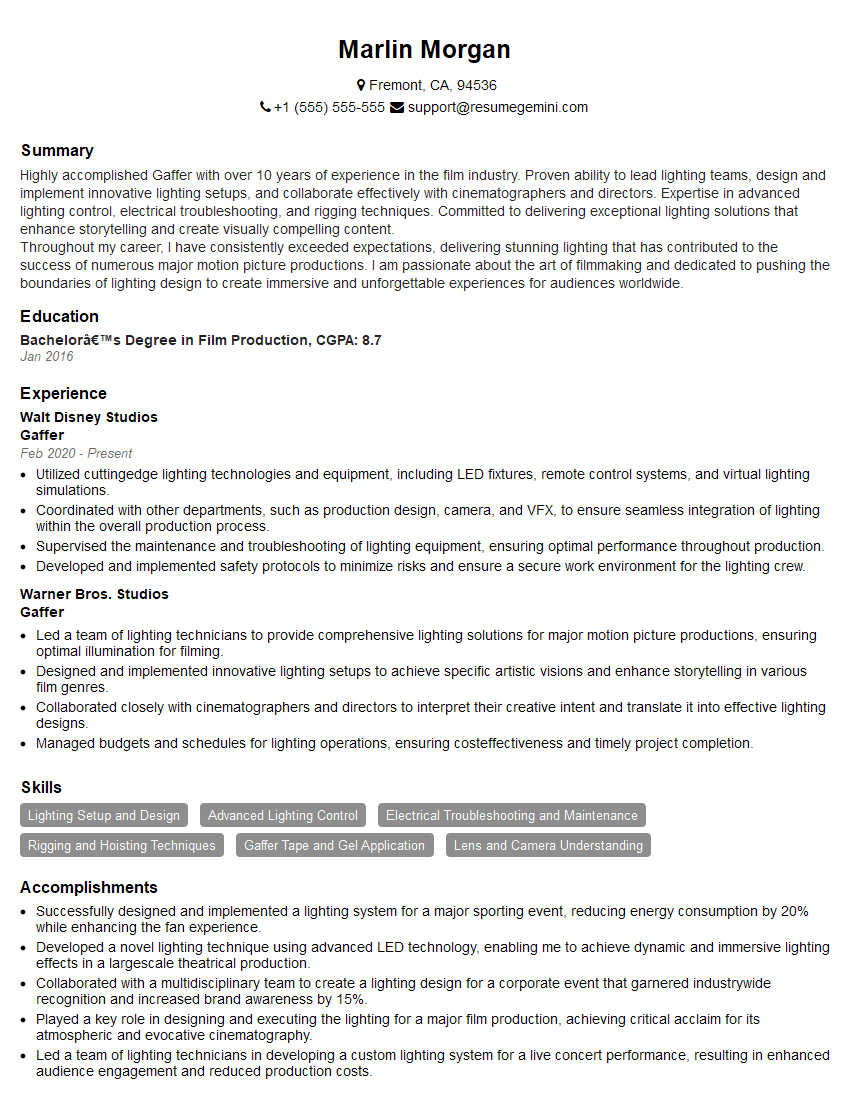
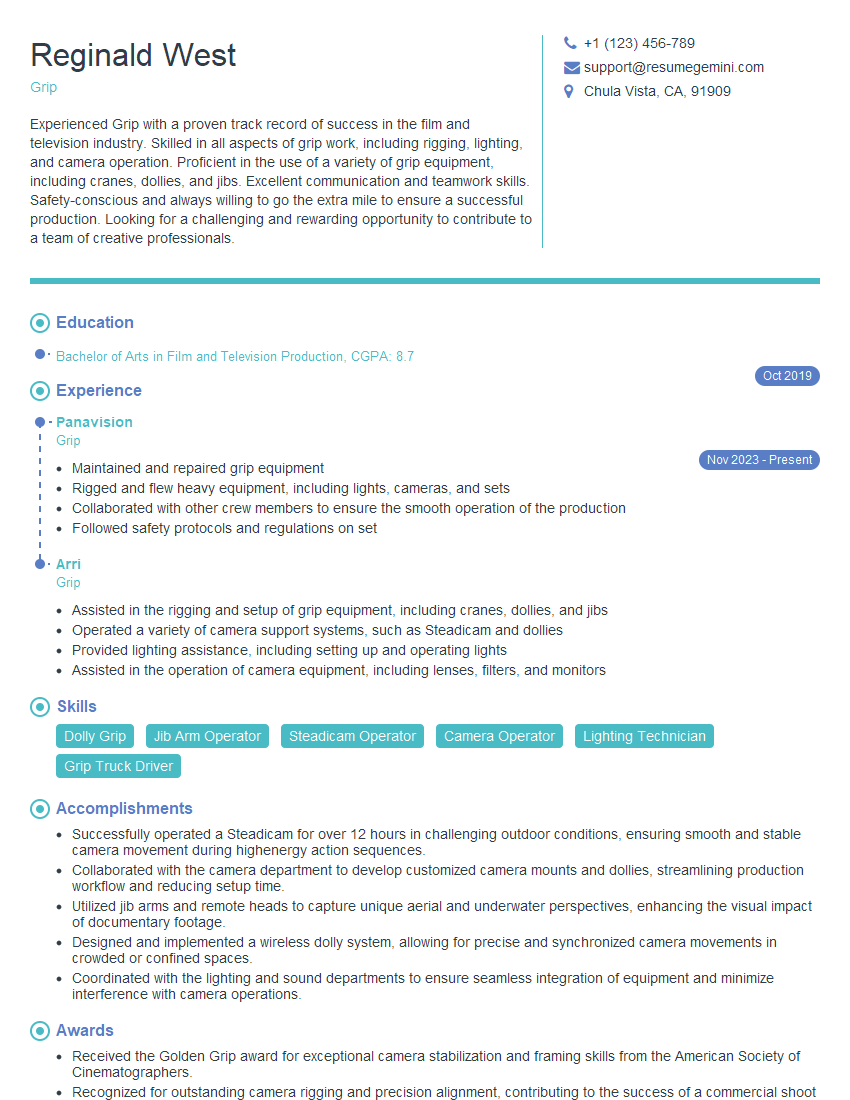
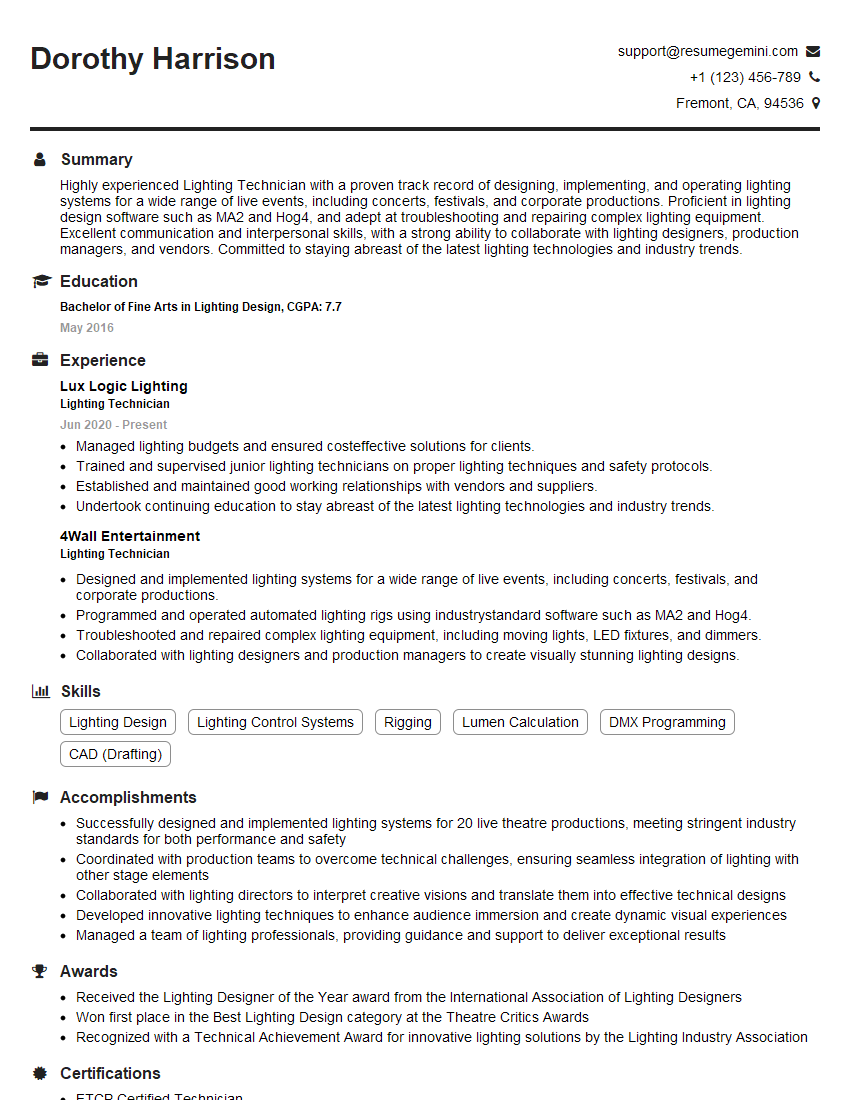
Mastering Lighting for Film and Television Production opens doors to exciting career opportunities, offering diverse roles and creative challenges. A strong resume is crucial for showcasing your skills and experience to potential employers. Creating an ATS-friendly resume increases your chances of getting noticed by recruiters. ResumeGemini is a trusted resource that can help you build a professional and effective resume. They offer examples of resumes tailored to Lighting for Film and Television Production, providing a valuable starting point for crafting your own compelling application.

Explore more articles
Users Rating of Our Blogs
Share Your Experience
We value your feedback! Please rate our content and share your thoughts (optional).
What Readers Say About Our Blog
Very informative content, great job.
good