Unlock your full potential by mastering the most common Lighting Principles interview questions. This blog offers a deep dive into the critical topics, ensuring you’re not only prepared to answer but to excel. With these insights, you’ll approach your interview with clarity and confidence.
Questions Asked in Lighting Principles Interview
Q 1. Explain the inverse square law of light.
The inverse square law of light describes the relationship between the intensity of light and the distance from the source. Simply put, as you move further away from a light source, the intensity of the light decreases rapidly. Specifically, the intensity is inversely proportional to the square of the distance.
Imagine you’re holding a light bulb. At one meter, you experience a certain brightness. If you double the distance to two meters, the light intensity isn’t just halved; it’s reduced to one-quarter (1/2²) of its original intensity. Triple the distance, and the intensity becomes one-ninth (1/3²) as bright. This is because the same amount of light energy is spread over a larger area as the distance increases.
This law is crucial in lighting design. It dictates how many luminaires (light fixtures) are needed to achieve a desired illuminance level at a specific distance and helps determine the appropriate fixture placement for even illumination. For instance, a spotlight needs to be much closer to its target than a floodlight to achieve the same level of brightness.
Q 2. What are the different types of light sources and their applications?
Light sources are broadly categorized into two main types: natural and artificial.
- Natural Light Sources: These include the sun, moon, stars, and even bioluminescent organisms. Sunlight, the most dominant natural source, provides illumination for our planet and is crucial for plant life and various ecological processes. Moonlight, although much weaker, still provides ambient illumination, influencing nocturnal animal behavior and even human activities.
- Artificial Light Sources: These are human-made and include a variety of technologies:
- Incandescent: These produce light by heating a filament until it glows. They offer warm, pleasant light but are inefficient and produce a lot of heat. Think of traditional light bulbs.
- Fluorescent: These use electricity to excite mercury vapor, producing ultraviolet (UV) light which then stimulates a phosphor coating to emit visible light. They are more energy-efficient than incandescent but can have a cooler light color temperature.
- High-Intensity Discharge (HID): These include metal halide and high-pressure sodium lamps. They are very bright and energy-efficient, often used for outdoor lighting (streetlights, sports stadiums).
- Light-Emitting Diode (LED): These are semiconductor devices that emit light when an electric current passes through them. LEDs are highly energy-efficient, long-lasting, and available in various color temperatures and intensities. They are increasingly replacing other lighting technologies in many applications.
The choice of light source depends on the application. For example, warm incandescent lighting might be suitable for a restaurant to create a cozy atmosphere, while energy-efficient LEDs are preferred for office spaces due to their lower energy consumption and longer lifespan.
Q 3. Describe the color temperature of light and its impact on mood and perception.
Color temperature is measured in Kelvin (K) and describes the appearance of light, ranging from warm to cool. It’s not a measure of actual temperature, but rather a comparison to the color of light emitted by a black body radiator at a specific temperature.
Lower color temperatures (e.g., 2700K) appear warmer, with a yellowish or reddish hue, often associated with feelings of comfort and relaxation. Higher color temperatures (e.g., 6500K) appear cooler, with a bluish or white hue, often perceived as more energizing and stimulating. A mid-range temperature (e.g., 4000K) offers a neutral appearance, suitable for many applications.
Color temperature significantly impacts mood and perception. Warm lighting is often preferred in residential settings and restaurants to create a welcoming atmosphere. Cool lighting, on the other hand, is often used in offices and hospitals to promote alertness and productivity. The wrong color temperature can affect how colors are perceived; for instance, warm light can make reds appear more vibrant while cooler light can make blues appear more intense. Careful selection of color temperature is critical in lighting design to achieve the desired ambiance and visual impact.
Q 4. What are the key considerations for designing lighting for a retail space?
Designing lighting for a retail space requires careful consideration of several key factors to enhance the shopping experience and drive sales.
- Highlighting Merchandise: Strategic lighting is essential to showcase products effectively. Accent lighting can highlight key features, while general lighting provides ambient illumination.
- Creating Ambiance: The overall atmosphere of the store should be considered. Warm lighting can create a welcoming and inviting atmosphere, while cooler lighting might be suitable for a more modern or minimalist aesthetic.
- Energy Efficiency: Using energy-efficient lighting technologies like LEDs can significantly reduce operating costs. Sensors and automated controls can further optimize energy consumption.
- Vertical Illumination: Lighting the walls and ceilings can create depth and visual interest, making the space feel larger and more inviting.
- Color Rendering Index (CRI): CRI measures how accurately a light source renders the colors of objects. A high CRI (e.g., 90 or above) is crucial for retail spaces to ensure products appear as they should.
- Uniformity: Avoid harsh shadows and uneven illumination. Properly placed fixtures and diffused lighting can create a more pleasant and comfortable shopping experience.
- Safety and Security: Well-lit spaces deter theft and enhance safety for customers and staff.
For example, a jewelry store might use highly focused spotlights to highlight individual pieces, while a clothing store might use a combination of general and accent lighting to create a more inviting ambiance. The specific lighting design will depend on the type of merchandise, store layout, and desired brand image.
Q 5. How do you calculate the illuminance level required for a specific area?
Calculating the required illuminance level for a specific area involves several steps and considers various factors.
- Determine the task: What activity will be performed in the area? (e.g., reading, working, shopping).
- Consult lighting standards: Illuminance recommendations for various tasks are available in industry standards and codes (e.g., IES, ANSI). These standards provide lux levels (lumens per square meter) appropriate for different tasks.
- Measure the area: Calculate the area of the space in square meters.
- Consider light loss factors: Light loss occurs due to factors such as dirt accumulation on fixtures, lamp depreciation, and room surface reflectance. These factors are typically expressed as percentages and need to be incorporated into the calculations.
- Calculate the total lumens required: Multiply the desired illuminance level (lux) by the area (square meters) and divide by the light loss factor (expressed as a decimal). This gives the total lumens required for the space.
- Select luminaires: Choose lighting fixtures with the appropriate lumen output and light distribution to meet the calculated requirements. Consider the fixture’s efficacy (lumens per watt) for energy efficiency.
Example: Let’s say we need to illuminate an office space (10 square meters) for general office tasks (recommended illuminance: 500 lux), with a light loss factor of 1.2. Total lumens needed = (500 lux * 10 sq m) / 0.8 = 6250 lumens. We would then select luminaires that collectively provide 6250 lumens or more, while considering light distribution to ensure even illumination.
Q 6. Explain the concept of light pollution and its mitigation strategies.
Light pollution is the excessive or inappropriate introduction of artificial light into the night environment. It has significant negative impacts on human health, wildlife, and the environment.
Impacts:
- Disrupted ecosystems: Artificial light can disrupt the natural rhythms of nocturnal animals, affecting their navigation, feeding, and breeding patterns.
- Reduced star visibility: Light pollution obscures the night sky, preventing people from appreciating the beauty of the cosmos and hindering astronomical observations.
- Negative human health effects: Exposure to excessive artificial light at night is linked to sleep disorders, increased risk of certain cancers, and other health problems.
- Energy waste: Inefficient lighting practices contribute to wasted energy and increased carbon emissions.
Mitigation Strategies:
- Using shielded fixtures: Shielded lights direct light downwards, minimizing upward spill.
- Reducing light intensity: Using lower-intensity lights where appropriate can reduce light pollution significantly.
- Employing motion sensors and timers: These technologies ensure that lights are only on when needed, saving energy and reducing light pollution.
- Choosing appropriate color temperatures: Warmer color temperatures are less disruptive to wildlife and human sleep cycles.
- Promoting dark sky initiatives: Communities can adopt dark sky ordinances to regulate outdoor lighting and encourage responsible lighting practices.
Implementing these strategies requires a collaborative effort between lighting designers, urban planners, and the public to create a more sustainable and environmentally friendly night environment.
Q 7. What are the advantages and disadvantages of LED lighting compared to traditional lighting technologies?
LED lighting has revolutionized the lighting industry, offering significant advantages over traditional technologies like incandescent and fluorescent lamps.
Advantages of LEDs:
- Energy Efficiency: LEDs consume significantly less energy than incandescent and fluorescent lamps for the same light output, leading to lower electricity bills and reduced carbon footprint.
- Long Lifespan: LEDs have a much longer lifespan than traditional lamps, reducing replacement costs and maintenance efforts.
- Durability: They are more resistant to shocks and vibrations compared to traditional bulbs.
- Instant On/Off: LEDs illuminate instantly without any warm-up time unlike fluorescent bulbs.
- Versatile Design: Available in various shapes, sizes, and color temperatures, enabling flexibility in design and applications.
- Directional Light: LEDs can be designed to direct light more precisely, reducing light waste.
Disadvantages of LEDs:
- Initial Cost: The upfront cost of LEDs can be higher than traditional lamps, though the long-term savings in energy and maintenance often outweigh this initial investment.
- Heat Sensitivity: While some LEDs are designed for high-temperature operation, extreme heat can affect their lifespan.
- Light Quality Concerns: The quality of light from some lower-cost LEDs can be less satisfactory compared to higher-quality options. CRI and color consistency are important considerations.
- Recycling Concerns: Proper recycling of LEDs is essential to prevent environmental contamination due to their components.
Despite some disadvantages, the overall benefits of LEDs make them the preferred choice for a wide range of lighting applications, from residential and commercial spaces to street lighting and automotive applications.
Q 8. Describe the different types of lighting control systems and their functionalities.
Lighting control systems manage the intensity, timing, and sometimes even the color of lights. They range from simple switches to sophisticated, networked systems.
- Manual Switches: The simplest form, offering on/off control. Think of the standard light switch in your home.
- Dimmers: Allow for continuous adjustment of light intensity, offering greater control over ambiance. A great example is a dimmer switch for a living room, allowing you to set the mood from bright to softly lit.
- Timers: Automate lighting schedules, turning lights on and off at predetermined times. Useful for security lighting or ensuring lights are off when a room isn’t in use.
- Occupancy Sensors: Detect the presence of people and automatically turn lights on or off, saving energy. Common in hallways or office spaces.
- Photocells: Respond to ambient light levels, reducing reliance on artificial lighting during daylight hours. Frequently seen in outdoor lighting.
- Networked Lighting Control Systems (DALI, DMX): These sophisticated systems allow for individual control of numerous lights, often integrated with building management systems (BMS). They offer advanced functionalities like scene setting, remote control, and energy monitoring. Think of a large office building or a theatre where lighting needs are highly complex.
The choice of system depends on the application’s complexity and budget. A small residential space might only need dimmers, while a large commercial building might require a comprehensive networked system.
Q 9. How do you design lighting for energy efficiency?
Energy-efficient lighting design prioritizes minimizing energy consumption without sacrificing light quality or functionality. It involves a multi-pronged approach:
- Selecting High-Efficiency Fixtures: Using LED lights, which offer significantly higher lumens per watt compared to incandescent or fluorescent bulbs, is crucial. LEDs also boast longer lifespans, reducing replacement costs.
- Optimizing Light Levels: Careful calculation of the required illuminance (light level) for different spaces ensures that only the necessary amount of light is used. Overlighting wastes energy. We use tools like DIALux to accurately calculate lighting needs.
- Daylight Harvesting: Maximizing the use of natural light through strategic window placement and light shelves reduces the reliance on artificial lighting during daylight hours. Sensors can automatically dim artificial lights based on available daylight.
- Smart Controls: Employing occupancy sensors, timers, and other smart controls to automate lighting based on usage patterns significantly reduces energy waste. Lights automatically turn off in unoccupied spaces, and schedules optimize lighting use during peak and off-peak hours.
- High-Reflective Surfaces: Using light-colored walls and ceilings increases light reflection, reducing the amount of artificial light needed to achieve a desired illuminance level. Think of a white-painted room compared to a dark one—the white room feels brighter with the same lighting levels.
The design process combines lighting calculations with energy modeling software to simulate and optimize energy performance. Careful consideration of these factors ensures a balance between energy efficiency and optimal lighting quality.
Q 10. Explain the concept of color rendering index (CRI) and its importance.
The Color Rendering Index (CRI) quantifies how accurately a light source renders the colors of objects compared to a reference source (usually sunlight). A CRI of 100 indicates perfect color rendering, meaning colors appear as they would under sunlight.
Its importance stems from the fact that different light sources affect how we perceive colors. A low CRI light might make colors appear dull, washed out, or even unnatural. For instance, a low CRI light in a supermarket could make fruits and vegetables appear less appealing, while a high CRI light in an art gallery ensures accurate color reproduction of paintings.
For applications requiring accurate color reproduction, like museums, hospitals, or retail settings, high CRI lighting (CRI 90 or higher) is essential. In less critical applications, a lower CRI might suffice, offering cost savings without significantly compromising color appearance.
Q 11. What are the different types of light fixtures and their suitability for various applications?
Light fixtures come in various types, each suited to different applications. Key types include:
- Recessed Fixtures: Installed into ceilings, providing ambient lighting and a clean aesthetic. Suitable for various spaces, including homes and offices.
- Surface-Mounted Fixtures: Attached directly to ceilings or walls. Easy to install and offer diverse styles, making them adaptable for many applications.
- Pendant Lights: Suspended from ceilings, often used as focal points or task lighting. Excellent choices for dining rooms or kitchens.
- Track Lighting: Flexible systems allowing adjustable positioning of lights along a track. Ideal for showcasing artwork or highlighting specific areas in a retail store or gallery.
- Wall Sconces: Mounted on walls, providing ambient or accent lighting. Often used in hallways or bedrooms to add visual interest.
- Floodlights and Spotlights: Directional lights for outdoor or accent illumination. Useful for highlighting architectural features or landscape elements.
Fixture selection depends on factors like aesthetics, light distribution needs, and the space’s functionality. A recessed fixture provides ambient light evenly across a room, while a spotlight focuses on a specific object.
Q 12. How do you select appropriate lighting fixtures based on the desired light distribution?
Choosing lighting fixtures based on desired light distribution involves understanding different beam angles and distribution patterns.
- Beam Angle: This refers to the angle of the light emitted from the fixture. Narrow beam angles (e.g., 10-20 degrees) create a concentrated pool of light, ideal for accent lighting or highlighting objects. Wider beam angles (e.g., 60-120 degrees) create a broader, more diffused light, suitable for ambient lighting.
- Distribution Patterns: Different fixtures produce different light distribution patterns. These include direct, indirect, and diffused patterns. Direct lighting shines directly downward, indirect light reflects off the ceiling, and diffused lighting scatters light more evenly.
For example, a narrow beam angle spotlight is suitable for showcasing artwork, while a wide-angle recessed fixture is best for providing overall illumination in an office. Consider the space’s dimensions, the desired ambiance, and the functionality of each area when making selections. Light distribution diagrams provided by manufacturers are crucial tools in this process.
Q 13. Explain the process of designing a lighting scheme for a stage production.
Designing a stage lighting scheme involves a collaborative process between lighting designers, directors, and technical crews. It starts with a deep understanding of the play, its mood, and the director’s vision.
- Concept Development: The designer interprets the script, identifying key scenes and emotional moments requiring specific lighting effects. This involves mood boards and discussions with the director.
- Plot Design: The designer creates a lighting plot, a detailed diagram showing the positions of all lighting instruments, their types, and their functions. This diagram also includes cabling and power distribution.
- Fixture Selection: Appropriate fixtures (e.g., spotlights, wash lights, follow spots) are chosen based on their beam angles, color capabilities, and intensity. The number of fixtures depends on the stage size and lighting complexity.
- Color Selection: Colors are meticulously chosen to evoke specific moods or enhance the story’s narrative. Color palettes are established, often utilizing gels to modify the color of the light.
- Cueing and Programming: Each lighting change (cue) is programmed into a lighting console, which controls the intensity and color of each fixture. This requires a detailed understanding of lighting techniques and console operation.
- Rehearsals and Technical Runs: The lighting scheme is tested during rehearsals, allowing for adjustments and refinements based on the director’s feedback and technical challenges.
The final product is a dynamic and engaging lighting design that supports the storytelling and enhances the audience’s experience. This involves considering the interplay between light and shadow, color temperature, and intensity changes to create the desired effects.
Q 14. How do you incorporate daylight harvesting into a lighting design?
Daylight harvesting aims to reduce energy consumption by maximizing the use of natural daylight. This is achieved through various strategies:
- Strategic Window Placement: Maximizing the size and placement of windows to allow ample daylight penetration into the building is crucial. South-facing windows in the northern hemisphere are optimal.
- Light Shelves: Horizontal surfaces, positioned above windows, reflect daylight deeper into the space, distributing it more effectively.
- Light Tubes (Tubular Skylights): These systems capture daylight from the roof and transport it into interior spaces where natural light is limited. They can significantly reduce the reliance on artificial lighting.
- Automated Lighting Controls: Integrating light sensors with lighting systems allows for automatic dimming of artificial lights based on the available daylight levels. This ensures that artificial lighting complements, rather than competes with, daylight.
- Building Design and Orientation: The building’s design and orientation play a crucial role in maximizing daylight access. Consideration of factors like shading devices (e.g., blinds, awnings) helps control the amount of daylight entering the building.
The goal is to create a balance between natural and artificial light, leveraging daylight as a primary light source wherever possible to reduce energy consumption and improve occupant well-being.
Q 15. Describe your experience with lighting simulation software.
My experience with lighting simulation software is extensive, encompassing both industry-standard packages like DIALux evo, AGi32, and Radiance, as well as specialized plugins for architectural visualization software like Revit and SketchUp. I’m proficient in using these tools to model complex lighting scenarios, accurately predicting illuminance levels, luminance distributions, and energy consumption. For instance, during a recent museum renovation project, I used DIALux evo to model the impact of different LED fixtures on the delicate artwork, ensuring optimal illumination while minimizing light degradation. This allowed us to select the most appropriate fixtures and optimize their placement before installation, significantly reducing potential rework and cost overruns.
Beyond basic simulations, I’m skilled in advanced techniques like daylight harvesting analysis and glare calculations. This expertise enables me to design lighting schemes that maximize natural light, minimize energy use, and ensure visual comfort. For example, I utilized Radiance to model the impact of window placement and shading devices on the interior illuminance of a high-rise office building, demonstrating the energy savings achievable through effective daylighting strategies.
Career Expert Tips:
- Ace those interviews! Prepare effectively by reviewing the Top 50 Most Common Interview Questions on ResumeGemini.
- Navigate your job search with confidence! Explore a wide range of Career Tips on ResumeGemini. Learn about common challenges and recommendations to overcome them.
- Craft the perfect resume! Master the Art of Resume Writing with ResumeGemini’s guide. Showcase your unique qualifications and achievements effectively.
- Don’t miss out on holiday savings! Build your dream resume with ResumeGemini’s ATS optimized templates.
Q 16. Explain the importance of lighting safety regulations.
Lighting safety regulations are paramount, ensuring the health and well-being of building occupants and preventing hazards. These regulations cover various aspects, including preventing electrical shocks, avoiding excessive glare and discomfort, and ensuring adequate illumination for safety and task performance. Ignoring these regulations can lead to serious consequences, such as electrical fires, eye strain, accidents due to poor visibility, and even legal liability.
Key regulations often address aspects like electrical safety standards (e.g., proper grounding, insulation, and circuit protection), emergency lighting requirements (e.g., ensuring adequate illumination during power outages), and the use of appropriate luminaires in hazardous environments. Compliance involves careful fixture selection, proper installation, regular maintenance, and adherence to relevant codes like the NEC (National Electrical Code) in the US or equivalent standards in other regions. Failure to comply can result in hefty fines, project delays, and even criminal charges in some severe cases.
Q 17. What are the different types of dimming techniques?
Dimming techniques control the light output of a luminaire, providing flexibility and energy efficiency. Several methods exist, each with advantages and limitations:
- Phase-cut dimming: This method reduces the voltage applied to the lamp by chopping the AC waveform. It’s cost-effective but can cause flickering and isn’t suitable for all lamp types (e.g., LEDs).
- Phase-angle dimming: Similar to phase-cut, but offers smoother dimming and fewer flickering issues. However, it may still cause compatibility issues with certain lamps.
- Pulse-width modulation (PWM): This technique rapidly switches the lamp on and off at a high frequency. It offers excellent dimming performance with LEDs and is energy efficient but requires specialized drivers.
- 0-10V dimming: This control system uses an analog voltage signal to adjust the light output. It’s commonly used with LEDs and provides smooth dimming control.
- DALI (Digital Addressable Lighting Interface): This digital protocol enables individual control of each luminaire, providing sophisticated control options and feedback. It’s more complex but offers superior flexibility and energy management capabilities.
The choice of dimming technique depends on factors like lamp type, cost considerations, desired dimming quality, and the complexity of the lighting control system.
Q 18. How do you assess the glare and discomfort caused by lighting fixtures?
Assessing glare and discomfort from lighting fixtures involves both subjective and objective measures. Subjective assessments involve user surveys and questionnaires to gauge perceived discomfort. Objective measurements use tools and standards to quantify glare quantitatively.
Objective methods often involve calculating parameters like luminance ratios (e.g., the ratio between the luminance of a bright source and its surrounding area) and UGR (Unified Glare Rating), a standardized metric that predicts discomfort glare based on luminance distribution and viewing angle. Specialized software like DIALux or AGi32 can perform these calculations. We might also employ photometric measurements on-site using illuminance meters and luminance meters to validate simulation results. In practice, we strive for balance: achieving adequate illuminance levels while keeping UGR values below recommended thresholds for different tasks and environments. We’ll also consider factors like the position of the light source, its luminance, and the surrounding environment, to understand and address the root cause of discomfort.
Q 19. Describe your experience with different types of lighting control protocols.
My experience includes various lighting control protocols, each with its own strengths and weaknesses. I’ve worked extensively with 0-10V analog systems, simple and cost-effective for smaller projects, but limited in control capabilities. For larger, more complex installations, I prefer digital systems like DALI (Digital Addressable Lighting Interface), offering precise individual control of many fixtures via a network. This is crucial for energy management and dynamic lighting scenes, as seen in smart building applications. I also have experience with DMX (Digital Multiplex) for theatrical or entertainment lighting, known for its speed and versatility but not usually applied in commercial installations. My knowledge extends to newer protocols like BACnet and LonWorks, commonly integrated into building management systems (BMS) for comprehensive building control.
The choice of protocol depends on project scale, budget, desired level of control, and existing building infrastructure. For instance, in a retrofit project, integrating with existing systems might necessitate the use of a gateway to translate signals between different protocols.
Q 20. How do you address lighting challenges in complex architectural spaces?
Addressing lighting challenges in complex architectural spaces necessitates a holistic approach, starting with a thorough understanding of the space’s geometry, materials, and intended use. This often involves detailed site surveys, photometric analysis, and close collaboration with architects and other designers.
Strategies include:
- Zoning: Dividing the space into different zones with unique lighting requirements (e.g., task lighting for work areas, ambient lighting for general illumination, accent lighting for highlighting features).
- Layering: Combining multiple lighting layers to achieve the desired effect—ambient, task, and accent—using different fixture types and control mechanisms.
- Daylight optimization: Maximizing natural light through strategic window placement and the use of daylighting devices (e.g., light shelves, tubular skylights) to reduce reliance on electric lighting and cut energy costs.
- 3D modeling and simulation: Utilizing lighting design software to visualize lighting effects, test different fixture types and placement strategies, and optimize the design for energy efficiency and visual comfort.
- Material consideration: The reflectance of surfaces (walls, ceilings, floors) significantly influences illumination levels and glare. Careful material selection is vital to optimize the design.
For example, in a high-ceilinged atrium, we might employ a combination of high-output pendant lights for ambient lighting, recessed fixtures for task illumination in specific areas, and strategically placed accent lights to highlight architectural features.
Q 21. What are your strategies for managing a lighting project budget?
Managing a lighting project budget requires a multi-stage approach, starting with a detailed cost estimate that accounts for all aspects, from initial design and fixture selection to installation, commissioning, and ongoing maintenance. Value engineering plays a critical role, exploring cost-effective alternatives without compromising design quality or performance. For example, using high-efficacy LEDs might initially have higher upfront costs, but the long-term energy savings can significantly offset these expenses.
Strategies include:
- Early stage cost estimation: Developing a comprehensive budget breakdown during the design phase.
- Value engineering: Exploring cost-effective alternatives without sacrificing performance.
- Fixture specification: Careful selection of energy-efficient and cost-effective fixtures.
- Negotiation: Working with suppliers and contractors to secure competitive pricing.
- Efficient installation techniques: Optimizing installation to minimize labor costs.
- Regular monitoring and reporting: Tracking project expenses and comparing them against the budget to identify any potential overruns.
In practice, I often use spreadsheet software to track costs, allowing for real-time monitoring and adjustments. This approach enables proactive management, preventing budget overruns and ensuring the project remains financially viable.
Q 22. How do you collaborate with other professionals (architects, engineers, etc.) on lighting projects?
Collaboration on lighting projects is crucial for success. I approach it as a team player, valuing open communication and shared understanding. My process typically involves:
- Initial Consultations: Early meetings with architects, engineers, and clients to define project goals, aesthetic preferences, and functional requirements. This stage often includes reviewing architectural plans and discussing the overall design concept.
- Design Development: I actively participate in design reviews, presenting lighting schemes and discussing technical aspects like fixture selection, placement, and energy efficiency with the engineering team. We often use 3D modeling software to visualize the lighting design within the architectural context.
- Technical Coordination: Close collaboration with electrical engineers is vital to ensure the lighting design is integrated seamlessly into the building’s electrical systems. This includes coordinating lighting control systems, power distribution, and emergency lighting.
- On-site Visits: Regular site visits are essential to ensure the lighting installation aligns with the design intent. This allows for on-the-spot problem-solving and adjustments as needed.
- Post-Installation Review: A final meeting to review the installed lighting system, ensuring performance meets expectations. This may involve light level measurements and adjustments.
For example, on a recent museum project, I worked closely with the curator to highlight specific artifacts using accent lighting, while coordinating with the structural engineers to ensure the lighting fixtures didn’t interfere with the building’s structural integrity.
Q 23. Explain your process for creating lighting design specifications.
Creating lighting design specifications is a systematic process that ensures clarity and consistency. My process generally follows these steps:
- Project Understanding: Thoroughly reviewing project documents, architectural plans, and client briefs to understand the project’s scope, function, and aesthetic goals.
- Lighting Concept Development: Creating a lighting concept that aligns with the project goals, considering factors such as ambiance, functionality, energy efficiency, and the desired mood.
- Fixture Selection: Choosing appropriate lighting fixtures based on factors like light distribution, efficacy, color rendering index (CRI), and durability. This often involves researching various manufacturers and their product offerings.
- Lighting Calculations & Simulations: Using specialized software to perform lighting calculations and simulations to ensure the design meets illumination requirements, minimizes glare, and creates the intended lighting effect. This step is crucial to ensure the final outcome aligns with the design intent.
- Specification Writing: Producing detailed specifications that clearly define the lighting fixtures, controls, and installation requirements. This document acts as a guide for the contractors and ensures consistency in the project.
- Documentation: Preparing detailed drawings, schedules, and photometric reports to support the specifications and provide a clear understanding of the design.
I always ensure my specifications are clear, concise, and leave no room for ambiguity. I also provide reference images and sample renderings to help convey the desired aesthetic.
Q 24. Describe your experience with different types of lighting calculations and simulations.
I have extensive experience with various lighting calculations and simulations, utilizing software like DIALux evo, AGI32, and Relux. These tools allow me to accurately predict light levels, glare, and energy consumption.
- Point-by-Point Calculations: Used for precise calculations of illuminance at specific points within a space. This is particularly useful for tasks requiring very specific light levels, like surgical suites or precision manufacturing.
- Lumen Method Calculations: A simpler approach, suitable for larger spaces where a less precise but faster calculation is acceptable. This relies on estimating the number of luminaires needed based on the room size and desired illuminance.
- 3D Modeling and Simulation: Using 3D modeling software to simulate the lighting design in a virtual environment. This enables the visualization of light distribution, shadow patterns, and the overall effect of the lighting scheme. This is particularly useful for complex spaces or unique designs.
- Daylight Simulation: This involves modeling the impact of natural light on the interior space to understand how it interacts with the artificial lighting system and optimize energy efficiency.
For instance, in a recent office design, 3D simulations helped us optimize the placement of indirect lighting fixtures to minimize glare on computer screens, while ensuring sufficient illumination for all work surfaces. The simulations also allowed us to explore different fixture types and arrangements to achieve the desired effect before committing to a final design.
Q 25. How do you troubleshoot common lighting problems?
Troubleshooting lighting problems requires a systematic approach. My process typically involves:
- Gather Information: Start by carefully documenting the problem. What exactly is wrong? When did it start? What are the specific symptoms?
- Visual Inspection: Conduct a thorough visual inspection of the lighting system, checking for loose connections, damaged fixtures, or faulty ballasts. This often involves inspecting both the fixtures themselves and the wiring.
- Testing and Measurement: Use a multimeter to check voltage and current levels at different points in the circuit to identify the source of the problem. This might involve measuring light levels using a lux meter to verify if the lighting meets the design specifications.
- System Diagnostics: For more complex systems with advanced controls, diagnosing the problem may require specialized tools and knowledge of the specific system’s architecture.
- Collaboration and Consultation: Sometimes, the problem may be outside my area of expertise, requiring collaboration with electrical engineers or other specialists.
For example, in a recent project, flickering lights were traced to a faulty ballast. Replacing the ballast quickly resolved the issue. In another case, inconsistent lighting levels pointed to a problem with the dimming system, requiring a more in-depth investigation and system recalibration.
Q 26. What are your thoughts on the future of lighting technology?
The future of lighting technology is incredibly exciting. We’re seeing a convergence of several key trends:
- Increased Energy Efficiency: The development of more efficient LEDs and innovative control systems will continue to drive energy savings and reduce the environmental impact of lighting.
- Smart Lighting & IoT Integration: The integration of lighting systems with the Internet of Things (IoT) will enable advanced control, automation, and personalized lighting experiences.
- Human-centric Lighting: A growing focus on designing lighting that supports human health and well-being, considering factors like circadian rhythms and color temperature. This might involve systems that adapt to the time of day or the individual’s needs.
- Advanced Materials and Designs: New materials and design innovations are pushing the boundaries of what’s possible, including organic LEDs (OLEDs) and microLEDs, which offer improved flexibility, design freedom, and enhanced visual performance.
- Li-Fi Technology: The potential for using light waves to transmit data, offering a faster and more secure alternative to Wi-Fi.
I believe these advancements will lead to lighting solutions that are not only more energy-efficient and sustainable but also enhance our lives in meaningful ways.
Q 27. Explain your experience with sustainable and environmentally friendly lighting practices.
Sustainability is a core principle in my lighting design practice. I prioritize environmentally friendly practices in every project. My approach includes:
- Energy-Efficient Lighting: Specifying high-efficacy LED luminaires that significantly reduce energy consumption compared to traditional technologies.
- Lighting Controls: Incorporating lighting control systems that allow for dimming, occupancy sensing, and daylight harvesting, which optimizes energy usage and reduces waste.
- Sustainable Materials: Selecting fixtures and materials with recycled content or made from sustainable sources. This is a growing aspect of the industry, and many manufacturers are offering environmentally friendly options.
- Lifecycle Assessment: Considering the entire lifecycle of the lighting system, from manufacturing to disposal, to minimize its environmental impact. This includes selecting products that are easily recyclable or repairable.
- LEED Compliance: Designing lighting systems that meet the requirements of LEED (Leadership in Energy and Environmental Design) certification, demonstrating a commitment to green building practices.
For instance, I recently designed a lighting system for a school that incorporated daylight harvesting, reducing the reliance on artificial lighting during daylight hours. This resulted in significant energy savings and a reduced carbon footprint.
Q 28. Describe your familiarity with relevant lighting standards and codes.
I am well-versed in relevant lighting standards and codes, including the IES (Illuminating Engineering Society) standards, the NEC (National Electrical Code), and local building codes. Understanding and applying these codes is crucial to ensuring the safety and compliance of lighting designs.
- IES Standards: These standards provide guidance on lighting design practices, including recommendations for illuminance levels, glare control, and color rendering.
- NEC (National Electrical Code): This code outlines the safety requirements for electrical installations, including lighting circuits and wiring.
- Local Building Codes: Local building codes often incorporate elements of the IES standards and the NEC, with additional requirements specific to the region. I always check local building codes before finalizing a lighting design.
- Energy Codes: I am aware of energy codes such as ASHRAE 90.1 which set minimum requirements for energy efficiency in buildings, influencing lighting system design decisions.
- Accessibility Codes: I understand accessibility requirements as defined in ADA (Americans with Disabilities Act) standards and ensure that my lighting designs meet these requirements.
Understanding these standards and codes is not just about compliance; it’s also about creating safe, efficient, and effective lighting solutions.
Key Topics to Learn for Your Lighting Principles Interview
- Light Sources & Colorimetry: Understanding different light sources (incandescent, fluorescent, LED, etc.), color temperature, color rendering index (CRI), and their applications in various settings.
- Photometry & Illuminance: Mastering concepts like luminous flux, luminous intensity, illuminance, and luminance. Be prepared to discuss their practical applications in lighting design calculations and simulations.
- Lighting Design Principles: Familiarize yourself with the principles of ambient, task, and accent lighting. Practice applying these principles to different spaces and scenarios, considering factors like energy efficiency and aesthetics.
- Energy Efficiency & Sustainability: Understand different lighting control systems (dimmable ballasts, occupancy sensors), energy-efficient lighting technologies, and the importance of sustainable lighting practices.
- Safety & Regulations: Be aware of relevant safety regulations and codes related to lighting installation and operation. This demonstrates responsibility and professionalism.
- Lighting Calculations & Simulations: Develop your skills in using lighting design software and performing calculations to determine appropriate light levels for different spaces. Be ready to discuss your approach to problem-solving in this area.
- Specific Lighting Technologies: Deepen your understanding of specific lighting technologies like OLED, high-bay lighting, and architectural lighting. Focus on their unique characteristics and best applications.
Next Steps
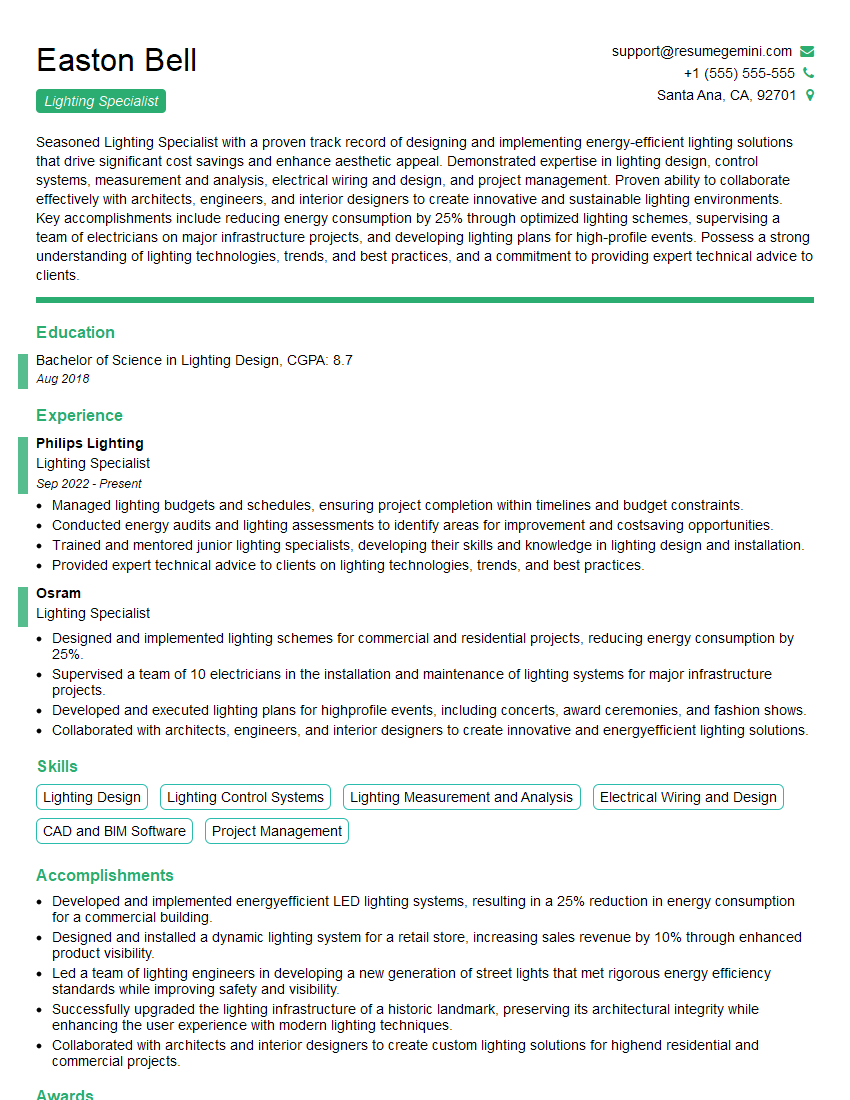
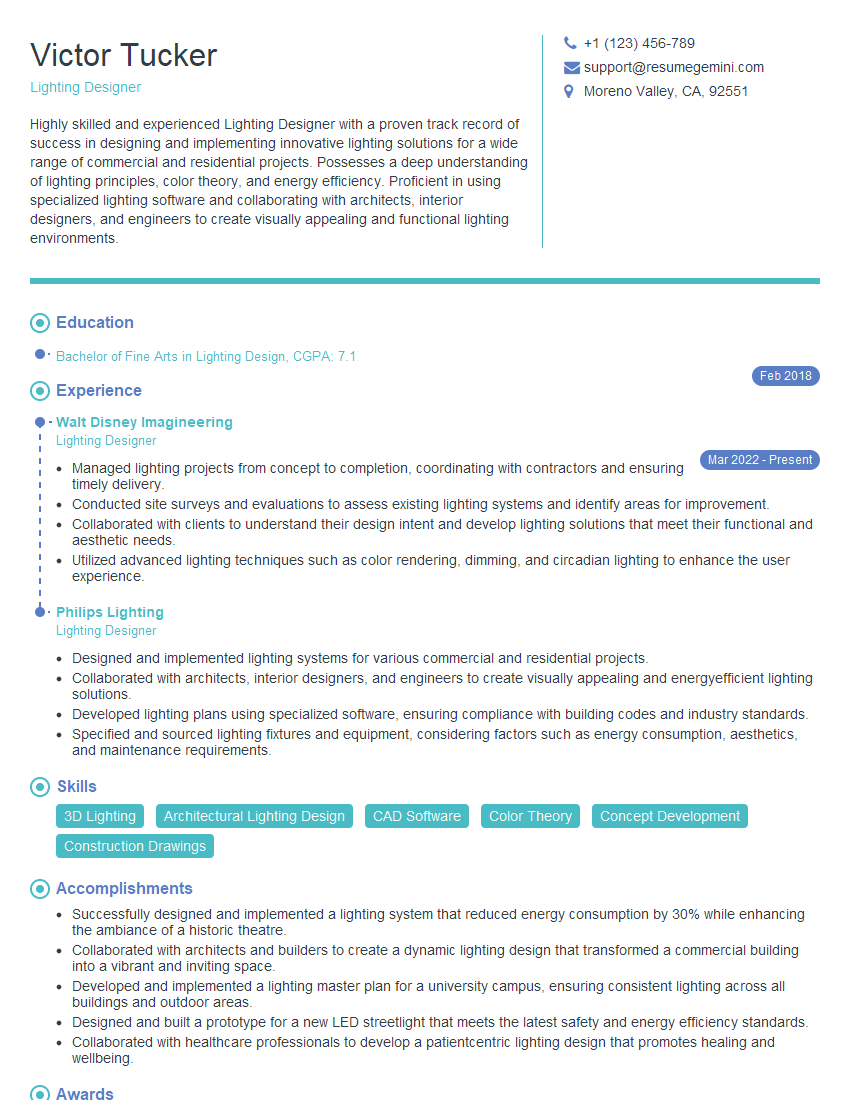
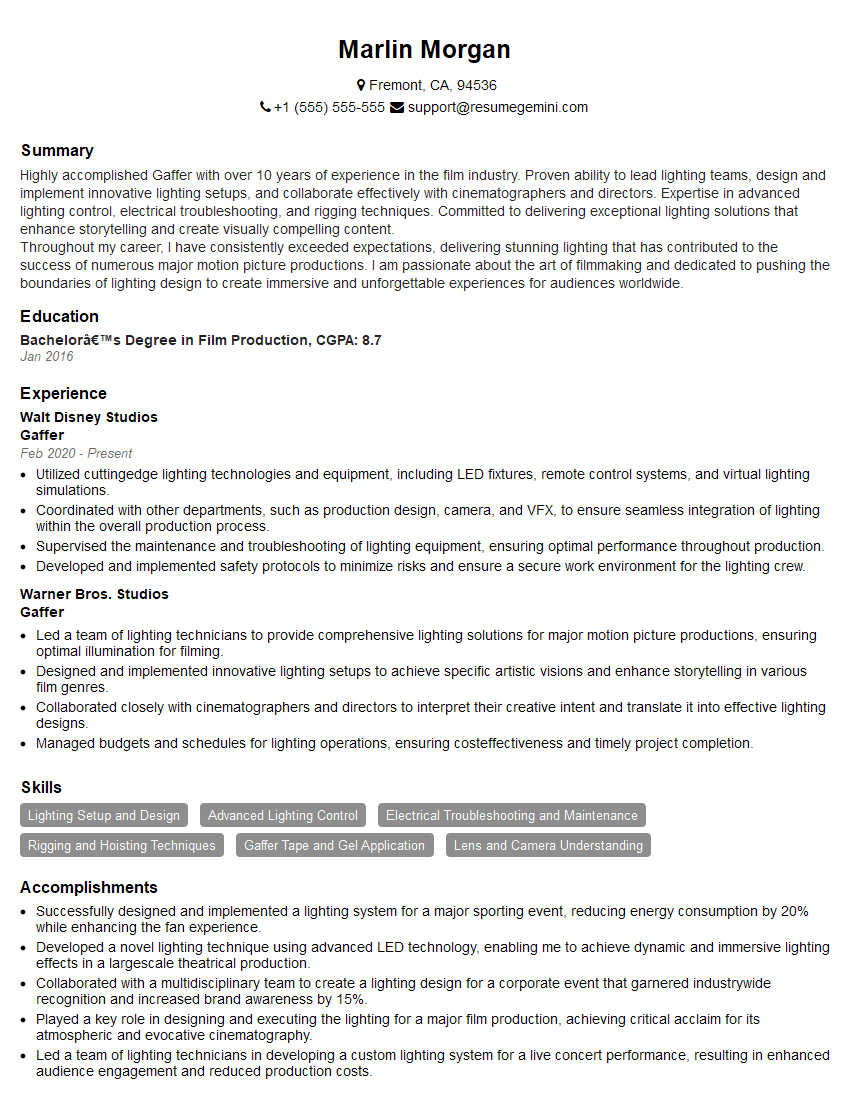
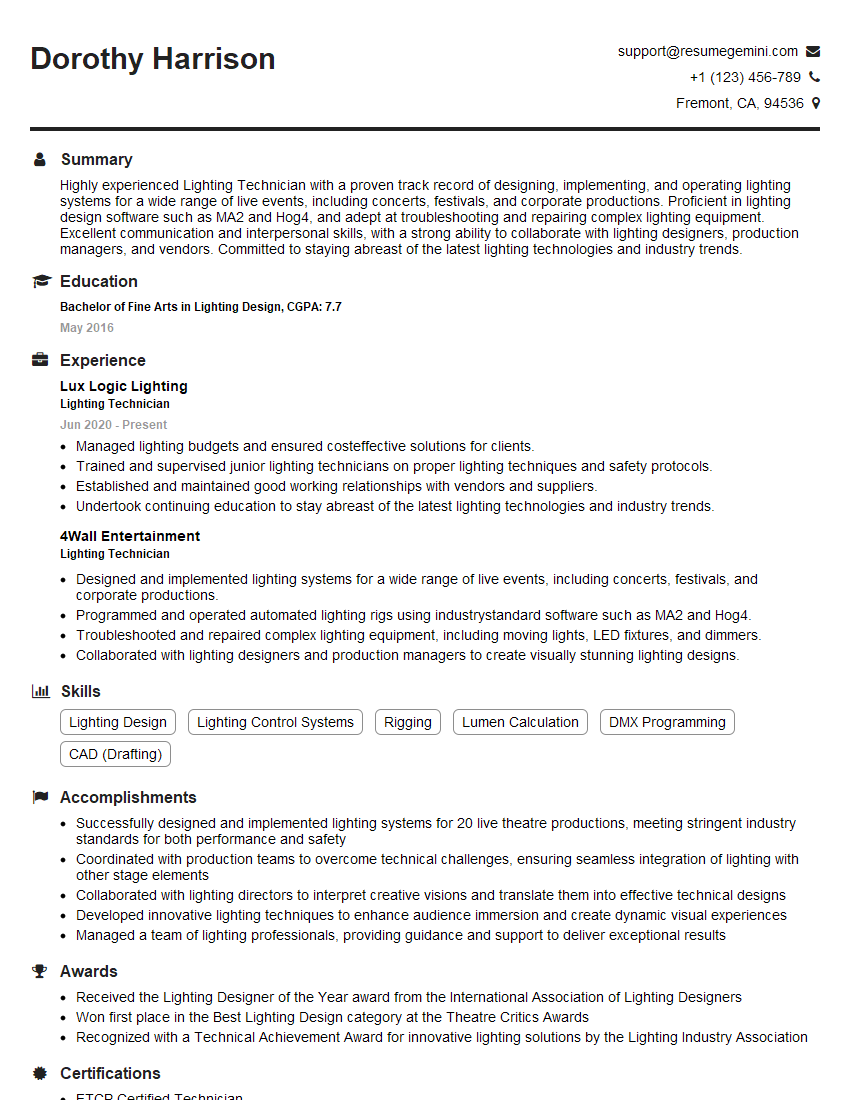
Mastering Lighting Principles is crucial for career advancement in this dynamic field. A strong understanding of these concepts will significantly enhance your job prospects and open doors to exciting opportunities. To maximize your chances of landing your dream role, creating an ATS-friendly resume is essential. ResumeGemini is a trusted resource that can help you build a professional and impactful resume tailored to showcase your lighting expertise. Examples of resumes specifically tailored for Lighting Principles professionals are available through ResumeGemini to guide your process.
Explore more articles
Users Rating of Our Blogs
Share Your Experience
We value your feedback! Please rate our content and share your thoughts (optional).
What Readers Say About Our Blog
Hello,
we currently offer a complimentary backlink and URL indexing test for search engine optimization professionals.
You can get complimentary indexing credits to test how link discovery works in practice.
No credit card is required and there is no recurring fee.
You can find details here:
https://wikipedia-backlinks.com/indexing/
Regards
NICE RESPONSE TO Q & A
hi
The aim of this message is regarding an unclaimed deposit of a deceased nationale that bears the same name as you. You are not relate to him as there are millions of people answering the names across around the world. But i will use my position to influence the release of the deposit to you for our mutual benefit.
Respond for full details and how to claim the deposit. This is 100% risk free. Send hello to my email id: [email protected]
Luka Chachibaialuka
Hey interviewgemini.com, just wanted to follow up on my last email.
We just launched Call the Monster, an parenting app that lets you summon friendly ‘monsters’ kids actually listen to.
We’re also running a giveaway for everyone who downloads the app. Since it’s brand new, there aren’t many users yet, which means you’ve got a much better chance of winning some great prizes.
You can check it out here: https://bit.ly/callamonsterapp
Or follow us on Instagram: https://www.instagram.com/callamonsterapp
Thanks,
Ryan
CEO – Call the Monster App
Hey interviewgemini.com, I saw your website and love your approach.
I just want this to look like spam email, but want to share something important to you. We just launched Call the Monster, a parenting app that lets you summon friendly ‘monsters’ kids actually listen to.
Parents are loving it for calming chaos before bedtime. Thought you might want to try it: https://bit.ly/callamonsterapp or just follow our fun monster lore on Instagram: https://www.instagram.com/callamonsterapp
Thanks,
Ryan
CEO – Call A Monster APP
To the interviewgemini.com Owner.
Dear interviewgemini.com Webmaster!
Hi interviewgemini.com Webmaster!
Dear interviewgemini.com Webmaster!
excellent
Hello,
We found issues with your domain’s email setup that may be sending your messages to spam or blocking them completely. InboxShield Mini shows you how to fix it in minutes — no tech skills required.
Scan your domain now for details: https://inboxshield-mini.com/
— Adam @ InboxShield Mini
Reply STOP to unsubscribe
Hi, are you owner of interviewgemini.com? What if I told you I could help you find extra time in your schedule, reconnect with leads you didn’t even realize you missed, and bring in more “I want to work with you” conversations, without increasing your ad spend or hiring a full-time employee?
All with a flexible, budget-friendly service that could easily pay for itself. Sounds good?
Would it be nice to jump on a quick 10-minute call so I can show you exactly how we make this work?
Best,
Hapei
Marketing Director
Hey, I know you’re the owner of interviewgemini.com. I’ll be quick.
Fundraising for your business is tough and time-consuming. We make it easier by guaranteeing two private investor meetings each month, for six months. No demos, no pitch events – just direct introductions to active investors matched to your startup.
If youR17;re raising, this could help you build real momentum. Want me to send more info?
Hi, I represent an SEO company that specialises in getting you AI citations and higher rankings on Google. I’d like to offer you a 100% free SEO audit for your website. Would you be interested?
Hi, I represent an SEO company that specialises in getting you AI citations and higher rankings on Google. I’d like to offer you a 100% free SEO audit for your website. Would you be interested?
good