The right preparation can turn an interview into an opportunity to showcase your expertise. This guide to Lithographic Offset Press Operation interview questions is your ultimate resource, providing key insights and tips to help you ace your responses and stand out as a top candidate.
Questions Asked in Lithographic Offset Press Operation Interview
Q 1. Describe your experience with different types of offset presses (sheetfed, web, etc.).
My experience encompasses both sheetfed and web offset presses. Sheetfed presses, like Heidelberg Speedmaster or Komori Lithrone, are ideal for shorter runs and higher-quality work, as each sheet is printed individually. They offer superior control over print quality and are versatile for various substrates. I’ve extensively worked with 4, 5, and 6-color sheetfed presses, including those with coating units. Web presses, such as those from Goss or MAN Roland, are better suited for high-volume, continuous printing, such as newspapers or magazines. They are highly automated, significantly faster, and generally cost-effective for large print runs. My experience with web presses includes working on perfecting presses, handling various web widths, and troubleshooting high-speed production challenges. The key difference boils down to the feed mechanism: sheet-by-sheet for sheetfed and continuous roll for web.
Q 2. Explain the process of making ready a press for a printing job.
Making ready a press is a multi-step process crucial for achieving quality prints. It begins with carefully examining the job specifications, including the number of colors, substrates, and the required quality. Then, we mount the printing plates onto the press cylinders, ensuring precise alignment. This often involves using plate mounting tools and a careful visual inspection to avoid any air bubbles or misalignments. Next, we set the ink keys, which dictate the ink flow to achieve the desired ink density. We also check the dampening system, ensuring the right balance between water and ink for optimal print quality. Then we run a series of test prints, carefully adjusting the register (alignment of colors) and ink density until it matches the provided proof or customer specifications. This iterative process involves fine-tuning the impression (pressure between the plate and blanket), ink distribution, and dampening solutions until the desired results are achieved. Finally, we run a waste sheet or two to ensure proper inking and registration before moving to the full production run. I always meticulously document every adjustment made during makeready, building a historical record to help in troubleshooting future jobs.
Q 3. How do you ensure proper ink density and color consistency?
Maintaining proper ink density and color consistency requires a combination of technical skills and attention to detail. It starts with precise ink key settings – these controls regulate the amount of ink delivered to each printing unit. We use densitometers to measure the ink density, comparing it to the target values specified by the customer or the color profile. Inconsistencies are addressed by adjusting the ink keys, fountain rollers, and dampening solution. This iterative process is crucial. For color consistency, we use color management software and calibrated proofing systems to establish target color values. We create or utilize pre-press color profiles ensuring consistent color reproduction across the entire workflow. Regular cleaning of rollers and ink ducts and careful monitoring of the press conditions are also vital to prevent color drift. I often utilize spectrophotometers to measure color values with greater precision than densitometers, providing critical feedback for adjustments throughout the run. A specific example would involve adjusting the ink trap values on a 4-color job to minimize color shifts due to overprinting.
Q 4. What are the common causes of press stops and how do you troubleshoot them?
Press stops are inevitable, but efficient troubleshooting is key to minimizing downtime. Common causes include paper jams (often due to improper feeding or humidity), ink or water supply issues, plate problems (scratches, damage, or improper mounting), and mechanical malfunctions (e.g., problems with the grippers, cylinders, or delivery system). My troubleshooting approach involves systematically checking each potential source, starting with the most likely culprit based on the nature of the stop. For example, a sudden press stop with a loud noise might indicate a mechanical failure, requiring immediate attention from a technician. A gradual decrease in print quality might point towards an ink or water problem, which I can often resolve myself by checking and adjusting the ink and water supplies and rollers. I maintain comprehensive logs that record press stops, causes, and solutions, allowing me to identify recurring problems and implement preventative measures.
Q 5. Describe your experience with different types of printing plates (e.g., PS, CTP).
I have extensive experience with both PS (photosensitive) plates and CTP (Computer-to-Plate) plates. PS plates, while less common now, require a photographic process for image transfer, offering high resolution but a longer production time and higher environmental impact. CTP plates, on the other hand, are exposed digitally, resulting in faster turnaround times and more efficient workflows. I’m proficient in handling both thermal and violet CTP plates, from various manufacturers such as Kodak, Agfa, and FujiFilm. My experience includes optimizing exposure parameters, managing plate processing (chemical or thermal), and troubleshooting issues such as plate scuffing or improper image transfer. The shift to CTP has significantly improved our pre-press efficiency and reduced waste, enhancing the overall printing workflow.
Q 6. How do you maintain proper register during a print run?
Maintaining proper register throughout a print run is essential for high-quality output. It involves precise adjustments of the press cylinders to ensure accurate alignment of colors. Before the print run, we carefully set the register using reference marks on the plates and the paper. During the run, we monitor the register using various techniques, including visual inspection and the use of register gauges. Regular checks are made to prevent any shift, and minor adjustments are made as needed. Factors like variations in paper size or humidity can affect register, so we monitor those environmental conditions as well. Using quality paper and employing techniques like side-lay adjustment further aid in maintaining consistent register throughout the entire job. A significant part of this involves using the press’s built-in register controls and the understanding of how different press components, like the grippers, impact register precision.
Q 7. Explain your understanding of color management and profile creation.
Color management is the process of ensuring consistent color reproduction from design to print. It involves using color profiles – mathematical descriptions of how a device (monitor, printer, scanner) represents color. My understanding encompasses creating and using ICC profiles (International Color Consortium). These profiles characterize the color spaces of different devices, enabling software to accurately translate colors between them. In a typical workflow, we’d use a spectrophotometer to measure color values from a hard proof or the printed output, and this data is used to build a profile specific to that press and ink combination. This profile is then used to ensure accurate color reproduction. For example, to ensure consistent color between a digital design on a calibrated monitor and the final print, I would use a color management system (CMS) to transform the color data from the monitor’s RGB space to the printer’s CMYK space, using the appropriate ICC profiles. This allows me to achieve a high degree of color fidelity.
Q 8. How do you identify and address issues with paper feed and handling?
Paper feed and handling issues are a common source of downtime in offset printing. Identifying the problem requires a systematic approach. I typically start by observing the paper path, looking for signs of misalignment, wrinkles, jams, or excessive slippage. The type of paper plays a crucial role; lighter stocks are more prone to jamming than heavier ones. The humidity and temperature of the pressroom also affect paper behavior.
- Misfeeding: This often stems from incorrect paper registration, meaning the paper isn’t properly aligned with the guides. The solution involves adjusting the side and front lays, ensuring consistent paper feed. Sometimes, a slight adjustment of the vacuum or air suction is needed.
- Jams: Jams can occur anywhere along the paper path. I’d trace the path of the jammed sheet, removing any obstructions and making sure the rollers are clean and free of debris. Excessive static electricity can also cause problems. This can be resolved by installing an anti-static device.
- Wrinkling/Creasing: This usually points to issues with the rollers’ condition. Worn, damaged, or improperly adjusted rollers can cause paper to wrinkle. Replacing worn rollers or carefully adjusting their pressure is often the fix.
- Double Feeding: This happens when two sheets of paper are fed at once. The cause is often faulty paper feed mechanisms, such as the feeder rollers or separation claws. Addressing this requires a thorough examination and potential repair or replacement of components.
Ultimately, resolving paper feed problems requires a careful analysis of the paper path, understanding the press’s mechanics, and using a systematic troubleshooting method.
Q 9. Describe your experience with different types of inks and their properties.
My experience encompasses a wide range of inks, including conventional oil-based inks, UV inks, and vegetable-based inks. Each type has unique properties and applications.
- Conventional Oil-Based Inks: These are the most traditional and still widely used. They are relatively inexpensive, but require longer drying times and solvent-based cleaning, making them less environmentally friendly. Their properties include good color vibrancy and are suitable for various paper types.
- UV (Ultraviolet) Inks: UV inks cure instantly upon exposure to UV light. This allows for faster printing speeds, immediate stacking, and less waste. They’re more expensive and require specialized equipment. The properties of UV ink are resistant to scratching and smudging. This makes them a great choice for products that require robust print.
- Vegetable-Based Inks (Soy-Based Inks): These are more environmentally friendly and offer a low-odor solution, which is advantageous for indoor and sensitive environments. The properties of this ink type are lower in cost but might have slightly less vibrancy compared to oil-based inks.
Choosing the right ink type depends on the specific project requirements, including budget, turnaround time, and environmental concerns. For instance, a high-volume, time-sensitive job might call for UV inks, while a project emphasizing eco-friendliness would benefit from vegetable-based inks. I always make sure to understand the ink’s properties before starting a job to avoid unexpected issues.
Q 10. What are your methods for ensuring the quality of printed output?
Ensuring high-quality printed output involves a multi-stage process starting long before the press even begins running. It’s a combination of careful pre-press preparation, meticulous press operation, and rigorous quality control checks.
- Pre-press Checks: This involves verifying the accuracy of the digital files, checking color profiles, and ensuring proper image resolution. Any issues here can dramatically affect the final product. I always review the proofs meticulously.
- Press Setup: Precise adjustments to the press are crucial for consistent color, accurate registration, and sharp image reproduction. This involves proper ink and water balance, careful roller setting, and meticulous paper handling.
- On-Press Monitoring: Continuous monitoring of the printed sheets is essential. I regularly check for color consistency, dot gain, and any signs of misregistration or ink problems. Early detection and correction of errors are vital.
- Color Measurement: Using a densitometer or spectrophotometer allows for objective color measurement and comparison against the target values. This ensures that the printed colors meet the required specifications. I’ll often use color bars and test prints to check uniformity.
- Quality Control Checks: A thorough inspection of the completed print job is a must before delivery. This involves checking for any defects, misprints, or inconsistencies.
For example, I once encountered a color consistency issue during a large-scale printing project. By carefully analyzing the press settings, I was able to identify a slight imbalance in the ink-water ratio. Adjusting the settings corrected the problem, and the client was happy with the final outcome. Proactive monitoring and detailed checks are crucial for preventing costly reprints.
Q 11. How do you perform routine maintenance on an offset press?
Routine maintenance is paramount for keeping an offset press running smoothly and preventing costly breakdowns. My approach is proactive, involving daily, weekly, and monthly tasks.
- Daily Maintenance: This includes cleaning the ink fountain, rollers, and dampening system. Removing ink buildup prevents smearing and maintains consistent color. Checking the paper path for debris is also essential.
- Weekly Maintenance: More in-depth cleaning of various press components is required. This might include cleaning the blanket cylinder, checking for wear and tear on rollers, and lubricating moving parts. I also check for ink duct clogging.
- Monthly Maintenance: A comprehensive inspection is conducted. This includes reviewing the condition of the rollers, checking for any leaks in the ink or water systems, and conducting a thorough cleaning of the entire press. A log book meticulously tracks all maintenance activities.
Neglecting maintenance can lead to costly repairs and production downtime. I’ve seen firsthand how a small, overlooked problem can escalate into a significant issue if not addressed promptly. My rigorous maintenance schedule keeps my presses in top condition and minimizes downtime.
Q 12. What safety procedures do you follow while operating a printing press?
Safety is my top priority when operating a printing press. I adhere strictly to all safety protocols and regulations.
- Lockout/Tagout Procedures: Before performing any maintenance or repairs, I always follow lockout/tagout procedures to prevent accidental starts and injuries. This ensures that the power to the press is safely disconnected before working on any part of the machine.
- Personal Protective Equipment (PPE): I consistently wear appropriate PPE, including safety glasses, gloves, and hearing protection, to guard against ink splashes, cuts, and noise exposure. The specific PPE changes based on the task.
- Proper Handling of Chemicals: Offset printing involves the use of various chemicals, including solvents and cleaners. I follow proper safety guidelines for handling and storing these materials to prevent spills, inhalation, and skin contact. Storage and disposal are handled according to safety regulations.
- Emergency Procedures: I’m fully trained on emergency procedures and familiar with the location and use of fire extinguishers and first-aid kits. The press room should be kept clean and organized for safety.
- Regular Inspections: I conduct regular inspections of the press to identify any potential safety hazards, such as frayed wires or leaking fluids. Reporting any issues to the supervisor immediately is a top priority.
Ignoring safety can have severe consequences. Safety is not just about following rules; it’s about adopting a safety-first mindset in every aspect of the operation.
Q 13. Explain your understanding of pre-press processes.
Pre-press processes are crucial for setting up a successful print job. These steps prepare the digital files for printing and ensure that the final product meets the desired specifications. The main stages include:
- File Preparation: This involves receiving the client’s artwork files and ensuring they are in the correct format (e.g., high-resolution PDFs, TIFFs). It includes checking the image resolution, color mode (CMYK), and fonts.
- Image Editing/Retouching: Often, images need adjustments for color correction, resolution enhancement, or defect removal. This ensures the final print quality.
- Color Management: Maintaining consistent color across different devices (screens, printers) is essential. This involves calibrating monitors and using color profiles to ensure accurate color reproduction.
- Imposition: This is the process of arranging the pages of a document on a printing sheet in a way that maximizes efficiency and minimizes waste. Understanding imposition software is crucial.
- Platemaking: Creating printing plates from the prepared digital files is a critical step. This can involve various technologies like CtP (computer-to-plate) systems. The plates are crucial for the actual printing process.
A thorough understanding of pre-press procedures is essential for a smooth and efficient print production process. Errors made during these initial stages can have far-reaching consequences, leading to costly corrections and delays.
Q 14. How do you handle color matching and corrections during printing?
Color matching and correction are critical aspects of offset printing. Achieving accurate color reproduction requires a combination of skills, knowledge, and specialized tools.
- Color Proofing: Prior to printing, a color proof is produced to serve as a reference. This allows for comparisons against the client’s expectations and identification of any necessary adjustments. This involves calibrated monitors and dedicated proofing software.
- Ink Adjustments: Fine-tuning ink density and color balance on the press is often necessary. This involves making adjustments to the ink keys and dampening system. The goal is to get the output to match the approved proof.
- Color Measurement Tools: Densitometers and spectrophotometers provide objective measurements of the printed colors. This helps in making precise adjustments to the ink to match the target values. This allows for accurate data-driven corrections.
- Trapping: This technique is used to compensate for slight misregistration between color inks. It involves overlapping inks to prevent gaps between colors, which maintains sharp edges and color integrity.
- Iterative Process: Achieving perfect color matching usually requires an iterative process of adjustments, measurements, and comparisons. It often involves back-and-forth adjustments between press settings and color proofing.
For example, I once had a project where the final printed colors were slightly off. Using a spectrophotometer, I carefully measured the color deviations and made precise adjustments to the ink keys and water balance, resulting in a perfect match to the approved proof. This iterative approach ensures the highest level of quality.
Q 15. How familiar are you with different paper stocks and their printing characteristics?
Understanding paper stocks is crucial for successful offset printing. Different papers possess unique characteristics impacting print quality, ink absorption, and overall finish. These characteristics are influenced by factors like fiber type, weight (gsm – grams per square meter), coating, and surface texture.
- Coated Papers: These have a smooth, coated surface, ideal for sharp images and vibrant colors. They’re frequently used for brochures, magazines, and high-quality print jobs. However, they can be more expensive and less absorbent.
- Uncoated Papers: Offer a more natural, textured feel. Ink absorption varies, impacting color intensity. They’re commonly used for business cards, letterheads, and applications where a less glossy look is preferred. They are usually more economical.
- Specialty Papers: Include options like recycled paper, textured papers, and those with unique finishes (e.g., linen, metallic). Each requires adjustments to the printing process to achieve optimal results, including ink adjustments and potentially different blankets.
For example, when printing on a heavily textured paper, I would adjust the ink viscosity to prevent it from settling into the valleys of the texture and ensure even coverage. On coated stock, I’d fine-tune the press’s impression to avoid smudging while maintaining sharp details.
Career Expert Tips:
- Ace those interviews! Prepare effectively by reviewing the Top 50 Most Common Interview Questions on ResumeGemini.
- Navigate your job search with confidence! Explore a wide range of Career Tips on ResumeGemini. Learn about common challenges and recommendations to overcome them.
- Craft the perfect resume! Master the Art of Resume Writing with ResumeGemini’s guide. Showcase your unique qualifications and achievements effectively.
- Don’t miss out on holiday savings! Build your dream resume with ResumeGemini’s ATS optimized templates.
Q 16. Describe your experience with troubleshooting mechanical issues on a press.
Troubleshooting mechanical issues on a press requires a systematic approach. My experience involves identifying the problem, isolating the cause, and implementing a solution, often involving preventative maintenance.
For instance, if I encountered a problem with inconsistent ink transfer, my troubleshooting might involve:
- Visual Inspection: Checking the rollers for wear, cleaning build-up, and assessing their pressure.
- Ink Adjustment: Examining ink viscosity, fountain solution balance, and potentially changing the ink to better suit the paper.
- Mechanical Check: Inspecting the dampening system, checking for roller alignment and ensuring the correct impression pressure.
- Plate Inspection: Assessing the plate for damage or improper mounting.
During a recent job, we experienced intermittent sheet jamming. Through systematic investigation, we discovered a slight misalignment in the grippers. A simple adjustment resolved the issue, preventing a significant production delay and waste.
Q 17. What is your experience with different types of printing blankets and their use?
Printing blankets play a vital role in transferring the image from the plate to the paper. The choice of blanket depends on the job’s requirements, particularly the paper stock and desired print quality.
- Rubber Blankets: The most common type, offering a good balance of durability, ink transfer, and cost-effectiveness. They are available in various hardnesses, and the choice depends on the paper stock and print detail.
- Silicone Blankets: Provide excellent ink transfer and durability, particularly suitable for high-quality printing on coated papers and for longer print runs.
- Polyester Blankets: Offer longer life and improved resilience, but can be more expensive.
I’ve worked with all three types, often choosing rubber blankets for everyday jobs and switching to silicone blankets for high-resolution, intricate designs on coated stock. Knowing the blanket’s compression and its impact on dot gain is critical for consistent output. A worn blanket can result in blurry images and inconsistent color density.
Q 18. How do you calculate the required amount of ink and other consumables?
Calculating consumable requirements involves careful planning and considers several factors including the job’s specifications and historical data.
The process generally involves:
- Job Specifications: Determining the number of sheets, paper size, and ink coverage for each color.
- Ink Coverage Calculation: This often involves using software or formulas to estimate ink usage based on the design’s complexity and the desired color density.
- Historical Data: Reviewing past print jobs with similar specifications to estimate consumption and refine predictions.
- Safety Margin: Including a buffer for potential waste or unexpected issues.
For example, a formula for ink calculation could be: Total Ink Required = (Number of sheets * Sheet area * Ink coverage %) / Ink yield. This would need to be calculated for each color separately. Accurate estimation minimizes waste and ensures sufficient materials are available.
Q 19. Explain your experience with MIS (Management Information Systems) in a printing environment.
MIS (Management Information Systems) are indispensable in a modern printing environment, streamlining operations and providing valuable data for informed decision-making. My experience includes using MIS software for job tracking, estimating, costing, and inventory management.
Specifically, I’ve used systems that track jobs from initial quote to final delivery, providing real-time insights into production progress, material usage, and profitability. This allows for efficient scheduling, proactive problem-solving, and data-driven improvements to processes. For example, the MIS system would highlight if a particular job is behind schedule, enabling timely intervention and resource allocation to mitigate delays.
Q 20. How do you manage waste and reduce environmental impact in printing operations?
Environmental responsibility is crucial in printing. My approach to waste management and minimizing environmental impact involves a multi-pronged strategy:
- Waste Reduction: Implementing strategies like minimizing makeready waste, optimizing ink usage, and employing efficient workflow practices to reduce paper waste.
- Recycling: Implementing a robust recycling program for paper, metal, and other materials used in the printing process.
- Consumable Selection: Utilizing environmentally friendly inks, blankets, and other supplies.
- Energy Efficiency: Employing energy-efficient equipment and adopting best practices for minimizing energy consumption.
For example, we implemented a system where waste paper is collected separately and sent to a recycling facility. We also use vegetable-based inks, reducing the environmental impact of our operations. Regular monitoring of our consumption and waste helps us identify areas for continuous improvement.
Q 21. Describe your experience with quality control checks throughout the printing process.
Quality control is an ongoing process throughout the printing job. My approach incorporates checks at every stage:
- Pre-Press: Reviewing the digital files, ensuring accurate color profiles and appropriate resolution for optimal print quality.
- Plate Making: Inspecting plates for defects and ensuring proper mounting on the press.
- Press Setup: Performing makeready checks, including ink and water balance, and adjusting the press to achieve the desired print quality.
- In-Process Checks: Regularly inspecting printed sheets for color accuracy, registration, and overall quality. This typically involves visual checks and the use of densitometers.
- Post-Press Checks: Inspecting the final product for any defects and ensuring it meets the client’s specifications.
We use a system of regular checkpoints, where samples are taken and reviewed against a standard. Any deviations trigger corrective actions, ensuring consistent high-quality output. This commitment to quality control minimizes errors, reduces waste, and enhances client satisfaction.
Q 22. What is your understanding of different finishing processes (cutting, folding, binding)?
Finishing processes are crucial for transforming printed sheets into marketable products. They include cutting, folding, and binding, each serving a specific purpose.
- Cutting: This involves using specialized machines like guillotines or die-cutters to trim printed sheets to precise sizes. For instance, cutting business cards to their standard dimensions or creating unique shapes for promotional materials. Precision is key here to avoid wasted material and ensure a professional finish.
- Folding: Folding transforms flat sheets into brochures, leaflets, or booklets. Different folding techniques exist, such as letter folds, parallel folds, and gate folds, each selected based on the design and desired final product. Imagine a tri-fold brochure; the careful folding ensures the text and imagery align correctly. Proper scoring (creating a crease line) before folding prevents paper tearing and creates sharp, clean folds.
- Binding: This unites multiple sheets to create a single product like a book, magazine, or calendar. Common binding methods include saddle stitching (stapling), perfect binding (gluing), wire-o binding (metal coils), and case binding (hardcover). The choice depends on the page count, budget, and desired aesthetic. For example, a high-end coffee table book might use case binding, while a simple booklet might use saddle stitching.
My experience encompasses all these processes, including troubleshooting equipment malfunctions and optimizing settings for different paper types and thicknesses to achieve high-quality results.
Q 23. How do you handle a situation where the printed output doesn’t meet specifications?
When printed output deviates from specifications, a systematic approach is essential. First, I would pinpoint the source of the discrepancy. This might involve examining the pre-press files (checking for errors in design or image resolution), analyzing the printing process (ink density, registration, paper feed), and inspecting the post-press finishing (cutting, folding accuracy).
For example, if colors are off, I’d check ink settings on the press, calibrate the color profile, and examine the paper for inconsistencies in absorption. If there’s misregistration (images not aligning properly), I’d investigate the press’s registration system and potentially adjust the plate mounting or cylinder alignment.
Once the problem is identified, corrective actions are implemented. This could range from simple adjustments to replacing plates or paper. Detailed documentation of the issue and resolution is crucial for preventing similar problems in the future. I would also communicate the issue and its resolution transparently with the client, outlining the steps taken to remedy the situation and ensuring they’re satisfied with the final product.
Q 24. How familiar are you with the different types of paper defects and their causes?
Paper defects significantly impact print quality. My knowledge spans various types and their causes:
- Wrinkles and Creases: Often caused by improper handling, storage in humid conditions, or issues in the paper feed system of the press.
- Holes and Tears: Result from damage during manufacturing, handling, or feeding through the press. Improperly adjusted rollers or paper jams can cause this.
- Dust and Lint: Present in the paper itself or introduced during handling and storage. This is especially problematic for high-quality prints.
- Stains and Marks: From handling, manufacturing defects, or contamination during the printing process. Dirty rollers are a frequent culprit.
- Caliper Variations: Inconsistent paper thickness leading to uneven ink lay-down and poor print quality. This is often due to manufacturing inconsistencies.
- Moisture Content Issues: Too much or too little moisture can cause wrinkling, curling, or poor ink absorption. This is highly dependent on environmental conditions.
Recognizing these defects is vital for proactive quality control. For instance, if I notice consistent wrinkles, I adjust the press’s feeder settings or source a different batch of paper. I also maintain a clean press environment and handle paper carefully to minimize damage.
Q 25. Explain your experience with job costing and estimating printing costs.
Accurate job costing is fundamental to profitability. My experience involves estimating costs based on several factors:
- Material Costs: Paper, ink, plates, and any specialized materials.
- Labor Costs: Press operator time, pre-press preparation, and post-press finishing.
- Machine Costs: Depreciation, maintenance, and energy consumption of the press and related equipment.
- Overhead Costs: Rent, utilities, and administrative expenses.
I’ve used various costing methods, including time-and-material costing and value-based pricing. For example, in estimating a brochure job, I’d calculate the paper cost per sheet, ink cost per color, plate making costs, press running time (based on print speed and quantity), finishing costs (cutting, folding, binding), and then add the labor and overhead costs. A markup is then added to ensure profitability. This detailed approach allows for accurate bidding and prevents unexpected financial losses.
Q 26. What are some key metrics you use to measure press performance?
Key metrics for measuring press performance include:
- Overall Equipment Effectiveness (OEE): This considers availability, performance, and quality rate of the press to assess overall efficiency.
- Press Speed: Impressions per hour, reflecting production capacity.
- Waste Rate: Percentage of wasted paper due to misfeeds, jams, or other issues. This indicates the efficiency of material usage.
- Make-ready Time: Time required to prepare the press for a printing job, including plate changes, ink adjustments, etc. Shorter make-ready times mean greater efficiency.
- Ink Consumption: Amount of ink used per job, affecting cost and environmental impact.
- Number of Stops and Reasons for Stops: Tracking downtime allows for identifying and resolving recurring issues improving overall uptime and production.
Regular monitoring of these metrics helps in identifying areas for improvement and optimizing press performance. For example, consistently high waste rates would prompt an investigation into the cause, like a faulty feeder or inappropriate paper selection.
Q 27. How do you prioritize tasks and manage your time effectively in a fast-paced printing environment?
A fast-paced printing environment demands efficient task prioritization. I employ a combination of techniques:
- Prioritization Matrix: Categorizing tasks based on urgency and importance (urgent/important, important/not urgent, etc.).
- Job Scheduling Software: Using software to track deadlines and workflow, assigning tasks based on due dates and resource availability.
- Time Blocking: Allocating specific time slots for particular tasks, minimizing distractions and maximizing focus.
- Communication: Maintaining open communication with the team to ensure everyone is aware of priorities and potential bottlenecks.
For instance, I might prioritize a rush job with an imminent deadline over a less urgent project. Using a scheduling system ensures I don’t miss crucial deadlines, and time blocking helps me dedicate focused time to complex tasks, improving overall productivity and efficiency.
Q 28. Describe your experience with working with clients and meeting their deadlines.
Client interaction is crucial. I believe in building strong working relationships based on open communication and proactive collaboration. I make sure to understand their requirements thoroughly, managing expectations around timelines, costs, and the capabilities of the equipment.
For example, I actively listen to their needs, ask clarifying questions, and provide realistic estimates and deadlines. I keep them updated on progress regularly, proactively addressing any concerns and providing prompt responses to inquiries. If unexpected issues arise, I communicate them immediately, offering solutions and alternative options, striving to minimize disruptions and deliver a high-quality product that meets or exceeds their expectations.
I take pride in delivering projects on time and within budget, knowing that satisfied clients are essential for long-term success.
Key Topics to Learn for Lithographic Offset Press Operation Interview
- Understanding the Offset Printing Process: Master the fundamental principles of lithographic offset printing, including the image transfer process from plate to blanket to paper. Be prepared to discuss the chemistry involved and the different types of inks used.
- Press Operation and Maintenance: Demonstrate knowledge of the various components of a lithographic offset press, their functions, and routine maintenance procedures. This includes understanding pre-press setup, ink adjustments, and troubleshooting common malfunctions.
- Color Management and Calibration: Explain your understanding of color theory and its application in offset printing. Be ready to discuss color profiles, density control, and achieving consistent color reproduction across different runs.
- Quality Control and Troubleshooting: Showcase your ability to identify and rectify printing defects, such as misregistration, slurring, and color inconsistencies. Detail your problem-solving approach and experience in maintaining print quality standards.
- Safety Procedures and Regulations: Discuss your awareness and adherence to safety protocols within a printing press environment. This includes proper handling of chemicals, machinery operation, and waste disposal procedures.
- Different Printing Press Types and Applications: Demonstrate familiarity with various types of lithographic offset presses (sheet-fed, web-fed) and their suitability for different printing applications (e.g., commercial printing, packaging).
- Production Planning and Scheduling: Explain your understanding of production workflows, job scheduling, and optimizing press efficiency to meet deadlines and customer requirements.
Next Steps
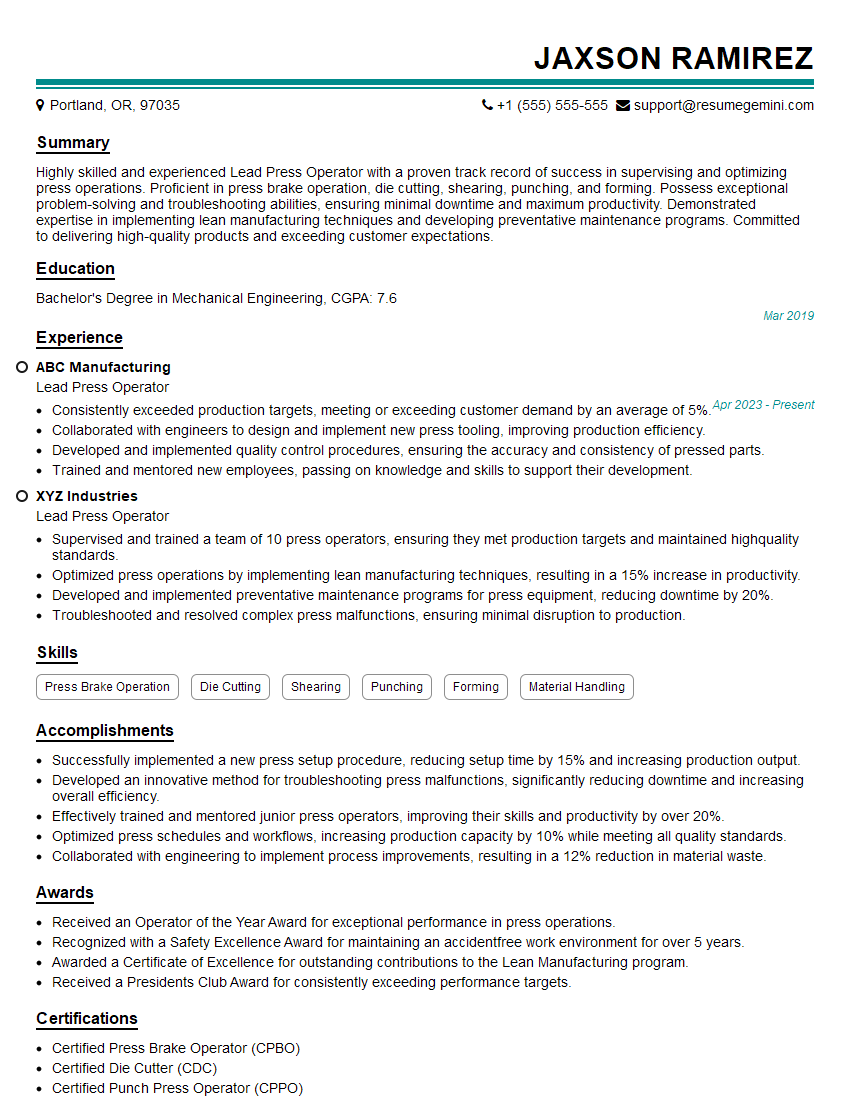
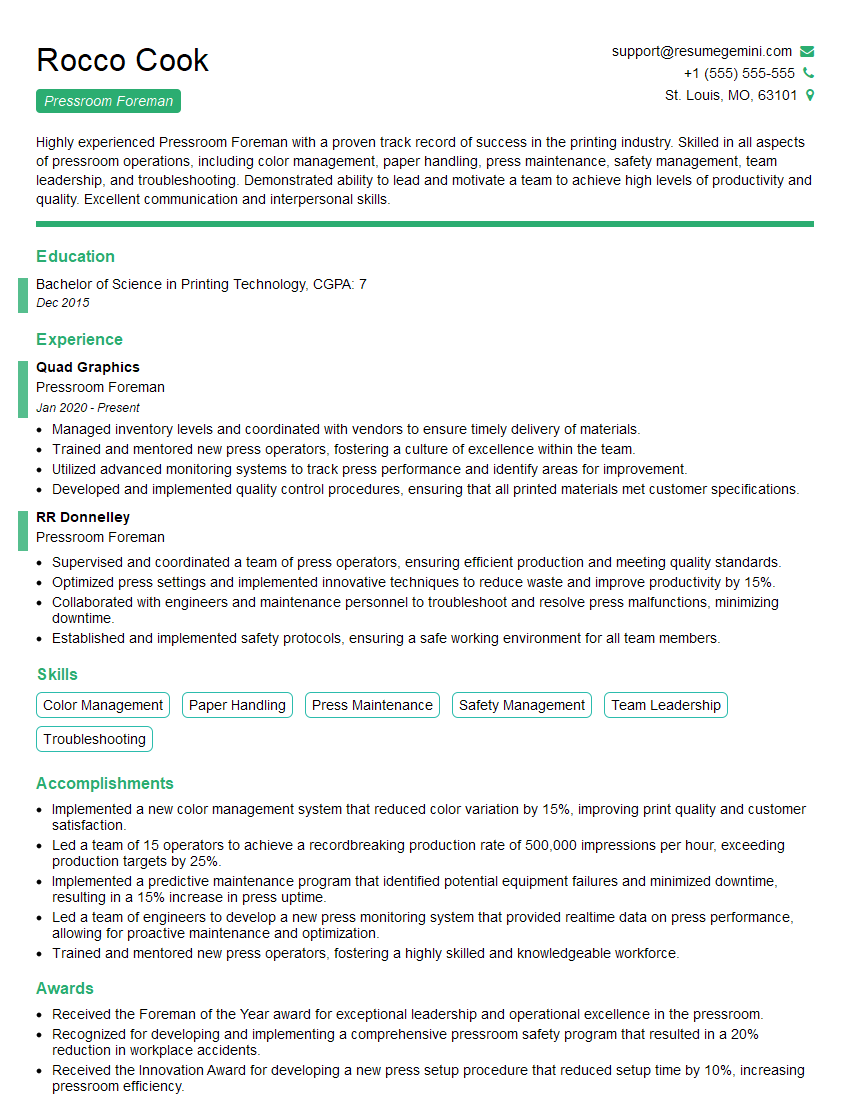
Mastering Lithographic Offset Press Operation opens doors to rewarding careers in a dynamic industry. Proficiency in this field signifies a valuable skillset, leading to increased job opportunities and higher earning potential. To maximize your chances of landing your dream job, create an ATS-friendly resume that effectively highlights your skills and experience. ResumeGemini is a trusted resource to help you build a professional and impactful resume. They provide examples of resumes tailored to Lithographic Offset Press Operation, ensuring your application stands out from the competition. Take the next step towards your career success today!



Explore more articles
Users Rating of Our Blogs
Share Your Experience
We value your feedback! Please rate our content and share your thoughts (optional).
What Readers Say About Our Blog
Very informative content, great job.
good