Are you ready to stand out in your next interview? Understanding and preparing for Live Animal Capture interview questions is a game-changer. In this blog, we’ve compiled key questions and expert advice to help you showcase your skills with confidence and precision. Let’s get started on your journey to acing the interview.
Questions Asked in Live Animal Capture Interview
Q 1. Describe your experience with various animal restraint techniques.
Animal restraint techniques are crucial for safe and humane animal handling. My experience encompasses a wide range, from non-invasive methods to chemical immobilization, always tailored to the specific species and situation.
- Physical Restraint: This includes techniques like using nets, traps (e.g., drop nets, box traps), and specialized handling equipment like catch poles or tongs. The choice depends heavily on the animal’s size, temperament, and the environment. For example, a small rodent might be easily contained in a simple trap, while a large deer would require a net and potentially additional personnel.
- Chemical Restraint: This involves the use of tranquilizer drugs, administered via dart guns or orally (when safe and feasible). This is generally reserved for larger, more dangerous, or stressed animals where physical restraint poses significant risk. Careful dosage calculation is vital, considering factors like species, age, health, and environmental conditions.
- Combined Techniques: Often, a combination of methods is employed. For instance, a net might be used to initially contain an animal, followed by physical restraint for closer examination or transportation.
Throughout my career, I’ve successfully utilized these techniques on a variety of species, from small birds to large mammals, always prioritizing animal welfare and personnel safety.
Q 2. What safety protocols do you follow when capturing animals?
Safety is paramount in live animal capture. My protocols are comprehensive and consistently followed to minimize risk to both animals and personnel.
- Personal Protective Equipment (PPE): This is non-negotiable and includes appropriate clothing (long sleeves, sturdy boots), gloves, eye protection, and, depending on the species, protective vests or even bite-resistant suits.
- Teamwork and Communication: Working in teams ensures a coordinated approach, with clearly defined roles and communication strategies, crucial when dealing with potentially aggressive or unpredictable animals. We use hand signals and clear verbal commands to avoid confusion.
- Understanding Animal Behavior: Knowing how the animal might react in a given situation allows us to anticipate potential dangers and take appropriate precautions. For example, understanding flight zones is key to avoiding unnecessary stress and potential injury.
- Emergency Preparedness: We always have a pre-planned emergency response strategy, including communication protocols, access to emergency medical services, and knowledge of nearby veterinary facilities.
- Post-Capture Procedures: Safe handling and transportation are equally important, employing appropriate containment methods and minimizing stress during transport to the designated facility.
Regular safety training, ongoing evaluation of protocols, and adherence to all regulations are fundamental to my approach.
Q 3. How do you identify the appropriate capture method for different species?
Selecting the appropriate capture method is critical for a successful and humane operation. This decision is based on a thorough assessment of various factors:
- Species: Different species exhibit different behaviors and physical characteristics, requiring specific techniques. A small, agile squirrel would require a different approach than a large, potentially aggressive bear.
- Size and Weight: Larger animals necessitate more robust equipment and potentially a larger team.
- Temperament: Aggressive or shy animals demand different strategies. Aggressive animals might require chemical restraint, while shy animals might need gentler, less intrusive methods.
- Environment: The terrain, vegetation, and presence of obstacles all play a role in choosing a suitable method. A dense forest might necessitate traps, while an open field might allow for a net.
- Capture Objective: Is the animal being captured for relocation, research, or medical treatment? The specific objective influences the choice of method and subsequent handling.
For example, a feral cat might be successfully trapped using a live trap, while a bird might be caught using a mist net. Always prioritizing the animal’s well-being and minimizing stress is paramount.
Q 4. Explain your understanding of animal behavior and its relevance to capture.
A deep understanding of animal behavior is fundamental to successful and humane live animal capture. It allows us to anticipate an animal’s response to different stimuli and choose the most appropriate and least stressful method.
- Flight Zone: Recognizing an animal’s flight zone – the distance at which it will feel threatened and flee – is crucial in approaching and capturing it. Approaching too closely can trigger a flight response, leading to escape or aggressive behavior.
- Body Language: Observing an animal’s body language – posture, tail position, ear movement, vocalizations – provides valuable insight into its emotional state. This helps determine the best approach, whether it’s a gentle, slow approach or a more rapid action.
- Stress Indicators: Identifying signs of stress, such as panting, rapid heart rate, or defecation, allows us to adjust our techniques to minimize further distress. A stressed animal is more likely to become aggressive or injure itself.
- Species-Specific Behaviors: Understanding the typical behavior of a particular species helps predict its response to different situations and adapt our strategies accordingly. Different species have different social structures, communication methods, and responses to perceived threats.
For instance, understanding that a deer’s flight response is triggered by rapid movement allows us to approach it slowly and quietly, reducing the likelihood of escape. This knowledge is essential for creating safe and successful capture events.
Q 5. What are the ethical considerations in live animal capture?
Ethical considerations are at the forefront of all my live animal capture operations. Minimizing animal stress and suffering is paramount.
- Humane Treatment: All procedures must adhere to strict guidelines that prioritize the animal’s welfare. This includes minimizing handling time, avoiding unnecessary physical restraint, and providing appropriate post-capture care.
- Minimizing Stress: We use methods that cause minimal stress and discomfort. This involves choosing the least invasive capture techniques and avoiding sudden movements or loud noises.
- Legal and Regulatory Compliance: All activities must comply with relevant local, state, and federal regulations pertaining to wildlife management and animal welfare.
- Justification for Capture: There must be a clear and justifiable reason for capturing an animal, such as relocation, research, medical treatment, or managing a dangerous situation. Unnecessary captures are unethical and should be avoided.
- Post-Capture Care: Appropriate post-capture care, including veterinary assessment and suitable housing, is crucial. Animals should receive prompt care and be released or relocated in a humane manner.
For example, before capturing an animal, I thoroughly evaluate the necessity of the capture and determine if there are less invasive alternatives available. I always prioritize the animal’s well-being above all else.
Q 6. Describe your experience with tranquilizer guns and darting techniques.
I have extensive experience with tranquilizer guns and darting techniques. This is a specialized skill requiring precise knowledge of pharmacology, animal physiology, and safe handling procedures.
- Drug Selection: The choice of tranquilizer depends on the animal’s species, size, and health condition. Different drugs have varying effects and durations of action. Accurate dosage calculation is critical to ensure effective immobilization without causing harm.
- Dart Gun Selection: Different dart guns are suitable for different animals and distances. Larger animals require stronger guns and larger darts.
- Dart Placement: Proper dart placement is crucial for effective drug delivery. This often requires knowledge of the animal’s anatomy to minimize complications.
- Monitoring: Post-darting monitoring is essential to ensure the animal is adequately sedated but not overly so. Vital signs, such as heart rate and respiration, must be closely monitored.
- Antidotes: Knowledge of antidotes and the ability to administer them in case of overdosage or adverse reactions is essential.
In practice, this requires a significant amount of training, ongoing professional development, and strict adherence to safety protocols. It is a skill that needs constant refinement and practice to ensure safety and efficacy.
Q 7. How do you handle aggressive or injured animals during capture?
Handling aggressive or injured animals requires a cautious and strategic approach, emphasizing both animal and personnel safety.
- Assessment: First, a thorough assessment of the situation is crucial. Understanding the cause of aggression (fear, territoriality, injury) or the extent of the injury informs the strategy.
- Distance and Cover: Maintaining a safe distance and utilizing cover (natural or artificial) is important to reduce the risk of attack.
- Chemical Restraint: Chemical immobilization is often the safest option for aggressive or injured animals, allowing for controlled handling and minimizing risk to both the animal and personnel.
- Specialized Equipment: Depending on the situation, specialized equipment such as protective shields, long-handled poles, or even remote-controlled devices may be needed.
- Veterinary Consultation: Veterinary consultation is essential, particularly for injured animals, to assess the extent of the injuries and determine the appropriate treatment and handling methods.
For example, a dog exhibiting aggressive behavior might require tranquilization before approaching it for assessment and treatment. Safety and animal welfare remain the guiding principles in these challenging situations.
Q 8. What are the legal requirements for capturing and relocating wildlife in your area?
The legal requirements for capturing and relocating wildlife vary significantly depending on location. In my area, it’s crucial to obtain the necessary permits from the relevant wildlife agencies before attempting any capture or relocation. This often involves demonstrating a legitimate need, such as protecting human safety or addressing an ecological imbalance. Failure to obtain the proper permits can result in hefty fines and legal repercussions. For instance, relocating a protected species without a permit is a serious offense. The specifics of the permit application process, including required documentation and fees, are readily available from the local wildlife agency’s website or office. Furthermore, it’s essential to be fully aware of the regulations regarding specific species, as some have more stringent protection measures than others. I always recommend consulting with a wildlife professional or the relevant agency before undertaking any capture or relocation project to ensure full compliance with the law.
Q 9. Describe your experience with different types of traps and snares.
My experience encompasses a wide range of traps and snares, each suited for different species and situations. For small mammals like squirrels or rats, I often use live traps – these are humane cages that allow for capture without harm. For larger animals, such as deer, I may employ net guns, which require specialized training and skill to use safely and effectively. Snares, while sometimes necessary for certain species, are used with extreme caution due to potential for injury. I prefer to use only properly designed and maintained snares, and always prioritize minimizing animal suffering and ensuring swift capture. I have extensive experience with foothold traps, which are designed to restrain animals but are more challenging to use safely. Each trap type demands thorough knowledge of its application, and misuse can result in harm or unnecessary stress to animals. For example, choosing the wrong size trap can injure an animal’s limbs. I frequently adapt my approach based on the species, the environment, and the specific circumstances of each capture event.
Q 10. How do you assess the health of a captured animal?
Assessing the health of a captured animal is paramount. I begin by observing the animal’s overall demeanor – is it alert and responsive, or lethargic and unresponsive? I check for any obvious injuries, such as wounds, broken bones, or parasites. I assess body condition, looking for signs of malnutrition or dehydration. The animal’s fur or feathers provide clues about its health – dull, matted fur often suggests poor health. For more thorough assessment, I might check vital signs, such as heart rate and respiration, though this often requires specialized equipment and training. If I suspect any serious health issues, I’ll immediately contact a qualified veterinarian for guidance and care. For example, a raccoon exhibiting neurological symptoms might indicate rabies, requiring immediate isolation and veterinary attention. Remember, prioritizing animal welfare is a core principle in our work.
Q 11. What is your experience with handling venomous or dangerous animals?
Handling venomous or dangerous animals requires specialized training, equipment, and a high degree of caution. I have extensive experience handling venomous snakes using appropriate tongs and protective gear. The safety protocols are incredibly strict, prioritizing both the animal’s and my own well-being. For larger dangerous animals such as bears or mountain lions, I wouldn’t attempt capture alone; I always work with a skilled team and utilize appropriate immobilization techniques and tranquilizer darts, administered by licensed professionals. Detailed risk assessments are conducted before any such operation, and we have robust safety plans in place to handle potential complications. Proper training and the use of appropriate safety equipment is essential for these high-risk capture situations, as mistakes can have dire consequences.
Q 12. How do you ensure the safety of both the animal and yourself during capture?
Ensuring the safety of both the animal and myself is the top priority. I always use appropriate safety gear, which can include protective clothing, gloves, and eye protection. The selection of gear is tailored to the species being captured and the potential hazards involved. Quick and efficient capture techniques minimize stress on the animal. Understanding the animal’s behavior and employing humane methods are crucial to avoiding unnecessary harm. I often work with a team for the capture of larger or more dangerous animals, utilizing a coordinated approach to both maximize safety and efficiency. For example, when capturing a bird entangled in a net, a gentle approach helps prevent injury and reduces stress. Regular training and refresher courses ensure I remain up-to-date on the latest safety protocols and best practices.
Q 13. Explain your process for transporting captured animals.
Transporting captured animals requires careful consideration to ensure their safety and well-being. The choice of transport container is crucial; it must be appropriately sized and ventilated to prevent overheating or injury. The container should be secure to prevent escape during transit. Smaller animals are transported in appropriately sized cages with soft bedding. Larger animals might require specialized crates, often padded for protection. During transport, I closely monitor the animal’s condition, ensuring adequate ventilation and temperature control. Animals are transported to appropriate holding facilities or release sites, following established procedures that adhere to ethical and legal guidelines. Each species may have specific requirements for transportation, such as maintaining temperature and humidity levels. Thorough planning and appropriate equipment are essential for safe and responsible transportation.
Q 14. Describe your experience with data collection and record-keeping during captures.
Data collection and record-keeping are integral parts of responsible wildlife capture. I meticulously document every capture event, including the date, time, location, species, sex, and age of the animal. I also record the methods used for capture, the animal’s health assessment, any injuries or treatments administered, and the ultimate disposition of the animal (release location, rehabilitation facility, etc.). This data is vital for scientific studies, population monitoring, and informing future capture and relocation strategies. I often use specialized software or electronic data loggers to record information accurately. Detailed records help track the success of management efforts and identify potential areas for improvement in our techniques. Maintaining comprehensive and accurate records is crucial for transparency, accountability, and advancing our understanding of wildlife populations.
Q 15. How do you choose the appropriate location for releasing captured animals?
Choosing the right release location is paramount for the animal’s survival. It’s not just about dropping the animal off somewhere; it’s about returning it to a suitable habitat where it can thrive. We consider several factors:
- Habitat Suitability: The area must provide adequate food, water, shelter, and space appropriate to the species. For example, releasing a mountain lion in a densely populated suburban area would be disastrous. We’d instead seek a remote, forested area with sufficient prey.
- Distance from Capture Site: We generally release animals as far as possible from where they were captured, minimizing the chance of recapture or re-entry into the problematic environment. This also reduces stress and gives the animal a fresh start.
- Disease Risk: We assess the health of the release site, avoiding areas known to have high concentrations of diseases or parasites that could affect the released animal.
- Presence of Predators or Competitors: The chosen location should offer reasonable protection from predators and minimize competition for resources. A thorough assessment of the area’s ecological dynamics is key.
- Legal Considerations: We always adhere to relevant regulations and obtain necessary permits before releasing any animal. This might involve coordinating with land managers or other government agencies.
We often utilize Geographic Information Systems (GIS) technology and remotely sensed data, like satellite imagery, to comprehensively assess potential release sites. It’s a meticulous process, demanding careful planning and consideration of all ecological factors.
Career Expert Tips:
- Ace those interviews! Prepare effectively by reviewing the Top 50 Most Common Interview Questions on ResumeGemini.
- Navigate your job search with confidence! Explore a wide range of Career Tips on ResumeGemini. Learn about common challenges and recommendations to overcome them.
- Craft the perfect resume! Master the Art of Resume Writing with ResumeGemini’s guide. Showcase your unique qualifications and achievements effectively.
- Don’t miss out on holiday savings! Build your dream resume with ResumeGemini’s ATS optimized templates.
Q 16. What are the common challenges you face during live animal capture?
Live animal capture presents numerous challenges, often unpredictable and demanding quick thinking. Some common hurdles include:
- Animal Behavior: Predicting an animal’s reaction to capture is never certain. Some animals are docile, while others are highly defensive, requiring specialized techniques and safety precautions. For example, a cornered raccoon can be surprisingly aggressive, while a deer might freeze in fear, presenting different challenges.
- Terrain and Weather: Accessing the animal in challenging terrains (steep slopes, dense vegetation, flooded areas) or during inclement weather (extreme heat, cold, rain) significantly complicates capture efforts. We once had to delay a capture because of a sudden thunderstorm that made the area too dangerous.
- Public Safety: Ensuring public safety is always paramount. We must carefully consider the proximity of people and establish safety zones during capture operations. Communicating effectively with the public is crucial for preventing misunderstandings and accidents.
- Equipment Malfunction: Netting can tear, traps can fail, tranquilizer guns can malfunction – equipment failure is always a possibility. We must have backup plans and redundancy built into our procedures. Regular equipment maintenance is therefore critical.
- Animal Health: Assessing the animal’s health before, during, and after capture is critical. Injuries or underlying health issues can complicate the process and require specialized veterinary care.
Managing these challenges requires extensive training, experience, and a high degree of adaptability. Safety is our top priority, both for the animals and for our team.
Q 17. How do you deal with unexpected situations or complications during a capture?
Unexpected situations are the norm in live animal capture. Our ability to handle these successfully relies heavily on experience, thorough planning, and a flexible approach. For instance:
- Step 1: Assessment: The first step is always a rapid but thorough assessment of the situation. What exactly went wrong? What are the potential risks to the animal and the team?
- Step 2: Re-evaluation of the Capture Plan: Based on the assessment, we need to re-evaluate the original plan. Do we need to adjust our techniques? Is additional equipment needed? Should we call for backup?
- Step 3: Implementing Contingency Plans: We always have backup plans and contingency procedures in place. This might involve using a different capture method, calling for specialized equipment, or requesting assistance from other professionals.
- Step 4: Safety Precautions: Safety remains the highest priority. We take extra precautions to ensure that both the animal and our team are protected.
- Step 5: Post-Incident Review: After the incident, we conduct a thorough review to identify what worked well and what could have been improved. This helps us refine our procedures and improve our readiness for future challenges.
A key example was a situation where our tranquilizer dart malfunctioned. We immediately switched to a less preferred capture method, utilizing a large net and a team of experienced handlers. While it was more physically demanding, the animal was safely captured and released unharmed.
Q 18. Describe your experience with working in various terrains and weather conditions.
My experience spans diverse terrains and weather conditions, from dense rainforests to arid deserts, and from freezing mountains to sweltering plains. Adaptability is key. Here’s a glimpse into the challenges:
- Terrain: Navigating steep, rocky terrain or dense undergrowth requires specialized gear, physical fitness, and awareness of potential hazards. In mountainous areas, we’ve used ropes and harnesses for safe access. In swamps, we’ve used airboats.
- Weather: Extreme temperatures, heavy rainfall, or strong winds can significantly impact both the animal’s behavior and our ability to operate safely. We’ve had to postpone captures due to severe weather and adjust capture techniques based on the existing conditions. For instance, using thermal imaging equipment in cold conditions can significantly aid in locating animals.
- Equipment Modifications: We modify or choose equipment specifically suited to the terrain and weather. For example, we use waterproof nets in rainy conditions and adapt our clothing and protective gear to the temperature.
- Safety Procedures: Our safety protocols are rigorously adapted to the specific environmental conditions. Working in rugged terrain often involves using safety harnesses and ropes. In extreme heat, frequent breaks and hydration are critical.
Adapting to challenging conditions requires not only technical skills but also sound judgment, resourcefulness, and a deep understanding of the impact of environmental factors on animal behavior.
Q 19. How do you collaborate with other professionals during a wildlife capture operation?
Collaboration is vital in live animal capture. It’s rarely a solo operation. We work closely with various professionals, including:
- Veterinarians: Veterinarians provide critical expertise on animal health, anesthesia, and post-capture care. They assess the animal’s health, administer necessary medication, and provide guidance on appropriate release procedures.
- Wildlife Biologists: Biologists offer insights into the animal’s behavior, ecology, and habitat requirements. Their knowledge is crucial for selecting appropriate capture methods, determining the suitability of release sites, and ensuring the animal’s long-term welfare.
- Law Enforcement: When dealing with potentially dangerous animals or situations involving public safety, we coordinate closely with law enforcement agencies. This ensures a safe and controlled operation that protects both the public and the team.
- Land Managers: We work closely with land managers or park officials to obtain necessary permits and ensure compliance with regulations. Their expertise is crucial for selecting appropriate release locations and managing any potential conflicts with land use.
Effective communication and coordination among all team members are critical for a successful and safe operation. We use clear communication protocols, including radio communication and pre-operation briefings, to ensure everyone is on the same page.
Q 20. What is your understanding of wildlife diseases and their prevention?
Understanding wildlife diseases is fundamental to responsible animal handling. Ignoring the potential spread of disease can have severe consequences for both the captured animal and the wider ecosystem.
- Disease Transmission: Animals can transmit diseases to humans (zoonoses) or to other wildlife. We take precautions to minimize the risk of transmission through appropriate personal protective equipment (PPE), such as gloves and masks, and careful handling procedures.
- Disease Prevention: Our protocols emphasize minimizing stress on the animal during capture, handling, and transport to reduce immunosuppression, which can make them more susceptible to disease. We also ensure appropriate sanitation procedures to prevent the spread of pathogens.
- Disease Identification: We are trained to recognize signs of illness or injury in animals. Veterinarians are essential in identifying and managing any diseases discovered during capture.
- Biosecurity Protocols: Implementing strict biosecurity protocols – such as disinfecting equipment and maintaining quarantine procedures – is crucial for preventing the introduction and spread of diseases in both captured and wild populations.
An example of disease prevention involves the use of disposable gloves and equipment to avoid cross-contamination between animals. This careful approach protects both the animal and the capture team.
Q 21. Describe your experience with using specialized equipment for animal capture.
Live animal capture relies on a range of specialized equipment, chosen based on the target species, terrain, and specific capture objectives. My experience involves using:
- Traps: Various traps are used, including box traps for small mammals, snare traps (used carefully and ethically, often with a remote release mechanism), and foothold traps (again, ethically and appropriately employed and checked regularly). The selection depends on the size, behavior, and habitat of the target animal.
- Nets: Different types of nets, from small hand nets to large drop nets, are used depending on the size and agility of the animal. Drop nets are often used for birds, while smaller nets might be used for reptiles or amphibians.
- Tranquilizer Delivery Systems: We utilize blowguns, dart guns, and even remotely delivered tranquilizer devices for larger and more dangerous animals. Accurate delivery and careful monitoring of the animal’s response are crucial.
- Capture Restraints: Once captured, appropriate restraints such as padded bags, crates, or specialized carriers are used for safe transport and handling.
- Telemetry Equipment: For tracking purposes, we may use radio collars or GPS transmitters to monitor the animal’s movements after release.
Maintaining and properly using this equipment requires extensive training and certification. Safety and ethical considerations are paramount in the selection and use of each piece of equipment.
Q 22. Explain your knowledge of different animal species and their unique handling requirements.
Different animal species present unique challenges in live capture due to their varying behaviors, physical attributes, and temperaments. My knowledge encompasses a wide range, from small mammals like rodents and rabbits requiring gentle handling and specialized traps, to larger animals such as deer or bears demanding more robust techniques and potentially the use of tranquilizer darts. Each species requires a tailored approach.
- Small Mammals: I’m proficient in using Sherman traps, Have-a-Heart traps, and snares, carefully selecting the appropriate size and bait to minimize stress and injury. For example, a shy field vole would require a quieter, less conspicuous trap than a bolder rat.
- Birds: Handling birds involves understanding their flight capabilities and potential for injury. Mist nets are often employed, requiring careful and swift retrieval to minimize trauma. Different net sizes and placements are used depending on bird species and size.
- Reptiles and Amphibians: These creatures require careful handling to prevent injury to both the animal and the handler. Appropriate tools like tongs, nets, and specialized containers are essential. For instance, grabbing a venomous snake requires specialized equipment and expertise.
- Large Mammals: Capture strategies for large mammals often involve tranquilization, requiring a thorough understanding of the appropriate drug dosages, delivery methods (dart guns, etc.), and potential side effects. Safety protocols are paramount, emphasizing the handler’s safety and the animal’s well-being.
This knowledge extends beyond the capture phase, encompassing the correct handling during the subsequent steps – transport, examination, and release.
Q 23. How do you maintain the welfare of captured animals during transport and release?
Maintaining animal welfare during transport and release is crucial for ethical and scientific reasons. My approach prioritizes minimizing stress and ensuring the animal’s safety and comfort throughout the process.
- Transport Crates: The choice of transport crate is species-specific, considering size, ventilation, and stability. Crates are designed to prevent injury and escape. For sensitive species, additional padding or climate control may be necessary.
- Minimizing Handling: Handling is kept to a minimum to avoid unnecessary stress. Animals are transported in a manner that reduces movement and jostling. Careful attention is paid to temperature regulation, especially during extreme weather.
- Release Techniques: Release sites are meticulously selected to ensure the animal has access to adequate food, water, shelter, and a safe environment. Release procedures aim to minimize disturbance, allowing the animal to adjust naturally to its surroundings. This might involve releasing the animal at dusk or dawn.
- Post-Release Monitoring: In many cases, post-release monitoring, possibly involving radio telemetry, is incorporated to track the animal’s health, adjustment, and survival. This informs future capture and relocation strategies.
For example, when transporting a rescued raptor, a dark, well-ventilated crate provides a sense of security, mimicking its natural roosting environment. The release would occur at a suitable nesting site away from human disturbance, offering the bird the best chances of survival and reintegration.
Q 24. What is your experience with post-capture monitoring and follow-up?
Post-capture monitoring and follow-up are integral to assessing the success of capture, handling, and release operations, as well as informing future strategies. My experience involves diverse techniques depending on the species and the objectives of the capture.
- Visual Observation: This involves direct observation of the animal’s behavior at the release site and in subsequent surveys to assess reintegration into the environment.
- Radio Telemetry: This technique involves attaching a radio transmitter to the animal, allowing for remote tracking of its movements and habitat use. It provides valuable data on the animal’s survival, ranging behavior, and site fidelity.
- Mark-Recapture Studies: This is especially relevant in population studies, employing tagging (e.g., ear tags, microchips) or marking (e.g., dyes, unique patterns) to monitor individuals within a population.
- Health Assessment: Post-release monitoring might involve checking for signs of injury or disease, using various techniques, including blood analysis if required.
For instance, in a project involving the relocation of endangered turtles, we used radio telemetry to track their movements post-release. This showed that the majority remained in the designated release zone, and only a small number dispersed outside the intended habitat, giving us important insights for future relocation strategies.
Q 25. Describe a time you had to adapt your capture strategy due to unforeseen circumstances.
During a raccoon capture in a densely populated urban area, our initial plan using standard live traps was thwarted by the raccoons’ remarkable ability to avoid traps. The animals were intelligent and seemed to anticipate our efforts. This led to a change in strategy.
We adapted by employing a combination of techniques: Firstly, we reduced human presence near the trap locations to lessen the animals’ wariness. Secondly, we strategically placed multiple traps using different bait types (e.g., sweet vs. savory). Finally, we supplemented the traps with a visual deterrent – motion-activated lights – aimed at scaring off the raccoons during the night but without causing them stress or injury. This multi-pronged approach, employing observation and adaptability, resulted in a successful capture.
Q 26. How do you ensure compliance with all relevant regulations and permits?
Compliance with relevant regulations and permits is paramount in live animal capture. My approach involves a thorough understanding of federal, state, and local laws pertaining to wildlife management and handling. This includes having the proper licensing and permits for capture, transport, and any necessary activities.
- Permit Acquisition: I ensure all necessary permits are obtained from the relevant authorities before any capture operation, including scientific permits for research and conservation permits for species protection.
- Species-Specific Regulations: I am acutely aware of the regulations surrounding the specific species involved in each capture, taking into account protected status, any handling restrictions, and ethical considerations.
- Record Keeping: Meticulous record keeping of capture locations, dates, species, methods, and transportation details are maintained, documenting all aspects of the operation for auditing purposes.
- Ethical Considerations: Adherence to ethical guidelines ensures the animal’s well-being is prioritized throughout the process. This includes using the least intrusive capture methods possible.
For example, before capturing bats for a research project, we obtained all the necessary permits from both the state wildlife agency and the relevant federal authorities, ensuring our activities were fully compliant with the Endangered Species Act.
Q 27. What is your understanding of the ecological impact of animal capture and relocation?
Understanding the ecological impact of animal capture and relocation is crucial. Careless practices can disrupt natural populations, ecosystems, and interspecies relationships. My approach is guided by ecological principles that minimize these risks.
- Habitat Suitability: Thorough assessment of the release site’s habitat suitability – including food availability, shelter, and absence of threats – is crucial to maximize the animals’ chances of survival and integration.
- Disease Transmission: Precautions are taken to prevent the transmission of diseases between captured animals and the resident wildlife. Quarantine or health checks might be necessary.
- Population Dynamics: Capture and relocation should consider the potential effects on population dynamics. In some cases, it may be better to avoid relocation altogether.
- Minimizing Disturbance: Employing methods that minimize habitat disturbance is crucial. For example, using minimally invasive capture techniques such as camera traps to study animal populations can limit the need for live captures.
For instance, when relocating a beaver population, we carefully studied the ecology of the release site, ensuring that suitable food sources and suitable habitats were available and the beaver would not be outcompeting existing animals for resources.
Q 28. Describe your experience with training others in safe animal handling techniques.
Training others in safe animal handling techniques is a significant part of my work. I emphasize a combination of theoretical knowledge and hands-on practical experience. My training programs focus on safety, efficiency, and animal welfare.
- Classroom Instruction: The initial training involves classroom sessions covering species-specific handling protocols, safety procedures, and ethical considerations. It includes discussions on regulations and best practices.
- Hands-on Practice: Practical sessions are essential, involving supervised handling of animals under controlled conditions. This allows trainees to practice techniques and build confidence.
- Simulation Exercises: Scenario-based exercises simulate real-world situations, including unexpected challenges and emergencies. This develops problem-solving skills and rapid response abilities.
- Continuous Assessment: Ongoing assessment of trainees’ skills ensures consistent competence and proficiency in safe animal handling.
For example, I recently trained a team of park rangers on the safe handling of injured wildlife. The training combined classroom sessions, hands-on practice using model animals, and simulated scenarios involving rescuing and transporting injured birds and small mammals. The goal was to equip them with the skills and knowledge to handle such situations safely and effectively.
Key Topics to Learn for Live Animal Capture Interview
- Animal Behavior & Handling: Understanding species-specific behaviors, stress indicators, and safe handling techniques for various animals.
- Trapping Techniques & Equipment: Proficiency in using different trap types (e.g., snares, nets, traps), understanding their limitations and proper setup for different animals and environments.
- Safety Procedures & Risk Assessment: Prioritizing safety for both animals and handlers, identifying potential hazards, and implementing appropriate safety protocols.
- Legal & Ethical Considerations: Adherence to local, state, and federal regulations regarding wildlife capture and handling, understanding ethical implications and animal welfare.
- Data Collection & Record Keeping: Accurate documentation of capture events, including species identification, location, date, and any observations of animal health or behavior.
- Emergency Response & First Aid: Preparedness for unexpected situations, including animal bites, stings, and injuries; knowledge of basic first aid for both humans and animals.
- Relocation & Release Techniques: Understanding appropriate methods for transporting and releasing captured animals, minimizing stress and ensuring their survival.
- Problem Solving & Decision Making: Analyzing situations quickly, adapting strategies as needed, and making informed decisions under pressure.
Next Steps
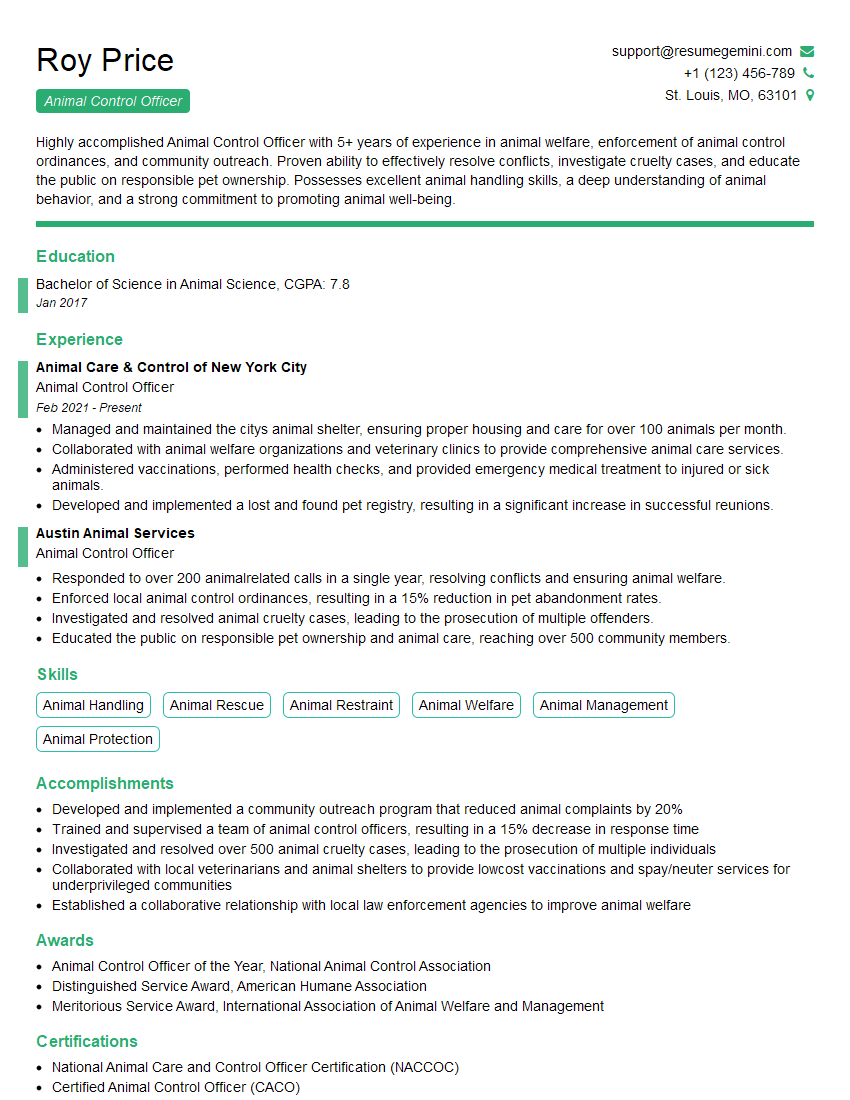
Mastering live animal capture opens doors to exciting and impactful careers in wildlife management, conservation, research, and pest control. A strong resume is crucial for showcasing your skills and experience to potential employers. To maximize your job prospects, create an ATS-friendly resume that highlights your qualifications effectively. ResumeGemini is a trusted resource that can help you build a professional and impactful resume tailored to the specific demands of the live animal capture field. Examples of resumes specifically designed for live animal capture professionals are available through ResumeGemini.
Explore more articles
Users Rating of Our Blogs
Share Your Experience
We value your feedback! Please rate our content and share your thoughts (optional).
What Readers Say About Our Blog
Very informative content, great job.
good