Interviews are more than just a Q&A session—they’re a chance to prove your worth. This blog dives into essential Live Performance and Collaboration interview questions and expert tips to help you align your answers with what hiring managers are looking for. Start preparing to shine!
Questions Asked in Live Performance and Collaboration Interview
Q 1. Describe your experience managing complex technical elements in a live performance.
Managing complex technical elements in live performance requires meticulous planning, proactive problem-solving, and a deep understanding of all systems involved. It’s like conducting a complex orchestra, where every instrument (lighting, sound, video, stage mechanics) needs to be in perfect harmony.
My approach begins with a detailed pre-production phase. This involves creating comprehensive technical specifications, meticulously mapping out all equipment and its interconnectivity (using diagrams and spreadsheets), and conducting rigorous testing and rehearsals. For example, during a recent outdoor concert, we used a sophisticated lighting system with automated moving heads and complex cues. We mapped each fixture, programmed the show, and ran multiple tech rehearsals to ensure smooth transitions and to troubleshoot any potential issues with DMX signal routing or power distribution before the actual performance.
During the show itself, I rely on a layered monitoring system. This includes real-time feedback from stage managers, technicians, and the audio/visual engineers. We use a dedicated communication system (like a radio headset network) to address any technical glitches instantly. This prevents small problems from escalating into major disruptions.
Q 2. How do you prioritize tasks during a fast-paced live event?
Prioritization during a fast-paced live event is crucial. Think of it like a firefighter responding to a multiple-alarm fire – you need to assess the situation and address the most critical threats first. My method is based on a combination of pre-planning and real-time assessment.
Before the event, I create a prioritized task list, categorizing tasks by their criticality and dependencies. This includes assigning responsibilities and allocating time slots. During the show, I continuously monitor the progress, adjusting priorities based on emerging challenges. This means constantly evaluating the impact of each task on the overall performance – a minor lighting glitch might be less critical than a major audio failure. The most critical problems always get immediate attention, even if it requires temporarily postponing lower-priority tasks.
Tools like task management software or even a simple whiteboard can be incredibly helpful for visualizing tasks and their dependencies.
Q 3. Explain your approach to troubleshooting technical issues during a live performance.
Troubleshooting technical issues during a live performance requires a calm, systematic approach. Panicking is never the answer! My approach is based on the ‘5 Whys’ technique – repeatedly asking ‘why’ to identify the root cause of a problem.
First, I identify the specific issue. Next, I gather information from the relevant team members. Then, I isolate the potential causes, systematically eliminating possibilities until I pinpoint the root problem. For example, if the sound suddenly cuts out, I’d check the mixer, the power supply, the cables, and the signal path sequentially. Once the cause is identified, I implement the necessary fix, keeping in mind the urgency of the situation and the impact on the performance. Often, having a backup system or a plan B significantly reduces the impact of a technical failure.
Documentation is key. After resolving an issue, I document the problem, the cause, and the solution to prevent future recurrences. This builds a knowledge base for the team.
Q 4. How do you ensure effective communication within a large production team?
Effective communication within a large production team is paramount. Think of it like a well-oiled machine – each part needs to know its function and how it interacts with the others. I use a multi-pronged approach to ensure clear and timely communication.
Firstly, I establish clear communication channels and protocols before the event begins. This includes daily production meetings, a dedicated communication system (radio headsets or a messaging app), and clear roles and responsibilities for each team member. Secondly, I promote open communication and actively encourage feedback. Regular check-ins help address any concerns or potential issues proactively. Finally, I use a combination of written documentation (technical specs, run-of-show) and visual aids (diagrams, flowcharts) to ensure everyone is on the same page. This helps minimize misunderstandings and allows the team to adapt quickly to unexpected changes.
Q 5. Describe a time you had to adapt quickly to unexpected changes during a live event.
During a large-scale music festival, a severe thunderstorm unexpectedly rolled in, causing a major power outage mid-performance. The main stage went dark, and the crowd was understandably concerned. Our pre-planned backup generator system failed to kick in as expected due to a faulty transfer switch.
My immediate reaction was to prioritize safety. We immediately evacuated the audience to designated safe zones. Simultaneously, the tech team and I worked feverishly to identify the problem with the generator system. We discovered a blown fuse within the transfer switch, which we were able to replace quickly. Within 15 minutes, we had a portion of the power restored, allowing us to safely resume the event with a revised schedule. We used the remaining time to assess the situation and coordinate announcements to keep the audience informed.
This experience highlighted the importance of having comprehensive contingency plans and the need for rapid problem-solving under pressure. While the backup generator initially failed, our swift reaction and teamwork mitigated a potentially disastrous situation.
Q 6. What strategies do you use to maintain team morale and collaboration under pressure?
Maintaining team morale and collaboration under pressure is critical for success. It’s about fostering a supportive and encouraging environment where everyone feels valued and appreciated.
My strategy involves creating a positive team culture before the event even begins. This includes clear communication, mutual respect, and a sense of shared purpose. During the event, I make sure to regularly acknowledge and appreciate the team’s efforts. Small gestures, like providing snacks and drinks, or simply saying thank you, can make a huge difference. I also prioritize clear and constructive feedback, focusing on solutions rather than blame. When challenges arise, I emphasize teamwork and collaboration, reminding everyone that we are all in this together. Open communication channels allow team members to express their concerns, fostering trust and collaboration.
Q 7. How do you handle conflict resolution within a production team?
Conflict resolution within a production team requires a calm, empathetic, and proactive approach. The goal is not to win the argument, but to find a solution that works for everyone. My approach involves active listening, clear communication, and a focus on finding common ground.
I start by ensuring all parties involved feel heard and understood. I encourage open dialogue, facilitating a space where concerns can be voiced without judgment. I then work to identify the root cause of the conflict, focusing on the issue rather than the individuals involved. Once the underlying issues are understood, I work with the team to develop a mutually agreeable solution. Sometimes, this involves compromise; other times, it requires clear guidelines and expectations. I always document the resolution to ensure clarity and prevent future misunderstandings. Ultimately, maintaining a professional and respectful environment is key to resolving conflicts effectively.
Q 8. Describe your experience with budgeting and resource allocation in a live performance context.
Budgeting and resource allocation in live performance is a crucial aspect demanding meticulous planning and strong financial acumen. It involves forecasting all potential costs, from venue rental and artist fees to equipment hire, marketing, and crew salaries. I approach this systematically, starting with a detailed breakdown of each anticipated expense. This breakdown informs the creation of a comprehensive budget, typically presented as a spreadsheet or using dedicated event management software.
For example, in a recent production, I meticulously tracked costs for lighting (including fixtures, crew, and electricity), sound (including equipment rental, engineers, and potentially musicians’ amplification), stage construction, costumes, marketing materials, and insurance. The budget also incorporates contingency funds to account for unforeseen issues, such as equipment malfunction or unexpected travel expenses. After establishing a preliminary budget, I then allocate resources based on priority and available funds, prioritizing essential elements like artist fees and safety measures before considering less crucial aspects.
Reallocating funds might be necessary if unforeseen circumstances arise, requiring flexibility and the ability to make informed decisions. For example, if a key piece of lighting equipment fails, I would need to quickly assess the alternatives, their cost implications, and their impact on the performance before authorizing a budget reallocation.
Q 9. How familiar are you with different types of stage lighting and their applications?
My familiarity with stage lighting is extensive, encompassing various types and their applications. I’m proficient in the use of conventional lighting instruments (like Fresnels, Ellipsoidals, and PAR cans), as well as moving lights (like LED washes and spot moving heads). Each type serves a distinct purpose, dictated by the production’s aesthetic and technical requirements.
For example, Fresnels offer a soft, diffused light ideal for backlighting and washes, while Ellipsoidals provide sharper beams for focused effects like gobo projections. Moving lights offer dynamic, programmed effects, controlled through lighting consoles. I understand the principles of color mixing, intensity control, and beam shaping, crucial for achieving the desired lighting design.
Moreover, I have experience with intelligent lighting systems, including those using DMX (Digital Multiplex) control protocols. DMX allows precise control over multiple lighting fixtures from a central console, enabling complex lighting cues and automated sequences. I also understand the importance of safety regulations concerning lighting rigs and their maintenance, ensuring proper rigging techniques and regular equipment checks to prevent accidents.
Q 10. What is your experience with audio mixing and sound reinforcement techniques?
My expertise in audio mixing and sound reinforcement extends to both live and studio settings. I’m proficient in using digital mixing consoles, and comfortable with analog systems as well. I understand the principles of signal flow, equalization, compression, and effects processing, essential for achieving optimal sound quality and clarity. I use these techniques to achieve a balanced mix, ensuring clear dialogue, distinct instrument separation, and appropriate levels for both the performers and the audience.
For example, in a musical performance, I would focus on managing individual instrument levels, ensuring that each instrument is audible without masking other sounds. This also requires utilizing equalization to shape the tone of the instruments and vocals, compensating for the natural sound characteristics of the venue or the instruments themselves. I also utilize compression to control dynamic range and prevent audio clipping. My experience also includes microphone selection and placement, crucial for capturing the optimal sound from each instrument or vocal.
Furthermore, I have experience troubleshooting sound system issues, addressing problems such as feedback, low frequencies, or unwanted noise. In a live situation, being able to identify and rapidly address such challenges is vital.
Q 11. Explain your understanding of health and safety regulations in a live performance environment.
Health and safety regulations in live performance are paramount, and my understanding is comprehensive. I am well-versed in the relevant legislation and best practices concerning fire safety, electrical safety, crowd management, and occupational health, including working at heights, risk assessment and safe handling of equipment. I understand the importance of risk assessment and mitigation strategies, creating and implementing risk assessments to identify and address potential hazards before they cause injury or damage.
For example, I ensure that all electrical equipment is properly grounded and tested regularly. We conduct thorough fire safety checks before each show, ensuring that emergency exits are clear and that fire extinguishers are readily accessible and operable. During the planning of events, I always include the necessary considerations for emergency evacuations, first aid, crowd control and accessibility compliance to ensure the safety and well-being of everyone involved.
Moreover, I meticulously ensure compliance with relevant local and national regulations, collaborating with venue management and safety officers to maintain a safe and controlled environment. I often find that preventative measures, such as clear signage and well-lit pathways, are highly effective in mitigating risk and promoting a safe environment for both performers and audience members.
Q 12. How do you ensure the timely execution of a live performance schedule?
Ensuring timely execution of a live performance schedule requires meticulous planning and effective communication. My approach starts with creating a detailed schedule, outlining all aspects of the performance, from load-in and rehearsals to the show itself and the post-show strike. This schedule is shared with all involved parties, including performers, technicians, and venue staff, ensuring everyone is aware of their roles and responsibilities.
I utilize a variety of scheduling tools, including digital calendars and project management software, to track progress and identify potential delays. I also build in buffer time to account for unexpected issues. For example, if a technical issue arises, the buffer time minimizes the impact on the overall schedule.
Clear and consistent communication is crucial. This includes regular meetings with the team and updates communicated through appropriate channels (e.g., email, instant messaging). If delays occur, I promptly inform all involved parties, outlining the cause of the delay and proposed solutions. Proactive communication and adaptability to unforeseen circumstances are key to ensuring a smooth and timely execution of any live event schedule.
Q 13. Describe your experience with different video technologies in live productions.
My experience with video technologies in live productions is substantial. I’m familiar with various video switching systems, camera operation, and video projection techniques. I understand the integration of video with other elements of a live performance, such as lighting and sound.
For instance, I have experience using video switchers to seamlessly transition between different camera angles and video sources, creating dynamic visuals that complement the live performance. I’m familiar with different camera types, including handheld, robotic, and fixed cameras. Understanding their limitations and strengths allows for optimized camera placement and operation.
Moreover, I have experience with video projection mapping, a technique that involves projecting video content onto three-dimensional surfaces, such as stage sets or props. This creates highly immersive and engaging visuals, adding another layer of complexity and sophistication to the performance.
I also know how to utilize the appropriate video formats and resolutions to match the technical capabilities of the venue and the production requirements. This ensures visual quality, avoiding issues like incompatibility or loss of resolution.
Q 14. How do you manage risk assessment and mitigation in a live performance setting?
Risk assessment and mitigation in live performance is a critical aspect of my work. I use a structured approach, starting with identifying potential hazards. This involves brainstorming potential problems, considering factors such as the venue, equipment, performers, audience, and the event itself. A thorough risk assessment should be conducted well in advance of the live event.
After identifying potential hazards, I then assess the likelihood and severity of each risk. This involves considering the probability of the hazard occurring and the potential consequences if it does. A common methodology is using a risk matrix that plots risks by probability and severity. Based on this assessment, I develop mitigation strategies to reduce or eliminate the risks.
For example, if a risk assessment identifies a high risk of equipment failure, the mitigation strategy might involve having backup equipment available, conducting regular equipment checks, and ensuring adequate technical support is on-site. For crowd management concerns, a mitigation strategy could involve detailed crowd control plans, sufficient security personnel, clear signage, and well-defined emergency evacuation procedures. The risk mitigation plans are then documented, shared with the relevant personnel, and regularly reviewed and updated as necessary.
Q 15. Explain your process for creating and implementing a run-of-show.
Creating a run-of-show is like orchestrating a symphony. It’s a detailed, time-sequenced plan for the entire event. My process begins with a deep understanding of the event’s goals, the performers, and the audience. I then break down the event into segments, assigning specific times and responsibilities to each.
- Collaboration: I work closely with the performers, technical team, and event organizers to ensure everyone is on the same page.
- Timeline Creation: I build a detailed schedule, including set changes, lighting cues, sound checks, and speaker transitions. I often use software like Google Sheets or specialized event management platforms.
- Cue Sheet Development: A cue sheet, often a spreadsheet, lists every action, its timing, and who’s responsible. For instance, a cue might be ‘Lights dim 50%, Sound – intro music begins at 7:05 PM’.
- Contingency Planning: I always build in buffer time and have backup plans to address potential issues, such as technical difficulties or running over schedule.
- Rehearsal and Refinement: Before the event, we run through the run-of-show during rehearsals, making adjustments as needed to ensure a smooth and seamless execution.
For example, during a recent corporate event, we used a color-coded run-of-show to clearly designate different departments’ responsibilities. This helped to streamline communication and reduce confusion during the live event.
Career Expert Tips:
- Ace those interviews! Prepare effectively by reviewing the Top 50 Most Common Interview Questions on ResumeGemini.
- Navigate your job search with confidence! Explore a wide range of Career Tips on ResumeGemini. Learn about common challenges and recommendations to overcome them.
- Craft the perfect resume! Master the Art of Resume Writing with ResumeGemini’s guide. Showcase your unique qualifications and achievements effectively.
- Don’t miss out on holiday savings! Build your dream resume with ResumeGemini’s ATS optimized templates.
Q 16. Describe your experience with pre-production planning and coordination.
Pre-production is the foundation of any successful live event. My experience involves meticulous planning and coordination across various teams. This begins with a comprehensive understanding of the client’s vision, budget, and target audience.
- Venue Selection and Logistics: I consider factors such as capacity, accessibility, technical capabilities, and location when selecting a venue. This includes negotiating contracts and arranging for all necessary permits.
- Budget Management: I develop a detailed budget, tracking expenses and ensuring they align with allocated funds.
- Team Building and Communication: I assemble a skilled team, outlining roles and responsibilities clearly. Establishing effective communication channels, such as project management software, is vital.
- Risk Assessment and Mitigation: Identifying potential risks (technical failures, weather issues) and developing contingency plans is crucial. For instance, we might have backup generators for power outages.
- Vendor Management: I manage the relationships with various vendors like caterers, security personnel, and equipment suppliers, ensuring all services are coordinated and delivered on time.
In one project, meticulous pre-production planning saved us from significant cost overruns. By negotiating favorable rates with vendors early and meticulously tracking expenses, we stayed well within budget despite unexpected challenges.
Q 17. How do you incorporate audience engagement strategies in live performances?
Audience engagement is key to a memorable live performance. I incorporate various strategies to foster connection and participation:
- Interactive Elements: Q&A sessions, polls, quizzes, and games can boost audience interaction. For instance, using a live poll during a presentation keeps the audience actively involved.
- Social Media Integration: Using event-specific hashtags and encouraging social media sharing generates excitement and extends the reach of the performance.
- Storytelling and Emotional Connection: Crafting compelling narratives and tapping into emotions create a powerful bond with the audience.
- Personalized Experiences: Tailoring the content to resonate with the audience’s specific interests and demographics enhances the experience.
- Visual Aids and Multimedia: Incorporating engaging visuals, videos, and music enhances the experience and makes it more memorable.
In a recent concert, we incorporated a live social media wall, displaying audience comments and photos. This created a sense of community and significantly increased engagement.
Q 18. How do you adapt your approach based on the specific audience demographic and venue?
Adaptability is crucial in live performance. My approach changes significantly based on the audience and venue.
- Audience Demographics: I tailor the content, language, and style to match the age, interests, and background of the audience. A presentation for teenagers would differ greatly from one for senior citizens.
- Venue Size and Type: The size and acoustics of the venue influence sound, lighting, and stage design. A small, intimate setting requires a different approach than a large arena.
- Cultural Considerations: I’m mindful of cultural nuances and sensitivities, ensuring the performance is respectful and appropriate for the specific audience.
- Technical Capabilities: The venue’s technical infrastructure (lighting, sound, projection) influences the production design and technical requirements.
- Accessibility: I ensure the event is accessible to all attendees, including those with disabilities, by providing appropriate accommodations.
For example, a performance in a rural community might focus on local stories and traditions, while a corporate event might emphasize professional development and networking.
Q 19. How proficient are you with relevant software and hardware tools for live events?
I’m proficient in various software and hardware tools essential for live events. My expertise spans across several areas.
- Software: I’m skilled in using audio and video editing software (Adobe Audition, Premiere Pro), lighting control consoles (e.g., ETC EOS), show control software (Qlab), and presentation software (PowerPoint, Keynote).
- Hardware: I have hands-on experience with audio mixers, lighting equipment, video projectors, microphones, cameras, and other related hardware.
- Networking and Streaming: I understand network protocols and am experienced in setting up and managing live streaming solutions for hybrid or virtual events. This includes using platforms like OBS Studio and Vimeo.
- Project Management Tools: I leverage project management tools like Asana, Trello, or Monday.com for efficient task management and collaboration.
My technical skills ensure a smooth and seamless event execution, effectively translating creative visions into reality.
Q 20. Describe your experience with virtual or hybrid event production.
I have extensive experience in virtual and hybrid event production. The key difference lies in managing the technical aspects and ensuring seamless interaction between online and in-person participants.
- Platform Selection: Choosing the right virtual event platform (Zoom, WebEx, etc.) depends on the event’s scale, features, and audience.
- Technical Setup and Testing: Rigorous testing is crucial to avoid technical glitches during the live event. I meticulously test all hardware and software components beforehand.
- Engagement Strategies: I adapt audience engagement strategies for online participants using chat features, polls, Q&A sessions, and interactive elements.
- Content Adaptation: Content needs adaptation for online viewing. Visuals, audio quality, and pacing are crucial to hold the online audience’s attention.
- Hybrid Event Coordination: In hybrid events, managing both online and in-person audiences simultaneously requires careful planning and coordination. This involves ensuring seamless transitions between segments and managing the interactions between both audiences.
In a recent hybrid conference, we successfully integrated live Q&A sessions from both in-person and online attendees, creating a dynamic and inclusive experience.
Q 21. How do you measure the success of a live performance event?
Measuring the success of a live performance goes beyond simply counting attendees. I use a multi-faceted approach:
- Audience Feedback: Post-event surveys, social media monitoring, and direct feedback help gauge audience satisfaction and identify areas for improvement.
- Attendance and Engagement Metrics: Tracking attendance, participation rates in interactive elements, and social media reach provides quantitative data on event success.
- Achievement of Objectives: I evaluate whether the event achieved its intended goals, whether it was a fundraising event, a product launch, or a team-building exercise.
- Financial Performance: For events with a commercial element, assessing revenue generation, sponsorship returns, and cost-effectiveness is crucial.
- Qualitative Assessment: I also consider less easily quantifiable factors such as audience enthusiasm, media coverage, and the overall impact of the event.
For a recent music festival, we tracked ticket sales, social media interactions, and post-event surveys to determine its success. The high attendance, positive social media sentiment, and overwhelmingly positive feedback indicated a highly successful event.
Q 22. How do you ensure the quality and consistency of a live performance across multiple shows?
Maintaining quality and consistency across multiple live performances requires a meticulous approach, encompassing meticulous planning, robust rehearsals, and diligent execution. Think of it like baking a cake – you need the same recipe (your show plan), the same ingredients (your team and resources), and the same baking process (your execution plan) each time to achieve a consistent result.
Standardized Procedures: We develop detailed run-of-show documents, specifying timings, cues, and technical requirements. These documents serve as the blueprint for each performance, ensuring everyone is on the same page.
Rigorous Rehearsals: Thorough rehearsals are crucial. We conduct multiple sessions, refining the performance, addressing technical glitches, and ensuring seamless transitions between segments. This allows us to identify and resolve potential issues before the actual show.
Technical Checklists: Pre-show technical checks are essential. We use detailed checklists to verify equipment functionality, sound levels, lighting setups, and stage configurations, minimizing the chance of technical failures during the performance.
Performance Feedback Mechanisms: After each show, we gather feedback from the team, including performers, technicians, and stage managers, to identify areas for improvement and ensure continuous enhancement.
Q 23. What is your experience with using project management software for live events?
I have extensive experience using project management software for live events. Tools like Asana, Trello, and Monday.com are invaluable for organizing tasks, managing timelines, and facilitating communication within the team. For example, in a recent music festival, we used Asana to track the progress of various tasks, from securing permits to coordinating stage setups, ensuring every detail was accounted for and on schedule.
Task Assignment and Tracking: We assign tasks to specific individuals, set deadlines, and monitor progress, keeping everyone accountable and informed.
Timeline Management: Project management software allows us to create and visualize timelines, ensuring that tasks are completed in the correct sequence and within the allocated timeframes. This is particularly crucial in live events where timing is critical.
Communication and Collaboration: These tools facilitate seamless communication within the team through integrated messaging systems, comment sections, and shared files. This ensures everyone is updated on the latest developments and reduces the likelihood of miscommunication.
Q 24. Describe your experience with vendor management in a live event context.
Vendor management is crucial for successful live events. I approach it strategically, selecting reliable vendors, negotiating contracts, and monitoring performance throughout the event. It’s akin to orchestrating a symphony – each vendor is an instrumentalist, and they all need to be in perfect harmony. For instance, in a large-scale conference, we had to manage various vendors, including caterers, AV technicians, and security personnel.
Vendor Selection: We thoroughly vet vendors based on experience, reputation, and references, ensuring they are qualified and capable of delivering on their promises.
Contract Negotiation: Clear and comprehensive contracts are essential, outlining deliverables, payment terms, and liability clauses. This helps to mitigate risks and prevent disputes.
Performance Monitoring: Throughout the event, we monitor vendor performance, addressing any issues promptly to ensure they deliver as expected.
Q 25. How do you handle last minute changes or requests during a live event?
Handling last-minute changes requires a calm, decisive approach and a flexible team. Imagine a sudden downpour during an outdoor concert – you need to react quickly to protect equipment and audience members. We rely on clear communication, adaptability, and a well-defined contingency plan.
Immediate Assessment: We quickly assess the impact of the change, determining its scope and potential implications.
Communication and Coordination: We immediately communicate the change to the relevant team members, ensuring everyone is informed and understands their roles in addressing the situation.
Problem-Solving and Adaptability: We work collaboratively to find creative solutions, adjusting the schedule, resources, or performance elements to mitigate the impact of the change.
Contingency Planning: Having a robust contingency plan in place for common issues minimizes disruption and ensures a smooth workflow.
Q 26. Describe a situation where you had to work under extreme time constraints.
During a theatrical production, a lead actor fell ill just 24 hours before opening night. This necessitated a complete rescheduling of rehearsals and quick improvisation to ensure the show could go on. We utilized a collaborative approach, assigning understudies new parts, and re-blocking scenes to minimize the impact. It was a grueling 24-hour period, requiring intense teamwork, problem-solving, and a lot of coffee.
Prioritization: We immediately prioritized essential tasks, focusing on the most critical elements to salvage the performance.
Delegation: Tasks were delegated efficiently to team members with the necessary skills and experience.
Teamwork and Support: The entire team rallied together, supporting each other to overcome the obstacle and deliver a successful opening night.
Q 27. How would you approach building a collaborative working environment for a remote team?
Building a collaborative remote team for live events requires a strong emphasis on communication, trust, and the right tools. It’s like building a virtual orchestra – each musician needs to know their part and be in sync with the others, even if they’re miles apart. We use a blend of strategies.
Regular Communication: Frequent video conferencing calls, instant messaging platforms, and project management tools are crucial for keeping the team connected and informed.
Shared Project Management Tools: Using collaborative project management software provides a central hub for task assignment, progress tracking, and communication.
Clear Roles and Responsibilities: Clearly defining roles and responsibilities avoids confusion and duplication of effort.
Trust and Open Communication: Fostering an environment of trust and open communication is vital for creating a collaborative and effective team.
Q 28. Explain your approach to maintaining accurate documentation and record-keeping for live events.
Accurate documentation and record-keeping are paramount in live events. Think of it as creating a historical record of each performance, allowing for analysis, improvement, and future reference. We employ a systematic approach.
Centralized System: We use a cloud-based system for storing all relevant documents, ensuring easy access and collaboration across the team.
Detailed Documentation: We meticulously document all aspects of the event, including contracts, run-of-show documents, technical specifications, financial records, and post-event reports.
Version Control: Using version control helps track changes and prevents confusion caused by multiple versions of documents.
Data Backup: Regular data backups ensure the safety and integrity of our documentation.
Key Topics to Learn for Live Performance and Collaboration Interview
- Understanding Audience Engagement: Explore techniques for captivating audiences in live performance settings, considering factors like environment, technology, and audience demographics. Consider how to adapt your performance based on real-time feedback.
- Collaborative Workflow & Communication: Discuss strategies for effective teamwork in live performance environments. This includes pre-production planning, efficient communication during rehearsals and performances, and conflict resolution.
- Technical Proficiency & Problem-Solving: Demonstrate your understanding of the technical aspects relevant to your specific role (e.g., sound systems, lighting, stage management). Practice describing how you troubleshoot technical difficulties efficiently and collaboratively.
- Performance Adaptation & Improvisation: Explain your ability to adapt to unexpected challenges during a live performance, including improvisational skills and quick thinking to maintain the performance quality.
- Post-Performance Analysis & Improvement: Discuss methods for reviewing performances, identifying areas for improvement, and incorporating feedback for future performances. This includes both individual and team-based reflection.
- Technology Integration in Live Performance: Explore the role of technology in enhancing live performances, including sound reinforcement, lighting design, video integration, and virtual collaboration tools.
Next Steps
Mastering live performance and collaboration is crucial for career advancement in this dynamic field. Strong teamwork, adaptability, and problem-solving skills are highly valued by employers. To significantly increase your job prospects, invest time in creating a professional, ATS-friendly resume that highlights your key skills and accomplishments. ResumeGemini is a trusted resource to help you build a compelling resume that stands out. We offer examples of resumes tailored to Live Performance and Collaboration roles to guide you in creating your own impactful application materials.
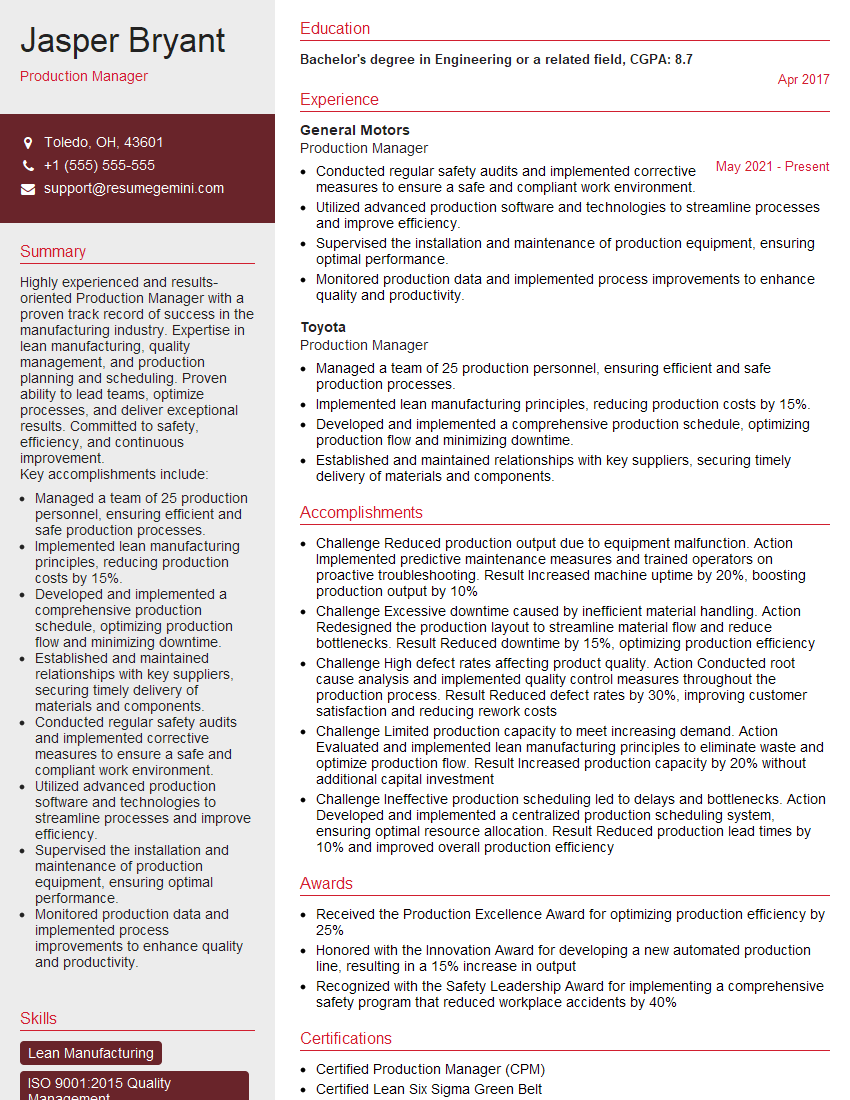
Production Manager Resume Sample
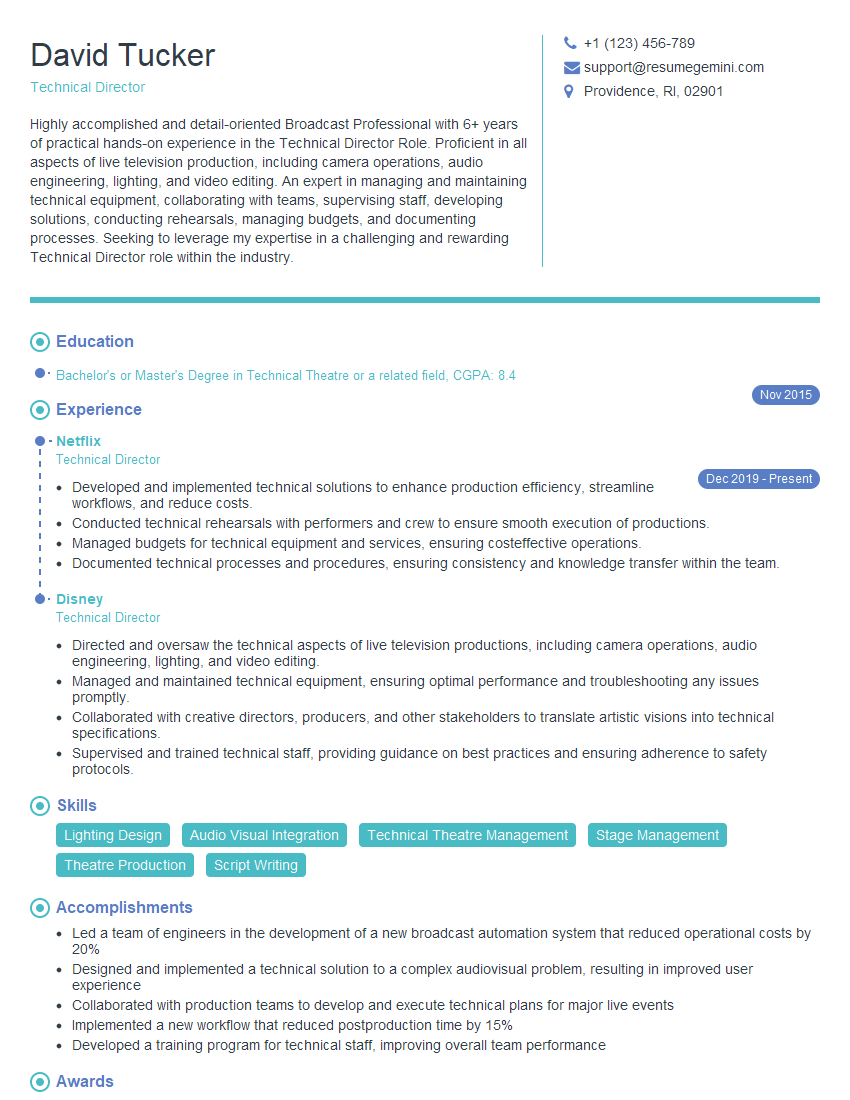
Technical Director Resume Sample
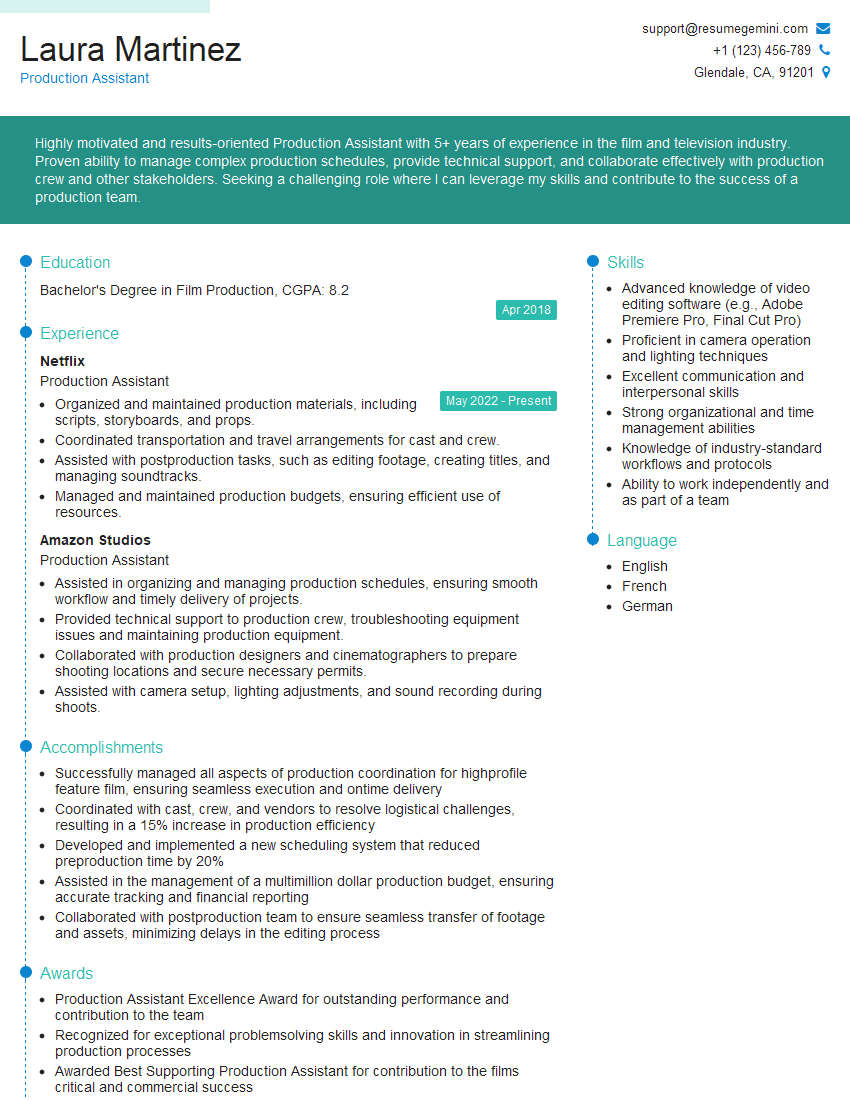
Production Assistant Resume Sample
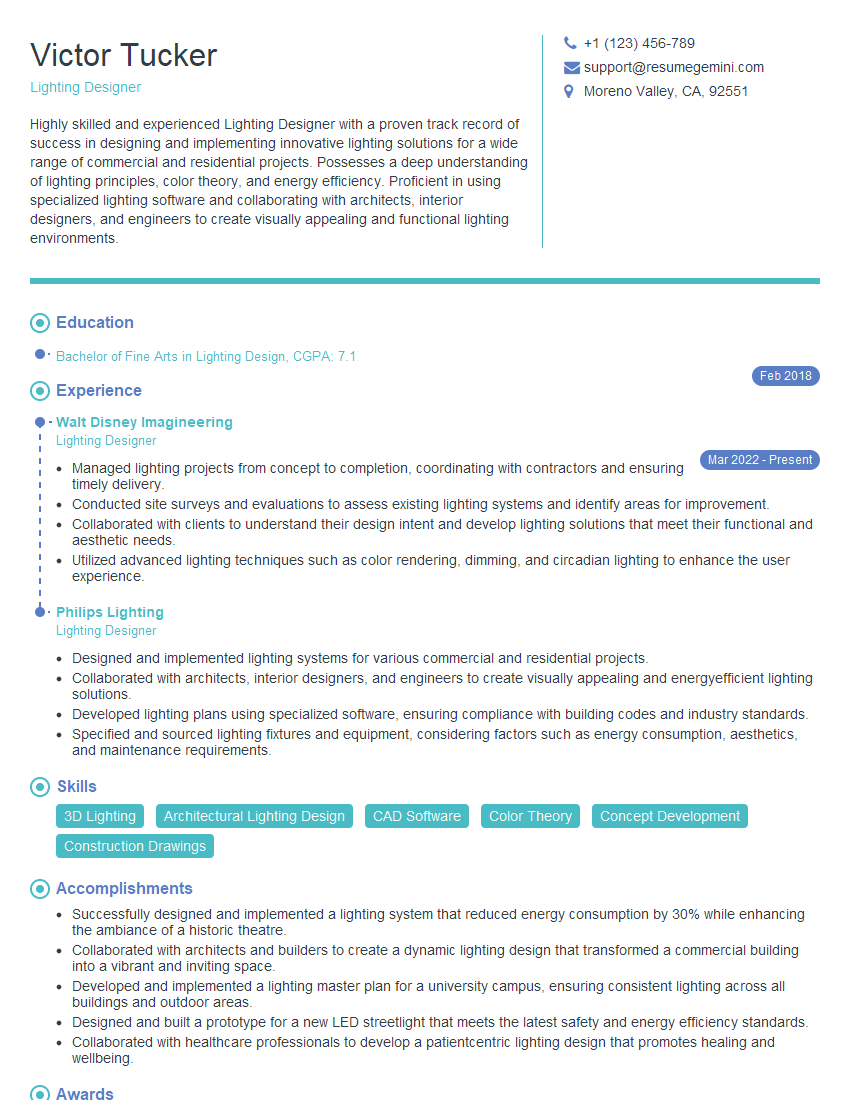
Lighting Designer Resume Sample
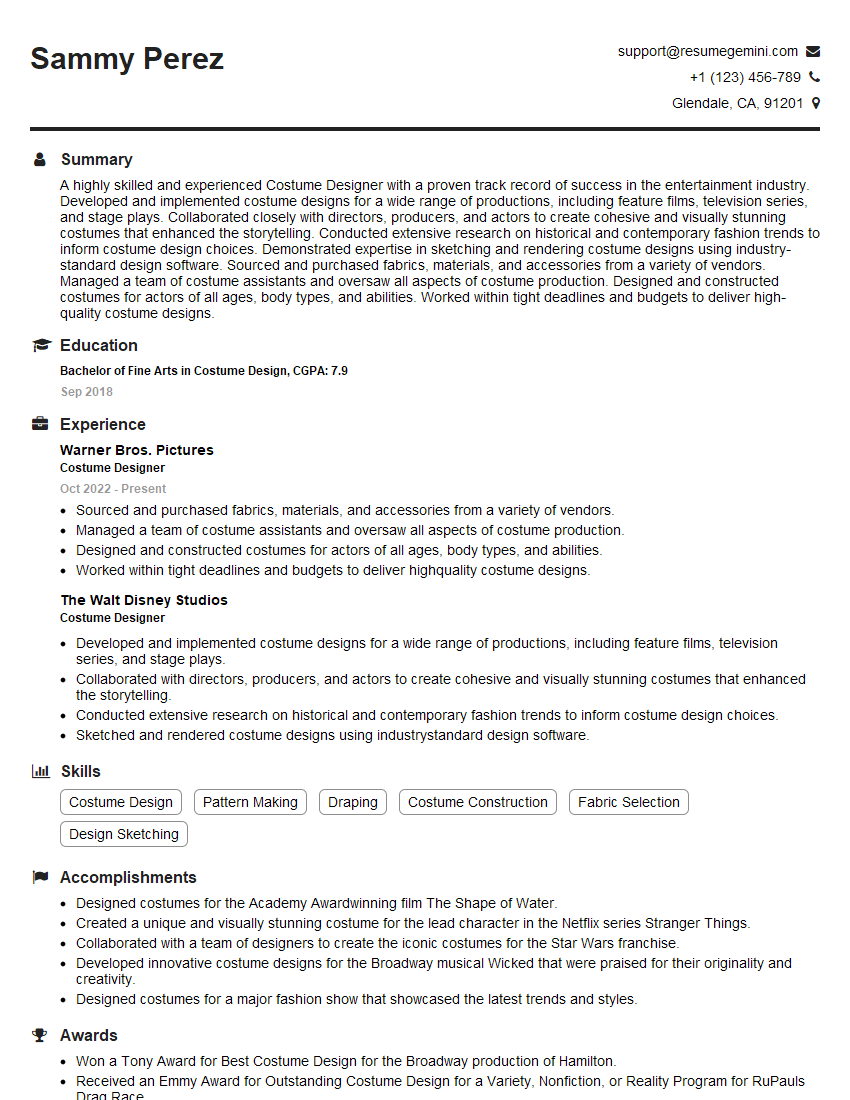
Costume Designer Resume Sample
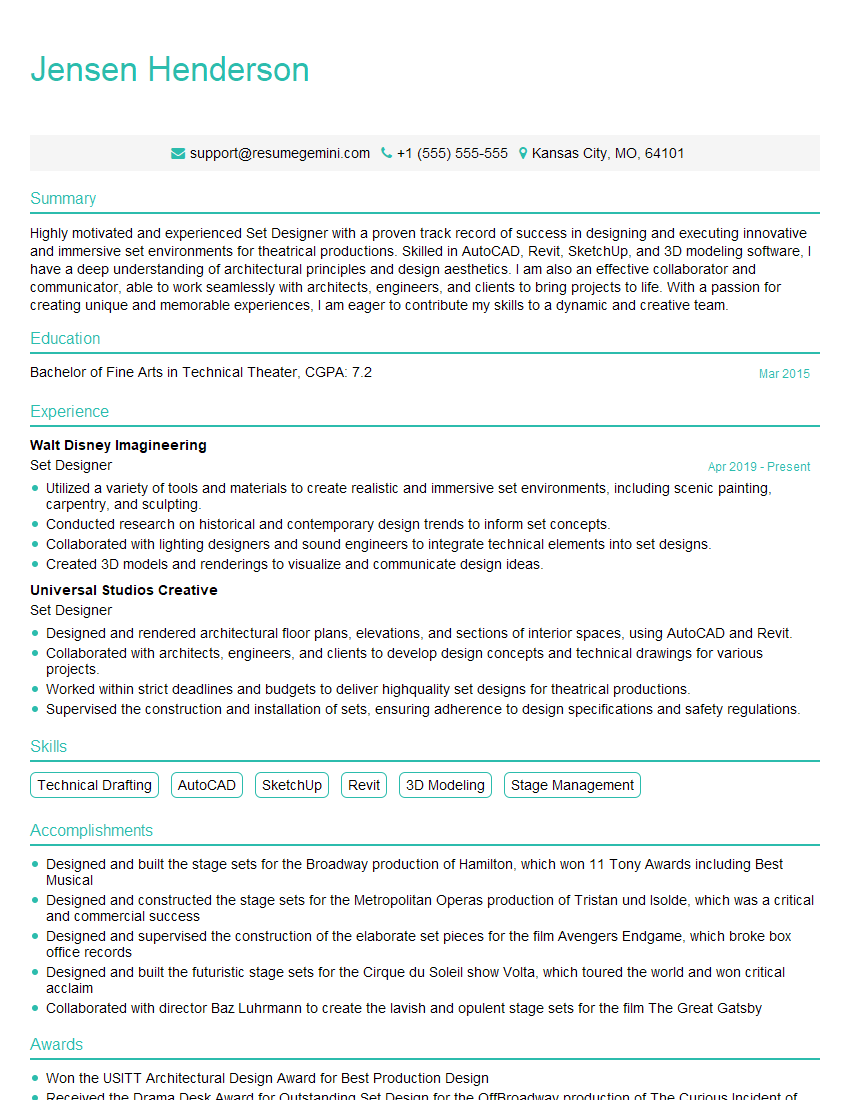
Set Designer Resume Sample
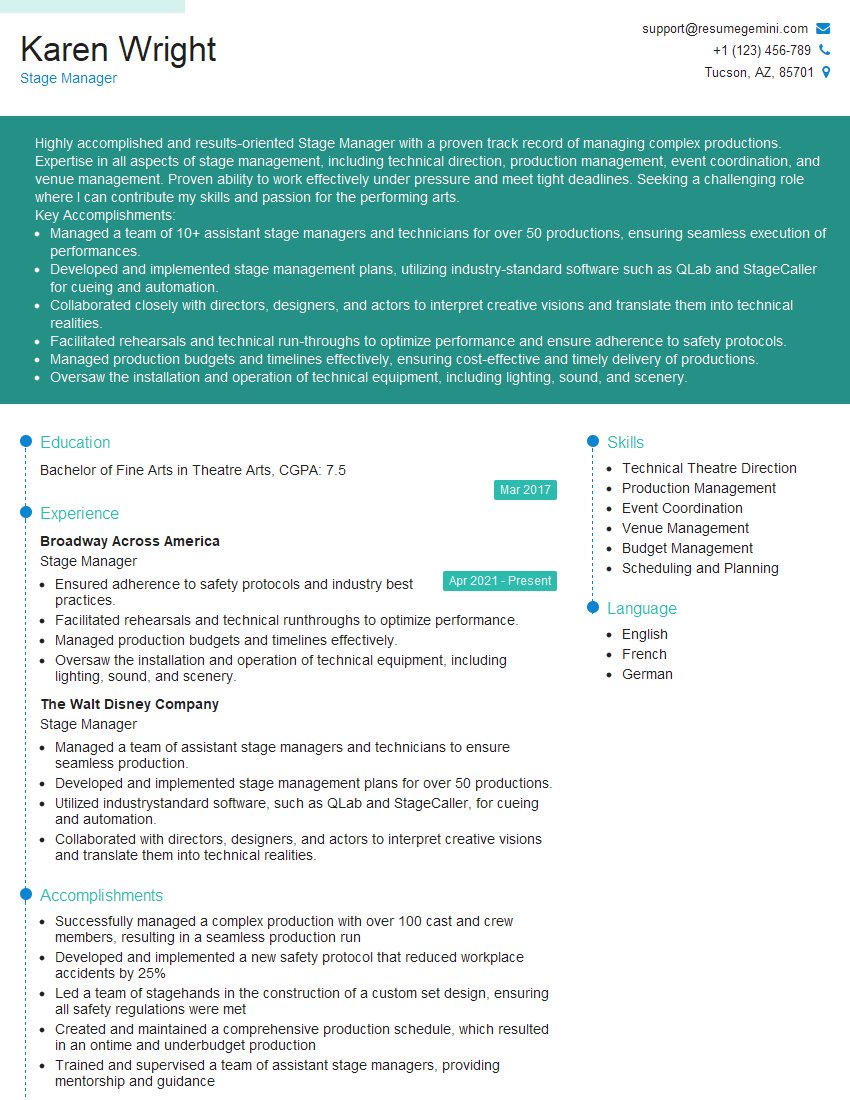
Stage Manager Resume Sample
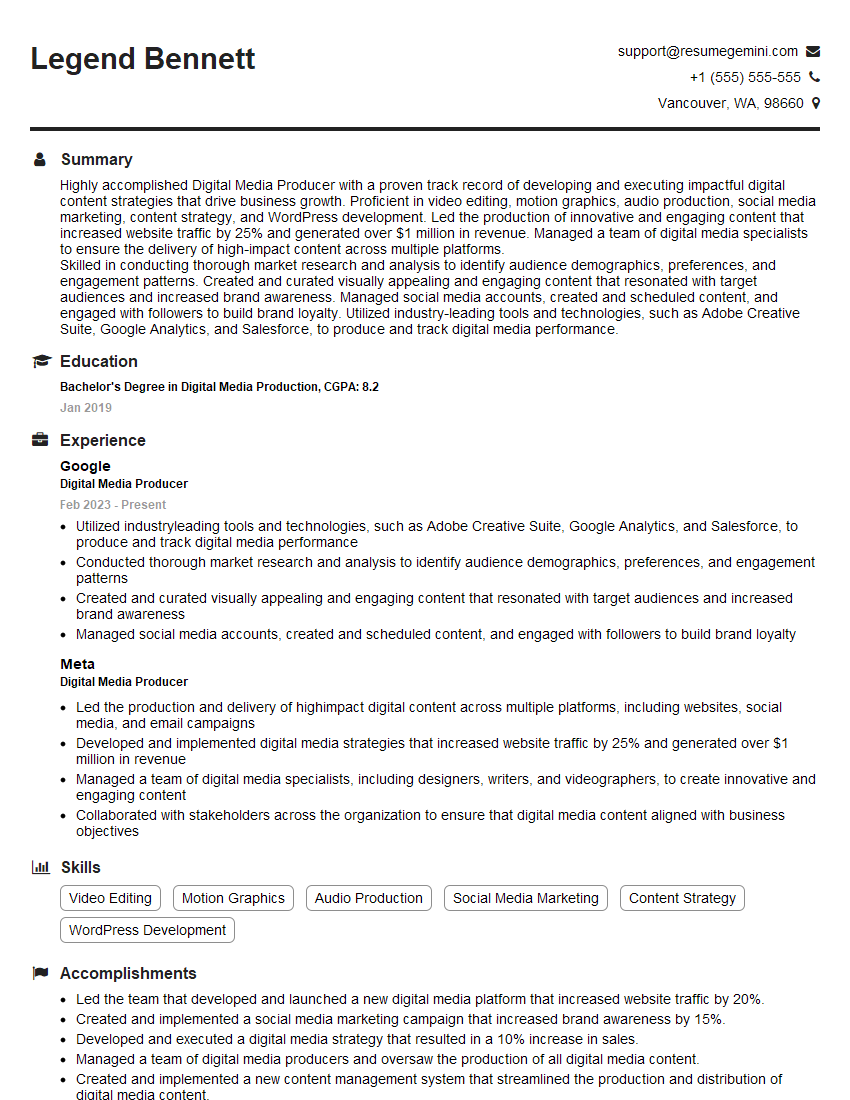
Digital Media Producer Resume Sample
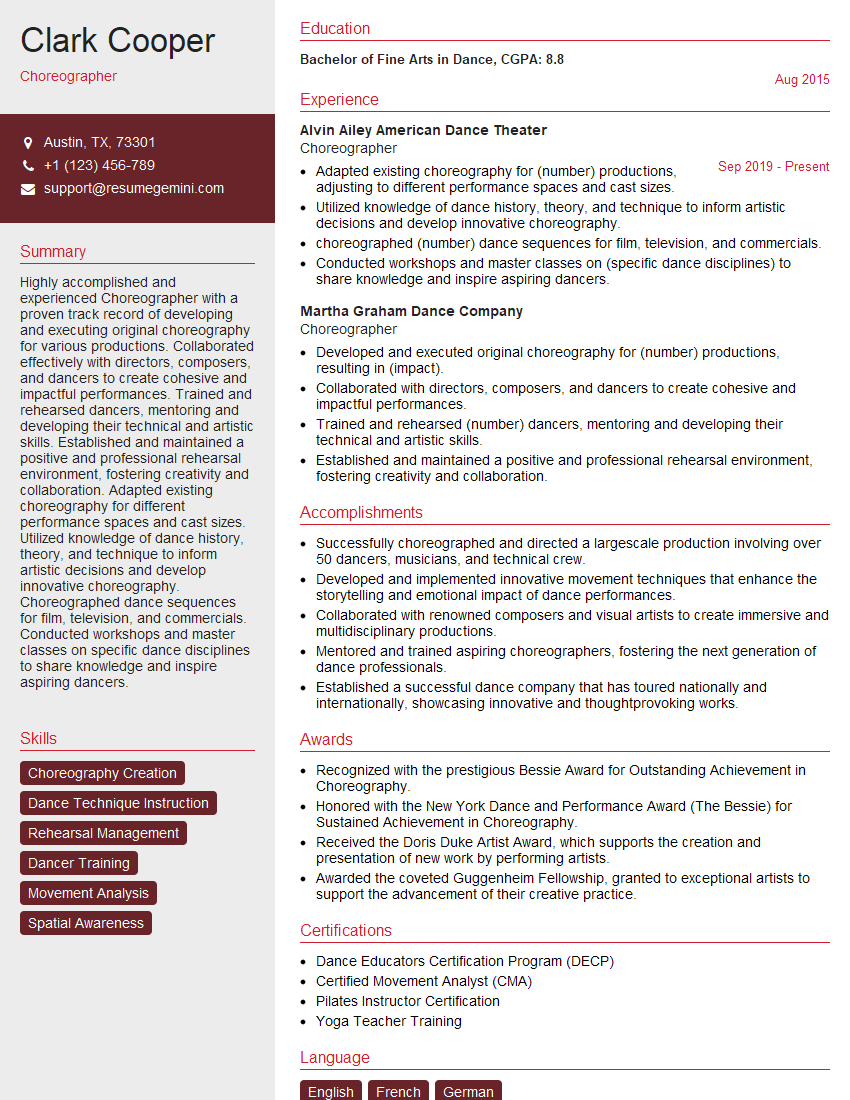
Choreographer Resume Sample
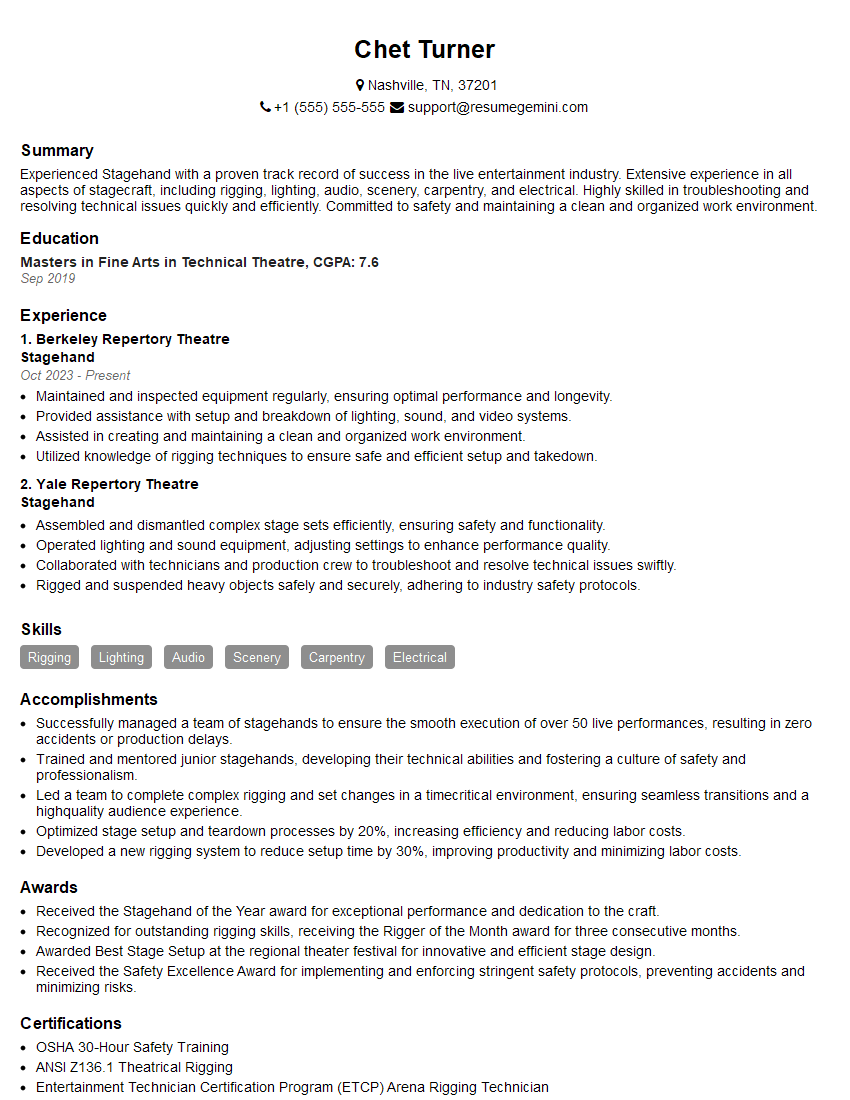
Stagehand Resume Sample
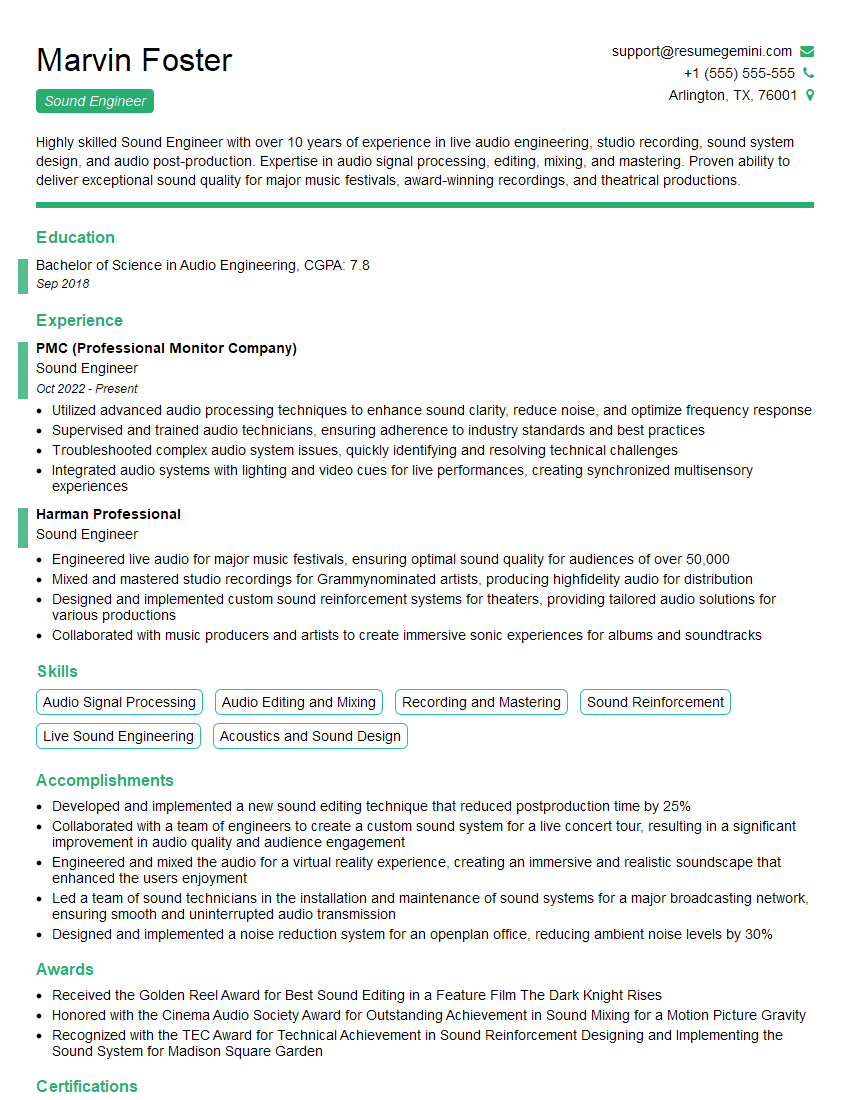
Sound Engineer Resume Sample
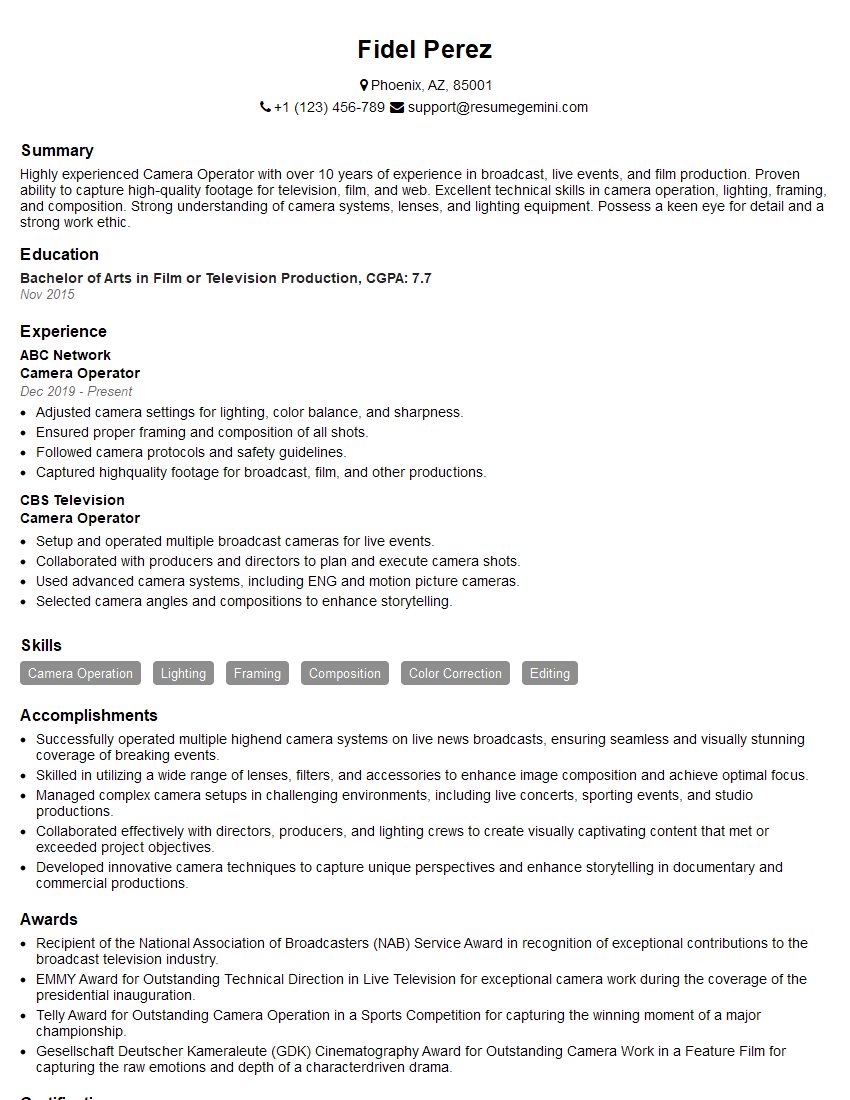
Camera Operator Resume Sample
Explore more articles
Users Rating of Our Blogs
Share Your Experience
We value your feedback! Please rate our content and share your thoughts (optional).
What Readers Say About Our Blog
Very informative content, great job.
good