Interviews are opportunities to demonstrate your expertise, and this guide is here to help you shine. Explore the essential Load and Unload Goods interview questions that employers frequently ask, paired with strategies for crafting responses that set you apart from the competition.
Questions Asked in Load and Unload Goods Interview
Q 1. Describe your experience with various loading and unloading techniques.
My experience encompasses a wide range of loading and unloading techniques, tailored to the specific characteristics of the goods and the available resources. I’m proficient in manual handling for smaller, lighter items, ensuring careful placement to prevent damage. For heavier or bulkier goods, I utilize various mechanized methods. This includes operating forklifts, pallet jacks, and conveyor belts, optimizing efficiency and safety. I’ve also worked with specialized equipment like cranes for oversized or unusually shaped cargo and utilized techniques like roll-on/roll-off loading for vehicles and containers. For example, when loading fragile ceramics, I prioritize manual handling with extra padding and careful stacking, whereas loading pallets of bottled water involves using a forklift for speed and efficiency.
- Manual Handling: Precise placement, minimizing strain.
- Forklift Operation: Safe maneuvering, optimized load placement.
- Conveyor Belt Systems: Efficient flow, minimizing manual handling.
- Crane Operation: Specialized lifting for oversized loads.
- Roll-on/Roll-off: Efficient loading of vehicles and containers.
Q 2. How do you ensure the safety of goods during loading and unloading?
Ensuring the safety of goods is paramount. My approach involves a multi-layered strategy. First, I conduct a thorough risk assessment before commencing any loading or unloading operation, identifying potential hazards like unstable surfaces, improper stacking, or inadequate securing. Next, I utilize appropriate safety equipment such as gloves, safety shoes, and high-visibility vests. The goods themselves are secured using appropriate methods – straps, shrink wrap, and bracing – to prevent shifting during transport. I always follow the manufacturer’s instructions for stacking and handling, paying close attention to weight limits and fragility. Regular inspections throughout the process ensure that everything remains secure. For example, when handling glass, I use protective padding and avoid stacking items directly on top of each other. For heavy machinery, I employ sturdy straps and appropriate lifting points, ensuring the load is properly balanced on the forklift.
Q 3. What types of equipment are you proficient in using for loading and unloading?
I am proficient in operating a variety of loading and unloading equipment, including:
- Forklifts: Certified operator with experience in various forklift types (e.g., sit-down, stand-up, reach trucks).
- Pallet Jacks: Efficient manual handling of pallets.
- Conveyor Belts: Monitoring and adjusting the flow of goods.
- Overhead Cranes: Operating cranes for lifting and positioning heavy or bulky items.
- Straddle Carriers and Reach Stackers: For container handling in shipping yards.
My training includes regular safety refresher courses to ensure I maintain best practices and adhere to all relevant regulations.
Q 4. Explain your process for verifying the accuracy of goods loaded and unloaded.
Verifying the accuracy of goods is a crucial step that involves a multi-stage process. Before loading, I meticulously cross-reference the inventory list with the goods being loaded, checking quantities, item descriptions, and condition. During loading, I maintain a running tally and visually inspect the items to identify any discrepancies. Upon completion, I conduct a final count and comparison against the original inventory. Any inconsistencies are immediately documented, and I inform the relevant personnel. For example, if a pallet of items is listed as containing 100 boxes but I only count 98, I immediately create an incident report with a detailed description of the discrepancy. We use barcode scanners in our facility which help significantly in this verification process. A digital signature is also included at each verification stage to maintain clear accountability.
Q 5. How do you handle damaged or missing goods during loading or unloading?
Handling damaged or missing goods requires a systematic approach. Upon discovery, I immediately document the issue, including details about the damage (type, extent), the item’s identification, and the suspected cause. Photographs or videos are taken as evidence. The damaged or missing goods are segregated from the rest of the shipment. I report the incident to my supervisor or the relevant personnel, and we follow established protocols for damage claims or inventory adjustments. For example, if a box is crushed, I take pictures of the damage, note the box contents, and check if any contents are damaged. The damaged box is then separated, and a report is generated to track the claim and initiate a replacement process.
Q 6. What is your experience with different types of packaging and their handling requirements?
My experience covers a wide range of packaging types, each with its unique handling requirements. I’m familiar with pallets, crates, cartons, bags, and specialized packaging for fragile or hazardous materials. I understand the importance of proper stacking techniques to prevent damage and optimize space utilization. For instance, I know that heavy items should be placed at the bottom of a stack, and fragile items need extra padding. I’m adept at handling various types of materials: wood, plastic, cardboard, and metal. Furthermore, I am trained on recognizing hazardous materials symbols and following specific procedures for handling those types of packages to ensure compliance with regulations.
Q 7. How do you prioritize tasks when faced with multiple loading/unloading requests?
Prioritizing tasks when dealing with multiple loading/unloading requests requires effective time management and organization. I utilize a system that prioritizes urgent orders (e.g., time-sensitive deliveries) and critical goods (e.g., perishable items). I also consider factors like the volume of goods, the type of equipment required, and the available manpower. I use a combination of task lists, scheduling software, and communication with relevant personnel to ensure all requests are handled efficiently and effectively. For example, I might prioritize a shipment of refrigerated goods over a shipment of non-perishable items to prevent spoilage. I always communicate clearly with the team and make sure everyone understands the plan so that everyone is on the same page and there are no conflicts or delays in the process.
Q 8. Describe a time you had to adapt your loading/unloading strategy due to unforeseen circumstances.
Adaptability is crucial in loading and unloading. Once, we were scheduled to unload a container of delicate glassware using a forklift. However, due to unexpected road closures, the forklift couldn’t access the loading dock. We immediately devised an alternative plan. We used a smaller, hand-operated pallet jack to move the pallets individually to a nearby loading bay, and then a smaller truck to transport them to their final destination. This required careful coordination among the team, extra manpower, and significantly more time. However, the glassware arrived intact, demonstrating our ability to solve logistical problems effectively and prioritizing the safety of the goods.
This experience highlighted the importance of having backup plans, flexible team members, and a deep understanding of different equipment capabilities. We learned to always assess alternative routes and methods during planning, anticipating potential disruptions.
Q 9. How do you maintain a clean and organized loading/unloading area?
Maintaining a clean and organized loading/unloading area is paramount for safety and efficiency. We follow a strict 5S methodology:
- Seiri (Sort): We regularly remove unnecessary items like discarded packaging, debris, or obsolete materials.
- Seiton (Set in Order): We establish designated areas for different types of goods, equipment, and materials to ensure easy access and prevent clutter.
- Seiso (Shine): We perform regular cleaning, sweeping, and wiping to maintain a sanitary and safe environment, free from spills and potential hazards.
- Seiketsu (Standardize): We have clear procedures for cleaning, organizing, and maintaining the area, ensuring everyone understands their roles and responsibilities.
- Shitsuke (Sustain): We create a culture of cleanliness and organization, making it a routine practice to keep the area tidy.
Regular inspections also help identify and address potential hazards promptly. This proactive approach prevents accidents and improves workflow.
Q 10. What safety measures do you follow when operating loading and unloading equipment?
Safety is non-negotiable. Before operating any loading/unloading equipment, I always perform pre-operational checks, ensuring everything is in good working order. This includes inspecting brakes, tires, hydraulics, and safety features. I strictly adhere to all safety regulations and company policies, wearing appropriate personal protective equipment (PPE) such as safety shoes, high-visibility vests, and gloves. I always communicate clearly with my team and others in the vicinity using hand signals or radios to avoid miscommunication and accidents. Proper load securing methods and techniques are critically important. For instance, using appropriate straps and securing devices is essential. Finally, I never exceed the weight capacity of the equipment or attempt maneuvers beyond my skill level. If I am uncertain about anything, I always consult a supervisor.
Q 11. What is your understanding of weight limits and load capacity?
Understanding weight limits and load capacity is crucial to prevent accidents and damage. Every piece of equipment—forklifts, pallet jacks, trucks—has a clearly stated weight capacity. Before loading, I always check the weight of the goods and ensure it remains well within the equipment’s limits. I also account for the weight of the equipment itself and any additional materials used, such as pallets and straps. Exceeding weight limits can lead to equipment failure, injury, and property damage. We often use weight scales and weigh bridges to accurately determine the weight of goods before loading and loading onto vehicles.
Q 12. How familiar are you with different types of transportation vehicles?
I’m familiar with a variety of transportation vehicles, including:
- Semi-trailer trucks: These are commonly used for long-distance transport and can carry large volumes of goods.
- Flatbed trucks: Ideal for oversized or oddly shaped items.
- Box trucks: Suitable for smaller loads and offer more protection from the elements.
- Container ships: Used for international shipping, requiring specific handling procedures.
- Rail cars: Cost-effective for large quantities over long distances.
Understanding the unique features and limitations of each type of vehicle is key to efficient and safe loading and unloading. For example, I’d use different securing methods for a flatbed truck versus a box truck. Each vehicle also requires specific loading techniques to ensure stability and prevent damage during transport.
Q 13. How do you ensure the security of goods during loading and unloading?
Ensuring the security of goods is paramount. We use a multi-layered approach. This includes proper load securing techniques, using appropriate straps, and securing devices to prevent shifting or damage during transit. We also utilize tamper-evident seals to deter theft or unauthorized access. For high-value goods, we may implement additional security measures such as GPS tracking, surveillance cameras, or security personnel. Detailed documentation of the loading process, including the inventory list, weight verification, and condition of the goods is crucial for accountability and tracebility. This ensures everything is properly recorded, including any damage found before the loading process even starts, and who is responsible for what.
Q 14. Explain your experience with inventory management related to loading and unloading.
Inventory management is closely tied to loading and unloading. Before any loading begins, I carefully verify the goods against the packing list or shipping manifest to ensure accuracy. I identify any discrepancies and report them immediately. During the loading process, I maintain a running inventory of items loaded, noting any damage or issues. Upon completion, I cross-reference the loaded inventory with the shipping documents. This meticulous record-keeping ensures accuracy and minimizes errors or losses. Accurate inventory management allows for efficient tracking, reduces the risk of errors, and enhances the smooth flow of goods. In our workflow, we integrate inventory management software to streamline this process.
Q 15. How do you handle discrepancies between the shipment manifest and the actual goods?
Discrepancies between the shipment manifest and the actual goods are a common challenge in logistics. My approach involves a systematic process to ensure accuracy and accountability. First, I carefully compare the manifest – a detailed list of items being shipped – with the goods themselves. This often involves visually inspecting each item and checking its quantity against the manifest.
If a discrepancy is found, I immediately document it using a standardized reporting form. This form details the type of discrepancy (e.g., missing items, damaged goods, incorrect quantities), the item number, and a description of the issue. I then photograph or video record the discrepancy for further evidence. For example, if 50 boxes of widgets are listed, but only 48 are present, I’d note the shortage of two boxes, including their item numbers and any visible damage.
Next, I notify my supervisor and the relevant shipping/receiving departments. We then decide on the best course of action, which might involve contacting the shipper for clarification or initiating a damage claim. The goal is to resolve the discrepancy quickly and efficiently while maintaining complete transparency and traceability.
Career Expert Tips:
- Ace those interviews! Prepare effectively by reviewing the Top 50 Most Common Interview Questions on ResumeGemini.
- Navigate your job search with confidence! Explore a wide range of Career Tips on ResumeGemini. Learn about common challenges and recommendations to overcome them.
- Craft the perfect resume! Master the Art of Resume Writing with ResumeGemini’s guide. Showcase your unique qualifications and achievements effectively.
- Don’t miss out on holiday savings! Build your dream resume with ResumeGemini’s ATS optimized templates.
Q 16. Describe your experience with using scanning equipment for tracking goods.
I have extensive experience using various scanning technologies for goods tracking, including barcode scanners, RFID readers, and handheld mobile scanners integrated with warehouse management systems (WMS). These tools drastically improve the accuracy and speed of loading and unloading processes. For instance, using a barcode scanner to scan each pallet as it’s loaded onto a truck allows for real-time tracking, immediately flagging any discrepancies with the shipment manifest.
My experience extends to using both dedicated scanning equipment and mobile devices with scanning capabilities. The mobile scanners are particularly useful for tasks requiring greater mobility, like verifying inventory levels throughout the loading process. For example, I might use a handheld scanner to verify that every item on a picking list has been loaded onto the designated truck.
I’m proficient in using the associated software to manage and interpret the scanned data, ensuring data integrity and generating reports for analysis. This data provides valuable insights into operational efficiency, helping to identify bottlenecks and areas for improvement.
Q 17. How do you maintain efficient workflow during peak loading/unloading periods?
Maintaining efficient workflow during peak periods requires meticulous planning and effective teamwork. My strategy centers around optimizing processes and leveraging available resources effectively. This starts with clearly defined roles and responsibilities for every team member.
- Pre-planning: We pre-sort goods based on delivery destinations, streamlining loading times. We also ensure all necessary equipment (forklifts, pallet jacks, etc.) is available and functioning correctly.
- Communication: Clear and constant communication between team members, supervisors, and drivers is crucial. We use two-way radios or dedicated communication systems to ensure everyone is on the same page.
- Prioritization: Urgent shipments are prioritized to meet deadlines. We may use a color-coded system to identify high-priority loads.
- Cross-training: Team members are cross-trained to handle different tasks, which improves flexibility and ensures that we can quickly adapt to changing needs.
Think of it like an orchestra: each musician has a specific role, but their combined effort produces a beautiful, coordinated performance. Similarly, each team member has their assigned task, but effective communication and collaboration help us harmonize our efforts, even during stressful peak times.
Q 18. How do you comply with company policies and safety regulations while loading and unloading goods?
Safety is paramount. I strictly adhere to all company policies and relevant safety regulations during loading and unloading operations. This includes wearing appropriate personal protective equipment (PPE), such as safety vests, gloves, and safety shoes. I also ensure that the loading area is kept clean and free of obstructions to prevent accidents.
Before operating any machinery like forklifts or pallet jacks, I always conduct pre-operation checks and make sure I’m properly certified and trained to use the equipment. I never overload equipment, and I follow all the safety procedures, including proper lifting techniques to avoid strain and injury.
I actively participate in safety training and actively look for potential hazards. If I notice unsafe practices, I immediately report them to my supervisor. For example, if a colleague is using a forklift without wearing a seatbelt, I’ll gently remind them of the safety protocol, reinforcing the importance of everyone’s safety. This proactive approach to safety is vital for maintaining a safe and productive work environment.
Q 19. What is your experience working under pressure or meeting tight deadlines?
I thrive in high-pressure environments and am comfortable meeting tight deadlines. Experience has taught me the importance of staying organized, prioritizing tasks effectively, and maintaining clear communication under pressure.
For example, I once had to unload a large shipment containing perishable goods during a severe storm. The deadline was extremely tight due to the goods’ sensitivity to temperature changes. I quickly organized my team, prioritizing the unloading of the most perishable items first. We communicated frequently, adapting our strategy based on the evolving weather conditions. We successfully completed the unloading before the storm worsened, preventing significant losses.
My approach involves breaking down complex tasks into smaller, manageable steps. I focus on what I can control and remain calm under pressure, enabling me to maintain focus and efficiency even in challenging circumstances.
Q 20. Describe your method for identifying and resolving loading/unloading problems.
My method for identifying and resolving loading/unloading problems is proactive and systematic. It starts with recognizing potential issues early. This often involves regularly checking equipment, inspecting goods for damage, and ensuring that the work area is well-lit and organized.
If a problem arises, my approach is:
- Identify the problem: Carefully assess the nature and scope of the problem. Is it a mechanical issue, a shortage of personnel, or a problem with the goods themselves?
- Analyze the cause: Try to determine the root cause of the problem. Was there a communication breakdown, an equipment malfunction, or a procedural error?
- Develop solutions: Brainstorm and implement appropriate solutions, involving my supervisor and team members as needed. This may involve obtaining replacement equipment, requesting additional personnel, or adjusting the loading/unloading procedures.
- Implement and monitor: Put the solutions into action, closely monitoring their effectiveness. Were the problems resolved, or do we need to try a different approach?
- Document: Document the problem, its cause, and the solution implemented. This aids in identifying recurring issues and preventing future problems.
For instance, if a forklift malfunctions, I would report it immediately, preventing further delays, and initiate the process for repair or replacement. I’d also document the incident to prevent similar problems.
Q 21. How do you communicate effectively with co-workers and supervisors during loading and unloading?
Effective communication is critical for seamless loading and unloading operations. I maintain open and clear communication with co-workers and supervisors through various methods.
I use clear and concise language. I avoid jargon and ensure everyone understands the instructions. I provide regular updates on progress and any potential issues. I actively listen to concerns from my team members, fostering a collaborative environment where everyone feels comfortable expressing their thoughts. I also use non-verbal communication, such as hand signals or visual cues, in situations where verbal communication might be difficult, such as in noisy environments.
For instance, if I notice a pallet is unstable, I immediately alert my colleagues using a combination of hand signals and verbal warning, ensuring everyone’s safety. If a significant delay is anticipated, I inform my supervisor promptly, allowing for timely adjustments to the schedule. By creating an environment of trust and open communication, I help ensure smooth operations and a positive work environment for the entire team.
Q 22. What is your experience with different types of pallets and their handling?
My experience encompasses handling a wide variety of pallets, from standard wooden pallets to plastic, and even specialized ones like those designed for hazardous materials or temperature-sensitive goods. Understanding the different types is crucial for safe and efficient handling. For instance, wooden pallets can be susceptible to damage and pest infestation, necessitating regular inspection. Plastic pallets, while more expensive, are durable, washable, and hygienic, ideal for food products or environments requiring high sanitation standards. I’m adept at identifying the appropriate equipment for each pallet type; for example, using a hand jack for lighter loads on smaller pallets versus a forklift for heavier loads on standard-sized pallets. My experience also extends to recognizing the structural integrity of a pallet before loading; I’d immediately reject a damaged pallet to prevent accidents.
- Standard Wooden Pallets: Common, relatively inexpensive, but prone to damage and pests.
- Plastic Pallets: Durable, hygienic, reusable, but more expensive.
- Chep Pallets: Reusable and recyclable, requiring specific handling equipment.
- Hazardous Material Pallets: Specialized designs with features to contain spills and prevent leaks.
Q 23. How do you manage space optimization during loading and unloading?
Space optimization is paramount for efficient loading and unloading. It’s not just about fitting as much as possible; it’s about doing so safely and securely. My approach involves a multi-step process: First, I assess the dimensions of the vehicle and the goods. Then, I plan the loading sequence, prioritizing heavier and larger items at the bottom for stability. I utilize different stacking techniques depending on the goods – for instance, I might use interlocking patterns for boxes to maximize space and prevent shifting. I also consider the weight distribution to ensure the load remains balanced and within the vehicle’s capacity. For example, if loading a truck with heavier items on one side, I’ll compensate by placing lighter items on the opposite side to prevent imbalances that could lead to rollovers. Regularly, I’ll also use specialized loading equipment such as load binders to secure the cargo.
I’ve found that using 3D loading software can significantly improve space utilization, allowing for virtual planning and optimization before the actual loading begins. This software helps visualize the best arrangement of items, avoiding wasted space and preventing overloading. I’ve successfully implemented this method on several occasions, resulting in significant cost savings by reducing the number of trips required.
Q 24. Describe your experience with loading/unloading hazardous materials.
Handling hazardous materials requires strict adherence to safety regulations and protocols. My experience includes working with various hazardous materials, each requiring specialized handling procedures. This includes thorough training in safety data sheets (SDS) for each material, understanding potential hazards (flammability, toxicity, reactivity), and following proper personal protective equipment (PPE) procedures. Before handling any hazardous materials, I always perform a thorough inspection of the containers for leaks or damage. I meticulously follow the established procedures for loading, unloading, and storing, including securement of the materials to prevent spills or accidents. I’m familiar with the proper disposal methods of damaged containers or spilled materials and have a deep understanding of emergency procedures. For example, during one instance of loading chemicals, I discovered a cracked container, immediately reporting it to my supervisor to prevent a potential leak.
Q 25. What are your strategies for preventing accidents during loading and unloading?
Preventing accidents during loading and unloading is my top priority. This involves a multi-layered approach that begins with thorough pre-loading planning and risk assessments. This includes checking for damage to the vehicle, ensuring the loading equipment is in good working condition, and conducting a thorough site survey for potential hazards such as uneven surfaces or obstructions. During the loading process, I emphasize safe lifting techniques, using appropriate equipment like forklifts or pallet jacks to avoid manual handling injuries. Furthermore, I secure the load properly, using straps, chains, or other appropriate restraints to prevent shifting during transit. Post-loading, I perform a final inspection to confirm that the load is properly secured and doesn’t pose any risks. Regular training on safe operating procedures and ongoing awareness of safety regulations are also key elements in my strategy. We conduct regular safety meetings to reinforce best practices and address any potential concerns.
Q 26. How do you keep track of loading/unloading times and documentation?
Accurate tracking of loading and unloading times and documentation is essential for efficiency and accountability. I typically use a combination of methods to ensure accurate records. This includes using time-tracking apps on my smartphone to record start and end times for each loading/unloading operation. I also maintain detailed logs, including the date, time, location, type of goods, quantity, vehicle information, and any incidents or delays. These logs are meticulously filled out to ensure all details are accurately recorded. In addition to manually keeping detailed logs, I’ve successfully used digital solutions for comprehensive tracking, providing immediate access to loading data. This digitalization enables fast analysis and reporting.
Q 27. What software or systems are you familiar with using for tracking loading/unloading activities?
I’m familiar with several software and systems for tracking loading/unloading activities. These include transportation management systems (TMS), warehouse management systems (WMS), and various mobile applications designed for real-time tracking. TMS software often integrates with GPS systems to track vehicle location and provide real-time updates on delivery status. WMS systems help optimize warehouse operations, including managing inventory and tracking loading/unloading activities within the warehouse. Mobile apps provide a convenient way to record loading times and other relevant information directly on a mobile device, automatically syncing with central databases. I’m adept at using these systems and have experience in extracting relevant data for reporting and analysis, helping identify areas for improvement and enhancing operational efficiency.
Key Topics to Learn for Load and Unload Goods Interview
- Safety Procedures and Regulations: Understanding and adhering to workplace safety regulations, including proper lifting techniques, hazard identification, and the use of safety equipment (e.g., gloves, safety shoes, harnesses).
- Efficient Loading and Unloading Techniques: Mastering techniques for maximizing space utilization, minimizing damage to goods, and optimizing loading/unloading times. This includes understanding different types of loads and appropriate handling methods.
- Inventory Management and Tracking: Accurately verifying and documenting the quantity and condition of goods received and shipped. Understanding inventory control systems and procedures.
- Equipment Operation and Maintenance: Safe and proficient operation of relevant equipment, such as forklifts, pallet jacks, and conveyor systems (if applicable). Basic maintenance knowledge and reporting malfunctioning equipment.
- Logistics and Supply Chain Understanding: Basic knowledge of the overall logistics process, including the flow of goods from origin to destination. Understanding the importance of timely and efficient delivery.
- Problem-solving and Adaptability: Demonstrating the ability to handle unexpected challenges, such as damaged goods, incorrect shipments, or equipment malfunctions. Adapting to changing work conditions and priorities.
- Teamwork and Communication: Highlighting the importance of collaboration with colleagues and supervisors, effective communication, and following instructions precisely.
Next Steps
Mastering the skills involved in loading and unloading goods is crucial for career progression within logistics, warehousing, and transportation. A strong foundation in these areas opens doors to higher responsibility roles and increased earning potential. To significantly boost your job prospects, create an ATS-friendly resume that effectively showcases your abilities. ResumeGemini is a trusted resource that can help you build a professional and impactful resume. Examples of resumes tailored to Load and Unload Goods positions are available, giving you a head start in crafting a compelling application.
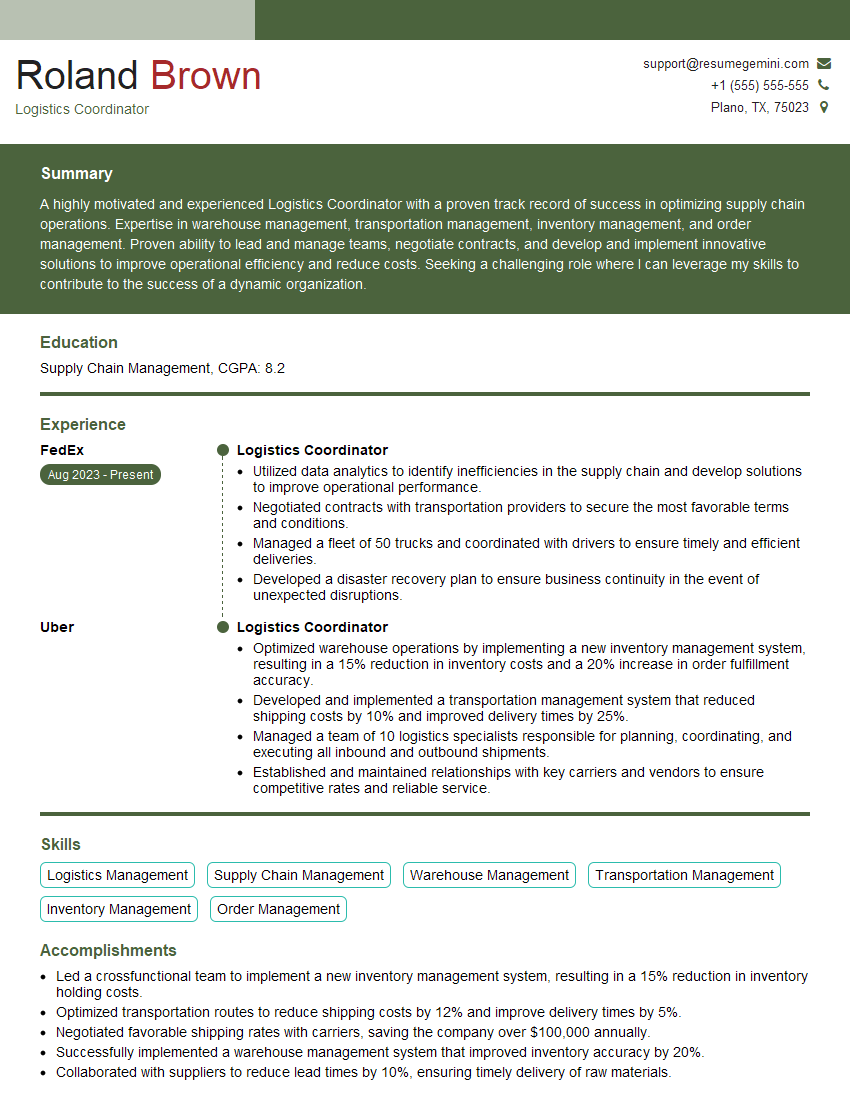
Logistics Coordinator Resume Sample

Stock Clerk Resume Sample

Receiving Associate Resume Sample

Shipping and Receiving Clerk Resume Sample
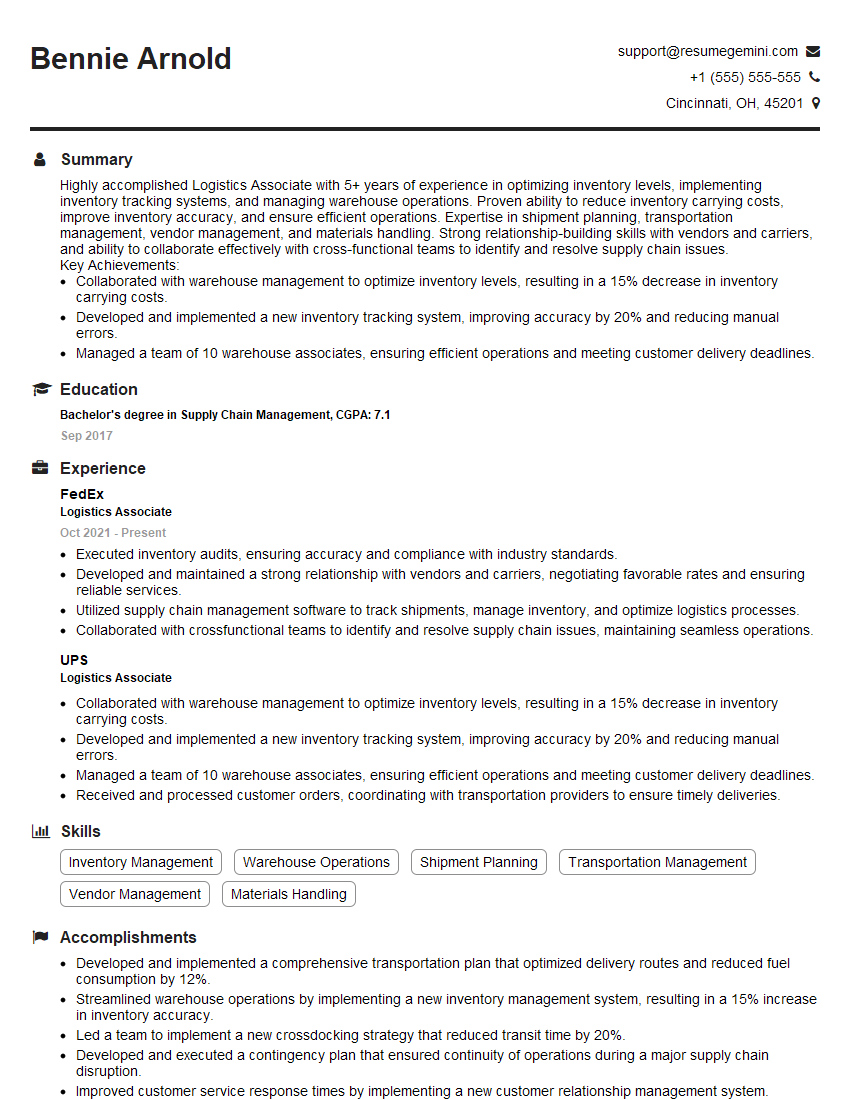
Logistics Associate Resume Sample
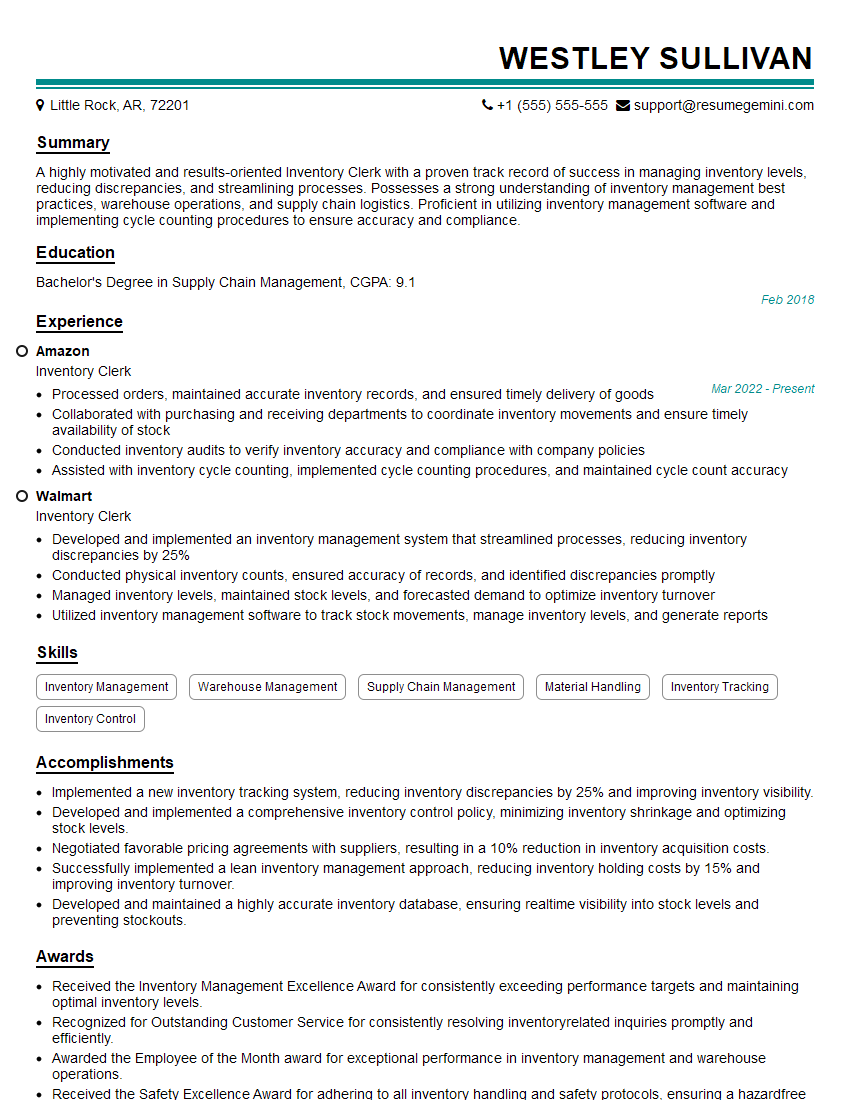
Inventory Clerk Resume Sample
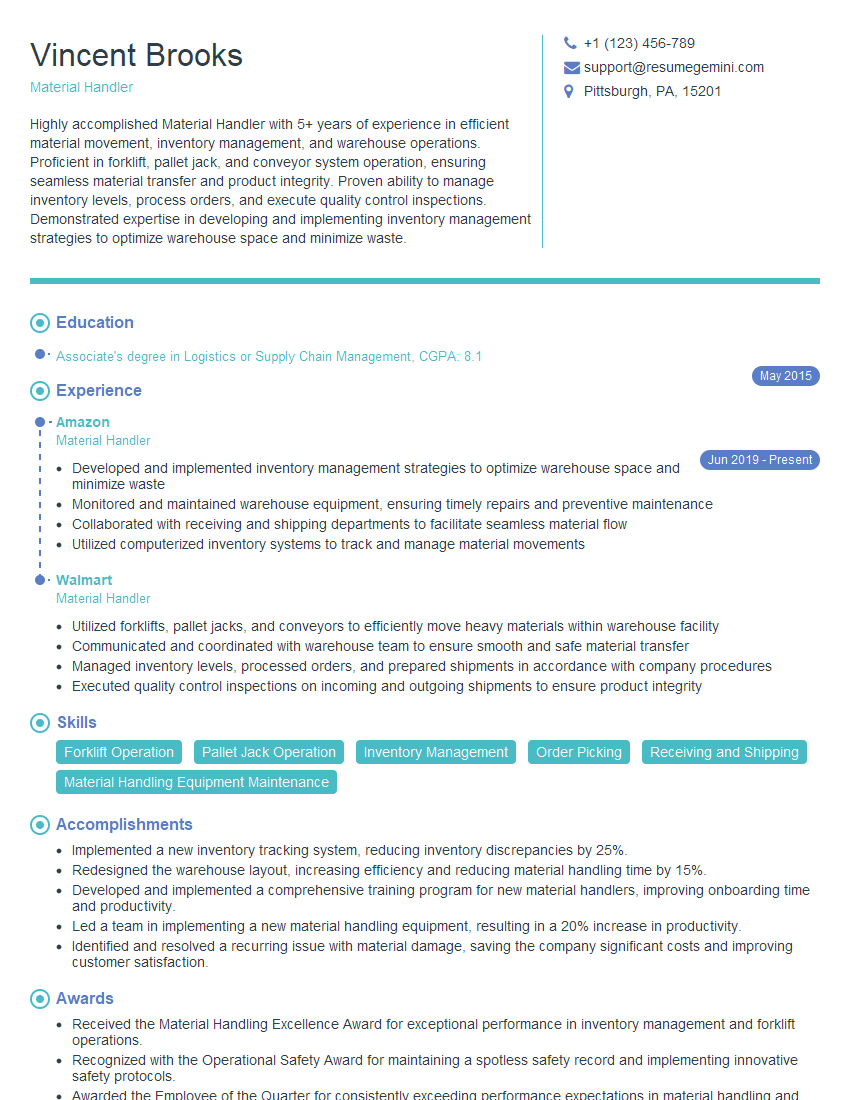
Material Handler Resume Sample

Warehouse Worker Resume Sample
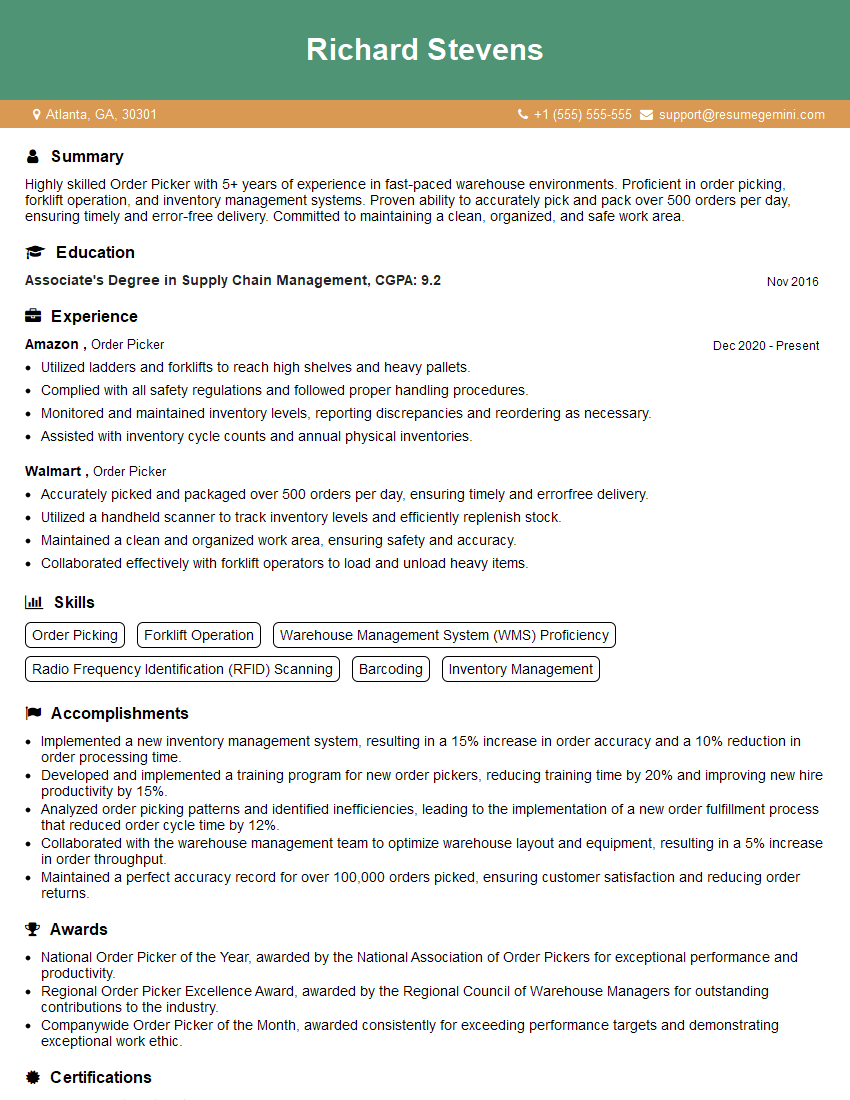
Order Picker Resume Sample
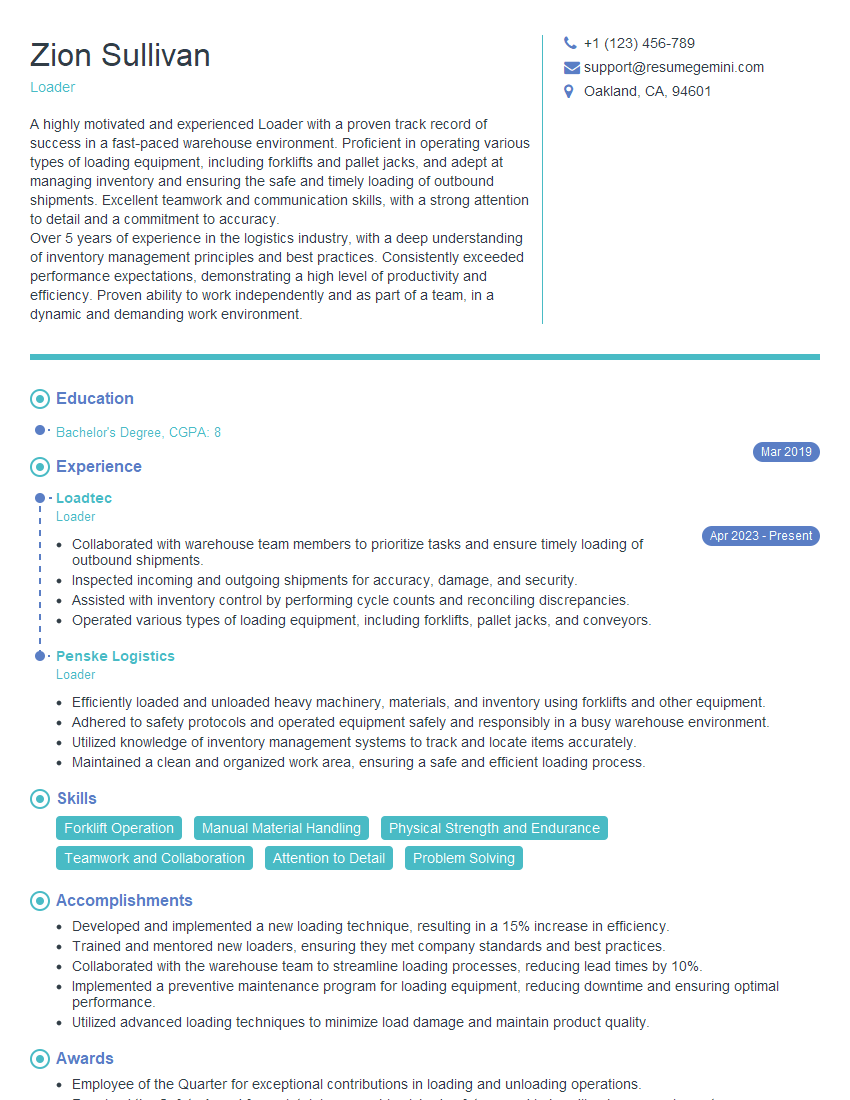
Loader Resume Sample
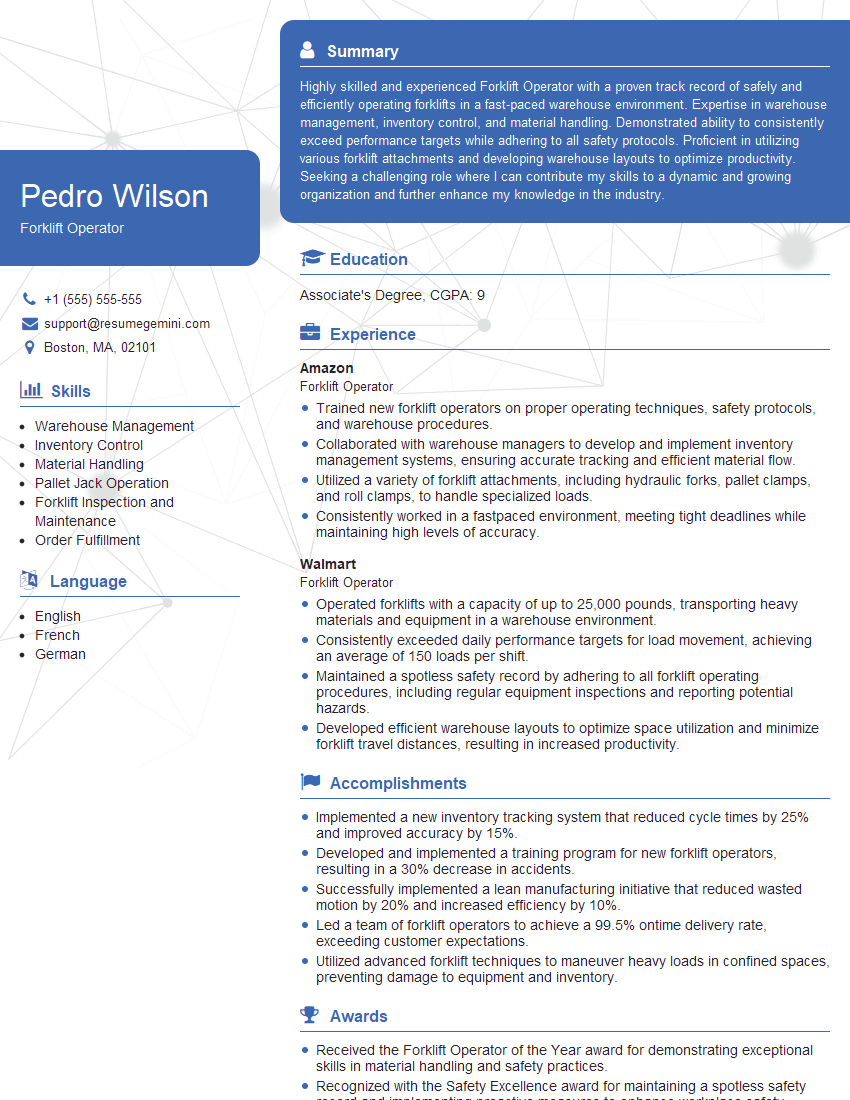
Forklift Operator Resume Sample
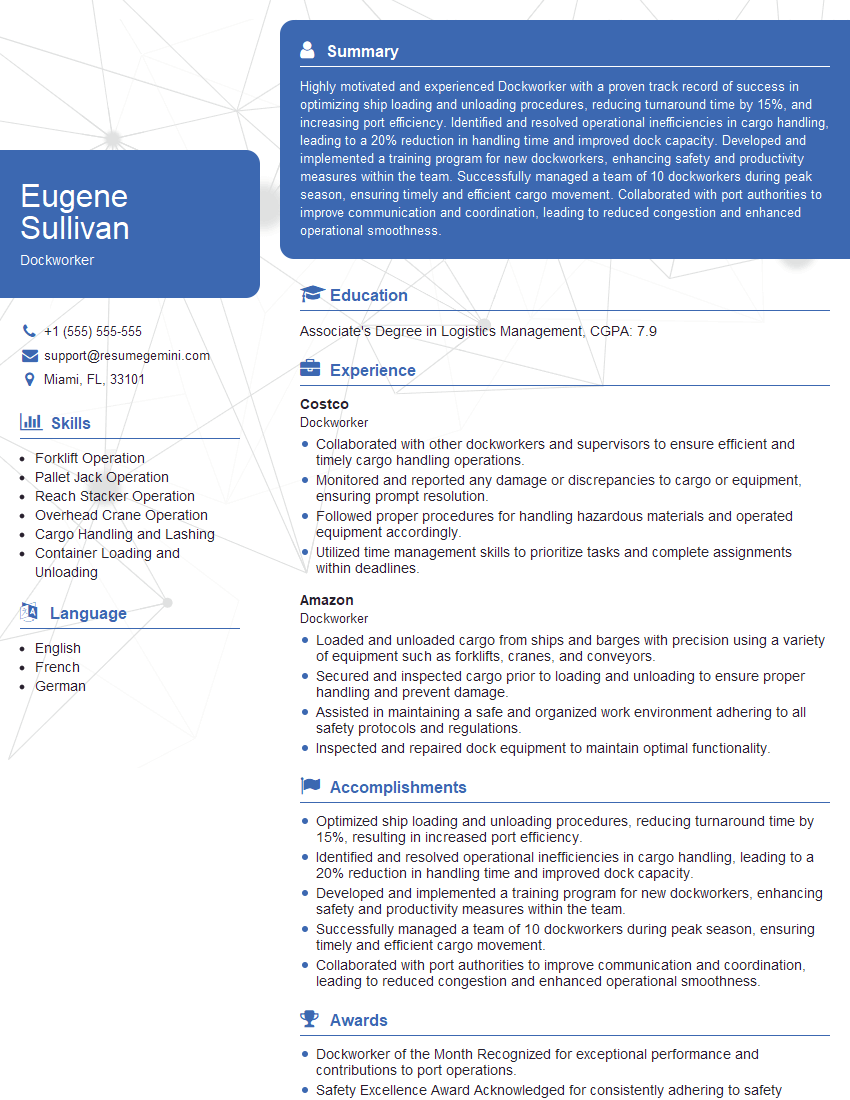
Dockworker Resume Sample
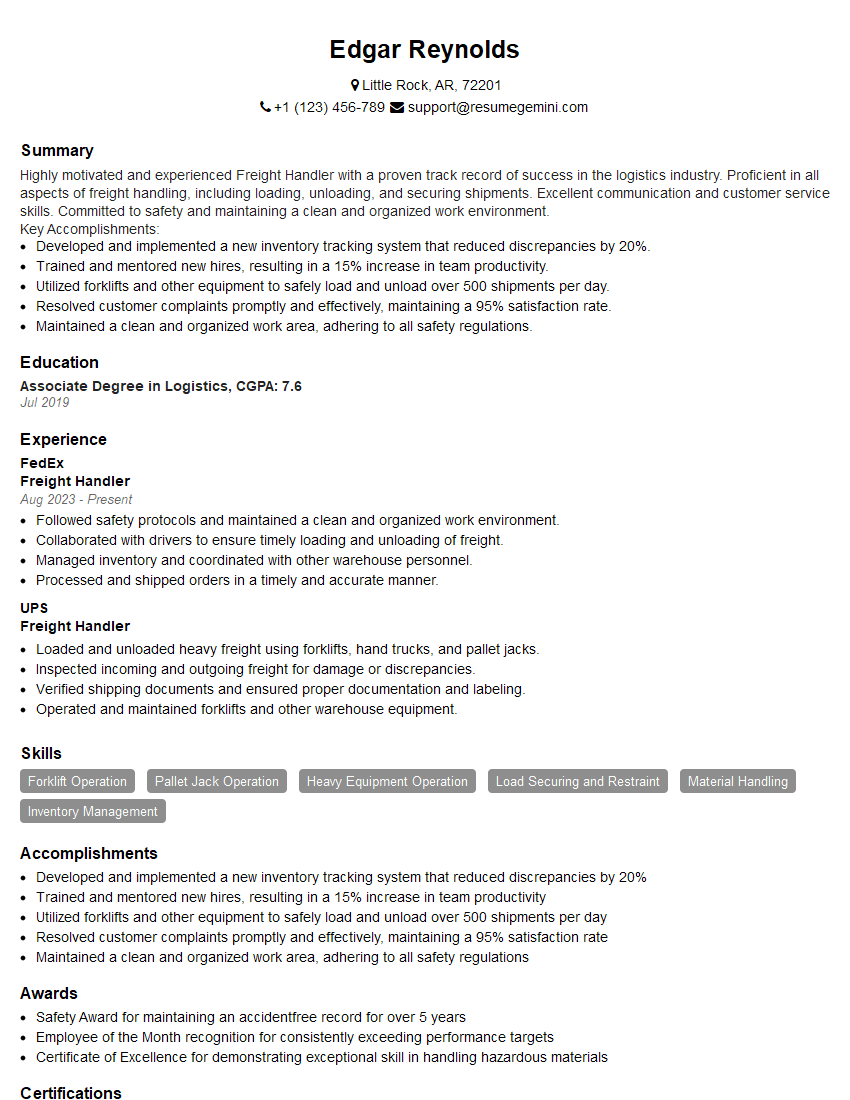
Freight Handler Resume Sample
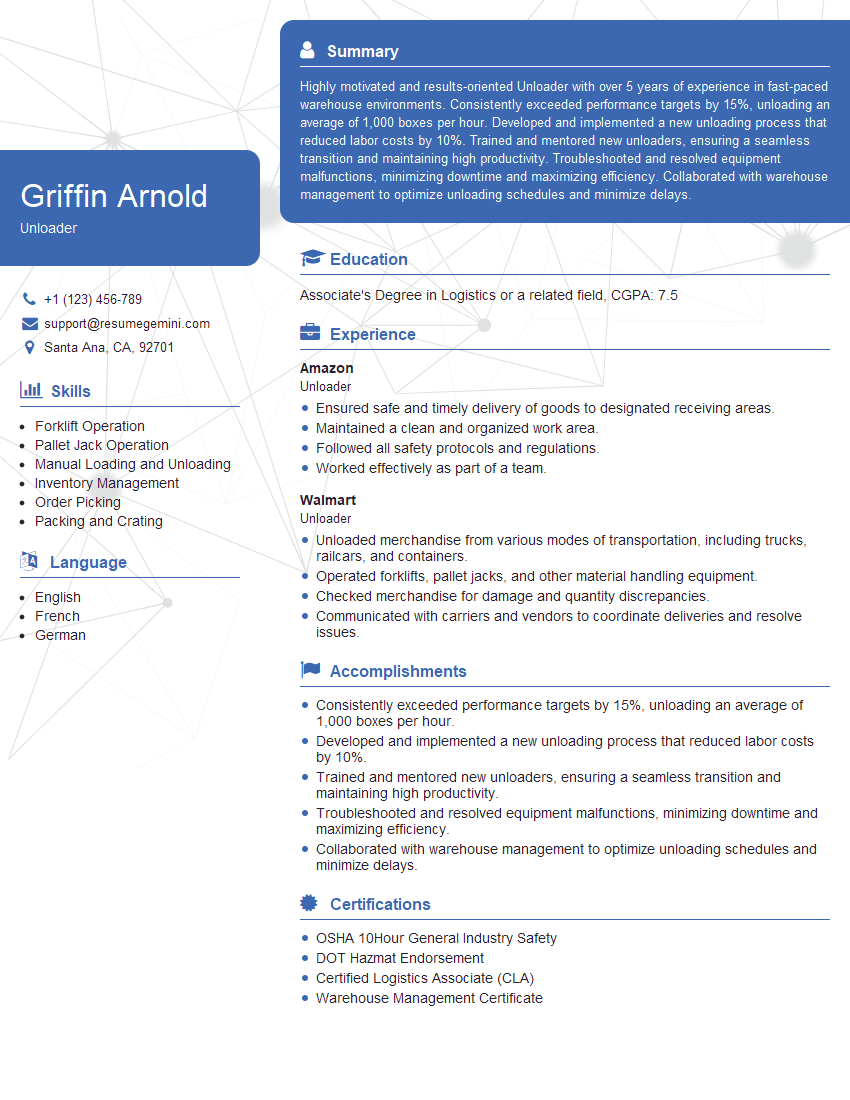
Unloader Resume Sample
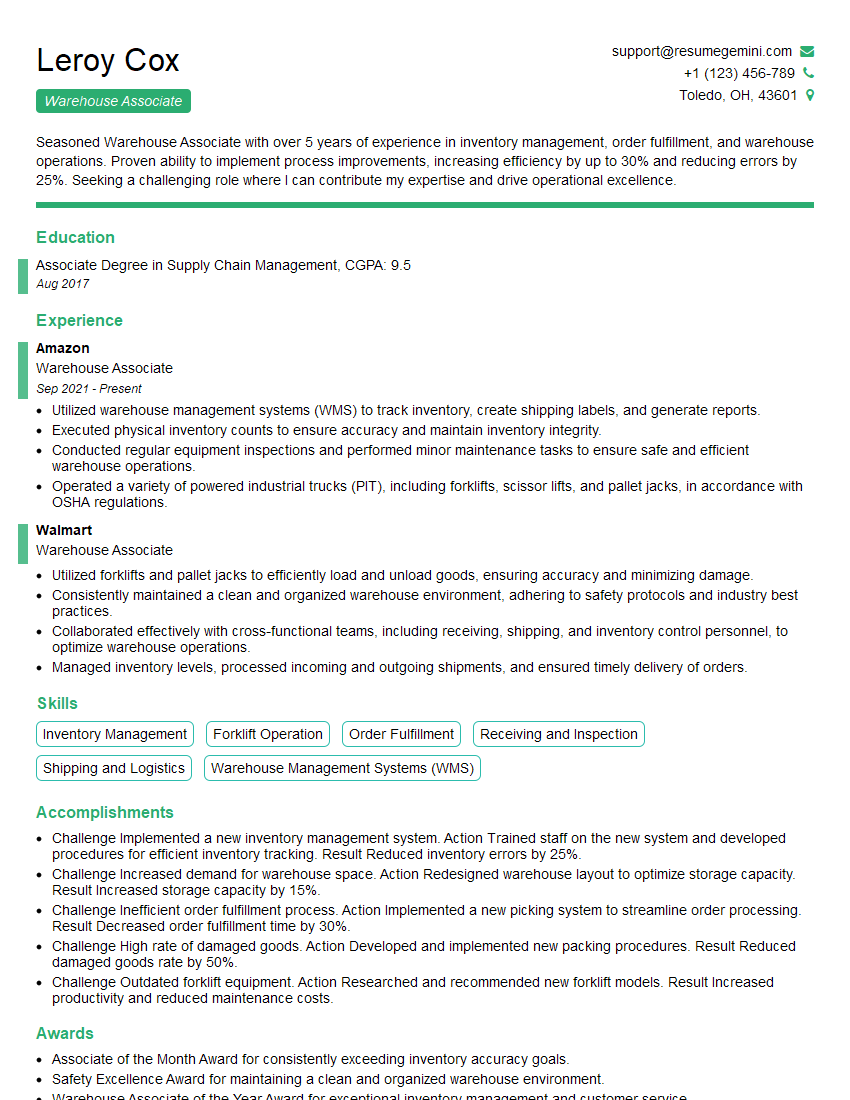
Warehouse Associate Resume Sample
Explore more articles
Users Rating of Our Blogs
Share Your Experience
We value your feedback! Please rate our content and share your thoughts (optional).
What Readers Say About Our Blog
Very informative content, great job.
good