The right preparation can turn an interview into an opportunity to showcase your expertise. This guide to Loading and Unloading Furniture interview questions is your ultimate resource, providing key insights and tips to help you ace your responses and stand out as a top candidate.
Questions Asked in Loading and Unloading Furniture Interview
Q 1. Describe your experience with hand trucks and dollies.
Hand trucks and dollies are indispensable tools for efficient and safe furniture moving. My experience encompasses a wide range of models, from lightweight aluminum hand trucks ideal for smaller items to heavy-duty appliance dollies capable of handling large, weighty furniture. I’m proficient in using both the two-wheel and four-wheel variations, understanding their strengths and limitations for different situations. For example, a two-wheel hand truck excels at navigating tight spaces, while a four-wheel dolly offers superior stability for heavier loads. I’m also skilled in securing items on these tools using straps and blankets to prevent slippage and damage during transit. I’ve used these tools extensively in various settings, including residential moves, office relocations, and even some small-scale commercial projects.
Q 2. How do you safely load furniture onto a truck?
Safely loading furniture onto a truck is a systematic process prioritizing both efficiency and the protection of the furniture. It begins with planning – assessing the truck’s dimensions and the furniture’s size and weight to optimize space and weight distribution. Heavier items go lower and towards the front to maintain balance. I always use furniture pads, blankets, or moving wraps to cushion items against impact and scratches. Next, I use appropriate equipment like hand trucks and dollies to move the pieces to the truck. When loading, I use careful maneuvering to prevent scraping or bumping against the truck walls or other furniture. Securing items is critical; I use straps, rope, or even specialized furniture tie-downs to prevent shifting during transit. Think of it like building a sturdy, layered ‘Jenga’ tower – each piece carefully placed and secured to avoid collapse.
Q 3. Explain your process for unloading furniture from a truck.
Unloading follows a mirror-image approach to loading, emphasizing safety and efficiency. I begin by assessing the destination space – ensuring clear pathways and sufficient room to maneuver. Then, I carefully remove the straps and securing materials before starting the unloading process. Similar to loading, I utilize hand trucks and dollies to transport the furniture. I always maintain close communication with the client or team to ensure pieces are placed in their designated spots. The order of unloading usually mirrors the loading order, starting with items placed last and working my way forward to ensure stability. Gentle placement is key – avoiding sudden drops or forceful movements that could damage the furniture. We unpack and carefully place furniture, making sure everything is exactly where it needs to be.
Q 4. What techniques do you use to protect furniture during transport?
Protecting furniture during transport is paramount. I use a multi-layered approach. First, I use high-quality moving blankets or furniture pads to cover all surfaces, protecting against scratches, dents, and dust. For especially delicate pieces, I add extra layers of bubble wrap or even custom-fit protective coverings. Items with fragile components – glass, mirrors, etc. – are wrapped individually with extra care. Corner protectors are crucial to prevent chipping and damage. For furniture with detachable parts, I disassemble them carefully, packaging these smaller components separately to prevent loss or damage. This layered protection ensures the furniture arrives at its destination in the same condition it left. Imagine wrapping a precious vase – multiple layers of protection are necessary.
Q 5. How do you handle oversized or oddly shaped furniture items?
Oversized or oddly shaped furniture requires a more tailored approach. This often involves disassembling larger items into smaller, more manageable components whenever possible. For items that can’t be disassembled, I utilize specialized equipment such as furniture sliders or even cranes for exceptionally large or heavy pieces. Careful planning is essential, often involving pre-measuring doorways, hallways, and the truck itself to ensure a smooth transition. Extra padding and secure tie-downs are critical, as these items are more prone to shifting during transport. Teamwork is also vital when handling large or unusual items – multiple people are often needed to maneuver them safely and efficiently. A specific example was transporting a grand piano which involved careful disassembly of the legs, significant protective wrapping, and a specialized moving dolly.
Q 6. What safety measures do you take when loading and unloading heavy furniture?
Safety is my top priority. When handling heavy furniture, I always use proper lifting techniques to avoid back injuries. This includes bending at the knees, keeping the back straight, and lifting with my legs. I never attempt to lift anything beyond my physical capabilities, always asking for assistance when needed. I utilize appropriate equipment like dollies, hand trucks, and straps to reduce strain. I also ensure the work area is clear of obstacles to prevent trips and falls. Wearing appropriate safety gear, like gloves, is standard practice. Before any lift, I assess the weight and potential hazards, and communicate clearly with my team to coordinate the movement. Safety is not just a checklist; it’s a mindset.
Q 7. How do you identify potential hazards during loading and unloading?
Identifying potential hazards is a proactive process that starts before any loading or unloading begins. I inspect the environment for obstacles like uneven surfaces, stairs, narrow doorways, or electrical wires. I also assess the condition of the furniture itself, looking for loose parts, sharp edges, or fragile components. The condition of the truck bed, including potential damage or slippery surfaces is evaluated. Weather conditions are also a major factor – rain or snow can create slippery conditions, requiring additional precautions. During the process, I am vigilant for any unexpected hazards that may arise, such as unstable surfaces or unforeseen obstacles. A thorough assessment before and during the process helps minimize risks and ensures a safe operation. It is about anticipating problems, not just reacting to them.
Q 8. What is your experience with different types of packing materials?
My experience with packing materials is extensive, encompassing a wide range of options tailored to different furniture types and fragility levels. I’m proficient in using everything from standard cardboard boxes and bubble wrap to specialized materials like furniture pads, corner protectors, and stretch wrap.
- Cardboard Boxes: I select boxes based on item size and weight, ensuring sufficient strength and stability to prevent damage during transit. Double-boxing fragile items is a standard practice.
- Bubble Wrap: Used extensively for wrapping delicate items, providing excellent cushioning and protection against impacts and scratches. I ensure sufficient layers based on the object’s fragility.
- Furniture Pads: These are essential for larger pieces. They offer superior protection against scratches and dents. I know how to correctly apply and secure them to prevent slippage.
- Corner Protectors: Vital for safeguarding vulnerable corners and edges from damage. I choose the appropriate size and type depending on the furniture’s shape.
- Stretch Wrap: This is excellent for bundling items together securely, helping maintain their position during transport, and preventing shifting.
Choosing the right materials is crucial; it’s not a one-size-fits-all approach. I assess each piece individually to determine the best combination of packing materials for optimal protection.
Q 9. How do you prioritize loading and unloading tasks for efficiency?
Prioritizing loading and unloading tasks is all about maximizing efficiency and minimizing the risk of damage. My approach involves a systematic process:
- Inventory and Assessment: I begin by creating a detailed inventory, noting the dimensions, weight, and fragility of each item. This helps me identify potential challenges and plan the sequence.
- Strategic Placement: Heavier items are loaded first, providing a stable base. Fragile items are placed strategically to avoid crushing, ideally near the center of the truck for less movement.
- Grouping Similar Items: Grouping similar items together simplifies unloading and organization. For example, all bedroom furniture goes in one area, keeping things organized at the destination.
- Accessibility: Items needed first at the destination are loaded last for easy access. This minimizes the need to move other items.
- Securing Items: Proper securing is paramount. I use rope, straps, and padding to prevent shifting or damage during transit.
Think of it like building a house – you start with the foundation (heavy items) and work your way up, strategically placing each item to ensure structural integrity and prevent collapses (damaged furniture!).
Q 10. Describe a time you had to problem-solve a furniture loading or unloading challenge.
During one move, we encountered a particularly challenging situation. A large, antique grandfather clock needed to be moved through a narrow, winding staircase with a low ceiling. The clock was incredibly fragile, and a traditional method risked significant damage.
My solution involved a combination of careful disassembly (safely removing the pendulum and weights), using furniture sliders to ease the movement down the stairs, and employing a team-lift technique to navigate the tight turns. We also added extra padding and support at each stage of the process. By working methodically and communicating effectively, we successfully moved the clock without any damage. This highlighted the importance of adaptability and the need to think creatively when faced with unexpected obstacles.
Q 11. How do you ensure the safety of yourself and others during the loading process?
Safety is my top priority. I implement several measures to ensure the safety of myself and others during the loading process:
- Proper Lifting Techniques: We always use proper lifting techniques, bending at the knees and keeping the back straight to prevent injuries. Heavy items are lifted using team lifts to distribute the weight evenly.
- Protective Gear: Safety gear, including gloves, closed-toe shoes, and sometimes even back supports, is essential to prevent injuries from sharp objects or strain.
- Clear Communication: Clear communication amongst the team is vital, especially when lifting and maneuvering heavy furniture. Using hand signals or verbal cues to coordinate movements helps prevent accidents.
- Secure Workspace: The loading area needs to be clear of obstructions to prevent trips and falls. We ensure adequate lighting and a stable working surface.
- Regular Breaks: Frequent breaks are scheduled to prevent fatigue, which increases the risk of accidents.
Safety isn’t just a checklist; it’s a mindset. It’s ingrained in every step of the process, from planning to execution.
Q 12. What is your experience with using specialized equipment for moving furniture?
I have extensive experience with various specialized equipment for moving furniture, including:
- Hand Trucks/Dollies: These are invaluable for moving heavy items over longer distances and navigating tight spaces. I’m adept at using different types, selecting the right one for the weight and size of each item.
- Furniture Sliders: These protect floors and help move heavy furniture smoothly across surfaces. I understand the best techniques for applying and using them effectively.
- Appliances Dollies: Specialized dollies for appliances like refrigerators and washing machines are crucial for safe and efficient relocation.
- Moving Blankets and Straps: I’m skilled in using these to secure items on trucks and prevent damage during transportation.
- Forklifts (where applicable): In situations where large, heavy items require mechanized transport, I’m familiar with operating forklifts safely and efficiently (with proper certification, of course).
The ability to effectively use these tools significantly enhances efficiency and reduces the risk of damage or injury.
Q 13. How familiar are you with inventory management procedures for furniture?
My familiarity with inventory management procedures for furniture is robust. I understand the importance of accurate record-keeping and efficient tracking throughout the entire moving process.
This includes:
- Detailed Inventory Creation: I can create detailed inventories that meticulously record each item’s condition, dimensions, and any specific handling instructions.
- Barcode/RFID Systems (when applicable): I’m capable of utilizing barcode or RFID systems to track items throughout the process, ensuring accurate accounting and easy identification.
- Damage Reporting: Accurate and thorough documentation of any damage discovered before, during, or after the move is crucial, and I’m proficient in this area.
- Digital Inventory Management: I’m comfortable using digital tools for inventory management, allowing for seamless data sharing and record-keeping.
Accurate inventory management is not just about accounting; it ensures accountability and minimizes the chances of items being lost or damaged.
Q 14. Explain your experience with loading and unloading furniture in different weather conditions.
My experience encompasses furniture loading and unloading in diverse weather conditions. Adapting to these conditions is crucial for maintaining safety and preventing damage.
- Rain: In rainy conditions, we use tarps to protect furniture from water damage, and we exercise extra caution to prevent slips and falls on wet surfaces.
- Snow/Ice: Snow and ice present significant challenges. We utilize extra safety measures, including ice melt and appropriate footwear, and plan the route carefully to avoid slippery areas.
- Extreme Heat/Cold: Extreme temperatures can affect both the furniture (e.g., expansion and contraction of wood) and the movers. We take breaks more frequently to avoid heat exhaustion or hypothermia and are mindful of the potential impact on the furniture.
- Wind: Strong winds can make loading and unloading more difficult. We secure items extra carefully to prevent them from being blown around.
Flexibility and preparedness are key. Having contingency plans for different weather scenarios is vital for safe and efficient operations in any climate.
Q 15. How do you organize and secure furniture on a truck to prevent damage?
Securing furniture on a truck is crucial to prevent damage during transit. My approach involves a systematic process focusing on weight distribution, proper padding, and strategic placement. I begin by assessing the furniture’s size, weight, and fragility. Heavier items are placed lower and towards the center of gravity to maintain stability. Fragile items are always wrapped individually in blankets or bubble wrap, and then secured using straps or rope to prevent shifting. For example, a large, heavy armoire would go on the floor, against the truck wall, and be strapped securely. A delicate glass-top coffee table would be individually wrapped, placed on top of padded furniture, and further secured with blankets and straps to cushion it from impacts.
- Padding: Using furniture pads, blankets, and bubble wrap is essential to protect surfaces from scratches and impacts.
- Strapping: Appropriate straps are used to secure items, preventing movement. I use different types of straps depending on the weight and size of the item.
- Weight Distribution: Heavy items are placed at the bottom and center to lower the center of gravity. Lighter items are placed on top, but still secured.
- Space Management: I utilize the truck’s space efficiently, ensuring there’s minimal empty space to reduce shifting.
Career Expert Tips:
- Ace those interviews! Prepare effectively by reviewing the Top 50 Most Common Interview Questions on ResumeGemini.
- Navigate your job search with confidence! Explore a wide range of Career Tips on ResumeGemini. Learn about common challenges and recommendations to overcome them.
- Craft the perfect resume! Master the Art of Resume Writing with ResumeGemini’s guide. Showcase your unique qualifications and achievements effectively.
- Don’t miss out on holiday savings! Build your dream resume with ResumeGemini’s ATS optimized templates.
Q 16. What is your understanding of weight distribution when loading a truck?
Weight distribution is paramount for safe and efficient transport. An unevenly loaded truck is dangerous, prone to tipping, and increases the risk of furniture damage. Imagine trying to balance a stack of books – if the weight isn’t distributed evenly, it’ll topple over. The same principle applies to furniture. I distribute the weight evenly across the truck bed, aiming for a balance that minimizes stress on the vehicle’s suspension. Heavier items go at the bottom and center, while lighter items are placed strategically to compensate and maintain balance. For instance, a heavy sofa would be placed near the center of the truck’s bed at floor level, balanced with equally heavy items on the opposite side. Using a truck’s weight distribution charts, provided by the rental company or my employer, helps guide this process, ensuring the total weight is correctly distributed across the axles and within the truck’s capacity.
Q 17. Describe your experience working with different types of furniture materials.
My experience encompasses a wide range of furniture materials, from solid wood and antique pieces to modern furniture made from particleboard, metal, and glass. Each material requires a different handling approach. Solid wood, for example, is robust but can be scratched; therefore, it needs careful handling and adequate padding. Antique furniture, often more fragile, needs extra care, including possibly custom-made crates for especially delicate pieces. Modern particleboard furniture is lighter but more susceptible to dents and breakage, so I use extra padding and secure it firmly with straps to prevent damage. Glass requires the most attention, using plenty of bubble wrap and careful placement to avoid cracks or shattering. I’ve even worked with unusual materials like wicker, rattan, and wrought iron, each requiring its own special handling techniques to prevent damage during transport.
Q 18. How do you handle furniture that is damaged during the loading or unloading process?
Damage during loading or unloading is unfortunately sometimes unavoidable. My procedure involves immediately documenting the damage with photos and a detailed description. This includes noting the exact nature of the damage, the item affected, and the circumstances leading to the damage. I always report the incident to my supervisor immediately, following the company’s established protocol for handling such situations. Depending on the severity and insurance coverage, the damaged item might be repaired, replaced, or a claim filed with the client’s insurance company. Open communication with the client is crucial to ensure transparency and resolve the issue professionally. I believe proactive damage prevention is much better than reacting to damage, but a professional and transparent process for handling incidents is equally important.
Q 19. What is your experience with different types of moving trucks?
I have experience with a variety of moving trucks, from smaller box trucks suitable for smaller moves to large, multiple-axle trucks capable of handling large-scale household moves. I’m familiar with different features such as ramps, liftgates, and interior tie-down points, utilizing each to maximize efficiency and safety. The choice of truck depends on the volume and weight of the furniture being moved. Smaller trucks are fuel-efficient and easier to maneuver but have limited capacity. Larger trucks can handle more furniture but require more skill and space to operate. I understand the safety protocols and regulations for each truck type and always adjust my loading strategy according to the specific vehicle.
Q 20. How do you coordinate with other team members during loading and unloading?
Coordination is key to a smooth and efficient operation. Before we start, I clarify everyone’s roles and responsibilities. Clear communication is essential to avoid collisions and to work as a team. We use hand signals and verbal cues to guide each other, ensuring items are handled safely and efficiently. For example, one person might focus on carrying heavier items while another handles the more delicate pieces. A designated person will typically direct the placement of the furniture in the truck, ensuring the most efficient space utilization. This teamwork approach prevents injuries and ensures the job is completed quickly and safely.
Q 21. How do you maintain a clean and organized workspace during loading and unloading?
Maintaining a clean and organized workspace is crucial for safety and efficiency. Before starting, I clear the area around the loading zone of any debris or obstacles. As we work, I ensure discarded packaging materials are immediately disposed of properly to avoid cluttering the work area. After the loading/unloading is complete, I perform a final sweep of the work area, removing any leftover debris. This professional approach ensures that the surrounding area remains safe, minimizes the risk of accidents, and leaves a positive impression on the client. A clean workspace also helps streamline the process by making it easy to move around and locate items.
Q 22. What steps do you take to prevent accidents during furniture handling?
Preventing accidents during furniture handling is paramount. It’s not just about avoiding damage to the furniture; it’s about ensuring the safety of both the movers and the clients’ property. My approach is multifaceted and starts with a thorough risk assessment before we even begin.
- Pre-move Survey: I always conduct a detailed survey of the furniture, noting its size, weight, fragility, and any potential hazards like sharp corners or delicate finishes. This helps me determine the appropriate equipment and techniques.
- Proper Lifting Techniques: This includes using legs, not back, keeping the load close, and using leverage when possible (more on this in a later answer). We always use team lifts for heavier pieces, ensuring everyone is on the same page.
- Protective Gear: Gloves, sturdy footwear, and sometimes even knee pads are essential. Using these prevents injuries from scrapes, cuts, or slips and falls.
- Clear Communication: Before we lift, we always verbally confirm the plan. Clear communication prevents mishaps caused by misunderstandings.
- Secure Transport: Furniture is secured using appropriate straps, blankets, and padding to prevent shifting during transport. We use dollies for heavy items and ramps for stairs to minimize strain.
For example, once I was moving a very large antique armoire. Instead of risking damage by trying to maneuver it through a tight hallway, we disassembled the doors and carefully moved the components separately, reassembling it at the destination. This prevented both damage and injury.
Q 23. How do you ensure the timely completion of loading and unloading tasks?
Timely completion depends on efficient planning and execution. I always begin with a detailed inventory and an estimated timeline, factoring in potential delays.
- Organized Packing: Items are packed strategically, grouping similar items together for easy loading and unloading. Fragile items are clearly labeled and protected.
- Optimized Routing: We plan the route to minimize travel time and avoid traffic congestion. This involves using GPS and understanding the lay of the land.
- Teamwork and Coordination: My team works seamlessly together; each member has clearly defined roles and responsibilities. We have a system for communication and problem-solving on the spot.
- Contingency Planning: Unexpected issues, like traffic jams or access problems, are accounted for. Having backup plans and solutions helps maintain the schedule.
For instance, I remember one job where we anticipated heavy traffic. We started earlier than planned, and because of our organized approach we finished the entire load and unload within the agreed-upon timeframe.
Q 24. What is your understanding of proper lifting techniques?
Proper lifting techniques are crucial for preventing back injuries and damage to the furniture. Think of it like this: you want to lift with your legs, not your back.
- Assess the Weight: Before lifting, carefully gauge the weight and size of the item. If it’s too heavy for one person, always get help.
- Bend Your Knees: Keep your back straight and bend at the knees, getting close to the load. This minimizes strain on your back.
- Lift with Your Legs: Engage your leg muscles to lift the item, keeping it close to your body.
- Maintain a Stable Base: Keep your feet shoulder-width apart for balance and stability.
- Controlled Movements: Move slowly and deliberately, avoiding jerky motions.
A common mistake is lifting with a bent back. Imagine trying to lift a heavy box while leaning over – it puts immense pressure on your spine. Proper lifting distributes the weight more evenly.
Q 25. How do you adapt your techniques when loading/unloading in confined spaces?
Confined spaces require extra caution and adaptability. The key is to plan meticulously and use smaller, more maneuverable equipment.
- Strategic Disassembly: If possible, disassemble larger pieces of furniture to make them easier to navigate through narrow spaces.
- Smaller Equipment: Use hand trucks or smaller dollies instead of large ones. Think about using furniture sliders to help glide items.
- Creative Angles: Sometimes, tilting or rotating furniture at an angle allows for passage through tight spaces.
- Protective Padding: Extra padding is essential to avoid scratching or damaging the furniture against walls or doorways.
- Teamwork and Communication: Even more critical in confined spaces, precise communication and coordination between movers are essential.
In one instance, we had to move a large sofa up a very narrow staircase. By removing the sofa’s legs and carefully tilting it at an angle, we managed to navigate it safely without damaging the furniture or the walls.
Q 26. What is your experience with using protective gear for furniture handling?
Protective gear is non-negotiable in my line of work. It’s not just about following rules, it’s about personal safety and minimizing the risk of injury.
- Gloves: Heavy-duty work gloves protect hands from cuts, scrapes, and splinters.
- Footwear: Steel-toed boots are crucial for protecting feet from dropped objects. Non-slip soles prevent slips and falls.
- Knee Pads: For tasks involving kneeling, knee pads protect joints and prevent injuries.
- Back Supports: Depending on the task, back supports can provide added lumbar support.
- Safety Glasses/Goggles: Protect eyes from dust, debris, or flying objects.
I’ve seen firsthand how important protective gear is. A simple pair of gloves can prevent a nasty cut from a broken piece of furniture, and sturdy boots can protect feet from getting crushed.
Q 27. How do you handle customer concerns regarding furniture during the moving process?
Addressing customer concerns is a crucial part of the job. It’s all about open communication, empathy, and finding solutions.
- Active Listening: I always listen attentively to the customer’s concerns, allowing them to fully express their worries.
- Empathetic Response: I acknowledge their feelings and show that I understand their perspective.
- Problem-Solving: I work collaboratively with the customer to find the best solution, offering practical advice and alternatives.
- Clear Communication: I provide updates and keep the customer informed throughout the process.
- Professional Demeanor: I maintain a calm and professional attitude, even in stressful situations.
Once, a customer was worried about a scratch on their antique table. I explained the steps we took to prevent such damage and, while I couldn’t undo it, I reassured them and offered a small discount as a gesture of goodwill.
Q 28. What is your experience with different types of furniture packaging and wrapping techniques?
Experience with various packaging and wrapping techniques is essential for protecting furniture during transit. Different materials are suited for different items.
- Blankets: Moving blankets provide excellent protection against scratches and bumps.
- Bubble Wrap: Ideal for fragile items, bubble wrap cushions against shocks and impacts.
- Stretch Wrap: Secures items in place and helps keep them from shifting during transport.
- Cardboard: Provides additional protection, especially for corners and edges.
- Custom Crates: For particularly valuable or fragile pieces, custom-built crates offer the best protection.
I’ve worked with everything from delicate china cabinets requiring individual piece wrapping to sturdy, solid-wood furniture requiring just basic blanket protection. Understanding the appropriate materials and techniques is crucial for preventing damage.
Key Topics to Learn for Loading and Unloading Furniture Interview
- Safety Procedures: Understanding and applying safe lifting techniques, proper use of equipment (dollies, straps, etc.), and recognizing potential hazards to prevent injuries.
- Furniture Handling Techniques: Knowing how to properly handle different types of furniture (e.g., delicate antiques vs. sturdy sofas), using protective materials (e.g., blankets, padding), and minimizing the risk of damage.
- Inventory Management: Accurately counting and verifying furniture items, identifying any damage during loading/unloading, and documenting discrepancies.
- Efficient Loading and Unloading Strategies: Optimizing space within a truck or van, securing furniture to prevent shifting during transport, and working efficiently as part of a team.
- Customer Service Skills: Communicating professionally with clients, handling potential concerns or issues calmly and effectively, and providing excellent service throughout the process.
- Problem-Solving: Developing solutions for unexpected challenges, such as damaged packaging, tight spaces, or difficult furniture pieces. This might include improvisation and resourcefulness.
- Teamwork and Communication: Demonstrating the ability to collaborate effectively with colleagues, communicate clearly, and coordinate actions during loading and unloading operations.
- Physical Stamina and Endurance: Understanding the physically demanding nature of the job and preparing to discuss your ability to handle repetitive lifting, carrying, and moving.
Next Steps
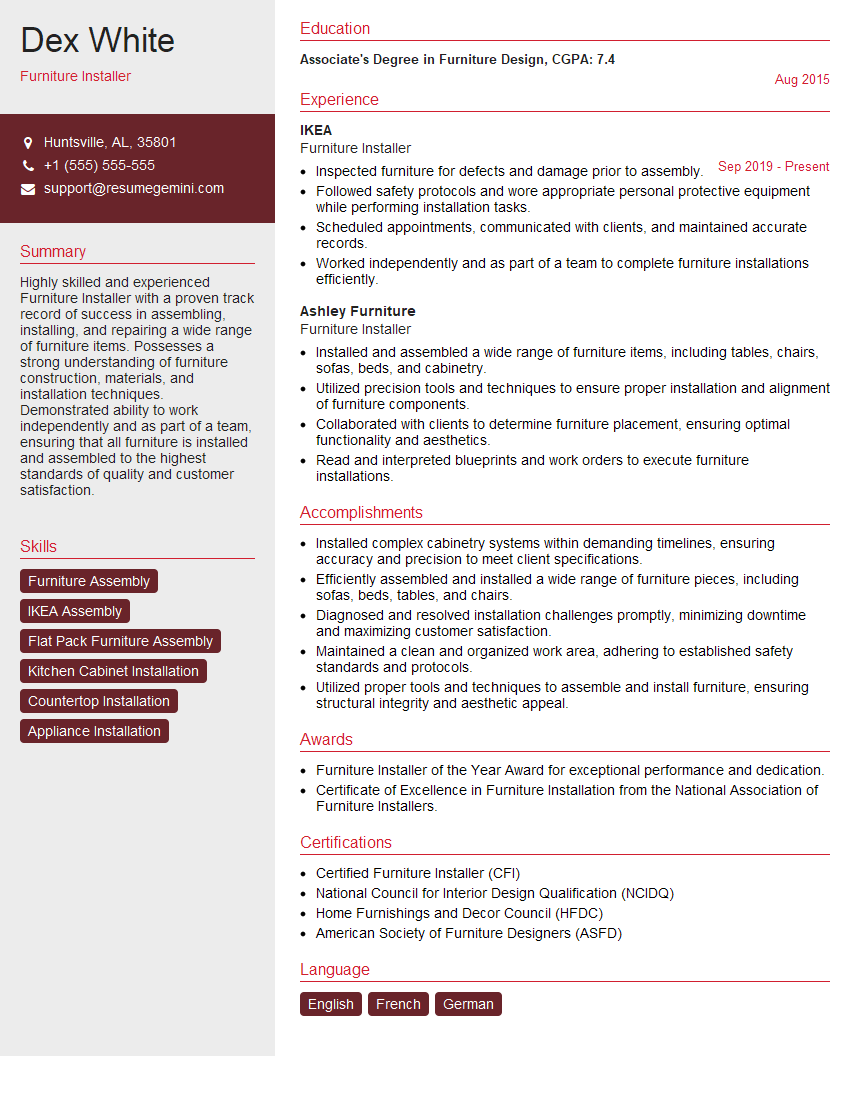
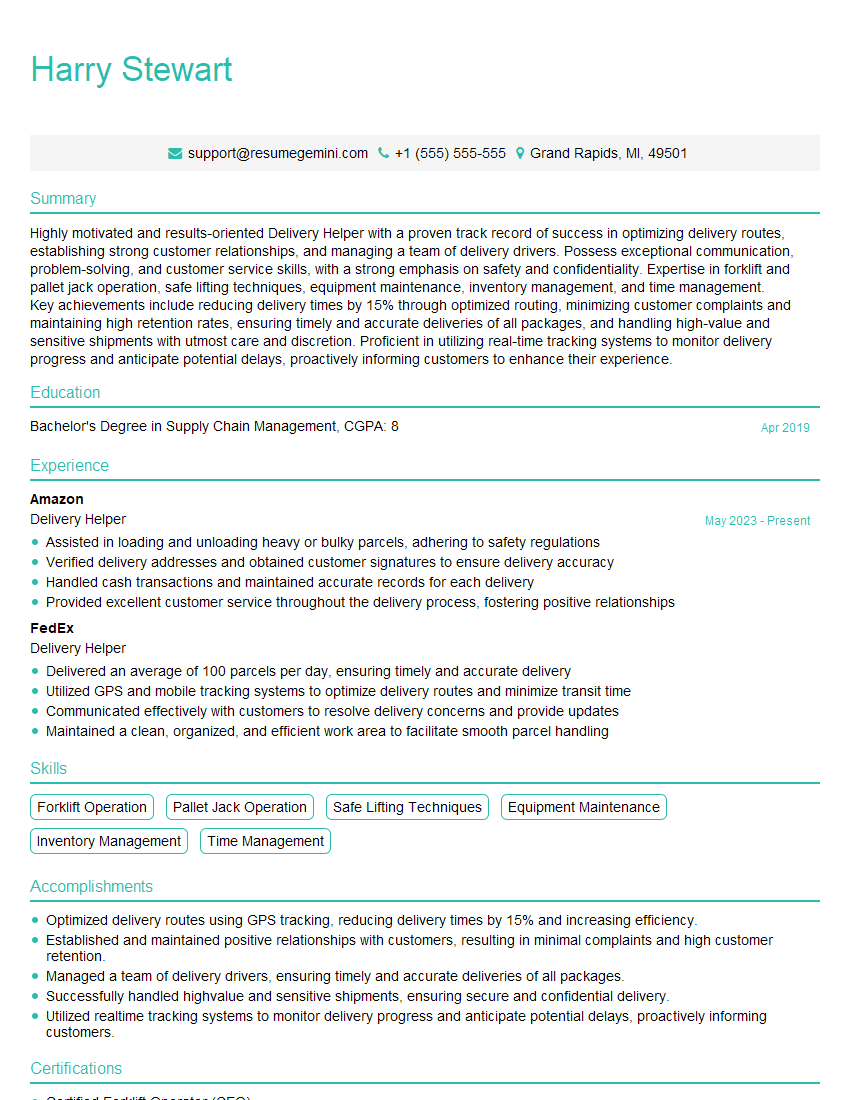
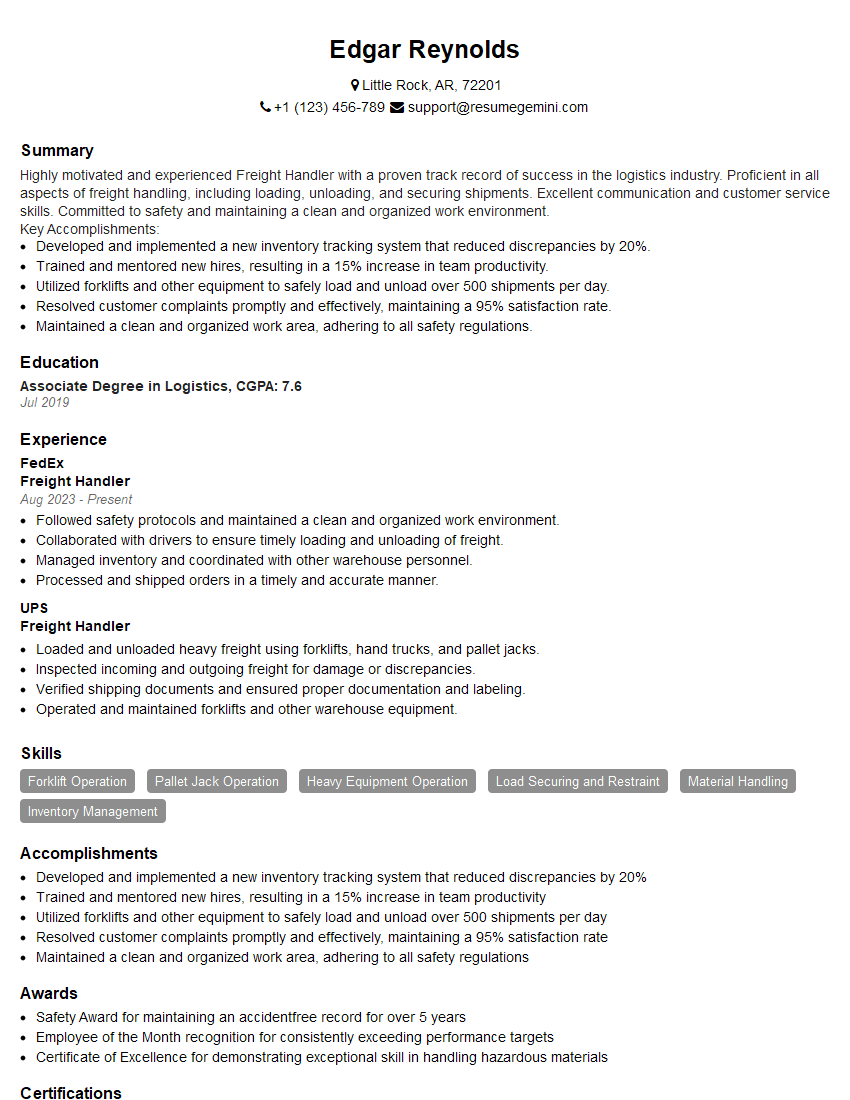
Mastering the skills of loading and unloading furniture opens doors to a rewarding career with opportunities for advancement. Building a strong and targeted resume is crucial for showcasing your abilities to potential employers. An ATS-friendly resume, optimized for applicant tracking systems, significantly increases your chances of getting noticed. To create a compelling and effective resume, leverage the power of ResumeGemini. ResumeGemini provides a user-friendly platform and helpful resources to build a professional resume, and we offer examples of resumes tailored specifically to the Loading and Unloading Furniture industry to guide you.
Explore more articles
Users Rating of Our Blogs
Share Your Experience
We value your feedback! Please rate our content and share your thoughts (optional).
What Readers Say About Our Blog
Very informative content, great job.
good