Preparation is the key to success in any interview. In this post, we’ll explore crucial Lobster Identification and Grading interview questions and equip you with strategies to craft impactful answers. Whether you’re a beginner or a pro, these tips will elevate your preparation.
Questions Asked in Lobster Identification and Grading Interview
Q 1. Describe the different grades of lobster and their characteristics.
Lobster grading systems vary slightly depending on location and market demands, but generally involve assessing size, meat yield, and overall quality. A common grading system uses terms like ‘select,’ ‘large,’ ‘medium,’ and ‘small,’ often further categorized by weight.
- Select/Jumbo: These are the largest lobsters, typically exceeding a specific minimum weight (this varies regionally, but could be 1.5 lbs or more). They command the highest price due to their size and substantial meat yield.
- Large: These lobsters fall below the ‘select’ category but are still sizable and meaty. Their weight will be defined within a range specified by regulatory bodies or market standards.
- Medium: These lobsters are a good balance between size and price. The meat yield is still reasonable, making them a popular choice for consumers.
- Small: These are the smaller lobsters, often reserved for specific markets or dishes where size is less of a concern. Their meat yield is lower, and therefore their price is lower.
Characteristics considered include shell condition (no cracks or significant damage), meat color (a vibrant, deep color indicates freshness), and overall texture (firmness indicates freshness and quality). For example, a lobster with a damaged shell, regardless of size, will not achieve a top grade.
Q 2. How do you identify a live lobster’s gender?
Determining the gender of a live lobster involves examining its underside, specifically the swimmerets (small appendages under the tail).
- Male Lobsters: Male lobsters have long, narrow swimmerets extending out from under their tail.
- Female Lobsters: Female lobsters possess shorter, broader swimmerets, which are often used to carry eggs.
Think of it like this: male swimmerets are like long, thin needles, whereas female swimmerets are broader, almost like small paddles. While usually straightforward, it can be slightly challenging with smaller lobsters, requiring a steady hand and keen eye.
Q 3. Explain the process of assessing lobster meat yield.
Assessing lobster meat yield is crucial for pricing and market analysis. It’s not just about the weight of the whole lobster; it’s about predicting the edible meat inside. Methods include:
- Experienced Handling: Experienced handlers can often estimate meat yield by feeling the lobster’s weight and firmness. This is developed over years of practice and is refined by regularly comparing estimations to actual yield post-processing.
- Weighing and Measurement: Combining the weight of the lobster with its length can provide a reasonable estimate using established conversion charts specific to the lobster species. These charts are often created based on large-scale data analysis.
- Advanced Imaging Technologies: Some processors utilize technology such as X-ray or ultrasound scanning to determine the meat-to-shell ratio with greater precision.
The accuracy of meat yield estimation directly impacts pricing and profitability. An overestimation can lead to financial losses, while underestimation can undervalue the product.
Q 4. What are the common defects found in lobsters, and how are they graded?
Common defects found in lobsters significantly influence their grade. These include:
- Shell Damage: Cracks, chips, or significant bruising on the shell will lower the grade. Severe damage often makes the lobster unsuitable for sale.
- Meat Quality Issues: Discoloration, soft texture, or off-odors indicate potential spoilage or poor handling and drastically reduce the grade.
- Parasites or Disease: Presence of parasites or signs of disease will render the lobster unmarketable.
- Missing Limbs or Appendages: While not always a complete disqualifier, missing limbs reduce the overall value and grade.
Grading typically uses a point system or categorical ranking, deducting points or placing the lobster in a lower category based on the severity and number of defects. For instance, a lobster with a minor shell crack might be downgraded by one grade, whereas one with multiple cracks and significant discoloration would fall into a much lower grade, possibly rendering it unfit for human consumption.
Q 5. What are the legal regulations surrounding lobster handling and grading?
Legal regulations surrounding lobster handling and grading are extensive and vary depending on location. These typically cover:
- Size Limits: Minimum size limits for harvesting lobsters are common to protect the population and ensure sustainability. Harvesting undersized lobsters is illegal.
- Trap Regulations: Regulations often govern the type and number of lobster traps allowed, aiming to control fishing intensity.
- Grading Standards: Many regions have official grading standards, defining size ranges and acceptable quality levels for different grades. Non-compliance could lead to fines.
- Handling and Storage: Rules dictate how lobsters must be handled (to minimize stress and injury) and stored (to maintain freshness and prevent spoilage) before sale. Failure to comply can result in product rejection or legal action.
These regulations exist to protect lobster populations, ensure fair trading practices, and safeguard public health. Ignoring these rules can have significant legal and economic consequences.
Q 6. How do you ensure accurate and consistent grading across batches?
Ensuring accurate and consistent grading across batches requires a multi-pronged approach:
- Standardized Grading Procedures: Clearly defined grading criteria, documented and accessible to all graders, are essential. This ensures everyone follows the same rules.
- Regular Calibration and Training: Graders require regular training to maintain their skills and ensure they consistently apply grading standards. Regular calibration exercises using sample lobsters are crucial.
- Use of Measuring Tools: Using calibrated scales, rulers, and other measuring tools ensures objective and repeatable measurements.
- Quality Control Checks: Regular audits and internal checks of grading procedures help identify inconsistencies and rectify problems.
- Technological Aids: Implementing technologies that assist in size and quality assessment (as mentioned earlier) enhances consistency and objectivity.
A well-structured grading program with clear guidelines, trained personnel, and quality control measures is key to achieving accurate and consistent grading across batches.
Q 7. Explain the importance of proper sanitation and hygiene during lobster handling.
Proper sanitation and hygiene during lobster handling are paramount for maintaining food safety and preventing spoilage. Contamination can rapidly occur, leading to product spoilage and potential health hazards.
- Clean Equipment: All equipment, including tanks, containers, and processing tools, must be thoroughly cleaned and sanitized to eliminate bacteria and prevent cross-contamination.
- Hygiene Practices: Workers should maintain high standards of personal hygiene, including handwashing and the use of protective clothing, to prevent contamination from spreading.
- Temperature Control: Maintaining appropriate temperatures during storage and transportation is crucial to inhibit bacterial growth and preserve freshness.
- Waste Disposal: Proper disposal of waste materials is important to prevent the spread of contamination.
Neglecting sanitation and hygiene practices can lead to serious consequences, from product spoilage and financial losses to potential foodborne illnesses. A commitment to sanitation is a cornerstone of responsible and ethical lobster handling.
Q 8. What are the signs of a diseased or unhealthy lobster?
Identifying a diseased or unhealthy lobster requires a keen eye for detail. Several telltale signs can indicate a problem. These can be broadly categorized into physical and behavioral indicators.
- Physical Signs: These include lesions or unusual discolorations on the shell, lack of vibrancy in the shell color (appearing dull or faded), presence of unusual growths or parasites attached to the shell or legs, missing or damaged appendages (legs, antennae), and cloudy or milky-colored eyes. A soft or mushy texture of the shell or meat is a serious indicator of disease and spoilage.
- Behavioral Signs: A lethargic lobster that is unusually inactive or unresponsive is a concern. They should be active and responsive to stimuli. An unhealthy lobster might also exhibit difficulty righting itself if turned on its back.
For example, a lobster with a significant shell lesion might be suffering from a bacterial or fungal infection. A lobster with cloudy eyes might have a bacterial or viral infection. Recognizing these signs is crucial for maintaining overall quality and preventing the spread of disease within a larger population.
Q 9. How do you handle a lobster that shows signs of stress or injury?
Handling a stressed or injured lobster requires a gentle and careful approach to minimize further harm and reduce stress. The goal is to keep them comfortable, safe, and prevent further injury.
- Immediate Assessment: First, carefully assess the extent of the stress or injury. Is it just minor stress from handling, or is there a serious wound?
- Gentle Handling: Always handle lobsters firmly but gently, avoiding harsh squeezing or unnecessary contact. Grasp them securely by the carapace (body) behind the head.
- Provide a Calm Environment: Place the lobster in a clean, cool, and dark environment to reduce stress. Avoid bright lights and loud noises.
- Wound Care (if applicable): If the lobster has a serious wound, consult with a veterinarian or a fisheries specialist for appropriate treatment. Avoid applying any home remedies.
- Separation: If the lobster shows signs of a contagious illness, isolate it immediately to prevent infection of other lobsters.
Imagine a lobster with a broken leg – gentle handling is essential. Rough handling could worsen the injury, and causing unnecessary stress could compromise its health. Providing a quiet, dark environment allows the lobster to recover and reduces the risk of infection.
Q 10. What are the different methods used to measure lobster size?
Measuring lobster size is crucial for grading, ensuring compliance with regulations, and determining market value. Several methods exist, with the most common focusing on carapace length.
- Carapace Length: This is the most prevalent method, measuring the distance from the center of the eye socket to the rear edge of the carapace (the shell covering the lobster’s body), excluding the telson (tail piece). Measurements are usually taken with a caliper for accuracy.
- Total Length: This method includes the entire length of the lobster, from the tip of the rostrum (the point between the eyes) to the end of the telson. However, carapace length is generally preferred for grading consistency.
- Weight: Weight can also be a supplementary factor, especially in some markets or for specific grading standards. However, it is often less precise than length as it can be affected by factors like water retention.
For instance, in many jurisdictions, a minimum carapace length is required before a lobster can be harvested, ensuring the protection of younger lobsters and maintaining sustainability. Accurate measurement using calipers guarantees consistent grading across different operators.
Q 11. What are the environmental factors that influence lobster quality?
Environmental factors significantly influence lobster quality, affecting their growth, health, and overall meat quality.
- Water Temperature: Temperature directly impacts metabolism, growth rate, and the lobster’s susceptibility to disease. Extreme temperatures can stress lobsters, impacting their health and the quality of their meat.
- Water Salinity: Appropriate salinity levels are vital for lobster survival and health. Fluctuations or inappropriate salinity can cause stress and impact meat quality.
- Water Quality: Clean water is essential, free from excessive pollutants, pathogens, and suspended solids. Poor water quality can weaken lobsters and make them susceptible to diseases.
- Oxygen Levels: Sufficient dissolved oxygen is vital for lobster respiration and survival. Low oxygen levels can lead to stress and poor meat quality.
- Habitat: The type of substrate (rocky bottom, sandy bottom), availability of food, and the presence of predators can impact lobster growth and health.
For example, lobsters harvested from polluted waters may exhibit lower meat quality and be less desirable in the market. Lobsters grown in optimal environmental conditions will be healthier, firmer, and have better-tasting meat.
Q 12. Describe the process of sorting and packing lobsters for market.
Sorting and packing lobsters for market is a crucial step that ensures the product meets market demands and maintains its freshness and quality. The process typically involves several steps.
- Size Grading: Lobsters are sorted according to size based on carapace length (most common), adhering to established standards (e.g., by weight classes or specific size ranges).
- Quality Assessment: Each lobster is carefully examined for any signs of disease, injury, or stress. Those that don’t meet quality standards are often separated and may be processed differently (e.g., for lower-value products).
- Cleaning: The lobsters are typically cleaned to remove any debris or unwanted materials clinging to their bodies.
- Packing: Lobsters are then carefully packed in containers that maintain proper temperature and humidity to preserve freshness. The choice of packing material and method depends on the distance to market and the transportation mode (live, frozen, or cooked).
- Labeling and Tracking: Each container is clearly labeled with relevant information, including size grade, date, and any special handling instructions. Tracking systems help trace the product back to its origin for quality control and safety purposes.
Imagine a large-scale lobster processing plant – efficient sorting and packing lines ensure the product is graded and packaged rapidly while upholding high standards of quality and safety. This process optimizes the product’s shelf life and market value.
Q 13. How do you maintain the quality and freshness of lobsters during storage and transportation?
Maintaining lobster quality and freshness during storage and transportation requires careful attention to several factors. The primary goal is to keep the lobsters alive, minimizing stress and preventing spoilage.
- Temperature Control: Maintaining a consistently cold temperature is paramount. Ice or chilled seawater are commonly used for live lobsters, ideally within the lobster’s preferred temperature range. For frozen lobsters, proper freezing and storage temperatures are essential to avoid freezer burn and loss of quality.
- Proper Handling: Avoid excessive handling during storage and transportation to minimize stress. Lobsters should be kept in appropriate containers that allow adequate ventilation but prevent escapes.
- Oxygen Levels: For live lobsters, ensuring adequate oxygen levels is critical. Proper aeration methods help maintain oxygen saturation.
- Transportation Methods: Choosing the appropriate transportation mode and ensuring a rapid transport time are vital. Faster transportation helps reduce stress and improves the chance of arrival in good condition.
- Hygiene: Maintaining strict hygiene practices throughout the process helps prevent bacterial contamination.
Think of it like transporting fragile cargo. The better the conditions during storage and transportation, the better the final product’s quality. A sudden temperature spike or a lack of oxygen can ruin the entire batch.
Q 14. What are the key differences between Canadian, American, and European lobster grading standards?
Lobster grading standards vary across regions, reflecting differences in regulatory frameworks, market demands, and local lobster species. While there might be some similarities, significant variations exist.
- Canada: Canadian lobster grading often focuses on carapace length and weight, with different size categories used for commercial purposes. Specific regulations govern the minimum legal size of lobsters that can be harvested.
- United States: The US also utilizes size-based grading, but specific regulations and standards vary from state to state. For example, the minimum size limits for harvesting may differ between Maine and other East Coast states.
- Europe: European lobster grading standards can differ depending on the country and the specific species. Some European countries may focus more on weight as a grading parameter, rather than solely on carapace length. They also frequently have classifications according to the quality of the meat and the physical condition of the lobster.
These differences reflect variations in regulatory frameworks, species-specific characteristics, and market preferences. Understanding these nuances is crucial for international trade and ensuring compliance with various legal requirements.
It’s important to note that detailed specifics of grading criteria can be complex and are best understood by referencing the official grading standards published by the relevant regulatory authorities in each region.
Q 15. Explain the importance of traceability in lobster production and processing.
Traceability in lobster production and processing is paramount for ensuring food safety, maintaining quality, and meeting consumer demands for transparency. It’s essentially a detailed record-keeping system that tracks a lobster’s journey from capture to consumption. This includes information like the fishing location, date of catch, handling methods, processing facility, and ultimately, the point of sale.
Imagine a scenario where a batch of lobsters is found to be contaminated. With a robust traceability system, we can quickly identify the source of the problem – the specific boat, trap, or even a specific timeframe – allowing for swift recall and prevention of further issues. This protects both the consumer and the reputation of the producers.
- Improved Food Safety: Rapid identification and isolation of contaminated products.
- Enhanced Quality Control: Monitoring processes at each stage to identify and rectify problems.
- Increased Consumer Trust: Providing transparency and confidence in the product’s origin and handling.
- Regulatory Compliance: Meeting legal requirements for food traceability.
Career Expert Tips:
- Ace those interviews! Prepare effectively by reviewing the Top 50 Most Common Interview Questions on ResumeGemini.
- Navigate your job search with confidence! Explore a wide range of Career Tips on ResumeGemini. Learn about common challenges and recommendations to overcome them.
- Craft the perfect resume! Master the Art of Resume Writing with ResumeGemini’s guide. Showcase your unique qualifications and achievements effectively.
- Don’t miss out on holiday savings! Build your dream resume with ResumeGemini’s ATS optimized templates.
Q 16. How do you handle customer complaints about lobster quality?
Handling customer complaints about lobster quality involves a systematic approach focusing on understanding the issue, resolving the situation fairly, and learning from the experience. First, we actively listen to the customer’s concerns, gathering as much detail as possible about the lobster’s condition (e.g., appearance, smell, taste) and where and when it was purchased. Then, we analyze the complaint, comparing the customer’s description with our quality control records. This may involve reviewing temperature logs, processing records, and even inspecting samples if possible.
Depending on the situation, we might offer a refund, replacement, or a discount on future purchases. Furthermore, every complaint is documented and analyzed to identify any potential systemic problems in our supply chain or processing methods. We use this information to improve our practices and prevent similar issues from recurring. For example, if several complaints point to a specific supplier, we may investigate their handling procedures.
Q 17. What is the significance of visual inspection in lobster grading?
Visual inspection is the cornerstone of lobster grading. It’s a skilled assessment of the lobster’s overall appearance, allowing graders to categorize lobsters based on size, shell condition, meat yield, and overall quality. Experienced graders look for key indicators of quality, such as shell color (a vibrant, deep color indicates freshness), texture (a firm shell suggests a healthy lobster), and the presence of any physical damage or imperfections.
For example, a lobster with a damaged shell or signs of disease would be downgraded, even if its size is appropriate for a higher grade. Visual inspection helps ensure that consumers receive lobsters that meet their expectations in terms of both appearance and culinary quality. It’s not just about size; it’s about the overall health and market appeal of the lobster.
Q 18. Describe the importance of documentation in maintaining quality control.
Comprehensive documentation is crucial for maintaining quality control in lobster handling. It provides a detailed audit trail, enabling us to track every step of the process and identify potential problems. This includes records of catching, holding, processing, storage, and distribution. Specific examples include:
- Catch Records: Date, location, number of lobsters caught, type of gear used, and crew information.
- Holding Records: Temperature logs during storage, ensuring lobsters are kept at optimal conditions to maintain freshness.
- Processing Records: Steps taken during cleaning, cooking, and packaging, including quality checks at each stage.
- Temperature Logs: Continuous monitoring of temperature throughout the cold chain to ensure food safety.
- Traceability Records: As mentioned before, detailed records that link the lobster to its origin and its journey through the supply chain.
These records are essential for regulatory compliance, responding to customer complaints, identifying trends in quality, and continuously improving our operations. A well-maintained documentation system is like a safety net, providing evidence of best practices and allowing us to quickly identify and address potential issues.
Q 19. How do you ensure proper calibration of measuring equipment?
Regular calibration of measuring equipment, such as scales and gauges, is essential for ensuring accurate grading and fair pricing. We use certified standards and regularly check our equipment against those standards using traceable, calibrated weights or other reference materials. This process typically involves a multi-step procedure:
- Establish a Calibration Schedule: Regular checks, perhaps monthly or quarterly, are scheduled for all measuring devices.
- Use Certified Standards: We utilize weights and measures traceable to national standards.
- Record Calibration Data: All calibrations are meticulously recorded, including date, results, and any adjustments made.
- Maintain Calibration Logs: These logs provide a history of equipment accuracy, allowing us to identify potential issues early on.
- Out-of-Calibration Procedures: If a device is found to be out of calibration, it’s immediately taken out of service and sent for repair or replacement.
Failure to calibrate equipment can result in inaccurate grading, leading to dissatisfied customers and potential financial losses for the business. Accurate calibration maintains the integrity of our grading process and ensures fairness to both buyers and sellers.
Q 20. What is your experience with different types of lobster traps?
My experience encompasses various lobster trap types, each with its own advantages and disadvantages. I’ve worked with traditional wooden traps, wire traps, and more recently, some innovative designs incorporating escape gaps for smaller lobsters and bycatch reduction devices.
Traditional wooden traps are durable and relatively inexpensive, but they can sometimes be less efficient than wire traps. Wire traps, while often more effective in catching lobsters, require careful handling to prevent damage to the lobsters. Newer designs, like those incorporating escape gaps, are increasingly popular for their sustainability aspects, minimizing bycatch and allowing undersized lobsters to escape. Choosing the right trap depends on several factors, including the target species, fishing regulations, and environmental considerations. My expertise lies in understanding the nuances of each trap type and choosing the most effective and responsible method for the situation at hand.
Q 21. What are the best practices for sustainable lobster fishing?
Sustainable lobster fishing is critical for preserving lobster populations and maintaining the long-term health of our marine ecosystems. Best practices include:
- Size Limits and Catch Limits: Adhering strictly to regulations on the minimum size of lobsters that can be harvested and the total catch allowed in a given area.
- Selective Gear: Utilizing fishing gear that minimizes bycatch (the unintentional capture of non-target species).
- Escape Gaps: Employing traps with escape gaps to allow smaller, immature lobsters to escape unharmed.
- VMS (Vessel Monitoring Systems): Using technology to monitor fishing activity and ensure compliance with regulations.
- Protecting Lobster Habitats: Avoiding damage to critical lobster habitats, such as seagrass beds and rocky reefs.
- Collaboration: Engaging in collaborative efforts with scientists, other fishermen, and policymakers to develop and implement sustainable fishing practices.
By adopting these best practices, we contribute to ensuring a healthy lobster population for future generations and maintaining the economic viability of the lobster industry. Sustainable fishing isn’t just about protecting the environment; it’s about protecting our livelihoods as well.
Q 22. Explain the relationship between lobster size and its market value.
Generally, larger lobsters command higher market prices. This is due to several factors. First, larger lobsters are perceived as more meaty, offering a greater yield for the consumer. Second, they often represent a more mature animal, suggesting a potentially better flavor profile. Third, larger sizes are simply less common, making them more desirable and thus commanding a premium. Think of it like buying a steak – a larger, prime cut will always be more expensive than a smaller, less desirable cut. The relationship isn’t strictly linear, however; there’s a point of diminishing returns where exceptionally large lobsters may not command a proportionally higher price due to potential issues with meat quality or difficulty in handling. Specific pricing varies based on market demand, seasonality, and the species of lobster.
Q 23. Describe your experience with using quality control software or technology.
In my previous role, we used a sophisticated quality control software system to track lobster grades, weights, and other relevant data from catch to sale. This system allowed for real-time tracking, streamlining the grading process and minimizing human error. The software integrated barcode scanners for efficient data entry, enabling instant updates on individual lobster characteristics. It also generated comprehensive reports on grading consistency and overall quality, helping us identify trends and areas for improvement. A crucial feature was its ability to generate customizable reports, allowing us to tailor our data analysis to meet specific market demands or regulatory requirements. For example, we could generate a report showing the percentage of lobsters falling into each grade category over a specific period, or a report highlighting the average weight of lobsters caught in a specific area.
Q 24. How do you address discrepancies in grading between different graders?
Discrepancies in grading can stem from several factors, including variations in grader experience, subjective interpretation of grading standards, and even lighting conditions. To address these issues, we employ a multi-pronged approach. First, regular, rigorous training ensures graders are well-versed in industry standards and best practices. Second, we implement a robust system of internal audits and cross-checking. This involves having multiple graders evaluate the same batch of lobsters independently and then comparing their results. Significant discrepancies trigger a review process involving senior graders to resolve any inconsistencies. Finally, standardized grading tools and clear, detailed guidelines are essential. We utilize calibrated measuring devices and detailed photographic guides to minimize subjective judgment.
Q 25. What are the potential risks associated with improper lobster handling?
Improper lobster handling poses several significant risks. Firstly, it can severely compromise the quality of the meat, leading to bruising, discoloration, and a decline in overall taste and texture. This directly impacts market value. Secondly, improper handling can lead to increased mortality rates, especially during transportation and storage. Stress from rough handling can weaken lobsters, making them more susceptible to disease and death. Finally, inadequate handling practices can pose safety risks to both handlers and consumers. For instance, improperly restrained lobsters can inflict injuries with their claws. Maintaining optimal temperature and humidity is crucial to avoid spoilage and the associated health risks.
Q 26. How do you stay updated on current regulations and best practices in the lobster industry?
Staying current in the lobster industry requires a multifaceted approach. I actively participate in industry conferences and workshops, engaging with other professionals and learning about the latest advancements in lobster farming, processing, and handling. Subscribing to relevant trade journals and online publications keeps me informed of regulatory changes, new technologies, and evolving best practices. Moreover, I maintain strong connections with government agencies responsible for regulating the lobster industry, ensuring compliance with all current regulations. This proactive approach helps me make informed decisions, ensuring our practices remain aligned with both ethical and legal standards.
Q 27. Describe a situation where you had to resolve a quality control issue.
During a particularly busy harvest season, we noticed a significant increase in the rejection rate of our lobsters at the processing plant. Initial investigations revealed no obvious issues with handling or storage. However, upon closer examination of the grading records, we discovered a subtle pattern: a specific grader was consistently assigning a lower grade to a larger portion of lobsters than their colleagues. Further investigation revealed the grader had recently received new glasses, but hadn’t adjusted to them yet, affecting their accuracy in measuring the lobster carapace length – a key determinant in grading. We immediately addressed the issue by providing the grader with a temporary magnifying glass and extra training to recalibrate their assessment. This swiftly resolved the discrepancy and avoided significant financial losses.
Q 28. How would you train a new employee in lobster identification and grading?
Training a new employee in lobster identification and grading is a structured process. It begins with theoretical instruction, covering different lobster species, their characteristics, and the relevant grading standards. We use visual aids like photographs, diagrams, and actual specimens to illustrate key differences. Then, hands-on training follows, where the trainee practices identifying and grading lobsters under the supervision of experienced graders. This involves gradually increasing the complexity of tasks, starting with simple identification and progressing to grading entire batches. Throughout the process, feedback and regular assessments are provided to identify areas requiring further attention and to track the trainee’s progress. The training culminates in a certification process ensuring consistent competence and adherence to industry standards. Ongoing mentorship and continued education are vital in maintaining proficiency and adapting to industry changes.
Key Topics to Learn for Lobster Identification and Grading Interview
- Species Identification: Learn to distinguish between common lobster species (e.g., American lobster, European lobster, spiny lobster) based on physical characteristics like carapace shape, claw size, and coloration. Practice identifying subtle differences.
- Size and Weight Grading: Understand the various grading systems used in the industry (e.g., by weight, length, or size category). Practice calculating weights and converting between different units of measurement.
- Quality Assessment: Develop a keen eye for identifying quality indicators such as meat yield, shell condition, and the presence of any defects or diseases. Learn to assess freshness and overall marketability.
- Live Handling and Care: Familiarize yourself with best practices for handling live lobsters to minimize stress and maintain their quality. Understand the implications of improper handling on the final product.
- Regulatory Compliance: Understand relevant regulations and guidelines related to lobster fishing, handling, and grading. This may include size limits, catch limits, and quality standards.
- Market Trends and Pricing: Gain an understanding of market demands and price fluctuations for different lobster grades. This knowledge demonstrates a broader industry awareness.
- Problem-Solving Scenarios: Prepare for scenarios involving grading disputes, handling damaged lobsters, or adapting to unexpected market conditions. Consider how you would approach and solve these problems.
Next Steps
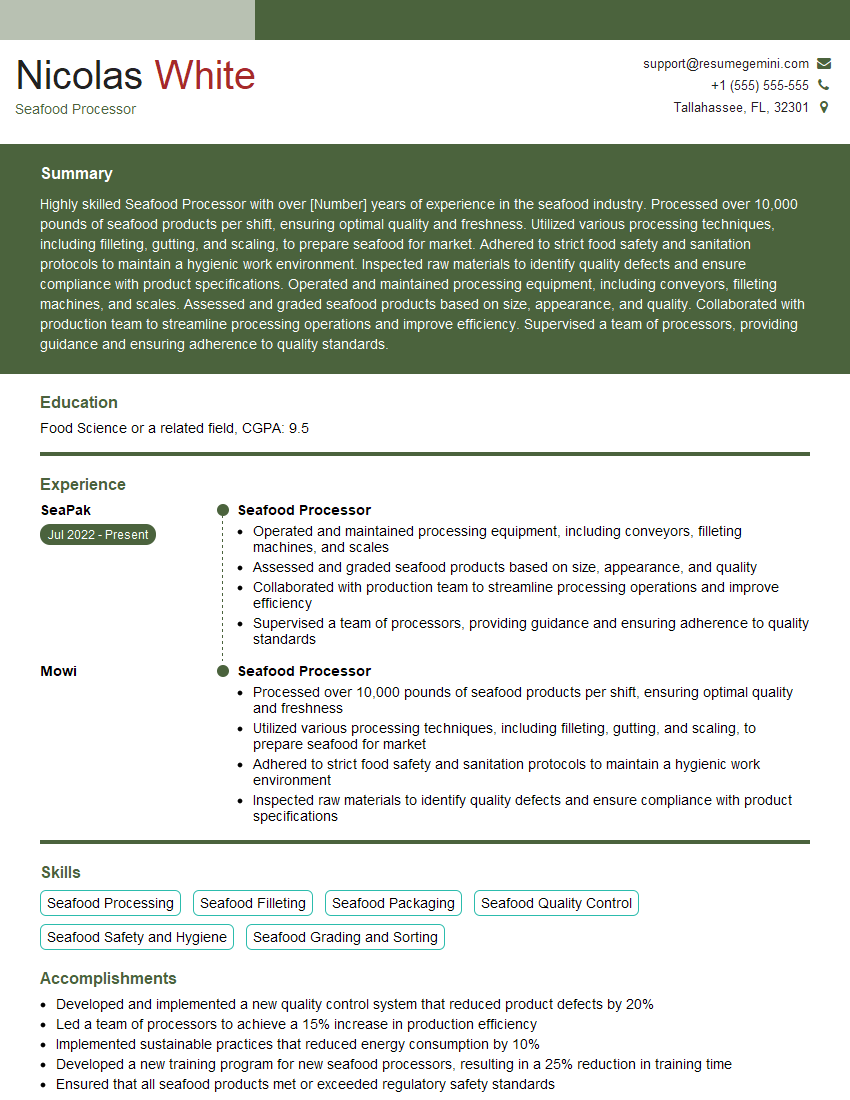
Mastering Lobster Identification and Grading opens doors to rewarding careers in the seafood industry, offering opportunities for growth in aquaculture, processing, quality control, and management. To significantly boost your job prospects, creating a strong, ATS-friendly resume is crucial. ResumeGemini is a trusted resource that can help you craft a compelling resume highlighting your skills and experience in this specialized field. Examples of resumes tailored to Lobster Identification and Grading are available to guide you. Invest time in crafting a professional resume – it’s your first impression with potential employers.

Explore more articles
Users Rating of Our Blogs
Share Your Experience
We value your feedback! Please rate our content and share your thoughts (optional).
What Readers Say About Our Blog
Very informative content, great job.
good