The thought of an interview can be nerve-wracking, but the right preparation can make all the difference. Explore this comprehensive guide to Lobster Trap Deployment and Retrieval interview questions and gain the confidence you need to showcase your abilities and secure the role.
Questions Asked in Lobster Trap Deployment and Retrieval Interview
Q 1. Describe the proper technique for baiting a lobster trap.
Baiting a lobster trap effectively is crucial for a successful catch. The goal is to present an irresistible lure that attracts lobsters while remaining securely within the trap. I typically use a mixture of herring, mackerel, or other readily available, strong-smelling fish. The key is to ensure the bait is securely fastened to prevent it from being easily pilfered by smaller creatures or washing away in currents.
- Secure Attachment: I use sturdy bait bags or securely tie the bait to a central point within the trap to prevent it from becoming entangled and obstructing the entrance.
- Quantity and Placement: The amount of bait depends on the trap size and the target species. I strategically place the bait to entice lobsters to enter the trap and encourage them to stay inside.
- Bait Rotation: Regular bait replacement is crucial, especially during longer soak times. Stale bait can deter lobsters and may reduce the catch.
For example, I once experimented with using different bait combinations, and found that a mix of herring and menhaden proved particularly effective in attracting larger lobsters in deeper water.
Q 2. Explain the different types of lobster traps and their suitability for various conditions.
Several types of lobster traps exist, each with its own advantages and disadvantages depending on the fishing environment. The most common are the traditional wooden traps, plastic traps, and collapsible traps.
- Wooden Traps: These are durable and long-lasting but can be heavy and require more maintenance. They are suitable for rocky bottoms and areas with moderate currents.
- Plastic Traps: Lighter than wooden traps and easier to handle, these are more buoyant and ideal for use in deeper water or stronger currents. However, they may not be as durable as wooden traps.
- Collapsible Traps: Designed for ease of storage and transport, these traps are typically made of metal or plastic and can be collapsed flat when not in use. They are convenient but might not be as robust as traditional traps.
The choice of trap depends heavily on the conditions. For example, I prefer plastic traps for my offshore fishing operation due to their buoyancy and resistance to saltwater corrosion. In shallower, calmer waters, the traditional wooden traps serve me well because of their durability.
Q 3. How do you ensure your traps are legally compliant with size and escape vent regulations?
Legal compliance is paramount in lobster fishing. I meticulously ensure all my traps adhere to regulations concerning size and escape vents. This involves regularly checking and maintaining the traps to meet the legal requirements. Failure to do so can result in significant fines and potential license revocation.
- Trap Size: I always verify that the trap dimensions conform to the minimum and maximum size limits mandated by the relevant fishing authorities.
- Escape Vents: I confirm that all traps have appropriately sized escape vents to allow undersized lobsters to escape safely. I check for any blockages or damage that might compromise the functionality of these vents.
- Regular Inspection: Before each deployment, I conduct a thorough inspection of each trap to ensure it meets the legal specifications. This includes verifying the trap’s overall condition and the integrity of the escape vents.
For example, I once discovered a damaged escape vent on one of my traps during a pre-deployment check. I immediately repaired it before deploying the trap, avoiding a potential legal issue.
Q 4. What safety measures do you take when deploying and retrieving traps?
Safety is my utmost priority during trap deployment and retrieval. I always follow established safety protocols to minimize the risk of accidents and injuries. This includes wearing appropriate personal protective equipment (PPE) and using appropriate tools and techniques.
- Personal Protective Equipment (PPE): I always wear a life jacket, appropriate footwear, gloves, and eye protection. This protects me from potential hazards like sharp edges on traps and slippery surfaces on the deck of the boat.
- Proper Lifting Techniques: I utilize appropriate lifting techniques to avoid strains and injuries. I never attempt to lift heavy loads alone and always seek assistance when needed.
- Weather Conditions: I always check the weather forecast before heading out and only operate in safe conditions. I avoid venturing out during storms or extreme weather.
A past incident where I was caught in an unexpected squall reinforced the importance of checking weather reports and having appropriate safety gear on board.
Q 5. How do you identify and handle potential hazards during trap deployment and retrieval (e.g., strong currents, rough seas)?
Lobster fishing can present various hazards, and I’ve developed strategies to mitigate them. Strong currents and rough seas pose significant challenges during trap deployment and retrieval.
- Strong Currents: I use heavier, more robust equipment and deploy traps strategically to avoid losing them in strong currents. I might use additional anchoring systems or select a different location with calmer waters.
- Rough Seas: I avoid operating in rough seas, and if caught in unexpected rough weather, I immediately return to port or seek shelter. I always have a backup plan in case of emergencies.
- Entanglement: I regularly check lines and gear to avoid entanglement with debris or other hazards. I use high visibility line to improve visibility and safety.
Once, I encountered unexpectedly strong currents. I had to adapt my deployment strategy on the fly, using extra anchors and deploying fewer traps to avoid losing my gear.
Q 6. Describe your experience with different types of hauling equipment.
My experience encompasses several types of hauling equipment, each suited to different needs and scales of operation. This ranges from simple hand-hauling techniques for smaller-scale operations to more complex mechanized systems for larger operations.
- Hand Hauling: This is suitable for smaller numbers of traps in calmer waters. It’s labor-intensive but requires minimal equipment.
- Hydraulic Haulers: These are more efficient for larger-scale operations, considerably reducing physical strain. They are suitable for various boat sizes and provide more controlled hauling.
- Power Blocks and Winches: These are used for larger vessels and larger numbers of traps. They provide additional power and control, particularly in challenging conditions.
I’ve worked with all three types and find the choice depends entirely on the operation’s scale and the conditions. For my current operation, a hydraulic hauler provides the best balance of efficiency and maneuverability.
Q 7. How do you maintain and repair lobster traps?
Maintaining and repairing lobster traps is essential for their longevity and to ensure they remain legally compliant. Regular maintenance extends their lifespan and minimizes the risk of trap failure at sea. I follow a systematic approach to trap maintenance.
- Regular Cleaning: I thoroughly clean my traps after each haul to remove encrusted marine growth, which can damage the trap and make it less efficient.
- Repairing Damages: I promptly repair any damaged parts such as broken panels, netting, or corroded metal components. I use appropriate materials for repairs, ensuring that repairs are robust and long-lasting.
- Storage: I store traps appropriately when not in use, in a dry place to prevent damage from weather exposure and protect them from pests.
For example, I recently had to replace a section of netting on one of my traps that was damaged by a sharp rock. I used high-quality replacement netting, securing it with strong knots to ensure a durable repair.
Q 8. What are the signs of a damaged or malfunctioning trap?
Identifying a damaged or malfunctioning lobster trap is crucial for maintaining a successful fishing operation and preventing loss of gear and catch. There are several key signs to watch for:
- Broken or missing parts: This includes damaged panels, missing wooden slats, or compromised netting. A simple visual inspection before deployment and after retrieval is essential. For example, a cracked wooden frame might allow lobsters to escape, while damaged netting could compromise the trap’s integrity.
- Door malfunction: The trap’s entrance mechanism (the door) needs to open and close correctly. If it’s jammed or broken, it renders the trap useless. I once had a trap fail due to a rusted hinge – a simple preventative maintenance measure would have saved it.
- Leaks or water damage: If the trap is waterlogged, it indicates compromised buoyancy, and it might not set correctly on the ocean floor. This can also attract unwanted species and increase the risk of bycatch.
- Bait issues: If the bait is consistently disappearing without any catch, it could mean that the trap isn’t setting properly, or something else is getting into the trap that shouldn’t be. Regular bait checks are a simple yet vital part of trap maintenance.
- Excessive fouling: Heavy growth of seaweed, barnacles, or other marine organisms can impede the trap’s operation, increase its weight, and make it harder to retrieve. This can damage the trap and reduce its efficiency. Regular cleaning is key.
Addressing these issues promptly reduces losses, improves efficiency and ensures sustainability.
Q 9. How do you manage your catch on board after retrieval?
Managing the catch onboard efficiently after retrieval is critical for maintaining quality and maximizing yield. Here’s my approach:
- Careful handling: Lobsters are delicate creatures. We use specialized tools like lobster tongs and gentle handling techniques to avoid injuries that reduce their market value. Rough handling leads to bruising and breakage.
- Immediate sorting: We immediately sort the catch by size, discarding undersized lobsters per regulations. This saves time and ensures compliance. Size sorting allows for better management of the catch, increasing potential profit.
- Storage: We keep the lobsters in well-ventilated, cool, and shaded containers or livewells to ensure their freshness and prevent overheating. Maintaining their environment is key to their survival.
- Documentation: We meticulously document the total catch, size distribution, and any noteworthy observations for traceability and regulatory compliance. Accurate documentation is essential for all aspects of fisheries management.
- Maintaining a clean working area: A clean working area helps to prevent cross-contamination and ensures the safety and quality of the lobster catch, all aspects of our business rely on this.
This systematic approach guarantees the best possible quality and price for our catch.
Q 10. What is the optimal depth and location for deploying lobster traps?
The optimal depth and location for deploying lobster traps are influenced by several factors, including the species targeted, the season, and the specific characteristics of the fishing ground.
- Depth: Generally, lobster traps are set at depths ranging from 15 to 150 feet, but it often depends on the species. Some species prefer shallower waters, while others reside in deeper environments. Local knowledge, understanding of lobster behavior, and historical data are extremely important.
- Location: Ideal locations are usually characterized by rocky or structured habitats where lobsters like to hide. These locations often include areas with kelp forests, ledges, or wrecks. Using sonar and local knowledge helps to identify these suitable spots.
- Substrate: Soft substrates (like sand or mud) are typically not ideal because traps might sink or become unstable. A firm substrate is key for trap stability and lobster attraction.
- Water Temperature: Water temperature also plays a key role, as different lobster species prefer different temperatures. Monitoring water temperature is essential for optimal results.
- Currents: Strong currents can affect the stability of traps. Ideally traps will be positioned in areas of moderate water current movement to increase the chances of attracting more lobsters.
A combination of scientific knowledge, navigational tools, and experienced intuition is key to selecting the best deployment areas. Choosing the wrong location can seriously hamper your success. I frequently utilize charts, bathymetric data and local knowledge to locate the perfect spots.
Q 11. How do you minimize bycatch in lobster trapping?
Minimizing bycatch (the unintentional capture of non-target species) in lobster trapping is crucial for environmental sustainability and responsible fishing practices.
- Trap design: Using appropriately sized escape gaps or excluder devices in traps allows smaller, non-target species to escape. These are now almost mandated for all traps.
- Bait selection: Using bait that is specifically attractive to lobsters while minimizing appeal to other species can reduce bycatch. Different species are attracted by different scents.
- Location selection: Choosing deployment sites that avoid habitats frequented by vulnerable or endangered species is important for reducing bycatch. Knowing the environment thoroughly is key here.
- Trap placement: Carefully placing traps can also reduce bycatch. Avoid setting them in areas with high bycatch risks.
- Regular checks: Frequent checks of the traps allow for the immediate release of any bycatch, minimizing harm. Immediate release is critical for bycatch survival.
By employing these strategies, we can significantly reduce our environmental impact while sustaining a healthy lobster population.
Q 12. Describe your experience working with different types of fishing vessels.
My experience spans various vessel types, each with its unique challenges and advantages. I’ve worked on small, family-owned lobster boats, larger commercial vessels, and even research vessels involved in lobster population studies.
- Small boats: These offer maneuverability and access to shallow, intricate fishing grounds, but they might lack the storage space and processing capacity of larger boats. I learned valuable resourcefulness working on smaller vessels, utilizing all available space, for example.
- Larger commercial vessels: These have greater storage and processing capabilities, allowing for longer trips and larger catches. However, they require more coordination and a larger crew, emphasizing communication.
- Research vessels: Working on research vessels provided insights into scientific aspects of lobster fishing, including population dynamics and environmental factors. Combining research and traditional fishing practices is key to future sustainability.
Adapting to the specific capabilities of each vessel type is critical for optimizing performance and safety. I find that a good understanding of the vessel’s limits enhances safety and efficiency across the board.
Q 13. How do you navigate using charts, GPS, and other navigational tools during trap deployment?
Precise navigation is paramount in lobster trapping to ensure efficient deployment and retrieval of traps, and to avoid losing valuable gear. We combine several navigational tools:
- Charts: Paper charts provide a comprehensive overview of the fishing area, including depths, navigational hazards, and known lobster grounds. This helps in planning deployment strategies.
- GPS: GPS technology is invaluable for marking precise locations of trap deployments. We use waypoints to accurately record the coordinates of each trap set and easily return to these exact spots for retrieval. This is often aided by specialized fishing-focused GPS systems.
- Sonar: Sonar systems provide real-time information about the seabed, helping us identify suitable habitats for lobsters. This aids in choosing optimal deployment locations for the traps, based on seabed structure and depth.
- Compass: A compass is a backup navigation tool, crucial in case of electronic malfunctions. It allows us to maintain a bearing and avoid becoming disoriented.
By integrating these tools, we can ensure accurate navigation and efficient trap management, preventing the loss of expensive gear and maximizing our fishing success.
Q 14. How do you effectively communicate and collaborate with your crew during fishing operations?
Effective communication and collaboration are fundamental to a successful and safe lobster fishing operation. We use a combination of verbal, visual, and written communication methods:
- Pre-trip briefings: Before each trip, we hold a briefing to discuss the day’s plan, including deployment locations, safety procedures, and potential challenges. This sets the tone for a successful day.
- Clear instructions: During deployment and retrieval, clear and concise instructions are essential to prevent accidents. Visual cues, like hand signals, complement verbal instructions, particularly in noisy environments.
- Continuous monitoring: During the operation, continuous monitoring of crew actions and the environment is essential. Addressing issues promptly helps prevent major problems.
- Regular check-ins: We perform regular check-ins to ensure everyone is safe and working efficiently. This helps maintain situational awareness.
- Post-trip debriefs: Following each trip, we conduct a debrief to discuss what went well, areas for improvement, and any safety concerns. This promotes continuous learning and improvement.
By fostering an environment of open communication and mutual respect, we ensure that everyone contributes safely and efficiently to a successful fishing operation.
Q 15. Explain your understanding of marine weather forecasting and its impact on trap deployment.
Marine weather forecasting is absolutely critical for safe and efficient lobster trap deployment and retrieval. It’s not just about sunny skies; we’re looking at wind speed and direction, wave height, sea state, visibility, and even current predictions. Strong winds, for example, can make deploying traps dangerous and even impossible, leading to equipment damage or injury. High waves can make it difficult to handle the traps and navigate the boat safely. Poor visibility reduces our ability to see navigation markers or other vessels, increasing the risk of collisions. I rely heavily on detailed forecasts from NOAA (National Oceanic and Atmospheric Administration) and other reputable sources, planning my trips around periods of favorable conditions. For instance, I’d postpone a trip if strong winds exceeding 25 knots were predicted, as this can create dangerous working conditions and significantly impact trap placement accuracy.
I check the forecast multiple times before heading out, and I always have a backup plan. This could involve shifting the deployment location to a more sheltered area, or even postponing the trip entirely. Adaptability to changing weather conditions is key to success and safety in this business.
Career Expert Tips:
- Ace those interviews! Prepare effectively by reviewing the Top 50 Most Common Interview Questions on ResumeGemini.
- Navigate your job search with confidence! Explore a wide range of Career Tips on ResumeGemini. Learn about common challenges and recommendations to overcome them.
- Craft the perfect resume! Master the Art of Resume Writing with ResumeGemini’s guide. Showcase your unique qualifications and achievements effectively.
- Don’t miss out on holiday savings! Build your dream resume with ResumeGemini’s ATS optimized templates.
Q 16. How do you handle emergencies during trap deployment or retrieval?
Emergencies at sea are a serious concern, and preparedness is paramount. My emergency procedures start with having properly functioning safety equipment: life jackets, flares, a first-aid kit, a fully charged VHF radio, and an EPIRB (Emergency Position-Indicating Radio Beacon). I regularly check and maintain all of this gear. We have a detailed emergency plan that covers various scenarios, from engine failure to man overboard.
For example, if a trap gets snagged on something underwater, the immediate priority is to assess the situation and determine the best course of action. It might involve carefully trying to free the trap using specialized tools, deploying a diver (if appropriately trained and certified), or cutting the line as a last resort. If someone falls overboard, the immediate priority is rescue, using the boat’s safety equipment and established procedures. Following the rescue, a full assessment of the person’s health is carried out and if necessary, the emergency services are contacted. Following any incident, a thorough debrief takes place to analyze what happened and determine if any procedural improvements could be made to prevent similar situations in the future.
Q 17. Describe your experience with using different types of fishing knots.
Knot tying is fundamental to lobster fishing. Knowing the right knot for the job is crucial for safety and ensuring a secure catch. I’m proficient in a variety of knots, each suited for different tasks. The Bowline is indispensable for creating a loop that won’t slip, useful for attaching lines to buoys or the main hauling line. The Clove Hitch is excellent for quickly securing lines to a cleat or ring. The Palomar knot is my preferred knot for attaching the fishing line to the hook, ensuring it holds firm even under stress. I also use a variety of specialized knots for attaching traps to the buoy lines, considering the material of the lines and the strength required to withstand ocean currents and the weight of the traps themselves. Regularly checking the condition and strength of knots is a routine part of my work. A weak knot can lead to lost traps and gear, significantly impacting productivity and profitability.
I’ve had years of experience in selecting and tying knots for various marine applications, and a solid understanding of knot strength and failure points is essential to this process.
Q 18. What is your experience with maintaining fishing logs and recording catch data?
Maintaining accurate fishing logs and catch data is not just good practice; it’s legally required. My logs meticulously record the date, location (GPS coordinates), number of traps deployed and retrieved, and the species and weight of each lobster caught. I also record any unusual observations, such as sightings of other marine life or any problems encountered during the operation. This data is vital for tracking productivity, complying with fishing regulations, and making informed decisions about future fishing activities. The use of dedicated software and/or mobile apps specifically designed for fisheries recording has significantly improved accuracy and efficiency.
This information is used for regulatory compliance, business planning, and also for analysis of my fishing patterns to improve efficiency and targeting.
Q 19. What are the common issues encountered during lobster trap retrieval?
Several common issues arise during lobster trap retrieval. One frequent problem is entanglement, where traps become snagged on underwater obstructions like rocks, debris, or even other traps. This requires careful maneuvering to free the traps without damaging them or losing gear. Another challenge is dealing with heavy traps laden with lobsters, particularly in rough seas or strong currents. In these instances, the proper use of hauling equipment and careful teamwork is essential. Lost or damaged buoys can also complicate retrieval; making it challenging to locate traps and increasing the risk of traps being lost. Finally, weather conditions can significantly impact retrieval; strong winds and high waves can create hazardous working conditions. And unexpected marine life such as large fish or other crustaceans can obstruct traps requiring care and patience to avoid unnecessary damage or injury.
Q 20. How do you troubleshoot issues related to trap malfunction or entanglement?
Troubleshooting trap malfunctions or entanglement is a key part of my job. For malfunctions, this could involve inspecting the trap for damage, replacing broken parts, or repairing frayed lines. If a trap is entangled, the first step is to carefully assess the situation, determining the nature of the entanglement and the best way to approach it. This often involves using specialized tools to carefully free the trap without causing further damage. Sometimes a diver needs to be deployed to inspect and resolve the entanglement and in other instances, the line may have to be cut as a last resort. Regular maintenance and inspection of equipment can significantly reduce the frequency of these issues. I believe in preventative maintenance; regularly checking lines, buoys, and the traps themselves, can greatly reduce the risk of breakdowns and entanglement, saving time and effort in the long run.
Q 21. How do you handle different types of marine life encountered during trap setting?
Encountering various marine life during trap setting is commonplace. While lobsters are the target, we often find other species, including crabs, fish, and occasionally, even marine mammals like seals. My approach prioritizes safe handling and conservation. When we encounter non-target species, we carefully remove them from the trap without harming them. Fish are carefully released back into the ocean, ensuring minimal stress. If we encounter a protected species like a sea turtle, we report the sighting to the relevant authorities and handle the situation with extreme caution. Protecting these non-target species is essential for maintaining the overall health of the marine ecosystem.
Handling sea turtles requires special caution as they are protected and harming them is both illegal and unethical. Properly handling these encounters reflects a commitment to responsible and sustainable fishing practices.
Q 22. What are the environmental considerations involved in lobster trapping?
Environmental considerations in lobster trapping are paramount for ensuring the sustainability of the fishery and protecting the marine ecosystem. These considerations span several key areas:
- Habitat Protection: Traps must be placed carefully to avoid damaging sensitive habitats like seagrass beds and kelp forests. These areas are crucial for lobster nurseries and overall ecosystem health. For example, I’ve personally adapted my trapping techniques to avoid areas with known high densities of juvenile lobsters.
- Bycatch Reduction: Minimizing the capture of non-target species (bycatch) like sea turtles, birds, and other fish is critical. Using appropriate trap designs, such as escape vents for smaller creatures, is essential. We regularly inspect our traps to minimize bycatch, and we’ve actively participated in workshops on improving trap designs to enhance selectivity.
- Water Quality: Lobster health is directly affected by water quality. Pollution from land-based sources can impact lobster populations. Choosing trap locations away from potential pollution sources and advocating for responsible coastal management are important aspects of environmentally conscious lobster fishing.
- Ghost Fishing: Lost or abandoned traps continue to catch lobsters and other marine life, creating a serious environmental issue. Implementing careful trap deployment and retrieval methods, and utilizing strong and durable gear to reduce the risk of losing traps is imperative. I’ve personally adopted robust line management and regular equipment checks to prevent ghost fishing.
Q 23. Describe your experience with sorting and grading lobsters after retrieval.
Sorting and grading lobsters after retrieval is a crucial step in ensuring the quality and marketability of the catch. It involves separating lobsters based on size and sex. We use a gauge to measure carapace length (the length of the shell from the eye socket to the rear edge). Lobsters are categorized into different grades according to size regulations.
For instance, undersized lobsters are carefully measured and immediately returned to the water. Berried females (carrying eggs) are also always released to ensure reproduction. Larger lobsters are often separated for specific market demands. This process is not just about meeting regulations but also about responsible fishing practices that protect the population. The sorting process might also include separating injured or damaged lobsters, which are then given extra care before possible sale or release depending on the severity of the damage.
Q 24. What is your knowledge of sustainable lobster fishing practices?
Sustainable lobster fishing is fundamental to the long-term health of the fishery and its economic viability. My approach focuses on several key aspects:
- Size Limits and Regulations: Strict adherence to size limits ensures that only mature lobsters are harvested, allowing for sufficient breeding and population replenishment. This means consistently checking each lobster and returning any undersized specimens to the sea.
- Trap Limits: Respecting the maximum number of traps allowed per fisherman prevents overfishing and maintains healthy lobster populations.
- Seasonal Closures: Observing closed seasons during breeding periods protects the reproductive cycle and ensures a robust future lobster supply.
- Bycatch Reduction: Continuous efforts to minimize bycatch protect other marine life and the overall health of the ecosystem. This also includes responsible gear disposal and reporting.
- Data Reporting: Accurate reporting of catches assists in the management and assessment of lobster stocks. I religiously log my catch data and ensure all reports are submitted according to regulations.
Sustainable fishing isn’t just about rules; it’s a mindset of stewardship, safeguarding the resource for future generations.
Q 25. How do you ensure the quality and freshness of your catch?
Maintaining the quality and freshness of the catch is paramount. Immediately after retrieval, lobsters are kept in well-ventilated containers, submerged in cold seawater to minimize stress and prevent spoilage.
Avoiding exposure to extreme temperatures and maintaining constant access to oxygenated water are vital in prolonging their freshness. Onboard the vessel, we ensure the lobsters are handled gently to reduce bruising or injury. Our quick and efficient processing methods, from the boat to market, are designed to get the freshest lobsters to the consumer. I’ve witnessed firsthand the detrimental effect of improper handling on lobster quality, leading to reduced marketability and economic loss.
Q 26. What are your strategies for maximizing catch yield?
Maximizing catch yield involves a combination of strategic approaches:
- Knowledge of Lobster Behavior: Understanding lobster movement patterns, feeding habits, and preferred habitats is crucial for effective trap placement. For example, knowing that lobsters favor rocky areas with crevices helps to strategically place traps in high-density zones.
- Trap Placement and Design: Using effective bait, employing the proper number of traps, and positioning traps in optimal locations are key. I constantly refine my trap placement based on experience and feedback from other fishers, and regularly review trap design for increased efficiency and lower bycatch.
- Bait Selection: Different baits attract lobsters differently. The type of bait, amount of bait, and frequency of bait replacement all impact the catch rate.
- Monitoring and Adjustment: Regularly checking traps to assess catch rates and adjust placement or bait accordingly is crucial for maximizing yield. I’ve discovered, through experience, that a small change in trap location can significantly improve the catch in certain areas.
The key is to be adaptive, learning from each fishing trip and constantly improving techniques.
Q 27. Describe your experience with using sonar or other electronic devices for locating lobsters.
While sonar isn’t traditionally used for directly locating individual lobsters, its use is increasing in the identification of suitable fishing grounds. Sonar can map the seafloor, identifying rocky areas and crevices which lobsters tend to inhabit. This helps to focus fishing efforts on areas with a higher probability of lobster presence and maximizes the efficiency of the operation.
Other electronic devices, such as underwater cameras and video systems, are increasingly used to monitor trap locations and assess catch rates remotely. While their use is still relatively novel in lobster fishing, they are increasingly efficient in both deployment and retrieval stages. My experience includes the use of a simple depth finder, providing information on the sea floor profile and assisting in navigating to ideal fishing spots. However, I haven’t used more sophisticated systems, but it is clear they are going to become more commonplace in the years to come.
Q 28. What is your understanding of relevant fishing regulations and licensing?
Understanding fishing regulations and licensing is absolutely crucial for legal and responsible fishing. My knowledge encompasses several key areas:
- Licensing Requirements: I possess a valid fishing license, ensuring I comply with all legal requirements for operating within the designated fishing zones.
- Size and Catch Limits: I am fully aware of and strictly adhere to size limits for lobsters, and the maximum number of lobsters allowed to be kept in any one day.
- Closed Seasons and Protected Areas: I respect and abide by all seasonal closures and fishing restrictions within protected areas.
- Gear Regulations: I use only permitted fishing gear and adhere to any specific requirements concerning trap design and placement.
- Reporting Requirements: I am fully compliant with all reporting regulations, accurately documenting my catches and submitting all required reports on time.
Staying updated on any changes in regulations is a continuous process, ensuring my practices remain fully compliant and sustainable. Ignorance of the law is never an excuse. The penalties for non-compliance are very high, and my priority is to ensure compliance above all else.
Key Topics to Learn for Lobster Trap Deployment and Retrieval Interview
- Trap Design and Functionality: Understanding various trap types, materials, and their effectiveness in different environments. This includes knowledge of baiting strategies and escape mechanisms.
- Deployment Techniques: Mastering safe and efficient deployment methods using various vessels and equipment, considering weather conditions and water depth. This also includes understanding regulations and best practices for minimizing environmental impact.
- Navigation and Positioning: Accurate placement of traps using GPS and other navigational tools to optimize catch rates and avoid prohibited areas. Understanding chart reading and relevant maritime regulations is crucial.
- Retrieval Methods and Safety Procedures: Efficient and safe retrieval techniques, including hauling, sorting, and unloading. Prioritizing safety procedures to prevent accidents and injuries. Knowledge of different hauling equipment is important.
- Maintenance and Repair: Identifying and addressing common trap damage and malfunctions. Understanding preventative maintenance to ensure trap longevity and efficient operation.
- Regulations and Compliance: Thorough understanding of all relevant fishing regulations, licensing requirements, and reporting procedures. This includes knowledge of size limits, catch limits, and prohibited areas.
- Environmental Awareness: Understanding the environmental impact of lobster fishing and implementing sustainable practices. This includes knowledge of bycatch reduction techniques and habitat protection.
- Problem-Solving and Troubleshooting: Ability to diagnose and solve problems encountered during deployment and retrieval, such as equipment malfunctions, difficult weather conditions, or unexpected obstacles.
Next Steps
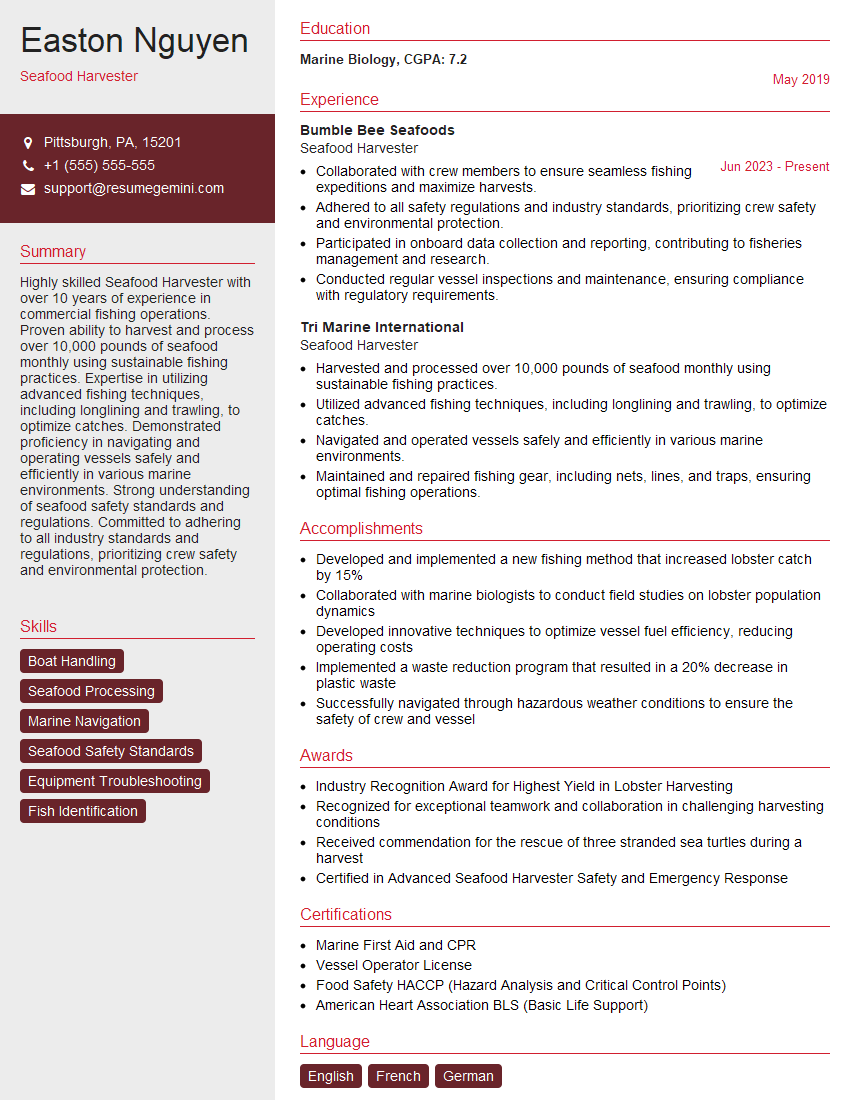
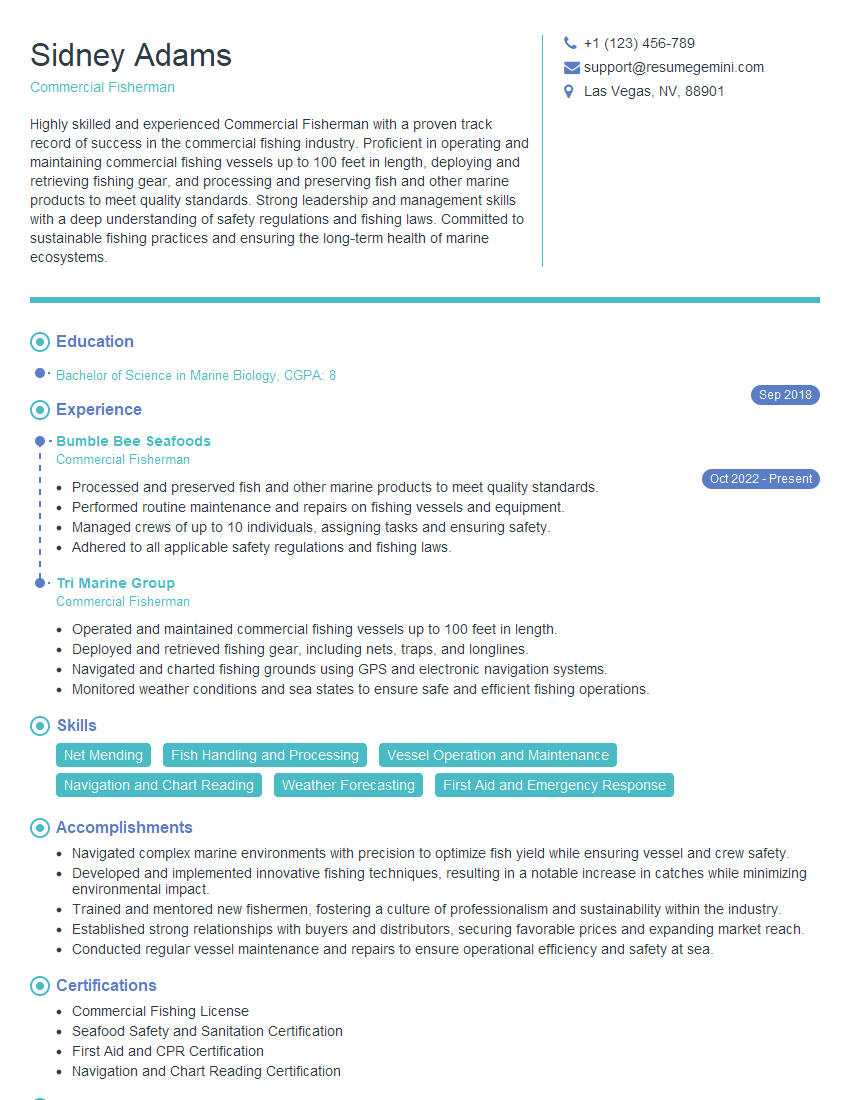
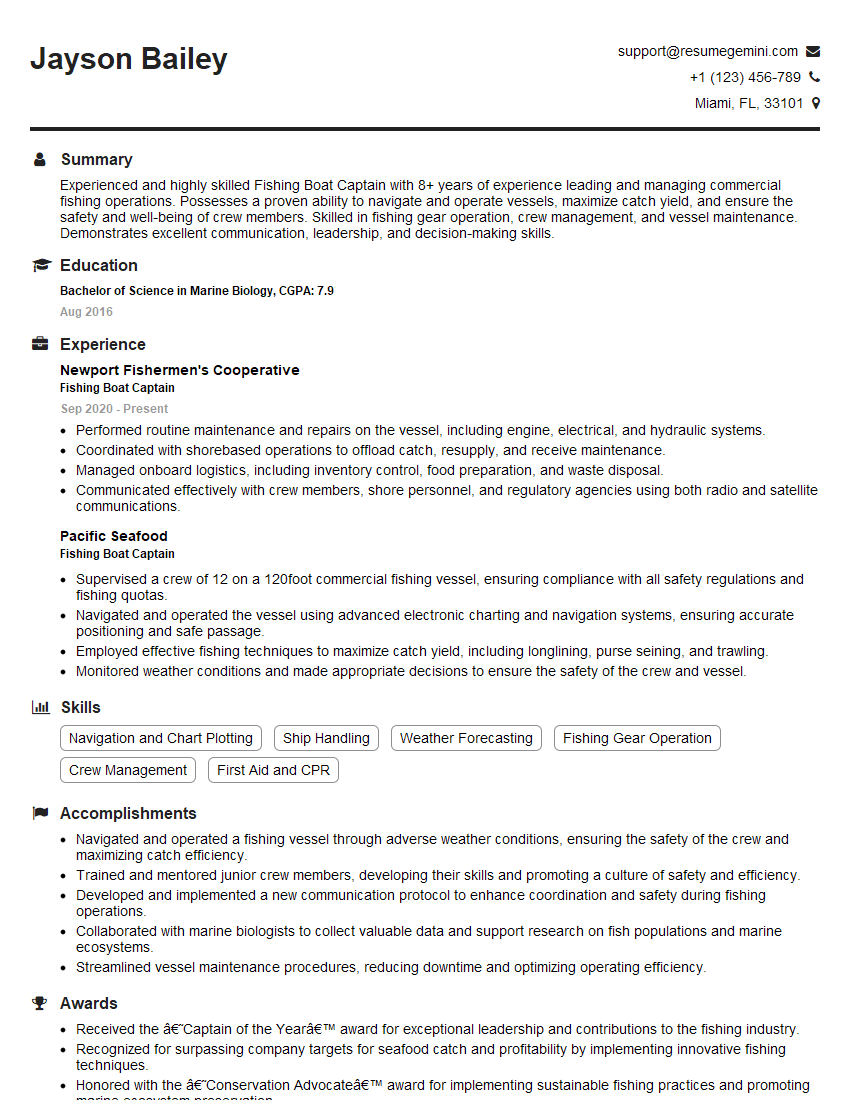
Mastering Lobster Trap Deployment and Retrieval is key to a successful and rewarding career in the fishing industry. It demonstrates practical skills, environmental awareness, and a commitment to safety. To significantly enhance your job prospects, creating a strong, ATS-friendly resume is crucial. ResumeGemini is a trusted resource that can help you build a professional and effective resume that highlights your skills and experience. Examples of resumes tailored to Lobster Trap Deployment and Retrieval are available to help guide you. Take the next step in your career journey today!
Explore more articles
Users Rating of Our Blogs
Share Your Experience
We value your feedback! Please rate our content and share your thoughts (optional).
What Readers Say About Our Blog
Very informative content, great job.
good