Interviews are more than just a Q&A session—they’re a chance to prove your worth. This blog dives into essential Lock Diagnostics interview questions and expert tips to help you align your answers with what hiring managers are looking for. Start preparing to shine!
Questions Asked in Lock Diagnostics Interview
Q 1. Explain the difference between a pin tumbler lock and a wafer lock.
The core difference between pin tumbler and wafer locks lies in their internal mechanisms. Think of it like comparing a complex puzzle to a simpler one. A pin tumbler lock uses a series of pins that need to be precisely aligned by the correct key. Each pin is split into two parts; when the key is inserted, it pushes these pin segments to the correct height, allowing the cylinder to turn. This creates a high level of security due to the numerous combinations possible. Imagine a sophisticated lock with multiple layers of defense.
Conversely, a wafer lock utilizes thinner, disc-shaped wafers. These wafers have notches that align with the key’s cuts. It’s a simpler design, making it easier to manufacture and less expensive, but also less resistant to picking. Think of it as a more straightforward puzzle, easier to solve.
Q 2. Describe the process of diagnosing a malfunctioning deadbolt.
Diagnosing a malfunctioning deadbolt involves a systematic approach. First, assess the problem: Is the key sticking? Is the bolt failing to retract or extend? Is there any visible damage? Next, check the obvious: Is the door properly aligned? Are there any obstructions preventing the bolt from moving smoothly? Is the deadbolt itself loose? Try lubricating the bolt mechanism with a dry lubricant like graphite powder. If the problem persists, inspect the internal mechanism. You might need to carefully remove the lock cylinder to examine the springs, pins, and other internal components. A common issue is worn or broken parts, requiring replacement. If you lack expertise, call a qualified locksmith.
Q 3. How do you identify and address a lock picking attempt?
Identifying a lock picking attempt can involve several clues. Look for signs of forced entry, such as scratches or pry marks around the lock cylinder or door frame. Check for unusual wear on the keyway or lock components. Sometimes, you’ll find traces of picking tools, like small metal fragments or residue. The lock might also be unusually loose. The most conclusive evidence might be finding picking tools themselves near the lock. If you suspect a picking attempt, immediately change the lock cylinder and reinforce the door frame to prevent future attempts.
Q 4. What are the common causes of key sticking in a cylinder lock?
Key sticking in a cylinder lock is often caused by debris, dirt, or corrosion within the keyway. Dust, dirt, and grime accumulate over time, interfering with the smooth movement of the key and pins. Corrosion from moisture or exposure to the elements can also bind the mechanism. Worn pins or springs within the lock cylinder can also cause resistance. Finally, a misaligned cylinder due to damage or a poorly fitting door can cause issues. Cleaning the keyway with compressed air and graphite lubricant usually resolves these issues. In persistent cases, professional locksmith intervention might be necessary for repair or replacement.
Q 5. Explain how to re-key a standard pin tumbler lock.
Re-keying a standard pin tumbler lock involves replacing the pins inside the cylinder to accept a new key. This is a skilled task; improper execution can compromise security. First, disassemble the lock cylinder. This usually involves carefully removing the retaining ring and cylinder from the door. Then, remove the existing pins and springs. Next, install the new pins and springs that correspond to the new key’s bitting (the pattern of cuts). Finally, reassemble the lock cylinder and test it with the new key. If you’re not comfortable performing this process, consult a locksmith. They have specialized tools and the expertise to do it correctly.
Q 6. What are the different types of lock picking tools and their applications?
Various tools are used for lock picking, each designed for specific purposes and levels of skill. Tension wrenches apply torque to the lock cylinder, allowing pins to be manipulated. Rakes are used to simultaneously lift multiple pins. Hooks are more precise tools to individually manipulate pins. Picks come in various shapes and sizes, offering different ways to interact with the pins. Electric picks are more advanced tools that use electronic manipulation. It’s crucial to note that using lock picking tools for illicit purposes is illegal. Lockpicking tools are primarily used by locksmiths for legitimate purposes like opening locked doors and repairing faulty locks.
Q 7. How do you determine the correct replacement parts for a damaged lock?
Determining the correct replacement parts for a damaged lock starts with identifying the lock’s manufacturer and model number. This information is usually found on the lock itself or in its documentation. Then, you can use this information to search for compatible parts from the manufacturer or a reputable locksmith supply store. Take detailed measurements of the damaged components to ensure a proper fit. If the damage is extensive or you’re unsure about the replacement procedure, consult a locksmith for assistance to avoid causing further damage.
Q 8. Describe the steps involved in installing a new electronic lock.
Installing a new electronic lock is a multi-step process that requires careful attention to detail. It begins with understanding the specific lock model and its accompanying instructions. This usually involves:
- Preparation: Assessing the door and frame for compatibility, ensuring sufficient clearance, and gathering necessary tools (screwdrivers, drill, possibly a wire stripper for electrical connections).
- Wiring (if applicable): Connecting the lock to the power supply and access control system, carefully following the wiring diagram provided. Incorrect wiring can lead to malfunction or even damage to the system.
- Mounting the Lock Body: Securing the lock body to the door and frame using appropriate screws and ensuring it’s aligned correctly. This is crucial for proper operation and security.
- Installing the Reader/Keypad (if applicable): Mounting the external reader or keypad in a convenient and accessible location, ensuring it’s securely fastened and aesthetically pleasing.
- Programming: Configuring the lock using the provided software or keypad interface. This step often involves assigning access codes, setting time schedules, and configuring user privileges.
- Testing: Thoroughly testing the lock’s functionality with various access methods (cards, codes, keys) to ensure it operates correctly and meets security requirements. This may involve several attempts using different user credentials.
- Documentation: Documenting the installation process, including any modifications or special considerations, for future reference and maintenance purposes. This includes keeping a record of access codes and user details securely.
For example, I once installed a high-security Salto electronic lock in a hospital where precise wiring and strict access control protocols were essential. The entire process, from planning to testing, took approximately three hours to ensure optimal security and functionality.
Q 9. How do you troubleshoot a malfunctioning electronic access control system?
Troubleshooting a malfunctioning electronic access control system requires a systematic approach. I typically follow these steps:
- Identify the Problem: Determine the specific issue. Is the system completely down? Are specific doors malfunctioning? Are certain users unable to gain access? The more specific the problem definition, the easier it is to troubleshoot.
- Check the Obvious: Begin with simple checks – are there any power outages? Are batteries low (in wireless systems)? Is there any physical obstruction preventing the door from opening or closing properly? Many seemingly complex issues can be resolved by addressing these basic factors.
- Inspect Wiring and Connections: Examine all wiring and connections for any loose wires, damaged cables, or corrosion. This is particularly critical with electronic locks where even a minor short circuit can disrupt functionality.
- Test Components: Test each component individually to isolate the source of the problem. This might involve testing the power supply, the access control panel, door sensors, and the lock mechanism itself.
- Check System Logs: Electronic access control systems usually maintain logs of events. Examining these logs can provide valuable clues about the nature and timing of the malfunction.
- Consult Documentation: Refer to the system’s documentation, schematics, and user manuals for troubleshooting guides and error codes.
- Contact Technical Support: If the problem persists despite systematic troubleshooting, it’s crucial to contact the manufacturer’s technical support for further assistance.
For instance, I once diagnosed a system failure where a seemingly simple loose wire behind a wall panel was causing intermittent lock failures. A quick fix saved the hospital significant downtime and potential security breaches.
Q 10. Explain the principles of forensic locksmithing.
Forensic locksmithing involves the application of locksmithing techniques to investigate crime scenes and gather evidence. It’s a specialized field that blends locksmithing skills with investigative principles. Key aspects include:
- Lock Examination: Carefully examining locks for signs of tampering, forced entry, or picking. This often involves documenting the condition of the lock, including any damage or unusual marks.
- Toolmark Analysis: Analyzing tool marks left on locks during forced entry to identify the type of tool used and possibly link it to a specific suspect.
- Evidence Collection: Properly collecting and preserving evidence, including lock parts, tools, and any other relevant items. Chain of custody is paramount to ensure evidence admissibility in court.
- Lock Reconstruction: In some cases, reconstructing a damaged lock to determine how it was compromised.
- Report Writing: Preparing a detailed report summarizing the findings of the investigation, including photographic evidence and technical analysis.
Imagine a scenario where a break-in occurred. A forensic locksmith would meticulously examine the locks, documenting the type of lock, the point of entry, and any tool marks left behind, providing crucial evidence for law enforcement.
Q 11. What safety precautions should be taken when working with locks?
Safety precautions are paramount when working with locks, both for personal safety and to avoid damage to property. These precautions include:
- Proper Tool Use: Using the correct tools for the job and using them properly to avoid injury. This includes wearing appropriate safety glasses.
- Personal Protective Equipment (PPE): Always wearing appropriate PPE, including safety glasses, gloves, and sturdy work shoes. Cuts from broken lock components are common.
- Awareness of Surroundings: Being aware of your surroundings and ensuring the work area is safe and free of hazards. Avoid working in poorly lit areas or precarious locations.
- Careful Handling of Sharp Objects: Exercising caution when handling sharp objects such as lock picks, tension wrenches, and broken lock parts. Always dispose of broken parts carefully.
- Avoiding Electric Shock: When working with electronic locks, taking precautions to avoid electric shock. This involves ensuring the power is turned off before working on any electrical components.
- Lockout/Tagout Procedures: Following proper lockout/tagout procedures when working on equipment connected to a power source to prevent unexpected energization.
For example, I always wear safety glasses when working with locks to protect my eyes from flying debris. A single piece of broken metal could cause serious damage.
Q 12. How do you handle a lockout situation for various lock types?
Handling lockout situations requires a methodical and careful approach, varying based on the type of lock. I always prioritize non-destructive methods first:
- Standard Keyed Locks: Attempt to locate a spare key, check with building management or the property owner. If a spare key is unavailable, a qualified locksmith will use techniques like picking or impressioning to open the lock without damage.
- Electronic Locks: Try using the correct access code, card, or key fob. Check for low battery levels or any system malfunctions. If access is still not possible, a locksmith can often use specialized tools and knowledge of the specific electronic system to regain access.
- Combination Locks: Attempt to recall the combination. If forgotten, unlocking combination locks requires specialized skill and often involves trying various combination sequences. Improper attempts can lead to damage.
- Padlocks: Check for spare keys. If not available, a locksmith might utilize bolt cutters (last resort), or specialized tools depending on the padlock type and security level. If the padlock is high security, attempting to open it could cause permanent damage.
Each situation is unique. For instance, I once successfully opened a high-security deadbolt on a safe using advanced lock picking techniques, avoiding the need for destructive entry and preserving the lock’s integrity.
Q 13. What is the importance of proper key control and management?
Proper key control and management are crucial for maintaining security and preventing unauthorized access. Poor key control can lead to significant security vulnerabilities and potentially disastrous consequences:
- Security Risks: Lost or stolen keys can allow unauthorized individuals access to buildings, vehicles, or sensitive information.
- Liability Issues: Inadequate key control can leave organizations liable for losses due to theft, vandalism, or breaches of security.
- Operational Efficiency: A well-managed key system ensures keys are readily available when needed and avoids costly delays caused by lost or misplaced keys.
- Auditing and Accountability: A documented key system allows for tracking who has access to which keys, making it easier to determine responsibility in the case of security breaches.
Implementing a robust key management system, including key registers, regular audits, and a clear process for key issuance and revocation is critical for any organization concerned about security. This might involve using keyed cabinets, restricted access, or digital key management systems.
Q 14. Describe your experience with different lock brands and models.
Over my career, I’ve worked extensively with various lock brands and models, encompassing both mechanical and electronic systems. This includes:
- Mechanical Locks: Schlage, Kwikset, Mul-T-Lock, Medeco – I’m familiar with the intricacies of their different designs, pin tumbler mechanisms, and security features.
- Electronic Locks: ASSA ABLOY, Salto, Allegion – I possess expertise in their electronic access control systems, including their programming, networking, and troubleshooting.
- High-Security Locks: I’ve worked with high-security locks designed for maximum protection, including those utilizing complex pin tumbler arrangements, dimple keys, and advanced key control systems.
This broad experience allows me to effectively diagnose and repair a wide range of locks. For example, my experience with Mul-T-Lock’s high security features helped me quickly resolve a complex lockout situation involving a particularly secure system at a high-value jewelry store.
Q 15. Explain the process of inspecting and assessing the security of a building’s locking systems.
Inspecting a building’s locking systems involves a thorough, multi-stage process. It starts with a visual inspection of all locks, doors, frames, and strike plates, looking for obvious signs of damage, tampering, or wear and tear. This includes checking for forced entry points, loose screws, damaged cylinders, or any signs of picking or drilling attempts.
Next, I’d perform a functional assessment. This involves testing each lock’s mechanism to ensure smooth operation – proper latching and unlatching, key insertion and turning, and the absence of any binding or sticking. I’d pay close attention to the keyway’s condition, looking for any unusual wear or debris. This initial assessment will indicate whether more advanced diagnostic tools or further investigation is required.
Finally, a security assessment evaluates the overall effectiveness of the system. This considers factors like the type of locks used (e.g., deadbolt, mortise lock), their grade, the security of the door and frame, the presence of additional security measures (e.g., alarm systems, reinforced doors), and the overall building design. A comprehensive assessment might involve analyzing vulnerabilities in the system’s layout, such as easily accessible points of entry or poorly illuminated areas.
Career Expert Tips:
- Ace those interviews! Prepare effectively by reviewing the Top 50 Most Common Interview Questions on ResumeGemini.
- Navigate your job search with confidence! Explore a wide range of Career Tips on ResumeGemini. Learn about common challenges and recommendations to overcome them.
- Craft the perfect resume! Master the Art of Resume Writing with ResumeGemini’s guide. Showcase your unique qualifications and achievements effectively.
- Don’t miss out on holiday savings! Build your dream resume with ResumeGemini’s ATS optimized templates.
Q 16. How do you determine the cause of a lock failure?
Diagnosing a lock failure requires a systematic approach. First, I’d carefully observe the lock’s symptoms: Does the key turn freely but not latch? Does the key bind or stick? Does the lock fail to unlock completely? Each symptom points toward a specific problem.
A common cause is wear and tear – particularly on older locks. The internal components might be worn down, requiring lubrication or replacement. Another potential cause is debris or foreign objects obstructing the mechanism. Simple cleaning often solves this. Key breakage or damage can also lead to failure. A broken key can sometimes be extracted using specialized tools, but a damaged cylinder may require replacement.
For more complex issues, a detailed examination of the lock’s internal components might be needed. This could involve disassembling the lock (with appropriate care), inspecting each part for damage or malfunction, and testing the interaction between parts. Identifying the broken component often leads to a simple and efficient repair or replacement.
Q 17. What are the signs of a compromised lock?
Several signs can indicate a compromised lock. Obvious signs include physical damage, such as pry marks, drill holes, or signs of forced entry. Less obvious signs may include unusually loose screws, misaligned strike plates, or unexplained scratches or wear around the lock cylinder.
Signs of tampering might include unusual keyway wear that is not consistent with normal use, or evidence of picking or manipulation attempts. Sometimes you might notice residue of lock picking tools or forced entry attempts. A lock that operates erratically or binds unexpectedly could also indicate internal damage or manipulation. Any unusual behavior warrants a thorough investigation.
Additionally, consider the context. If a lock has been subjected to recent attempts of intrusion, or if there are suspicious activities in the vicinity, it heightens the suspicion of compromise even if no immediate physical damage is evident. A systematic inspection is needed to ensure the lock is not compromised internally.
Q 18. What are the best practices for maintaining and preventing lock malfunctions?
Preventing lock malfunctions involves regular maintenance and proactive security measures. Regular lubrication of the lock mechanism with a suitable lubricant is essential to reduce friction and prevent wear. This should be performed at least annually, or more frequently in high-traffic areas. Keep the keyway clean and free of debris to prevent jams.
Regular inspection is crucial. Periodically check the locks for signs of wear, damage, or tampering. This includes inspecting screws to ensure they are tight and the lock is firmly attached to the door and frame. Any loose or damaged components should be repaired or replaced immediately.
Environmental factors play a role; protect locks from exposure to extreme temperatures, moisture, and corrosive substances. Consider using weatherproof covers for outdoor locks. Furthermore, installing high-quality locks from reputable manufacturers contributes significantly to long-term reliability and security.
Q 19. How familiar are you with different types of keyways?
I’m very familiar with various keyways, from simple pin tumbler designs to more complex dimple keys, wafer keys, and even high-security keyways like those used in Medeco or Mul-T-Lock systems. Each keyway has distinct characteristics, impacting security and pick resistance. Pin tumbler keyways, for example, are relatively common, but the precise arrangement of pins dictates security. Variations in the depths and configurations of these pins increase pick resistance.
Dimple keys, with their unique keyway profiles, provide enhanced security by offering more complex bitting arrangements. High-security keyways often incorporate features like side pins, control pins, or other specialized mechanisms to prevent picking, and many use patented designs to restrict duplication. Understanding the nuances of each keyway’s design and associated security strengths and weaknesses is crucial for proper lock selection, maintenance, and security assessment.
Q 20. Describe your experience with high-security locks and their specific vulnerabilities.
High-security locks, designed to resist picking, bumping, and other forms of manipulation, often incorporate advanced keyways and internal mechanisms. Examples include Medeco, Mul-T-Lock, and Abloy locks. These locks typically feature patented keyways, making unauthorized duplication difficult. However, even high-security locks have vulnerabilities.
One potential vulnerability is physical attack. Sufficient force or specialized tools can compromise even the most resilient lock. Another vulnerability is related to the installation and maintenance of the lock itself. Poor installation can weaken the security provided by the lock itself. Finally, vulnerabilities can sometimes arise from design flaws or manufacturing defects that may not be immediately apparent.
My experience includes assessing these locks for vulnerabilities, recommending appropriate security measures, and advising on proper maintenance procedures to maximize their effectiveness and lifespan. It’s crucial to remember that no lock is entirely unbreakable, and a layered approach to security, combining high-security locks with other security measures, is the most effective strategy.
Q 21. Explain the differences between mechanical and electronic locks.
Mechanical and electronic locks differ significantly in their operating principles and security features. Mechanical locks rely on physical components, such as pins, springs, and tumblers, to engage and disengage the locking mechanism. They are typically operated using a physical key. Their security relies on the complexity of their internal mechanisms and the resistance to various manipulation techniques.
Electronic locks, on the other hand, use electronic components, such as microprocessors and sensors, to control access. They can be operated by various methods, including keypads, proximity cards, biometric scanners, or even smartphones. Their security features often include access codes, encrypted communications, and tamper detection systems. While offering advanced features such as access control and remote management, electronic locks also introduce vulnerabilities associated with software flaws, hacking, or power outages.
The choice between mechanical and electronic locks depends on the specific security requirements and budget. Mechanical locks are typically simpler, more robust, and less susceptible to power failures but offer limited access control features. Electronic locks provide greater flexibility and management capabilities but require specialized maintenance and can be vulnerable to electronic attacks.
Q 22. How do you handle a situation where a lock needs urgent repair?
Urgent lock repair situations demand immediate action and a systematic approach. My priority is always to secure the premises and then address the immediate problem.
- Assessment: I begin by quickly assessing the situation, determining the type of lock, the nature of the malfunction (e.g., jammed, broken key, forced entry), and the level of security risk.
- Emergency Measures: If the situation involves a security breach, I’ll take steps to secure the area, potentially including temporary measures like reinforcing the door or contacting law enforcement if necessary.
- Repair or Replacement: Depending on the assessment, I’ll proceed with either a repair (if feasible and cost-effective) or a replacement. In some cases, particularly with severely damaged locks, replacing the entire locking mechanism is the most secure and efficient option.
- Documentation: Thorough documentation, including photos and a detailed report of the incident, the repair or replacement work, and any security concerns, is crucial for insurance purposes and future reference.
For example, I once responded to a call where a business owner had been locked out after a break-in attempt. I quickly secured the premises, assessed the damage to the door and lock, and replaced the compromised lock mechanism, ensuring the business was secure before leaving.
Q 23. Explain the use of specialized tools for lock diagnostics.
Specialized tools are essential for efficient and accurate lock diagnostics. They allow for precise manipulation and assessment of lock components without causing further damage.
- Tension Wrenches: These tools apply controlled tension to the lock cylinder, allowing for manipulation of the pins during picking or unlocking.
- Pick Sets: These sets contain various picks, designed to manipulate the individual pins within a lock cylinder. Different picks are used for various lock types and complexities.
- Lock Decoding Tools: Some advanced tools can decode the internal mechanisms of a lock, providing information about its internal workings and vulnerabilities.
- Non-destructive Entry Tools: These tools are designed to open locks without causing damage. This is particularly crucial for delicate antique locks or situations where preserving the lock’s integrity is important.
- Digital Inspection Tools: Borescopes or miniature cameras can be used to visually inspect the internal components of locks, identifying hidden damage or obstructions.
For instance, using a tension wrench in conjunction with a pick allows for precise manipulation of the pins, enabling the opening of a lock without damaging it – a critical skill for locksmiths.
Q 24. How do you ensure the security of a lock after repair or installation?
Ensuring security after lock repair or installation involves a multi-faceted approach focused on both the hardware and the overall security posture.
- High-Quality Components: Using high-quality, reputable lock mechanisms and components is fundamental. Cheap locks are more vulnerable to picking or forcing.
- Proper Installation: Correct installation is crucial. A poorly installed lock, even a high-quality one, will be vulnerable. This includes ensuring proper alignment, secure fastening, and appropriate strike plates.
- Security Upgrades: Consider adding security features such as reinforced door frames, strike plates, or security pins to enhance resistance against forced entry.
- Regular Maintenance: Locks should be regularly inspected and maintained to ensure they are functioning correctly and are not showing signs of wear and tear.
- Key Control: Implementing a robust key control system is essential, minimizing the number of keys in circulation and managing access effectively. This can include key registration systems or high-security keyways.
Think of it like building a house; using strong materials (high-quality locks) and proper construction techniques (correct installation) are just as important as reinforcing weak points (security upgrades).
Q 25. What is your experience with different access control technologies (e.g., keypads, card readers)?
My experience encompasses a wide range of access control technologies, including keypads, card readers, and biometric systems. Understanding their functionalities, strengths, and weaknesses is crucial for providing effective security solutions.
- Keypads: I have experience installing, programming, and troubleshooting various keypad systems, from simple numeric keypads to those with advanced features like timed access or multiple user codes. I understand the importance of selecting a keypad with appropriate security features to match the needs of the application.
- Card Readers: I’m proficient in working with different card reader technologies, including magnetic stripe, proximity, and smart card readers. This includes understanding the communication protocols and integration with access control systems.
- Biometric Systems: I have experience with fingerprint, facial recognition, and iris scanning systems. These technologies offer higher security than traditional methods, but require careful consideration of privacy implications and potential vulnerabilities.
For example, I recently helped a client upgrade their office security by integrating a card reader system with their existing alarm system, significantly enhancing security and providing detailed access logs.
Q 26. Describe your experience with lock programming and configuration.
Lock programming and configuration is a critical aspect of my work. It involves understanding the specific programming protocols of different lock mechanisms and access control systems.
- Mechanical Locks: While many mechanical locks don’t require programming, understanding their internal mechanisms and keyways is crucial for rekeying or replacing them.
- Electronic Locks: Electronic locks often require specific programming procedures to set access codes, manage user credentials, and configure various operational parameters. This might involve using dedicated software or handheld programmers.
- Access Control Systems: Integrating electronic locks into access control systems often requires configuring the software to manage user access, permissions, and schedules. This involves understanding network protocols, data formats, and system integration techniques.
For instance, I recently programmed a new smart lock system for a client, configuring individual access codes for different employees and setting up timed access restrictions to ensure that only authorized personnel could access the building during specific hours.
Q 27. How do you handle customer complaints related to lock issues?
Handling customer complaints involves a professional, empathetic, and solution-oriented approach.
- Active Listening: I start by actively listening to the customer’s concerns, allowing them to fully explain the problem without interruption. This helps me understand the situation from their perspective.
- Thorough Investigation: I conduct a thorough investigation, examining the lock and its surrounding environment to identify the root cause of the problem.
- Clear Communication: I communicate clearly and honestly with the customer, explaining my findings and outlining the proposed solutions, including associated costs and timelines.
- Resolution and Follow-up: I strive to resolve the issue promptly and effectively. Following up with the customer after the repair or replacement is crucial to ensure their satisfaction and address any remaining concerns.
Recently, a customer complained about a faulty keypad. After careful examination, I discovered a loose connection. I explained the issue, repaired it on the spot, and followed up to confirm they were satisfied with the resolution.
Q 28. How do you stay updated with the latest advancements in lock technology?
Staying updated in the rapidly evolving field of lock technology requires a proactive and multi-pronged approach.
- Professional Development: I regularly attend industry conferences, workshops, and training courses to learn about new technologies, techniques, and best practices.
- Industry Publications: I subscribe to relevant trade publications and journals to keep abreast of the latest research, innovations, and regulatory changes.
- Online Resources: I actively engage with online forums, communities, and educational resources to learn from other professionals and stay updated on emerging trends.
- Manufacturer Resources: I maintain relationships with lock manufacturers and suppliers to access their technical documentation, product updates, and training materials.
Continuous learning is vital in this field, ensuring I can provide clients with the most effective and secure solutions available.
Key Topics to Learn for Lock Diagnostics Interview
- Understanding Diagnostic Processes: Explore the theoretical foundations of diagnostic testing, including various methodologies and their applications within the healthcare industry. Consider the limitations and potential biases inherent in different approaches.
- Data Analysis and Interpretation: Practice interpreting diagnostic data, focusing on identifying patterns, anomalies, and drawing meaningful conclusions. Develop strong skills in data visualization and presentation to effectively communicate your findings.
- Technical Proficiency: Familiarize yourself with relevant software and tools commonly used in Lock Diagnostics. Understanding data management, statistical analysis software, and relevant programming languages will be beneficial.
- Quality Control and Assurance: Understand the importance of maintaining high standards of accuracy and reliability in diagnostic testing. Learn about quality control procedures and best practices in this field.
- Ethical Considerations: Explore the ethical implications of diagnostic testing, including patient privacy, informed consent, and responsible data handling. Understand the importance of adhering to professional codes of conduct.
- Problem-Solving and Critical Thinking: Develop your ability to approach complex diagnostic challenges systematically. Practice breaking down problems, identifying potential solutions, and evaluating their effectiveness.
- Communication and Teamwork: Prepare to discuss your experience working collaboratively on projects and effectively communicating technical information to both technical and non-technical audiences.
Next Steps
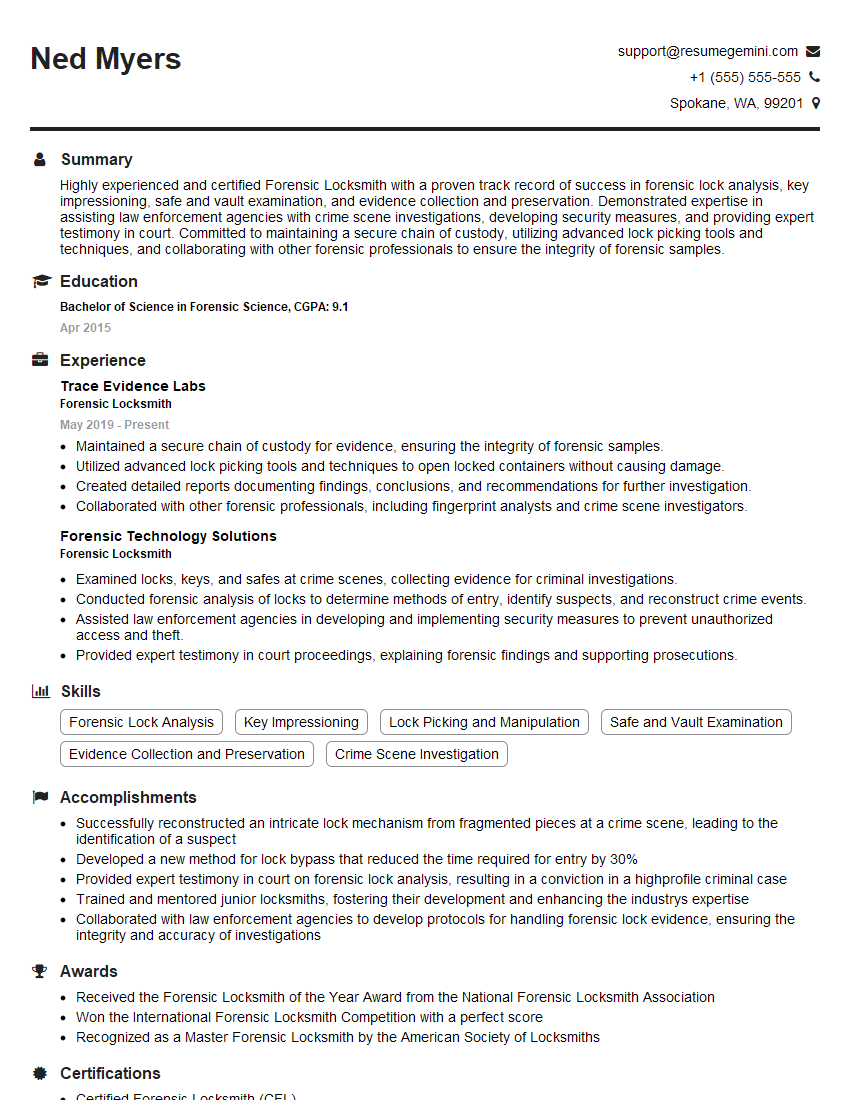
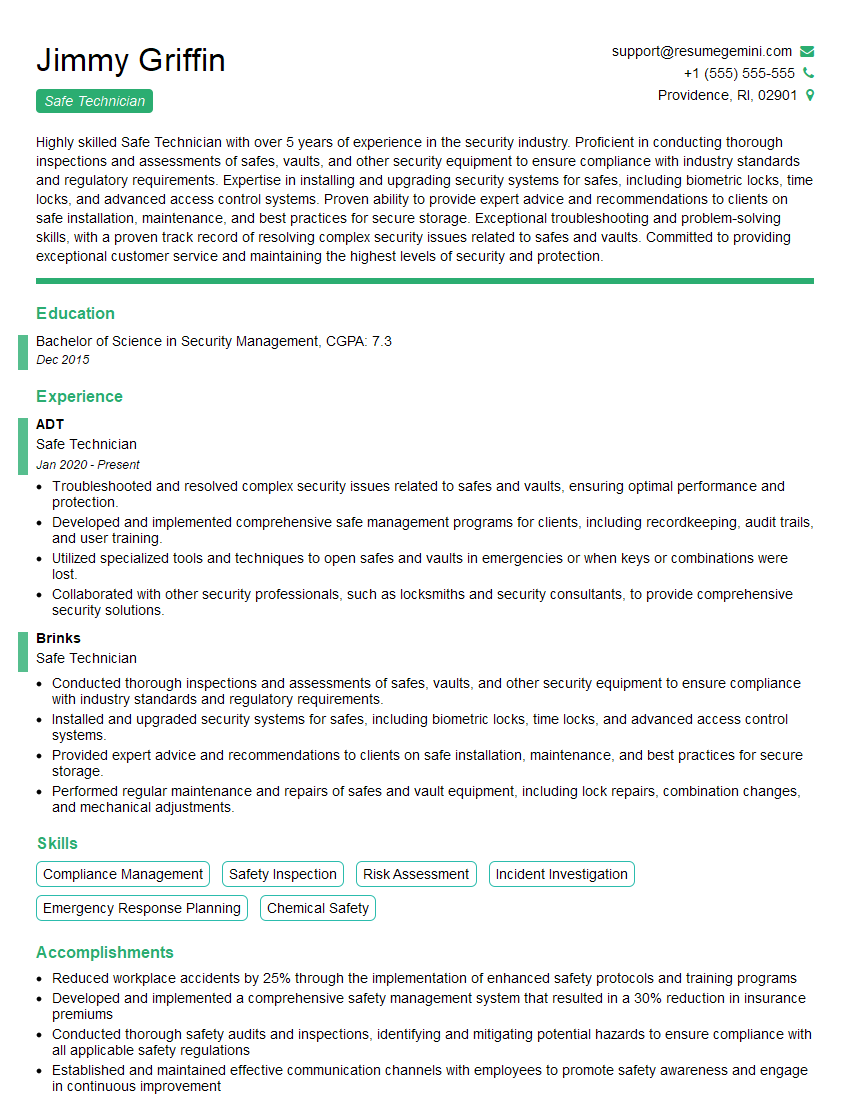
Mastering Lock Diagnostics principles significantly enhances your career prospects within the healthcare technology sector. It demonstrates a strong foundation in critical analytical skills and a commitment to precision – highly valued attributes in this field. To maximize your chances of landing your dream role, focus on creating a compelling and ATS-friendly resume that effectively highlights your skills and experience. ResumeGemini is a trusted resource to help you build a professional and impactful resume. Examples of resumes tailored to Lock Diagnostics are available to guide you, showcasing how to effectively present your qualifications to recruiters.


Explore more articles
Users Rating of Our Blogs
Share Your Experience
We value your feedback! Please rate our content and share your thoughts (optional).
What Readers Say About Our Blog
Very informative content, great job.
good