The right preparation can turn an interview into an opportunity to showcase your expertise. This guide to Lock Selection interview questions is your ultimate resource, providing key insights and tips to help you ace your responses and stand out as a top candidate.
Questions Asked in Lock Selection Interview
Q 1. Explain the difference between mortise locks and cylindrical locks.
Mortise locks and cylindrical locks are both common types of mechanical locks, but they differ significantly in their construction and installation. A mortise lock is a lock that’s installed into a mortise (a rectangular cut-out) in a door. This allows for a more robust and secure mechanism, often including a larger, more complex locking bolt. Think of it as a deeply embedded, highly integrated security system. They are typically used in higher-security applications because of their strength and resistance to attack. In contrast, a cylindrical lock (also known as a rim lock or euro-cylinder lock) is installed on the surface of the door. It uses a cylinder mechanism that is inserted into the door’s edge and secured with screws. While easier to install, cylindrical locks are generally less secure than mortise locks, as they are more vulnerable to forceful attacks or picking. Imagine the difference between a deeply rooted tree (mortise) and a sapling stuck in the ground (cylindrical); one withstands the elements far better.
In short: Mortise locks offer superior security due to their embedded design, while cylindrical locks are easier to install and less expensive but more vulnerable.
Q 2. Describe the various types of keyways and their security implications.
Keyways are the patterns cut into a key’s bitting, determining which locks it will open. Different keyways offer varying levels of security. Some common types include:
- Pin tumbler keyways: These are the most common type and use a series of pins to operate the lock. Security varies greatly depending on the complexity of the keyway and the quality of the pins. A simple keyway is vulnerable to picking, while more complex ones, like those with serrated pins or side pins, offer greater resistance.
- Wafer tumbler keyways: Simpler than pin tumblers, they are usually less secure and more prone to picking.
- Disc detainer keyways: These use rotating discs instead of pins. While some high-security disc detainer systems exist, many are relatively easy to pick.
- Lever tumbler keyways: These locks use levers that must be aligned in a specific way to open the lock. They’re less common now and generally considered less secure than pin tumbler locks.
Security Implications: Simple, widely available keyways are easier to pick and duplicate. More complex keyways, often using patented designs or incorporating anti-picking features, significantly increase security. Keyway design, material, and manufacturing quality all play critical roles in the lock’s overall resistance to picking, bumping, and other forms of manipulation.
Q 3. What factors influence the selection of a high-security lock?
Selecting a high-security lock involves considering several key factors:
- The level of risk: The value of the assets being protected and the potential consequences of a breach dictate the level of security needed. A high-value jewelry store requires far more robust security than a garden shed.
- Lock type and keyway: As discussed, mortise locks with complex, patented keyways generally offer the highest level of security. High-security keyways often incorporate anti-picking features like side pins, serrated pins, or specialized key profiles.
- Materials: Hardened steel components resist drilling and picking better than softer materials. Look for locks made from high-quality, durable materials.
- Additional security features: Features like anti-bumping pins, anti-pick shields, and reinforced housings significantly enhance security. Consider locks with tamper-evident designs that indicate if the lock has been tampered with.
- Installation: A poorly installed lock, regardless of its quality, is vulnerable. The lock must be properly fitted and secured to the door and frame to prevent attacks.
- Key control: A robust key control system ensures only authorized individuals have access to keys (more on this later).
Example: A high-security lock for a bank vault might include a multi-locking system, high-security keyways, hardened steel construction, tamper-evident features, and a secure key management protocol.
Q 4. How do you assess the vulnerability of an existing locking system?
Assessing the vulnerability of an existing locking system involves a systematic evaluation covering multiple aspects:
- Visual inspection: Look for signs of tampering, damage, or wear and tear on the lock, door frame, and surrounding area. Note any obvious weaknesses.
- Lock type and keyway analysis: Identify the type of lock and its keyway. Research the security rating and known vulnerabilities of that specific lock model and keyway. Look for easily accessible information on lock picking techniques.
- Testing lock mechanisms: This may involve attempting to pick or bump the lock (under appropriate circumstances and with the owner’s permission), or using other non-destructive techniques to determine vulnerabilities.
- Access point assessment: Examine all potential access points, including windows, doors, and any weaknesses in the structure itself. This goes beyond just the locks to identify any vulnerabilities in the overall system.
- Key control review: Evaluate the current key management procedures to identify potential weaknesses and risks associated with key duplication or unauthorized access.
Example: A visibly damaged lock, coupled with a simple keyway known for being easily picked, is a clear indicator of a vulnerable system. A comprehensive assessment may lead to recommendations for upgrading the locks, strengthening access points, and implementing improved key control measures.
Q 5. Explain the concept of key control and its importance in security.
Key control is the process of managing and monitoring the distribution, use, and storage of keys. This is critical for overall security, as a compromised key renders even the most secure lock useless. Think of it as a multi-layered defense; even if the fortress (lock) is strong, a compromised key is akin to opening the gates.
Importance: Effective key control minimizes the risk of unauthorized access, theft, and internal breaches. It ensures that only authorized personnel have access to keys and that keys are properly accounted for. This includes:
- Key registration: Maintaining a detailed record of all keys issued, including who received them, and their intended purpose.
- Limited key duplication: Restricting key duplication to authorized individuals and employing reliable locksmiths. High-security locks often have limited duplication capabilities.
- Regular key audits: Periodically checking the inventory of all keys to ensure they are accounted for and that no unauthorized keys exist.
- Key withdrawal procedures: Establishing procedures for retrieving keys from departing employees or those who no longer need access.
- Secure key storage: Keeping keys in secure locations, such as key cabinets or safes, with limited access.
Example: A company might use a key control system with numbered keys, a log book recording who possesses each key, and a designated key custodian to manage key access and distribution.
Q 6. What are the different types of access control systems and their advantages/disadvantages?
Access control systems range from simple mechanical locks to complex electronic systems. Some common types include:
- Mechanical locks: These are the most basic systems, relying solely on physical keys. They are inexpensive but offer limited control and are vulnerable to key duplication and loss.
- Key card systems: These use plastic cards with embedded magnetic stripes or microchips to grant access. They offer improved control over access and allow for easy revocation of access if a card is lost or stolen. However, they can be vulnerable to card cloning or unauthorized duplication.
- PIN code systems: These systems use numeric codes entered on a keypad. While relatively easy to implement, they are vulnerable to brute force attacks if the codes are weak or easily guessable.
- Biometric systems: These systems use biometric identifiers like fingerprints, iris scans, or facial recognition to authenticate users. They offer high security and eliminate the need for physical keys or codes. However, they can be expensive to install and maintain, and may raise privacy concerns.
- Electronic access control systems (EAC): These sophisticated systems integrate multiple technologies, such as key cards, PIN codes, biometric scanners, and networked access control software. They offer comprehensive control over access and can generate detailed audit trails. However, they can be expensive and require specialized technical expertise to manage.
Advantages and Disadvantages: Each system has its strengths and weaknesses regarding cost, security, complexity, and ease of use. The best system depends on the specific security needs and budget constraints of the application.
Q 7. Describe your experience with various lock manufacturers and their products.
Throughout my career, I’ve worked extensively with numerous lock manufacturers, gaining experience with a wide range of products and technologies. For instance, I’ve specified and overseen the installation of high-security Mul-T-Lock systems in commercial settings, appreciating their advanced keyways and anti-picking features. I’ve also utilized ASSA ABLOY products, particularly their electromechanical locks and access control systems, for integrated security solutions in large facilities. My experience also extends to more budget-friendly options from manufacturers like Yale and Schlage, focusing on appropriate application and understanding the tradeoffs in security versus cost. This experience has given me a deep understanding of different manufacturers’ strengths and weaknesses, allowing me to make informed recommendations based on specific client needs and budgetary constraints. I’ve also worked with specialized manufacturers focusing on niche security requirements, such as high-security vault locks or specialized access control systems for sensitive environments.
This breadth of experience allows me to provide comprehensive and tailored advice, ensuring the selection of locks and systems that optimally balance security, functionality, and cost-effectiveness for each specific situation.
Q 8. How do you determine the appropriate level of security for a given application?
Determining the appropriate security level for a lock hinges on a risk assessment. Think of it like building a house – you wouldn’t use the same materials and techniques for a garden shed as you would for a high-security bank vault. We need to consider the value of what’s being protected, the potential consequences of a breach, and the threat level.
For example, a simple padlock might suffice for a garden gate, but a high-security deadbolt with a reinforced door frame is necessary for a main entrance to a home. A high-security commercial facility might require multiple layers of security including electronic access control systems in conjunction with high-grade mechanical locks. The process involves identifying assets, assessing vulnerabilities, and then selecting locks that meet or exceed the required security level. This might include considering factors such as the lock’s strength, pick resistance, and the quality of the installation.
- Asset Value: What’s the monetary or sentimental value of what you’re protecting?
- Threat Level: How likely is an attempted breach? Is it a high-traffic area or a remote location?
- Consequences of Failure: What are the repercussions of a successful breach? Loss of property, data compromise, or personal injury?
Q 9. Explain the process of conducting a lock vulnerability assessment.
A lock vulnerability assessment involves a systematic evaluation of a lock system’s weaknesses. It’s a multi-step process that combines physical inspection and technical analysis.
- Visual Inspection: This starts with a thorough examination of all locks, hardware, and surrounding structures. We look for signs of tampering, damage, or weak points.
- Testing and Manipulation: This phase might involve attempting to pick locks (in a controlled and ethical manner, of course!), testing their resistance to various attack methods, and assessing the strength of the installation. I’d use a range of tools and techniques, simulating real-world attacks.
- Security Analysis: We examine the overall security architecture – how locks interact with other security measures, and any potential vulnerabilities arising from their placement or integration with other systems.
- Reporting and Recommendations: The assessment culminates in a detailed report outlining vulnerabilities discovered, their severity, and specific recommendations for improvements. This might include suggestions for upgrading locks, strengthening installation, or adding supplementary security measures.
For instance, we might find that a certain type of lock is vulnerable to a specific picking technique or that the door frame is weak, negating the effectiveness of a high-security lock.
Q 10. What are the common methods used to bypass locks, and how can they be prevented?
Common lock bypass methods include lock picking, bumping, drilling, and destructive force. Prevention strategies vary depending on the method.
- Lock Picking: This involves manipulating the internal components of a lock to open it without a key. High-security pin tumbler locks with anti-pick features offer the best resistance.
- Bumping: This uses a specially shaped key to force the pins to align. Bump-resistant locks are designed to mitigate this threat.
- Drilling: Drilling can bypass many locks. Hardened steel locks and reinforced door frames offer protection.
- Destructive Force: This is a brute-force approach. Strong locks, reinforced doors, and additional security measures like alarms deter this.
For instance, using a high-security pin tumbler lock with anti-pick features along with a reinforced door jamb and strike plate significantly improves protection against various attack methods.
Q 11. How do you ensure compliance with relevant security standards and regulations?
Compliance with security standards and regulations is crucial for maintaining a secure environment. It varies depending on location and industry. We need to be familiar with relevant legislation and standards such as those pertaining to building codes, data protection, and workplace safety.
This involves selecting locks that meet or exceed minimum security requirements specified by these standards. Documentation is key. We maintain detailed records of all locks, their specifications, maintenance schedules, and any modifications made. Regular audits ensure ongoing compliance. For example, in healthcare, HIPAA compliance would influence lock selection and key management for patient records. Similarly, financial institutions must adhere to strict regulations concerning access control and data security, influencing their lock selection criteria.
Q 12. Describe your experience with key duplication and management systems.
I have extensive experience with key duplication and management systems, including both traditional methods and modern electronic access control systems.
Traditionally, this involved maintaining detailed key records, using secure key cabinets, and restricting access to key-cutting machines. Today, electronic systems offer enhanced security and control. These systems often involve card readers, biometric authentication, or digital keypads, limiting access to authorized personnel. They also provide audit trails of who accessed what, when. For instance, I’ve implemented electronic access control systems in high-security facilities where access is strictly controlled and monitored. This provides a much higher level of security than relying solely on mechanical key systems.
Q 13. What are the different types of lock picking tools and techniques?
Lock picking tools and techniques vary greatly in sophistication. At the most basic level, you might find tension wrenches (to apply torque to the lock cylinder) and picks (to manipulate the lock pins). More advanced tools might include:
- Rakes: Designed to lift multiple pins simultaneously.
- Hooks: Used to engage and lift individual pins.
- Dimple picks: Special picks for dimple locks.
- Electric picks: Electronic devices that automate the picking process.
Techniques range from simple single-pin picking to more complex methods that exploit vulnerabilities in specific lock designs. Understanding these tools and techniques is essential for conducting vulnerability assessments and for designing locks with enhanced security features. The knowledge of these tools and techniques helps in designing more resistant locks and implementing better security practices.
Q 14. How do you select locks based on environmental factors (e.g., temperature, humidity)?
Environmental factors significantly impact lock performance. Extreme temperatures, humidity, and exposure to the elements can degrade lock components, leading to malfunction or failure.
For outdoor applications, locks constructed from materials resistant to corrosion and temperature extremes are essential. Stainless steel or weather-resistant alloys are common choices. In extremely cold climates, lubricants designed for low-temperature operation might be necessary. Similarly, in high-humidity environments, locks with features to prevent corrosion are crucial. For instance, in coastal areas, locks made of marine-grade stainless steel would be preferred to prevent rust and maintain functionality. Careful consideration of materials and design is critical for ensuring the longevity and reliable performance of locks in diverse environments.
Q 15. Explain the importance of regular lock maintenance and inspection.
Regular lock maintenance and inspection are crucial for ensuring the security and longevity of your locking systems. Think of it like regular car maintenance – neglecting it leads to bigger problems down the line. A well-maintained lock is less likely to fail, jam, or become vulnerable to picking or forced entry.
- Regular Inspection: This involves visually checking for wear and tear, loose screws, damaged components, and signs of tampering. Look for scratches, rust, or any unusual movement. Pay close attention to the strike plate (the part of the lock that goes into the door frame) as it often gets overlooked.
- Lubrication: Applying a graphite-based lubricant (never oil!) to the lock mechanism can significantly reduce friction and improve its smooth operation. This prevents the lock from seizing up and extends its lifespan.
- Testing: Regularly test the lock’s functionality. This means trying to open and close it multiple times to ensure it is working as it should. Pay attention to how smoothly it operates.
- Professional Maintenance: For complex or high-security locks, it is advisable to schedule professional maintenance at least once a year. A locksmith can identify potential issues you might miss and address them proactively.
For example, I once worked with a client who had neglected their main entrance locks for years. A simple visual inspection revealed significant rust and wear on the cylinder pins, making the lock exceptionally vulnerable. Replacing the lock was a relatively simple and inexpensive fix, but the cost could have been much higher had a break-in occurred.
Career Expert Tips:
- Ace those interviews! Prepare effectively by reviewing the Top 50 Most Common Interview Questions on ResumeGemini.
- Navigate your job search with confidence! Explore a wide range of Career Tips on ResumeGemini. Learn about common challenges and recommendations to overcome them.
- Craft the perfect resume! Master the Art of Resume Writing with ResumeGemini’s guide. Showcase your unique qualifications and achievements effectively.
- Don’t miss out on holiday savings! Build your dream resume with ResumeGemini’s ATS optimized templates.
Q 16. What are the different types of electronic locking systems and their features?
Electronic locking systems offer a high level of security and convenience compared to traditional mechanical locks. They utilize electronic components to control access, often integrated with sophisticated management systems.
- Keypad Locks: These locks use a numerical keypad to input a code for access. They are relatively simple, affordable, and easy to install. However, they are vulnerable to brute-force attacks if the code is simple and easily guessed.
- Card Readers: These systems use proximity cards or fobs to grant access. They offer greater security than keypad locks as the access credentials are harder to replicate. They are often used in office buildings and other commercial spaces.
- Biometric Locks: These utilize fingerprint scanners, facial recognition, or iris scanners to verify identity. They provide the highest level of security but can be more expensive to install and maintain.
- Smart Locks: These locks connect to a network (Wi-Fi, Bluetooth), allowing remote control and monitoring via a smartphone app. They offer features like remote unlocking, keyless entry, and activity logs. The security depends heavily on the quality of the app and the security protocols implemented.
The choice of electronic locking system depends heavily on the specific security needs and budget of the client. A small office might find a keypad lock sufficient, while a high-security facility would require a more advanced biometric system.
Q 17. How do you integrate lock systems with other security technologies (e.g., CCTV, alarm systems)?
Integrating lock systems with other security technologies creates a comprehensive and robust security infrastructure. This integration provides a layered approach to security, enhancing both deterrence and response capabilities. For example, a breach detected by a CCTV system can trigger an alarm, locking down access points controlled by the integrated lock system.
- Alarm Systems: When a door is forced open or an unauthorized access attempt is made on an electronic lock, the system can trigger an alarm. This immediately alerts security personnel and potentially the authorities.
- CCTV Systems: Integration allows for visual confirmation of access events. This provides valuable evidence in case of an incident and helps in identifying potential security breaches.
- Access Control Systems: Electronic locks often integrate with access control systems, allowing for centralized management of user permissions. This enables granular control over access rights, granting or revoking access to specific areas or during specific times.
- Intrusion Detection Systems: Integrated systems can trigger a lockdown response, automatically locking doors in response to intrusion detection events, enhancing security during a breach.
These integrations are typically achieved through dedicated interfaces, communication protocols (like RS-485 or TCP/IP), and centralized management software. The specific integration methods vary depending on the brands and models of the equipment involved.
Q 18. Describe your experience with biometric access control systems.
I have extensive experience with biometric access control systems, having installed and maintained them in various settings, from high-security government facilities to commercial office buildings. These systems offer a compelling advantage in terms of security and convenience, reducing reliance on physical keys and enhancing user management.
- Fingerprint Scanners: I’ve worked with various fingerprint scanner technologies, from capacitive to optical sensors, and have seen firsthand the advancements in accuracy and speed. A properly implemented fingerprint system reduces the chances of unauthorized access significantly.
- Facial Recognition: I’ve also been involved in the implementation of facial recognition systems. These systems offer a contactless method of access control, which is particularly beneficial in public spaces or environments requiring hygiene considerations. The accuracy, however, needs to be carefully balanced with privacy considerations.
- Iris Scanners: While less common, I have had experience with iris scanning systems in high-security environments. These offer extremely high accuracy but are usually more expensive and require specialized expertise for implementation and maintenance.
One key consideration with biometric systems is ensuring data security and privacy compliance. Strict protocols need to be in place for data storage, access, and management to prevent misuse or unauthorized disclosure. I always prioritize working with systems that comply with relevant data protection regulations.
Q 19. How do you handle lock-related emergencies or malfunctions?
Lock-related emergencies and malfunctions require a swift and effective response to minimize disruption and maintain security. My approach is to follow a structured process to ensure the issue is resolved efficiently and safely.
- Assessment: The first step is to assess the nature of the problem. Is it a jammed lock, a broken key, or a malfunctioning electronic system? Understanding the nature of the problem helps direct the appropriate solution.
- Immediate Action: Depending on the situation, immediate action might involve attempting to unlock the jammed lock using appropriate techniques (without causing damage), securing the area, or contacting emergency services if necessary.
- Repair or Replacement: Once the emergency is handled, the next step is to determine whether the lock needs repair or replacement. For minor issues, repair may be sufficient. However, for significant damage or recurring problems, replacement is often the best solution.
- Preventive Measures: After resolving the issue, I also implement preventive measures to reduce the likelihood of similar incidents happening in the future. This could involve better maintenance procedures or upgrades to the system.
For instance, I once encountered a situation where a high-traffic door’s lock mechanism completely failed during peak business hours. I immediately secured the area, contacted the building management, and quickly arranged for a replacement lock to be installed, minimizing disruption to operations. The existing locks were then checked and found to need immediate lubrication.
Q 20. What are the latest advancements in lock technology and security?
Lock technology is constantly evolving, driven by advancements in materials science, electronics, and computing. These advancements are enhancing security, convenience, and remote management capabilities.
- Smart Lock Integration: The increasing integration of smart locks with home automation systems and voice assistants is streamlining access control and enhancing overall home security. This enables remote monitoring and control, adding another layer of convenience and security.
- Advanced Keying Systems: Keying systems with high bitting (more pins in the cylinder) are offering increased resistance to picking and unauthorized duplication. This improves the security of mechanical locks significantly.
- Biometric Technology Enhancements: Improved algorithms and sensor technologies are making biometric systems more accurate, reliable, and less susceptible to spoofing attempts. This is leading to improved security and user experience.
- Post-Quantum Cryptography: With the potential threat of quantum computing breaking current encryption methods, the industry is actively working on post-quantum cryptography solutions to safeguard access control systems against future threats.
These advancements continually raise the bar for security, requiring professionals in the field to remain updated on the latest technologies and best practices. Keeping abreast of these changes is vital for providing effective and secure lock solutions.
Q 21. Explain your understanding of different locking mechanisms (e.g., deadbolt, lever handle).
Understanding different locking mechanisms is fundamental to selecting the right lock for a given application. Each mechanism offers different levels of security and suitability for various environments.
- Deadbolt Locks: These locks are considered the most secure type of lock for exterior doors. The bolt extends directly into the door jamb, offering significant resistance to forced entry. They are usually keyed or keyed with a thumb turn on the inside for ease of operation.
- Lever Handle Locks: These locks operate using a lever handle that compresses a latch bolt. They are convenient but generally less secure than deadbolt locks, particularly against forced entry. They offer better usability for people with limited dexterity.
- Mortise Locks: These are high-security locks typically used in commercial or institutional settings. They are installed within a mortise (a cutout) in the door and offer robust security features, including additional locking points and higher resistance to attack.
- Rim Locks: These locks are installed on the surface of the door, making them suitable for thinner doors. They offer decent security but are more vulnerable than mortise or deadbolt locks.
- Cylindrical Locks: These are the most common type of lock, typically used with deadbolts and lever handles. They comprise a cylinder mechanism that interacts with the key.
The choice of locking mechanism depends on factors like the security level required, the type of door, and the overall security system design. A thorough understanding of these mechanisms is essential for making informed decisions and ensuring the best possible security for the client.
Q 22. How do you balance security needs with budgetary constraints during lock selection?
Balancing security needs with budgetary constraints in lock selection is a crucial aspect of risk management. It’s about finding the optimal security level for the specific risk profile without exceeding the allocated budget. This involves a tiered approach.
- Risk Assessment: First, we identify the assets being protected and the potential threats. A high-value item like a server room requires far more robust security than a storage shed. This dictates the minimum security level.
- Lock Type Prioritization: Once the risk is assessed, we evaluate different lock types based on their security features and cost. For instance, a high-security commercial-grade deadbolt might be necessary for a high-risk area, while a solid, basic deadbolt could suffice for a low-risk area. We also consider the potential for upgrades, such as adding reinforced strike plates to increase the deadbolt’s resistance to forced entry.
- Material Consideration: The material of the lock and its components impacts both security and cost. Solid brass or hardened steel locks are more secure and durable than cheaper alternatives but come with a higher price tag.
- Quantity and Location: The number of locks needed significantly affects the total cost. Strategically placing fewer, higher-quality locks in key locations can be more cost-effective than installing many cheaper locks.
- Maintenance and Replacement Costs: We factor in long-term costs like maintenance and eventual replacement of locks. A lock with a longer lifespan, even if initially more expensive, might prove more economical in the long run.
For example, in a small business, we might choose high-security deadbolts for the main entrance and exterior doors but use more budget-friendly locks for interior doors with less risk. This tailored approach ensures optimal security within budgetary limits.
Q 23. Describe your experience with installing and configuring various lock types.
My experience encompasses a wide range of lock types, from basic mechanical locks to sophisticated electronic access control systems. I’ve installed and configured:
- Mechanical Locks: Including various types of deadbolts (single-cylinder, double-cylinder, deadbolt with thumb turn), mortise locks, rim locks, and padlocks. I’m proficient in adjusting latchbolt projection, strike plate alignment, and keyway adjustments.
- Electronic Locks: This includes keypads, proximity card readers, biometric locks (fingerprint, iris scan), and smart locks with app integration. My experience covers configuring access codes, user profiles, and integrating these locks with existing security systems.
- Master Key Systems: I possess expertise in designing and implementing master key systems, ensuring compatibility and appropriate key hierarchy levels for varying security needs. This often involves coordinating with locksmiths and security consultants.
- High-Security Locks: I’ve worked with locks featuring advanced anti-picking and anti-drilling features, including those certified to specific security standards (e.g., ANSI/BHMA grades).
A recent project involved installing a master key system for a multi-unit residential building, balancing the need for individual unit security with the convenience of a single master key for building management. This required careful planning and precise execution to avoid key conflicts and maintain high security.
Q 24. What are some common security threats to consider when selecting locks?
When selecting locks, several common security threats need careful consideration:
- Picking: Experienced thieves can use tools and techniques to manipulate lock mechanisms and bypass the lock without a key.
- Bumping: This involves using a specially modified key to bypass the lock’s internal pins.
- Drilling: Holes can be drilled into the lock casing to disable its mechanism.
- Force: Thieves may try to break the lock or the surrounding door/frame.
- Tailgating: This occurs when an unauthorized person follows an authorized person through a secured door.
- Key Copying: Lost or stolen keys can be copied, granting unauthorized access.
- Hardware Failure: Lock mechanisms can wear out or malfunction over time, making them vulnerable.
- Cybersecurity Threats (for electronic locks): Electronic locks can be vulnerable to hacking, data breaches, or software vulnerabilities if not properly secured and maintained.
Understanding these threats guides the selection of locks with appropriate features, like anti-picking pins, hardened steel construction, and secure electronic components.
Q 25. How do you evaluate the durability and longevity of a lock?
Evaluating lock durability and longevity requires a multi-faceted approach:
- Material Quality: The materials used in the lock’s construction are crucial. Solid brass or hardened steel are far more durable than cheaper metals like zinc or aluminum.
- Manufacturing Quality: Precision engineering and high-quality manufacturing processes ensure the lock’s components are well-fitted and resistant to wear and tear. Look for locks from reputable manufacturers.
- Security Ratings: Industry standards and certifications (e.g., ANSI/BHMA grades) provide an objective measure of a lock’s resistance to various attack methods.
- Testing and Certification: Check if the lock has undergone rigorous testing to evaluate its resistance to forced entry, picking, and environmental factors.
- Warranty and Service Life: A manufacturer’s warranty indicates their confidence in the product’s longevity. A longer warranty usually translates to greater durability.
- Visual Inspection: Inspect the lock for any signs of weakness, poor construction, or inadequate materials.
For example, comparing a Grade 1 deadbolt (highest security) to a Grade 3 deadbolt shows a significant difference in durability and resistance to forced entry. The Grade 1 will last longer and offer superior protection.
Q 26. Explain the process of creating a master key system.
Creating a master key system involves designing a hierarchical key structure where different keys can open different groups of locks. It’s a complex process requiring careful planning and locksmith expertise.
- Define Key Hierarchy: Determine the required levels of access. This might involve master keys that open all locks, sub-master keys that open specific groups of locks, and individual keys for single locks.
- Choose Lock Types: Select locks that are compatible with the chosen master key system. The keyway must be able to accommodate the various key levels.
- Keyway Selection: Choose an appropriate keyway that offers both security and compatibility with the desired level of complexity.
- Key Generation: The locksmith will cut and code the keys to match the designated hierarchy. The key cutting process must be precise to ensure proper functionality.
- Testing and Documentation: The master key system needs to be thoroughly tested to ensure that keys open only their intended locks. Detailed documentation is necessary to track key distribution and manage access.
A common scenario is in an office building where a master key is for building management, sub-master keys for floor supervisors, and individual keys for office workers. This provides a balance between overall security and individual access control.
Q 27. How do you ensure the security of access credentials (keys, cards, etc.)?
Ensuring the security of access credentials (keys, cards, etc.) is paramount for maintaining overall security. This involves a multi-layered approach.
- Key Control Procedures: Implement strict procedures for key issuance, tracking, and retrieval. Maintain a detailed log of who has access to what keys.
- Limited Key Distribution: Distribute keys only to authorized personnel on a need-to-know basis.
- Regular Key Audits: Conduct regular audits to verify that keys are accounted for and not in unauthorized hands.
- Key Replacement Policy: Establish a clear policy for replacing lost or stolen keys, promptly deactivating the old keys.
- High-Security Locks and Keys: Use locks and keys with advanced security features to deter unauthorized duplication or access.
- Card Access Control Systems: Implement robust access control systems with features like revocable access rights, audit trails, and encryption of transmitted data.
- Regular System Updates: For electronic access systems, keep the software and firmware up to date to address known vulnerabilities.
For example, a company might use a key control system with individual key assignments, numbered key tags, and a database tracking key locations. Lost keys are immediately reported, and access rights are revoked to maintain security.
Key Topics to Learn for Lock Selection Interview
- Understanding Security Needs: Analyzing the specific security requirements of different environments (residential, commercial, high-security) and matching them to appropriate lock types.
- Lock Mechanisms and Types: Gaining a comprehensive understanding of various lock mechanisms (e.g., pin tumbler, wafer, disc detainer, lever) and their strengths and weaknesses. Practical application: Comparing the security offered by different lock types in various scenarios.
- Keyway and Key Management: Exploring keyway design, key duplication, and effective key control strategies to mitigate security risks. Practical application: Designing a key management system for a multi-tenant building.
- Installation and Maintenance: Understanding proper lock installation techniques, regular maintenance procedures, and troubleshooting common lock problems. Practical application: Identifying potential vulnerabilities in existing lock systems and recommending solutions.
- Legislation and Standards: Familiarity with relevant safety and security standards and regulations pertaining to lock selection and installation. Practical application: Ensuring compliance with relevant codes and standards in a specific project.
- Cost-Benefit Analysis: Evaluating the cost-effectiveness of different lock systems considering factors like initial investment, maintenance costs, and potential security risks. Practical application: Justifying the selection of a high-security lock system over a less expensive alternative.
- Emerging Technologies: Exploring advancements in lock technology, such as smart locks and biometric systems, and their applications in various contexts. Practical application: Discussing the benefits and drawbacks of integrating smart lock technology into a building management system.
Next Steps
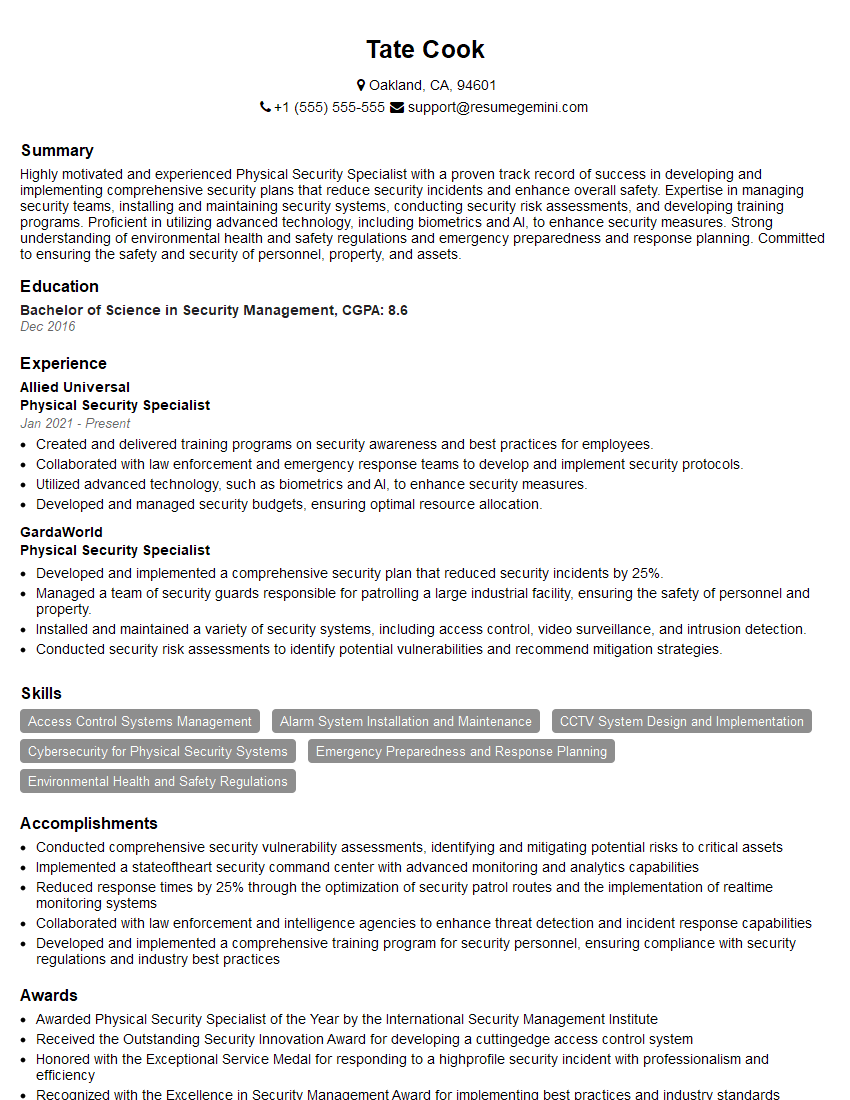
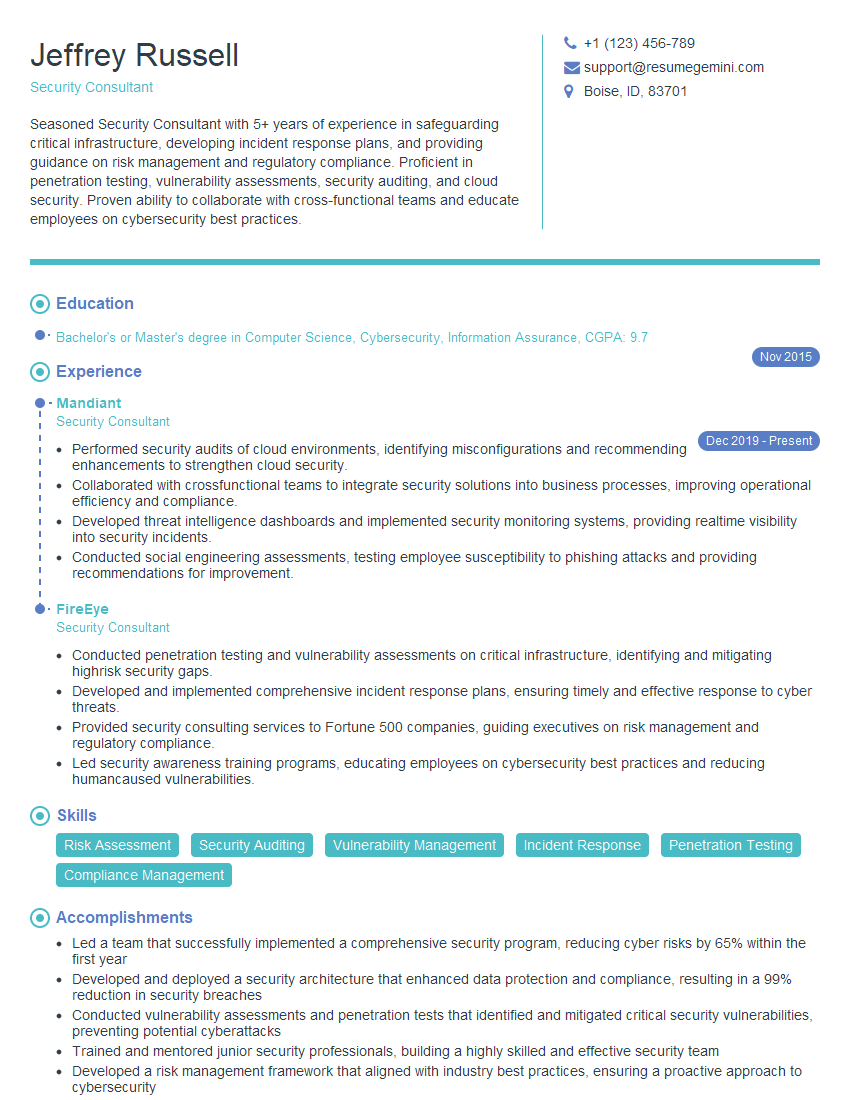
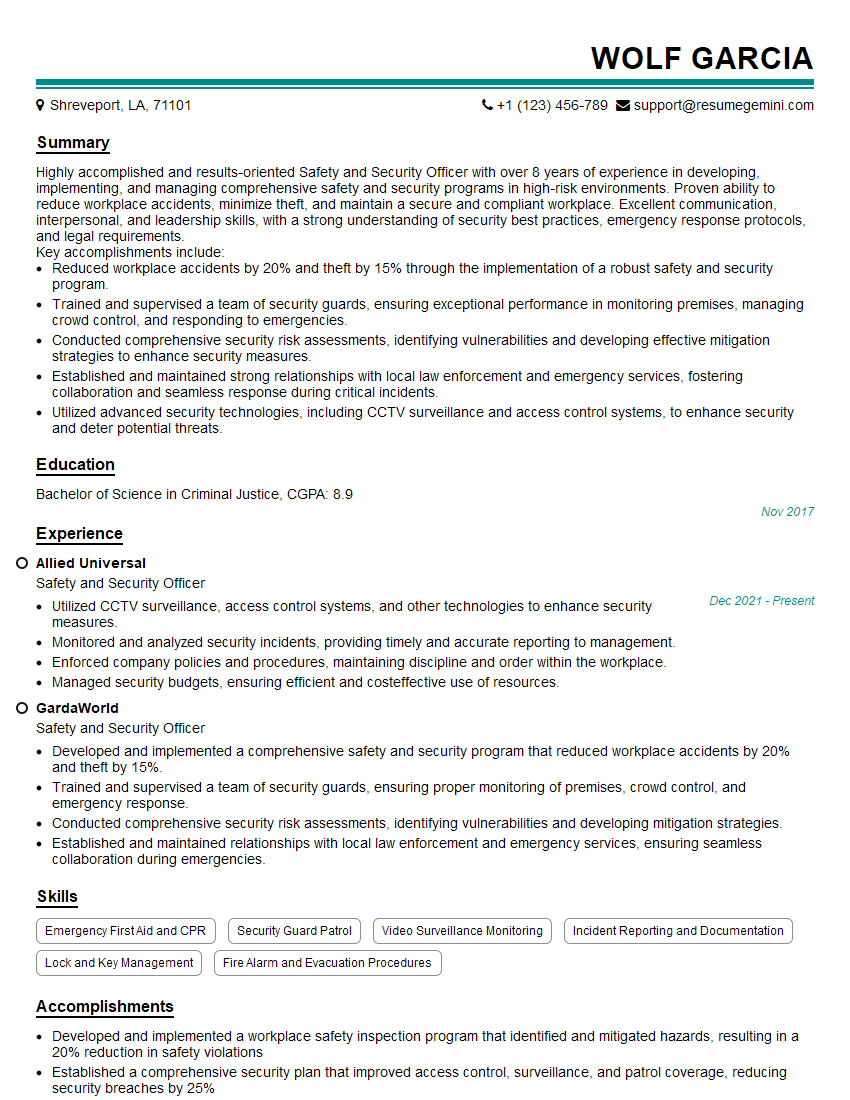
Mastering lock selection is crucial for career advancement in security-related fields, opening doors to specialized roles and increased earning potential. A strong resume is your key to unlocking these opportunities. Create an ATS-friendly resume to ensure your application gets noticed by recruiters. ResumeGemini is a trusted resource to help you build a professional and impactful resume. We provide examples of resumes tailored to Lock Selection to guide you. Take the next step towards your dream career today!
Explore more articles
Users Rating of Our Blogs
Share Your Experience
We value your feedback! Please rate our content and share your thoughts (optional).
What Readers Say About Our Blog
Very informative content, great job.
good