Interviews are opportunities to demonstrate your expertise, and this guide is here to help you shine. Explore the essential Logging Business Management interview questions that employers frequently ask, paired with strategies for crafting responses that set you apart from the competition.
Questions Asked in Logging Business Management Interview
Q 1. Describe your experience in managing logging operations from planning to harvest.
Managing logging operations from planning to harvest involves a meticulous, multi-stage process. It begins with careful pre-harvest planning, encompassing detailed assessments of the forest’s inventory, terrain analysis, and environmental impact considerations. We then move into the operational phase, involving road construction (if needed), felling, extraction, and finally, transportation to the mill. Throughout, we meticulously track progress against the initial plan, making necessary adjustments for efficiency and safety.
For example, in a recent project in a mountainous region, we used detailed LiDAR data to map the terrain and optimize harvesting routes, minimizing environmental disturbance and transportation costs. This involved selecting appropriate logging methods for different slopes and ensuring the protection of sensitive waterways. Post-harvest, we followed a rigorous reforestation plan, including planting appropriate tree species and implementing erosion control measures.
Q 2. Explain your knowledge of different logging methods and their suitability for various terrain and timber types.
Various logging methods exist, each best suited to specific terrain and timber types. For example, clear-cutting is efficient for even-aged stands on relatively flat terrain but can have significant environmental impacts if not managed carefully. Selective harvesting, conversely, is ideal for uneven-aged stands and minimizes environmental disturbance but can be less efficient. Shelterwood harvesting involves removing trees in stages, leaving some for seed production and shelter. This is great for regeneration but requires more planning and expertise.
In steep terrain, cable logging is often necessary to safely extract timber. For smaller areas or delicate ecosystems, horse logging provides a low-impact alternative. Choosing the right method requires a deep understanding of both forestry and engineering principles, balancing cost-effectiveness with environmental sustainability and worker safety. I have extensive experience with all these methods and can select the most appropriate one based on site-specific conditions.
Q 3. How do you ensure compliance with environmental regulations and safety standards in logging operations?
Compliance with environmental regulations and safety standards is paramount in logging. This starts with obtaining all necessary permits and licenses before commencing any operations. We conduct thorough pre-harvest assessments to identify sensitive areas like wetlands or endangered species habitats and design operations to avoid or minimize impacts. We adhere strictly to regulations regarding water quality, erosion control, and waste management. Regular monitoring and reporting are crucial to ensure ongoing compliance.
For worker safety, we implement comprehensive safety programs including regular training, the use of personal protective equipment (PPE), and rigorous adherence to safe work practices. We conduct regular safety inspections and use technology like GPS tracking systems to monitor worker locations and activities. A strong safety culture is instilled through consistent communication and accountability.
Q 4. How do you manage and mitigate risks associated with logging, including worker safety and equipment failures?
Risk management in logging involves a proactive and multi-layered approach. We identify potential hazards through risk assessments, focusing on areas like equipment failure, worker safety, and environmental incidents. Mitigation strategies are then developed and implemented, including regular maintenance schedules for equipment, robust safety training programs for employees, and emergency response plans for unforeseen events.
For instance, to mitigate equipment failure risk, we utilize preventive maintenance programs and invest in high-quality, well-maintained equipment. To address worker safety, we implement strict procedures for felling, extraction, and transportation, and provide ongoing training in safe work practices. We also use technology like proximity sensors on machinery to warn operators of potential collisions.
Q 5. Detail your experience in budgeting and cost control for logging projects.
Budgeting and cost control are critical to the financial success of logging projects. We begin by developing a detailed budget that considers all aspects of the operation, including labor, equipment, materials, transportation, and permits. This requires accurate cost estimations based on historical data and market analysis. Throughout the project, we actively monitor costs against the budget, identifying and addressing any variances promptly. This often involves utilizing project management software to track progress and expenses.
For example, we utilize value engineering techniques to find ways to reduce costs without compromising safety or quality. This could involve optimizing harvesting routes, negotiating favorable rates with suppliers, or exploring alternative methods to reduce waste.
Q 6. How do you optimize logging productivity while maintaining sustainable forest management practices?
Optimizing logging productivity while maintaining sustainable forest management practices requires a delicate balance. We achieve this through careful planning, efficient operations, and the selection of appropriate logging methods. This involves maximizing timber yield while minimizing environmental impact. We employ precision forestry techniques like GPS-guided harvesting to ensure efficient timber extraction and reduce waste.
Sustainable practices include selective harvesting, reforestation efforts, and protection of sensitive ecosystems. We use technologies like GIS mapping to assess forest health and optimize harvesting patterns for long-term forest health. The goal is to balance economic viability with ecological integrity, ensuring the forest’s long-term productivity and resilience.
Q 7. Describe your experience in managing logging crews and fostering a safe and productive work environment.
Managing logging crews effectively involves fostering a culture of safety, teamwork, and mutual respect. I achieve this through clear communication, fair treatment, and regular feedback. This includes providing comprehensive safety training, clear work instructions, and opportunities for skill development. We emphasize the importance of teamwork and problem-solving, creating an environment where workers feel comfortable raising concerns and participating in decision-making.
Regular meetings, both formal and informal, are essential for maintaining open communication and addressing any issues promptly. We also celebrate successes and acknowledge individual contributions to boost morale and team cohesion. A safe and productive work environment results from a commitment to fair labor practices, providing competitive wages, and creating a positive and supportive work culture.
Q 8. How do you handle unexpected delays or disruptions in logging operations?
Unexpected delays and disruptions in logging are inevitable, ranging from equipment malfunctions to adverse weather conditions. My approach involves a proactive, multi-pronged strategy focusing on risk mitigation and efficient contingency planning.
- Proactive Risk Assessment: Before any operation begins, a thorough risk assessment identifies potential delays (e.g., equipment failure, weather forecasts, permitting issues). We develop mitigation plans for each identified risk.
- Redundancy and Backup Systems: We maintain backup equipment and have alternative transportation routes to minimize downtime caused by breakdowns or road closures. For example, having a spare feller buncher significantly reduces delays caused by mechanical failures.
- Real-time Monitoring and Communication: Utilizing GPS tracking and communication systems allows for constant monitoring of crews and equipment, enabling quick responses to unforeseen circumstances. If a tree falls and blocks a road, we can reroute equipment immediately.
- Flexible Scheduling: Our operational schedules incorporate buffer time to accommodate minor delays. We also prioritize tasks to ensure the most critical operations are completed first.
- Communication and Collaboration: Maintaining clear communication with landowners, contractors, and the transportation team is paramount. Open communication helps us adjust schedules and resolve issues quickly.
For instance, during a particularly rainy season, we used real-time weather data to reschedule operations, preventing significant delays and potential damage to the forest floor. This proactive approach minimizes the financial impact of unforeseen events.
Q 9. Explain your understanding of timber valuation and sales negotiations.
Timber valuation involves determining the fair market value of standing timber or harvested logs. Accurate valuation is crucial for successful sales negotiations. Several factors influence timber value, including species, volume, quality (e.g., knot density, straightness), market demand, and location.
- Volume Estimation: Precise volume estimation is done using various methods, including cruising (sampling trees) and using LiDAR technology for larger areas, giving accurate measurements for determining timber value.
- Quality Assessment: Assessing timber quality involves evaluating defects and grading logs according to industry standards. Higher-quality logs command higher prices.
- Market Analysis: Staying current on market prices for different timber species and grades is crucial. I utilize industry publications and market data to determine current price ranges.
- Sales Negotiation Strategy: Negotiations require a balance between securing a fair price and maintaining positive relationships with buyers. Understanding their needs and having a clear understanding of your costs allows for effective negotiation.
For example, when selling a batch of high-quality Douglas Fir logs, we used recent market data to justify a premium price to the buyer, emphasizing the logs’ superior quality and current market demand. This data-driven approach allowed us to secure a favorable price.
Q 10. How do you utilize technology and data analytics to improve logging efficiency?
Technology and data analytics are revolutionizing logging efficiency. I leverage several technologies to optimize operations and reduce costs.
- GPS Tracking and Fleet Management Software: Real-time monitoring of equipment location, fuel consumption, and operational hours helps optimize routes, reduce fuel costs, and prevent equipment misuse.
- Remote Sensing (LiDAR, Aerial Imagery): This technology provides precise maps of the forest, allowing for efficient planning of harvesting operations, minimizing waste, and identifying high-value areas.
- Yield Prediction Models: Sophisticated software uses data on tree species, size, and growth rates to predict timber yield, enabling informed decision-making on harvesting schedules.
- Data Analytics for Maintenance: Analyzing equipment maintenance data (e.g., hours of operation, repair history) identifies patterns and predicts potential failures, enabling preventative maintenance and minimizing downtime.
In one project, we used LiDAR data to create a precise 3D model of the forest, allowing us to plan harvesting routes that minimized soil compaction and environmental damage, while maximizing timber extraction efficiency.
Q 11. Describe your experience in contract management and negotiation with landowners or timber companies.
Contract management and negotiation with landowners and timber companies are crucial aspects of logging operations. My experience involves crafting legally sound contracts that protect both parties’ interests while ensuring efficient harvesting.
- Due Diligence: Thorough review of land ownership documents, forestry management plans, and environmental regulations is essential before entering into any contract.
- Clear Contract Terms: Contracts should clearly define the scope of work, payment terms, responsibilities of each party, and timelines for completion.
- Risk Allocation: Contracts should outline how risks (e.g., weather-related delays, equipment failure) will be managed and allocated between the parties.
- Negotiation and Relationship Building: Negotiations should aim for a mutually beneficial agreement. Building strong relationships with landowners and timber companies fosters trust and long-term collaboration.
In a recent project, I negotiated a contract with a landowner that included a detailed plan for forest regeneration after harvesting, demonstrating our commitment to sustainable forestry practices and securing a long-term partnership.
Q 12. How do you ensure efficient transportation and logistics for harvested timber?
Efficient transportation and logistics are essential for minimizing costs and ensuring timely delivery of harvested timber. My approach involves optimizing every stage of the transportation process.
- Route Optimization: Utilizing GPS tracking and route planning software minimizes travel time and fuel consumption.
- Load Planning: Careful planning of log loads ensures maximum capacity utilization and safety.
- Transportation Mode Selection: Choosing the appropriate mode of transport (e.g., trucks, rail) depends on distance, terrain, and log volume.
- Logistics Coordination: Maintaining effective communication with trucking companies, mills, and other stakeholders is crucial for smooth operations.
For instance, by utilizing a specialized software for route optimization, we reduced our transportation costs by 15% in a recent project, demonstrating the importance of efficient logistical planning.
Q 13. Explain your experience in maintaining and repairing logging equipment.
Maintaining and repairing logging equipment is crucial for minimizing downtime and ensuring safety. My experience involves preventative maintenance, proactive repairs, and a focus on operator training.
- Preventative Maintenance Schedule: A rigorous schedule ensures regular inspections, lubrication, and component replacements, reducing the likelihood of major breakdowns.
- Trained Mechanics and Technicians: Employing skilled personnel capable of diagnosing and repairing equipment quickly is essential.
- Inventory Management: Maintaining an adequate supply of spare parts reduces downtime caused by part shortages.
- Operator Training: Proper operator training minimizes equipment damage due to misuse or operator error.
We implemented a preventative maintenance program that reduced equipment downtime by 20% and increased overall operational efficiency. This highlights the importance of investing in equipment maintenance.
Q 14. How do you manage the environmental impact of logging operations, such as minimizing soil erosion and water pollution?
Minimizing the environmental impact of logging is crucial for sustainable forestry. Our approach involves implementing several best practices to protect soil and water resources.
- Selective Harvesting: This method minimizes the impact on the forest ecosystem by harvesting only mature trees, leaving younger trees to continue growing.
- Buffer Strips: Leaving vegetated buffer strips along water bodies prevents soil erosion and protects water quality.
- Erosion Control Measures: Implementing techniques like contour harvesting, water bars, and sediment traps minimizes soil erosion.
- Reforestation and Forest Regeneration: Planting trees after harvesting helps restore forest cover and maintain biodiversity.
- Compliance with Regulations: Strict adherence to all environmental regulations and permits is crucial.
For example, in one project, we implemented contour harvesting techniques and planted native tree seedlings after harvesting, resulting in minimal soil erosion and a rapid return of forest cover. Our commitment to environmental stewardship ensures the long-term sustainability of our logging operations.
Q 15. Describe your experience in working with regulatory agencies and obtaining necessary permits.
Navigating the regulatory landscape is crucial for responsible logging. My experience involves proactively engaging with agencies like the Forest Service and state Departments of Natural Resources. This begins with thorough research to understand all applicable regulations, including those related to timber harvesting, environmental protection, and worker safety. I’ve successfully obtained permits by meticulously preparing and submitting comprehensive applications, including detailed harvest plans, environmental impact assessments, and evidence of adherence to best management practices. For instance, in one project, we worked closely with the local Fish and Wildlife agency to ensure minimal disruption to a sensitive salmon spawning stream, resulting in a smoothly approved permit. A key to success is building strong relationships with regulatory officials; open communication and demonstrating a commitment to responsible logging practices significantly improves the permitting process.
This often involves attending public hearings and proactively addressing any community concerns. Regular communication and transparency significantly aid in navigating the process efficiently and transparently.
Career Expert Tips:
- Ace those interviews! Prepare effectively by reviewing the Top 50 Most Common Interview Questions on ResumeGemini.
- Navigate your job search with confidence! Explore a wide range of Career Tips on ResumeGemini. Learn about common challenges and recommendations to overcome them.
- Craft the perfect resume! Master the Art of Resume Writing with ResumeGemini’s guide. Showcase your unique qualifications and achievements effectively.
- Don’t miss out on holiday savings! Build your dream resume with ResumeGemini’s ATS optimized templates.
Q 16. How do you monitor and track key performance indicators (KPIs) in logging operations?
Monitoring KPIs is paramount for optimizing logging operations and profitability. We use a combination of real-time data collection and regular reporting to track key metrics. These KPIs typically include:
- Production Rates: Cubic meters or board feet harvested per hour/day/crew. This helps identify inefficiencies in harvesting techniques or equipment.
- Cost per Unit: Cost per cubic meter/board foot, which allows us to optimize resource allocation and identify areas for cost reduction.
- Safety Incidents: Number and severity of accidents per 1000 hours worked. This is a critical KPI that directly impacts both worker well-being and operational costs.
- Downtime: Percentage of time equipment is out of service due to maintenance or repairs. This indicates the need for better preventative maintenance programs.
- Log Quality: Percentage of logs meeting specified grade and size requirements. This ensures customer satisfaction and minimizes waste.
We employ various technologies like GPS tracking on equipment, automated data logging systems on harvesters, and custom-built dashboards to track these metrics in real-time. Regular review of these KPIs allows for prompt identification of areas for improvement and facilitates data-driven decision-making.
Q 17. How do you identify and resolve conflicts with stakeholders regarding logging activities?
Conflicts with stakeholders, such as landowners, environmental groups, or local communities, are sometimes unavoidable. My approach focuses on proactive communication and transparent engagement. Before initiating any logging activity, we conduct thorough stakeholder consultations, explaining the project’s details, addressing their concerns, and seeking their input. This often involves public meetings, individual discussions, and written correspondence.
When conflicts arise, I focus on collaborative problem-solving, utilizing mediation techniques when necessary. For example, during one project, concerns arose about the impact on a local hiking trail. Through open discussions, we developed a mutually agreeable plan that involved adjusting the logging route and re-establishing the trail with enhanced features. The key is to listen attentively to opposing viewpoints, finding common ground, and building consensus through compromise and mutual respect.
Q 18. How do you maintain accurate records and documentation for logging operations?
Maintaining accurate records is essential for legal compliance, operational efficiency, and financial accountability. Our system relies on a combination of digital and physical record-keeping. Every aspect of the logging operation, from initial planning to final delivery, is meticulously documented. This includes:
- Harvest Plans: Detailed maps showing the areas to be harvested, timber species, and cutting methods.
- Inventory Records: Precise measurements of harvested timber, including species, volume, and grade.
- Equipment Maintenance Logs: Records of repairs, inspections, and maintenance schedules.
- Safety Records: Documentation of safety training, incident reports, and compliance with safety regulations.
- Financial Records: Detailed accounting of all expenses and revenue related to the operation.
We utilize logging software to automate data entry and reporting, minimizing errors and improving accuracy. All physical documents are stored securely and systematically, ensuring easy retrieval when needed. Regular audits ensure the integrity and accuracy of our records.
Q 19. Describe your experience in implementing safety training programs for logging crews.
Safety is the top priority in any logging operation. I’ve implemented comprehensive safety training programs that encompass both theoretical knowledge and hands-on practical skills. These programs are designed to meet or exceed all relevant safety standards and regulations. Our training covers:
- Hazard identification and risk assessment: Equipping crews to identify and mitigate potential hazards on the jobsite.
- Safe operating procedures for equipment: Detailed instruction on proper use, maintenance, and safe operation of all machinery.
- First aid and emergency response: Training on how to handle injuries and emergencies, including CPR and basic first aid.
- Personal Protective Equipment (PPE) use: Ensuring that all crew members understand and correctly use appropriate safety gear.
- Environmental awareness: Training on minimizing the environmental impact of logging operations.
Regular refresher training, coupled with ongoing supervision and feedback, reinforces safety practices and promotes a culture of safety within the logging crews. We also utilize interactive training methods and case studies to make the learning process engaging and memorable.
Q 20. How do you ensure the quality of harvested timber meets customer specifications?
Ensuring the quality of harvested timber is crucial for customer satisfaction and maintaining our reputation. We begin by carefully planning the harvest, selecting appropriate logging techniques to minimize damage and ensure the logs meet specific grade and size requirements. During harvesting, skilled operators use precision equipment to cut timber according to customer specifications. Throughout the process, quality control checks are implemented at various stages, including:
- Pre-harvest assessments: Determining the species, size, and quality of trees before harvesting.
- On-site inspection: Checking logs for defects during felling and extraction.
- Sorting and grading: Classifying logs based on grade and size requirements.
- Final inspection: Verifying that the final product meets customer specifications before delivery.
We maintain close communication with our customers throughout the process, providing updates on the progress and addressing any concerns. This proactive approach ensures that the final product consistently meets or exceeds their expectations.
Q 21. Explain your experience in managing inventory and procurement of logging supplies.
Effective inventory and procurement management are critical for efficient logging operations. We use a combination of manual and computerized inventory tracking systems to monitor logging supplies. This includes keeping track of fuel, lubricants, spare parts, and other consumables. Accurate inventory helps avoid costly downtime due to unexpected shortages. Procurement involves strategically sourcing high-quality supplies at competitive prices. We build and maintain relationships with reliable suppliers to ensure a consistent supply of necessary materials. Our system involves:
- Demand forecasting: Predicting future needs based on operational plans and historical data.
- Supplier selection: Evaluating suppliers based on price, quality, reliability, and delivery times.
- Negotiation: Securing favorable terms and pricing with suppliers.
- Inventory control: Implementing systems to track inventory levels and manage stock.
- Just-in-time (JIT) inventory management: Minimizing storage costs by receiving supplies only when needed.
We regularly review our inventory management and procurement practices to identify areas for improvement and optimize efficiency and cost-effectiveness. This includes using data analytics to identify trends and predict future needs, optimizing our supply chain and reducing waste.
Q 22. How do you adapt to changing market conditions and customer demands in the logging industry?
Adapting to changing market conditions and customer demands in the logging industry requires a proactive and flexible approach. It’s not just about reacting to shifts; it’s about anticipating them and strategically positioning your business for success. This involves several key strategies:
- Market Research and Analysis: Continuously monitor timber prices, demand for specific species, and emerging trends in construction, paper production, and bioenergy. Understanding these shifts allows for adjustments in harvesting strategies and product offerings. For example, if demand for hardwood flooring increases, we might prioritize harvesting suitable hardwood species.
- Diversification: Don’t put all your eggs in one basket. Diversify your product offerings beyond lumber to include biomass, engineered wood products, or even specialized timber for niche markets. This reduces reliance on single product price fluctuations. We’ve successfully diversified by selling wood chips for biomass energy generation, cushioning us from lumber price volatility.
- Customer Relationship Management: Building strong relationships with key customers provides valuable insights into their future needs and allows for collaborative planning. This ensures that our operations align with their evolving requirements. We regularly meet with our major clients to discuss their upcoming projects and adjust our harvesting schedules accordingly.
- Technological Adaptation: Embracing new technologies in logging equipment, harvesting techniques, and data analytics allows for increased efficiency and adaptability. Precision forestry techniques, for instance, allow us to optimize harvesting based on real-time data and customer specifications.
- Operational Flexibility: Having a flexible workforce and adaptable equipment allows for quick response to changing market demands. This might involve cross-training employees to perform multiple tasks or investing in multi-purpose machinery.
Q 23. How do you manage and motivate your team to achieve operational goals?
Motivating and managing a logging team effectively requires a blend of strong leadership, clear communication, and fostering a positive work environment. I believe in a collaborative, results-oriented approach:
- Clear Goal Setting: Defining clear, measurable, achievable, relevant, and time-bound (SMART) goals ensures everyone is on the same page. This includes safety targets, productivity metrics, and quality standards. We set quarterly goals and review progress monthly.
- Open Communication: Regular team meetings, both formal and informal, facilitate open dialogue, feedback, and problem-solving. This allows for early identification and resolution of potential issues. We encourage team members to share their ideas and concerns freely.
- Recognition and Rewards: Acknowledging and rewarding good performance, both individually and as a team, significantly boosts morale and productivity. This could range from simple verbal praise to performance-based bonuses. We celebrate safety milestones and exceptional productivity achievements.
- Training and Development: Investing in the training and development of team members enhances their skills and job satisfaction. This might involve safety certifications, equipment operation training, or leadership development programs. Continuous learning is key to retaining skilled employees.
- Safety First Culture: Prioritizing safety creates a trusting and supportive work environment. This involves rigorous safety protocols, regular safety training, and proactive risk assessment. We have a zero-tolerance policy for safety violations.
Q 24. Describe your experience in developing and implementing sustainable forestry management plans.
Developing and implementing sustainable forestry management plans is crucial for the long-term health of our forests and the viability of our business. My experience encompasses various aspects, including:
- Inventory and Assessment: Conducting thorough forest inventories to assess tree species, age, health, and density using both traditional methods and advanced remote sensing technologies. This data informs harvesting plans.
- Harvesting Planning: Developing selective harvesting plans that minimize environmental impact, preserving biodiversity and soil health. This includes careful consideration of riparian zones and sensitive habitats. We utilize GIS mapping to optimize harvesting routes and minimize forest disturbance.
- Reforestation and Regeneration: Implementing reforestation and regeneration programs, using appropriate species and planting techniques to ensure forest renewal. We collaborate with local nurseries and forestry experts to select suitable seedlings.
- Monitoring and Evaluation: Regularly monitoring the effectiveness of the management plan through periodic forest inventories and environmental assessments. This provides feedback for continuous improvement. We use drone technology for efficient monitoring of reforestation efforts.
- Compliance and Certification: Ensuring compliance with all relevant environmental regulations and seeking certifications such as Forest Stewardship Council (FSC) to demonstrate our commitment to sustainable forestry practices. FSC certification opens doors to environmentally conscious customers.
Q 25. Explain your understanding of different tree species and their characteristics.
Understanding different tree species and their characteristics is fundamental to effective logging and sustainable forestry. My knowledge encompasses a wide range of species, including:
- Softwoods: Such as Pine, Fir, and Spruce – known for their fast growth, relatively soft wood, and use in construction, pulp, and paper. I understand the differences in wood density, strength, and resin content among various pine species.
- Hardwoods: Such as Oak, Maple, and Cherry – characterized by slower growth, harder wood, and valued for furniture, flooring, and other high-value applications. I am familiar with the unique grain patterns and durability of different hardwood species.
- Growth Characteristics: I understand the impact of factors like soil type, climate, and elevation on tree growth and species distribution. This knowledge guides site-specific harvesting and reforestation strategies.
- Wood Properties: I am knowledgeable about wood properties such as density, strength, durability, and workability, impacting suitability for various end-uses. This is essential for matching harvested timber to customer needs.
- Disease and Pest Resistance: I understand the susceptibility of different tree species to diseases and pests, enabling proactive management strategies to minimize losses and maintain forest health. This includes knowledge of effective pest control methods and preventative measures.
Q 26. How do you leverage technology to enhance communication and coordination within the logging team?
Technology plays a vital role in enhancing communication and coordination within our logging team. We utilize various tools to optimize operations and improve safety:
- GPS Tracking and Mapping: GPS-enabled equipment and mapping software allows for real-time tracking of logging crews, equipment location, and progress monitoring. This improves efficiency and safety by reducing potential equipment collisions.
- Two-Way Radios and Cellular Communication: Maintaining consistent communication between crews, supervisors, and support staff is critical. We use a combination of two-way radios for immediate communication and cellular devices for broader reach and data transmission.
- Dispatch and Scheduling Software: Software for scheduling and dispatching logging crews and equipment optimizes workflow and ensures timely execution of harvesting plans. This leads to improved resource allocation and minimizes idle time.
- Digital Data Collection and Reporting: Utilizing tablets and smartphones for collecting data on harvested timber volume, species, and quality provides real-time information for inventory management and performance tracking. We integrate this data with our accounting and reporting systems.
- Drone Technology: Drones equipped with high-resolution cameras provide aerial views of the logging site, enabling pre-harvest planning, post-harvest assessment, and monitoring of reforestation efforts. This allows for more accurate assessments and reduces time spent on ground surveys.
Q 27. How do you ensure the long-term financial sustainability of logging operations?
Ensuring the long-term financial sustainability of logging operations requires a multi-faceted approach combining efficient management, responsible harvesting, and strategic planning:
- Cost Control and Efficiency: Implementing efficient harvesting techniques, optimizing equipment utilization, and minimizing waste reduces operational costs. This includes regular maintenance schedules and strategic fuel management.
- Market Analysis and Pricing Strategies: Thorough market analysis helps predict timber prices and demand, enabling informed decisions about harvesting schedules and product pricing. We track timber market trends and adjust our pricing strategies accordingly.
- Sustainable Harvesting Practices: Responsible harvesting ensures the long-term productivity of the forest, avoiding overexploitation and preserving forest health. Selective logging and reforestation programs are key components of this strategy.
- Value-Added Processing: Adding value to harvested timber through processing into higher-value products, such as lumber, engineered wood products, or biomass fuel, increases profitability and market competitiveness. This could involve investing in sawmills or partnering with processing facilities.
- Financial Planning and Risk Management: Developing sound financial plans, managing cash flow effectively, and mitigating risks associated with timber price fluctuations, weather events, and market changes is crucial for long-term financial health. We regularly review our financial statements and use risk management strategies to mitigate potential losses.
Q 28. Describe your experience in developing and implementing strategic plans for growth and expansion in the logging business.
Developing and implementing strategic plans for growth and expansion in the logging business involves a systematic approach:
- Market Research and Opportunity Assessment: Identifying new markets, assessing timber availability, and evaluating potential for expansion into new geographic areas or product lines is the first step. We conduct thorough due diligence on potential expansion sites, analyzing timber resources, market demand, and regulatory requirements.
- Acquisition and Joint Ventures: Exploring acquisition opportunities or forming strategic partnerships with other logging companies or wood processing facilities expands our operational reach and market share. We evaluate potential acquisitions based on their financial performance, resource base, and strategic fit with our business.
- Technology and Innovation: Investing in new technologies to enhance operational efficiency, improve safety, and increase productivity supports growth. This could include advanced harvesting equipment, GIS mapping software, or remote sensing technologies.
- Human Resource Development: Training and developing a skilled workforce ensures the company’s ability to adapt to growth and handle increased workload. We invest in training programs for our employees and attract skilled professionals to join our team.
- Financial Planning and Investment Strategies: Securing financing for expansion projects through loans, equity investments, or strategic partnerships provides the necessary capital for growth. We develop detailed financial projections to support our investment requests and ensure long-term profitability.
Key Topics to Learn for Your Logging Business Management Interview
- Sustainable Forestry Practices: Understand principles of sustainable logging, reforestation, and forest management certifications (e.g., FSC). Practical application includes evaluating the environmental impact of different logging methods and demonstrating knowledge of relevant regulations.
- Operations Management: Mastering logistics, including harvesting techniques, equipment maintenance, transportation, and crew management. Practical application involves outlining efficient operational strategies to minimize costs and maximize productivity while adhering to safety standards.
- Financial Management & Budgeting: Develop a strong understanding of cost analysis, profit margins, budgeting, and financial forecasting within the context of the logging industry. Practical application includes demonstrating the ability to analyze financial data to make informed business decisions.
- Safety and Risk Management: Deeply understand OSHA regulations and industry best practices for workplace safety, risk assessment, and incident response in logging operations. Practical application includes outlining proactive safety measures and demonstrating knowledge of emergency protocols.
- Sales & Marketing: Understand timber markets, client relationships, and effective sales strategies for timber and logging services. Practical application includes outlining a marketing plan to target specific customer segments.
- Technology & Innovation: Familiarize yourself with the latest technologies used in logging, such as GPS tracking, remote sensing, and data analytics for optimizing operations. Practical application includes discussing the potential benefits and challenges of implementing new technologies.
- Legal and Regulatory Compliance: Thorough understanding of relevant federal, state, and local regulations pertaining to logging permits, environmental impact assessments, and land ownership. Practical application involves demonstrating the ability to navigate complex regulatory frameworks.
Next Steps
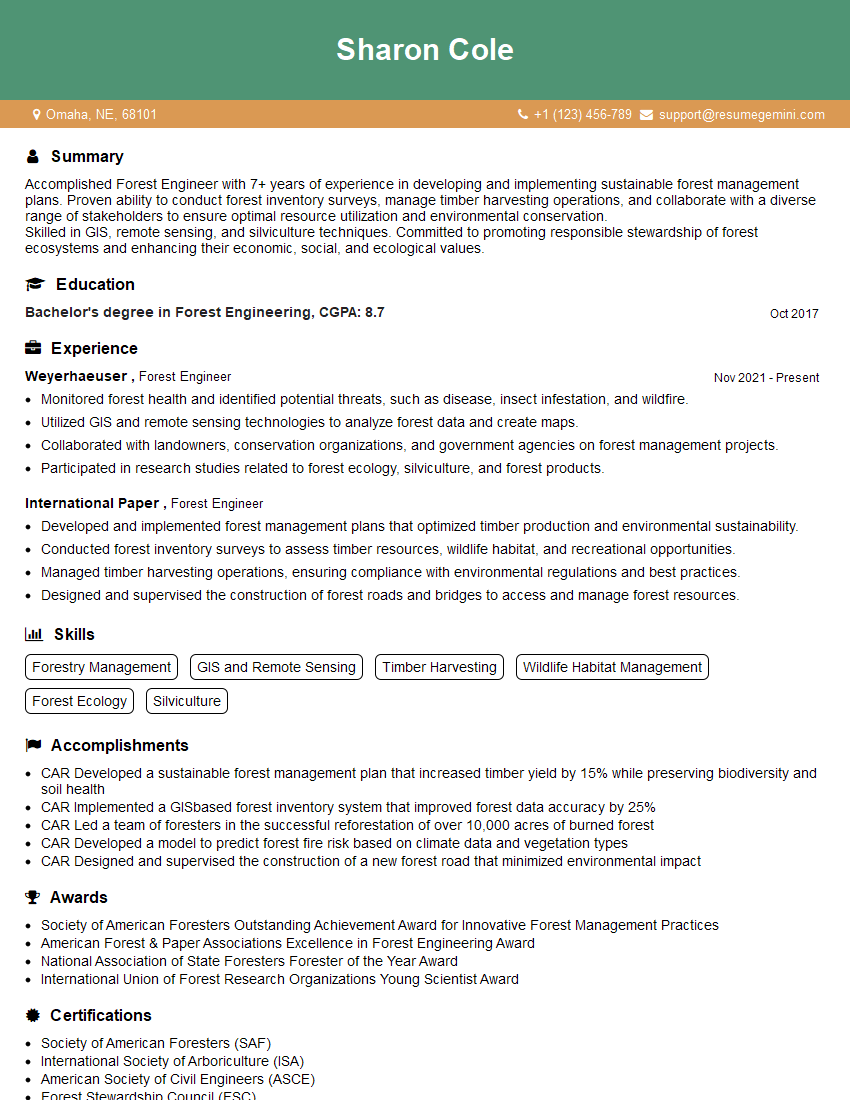
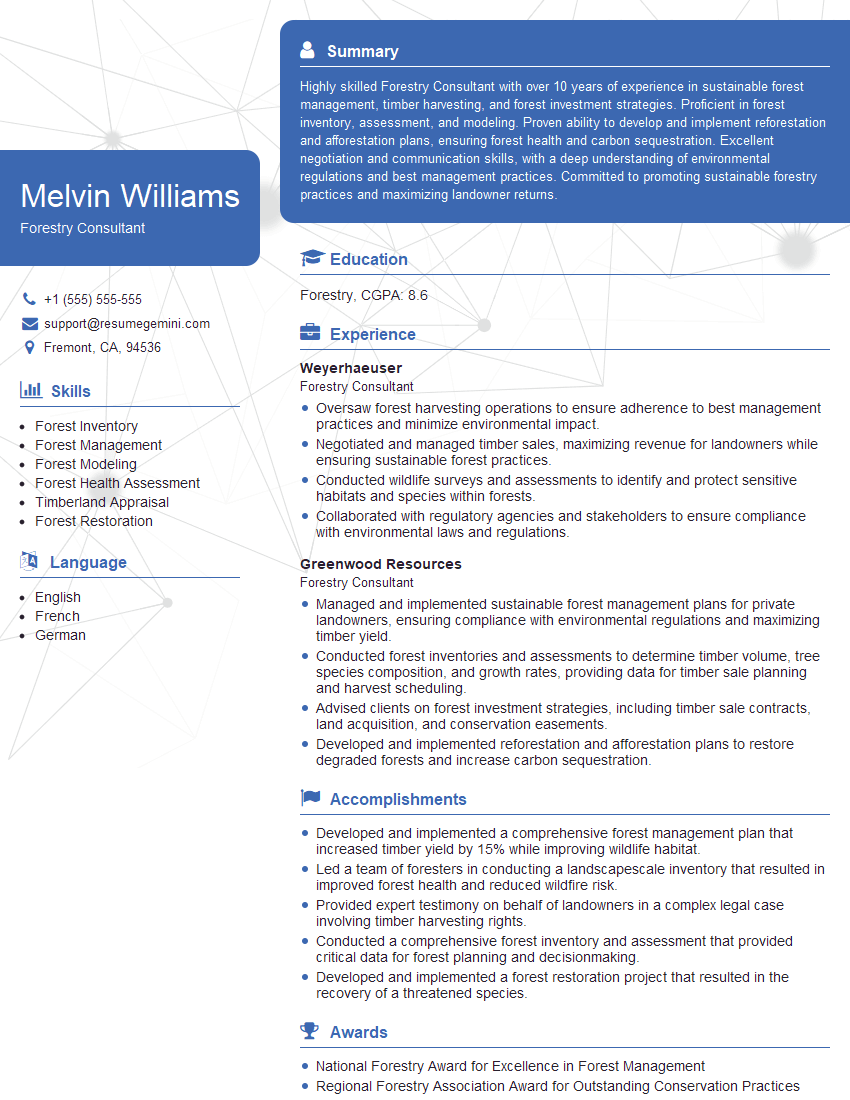
Mastering Logging Business Management is crucial for a successful and rewarding career. It demonstrates your commitment to environmental stewardship, operational efficiency, and sustainable business practices. To significantly enhance your job prospects, create an ATS-friendly resume that highlights your skills and experience effectively. We strongly encourage you to use ResumeGemini, a trusted resource, to build a professional and impactful resume. Examples of resumes tailored to Logging Business Management are available to help guide you.

Explore more articles
Users Rating of Our Blogs
Share Your Experience
We value your feedback! Please rate our content and share your thoughts (optional).
What Readers Say About Our Blog
Very informative content, great job.
good