Preparation is the key to success in any interview. In this post, we’ll explore crucial Logging truck driving interview questions and equip you with strategies to craft impactful answers. Whether you’re a beginner or a pro, these tips will elevate your preparation.
Questions Asked in Logging truck driving Interview
Q 1. Describe your experience operating different types of logging trucks.
Throughout my career, I’ve operated a variety of logging trucks, each suited for different terrains and log sizes. This includes conventional logging trucks with single or tandem axles, heavy-duty articulated logging trucks capable of navigating steep inclines and challenging terrain, and specialized trucks equipped with grapple cranes for efficient log loading. For example, I’ve used a Kenworth T800 for shorter hauls on well-maintained roads, focusing on efficiency and fuel economy. In contrast, I’ve utilized a Western Star 4900EX with a high-capacity trailer on tougher, mountainous routes, prioritizing maneuverability and payload capacity. Each truck type requires a different driving technique, understanding of weight distribution, and awareness of its limitations.
Q 2. Explain your understanding of load securement techniques and regulations.
Load securement is paramount for safety and legal compliance. My understanding encompasses proper chain placement, the use of binders and winch straps, and ensuring sufficient friction and weight distribution to prevent shifting during transit. Regulations vary by jurisdiction, but generally involve specific requirements for chain placement, number of binders, and load height. For instance, I always ensure a minimum of two chains per log, crisscrossed for extra security, and employ binders to create a secure tension. I meticulously check the logs’ positioning and tighten the securing devices regularly, especially during longer trips. Ignoring these regulations could result in serious accidents, fines, and damage to cargo and equipment.
Q 3. How do you ensure compliance with weight limits and transportation regulations?
Weight compliance is crucial. Before any haul, I meticulously check the gross vehicle weight (GVW), axle weight limits, and legal load limits using both onboard scales and pre-trip weight tickets. I always use a scale to confirm the weight of the load and then calculate if there’s enough weight capacity left for fuel, the truck itself, and the driver, I also account for the weight of any added equipment. I understand that exceeding these limits results in hefty fines and severe safety risks. For example, exceeding axle weight limits can cause damage to roads and bridges, leading to expensive repairs, so knowing the load and its weight distribution is a top priority. Moreover, I use route planning software that accounts for weight restrictions on specific routes to ensure complete compliance.
Q 4. What are your strategies for navigating challenging terrain and weather conditions?
Navigating challenging terrains and weather conditions requires experience, anticipation, and proper equipment. My strategies include selecting appropriate low gears for steep inclines and declines, carefully assessing the road conditions, and utilizing proper braking techniques to prevent slippage or rollovers. During adverse weather like snow or ice, I reduce speed significantly, increase following distances, and use tire chains when necessary. For example, on muddy or slick logging roads, I’ll use lower gears to maintain momentum and control, adjusting my speed to the conditions and avoiding aggressive braking or acceleration. Preparation is key, knowing the forecast and the condition of the route before I start is a critical part of avoiding hazardous situations.
Q 5. Describe your experience with pre-trip inspections and maintenance procedures.
Pre-trip inspections are non-negotiable. I follow a detailed checklist, including checking tires, brakes, lights, fluids, steering, and the overall condition of the truck and trailer. I inspect chains, binders, and winches for wear and tear, and ensure they’re correctly secured. Regular maintenance is equally important. I report any issues immediately to my supervisor, ensuring timely repairs to prevent breakdowns or accidents. For example, I’ll check the tire pressure and tread depth to ensure sufficient traction and safe handling. A thorough inspection means reducing downtime and preventing potentially hazardous situations.
Q 6. How do you handle emergency situations, such as equipment malfunctions or accidents?
Handling emergencies requires calm, decisive action. In case of equipment malfunction, my first step is to secure the vehicle safely, away from traffic if possible. I then assess the situation and try to make minor repairs if possible while ensuring my safety. If the situation is beyond my capabilities, I immediately call for roadside assistance or my supervisor. In case of accidents, I prioritize securing the scene, contacting emergency services, and providing assistance to those involved. Thorough documentation of the incident is crucial, including photos and statements from witnesses. For example, if a tire blows, I’ll pull over to a safe location, use warning devices, and contact the necessary support personnel rather than attempting a dangerous repair on the roadside.
Q 7. Explain your familiarity with logging site safety regulations and procedures.
Logging site safety is paramount. I’m familiar with site-specific regulations and procedures, including designated routes, speed limits, and communication protocols. I understand the hazards associated with operating heavy machinery in close proximity to trees, uneven terrain, and other equipment. I always wear the necessary personal protective equipment (PPE), including high-visibility clothing, hard hats, and safety boots. Furthermore, I actively communicate with other personnel on site to avoid collisions or other accidents. Teamwork and situational awareness are key to safe operation. For example, using hand signals and radio communication with other equipment operators is critical to prevent accidents caused by a lack of coordination in a crowded workspace.
Q 8. How do you manage your time effectively to meet delivery deadlines?
Effective time management in logging trucking is crucial for meeting deadlines and maximizing efficiency. It’s not just about driving fast; it’s about planning and executing strategically. My approach involves several key steps:
- Pre-trip Planning: Before even starting the engine, I review the route, considering factors like road conditions, traffic patterns, and potential delays. I’ll check the load weight and dimensions to ensure compliance with regulations and plan efficient loading/unloading strategies. For example, if I know a particular logging site has limited access, I’ll prioritize that delivery to avoid potential bottlenecks later in the day.
- Route Optimization: I utilize GPS navigation to identify the shortest and safest routes, considering terrain and weight restrictions. I also factor in potential rest stops to comply with hours-of-service regulations and prevent fatigue. Sometimes, a slightly longer route might be safer or quicker due to avoiding difficult terrain.
- Communication and Flexibility: Maintaining constant communication with dispatchers is key. If unforeseen delays occur (e.g., road closures, equipment malfunctions), I immediately inform dispatch to adjust schedules and minimize disruptions. This proactive communication prevents late deliveries.
- Regular Maintenance: Regular vehicle checks ensure that mechanical issues don’t lead to unexpected downtime. Catching small problems early can save significant time later.
This multi-pronged approach helps me reliably meet delivery deadlines, even amidst the unpredictable nature of logging operations. It’s about being prepared, adaptable, and communicating effectively.
Q 9. How do you communicate with dispatchers and other team members?
Communication is paramount in the logging industry. I maintain clear and concise communication with dispatchers and fellow team members using a variety of methods:
- Two-way Radios: For immediate updates and quick responses, especially in remote locations where cell service is unreliable. I use clear and concise language to ensure information is easily understood. For example, ‘Dispatch, this is Unit 7, ETA at loading site is 15 minutes.’
- Cell Phones/Texting: When cell service is available, I use phone calls and text messaging for more detailed updates or scheduling changes. This allows me to relay complex information accurately. I always confirm receipt of critical information.
- Dispatch Software/Apps: Many companies use dedicated software or apps for tracking loads, providing ETAs, and updating on delivery status. I consistently update my location and status within these systems to keep everyone informed.
- Face-to-Face Communication: At loading and unloading sites, direct communication with loaders and site personnel is crucial to ensure safe and efficient operations. Clarifying load details and confirming procedures in person helps prevent misunderstandings.
Regardless of the communication method, I prioritize clarity, accuracy, and timeliness. Good communication minimizes confusion and ensures everyone is on the same page.
Q 10. What is your experience with different types of logging equipment?
My experience encompasses a range of logging equipment, from various types of logging trucks to specialized trailers and loading machinery. I’m proficient operating:
- Different types of logging trucks: I have experience with both conventional logging trucks and grapple trucks, understanding their unique capabilities and limitations. This includes experience with varying load capacities and axle configurations. For example, I know how to properly secure a load on a lowboy trailer versus a standard logging trailer.
- Trailers: I’m familiar with different trailer types, including bunk trailers, logging trailers, and lowboy trailers. This includes understanding the proper techniques for loading, securing, and unloading various types of logs.
- Loading equipment: I’ve worked with different types of loaders, including knuckleboom loaders and wheeled loaders. I understand the safe and efficient operation of these machines and how to communicate with their operators to ensure smooth loading procedures. I can safely maneuver the truck to accommodate the loader during the loading process.
This varied experience allows me to adapt quickly to different job sites and equipment, enhancing my overall efficiency and safety.
Q 11. Describe your experience with GPS and navigation systems in logging operations.
GPS and navigation systems are indispensable tools in modern logging operations. They’re not just about getting from point A to point B; they significantly enhance safety and efficiency.
- Route Planning and Optimization: GPS allows me to plan the most efficient route, considering road conditions, weight restrictions, and bridge clearances. It prevents me from taking routes unsuitable for heavy logging trucks.
- Safety and Avoidance of Hazards: GPS-based systems often show real-time traffic and road closures, allowing for timely adjustments and avoiding hazardous situations. In remote logging areas, GPS can help to avoid getting lost.
- Tracking and Monitoring: Dispatch can monitor my location in real-time, facilitating communication and enabling quick responses to emergencies or unexpected delays. This improves overall fleet management.
- Logging Site Navigation: Some GPS systems have specialized features for logging operations, including detailed maps of logging roads and potential obstacles. This precise navigation is essential in often challenging terrain.
My experience with GPS and navigation systems extends beyond basic route guidance; I understand how to utilize advanced features to optimize my operations, improve safety, and maintain efficient communication.
Q 12. How do you maintain accurate logs and documentation of your work?
Maintaining accurate logs and documentation is crucial for compliance, billing, and efficient operations. My approach combines technology and meticulous record-keeping:
- Electronic Logging Devices (ELDs): I utilize ELDs to accurately record hours of service, ensuring compliance with regulations. The data is automatically recorded, reducing manual errors and providing a clear audit trail.
- Delivery Receipts and Bills of Lading: I meticulously complete and obtain signed delivery receipts for each load, documenting the date, time, location, and quantity delivered. I also ensure accurate completion of all required paperwork, including bills of lading.
- Maintenance Logs: I record all vehicle maintenance and repairs, including dates, descriptions of work, and associated costs. This helps to track vehicle performance and prevent costly breakdowns.
- Incident Reports: Any accidents, near misses, or equipment malfunctions are immediately documented in detailed incident reports. This ensures a comprehensive record for analysis and prevention of future occurrences.
Accurate and thorough documentation not only ensures regulatory compliance but also aids in operational efficiency and allows for effective analysis of performance and identification of potential problems.
Q 13. What measures do you take to prevent accidents and injuries?
Preventing accidents and injuries is my top priority. My safety protocols are comprehensive and proactive:
- Pre-Trip Inspection: Before each trip, I conduct a thorough inspection of the vehicle, checking tires, brakes, lights, and securing the load. This proactive step reduces the likelihood of mechanical failures.
- Defensive Driving Techniques: I practice defensive driving, anticipating potential hazards and reacting safely to unexpected situations. This includes maintaining a safe following distance, being aware of blind spots, and adjusting driving for varied road conditions.
- Compliance with Regulations: I strictly adhere to all traffic laws and regulations, including hours-of-service limits. Fatigue is a significant factor in accidents, and complying with regulations helps to mitigate this risk.
- Load Securement: I ensure that all loads are properly secured according to regulations, preventing shifting or loss of cargo during transit. Proper load securement is critical for preventing rollovers and other accidents.
- Communication and Awareness: I maintain clear communication with dispatchers and other team members, keeping everyone informed of my location and any potential hazards. I am always aware of my surroundings and other vehicles on the road.
A culture of safety is fostered through consistent adherence to best practices, vigilance, and proactive measures. Every trip is approached with a focus on minimizing risk.
Q 14. Explain your understanding of chain saw safety.
Chainsaw safety is paramount in logging operations. It’s not just about knowing how to use a chainsaw; it’s about understanding the inherent risks and taking preventative measures.
- Proper Training and Certification: I have received comprehensive training and hold any necessary certifications for chainsaw operation. This includes understanding safe operating procedures, maintenance, and emergency response techniques.
- Personal Protective Equipment (PPE): I consistently use all required PPE, including safety glasses, hearing protection, chainsaw chaps, gloves, and steel-toed boots. No shortcuts are ever taken when it comes to personal safety.
- Chainsaw Maintenance: I regularly maintain my chainsaw, ensuring it’s properly sharpened and lubricated. A well-maintained chainsaw is less likely to kickback or malfunction.
- Safe Operating Procedures: I follow safe operating procedures, including checking the area for hazards before starting, keeping a clear workspace, and using proper felling techniques. This includes avoiding obstacles and ensuring a safe escape route.
- Emergency Response: I know how to respond to emergencies, including what to do if a chainsaw malfunctions or someone is injured.
Chainsaw safety is not just about avoiding accidents; it’s about working smarter, not harder, and respecting the power of the equipment. It’s about minimizing downtime and preventing injury to myself and others.
Q 15. How do you adapt your driving techniques to various road conditions?
Adapting my driving to various road conditions is paramount for safety and efficiency. It’s not just about speed; it’s about anticipating challenges and reacting appropriately.
- Dry Pavement: On dry roads, I maintain a safe speed, keeping in mind the weight and length of my load. Smooth acceleration and braking are key to preventing sway and jackknifing.
- Wet Pavement: Rain significantly reduces traction. I reduce speed considerably, increase following distance, and avoid sudden movements. I use lower gears to maintain control on hills. The added weight of the logs means braking distances are much longer.
- Snow and Ice: Winter driving requires extreme caution. Chains are often mandatory, and I drive at a snail’s pace, focusing on smooth, gradual inputs to the steering wheel and brakes. I am extremely mindful of the potential for slides and loss of control.
- Gravel Roads: Gravel roads demand extra vigilance. I reduce speed significantly, avoid sudden braking or acceleration, and steer smoothly to prevent losing control. I often choose a wider path to avoid potholes or rutted areas.
- Muddy or Unpaved Roads: These conditions can be extremely challenging. I assess the route beforehand, if possible, and choose the safest path. Low gear and controlled speed are essential to avoid getting stuck.
Essentially, it’s about understanding the limitations of my vehicle and the road surface and adjusting my driving style accordingly. Experience teaches you to anticipate potential problems, allowing proactive adjustments rather than reactive emergency maneuvers.
Career Expert Tips:
- Ace those interviews! Prepare effectively by reviewing the Top 50 Most Common Interview Questions on ResumeGemini.
- Navigate your job search with confidence! Explore a wide range of Career Tips on ResumeGemini. Learn about common challenges and recommendations to overcome them.
- Craft the perfect resume! Master the Art of Resume Writing with ResumeGemini’s guide. Showcase your unique qualifications and achievements effectively.
- Don’t miss out on holiday savings! Build your dream resume with ResumeGemini’s ATS optimized templates.
Q 16. Describe your experience with loading and unloading logs efficiently and safely.
Efficient and safe loading and unloading of logs is critical for productivity and safety. It’s a process that requires both skill and precision.
- Pre-Loading Inspection: Before loading, I inspect the truck and trailer to ensure they’re in good working order. I also check the condition of the logs to avoid any potential hazards, like loose branches or rotten wood.
- Secure Loading: I use appropriate binding techniques and equipment (chains, binders, etc.) to secure the logs tightly. The goal is to create a stable, balanced load to prevent shifting during transit. This also includes proper weight distribution to maintain optimal handling.
- Safe Unloading: Unloading involves careful placement of the logs, ensuring the area is clear of obstacles and personnel. I utilize the equipment and techniques learned to avoid any accidents. This includes making sure the area around the unloading zone is clear, and coordinating the operation with other people at the unloading site to prevent accidents.
- Communication: Clear communication with the loading and unloading crews is vital. Miscommunication can lead to accidents or delays.
I’ve learned through experience that the time spent on safe and efficient loading and unloading is an investment that prevents costly accidents and ensures the delivery is completed as planned.
Q 17. How familiar are you with different types of wood and their handling requirements?
Knowing the different types of wood and their handling requirements is fundamental to safe and efficient logging. Different species have different densities, strengths, and moisture content, all impacting how they’re handled.
- Hardwoods (Oak, Maple, etc.): These are denser and heavier, requiring more care during loading and handling. They’re strong and can handle more stress, but improper handling can lead to damage.
- Softwoods (Pine, Fir, etc.): Lighter and less dense than hardwoods, but still require careful handling to prevent breakage, especially if they’re green (freshly cut) and contain higher moisture content.
- Rotting Wood: Recognizing signs of decay is essential. Compromised wood is weaker and more prone to breakage, requiring special caution during handling to prevent accidents and equipment damage.
My experience allows me to identify different wood types and adjust my techniques accordingly. For instance, I use different binding techniques for hardwoods compared to softwoods to account for their differing strengths and weights. Understanding these nuances contributes to minimizing damage and ensuring a safe work environment.
Q 18. What are your strategies for fuel efficiency and reducing operational costs?
Fuel efficiency and cost reduction are always top priorities. It’s about driving smart, not just fast.
- Speed Management: Maintaining a steady speed, avoiding unnecessary acceleration and braking, significantly improves fuel economy. The heavier the load, the more this matters.
- Route Planning: Choosing the most efficient route, avoiding unnecessary detours, and accounting for potential road conditions (hill climbs, etc.) reduces fuel consumption. Knowing the terrain beforehand helps with better fuel management.
- Vehicle Maintenance: Proper maintenance—tire pressure, engine tune-ups—ensures optimal performance and fuel efficiency. Regularly checking and maintaining the truck’s condition reduces fuel wastage and prevents unexpected breakdowns.
- Load Optimization: Properly balanced loads reduce drag and improve fuel economy. Overloading significantly reduces fuel efficiency.
By focusing on these elements, I contribute to lower operational costs, helping my company’s bottom line.
Q 19. How do you manage fatigue and maintain alertness during long driving hours?
Fatigue management is paramount for safety. Long hours behind the wheel demand proactive strategies.
- Regular Breaks: Taking scheduled breaks every couple of hours is non-negotiable. Even short breaks help maintain alertness.
- Hydration and Nutrition: Staying hydrated and eating healthy foods keeps energy levels up.
- Sleep: Adequate sleep is crucial. I ensure I get a full night’s rest before undertaking a long haul. I avoid driving when feeling tired or drowsy.
- Awareness of Fatigue Signs: I am mindful of the signs of fatigue (yawning, drifting, irritability) and take immediate breaks if I detect any. Safety is always my top priority.
My approach to fatigue management is proactive, prioritizing safety over schedule. A tired driver is a dangerous driver.
Q 20. What are your strategies for effective communication with landowners or forest managers?
Effective communication with landowners and forest managers is crucial for smooth operations and positive relationships.
- Respectful Approach: I always approach them with respect, acknowledging their land and concerns.
- Clear Communication: I clearly explain my work plans, including timelines, potential disruptions, and mitigation strategies.
- Active Listening: I listen attentively to their concerns and answer questions openly and honestly.
- Professionalism: I maintain a professional demeanor at all times, minimizing any impact on their land. I ensure that I follow all protocols and permissions given by the landowners or forest managers.
Building trust and good rapport with landowners is key to long-term success in the logging industry. Treating people with respect and open communication helps with smoother operations and a positive working relationship.
Q 21. Describe your experience with different types of logging roads and trails.
My experience encompasses a wide range of logging roads and trails.
- Well-maintained Forest Roads: These are typically wider, easier to navigate, and pose fewer challenges. However, even these roads require caution, especially during wet or icy conditions.
- Narrow and Winding Trails: These require precision driving, careful navigation, and a thorough understanding of my vehicle’s dimensions. Slow and steady is always the best approach.
- Steep Grades and Hills: These present significant challenges, requiring proper gear selection, careful braking, and awareness of potential hazards like landslides. I use low gears to maintain control on steep inclines and declines.
- Muddy and Rutted Roads: I use my skills and experience to assess the conditions, choosing safe paths and adjusting driving techniques accordingly. This often involves using low gears and avoiding sudden movements.
I’ve learned to adapt my driving skills to diverse conditions, prioritizing safety and efficiency in all circumstances. Understanding the terrain and its challenges is essential for safe and productive work.
Q 22. How do you deal with challenging customers or clients?
Dealing with challenging customers requires a calm and professional approach. I prioritize active listening, understanding their concerns, and finding solutions that meet both their needs and company regulations. For example, if a customer complains about a late delivery, I’d first apologize, then calmly explain the reasons for the delay – maybe an unexpected road closure or a mechanical issue – and offer a realistic timeline for delivery. I also focus on clear and consistent communication, keeping them updated on the situation and ensuring they feel heard and respected. If the issue is a billing discrepancy, I meticulously review the invoice against delivery documentation and promptly escalate it to the relevant department for resolution. My goal is always to maintain a positive working relationship even during stressful situations.
Q 23. Explain your knowledge of different logging techniques and harvesting methods.
My knowledge of logging techniques and harvesting methods is extensive. I’m familiar with various felling techniques, from the traditional use of chainsaws (including safety procedures like felling angles and escape routes) to more mechanized methods involving feller bunchers and harvesters. These machines significantly increase efficiency and safety. Different harvesting methods are chosen based on factors like terrain, tree species, and the desired log size and quality. For example, in dense forests, a selective harvesting approach might be used, focusing on mature trees while preserving the younger ones. Conversely, clear-cutting is appropriate in areas where regeneration is planned. I also understand the importance of sustainable forestry practices, including replanting efforts and minimizing environmental impact. Proper road construction and maintenance within the logging area are critical to prevent soil erosion and damage to the ecosystem.
Q 24. What’s your experience with using onboard computer systems for logging operations?
I have extensive experience using onboard computer systems in logging operations. These systems are crucial for efficient and safe logging. They typically include GPS tracking, which helps optimize routes and minimizes travel time. They also record critical operational data such as the volume of timber harvested, fuel consumption, and maintenance schedules. This data is invaluable for performance analysis, cost management, and regulatory compliance. Some systems even provide real-time feedback on truck weight and load distribution, which enhances safety by preventing overloading. I’m proficient in using various onboard systems, including those that communicate directly with dispatch for load updates and delivery scheduling. My skills also extend to troubleshooting minor technical issues and reporting system malfunctions to ensure the continuous operation of these critical tools.
Q 25. How do you maintain a clean and organized truck cab?
Maintaining a clean and organized truck cab is essential for both safety and productivity. A cluttered cab can distract the driver, increasing the risk of accidents. My routine includes regularly sweeping the floor, wiping down surfaces, and emptying trash containers. I organize documents and tools in designated compartments, keeping frequently used items within easy reach. I also make sure to keep the windshield and mirrors clean for optimal visibility. Regular cleaning helps prevent the build-up of dirt and debris that can lead to damage or malfunctions. A clean and organized workspace enhances safety and helps me maintain focus during long hours on the road.
Q 26. How do you ensure the safety of other drivers and pedestrians on the road?
Ensuring the safety of others is my top priority. I adhere strictly to all traffic laws and regulations, using caution and defensive driving techniques. This includes maintaining a safe following distance, signaling turns well in advance, and never driving under the influence of alcohol or drugs. I also regularly inspect my truck’s lights, brakes, and other safety features to ensure they’re functioning correctly. Before starting my route, I carefully plan the trip to avoid congested areas if possible. When navigating narrow roads or areas with limited visibility, I proceed with extra caution and yield to other vehicles and pedestrians. I am always aware of my surroundings and anticipate potential hazards, adapting my driving to the conditions. Using hazard lights when necessary and maintaining a courteous attitude towards other drivers are also essential for a safe driving environment.
Q 27. What are your skills in basic truck maintenance and repair?
I possess a good understanding of basic truck maintenance and repair. I can perform routine checks on fluids (engine oil, coolant, brake fluid), tire pressure, and belts. I’m also capable of changing a tire, replacing a battery, and performing minor repairs like fixing a loose bolt or replacing a light bulb. More complex repairs require professional help, and I know when to seek assistance from a qualified mechanic. I keep a well-stocked toolbox in my truck with essential tools and supplies for minor repairs. Regular preventative maintenance significantly extends the lifespan of the truck and minimizes the risk of unexpected breakdowns, which are costly in terms of both time and money. This proactive approach ensures optimal truck performance and safety.
Q 28. Describe a time you had to solve a complex problem related to log transportation.
One time, we experienced a severe thunderstorm during a log transport. A large section of the logging road washed out, creating a significant obstacle. The initial plan was unusable. I immediately contacted dispatch to report the situation and assess alternative routes. The dispatcher provided GPS coordinates for a longer, less-traveled route. However, this route had steep grades and tight curves, potentially dangerous with a heavy load. We worked together to develop a plan. We decided to partially unload the logs at a safer location, using a smaller, more maneuverable truck to traverse the damaged section of the road and then return to pick up the remainder. This solution required coordination with a second team, but it ensured the safe delivery of the logs, minimizing damage and potential risks to both the trucks and the environment. This incident highlighted the importance of effective communication and creative problem-solving in challenging situations.
Key Topics to Learn for Logging Truck Driving Interview
- Vehicle Operation and Maintenance: Understanding the specifics of operating heavy logging trucks, including pre-trip inspections, load securement techniques, and routine maintenance procedures.
- Safety Regulations and Procedures: Demonstrating knowledge of all relevant safety regulations, including load limits, transportation laws, and emergency protocols. This includes practical application of these regulations in various logging scenarios.
- Navigation and Route Planning: Explaining your approach to efficient route planning considering factors like terrain, weather conditions, and legal limitations on routes and hours of service.
- Log Handling and Loading Techniques: Detailing your experience and understanding of safe and efficient log loading and unloading procedures, emphasizing minimizing damage and maximizing load capacity.
- Environmental Awareness: Showcasing your understanding of environmental regulations and best practices related to logging operations, including minimizing environmental impact and adhering to forestry guidelines.
- Communication and Teamwork: Highlighting your communication skills and ability to work effectively within a team, particularly in coordinating with other drivers, loggers, and mill personnel.
- Problem-Solving and Decision-Making: Describing your approach to problem-solving in challenging situations such as mechanical breakdowns, adverse weather conditions, or unexpected delays. Provide examples of how you’ve demonstrated resourcefulness and quick thinking.
- GPS and Telematics Systems: Familiarity with using GPS and other telematics systems for navigation, tracking, and reporting. Be prepared to discuss your experience with various technologies used in modern logging operations.
Next Steps
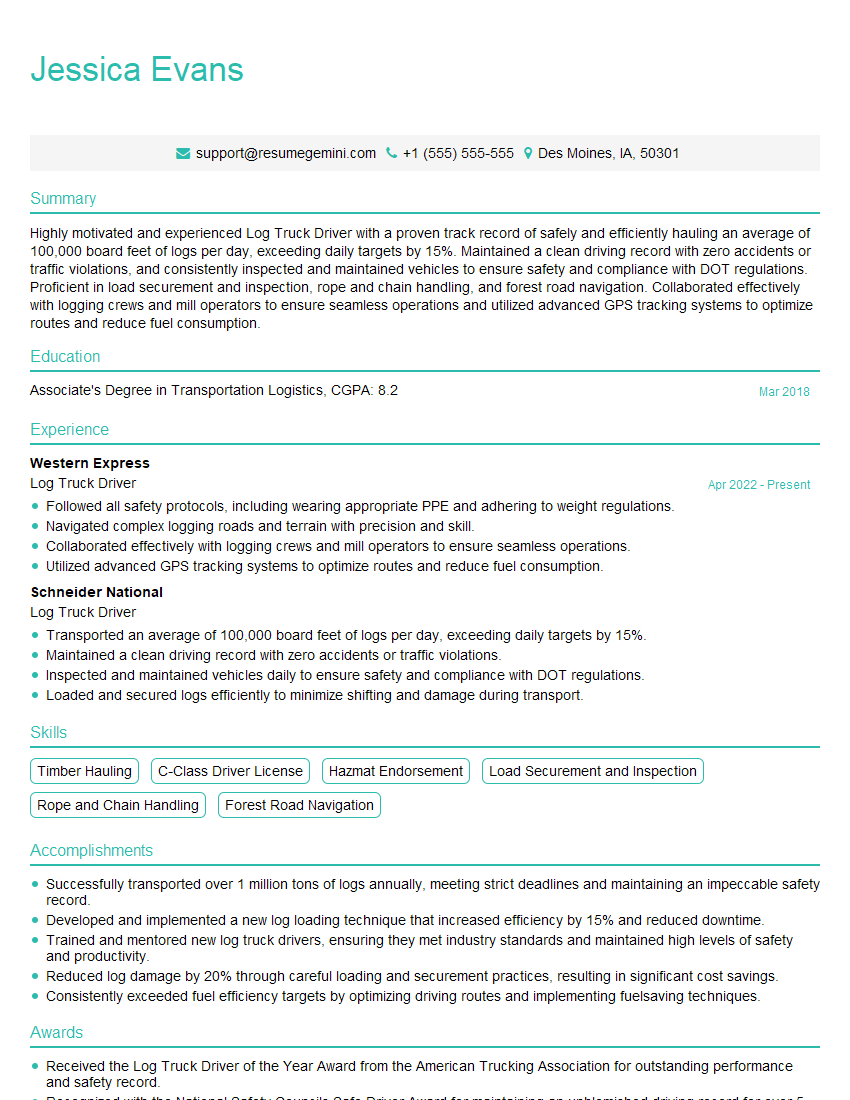
Mastering logging truck driving opens doors to a rewarding career with excellent earning potential and opportunities for advancement within the forestry industry. To maximize your job prospects, it’s crucial to present yourself effectively through a well-crafted, ATS-friendly resume. ResumeGemini is a trusted resource that can help you build a professional and impactful resume, significantly increasing your chances of landing your dream job. Examples of resumes tailored to logging truck driving positions are available through ResumeGemini to help guide you.



Explore more articles
Users Rating of Our Blogs
Share Your Experience
We value your feedback! Please rate our content and share your thoughts (optional).
What Readers Say About Our Blog
Hello,
we currently offer a complimentary backlink and URL indexing test for search engine optimization professionals.
You can get complimentary indexing credits to test how link discovery works in practice.
No credit card is required and there is no recurring fee.
You can find details here:
https://wikipedia-backlinks.com/indexing/
Regards
NICE RESPONSE TO Q & A
hi
The aim of this message is regarding an unclaimed deposit of a deceased nationale that bears the same name as you. You are not relate to him as there are millions of people answering the names across around the world. But i will use my position to influence the release of the deposit to you for our mutual benefit.
Respond for full details and how to claim the deposit. This is 100% risk free. Send hello to my email id: [email protected]
Luka Chachibaialuka
Hey interviewgemini.com, just wanted to follow up on my last email.
We just launched Call the Monster, an parenting app that lets you summon friendly ‘monsters’ kids actually listen to.
We’re also running a giveaway for everyone who downloads the app. Since it’s brand new, there aren’t many users yet, which means you’ve got a much better chance of winning some great prizes.
You can check it out here: https://bit.ly/callamonsterapp
Or follow us on Instagram: https://www.instagram.com/callamonsterapp
Thanks,
Ryan
CEO – Call the Monster App
Hey interviewgemini.com, I saw your website and love your approach.
I just want this to look like spam email, but want to share something important to you. We just launched Call the Monster, a parenting app that lets you summon friendly ‘monsters’ kids actually listen to.
Parents are loving it for calming chaos before bedtime. Thought you might want to try it: https://bit.ly/callamonsterapp or just follow our fun monster lore on Instagram: https://www.instagram.com/callamonsterapp
Thanks,
Ryan
CEO – Call A Monster APP
To the interviewgemini.com Owner.
Dear interviewgemini.com Webmaster!
Hi interviewgemini.com Webmaster!
Dear interviewgemini.com Webmaster!
excellent
Hello,
We found issues with your domain’s email setup that may be sending your messages to spam or blocking them completely. InboxShield Mini shows you how to fix it in minutes — no tech skills required.
Scan your domain now for details: https://inboxshield-mini.com/
— Adam @ InboxShield Mini
Reply STOP to unsubscribe
Hi, are you owner of interviewgemini.com? What if I told you I could help you find extra time in your schedule, reconnect with leads you didn’t even realize you missed, and bring in more “I want to work with you” conversations, without increasing your ad spend or hiring a full-time employee?
All with a flexible, budget-friendly service that could easily pay for itself. Sounds good?
Would it be nice to jump on a quick 10-minute call so I can show you exactly how we make this work?
Best,
Hapei
Marketing Director
Hey, I know you’re the owner of interviewgemini.com. I’ll be quick.
Fundraising for your business is tough and time-consuming. We make it easier by guaranteeing two private investor meetings each month, for six months. No demos, no pitch events – just direct introductions to active investors matched to your startup.
If youR17;re raising, this could help you build real momentum. Want me to send more info?
Hi, I represent an SEO company that specialises in getting you AI citations and higher rankings on Google. I’d like to offer you a 100% free SEO audit for your website. Would you be interested?
Hi, I represent an SEO company that specialises in getting you AI citations and higher rankings on Google. I’d like to offer you a 100% free SEO audit for your website. Would you be interested?
good