Feeling uncertain about what to expect in your upcoming interview? We’ve got you covered! This blog highlights the most important Long-Term Planning interview questions and provides actionable advice to help you stand out as the ideal candidate. Let’s pave the way for your success.
Questions Asked in Long-Term Planning Interview
Q 1. Describe your experience with developing long-term strategic plans.
Developing robust long-term strategic plans involves a multifaceted approach that goes beyond simple forecasting. It requires a deep understanding of the organization’s vision, mission, and current capabilities, coupled with a thorough analysis of the external environment. My experience encompasses leading the development of such plans across diverse sectors, from technology startups to established multinational corporations. This involves a collaborative process, bringing together stakeholders from various departments to ensure buy-in and alignment. The process typically includes defining a clear vision, conducting SWOT analyses (Strengths, Weaknesses, Opportunities, Threats), setting strategic goals, and developing action plans with specific timelines and resource allocation.
For instance, in my previous role at a tech startup, I led the development of a five-year strategic plan that involved identifying new market segments, developing innovative product lines, and securing strategic partnerships. This process required extensive market research, competitive analysis, and detailed financial modeling to ensure the plan’s feasibility and alignment with the company’s overall objectives.
Q 2. How do you identify and assess key risks in long-term planning?
Identifying and assessing key risks in long-term planning is crucial for mitigating potential disruptions and ensuring the plan’s success. I employ a structured risk assessment framework that involves identifying potential risks through brainstorming sessions, reviewing historical data, and analyzing industry trends. These risks are then categorized based on their likelihood and potential impact, using a matrix or similar tool. This allows us to prioritize our efforts on the most critical risks.
For example, in a project involving international expansion, we identified potential risks such as geopolitical instability, regulatory changes, and currency fluctuations. By assessing the likelihood and impact of each risk, we developed mitigation strategies, such as hedging against currency fluctuations and establishing contingency plans for political disruptions.
The process isn’t just about identifying risks; it’s also about proactively developing strategies to mitigate them. This often includes creating contingency plans, setting aside financial reserves, and building strong relationships with key stakeholders to navigate unexpected challenges.
Q 3. Explain your process for establishing measurable goals and objectives in a long-term plan.
Establishing measurable goals and objectives is paramount for tracking progress and demonstrating the effectiveness of the long-term plan. I use the SMART framework – Specific, Measurable, Achievable, Relevant, and Time-bound – to define goals and objectives. This ensures that each goal is clearly defined, its progress can be quantitatively measured, and it aligns with the overall strategic direction.
For example, instead of a vague goal like ‘increase market share,’ a SMART goal would be ‘increase market share by 15% in the North American market by Q4 2025, as measured by independent market research reports.’ This level of specificity allows for accurate monitoring and evaluation.
This process also involves creating a cascading system of goals, linking overarching strategic goals to department-level objectives and individual key performance indicators (KPIs). This ensures that everyone understands their role in achieving the long-term plan’s objectives.
Q 4. How do you incorporate market trends and competitive analysis into your long-term planning?
Incorporating market trends and competitive analysis is essential for developing a realistic and successful long-term plan. I utilize a variety of methods, including market research reports, industry publications, competitive benchmarking, and customer feedback analysis. This information provides insights into emerging market trends, competitor strategies, and customer preferences, which are all crucial for informing strategic decision-making.
For instance, when developing a plan for a new product launch, we conducted thorough market research to understand customer needs and preferences, analyzed competitor offerings to identify opportunities for differentiation, and tracked emerging technological trends to ensure the product remains relevant over the long term. This comprehensive analysis helped us to develop a product that met market needs and had a strong competitive advantage.
This also involves utilizing tools such as Porter’s Five Forces analysis to understand the competitive landscape and identify potential threats and opportunities.
Q 5. What methods do you use to monitor progress and make adjustments to a long-term plan?
Monitoring progress and making adjustments are continuous processes in long-term planning. I utilize a combination of methods, including regular performance reviews, key performance indicator (KPI) tracking, and scenario planning. Regular progress reports allow us to identify deviations from the plan and address them proactively. KPIs provide quantifiable metrics to track progress towards goals and objectives.
Scenario planning helps us anticipate potential disruptions and develop contingency plans to adapt to unforeseen circumstances. For example, we might develop different scenarios based on varying economic growth rates or technological advancements, and then develop corresponding strategies for each scenario. This allows for flexibility and adaptability in the face of uncertainty.
Regular review meetings, dashboard monitoring, and feedback loops are crucial for identifying the need for adjustments. The plan should be a living document, constantly evolving to reflect changing circumstances.
Q 6. How do you manage conflicting priorities in long-term planning?
Managing conflicting priorities is an inherent challenge in long-term planning. I use a prioritization matrix, often based on a combination of factors such as urgency, importance, and alignment with strategic goals. This matrix helps to visualize competing priorities and make informed decisions about resource allocation. Prioritization also involves clear communication and stakeholder alignment.
For example, if a company faces a budget constraint and has several important projects vying for resources, a prioritization matrix might help to determine which projects align best with overall strategic goals and should receive priority funding. This process might involve difficult decisions, but a transparent and data-driven approach ensures fairness and efficiency.
Furthermore, effective communication is key. Transparency around resource constraints and the prioritization process helps to ensure that all stakeholders understand the rationale behind the decisions made.
Q 7. Describe a time you had to adapt a long-term plan due to unforeseen circumstances.
In a previous role, we were implementing a five-year strategic plan focused on expanding into a new international market. The plan included a significant investment in building a new manufacturing facility in that region. However, unforeseen political instability in that region led to significant delays and increased costs in construction. We had to adapt the plan rapidly.
Our response involved several steps. First, we reassessed the risks associated with the original plan, considering alternative locations for the manufacturing facility. Second, we engaged with local partners to gain a better understanding of the political landscape and identify potential solutions. Third, we revised the timeline and budget for the project, incorporating contingency plans for potential further delays or cost increases. Fourth, we communicated transparently with stakeholders about the changes and secured their buy-in for the revised plan.
This experience highlighted the importance of flexibility and adaptability in long-term planning. The ability to quickly assess the situation, develop alternative solutions, and communicate effectively with stakeholders was crucial for navigating this unforeseen challenge and ultimately achieving our long-term objectives, albeit with a revised timeline and strategy.
Q 8. How do you ensure alignment between long-term strategic goals and short-term operational plans?
Aligning long-term strategic goals with short-term operational plans requires a cascading approach, ensuring that the daily actions support the overarching vision. Think of it like building a house: the strategic goals are the blueprint, while the operational plans are the individual tasks – laying the foundation, framing the walls, etc. Each step must contribute to the final structure.
I use a method called Objectives and Key Results (OKRs). We define high-level strategic objectives for the long term, then break them down into measurable Key Results for shorter periods (e.g., quarterly or annually). These Key Results directly translate into operational tasks and projects. Regular progress reviews ensure alignment, and any significant deviations trigger adjustments to the operational plans while maintaining the strategic trajectory.
For example, a long-term strategic goal might be ‘Become the market leader in sustainable packaging.’ A yearly Key Result could be ‘Increase market share by 15%.’ This would then cascade down to operational plans, such as launching a new product line, improving marketing campaigns focused on sustainability, and optimizing the supply chain for eco-friendly materials.
Q 9. What metrics do you use to evaluate the success of a long-term plan?
Evaluating the success of a long-term plan isn’t simply about hitting short-term targets; it’s about assessing progress toward the overarching vision and adapting as needed. I typically use a balanced scorecard approach, measuring performance across multiple perspectives:
- Financial: Revenue growth, profitability, return on investment (ROI).
- Customer: Customer satisfaction, market share, brand reputation.
- Internal Processes: Efficiency, quality, innovation.
- Learning & Growth: Employee satisfaction, skill development, knowledge creation.
For each perspective, we define specific, measurable, achievable, relevant, and time-bound (SMART) metrics. Regular monitoring and analysis allow us to identify successes, challenges, and areas requiring adjustment. For instance, if customer satisfaction scores are lagging despite strong financial performance, it signals a need to refine our customer engagement strategies.
Q 10. How do you effectively communicate long-term plans to different stakeholders?
Effective communication is crucial for buy-in and successful implementation. I tailor my communication style and content to different stakeholder groups. For executive leadership, I focus on high-level summaries, emphasizing key strategic implications and financial projections. For operational teams, I provide detailed plans, outlining specific roles and responsibilities. For employees, I emphasize the ‘why’ behind the plan, connecting it to individual roles and the overall company vision.
I utilize various communication channels, including presentations, reports, town hall meetings, intranet updates, and regular progress reports. Visual aids, such as dashboards and infographics, help to simplify complex information. Crucially, I encourage open dialogue and feedback at all stages to ensure transparency and address concerns proactively. Think of it as storytelling, crafting a narrative that resonates with each audience and explains how their work contributes to the larger picture.
Q 11. What are the key elements of a successful long-term financial plan?
A successful long-term financial plan must be realistic, flexible, and aligned with the overall strategic goals. Key elements include:
- Financial Forecasting: Accurately predicting future revenue, expenses, and cash flow, considering various economic scenarios.
- Capital Budgeting: Identifying and prioritizing investment opportunities aligned with strategic objectives.
- Debt Management: Developing a strategy for managing debt levels, minimizing risk, and optimizing financing costs.
- Risk Management: Identifying and mitigating potential financial risks, such as market volatility and economic downturns.
- Performance Monitoring: Regularly tracking key financial metrics and making necessary adjustments to the plan.
A crucial aspect is scenario planning. We develop multiple financial projections based on different assumptions about future conditions (e.g., optimistic, pessimistic, most likely) to prepare for various possibilities and ensure the plan’s robustness.
Q 12. How do you incorporate sustainability considerations into long-term planning?
Incorporating sustainability considerations is no longer a ‘nice-to-have’; it’s a strategic imperative. I integrate Environmental, Social, and Governance (ESG) factors into all aspects of long-term planning. This involves:
- Setting ESG goals: Defining measurable targets for reducing carbon emissions, improving resource efficiency, promoting ethical sourcing, and enhancing social impact.
- Identifying ESG risks and opportunities: Assessing potential environmental, social, and governance risks and identifying opportunities to create value through sustainable practices.
- Integrating ESG into financial planning: Incorporating ESG factors into financial models and projections, considering the financial implications of sustainability initiatives.
- Reporting and transparency: Regularly reporting on ESG performance to stakeholders, demonstrating accountability and transparency.
For example, a company might set a target to reduce its carbon footprint by 50% within ten years, requiring investment in renewable energy, waste reduction strategies, and sustainable supply chain management. This investment needs to be carefully analyzed and integrated into the broader financial plan.
Q 13. Describe your experience with forecasting and scenario planning.
I have extensive experience in forecasting and scenario planning, using quantitative and qualitative methods. For forecasting, I employ statistical models, historical data analysis, and market research to predict future trends. Scenario planning involves creating multiple plausible futures based on different assumptions about key drivers such as economic growth, technological advancements, and regulatory changes. This helps us assess the resilience of our plans and identify potential vulnerabilities.
For example, in forecasting sales, I might use time series analysis to identify seasonal patterns and trends, then incorporate external factors like economic indicators and competitor actions. Scenario planning might include a ‘high-growth’ scenario, a ‘stagnant market’ scenario, and a ‘disruptive technology’ scenario, each with different implications for our strategy and resource allocation.
Q 14. How do you deal with uncertainty and ambiguity in long-term planning?
Uncertainty is inherent in long-term planning. I address this through robust scenario planning, risk assessment, and adaptive management. Scenario planning, as described earlier, helps us anticipate potential challenges and develop contingency plans. Risk assessment involves identifying potential threats and opportunities, evaluating their likelihood and impact, and developing mitigation strategies.
Adaptive management involves regularly monitoring the environment, assessing progress against the plan, and adjusting strategies as needed. This iterative process allows us to learn from experience, respond to unexpected events, and continuously improve the plan’s effectiveness. It’s like navigating a ship; you have a planned route, but you continuously adjust your course based on weather conditions, currents, and other unforeseen events. Flexibility and the ability to adapt are key to success.
Q 15. How do you prioritize different projects and initiatives within a long-term plan?
Prioritizing projects within a long-term plan requires a strategic approach that balances urgency, importance, and alignment with overall goals. I typically use a multi-criteria decision analysis (MCDA) framework, combining quantitative and qualitative factors.
- Strategic Alignment: Projects directly supporting the overarching strategic goals receive higher priority. For example, if the long-term goal is market expansion, projects focused on new market research and product development will rank higher than those focused on minor internal process improvements.
- Risk and Opportunity Assessment: Projects with higher potential returns and lower risks are favored. A project with a high probability of success and substantial market impact will likely be prioritized over a risky venture with uncertain outcomes.
- Resource Availability: We consider the resources (budget, personnel, time) needed for each project. Even a high-priority project might be delayed if it requires resources already allocated to a critical initiative.
- Dependency Analysis: Some projects are prerequisites for others. We identify these dependencies to ensure projects are sequenced logically. For instance, developing a new software platform precedes launching a related marketing campaign.
- Scoring and Ranking: Each criterion is assigned a weight reflecting its importance. Projects are scored based on their performance in each criterion, and the weighted scores determine the final ranking.
This systematic approach helps ensure that resources are allocated to projects that yield the greatest long-term value. Imagine a scenario where a company is developing a new product line. Using this method, research and development for the product line would get higher priority than improving the coffee machine in the breakroom, even if the latter might be a pleasant-to-have.
Career Expert Tips:
- Ace those interviews! Prepare effectively by reviewing the Top 50 Most Common Interview Questions on ResumeGemini.
- Navigate your job search with confidence! Explore a wide range of Career Tips on ResumeGemini. Learn about common challenges and recommendations to overcome them.
- Craft the perfect resume! Master the Art of Resume Writing with ResumeGemini’s guide. Showcase your unique qualifications and achievements effectively.
- Don’t miss out on holiday savings! Build your dream resume with ResumeGemini’s ATS optimized templates.
Q 16. How do you measure the return on investment (ROI) of long-term initiatives?
Measuring the ROI of long-term initiatives is challenging because the benefits often materialize over an extended period. We employ a combination of financial and non-financial metrics to gain a comprehensive view.
- Discounted Cash Flow (DCF): This is a crucial method for evaluating long-term investments. It considers the time value of money, discounting future cash flows back to their present value to accurately reflect their current worth.
- Net Present Value (NPV): NPV calculates the difference between the present value of cash inflows and outflows. A positive NPV indicates a profitable investment.
- Internal Rate of Return (IRR): IRR represents the discount rate at which the NPV of an investment equals zero. It provides a percentage return that can be compared to other investment opportunities.
- Qualitative Metrics: We also track qualitative aspects like brand reputation, customer satisfaction, and employee morale, which are difficult to quantify but critical for long-term success. For instance, a successful sustainability initiative might lead to improved brand image and increased customer loyalty, even if it doesn’t show immediate financial returns.
- Scenario Planning: To account for uncertainty, we develop various scenarios (optimistic, pessimistic, most likely) and calculate the ROI under each scenario.
It’s crucial to remember that measuring ROI for long-term initiatives is an ongoing process. We regularly monitor progress and adjust our metrics as needed to reflect changing market conditions and organizational priorities. For example, while the initial ROI of a new software implementation might be negative due to development costs, its positive impact on efficiency and reduced errors over several years will result in a positive long-term ROI.
Q 17. Explain your approach to resource allocation in long-term planning.
Resource allocation in long-term planning requires a balanced approach. It’s not just about assigning budgets; it’s about strategically distributing human capital, technology, and other resources to maximize the impact of each initiative.
- Prioritization Framework: As mentioned previously, we use a prioritized list of projects based on their strategic alignment, risk/opportunity assessment, resource requirements, and interdependencies.
- Budget Allocation: The budget is allocated based on the priority of the projects and the resources required for each. We employ zero-based budgeting, requiring each project to justify its funding needs.
- Personnel Assignment: We carefully assign personnel to projects based on their skills and experience, and balance workload across teams. We avoid overburdening any single team or individual.
- Technology and Infrastructure: Investment in technology and infrastructure is aligned with the long-term strategic goals. We may need to acquire new software, hardware, or upgrade existing systems to support new projects.
- Regular Review and Adjustment: We continuously monitor resource allocation and make adjustments as needed. This includes reallocating resources to high-performing projects or addressing unexpected resource shortages.
Think of it like planning a large construction project. You can’t just throw money and people at it randomly. You need to carefully plan the allocation of materials, equipment, and skilled labor at each stage to ensure timely and efficient completion, minimizing resource waste and maximizing efficiency.
Q 18. How do you ensure buy-in from stakeholders for a long-term plan?
Securing stakeholder buy-in for a long-term plan is crucial for its successful implementation. My approach involves a multi-stage process that emphasizes transparency, communication, and collaboration.
- Stakeholder Identification and Analysis: We identify all key stakeholders and analyze their interests, influence, and potential resistance to the plan.
- Transparent Communication: We clearly communicate the rationale behind the plan, its goals, and the expected outcomes. We use multiple channels to reach all stakeholders, including presentations, reports, and informal discussions.
- Early Engagement and Consultation: We involve stakeholders early in the planning process, seeking their input and addressing their concerns. This fosters a sense of ownership and commitment.
- Addressing Concerns and Resistance: We proactively address potential objections and concerns, providing data and evidence to support the plan’s merits. We are open to modifications based on constructive feedback.
- Continuous Monitoring and Feedback: We continuously monitor stakeholder sentiment and seek regular feedback throughout the implementation phase. This helps to address any emerging issues or concerns.
For example, when developing a new strategy for a department, I would schedule individual meetings with key personnel to understand their perspectives and concerns before presenting the plan. This consultative approach builds trust and increases the likelihood of acceptance.
Q 19. Describe your experience with using data analytics for long-term planning.
Data analytics plays a critical role in informing and refining long-term planning. I leverage data to identify trends, predict future scenarios, and measure the effectiveness of our initiatives.
- Trend Analysis: We analyze historical data to identify trends in market demand, customer behavior, and competitor activity. This informs our strategic direction and helps us anticipate future challenges and opportunities.
- Predictive Modeling: We use statistical modeling and machine learning techniques to forecast future outcomes based on historical data and relevant external factors. This enables us to make more informed decisions about resource allocation and risk management.
- Performance Measurement: We track key performance indicators (KPIs) to measure the progress of our initiatives and assess their impact. This data helps us to identify areas for improvement and adjust our strategies as needed.
- Scenario Planning: Data analytics helps us to develop more realistic and data-driven scenarios for future planning. This improves the robustness of our plans and increases our ability to adapt to unforeseen circumstances.
- Data Visualization: We use data visualization tools to present complex data in a clear and understandable way. This ensures that everyone can access and interpret the insights gleaned from data analysis.
For example, by analyzing sales data and market trends, we can accurately predict future demand for a product, allowing us to optimize production and inventory levels.
Q 20. What software or tools do you use for long-term planning?
My experience encompasses various software and tools for long-term planning. The specific choice depends on the project’s complexity and the organization’s needs.
- Spreadsheet Software (Excel, Google Sheets): For simpler plans and tracking KPIs, spreadsheets provide a flexible and accessible tool.
- Project Management Software (MS Project, Asana, Jira): These tools are essential for managing complex projects and their timelines, resources, and dependencies.
- Business Intelligence (BI) Tools (Tableau, Power BI): These are crucial for data analysis, visualization, and reporting on key performance indicators.
- Strategic Planning Software (Long-range planning software): Some specialized software packages offer features specifically designed for long-term strategic planning.
- Collaboration Platforms (SharePoint, Google Workspace): These facilitate communication and collaboration among stakeholders.
The choice often involves a combination of tools. For example, I might use a project management tool for tracking project progress, a BI tool for data analysis, and a collaboration platform for communicating with stakeholders.
Q 21. How do you integrate long-term planning with day-to-day operations?
Integrating long-term planning with day-to-day operations is essential for ensuring that the long-term vision is translated into tangible actions. I use a few key approaches to achieve this integration.
- Alignment of Goals and Objectives: The long-term plan should inform the setting of annual goals and objectives, ensuring that daily activities contribute to the overarching strategic vision.
- Regular Reporting and Monitoring: We regularly monitor progress against the long-term plan, using KPIs and other metrics to track our performance. This ensures that we remain on track and can adjust our approach as needed.
- Resource Allocation: We allocate resources to support both short-term operational needs and long-term strategic initiatives. This requires a careful balancing act, ensuring that we address immediate issues without sacrificing long-term goals.
- Communication and Feedback: We regularly communicate the long-term vision and progress to all staff members. We solicit feedback to identify and address any issues or challenges.
- Adaptive Planning: The long-term plan should not be a rigid document. We should adapt it based on new information, changing market conditions, and feedback from the field. This ensures that it remains relevant and effective.
Imagine a restaurant chain planning for expansion over the next 10 years. Day-to-day operations focus on customer service and efficient food preparation, but these efforts are guided by the long-term goal of expansion, which may include investing in new locations, developing new menu items, or improving supply chain efficiency. The daily activities directly contribute to the achievement of the long-term plan.
Q 22. How do you adapt your long-term planning approach for different types of organizations?
Adapting long-term planning to different organizations hinges on understanding their unique contexts. A small startup’s plan will differ drastically from that of a multinational corporation. My approach is highly contextual and involves several key steps:
- Industry Analysis: Understanding the specific industry landscape—its growth potential, competitive pressures, regulatory environment—is paramount. A tech startup, for example, needs to account for rapid technological advancements, whereas a utility company might focus on long-term infrastructure needs and regulatory compliance.
- Organizational Size and Structure: A large corporation with diverse business units will require a more decentralized planning process, possibly involving individual strategic plans for each unit, consolidated into an overall corporate strategy. Smaller organizations can often employ a more centralized, streamlined approach.
- Organizational Culture and Risk Appetite: Some organizations embrace innovation and high risk, while others prioritize stability and predictability. The long-term plan needs to reflect this. A risk-averse organization will prioritize robust risk mitigation, while a more adventurous one might include more aggressive growth targets.
- Resource Constraints: Financial resources, human capital, and technological capabilities all shape the scope and ambition of a long-term plan. A plan must be realistic given the available resources.
- Vision and Mission Alignment: The long-term plan must be directly aligned with the organization’s overall vision and mission. It should clearly outline how the organization intends to achieve its goals over the long term.
For instance, when working with a non-profit, the plan would heavily emphasize social impact metrics and securing sustainable funding, unlike a for-profit venture that would prioritize revenue growth and market share.
Q 23. Describe a time you had to make a difficult trade-off in long-term planning.
During a strategic planning session for a manufacturing company, we faced a difficult choice between investing in a new, highly automated production line or upgrading existing facilities. The automated line promised significantly higher efficiency and reduced labor costs in the long run, but it was a substantial upfront investment with higher inherent risk (technological failure, market shifts). Upgrading existing facilities was a safer, less capital-intensive option, but it would yield smaller, less transformative improvements.
We used a decision matrix that weighted various factors, including financial projections (ROI, payback period), risk assessment (probability and impact of potential failures), and strategic alignment with long-term goals. After careful analysis considering various scenarios, we opted for a phased approach: upgrading existing facilities initially to maintain operational efficiency while simultaneously investing in research and development to thoroughly test the automated line’s feasibility and mitigate risks before committing to a full-scale deployment. This compromise allowed us to secure short-term stability while keeping the long-term vision of increased automation on track.
Q 24. How do you manage the risks associated with long-term investments?
Managing risks associated with long-term investments is crucial. My approach involves a multi-faceted strategy:
- Scenario Planning: We develop multiple future scenarios, ranging from optimistic to pessimistic, considering various external factors like economic fluctuations, technological disruption, and regulatory changes.
- Risk Assessment and Mitigation: We identify potential risks and their likelihood and impact. We then develop mitigation strategies, including diversification (investing across multiple assets or projects), hedging (using financial instruments to protect against losses), and contingency planning (developing alternative plans in case of unexpected events).
- Monitoring and Evaluation: Regularly monitoring key performance indicators (KPIs) and adapting the plan as needed based on emerging risks and opportunities. A flexible plan that can adapt to change is key.
- Stress Testing: We test the plan’s robustness by subjecting it to various stress scenarios (e.g., a significant economic downturn) to identify potential vulnerabilities and weaknesses.
For instance, when investing in a new technology, we might diversify our investments across several promising technologies to reduce the risk of a single technology failing. We would also include contingency plans for market changes or technological obsolescence.
Q 25. How do you balance innovation and risk mitigation in long-term planning?
Balancing innovation and risk mitigation is a delicate act. It’s not about choosing one over the other, but about strategically integrating both within the long-term plan. This involves:
- Prioritizing Innovation Opportunities: Identifying innovation opportunities that align with the organization’s long-term goals and have a high potential payoff, while acknowledging the inherent risks.
- Phased Rollouts: Implementing innovative projects in phases, allowing for incremental testing, learning, and adaptation, reduces exposure to high upfront risk.
- Portfolio Management: Creating a diversified portfolio of both innovative and established projects, balancing high-risk/high-reward ventures with more conservative, lower-risk projects that provide stability.
- Robust Evaluation Mechanisms: Establishing clear metrics to evaluate the progress and success of both innovative and conservative initiatives and using the data to inform future decisions.
- Culture of Experimentation: Fostering a culture that embraces experimentation and learning from failures, viewing them as valuable learning opportunities rather than setbacks.
Imagine a pharmaceutical company: they balance long-term investments in cutting-edge research (high risk, high potential reward) with continued production of established drugs (lower risk, stable revenue). This approach allows them to manage risk while pushing the boundaries of medical innovation.
Q 26. How familiar are you with different forecasting models?
I am familiar with a range of forecasting models, including:
- Time Series Analysis: Methods like ARIMA and exponential smoothing use historical data to predict future trends.
- Regression Analysis: Predicting a dependent variable (e.g., sales) based on its relationship with independent variables (e.g., marketing spend, economic indicators).
- Causal Forecasting: Models that explicitly account for cause-and-effect relationships to predict future outcomes.
- Qualitative Forecasting: Methods such as Delphi technique and market research, which involve expert opinions and qualitative data.
- Simulation Modeling: Using computer simulations to model complex systems and predict future outcomes under various scenarios (e.g., Monte Carlo simulation).
The choice of model depends on the specific context, the availability of data, and the desired level of accuracy. I always emphasize combining multiple forecasting methods to improve accuracy and robustness.
Q 27. Describe your experience in developing contingency plans for long-term projects.
Developing contingency plans is a critical aspect of long-term project planning. My approach is structured and proactive:
- Risk Identification: A thorough risk assessment to identify potential problems (technical glitches, resource shortages, regulatory changes, market shifts).
- Impact Assessment: Evaluating the potential impact of each risk on project goals, timelines, and budget.
- Contingency Development: Formulating specific, actionable steps to mitigate each risk. These might include alternative suppliers, buffer time in the schedule, contingency funds, or alternative technologies.
- Communication and Training: Ensuring all stakeholders understand the risks and their associated contingency plans. Providing training on how to implement the contingency plans if necessary.
- Regular Review and Update: Periodically reviewing the contingency plans to ensure they remain relevant and effective in light of changing circumstances.
For instance, in a large-scale infrastructure project, contingency plans might cover potential weather delays, material shortages, or labor disputes, each with its own set of mitigation strategies.
Q 28. How do you stay updated on industry trends relevant to long-term planning?
Staying updated on industry trends is crucial for effective long-term planning. I use a multi-pronged approach:
- Industry Publications and Journals: Regularly reading industry-specific publications, journals, and reports to stay abreast of the latest developments.
- Conferences and Seminars: Attending industry conferences and seminars to network with peers and learn from experts.
- Online Resources: Following key industry blogs, websites, and social media accounts.
- Market Research Reports: Analyzing market research reports to gain insights into market trends, consumer behavior, and competitive landscapes.
- Networking: Maintaining a strong professional network to stay informed through conversations and information sharing.
This continuous learning process ensures that my long-term planning reflects the current industry realities and allows me to anticipate future changes and adapt accordingly.
Key Topics to Learn for Long-Term Planning Interview
- Strategic Foresight: Understanding methodologies for anticipating future trends and their impact on organizational goals. Practical application: Analyzing market research to predict future demand and adapt business strategies accordingly.
- Scenario Planning: Developing multiple plausible future scenarios and devising corresponding strategies. Practical application: Creating contingency plans for various economic or market shifts.
- Resource Allocation: Optimizing the distribution of resources (financial, human, technological) to achieve long-term objectives. Practical application: Developing a long-term budget that aligns with strategic goals and mitigates potential risks.
- Risk Management & Mitigation: Identifying, assessing, and mitigating potential risks that could hinder long-term success. Practical application: Developing risk mitigation strategies for supply chain disruptions or technological obsolescence.
- Performance Measurement & Evaluation: Establishing key performance indicators (KPIs) and frameworks to track progress towards long-term goals. Practical application: Designing dashboards to monitor the effectiveness of long-term strategies and make necessary adjustments.
- Stakeholder Engagement: Building consensus and buy-in from stakeholders regarding long-term plans and strategies. Practical application: Effectively communicating long-term vision and plans to diverse stakeholders (e.g., board members, employees, customers).
- Sustainability & Corporate Social Responsibility (CSR): Integrating long-term sustainability considerations into business planning. Practical application: Developing strategies that balance profitability with environmental and social responsibility.
Next Steps
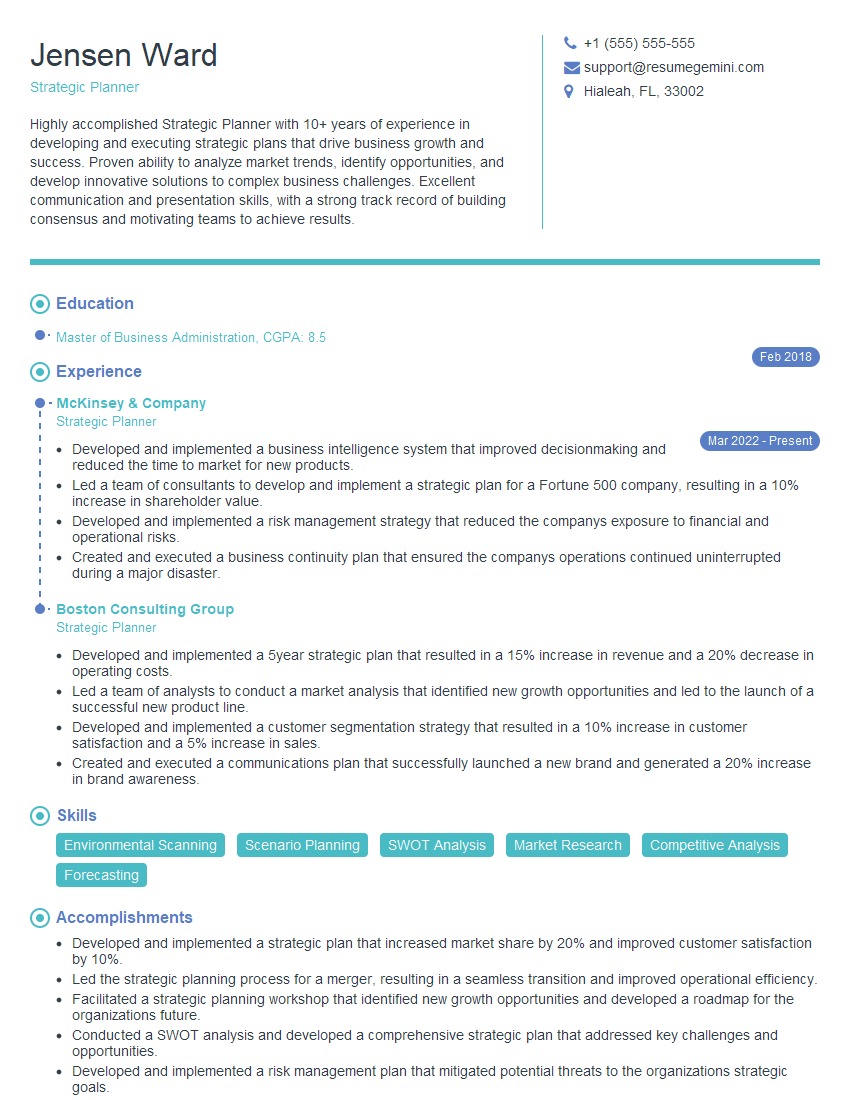
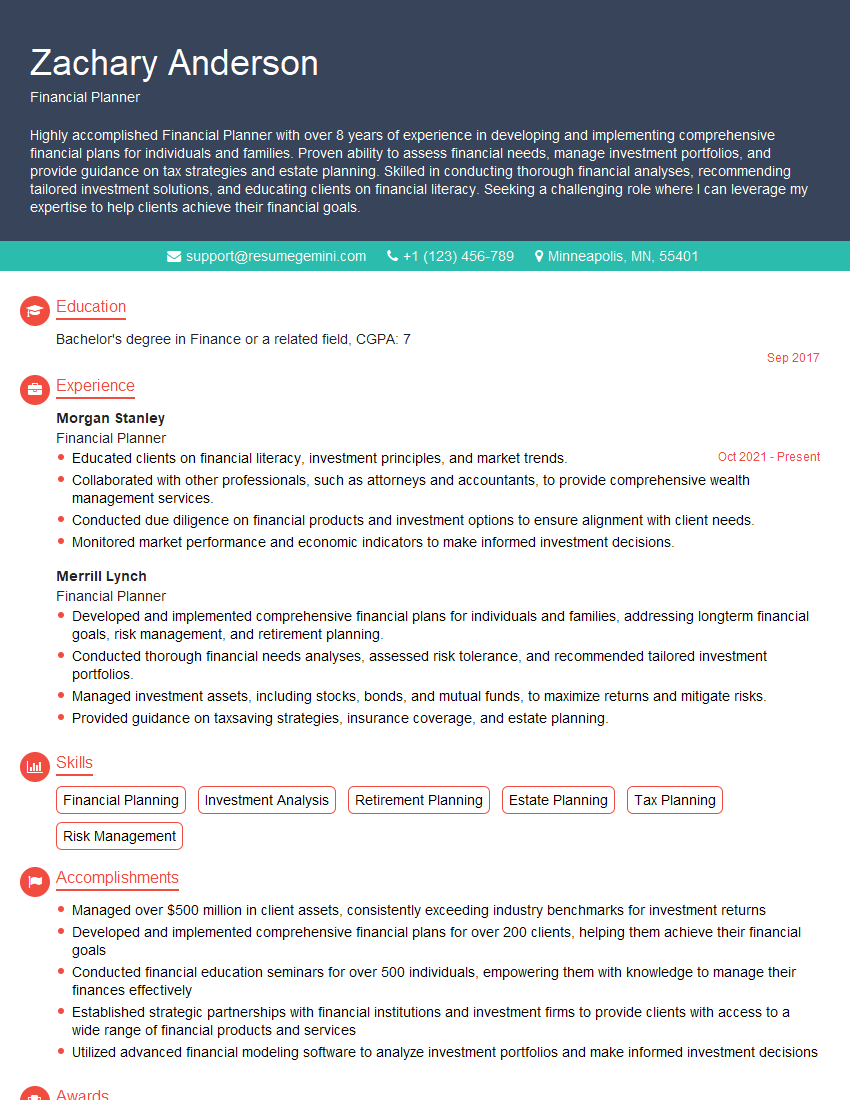
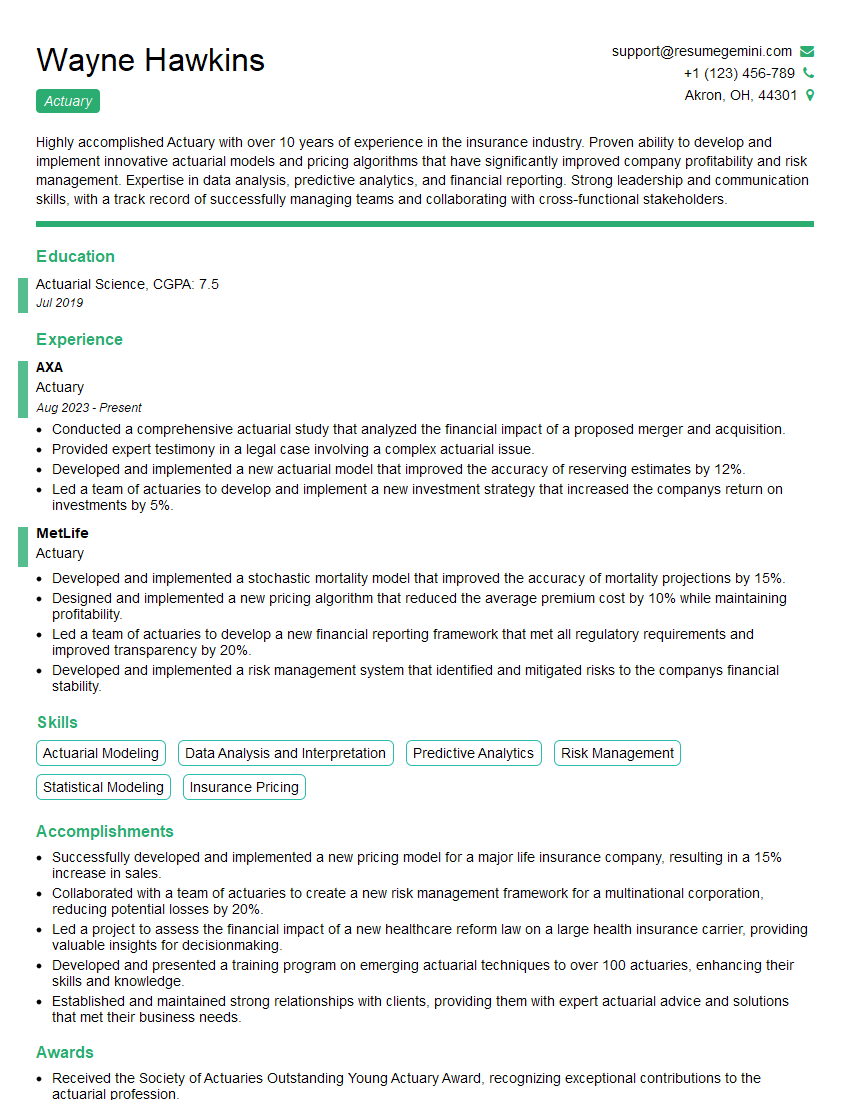
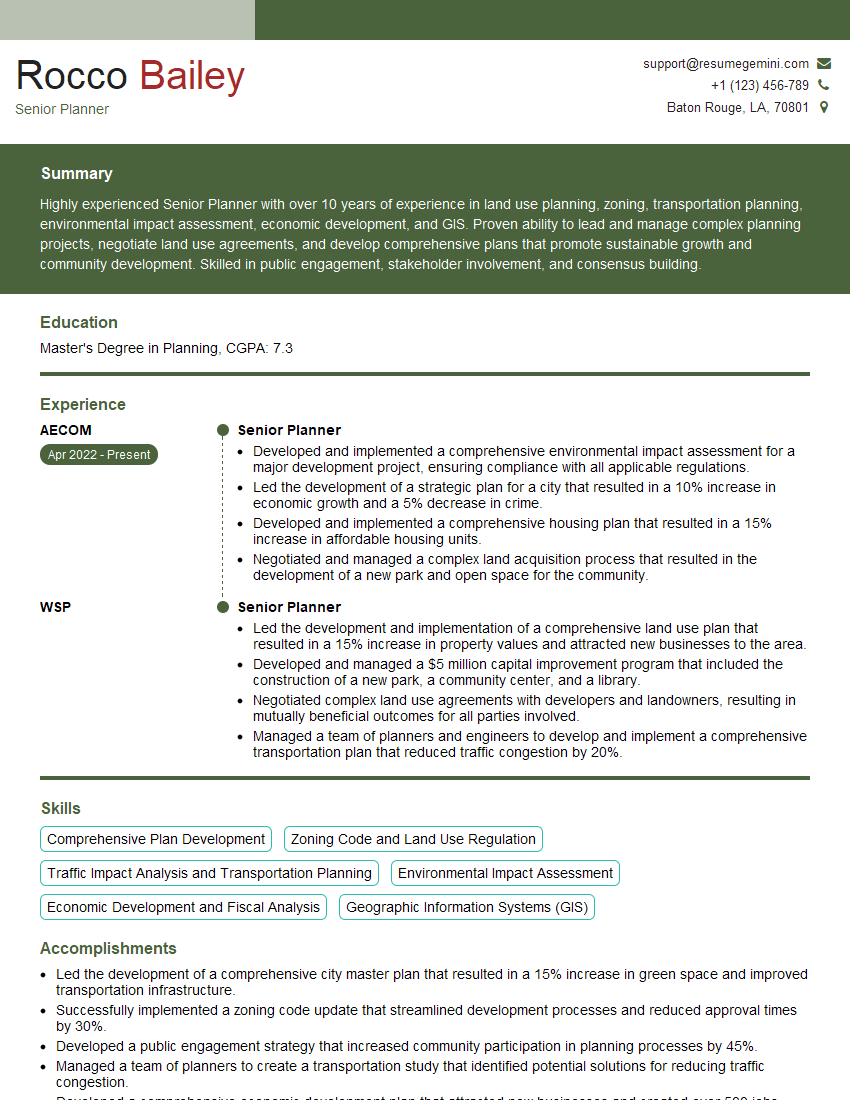
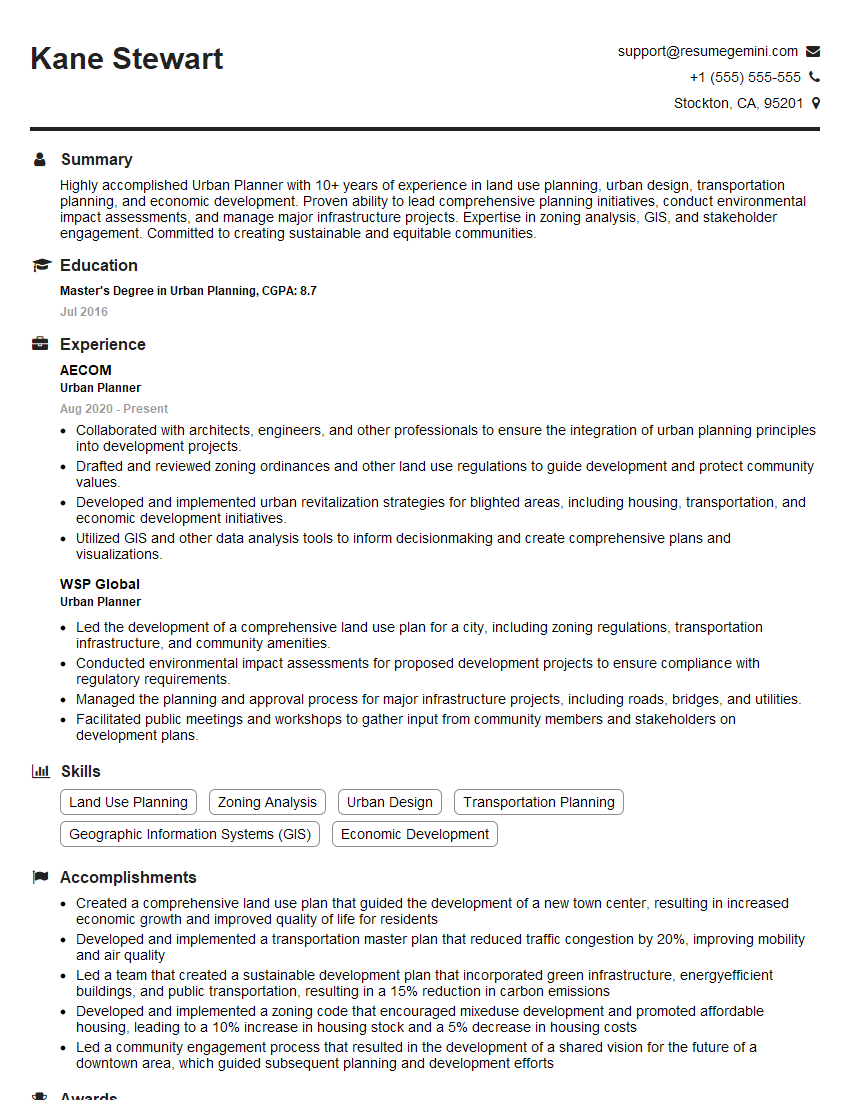
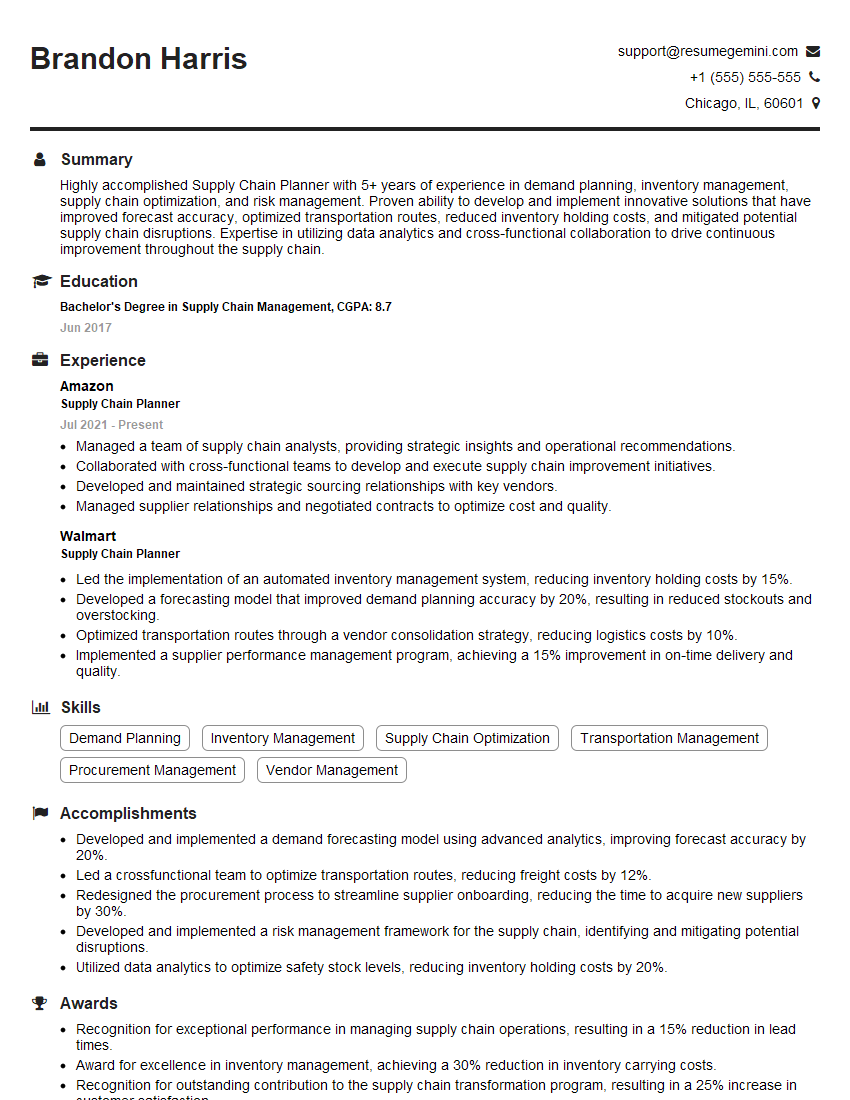
Mastering Long-Term Planning is crucial for career advancement, opening doors to leadership roles and strategic decision-making opportunities. A strong, ATS-friendly resume is your key to unlocking these opportunities. To present your skills and experience effectively, leverage the power of ResumeGemini. ResumeGemini provides a streamlined and efficient way to build a professional resume that highlights your expertise in Long-Term Planning. Examples of resumes tailored to Long-Term Planning roles are available to help guide you.
Explore more articles
Users Rating of Our Blogs
Share Your Experience
We value your feedback! Please rate our content and share your thoughts (optional).
What Readers Say About Our Blog
Very informative content, great job.
good