Cracking a skill-specific interview, like one for Magic Tricks, requires understanding the nuances of the role. In this blog, we present the questions you’re most likely to encounter, along with insights into how to answer them effectively. Let’s ensure you’re ready to make a strong impression.
Questions Asked in Magic Tricks Interview
Q 1. Explain the difference between misdirection and sleight of hand.
Misdirection and sleight of hand are two fundamental pillars of magic, often working in tandem, but with distinct roles. Sleight of hand refers to the skillful, deceptive manipulation of objects. Think of a card disappearing from a deck, a coin vanishing from your hand, or a subtle switch between two items. It relies on dexterity, precision, and practice to execute the secret moves flawlessly. Misdirection, on the other hand, is the art of drawing the audience’s attention away from the crucial moment of the trick. It’s about controlling their focus, guiding their eyes and minds towards something seemingly important while the actual secret action unfolds unnoticed. Think of a magician dramatically gesturing with one hand while secretly performing the core move with the other. Both are crucial; sleight of hand provides the mechanism, while misdirection ensures the audience doesn’t see it.
Example: Imagine a classic card trick where the magician secretly palms a selected card. The sleight of hand is the palming action itself. The misdirection could be a series of flashy flourishes and engaging patter that distracts the audience from the precise moment the card is palmed.
Q 2. Describe your preferred method for audience management during a close-up performance.
For close-up magic, audience management is paramount. I focus on creating a personalized, intimate experience for each individual or small group. Before beginning, I assess the dynamics of the group – their age range, energy levels, and overall mood. I use conversational language, tailoring my patter to their interests. I ensure eye contact and connect with each person individually, making them feel involved and valued. I avoid overwhelming them with complex routines; I opt for shorter, impactful effects that create a sense of wonder. It’s essential to be attentive to their reactions and adjust my pace and style accordingly. A seemingly simple trick, perfectly executed with a strong connection, is far more memorable than a complex one performed in a rushed or impersonal manner. Maintaining a relaxed but professional demeanor is key to building rapport and trust.
Q 3. What are three key elements of a successful magic trick?
Three key elements contribute to a successful magic trick: Method, Presentation, and Patter.
- Method: This refers to the secret mechanism behind the trick – the sleight of hand, the apparatus, or the psychological principle that creates the illusion. A strong method is reliable, easy to execute, and foolproof.
- Presentation: This is the outward performance – the acting, the gestures, the stage presence, and the overall style of the trick. A compelling presentation captivates the audience and adds to the mystery and wonder. It’s about creating a story and immersing the audience in the performance.
- Patter: This encompasses the words used during the performance. It serves to build anticipation, add humor, misdirect, and weave a narrative around the trick. The patter should be carefully crafted to fit the presentation, enhancing the overall experience and creating a magical atmosphere.
If any of these three elements are weak, the overall impact of the trick suffers, regardless of how clever the method might be.
Q 4. How do you adapt your magic act to different audience demographics?
Adapting my act to different audiences is vital. For children, I use brighter, more colorful props and simpler routines with plenty of participation and humor. The patter is lighthearted and engaging, often involving storytelling or character interaction. For adults, I can incorporate more sophisticated techniques and subtle nuances, perhaps with a touch of mystery or suspense in the presentation. The patter might be more sophisticated, incorporating witty remarks or a touch of intellectual stimulation. For corporate events, I tailor the routines to the company’s theme or message, creating a customized experience. In all cases, I observe the audience’s reactions and adjust accordingly, ensuring that every performance is appropriate and engaging for the specific group.
Q 5. Describe your process for developing a new magic routine.
Developing a new magic routine is a creative process. It usually begins with an idea—a specific effect I want to create, a unique method, or a particular theme that inspires me. Then, I research existing methods and explore different approaches. I experiment with variations, refining the technique until it’s both effective and reliable. Next, I craft the presentation, considering the flow of the routine, the visual elements, and the overall narrative. The patter is developed in parallel, ensuring it enhances the mystery and builds anticipation. I then practice intensely, refining every aspect of the routine—the technique, the presentation, and the patter—until it feels natural and engaging. Finally, I test the routine on a small audience, seeking feedback and making further adjustments before incorporating it into my repertoire.
Q 6. How do you handle a technical malfunction during a performance?
Handling technical malfunctions requires quick thinking and adaptability. I always have backup plans in place. If a prop breaks, I might improvise with something else, or even turn the mishap into part of the act—a humorous anecdote that turns a problem into a charming moment. If a trick doesn’t go as planned, I recover gracefully, possibly using a self-deprecating joke to diffuse the situation. The key is to maintain composure, stay positive, and connect with the audience. They are more forgiving of a minor mishap than a loss of confidence. My goal is to ensure that the unexpected doesn’t derail the overall experience, but instead becomes an opportunity for improvisation and audience engagement. It’s all part of the show!
Q 7. Explain the importance of practicing your magic routines.
Practice is the cornerstone of successful magic. It’s not just about repeating the moves; it’s about internalizing them, making them second nature. Through practice, the movements become smooth and fluid, and the secret moves become almost invisible. It also allows for the development of strong presentation skills, enabling me to connect with the audience effortlessly. Rehearsing improves patter delivery, timing, and overall confidence, leading to a more captivating and unforgettable performance. Regular practice ensures reliability, allowing me to handle unexpected situations with grace and professionalism.
Q 8. What is your approach to choosing props for your magic act?
Choosing the right props is paramount to a successful magic act. It’s not just about flashy gimmicks; it’s about selecting items that enhance the illusion, fit the theme, and are comfortable and practical to handle. My approach is threefold:
- Suitability to the Routine: The prop must organically integrate into the illusion. For instance, a deck of cards for a card trick is obvious, but even there, the quality and feel of the cards matter. A worn, vintage deck might suggest a different story than a pristine, new one.
- Audience Engagement: I consider how the prop will interact with the audience. Will it be passed around? Will it be something they can visually follow easily? A large, brightly colored object might be great for a children’s show, but less suitable for a more intimate, close-up performance.
- Personal Comfort and Skill: Finally, I only use props I’m completely comfortable and proficient with. A beautiful prop that’s cumbersome or difficult to manipulate will undermine the performance. Skill trumps showiness every time.
For example, I once developed a routine involving a seemingly ordinary handkerchief. The choice wasn’t random. The specific fabric’s texture and drape were crucial to the illusion’s success. The right prop allows for subtle movements and misdirection that are invisible to the audience but critical to the magic.
Q 9. How do you maintain the mystery and wonder of magic?
Maintaining the mystery and wonder of magic requires a delicate balance of skill and showmanship. It’s about controlling the information flow to the audience. Here are some key strategies:
- Misdirection: This is the cornerstone of magic. It involves drawing the audience’s attention to one thing while secretly manipulating something else. A well-placed gesture, a carefully timed pause, or a diverting comment can all serve as powerful misdirection techniques.
- Presentation and Storytelling: Framing the magic within a compelling narrative adds a layer of intrigue. A simple card trick becomes far more engaging when presented as a tale of mystery or a challenge to fate.
- Controlled Revelation: Don’t give away all the secrets at once. Let the audience wonder, question, and even form their own theories. The lingering mystery is often more powerful than a complete explanation.
- Respect for the Art: Never demystify magic completely. A slight hint of the ‘how’ can be done elegantly but giving away the full method diminishes the wonder and magic itself.
Think of it like a good mystery novel. You want the audience invested, engaged, but not so frustrated that they give up before the climax. The key is pacing and careful control of information.
Q 10. What is your experience with different types of magic, e.g., card magic, coin magic, mentalism?
My experience spans various forms of magic, each with its own unique challenges and rewards:
- Card Magic: This is my primary focus. Years of practice have allowed me to master sleight of hand, control, and various false shuffles. I enjoy the elegance and precision of card magic.
- Coin Magic: Coin magic relies on subtle movements and deceptive palming techniques. It requires a high degree of dexterity and control. I utilize coin magic to showcase close-up illusions, focusing on intricate manipulations that captivate the audience.
- Mentalism: I incorporate elements of mentalism into my acts. This involves psychological principles and subtle misdirection to create the illusion of mind-reading or precognition. It’s a powerful tool for building suspense and connection with the audience.
While I specialize in card magic, the underlying principles of misdirection, showmanship, and psychological manipulation are transferable across these disciplines. I believe a well-rounded magician should have a working knowledge of multiple magic forms to create a more versatile and engaging performance.
Q 11. Describe a time you had to improvise during a magic performance.
During a corporate event, my planned close-up card trick went awry. The deck I was using had a damaged card—a significant flaw for my routine. Instead of panicking, I immediately improvised. I acknowledged the damaged card, jokingly blaming the ‘faulty magic’ and used this as a springboard for a different trick altogether, one that played on the idea of unforeseen circumstances. I seamlessly transitioned to a story about things not always going as planned, turning the mishap into a humorous and engaging part of the performance. The audience laughed and enjoyed the unexpected twist; nobody even noticed the initial problem. This incident taught me the value of adaptability and thinking on my feet – crucial skills for any performer.
Q 12. How do you handle hecklers or negative audience reactions?
Handling hecklers requires tact, humor, and a quick wit. My approach involves never directly confronting a heckler aggressively. Instead, I try to disarm them with humor or by subtly incorporating their comment into the act. For example, if someone shouts out a suggestion that is incompatible with my current routine, I might playfully acknowledge their input and then transition to a related but different trick. Sometimes, a simple, well-placed compliment can diffuse a negative situation. Ultimately, maintaining a positive and confident demeanor is crucial. If I remain calm and continue to perform, the heckler usually loses steam.
Q 13. Discuss your understanding of different magic principles and techniques.
Magic relies on a combination of principles and techniques. Understanding these is fundamental:
- Sleight of Hand: This involves skillful, deceptive movements of the hands to secretly manipulate objects. Examples include palming, false transfers, and various flourishes.
- Misdirection: As mentioned before, this is crucial. It guides the audience’s attention away from the actual mechanics of the trick.
- Force: This is a technique where the magician subtly influences the audience’s choice, ensuring a desired outcome.
- Secret Loading/Preparation: This involves subtly placing or preparing objects before the trick begins, setting the stage for the illusion.
- Impromptu Magic: This relies on using everyday objects to perform spontaneous tricks. This demands adaptability and quick thinking.
Many tricks combine several of these principles. For instance, a card trick might involve a force, a series of sleight of hand moves, and misdirection to conceal the actions. The more principles you master, the more sophisticated your illusions can become. It’s a lifelong learning process.
Q 14. Explain the importance of stage presence and presentation in magic.
Stage presence and presentation are as important as the tricks themselves. They’re the bridge between the magician and the audience, creating the atmosphere and shaping the experience.
- Confidence and Charisma: A confident demeanor commands attention and helps build rapport with the audience. Charisma makes the audience connect with you on a personal level.
- Body Language: Gestures, posture, and facial expressions all contribute to the performance. They can emphasize moments of suspense, highlight key actions, or add humor.
- Voice Modulation: Varying tone, pitch, and pace keeps the audience engaged. A dramatic pause or a whisper can heighten the mystery, while a lighthearted tone can enhance the humor.
- Costuming and Setting: These elements create the overall atmosphere. A formal setting might suit a sophisticated close-up performance, while a more flamboyant style could be suitable for a stage show.
Think of it like this: even the most technically brilliant trick can fall flat if the performer lacks stage presence. The magician needs to be as captivating as the magic itself. It’s about the complete package.
Q 15. What is your preferred method for audience engagement?
Audience engagement is paramount in magic. It’s not just about performing tricks; it’s about creating a shared experience. My preferred method involves a blend of techniques, focusing on creating a connection with the audience before I even begin a trick. This starts with warm, engaging introductions, making eye contact with individuals, and using humor to break the ice. I often incorporate audience participation, subtly selecting volunteers who seem enthusiastic and receptive. This isn’t just about choosing someone random; I read the energy of the crowd and choose participants who will enhance the performance and feel comfortable.
Beyond participation, I use storytelling to weave a narrative around my tricks, connecting the illusion to the audience’s emotional experiences. For example, I might preface a card trick with a personal anecdote, making it relatable and memorable. I also constantly gauge their reactions; their laughter, gasps, and even quiet murmurs inform my pacing and the intensity of the performance. This active listening creates a dynamic interaction, transforming a mere performance into a collaborative experience, making it much more engaging.
Career Expert Tips:
- Ace those interviews! Prepare effectively by reviewing the Top 50 Most Common Interview Questions on ResumeGemini.
- Navigate your job search with confidence! Explore a wide range of Career Tips on ResumeGemini. Learn about common challenges and recommendations to overcome them.
- Craft the perfect resume! Master the Art of Resume Writing with ResumeGemini’s guide. Showcase your unique qualifications and achievements effectively.
- Don’t miss out on holiday savings! Build your dream resume with ResumeGemini’s ATS optimized templates.
Q 16. What are some common mistakes magicians make, and how can they be avoided?
Many magicians fall into the trap of prioritizing the technical aspects of a trick over the performance itself. A common mistake is focusing solely on the mechanics, neglecting the narrative or the audience connection. This results in a technically proficient but ultimately boring show. Another frequent error is revealing too much, destroying the illusion’s mystery prematurely. The secret is to manage the reveal strategically, leaving the audience wanting more, not feeling cheated or having their wonder extinguished.
To avoid these pitfalls, magicians should practice thoroughly, ensuring that the technical aspects are second nature. This frees up mental space to focus on the storytelling and audience interaction. Furthermore, they should meticulously plan the pacing, building suspense and releasing tension at the right moments. Rehearsing in front of a test audience is invaluable for receiving feedback and fine-tuning the performance. Finally, understanding the psychology of magic – how to manage expectations and create the illusion of impossibility – is crucial for a compelling presentation.
Q 17. How do you ensure the safety and security of your magic props?
The safety and security of my props are paramount. My approach is multi-faceted. Firstly, I use high-quality, durable props designed to withstand regular use and handling. This minimizes the risk of breakage or malfunction during a performance. Secondly, I maintain a meticulous inventory of all my props, ensuring each item is accounted for after every show. This helps prevent loss and damage.
For particularly sensitive or valuable props, I utilize specialized cases and storage solutions, offering protection during transport and storage. After each performance, I carefully clean and inspect all my props, addressing any minor wear and tear immediately. This proactive maintenance extends their lifespan and prevents unexpected issues. In essence, it’s a combination of careful selection, diligent maintenance, and organized storage that ensures the safety and longevity of my magic tools.
Q 18. What is your process for creating a compelling narrative within your magic act?
Creating a compelling narrative is the heart of a successful magic act. It’s about more than just performing tricks; it’s about crafting a story that resonates with the audience. I begin by identifying a theme or central idea that I want to explore. This could be anything from a journey of self-discovery to a battle between good and evil—depending on the show’s overall tone and target audience. Once I’ve established the theme, I select tricks that naturally fit within this narrative framework.
I then craft a storyline that interweaves the tricks organically. Instead of simply presenting a series of unrelated illusions, I use each trick as a pivotal point in the unfolding story. Dialogue is crucial; it serves as a bridge between the tricks, providing context and emotional depth. For example, a card trick might symbolize a character’s overcoming of a challenge, while a disappearing act could represent a pivotal transition within the narrative. The goal is to create an immersive experience, where the magic enhances the storytelling and the storytelling elevates the magic.
Q 19. How do you handle requests for repeat performances or special requests?
Requests for repeat performances or special requests are common, and I handle them professionally and enthusiastically. Repeat performances are a testament to audience satisfaction, so I always strive to build upon the success of previous shows. If a client requests a specific trick or routine, I review its feasibility and suitability to the event. It’s always important to be upfront; if a request isn’t possible given the venue or other constraints, I explain this clearly and offer alternative solutions.
For special requests, I engage in open communication with the client. Understanding their vision for the event helps me tailor the performance to their needs. This might involve adjusting the length of the show, incorporating specific themes, or integrating other elements. Openness and flexibility are essential; a collaborative approach ensures that everyone’s expectations are met, resulting in a successful and memorable experience.
Q 20. How do you market your magic services?
Marketing my services involves a multi-pronged approach. I maintain a professional website showcasing my repertoire and testimonials. This provides a centralized hub for potential clients to learn about my work and contact me. Social media is another crucial platform; I regularly share high-quality photos and videos of my performances, engaging with potential clients and building my online presence. Networking is also vital; I attend relevant industry events and connect with event planners, party organizers, and other professionals in the entertainment sector.
Furthermore, I actively seek opportunities to showcase my talents. This might involve performing at local events, collaborating with other artists, or participating in competitions. Building a strong reputation through word-of-mouth referrals is also a powerful marketing strategy. By consistently providing excellent service and exceeding client expectations, I foster positive word-of-mouth that drives new business. In summary, my marketing strategy is a blend of online presence, networking, performance opportunities, and excellent customer service.
Q 21. What is your understanding of copyright and intellectual property in magic?
Copyright and intellectual property in magic are complex. While many tricks are based on established principles and techniques that aren’t inherently copyrightable, the specific routines, presentations, and narratives developed by magicians are often protected under copyright law. This means that a magician can’t simply copy another magician’s act verbatim. The methods themselves may be public knowledge, but the way they are performed and presented is often unique to the individual.
Respect for intellectual property is crucial. Magicians often share ideas and techniques within the close-knit community, but the expectation is that these will be used ethically and creatively, with proper attribution given where appropriate. Plagiarism or unauthorized replication of another magician’s act is frowned upon and could have legal consequences. The ethical handling of secrets and innovations within the magic community relies on mutual respect and the recognition of individual creativity.
Q 22. Describe your experience with different types of performance venues.
My experience spans a wide range of performance venues, from intimate parlor shows in private residences to large-scale theater productions and even outdoor festivals. Each venue presents unique challenges and opportunities. Intimate settings allow for close interaction with the audience, fostering a more personal and engaging experience. I can tailor my routines to the specific atmosphere and create a more intimate, almost conspiratorial feeling. Larger venues require a different approach, focusing on visual spectacle and impactful presentations to reach a wider audience. Outdoor performances necessitate adaptability to unpredictable elements like weather and ambient noise. For instance, I once performed a close-up magic show in a bustling marketplace, requiring me to adapt my techniques to the noise and distractions. Conversely, a recent performance in a grand theater allowed me to utilize elaborate stage illusions and lighting effects, creating a truly magical atmosphere.
- Intimate Settings: Close-up magic, personalized interaction.
- Larger Venues: Stage illusions, impactful presentations.
- Outdoor Venues: Adaptability, amplified sound.
Q 23. How do you manage your time and energy during a busy performance schedule?
Maintaining a busy performance schedule requires meticulous time management and self-care. I utilize a digital calendar to meticulously schedule performances, rehearsals, travel, and administrative tasks. Prioritizing rest and healthy habits is crucial. I ensure I get sufficient sleep, eat nutritious meals, and incorporate regular exercise to maintain both physical and mental stamina. Furthermore, I dedicate specific blocks of time for practicing and refining my routines, constantly striving for improvement. Planning ahead is key; I prepare my props and materials in advance to minimize on-site preparation. This allows me to focus my energy on connecting with the audience and delivering a captivating performance. For example, on particularly busy weekends, I pre-pack identical sets of props to avoid any last-minute mishaps.
Q 24. What is your approach to dealing with stage fright or performance anxiety?
Stage fright is a common experience, even for seasoned performers. My approach involves a combination of preparation, visualization, and mindfulness techniques. Thorough rehearsal helps build confidence and familiarity with my routines. Visualization involves mentally rehearsing my performance, picturing a successful outcome, and focusing on the positive aspects of the experience. Mindfulness techniques, like deep breathing exercises, help calm nerves and center my focus. I also remind myself that nervousness is natural and a sign of passion. What appears as a flaw in front of an audience is usually imperceptible in the actual act. I have found that embracing the energy of the audience, seeing their excitement as a positive force, helps transform nervousness into a driving force for a dynamic performance.
Q 25. Explain your understanding of the history and evolution of magic.
Magic’s history is rich and fascinating, evolving from ancient rituals and street performances to the sophisticated illusions we see today. Early forms of magic were often intertwined with religious and spiritual practices, using sleight of hand and deception to impress and awe. The development of stage magic in the 19th and 20th centuries saw the rise of iconic figures like Houdini and Copperfield, who pushed the boundaries of illusion and spectacle. Modern magic incorporates technological advancements and psychological principles, creating increasingly complex and engaging performances. The evolution reflects not only advancements in technical skill but also a shifting societal understanding of deception and entertainment. The core element – the desire to amaze and captivate an audience – remains constant.
Q 26. Describe a time you learned from a mistake in a magic performance.
During a close-up magic performance, a crucial card vanished from the deck unexpectedly early. My initial reaction was to panic, but I quickly regained my composure. I subtly incorporated the unexpected event into the routine, framing it as a humorous mishap and using audience participation to redirect attention. I learned the importance of adaptability and quick thinking in live performance. The error became an opportunity for spontaneous improvisation and connection with the audience; it actually made the moment more memorable and proved my adeptness in thinking on my feet. It showed them the magician behind the magic.
Q 27. How do you stay current with the latest trends and techniques in magic?
Staying current involves attending magic conventions, workshops, and online communities. I regularly review magic publications, both print and digital, and follow influential magicians on social media. These resources provide insights into new techniques, props, and performance styles. I also actively seek out mentorship and collaboration with other magicians, learning from their expertise and diverse perspectives. Attending these conventions allows for observation, networking, and gaining valuable knowledge from colleagues and idols alike.
Q 28. How do you balance creativity and technical skill in your magic performances?
Balancing creativity and technical skill is essential for impactful magic. Technical proficiency provides a solid foundation, allowing me to execute illusions flawlessly. But true magic lies in creativity – in crafting original routines, developing engaging narratives, and connecting with the audience on an emotional level. I often begin with a creative concept—a theme or story—and then develop the technical skills necessary to bring that vision to life. For example, a recent routine combined classic card manipulation techniques with a whimsical storyline about a mischievous sprite, blending technical mastery with creative storytelling.
Key Topics to Learn for Magic Tricks Interview
- Misdirection and Psychology: Understanding the principles of misdirection and how to manipulate audience attention is crucial. Practical application involves analyzing different techniques and their effectiveness in various contexts.
- Sleight of Hand Techniques: Mastering fundamental and advanced sleight of hand techniques forms the basis of many illusions. Consider the nuances of palming, false transfers, and other classic methods.
- Illusion Design and Construction: Learning to design and build illusions, from simple close-up magic to larger stage productions, demonstrates creativity and problem-solving skills. Explore different types of illusions and their mechanics.
- Presentation and Storytelling: A captivating performance is as important as the trick itself. Focus on developing a strong stage presence and crafting compelling narratives to enhance the audience experience.
- Routine Construction and Sequencing: Building a cohesive and engaging magic routine requires careful planning and consideration of pacing and audience engagement. Explore different approaches to structuring a performance.
- Adaptability and Improvisation: The ability to adapt to unexpected situations and improvise during a performance demonstrates professionalism and resourcefulness. Consider how to handle mistakes gracefully and maintain audience engagement.
Next Steps
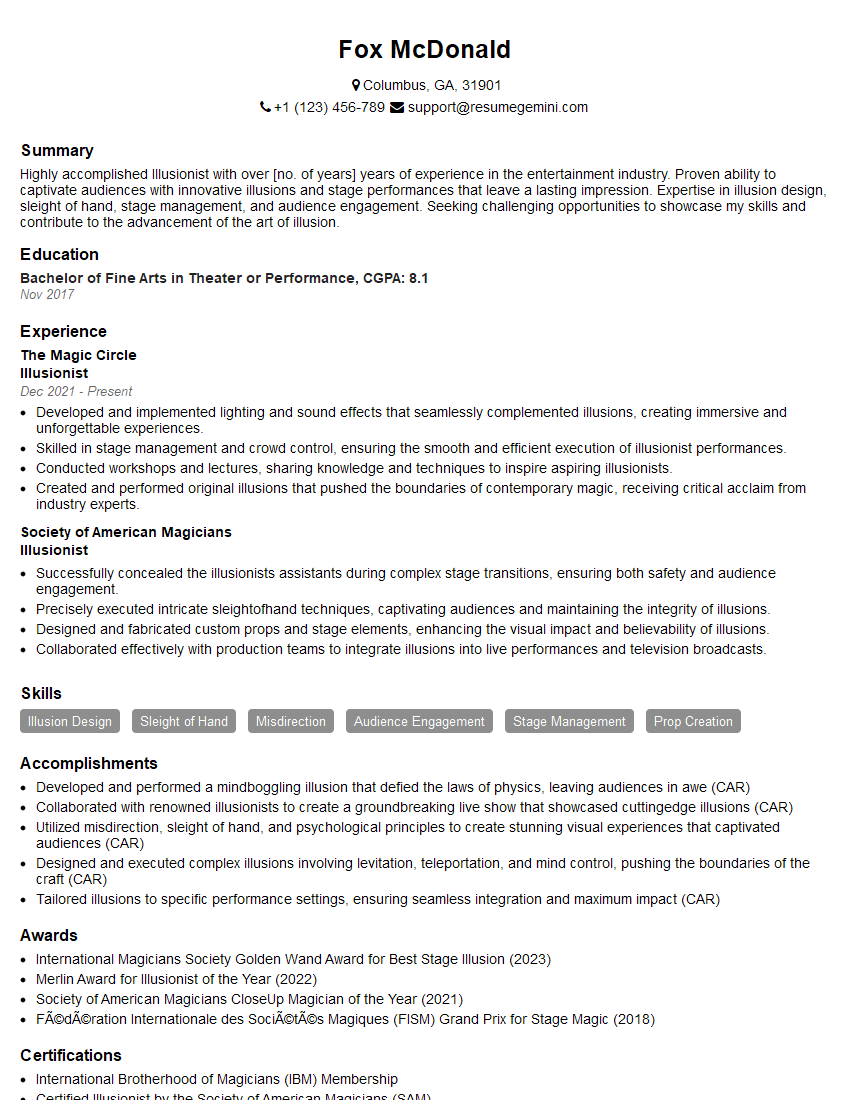
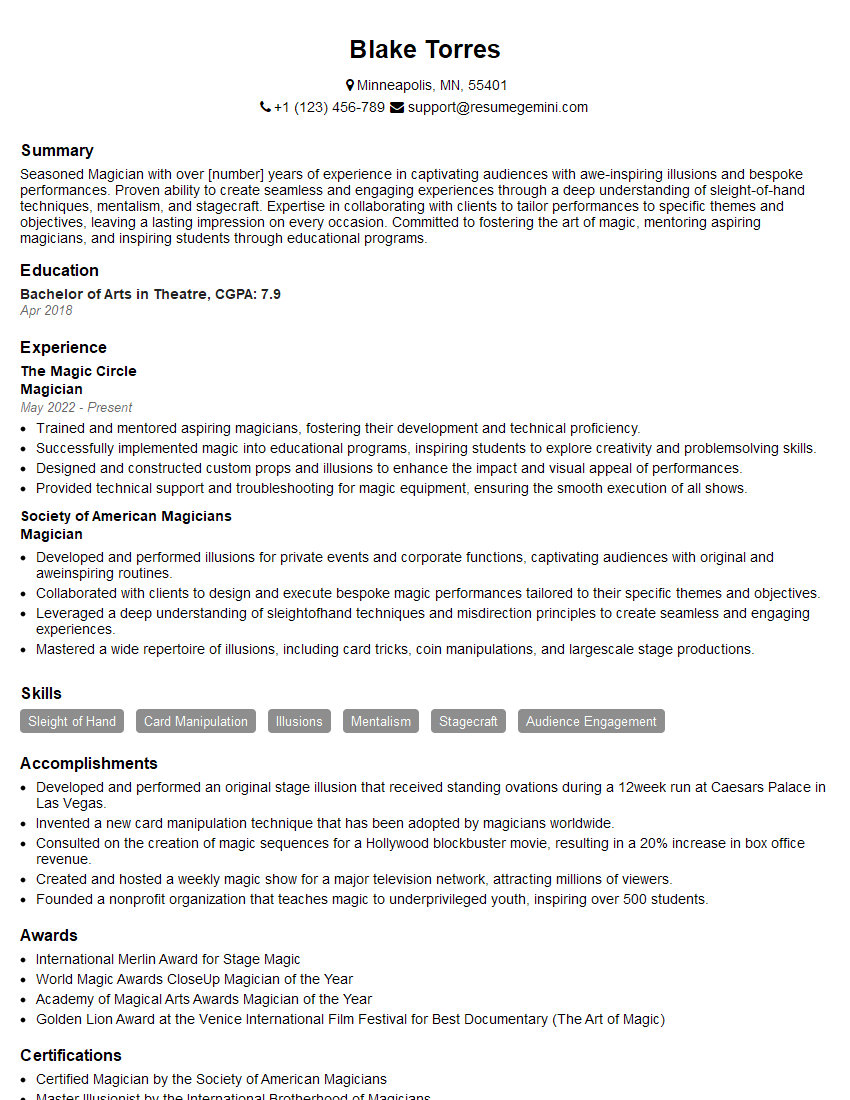
Mastering magic tricks isn’t just about performing illusions; it showcases crucial skills highly valued by employers: creativity, problem-solving, communication, and adaptability. These skills translate seamlessly into various professional fields. To maximize your job prospects, it’s essential to present these skills effectively through a well-crafted, ATS-friendly resume. ResumeGemini can help you build a professional resume that highlights your unique abilities and catches the eye of recruiters. Examples of resumes tailored to the Magic Tricks field are available to help you get started. Invest the time to create a compelling resume – it’s your key to unlocking your career potential.
Explore more articles
Users Rating of Our Blogs
Share Your Experience
We value your feedback! Please rate our content and share your thoughts (optional).
What Readers Say About Our Blog
Very informative content, great job.
good