Unlock your full potential by mastering the most common Maintenance of grading equipment interview questions. This blog offers a deep dive into the critical topics, ensuring you’re not only prepared to answer but to excel. With these insights, you’ll approach your interview with clarity and confidence.
Questions Asked in Maintenance of grading equipment Interview
Q 1. Describe your experience with preventative maintenance schedules for graders.
Preventative maintenance schedules for graders are crucial for maximizing uptime and minimizing costly repairs. They’re essentially a roadmap outlining regular inspections and servicing tasks. My experience involves developing and implementing these schedules, tailored to the specific operating conditions and the grader’s model. This usually involves a combination of time-based and usage-based intervals.
For example, a typical schedule might include daily checks of fluid levels (engine oil, hydraulic fluid, coolant), tire pressure, and visual inspections for leaks or damage. Weekly tasks might include lubricating critical points like pins and bushings. Monthly maintenance could encompass more involved checks of the blade’s condition, filters, and belts. Larger, more comprehensive inspections and servicing, such as transmission fluid changes or major component overhauls, are performed at longer intervals, often based on operating hours. I utilize software to track maintenance activities and generate reports, enabling proactive identification of potential problems before they become major issues. This data-driven approach ensures optimal grader performance and longevity.
- Daily: Fluid levels, visual inspection for leaks, tire pressure.
- Weekly: Lubrication of key components.
- Monthly: Blade condition, filter checks, belt inspections.
- Quarterly/Annually (based on hours): More extensive inspections and servicing, including fluid changes.
Q 2. What are the common causes of blade wear on a motor grader?
Blade wear on a motor grader is a common occurrence, primarily caused by abrasive contact with the ground material. The type of material being graded plays a significant role; harder materials like rock and heavily compacted soil will cause faster wear than softer materials like loose dirt. Improper blade angle or excessive pressure can also exacerbate wear.
- Abrasion from the ground material: This is the most common cause. Think of it like sanding down a piece of metal – the continuous friction causes material loss.
- Impact loading: Striking rocks or other hard objects can create chipping and damage to the blade’s edge.
- Improper blade angle: Using an incorrect blade angle can concentrate wear on specific areas.
- Excessive pressure: Forcing the blade through extremely hard materials leads to premature wear.
Regular inspections and timely repairs or replacements of worn blades are essential to maintaining the grader’s efficiency and preventing further damage to the machine. For example, I’ve seen significant cost savings by implementing a program where blade wear is monitored closely, allowing for timely repairs or re-profiling instead of a complete replacement. This reduces downtime and overall maintenance costs.
Q 3. How do you troubleshoot hydraulic system leaks in a grader?
Troubleshooting hydraulic system leaks requires a systematic approach. Safety is paramount; always ensure the grader is properly shut down and secured before starting any diagnosis or repair. The first step is to locate the leak precisely. This often involves cleaning the area thoroughly to see where the fluid is originating.
Once the leak is located, I carefully inspect the components in that area. Common sources include: hose connections, seals, cylinders, and fittings. I’ll check for loose or damaged hose clamps, worn or damaged seals (often showing as weeping around components), and cracks or damage to hydraulic lines. If necessary, pressure testing may be used to isolate specific components or sections of the hydraulic system. Leaks can range from simple hose clamp issues, easily fixed with tightening or replacement, to more significant problems requiring seal or component replacement.
For instance, on a job site, I once traced a seemingly significant leak down to a single, loose fitting on a hydraulic cylinder. A quick tightening solved the problem, avoiding a costly and time-consuming cylinder rebuild. This emphasizes the importance of thorough and methodical troubleshooting.
Q 4. Explain the process for replacing a grader’s final drive.
Replacing a grader’s final drive is a major undertaking, requiring specialized tools and expertise. It’s a complex process that involves several steps and needs to be done carefully to ensure proper alignment and function. Safety is paramount throughout the process. Firstly, the grader must be completely secured, the power source disconnected, and appropriate safety measures implemented.
The process generally starts with disconnecting the drive shaft, hydraulic lines, and any other components connected to the final drive. Then, the final drive assembly itself needs to be removed. This typically requires the use of heavy lifting equipment and specialized tools. Once removed, the old final drive is replaced with a new or rebuilt unit, ensuring proper alignment and installation. All disconnected components are reconnected, and the system is carefully checked for leaks and proper operation before the grader is returned to service. This is an example of a job that may require specialized training and is often best handled by experienced technicians who are familiar with the specific make and model of the grader.
An important aspect is ensuring proper torque values during reassembly to prevent premature wear and damage. The correct torque specifications for the bolts and fasteners are critical to the longevity of the final drive and overall grader operation.
Q 5. What are the safety precautions when working on a grader’s engine?
Safety precautions when working on a grader’s engine are non-negotiable. Always start by disconnecting the battery’s negative terminal to prevent accidental electrical shocks or short circuits. The engine should be completely cool before starting any work to avoid burns. Never work on a running engine. Use appropriate personal protective equipment (PPE), including safety glasses, gloves, and hearing protection. Proper ventilation is critical, as engine fumes are hazardous. When working with fluids (oil, coolant), proper disposal procedures must be followed. In addition, the use of jack stands and wheel chocks are recommended when working underneath the grader.
I always emphasize the importance of following the manufacturer’s recommended safety procedures, as they outline specific hazards associated with the particular grader model. A detailed inspection of the area surrounding the engine is a critical starting point to ensure no other hazards exist before starting any work.
Q 6. How do you diagnose and repair electrical issues in a grader?
Diagnosing and repairing electrical issues in a grader requires a systematic approach. Start by identifying the problem—is it a lighting issue, a malfunctioning gauge, or a complete electrical failure? Once the problem is identified, I use a multimeter to test voltage, amperage, and continuity of circuits. This helps me pinpoint the faulty component—whether it’s a broken wire, a bad switch, a failed alternator, or a problem within the wiring harness.
Wiring diagrams are invaluable tools for tracing circuits and identifying components. I’ve often used a combination of visual inspection and electrical testing to track down intermittent problems or short circuits. This can involve tracing wires within the harness to find breaks or corrosion. Understanding the grader’s electrical system is critical, and having access to service manuals and wiring diagrams is essential for proper diagnosis and repair. For example, I once used a continuity tester to find a broken wire within the harness responsible for the grader’s headlights. Replacing that short section resolved the issue, instead of replacing the entire expensive harness.
Q 7. Describe your experience with diagnosing and repairing grader transmissions.
Diagnosing and repairing grader transmissions is a complex task requiring a deep understanding of their mechanics. I typically start by listening for unusual noises or vibrations, which can indicate internal problems like worn gears, bearings, or low fluid levels. Checking fluid levels and condition is a crucial first step. Low fluid, burnt fluid, or the presence of metal particles can signal serious internal damage.
More advanced diagnostics may involve using specialized tools to check fluid pressure and transmission oil temperature. A thorough inspection of the transmission’s external components, including linkages, shafts, and seals, is necessary. Sometimes, the issue may be related to hydraulic components within the transmission system.
Repair can range from simple fluid changes and filter replacements to more involved repairs, requiring specialized tools and expertise. Severe problems could necessitate complete transmission rebuilds or replacements. Accurate diagnosis is crucial, as misdiagnosis can lead to unnecessary repairs or even more extensive damage. Proper use of diagnostic equipment is vital for identifying specific issues, and for planning the most efficient repair strategy. For example, I once diagnosed a transmission issue as a result of a faulty hydraulic pressure sensor, a relatively simple fix compared to a complete transmission overhaul.
Q 8. What are the common causes of overheating in a grader engine?
Overheating in a grader engine is a serious issue that can lead to significant damage. It’s often a symptom of underlying problems, not a problem in itself. Think of it like a fever – it’s a sign something is wrong, not the disease itself.
- Insufficient Coolant: Low coolant levels, due to leaks or improper maintenance, are a primary culprit. The coolant’s job is to absorb heat from the engine, so a deficiency will cause overheating.
- Clogged Radiator: Over time, debris like dirt, insects, and even corrosion can clog the radiator fins, reducing its efficiency in dissipating heat. Imagine trying to cool down a room with a blocked window – the airflow is hindered.
- Faulty Water Pump: The water pump circulates the coolant. A malfunctioning pump will lead to poor coolant flow and subsequent overheating. It’s like a heart not pumping blood efficiently.
- Thermostat Issues: A stuck-closed thermostat prevents coolant from flowing until the engine reaches an excessively high temperature. Conversely, a stuck-open thermostat will always allow coolant to flow, making the engine take longer to warm up to its optimal operating temperature.
- Fan Belt Problems: A broken or slipping fan belt will prevent the radiator fan from spinning, hindering heat dissipation. Imagine a car’s cooling fan failing on a hot summer day.
- Internal Engine Problems: Less common, but significant issues such as low oil pressure, head gasket failure, or a cracked cylinder block will lead to significant overheating. These problems are serious and require immediate attention.
Diagnosing the cause requires a systematic approach, checking coolant levels, inspecting the radiator, and testing the water pump and thermostat. Regular maintenance, including coolant flushes and inspections, can prevent many overheating issues.
Q 9. How do you maintain and adjust the blade control system on a grader?
Maintaining and adjusting the blade control system is crucial for accurate grading. It’s the nervous system of the grader, enabling precise control over the blade’s position and angle.
Regular maintenance includes:
- Checking hydraulic fluid levels and quality: Low fluid or contaminated fluid will hinder performance and can damage components. Think of the hydraulic fluid as the blood in the system.
- Inspecting hoses and connections for leaks or damage: Leaky hoses lead to fluid loss and reduced pressure. Regular visual inspections are key.
- Lubricating pivot points and linkages: Proper lubrication reduces friction and wear, ensuring smooth operation. It’s like oiling the hinges of a door.
- Checking the condition of cylinders and rams: Look for any signs of damage or leaks. These components are essential for moving the blade.
- Testing the responsiveness of the controls: Check the hydraulic controls for smooth and responsive operation. Any stickiness or sluggishness needs to be addressed.
Adjustments are often specific to the grader model, but typically involve calibrating the control system using appropriate adjustments or procedures outlined in the machine’s operator’s manual. This may involve adjusting valves or settings to achieve precise blade control and alignment.
Q 10. Explain your experience with different types of grader blades and their applications.
Different grader blades are designed for specific applications, much like having the right tool for a particular job in a workshop.
- Standard Blades: These are the workhorses, suitable for general grading, ditching, and sloping. I’ve used these extensively on road construction projects.
- Side-shift Blades: These provide extra versatility, allowing the blade to shift laterally, extending reach and eliminating the need for repositioning the grader. They’re incredibly useful for widening roads or cleaning ditches.
- Shear Blades: Ideal for rocky or abrasive materials, these blades are designed for durability and resistance to wear and tear. I’ve used these when working on projects with a lot of rocky terrain.
- Scarifier Blades: Equipped with teeth, these are used for breaking up hard surfaces or compacted materials, preparing the ground for further grading. They’re essential for preparing the ground for new roadbeds.
- Snow Blades: In colder climates, these are used for snow removal and pushing. A snow blade needs to be strong enough to move a significant amount of snow.
Selecting the right blade is crucial for efficiency and safety. The application, material being handled, and soil conditions all play a significant role in the blade selection process. In my experience, understanding the specific requirements of each project is key to achieving optimal grading results.
Q 11. How do you perform a pre-operational inspection of a motor grader?
A thorough pre-operational inspection is critical for safety and to prevent costly breakdowns. It’s like a pilot’s pre-flight checklist – essential for a safe and productive operation.
- Visual Inspection: Check for any obvious damage to the machine, including the tires, blades, hydraulic lines, and bodywork.
- Fluid Levels: Verify the levels of engine oil, coolant, hydraulic fluid, and fuel. Low levels can cause catastrophic failure.
- Tire Pressure: Ensure proper tire inflation for optimal traction and stability.
- Controls and Gauges: Test all controls, making sure they respond smoothly and gauges are reading correctly.
- Lights and Signals: Verify that all lights, turn signals, and warning devices are functioning properly.
- Safety Systems: Inspect safety features such as brakes, emergency stops, and seatbelts to ensure functionality.
- Blade Condition: Check for wear, damage, or loose bolts on the blade and its attachments.
- Engine Compartment Check: Check for any leaks, loose wires, or signs of damage within the engine compartment.
A well-conducted pre-operational inspection significantly minimizes the risk of accidents and mechanical problems during operation. I’ve always found that a methodical approach and attention to detail are essential to identify potential hazards and prevent downtime.
Q 12. Describe your experience working with different types of grader brands and models.
Throughout my career, I’ve had the opportunity to work with a variety of grader brands and models, each with its own strengths and quirks. This experience has given me a broad perspective on grader design and maintenance.
For example, I’ve worked extensively with Caterpillar, John Deere, and Komatsu graders. Caterpillar models are known for their robust construction and reliability, while John Deere models offer user-friendly controls. Komatsu graders often feature advanced technology and sophisticated features. Each brand has unique features and maintenance requirements which I have learned to handle effectively.
Specific models within these brands also vary, requiring a certain level of familiarity with specific components and systems. The experience of working with such a diversity of equipment has enhanced my troubleshooting and repair skills, as I’ve learned to adapt to different designs and troubleshooting methodologies.
Q 13. How do you interpret a grader’s diagnostic codes?
Modern graders often utilize diagnostic codes to pinpoint problems. These codes, displayed on a digital panel or through a diagnostic tool, are like a medical report for the machine, providing clues to the underlying issues.
Interpreting these codes requires familiarity with the grader’s specific system. The operator’s manual is an invaluable resource. Codes typically refer to specific sensors, modules, or systems within the grader. For example, a code might indicate a problem with the engine’s temperature sensor, a malfunction in the hydraulic system, or a fault in the transmission control module.
I’ve extensively used diagnostic tools and manuals to interpret codes effectively. These tools often provide detailed information about the code, allowing for a more efficient and accurate diagnosis and repair. However, not all codes are self-explanatory, and some may require additional testing and analysis to pinpoint the root cause. Experience in interpreting these codes is critical for efficient problem-solving.
Q 14. What are the common causes of tire wear on a motor grader?
Uneven tire wear on a motor grader can be caused by several factors, often pointing to problems with the machine’s setup or operation.
- Improper Inflation: Underinflation leads to excessive wear on the tire’s sidewalls, while overinflation causes increased wear in the center. Regular pressure checks are essential.
- Misalignment: If the grader’s wheels are not properly aligned, it can result in uneven weight distribution and premature wear on specific areas of the tires. Regular wheel alignment checks are crucial.
- Brake Issues: Dragging brakes or sticking calipers can cause excessive heat buildup and uneven wear. Routine brake inspections and maintenance are necessary.
- Operating Conditions: Operating the grader on rough terrain or abrasive surfaces will naturally accelerate tire wear. However, proper operating techniques can minimize this.
- Load Distribution: Unevenly distributing the load during grading operations can stress certain parts of the tires more than others, leading to irregular wear.
Addressing tire wear often involves a combination of approaches, from correcting inflation pressures and wheel alignment to investigating and repairing potential brake issues. Regular tire rotations can also promote more even wear.
Q 15. How do you maintain and lubricate grader components?
Maintaining and lubricating grader components is crucial for extending their lifespan and ensuring optimal performance. It’s a systematic process that involves regular checks and consistent application of the correct lubricants. Think of it like regularly servicing your car – neglecting it leads to breakdowns and expensive repairs.
- Regular Inspections: Daily pre-operational checks are vital. This includes visually inspecting all grease points for leaks, checking fluid levels in hydraulic reservoirs and gearboxes, and listening for unusual noises.
- Lubricant Selection: Using the correct type and grade of lubricant is essential. The manufacturer’s manual specifies the appropriate lubricants for each component. Using the wrong lubricant can damage seals and bearings.
- Grease Gun Application: Most grease points are lubricated using a grease gun. Applying grease until fresh grease appears at the zerk fitting is key; over-greasing can cause seals to fail.
- Oil Changes: Engine oil, transmission oil, and hydraulic oil need regular changes according to the manufacturer’s recommendations. Using oil analysis can help predict potential issues before they become major problems.
- Component-Specific Lubrication: Certain components, like the blade pivot points and the circle drive, require specific lubrication techniques and frequencies. These areas experience high stress and need more frequent attention.
For example, I once worked on a grader where the blade pivot points hadn’t been lubricated properly, leading to premature wear and a costly repair. Following a strict lubrication schedule prevents such issues.
Career Expert Tips:
- Ace those interviews! Prepare effectively by reviewing the Top 50 Most Common Interview Questions on ResumeGemini.
- Navigate your job search with confidence! Explore a wide range of Career Tips on ResumeGemini. Learn about common challenges and recommendations to overcome them.
- Craft the perfect resume! Master the Art of Resume Writing with ResumeGemini’s guide. Showcase your unique qualifications and achievements effectively.
- Don’t miss out on holiday savings! Build your dream resume with ResumeGemini’s ATS optimized templates.
Q 16. Describe your experience with using diagnostic tools for grading equipment.
Diagnostic tools are indispensable for efficient grader maintenance and repair. They allow us to pinpoint problems quickly, avoiding unnecessary disassembly and saving time and resources. I’m proficient with various diagnostic tools, ranging from simple pressure gauges to sophisticated electronic diagnostic systems.
- Pressure Gauges: Used to check hydraulic pressures in various systems, ensuring they are within the manufacturer’s specifications. Low pressure can indicate leaks, while high pressure can point to restrictions or pump issues.
- Electronic Diagnostic Systems: These advanced systems can read fault codes from the grader’s onboard computer, providing invaluable information about potential problems. Think of it like your car’s ‘check engine’ light, but much more detailed.
- Multimeters: Essential for checking electrical circuits, ensuring proper voltage and continuity. This helps in diagnosing electrical faults in the steering, lighting, or other electrical systems.
- Specialized Software: Many manufacturers provide specialized diagnostic software that interfaces with the grader’s computer, providing even more detailed diagnostic information.
In one instance, a grader experienced erratic blade control. Using the electronic diagnostic system, we identified a faulty sensor in the hydraulic control unit. Replacing the sensor quickly resolved the problem, preventing lengthy downtime.
Q 17. How do you manage inventory and ordering of parts for grader repairs?
Efficient parts management is critical for minimizing downtime. I use a combination of computerized inventory management systems and physical stock control to ensure parts are readily available when needed.
- Computerized Inventory Management: Software programs track parts levels, order history, and usage patterns, enabling accurate forecasting of future needs and minimizing stockouts. This also allows for cost tracking and better budgeting.
- Physical Stock Control: Regular physical inventory checks verify the accuracy of the computer system and identify any discrepancies. A well-organized parts storage area is essential for quick retrieval.
- Vendor Relationships: Maintaining strong relationships with reliable parts suppliers is crucial. This ensures timely delivery of parts and access to technical support when needed. Negotiating favorable pricing and payment terms is also a key aspect.
- Minimum Stock Levels: Setting appropriate minimum stock levels for frequently used parts is essential to prevent delays due to shortages. A balance needs to be struck between carrying excess inventory and facing potential delays.
For example, by analyzing usage patterns from our inventory system, we identified a specific hydraulic component frequently needing replacement. We then negotiated a bulk purchase agreement with a supplier to secure a lower unit price and ensure sufficient stock.
Q 18. What is your experience with welding and fabrication related to grader repair?
Welding and fabrication skills are invaluable in grader repair. I’m proficient in various welding techniques, including stick welding, MIG welding, and TIG welding, and I’m experienced in repairing and fabricating components made of various materials commonly used in graders.
- Repairing Worn or Damaged Components: Welding is essential to repair cracks, holes, and other damage to components like the blade, frame, and attachments. Proper welding techniques are crucial to maintain the structural integrity of the repaired parts.
- Fabricating Custom Parts: Sometimes, standard parts are unavailable, or a custom solution is needed. My fabrication skills allow me to create parts to meet specific requirements, ensuring the grader’s functionality is restored.
- Material Selection: Choosing the right welding materials (filler metals) is critical for ensuring the repair’s durability and compatibility with the existing component. This includes understanding the properties of different steels and other metals.
- Safety Precautions: Welding involves inherent risks; I strictly adhere to all safety protocols, including using appropriate personal protective equipment (PPE) such as welding helmets, gloves, and clothing.
I recall an instance where a significant portion of the grader’s frame was damaged in a collision. Using my welding and fabrication skills, I was able to repair the frame, saving the cost of replacing the entire component.
Q 19. How do you ensure compliance with safety regulations during grader maintenance?
Safety is paramount in grader maintenance. I strictly adhere to all applicable safety regulations and company policies, ensuring a safe working environment for myself and others.
- Lockout/Tagout Procedures: Before performing any maintenance on the grader, I always follow lockout/tagout procedures to isolate power sources and prevent accidental starts.
- Personal Protective Equipment (PPE): I consistently use appropriate PPE, including safety glasses, gloves, hearing protection, and steel-toed boots.
- Safe Lifting Techniques: When handling heavy components, I use proper lifting techniques and equipment to avoid injuries. This includes using hoists or forklifts when necessary.
- Hazard Communication: I understand and follow all hazard communication guidelines, including the proper handling and disposal of hazardous materials like oil and lubricants.
- Regular Safety Meetings: Active participation in regular safety meetings ensures I’m updated on new safety regulations and best practices.
For instance, I always ensure that the grader is properly parked on level ground, with the parking brake engaged, before beginning any maintenance. This simple procedure prevents accidental movement and potential injuries.
Q 20. Describe your experience with hydraulic system testing and repair procedures.
Hydraulic systems are crucial to grader operation, and I have extensive experience in testing and repairing them. This involves understanding hydraulic principles, using diagnostic tools, and performing necessary repairs.
- Pressure and Flow Testing: I use pressure gauges and flow meters to test various parts of the hydraulic system, ensuring they are within the manufacturer’s specifications. This helps identify leaks, restrictions, or pump failures.
- Leak Detection: Pinpointing leaks is critical in maintaining the hydraulic system’s efficiency. I utilize various techniques, including visual inspection, pressure testing, and dye staining, to locate leaks.
- Component Replacement: I’m skilled in replacing faulty hydraulic components, including pumps, valves, cylinders, and hoses. This requires careful attention to detail and adherence to manufacturer’s guidelines.
- Hydraulic Fluid Analysis: Regular analysis of the hydraulic fluid can indicate contamination or wear, helping to prevent more significant problems down the line.
I remember troubleshooting a hydraulic leak in a grader’s steering system. By systematically checking pressures and flow rates, we identified a faulty valve. Replacing the valve quickly restored the steering functionality and prevented a potential accident.
Q 21. What is your experience with troubleshooting and repairing grader steering systems?
Grader steering systems are complex and require expertise to troubleshoot and repair. My experience includes diagnosing and resolving various steering issues.
- Troubleshooting Steering Problems: This involves checking for leaks in the hydraulic system, inspecting the steering wheel for free play, examining the linkage components for damage, and testing the steering cylinder for proper operation.
- Hydraulic System Diagnosis: A significant portion of steering issues relates to hydraulic problems. I use pressure gauges and flow meters to diagnose leaks, low pressure, or other malfunctions in the hydraulic steering circuit.
- Electrical System Checks: Some steering systems incorporate electronic components, such as sensors and control modules. I am experienced in checking these systems for faults, using multimeters and electronic diagnostic tools.
- Mechanical Adjustments: Mechanical adjustments, such as tightening loose bolts, replacing worn linkage components, or adjusting steering linkages, often resolve minor steering issues.
One time, a grader experienced difficult steering. After a thorough check, we identified a leak in the steering cylinder seal, which caused a drop in hydraulic pressure. By replacing the seal, we restored the steering to its original functionality.
Q 22. How familiar are you with different types of grader attachments and their maintenance?
My experience encompasses a wide range of grader attachments, from the common – like snowplows, scarifiers, and rippers – to more specialized equipment such as side-shift blades and hydraulically controlled wings. Maintenance varies significantly depending on the attachment. For instance, a snowplow requires regular inspections for wear and tear on the cutting edge, ensuring proper blade alignment, and checking for any damage to the mounting system. Scarifiers need attention to their teeth – regularly inspecting for breakage, wear, and proper tightening. Rippers, crucial for tough soil conditions, demand careful examination of the shank points for wear and potential bending. Regular lubrication is paramount for all moving parts, preventing seizing and extending the life of the equipment. I’m also proficient in identifying and addressing hydraulic leaks, which are a common issue across many attachments.
- Regular Inspections: Visual checks for wear, damage, and loose fasteners are critical, performed before and after each use.
- Lubrication: Proper lubrication, using the manufacturer’s specified grease or oil, is essential for all moving parts.
- Hydraulic Systems: Checking for leaks, ensuring proper pressure and fluid levels in the hydraulic system is a key aspect of maintenance.
- Blade Alignment: Regular checks to ensure the blade is aligned correctly for optimal performance and to prevent uneven wear.
Q 23. Explain your approach to documenting maintenance activities and repairs.
I believe in a meticulous and transparent approach to documentation. My system relies on a combination of digital and physical records. Each maintenance task or repair is documented on a standardized form, whether digital or paper, capturing the date, time, description of the work performed, parts replaced (including part numbers), labor hours, and any relevant observations. For larger repairs, I also include photographs or videos documenting the problem, the repair process, and the final result. This detailed record-keeping is crucial for tracking equipment history, predicting future maintenance needs, managing inventory, and justifying repair costs. All records are stored securely and are easily accessible for audits or future reference. I utilize a computerized maintenance management system (CMMS) in most situations, which allows for efficient tracking and reporting, and ensures all records are centralized.
Q 24. How do you prioritize maintenance tasks to minimize downtime?
Prioritizing maintenance tasks requires a strategic approach. I employ a combination of preventative and corrective maintenance strategies. Preventative maintenance follows a scheduled plan based on manufacturer recommendations and operational hours, aiming to minimize unexpected failures. Corrective maintenance addresses immediate problems that could lead to equipment downtime. I use a prioritization matrix that considers factors like the severity of the issue, the potential impact on operations, and the cost of repair. Critical components requiring regular attention are given higher priority. For instance, a failing hydraulic pump would be prioritized over a minor cosmetic issue. This prioritization system, combined with regular inspections, allows for proactive maintenance, minimizing downtime and ensuring the grader’s operational readiness.
Q 25. Describe a challenging grader repair you successfully completed.
One challenging repair involved a complete overhaul of the grader’s final drive. The unit exhibited increasingly erratic behavior, characterized by intermittent power loss and significant noise. Initially, I suspected problems within the transmission, but after a careful diagnostic process (which involved checking fluid levels and visually inspecting components), I identified damage within the final drive itself. This involved disassembling the entire unit, inspecting all internal components, replacing worn gears and bearings, and resealing the entire housing. This was a complex task requiring specialized tools and a deep understanding of the grader’s mechanical systems. The repair was successfully completed, and the grader is now operating smoothly, restoring its operational efficiency. The meticulous attention to detail and my experience in diagnosing complex issues were key to successfully completing this challenging repair.
Q 26. How do you stay updated on the latest technologies and maintenance procedures for graders?
Staying current with the latest technologies and maintenance procedures is a continuous process. I actively participate in industry conferences and workshops, attending training sessions offered by equipment manufacturers. I subscribe to relevant trade publications and online journals. Furthermore, I actively participate in online forums and communities dedicated to equipment maintenance, sharing knowledge and staying abreast of new developments. Manufacturer websites are an invaluable resource, providing access to technical manuals, service bulletins, and parts catalogs. The continuous learning process is essential to remain proficient in a rapidly evolving field.
Q 27. What are your salary expectations for this position?
My salary expectations are in line with the industry standard for a senior grader mechanic with my level of experience and expertise. I am open to discussing a competitive compensation package that reflects my contributions and aligns with the requirements of this position. I’d prefer to discuss this further during a second interview when we can delve into the specifics of the role and responsibilities.
Q 28. What are your long-term career goals related to equipment maintenance?
My long-term career goals center on becoming a recognized expert in grader maintenance and potentially transitioning into a supervisory or management role. I am keen to mentor and train younger technicians, sharing my knowledge and contributing to the overall improvement of maintenance practices. I’m also interested in exploring opportunities for specialized training in areas like preventative maintenance programs or advanced diagnostics. Ultimately, my goal is to contribute to the optimal performance and longevity of the equipment I maintain while fostering a team environment that values efficiency and continuous learning.
Key Topics to Learn for Maintenance of Grading Equipment Interview
- Preventive Maintenance Schedules: Understanding the importance of regular inspections, lubrication, and component replacements to extend equipment lifespan and prevent costly breakdowns. Practical application: Developing and implementing a preventative maintenance plan for a specific grader model.
- Troubleshooting Common Issues: Diagnosing and resolving problems such as hydraulic leaks, engine malfunctions, blade alignment issues, and electronic system errors. Practical application: Describing your step-by-step approach to diagnosing a specific equipment malfunction you’ve encountered.
- Safety Procedures and Regulations: Adherence to safety protocols during maintenance, including lockout/tagout procedures, personal protective equipment (PPE) usage, and hazard identification. Practical application: Explaining how you ensure a safe working environment during maintenance activities.
- Understanding Grading Equipment Components: Detailed knowledge of various grader components (e.g., engines, hydraulic systems, blades, transmissions, electronic controls). Practical application: Explaining the function and maintenance requirements of key components.
- Repair and Overhaul Procedures: Competence in performing repairs, replacements, and overhauls of grader components, including welding, machining, and other relevant skills. Practical application: Describing your experience with specific repair procedures.
- Record Keeping and Documentation: Maintaining accurate and up-to-date records of maintenance activities, repairs, and parts used. Practical application: Explaining your approach to organizing and managing maintenance logs.
- Hydraulic Systems and Diagnostics: Understanding the principles of hydraulic systems, troubleshooting hydraulic leaks, and performing hydraulic repairs. Practical application: Explaining your experience with diagnosing and repairing hydraulic system malfunctions.
Next Steps
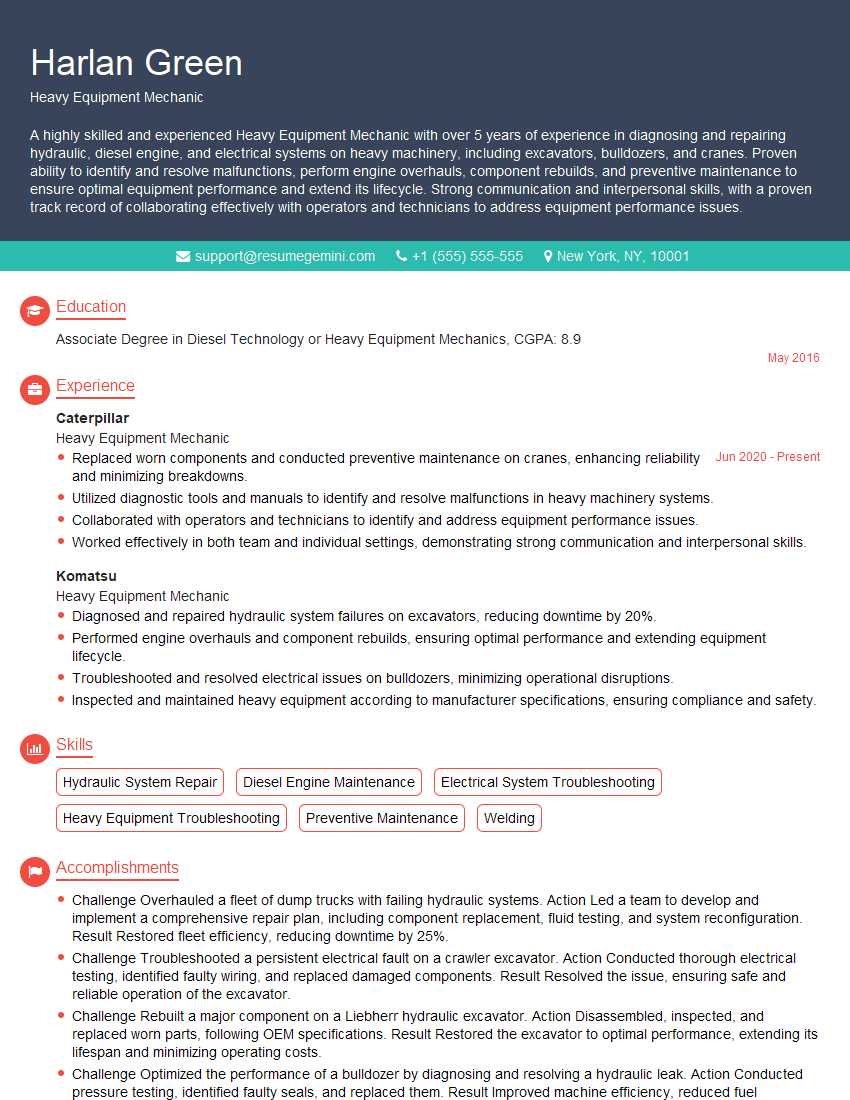
Mastering the maintenance of grading equipment is crucial for career advancement in the construction and infrastructure industries. Proficiency in this area demonstrates valuable technical skills and a commitment to safety and efficiency, opening doors to higher-paying roles and leadership opportunities. To significantly improve your job prospects, creating an ATS-friendly resume is essential. ResumeGemini is a trusted resource that can help you build a professional and impactful resume tailored to highlight your skills and experience. Examples of resumes specifically tailored for Maintenance of grading equipment professionals are available to help you craft a compelling application.

Explore more articles
Users Rating of Our Blogs
Share Your Experience
We value your feedback! Please rate our content and share your thoughts (optional).
What Readers Say About Our Blog
Very informative content, great job.
good