Cracking a skill-specific interview, like one for Manual Assembly, requires understanding the nuances of the role. In this blog, we present the questions you’re most likely to encounter, along with insights into how to answer them effectively. Let’s ensure you’re ready to make a strong impression.
Questions Asked in Manual Assembly Interview
Q 1. Describe your experience with hand tools and power tools used in assembly.
My experience with hand and power tools spans over 10 years, encompassing a wide variety of equipment used in precision assembly. I’m proficient with hand tools such as screwdrivers (Phillips, flathead, Torx), wrenches (open-end, socket, adjustable), pliers (needle-nose, slip-joint), and various specialized tools like wire strippers and crimpers. My experience with power tools includes electric screwdrivers, pneumatic rivet guns, drills, and even specialized equipment like soldering irons for delicate electronics assembly. I understand the importance of maintaining tools – regular cleaning, lubrication, and proper storage are crucial for tool longevity and safety. For example, I once used a specialized torque wrench to ensure that a critical bolt on a medical device was tightened to the precise specification, preventing potential failure. Improper use could have led to malfunctions and serious consequences.
For safety, I always prioritize using the correct tool for the job, wearing appropriate personal protective equipment (PPE) like safety glasses and gloves, and following all safety regulations. Regular maintenance checks of power tools are part of my routine to prevent malfunctions and accidents.
Q 2. Explain your understanding of assembly drawings and blueprints.
Assembly drawings and blueprints are the roadmaps for any successful assembly project. I’m highly adept at interpreting these documents, understanding their symbology and notations. They provide all necessary information, including dimensions, tolerances, material specifications, and the sequence of assembly steps. My ability extends to both 2D and 3D drawings, including those created using CAD software. I understand how to identify critical dimensions and tolerances, which are crucial for ensuring the final product meets the required specifications. For instance, I recently worked on a project where a 0.1mm tolerance on a specific component was critical for the proper functioning of the entire assembly. The blueprints clearly indicated this tolerance and I followed it diligently.
I’m also familiar with various annotation systems and can easily understand callouts, notes, and revisions. If there is ambiguity, I know the procedure for clarifying any questions with the engineering team.
Q 3. How do you ensure accuracy and precision during the assembly process?
Accuracy and precision are paramount in assembly. I employ several methods to ensure both. First, I carefully follow the assembly instructions, paying close attention to sequence and specifications. Second, I use appropriate measuring tools like calipers, micrometers, and rulers to verify dimensions throughout the process. Third, I utilize jigs and fixtures whenever possible to aid in precise alignment and positioning of components. A jig acts like a guide, ensuring components are placed exactly where they need to be.
Consider this example: while assembling a delicate circuit board, I meticulously followed the schematic diagram. Using a magnifying glass and fine-tipped tweezers, I positioned each component, ensuring it was perfectly aligned with the solder pads. Using a multimeter to verify connections after soldering, I ensured perfect conductance, confirming accuracy.
Q 4. What are your methods for identifying and resolving assembly errors?
Identifying and resolving assembly errors requires a systematic approach. My first step is always a visual inspection, checking for misalignments, missing parts, or damaged components. If the visual inspection doesn’t reveal the problem, I refer back to the assembly drawings and compare the current state of the assembly against the blueprint. I’ll use measuring tools to confirm dimensions and verify that all components are correctly positioned. This often points directly to the faulty component or step in the process.
For example, if a component is loose or not functioning, I would retrace my steps, re-examine the instructions and possibly the tools used to ensure that there wasn’t a tool malfunction or misapplication. If the error persists, I’d consult with a supervisor or more senior technician for guidance.
Sometimes, using a methodical approach, like working backwards from the observed error, can be extremely effective in pinpointing the root cause.
Q 5. How do you maintain a safe and efficient work environment during assembly?
Maintaining a safe and efficient work environment is a priority. This involves practicing good housekeeping, keeping the work area clean and organized to prevent accidents caused by tripping hazards or misplaced tools. All tools are properly stored and maintained, and safety equipment like gloves, safety glasses, and hearing protection are used when necessary. Additionally, I follow all company safety regulations and am always mindful of potential hazards such as sharp objects or electrical equipment.
For efficient workflow, I organize my workspace to optimize movement and accessibility to tools and materials. This minimizes wasted time and motion, improving overall efficiency and reducing the risk of errors.
Q 6. Describe your experience with different assembly techniques (e.g., hand soldering, riveting).
My experience encompasses a range of assembly techniques. Hand soldering is a skill I’ve honed over several years, enabling me to work with delicate electronic components and ensure reliable connections. I’m proficient in various soldering techniques, including through-hole and surface mount soldering, and can adapt my approach to different component types and board designs. Riveting is another familiar technique, using both manual and pneumatic rivet guns. I understand the importance of selecting the correct rivet size and type for the application and ensuring proper seating and head formation.
Other techniques include crimping wires, using various adhesives, and working with different fasteners. Each technique demands precision and an understanding of material properties to achieve optimal results and to avoid damage.
Q 7. What is your experience with quality control checks during assembly?
Quality control checks are an integral part of my assembly process. These checks begin with a visual inspection at each stage of assembly, ensuring components are correctly installed and aligned. I use measuring instruments to verify dimensions and tolerances as needed. Functional testing of assembled units is also performed, ensuring proper operation according to the specifications. Depending on the complexity of the assembly, this might involve using specialized test equipment or conducting simple operational checks.
For instance, after assembling a small motor, I’d test its rotational speed and torque output using a dynamometer to ensure it meets the expected performance parameters. Documenting all quality control checks is vital, providing a clear record of the assembly process and its outcome.
Q 8. How do you manage your time and prioritize tasks in a fast-paced assembly environment?
In a fast-paced assembly environment, effective time management is crucial. My approach is multifaceted and relies on a combination of planning, prioritization, and efficient execution. I begin by understanding the daily production goals and breaking them down into smaller, manageable tasks. I utilize techniques like the Eisenhower Matrix (urgent/important) to prioritize tasks, focusing on high-impact activities first. This helps me avoid bottlenecks and ensures timely completion of critical assemblies. Furthermore, I regularly review my progress against the schedule and adapt my approach as needed, proactively addressing potential delays. Think of it like a conductor of an orchestra – each musician (task) needs to be coordinated to achieve a harmonious outcome (production target).
For example, if I have a high-volume order of a complex product alongside smaller, more urgent requests, I’d prioritize the urgent orders first to meet deadlines while strategically allocating time slots for the high-volume order to ensure steady progress without sacrificing overall efficiency.
Q 9. Describe a time you had to troubleshoot a complex assembly issue.
During assembly of a precision robotic arm, I encountered a recurring issue where the motor wouldn’t engage correctly. Initial troubleshooting steps, like checking power supply and wiring, yielded no results. This was frustrating because the defect rate was increasing, impacting our production targets. I systematically approached the problem. First, I carefully examined the assembly process, comparing successful and faulty units. I noticed slight variations in the torque applied during a specific step. Using a torque wrench to precisely measure and control the tightening process, I discovered that inconsistent torque was causing misalignment within the motor housing. This misalignment prevented proper engagement. By adjusting the torque specification in our SOPs and providing training to the team on consistent torque application, we successfully resolved the issue and significantly reduced defects.
Q 10. What is your experience with following Standard Operating Procedures (SOPs)?
Following Standard Operating Procedures (SOPs) is non-negotiable in a manufacturing setting. My experience demonstrates a consistent commitment to adhering to these procedures. I understand that SOPs ensure product quality, consistency, and worker safety. I believe in meticulous attention to detail and treat SOPs as a guiding framework, ensuring each step is followed accurately. Before commencing any assembly, I thoroughly review the relevant SOPs, making sure I understand every instruction and safety precaution. I also actively participate in reviews and updates to the SOPs, suggesting improvements based on my practical experience and observations. I view SOP adherence not as a rigid constraint, but as a crucial element that contributes to a streamlined, error-free production process. Deviations from SOPs, only if necessary and after obtaining proper authorization, are thoroughly documented.
Q 11. How familiar are you with Lean Manufacturing principles and their application to assembly?
Lean Manufacturing principles are central to efficient assembly. My familiarity encompasses concepts like 5S (Sort, Set in Order, Shine, Standardize, Sustain), Kaizen (continuous improvement), and Value Stream Mapping. I’ve actively participated in implementing 5S in previous workplaces, leading to a more organized and efficient workspace. This resulted in reduced search times for parts and tools, leading to increased productivity. Understanding Value Stream Mapping helps me identify and eliminate waste (muda) in the assembly process, such as unnecessary movements or excessive inventory. For instance, by optimizing the layout of the assembly line and re-sequencing tasks, we reduced assembly time significantly. Lean manufacturing isn’t merely about efficiency; it’s about creating a culture of continuous improvement and employee empowerment. The Kaizen approach encourages everyone to identify and suggest improvements, fostering a collaborative environment for better assembly practices.
Q 12. How do you handle repetitive tasks to maintain focus and productivity?
Repetitive tasks can be challenging; maintaining focus and productivity requires proactive strategies. To combat monotony, I incorporate short, scheduled breaks into my routine. These breaks are not just for rest; I use them for light stretching or a brief change of activity to refresh my mind. I also consciously vary my tasks whenever possible. If time permits, I might assist colleagues with different aspects of assembly. Furthermore, I actively look for ways to improve the efficiency of repetitive tasks. This might involve suggesting ergonomic adjustments to my workstation or identifying opportunities to automate certain steps within the process. Maintaining a positive attitude and focusing on the contribution of each assembly – the bigger picture – is incredibly valuable. It’s like running a marathon; pacing yourself, and focusing on each step is vital for completing the race.
Q 13. Explain your understanding of different types of assembly fasteners (e.g., screws, bolts, rivets).
My understanding of assembly fasteners encompasses various types, each with specific applications and strengths.
- Screws: These are widely used, offering versatility in terms of size and material. They are easy to install and remove, making them suitable for many applications. Different types include machine screws, self-tapping screws, and wood screws, each optimized for specific material types.
- Bolts: Generally stronger than screws, bolts require a nut for fastening. They are ideal for applications demanding high strength and secure connections, often used in structural assemblies. Variations exist depending on the head type (e.g., hex head, socket head) and thread style.
- Rivets: These fasteners create a permanent joint. Once installed, they cannot be easily removed. They are often used in applications where disassembly is not required and where high strength is crucial, particularly with sheet metal.
Q 14. What experience do you have working with various materials (e.g., metal, plastic, electronics components)?
I have extensive experience working with a variety of materials commonly used in assembly. This includes metals (steel, aluminum, brass), plastics (ABS, polycarbonate, nylon), and electronic components (integrated circuits, resistors, capacitors). My experience extends to understanding the properties of each material, including their strengths, weaknesses, and how best to handle them during assembly to avoid damage. For example, I’m adept at using specialized tools for precise manipulation of delicate electronic components, preventing damage during soldering or insertion. With metals, I’m well-versed in safe handling practices to avoid cuts or injuries. Similarly, working with plastics requires understanding their temperature sensitivity to prevent deformation during assembly processes. The understanding of material properties is critical to the success and safety of the assembly process.
Q 15. How do you maintain cleanliness and organization in your assembly workspace?
Maintaining a clean and organized workspace in manual assembly is paramount for efficiency, safety, and quality. Think of it like a chef’s kitchen – a messy workspace leads to mistakes, delays, and potentially accidents. My approach involves several key strategies:
- 5S Methodology: I consistently apply the 5S methodology (Sort, Set in Order, Shine, Standardize, Sustain). This involves regularly sorting through tools and parts, organizing them logically, cleaning the work area, standardizing procedures, and maintaining the improved state. For example, I might color-code bins for different components to make retrieval faster and reduce errors.
- Designated Areas: I dedicate specific areas for different tasks – a zone for parts preparation, a zone for assembly, and a zone for completed units. This prevents clutter and streamlines workflow. Imagine it like an assembly line, each station with its dedicated purpose.
- Regular Cleaning: I perform regular cleaning throughout the day, removing debris and wiping down surfaces to prevent contamination and ensure a safe working environment. This prevents small parts from getting lost or causing damage.
- Tool Management: I maintain a well-organized tool rack or toolbox, ensuring that all tools are in their designated places and readily accessible. A misplaced tool can significantly slow down the assembly process.
By adhering to these practices, I ensure a consistently clean and organized workspace, optimizing my efficiency and reducing the risk of errors.
Career Expert Tips:
- Ace those interviews! Prepare effectively by reviewing the Top 50 Most Common Interview Questions on ResumeGemini.
- Navigate your job search with confidence! Explore a wide range of Career Tips on ResumeGemini. Learn about common challenges and recommendations to overcome them.
- Craft the perfect resume! Master the Art of Resume Writing with ResumeGemini’s guide. Showcase your unique qualifications and achievements effectively.
- Don’t miss out on holiday savings! Build your dream resume with ResumeGemini’s ATS optimized templates.
Q 16. Describe your experience using assembly jigs and fixtures.
Assembly jigs and fixtures are indispensable tools for ensuring consistent quality and efficiency in manual assembly. They act as guides, holding components in the correct position and ensuring accurate alignment. My experience includes using a wide variety of jigs and fixtures, from simple clamp-based devices to complex, CNC-machined fixtures.
For example, I’ve worked with jigs that precisely positioned small electronic components onto circuit boards, preventing misalignment and ensuring reliable solder joints. I’ve also used fixtures to hold large mechanical assemblies while bolts and other fasteners were installed, eliminating the need for manual alignment and reducing the risk of damage.
I understand the importance of proper jig and fixture design – a well-designed fixture reduces assembly time, improves consistency, and enhances operator safety. I’m proficient in using various types of fastening mechanisms, including screws, bolts, clamps and quick-release mechanisms, as used in different jig designs.
My experience also encompasses maintaining and troubleshooting jigs and fixtures. I can identify wear and tear, perform necessary repairs, or even suggest improvements to existing designs based on my practical experience.
Q 17. How do you work effectively as part of a team in an assembly setting?
Effective teamwork is essential in assembly settings. I approach teamwork with a collaborative spirit, prioritizing open communication and mutual respect. My experience demonstrates a strong ability to work effectively with diverse teams and adapt to varying team dynamics.
- Communication: I actively participate in team meetings, sharing my ideas and seeking input from others. Clear and concise communication is vital for avoiding misunderstandings and ensuring smooth workflow.
- Collaboration: I willingly assist teammates when needed, recognizing that everyone’s contribution is crucial to the overall success of the assembly process. This could include helping a teammate troubleshoot a problem or assisting with a particularly challenging assembly.
- Problem-Solving: When problems arise, I contribute to brainstorming solutions, sharing my insights and working collectively to find the most effective approach. This could involve identifying a bottleneck in the process or proposing a new assembly technique.
- Respect: I treat all team members with respect, valuing their contributions and recognizing the importance of a positive work environment. A positive team environment contributes greatly to overall productivity.
In a recent project, our team faced a significant challenge with a complex subassembly. Through open communication and collaborative problem-solving, we successfully streamlined the process, resulting in a 15% reduction in assembly time.
Q 18. What is your approach to continuous improvement in the assembly process?
Continuous improvement is an integral part of successful manual assembly. My approach is based on a combination of data-driven analysis, proactive problem-solving, and a commitment to learning and adaptation.
- Data Analysis: I regularly review assembly data, identifying areas where improvements can be made. This might involve tracking assembly times, defect rates, or material usage. For instance, if we notice a spike in defects related to a particular component, we would investigate the root cause and implement corrective actions.
- Kaizen Events: I actively participate in Kaizen events (continuous improvement activities), collaborating with colleagues to identify and implement improvements. This could include suggesting changes to the assembly process, proposing new tools or equipment, or optimizing the workspace layout.
- Lean Principles: I apply lean manufacturing principles to eliminate waste and improve efficiency. This involves identifying and removing unnecessary steps in the assembly process, minimizing inventory, and optimizing workflow. Examples include implementing 5S principles or using Kanban to manage inventory flow.
- Feedback and Learning: I actively seek feedback from supervisors and colleagues, and use this feedback to refine my skills and improve my performance. I am also eager to learn new techniques and technologies that could improve the assembly process.
For example, in a previous role, I identified a bottleneck in the assembly line by analyzing production data. By implementing a simple change in the workflow, we reduced assembly time by 10%.
Q 19. Describe your experience with ergonomic principles in assembly.
Ergonomic principles are crucial for maintaining operator health and productivity in manual assembly. My experience includes applying various ergonomic principles to minimize repetitive strain injuries and promote efficient working postures.
- Proper Posture: I prioritize maintaining a correct posture while assembling, avoiding awkward positions that could lead to fatigue or injury. This includes using adjustable chairs and work surfaces to ensure a comfortable and supportive working position.
- Tool Selection: I ensure that the tools I use are ergonomically designed and appropriate for the task at hand, reducing hand strain and fatigue. This includes selecting tools with comfortable grips and appropriate weight.
- Workstation Setup: I pay close attention to workstation setup, ensuring that parts and tools are within easy reach to minimize unnecessary movements and strain. This includes positioning frequently used items within easy arm’s reach.
- Work Rotation and Breaks: I am mindful of taking regular breaks to avoid fatigue and prevent repetitive strain injuries. I also support work rotation policies to allow different workers to perform various tasks, avoiding prolonged strain on any one muscle group.
I’ve witnessed firsthand the impact of poor ergonomics, leading to employee discomfort and lost productivity. By actively applying ergonomic principles, I contribute to a safer and more efficient work environment.
Q 20. How familiar are you with different types of assembly documentation?
Familiarity with various assembly documentation is essential for efficient and accurate assembly. My experience encompasses a range of documentation types, including:
- Bill of Materials (BOM): I am proficient in interpreting BOMs to identify all necessary components for an assembly. A BOM lists every part needed and the quantities, allowing accurate kitting and preventing shortages.
- Assembly Drawings: I can readily interpret assembly drawings, understanding component placement, tolerances, and fastener specifications. Assembly drawings are vital for visualizing the assembly process and ensuring accuracy.
- Work Instructions: I can follow and implement work instructions efficiently and accurately, ensuring consistent assembly procedures. Work instructions detail step-by-step processes, reducing errors and ensuring consistency.
- Process Flow Charts: I can interpret process flow charts to understand the overall assembly sequence and identify potential bottlenecks. Flow charts help visualize the overall assembly process, allowing for improvement identification.
- 3D Models: I can utilize 3D models to enhance my understanding of the assembly process, particularly when dealing with complex assemblies. 3D models provide a visual representation of the final assembly and aids troubleshooting.
My ability to effectively utilize these different documentation types ensures accurate and consistent assembly, reducing errors and improving efficiency.
Q 21. What steps do you take to ensure product quality throughout the assembly process?
Ensuring product quality throughout the assembly process is a top priority. My approach integrates several key strategies:
- Component Inspection: I meticulously inspect each component before assembly, ensuring that it meets the required specifications. This prevents defects from propagating through the assembly process.
- Adherence to Procedures: I strictly adhere to established assembly procedures and work instructions, ensuring consistency and minimizing errors. Consistent procedures minimize human error and lead to consistent quality.
- Quality Checks: I conduct regular quality checks at different stages of the assembly process, identifying and rectifying any defects early. This prevents costly rework or scrap later in the process.
- Use of Measuring Tools: I utilize appropriate measuring tools (calipers, micrometers, etc.) to verify dimensions and ensure that the assembly meets specified tolerances. Accuracy is critical for ensuring the proper functionality of the final product.
- Documentation: I meticulously document all assembly steps and quality checks, providing a traceable record for future reference. A clear record of each step allows for troubleshooting and continuous improvement.
If a defect is identified, I immediately halt the process, investigate the root cause, and take corrective actions to prevent similar defects from occurring. My commitment to quality ensures that only products meeting the highest standards leave the assembly line.
Q 22. How do you adapt to changes in assembly procedures or product design?
Adapting to changes in assembly procedures or product design is crucial in manual assembly. It requires a flexible mindset and a systematic approach. My strategy involves several key steps:
- Careful Review of Updated Documentation: I thoroughly examine any revised procedures, diagrams, or specifications, paying close attention to modifications in component placement, tooling requirements, or assembly sequences.
- Hands-on Practice and Familiarization: I don’t just read the changes; I practice the new procedures on a sample assembly. This allows me to identify potential challenges or areas requiring further clarification.
- Seeking Clarification and Collaboration: If ambiguities exist, I promptly consult with supervisors, engineers, or experienced colleagues to ensure a complete understanding before proceeding with the new processes. This collaborative approach minimizes errors and fosters a team-based problem-solving environment.
- Continuous Feedback and Improvement: Once I’m comfortable with the updated procedures, I actively seek feedback on my work to identify areas for improvement. This continuous feedback loop ensures optimal performance and consistent high-quality output.
For example, during a recent project involving a redesigned circuit board, I carefully reviewed the updated assembly instructions, identified a new component placement that required a different soldering technique, practiced the new technique until confident, and then collaborated with my team to ensure consistent implementation across all units.
Q 23. What are your skills in using measuring instruments (e.g., calipers, micrometers)?
I’m proficient in using various measuring instruments, including calipers, micrometers, and dial indicators. My skills extend beyond simply taking measurements to understanding the implications of precision and tolerance in the assembly process.
- Calipers: I routinely use calipers to measure the dimensions of components, ensuring they meet specifications. I’m adept at identifying and correcting discrepancies between the measured value and the design specification.
- Micrometers: For greater precision, I utilize micrometers to measure extremely small dimensions and tolerances, especially critical in fine mechanical assembly.
- Dial Indicators: I employ dial indicators to assess alignment and surface flatness, crucial for ensuring the proper fit of components and preventing assembly defects.
In a recent project involving the assembly of a precision gear system, I used a micrometer to measure the shaft diameter to a tolerance of 0.001 inches. This ensured that the gears meshed correctly, preventing misalignment and potential damage.
Q 24. Describe your experience with assembly line balancing and optimization.
Assembly line balancing and optimization are critical for efficiency. My experience includes analyzing workflows to identify bottlenecks and implement improvements. This involves:
- Time Studies: I conduct detailed time studies of each assembly task to determine the time required for completion.
- Work Breakdown Structure (WBS): I use a WBS to break down the assembly process into smaller, manageable tasks.
- Task Allocation: I optimize task allocation among assembly workers to balance the workload and minimize idle time.
- Process Improvement: I identify and implement improvements, such as rearranging workstations, using different tools or techniques, or streamlining workflows.
In a previous role, I implemented a new line balancing strategy that reduced the cycle time by 15%. This was achieved by identifying and re-sequencing several tasks and retraining workers on more efficient techniques.
Q 25. What is your experience with preventative maintenance of assembly tools and equipment?
Preventative maintenance is vital for ensuring the smooth operation of assembly tools and equipment and preventing costly downtime. My experience encompasses a range of activities:
- Regular Inspections: I routinely inspect tools and equipment for wear, tear, damage, or loose parts. This involves visual checks and functionality tests.
- Cleaning and Lubrication: I ensure tools and equipment are regularly cleaned and lubricated according to manufacturer specifications, prolonging their lifespan.
- Calibration and Adjustment: I perform periodic calibration and adjustment of precision instruments (such as torque wrenches) to maintain accuracy.
- Reporting and Documentation: I meticulously document all maintenance activities, including inspection findings, repairs performed, and any necessary replacements.
For example, through regular lubrication of our automated screw-driving system, I’ve prevented costly breakdowns and maintained consistent assembly quality. I adhere to a preventive maintenance schedule based on both manufacturer’s guidelines and my observations.
Q 26. Describe a situation where you had to meet a tight deadline in assembly.
During a critical project launch, we faced a tight deadline requiring the assembly of 500 units within 48 hours. We implemented the following steps to meet the aggressive timeline:
- Prioritization: We prioritized tasks based on critical path analysis, ensuring the most time-sensitive tasks were addressed first.
- Teamwork and Communication: We worked as a tightly-knit team, sharing responsibilities, assisting one another where needed, and constantly communicating progress and any encountered challenges.
- Overtime and Extended Hours: We worked overtime, rotating shifts to maintain consistent output and minimize fatigue.
- Quality Control: While speed was a factor, quality assurance was non-negotiable. Regular quality checks helped to avoid costly rework or product recalls.
Despite the pressure, we delivered all 500 units on time and met the required quality standards. This experience highlighted the importance of efficient planning, effective team collaboration, and a commitment to quality even under time constraints.
Q 27. How do you ensure the correct torque is applied when tightening fasteners?
Ensuring the correct torque is crucial for preventing damage to components and ensuring a secure assembly. My approach uses several key methods:
- Torque Wrenches: I consistently use calibrated torque wrenches, selecting the appropriate wrench for the specific fastener size and material.
- Torque Specifications: I strictly adhere to the torque specifications provided in the assembly instructions or engineering drawings. These specifications provide the precise amount of force needed.
- Regular Calibration: Torque wrenches require regular calibration to maintain accuracy. I follow a schedule for checking the calibration of our torque wrenches.
- Double-Checking: I double-check the torque reading on the wrench to confirm it’s within the specified range.
Incorrect torque application can lead to stripped threads, over-tightening, or under-tightening. Using calibrated torque wrenches and adhering to specifications prevents these issues and maintains the structural integrity of the assembly.
Q 28. What is your experience with using various types of adhesives in assembly?
My experience with adhesives in assembly includes using various types, from epoxies to cyanoacrylates (super glues), selecting the appropriate adhesive based on the materials being bonded, the required bond strength, and environmental conditions. My process includes:
- Material Compatibility: I carefully evaluate the compatibility of the adhesive with the materials being bonded, ensuring a strong and reliable bond. Some adhesives work better with certain materials than others.
- Surface Preparation: Proper surface preparation is essential for strong adhesion. This often involves cleaning the surfaces to remove dirt, grease, or other contaminants.
- Application Technique: The correct application technique is crucial to achieve optimal bond strength and prevent adhesive voids. This often involves a controlled application to avoid excess adhesive.
- Curing Time: I carefully follow manufacturer’s instructions on curing times to ensure the adhesive reaches its full strength before handling the assembled component.
For instance, when assembling delicate electronic components, I use a low-viscosity cyanoacrylate that cures quickly, providing a strong bond without damaging sensitive parts. For heavier components, I might select an epoxy resin offering increased strength and resistance to vibration.
Key Topics to Learn for Manual Assembly Interview
- Understanding Assembly Drawings and Schematics: Interpreting technical drawings, identifying components, and understanding assembly sequences.
- Tool Usage and Safety: Demonstrating proficiency with hand tools, power tools (if applicable), and adhering to safety regulations and best practices. This includes understanding proper tool maintenance.
- Quality Control and Inspection: Explaining methods for ensuring accuracy and quality during assembly, including identifying defects and performing basic inspections.
- Assembly Processes and Techniques: Describing different assembly methods (e.g., fastening, joining, aligning), understanding the importance of proper torque and fitting.
- Troubleshooting and Problem-Solving: Articulating approaches to identifying and resolving assembly issues, including understanding common problems and their solutions.
- Lean Manufacturing Principles (if applicable): Demonstrating familiarity with concepts like 5S, Kaizen, and continuous improvement within a manufacturing environment.
- Ergonomics and Workplace Safety: Understanding and applying ergonomic principles to minimize risk of injury and maintain a safe working environment.
- Material Handling and Storage: Describing safe and efficient methods for handling and storing components and materials.
Next Steps
Mastering manual assembly skills opens doors to diverse and rewarding career opportunities in manufacturing and related fields. These skills are highly sought after and demonstrate attention to detail, problem-solving abilities, and a commitment to quality – all valuable assets in today’s competitive job market. To significantly increase your chances of landing your dream job, creating an ATS-friendly resume is crucial. ResumeGemini is a trusted resource that can help you build a professional resume that showcases your skills effectively. Examples of resumes tailored to manual assembly positions are available to help guide you. Take the next step towards your career success by crafting a compelling resume that highlights your abilities and experience.
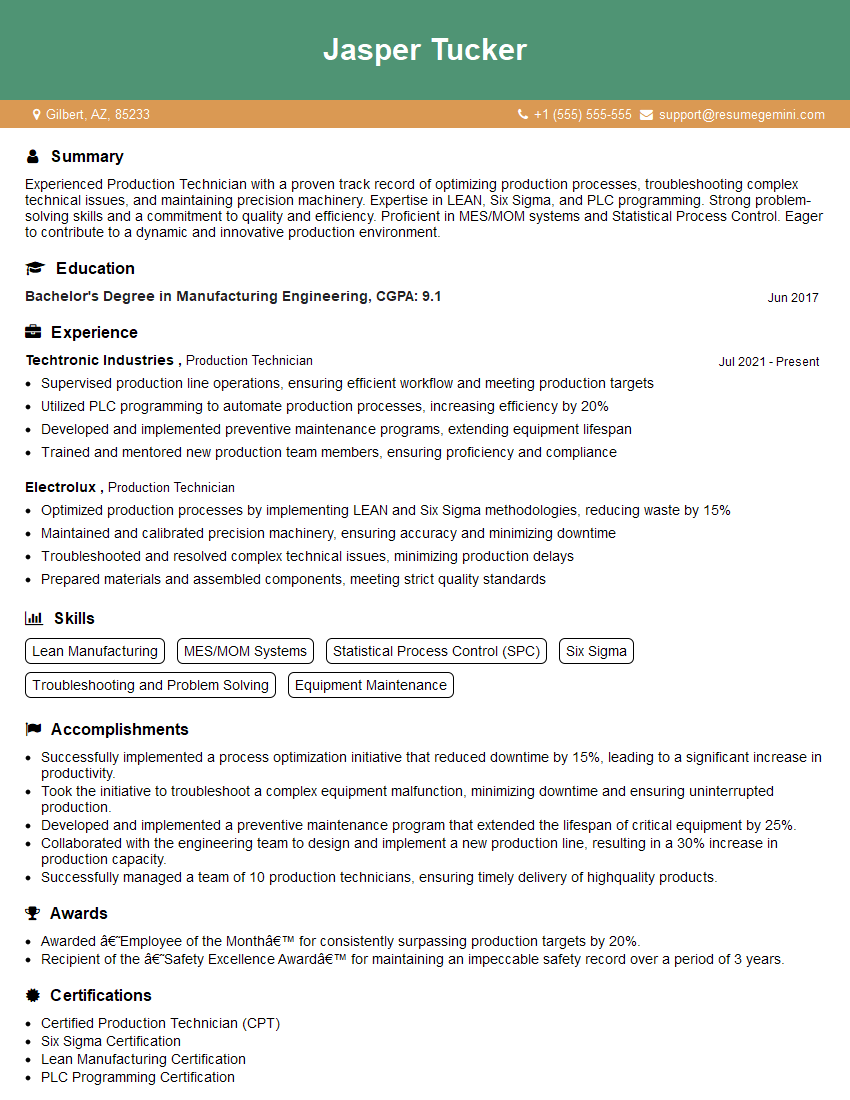
Production Technician Resume Sample
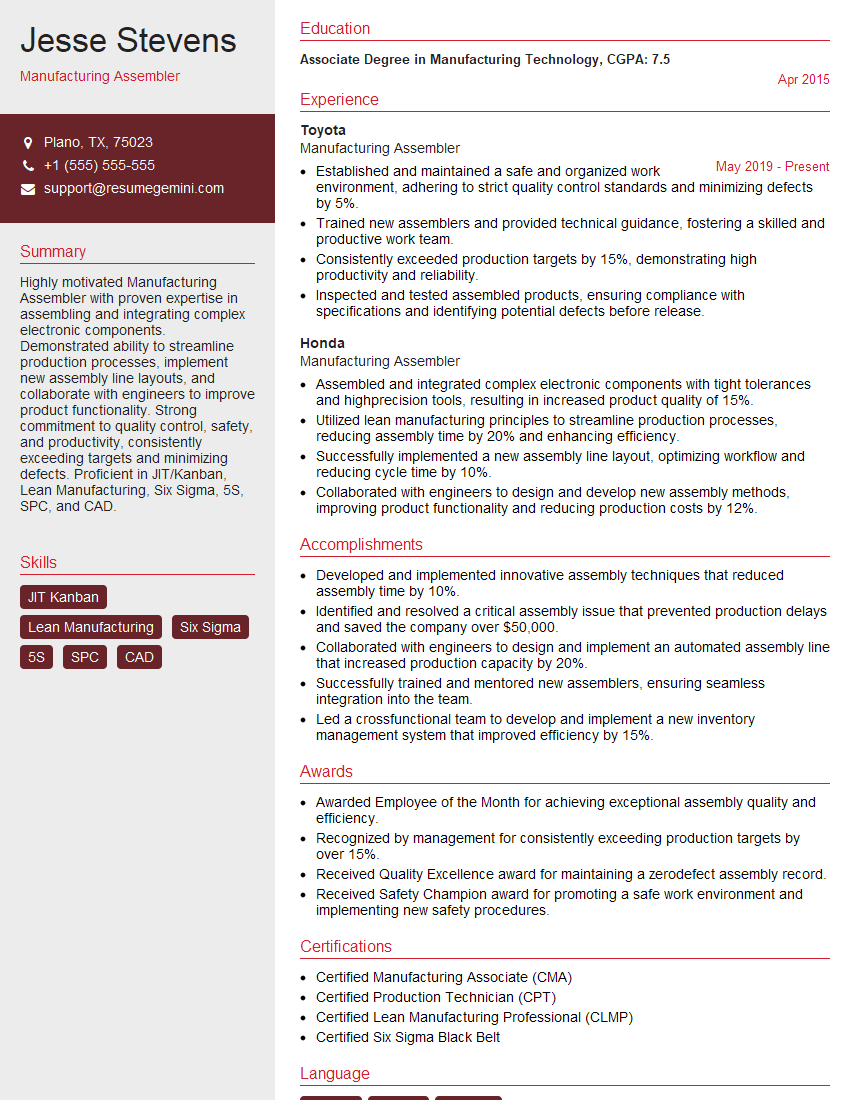
Manufacturing Assembler Resume Sample
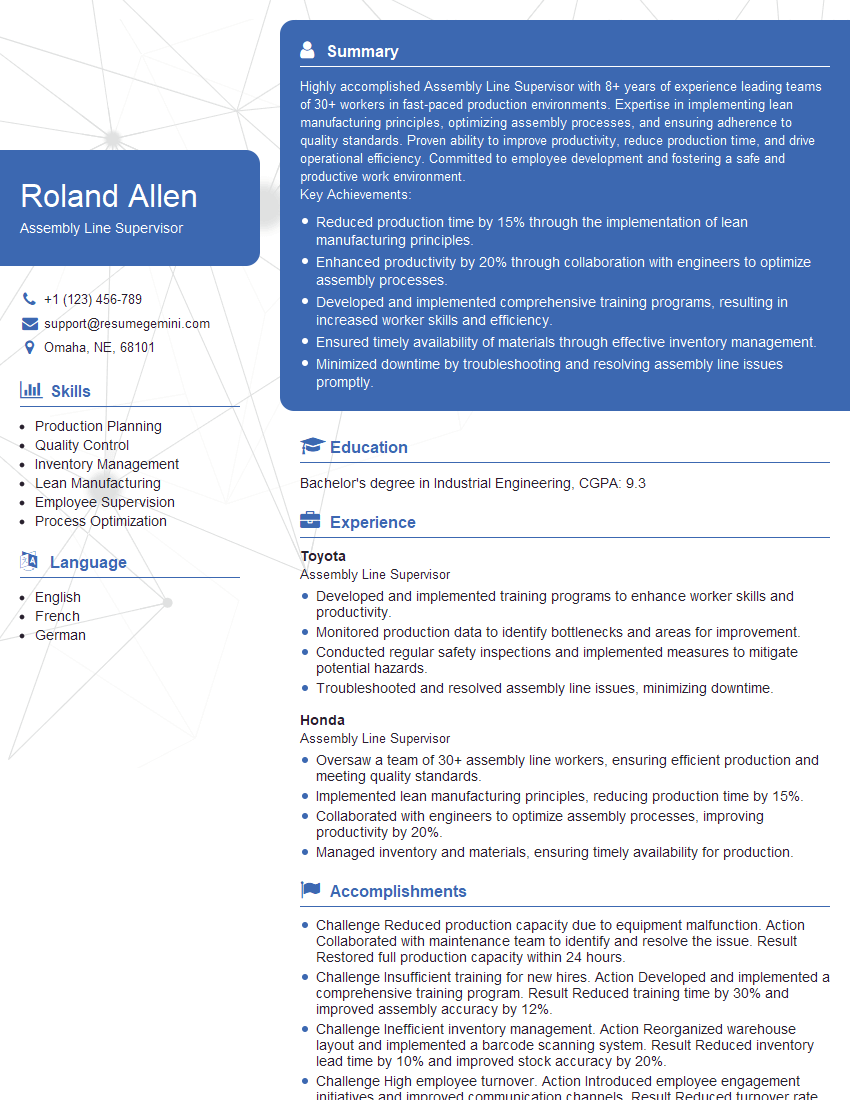
Assembly Line Supervisor Resume Sample
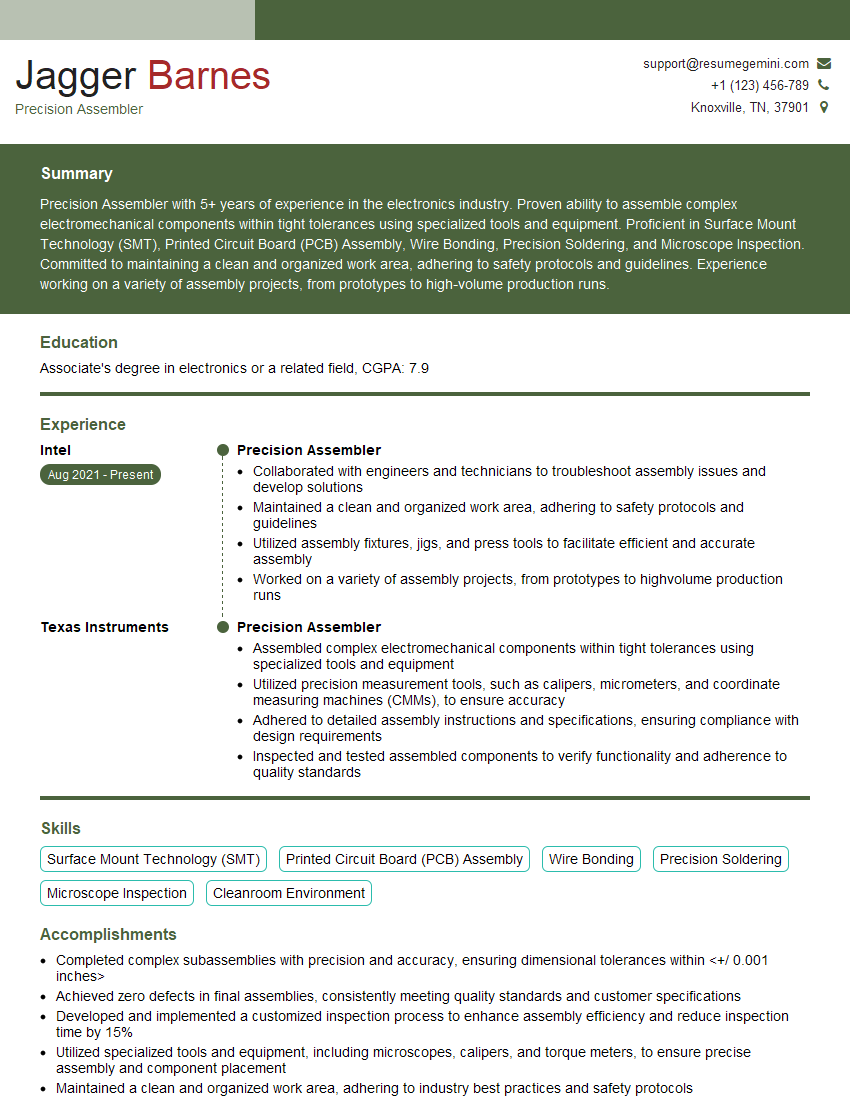
Precision Assembler Resume Sample
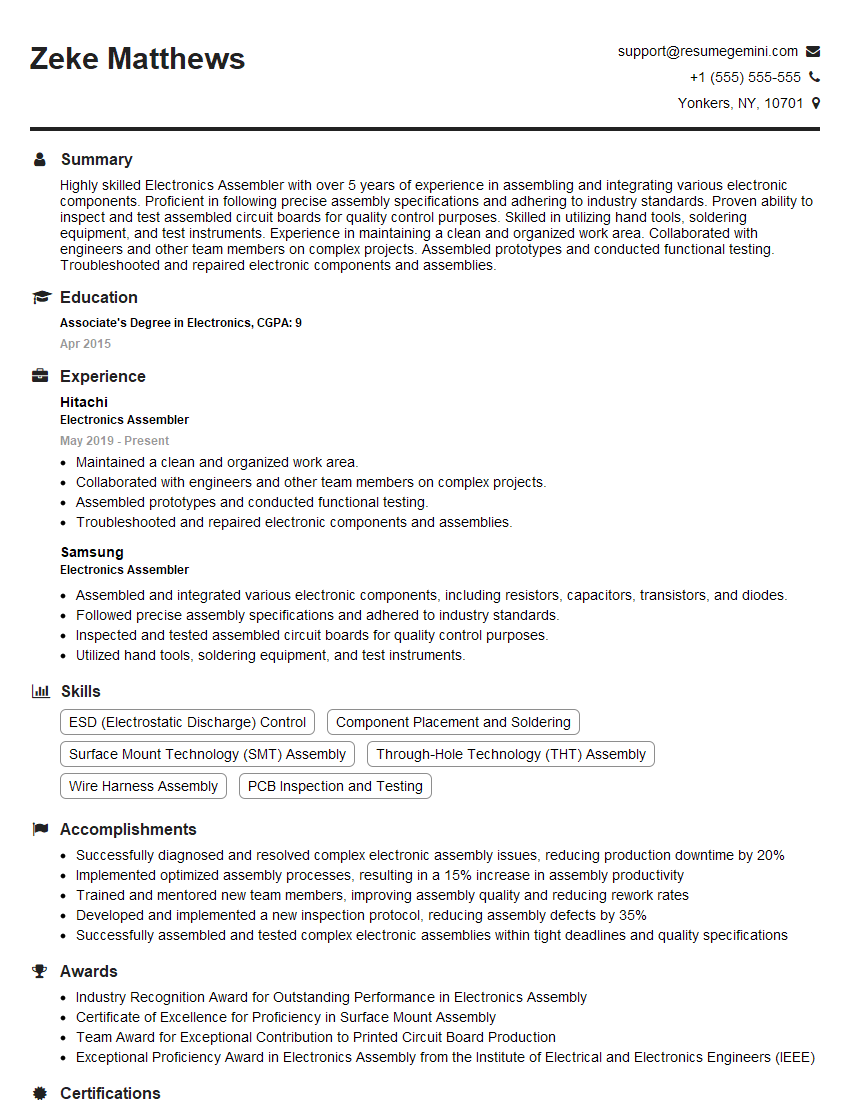
Electronics Assembler Resume Sample
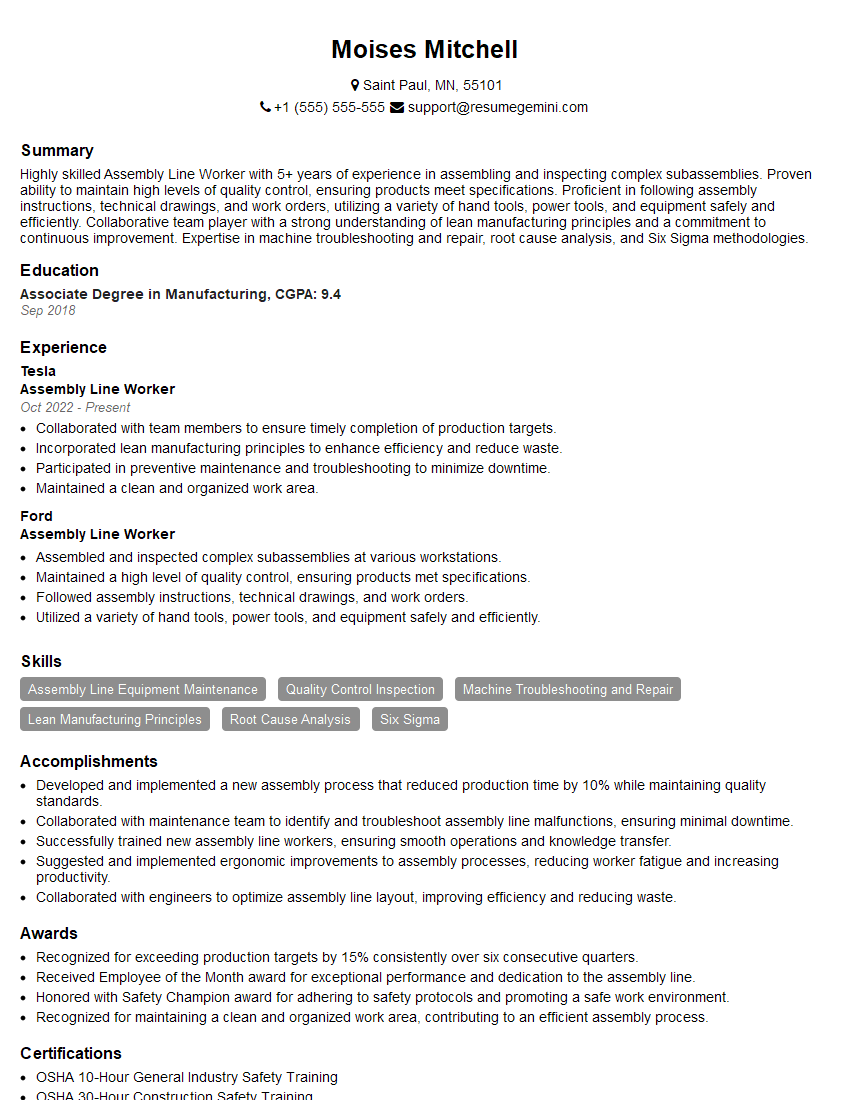
Assembly Line Worker Resume Sample
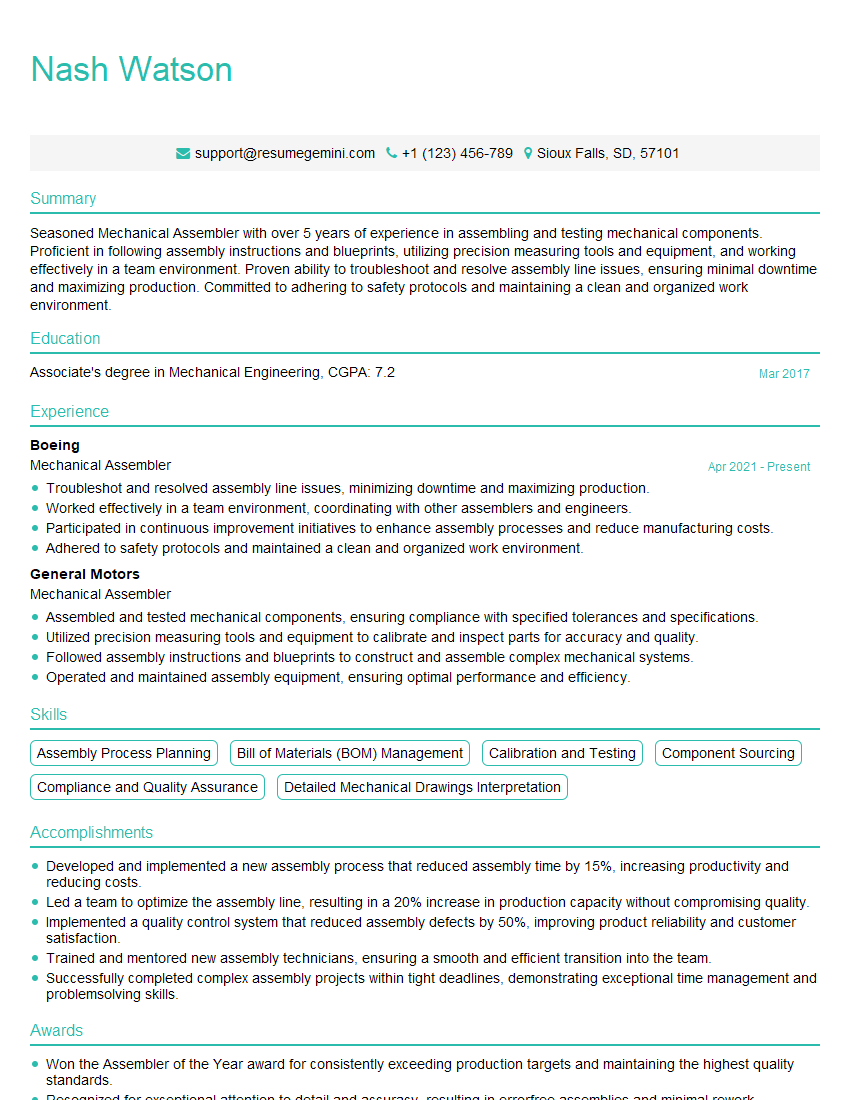
Mechanical Assembler Resume Sample
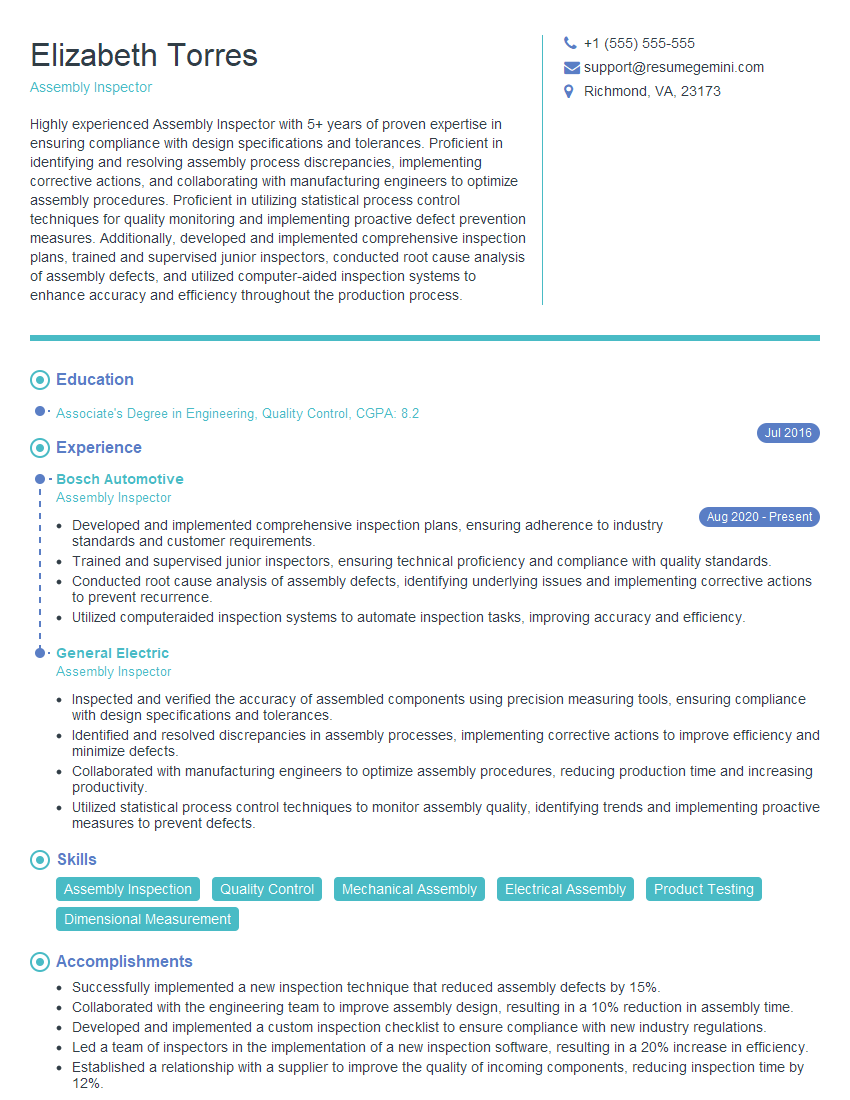
Assembly Inspector Resume Sample
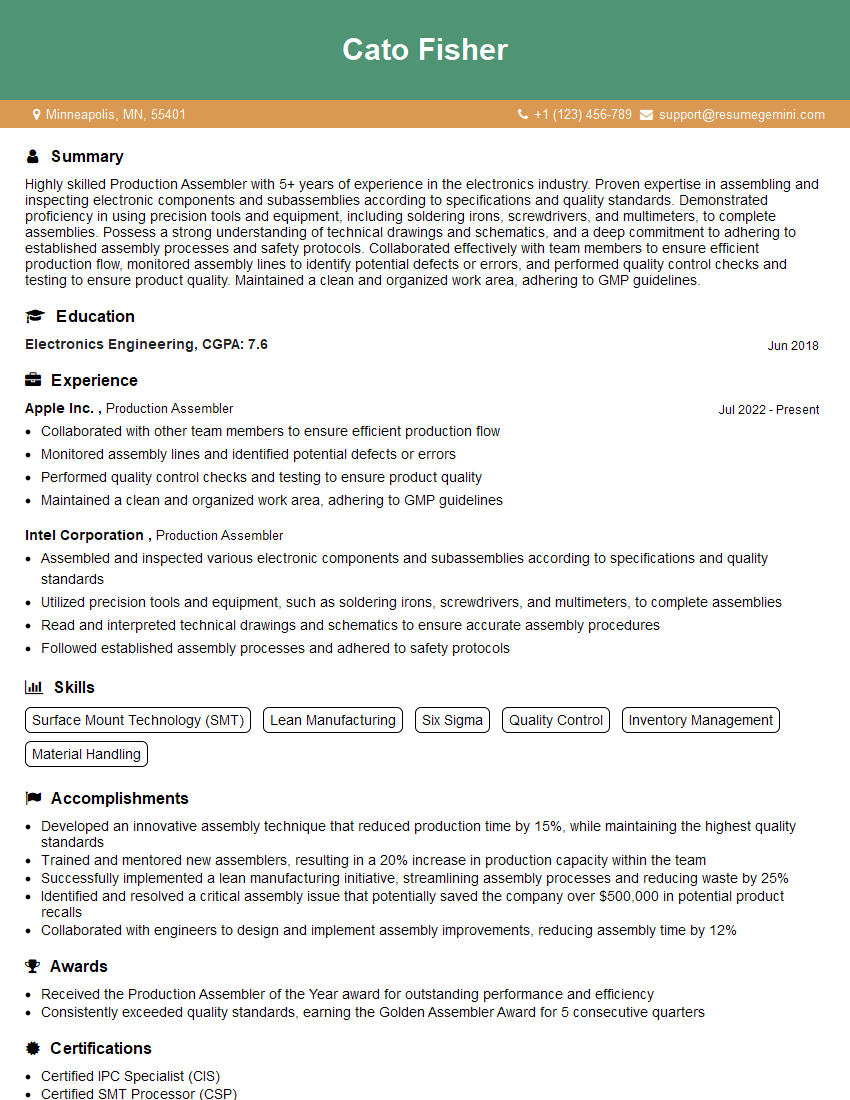
Production Assembler Resume Sample
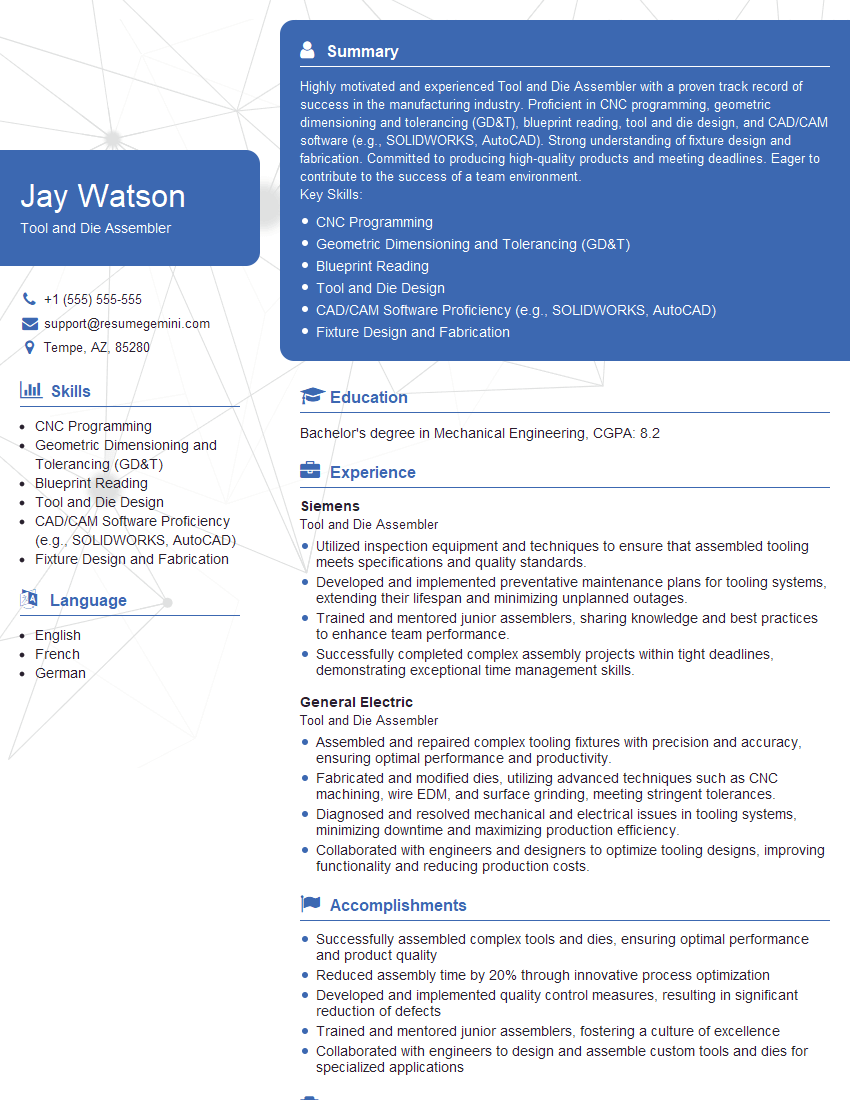
Tool and Die Assembler Resume Sample
Explore more articles
Users Rating of Our Blogs
Share Your Experience
We value your feedback! Please rate our content and share your thoughts (optional).
What Readers Say About Our Blog
Very informative content, great job.
good