The right preparation can turn an interview into an opportunity to showcase your expertise. This guide to Manufacturing Planning and Scheduling interview questions is your ultimate resource, providing key insights and tips to help you ace your responses and stand out as a top candidate.
Questions Asked in Manufacturing Planning and Scheduling Interview
Q 1. Explain the difference between MRP (Material Requirements Planning) and MPS (Master Production Schedule).
Imagine you’re building a house. The Master Production Schedule (MPS) is your overall plan for the entire house – specifying when each major component (like the foundation, walls, roof) will be completed. It’s a high-level plan that sets the pace for the entire project. It’s driven by customer orders or sales forecasts.
Material Requirements Planning (MRP), on the other hand, is the detailed breakdown of materials needed to build each component. For example, to build the walls, MRP determines exactly how many bricks, boards, and nails are required, and when they should be ordered to ensure they’re available on time. It takes the MPS as its input and explodes it down to specific material needs.
In short: MPS defines *what* and *when* you’ll produce finished goods, while MRP determines *what* and *when* you’ll need the raw materials and sub-assemblies to make those goods.
Q 2. Describe your experience with capacity planning techniques.
Capacity planning is crucial to avoid bottlenecks and ensure efficient production. My experience spans various techniques, including:
- Theoretical Capacity: Calculating the maximum output potential of a machine or process under ideal conditions. I’ve used this to benchmark performance against potential and identify areas for improvement.
- Effective Capacity: Considering real-world factors like downtime, maintenance, and operator breaks, providing a more realistic picture of achievable output. I’ve integrated this into production schedules to ensure realistic deadlines.
- Simulation Modeling: Using software to model different scenarios, such as changes in production volume or equipment upgrades, to predict capacity needs and optimize resource allocation. I’ve leveraged this to proactively address potential capacity constraints before they impact production.
- Constraint Management (Theory of Constraints): Identifying and addressing the biggest bottleneck in the production process to maximize overall throughput. In one project, identifying the slowest assembly station allowed us to re-balance the line and increase output by 15%.
I’m also proficient in using capacity requirement profiles to visually represent capacity needs against available capacity over time, helping identify potential overloads or underutilization.
Q 3. How do you handle unexpected production delays or disruptions?
Unexpected delays are inevitable in manufacturing. My approach involves a systematic response:
- Immediate Assessment: Quickly identify the root cause of the delay (e.g., machine failure, material shortage, quality issue). Data analytics and real-time monitoring systems are invaluable here.
- Impact Analysis: Determine the impact of the delay on downstream processes and scheduled deliveries. This might involve rescheduling tasks, adjusting priorities, and communicating with customers.
- Contingency Planning: Having pre-defined contingency plans for common disruptions is essential. This might include alternative suppliers, backup equipment, or flexible production processes. In past situations, this has mitigated significant delays and prevented costly rework.
- Communication: Open communication with stakeholders (customers, suppliers, internal teams) is vital to manage expectations and mitigate potential negative consequences.
- Corrective Actions: Implementing measures to prevent recurrence of the disruption. This could involve preventative maintenance, improved inventory management, or process improvements. Root cause analysis is key here.
Q 4. What are the key performance indicators (KPIs) you use to measure the effectiveness of your planning and scheduling?
Key Performance Indicators (KPIs) are critical for evaluating planning and scheduling effectiveness. I regularly track:
- On-Time Delivery (OTD): The percentage of orders delivered on or before the scheduled date. A key metric for customer satisfaction.
- Inventory Turnover Rate: Measures how efficiently inventory is managed and turned into sales. Indicates potential for cost reduction through optimized inventory levels.
- Production Lead Time: The time it takes to complete a product from start to finish. Shorter lead times improve responsiveness and competitiveness.
- Capacity Utilization: The percentage of available production capacity that is being used. Highlights areas of potential improvement and resource optimization.
- Manufacturing Cycle Efficiency (MCE): A more refined calculation of efficiency that considers only value-added time.
- Total Manufacturing Cost: A comprehensive view of costs throughout the manufacturing process, used to track efficiency and cost reduction efforts.
Regular review and analysis of these KPIs allow for continuous improvement and adjustment of planning strategies.
Q 5. Explain your experience with different forecasting methods.
Forecasting is essential for effective planning. My experience includes:
- Simple Moving Average: Useful for stable demand patterns where recent data is weighted equally. I’ve used this for mature products with minimal seasonality.
- Weighted Moving Average: Assigns different weights to recent data points, giving more importance to more recent data. This is better suited to situations with some trend or seasonality.
- Exponential Smoothing: A sophisticated method that assigns exponentially decreasing weights to older data. This is particularly effective for time series data with trends and seasonality, like many manufacturing processes.
- ARIMA (Autoregressive Integrated Moving Average): A more advanced statistical model suitable for complex time series data with non-stationary patterns. I’ve implemented this in situations with significant trend and seasonality, requiring a higher degree of accuracy.
The choice of forecasting method depends heavily on the specific product, market conditions, and data availability. I always validate my forecast against historical data and adjust methods as needed.
Q 6. How do you prioritize competing demands on production resources?
Prioritizing competing demands requires a structured approach. I typically use a combination of methods:
- Prioritization Matrix: A simple but effective tool for classifying tasks based on urgency and importance (e.g., Eisenhower Matrix). This helps focus efforts on the most critical items.
- Critical Ratio Scheduling: Prioritizing jobs based on their remaining time and due dates. Jobs with the lowest critical ratio (remaining time / total time) are scheduled first.
- Shortest Processing Time (SPT): Scheduling jobs with the shortest processing times first to minimize overall completion time. This can be particularly effective in minimizing work-in-progress.
- Customer Order Priorities: High-value customers or rush orders often receive priority, aligning production with business strategy.
Software tools and advanced scheduling algorithms play a vital role in optimizing resource allocation and ensuring efficient execution of the chosen prioritization strategy.
Q 7. Describe your experience with ERP systems (e.g., SAP, Oracle).
I have extensive experience with ERP systems, particularly SAP and Oracle. I’ve been involved in the implementation, configuration, and ongoing support of these systems in manufacturing environments. My experience includes:
- Master Data Management: Ensuring accuracy and consistency of product, material, and customer data within the ERP system.
- Production Planning and Execution: Using ERP functionalities for capacity planning, production scheduling, and material requirements planning.
- Inventory Management: Utilizing ERP tools for inventory tracking, optimization, and control.
- Reporting and Analytics: Leveraging ERP reporting capabilities to track key performance indicators and gain insights into manufacturing processes. I’ve customized reports to meet specific business needs and identify areas for improvement.
- Integration with other systems: Working with MES (Manufacturing Execution Systems) and other enterprise applications to ensure seamless data flow and improved process visibility.
I am proficient in utilizing the ERP system’s advanced features to streamline processes, improve decision-making, and increase overall efficiency.
Q 8. How do you ensure alignment between production planning and sales forecasts?
Aligning production planning with sales forecasts is crucial for efficient manufacturing. It’s like planning a road trip – you need to know your destination (sales forecast) before charting your route (production plan). This alignment prevents overproduction, minimizes inventory costs, and ensures timely delivery to customers.
I achieve this through a collaborative process involving regular meetings with the sales team and a robust demand forecasting system. We use statistical methods to analyze historical sales data, factoring in seasonality, market trends, and promotional activities. The sales forecast is then translated into a production plan, taking into account production capacity, lead times, and material availability. Regular review and adjustment of the plan based on actual sales performance are key to maintaining alignment.
For example, if the sales forecast predicts a surge in demand for a specific product during the holiday season, we proactively adjust the production schedule to ramp up production well in advance, avoiding last-minute rush and potential stockouts.
Q 9. What are the benefits and drawbacks of using different scheduling algorithms (e.g., FIFO, LIFO, priority)?
Different scheduling algorithms offer varying advantages and disadvantages. Think of them as different tools in a toolbox – the best choice depends on the specific job.
- FIFO (First-In, First-Out): Simple to understand and implement, it prioritizes older orders. This is good for perishable goods or items with short shelf lives, but can lead to longer lead times for newer orders.
- LIFO (Last-In, First-Out): Prioritizes newer orders. This can be beneficial for keeping up with current demand, but might neglect older orders, possibly leading to customer dissatisfaction.
- Priority Scheduling: Assigns priorities based on various criteria like due dates, customer importance, or profit margins. It offers flexibility but requires a well-defined prioritization system and can be complex to manage.
In my experience, a hybrid approach often works best. For instance, we might use priority scheduling for urgent orders and FIFO for regular production runs to ensure fairness and timely fulfillment.
Q 10. How do you manage inventory levels to minimize costs while meeting customer demands?
Managing inventory effectively is a balancing act – too much inventory ties up capital and increases storage costs, while too little leads to stockouts and lost sales. The goal is to find the ‘sweet spot’ – the optimal inventory level that minimizes costs while meeting customer demand.
I utilize several techniques including:
- Demand Forecasting: Accurate forecasting is the foundation. We use statistical models and collaborative forecasting to predict future demand.
- Inventory Control Systems: Implementing systems like MRP (Material Requirements Planning) or other inventory management software enables us to track inventory levels, predict future needs, and identify potential shortages or surpluses.
- Safety Stock: We maintain a buffer stock to account for unexpected demand spikes or supply chain disruptions. The optimal safety stock level is determined through analysis of historical data and demand variability.
- Just-in-Time (JIT) Inventory: Where feasible, we implement JIT to minimize inventory holding costs by receiving materials only when needed for production. This requires strong collaboration with suppliers and accurate demand forecasting.
For example, in one project, we implemented a Kanban system to manage inventory in a specific production line. This significantly reduced inventory holding costs by 20% without compromising production.
Q 11. Explain your experience with lean manufacturing principles and how they impact planning and scheduling.
Lean manufacturing principles focus on eliminating waste and maximizing efficiency throughout the entire production process. This has a profound impact on planning and scheduling, leading to improved lead times, reduced costs, and higher quality.
My experience includes implementing several lean tools, such as:
- Value Stream Mapping: Identifying and eliminating non-value-added steps in the production process. This helps streamline operations and improve efficiency in the scheduling process.
- Kaizen Events: Organizing focused improvement projects to address specific issues and optimize processes. This enhances the effectiveness of planning and scheduling by addressing bottlenecks and inefficiencies.
- 5S Methodology: Improving workplace organization and cleanliness. A well-organized workspace is essential for efficient production and simplifies scheduling by reducing search times and potential delays.
For instance, in a previous role, we implemented a Kaizen event to reduce the setup time for a specific machine. By streamlining the process and eliminating unnecessary steps, we reduced setup time by 50%, directly improving production efficiency and enabling a more accurate production schedule.
Q 12. Describe your experience using software for planning and scheduling (e.g., APS, MES).
I have extensive experience using Advanced Planning and Scheduling (APS) software and Manufacturing Execution Systems (MES). APS systems provide a holistic view of the entire production process, enabling optimization of production plans and resource allocation. MES systems provide real-time visibility into production operations, allowing for timely adjustments to the schedule based on actual performance.
My experience includes implementing and configuring various APS and MES software solutions, including [mention specific software, e.g., SAP APO, Oracle Advanced Supply Chain Planning]. I am proficient in using these systems to model production processes, optimize schedules, and monitor performance against targets. Data analysis capabilities within these systems provide crucial insights into areas for improvement, leading to informed decision-making and continuous optimization of the planning and scheduling process.
Q 13. How do you collaborate with other departments (e.g., procurement, sales, engineering) to ensure smooth production operations?
Collaboration is paramount in manufacturing. Production planning and scheduling cannot exist in a silo. It requires seamless communication and cooperation with various departments.
I foster collaboration through:
- Regular Meetings: Conducting regular meetings with procurement, sales, and engineering to align on production targets, material availability, and potential challenges.
- Shared Platforms: Using collaborative software platforms to share data and updates in real-time, ensuring transparency and minimizing miscommunication.
- Defined Processes: Establishing clear communication channels and processes for information sharing and decision-making.
- Cross-functional Teams: Forming cross-functional teams to address specific projects or issues, ensuring a holistic perspective and integrated approach.
For example, I worked closely with the procurement team to ensure timely delivery of raw materials, preventing potential delays in production. This close collaboration helped avoid costly production stoppages and maintain the planned production schedule.
Q 14. How do you handle situations where demand exceeds production capacity?
When demand exceeds production capacity, it requires a strategic approach to manage the situation and minimize disruptions.
My strategies include:
- Prioritization: Prioritizing orders based on factors like customer importance, profit margins, and due dates. This ensures that the most valuable orders are fulfilled first.
- Capacity Expansion: Exploring options to increase production capacity, such as overtime, additional shifts, or investment in new equipment. This requires careful consideration of costs and feasibility.
- Outsourcing: Subcontracting some of the production to external manufacturers. This can be a cost-effective way to meet surge demand but requires careful selection of reliable partners.
- Communication: Openly communicating with customers about potential delays and offering alternative solutions. Transparency is crucial in maintaining customer relationships.
In one instance, we faced an unexpected surge in demand. We prioritized orders based on customer importance and profit margins, implemented overtime, and communicated potential delays proactively to customers. This minimized negative impact and maintained a positive customer relationship.
Q 15. Describe a time when you had to make a difficult decision regarding production scheduling. What was the outcome?
One of the toughest scheduling decisions I faced involved a critical rush order for a high-value product that coincided with a planned production shutdown for equipment maintenance. Accepting the rush order meant disrupting the maintenance schedule, potentially leading to costly downtime later. Rejecting it risked losing a significant client and impacting future business.
My approach involved a thorough analysis of several factors: the urgency and financial impact of the rush order, the potential consequences of delaying maintenance, and the flexibility within the production process. I gathered data on machine availability, lead times, and resource allocation. This allowed me to explore different scenarios using a simulation tool.
Ultimately, we decided to partially compromise. We adjusted the maintenance schedule, focusing on the most critical tasks and postponing some less urgent ones. This allowed us to fulfill the rush order within a tight deadline without significantly compromising long-term maintenance needs. We communicated transparently with the client about the adjusted timeline. The outcome was positive; we delivered the rush order successfully and minimized the potential risks of postponed maintenance.
Career Expert Tips:
- Ace those interviews! Prepare effectively by reviewing the Top 50 Most Common Interview Questions on ResumeGemini.
- Navigate your job search with confidence! Explore a wide range of Career Tips on ResumeGemini. Learn about common challenges and recommendations to overcome them.
- Craft the perfect resume! Master the Art of Resume Writing with ResumeGemini’s guide. Showcase your unique qualifications and achievements effectively.
- Don’t miss out on holiday savings! Build your dream resume with ResumeGemini’s ATS optimized templates.
Q 16. How do you identify and address bottlenecks in the production process?
Identifying bottlenecks requires a systematic approach. I typically use a combination of data analysis and visual management tools.
- Data Analysis: I analyze production data, including cycle times, machine utilization, and throughput rates. This helps pinpoint specific stages in the production process where work is accumulating or where equipment is consistently operating at full capacity, thus highlighting potential bottlenecks. For instance, if one specific machine consistently has a high queue length, it might indicate a bottleneck.
- Visual Management: Tools like process maps, value stream maps, and Kanban boards offer a visual representation of the workflow, making it easier to spot bottlenecks. Analyzing these visuals often reveals areas where material flow is interrupted or where certain processes take significantly longer than others.
Once a bottleneck is identified, addressing it requires a multi-pronged strategy that might include:
- Improving equipment efficiency: This could involve preventative maintenance, upgrading equipment, or optimizing machine settings.
- Streamlining processes: Eliminating unnecessary steps or simplifying procedures can significantly improve efficiency. For example, reducing the number of handoffs between workstations can reduce waiting time.
- Adding resources: If the bottleneck is due to limited capacity, adding additional machines, workers, or shifts can help alleviate the pressure.
- Rescheduling: Adjusting the production schedule to prioritize high-value or urgent orders can prevent bottlenecks from causing major delays.
Q 17. What is your experience with different inventory management techniques (e.g., JIT, EOQ)?
I have extensive experience with various inventory management techniques. Each approach has its strengths and weaknesses, making the choice dependent on the specific context and company goals.
- Just-in-Time (JIT): JIT aims to minimize inventory levels by producing goods only when needed. It’s effective for reducing storage costs and minimizing waste, but it relies heavily on accurate demand forecasting and efficient supply chains. A disruption in the supply chain can severely impact production. I’ve used JIT successfully in environments with predictable demand and reliable suppliers, like a project involving the manufacture of high-value, low-volume customized products.
- Economic Order Quantity (EOQ): EOQ is a formula-based approach that determines the optimal order quantity to minimize the total cost of inventory, balancing ordering costs and holding costs. It’s straightforward to implement, but it relies on several assumptions, such as constant demand and stable lead times, which might not always hold true in reality. I’ve applied this model in scenarios with relatively stable demand and long lead times for materials.
- Materials Requirements Planning (MRP): MRP is a more sophisticated approach that takes into account the bill of materials (BOM) and lead times to determine the necessary inventory levels for each component. I have used MRP to manage complex production scenarios with multiple components and multiple levels of sub-assemblies, particularly in high-volume manufacturing of electronic devices where managing hundreds of components is critical.
In practice, I often find that a hybrid approach, combining elements of different techniques, is most effective. For instance, using JIT for some key components while employing EOQ for others, depending on their demand variability and lead times.
Q 18. Explain your experience with production simulations and modeling.
Production simulations and modeling are invaluable tools for optimizing manufacturing processes. I’ve used various software packages like Arena and AnyLogic to create digital twins of our manufacturing lines. These models allow us to test different scenarios, evaluate the impact of process changes, and identify potential bottlenecks before implementing them in reality.
For example, I once used simulation to assess the impact of upgrading a key machine. The model allowed us to input parameters such as the machine’s improved cycle time and capacity, along with realistic variations in demand. The results showed that the upgrade would not only reduce cycle times, as expected, but would also lead to improved overall equipment effectiveness (OEE) by minimizing idle times of other machines. This quantitative evidence played a crucial role in securing management’s approval for the substantial investment.
Furthermore, simulations can help in training operators and planning capacity. By virtually simulating different production scenarios, workers can experience various situations and develop better problem-solving skills. Planning capacity is greatly improved through analyzing the results of simulation models and adjusting capacity plans for maximum efficiency.
Q 19. How do you measure and improve the accuracy of your demand forecasts?
Demand forecasting accuracy is crucial for effective production planning. I use a combination of quantitative and qualitative methods to improve accuracy.
- Quantitative methods: These include time series analysis (e.g., moving averages, exponential smoothing, ARIMA models), regression analysis, and causal modeling. These methods leverage historical sales data to predict future demand. The choice of model depends on the characteristics of the data (e.g., trend, seasonality, cyclical patterns).
- Qualitative methods: These involve incorporating expert opinions, market research, and sales forecasts. Methods like Delphi technique or sales force composite can provide valuable insights, particularly for new products or in volatile markets.
To measure accuracy, I use metrics like Mean Absolute Deviation (MAD), Mean Squared Error (MSE), and Mean Absolute Percentage Error (MAPE). These metrics quantify the difference between actual and forecasted demand. Regularly monitoring these metrics helps identify areas for improvement in the forecasting process. For example, if MAPE is consistently high for a particular product, it indicates a need to refine the forecasting model or gather more data.
Continuous improvement is key. We regularly review our forecasting methods, incorporating feedback from sales and operations teams and updating models as new data becomes available. This iterative process ensures that our forecasts remain relevant and accurate.
Q 20. What are some common challenges in manufacturing planning and scheduling, and how do you overcome them?
Manufacturing planning and scheduling faces many challenges, some of the most common include:
- Demand variability: Fluctuations in customer demand make it difficult to optimize production schedules and inventory levels. This is addressed by employing robust forecasting techniques and flexible production processes.
- Supply chain disruptions: Delays or disruptions in the supply chain can significantly impact production schedules. Strategies for mitigating this include diversifying suppliers, building safety stock for critical components, and implementing robust risk management procedures.
- Machine breakdowns and maintenance needs: Unexpected equipment failures can cause significant production delays. Implementing preventative maintenance programs, having backup equipment, and building buffer time into schedules helps mitigate this.
- Resource constraints: Limited resources such as labor, machines, and materials can constrain production capacity. Optimizing resource allocation, improving efficiency, and investing in additional capacity are crucial solutions.
- Lack of real-time visibility: Without real-time visibility into production status, it’s difficult to make timely adjustments. Implementing advanced manufacturing execution systems (MES) and real-time data dashboards enhances visibility and facilitates faster responses to issues.
To overcome these challenges, a collaborative approach is essential. Close communication and data sharing between different departments (e.g., sales, procurement, production) is crucial for making informed decisions and adapting to changing conditions. Utilizing advanced planning and scheduling (APS) systems further enhances efficiency and decision-making.
Q 21. Explain your understanding of the Bill of Materials (BOM).
The Bill of Materials (BOM) is a comprehensive list of all the raw materials, components, sub-assemblies, intermediate assemblies, sub-components, parts, and the quantities of each needed to manufacture an end product. It’s a critical document in manufacturing, serving as the foundation for production planning, inventory management, and cost estimation.
A BOM is typically structured hierarchically, showing the relationships between different components. For instance, a BOM for a bicycle might include the main frame, wheels, handlebars, and brakes as top-level components. Each of these would then have its own sub-BOM detailing the components that make them up. For example, a wheel might consist of a rim, spokes, hub, and tire.
The BOM is crucial because it provides:
- Accurate cost estimation: The BOM allows for precise costing of the product by summing up the cost of each component.
- Efficient inventory management: It helps determine the necessary inventory levels of raw materials and components.
- Effective production planning: The BOM informs the production schedule by specifying the required quantities and timing of each component.
- Improved traceability: A detailed BOM enhances traceability and helps identify the source of defects or problems.
In complex manufacturing scenarios, managing the BOM can be challenging, particularly if there are numerous revisions. Employing sophisticated Enterprise Resource Planning (ERP) systems helps to manage and maintain accuracy within the BOM, reducing errors and ensuring consistency.
Q 22. How do you handle changes in production requirements or customer orders?
Handling changes in production requirements or customer orders requires a robust and agile approach. It’s not just about reacting to changes, but proactively mitigating their impact on the production schedule. My strategy involves a multi-pronged approach:
- Immediate Assessment: First, I assess the nature and scope of the change. Is it a minor adjustment or a significant alteration? This helps prioritize the response.
- Impact Analysis: I use the Master Production Schedule (MPS) and Material Requirements Planning (MRP) systems to analyze the ripple effect of the change. This involves identifying affected resources (machines, personnel, materials), potential bottlenecks, and overall schedule delays.
- Rescheduling and Prioritization: Based on the impact analysis, I re-prioritize tasks using techniques like Critical Path Method (CPM) to ensure we meet critical deadlines. This may involve adjusting production sequences, overtime allocation, or resourcing.
- Communication: Clear and timely communication is crucial. I promptly inform all stakeholders – production, procurement, sales – about the revised schedule and any potential implications for delivery dates or resource needs.
- Contingency Planning: Building in buffer time and having alternative production plans in place are key to handling unforeseen disruptions effectively. This includes identifying potential supply chain risks and having backup suppliers or alternative production methods.
For example, in a previous role, we received a large rush order that threatened to delay existing orders. By carefully analyzing the MPS and using our capacity planning tools, we were able to identify some low-priority tasks that could be temporarily postponed, allowing us to meet both the rush order and our existing commitments without significant delays.
Q 23. Describe your experience with different production control methods (e.g., push, pull).
My experience encompasses both push and pull production control methods. Understanding the strengths and weaknesses of each is crucial for selecting the most appropriate approach depending on the product, market demand, and production environment.
- Push System (MRP): In push systems, production is driven by forecasts of demand. Materials and components are pushed through the production process based on anticipated demand. This is suitable for products with stable and predictable demand, mass production scenarios, and minimizing inventory holding costs for commodity items. It requires accurate forecasting and efficient inventory management. However, it can lead to excess inventory if forecasts are inaccurate.
- Pull System (Kanban, Lean): Pull systems respond directly to customer demand. Production only occurs when there is an actual customer order or a signal from the downstream process (e.g., a Kanban card). This reduces inventory levels, improves responsiveness to demand changes, and highlights bottlenecks. It’s ideal for products with fluctuating demand, customization, and environments where inventory holding costs are high. However, it can require greater flexibility and responsiveness from all stakeholders.
I’ve successfully implemented both systems in different projects. For instance, in one project involving high-volume, standardized components, a modified MRP system (push) was the most efficient approach. In another project focused on customized products, a Kanban-based pull system significantly improved efficiency and reduced lead times.
Q 24. How do you ensure data accuracy in your planning and scheduling processes?
Data accuracy is paramount in manufacturing planning and scheduling. Inaccurate data leads to poor decisions, wasted resources, and ultimately, dissatisfied customers. My approach focuses on:
- Data Validation and Verification: Implementing robust data validation rules and checks within our planning systems is critical. This includes cross-referencing data from different sources and regularly auditing data integrity.
- Real-Time Data Capture: Utilizing automated data collection systems, such as shop floor control systems and sensors, minimizes manual data entry and reduces errors. This ensures that the data reflects the actual state of the production floor in real-time.
- Data Reconciliation: Regularly comparing planned versus actual production data and investigating any discrepancies helps identify areas for improvement and correct inaccuracies promptly.
- Training and Process Standardization: Properly training employees on data entry procedures and standardizing processes helps minimize human error. This may include the use of standardized forms and checklists.
- Data Governance: Establishing clear responsibilities for data management and accountability for data accuracy is essential. This includes establishing roles and workflows to ensure consistent handling of data across the organization.
For example, we implemented a system of barcode scanning for all materials entering and exiting the production line. This significantly reduced errors in material tracking and inventory management.
Q 25. How do you utilize data analytics to improve manufacturing planning and scheduling?
Data analytics plays a vital role in improving manufacturing planning and scheduling. By analyzing historical and real-time data, we can identify trends, predict potential problems, and optimize processes. My approach involves:
- Predictive Analytics: Using machine learning algorithms to forecast demand, predict equipment failures, and optimize resource allocation. This allows for proactive adjustments to prevent production disruptions.
- Process Optimization: Analyzing production data to identify bottlenecks, inefficiencies, and areas for improvement in the production process. This could involve streamlining workflows, optimizing machine utilization, or improving material flow.
- Capacity Planning: Utilizing data analytics to optimize capacity utilization. This helps ensure that we have the right resources at the right time to meet demand without overspending on capacity.
- Performance Monitoring and KPI Tracking: Tracking key performance indicators (KPIs) such as lead times, on-time delivery, and production efficiency helps monitor progress and identify areas needing attention.
- Root Cause Analysis: Using data analysis to understand the root causes of production problems, enabling effective problem-solving and preventing recurrence.
In a previous role, we used data analytics to identify a pattern of recurring equipment failures. By analyzing the historical maintenance data, we were able to predict potential failures and implement a preventative maintenance program, reducing downtime by 20%.
Q 26. What are your preferred methods for communicating production plans and schedules to stakeholders?
Effective communication of production plans and schedules is crucial for alignment and successful execution. My approach involves using a multi-channel strategy to reach different stakeholders:
- Formal Production Schedules: Using dedicated planning software to generate detailed production schedules, including Gantt charts and resource allocation plans. These are shared with relevant teams via a secure, centralized system.
- Regular Meetings: Conducting regular production meetings to review progress, address challenges, and ensure everyone is aligned with the plan. These meetings provide an opportunity for open communication and collaborative problem-solving.
- Visual Management Tools: Employing visual management tools such as Kanban boards, production dashboards, and shop floor displays to provide real-time visibility into production status and progress. These make it easy to monitor progress at a glance.
- Reporting and Dashboards: Generating regular reports on key performance indicators (KPIs) and using dashboards to visualize production performance, providing insights to management and stakeholders.
- Communication Channels: Utilizing appropriate communication channels such as email, instant messaging, and project management software to keep stakeholders informed about schedule changes or updates.
For instance, I implemented a daily stand-up meeting where the production team reviewed the day’s schedule, identified potential bottlenecks, and collaborated on solutions. This fostered a sense of shared ownership and responsibility for successful execution.
Q 27. Explain your experience with root cause analysis and problem-solving in a manufacturing environment.
Root cause analysis (RCA) is essential for effective problem-solving in manufacturing. Instead of just addressing symptoms, RCA helps identify the underlying causes of problems to prevent recurrence. I typically use a structured approach like the 5 Whys or Fishbone diagrams.
- 5 Whys: This simple yet powerful technique involves repeatedly asking “Why?” to uncover the root cause of a problem. By systematically drilling down, we can move beyond superficial explanations to identify the underlying issues.
- Fishbone Diagram (Ishikawa): This visual tool helps brainstorm potential causes of a problem, categorizing them into different areas such as materials, methods, manpower, machinery, environment, and measurement. It provides a structured framework for identifying contributing factors.
- Data Analysis: Using data analysis techniques to support the findings of the RCA process. This could involve analyzing production data, quality control reports, or maintenance logs to identify patterns and trends.
- Corrective Actions: Developing and implementing corrective actions to address the root causes identified through the RCA process. This may involve process improvements, equipment upgrades, or training programs.
- Verification and Monitoring: Verifying the effectiveness of the corrective actions and monitoring the situation to ensure that the problem doesn’t reoccur.
For example, we once experienced a significant increase in product defects. Using the 5 Whys, we discovered the root cause was due to a faulty calibration on a key piece of equipment. After recalibrating the equipment, the defect rate dropped significantly.
Q 28. Describe a time you had to make a significant improvement to a production process. What steps did you take and what was the result?
In a previous role, we were struggling with long lead times and high work-in-progress (WIP) inventory. This significantly impacted our responsiveness to customer demand and increased our operating costs. To address this, I implemented a lean manufacturing approach focusing on eliminating waste and improving flow.
- Value Stream Mapping: I started by creating a value stream map to visualize the entire production process, identifying bottlenecks and areas of waste.
- 5S Implementation: We implemented the 5S methodology (Sort, Set in Order, Shine, Standardize, Sustain) to improve workplace organization and efficiency. This reduced search times and improved overall workflow.
- Kaizen Events: We conducted several Kaizen events, involving cross-functional teams to identify and eliminate waste in specific processes. This led to process improvements that reduced lead times.
- Pull System Implementation: We transitioned from a push system to a Kanban-based pull system, which significantly reduced WIP inventory and improved responsiveness to customer demand.
- Training and Empowerment: We provided training to employees on lean principles and empowered them to identify and implement improvements in their own work areas.
The result was a significant reduction in lead times (by 30%), WIP inventory (by 40%), and overall production costs. Furthermore, employee morale improved due to their increased involvement in process improvement initiatives.
Key Topics to Learn for Manufacturing Planning and Scheduling Interview
- Demand Forecasting: Understanding various forecasting methods (e.g., moving average, exponential smoothing) and their application in predicting future demand for products. Practical application: Analyzing historical sales data to create accurate production plans.
- Master Production Scheduling (MPS): Developing and managing a master production schedule that aligns with customer demand and available resources. Practical application: Creating and adjusting a production schedule to meet fluctuating demand while minimizing inventory costs.
- Material Requirements Planning (MRP): Calculating the required raw materials and components based on the MPS. Practical application: Ensuring timely procurement of materials to prevent production delays.
- Capacity Planning: Evaluating the production capacity and identifying potential bottlenecks. Practical application: Optimizing resource allocation to maximize production efficiency.
- Production Scheduling: Creating detailed production schedules for individual work centers, considering factors like machine availability, labor, and material lead times. Practical application: Sequencing jobs effectively to minimize lead times and maximize throughput.
- Inventory Management: Implementing inventory control strategies (e.g., Just-in-Time, Kanban) to minimize inventory holding costs while ensuring sufficient materials are available for production. Practical application: Analyzing inventory levels and adjusting production schedules to optimize stock levels.
- Lean Manufacturing Principles: Understanding and applying Lean principles to improve efficiency and reduce waste in the manufacturing process. Practical application: Identifying and eliminating non-value-added activities in the production flow.
- Supply Chain Management: Understanding the relationships between different stages of the supply chain and how they impact planning and scheduling. Practical application: Collaborating with suppliers to ensure timely delivery of materials.
- Software and Tools: Familiarity with common Manufacturing Execution Systems (MES) and planning software (e.g., ERP systems). Practical application: Demonstrating proficiency in using relevant software for planning and scheduling activities.
- Problem-Solving & Optimization Techniques: Applying analytical and problem-solving skills to optimize production schedules and resolve scheduling conflicts. Practical application: Developing contingency plans to address unexpected production disruptions.
Next Steps
Mastering Manufacturing Planning and Scheduling is crucial for career advancement in the manufacturing industry, opening doors to leadership roles and higher earning potential. An ATS-friendly resume is key to maximizing your job prospects. ResumeGemini is a trusted resource to help you build a compelling and effective resume that showcases your skills and experience. Take advantage of the provided examples of resumes tailored to Manufacturing Planning and Scheduling to create a document that will impress potential employers.
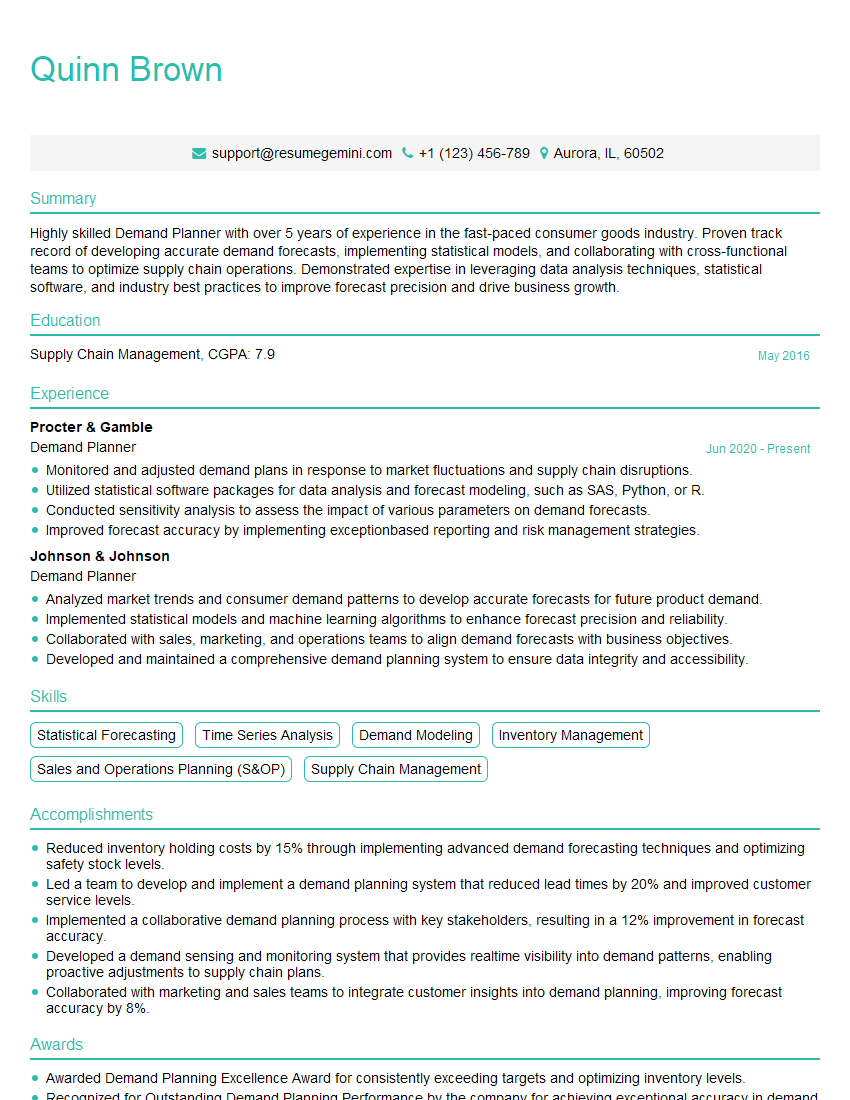
Demand Planner Resume Sample

Manufacturing Planner Resume Sample
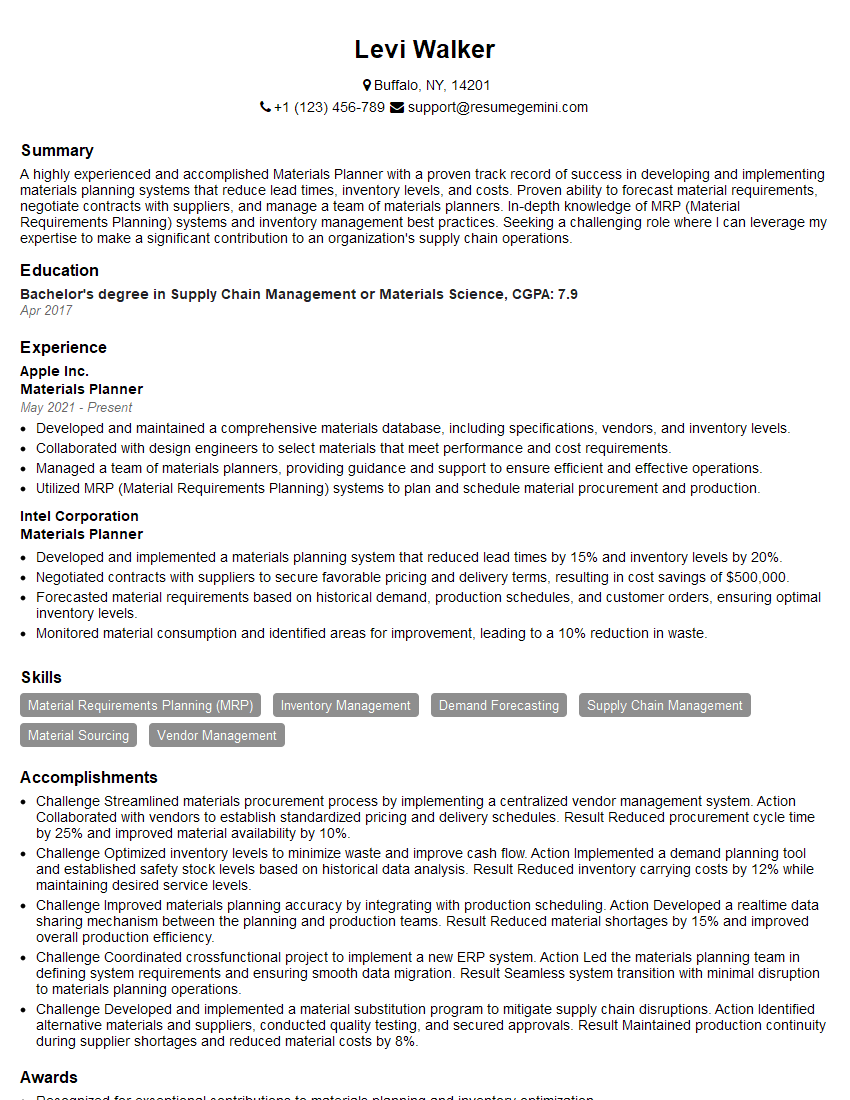
Materials Planner Resume Sample
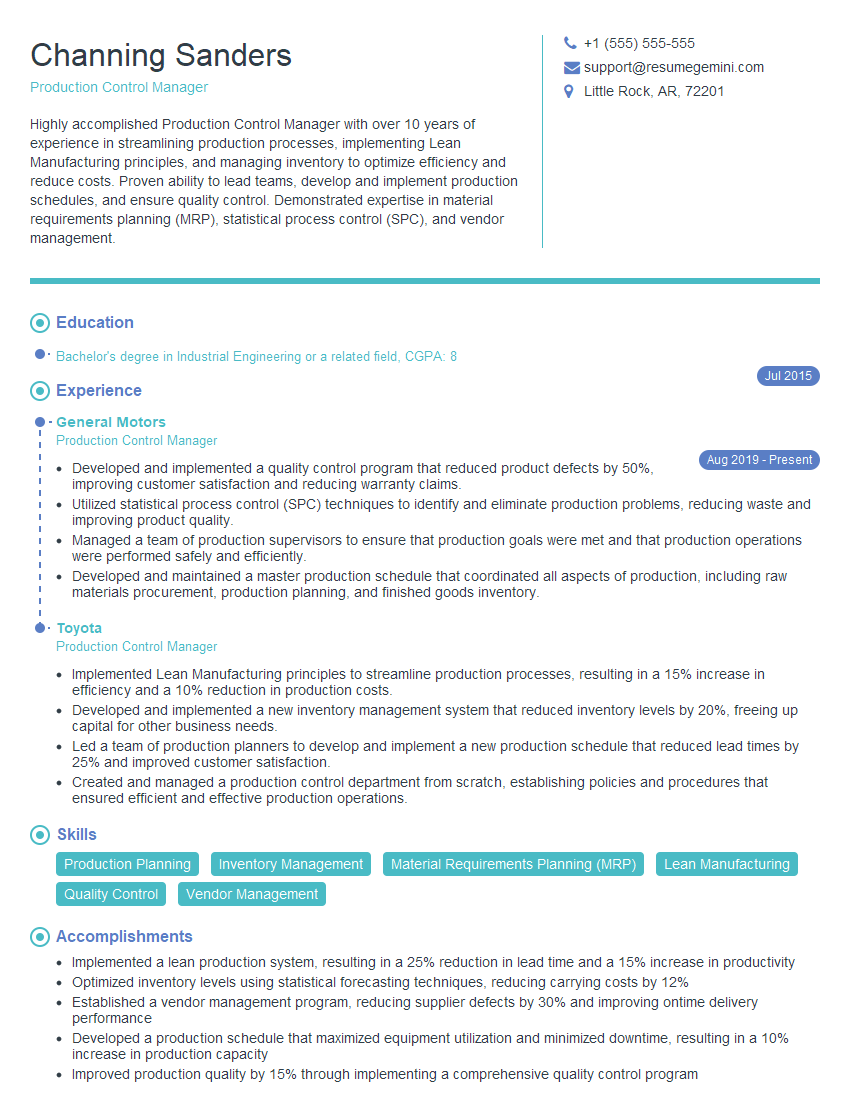
Production Control Manager Resume Sample
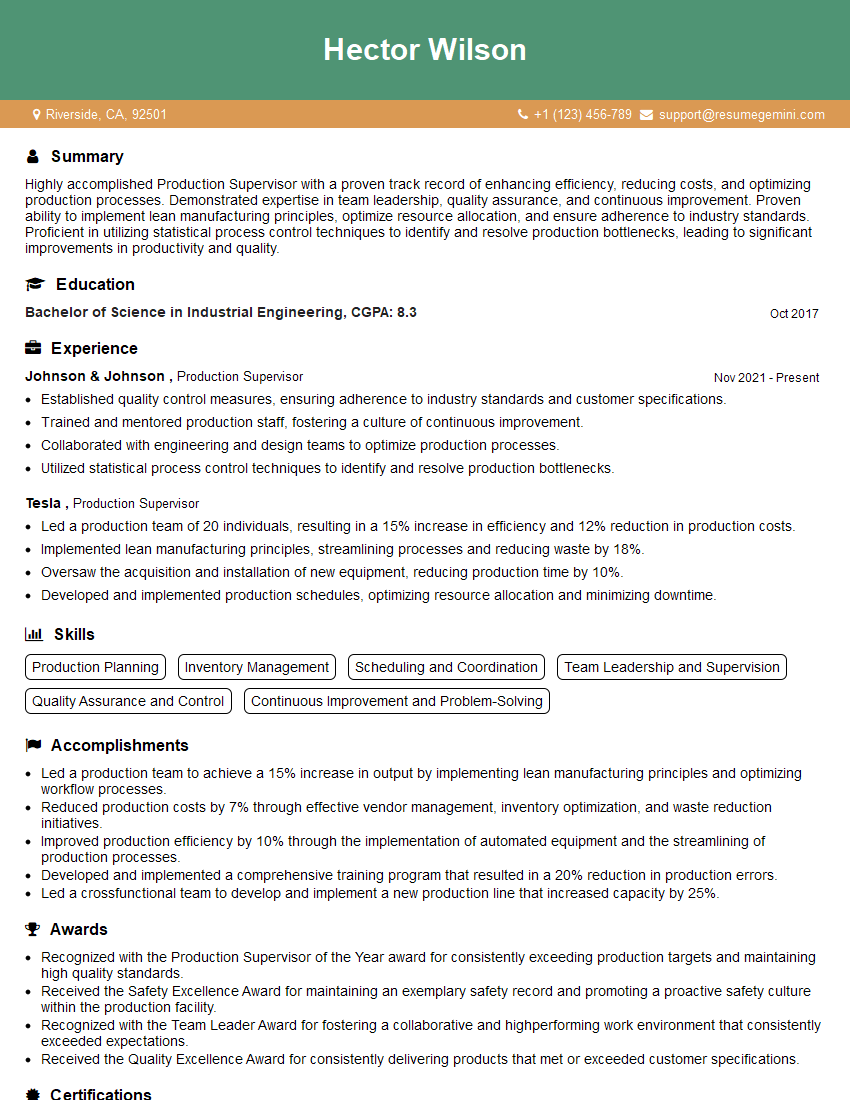
Production Supervisor Resume Sample
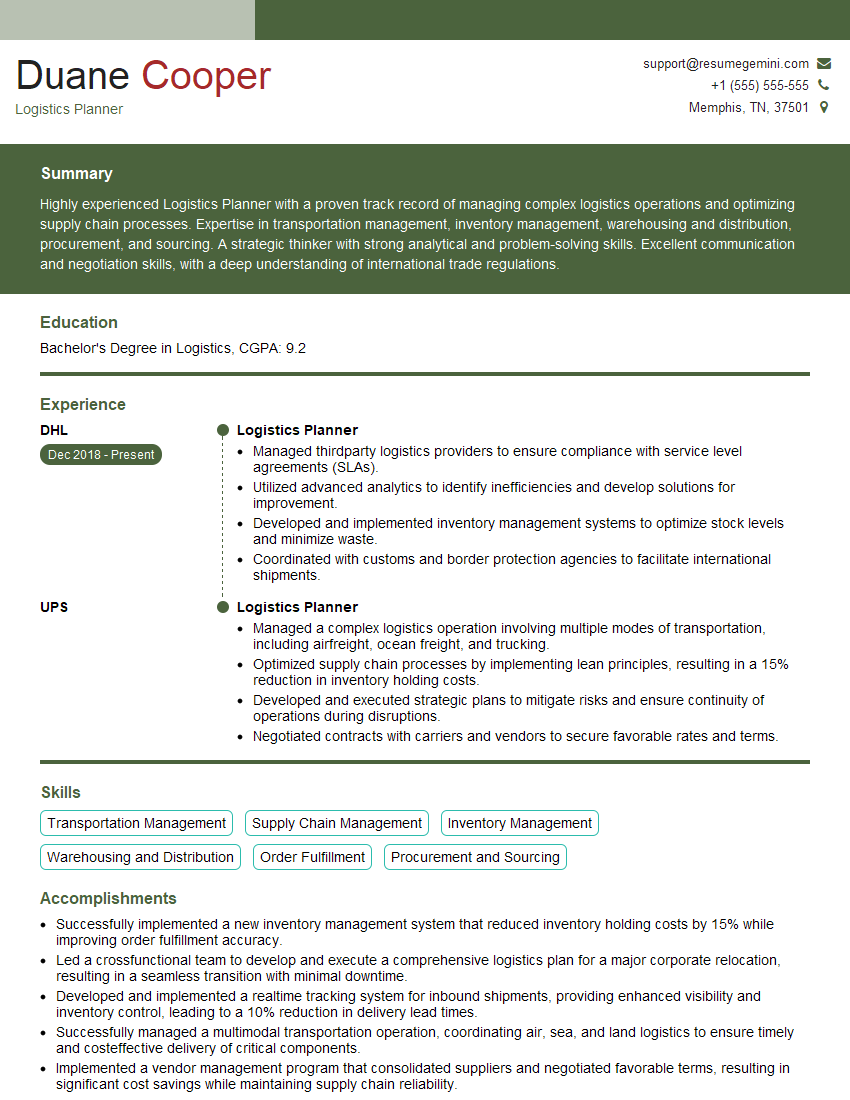
Logistics Planner Resume Sample
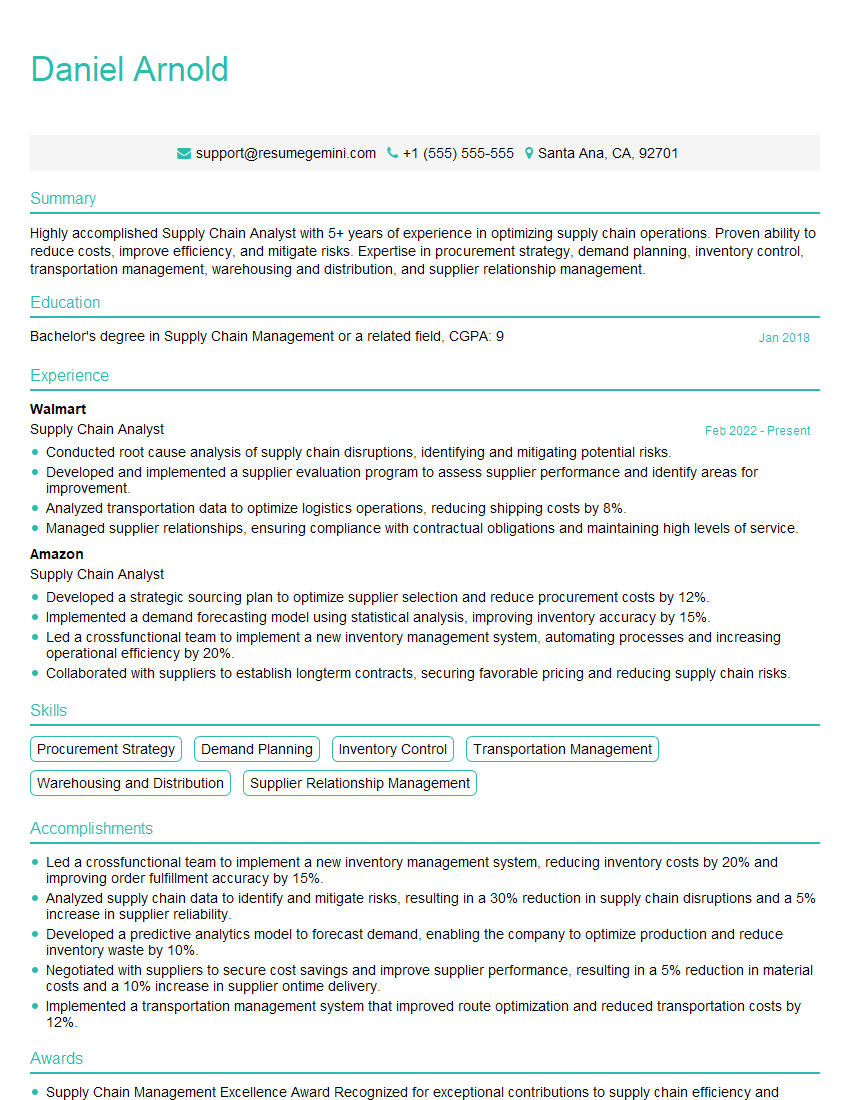
Supply Chain Analyst Resume Sample
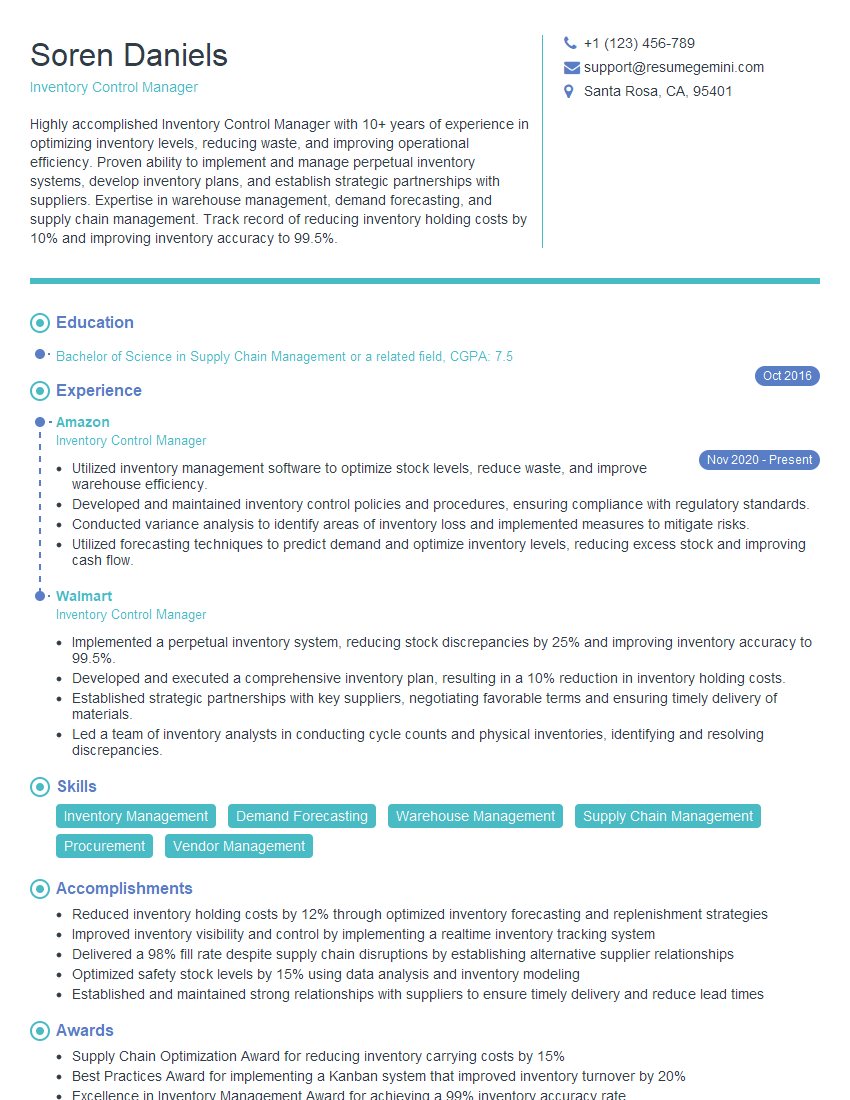
Inventory Control Manager Resume Sample
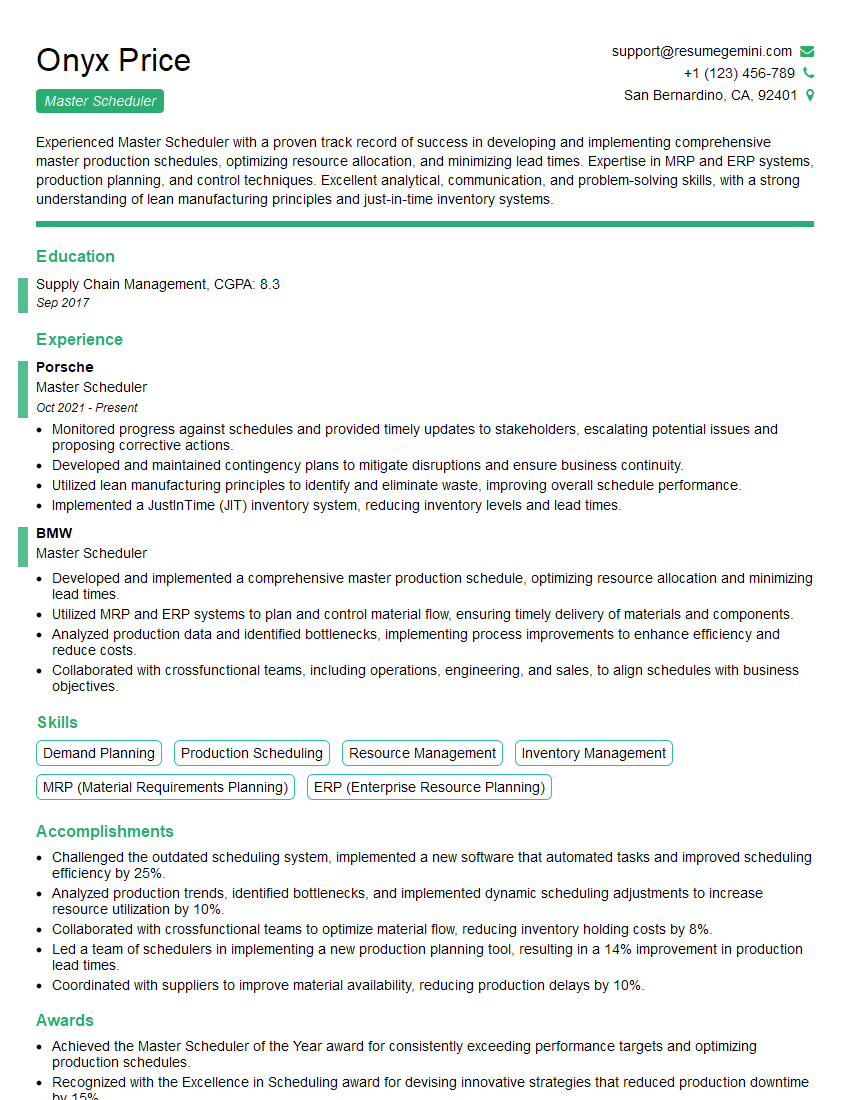
Master Scheduler Resume Sample
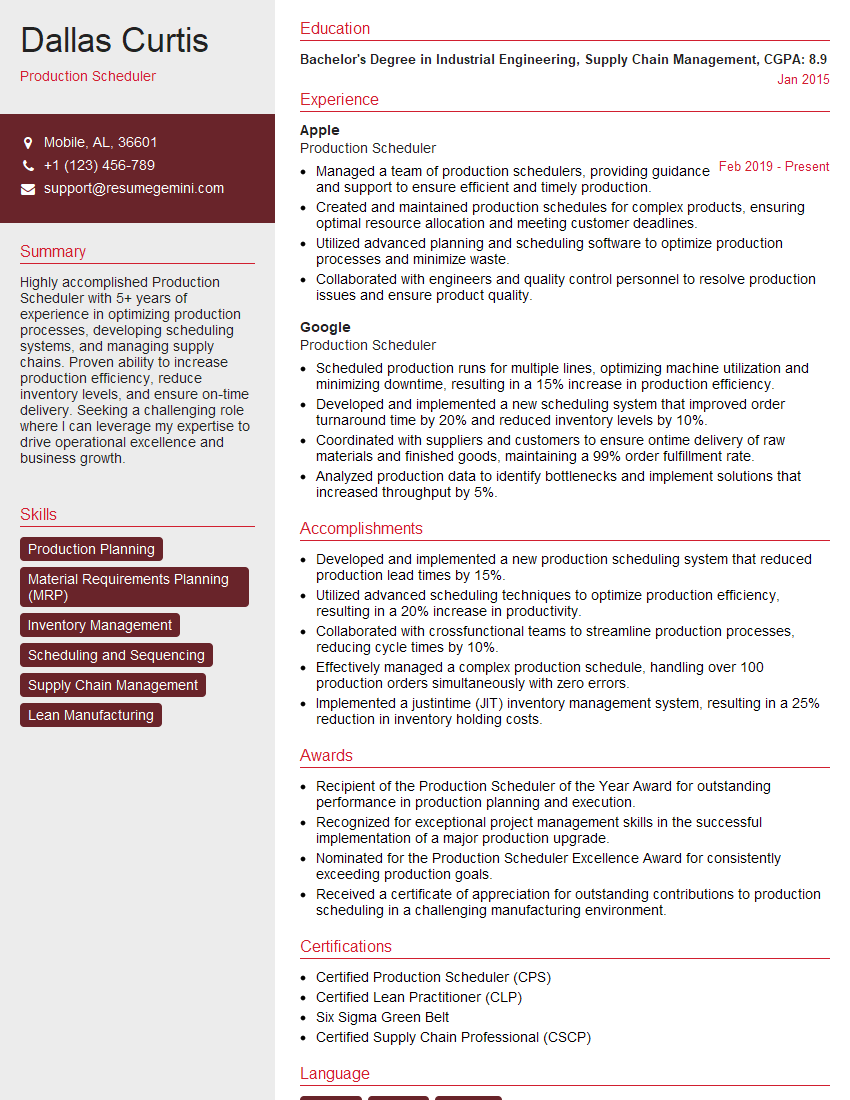
Production Scheduler Resume Sample
Explore more articles
Users Rating of Our Blogs
Share Your Experience
We value your feedback! Please rate our content and share your thoughts (optional).
What Readers Say About Our Blog
Very informative content, great job.
good