Are you ready to stand out in your next interview? Understanding and preparing for Marine Biology and Lobster Ecology interview questions is a game-changer. In this blog, we’ve compiled key questions and expert advice to help you showcase your skills with confidence and precision. Let’s get started on your journey to acing the interview.
Questions Asked in Marine Biology and Lobster Ecology Interview
Q 1. Describe the life cycle of a lobster.
The lobster life cycle is a fascinating journey from microscopic larva to the large, commercially valuable crustacean we know. It begins with the female lobster carrying fertilized eggs attached to her swimmerets (pleopods) for 9-11 months. These eggs hatch into planktonic larvae, tiny free-swimming creatures that drift with ocean currents. These larvae go through several molts and developmental stages, including zoea and post-larva, before settling onto the seabed as juvenile lobsters. Juvenile lobsters then mature through numerous molts, gradually increasing in size and developing adult characteristics, eventually reaching sexual maturity after several years. This lifecycle demonstrates a remarkable adaptation to the marine environment, with the larval stage maximizing dispersal and the benthic (bottom-dwelling) adult stage facilitating survival and reproduction.
- Egg Stage: Eggs carried by female until hatching.
- Larval Stages (Zoea and Post-larva): Planktonic, free-swimming stages.
- Juvenile Stage: Settles on seabed, grows through molting.
- Adult Stage: Mature, sexually reproducing individuals.
Q 2. Explain the process of lobster molting.
Molting, or ecdysis, is a crucial process in a lobster’s life, allowing for growth. Lobsters have a hard exoskeleton that doesn’t expand, so they must shed it periodically to grow larger. The process begins with the absorption of water to swell the body, creating space between the old exoskeleton and the underlying soft tissues. Then, enzymes weaken the old shell, leading to its splitting. The lobster carefully works its way out, a vulnerable process that takes time and energy. The new exoskeleton initially soft and pliable, gradually hardens through calcification over several weeks, making the lobster more resilient. During molting, the lobster is highly susceptible to predation and environmental stressors. The frequency of molting decreases with age; young lobsters molt frequently while older ones molt less often.
Think of it like taking off a too-tight suit to put on a new, bigger one. It’s a critical, yet risky, step for a lobster’s growth.
Q 3. What are the major threats to lobster populations?
Lobster populations face several significant threats, impacting their sustainability. Overfishing is a primary concern, leading to population declines due to the removal of reproductive individuals before they can contribute to the next generation. Habitat destruction from coastal development, pollution, and climate change significantly impacts lobster nurseries and adult habitats. Predation by other marine animals, though a natural process, can be exacerbated by reduced populations due to other factors. Disease outbreaks can also decimate local lobster populations, particularly impacting vulnerable juveniles. Finally, changes in water temperature and ocean acidification, directly linked to climate change, stress lobster physiology and reproduction, further compromising population health.
Q 4. Discuss the role of lobsters in their ecosystem.
Lobsters play a vital role in their ecosystem as both predator and prey. As predators, they help regulate populations of smaller invertebrates, such as crabs and snails, maintaining biodiversity and preventing imbalances. Their predation helps maintain a healthy balance within the ecosystem. Conversely, lobsters serve as a crucial food source for larger animals, such as cod, seals, and even some sharks, highlighting their importance in the marine food web. Their burrows also contribute to habitat structure for other species.
Q 5. How does water temperature affect lobster behavior and physiology?
Water temperature significantly impacts lobster behavior and physiology. Warmer temperatures generally increase metabolic rates, increasing their need for oxygen and food. Conversely, extremely high temperatures can lead to thermal stress, reducing growth and survival rates. Cold temperatures slow down metabolic processes, potentially slowing growth and affecting reproduction. Lobster distribution is largely influenced by optimal temperature ranges. They tend to prefer cooler waters, and shifts in temperature due to climate change force them to migrate or adapt to new ranges, potentially leading to habitat compression or loss. Temperature also influences molting frequency and success.
Q 6. Explain the concept of lobster fishing quotas and their importance.
Lobster fishing quotas are limits on the number of lobsters that can be caught in a given area and time. These regulations are essential for sustainable fisheries management by preventing overfishing. Quotas are typically set based on scientific assessments of lobster populations, aiming to balance economic benefits with the long-term health of the ecosystem. Setting appropriate quotas is crucial to avoid depleting populations and ensure that lobster fisheries remain productive for future generations. It’s a balancing act between allowing for profitable harvests while ensuring stock preservation.
Q 7. Describe different lobster fishing techniques and their environmental impact.
Several lobster fishing techniques exist, each with varying environmental impacts. Traps or pots are widely used, relatively low impact if used responsibly, but can still lead to bycatch (unintentional capture of other species). Dragging, where nets are dragged along the seafloor, is more destructive, damaging habitats and leading to higher bycatch rates. Scuba diving or hand-picking is selective and minimizes habitat damage but is also limited by the divers’ capabilities. The environmental impact depends heavily on the selectivity of the gear and proper management practices such as the use of escape gaps in traps to release smaller, immature lobsters. Sustainable fishing practices, including reducing bycatch and minimizing habitat damage, are vital for preserving lobster populations and the marine ecosystem.
Q 8. What are the challenges of sustainable lobster aquaculture?
Sustainable lobster aquaculture faces numerous challenges, primarily revolving around the complex biology of lobsters and the environmental sensitivity of their habitats. One major hurdle is maintaining water quality. Lobsters are highly susceptible to disease outbreaks and water pollution, requiring rigorous filtration and monitoring systems in aquaculture facilities. This adds significant cost and complexity to the operation. Another challenge is achieving high survival rates, especially during the larval stage, which is notoriously difficult to manage in a controlled environment. Nutrition is crucial; developing cost-effective and nutritionally complete diets that mimic the natural lobster diet is an ongoing research area. Finally, there are concerns about the potential environmental impact of aquaculture operations, such as the escape of farmed lobsters into wild populations, the release of waste products, and the use of resources (land and water).
For example, a poorly managed lobster farm might lead to disease outbreaks that not only decimate its stock but also threaten nearby wild populations. Similarly, the escape of farmed lobsters could disrupt genetic diversity or introduce non-native parasites into the local ecosystem. Successful sustainable lobster aquaculture requires careful planning, advanced technology, and a deep understanding of lobster biology and ecology.
Q 9. What are the key indicators of a healthy lobster population?
A healthy lobster population is characterized by several key indicators. Firstly, a robust population displays a wide size distribution, indicating successful recruitment of juveniles and survival across different life stages. Secondly, a healthy sex ratio (approaching 1:1) is crucial for reproduction. Thirdly, the presence of lobsters of various age classes points to generational continuity and successful breeding. High abundance is not, in itself, a guarantee of health; it’s crucial to also assess the size and age structure. Finally, indicators of overall ecosystem health, such as water quality parameters (temperature, oxygen levels, pH), also indirectly reflect the health of the lobster population. If the overall ecosystem is degraded, lobster populations will suffer. For instance, a lack of suitable habitat or an increase in predation could negatively impact the population.
Q 10. How can we monitor lobster populations effectively?
Effective monitoring of lobster populations relies on a multi-faceted approach. Traps, both baited and unbaited, are commonly used to estimate abundance and size distribution. These data, however, are often limited by the potential for bias introduced by trap design and location. Divers can conduct underwater surveys to assess lobster density and habitat use, but this method is time-consuming and costly. Acoustic methods, such as sonar, are being explored to provide more large-scale assessments of lobster abundance. Tagging individual lobsters allows researchers to track their movements and growth, providing valuable insights into their ecology and behaviour. Finally, genetic analysis can help identify different lobster populations, track gene flow and assess the impact of various stressors.
Integrating data from multiple methods provides a more robust picture of lobster population dynamics. For example, combining trap data with diver surveys can validate catch rates and account for spatial variability. Similarly, integrating genetic data with abundance estimates helps to understand the population’s structure and connectivity.
Q 11. Discuss the impact of climate change on lobster populations.
Climate change poses significant threats to lobster populations. Rising ocean temperatures are a major concern, as lobsters are ectothermic (cold-blooded), and their metabolic rates and growth are directly influenced by water temperature. Higher temperatures can lead to increased susceptibility to disease, reduced growth rates, and shifts in their geographic distribution as they seek cooler waters. Ocean acidification, caused by the absorption of excess CO2 by the ocean, alters the chemical composition of seawater and may impact the ability of lobsters to build and maintain their shells. Changes in ocean currents and storm patterns can also affect larval dispersal and habitat availability.
For instance, range shifts might lead to competition with other species in new habitats, or even lead to reduced access to suitable prey items. Understanding these complex interactions is crucial for effective conservation strategies.
Q 12. Describe the different species of lobsters and their distribution.
There are numerous lobster species, with varying morphologies and distributions. The most commercially important species is the American lobster (Homarus americanus), found along the northeastern coast of North America. The European lobster (Homarus gammarus) is similar but found in the eastern Atlantic. Other notable species include the spiny lobsters (family Palinuridae), which lack the large claws characteristic of Homarus species. Spiny lobsters are found in warmer waters around the world. Their distribution depends heavily on factors like water temperature, salinity, and substrate type. Specific habitat preferences can also influence species distribution; for example, some lobsters favor rocky reefs while others inhabit sandy or muddy bottoms.
Q 13. Explain the concept of carrying capacity in relation to lobster populations.
Carrying capacity, in the context of lobster populations, refers to the maximum number of lobsters that a given habitat can sustainably support. This limit is determined by factors such as food availability, shelter, and space. If a lobster population exceeds its carrying capacity, resources become depleted, leading to increased competition, reduced growth, and potentially increased mortality. A population may temporarily exceed its carrying capacity, but this generally results in a subsequent population crash.
Understanding carrying capacity is crucial for effective fisheries management. Harvesting strategies need to consider the carrying capacity of the habitat to ensure the long-term sustainability of the lobster population. Overfishing can push a population below its carrying capacity, hindering recovery and jeopardizing future yields.
Q 14. How do lobsters reproduce?
Lobsters reproduce sexually. Females carry fertilized eggs attached to their swimmerets (abdominal appendages) for several months. The eggs hatch into planktonic larvae that drift in the water column for several weeks before settling to the bottom and undergoing metamorphosis into juvenile lobsters. Mating typically occurs in the fall, and females can brood tens of thousands of eggs. The reproductive success of lobsters depends on various factors, including water temperature, food availability, and the presence of suitable habitats.
The early larval stages are particularly vulnerable to predation and environmental conditions, and high mortality rates during this period are common. The length of the larval phase and the time to maturity vary between species and environmental conditions. Understanding these life cycle aspects is vital for effective management and conservation efforts.
Q 15. What are the common diseases and parasites affecting lobsters?
Lobsters, like all animals, are susceptible to a range of diseases and parasites. These can significantly impact individual health, population dynamics, and ultimately, the fishing industry. Common issues include:
- Shell disease: This bacterial infection causes lesions and pitting on the lobster’s shell, weakening it and making them vulnerable to predation and other infections. Think of it like a severe case of acne for a lobster, but much more serious.
- Gaussia: This is a parasitic isopod that burrows into the lobster’s gill chamber, causing irritation and potential respiratory problems. It’s like having a tiny, unwanted roommate living in your lungs.
- Fungal infections: Various fungi can infect lobsters, particularly those under stress due to poor water quality or overcrowding. These infections can affect the exoskeleton and internal organs.
- Viral diseases: While less well-understood in lobsters compared to other crustaceans, viral diseases can contribute to mortality, particularly in larval stages.
- Parasitic copepods: These tiny crustaceans attach to the lobster’s body, feeding on its tissues and causing irritation. Imagine them as tiny, persistent ticks.
Understanding these diseases is crucial for effective aquaculture and fisheries management. Monitoring for signs of disease, maintaining good water quality, and minimizing stress on lobster populations are key preventative measures.
Career Expert Tips:
- Ace those interviews! Prepare effectively by reviewing the Top 50 Most Common Interview Questions on ResumeGemini.
- Navigate your job search with confidence! Explore a wide range of Career Tips on ResumeGemini. Learn about common challenges and recommendations to overcome them.
- Craft the perfect resume! Master the Art of Resume Writing with ResumeGemini’s guide. Showcase your unique qualifications and achievements effectively.
- Don’t miss out on holiday savings! Build your dream resume with ResumeGemini’s ATS optimized templates.
Q 16. How can we prevent bycatch in lobster fishing?
Bycatch, the unintentional capture of non-target species during fishing, is a major concern in the lobster industry. Minimizing bycatch requires a multi-pronged approach:
- Improved fishing gear: Using gear with larger escape gaps, or modifications such as bycatch reduction devices (BRDs) specifically designed to allow smaller fish and other non-target organisms to escape, is critical. This might involve adding mesh panels to traps.
- Fishing restrictions: Implementing size limits, fishing closures in sensitive habitats, and gear restrictions in certain areas can protect vulnerable species and reduce bycatch. These are often based on scientific data about the life cycle of both lobsters and other species.
- Targeted fishing practices: Focusing fishing efforts on areas known to have high densities of lobsters reduces the chance of encountering other organisms. This requires detailed knowledge of lobster habitats and their distribution.
- Monitoring and enforcement: Regular monitoring of fishing activities and strict enforcement of regulations are essential to ensure that bycatch reduction measures are effective.
- Fishing seasonality: Adjusting fishing seasons to avoid periods when bycatch is particularly high can be effective, though this depends on the species.
By combining these methods, we can significantly reduce the negative impact of lobster fishing on marine ecosystems.
Q 17. What are the economic implications of overfishing lobsters?
Overfishing lobsters has severe economic consequences, impacting both the fishing industry and the wider economy. The immediate effect is a decline in lobster catches, leading to:
- Reduced income for fishermen: Fewer lobsters mean lower revenues and potential job losses within fishing communities.
- Increased prices for consumers: Scarcity drives up the price of lobster, making it less accessible to consumers.
- Damage to processing and distribution industries: Processing plants and businesses reliant on lobster supply face reduced activity and potential closures.
- Long-term economic instability: Overfishing can lead to a collapse of the lobster fishery, resulting in long-term economic hardship for communities dependent on it. This is a classic example of a ‘tragedy of the commons’ scenario, where short-term gains lead to long-term losses.
Beyond the direct economic impact, overfishing can also damage the ecosystem, impacting tourism and recreational activities that rely on healthy lobster populations. Sustainable fishing practices are vital for ensuring the long-term economic viability of the lobster industry.
Q 18. Explain the role of genetic diversity in lobster populations.
Genetic diversity is the foundation of a healthy and resilient lobster population. It refers to the variety of genes within a population. Just like human populations benefit from genetic diversity to resist diseases, lobster populations with high genetic diversity are better able to:
- Adapt to environmental changes: Individuals with different genes are more likely to possess traits that allow them to survive and reproduce in changing conditions like increased water temperatures or disease outbreaks.
- Resist diseases: Greater genetic diversity provides a broader range of immune responses, making the population less susceptible to widespread disease epidemics.
- Maintain reproductive fitness: Inbreeding within a population can lead to reduced fertility and increased vulnerability to disease. High genetic diversity helps maintain healthy reproduction rates.
Maintaining genetic diversity in lobster populations is essential for the long-term sustainability of the fishery. Conservation efforts should focus on avoiding practices that reduce genetic diversity, such as overfishing in specific areas.
Q 19. Discuss the use of genetic markers for stock assessment in lobsters.
Genetic markers are specific DNA sequences used to identify and differentiate lobster populations. They are powerful tools for stock assessment, allowing scientists to:
- Identify distinct populations: Genetic markers can reveal whether lobsters from different areas belong to the same population or distinct groups, which is crucial for managing fishing quotas effectively. Imagine using unique fingerprints to identify different ‘families’ of lobsters.
- Track larval dispersal: By analyzing the genetic markers of juvenile lobsters, researchers can trace their origin and understand how larval dispersal patterns contribute to population connectivity.
- Monitor genetic diversity: Assessing the genetic diversity of different lobster populations helps scientists identify populations at risk of inbreeding or loss of genetic diversity due to overfishing or environmental changes.
- Detect illegal fishing: Genetic markers can be used to determine the origin of lobsters, allowing for the detection and prevention of illegal fishing practices.
The use of genetic markers provides a detailed and robust method for understanding lobster populations and managing fisheries sustainably.
Q 20. How can we use acoustic telemetry to study lobster movement?
Acoustic telemetry uses small transmitters attached to lobsters to track their movements. These transmitters emit unique acoustic signals that are detected by underwater receivers. This allows researchers to:
- Monitor movements over time: Track individual lobsters’ movements over days, weeks, or even months, providing insights into their habitat use, migration patterns, and home ranges.
- Study habitat preferences: By analyzing the locations where tagged lobsters are detected, researchers can determine their preferred habitats and identify critical areas for conservation.
- Assess the effects of environmental changes: Track how lobster movement and behaviour are influenced by factors such as changes in water temperature, salinity, or habitat availability.
- Evaluate the effectiveness of management strategies: Track lobster movements in relation to marine protected areas or fishing closures to assess the impact of these management measures on lobster populations.
Data from acoustic telemetry studies are crucial for creating effective management plans that protect lobster populations and ensure the long-term sustainability of fisheries. It is like giving each lobster a tiny, underwater GPS tracker.
Q 21. Describe methods for assessing lobster growth rates.
Assessing lobster growth rates is essential for understanding population dynamics and managing fisheries effectively. Several methods exist:
- Carapace length measurements: The most common method involves measuring the length of the lobster’s carapace (the hard shell covering its back). This provides a good indication of the lobster’s size and age, as lobsters shed their shells periodically.
- Tagging and recapture studies: Tagging lobsters and recapturing them at later dates allows researchers to measure growth directly over a specific time period.
- Analysis of molt frequency: The frequency at which a lobster molts (sheds its shell) can be used to estimate its growth rate. This is because lobsters grow larger each time they molt. The frequency of molting changes with age, generally being highest in the younger stages and slower in older adults.
- Laboratory studies: Controlled laboratory experiments can be used to study the growth of lobsters under specific environmental conditions. This can be used to model growth under various conditions.
Combining these methods provides a comprehensive understanding of lobster growth rates, accounting for factors like age, sex, water temperature, and food availability.
Q 22. What are the ethical considerations in lobster harvesting?
Ethical lobster harvesting centers on minimizing harm to the lobster population and its ecosystem. This involves considerations such as:
- Minimizing bycatch: Accidental capture of non-target species (e.g., seabirds, turtles) is a significant concern. Ethical practices include using selective gear and implementing bycatch reduction devices.
- Size limits and escape gaps: Regulations often mandate minimum and maximum sizes for harvested lobsters, ensuring the protection of juveniles and allowing larger, more reproductive individuals to contribute to the population. Escape gaps in traps allow smaller lobsters to escape.
- Seasonality: Fishing seasons are carefully designed to avoid crucial periods like mating and molting, when lobsters are vulnerable. These seasons also help regulate the catch to sustainable levels.
- Habitat protection: Harvesting practices should avoid damaging lobster habitats, including rocky reefs and seagrass beds that are crucial for their survival. This can involve restrictions on fishing in specific areas.
- Animal welfare: Minimizing stress and suffering during capture and handling is paramount. Rapid processing and humane killing techniques are vital. Lobster handling should avoid unnecessary injuries.
For example, the use of V-notching, a method of marking female lobsters who have recently reproduced, demonstrates commitment to protecting reproductive females. This practice allows them to continue contributing to the population.
Q 23. How can we manage human impacts on lobster habitats?
Managing human impacts on lobster habitats requires a multi-pronged approach focusing on:
- Habitat restoration: Rebuilding degraded habitats, such as restoring seagrass beds or creating artificial reefs, provides crucial shelter and foraging grounds for lobsters.
- Pollution control: Reducing pollution from land-based sources (e.g., agricultural runoff, sewage) is essential, as pollutants can harm lobster larvae and adults, impacting their overall health and reproductive success.
- Sustainable fishing practices: Implementing and enforcing regulations on fishing gear, size limits, and seasons are crucial for maintaining healthy lobster populations. This includes educating fishermen on responsible practices and using monitoring technology.
- Coastal development management: Careful planning of coastal development projects can minimize habitat destruction. This involves incorporating environmental impact assessments and working closely with environmental agencies.
- Climate change mitigation: Addressing climate change is paramount as rising ocean temperatures and ocean acidification significantly affect lobster physiology, distribution, and survival.
For instance, creating marine protected areas (MPAs) can safeguard critical lobster habitats and allow populations to thrive, potentially leading to spillover effects into surrounding areas.
Q 24. Explain the concept of trophic levels and lobsters’ role within them.
Trophic levels describe the position an organism occupies in a food web, indicating its feeding relationships. Lobsters are generally considered secondary consumers or sometimes tertiary consumers, depending on the specific food web.
As secondary consumers, they feed on smaller organisms such as crabs, snails, mussels, and smaller fish. These smaller organisms are primary consumers, feeding on producers (plants and algae).
In some cases, lobsters can be tertiary consumers, feeding on other secondary consumers like smaller predatory fish. Their position in the food web is dynamic, changing according to prey availability.
Understanding lobsters’ trophic level is crucial for managing their populations and understanding the broader ecosystem health. For example, changes in the abundance of their prey can directly affect lobster populations, and lobster overfishing can trigger cascading effects through the food web.
Q 25. What is the difference between lobster stocks and lobster fisheries?
Lobster stocks refer to the entire population of lobsters in a specific geographical area, representing a self-sustaining unit. This is the biological reality of the lobster population within a defined region.
Lobster fisheries, on the other hand, are the human activities involved in capturing and harvesting lobsters from those stocks. They represent the human interaction with the lobster population.
The distinction is critical for management. Effective management requires understanding both the size and health of the lobster stock and the practices of the fishery impacting it. If the fishery harvests lobsters at a rate faster than the stock can replenish itself, this leads to overfishing and stock depletion. Careful management focuses on setting catch limits that allow the stock to remain healthy and productive.
Q 26. Describe some common methods used for studying lobster behavior.
Studying lobster behavior uses a variety of methods:
- Field observations: Directly observing lobsters in their natural habitats, noting their activity patterns, social interactions, and responses to environmental stimuli. This can involve underwater visual surveys using scuba diving or remotely operated vehicles (ROVs).
- Laboratory experiments: Conducting controlled experiments in aquaria to investigate specific aspects of their behavior, such as feeding preferences, aggression, or responses to different stimuli. This allows for controlled manipulation of variables.
- Mark-recapture studies: Individually tagging and releasing lobsters, then recapturing them to track their movements, growth rates, and survival. This provides insight into lobster dispersal and population dynamics.
- Telemetry: Attaching electronic tags to lobsters to track their movements and activity remotely. This yields valuable data on their long-term behavior and habitat use.
- Behavioral assays: Designing experiments to assess specific behavioral traits like shelter selection, aggression, or response to stress.
For example, using underwater video cameras with automated tracking software allows for efficient data collection on the movement patterns of lobsters in their natural environment, leading to better habitat mapping and conservation efforts.
Q 27. Discuss the importance of public awareness in lobster conservation.
Public awareness is crucial for lobster conservation because it fosters support for sustainable management practices. Informed citizens are more likely to:
- Support responsible fishing regulations: Understanding the importance of size limits, catch limits, and fishing seasons encourages compliance and reduces the pressure on lobster populations.
- Advocate for habitat protection: Educated citizens are more likely to support measures that protect crucial lobster habitats from pollution and development.
- Reduce their own environmental impact: Understanding the effects of pollution on lobster ecosystems motivates individuals to reduce their carbon footprint and practice responsible waste disposal.
- Demand sustainable seafood choices: Consumers who are aware of overfishing and unsustainable fishing practices are more likely to choose responsibly sourced seafood.
- Support research and conservation efforts: Public understanding of the importance of lobster research fosters support for funding and encourages broader engagement.
Educational campaigns, community outreach programs, and effective communication by scientists and conservation organizations can significantly improve public awareness and build a stronger foundation for successful lobster conservation.
Q 28. Explain your experience with data analysis in a marine biology context.
My experience with data analysis in marine biology has been extensive, involving various statistical techniques and software. I have worked extensively with:
- Population dynamics modeling: Using statistical models to predict population trends and assess the impacts of various factors, such as fishing pressure and environmental change. This often involves using software packages such as R or MATLAB.
- Spatial analysis: Analyzing spatial data, such as lobster distribution and habitat use, using GIS software (e.g., ArcGIS) to create maps and understand spatial patterns.
- Time series analysis: Analyzing time-series data, such as catch statistics and environmental parameters, to identify trends and patterns over time. This can reveal valuable insights into population fluctuations.
- Statistical modeling: Applying various statistical techniques, such as regression analysis and ANOVA, to analyze data from various studies, such as mark-recapture experiments and field surveys. This allows us to test hypotheses and understand drivers of population trends.
- Data visualization: Creating informative visualizations, such as graphs, charts, and maps, to communicate findings effectively to both scientific and public audiences.
For example, I recently used R to analyze data from a long-term mark-recapture study to estimate lobster population size and survival rates, which contributed to effective management recommendations. #Example R code: model <- glm(survival ~ size + location, data = lobster_data, family = binomial) (This is a simplified example and doesn't represent the complexity of real-world analyses)
Key Topics to Learn for Your Marine Biology and Lobster Ecology Interview
- Marine Ecosystem Dynamics: Understand the complex interactions within marine environments, including nutrient cycling, food webs, and the impact of environmental changes on lobster populations.
- Lobster Biology and Physiology: Master the life cycle, reproductive strategies, growth patterns, and physiological adaptations of lobsters. Be prepared to discuss specific lobster species and their unique characteristics.
- Lobster Population Ecology: Explore concepts like population density, distribution, growth rates, and mortality factors. Consider the impact of fishing practices and environmental stressors on lobster populations.
- Fisheries Management and Conservation: Discuss sustainable fishing practices, stock assessment techniques, and the role of marine protected areas in lobster conservation. Understand the challenges of balancing economic needs with ecological sustainability.
- Research Methods in Marine Biology: Familiarize yourself with common research techniques used in studying marine organisms and ecosystems, including sampling methods, data analysis, and statistical interpretation. Be prepared to discuss your experience with fieldwork and data analysis.
- Impacts of Climate Change: Understand the effects of ocean acidification, rising sea temperatures, and other climate change impacts on lobster populations and marine ecosystems.
- Practical Application: Be ready to discuss how your knowledge of lobster ecology can be applied to real-world scenarios such as fisheries management, conservation efforts, or aquaculture.
- Problem-Solving: Practice analyzing complex ecological problems and formulating solutions. Consider scenarios involving population declines, habitat loss, or the management of competing interests.
Next Steps: Launch Your Marine Biology Career
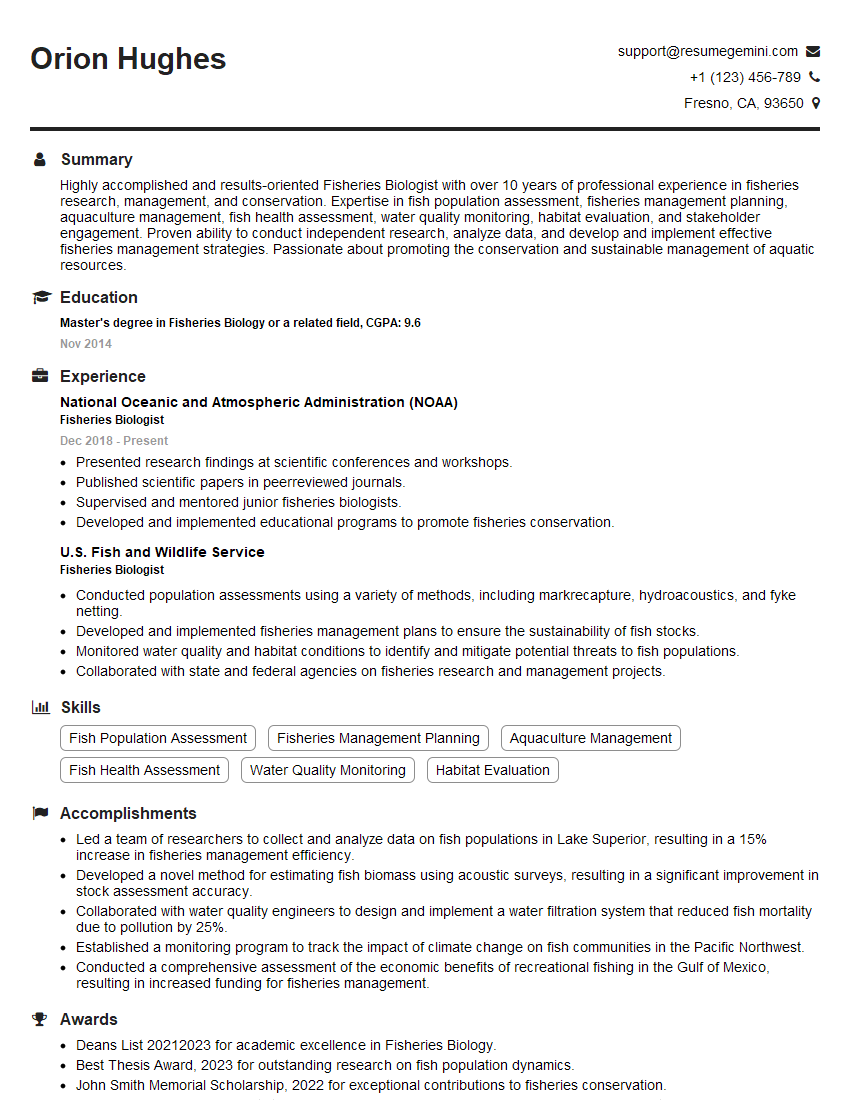
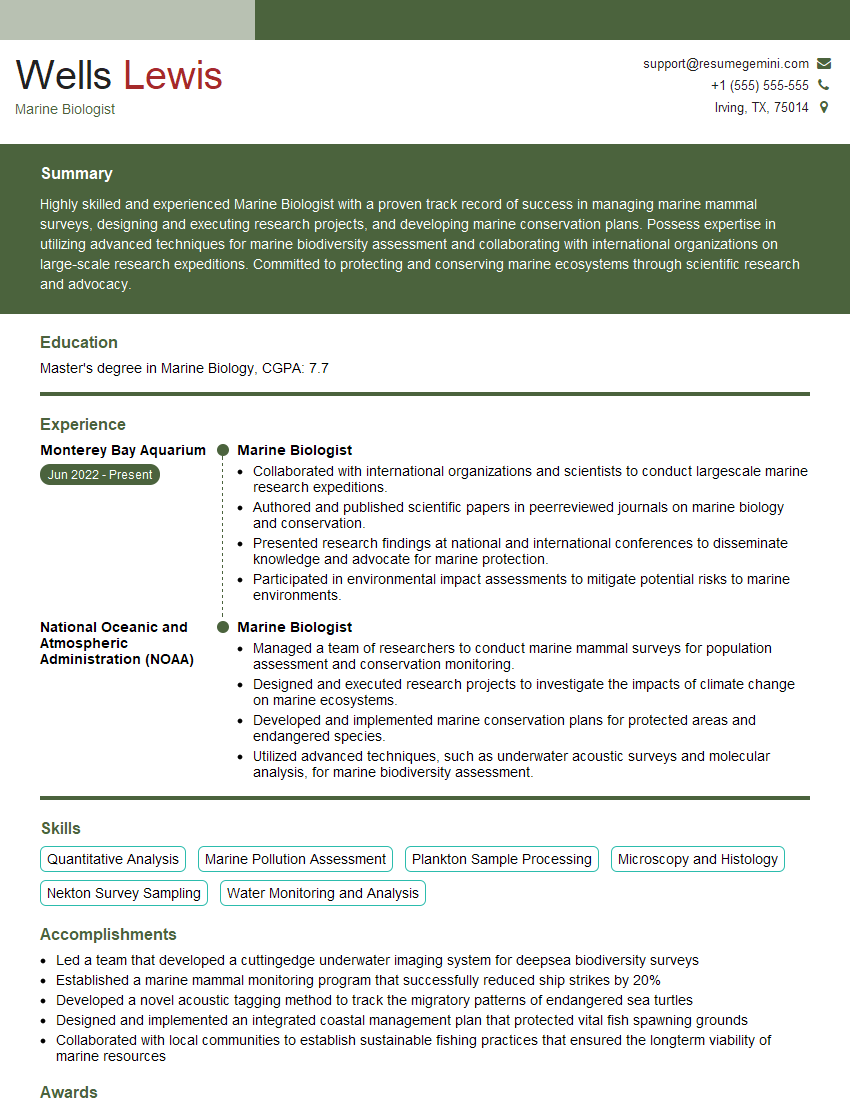
Mastering Marine Biology and Lobster Ecology opens doors to exciting careers in research, conservation, fisheries management, and aquaculture. A strong understanding of these fields is crucial for securing your dream position. To significantly enhance your job prospects, focus on crafting a compelling and ATS-friendly resume that showcases your skills and experience effectively. ResumeGemini is a trusted resource that can help you build a professional and impactful resume tailored to the specific requirements of your target roles. Examples of resumes tailored to Marine Biology and Lobster Ecology positions are available – let ResumeGemini help you make a strong first impression!
Explore more articles
Users Rating of Our Blogs
Share Your Experience
We value your feedback! Please rate our content and share your thoughts (optional).
What Readers Say About Our Blog
Very informative content, great job.
good