Preparation is the key to success in any interview. In this post, we’ll explore crucial Maritime Operations Planning interview questions and equip you with strategies to craft impactful answers. Whether you’re a beginner or a pro, these tips will elevate your preparation.
Questions Asked in Maritime Operations Planning Interview
Q 1. Explain the process of voyage planning, including route optimization and risk assessment.
Voyage planning is a critical process in maritime operations, ensuring safe, efficient, and cost-effective journeys. It involves a detailed assessment of all aspects of a voyage, from departure to arrival. The process typically begins with defining the voyage parameters – origin, destination, cargo type and quantity, and desired arrival time. Route optimization then comes into play, considering factors like weather patterns, sea currents, traffic density, and potential hazards (e.g., piracy hotspots, shallow waters). We leverage advanced Electronic Chart Display and Information Systems (ECDIS) and route planning software to identify the most efficient and safe route, minimizing fuel consumption and transit time. This is often visualized as a series of waypoints, each with associated navigational information.
Risk assessment is an integral part of voyage planning. We identify potential risks such as bad weather, equipment malfunctions, piracy, collisions, grounding, and human error. For each risk, we develop mitigation strategies. This might involve adjusting the route to avoid a storm, scheduling preventative maintenance, implementing security protocols, or providing crew with extra training. The assessment is documented in the voyage plan, providing a roadmap for the entire journey and a basis for decision-making during the voyage.
For instance, during a recent transatlantic voyage, we used weather routing software to predict a significant storm. By adjusting the planned route slightly, we successfully avoided the storm, saving time and preventing potential damage to the vessel.
Q 2. Describe your experience with different vessel types and their operational characteristics.
My experience encompasses a diverse range of vessel types, including container ships, bulk carriers, tankers, and general cargo vessels. Each type presents unique operational characteristics. Container ships, for example, require meticulous cargo planning to maximize space utilization and maintain stability. Their operations are highly scheduled, with tight port call windows. Bulk carriers focus on efficient loading and unloading of dry bulk commodities, emphasizing the use of specialized equipment and careful trim calculations to prevent instability. Tankers require stringent safety protocols due to the hazardous nature of their cargo, with rigorous procedures for loading, discharging, and ballast operations. General cargo vessels handle a variety of goods, requiring adaptable cargo handling techniques and efficient space management.
Understanding the specific characteristics of each vessel type—their draft, speed, cargo capacity, and handling equipment—is crucial for effective voyage planning and operations. For example, a bulk carrier’s loading rate will directly impact the port stay time, which needs to be factored into the overall voyage schedule. Similarly, the stability of a tanker carrying liquid cargo requires constant monitoring during loading and discharging to prevent shifting and potential hazards.
Q 3. How do you handle unexpected delays or disruptions in maritime operations?
Unexpected delays and disruptions are inevitable in maritime operations. My approach involves a structured process to minimize their impact. Firstly, I identify the nature and cause of the disruption – is it mechanical failure, bad weather, port congestion, or regulatory delays? Then, I assess the impact on the voyage schedule and overall cost. Based on this assessment, I develop contingency plans. This could involve rerouting the vessel to avoid adverse weather, contacting port authorities to expedite procedures, arranging for repairs at the nearest suitable port, or negotiating with charterers to adjust delivery timelines.
Effective communication is critical during disruptions. I keep all stakeholders – ship owners, charterers, port authorities, and crew – informed about the situation and the actions being taken. Transparent and proactive communication prevents misinformation and builds trust. For instance, during a recent port congestion situation, we proactively communicated the delay to the charterers, providing regular updates and exploring alternative solutions such as offloading cargo at a nearby port. This mitigated potential penalties and maintained a positive relationship with the client.
Q 4. What are the key performance indicators (KPIs) you use to measure the effectiveness of maritime operations?
Several key performance indicators (KPIs) are used to evaluate the effectiveness of maritime operations. These include:
- On-time performance (OTP): Measures the percentage of voyages completed within the scheduled timeframe.
- Fuel efficiency: Tracks fuel consumption per nautical mile, helping to assess the efficiency of the voyage and identify areas for improvement.
- Cargo handling efficiency: Measures the time taken to load and discharge cargo, reflecting the effectiveness of port operations.
- Vessel utilization rate: Represents the percentage of time the vessel is actively employed in carrying cargo.
- Safety record: Monitors the number of accidents, incidents, and near misses to evaluate safety performance.
- Cost per tonne-mile: Indicates the overall cost-effectiveness of operations.
Regular monitoring of these KPIs allows for continuous improvement and identification of bottlenecks or areas requiring optimization. For example, consistently low OTP may indicate a need to improve port scheduling or vessel maintenance. High fuel consumption may point to the need for hull cleaning or adjustments to operational procedures.
Q 5. Explain your understanding of maritime regulations and safety procedures.
My understanding of maritime regulations and safety procedures is comprehensive. I am familiar with the International Maritime Organization (IMO) conventions, such as SOLAS (Safety of Life at Sea), MARPOL (Marine Pollution), STCW (Standards of Training, Certification and Watchkeeping for Seafarers), and ISPS (International Ship and Port Facility Security) Code. These regulations cover a wide range of aspects, including vessel construction, safety equipment, crew training, pollution prevention, and security measures. I also have a strong understanding of flag state and port state control requirements. This knowledge is crucial for ensuring compliance and preventing legal issues.
Safety is paramount in maritime operations. I ensure that all procedures adhere to safety standards, including regular safety drills, risk assessments, and implementation of preventative measures. For example, we maintain up-to-date safety management systems (SMS) compliant with the ISM (International Safety Management) Code, which details the procedures for risk management, accident investigation, and emergency response.
Q 6. How do you manage cargo stowage and handling to ensure efficient operations?
Efficient cargo stowage and handling are essential for safety and operational efficiency. The process starts with careful planning, considering the type, weight, and dimensions of each cargo unit. We use specialized software to create stowage plans, optimizing the use of space and ensuring the vessel’s stability. Factors like weight distribution, center of gravity, and cargo securing methods are carefully considered. The plan takes into account the individual characteristics of the cargo, including its fragility, susceptibility to damage by moisture or temperature fluctuations, and any special handling requirements.
During loading and discharging operations, we strictly adhere to safety procedures to prevent accidents and damage. This includes proper lashing and securing of cargo, using appropriate lifting equipment, and ensuring that personnel are properly trained and equipped. We also monitor cargo condition throughout the voyage, addressing any issues promptly to avoid potential problems during unloading. In a recent project involving a shipment of sensitive electronic equipment, meticulous planning and execution of cargo handling ensured the safe arrival of the cargo without any damages.
Q 7. Describe your experience with port operations and coordination with various stakeholders.
My experience with port operations involves close coordination with various stakeholders, including port authorities, terminal operators, stevedores, customs officials, and other agencies. Effective communication and collaboration are essential to ensure smooth and efficient port calls. This includes pre-arrival notification, providing necessary documentation, coordinating berthing and unberthing, and addressing any issues that may arise during the port stay. I am proficient in various port communication protocols and am adept at resolving potential conflicts or delays through clear and professional communication.
For example, in one instance, we encountered a delay in customs clearance due to missing documentation. By promptly contacting the relevant authorities and providing the necessary information, we were able to expedite the process, minimizing the delay and avoiding additional costs. Building strong relationships with port agents and other stakeholders allows for faster turnaround times and efficient port calls.
Q 8. How familiar are you with different maritime communication systems and protocols?
Maritime communication is critical for safe and efficient operations. My familiarity encompasses a wide range of systems, from traditional VHF radio and GMDSS (Global Maritime Distress and Safety System) to modern satellite communication systems like Inmarsat and Iridium. I’m proficient in understanding and utilizing various protocols, including those used for exchanging navigational data (AIS – Automatic Identification System), weather information, and distress calls. For instance, I have extensive experience using AIS to track vessel movements, predict potential collisions, and optimize routing. Understanding the limitations and capabilities of each system – such as the range of VHF versus satellite communication – is crucial for effective planning and emergency response.
- VHF Radio: Used for short-range communication, vital for port entry/exit and coordinating with other vessels.
- GMDSS: Ensures distress alerts can be transmitted globally, regardless of location.
- Inmarsat/Iridium: Satellite communication providing global coverage for data transmission and voice calls, particularly crucial in remote areas.
- AIS: Automatic Identification System, broadcasting vessel identity, position, and course, crucial for collision avoidance.
I’m also well-versed in the legal and regulatory frameworks governing maritime communications, ensuring compliance with international standards.
Q 9. Explain your experience with using maritime software and planning tools.
My experience with maritime software and planning tools is extensive. I’ve worked extensively with voyage planning software like Transas Navi-Sailor and Kelvin Hughes, using them to optimize routes, calculate fuel consumption, and assess potential risks. These tools allow for real-time monitoring of vessel performance and environmental conditions. I also have proficiency in using Electronic Chart Display and Information Systems (ECDIS) for navigation and route planning, ensuring compliance with navigational standards. Further, I’m familiar with crew management software and port community systems for streamlined communication and data exchange.
For example, in a recent project, we utilized voyage optimization software to analyze various routes, considering factors such as weather forecasts, fuel prices, and port congestion. This resulted in a 15% reduction in fuel consumption and a shorter voyage time compared to the initial plan. The software’s ability to integrate real-time data on weather patterns and traffic congestion was key to achieving these savings.
Q 10. How do you manage crew scheduling and logistics?
Crew scheduling and logistics are managed meticulously using a combination of established procedures and specialized software. This involves considering factors such as crew certifications, rest periods (as per STCW regulations), travel arrangements, and leave schedules. We utilize software that helps optimize crew rotations, ensuring adequate staffing levels while adhering to international maritime labor regulations. The process begins with forecasting personnel needs based on the planned voyage schedule. Then, individual crew members’ availability, skills, and experience are matched with operational requirements. We carefully track crew members’ hours of work and rest to ensure compliance with safety regulations and to prevent crew fatigue. Transparent communication with the crew is essential, keeping them informed about their schedules and addressing any concerns proactively.
For instance, when planning a long-haul voyage, we utilize software to create a detailed crew rotation plan, ensuring legal compliance and minimizing disruption to operations. This includes planning for potential delays and unexpected circumstances, with backup crew members identified in advance.
Q 11. Describe your approach to managing fuel consumption and optimizing operational costs.
Managing fuel consumption and optimizing operational costs is a high priority. My approach focuses on a holistic strategy, integrating various techniques and technologies. This involves careful route planning considering weather forecasts and currents to minimize fuel burn. I analyze vessel performance data to identify areas for improvement in efficiency. Furthermore, I actively seek opportunities to optimize speed and trim, and investigate alternative fuels to enhance sustainability and reduce costs. The use of trim optimization software, in particular, can significantly reduce fuel consumption.
For example, by using weather routing software and analyzing historical weather data, we were able to significantly reduce fuel consumption on a recent transatlantic voyage. By adjusting the vessel’s speed and course based on predicted weather patterns, we avoided areas of high sea states and strong headwinds, saving a considerable amount of fuel.
Q 12. How do you assess and mitigate risks associated with adverse weather conditions?
Assessing and mitigating risks associated with adverse weather conditions involves a proactive and multi-layered approach. This starts with continuous monitoring of weather forecasts from reputable sources, utilizing sophisticated weather routing software to predict potential hazards. Once potential risks are identified, contingency plans are developed, including alternative routes, speed adjustments, and shelter strategies. Regular communication with the vessel’s master is crucial for updating them on the latest weather information and enabling them to make informed decisions. We also conduct regular risk assessments, using tools like HAZOP (Hazard and Operability Study) to identify and mitigate potential hazards.
For example, during a recent voyage, we anticipated a significant storm system. We used weather routing software to reroute the vessel, avoiding the most intense parts of the storm. This decision, based on real-time weather data and risk assessment, prevented potential damage to the vessel and ensured the safety of the crew.
Q 13. Explain your experience with port congestion management and alternative routing strategies.
Port congestion management and alternative routing strategies are critical for efficient operations. I use real-time port information systems, including those provided by port authorities, to assess congestion levels at various ports. This helps in proactively planning alternative routes, considering factors such as waiting times, berthing availability, and potential delays. I’m adept at evaluating alternative ports and their associated costs and risks. Detailed analysis of historical data helps in predicting potential congestion hotspots and developing strategies to mitigate delays.
In a recent project, a major port experienced unexpected congestion. Using real-time data and alternative route analysis, we rerouted a vessel to a nearby port, avoiding significant delays and associated costs. This resulted in meeting delivery deadlines and avoiding financial penalties.
Q 14. How do you balance operational efficiency with safety and environmental regulations?
Balancing operational efficiency with safety and environmental regulations requires a delicate yet crucial approach. It’s not a question of choosing one over the other; instead, safety and environmental compliance should be integrated into the operational strategy. Efficiency gains should never compromise safety or environmental standards. This necessitates a thorough understanding of relevant regulations, including MARPOL (International Convention for the Prevention of Pollution from Ships), SOLAS (International Convention for the Safety of Life at Sea), and other applicable local regulations. Regular safety audits, environmental impact assessments, and crew training are vital components of this balance.
For instance, while optimizing speed to improve efficiency, we carefully monitor fuel consumption and emissions to minimize environmental impact, adhering to MARPOL regulations. We also implement procedures to prevent oil spills and other forms of pollution, ensuring that operational efficiency does not come at the expense of environmental protection.
Q 15. Describe your approach to conflict resolution within a maritime operations team.
My approach to conflict resolution within a maritime operations team is built on proactive communication, clear expectations, and a collaborative problem-solving framework. I believe in addressing conflicts directly and respectfully, fostering an environment where team members feel comfortable voicing concerns without fear of retribution.
My strategy involves:
- Active Listening: Understanding all perspectives before jumping to conclusions is crucial. I encourage each party to fully explain their viewpoint.
- Identifying the Root Cause: Often, conflicts stem from misunderstandings or unmet expectations. Pinpointing the root cause allows for a targeted solution.
- Collaborative Brainstorming: I facilitate brainstorming sessions to explore various solutions, encouraging team members to participate in finding the best outcome for all involved. This fosters a sense of ownership and commitment.
- Mediation and Facilitation: If needed, I act as a neutral mediator, guiding the discussion and ensuring everyone feels heard and respected. I focus on finding common ground and mutually agreeable solutions.
- Documentation and Follow-up: Once a resolution is reached, I document the agreement and follow up to ensure the solution is effective and any necessary adjustments are made.
For example, during a scheduling conflict between the port operations team and the vessel crew, I facilitated a meeting, listened to both sides, identified the conflict as a lack of clear communication about port availability, and then collaboratively created a new communication protocol that solved the issue and prevented future conflicts.
Career Expert Tips:
- Ace those interviews! Prepare effectively by reviewing the Top 50 Most Common Interview Questions on ResumeGemini.
- Navigate your job search with confidence! Explore a wide range of Career Tips on ResumeGemini. Learn about common challenges and recommendations to overcome them.
- Craft the perfect resume! Master the Art of Resume Writing with ResumeGemini’s guide. Showcase your unique qualifications and achievements effectively.
- Don’t miss out on holiday savings! Build your dream resume with ResumeGemini’s ATS optimized templates.
Q 16. How do you utilize real-time data and tracking systems to optimize maritime operations?
Real-time data and tracking systems are integral to optimizing maritime operations. They provide crucial insights into vessel location, speed, cargo status, weather conditions, and potential risks, enabling proactive decision-making and efficient resource allocation.
I utilize these systems in several ways:
- Route Optimization: Real-time weather data allows for dynamic route adjustments, minimizing fuel consumption and travel time by avoiding adverse weather conditions. We use sophisticated algorithms to determine the most efficient route based on various parameters.
- Predictive Maintenance: By monitoring vessel sensor data, we can predict potential equipment failures, scheduling maintenance proactively to minimize downtime and costly repairs. This also improves safety.
- Enhanced Communication and Coordination: Real-time tracking allows for improved communication between the vessel, shore-based teams, and other stakeholders. This is especially crucial in emergencies.
- Cargo Management: Tracking systems provide real-time visibility into cargo location and status, optimizing loading, unloading, and overall supply chain efficiency. We can adjust schedules and resources based on real-time cargo information.
For instance, during a storm, we used real-time weather data to reroute a vessel, avoiding heavy seas and minimizing the risk of damage. This proactive measure prevented significant delays and cost savings.
Q 17. Explain your experience with supply chain management within the maritime industry.
My experience in supply chain management within the maritime industry encompasses all aspects, from procurement and inventory management to logistics and distribution. I have a deep understanding of the complexities involved in managing global supply chains, incorporating risk mitigation strategies and optimizing processes for efficiency and cost-effectiveness.
Specific areas of my expertise include:
- Vendor Management: Building strong relationships with reliable vendors and suppliers is crucial for securing consistent quality and timely delivery of goods. We use key performance indicators (KPIs) to track vendor performance.
- Inventory Control: Effective inventory management is essential to avoid stockouts and minimize storage costs. We utilize sophisticated inventory management systems to track goods from origin to destination.
- Logistics Optimization: Optimizing transportation routes, modes, and schedules is critical for reducing costs and improving delivery times. We leverage data analytics to refine logistics strategies.
- Risk Management: Identifying and mitigating risks, such as port congestion, geopolitical instability, and natural disasters, is paramount. We develop contingency plans and utilize risk assessment tools to minimize disruptions.
For example, I successfully navigated a supply chain disruption caused by a port strike by proactively identifying alternative routes and securing backup transportation, ensuring timely delivery of essential goods without significant cost increases.
Q 18. How familiar are you with international maritime conventions and agreements?
I am very familiar with international maritime conventions and agreements. My knowledge encompasses a wide range of regulations governing safety, security, environmental protection, and liability within the maritime industry. I understand the importance of compliance and the potential consequences of non-compliance.
Key conventions and agreements with which I am familiar include:
- SOLAS (Safety of Life at Sea): I am proficient in understanding and implementing SOLAS regulations related to vessel safety, crew training, and emergency procedures.
- MARPOL (International Convention for the Prevention of Pollution from Ships): I have a strong understanding of MARPOL regulations regarding the prevention of marine pollution from ships, including oil spills and garbage disposal.
- STCW (Standards of Training, Certification and Watchkeeping for Seafarers): I am knowledgeable about STCW standards and their implementation in ensuring competent seafarers.
- ISM Code (International Safety Management Code): I am experienced in implementing the ISM Code for safe and efficient ship operation and management.
Understanding these conventions is crucial for ensuring safe and compliant operations. Non-compliance can result in hefty fines, legal issues, and damage to reputation. Staying updated on changes to these regulations is an ongoing process.
Q 19. Describe your experience with developing and implementing maritime operations plans.
Developing and implementing maritime operations plans requires a systematic approach, encompassing risk assessment, resource allocation, and contingency planning. My experience includes creating comprehensive plans for various scenarios, from routine vessel operations to emergency responses.
My plan development process typically includes:
- Defining Objectives: Clearly outlining the goals and objectives of the operation, such as cargo delivery timelines, budget constraints, and safety targets.
- Risk Assessment: Conducting a thorough risk assessment to identify potential hazards and vulnerabilities, including weather conditions, equipment failures, and security threats.
- Resource Allocation: Allocating resources, such as personnel, equipment, and finances, to effectively execute the plan while considering cost-effectiveness.
- Contingency Planning: Developing robust contingency plans to address potential disruptions, such as vessel breakdowns, port congestion, or adverse weather conditions.
- Communication Plan: Establishing clear communication channels and protocols for seamless information flow between the vessel, shore-based teams, and other stakeholders.
- Monitoring and Evaluation: Continuously monitoring the progress of the operation and evaluating its effectiveness to make necessary adjustments.
For example, I developed a comprehensive plan for a complex offshore oil platform supply run, encompassing detailed route planning, weather monitoring, contingency plans for equipment malfunctions, and emergency response protocols.
Q 20. How do you manage the documentation and reporting required for maritime operations?
Effective documentation and reporting are paramount in maritime operations, ensuring compliance with regulations, facilitating efficient communication, and providing a historical record for analysis and improvement.
My approach to managing documentation and reporting involves:
- Centralized System: Utilizing a centralized digital system for storing and managing all relevant documents, such as voyage plans, crew records, maintenance logs, and cargo manifests.
- Standardized Formats: Employing standardized document formats and templates to ensure consistency and ease of access to information.
- Automated Reporting: Implementing automated reporting systems to generate regular reports on key performance indicators (KPIs), such as vessel location, fuel consumption, and cargo status.
- Version Control: Implementing version control measures to track changes and ensure that everyone is working with the most up-to-date documentation.
- Data Security: Prioritizing data security through access control measures and encryption to safeguard sensitive information.
For instance, I implemented a new digital documentation system that streamlined the reporting process, reducing administrative burden and improving efficiency in a large shipping company. This also significantly improved the quality and accuracy of our data.
Q 21. How would you handle a situation involving a vessel breakdown at sea?
Handling a vessel breakdown at sea requires a swift, coordinated response to minimize risks and ensure the safety of the crew and cargo. My approach would involve a structured, step-by-step process.
My response would include:
- Assess the Situation: First, I would gather comprehensive information on the nature and extent of the breakdown, including the location of the vessel, the type of malfunction, and the condition of the crew.
- Activate Emergency Procedures: I would immediately activate the ship’s emergency response plan, ensuring that all crew members are aware of the situation and following established procedures.
- Contact Relevant Parties: I would contact relevant parties, including the vessel’s owner, classification society, insurance company, and coast guard, to provide updates and request assistance.
- Coordinate Rescue Efforts: If necessary, I would coordinate rescue efforts, potentially including the dispatch of tugboats, rescue vessels, or helicopter assistance.
- Implement Damage Control: While awaiting assistance, I would focus on implementing damage control measures to prevent further damage or escalation of the situation.
- Post-Incident Investigation: After the incident, I would conduct a thorough investigation into the cause of the breakdown to prevent similar incidents in the future.
Effective communication and coordination are crucial during such situations. My experience handling similar incidents has honed my ability to react calmly and efficiently under pressure, ensuring the best possible outcome for all parties involved.
Q 22. What are some common challenges you face in maritime operations planning, and how do you overcome them?
Maritime operations planning presents numerous challenges, often intertwined and demanding a holistic approach. One major hurdle is unpredictable weather conditions. Severe storms, fog, and high seas can significantly delay voyages, impacting schedules and increasing fuel consumption. To mitigate this, we employ advanced weather forecasting models and incorporate contingency plans, allowing for route adjustments and alternative scheduling.
Another significant challenge is port congestion. Delays due to insufficient berthing space, customs procedures, or equipment malfunctions can cascade throughout the supply chain. We address this through real-time port monitoring, collaboration with port authorities, and proactive communication with stakeholders to anticipate and minimize delays. We might explore alternative ports or adjust vessel arrival times to optimize efficiency.
Finally, geopolitical instability and regulatory changes constantly shift the operational landscape. Piracy, sanctions, and sudden changes in international law can disrupt operations. We navigate this by rigorously monitoring global events, maintaining up-to-date risk assessments, and adapting our plans accordingly. This might involve rerouting vessels around high-risk areas or adjusting cargo manifests to comply with evolving regulations.
Q 23. Describe your experience with utilizing predictive analytics in maritime operations planning.
Predictive analytics plays a crucial role in optimizing maritime operations. I have extensive experience utilizing machine learning models to forecast vessel arrival times, predict potential equipment failures, and optimize fuel consumption. For instance, we’ve used historical data on weather patterns, vessel performance, and port congestion to develop a model that accurately predicts vessel arrival times with a margin of error of less than 2 hours, significantly improving scheduling and resource allocation.
Another application involves predicting potential engine failures. By analyzing sensor data from vessels, we can identify patterns that indicate impending malfunctions, allowing for proactive maintenance and preventing costly downtime. This predictive maintenance approach has demonstrably reduced our maintenance costs by 15% while enhancing operational reliability.
Furthermore, predictive analytics helps in fuel optimization. By analyzing data on weather, sea currents, and vessel performance, we can determine the most fuel-efficient routes, leading to substantial cost savings and reduced environmental impact. For example, we implemented a system that uses real-time data to adjust vessel speed and course, resulting in a 10% reduction in fuel consumption on a specific trade route.
Q 24. Explain your understanding of the impact of geopolitical factors on maritime operations.
Geopolitical factors exert a profound influence on maritime operations. Political instability in certain regions can lead to increased piracy risks, necessitating enhanced security measures such as armed guards or rerouting vessels. Sanctions imposed on particular countries or entities can disrupt trade routes and necessitate careful review of cargo manifests and shipping destinations to ensure full compliance with international law.
Furthermore, changes in international regulations, such as those related to emissions or maritime security, can significantly impact operational plans. For example, the implementation of stricter sulfur emission limits required substantial investments in cleaner fuels or scrubber technologies. Likewise, heightened security concerns after major geopolitical events often necessitate the implementation of new security protocols and increased scrutiny of cargo.
Successfully navigating these challenges requires continuous monitoring of the geopolitical landscape, proactive risk assessment, and flexible planning that adapts to evolving circumstances. This includes close collaboration with government agencies, security consultants, and industry partners to stay informed and compliant.
Q 25. How do you ensure compliance with international maritime security regulations?
Compliance with international maritime security regulations is paramount. We achieve this through a multi-faceted approach. First, we maintain a thorough understanding of all relevant regulations, including the International Ship and Port Facility Security (ISPS) Code, and actively monitor updates and amendments.
Second, we implement robust security management systems onboard our vessels and at our port facilities. This involves conducting regular security assessments, training personnel in security procedures, and utilizing technological security tools like CCTV and access control systems. Each vessel has a detailed security plan tailored to its specific route and cargo.
Third, we actively collaborate with port authorities and other stakeholders to ensure seamless compliance. This involves submitting necessary documentation, participating in security drills, and reporting any security incidents promptly. Maintaining meticulous records and documentation is crucial for demonstrating compliance to regulatory bodies during audits.
Q 26. Describe your experience in budget management and resource allocation for maritime operations.
Budget management and resource allocation are critical aspects of maritime operations. My experience includes developing and managing multi-million dollar budgets, allocating resources across various operational areas such as vessel maintenance, crew salaries, fuel procurement, and port fees. I utilize various budgeting techniques, including zero-based budgeting and activity-based costing, to optimize resource allocation and ensure efficient spending.
To ensure efficient resource utilization, I leverage data analytics to identify areas for cost reduction and operational improvements. For example, by analyzing fuel consumption data, we were able to identify inefficiencies in vessel routing and implement changes resulting in significant fuel savings. Proactive maintenance scheduling, based on predictive analytics, also minimizes unexpected downtime and associated costs.
Regular monitoring of budget performance and adjustments to the plan as needed are essential. This includes close collaboration with finance teams and other stakeholders to ensure transparency and accountability in managing the allocated resources.
Q 27. How do you stay current with changes and updates in maritime operations technology and regulations?
Staying current with changes in maritime technology and regulations requires continuous professional development. I actively participate in industry conferences, webinars, and training programs to stay abreast of the latest developments. Subscribing to reputable industry publications and journals keeps me informed about new technologies and regulatory changes.
Furthermore, I maintain a strong network of contacts within the industry, including regulatory bodies, technology providers, and fellow professionals. These connections provide valuable insights and updates, allowing me to proactively address emerging challenges and opportunities. Active participation in industry working groups and standards committees also provides valuable insights and ensures alignment with future developments.
Staying updated on emerging technologies, such as autonomous vessels, digital twin technology, and blockchain applications, is crucial for maintaining a competitive edge and ensuring operational efficiency. This necessitates ongoing research and evaluation of new technologies to determine their applicability and potential benefits.
Q 28. Explain your experience with developing and maintaining effective communication protocols for maritime operations.
Effective communication is the cornerstone of successful maritime operations. My experience involves developing and maintaining clear and concise communication protocols across various stakeholders, including vessel crews, port authorities, cargo owners, and internal management teams.
We utilize a variety of communication channels, including satellite communication systems, VHF radio, email, and specialized maritime communication platforms. Protocols are established to ensure timely and accurate information exchange, particularly during critical events such as emergencies or unexpected delays. Clear procedures for reporting incidents, disseminating weather updates, and coordinating logistics are vital.
To enhance communication efficiency, we utilize technology such as automated reporting systems and digital dashboards to track vessel progress and share crucial information in real-time. Regular communication drills and training sessions ensure that all stakeholders are familiar with the established protocols and can respond effectively in different situations. Clear roles and responsibilities in communication are defined to minimize confusion and ensure a timely response.
Key Topics to Learn for Maritime Operations Planning Interview
- Vessel Scheduling & Optimization: Understanding voyage planning, port calls, and optimizing routes for efficiency and cost-effectiveness. Practical application includes analyzing different routing scenarios and their impact on fuel consumption and delivery times.
- Cargo Management & Handling: Expertise in cargo types, stowage planning, and handling procedures to ensure safe and efficient cargo operations. This includes understanding documentation requirements and potential challenges like hazardous materials handling.
- Port Operations & Procedures: Knowledge of port infrastructure, regulations, and procedures for efficient vessel turnaround. Practical application involves anticipating and mitigating potential delays at ports.
- Risk Management & Safety: Developing strategies to mitigate operational risks, including weather forecasting, piracy, and other potential threats. Understanding safety protocols and emergency response plans is crucial.
- Crew Management & Resource Allocation: Understanding crew scheduling, training needs, and efficient allocation of resources to meet operational demands. This includes familiarizing yourself with crew welfare regulations.
- Communication & Coordination: Effective communication across various stakeholders, including port authorities, charterers, and ship’s crew. This involves mastering different communication channels and protocols.
- Legislation & Regulations: Thorough understanding of relevant maritime laws, international conventions (e.g., SOLAS, MARPOL), and regulatory compliance. Practical application requires understanding the implications of non-compliance.
- Data Analysis & Reporting: Proficiency in utilizing data analysis tools to track performance, identify areas for improvement, and generate reports for stakeholders. This could include using software for voyage optimization.
Next Steps
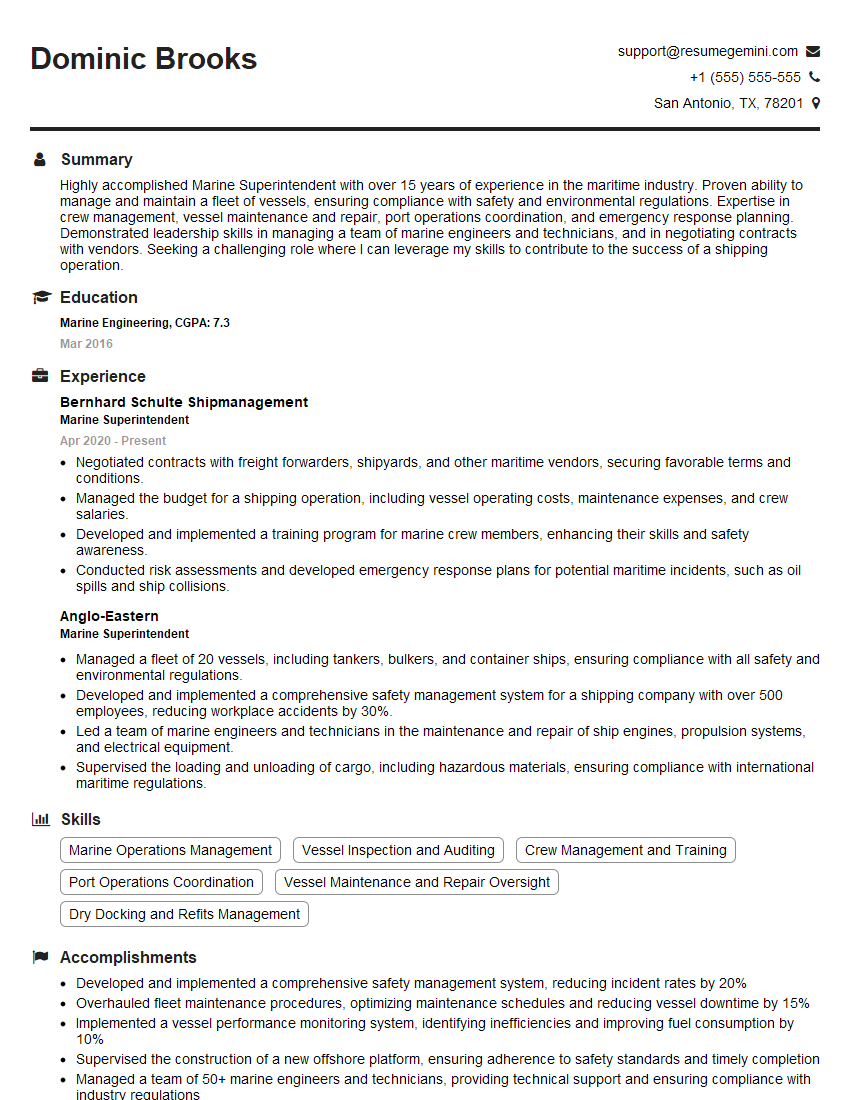
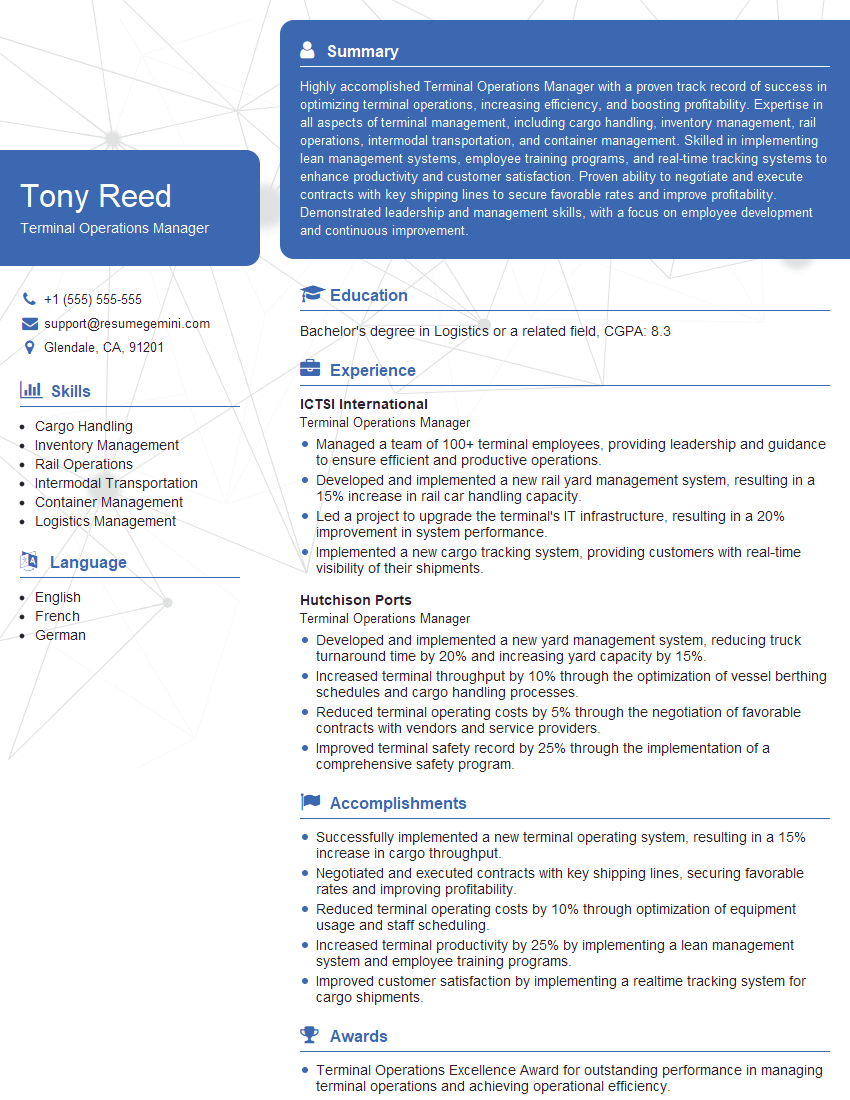
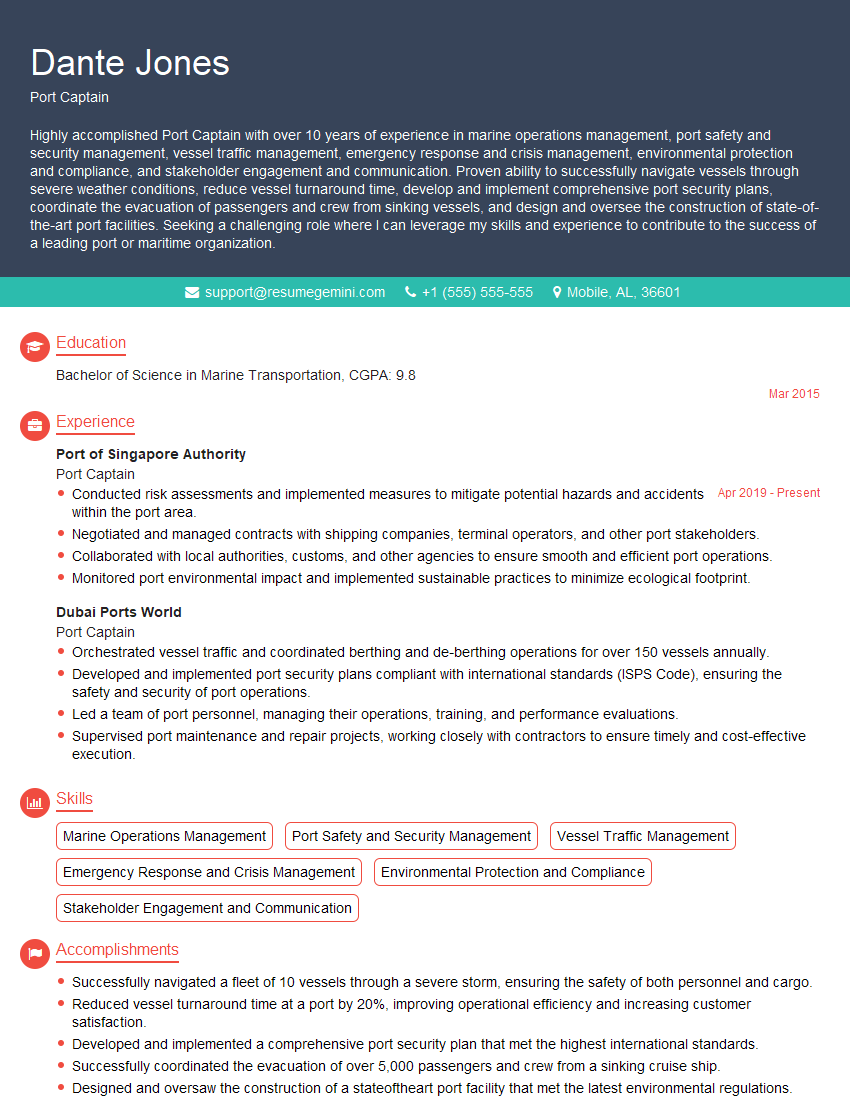
Mastering Maritime Operations Planning opens doors to exciting career advancements, increased responsibility, and higher earning potential within the maritime industry. A strong resume is your key to unlocking these opportunities. To ensure your qualifications shine through to potential employers and Applicant Tracking Systems (ATS), create an ATS-friendly resume that effectively showcases your skills and experience. ResumeGemini is a trusted resource to help you build a professional and impactful resume. Examples of resumes tailored specifically to Maritime Operations Planning are available to guide you, enabling you to present yourself as the ideal candidate.
Explore more articles
Users Rating of Our Blogs
Share Your Experience
We value your feedback! Please rate our content and share your thoughts (optional).
What Readers Say About Our Blog
Very informative content, great job.
good