Are you ready to stand out in your next interview? Understanding and preparing for Measurement taking and fitting interview questions is a game-changer. In this blog, we’ve compiled key questions and expert advice to help you showcase your skills with confidence and precision. Let’s get started on your journey to acing the interview.
Questions Asked in Measurement taking and fitting Interview
Q 1. What are the different types of measuring tools you are proficient with?
My proficiency in measurement taking extends to a wide array of tools, both traditional and technologically advanced. I’m highly skilled in using tape measures (both flexible and rigid), rulers, calipers (both inside and outside), measuring squares, and body measurement tools specifically designed for garment construction like measuring tapes with flexible curves. Furthermore, I’m experienced with digital measuring tools like laser measuring devices for larger spaces and 3D body scanners for highly precise, detailed measurements. Each tool is selected based on the specific application and the required level of accuracy. For example, a flexible tape measure is perfect for taking body measurements, while calipers are ideal for detailed work on small components. Laser measuring devices are very useful when measuring rooms for custom furniture or drapes.
Q 2. Explain the process of taking accurate body measurements.
Taking accurate body measurements is a crucial first step in bespoke tailoring or pattern making. The process requires precision and attention to detail. It typically begins with the client in comfortable, form-fitting clothing or underwear. I always explain each step clearly to put the client at ease. The measurements are taken in a consistent manner, using a flexible tape measure held snugly but not too tightly against the body. Common measurements include bust, waist, hip, shoulder width, back width, sleeve length, and inseam. Each measurement is taken multiple times and recorded, ensuring consistency and accuracy before making any decisions about fit. For example, when measuring the bust, the tape measure should be placed horizontally around the fullest part of the chest, keeping it level all the way around. We record the numbers as they are given, not rounded off, especially during first fittings. We might also take additional measurements depending on the garment. Important to note, we always make sure to measure in a well lit area and on a stable surface.
Q 3. How do you ensure precision when taking measurements?
Precision in measurement taking hinges on several key factors. Firstly, the quality of the tools plays a significant role; using well-maintained and calibrated instruments is paramount. Secondly, consistent technique is essential. This involves holding the tape measure correctly, ensuring it’s level, and taking measurements in the same manner each time. Thirdly, multiple measurements should always be taken for each point to check for consistency. Discrepancies should be investigated to identify potential errors, whether it’s in the measuring process or even in the tool being used. I typically average these measurements or repeat the process if the values deviate significantly. Finally, it’s crucial to record measurements precisely and clearly, avoiding any rounding or assumptions. For example, if a measurement is 36 1/2 inches, I would note it as 36.5 inches, not simply 37 inches, avoiding unnecessary rounding and potential fit errors.
Q 4. Describe your experience with different types of fitting techniques.
My experience encompasses a variety of fitting techniques, ranging from basic adjustments to more complex alterations. I’m proficient in both the traditional ‘muslin fit’ method, where a toile (prototype garment) is made from inexpensive fabric and adjusted to the client’s measurements and body shape before the final garment is constructed. I also use a more modern approach, incorporating digital pattern making tools to create initial patterns with higher accuracy before constructing a prototype or directly creating the final garment with the adjusted measurements. I understand how to adjust for ease, accommodate different body types and styles, and make necessary alterations, including changes to length, width, darts, and seams. For instance, I can readily adjust a sleeve’s cap height and fit to improve its drape or add fullness to a skirt or dress at the waist.
Q 5. How do you handle discrepancies between measurements and fit?
Discrepancies between measurements and fit are a common challenge. I address them systematically by first reviewing the initial measurements to check for errors. I also consider the fit of the garment on the client, noting any areas of tightness, looseness, or discomfort. Based on this combined assessment, I determine the necessary adjustments. It could be as simple as adjusting a seam allowance or it could involve re-drafting a pattern piece. For instance, if the sleeve is too tight, I might need to add width at the sleeve cap or lower arm, depending on the location of the tightness. It is very common in the first fittings to find areas that have a slight variation and correcting those variations is crucial for a perfect fit. I work collaboratively with the client to ensure the adjustments meet their expectations and aesthetic preferences. A well-detailed record of all adjustments and notes made during each fitting is essential.
Q 6. What are the common challenges faced in measurement taking, and how do you overcome them?
Common challenges include inaccurate measurements due to incorrect posture or improper tool usage, variations in body shape and posture from one measurement session to the next, and the difficulty of accurately measuring areas with curves or irregular shapes. I overcome these challenges by ensuring the client maintains good posture during measurement, employing consistent techniques and multiple measurements for each point. Furthermore, I carefully examine the body’s contours and use the appropriate techniques such as adding ease to accommodate curves and variations in body shape. The use of multiple tools, selecting the appropriate one based on the specific challenge, is helpful in achieving maximum accuracy. For complex body shapes, I may use more advanced tools such as 3D body scanners to gather more detailed data. Detailed record-keeping helps in detecting and preventing recurring errors.
Q 7. Explain your understanding of tolerance and its importance in measurement.
Tolerance, in measurement taking, refers to the acceptable range of variation from a specified measurement. It acknowledges that perfect precision is often unattainable, especially when dealing with human bodies. For example, a tolerance of +/- 1/4 inch in a garment measurement indicates that a measurement falling between 35.75 and 36.25 inches is acceptable if the intended measurement is 36 inches. The importance of tolerance lies in the balance between accuracy and practicality. While aiming for high accuracy is essential, strict adherence to exact measurements without considering tolerance can lead to unnecessary complexity or even impractical outcomes, making the garment uncomfortable or impossible to produce. Understanding and defining an appropriate tolerance level, especially for different parts of a garment, is crucial for efficient and effective garment construction. A bigger tolerance might be acceptable for waistline compared to a tighter tolerance for neckline.
Q 8. How do you maintain the accuracy of measuring instruments?
Maintaining the accuracy of measuring instruments is paramount in ensuring consistent and reliable results. This involves a multi-pronged approach encompassing regular calibration, proper handling, and meticulous storage.
Calibration: Regular calibration against a known standard is crucial. The frequency depends on the instrument’s type and use, but it’s generally recommended at least annually for precision instruments. Calibration certificates should be maintained as proof of accuracy.
Handling: Careful handling prevents damage and maintains accuracy. This includes avoiding drops, impacts, and exposure to extreme temperatures or humidity. For instance, a tape measure should be retracted smoothly to avoid bending or damaging the internal mechanism.
Storage: Instruments should be stored in a clean, dry, and controlled environment to prevent corrosion, damage, or accidental miscalibration. Proper storage cases or containers protect them from dust and impacts.
Cleaning: Regularly cleaning measuring instruments, such as removing dust and debris from tape measures or calipers, is essential to ensure accurate readings. Use appropriate cleaning agents to avoid damaging the instrument’s surface.
Imagine a tailor using a miscalibrated tape measure – the resulting garment would be drastically off-size! Regular maintenance ensures that every measurement is accurate, leading to precise and well-fitting garments or products.
Q 9. How do you document measurements and fitting details?
Accurate documentation is the backbone of successful measurement and fitting. This involves a detailed record of all measurements, fitting adjustments, and any relevant observations. I typically use a combination of digital and physical methods.
Measurement Sheets: I use standardized measurement sheets to record all body measurements consistently, including bust, waist, hip, shoulder width, etc. These sheets are usually organized and clearly labeled to avoid confusion.
Digital Records: I maintain digital records, often within a database or spreadsheet, to store measurement data, notes on fitting issues, and relevant images. This allows easy retrieval and analysis of data.
Sketching and Diagrams: Visual aids, like sketches and diagrams showing the garment’s design and any fitting adjustments, are incredibly helpful. They help me remember specific details and can be easily referred to later.
Photography: Photographs of the fitting process are particularly useful, especially for identifying areas needing adjustment. This allows for a visual record to help track progress and document changes.
For example, if a client needs alterations to a sleeve length, I would meticulously document the original sleeve length, the amount of alteration, and a note stating the change was made to improve fit and comfort. Clear documentation saves time and ensures consistency throughout the project.
Q 10. Describe your experience with different types of fabrics and their impact on measurement and fit.
Different fabrics behave differently, impacting both measurement and fit. Understanding these properties is vital for achieving the desired outcome.
Stretch: Stretchy fabrics, such as jersey or spandex, require careful consideration during measurement. The amount of stretch can significantly affect the final garment dimensions. Measurements should be taken with the fabric’s stretch in mind.
Drape: The way a fabric drapes (hangs) influences how the garment falls on the body. Heavier fabrics like wool might hang differently than lighter fabrics like silk. This needs to be accounted for during pattern creation and fitting.
Shrinkage: Some fabrics, especially natural fibers like cotton and wool, can shrink after washing. Pre-shrinking the fabric before cutting is recommended to prevent fitting issues later. This is particularly important for projects where precise dimensions are critical.
Texture: The texture of a fabric also plays a role in fit. A rough or textured fabric might have a slightly different drape than a smooth fabric.
For instance, a structured wool coat requires precise measurements and careful attention to drape to ensure a good fit. Conversely, a flowing silk dress might require less precise measurements, given the fabric’s inherent drape and movement. Understanding these nuances is essential for achieving optimal results.
Q 11. How familiar are you with CAD software for pattern making and fitting?
I am proficient in using CAD (Computer-Aided Design) software for pattern making and fitting. My experience includes software such as [mention specific software, e.g., Adobe Illustrator, Lectra Modaris, Gerber AccuMark].
CAD software allows for precise pattern creation, grading, and manipulation. It streamlines the process significantly, allowing for quicker prototyping and adjustments. The digital environment enables efficient pattern manipulation, grading, and virtual fitting, saving time and resources. I’m comfortable utilizing its features for creating different types of patterns and incorporating measurement data for precise fitting. The software also aids in generating accurate cutting layouts, optimizing fabric usage.
For example, using CAD software, I can easily adjust a pattern to account for different body types or fabric properties. The software’s ability to simulate the drape of fabrics allows for virtual fitting, which helps identify potential fitting issues before actual garment construction.
Q 12. What are the key considerations for taking measurements for different body types?
Taking measurements for different body types requires a nuanced approach. Generic measurement guides are insufficient; individual variations must be considered. Key considerations include:
Body Shape: Different body shapes (e.g., apple, pear, hourglass) require specific measurement strategies. For example, a client with a pear shape will require different measurements and adjustments compared to a client with an apple shape.
Posture: Posture significantly influences measurements. The client should stand tall with relaxed shoulders and a straight spine to ensure accurate measurements. Any postural deviations should be noted and compensated for during pattern making.
Asymmetry: Many bodies exhibit some degree of asymmetry. Measurements should be taken on both sides of the body to account for differences. This is crucial for ensuring a well-balanced garment.
Individual Preferences: Individual preferences regarding fit (e.g., loose-fitting or form-fitting) influence measurement and fitting adjustments. Discussions with the client help clarify their expectations and tailor the fitting process accordingly.
For example, a client with broad shoulders might require adjustments to the shoulder seam and sleeve cap to achieve a comfortable fit. These adjustments wouldn’t be necessary for a client with narrow shoulders. Understanding this ensures the final garment meets the client’s specific needs.
Q 13. How do you adapt your measurement techniques for different projects or products?
Adapting measurement techniques for different projects or products involves a flexible approach that recognizes the unique demands of each endeavor.
Project Type: A tailored suit requires far more precise measurements and detailed fitting than a simple T-shirt. The level of precision adjusts based on the garment’s complexity and the fabric used. For example, a complex garment might require additional measurements (e.g., sleeve ease, back width across shoulder blades) compared to a simpler one.
Product Specifications: Each product has its own specific requirements. Understanding the design specifications is critical, including allowances for ease, seam allowances, and the intended fit (e.g., slim fit, relaxed fit). These specifications directly inform the measurement and fitting process.
Fabric Properties: As mentioned earlier, fabric properties influence measurements. Stretchy fabrics require a different approach compared to non-stretchy fabrics. The fitting process also needs to be adapted based on the fabric’s drape and behavior.
For example, when making a dress with a fitted bodice, I would pay close attention to bust, waist, and hip measurements. For a loose-fitting top, the measurements might be less critical, and more focus could be placed on overall length and sleeve length.
Q 14. Explain your understanding of standard measurement units and conversions.
I possess a comprehensive understanding of standard measurement units (metric and imperial) and their conversions. Accuracy in conversions is vital to avoid errors. I am fluent in both centimeters, millimeters, inches, and yards.
Metric System: The metric system (SI) uses centimeters (cm) and millimeters (mm) for most garment measurements. It’s a decimal system, making conversions straightforward (1 cm = 10 mm).
Imperial System: The imperial system utilizes inches (in) and yards (yd) for measurements. Conversions within this system are less intuitive. For instance 1 yard = 36 inches and there are 12 inches in a foot.
Conversions: I am adept at converting between metric and imperial units. I use reliable conversion tools to ensure accuracy, especially when dealing with complex patterns or international collaborations. It’s essential to be consistent in the units used throughout a project to avoid errors.
For instance, if a pattern is provided in inches and I need to work with centimeters, I will carefully convert all measurements to maintain accuracy and ensure that the finished garment is to the correct specifications. This proficiency ensures flawless execution regardless of the measurement system used.
Q 15. What are the ethical considerations in measurement taking and fitting?
Ethical considerations in measurement taking and fitting are paramount to ensure fairness, accuracy, and client well-being. It’s crucial to maintain client confidentiality, ensuring their measurements and fitting data are handled with the utmost discretion. We must always obtain informed consent before taking any measurements, explaining the purpose and how the data will be used. Objectivity is key; personal biases must never influence the measurement process. For example, I would never let my personal preference for a particular style influence the fit assessment for a client. Finally, we must always strive for accuracy and precision in our measurements to prevent misinterpretations and ensure the client receives the best possible fit. Any discrepancies or uncertainties should be documented clearly.
Career Expert Tips:
- Ace those interviews! Prepare effectively by reviewing the Top 50 Most Common Interview Questions on ResumeGemini.
- Navigate your job search with confidence! Explore a wide range of Career Tips on ResumeGemini. Learn about common challenges and recommendations to overcome them.
- Craft the perfect resume! Master the Art of Resume Writing with ResumeGemini’s guide. Showcase your unique qualifications and achievements effectively.
- Don’t miss out on holiday savings! Build your dream resume with ResumeGemini’s ATS optimized templates.
Q 16. How do you identify and resolve fitting issues in garments or products?
Identifying and resolving fitting issues requires a systematic approach. First, I carefully observe the garment on the individual or product in its intended context. I look for areas of tension, looseness, gaps, puckering, or any other deviations from the desired fit. Then, I record the exact location and nature of the problem, using detailed notes and, if appropriate, sketches or photographs. For garments, this could involve noting specific measurements – for instance, a sleeve that’s too tight at the bicep or a waist that’s too loose. For products, it might be an ill-fitting lid on a container or uneven spacing. Solutions involve pinpointing the cause; is it an error in the pattern, incorrect material selection, or an issue with the manufacturing process? Once identified, I propose adjustments or rectifications, documenting the modifications made for quality control and future reference. In some cases, re-measuring may be necessary.
Q 17. Describe your experience with quality control processes related to measurement and fit.
My experience with quality control in measurement and fit is extensive. I’ve been involved in developing and implementing robust quality control processes for multiple projects. These processes typically involve establishing clear measurement standards, using precise measuring tools, and documenting all measurements meticulously. Regular calibration of equipment is essential, ensuring accuracy. I’ve utilized statistical process control (SPC) methods to monitor trends and identify potential problems early. For example, in a recent project involving bespoke suits, we used SPC charts to track the consistency of chest measurements. Any significant deviation triggered an investigation, preventing larger-scale fitting issues later in the production process. Furthermore, I’ve participated in fit sessions, providing feedback to designers and manufacturers, helping refine patterns and ensure the final product meets our established quality standards.
Q 18. How do you communicate measurement and fitting information effectively to others?
Effective communication of measurement and fitting information is crucial. I use clear and concise language, avoiding technical jargon whenever possible. I always use visual aids, such as diagrams or sketches, to complement numerical data. When communicating measurements, I ensure the units (e.g., centimeters, inches) are clearly specified. I utilize standardized reporting formats and templates for consistency and easy understanding. For example, when reporting to a tailor, I’d provide a detailed measurement chart including bust, waist, hip, and other relevant dimensions. If communicating with a client, I’d explain the measurements and their implications on the fit in a way that is readily understood, addressing their concerns and questions directly. Using digital tools such as 3D body scanning reports and shared spreadsheets enhance accessibility and collaboration.
Q 19. What are your strategies for maintaining a high level of accuracy and consistency in your work?
Maintaining accuracy and consistency relies on several key strategies. First, I utilize high-quality, regularly calibrated measuring tools. Second, I employ a standardized measurement protocol, ensuring the same techniques are consistently applied across all measurements. This includes posture control and understanding of measurement points. Third, I maintain detailed records of all measurements, allowing for easy tracking and verification. Regular self-auditing and peer reviews help identify and correct any inconsistencies in my methods. For example, I regularly compare my measurements with those of a colleague to ensure consistency, addressing any discrepancies discovered. Finally, continuing education and staying updated on best practices are crucial. This constant refinement of my skills helps guarantee consistent and reliable results.
Q 20. Describe a time you had to troubleshoot a measurement-related problem.
During a project involving custom-made athletic wear, we encountered an issue with inconsistent sleeve lengths. Initially, the measurements were within tolerance, but feedback from testers indicated a significant difference in comfort and fit. After careful analysis, we discovered that the measuring technique used for sleeve length was inconsistent. Some technicians were measuring from the shoulder bone, while others were measuring from the neck. This small difference significantly impacted the final sleeve length. The solution was to standardize the measurement point, specifying clearly the starting point and the correct method for measuring the sleeve length. We implemented a training session to ensure everyone followed the standardized procedure. This thorough troubleshooting process significantly improved the consistency and quality of the final product.
Q 21. How do you stay updated on the latest technologies and best practices in measurement and fitting?
Staying updated on the latest technologies and best practices is an ongoing process. I regularly attend industry conferences and workshops to learn about new techniques, technologies, and standards. I actively participate in professional organizations and online communities related to measurement and fitting, engaging in discussions and sharing knowledge. I also subscribe to relevant industry publications and journals. Currently, I’m exploring the use of 3D body scanning technology and its integration into our existing measurement processes, which offers a more efficient and precise way of obtaining detailed body measurements. Continuous learning ensures I remain at the forefront of my field, constantly improving my skills and implementing innovative techniques to enhance accuracy and efficiency.
Q 22. What are the potential sources of error in measurement, and how can they be minimized?
Measurement errors can stem from various sources, broadly categorized as instrumental, environmental, and human factors. Instrumental errors arise from imperfections or calibration issues within the measuring instrument itself – a misaligned tape measure, for instance, will consistently yield inaccurate readings. Environmental factors such as temperature fluctuations can affect the length or dimensions of the material being measured, leading to discrepancies. For example, a metal bar expands in heat and contracts in cold. Human error is the most common source; this encompasses parallax error (reading a scale from an angle), incorrect interpretation of the measuring instrument’s markings, and even simple mistakes in recording the measurement.
Minimizing these errors requires a multi-pronged approach. Regular calibration and maintenance of instruments are crucial. This means using a certified standard to check the accuracy of the measuring instrument at regular intervals. Controlling the environment, where feasible, is essential – for example, maintaining a consistent temperature. To minimize human error, we utilize techniques like taking multiple measurements and averaging them, employing appropriate measuring techniques to avoid parallax, and meticulously recording data to prevent transcription errors. Adopting a systematic approach, employing checklists, and using digital instruments with error-reduction features further enhances accuracy.
Q 23. Describe your experience with working with different types of measuring instruments.
Throughout my career, I’ve worked extensively with a wide range of measuring instruments, from simple rulers and tape measures to sophisticated laser distance meters and 3D body scanners. My experience with tape measures encompasses both flexible steel tapes for measuring large areas and softer fabric tapes ideal for garment measurements. I’m proficient in using calipers for precise measurements of small components, and dial indicators for checking surface flatness and determining small variations in dimensions. Laser distance meters have been invaluable for quickly and accurately measuring long distances or hard-to-reach locations, while 3D body scanners offer unparalleled precision for creating detailed anatomical models. Each instrument presents its own set of challenges and limitations; I am adept at choosing the appropriate tool based on the task at hand, understanding its capabilities, and accounting for its inherent limitations.
For example, while a laser distance meter is incredibly quick for large-scale measurements, it may not provide the same level of detail as a caliper for measuring minute dimensions. Understanding these differences and selecting the correct tool is crucial in ensuring accurate measurement outcomes.
Q 24. How do you determine the appropriate level of precision required for different measurements?
The required level of precision depends heavily on the application. In some situations, a rough estimate is sufficient. For instance, when planning the layout of a large room, a measurement accurate to the nearest centimeter might be entirely adequate. However, in other contexts, extreme precision is essential. Consider creating a precise component for an aircraft engine—a tiny deviation in measurement could lead to catastrophic failure. Therefore, precision is determined by the tolerance needed for the final product or outcome.
I determine the appropriate level of precision by carefully reviewing the project specifications, blueprints, or design documents. These often explicitly state the tolerances allowed. When these tolerances are not explicitly defined, I consider the criticality of the measurement and the potential impact of errors. If the consequence of an error is significant, a higher level of precision is necessary. I then select the appropriate measuring instrument and technique accordingly, considering the instrument’s resolution and potential sources of error.
Q 25. Explain the importance of proper posture and technique while taking measurements.
Proper posture and technique are paramount for accurate measurements, especially when taking body measurements or making precise dimensional checks. Maintaining correct posture minimizes parallax error, ensuring that the measuring instrument is aligned correctly with the target. For example, when measuring a person’s height, incorrect posture could lead to an inaccurate reading.
Consistent technique reduces the risk of measurement errors. This includes using consistent pressure when applying a tape measure to ensure it’s taut but not stretched, and carefully positioning the measuring instrument to ensure proper alignment. In addition, taking measurements consistently from the same reference points ensures reproducibility and minimizes variability. For example, always measuring waist circumference at the narrowest point ensures consistency. A systematic approach, with clear guidelines and established procedures, is essential in minimizing human error and ensuring reliable measurements.
Q 26. How do you handle situations where measurements are unclear or inconsistent?
When measurements are unclear or inconsistent, I employ a systematic approach to resolve the discrepancies. First, I re-examine the measurement process to identify any potential sources of error. This includes verifying the calibration of the measuring instruments, checking for environmental factors that might have affected the measurements, and reviewing my own technique to rule out human error.
If the discrepancy persists, I take additional measurements, aiming for multiple readings using different techniques or instruments where appropriate. I compare the measurements and look for patterns or outliers. If the data still remains inconsistent, I carefully document all measurements, the conditions under which they were taken, and any observed anomalies. Then I consult with colleagues or supervisors to discuss the findings and develop a plan for resolving the uncertainty. This may involve repeating the measurement process with enhanced precision, seeking additional information, or possibly re-evaluating the measurement strategy. Ultimately, the goal is to ensure data integrity and make informed decisions based on reliable and consistent information.
Q 27. Describe your experience with working in a team environment to ensure accurate measurements and fittings.
Effective teamwork is crucial in ensuring accurate measurements and fittings. My experience has shown that collaboration enhances accuracy and efficiency. In team settings, we often employ a system of checks and balances; one team member might take the initial measurements, while another verifies them independently. This cross-checking helps to identify and rectify errors early in the process.
Clear communication is also vital; we use standardized terminology and procedures, avoiding any ambiguity that could lead to misunderstandings or errors. For complex measurements, we often divide tasks, assigning specific responsibilities to individual team members based on their expertise and experience. Regular team briefings enable us to share best practices, discuss challenges, and continuously improve our measurement techniques and procedures. This collaborative approach minimizes errors and increases confidence in the accuracy of our final results. In situations where specialized equipment or expertise is required, we readily collaborate with colleagues from different departments to access the necessary resources and skills.
Q 28. How do you ensure that your measurements meet the required standards and specifications?
Ensuring measurements meet required standards and specifications involves a multi-step process. Firstly, I thoroughly review the relevant standards and specifications before commencing any measurements. This might include industry standards, company guidelines, or client-specific requirements. I then select appropriate measuring instruments and techniques that comply with the specified accuracy and precision requirements. Throughout the measurement process, I meticulously document all steps, including instrument calibration, environmental conditions, and any anomalies observed.
After completing the measurements, I perform rigorous checks to confirm that the results fall within the specified tolerances or limits. Statistical analysis may be used to assess the consistency and reliability of the data. Should any deviations be detected, I systematically investigate the cause and implement corrective measures. This may include recalibrating instruments, refining measurement techniques, or re-measuring the components. Finally, all measurement data, along with any associated documentation, is carefully reviewed and approved before being utilized for the intended purpose. This meticulous approach ensures adherence to required standards and instills confidence in the validity of the results.
Key Topics to Learn for Measurement Taking and Fitting Interviews
- Body Measurement Techniques: Understanding various methods for accurate body measurements (e.g., tape measure usage, standard measurement points, client positioning). Practical application includes demonstrating proficiency in taking measurements on diverse body types and accurately recording them.
- Fitting Techniques and Adjustments: Mastering the art of fitting garments, identifying areas needing adjustments (e.g., ease, length, width), and making appropriate alterations. This includes understanding different garment construction methods and their impact on fit.
- Pattern Alterations: Knowledge of basic pattern adjustments to improve garment fit, based on measurements and fitting sessions. Practical application: understanding how to alter patterns to accommodate various body shapes and sizes.
- Fabric Selection and Drape: Understanding how fabric properties (e.g., stretch, drape, weight) influence garment fit and the selection process for optimal fit. Practical application: choosing appropriate fabrics for specific garments and body types.
- Client Communication and Consultation: Effective communication skills for understanding client needs, explaining fitting procedures, and providing professional advice. Practical application: handling client concerns and providing solutions during fitting sessions.
- Troubleshooting Fit Issues: Identifying and resolving common fit problems (e.g., gaping, pulling, tightness). Practical application: diagnosing the root cause of fit problems and implementing effective solutions.
- Industry Standards and Best Practices: Familiarity with industry standards and best practices related to measurement taking and fitting. This could include knowledge of relevant safety regulations and professional conduct.
Next Steps
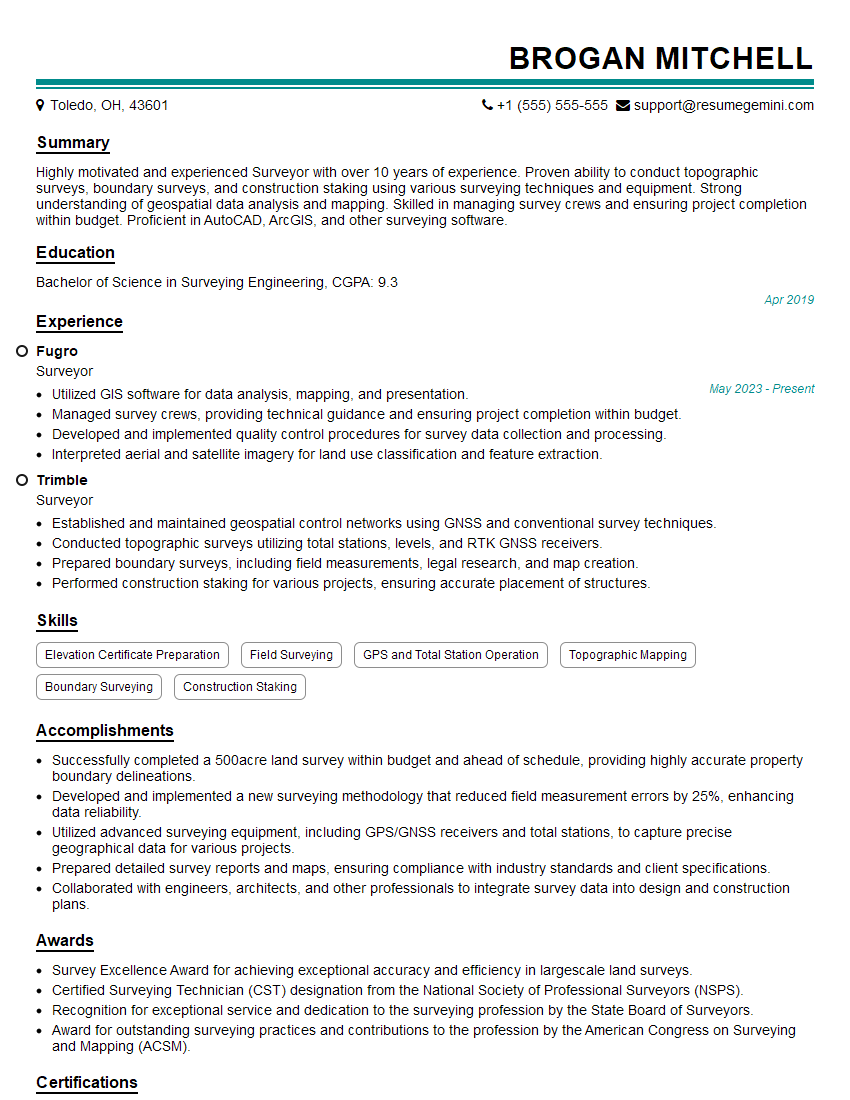
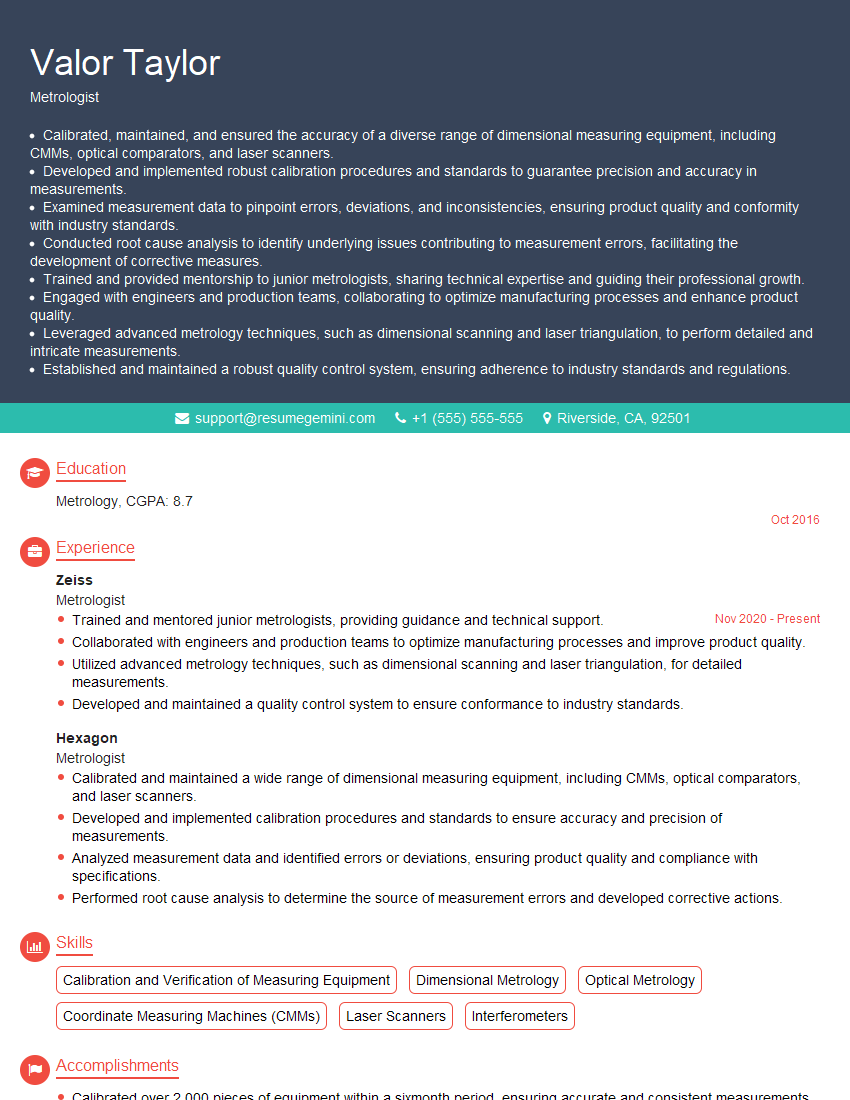
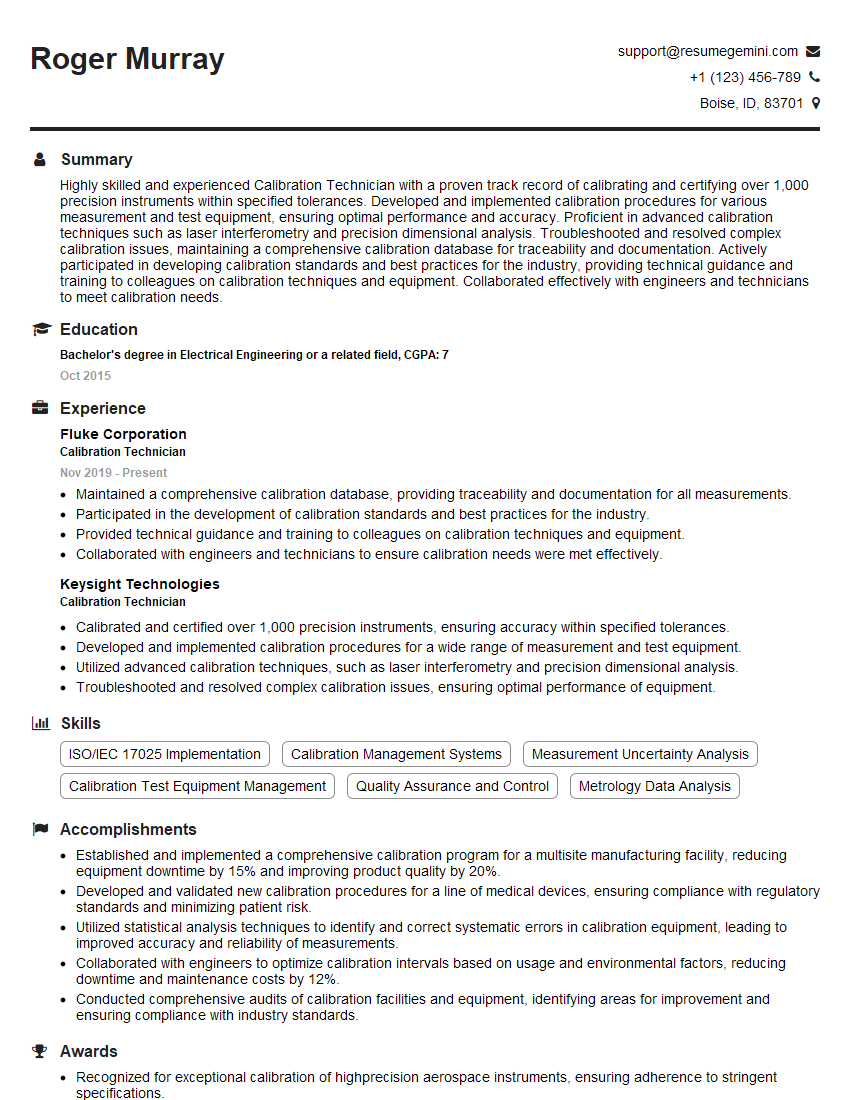
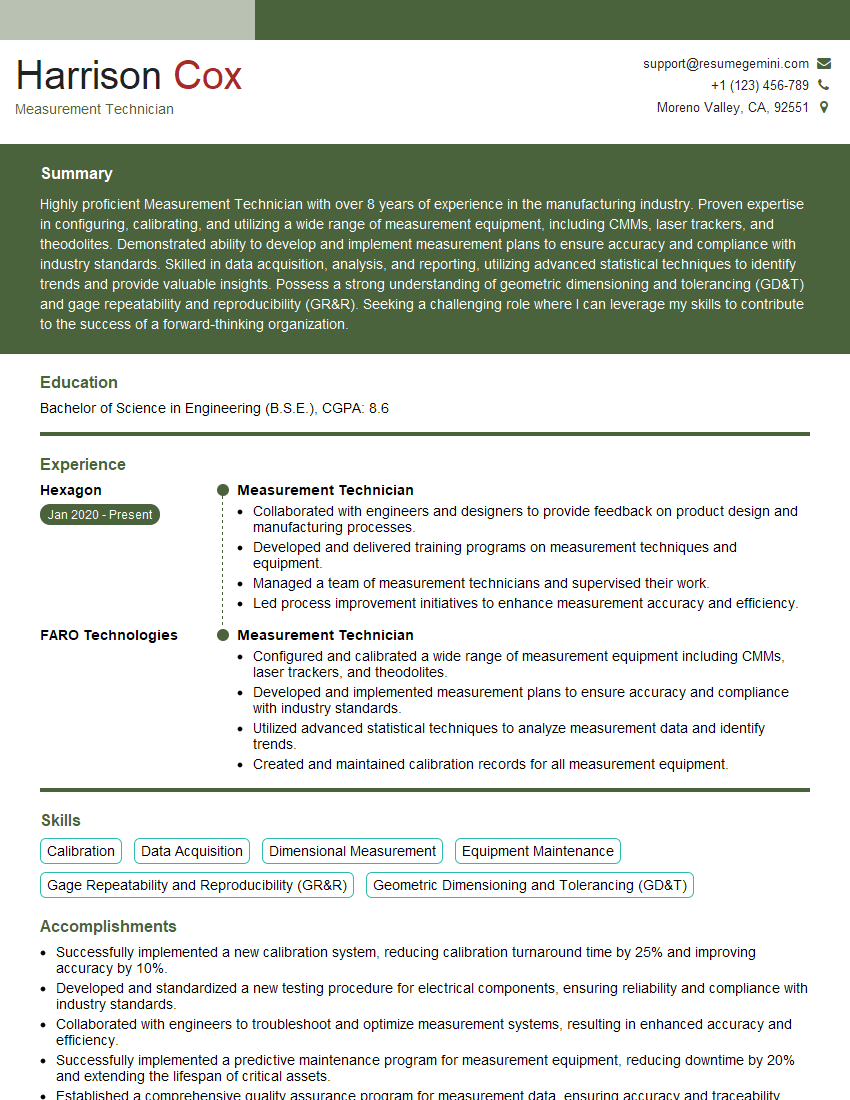
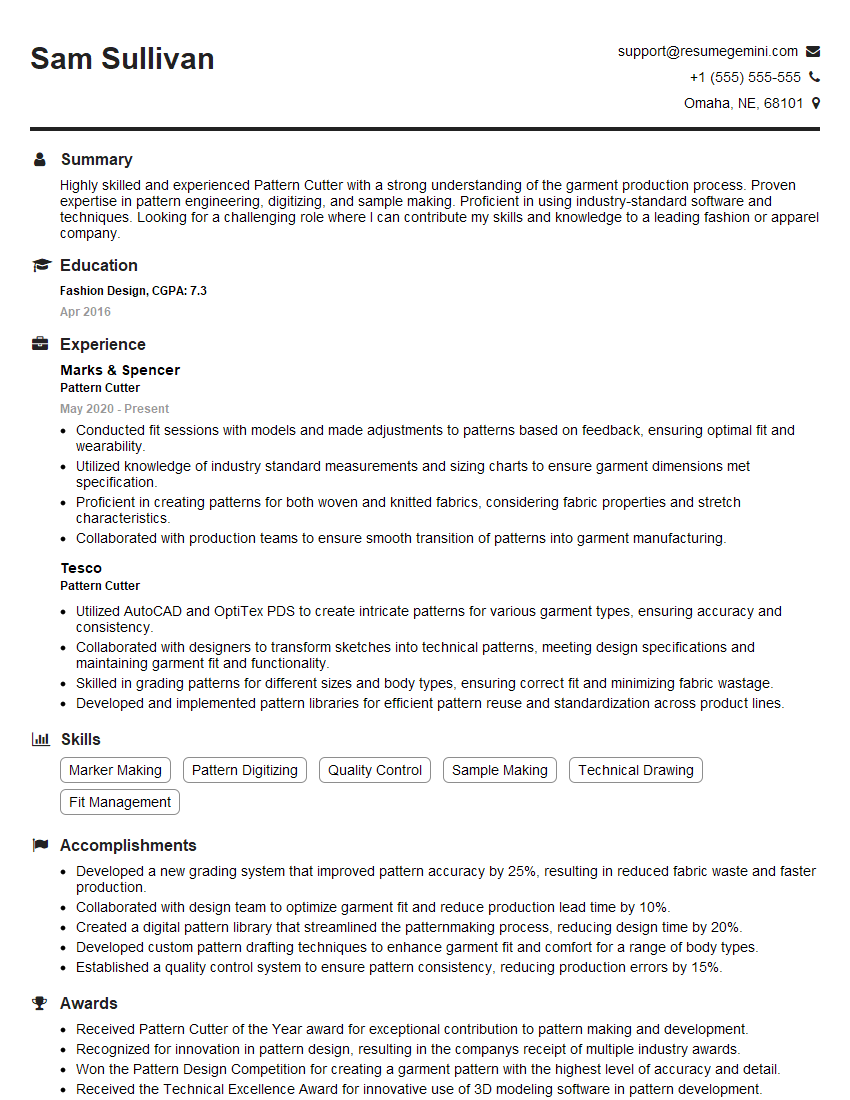
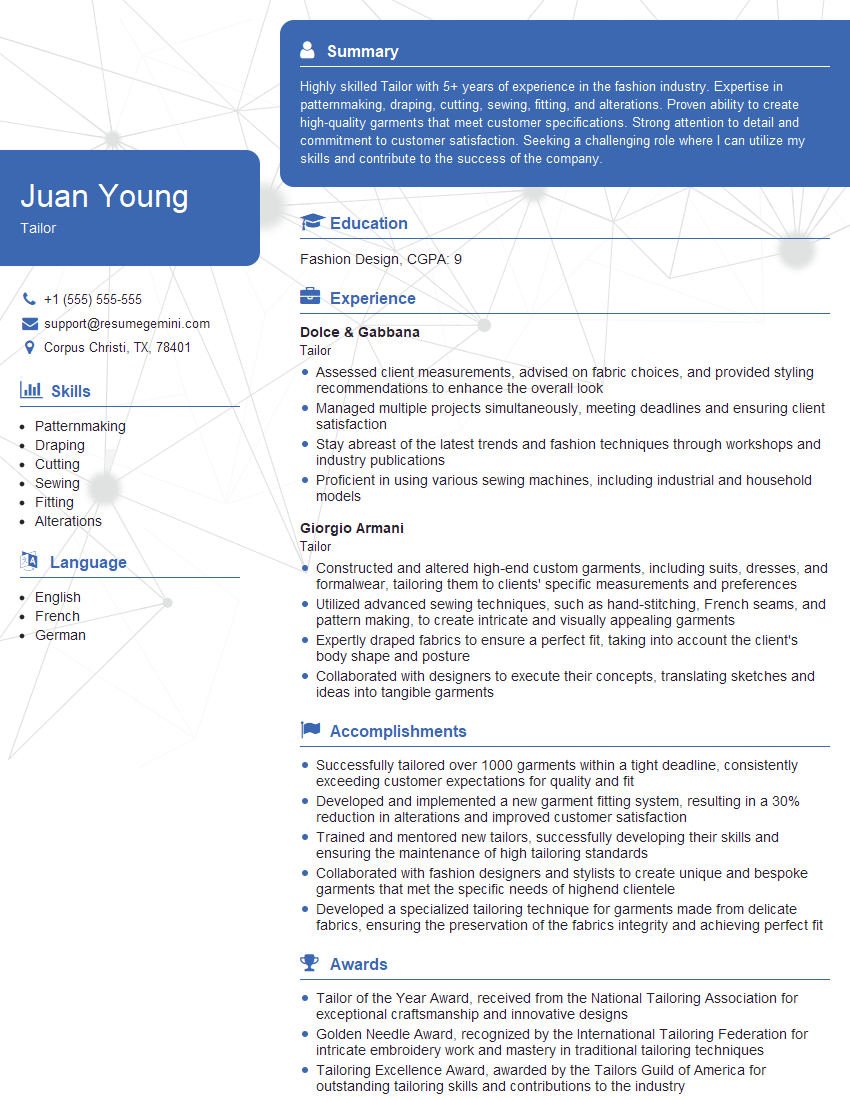
Mastering measurement taking and fitting is crucial for career advancement in the fashion and apparel industry, opening doors to specialized roles and higher earning potential. A strong resume is your key to unlocking these opportunities. Creating an ATS-friendly resume is essential for getting noticed by potential employers. ResumeGemini is a trusted resource to help you build a professional and impactful resume that highlights your skills and experience. Examples of resumes tailored to measurement taking and fitting are available to guide you through the process.


Explore more articles
Users Rating of Our Blogs
Share Your Experience
We value your feedback! Please rate our content and share your thoughts (optional).
What Readers Say About Our Blog
Very informative content, great job.
good