The thought of an interview can be nerve-wracking, but the right preparation can make all the difference. Explore this comprehensive guide to Measuring and Installation interview questions and gain the confidence you need to showcase your abilities and secure the role.
Questions Asked in Measuring and Installation Interview
Q 1. Explain the process of accurately measuring a complex, irregularly shaped object.
Measuring irregularly shaped objects requires a multi-faceted approach. It’s not a single technique but a combination of methods tailored to the object’s complexity. Think of it like piecing together a jigsaw puzzle – you need to break the problem down into smaller, manageable parts.
Divide and Conquer: Break down the object into smaller, simpler shapes (triangles, rectangles, etc.) that are easier to measure individually. This might involve drawing lines on the object to create these sections.
Multiple Measurements: Take numerous measurements from different angles and perspectives. Don’t rely on just one measurement; redundancy is key to accuracy. For example, measure the length of a curved line at multiple points and estimate the curve using a flexible tape.
Utilize Appropriate Tools: Tape measures are great for straight lines, but for curved surfaces, you may need a flexible tape measure or even a 3D scanner for greater precision. Calipers are crucial for precise internal and external dimensions of smaller sections.
Digital Tools: Consider using a 3D scanner or digital modeling software. These tools are excellent for creating a digital representation of the object, allowing for precise measurements and calculations.
Documentation: Meticulously document all measurements, including the method used, units, and location on the object. A detailed sketch with labeled dimensions is essential.
Example: Measuring an oddly shaped stone for a custom-fit setting. I’d divide it into sections, taking multiple measurements of each section’s length and width using calipers and a flexible tape measure. I’d then sketch the stone, labeling each measurement to ensure accurate replication.
Q 2. Describe your experience with different measurement tools (e.g., tape measures, calipers, laser levels).
My experience with measurement tools spans a wide range, from basic to advanced. I’m proficient in using tape measures for linear measurements, mastering techniques like keeping the tape taut and reading measurements accurately to the nearest 1/16th of an inch or millimeter, depending on the required precision.
Calipers, both vernier and digital, are essential for precise measurements of smaller objects and internal/external diameters. I understand the importance of proper zeroing and using the correct type of caliper (inside, outside, depth) for the task.
Laser levels are crucial for establishing accurate reference points and ensuring level and plumb surfaces. I’m adept at setting up laser levels, understanding their limitations (range, accuracy), and using them effectively in various settings, including outdoor installations where traditional methods are more challenging. I also have experience with total stations and other surveying equipment for highly accurate measurements over longer distances.
Q 3. How do you ensure precision and accuracy in your measurements?
Precision and accuracy are paramount. It’s not just about getting a number; it’s about getting the right number. I ensure this through several key practices:
Double-checking: Always double-check measurements, especially crucial measurements. A second measurement is often enough to identify potential errors.
Proper Tool Selection: Selecting the right tool for the job is crucial. Using a tape measure for small, intricate work would be inaccurate, while using a caliper to measure a long distance would be inefficient.
Calibration: Regularly calibrating tools like laser levels and calipers is essential. Out-of-calibration tools can introduce significant errors.
Environmental Factors: Accounting for temperature and humidity which can affect the accuracy of certain tools. For instance, extreme temperatures can affect the length of a tape measure.
Measurement Techniques: Following correct measurement techniques; for example, ensuring the tape measure is taut and level, aligning calipers properly, and using appropriate measuring units.
Example: When installing cabinets, I wouldn’t rely solely on the manufacturer’s dimensions. I’d always measure the space myself and double-check the measurements before proceeding to prevent issues during the installation.
Q 4. What are the common sources of error in measuring and how do you mitigate them?
Common sources of errors include:
Parallax Error: Incorrectly reading a measuring tool due to the angle of sight. This is often mitigated by reading the tool directly from above.
Tool Wear and Tear: Worn-out tools can lead to inaccurate measurements. Regular inspection and replacement are necessary.
Improper Technique: Incorrect measuring techniques, such as not keeping the tape measure taut or using the incorrect caliper jaw, can cause significant errors.
Human Error: Simple mistakes like misreading a measurement or recording it incorrectly can happen. Double-checking is crucial.
Environmental Conditions: Temperature and humidity fluctuations can affect the accuracy of some tools.
Mitigation Strategies:
Calibration: Regular calibration of tools ensures accuracy.
Double-Checking: Always double-check measurements, particularly critical ones.
Proper Technique: Adherence to precise measurement techniques minimizes error.
Controlled Environment: If possible, work in a controlled environment to minimize the impact of environmental factors.
Q 5. Explain your experience with blueprint reading and interpreting technical drawings.
Blueprint reading and interpreting technical drawings are fundamental skills for any installer. I’m comfortable reading and understanding various types of drawings, including floor plans, elevations, sections, and detail drawings. I understand architectural notations, symbols, and specifications, and I can accurately extract necessary information like dimensions, material specifications, and installation details.
I have experience interpreting both hand-drawn and CAD drawings, understanding the tolerances indicated and applying them correctly during the measuring and installation process. I can identify potential discrepancies or ambiguities and address them by collaborating with engineers or architects to clarify any uncertainties before proceeding with the installation.
Example: In a recent project, I used blueprints to accurately measure and lay out plumbing fixtures for a new bathroom. Understanding the scale of the drawings and interpreting the placement of fixtures based on the wall dimensions was crucial for successful installation.
Q 6. Describe a time you had to adapt your measurement techniques due to unexpected challenges on a project.
During a recent project involving the installation of custom-built shelving units, I encountered unexpected discrepancies in the wall’s structural integrity. The blueprints indicated perfectly straight walls, but upon closer inspection, I discovered slight bowing. My initial measurement techniques relied on the assumption of straight walls, which could have resulted in poorly fitting shelving.
To adapt, I used a laser level to precisely map the wall’s curvature. Then I used this data to create a three-dimensional model of the shelving unit, adjusting its design to accommodate the wall’s irregularities. This involved using more advanced CAD software and implementing a custom cutting scheme for the shelving components to achieve a perfect fit. The flexibility and problem-solving mindset allowed me to deliver a high-quality outcome that exceeded expectations.
Q 7. How do you handle discrepancies between measurements and specifications?
Discrepancies between measurements and specifications necessitate a methodical approach to identify the root cause and implement a corrective solution. It’s about understanding the nature of the discrepancy—is it a minor tolerance issue or a major deviation?
Verification: First, I’d meticulously re-check my measurements to rule out any errors on my end. This includes double-checking my techniques and equipment.
Blueprint Review: I would thoroughly review the blueprints to ensure I haven’t misinterpreted any details. This may involve verifying dimensions, material types, and any relevant specifications.
Communication: Open communication with the client, architect, or engineer is vital. I would clearly explain the discrepancy and discuss possible solutions. We would collaboratively determine the best approach, prioritizing functionality and aesthetics.
Documentation: Maintaining detailed documentation of measurements, discrepancies, and agreed-upon solutions is crucial for accountability and future reference.
Example: If the measured space for a window is slightly smaller than the window dimensions on the blueprint, I’d discuss the discrepancy with the relevant parties. Possible solutions would include adjusting the window frame (if feasible), choosing a slightly smaller window, or adjusting the surrounding architectural elements. The best solution would depend on the context and project specifications.
Q 8. Explain your experience with different installation methods and techniques.
My experience encompasses a wide range of installation methods, from simple bolt-on installations to complex, multi-stage processes involving specialized equipment and precision measurements. I’m proficient in various techniques, including surface mounting, recessed mounting, through-hole mounting, and free-standing installations. For example, in one project, I installed a large-scale server rack requiring precise alignment and cable management. This involved meticulously measuring the space, leveling the floor, and securing the rack to ensure stability and prevent vibrations. In another instance, I worked with a delicate optical system, requiring the use of specialized tools and extremely careful alignment procedures to ensure optimal performance. My experience also extends to various installation materials and their specific handling requirements, including working with wood, metal, concrete, and composite materials.
- Surface Mounting: Securing components directly to a surface, often using adhesives or screws. Think mounting a light switch on a wall.
- Recessed Mounting: Installing components within a cavity or enclosure, such as installing recessed lighting fixtures in a ceiling.
- Through-Hole Mounting: Securing components by passing leads or pins through holes in a printed circuit board (PCB) or chassis.
- Free-standing Installations: Setting up equipment that doesn’t require attachment to a surface, like installing a standalone server rack.
Q 9. Describe your experience with safety procedures related to measuring and installation.
Safety is paramount in my work. I meticulously follow all relevant safety regulations and company protocols. This includes wearing appropriate Personal Protective Equipment (PPE), such as safety glasses, gloves, and hard hats, depending on the job site and materials. Before starting any installation, I thoroughly assess the work area for potential hazards, such as exposed wiring, sharp objects, or unstable structures. I’m trained in lockout/tagout procedures to prevent accidental energization of equipment, and I’m familiar with emergency response protocols. For example, during a recent project involving high-voltage equipment, I implemented rigorous lockout/tagout procedures to ensure the safety of myself and my team before any work commenced. We regularly conduct job site safety meetings to refresh safety protocols and address any potential concerns.
Proper lifting techniques and the use of appropriate lifting equipment are crucial for larger and heavier components to prevent injuries. I always ensure the workspace is well-lit and organized to prevent accidents.
Q 10. What is your experience with quality control checks during and after installation?
Quality control is an integral part of my installation process. I perform regular checks throughout the installation, verifying measurements, component alignment, and overall functionality. I use precision measuring tools such as laser levels, digital calipers, and plumb bobs to ensure accuracy. After installation is complete, I conduct a comprehensive final inspection. This includes verifying that all components are securely fastened, properly aligned, and functioning as expected. Documentation is key; I maintain detailed records of all measurements, procedures, and inspections. For instance, during a recent network installation, I rigorously tested each cable connection for continuity and signal strength, ensuring data transfer speeds met specifications. Any discrepancies or issues are documented and addressed immediately, following established company procedures and escalation protocols.
Q 11. How do you ensure the proper alignment and functionality of installed components?
Ensuring proper alignment and functionality involves a multi-step process starting with meticulous pre-installation planning. This includes carefully reviewing blueprints, specifications, and component dimensions. During the installation process, I utilize various tools and techniques for precise alignment, such as laser levels, plumb bobs, and alignment fixtures. For example, installing a precisely aligned projector requires a level surface, accurate distance calculations, and precise keystone adjustment. After installation, I conduct a series of functional tests to validate the performance of the installed components, ensuring they meet all specified requirements. This might involve checking for proper signal strength, data transfer rates, or operational efficiency, depending on the nature of the installation. If any misalignment is detected, I systematically troubleshoot and correct the issue, meticulously documenting all corrective actions.
Q 12. Describe your experience with troubleshooting installation problems.
Troubleshooting is a significant part of my role. I approach problem-solving systematically, starting with a thorough examination of the installed system, checking for obvious issues such as loose connections, damaged components, or incorrect wiring. I utilize diagnostic tools and equipment to identify the root cause of the problem. This might include multimeters, signal analyzers, or specialized software, depending on the system. I use a logical, step-by-step approach, making adjustments and testing at each step to isolate the problem. For instance, if a network connection is down, I would start by checking the physical cable connections, then move on to network configuration settings and testing network devices. A detailed record of the troubleshooting steps, findings, and solutions is maintained for future reference. If I am unable to resolve the issue independently, I immediately escalate it to the appropriate personnel or support team.
Q 13. How do you manage your time effectively when working on multiple installations?
Effective time management is crucial when handling multiple installations. I prioritize tasks based on urgency and dependencies, creating a realistic schedule that accounts for potential delays. I utilize project management tools and techniques to track progress and manage resources efficiently. This includes using checklists, scheduling software, and daily updates. I communicate proactively with clients and stakeholders to manage expectations and prevent conflicts. For example, I might prioritize a critical component installation that impacts other tasks to prevent delays in the overall project timeline. Breakdowns of complex projects into smaller, manageable tasks can significantly improve time management and overall efficiency. This allows for better focus, tracking, and timely completion.
Q 14. Describe your experience working with a team on large-scale installation projects.
I have extensive experience collaborating with teams on large-scale installation projects. This involves effective communication, coordination, and a strong understanding of individual roles and responsibilities. I’m adept at working within a team environment, contributing my expertise and actively participating in brainstorming sessions and problem-solving efforts. Clear communication is paramount – I ensure all team members are briefed on project goals, timelines, and potential challenges. During a recent large-scale museum exhibit installation, I collaborated with a team of electricians, carpenters, and technicians, effectively coordinating our work to meet tight deadlines. We used a shared project management platform to track progress, share updates, and address any issues that arose. Teamwork and good communication ensured seamless integration of all components and successful project completion.
Q 15. Explain your knowledge of relevant safety regulations and standards.
Safety is paramount in measuring and installation. My understanding of safety regulations and standards is comprehensive, encompassing OSHA (Occupational Safety and Health Administration) guidelines, ANSI (American National Standards Institute) standards, and any other relevant industry-specific regulations applicable to the project. This includes, but isn’t limited to, proper use of Personal Protective Equipment (PPE) such as safety glasses, gloves, hard hats, and fall protection harnesses, depending on the work environment. I’m thoroughly familiar with lockout/tagout procedures for machinery, confined space entry protocols, and hazard communication standards, ensuring a safe working environment for myself and my colleagues. For example, before working at heights, I’d meticulously check the integrity of all safety harnesses and fall arrest systems, and complete a thorough risk assessment of the work area. I always prioritize safety briefings and adhere strictly to all established safety protocols.
Career Expert Tips:
- Ace those interviews! Prepare effectively by reviewing the Top 50 Most Common Interview Questions on ResumeGemini.
- Navigate your job search with confidence! Explore a wide range of Career Tips on ResumeGemini. Learn about common challenges and recommendations to overcome them.
- Craft the perfect resume! Master the Art of Resume Writing with ResumeGemini’s guide. Showcase your unique qualifications and achievements effectively.
- Don’t miss out on holiday savings! Build your dream resume with ResumeGemini’s ATS optimized templates.
Q 16. How do you handle working in tight spaces or difficult-to-reach areas?
Working in tight spaces or hard-to-reach areas requires meticulous planning and specialized techniques. I utilize various methods depending on the situation. For confined spaces, I always follow confined space entry procedures which may include atmospheric testing before entry, use of respirators, and having a designated spotter outside the space. For hard-to-reach areas, I might employ telescopic tools, articulating arms, or specialized measuring equipment like laser distance meters with a wider measuring range. In some cases, temporary scaffolding or elevated work platforms may be necessary. I always prioritize safety and will not proceed if the risk is deemed too high. For example, when installing wiring in a cramped attic, I would use a flexible conduit and specialized fish tape to snake the wires through instead of trying to force them through. This minimizes risk of damage to the wires or the structure.
Q 17. What is your experience with using specialized software for measuring and installation?
I’m proficient in several specialized software applications used in measuring and installation. My experience includes using CAD (Computer-Aided Design) software like AutoCAD and Revit for reviewing blueprints, creating detailed layouts, and generating precise measurements. I am also familiar with 3D modeling software for virtual installations, allowing me to identify potential issues before physical installation begins. Furthermore, I’m experienced with project management software to track progress, manage resources, and ensure timely completion of projects. For instance, I recently used Revit to model a complex HVAC system, identifying potential clashes before any physical installation occurred, saving both time and resources.
Q 18. How do you maintain your tools and equipment?
Maintaining my tools and equipment is crucial for both safety and efficiency. After each use, I thoroughly clean all tools and equipment, removing debris and ensuring they are free from damage. I regularly inspect tools for wear and tear, replacing or sharpening them as needed. I also follow manufacturer’s recommendations for lubrication and maintenance. For example, I meticulously clean and lubricate my laser measuring tools to maintain their accuracy, and I store all equipment in a well-organized manner, protecting them from damage and ensuring easy access. Proper tool maintenance ensures accuracy, prolongs the life of the tools, and prevents accidents.
Q 19. How do you stay updated with the latest technologies and techniques in your field?
Staying updated in this field is critical. I achieve this through several methods: actively participating in industry conferences and workshops, subscribing to relevant trade publications and journals, and engaging in online professional development courses. I also network with colleagues and other professionals to share best practices and learn about the latest technologies. I often seek out training on new software and techniques to remain at the forefront of the industry and enhance my skills. For example, recently I completed a course on the latest advancements in laser scanning technology for improved measurement accuracy.
Q 20. Explain your experience with working from detailed schematics and diagrams.
I have extensive experience interpreting and working from detailed schematics and diagrams. My process begins with a thorough review of all provided documentation, identifying key dimensions, specifications, and installation requirements. I then use this information to create a detailed plan of action, determining the necessary tools, materials, and sequence of operations. I cross-reference the schematics with on-site measurements to ensure accuracy and to account for any discrepancies. For instance, when working on a complex electrical installation, I would meticulously follow the wiring diagrams, cross-referencing cable sizes and colors to ensure proper connections and avoid short circuits.
Q 21. Describe a situation where you had to improvise a solution to a measurement or installation problem.
During a recent project involving the installation of a large, oddly-shaped piece of equipment, I encountered an unforeseen challenge. The original installation plan didn’t account for a supporting beam obstructing the optimal placement. Instead of scrapping the plan, I improvised by designing and fabricating a custom mounting bracket using readily available materials. This bracket allowed us to securely attach the equipment while avoiding the beam, ensuring proper functionality and safety. This experience highlighted the importance of adaptability and problem-solving skills in the field.
Q 22. How do you document your work, including measurements and installation procedures?
Thorough documentation is paramount in measuring and installation. My process involves a multi-stage approach, ensuring accuracy and traceability. First, I create detailed sketches and diagrams of the area, including precise measurements of all relevant dimensions. These are usually done digitally using CAD software, but I also maintain hand-drawn backups for redundancy. I then meticulously record all measurements in a dedicated logbook, clearly indicating the date, location, and specific details for each measurement (e.g., ‘Wall A, Height: 2.45m, Width: 3.20m, Note: Slight imperfection at 1.5m mark’). Following the installation, I create a comprehensive installation report that documents the materials used, procedures followed, and any challenges encountered. Photos and videos are also integrated for visual clarity. This ensures that any future maintenance or modifications can be easily understood and executed correctly. I also always keep copies of all relevant manufacturer’s instructions and safety data sheets.
Q 23. Explain your experience with different types of materials used in installation projects.
My experience encompasses a wide range of materials, from common building materials like wood, drywall, and concrete, to more specialized materials such as composite panels, high-tech insulation, and various types of metallic and non-metallic piping. I’m familiar with the properties of each material and understand the appropriate handling, cutting, and installation techniques. For example, working with wood requires knowledge of grain direction to avoid splitting, while installing drywall necessitates the right type of screws and appropriate spacing to prevent cracking. Similarly, working with composite panels requires precise cutting to avoid damage and ensure a seamless finish. I’m also knowledgeable about material compatibility – understanding which materials work well together and how to avoid potential conflicts, such as using the appropriate sealant or adhesive.
Q 24. Describe your experience with using various hand and power tools.
I’m proficient in using a broad range of hand and power tools. My expertise includes using various types of saws (circular, miter, reciprocating), drills (both corded and cordless), impact drivers, measuring tools (tape measures, laser levels, digital calipers), and various hand tools like chisels, hammers, screwdrivers, and levels. I am also experienced in using specialized tools depending on the specific project, such as stud finders, hole saws, and pipe threading tools. Safety is my top priority; I always use the appropriate safety gear such as eye protection, ear protection, and dust masks. Regular maintenance and inspection of all my tools are also a routine part of my workflow. For instance, I ensure that saw blades are sharp and properly aligned to prevent accidents and ensure clean cuts. I’m also adept at choosing the right tool for the job – understanding the limitations and capabilities of each tool to achieve maximum efficiency and accuracy.
Q 25. How do you prioritize tasks when facing multiple deadlines on an installation project?
When faced with multiple deadlines, I employ a prioritization strategy based on a combination of factors. I use a project management approach, starting by creating a detailed timeline breaking down each task into smaller, manageable components. I then prioritize tasks based on their urgency and dependency. Tasks with hard deadlines that influence other tasks are prioritized first. For example, if the electrical wiring needs to be completed before drywall installation, it takes precedence. I also consider the potential impact of delays – prioritizing tasks that will have a significant impact on the project’s overall schedule. I utilize project management software and regularly update the timeline, adjusting priorities as needed based on the progress and any unexpected issues. Regular communication with clients and the project team keeps everyone informed and on the same page.
Q 26. What is your experience with working under pressure and meeting tight deadlines?
I thrive under pressure and have extensive experience in meeting tight deadlines. In previous roles, I consistently delivered projects on time and within budget, even when faced with unexpected challenges. My ability to remain calm and focused under pressure, combined with my effective time management skills and meticulous planning, helps me to successfully navigate demanding situations. For example, on one project, a critical shipment was delayed, which threatened the project timeline. I quickly adapted by re-sequencing tasks, sourcing alternative materials, and working extended hours to compensate for the delay. Through proactive problem-solving and efficient resource management, I ensured that the project was completed successfully and on time.
Q 27. Describe a time you made a mistake during measurement or installation. How did you correct it?
During a recent kitchen renovation, I miscalculated the spacing for the countertop installation. This resulted in a gap between the countertop and the wall. This was frustrating but I took it as a learning experience. To correct the issue, I immediately consulted with the client to discuss the solution. We decided to add a decorative trim piece to cover the gap, which ultimately improved the aesthetic appeal. While it wasn’t my preferred outcome, it was a practical solution that maintained the project’s integrity and client satisfaction. This experience reinforced the importance of double-checking measurements and using multiple verification methods. I now always conduct a final review of all measurements with a colleague before proceeding with installation, to prevent similar mistakes in the future.
Q 28. What are your salary expectations for this role?
Based on my experience and skills, and taking into consideration the specifics of this role and the local market rate, my salary expectations are in the range of $[Insert Salary Range]. I am open to discussing this further and am confident that my contributions will justify this compensation.
Key Topics to Learn for Measuring and Installation Interview
- Accurate Measurement Techniques: Understanding various measuring tools (tape measures, laser measures, digital levels), precision techniques, and error mitigation strategies.
- Blueprint Reading and Interpretation: Deciphering technical drawings, understanding scales, dimensions, and specifications to accurately translate them into real-world installation plans.
- Material Selection and Calculation: Determining the necessary quantities of materials based on measurements and project requirements, considering factors like waste and potential adjustments.
- Installation Procedures and Best Practices: Familiarizing yourself with industry standards, safety regulations, and efficient installation methodologies for various materials and systems.
- Problem-Solving and Troubleshooting: Developing strategies to identify and resolve issues during the measuring and installation process, such as discrepancies in measurements or unforeseen challenges on-site.
- Health and Safety Regulations: Demonstrating knowledge of relevant safety protocols, risk assessment, and the use of personal protective equipment (PPE).
- Quality Control and Inspection: Understanding the importance of verifying measurements, confirming installation accuracy, and adhering to quality standards.
- Software and Technology: Familiarity with relevant software or technologies used in the measuring and installation process (e.g., CAD software, project management tools).
Next Steps
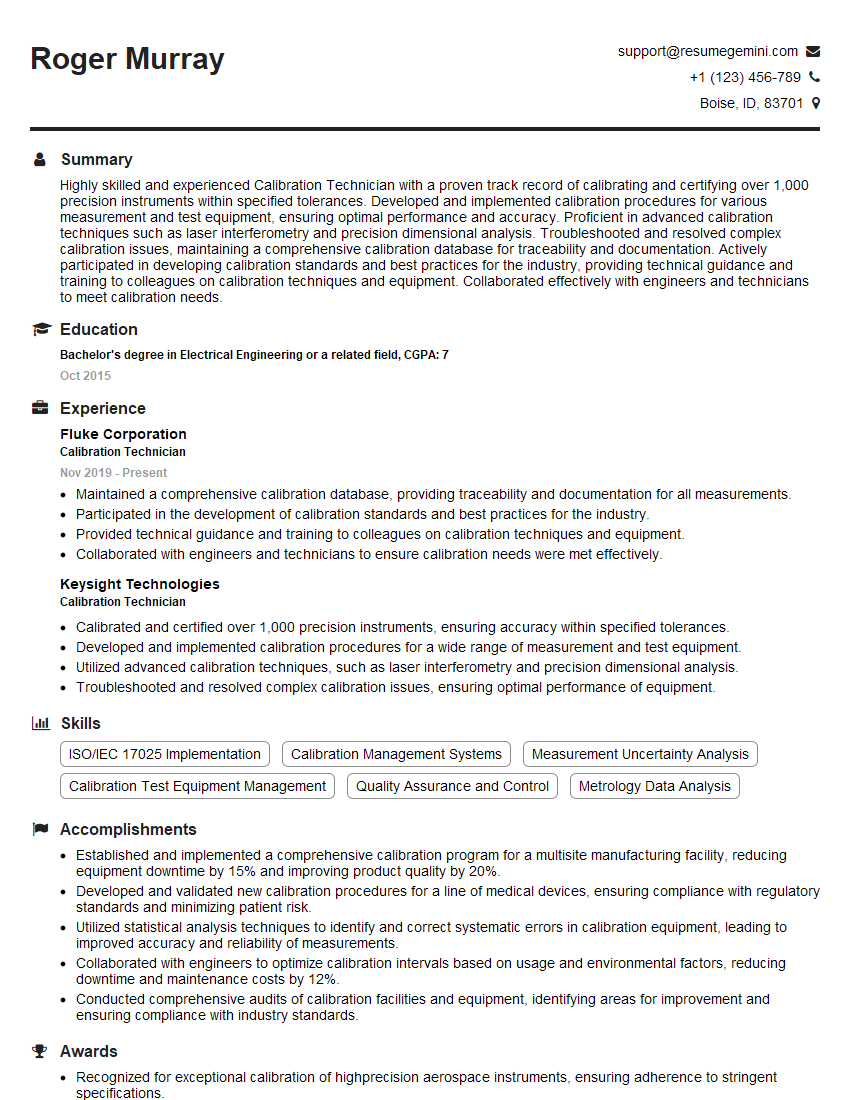
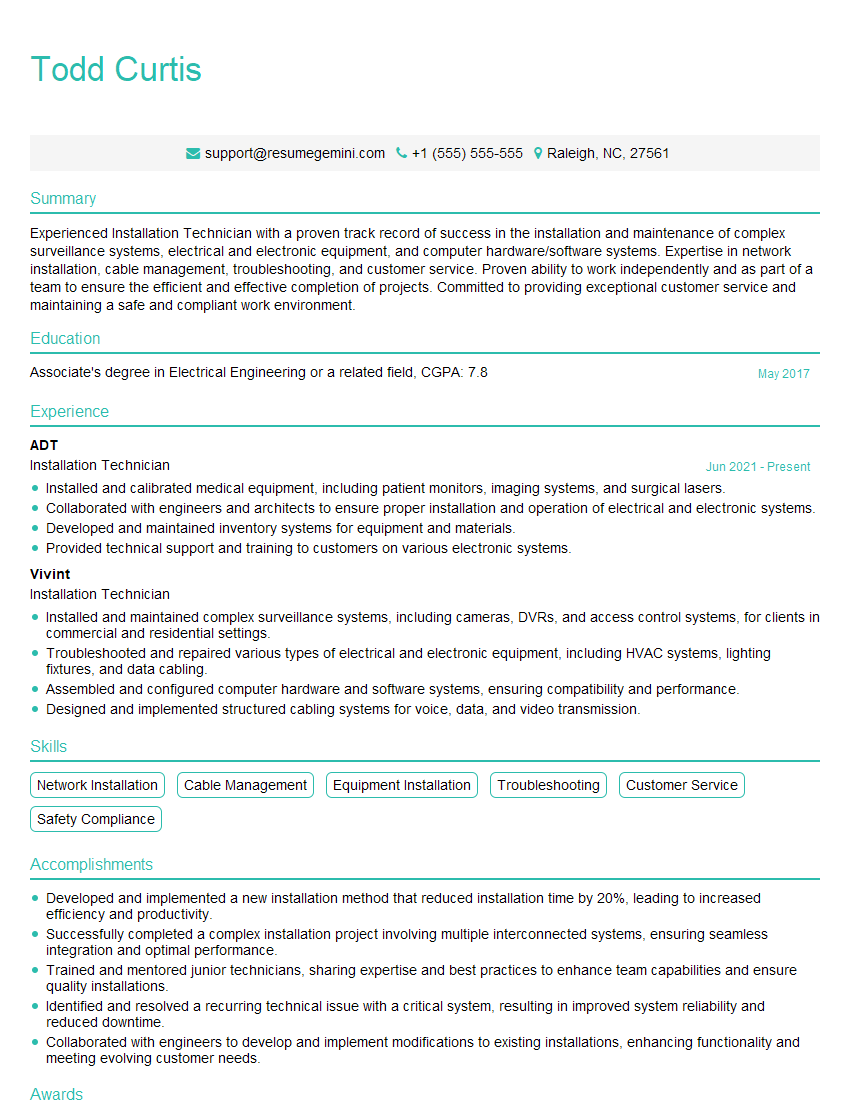
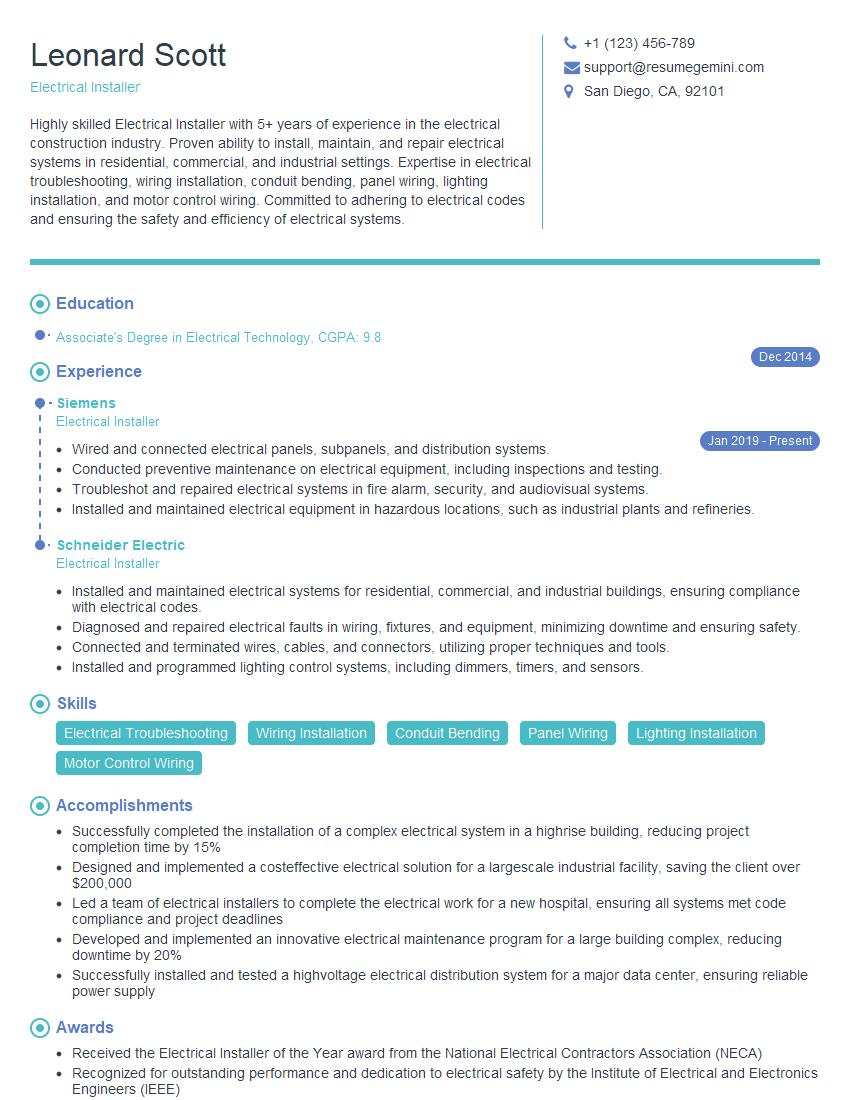
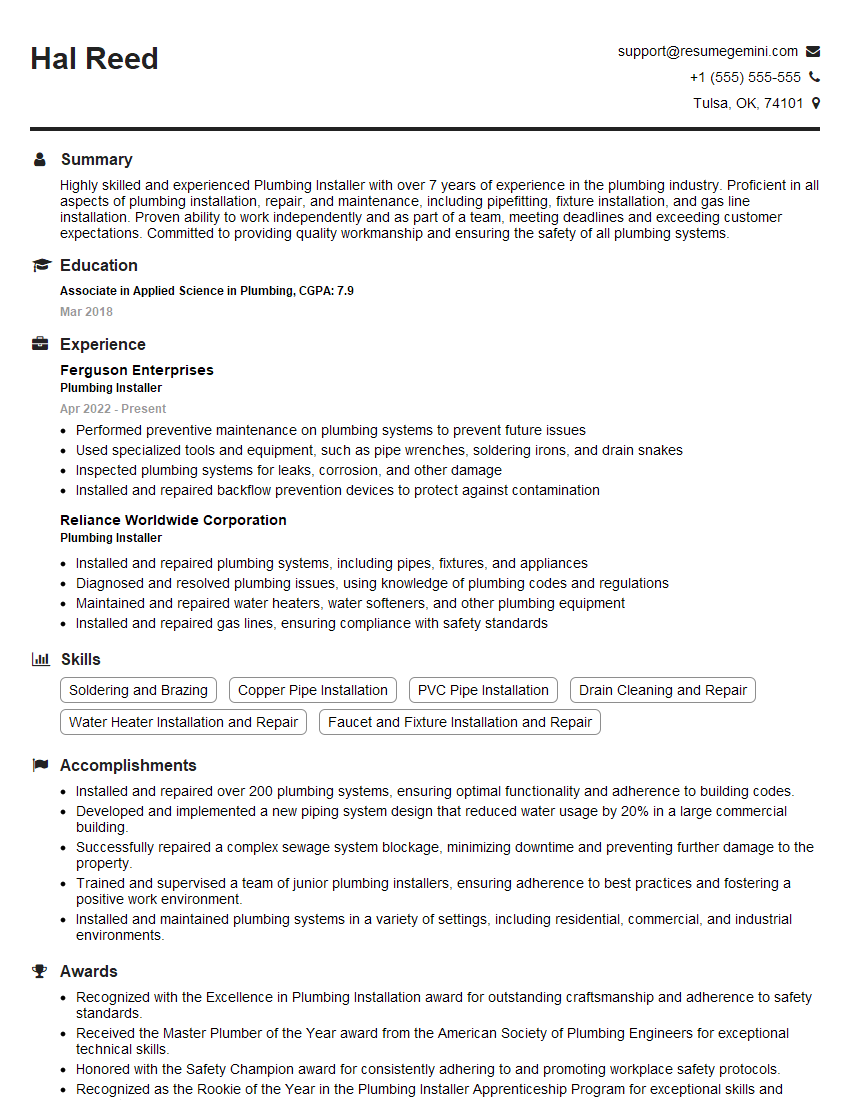
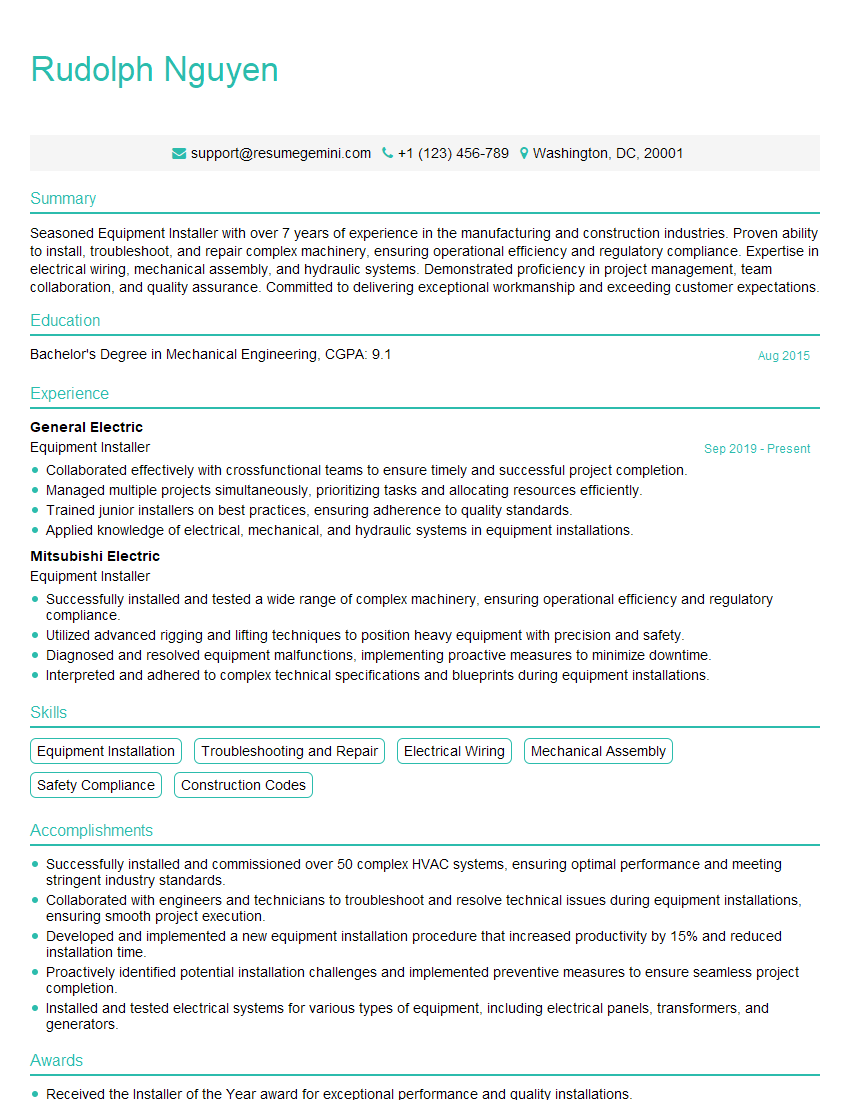
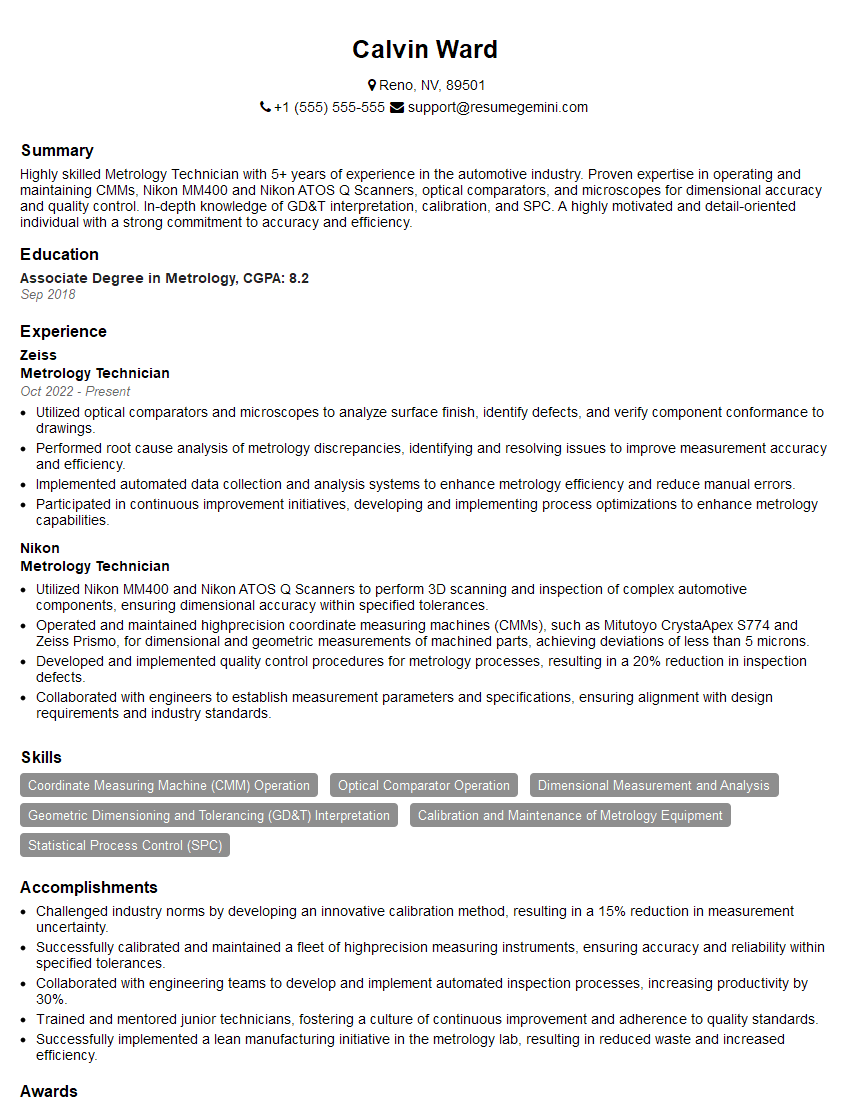
Mastering Measuring and Installation opens doors to exciting career opportunities with excellent growth potential in diverse industries. A strong foundation in these skills is highly valued by employers. To maximize your job prospects, creating an ATS-friendly resume is crucial. This ensures your application gets noticed by recruiters and hiring managers. ResumeGemini is a trusted resource to help you build a professional and impactful resume that highlights your skills and experience. We provide examples of resumes tailored to Measuring and Installation to guide you through the process. Take the next step towards your dream career – build a standout resume with ResumeGemini!

Explore more articles
Users Rating of Our Blogs
Share Your Experience
We value your feedback! Please rate our content and share your thoughts (optional).
What Readers Say About Our Blog
Very informative content, great job.
good