The right preparation can turn an interview into an opportunity to showcase your expertise. This guide to Mechanical Components interview questions is your ultimate resource, providing key insights and tips to help you ace your responses and stand out as a top candidate.
Questions Asked in Mechanical Components Interview
Q 1. Explain the difference between static and dynamic loading on mechanical components.
The key difference between static and dynamic loading lies in the time-dependent nature of the force applied. Static loading refers to a constant load applied to a component that doesn’t change over time. Think of a shelf holding a heavy book – the weight is consistent. The component experiences a steady stress. Dynamic loading, on the other hand, involves forces that vary over time, like the cyclical loading on a car’s axle during driving. This variation introduces additional complexities into the analysis, as fatigue and impact become significant concerns.
Imagine a bridge: static loading is the constant weight of the bridge structure itself, while dynamic loading includes the weight of cars moving across it, causing vibrations and fluctuating stresses. Design considerations differ significantly. Static loading focuses on ensuring the component can withstand the maximum load without failure, while dynamic loading requires considering the fatigue life and potential for impact damage.
Q 2. Describe different types of mechanical stresses and how they affect component design.
Mechanical stresses are internal forces that resist external loads. Different types exist, each impacting design differently:
- Tensile Stress: A pulling force that stretches the material. Think of pulling on a rubber band. Design considerations include choosing materials with high tensile strength.
- Compressive Stress: A pushing force that compresses the material. Think of a column supporting a roof. Buckling is a critical design consideration.
- Shear Stress: A force that causes layers of material to slide past each other. Think of cutting with scissors. Shear strength is vital in fastener design.
- Torsional Stress: A twisting force that creates shear stresses within the material. Think of turning a doorknob. Shaft design requires careful attention to torsional stress.
- Bending Stress: A combination of tensile and compressive stresses caused by a bending force. Think of a beam supporting a load. Section modulus is a key design parameter.
Understanding these stresses is crucial for proper material selection, dimensioning, and preventing failures. For example, a component subject to high tensile stress requires a material with a high yield strength, while a component subject to cyclic bending might require a material with high fatigue resistance.
Q 3. How do you select appropriate materials for a specific mechanical component?
Material selection is a critical step in mechanical component design. It hinges on understanding the intended application and operating conditions. Several factors guide this process:
- Required Mechanical Properties: Tensile strength, yield strength, fatigue strength, hardness, ductility are all critical depending on the loading. A high-strength steel might be needed for a load-bearing component, while a more flexible material like aluminum might be suitable for a lightweight application.
- Environmental Conditions: Temperature, humidity, and corrosive environments drastically influence material choice. Stainless steel offers corrosion resistance, while specialized high-temperature alloys are needed for extreme conditions.
- Cost and Availability: Budgetary constraints and material availability greatly restrict choices. While some exotic materials might offer superior performance, using common, cost-effective materials might be a better choice for mass production.
- Manufacturing Process: The selected material must be suitable for the chosen manufacturing process (e.g., casting, forging, machining). A material’s machinability and castability influence design and manufacturing costs.
A methodical approach involves creating a material selection matrix that considers all these aspects. Often, a compromise between multiple desirable properties is necessary. For instance, you might choose a slightly less strong but much more corrosion-resistant material to protect against environmental degradation in a coastal environment.
Q 4. What are the common methods for joining mechanical components?
Many methods exist for joining mechanical components, each with its strengths and weaknesses:
- Welding: A permanent joining method that fuses materials together using heat and pressure. Suitable for strong, robust connections but can introduce residual stresses.
- Bolting/Screwing: A common method offering easy assembly and disassembly. Suitable for various materials and applications but requires careful consideration of bolt size and torque.
- Riveting: A permanent joining method where a rivet is deformed to fasten components. Simple and reliable but not easily disassembled.
- Adhesives: Use of a bonding agent to join components. Suitable for lightweight structures and joining dissimilar materials, but strength can be affected by temperature and environment.
- Press Fitting: One component is forced into another for a tight fit. Simple and inexpensive, but the parts can’t be easily disassembled and can experience stress concentrations.
The choice depends on factors such as the required strength, the materials being joined, the need for disassembly, and cost considerations. For example, a high-strength steel structure might use welding for its permanent and strong joints, while a computer chassis might utilize bolting/screwing for easy assembly and maintenance.
Q 5. Explain the concept of fatigue failure in mechanical components.
Fatigue failure occurs when a component fails under repeated cyclic loading, even if the maximum stress in each cycle is below the material’s ultimate tensile strength. It’s a progressive process where microscopic cracks initiate and propagate until complete fracture occurs. This is significantly different from static failure, where a single overload causes immediate failure.
Imagine repeatedly bending a paperclip back and forth. Eventually, it will break, even though a single bend wouldn’t break it. The cyclic loading causes microscopic damage to accumulate, leading to crack initiation and propagation. Fatigue failure is a major concern in many engineering applications, especially in components experiencing vibrations or fluctuating loads.
Designers account for this by using fatigue analysis techniques and selecting materials with high fatigue strength. Safety factors are employed to ensure that the maximum stress during operation remains significantly below the material’s fatigue limit. Stress concentration points, which can accelerate fatigue failure, need to be carefully considered in the design.
Q 6. Discuss different types of bearing and their applications.
Bearings are crucial components that reduce friction and support rotating or sliding motion. Various types exist:
- Ball Bearings: Use rolling elements (balls) to reduce friction. Offer low friction and high speed capabilities, but have limited load-carrying capacity compared to roller bearings.
- Roller Bearings: Use cylindrical or tapered rollers as rolling elements. Can handle higher loads than ball bearings but are generally less suitable for high speeds.
- Plain Bearings (Sleeve Bearings): Use a lubricated sleeve to support the shaft. Simple in design and inexpensive, but have higher friction than rolling-element bearings and are less suitable for high speeds.
- Thrust Bearings: Specifically designed to handle axial loads (forces along the shaft axis). Essential in applications with significant thrust forces, like propeller shafts.
- Tapered Roller Bearings: Designed to handle combined radial and thrust loads. Common in automotive wheel hubs.
The selection depends on factors such as load capacity, speed, operating temperature, and cost. For example, a high-speed application might use ball bearings, while a heavy-duty application might use roller bearings. Plain bearings are suitable for low-speed, low-load applications where cost is a major consideration.
Q 7. How do you perform a tolerance analysis for a mechanical assembly?
Tolerance analysis is crucial in mechanical assemblies to ensure that parts fit together correctly and the assembly functions as intended. It involves determining the effect of manufacturing tolerances (variations in dimensions) on the overall assembly. Several methods exist:
- Worst-Case Analysis: Assumes all tolerances accumulate in the worst possible direction. This gives a conservative estimate but can be overly pessimistic.
- Statistical Analysis: Uses statistical methods to model tolerance distributions and calculate the probability of assembly failure. Provides a more realistic estimate than worst-case analysis but requires more data.
- Monte Carlo Simulation: A probabilistic approach where many random simulations are run with different tolerance combinations. Provides a comprehensive picture of the assembly behavior but requires significant computational resources.
A common approach involves using tolerance charts or spreadsheets to track individual component tolerances and their effect on assembly dimensions. Software tools are often used for more complex assemblies. The goal is to ensure the assembly remains within specified functional limits despite manufacturing variations. For example, a tight-fitting assembly requires stricter tolerances to minimize the probability of interference or looseness, while a less critical assembly might allow for larger tolerances to reduce manufacturing costs.
Q 8. Explain the importance of surface finish in mechanical components.
Surface finish, referring to the texture of a component’s surface, plays a crucial role in its performance and lifespan. It impacts factors like friction, wear, fatigue strength, corrosion resistance, and aesthetic appeal. A smoother surface generally leads to reduced friction, less wear, and improved fatigue life. Conversely, a rougher surface can increase friction and wear, potentially leading to premature failure. Consider a piston in an engine: a highly polished surface minimizes friction, leading to better fuel efficiency and reduced wear on the cylinder walls. Conversely, a rough surface on a bearing could lead to increased friction, heat generation, and ultimately, failure. The choice of surface finish depends heavily on the application; precision components often require very fine finishes while others might tolerate a coarser finish.
Q 9. Describe different types of gears and their applications.
Gears are fundamental mechanical components used for power transmission and speed changes. Different types cater to specific needs.
- Spur Gears: These are the simplest, with teeth parallel to the axis of rotation. They are efficient for parallel shafts but can be noisy at high speeds. Think of the gears in a simple hand-crank mechanism.
- Helical Gears: With teeth at an angle to the axis, these offer smoother operation and higher load-carrying capacity than spur gears, reducing noise and vibration. They are commonly found in automotive transmissions.
- Bevel Gears: Used to transmit power between intersecting shafts. Imagine the gears connecting the differential to the wheels in a car.
- Worm Gears: Consist of a worm (screw-like gear) and a worm wheel. They provide high gear ratios and self-locking capabilities, often used in jacks and hoists.
- Rack and Pinion Gears: Convert rotary motion into linear motion, and vice-versa. Common in steering mechanisms of vehicles.
The selection of gear type depends on factors like shaft arrangement, required speed ratio, load capacity, and noise requirements.
Q 10. What are the common methods for preventing corrosion in mechanical components?
Corrosion prevention in mechanical components is vital to ensure their longevity and reliable operation. Several methods exist, often used in combination:
- Protective Coatings: Applying coatings like paint, zinc plating, or anodizing creates a barrier between the component and the environment, preventing corrosive agents from reaching the base material. Think of galvanized steel used in outdoor applications.
- Material Selection: Choosing corrosion-resistant materials such as stainless steel or certain plastics inherently reduces the risk of corrosion. Stainless steel is ubiquitous in many environments due to its inherent corrosion resistance.
- Inhibitors: Chemical substances added to lubricants or coolants that slow down or prevent corrosion. Many engine oils contain corrosion inhibitors.
- Cathodic Protection: This method uses an electrochemical process to protect a metal from corrosion. A sacrificial anode (e.g., zinc) is connected to the component, and it corrodes preferentially, protecting the component. This is common in pipelines and underwater structures.
- Design Considerations: Avoiding crevices and ensuring good drainage can minimize the accumulation of moisture and corrosive substances.
The best approach often involves a combination of these methods, tailored to the specific environment and component.
Q 11. How do you ensure the manufacturability of a mechanical component design?
Manufacturability is crucial for translating a design into a real-world component efficiently and cost-effectively. It involves considering the manufacturing process from the outset.
- Material Selection: Choosing readily available materials reduces lead times and costs.
- Tolerances: Setting realistic tolerances ensures the component can be produced within acceptable variations, avoiding costly precision machining where unnecessary.
- Simplification of Geometry: Avoiding complex shapes that are difficult to machine or cast reduces manufacturing time and cost. Simple features are easier to produce with less waste.
- Feature Compatibility: Ensuring features are compatible with standard manufacturing processes like casting, forging, or machining. For example, designing for ease of injection molding in plastics parts.
- Design for Assembly: Designing for efficient assembly reduces labor costs and assembly time.
Utilizing tools like Design for Manufacturing (DFM) software can automate the analysis of manufacturability, identifying potential issues early in the design process.
Q 12. What are the different types of springs and their applications?
Springs are elastic mechanical components that store and release energy. Many types exist, each with unique characteristics:
- Helical Springs: The most common type, consisting of a coil of wire. Compression springs resist compressive forces, extension springs resist tensile forces, and torsion springs resist twisting forces. They are found in countless applications, from automotive suspensions to ballpoint pens.
- Leaf Springs: A series of flat layers or leaves stacked together, commonly used in older vehicle suspensions.
- Belleville Washers (Disc Springs): These are conical disc springs that provide a high force for their size. They find use in high-load applications where space is limited.
- Coil Springs: These are used in applications that require a progressive rate, meaning the spring becomes stiffer as it is compressed or extended. Automotive suspensions often use this progressive spring rate.
- Constant-Force Springs: These springs provide a constant force over a large range of deflection.
The choice of spring type depends on the required load, space constraints, deflection characteristics, and overall application requirements. Spring design often requires detailed calculations to ensure the desired performance.
Q 13. Explain the concept of finite element analysis (FEA) and its applications in component design.
Finite Element Analysis (FEA) is a powerful computational method for simulating the behavior of physical systems under various conditions. It divides a component into many small elements (finite elements), and solves equations governing the behavior of each element. These solutions are then combined to obtain the overall response of the component.
Applications in component design:
- Stress Analysis: Determining stress distributions within a component under load, identifying potential areas of failure.
- Vibration Analysis: Assessing the dynamic response of a component to vibrations, helping to prevent resonance and fatigue failures.
- Heat Transfer Analysis: Predicting temperature distributions and heat flow in a component, important for thermal management and avoiding overheating.
- Fluid Flow Analysis: Simulating fluid flow around or through a component, used in aerodynamic and hydrodynamic design.
FEA helps engineers optimize designs for strength, weight, and durability, reducing the need for expensive physical prototyping and testing. It allows for the exploration of ‘what-if’ scenarios, improving the design process and creating robust components.
Q 14. How do you conduct a failure mode and effects analysis (FMEA) for a mechanical component?
A Failure Mode and Effects Analysis (FMEA) is a systematic approach to identifying potential failure modes in a component or system and assessing their severity, likelihood of occurrence, and detectability. It helps prioritize design improvements and preventative measures.
Conducting an FMEA:
- Identify Potential Failure Modes: List all possible ways the component could fail.
- Determine Potential Effects of Failure: For each failure mode, describe its consequences on the overall system or product.
- Assess Severity (S): Rate the severity of each failure mode on a scale (e.g., 1-10, with 10 being catastrophic).
- Assess Occurrence (O): Rate the likelihood of each failure mode occurring on a similar scale.
- Assess Detection (D): Rate the likelihood of detecting the failure mode before it causes significant harm.
- Calculate Risk Priority Number (RPN): The RPN is the product of S, O, and D (RPN = S x O x D). Higher RPN values indicate higher-risk failure modes.
- Develop Mitigation Strategies: For high-RPN failure modes, develop and implement strategies to reduce the likelihood of occurrence, severity, or improve detectability.
- Re-evaluate RPN: After implementing mitigation strategies, re-evaluate the RPN to ensure effectiveness.
FMEA is an iterative process. Regular review and updates are essential to account for changes in the design or operational environment.
Q 15. Explain the design considerations for high-temperature applications.
Designing components for high-temperature applications requires careful consideration of material properties, thermal stresses, and potential degradation mechanisms. Think of it like baking a cake – you wouldn’t use ingredients that melt or burn at the oven’s temperature!
- Material Selection: High-temperature materials like superalloys (e.g., Inconel, Hastelloy), ceramics, or specialized polymers are crucial. These materials possess high melting points, good creep resistance (resistance to deformation under sustained stress at high temperatures), and oxidation resistance. The specific choice depends on the exact temperature range and environmental conditions.
- Thermal Stress Management: Temperature gradients can induce significant thermal stresses, leading to cracking or warping. Designing for uniform heating and cooling, using thermal barriers, and incorporating features like expansion joints help mitigate these stresses. Imagine a bridge expanding and contracting with temperature changes; expansion joints allow for this movement without causing damage.
- Creep and Relaxation: At elevated temperatures, materials undergo creep (slow, time-dependent deformation) and stress relaxation (reduction in stress over time). Designs must account for these effects to ensure long-term performance. This is like watching a rubber band slowly stretch under constant weight.
- Oxidation and Corrosion: High temperatures often accelerate oxidation and corrosion. Protective coatings, specialized alloys with inherent corrosion resistance, or controlled atmospheres can help extend component lifespan. Think of rusting – high temperatures speed it up significantly.
- Joining Techniques: The joining methods should be compatible with the high temperature. Welding techniques like electron beam welding or diffusion bonding may be necessary. Standard fasteners might lose their strength at high temperatures.
For instance, designing a turbine blade for a jet engine requires careful consideration of all these aspects, using specialized superalloys, cooling mechanisms, and advanced manufacturing techniques.
Career Expert Tips:
- Ace those interviews! Prepare effectively by reviewing the Top 50 Most Common Interview Questions on ResumeGemini.
- Navigate your job search with confidence! Explore a wide range of Career Tips on ResumeGemini. Learn about common challenges and recommendations to overcome them.
- Craft the perfect resume! Master the Art of Resume Writing with ResumeGemini’s guide. Showcase your unique qualifications and achievements effectively.
- Don’t miss out on holiday savings! Build your dream resume with ResumeGemini’s ATS optimized templates.
Q 16. Describe different types of seals and their applications.
Seals are crucial for preventing leakage in various applications. They’re like the gaskets in your car engine, keeping oil where it belongs!
- O-rings: Simple, elastomeric (rubber-like) seals that create a seal by deformation. Widely used due to their cost-effectiveness and ease of installation. Think of them as simple rubber donuts creating a pressure seal.
- Lip Seals (Shaft Seals): These seals prevent leakage between a rotating shaft and a stationary housing. They use a flexible lip that contacts the shaft, creating a frictional seal. Found in applications like pumps and motors.
- Mechanical Seals: These seals use precisely machined faces to create a seal. They are more robust and have a longer life than O-rings or lip seals, and often handle higher pressures and temperatures. Commonly found in pumps handling corrosive or hazardous fluids.
- Gaskets: Flat seals made from various materials (rubber, metal, composite) used to seal static joints. Their shape and material determine their sealing capabilities. Think of the gasket between a cylinder head and engine block.
- Face Seals: These seals rely on the controlled compression of two flat, lapped surfaces to form a seal. Often used in high-pressure applications due to their reliability.
The selection of a seal depends on factors like the operating pressure, temperature, fluid properties, speed of rotating components (if applicable), and cost considerations. For example, a high-pressure hydraulic system would likely use a mechanical seal, while a low-pressure application might suffice with an O-ring.
Q 17. How do you select appropriate fasteners for a mechanical assembly?
Selecting the right fasteners is critical for a reliable assembly. Think of it as choosing the right screws for building a piece of furniture – the wrong ones could lead to collapse!
- Material Compatibility: Ensure the fastener material is compatible with the joined materials to prevent galvanic corrosion (corrosion due to dissimilar metals in contact). For example, you wouldn’t use steel fasteners with aluminum components in a humid environment.
- Strength and Load Requirements: The fastener’s tensile strength must exceed the expected load. Proper torque values are crucial to ensure sufficient clamping force without over-tightening and damaging the components.
- Environmental Conditions: Consider temperature, humidity, corrosive environments, and vibration. Some fasteners are designed for extreme conditions.
- Joint Type: Different joint types (e.g., threaded, clamped, riveted) require different fasteners. For example, a bolted joint needs bolts and nuts, while a riveted joint uses rivets.
- Accessibility: Consider whether the fasteners will be easy to install and maintain. Sometimes, specialty fasteners may be necessary for difficult-to-reach areas.
Selecting a fastener involves consulting engineering handbooks, material datasheets, and considering the specific application’s requirements. For instance, designing a pressure vessel demands careful consideration of fastener strength and material to withstand internal pressure.
Q 18. Explain the concept of stress concentration and how to mitigate it.
Stress concentration occurs when stress levels significantly increase at certain points in a component, typically at geometric discontinuities like holes, notches, or sharp corners. Imagine a river flowing around a rock; the water velocity (and hence pressure) increases around the rock.
- Causes: Geometric features, material flaws, and residual stresses from manufacturing processes can all contribute to stress concentration.
- Mitigation Techniques:
- Radius Modifications: Replacing sharp corners with smooth fillets significantly reduces stress concentration. Think of rounding off the corners of a square hole.
- Stress Relieving: Heat treatments can reduce residual stresses from manufacturing. It’s like relaxing a tightly wound spring.
- Material Selection: Materials with higher toughness and ductility are less susceptible to stress concentration.
- Finite Element Analysis (FEA): FEA simulations can accurately predict stress distributions, enabling optimized designs to minimize stress concentration points.
- Adding Reinforcement: Adding material at stress concentration zones can distribute the load more effectively.
Failure often initiates at points of high stress concentration, so mitigating it is crucial for component durability. For instance, designing a crankshaft with generous fillets at the journal and crankpin transitions reduces stress concentration, preventing fatigue failure.
Q 19. What are the common causes of mechanical component failure?
Mechanical component failure can stem from various causes. It’s like a house collapsing – multiple factors can contribute to its demise!
- Fatigue: Repeated cyclic loading eventually leads to crack initiation and propagation, even if the stress is below the material’s yield strength. It’s like bending a paperclip back and forth until it breaks.
- Yielding/Plastic Deformation: Excessive loading beyond the material’s yield strength causes permanent deformation. Imagine bending a spoon beyond its elastic limit.
- Fracture: Sudden failure due to brittle materials or high stress concentration. Like dropping a glass and it shattering.
- Creep: Time-dependent deformation at elevated temperatures, leading to slow but eventual failure. Like a plastic bottle deforming under heat.
- Corrosion: Chemical degradation of the material’s surface, weakening it and potentially leading to failure. Like rust on a metal component.
- Wear: Gradual material loss due to friction and surface contact. Like the wear on a tire.
- Improper Design or Manufacturing Defects: These contribute significantly to failures. A poorly designed connection can lead to early failure.
Understanding the potential failure modes is key to designing robust and reliable components. Careful material selection, thorough analysis, and rigorous quality control play significant roles in preventing failures.
Q 20. Describe different manufacturing processes for mechanical components.
Manufacturing processes for mechanical components are diverse, each with its own strengths and limitations. It’s like having different tools for different woodworking tasks!
- Casting: Melting metal and pouring it into a mold. Cost-effective for complex shapes but might have lower precision.
- Forging: Shaping metal using compressive forces. Results in high strength and density but requires specialized equipment.
- Machining: Removing material from a workpiece using cutting tools. Offers high precision and good surface finish but can be time-consuming and expensive.
- Welding: Joining materials using heat and pressure. Versatile but needs skilled operators and can introduce residual stresses.
- 3D Printing (Additive Manufacturing): Building parts layer by layer. Excellent for complex geometries and rapid prototyping but limitations in material choices and surface finish.
- Powder Metallurgy: Compacting metal powders and sintering them to create a solid part. Good for producing porous or complex components.
The choice of process depends on factors like part geometry, required precision, material properties, production volume, and cost. For example, a complex turbine blade might be manufactured using investment casting, while a precision shaft might be machined from a solid billet.
Q 21. What is the difference between precision and non-precision components?
The difference between precision and non-precision components lies in the level of tolerance and surface finish required. Think of it like the difference between a finely crafted watch and a roughly made toy.
- Precision Components: These components have very tight tolerances (allowable variations in dimensions) and high surface finish requirements. They demand precise manufacturing processes like machining or grinding and are often used in critical applications where accuracy is paramount, such as aerospace or medical devices.
- Non-Precision Components: These components have less stringent tolerance and surface finish requirements. They can be manufactured using less precise methods like casting or stamping and are often used in less critical applications where small variations in dimensions are acceptable, such as simple brackets or housings.
The selection depends entirely on the application. A high-precision engine component demands precision manufacturing to ensure proper function, while a simple bracket might not require such high precision.
Q 22. Explain the concept of dimensional tolerances and their importance.
Dimensional tolerances define the permissible variations in the size, shape, and location of features on a mechanical component. They’re crucial because manufacturing processes can’t create parts with perfect precision. Tolerances specify an acceptable range, ensuring the component functions correctly within an assembly. Think of it like baking a cake – you need a specific amount of flour, but a little more or less won’t ruin the cake completely. Similarly, a slight variation in a bolt’s diameter might still allow it to fit and secure a nut, but too much variation can lead to failure.
For example, a drawing might specify a shaft diameter of 25mm ±0.1mm. This means the acceptable range is between 24.9mm and 25.1mm. These tolerances are defined using various standards like ISO 286, ensuring global consistency and understanding. Incorrect tolerances can lead to parts that don’t fit together, impacting functionality, performance, and even safety. Choosing the right tolerance requires careful consideration of the component’s function, manufacturing capabilities, and cost.
- Tight Tolerances: More precise and expensive to manufacture, but crucial for critical applications demanding high accuracy (e.g., aerospace components).
- Loose Tolerances: Less precise and cheaper to manufacture, suitable for less demanding applications where minor variations are acceptable (e.g., some plastic parts).
Q 23. How do you ensure the safety and reliability of a mechanical component?
Ensuring the safety and reliability of a mechanical component is paramount and involves a multi-faceted approach. It begins with meticulous design, incorporating established engineering principles, material selection appropriate for the intended application, and thorough analysis using simulation tools like Finite Element Analysis (FEA). FEA helps predict component behavior under various loads and conditions, identifying potential weaknesses before manufacturing. Furthermore, rigorous testing is essential, covering aspects like fatigue, stress, and environmental factors. This can include material testing, component testing, and system-level testing, depending on the complexity.
Robust design principles aim to minimize the impact of manufacturing variations and operational uncertainties. This can be achieved through techniques like designing for manufacturability (DFM) and designing for reliability (DFR). Finally, implementing quality control measures throughout the manufacturing process ensures components meet the specified requirements and are free from defects. A comprehensive approach like this significantly reduces the risk of failures, enhancing safety and reliability.
Q 24. Describe your experience with CAD software for mechanical component design.
I have extensive experience using various CAD software packages, including SolidWorks, AutoCAD, and Creo Parametric. My proficiency spans 2D drafting and 3D modeling, allowing me to create detailed designs, perform simulations, and generate manufacturing documentation. I’m adept at creating assemblies, managing component libraries, and generating detailed drawings with appropriate GD&T (Geometric Dimensioning and Tolerancing) annotations. In my previous role, I utilized SolidWorks to design a complex robotic arm, leveraging its advanced simulation capabilities to optimize its structural integrity and kinematic performance. The project involved creating detailed 3D models of each component, assembling them, and performing kinematic simulations to ensure smooth and accurate movement. Furthermore, I’ve used these skills to generate detailed manufacturing drawings, including dimensions, tolerances, and material specifications.
Q 25. Explain your experience with different material testing techniques.
My experience with material testing techniques is broad and includes tensile testing to determine yield strength and ultimate tensile strength, hardness testing (Rockwell, Brinell, Vickers) to evaluate material resistance to indentation, fatigue testing to assess endurance under cyclic loading, and impact testing (Charpy, Izod) to determine material toughness. I have also worked with more specialized tests like creep testing for high-temperature applications and fracture toughness testing to evaluate a material’s resistance to crack propagation. In a past project, we used tensile testing to determine the suitability of a new polymer for a high-stress component, ensuring it met the required strength and elongation specifications before proceeding with manufacturing. The results from these tests directly informed the design and material selection process for numerous projects, improving the overall performance and reliability of the final product.
Q 26. How do you handle design changes or revisions during a project?
Handling design changes is a common occurrence in engineering projects, and a systematic approach is critical. Any design change goes through a rigorous change management process, beginning with a thorough evaluation of the impact on the overall design, cost, and schedule. This involves updating drawings, models, and associated documentation. The change request is reviewed by the engineering team and stakeholders to assess feasibility and potential risks. Once approved, the change is implemented, followed by verification and validation through testing or simulation to ensure the modified design meets the specified requirements. Effective communication with all stakeholders throughout the process is crucial to minimize disruption and ensure a smooth transition.
For instance, in one project, a late-stage design change required a modification to the mounting bracket of a key component. This necessitated updating the CAD model, generating new drawings, and performing finite element analysis to verify the structural integrity of the revised design. The change was thoroughly documented, and all stakeholders were informed of the implications before proceeding. This systematic approach minimizes risks and ensures that the project remains on track despite unexpected changes.
Q 27. Discuss your experience with troubleshooting mechanical component failures.
Troubleshooting mechanical component failures requires a systematic and analytical approach. I begin by gathering information about the failure, including its mode, location, and operational conditions. This is often done through visual inspection, non-destructive testing (NDT) techniques like ultrasonic inspection or X-ray radiography, and reviewing operational data. I then formulate hypotheses about the root cause, considering factors such as material defects, design flaws, manufacturing errors, or improper operation. These hypotheses are then tested through analysis, simulations, or further testing. Once the root cause is identified, appropriate corrective actions are implemented, such as design modifications, process improvements, or material substitutions. A thorough post-failure analysis is crucial to prevent similar failures in the future.
For example, I once investigated the failure of a connecting rod in a high-speed machine. Through visual inspection and metallurgical analysis, we identified fatigue cracks originating from a stress concentration at a sharp corner in the design. This led to a design modification to eliminate the sharp corner, resulting in a more robust and reliable connecting rod.
Q 28. Describe a time you had to optimize a mechanical component for cost or performance.
In a project involving the design of a latch mechanism for a consumer product, the initial design was both complex and expensive to manufacture. To optimize it for cost and performance, I employed a combination of design simplification and material selection optimization. By streamlining the design, reducing the number of parts and simplifying the manufacturing process, I was able to significantly reduce manufacturing costs. Simultaneously, I replaced the initial material (a high-cost alloy steel) with a more cost-effective polymer composite that still met the strength and durability requirements, validated through rigorous testing. This resulted in a 30% reduction in manufacturing cost without compromising the latch mechanism’s functionality or performance. The optimized design was successfully implemented, providing both cost savings and improved efficiency.
Key Topics to Learn for Mechanical Components Interview
- Material Science and Selection: Understanding material properties (strength, ductility, fatigue resistance), and selecting appropriate materials for different components based on application requirements. Consider factors like cost, availability, and environmental impact.
- Stress Analysis and Failure Theories: Applying concepts like stress concentration, fatigue analysis, and fracture mechanics to predict component lifespan and prevent failures. Practical application includes Finite Element Analysis (FEA) software usage and interpretation of results.
- Design for Manufacturing (DFM): Optimizing component design for efficient and cost-effective manufacturing processes. This includes understanding tolerances, surface finishes, and assembly considerations.
- Mechanical Joints and Fasteners: Knowledge of various joining techniques (welding, riveting, adhesive bonding) and fasteners (bolts, screws, rivets), including their strengths, weaknesses, and appropriate applications. Analyze joint strength and failure modes.
- Bearings and Lubrication: Understanding different bearing types (ball, roller, sleeve), their applications, and lubrication methods. Analyze bearing selection based on load, speed, and environmental conditions.
- Gears and Gear Trains: Understanding gear geometry, types of gears (spur, helical, bevel), gear train design, and analysis of gear ratios and efficiency. Analyze gear wear and failure mechanisms.
- Power Transmission Systems: Knowledge of various power transmission elements like belts, chains, and shafts. Analyze power transmission efficiency and selection criteria for different applications.
- Vibration and Noise Control: Understanding the principles of vibration and noise generation in mechanical components and techniques for mitigation (damping, isolation).
- CAD Software Proficiency: Demonstrating familiarity with common CAD software (SolidWorks, AutoCAD, etc.) for design, modeling, and analysis of mechanical components.
Next Steps
Mastering Mechanical Components is crucial for a successful and rewarding career in engineering. A strong understanding of these principles will significantly enhance your problem-solving abilities and open doors to a wide range of opportunities. To maximize your job prospects, it’s essential to have a resume that effectively highlights your skills and experience to Applicant Tracking Systems (ATS). ResumeGemini is a trusted resource for creating professional, ATS-friendly resumes that showcase your qualifications. We offer examples of resumes tailored specifically to Mechanical Components roles, providing you with a strong foundation for your job search.

Engineering Manager Resume Sample

Project Engineer Resume Sample

Systems Engineer Resume Sample

Applications Engineer Resume Sample
Automation Engineer Resume Sample
Test Engineer Resume Sample

Technical Specialist Resume Sample
Design Engineer Resume Sample
Quality Engineer Resume Sample

Research Engineer Resume Sample

Development Engineer Resume Sample
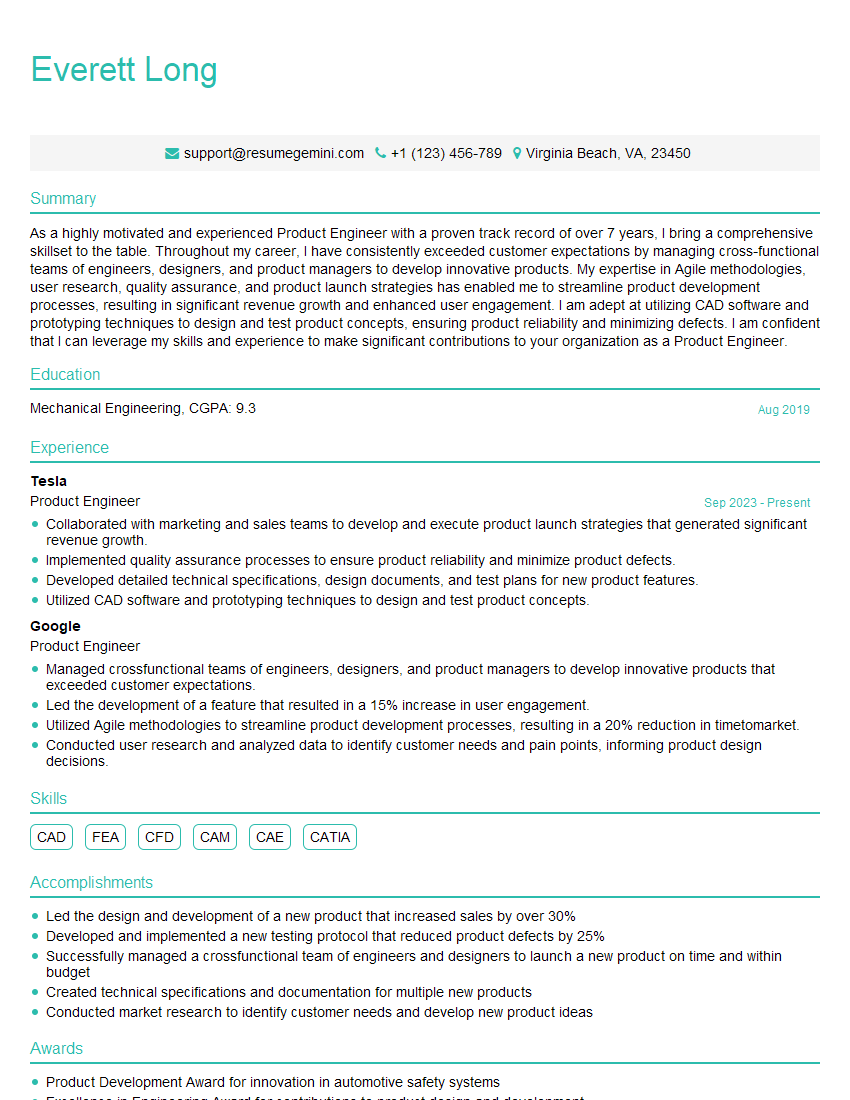
Product Engineer Resume Sample
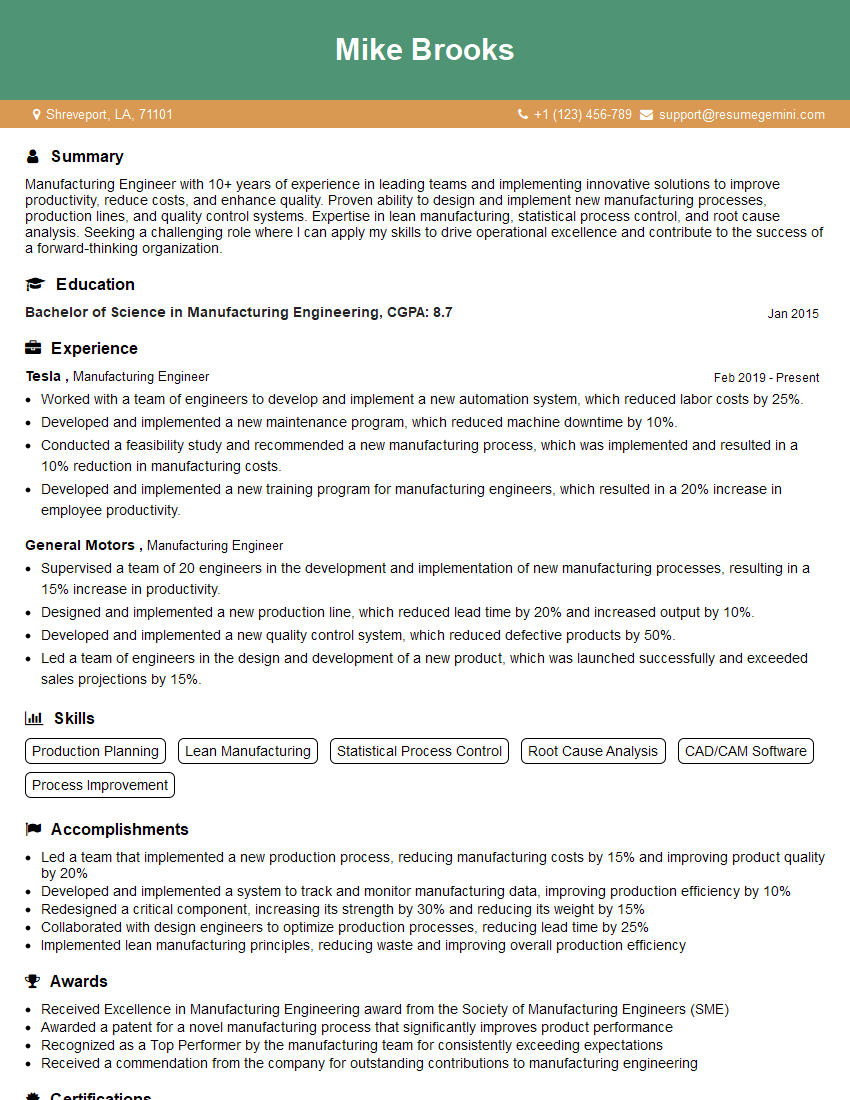
Manufacturing Engineer Resume Sample

Materials Engineer Resume Sample
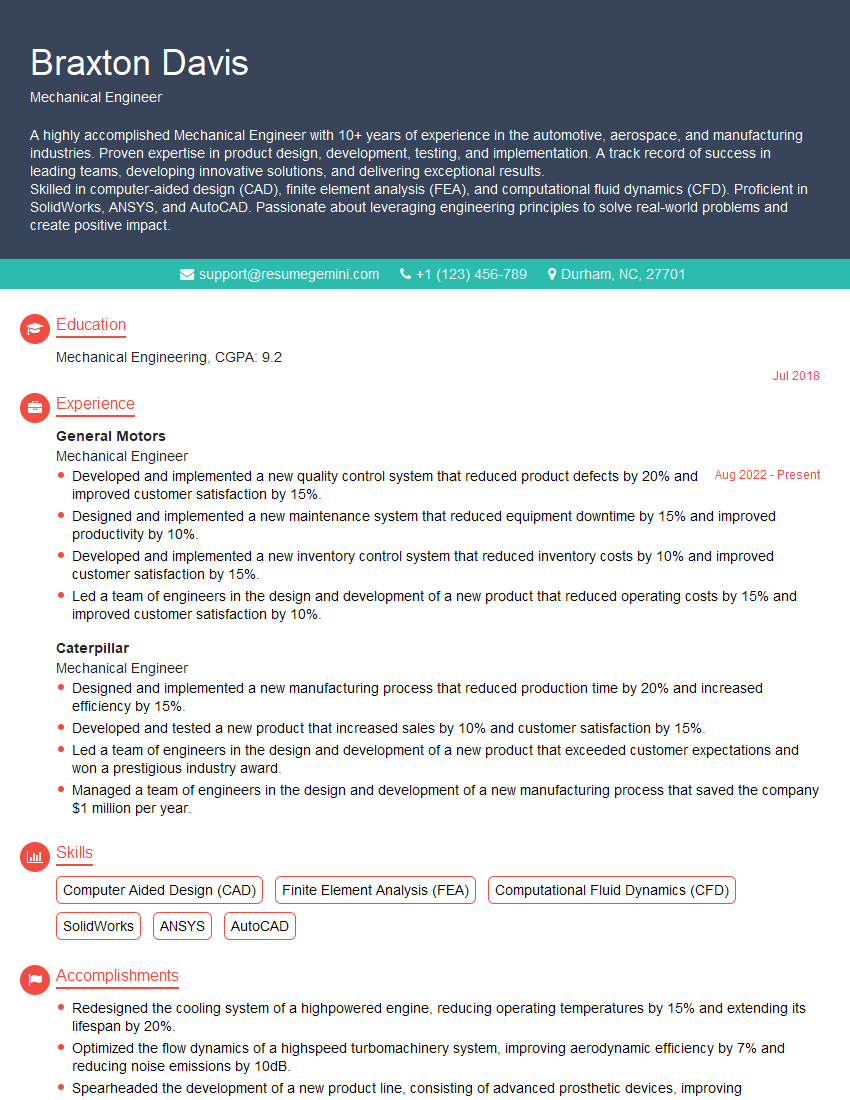
Mechanical Engineer Resume Sample
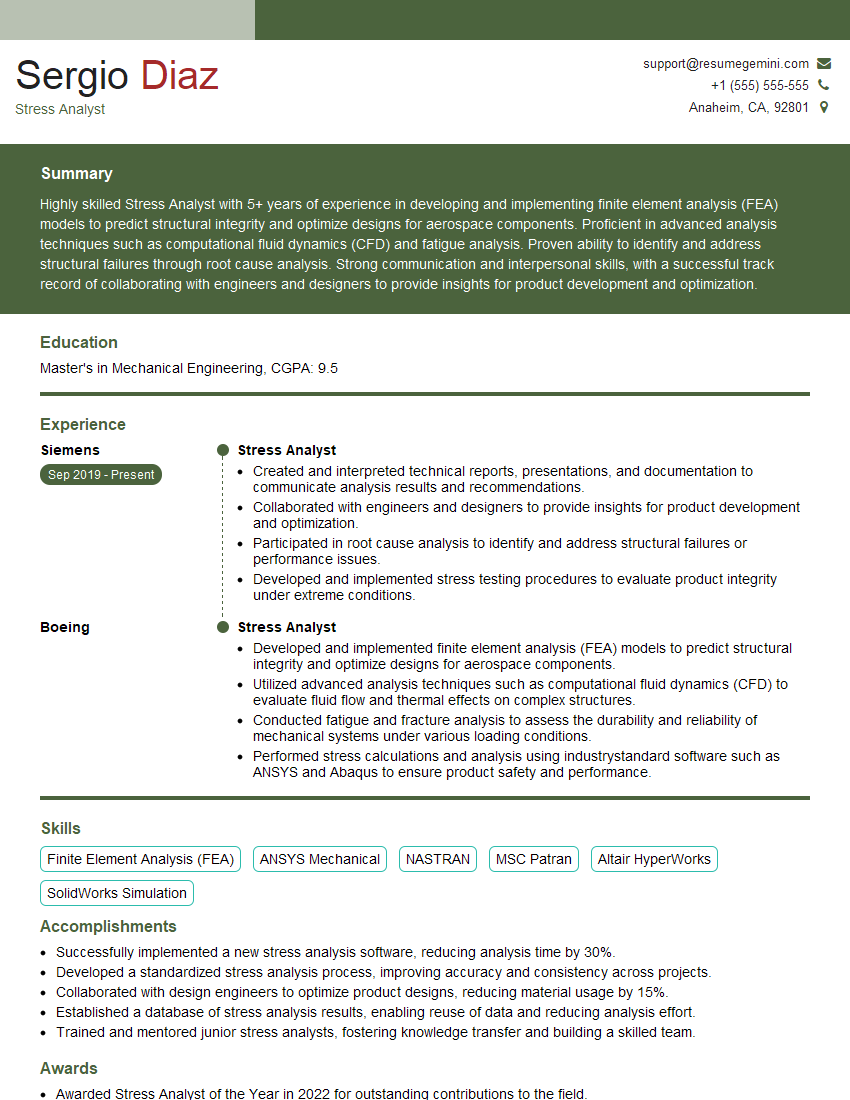
Stress Analyst Resume Sample

Robotics Engineer Resume Sample
- Engineering Manager
- Project Engineer
- Systems Engineer
- Applications Engineer
- Automation Engineer
- Test Engineer
- Technical Specialist
- Design Engineer
- Quality Engineer
- Research Engineer
- Development Engineer
- Product Engineer
- Manufacturing Engineer
- Materials Engineer
- Mechanical Engineer
- Stress Analyst
- Robotics Engineer
Explore more articles
Users Rating of Our Blogs
Share Your Experience
We value your feedback! Please rate our content and share your thoughts (optional).
What Readers Say About Our Blog
Very informative content, great job.
good